The Lord Is My Chef Daily Recipe for the Soul by Fr. Nicanor F. Lalog II
Wednesday, Memorial, St. Francis Sales, Bishop & Doctor of the Church, 24 January 2024
2 Samuel 7:4-17  <*((((>< + ><))))*>  Mark 4:1-20
“The Sower at Sunset” by Vincent Van Gogh, oil on canvas painted in June 1888 from wikimedia commons.
Lord Jesus Christ,
as you narrated to us today
the parable of the sower,
I wonder what were the other
seeds you have sowed
aside from your word?
On another occasion, Jesus began to teach by the sea. A very large crowd gathered around him so that he got into a boat on the sea and sat down. And the whole crowd was beside the sea on land. And he taught them at length in parables, and in the course of his instruction he said to them, “Hear this! A sower went out to sow.”
We are not just the different
kinds of soil where your seeds
fell, Lord Jesus;
like you, may we also be
sowers of your word and teachings,
sowers of your love and mercy,
sowers of compassion and kindness,
sowers of your light and life,
sowers of your hope and healing,
sowers of your very presence.

When God told David not to build
him a temple as he promised to raise
a house for him from whom
shall come the Christ,
that was when the Father also
sowed the seeds of redemption
and fulfillment in you,
Lord Jesus!
On this feast of St. Francis Sales,
patron of Catholic journalists and
media practitioners,
we pray for all communicators
to sow unity and peace,
not division
nor misunderstanding,
nor animosities;
we pray for all journalists
of different platforms
to sow understanding
and clarity,
to sow justice and equality
among peoples,
and to sow respect for life
at all times because every
communication must promote
first of all the dignity
 of every person.
Amen.
Kapatid.
Mula sa salitang ugat
na "patid" ibig sabihi'y
putol at hiwalay,
nag-iisa at walang
buhay ni saysay;
sa unlaping -ka,
nababago kahulugan,
nagkakaroon ng kasama
nabubuo ugnayan
di lamang sa pamilya
at tahanan kungdi
saanmang samahan.
Kapatid.
Ito ang tawagan
natin sa isa't-isa
na pinagbubuklod di
lamang ng dugo
kungdi higit sa lahat
ng puso at isipan
na kung mawawala
ang ka-patid,
nawawala katuturan
at saysay nitong buhay
kaya lahat handang
ialay habang may buhay.
Kapatid.
Turingan at diwa
di kayang mapatid
kahit ng kamatayan
dahil ugnayan
magpapatuloy
magpakailanman
di kayang putulin
o tabunan ng libingan
dahil batid natin sa pagpanaw
buhay di nagwawakas
samahan at ugnayan
nananatiling wagas.
Kapatid.
Kaputol.
Ng sarili.
Ng buhay.
Ng mithiin at adhika.
Kadugtong
ng tuwa
pati ng luha
tunay na pagpapala
ng Diyos na may likha
sa ating mga kapatid
at kaibigan upang tayo
ay samahan,
alalayan,
at abangan
sakali man
maunang pumanaw
upang maging ating
 pisi at lubid sa langit
na hindi mapapatid.
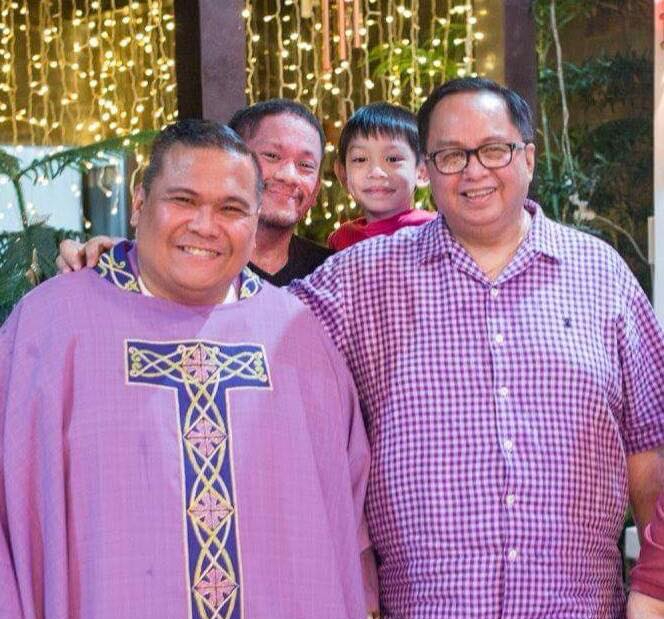
Rest in peace, Dindo (larawan kuha ng kanyang ika-60 kaarawan, Marso 09, 2018).
Paalam, aking kinakapatid
Fernando "Dindo" R. Alberto Jr.;
ikumusta mo ako sa langit
sa mga pumanaw nating
idolo sa musika,
kami na lamang ni
Toby magdiriwang ng birthday
tuwing Marso dito
habang kayo at ang Ninong
magkasama na
sa buhay na walang hanggan.
The Lord Is My Chef Sunday Recipe for the Soul by Fr. Nicanor F. Lalog II
Feast of the Holy Family, Sunday in the Christmas Octave-B, 31 December 2023
Genesis 15:1-6, 21:1-3 ><]]]'> Hebrews 11:8, 11-12, 17-19 ><]]]'> Luke 2:22-40
Photo by author, 25 December 2023.
After the birth of the Christ in Bethlehem and the visit of the shepherds, Luke tells us how the Child was circumcised on the eighth day and given with the name Jesus. A short while after that, Mary and Joseph brought Jesus to Jerusalem to present him to God in the temple.
And that was when more exciting and wonderful things continued to happen to Mary and Joseph when two elderly people filled with the Holy Spirit, Simeon and Anna, took the Child Jesus and spoke great things about him to his astonished parents.
The child’s father and mother were amazed at what was said about him; and Simeon blessed them… There was also a prophetess, Anna, the daughter of Phanuel, of the tribe of Asher. She was advanced in years, having lived seven years with her husband after her marriage, and then as a widow until she was eighty-four. She never left the temple… And coming forward at that very time, she gave thanks to God and spoke about the child to all who were awaiting the redemption of Jerusalem.
Luke 2:33-34, 36-38
Photo from crossroadinitiative.com.
See again the artistry of Luke in showing to us in this scene how Jesus Christ makes every family holy. In narrating to us the story of Christmas, Luke had earlier shown us that Jesus comes first in every family, in every husband and wife and their children.
Clearly we see Luke’s consistency in telling us that in this season and beyond, our focus must always be centered on the person and mission of Jesus Christ as the Son of God, our Savior who makes every family holy like his! How they unfolded through Mary and Joseph is worth reflecting this Sunday.
I have always been amazed since our 30-day retreat in 1995 with this gospel scene of the presentation of Jesus at the temple. The situation of the Holy Family of Joseph, Mary and Jesus was simply an ordinary one with hundreds of other families making the same journey to the temple with nothing unusual happening.
Then all of a sudden, the unforeseen and unforeseeable take place amid all the crowds in the temple on that day. A great revelation by God not only for people at that time but also for us today is made known which allowed us too to perceive the hidden Jesus coming daily in our lives. See the obedience of Mary and Joseph to their Laws and customs. Most of all, their continuing openness to the many revelations still unfolding about their child Jesus.
Photo by author, Nazareth, Israel, May 2019.
It was not a case of exceptional grace to exceptional couple of Joseph and Mary nor to individuals like Simeon and Anna whom I always wondered how were they able to recognize Jesus as the Christ being offered on that day in the temple.
Again, we are invited to be attuned and opened always to the promptings of the Holy Spirit, of keeping that spark of faith within us like Abraham in the first reading who “put his faith in the Lord, who credited it to him as an act of righteousness” (Gen. 15:6). Here we find how God guides us in our steps and those of others in our long and often circuitous journeys in life to have faith in him in finding Jesus the light of our salvation and fulfillment. But faith is more than simply putting ourselves blindly in the hands of God, just moving on with life with a bahala na attitude.
Faith is more than believing and trusting God and persons. It is entering into a communion, a bond with God as our Lord and Master or anyone we love so dearly like our family. The author of the Letter to the Hebrews stressed this aspect of faith as a communion and a bond in our second reading which we find not only in Abraham but also in Joseph and Mary as well as in Simeon and Anna, too.
Recall those moments when you felt like Abraham who was already too old, when you felt it was already “game over” for our plans in life, the end of your rope or when you felt everything is down the drain that you simply accepted it as the reality when suddenly, because of that firm faith and union in God, something happens like a twist or a turn when everything in your life just falls into its right places!
Remember those moments in the past when we dared to walk in the right direction of Jesus – full of humility amid the pains and sufferings of his Cross – when we find later on how his words jibed perfectly with our experiences, so intertwined with our dreams and aspirations along with other people especially with our family that eventually get fulfilled – if not in us, in those next to us. This is the gist of the beautiful movie Firefly.
From GMA Films and GMA Public Affairs.
Firefly is one exceptional film in every aspect. Everything is so good. Watching it convinced me of a renaissance in Filipino film industry. It is a fantasy movie everyone must see this Season because it is a Christmas story, a Christ-film in fact.
Its main character is a small child named Tonton who lost his mother at a young age and embarked on a long journey to bring his mother’s ashes to her birthplace in an island in Bicol said to be inhabited by fireflies.
All Tonton had was faith and love for his mother played by Alessandra de Rossi. His map was actually his scrapbook of his colorful illustrations of the story narrated to him by his mother. Along the way, he met three individuals living in the darkness of their past, uncertain of their future: an ex-convict heading home, doubtful if he would be accepted by his wife and son; a broken-hearted man cheated by his girlfriend at a loss what to do with her name tattooed on his bicep; and a lovely lady on a backpack trip with a camera and some envelops she used to scam money from people for her supposed outreach programs for kids.
From GMA Films and GMA Public Affairs
They all found the light of life through the life and words of Tonton whom they helped reached his mother’s home island where he too eventually came to terms with his own ghosts of the past.
I won’t tell you any details any more. Do watch the movie and be enthralled with its attention to details, the many symbolisms, most of all, of the good news about the beauty of this life made manifest by the Child who opened our eyes to see the light of love and life. Amen. Have a blessed family in Christ Jesus this new year of 2024!
A short poem I wrote after watching Mallari and Firefly:
Two fantasy movies,
One so scary
The other a thing of beauty!

The best in cinematography
Indeed is Mallari:
How they sew together seamlessly
Fiction into a true story so eerie
Of the evil reality
But sadly sank deeply
In vicious circle of sin
And infamy.

But if you have to see
A movie do not miss Firefly
Everything is about beauty
Despite the ugly reality
Of life we all see;
The slum by the sea
The kid and his bullies
The story of his mommy
Led him into a journey
Intertwined with a many
Treading blankly from each one’s past
Into their present
afraid of what will be
Only to see through this kid’s story
That many times a fantasy
Is in fact the reality
We refuse to believe
That is why we can’t see;
How lovely is the movie
Though not about history
Or social malady
But deep theology
Of how a child brought
Fire and light
And made us see
We are loved so immensely
So that someday
We too can rise and fly
High to the sky.
The Lord Is My Chef Sunday Music by Fr. Nicanor F. Lalog II, 17 December 2023
Photo by author, Gaudete Sunday 2019.
Glad to be back with our Sunday music offering but unfortunately, our choice is neither a Christmas song nor carol. But, we find Christopher Cross’ Baby Says No from his 1983 second studio album so perfect this Sunday because our homily is something about saying “no” (https://lordmychef.com/2023/12/16/saying-no-leads-us-to-rejoicing/).
We have always loved Mr. Cross since 1979 with his great debut album that featured his first hits Sailing and Ride Like the Wind. Truly an artist gifted with superb musical talents, we were so worried in 2020 when news came out of his being stricken with COVID-19 that resulted in some complications that almost left him unable to walk for a time.
Baby Says No is a touching story of a love lost despite one’s great efforts and how far can a man go despite the great setback.
Baby says no, she can’t let go this soon Doesn’t feel right, not tonight Even though I gave her the stars and the moon
I really think I’ve got it bad this time around
Baby says yes but I must confess It really doesn’t seem to matter ‘Cause I’d follow that girl all around the world Even if I never had her
I really think I’ve got it bad this time Really think I’ve got it bad this time Really think I’ve got it bad this time around
This is where we find Baby Says No very related with our gospel this Sunday also known as Gaudete Sunday or Rejoice Sunday. Many times in life, we are able to rejoice after experiencing losses and failures, after being down. It is in the nos and nots where great rejoicing burst forth like when we receive the negative answer to our offers like what the man is claiming here after being turned down with his love.
Gonna show ’em what love can do Gonna tell ’em ’bout me and you Gonna show ’em what love can do when it’s right And this time, it’s right
Love is the light that can shine so bright But sometimes it fades away Then you find one that can shine like the sun She comes up for you every day
Many times in life, love comes forth after we receive or make the “no” answers to sin and evil and selfishness. Here is Christopher Cross with his classic Baby Says No. Have a blessed Sunday!
The Lord Is My Chef Sunday Recipe for the Soul by Fr. Nicanor F. Lalog II
Second Sunday in Advent, Cycle B, 10 December 2023
Isaiah 40:1-5, 9-11 ><}}}*> 2 Peter 3:8-14 ><}}}*> Mark 1:1-8
Photo by author, the Forest Lodge, Camp John Hay, Baguio City, 12 July 2023.
It has been a week since we started our new liturgical year with the Season of Advent. And let’s admit that we have hardly noticed how fast time passes by these days with all the parties and gatherings we have been having since December started!
And that is the joy of patient waiting even in the dark during this time of active waiting for Jesus Christ’s Second Coming which is the first phase of this Season of Advent.
If we remain and persevere to be faithful in Jesus and his teachings, we realize that every day in life is always a new beginning in Christ to start anew in becoming a better disciple. We hardly notice the passing of time when we love and serve God in others because we experience that life is more of a series of beginnings than of endings as Mark reminds us at the start of his gospel account:
The beginning of the gospel of Jesus Christ the Son of God.
Mark1:1
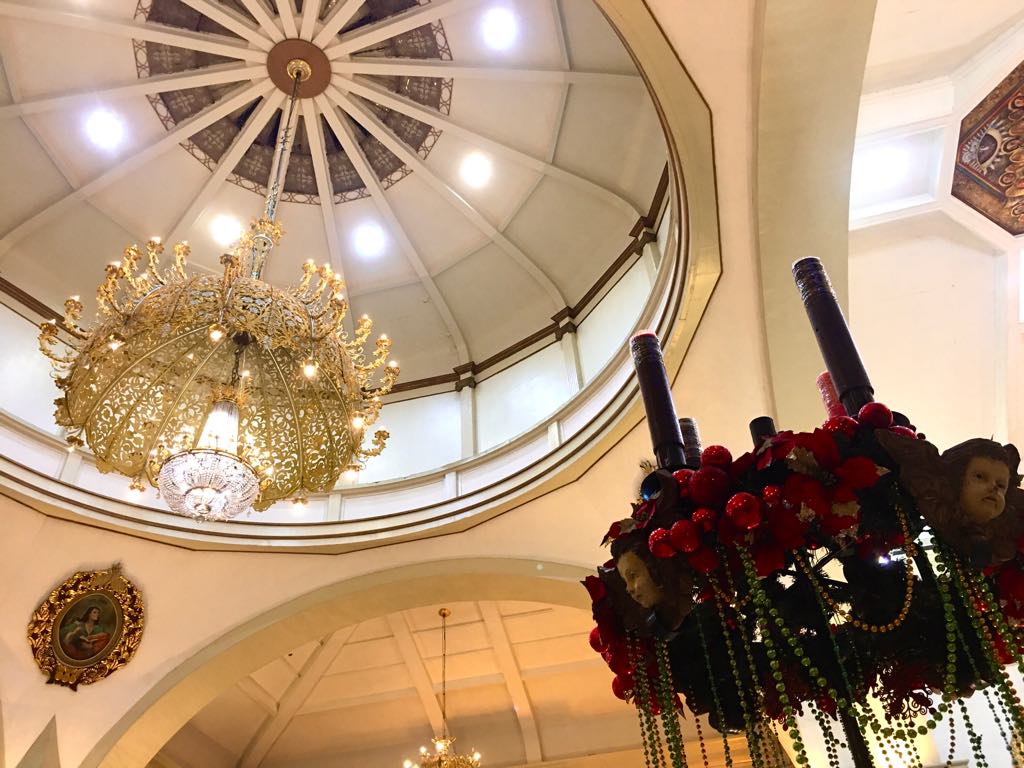
Photo by author, Malolos Cathedral Advent 2019.
Mark was the first to write a gospel account, composing it in Rome in the year 70 AD when the early Christians who were mostly of Jewish origins were under persecution. For his audience of Jewish origins, the word beginning meant a lot like the Book of Genesis, connoting how God is always present amid the persecution, of how order comes after chaos.
In simply declaring to us “The beginning of the gospel of Jesus Christ the Son of God”, Mark is reminding us how God is always starting a new creation, a new order, a new revelation in us and among us.
Very often, beginning connotes an ending; but, not with God nor with the gospel who is Jesus Christ. Remember how Mark’s gospel ended abruptly and unexpectedly in the discovery of the empty tomb by Mary Magdalene, Mary mother of James and Salome who all “fled… bewildered and trembling… in great fear that they said nothing to anyone” (Mk.16:1-8).
By “ending” his gospel account that way, Mark actually wanted his listeners that include us today to continue writing and proclaiming the gospel of Jesus Christ in our own lives. For Mark, the gospel never ends but simply begins over and over again through the lives of disciples who meet and befriend Jesus Christ, the Son of God.
Photo by author, Advent 2018.
Now, to think of the beginning is to remember our origin or starting point, the person of Jesus Christ.
The late Fr. Henri Nouwen used to say that the word remember means “to make a member a part again”; hence, re-membering our beginning is making God in Jesus Christ a part of our lives again, of our present moment again.
More than just going back to the basics shouted by everyone these days even in the Church, remembering our beginning is bringing back the person of Jesus Christ in our lives today. That is what a new beginning means, a return to the person of Jesus Christ who is the essence of Christmas, of the Church, of the world.
Everything in life becomes clear when we begin in Jesus Christ. All these questions we have been asking inside, the many whys of life, will only be answered and clarified when we begin in Jesus. Many in the world would say it is very simplistic but, the problems of the world then and now are all due to the removal Jesus Christ from our hearts, homes, offices, and classrooms, and relationships. Begin again in Christ and see how everything, everyone becomes new and beautiful again!
Photo by author, Advent 2018.
Sometimes, Mark’s gospel is called the “Gospel of Beginnings” because of his frequent mention of Jesus “beginning” to do something like when “he began to teach” in many occasions in the synagogue and temple area (Mk. 4:1, 6:2 and 34, and 8:31) or when “he began to speak in parables” (Mk. 12:1); when Jesus came to Jerusalem and entered the temple, “he began to cleanse” it (Mk.11:15) while at the agony in the garden, “he began to be troubled” (Mk. 14:33).
All these indicate how our ministries began in Jesus Christ and nowhere do we find Mark telling us Jesus had ended them all. In fact, in the longer ending of his gospel that was later on added by his followers, we find Jesus telling his disciples that include us today to continue with his works and mission. Every mission we have in life especially in the Church must always begin in Jesus Christ.
After all, when we reflect on Mark’s brief opening sentence to his gospel account that associated the word beginning with the Lord’s name Jesus Christ, we find him telling us that same truth that everything created began in Jesus Christ as expounded by John at his prologue (Jn. 1:1-5) and Paul in his letter to the Colossians 1:15-20.
Examine how John and Paul beautifully expressed in poetry their theology simply expressed by Mark as “The beginning of the gospel of Jesus Christ the Son of God”.
Here we find that even if Mark’s gospel is the shortest of the four gospel accounts, “brevity is the soul of wit” (Shakespeare in Hamlet). And that is the short of all these things we believe in and hold so dearly in our faith: Jesus Christ as the beginning and the origin of everything.
There lies the challenge to us these days when people no longer remember, and even willing to forget God and Jesus Christ: of how like Mark we can always begin each day, our work and ministries, our missions and everything in Jesus Christ. In the first reading, God calls us through the Prophet Isaiah to comfort his people, especially those sick and weary, those losing hope in life that until now happens. Perhaps because what we keep on offering others are not really the essential one, Jesus Christ, our beginning.
It is a brand new week again as we get closer to Christmas and most especially to Parousia. The problems and darkness remain in our lives. The words of Peter in the second reading today are scary when God “dissolves” everything at the Parousia; however, it is a call for us believers to witness the hope in Christ’s coming not by our words and beliefs but by our witnessing to Jesus Christ, by the holiness of our lives that begin in Jesus Christ. Amen.
The Lord Is My Chef Sunday recipe for the Soul by Fr. Nicanor F. Lalog II
First Sunday in the Season of Advent, Cycle B, 03 December 2023
Isaiah 63:16-17, 19; 64:2-7 ><}}}*> 1 Corinthians 1:3-9 ><}}}*> Mark 13:33-37
Photo by author, National Shrine of Our Lady of Fatima, 08 December 2022.
I was literally waiting the “advent” or coming of my doctors last Thursday as I wrote this homily for this first Sunday of Advent, the new year in our Church calendar. It was a hazy morning with some drizzle when I arrived for my doctors’ appointments.
But, it was a graceful moment too as I rediscovered the virtue of patience by being a patient myself again.
Sick people are called patients precisely because healing requires a lot of patience. Tons of patience in fact, especially if we are incapacitated or too weak to move. And the most difficult part of patience is waiting, from the simple waiting for doctors and nurses, waiting for the end of the day to waiting for our complete healing until we are well again.
Photo by author, First Sunday of Advent 2021, Basic Education Department, Our Lady of Fatima University, Valenzuela City.
The difficult part of waiting is that we are so conscious of time which we find to be flowing so slowly, making us irritable even doubtful if ever the one we are awaiting would ever come or materialize at all. That is why patience has become a virtue so rare these days.
Many people reject, even abhor patience in this age of instants when everybody wants to bear fruit but resent how it takes time to ripen. We want to have everything now na! We do not want to wait because we are no longer contented with whatever comes to us so that we advance our salaries and buy things in credit cards. Worst is this notorious practice of advancing public holidays to other dates closest to weekends to have “long weekend” celebrations. Even Christmas is not spared from our impatience! See how malls and local government buildings, homes and radio stations could not wait after the Halloween with all the lighting of Christmas trees and decors everywhere.
Unknown to us, we are robbing ourselves of very essence of the event of Christ’s coming to us when we manipulate time and its natural flow. When we lose patience, we stop waiting, then we miss the essence of life, of persons, of everything because we think waiting is being empty.
That is not true! Waiting is never empty. On the contrary, waiting is actually fullness because the very fact that we wait means we have.
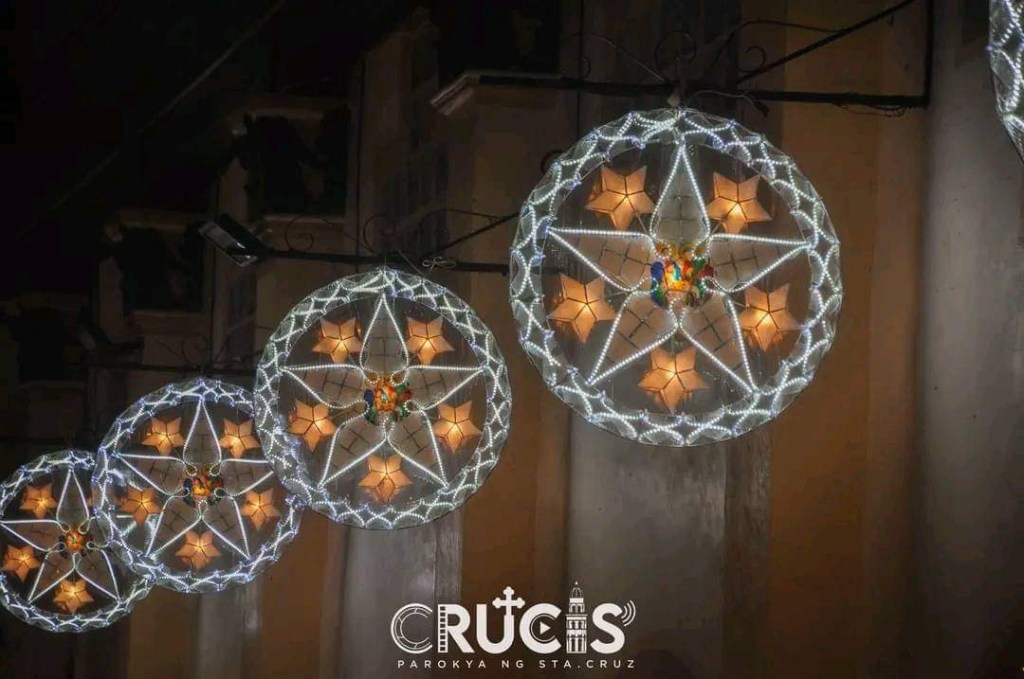
Photo by author, lanterns for sale in San Fernando, Pampanga, November 2020.
When we were growing up, we loved waiting for dad’s coming home from work. We were filled with joy the moment we heard jeepneys stopping, hoping it was dad. Even if he would come home later in the evening when it was dark, we always felt so sure and excited of his arrival with pasalubong because he was always in our hearts.
That is the greatest joy of patient waiting – it is fullness of love due to our relationships. People who can’t wait, who are impatient are often loners, even complainers because they always feel empty within without any regard at all for relationships. Most likely, they have no relationships at all!
Photo by author, lanterns for sale in San Fernando, Pampanga, November 2020.
The first reading reminds us of this great beauty of patient waiting, of already having God himself within us with Isaiah calling God “our father, our redeemer” that both indicate kinship and relationships with him.
You, Lord, are our father, our redeemer you are named forever.
Isaiah 63:16
Very notable is the word “redeemer” that is go’el in the Hebrew language – the family relative who pays off debts or redeems a foreclosed property so that their family or tribe could keep it.
That is exactly what Jesus came for – to redeem us, to ransom us from our debt we could not repay God which is love. By dying on the Cross, Jesus saved us, redeemed us from the clutches of death and evil to be filled with life again. And that is why he is coming again to ultimately vanish all evil and sin to bring us to new heaven and new earth.
Physically we do not see Jesus but realistically, spiritually, we are certain he is with us, within us. Therefore, our waiting for him is never empty but always full of Jesus precisely due to the relationship we have in him and with him.
Photo by author, Advent 2019 in our former parish.
Waiting for Jesus is an expression of our faith. And we wait with him, just like the apostles in the agony of the garden. Notice how Mark narrated to us this calls for being watchful by Jesus; unlike Matthew, Mark mentions the time of Christ’s coming – at night.
Jesus said to his disciples: “Be watchful! Be alert! You do not know when the time will come… whether in the evening, or at midnight, or at cockcrow, or in the morning. May he not come suddenly and find you sleeping. What I say to you, I say to all: ‘Watch!'”
Mark 13:33, 35-37
This may be a minute detail for us but not for Mark who was the first to write the gospel of Jesus which happens to be the shortest and most concise. Night time in the Bible evokes darkness when evil seems to dominate the time which we continue to think of in the present.
But, we are children of light as St. Paul reminds us in one of his letters. And this Sunday he assures us in the second reading that “God is faithful” who “called us to fellowship” in him through Jesus Christ (1 Cor. 1:9). Let us not be afraid of the dark and long waiting for Jesus because he had conquered it when he walked on water, when he stilled the storm in the sea, when he rose again on Easter. Do not forget too that Jesus was born during the darkest night of the year, a reminder and assurance to us that no matter how dark our lives may be, Jesus is near, Jesus is here. So, have no fear in him, our brother and kin who had saved us!
Photo by author, Advent 2019 in our former parish.
Watch and be on guard on Christ’s coming and presence in darkness because too often, we are the ones who miss the Lord. Keep in mind that it is at night, it is in darkness when it is best to believe in the light. Here, we again find that waiting even in darkness in never empty because that is when we are so sure there would be great light bursting forth soon as Isaiah had prophesied that was eventually fulfilled in Jesus Christ. Sometimes, we get bored even impatient or sleepy waiting for Jesus like the five wise virgins who brought extra oil waiting for the groom to arrive. The key is to remain in Jesus, only Jesus, always Jesus as we pray like John the Beloved, Maranatha, “Come, Lord Jesus!” Amen.
The Lord Is My Chef Daily Recipe for the Soul by Fr. Nicanor F. Lalog II
Friday, Memorial of St. Leo the Great, Pope & Doctor of the Church, 10 November 2023
Romans 15:14-21   ><]]]]’> + ><]]]]’> + ><]]]]’>   Luke 16:1-8
Photo by author, San Juan, La Union, July 2023.
I just realized today,
God our Father,
how the word “miss”
has a variety of meanings:
as something we failed or
something or someone we remember
or, someone or something we
forget and neglected.
How sad that very often,
the people we miss -
those we forget,
even taken for granted
because they are common,
are those nearest to us like
family and friends,
those in our inner circles.
Thus I aspire to proclaim the Gospel not where Christ has already been named, so that I do not build on another’s foundation, but as it is written: Those who have never been told of him shall see, and those who have never heard of him shall understand.
Romans 15:20-21
Is it not so funny that the
ones we meet inside the church
every day and every Sunday are
also the very ones who are
like us - evangelized or simply
know Jesus and his teachings;
but, where are the rest?
the unchurched?
the ones we say who must hear the
good news?
Lord Jesus Christ,
teach us to be wise like
that steward in your parable today:
to save face and himself, he went to
see his master’s debtors he himself
must have missed,
disregarded and never given any
importance at all because they
were common, below him in stature;
let us realize like that shrewd steward,
like St. Paul to look for those we
miss most because of proximity
and ordinariness; they could be our
family members who have stopped praying
or celebrating Mass
or those living closest to our church
or chapel and have lost interest in the
sacraments and liturgy
or former colleagues in the ministry
who have lapsed in their practice
of faith.
Let us go out today
to find them and make them
feel and experience they are
loved,
they are missed most
in Christ Jesus.
Amen.
Quiet Storm by Fr. Nicanor F. Lalog II, 08 November 2023
Photo by author, National Shrine of Our Lady of Fatima, Valenzuela City, 06 November 2023.
A very dear friend died last October 16 after more than three years of fighting cancer. She used to be one of our elementary teachers at the school I was first assigned after ordination. She later resigned to teach abroad but every year whenever she was home for summer vacation, she always invited me to join their mini-reunions of former co-teachers.
Everything changed in 2020 when she had to retire early to return home for her cancer treatment. We could not visit her during the pandemic lockdown, occasionally meeting her via zoom and video phone calls. When COVID subsided a little in late 2021 and early 2022, we finally met briefly. She seemed to be responding well to her chemotherapy except that she had lost hair that was natural. Last December, we were finally able to go out with other fellow co-teachers twice after Christmas and after New Year’s day last January. We were so glad she had regained weight and strength. And hair too!
Saw her again last June but in late August, she stopped answering our messages. It turned out that her cancer had metastasized to her lungs and liver. When I came to see her October 7, the first thing she told me was for me to “allow her to die”. According to her brothers and elder sister, she had also asked them for “permission to die” earlier that night because she said, she was already tired and was ready to go back to God.
Photo by author, National Shrine of Our Lady of Fatima, Valenzuela City, 06 November 2023.
It was not the first time somebody had asked me a “permission to die”, especially since I have become a hospital chaplain two years ago. But, I must confess, in all instances, there was always hesitancy on my part in giving “permission to die” especially when those dying are close to me like friends and relatives. In fact, the first person who asked me “permission to die” was my best friend from high school seminary. I just cried, said nothing when he calmly told me he was ready to go.
That scene remains vivid to my memory to this day, including the many lessons he had taught about life and dying.
By the way, let me put it clear that what we are referring here as giving “permission to die” is allowing death take its natural course, not mercy killing or euthanasia which is intrinsically evil we should never allow.
In my 25 years in the priesthood, two years as hospital chaplain since 2021, I have always felt the process of dying as a “grace-filled moment” too like in the birth of an infant or recovery of a sick person. Both the dying and their family and friends are blessed when death approaches or had come, like when Jesus visited Martha and Mary four days after the death of their brother Lazarus. That scene of Jesus speaking to Martha before bringing Lazarus back to life assures us of how God had turned death into a blessing in Christ: Jesus told her, “I am the resurrection and the life; whoever believes in me, even if he dies, will live, and everyone who lives and believes in me will never die. Do you believe this?” (Jn. 11:25-26)
Photo by author, National Shrine of Our Lady of Fatima, Valenzuela City, 06 November 2023.
If we believe Jesus and his words to Martha, we too shall find him coming to us when a beloved is dying, especially when they ask us that “permission to die” which is not actually a permission per se because only God decides when we are going to die.
When patients ask for “permission to die”, they are actually bidding us goodbye. Dying people always knew when they had to go because they have already accepted the reality. This is very noticeable at the serenity, even of joy, on their face. Despite their sickness, dying patients who have truly made peace with God and had given up everything to Him always have that grace of composure like Jesus when he died on the Cross, crying his same prayer, “Father, into your hands I commend my spirit” (Lk.23:46).
Photo by author, National Shrine of Our Lady of Fatima, Valenzuela City, September 2021.
Giving “permission to die” is a grace from God He gives to relatives and friends to accept and embrace that difficult reality.
“Permitting” our loved ones to die is to assure them of our love and forgiveness of their sins against us. It is our final act of love for them when we assist them to that great passageway onto eternity like when we would lead our guests out to the door to ensure them our separation is just temporary until we meet again soon.
Due to this great amount of love in our final goodbyes, some people sometimes “fake” their dying moments, creating a “drama” in asking “permission to die” when actually, they are not yet ready to die but merely demanding love and care from family and friends. One clear sign is they tend to be more cerebral than cordial, becoming bitter and angry than ever. Even amid sufferings, they think more of themselves than feel others around them. Like the boy who cried wolf, they have not yet really seen death approaching because most likely, they have not yet faced life and living truly. Coming to terms with death is coming to terms with life. When loved ones “fake” their dying, what they really seek is how to live fully and responsibly, to be their true self. But that’s a different topic…
Photo by author, Malagos Orchid Farm, Davao City, 2017.
Death is the most terrifying moment in life because we do not know what’s next, where we are going. That is why, when people truly mean that they have accepted death, that is also when they have accepted life in its fullness. They do not reason out. They just feel God and those around them. Most of all, they have peace within amid pains.
The same thing happens with us relatives and friends of the dying. We feel their sense of peace within, affecting us, infecting us. Hence, we get lost at how to express our giving them of that permission to die. Very often, we cry because our hearts overflow with love. When we feel their seeking of permission to die is genuine, our mouths and tongues are shut, incapable of expressing our love for them that is diverted into our eyes as tears, bursting forth like waters from a collapsed dam that cleanse also us of our fears and sadness at our impending loss.
Finally, giving permission to die to our beloved is an expression of our faith in God, affirming we all came from God and would someday go home to God in heaven. Thus, giving permission to die is actually to comfort – literally, “to give strength to” – the dying of their faith in God while facing their final tests and temptations in life, assuring them that soon, we shall join them in eternal joy.
Many times, our family and friends suffer so much before death because of our refusal to let them go too. We keep on holding them back that terrify them in making the great crossover. Giving them permission to die is easing and sharing their fears so they can finally let go and let God, that is, die – the meaning of the letter “d” that stands between the words “go” and “God”. According to the prayer by St. Francis of Assisi, it is in dying when we are born into eternal life. Amen.
*Aside from All Saints’ Day and All Souls Day, the whole month of November is a traditional time for visiting the graves of our loved ones. Go and offer them prayers, especially that “permission to die” if you are still holding them and have not yet let them go.
The Lord Is My Chef Daily Recipe for the Soul by Fr. Nicanor F. Lalog II
Wednesday in the Thirty-first Week of Ordinary Time, Year I, 08 November 2023
Romans 13:8-10   ><}}}}*> + ><}}}}*> + ><}}}}*>   Luke 14:25-33
Photo by author, Sacred Heart Novitiate, Novaliches, QC, 20 March 2023.
How can I not resist
by simply being silent,
O God our Father,
with your beautiful words
spoken today by the great
St. Paul?
Brothers and sisters: Owe nothing to anyone, except to love one another; for the one who loves another has fulfilled the law. Love does no evil to the neighbors; hence, love is the fulfillment of the law.
Romans 13:8, 10
But, what is really love,
according to St. Paul?
Since yesterday,
he has been telling us
to love sincerely which is
to love like Jesus Christ
who offered himself for us
on the Cross;
to love like Jesus as the
fulfillment of the law is
to love without measure
because it is rooted in you,
dear God who is love yourself,
God who is both transcendent
and immanent!
In telling us to love one another,
Jesus clarified with his love that
you neither order nor command us to
love you, God, in the strict sense;
you ask us to love
because you love us,
because you are love, O God;
when we love,
we fulfill your commandments,
enabling us to live in peace
and harmony with one another
like in heaven;
"I-love-you" is the only "I-O-U",
the only debt never paid off
because the more we love,
the more we become like you
in Jesus Christ,
eternal and without end.
Amen.
The Lord Is My Chef Daily Recipe for the Soul by Fr. Nicanor F. Lalog II
Friday in the Twenty-Eighth Week of Ordinary Time, Year I, 20 October 2023
Romans 4:1-8   ><]]]]'> + ><]]]]'> + ><]]]]'>   Luke 12:1-7
Photo by author, Liputan Island, Meycauayan City, Bulacan, 31 December 2021.
Our loving God and Father,
help us learn St. Paul's beautiful
teaching today about your
righteousness and our justification -
that, essentially, everything
in this life is our relationship with you
and with one another.
You justified and redeemed us
in your Son Jesus whom you
sent to restore that relationship with you
broken by sin in Adam and Eve;
to renew and make that relationship
work, you made us new in Christ
to make us worthy before you
and with one another in your grace.
How wonderful as St. Paul explained
that long before your Laws came,
that relationship has always been there
wondrously expressed most especially
by Abraham in his deep faith in you;
faith is a relationship which Abraham
proved thrice to you:
when he obeyed your command for him
to leave his family and city to go to
the land you would show him;
when he believed even in his old age
you would give him a son in his wife
Sarah to become the father of all nations;
and when Isaac was finally born
as he grew up, Abraham willingly
gave him up to you when you asked
him to be offered.
In all three instances,
Abraham never sinned to you
because he upheld and
valued so much your relationship
with him.
Help us, God,
to be like Abraham in
upholding and preserving
most dearly this relationship
with you and with one another
we keep and nurture in faith.
For what does the Scripture say? Abraham believed God, and it was credited to him as righteousness. A worker’s wage is credited not as a gift, but as something due. But when one does not work, yet believes in the one who justifies the ungodly, his faith is credited as righteousness.
Romans 4:3-5
Forgive us,
merciful Father,
for being so proud,
always proving our worth
with all our works without
realizing that you have done
everything in our favor,
that there is nothing we can do
nor we may do for us to be saved
in ourselves, by ourselves
except to believe in you like
Abraham; let us not be hypocrites
like the Pharisees who do not
realize that everything is revealed
in you, including our thoughts;
let us remember that sin is
more than the evil acts we do
but most of all, our lack of faith
in you that we destroy
our beautiful relationships with
you and with one another.
Amen.