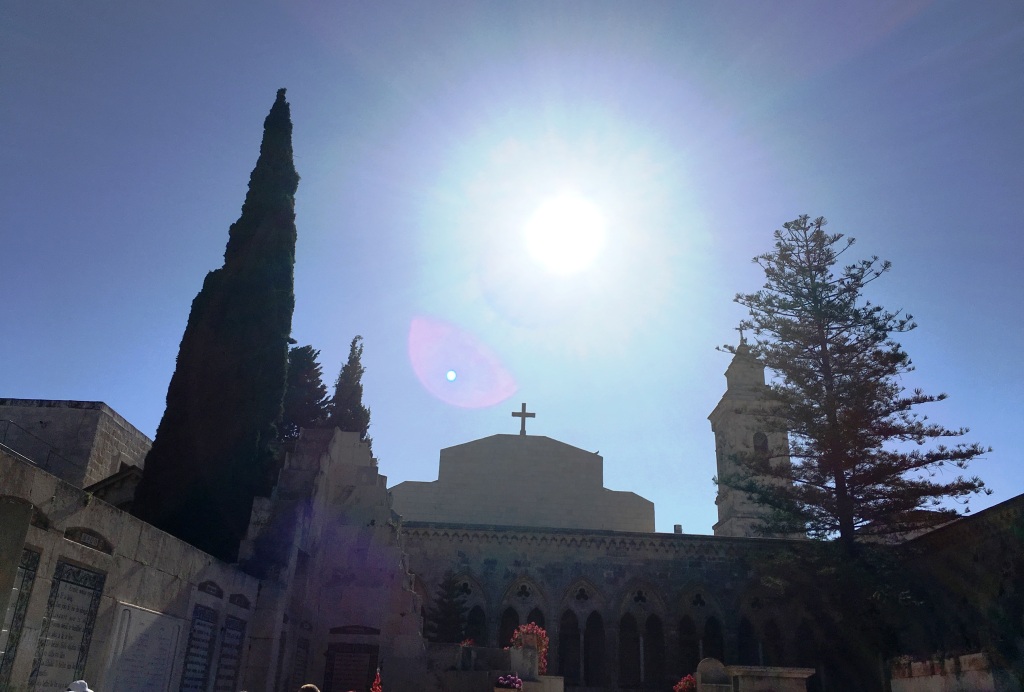
“Stand by Me” by Ben E. King (1962)

The Lord Is My Chef Sunday Music by Fr. Nicanor F. Lalog II, 26 January 2025
Photo of the cast of the 1986 film “Stand By Me” from goldenglobes.com.

Glad to be back with our Sunday music after six months of absence! Hope you are doing well as we keep our good old music playing.

We cannot resist linking Ben E. King’s 1962 classic Stand By Me with our Sunday gospel about Jesus “standing” at the synagogue one sabbath day to proclaim the Sacred Scripture to his town folks in Nazareth. I have known the song all along having grown with old music at home but fell in love with it only in 1986 when it was adapted as the title of a coming-of-age movie called Stand By Me.

The song’s lyrics perfectly blended with the story of the movie based on Stephen King’s novella The Body, of how four teenagers in Oregon went on a hike to find the dead body of a missing boy. Though the song played only at the end of the movie as the main character closed his narration of what happened after to their friendship as young boys standing by each other, their hike was filled with so many misadventures and realizations that underscored the noble aspirations for fidelity and truth, love and care as well as importance of family we find exactly in the beautiful lyrics by King which is about his standing by his beloved.

When the night has come
And the land is dark
And the moon is the only light we'll see
No, I won't be afraid
Oh, I won't be afraid
Just as long as you stand
Stand by me

So darlin', darlin', stand by me
Oh, stand by me
Oh, stand
Stand by me, stand by me

If the sky that we look upon
Should tumble and fall
Or the mountain should crumble to the sea
I won't cry, I won't cry
No, I won't shed a tear
Just as long as you stand
Stand by me

And darlin', darlin', stand by me
Oh, stand by me
Oh, stand now
Stand by me, stand by me

And darlin', darlin', stand by me
Oh, stand by me
Oh, stand now
Stand by me, stand by me

Whenever you're in trouble won't you stand by me
Oh, stand by me
Won't you stand by

We remembered the song Stand By Me while praying over this Sunday’s homily as we focused on Jesus always standing for what is true and good, what is just and fair and most especially, for His standing for each one of us always despite our weaknesses and sins. That is why we said in our homily that what matters most in life is not where we sit but where we stand (https://lordmychef.com/2025/01/25/standing-with-jesus-standing-like-jesus/).

As we go on a rest this Sunday, let us recall and remember our family and friends we have stood by all these years as well as those who stood by our side too while praying for those who have left us or betrayed us including those we have deserted too. Through all these standing and falling, there is always Jesus remaining, always standing by our side because He loves us, giving us all the chances to rise and stand again for Him and with Him through our family and friends. Have a blessed Sunday!

From YouTube.com, no copyright infringements intended except to enjoy good music.

Christmas is God at home with us; are we at home with God?

The Lord Is My Chef Sunday Recipe for the Soul by Fr. Nicanor F. Lalog II
Feast of the Holy Family, Cycle C, 29 December 2024
1 Samuel 1:20-22, 24-28 ><)))*> 1 John 3:1-2, 21-24 ><)))*> Luke 2:41-52
Photo by author of a depiction of the Holy Family near the main door of St. Joseph the Worker Parish in Pacdal, Baguio City, 28 December 2024.

You must have heard of the classic song “A House Is Not A Home” composed by the great tandem of Burt Bacharach and Hal David recorded by Dionne Warwick in 1964 for a movie of the same title. It went back to charts in 1981 when the late Luther Vandross covered it in his first album.

It is a very lovely ballad of a love lost, teaching us that indeed, “a house is made of walls and beams while a home is made of love and dreams”.

A chair is still a chair
Even when there's no one sitting there
But a chair is not a house
And a house is not a home
When there's no one there to hold you tight
And no one there you can kiss good night

A room is still a room
Even when there's nothing there but gloom
But a room is not a house
And a house is not a home
When the two of us are far apart
And one of us has a broken heart

But, in the Hebrew language and Jewish thought, the word “house” in itself connotes relationships. There are no distinctions between a house and a home for them that is why we find Jesus claiming the temple as His Father’s house.

Pope Francis opening the Jubiliee Door at St. Peter’s in Rome to launch the start of the Jubilee Year of 2025. Photo by Maurix/Gamma-Rapho via Getty Images.

In fact, the first letter of the Hebrew word for God (Yahweh) is actually shaped as a door or a house. That is why there is the blessing of church doors in dioceses today worldwide following the blessing and opening of the Jubilee Door at St. Peter’s in the Vatican by Pope Francis last Christmas Eve to launch the Jubilee Year. The Jubilee Door signifies our passing through, an entering into a relationship with God.

In John’s gospel we find Jesus as an adult using the word “house” twice when He cleansed the temple, telling everyone to “stop making my Father’s house a marketplace” (Jn.2:16) and at their last supper when He assured the disciples, “In my Father’s house there are many dwelling places or rooms” (Jn.14:2).

The only other occasion Jesus used the word “house” to mean the same thing as John was when He was found by His parents in the temple as we heard today on this Feast of the Holy Family.

Each year Jesus’ parents went to Jerusalem for the feast of Passover, and when he was twelve years old, they went up according to festival custom. After they had completed its days, as they were returning, the boy Jesus remained behind in Jerusalem, but his parents did not know it. After three days they found him in the temple… When his parents saw him, they were astonished, and his mother said to him, “Son, why have you done this to us? Your father and I have been looking for you with great anxiety?” And he said to them, “Why were you looking for me? Did you not know that I must be in my Father’s house?” But they did not understand what he said to them (Luke 2:41-43, 46, 48-50).

“The Finding of the Savior at the Temple” painting by William Holman Hunt (1860) from en.wikipedia.org.

We find in the story of the finding of Child Jesus in the temple that even at a very young age, Jesus had always been clear with His oneness in God by always referring to the temple as His “Father’s house”.

As we have reflected in December 19 in Luke’s first Christmas story, the annunciation of John’s birth to his father Zechariah while incensing at the temple in Jerusalem during a major Jewish feast that Christmas begins in the church where we gather to praise and worship God as a community. See how this Sunday after Christmas our many empty pews in the church. How sad that many Catholics after Christmas have totally disregarded the Sunday Mass, going to all the vacation spots here and abroad with many of them having no qualms at all that this is the “day of the Lord”, a Sunday obligation.

Again, here is Luke in his artistic narration of Christmas into Christ’s adolescence insisting on us the importance of communal worship and prayer. Not surprising that of the four evangelists, Luke is the one who presented Jesus always at prayer as an expression of His oneness or communion in the Father and he wants us hearers of his gospel account to cultivate that same communion with God in Jesus, with Jesus, and through Jesus.

Christmas is essentially Jesus Christ becoming human so that God may be “at home” with us humans as John beautifully wrote in his prologue we heard last Christmas Day, “And the Word became flesh and made his dwelling among us” (Jn.1:14).

But, are we at home with God in Jesus?

Photo by author, the small entrance door leading to the Church of the Nativity in Bethlehem where one needs to bow low literally and figuratively to enter Christ’s birthplace.

On this Feast of the Holy Family, our gospel reminds us this Sunday of how even Mary and Joseph had trouble with their adolescent son Jesus like most parents these days, a kind of family conflict so familiar with many people everywhere.

What a lovely scene today this Christmas season amid widespread reports of child kidnappings and so many children caught in the middle of many conflicts among adults like wars in many parts of the world and worst, right inside every family, right in their house, or homes where there are no relationships at all.

Luke was a physician who understood very well the anguish and sufferings of many people, especially parents during his time that continue to these days. In narrating to us this sad episode of his Christmas stories when Jesus was lost but eventually found in the temple, Luke is assuring us that despite all the darkness and troubles that engulf many families today, we have a very loving, personal God in Christ always with us.

Photo by author, picture taken from the inside of the Church of the Nativity in Bethlehem of its small entrance door.

Mary and Joseph did not understand what Jesus meant that He must be at His Father’s house but it did not deter them from exploring its meaning so that only Mary with John and two other women remained with Christ at the foot of the Cross on that Good Friday.

How lovely that Mary and those others at the foot of the Cross were the ones truly “at home” with the Lord, in the Lord! The same thing speaks so true with Joseph who in his silence was so “at home” with God in Jesus, whether awake or asleep. He kept that relationship with God alive through Mary and those others around him especially Jesus.

As an adult approaching His pasch, Jesus assured His disciples including us today of having a dwelling place or room in His Father’s house in heaven – that, despite our many sins, God would never cut off His ties with us in Jesus, with Jesus! That is how God loved us so much as the author of the Letter to the Hebrews reminds us “God is greater than our hearts and knows everything” (1Jn.3:20).

Like Hanna the mother of the child Samuel, let us start cultivating this relationship with God even while still very young. It does not really matter if we destroy and cut it so often; what matters is we keep on trying to let it grow anew for it is and would never ever get lost again. Thanks to Christmas!

That is why I personally insist in my homilies and writings that we keep greeting everyone with a Merry Christmas until January 12, the Feast of the Baptism of the Lord that closes the Christmas season. It is still Christmas after all!

Photo by author, Chapel of the Angel of Peace, RISE Tower, Our Lady of Fatma University, Valenzuela City, Christmas 2024.

Like Mary and Joseph, let us keep coming back to God symbolized by Jerusalem and its temple now replaced with our churches. Let us go back to prayer and to Sunday Masses to find Jesus again present in the signs and symbols of the liturgy and most of all, in everyone present celebrating His coming.

Let us continue the story of Christmas with our relationships with God through others, of our being at home with the Father in Jesus Christ who “advanced in wisdom and age and favor before God and man” (Lk.2:52) after this episode which closed Luke’s Christmas account.

Let us be at home with God and with one another in Jesus, with Jesus, and through Jesus. May you continue to have blessed Christmas Season. Amen.

Christmas: first be a receiver to be a giver

The Lord Is My Chef Christmas Recipe for the Soul by Fr. Nicanor F. Lalog II
Our Christmas Homily, 25 December 2024
Isaiah 52:7-10 ><}}}}*> Hebrews 1:1-6 ><}}}}*> John 1:1-18
From LDS_Believer on X, 23 December 2016.

A blessed merry Christmas to you and your loved ones! On this most joyous season of the year that is also the most commercialized, let us reflect about gift-giving.

During Christmas, I hear a lot of people complaining of finding it difficult in giving gifts, in finding the most suitable gift to give to their family and friends. It is the other way around for me as I find it more difficult in receiving gifts than giving.

Don’t get me wrong. I have no claims to whatsoever except that I have always preferred to be a giver than a receiver. In fact, it is my favorite “love language”. Maybe it is part of my upbringing being the eldest in the family. My father taught me the value of hard work to be independent, never to rely on others unless necessary while my mother instilled in me the importance of sacrifice and contentment as she would say, “magtiis kung ano lang mayroon at hindi lahat ng kaya ay bibilhin.”

Friends know me so well of not opening gifts immediately that so often, food given to me end up expired. That is why I always ask people if their gift is food that needs to be consumed immediately like cakes, chocolates and ice cream!

Recently I gifted a religious priest with vestments for his silver anniversary of ordination three weeks ago. Just before the Simbang Gabi started as I shopped for my Christmas vestment, I messaged him for his chasuble size (the vestment we put on top of our alb). It turned out he goes too to the same shop and told me how he had always loved one of those Roman albs made there, a surplice alb with black lining. Since he had celebrated his silver anniversary as priest, I bought one of the alb too with the chasuble delivered to him via courier that day. That afternoon, Father almost shouted in joy in his messages, thanking me for the gifts of a chasuble and a Roman alb, asking, “akala ko yung alb lang bakit may chasuble pa, Father?” I simply told him “because you are a good priest; just pray for me and don’t mention it in your posts.”

During the Simbang Gabi last week while checking on my Facebook, I saw his posts wearing my gifts in his Misa de Gallo. It looked so good on him, the nice off-white chasuble with a V-shaped design on the chest with a classic cross underneath it the surplice alb with black lining he liked. He looked so holy. And I felt so good at myself having made a brother priest so happy.

At that moment, I felt the deep sense of joy of Christmas whatever it meant, as if Jesus were touching me, speaking to me in His most genteel voice an important lesson about gifts.

Through that priest, Jesus answered my prayer at the start of the Simbang Gabi, “how can I truly share you, Lord, this Christmas?”

Through that priest, I felt Jesus speaking into my heart that for me to be able to truly share Him this Christmas, I must first receive Him. We can only be a true giver when we are a sincere and humble receiver first.

I must confess that aside from my upbringing, it is largely pride that is the reason I prefer giving than receiving. As a giver, there is that sense of pride, of having the upper-hand with power and control especially when some gifts I have received are not of my size or I already have like books. It is easier to give especially when we have so much of things without really feeling deep inside the love and freedom why we give. Very often we give to show we don’t need others because we have.

Being a receiver requires humility in the first place, that we are incomplete and dependent on others. When we are able to receive, our giving becomes meaningful because when we receive gifts, we first receive the giver, the gift of every person we must always warmly receive with joy. As I relished my joy in seeing that priest appreciating my gifts – and me – I felt God patting my shoulder, as if telling me, that is how He feels when we receive and appreciate His Christmas gift, the child Jesus on the manger, asking us to receive Him, to love Him, to take care of Him.

He came to what was his own, but his own people did not accept him (John 1:11).

Photo by author, Christmas 2022.

This Christmas, let us first realize that we are first of all receivers of God’s gift in Jesus Christ. Let us receive Him so we can share and give Him as we pray:

A most blessed happy birthday to You,
Lord Jesus Christ!
You are our most precious,
the most important gift
we have received from the Father.

Forgive me
when I refuse to receive and accept You
among the people who love and care for me,
for the people you send me to love and care too.

Forgive me
when I refuse to receive and accept You
among those who have hurt and offended me
that until now I have not truly forgiven,
having grudges against them.

Forgive me
when I refuse to receive and accept You
in my own giftedness, always doubting my goodness,
my talents that I cannot be bold enough
in sharing You because I might fail,
I might err, I might not measure up to others' standards.

Grant me the grace this Christmas,
Lord Jesus, to be small and fragile like You
as an infant, so vulnerable, trustingly accepting
even the unfavorable situations where I am
so that I can share and give You truly
to those who are willing to welcome You like me.
Amen.
The Adoration of the Shepherds”, a painting of the Nativity scene by Italian artist Giorgione before his death at a very young age of 30 in 1510. From wikipediacommons.org.

Advent is fulfillment

The Lord Is My Chef Daily Recipe for the Soul by Fr. Nicanor F. Lalog II
Simbang Gabi-8 Homily, 23 December 2024
Malachi 3:1-4, 23-24 <'[[[[>< + ><]]]]'> Luke 1:57-66
Photo by author, Church of St. John the Baptist, the Holy Land, May 2019.

We are now in our penultimate day of our Simbang Gabi. I love that word “penultimate” so often found in the sports page that means second to the last of the series.

From the Latin prefix pen- meaning “almost” + ultimatum for “last”, penultimate literally means “almost last” which gives a sense of fulfillment and of completion – exactly how we feel this eighth day of Simbang Gabi that is almost over with everything already fulfilled in our readings and prayers for Christmas.

When the time arrived for Elizabeth to have her child she gave birth to a son. Her neighbors and relatives heard that the Lord had shown his great mercy toward her, and they rejoiced with her. When they came on the eighth day to circumcise the child, they were going to call him Zechariah after his father, but his mother said in reply, “No. He will be called John.” But they answered her, “There is no one among your relatives who has this name.” So they made signs, asking his father… He asked for a tablet and wrote, “John is his name.” Immediately, his mouth was opened, his tongue freed, and he spoke blessing God. All who heard these things took them to heart, saying, “What, then, will this child be?” For surely the hand of the Lord was with him (Luke 1:57-62, 63-64, 66).

Painting of “Saint Luke Drawing the Virgin” by Flemish painter Roger van der Weyden (1400-1464); photo from en.wikipedia.org.  

See again the artistry and advocacy of Luke as an evangelist and a journalist. We can imagine the scene, experience the joy and excitement of the event in the tight-knit community with all the wonderful elements of a drama in real life.

Leading the scene is Elizabeth, the priest’s wife barren for years and beyond hope now gives birth to a son, creating excitement and gossip among the many Marites. Then Zechariah the priest who was silenced for nine months due to his doubts with the good news announced to him by the angel finally spoke praising God, filled with gratitude and wonder. And of course, the uzis (usiseros), the neighbors who shared in the joy and for a good reason and intentions wanted the baby named after his father.

That’s when Luke showed his skillful mastery of weaving together a wonderful piece of tapestry clearly designed by God that surprised everyone, including us today. “When they came on the eighth day to circumcise the child, they were going to call him Zechariah after his father, but his mother said in reply, “No. He will be called John.” But they answered her, “There is no one among your relatives who has this name.” So they made signs, asking his father… He asked for a tablet and wrote, “John is his name.” Immediately, his mouth was opened, his tongue freed, and he spoke blessing God.

Again, notice another minute detail mentioned by Luke when he called Elizabeth “his mother”.

Photo by author, Church of St. John the Baptist, the Holy Land, May 2019.

Of the four evangelists, Luke is the one who gave a lot of emphasis on the role of women in the society, especially the ancient Jewish one that was strongly patriarchal.

In the Visitation story yesterday, it was only Luke who had written a scene in the whole Bible with two women together conversing and in very positive mood. Women were so rarely put together in one scene especially in the Old Testament, a sort of what we may call as “gender bias” because women were always at odds with each other, even quarreling. Except for the Book of Ruth where we find two women not only in a single scene but a whole book and yet very pronounced there how it was Naomi the mother-in-law always portrayed in control or leading, always speaking while Ruth was silent, giving an impression of being so lovely yet very soft even submissive to elders and men.

Luke wrote the Visitation scene to clarify all these gender bias of their world then that persists even to our own time. Luke made a loud and clear statement in putting together Elizabeth and Mary in this one scene, an old, barren woman and a virgin, unmarried maiden both so blessed by God with infants in their wombs. Not only men are called by God to a special mission but most especially women who give birth. Elizabeth and Mary represent all the women of the world to remind everyone for all time that they are created in the image and likeness of God, with same dignity as men who must be respected at all times as indwelling of the Holy Spirit.

Photo by Pixabay on Pexels.com

Notice how throughout the scene from the annunciation to Zechariah and the Visitation, the wife of Zechariah was referred to by her name Elizabeth but, when controversy arose about the name to give her son, Luke emphatically wrote “his mother” to show that she has every right over her son, reaching its climax when Zechariah affirmed the mother as he wrote “John is his name.”

Think of those moments in your life when there are reversal of roles and suddenly God threw you – catapulted you – to a major role in life you only entertained in your wishful thinking and daydreaming because you have given them up, you have surrendered it due to a very long time of being disappointed like Elizabeth or Zechariah?

Think of those times when you realized, when you felt being at the center of attention for a good reason because you are good, you are so blessed, you did the right thing? How do you feel of the grace of God?

Think of those times when you did something so good that prompted others to “prepare the way of the Lord” like John the Baptist, when people around you were wondering what else you would achieve because clearly, God is with you?

On this penultimate day to Christmas, take time to speak God from your heart as you prepare for the fulfillment of His promise to you. I tell you, claim it now whatever you are asking God for Christmas. Remember what the angel told Mary at the annunciation, “nothing will be impossible for God.” Dare to open yourself to God, create a space within you for Him alone and let Him lead you like Zechariah whose name means “God remembers”, Elizabeth which means “God has promised” and John, “God is gracious.”

On this penultimate day to Christmas, we are assured God is gracious because God remembers His promise always. Amen. Have a blessed week ahead.

Photo by author, birthplace of St. John the Baptist underneath the Church of St. John the Baptist, the Holy Land, May 2019.

Are we all lost stars trying to light up the dark?

The Lord Is My Chef Daily Recipe for the Soul by Fr. Nicanor F. Lalog II
Simbang Gabi-2 Homily, Tuesday, 17 December 2024
Genesis 49:2, 8-10 <*[[[[>< + ><]]]]'> Matthew 1:1-17
Photo by Atty. Polaris Grace R. Beron atop Mt. Sinai in Egypt, May 2019.

Some of you must have noticed – even sang – the title of our second Simbang Gabi homily is from the lyrics of the song Lost Stars of the 2013 movie “Begin Again” starring Keira Knightley, Mark Ruffalo, Adam Levine and James Corden.

Every time the Advent season would come since the pandemic in 2020, Lost Stars would always come to my mind as it has some semblance with Isaiah’s prophecy about the coming of the Messiah when peace would finally be achieved with predators and preys living in harmony. It is a passage so lovely that it is used twice or thrice during Advent until Christmas.

Then the wolf shall be a guest of the lamb, and leopard shall lie down with the kid; the calf and the young lion shall browse together, with a little child to guide them. The cow and the bear shall b e neighbors, together their young shall rest; the lion shall eat hay like ox. The baby shall play by the cobra’s den, and the child lay his hand on the adder’s lair (Isaiah 11:6-8).

See now its semblance with Lost Stars and if you know the song, sing it:

And God
Tell us the reason youth is wasted on the young
It's hunting season and this lamb is on the run
We're searching for meaning
But are we all lost stars
Trying to light up the dark?

Who are we?
Just a speck of dust within the galaxy
Woe is me

If we're not careful turns into reality
Don't you dare let our best memories bring you sorrow
Yesterday I saw a lion kiss a deer
Turn the page, maybe we'll find a brand new ending
Where we're dancing in our tears

Begin Again and Lost Stars are unlikely movie and song for Christmas but you will be surprised that they are indeed so perfectly apt for this season which is about love and loss, friendships and ties, hopes and dreams of a better future.

Christmas is actually a story about mankind “beginning again” in Jesus, of us like the prodigal son who was a “lost star” but found again by Christ. These realities we find in both our readings today from Genesis and from Matthew’s account of the genealogy of Jesus.

The world had always been at a loss since the fall of Adam and Eve. Mankind was in darkness that is why God sent His Son Jesus so that we can “begin again” no longer as “lost stars trying to light up the dark” but this time sharing Christ who is the true light of the world as we have reflected yesterday.

Like in that movie Begin Again, the coming of Jesus did not simply happen. There were a lot of twists and turns in the lives of the different characters in the story who were totally unaware and uncertain of what would happen next but, as every good love story would end, and they lived happily ever after.

Photo by author, BED Chapel, Our Lady of Fatima University, Valenzuela City, 2022.

The same is true with the coming of Jesus and with us today: how amazing and interesting that our Savior came from a lineage of family just like ours – imperfect even crazy and weird people. But, the good news is, eventually at the coming of Jesus, everything was neatly tied up by God in His grace we tremendously enjoy now.

Both the first reading and the gospel traced to us the roots of Jesus to the very beginning of Israel and Judaism, from Abraham, Isaac, Jacob and his sons led by Judah from whom came their greatest King, David, an ancestor of the Christ.

Of Jacob’s twelve sons, we wonder why Judah was the one blessed when it was Joseph who saved them all from famine and gave them a new start in Egypt. In fact, Judah would have a son with his daughter-in-law Tamar who disguised herself a prostitute to lure him into sex so she can have a son after her husband, Jacob’s son died and left her childless. Their children were Perez and Zerah (Mt. 1:3).

Photo by author, San Fernando, Pampanga December 2022.

Meanwhile, if Tamar pretended to be a prostitute, the second woman in the Lord’s genealogy was actually a prostitute named Rahab who was the mamasan of the brothel in Jericho where the spies sent by Joshua hid before attacking the ancient city. Rahab welcomed the Israelite spies led by Salmon after securing a pledge from them to save her family after their attack. Jericho fell and so were Salmon and Rahab. They named their son Boaz who later married a pagan woman named Ruth that was a big no-no among jews at that time. They had a son named Obed who became the father of Jesse, the father of King David.

Known as the greatest king of Israel from whose lineage the Savior would come, David was not totally a good king. He sinned big time against God not once: first, he not only took the wife of his army officer but even had him killed in a scheme after Bathsheba got pregnant with Solomon. One of his sons in his previous wife overthrew him but was later beheaded by his loyalist soldiers that caused David deep sorrow to compose Psalm 51.

Photo by author, Fatima Avenue, Valenzuela City, December 2023.

Behind all those names in the Lord’s genealogy by Matthew are great materials for modern-day telenovela with its unique plots with exciting twists and turns.

However, we hear it proclaimed today as we shift our focus into the second aspect of Advent of preparing for the first coming of Christ more than 2000 years ago to remind us that Jesus did not just appear as an isolated human being. He came from God, no doubt about it, but, He is also intimately and crucially linked with the history of His own people. And because of that, so are we.

All four evangelists have as their primary objective in writing their gospel accounts the provence, or origin of Jesus Christ, the Promised One of God. That had to be clear before everything else because they have to established clearly the identity of Jesus Christ.

Matthew opened his gospel account with the genealogy of Jesus to remind us too today of our origin in faith in Christ who gives us a new beginning in God. May this second day of our Simbang Gabi be our new beginning, no longer a lost star but a true star in the eyes of God meant to light the dark in Christ. Amen.

Photo by author, Sacred Heart Novitiate, Novaliches, QC, 20 March 2024.

*You might be interested to listen to “Lost Stars”…better, watch “Begin Again” to warm your heart this Christmas.

From YouTube.com

Advent is the joy of our union in the Lord

The Lord Is My Chef Sunday Recipe for the Soul by Fr. Nicanor F. Lalog II
Third Sunday in Advent (Gaudete Sunday), Cycle C, 15 December 2024
Zephaniah 3:14-18 ><}}}}*> Philippians 4:4-7 ><}}}}*> Luke 3:10-18
Photo by author, Gaudete Sunday, Advent 2018.

Our altars are bursting in shades of pink this third Sunday in Advent known as Gaudete Sunday from the entrance antiphon in Latin of today’s Mass meaning “Rejoice in the Lord”.

To rejoice means to intensify joy which is a world apart from “happiness” many have mistaken as synonym for joy and rejoicing. Happiness is fleeting and superficial, dependent on the outside “stimulus” that makes us happy while joy comes from within one’s heart.

Joy is that feeling of certainty that no matter what happens to us, God would never forsake us, leading us to serenity and peace. That is why one can still rejoice and be joyful even in pain and sufferings like the elderly, the sick, or those struck with tragedy and failures. We can only rejoice when we have that deep faith in God, filled with hope that even if things get worst, our final salvation is in Jesus Christ who had come, would come again, and continues to come to us.

Photo by author, Advent 2021, BED Chapel, Our Lady of Fatima University, Valenzuela City.

Joy and salvation always come together as expressed by the Prophet Zephaniah in the first reading today which is fulfilled in Jesus Christ who renewed us all in the love of God our Father.

Shout for joy, O daughter Zion! Sing joyfully, O Israel! Be glad and exult with all your heart, O daughter Jerusalem! The Lord has removed the judgment against you, as he turned away your enemies… The Lord, your God, is in your midst, a mighty savior; he will rejoice over you with gladness, and renew you in his love (Zephaniah 3:14-15, 17).

True rejoicing can only happen in Jesus our Savior as St. Paul insisted in our second reading today, “Brothers and sisters: Rejoice in the Lord always. I shall say it again: rejoice!” (Phil. 4:4).

In His sermon on the mount about the beatitudes, Jesus taught us that true blessedness that leads to joy is not in having everything but in being empty and poor for God, being free from the trappings of this material world. Just ask those above 50 years old today: we have less of material things when growing up but we have so much fun so unlike these days of so many gadgets and things when suicides and mental cases are on the rise. People may be happy today but not joyful.

With our Campus Ministry members after our Advent Recollection, 12 December 2024, Chapel of the Angel of Peace, RISE Tower, Our Lady of Fatima University, Valenzuela City.

At His Last Supper as well as after Easter in His appearances to His disciples, Jesus assured us of joy and peace if we remain in Him by keeping His commandments especially the celebration of the Eucharist until He comes again. But, in a recent Christmas party I attended, a parlor game surprised me when the host asked participants to “bring him” the first thing we look for upon waking up when everybody rushed to him bringing their cellphones!

I thought the answer were eye glasses which I first look for upon waking up to check the time. As a result, I made an informal survey when I took the elevator and during our Mass at the university when I asked the students, “what is the first thing you look for upon waking up?”

And, cellphone again was their unanimous answer which I find very alarming. Is the cellphone the new god of our modern time, replacing not only Jesus but even ourselves! It has slowly robbed us of our true joy, often caused many of our sorrows and breakdown of relationships.

We rejoice because of Jesus Christ and in our union in Him, we become one with others in whom we experience joy and rejoicing too.

Photo by Mr. Jim Marpa, 2018.

Now we go to another dimension of joy and rejoicing – its personal and relational aspect. Have you experienced there are times we find it difficult to rejoice with others having fun or enjoying something while on the other hand, we are easily moved to sympathize with anyone crying or feeling api and forlorn even if we do not know them?

Is it not ironic we easily unite with strangers in sadness but not in joy? I think that perhaps, God designed us to sympathize with anyone in pain because there is a thread that connects and binds us together in times of sorrow. It is a lot different with rejoicing which presupposes a relationship, a sort of oneness to experience the others’ joy. Joy is never solitary unlike sadness that is often kept inside by the person. Joy to be really joyful has to be made known. That is why we can easily share in the joy of others when we know them. We turn sarcastic even jealous when we find others we do not know rejoicing simply because we are not part of them nor of their joys.

Photo by author, Gaudete Sunday, Advent 2019.

Rejoicing is not about what we or anyone can do but all about relationships as Luke shows us in his account on John’s baptism at Jordan that is so upbeat that we too could feel the rejoicing of the people in John’s coming and preaching that some of them thought John was the Messiah. The people felt a deep sense of belonging, of relating and knowing that they asked John what they must do to continue rejoicing!

The crowds asked John the Baptist, “What should we do?” Even tax collectors came to be baptized and they said to him, “Teacher, what should we do?” Soldiers also asked him, “And what is it that we should do?” Now the people were filled with expectation, nd all were asking in their hearts whether John might be the Christ… Exhorting them in many other ways, he preached good news to the people (Luke 3:10, 12, 14, 15, 18).

In telling us how John answered the queries of the people on what they must do to experience the coming of the Messiah, Luke teaches us that God is not asking great things from us but only simple acts of charity and mercy for one another like being kind and loving because we are already related in Him in the first place. Hence, we all can rejoice in Christ!

Here is our common misconception that if we do what is good and right, then we shall be filled with joy. Wrong. We are already filled with joy and we just have to intensify that into rejoicing because we are already God’s beloved children in baptism. When we live out our status as beloved children of God in Christ, everything follows.

Don’t you feel rejoicing just before communion, praying, “Lord, I am not worthy to receive you under my roof but only say the word and I shall be healed”?

Imagine that immense love of God in Christ for us when nobody among us even the priest officiating the Mass is worthy to receive Jesus and yet, He came and made it a reality because He loves us so much! All we have to do is be sorry for our sins, reform our lives, apologize to those we have wronged, forgive those who have sinned against us… it is God who does everything for us in Jesus Christ. We do only so little but sadly, we could not even do the little things so well like coming on time for the Mass every Sunday, much less be silent to pray and listen to Jesus coming to us in Holy Communion because we are so busy conversing with those beside us or checking our cellphones.

This third Sunday in Advent, Jesus invites us to imitate John the Baptist His precursor who “preached good news to the people” with his warm and joyful presence. Spread the joy of Jesus by being kind and warm to others especially those in pain, those alone, those who are lost. After all, we are all one in Christ who is our joy and salvation. Amen.

Photo by author, Gaudete Sunday, Advent 2019.

Immaculate Conception is God making room in us; do we make a room for God too?

The Lord Is My Chef Daily Recipe for the Soul by Fr. Nicanor F. Lalog II
Monday, Solemnity of the Immaculate Conception of Mary, 09 December 2024
Genesis 3:9-15, 20 ><}}}}*> Ephesians 1:3-6, 11-12 ><}}}}*> Luke 1:26-38
Photo by Rev. Fr. Gerry Pascual at Palazzo Borromeo, Isola Bella, Stresa, Italia 2019.

The Solemnity of the Immaculate Conception of the Blessed Virgin Mary is one of the most awaited feasts in our predominantly Catholic Christian country due to its timing that is so close to Christmas as well as our deep devotion to the Blessed Mother.

Yet, it is also the most problematic because every year, the biblical passage we hear in its celebration is the Annunciation of the Birth of Jesus Christ that is held on March 25 so that people often confuse the December 8 Solemnity as Mary’s Immaculate Conception of Jesus. Of course, there is no direct quotation in the bible of Mary’s Immaculate Conception for it is a fruit of long process of deliberations and reflections in the Church that was finally made official in 1854 as a Dogma.

For those still confused, today’s celebration is when Mary was immaculately conceived in St. Anne’s womb through the merits of Jesus in all eternity, being freed from any stain of original sin so that she may bear our Savior, the Son of God, all-perfect, into the world who is the Christ.

Photo by Rev. Fr. Gerry Pascual of Iba, Zambales at Santuario di Greccio, Rieti, Italy in 2019.

Mary was chosen by God to be His Son’s Mother not because of her having any special traits but purely out of God’s goodness. It is a beautiful story that continues to happen daily we hardly notice nor recognize when God intervenes into our time to bless us not because we deserve to be blessed but simply out of His immense love for us.

This is what we celebrate in the Immaculate Conception of the Blessed Virgin Mary: we have a very loving God making a room among us so we may dwell and live in His grace since the very beginning of time.

In the bible and in spirituality, the words room and dwelling actually refer to communion of man and God. In fact, the first letter of God’s name “Yahweh” is shaped like a door of a house in Hebrew writing. At the last supper, Jesus told the Twelve that in His Father’s house are many rooms where He shall go first to prepare one for us all. It is not a literal room but a relationship with God that begins here.

In Genesis, paradise as dwelling place of Adam and Eve was more of their oneness with God they have destroyed with sin.

God truly loves us, never gave up on us when He sent Jesus Christ to redeem us to take us back to Him by renewing that relationship with Him. It had always been part of the divine plan even before the fall of man as reflected by St. Paul in the second reading, “as he chose us in him, before the foundation of the world, to be holy and without blemish before him” (Eph. 1:4).

Every December 8 (or 9, like today when the solemnity falls on a Sunday), we hear Luke’s beautiful account of the annunciation of Christ’s birth because it also conveys to us the same message of the Immaculate Conception of Mary who made a room too for God in her self.

The angel Gabriel was sent from God to a town of Galilee called Nazareth, to a virgin betrothed to a man named Joseph, of the house of David, and the virgin’s name was Mary (Luke 1:26-27).

“Cestello Annunciation” by Botticelli painted in 1490; from en.wikipedia.org.

The scene preceding this is the annunciation of John’s birth to Zechariah during the Jewish major feast of Yom Kippur or Day of Atonement at the temple in Jerusalem. Observe Luke’s account and we see how God entered through human activities in that scene. Nakisabay, naki-ride on ang Diyos sa takbo ng panahon noon nang ibalita ang pagsilang ni Juan Bautista.

In the Annunciation of the birth of Jesus, it was different: it was God setting everything on His own as we feel from Luke’s solemn reportage. The five major “W’s” of news were there present, namely, who (Mary), what (birth of Jesus), where (Nazareth), when (sixth month of Elizabeth’s pregnancy) and why (Jesus to save the world).

With Mary in Nazareth, the major event was the Annunciation itself of Christ’s birth. It is the entrance of the eternal God into the temporal and finite time of man. That is why we pray the Angelus thrice a day, to sanctify our day as we remember that great event of God becoming human like us in Jesus. (Sadly, so few people pray the Angelus these days, giving more importance to social media, video games and noon time shows or news programs.)

Mary’s Immaculate Conception actually had its fullness in the Annunciation when Mary said yes to God by making a room for Jesus in herself and in her life that led to Christ’s birth and fulfillment of His mission of salvation for us. We see this also in Joseph as narrated by Matthew.

God made everything possible to restore this relationship through Mary who had to be immaculately conceived in order to be the room who would receive His Son Jesus Christ.

Photo by author, left side of the facade of the Basilica of the Annunciation in Nazareth, Holy Land, May 2019.

Nazareth is the only major place in the New Testament never mentioned in the Old Testament unlike Bethlehem, the birthplace of Jesus and actually His very root being from the lineage of King David was mentioned many times in the Old Testament.

Nazareth was Mary’s hometown, obscured and unknown like her. After returning from Egypt, the angel told Joseph to bring the Holy Family there to avoid Herod, son and namesake of his father who ordered the massacre of children in Bethlehem upon learning from the Magi the birth of the new king of Israel, Jesus Christ. Though officially from Bethlehem, Jesus grew up in Nazareth that is why the people refused to acknowledge Him as the Messiah who would come from Bethlehem.

Nazareth was so insignificant at that time that it was the butt of jokes in Israel. When one of the Lord’s early disciples Philip told Nathanael (Bartholomew) that they have found “the one about whom Moses wrote in the law” as the Messiah, Jesus of Nazareth, Nathanael replied, “Can anything good come from Nazareth?” (Jn.1:45-46). Jesus did not reprimand Nathanael for his comment because it was true, even praising him as a true Israelite without guile!

Photo by author, Nazareth Square, Holy Land, may 2019.

In the first reading, it was God who chose paradise as dwelling of Adam and Eve; in the New Testament, it was God anew who chose the obscured town of Nazareth as the room and dwelling of His Son Jesus Christ, so perfectly jibed with Mary also obscured, so young and perhaps no voice nor say in the Jewish society at that time.

That is how God works, always in silence, often choosing people and places so insignificant in human standards to eventually display His glory like in Mary.

Inasmuch as the Immaculate Conception is God making a room for us to dwell in Him in Mary, God needs also our cooperation and participation in the process. It is not a one-shot deal but an ongoing process, something that continues and most of all, we cultivate and nurture. It is a gift freely given by God, reminding us of our original state and being as clean and pure.

Like Mary, do we have a room for Jesus within us to come especially in this world so preoccupied with man’s pride and achievements? Let us reclaim our original status and pure and clean children of God in making a room for Him in our lives today. Amen.

Photo by Fr. Gerry Pascual of Iba, Zambales at Einsiedeln Abbey, Einsiedeln, Switzerland, 2019.

When we do not know what “we want”

The Lord Is My Chef Sunday Recipe for the Soul by Fr. Nicanor F. Lalog II
Twenty-ninth Sunday in Ordinary Time, Cycle B, 20 October 2024
Isaiah 53:10-11 ><}}}}*> Hebrews 4:14-16 ><}}}}*> Mark 10:35-45
The Jewish Cemetery of Mount of Olives facing the Eastern Gate of Jerusalem where the Messiah is believed would pass through when He comes, exactly where Jesus entered on Palm Sunday over 2000 years ago (photo by author taken in May 2019).

Jesus Christ’s three predictions of His coming Passion, Death, and Resurrection punctuate Mark’s narration of the Lord’s journey to Jerusalem. They were already fast approaching Jerusalem when Jesus revealed His third prediction of His Pasch to His followers.

According to Mark, the Twelve and the crowd were “amazed and were afraid” after hearing for the third time Christ’s coming Passion, Death, and Resurrection.

Photo by author, Via Dolorosa in Jerusalem, April 2017.

And this was the prevailing mood among the followers of the Lord as they approached Jerusalem; beginning today and next Sunday, Mark reminds us of the need to have a clear sight and understanding of Jesus and His mission so that we may not be blinded by fame and glory in following Him like the brothers James and John:

James and John, the sons of Zebedee, came to Jesus and said to him, “Teacher, we want you to do for us whatever we ask of you.” He replied, “What do you wish me to do for you?” They answered him, “Grant that in your glory we may sit one at your right and the other at your left.” Jesus said to them, “You do not know what you are asking… but to sit at my right or at my left is not mine to give but is for those for whom it has been prepared” (Mark 10:35-38, 40).


Jesus said to them, 
"You do not know what you are asking."

Photo by author, Betania Tagaytay, 2018.

Whoa…! We might all exclaim with some indignation like the other ten Apostles upon hearing this request by James and John, two of the most intimate friends of Jesus with Simon Peter.

Were they trying to ease their worries and fears that they made the request without thinking it so well, a case of mema, me masabi lang? Or, do they really understand nothing at all of the Lord’s teachings especially last Sunday of the need to let go of our possessions to enter eternal life?

Whatever may be the reason, we could just imagine the treachery of the two who left the group behind, trying not to be noticed by the ten, and approached Jesus who was walking ahead. They have both belittled Jesus who reads the minds and the hearts of everyone. And most sad is the fact that many times, we too act like James and John.

Oh yes! We know so well of the sufferings and trials, of the “cup we have to drink and baptism we have to undergo” Jesus told the brothers. Very much like the two, we also know Christ always triumphs! Jesus never fails!

And that’s the crux of the matter here not only with James and John but with us: we bet on Jesus like in gambling casinos for we know Jesus wins all the time, hoping for some rewards following His glory.

James and John like us today believed so much in Jesus that despite His coming Passion and Death, they knew as we do that He would rise again and be King. Long before the Passion of Jesus had begun, still far from entering Jerusalem, James and John were already betting on the success and glory of Christ because they wanted a guarantee of a reward. It was a sort reminding Jesus they have always been with Him since the beginning like Peter last Sunday who bragged about having left everything to follow Him.

Are we not like them? It is the same attitude found among many of us not only in politics and government but even at home, in school and offices, or the church! Be the first to register to make it known how well qualified we are for commendations and rewards simply because of being in the company of every journey or advocacy or struggle.

It is the tragedy that happens even in our faith journey as Christians when we are blinded by so many worldly things about Jesus whom we see merely as a miracle-worker or worst, an ATM who never runs out of cash. We believe in Jesus as the Son of God, all-powerful and merciful who can do everything, especially the impossible as He had assured us last Sunday but many times, we do not know what we are asking like James and John.

When the ten heard this, they became indignant at James and John. Jesus summoned them and said to them, “You know that those who are recognized as rulers over the Gentiles lord it over them, and their great ones make their authority over them felt. But it shall not be with so among you. Rather, whoever wishes to be great among you will be your servant; whoever wishes to be first among you you will be slave of all. For the Son of God did not come to be served but to serve and to give his life as a ransom for many” (Mark 10:41-45).

Photo by author, wailing wall of Jerusalem, May 2019.

Jesus clarifies today with us that His glory has nothing in common whatsoever with those things we gain here on earth by claiming our rights or resorting to undue favors, by competing with others to get the better of them or even push them away or step on them to crush them for us to be on top.

We cannot be Christ’s disciples if we are preoccupied with rewards. We serve Jesus because we love that we want to be with Him in eternal life. And in loving Him, we serve lovingly others without expecting anything in return simply because we love.

See how in calling together the Twelve, Jesus reminded them and us today of His central teaching of becoming like a child, confidently entrusting everything into the Father’s hands, exactly like Him, the Suffering Servant of God referred to by the Prophet Isaiah in the first reading who “gave his life as a ransom for many” (Mk.10:45).

Photo by author, 2021.

Jesus reminds us this Sunday that love alone – like His self-sacrificing love on the Cross – is the basis of our relationships with each other, unlike the world where relations are based on power and domination.

Noteworthy too is the reminder of the author of the Letter to the Hebrews today about Jesus our High Priest who entered the sanctuary of heaven through the Cross so that we may be saved and receive mercy from the Father.

What else do we want Jesus to do for us when He had done everything for our salvation? Let us pray for a clearer vision of Jesus, to always see and find Him in our lives so that we desire only Him and share only Him. And follow Him like the blind Bartimaeus next Sunday. Amen. Have a blessed week ahead!