Soften our hearts, Lord

The Lord Is My Chef Sunday Recipe for the Soul by Fr. Nicanor F. Lalog II
Week XXVI-A in Ordinary Time, 27 September 2020
Ezekiel 18:25-28   |+|   Philippians 2:1-11   |+|   Matthew 21:28-32
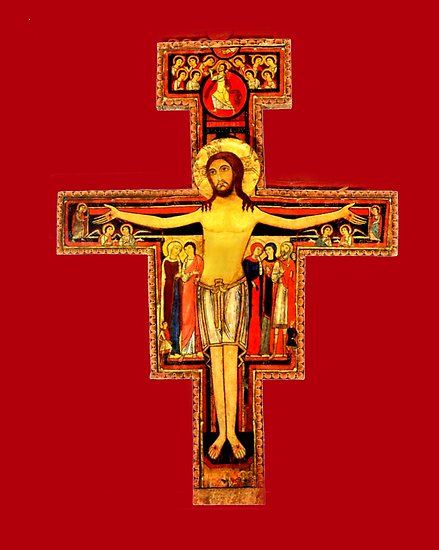
Cross of San Damiano before which St. Francis of Assisi prayed and received Christ’s commission to rebuild His Church. Photo from wikipedia.org.

Brothers and sisters: If there is any encouragement in Christ, any solace in love, any participation in the Spirit, any compassion and mercy, complete my joy by being of the same mind, with the same love, united in heart, thinking one thing. Do nothing out of selfishness or out of vainglory; rather, humbly regard others as more important than yourselves, each looking out not for his own interests, but also for those of others. Have in you the same attitude that is also yours in Christ Jesus, who, though he was in the form of God, did not regard equality with God something to be grasped. Rather, he emptied himself, taking the form of a slave, coming in human likeness; and found human in appearance, he humbled himself, becoming obedient to death, even death on a cross.

Philippians 2:1-8

We priests and religious pray this beautiful hymn by St. Paul every Saturday evening. It is also proclaimed on Palm Sunday to show us Jesus Christ’s self-emptying (kenosis in Greek) to offer himself for our salvation. It is the most important text of St. Paul’s letter to the Philippians that has played a vital role in the discussions of Christ’s preexistence.

Seen in the light of the gospel this Sunday, it is also part of St. Paul’s moral exhortation to the Philippians and us living today to be united as one in Jesus by following his pattern of kenosis that is similar with his teachings that “the first will be last, and the last will be first, that the greatest is the servant of all.”

It is the fundamental model of Christian life, the very essence of following Jesus by denying one’s self and taking up one’s cross but also the most difficult to learn and put into practice as it is exactly the opposite of the way of the world – “upward mobility” — of being rich and famous, of being in control that had divided us with massive walls of indifference, hate, and antagonisms making peace and joy more elusive.

Christ’s kenosis is the only way up in life to be back in God that leads us to unity, peace, and joy.

In this time of the pandemic when we are supposed to be more united and kind and nice with everyone, St. Paul’s call to imitate Jesus Christ’s kenosis is very timely and relevant, calling us to soften our hearts by emptying ourselves of our pride unlike the chief priests and elders of Israel to whom the Lord addressed his parable this Sunday.

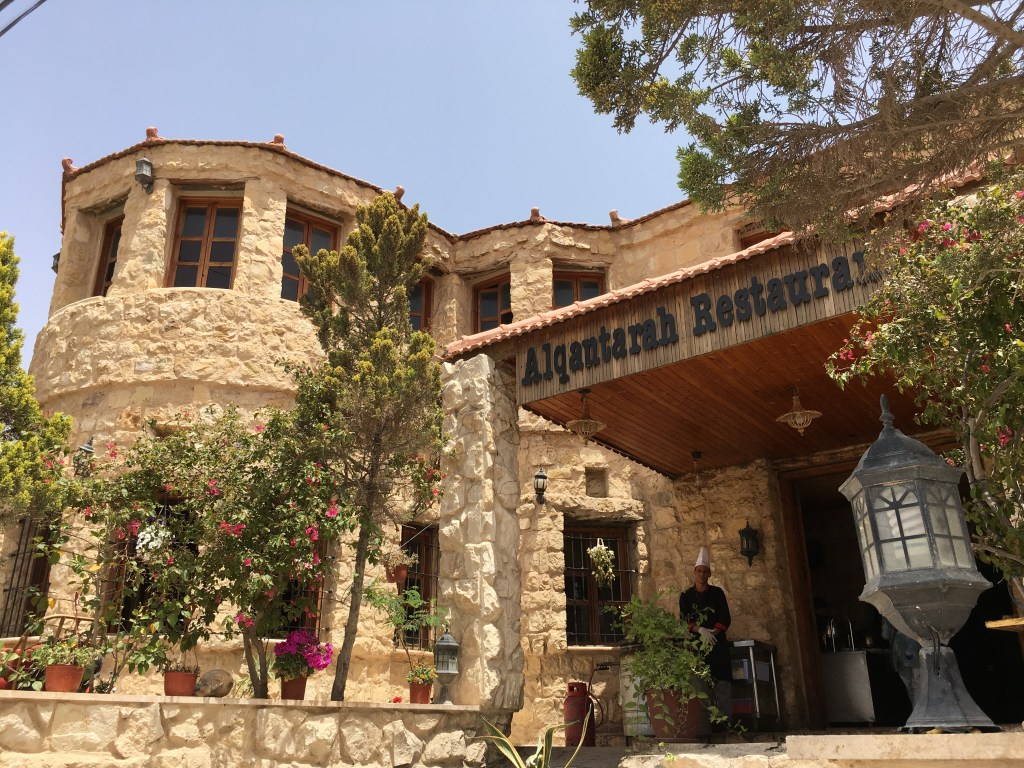
Photo by author, wailing of Jerusalem, May 2017.

Our sense of entitlement

Jesus said to the chief priests and elders of the people: “What is your opinion? A man had two sons. He came to the first and said, ‘Son, go out and work in the vineyard today.’ He said in reply, ‘I will not,’ but afterwards changed his mind and went. The man came to the other son and gave the same order. He said in reply, ‘Yes, sir,’ but did not go. Which of the two did his father’s will?” They answered, “The first.” Jesus said to them, “Amen, I say to you, tax collectors and prostitutes are entering the kingdom of God before you.”

Matthew 21:28-31

Beginning today in three successive Sundays, Jesus teaches us again in parables to soften our hearts and let go of our pride that we are better than others, that we deserve more than what is due us like those early workers to the vineyard in last week’s gospel.

In a sense, today’s gospel tells us that there are too many works to be done in God’s kingdom that we have to keep going, imitating Jesus and be careful of falling into the same trap of those workers in last Sunday’s parable who felt entitled to more pay because they worked longer than others.

Notice how Jesus directly addresses his parables in these three Sundays to the same crowd of “chief priests and elders of the people” who have always felt favored by God for being of his “chosen people” since Abraham’s time. They always looked down at others specially the “tax collectors and prostitutes” considered as sinners.

They are not just people from the past who have lived during Christ’s time more than 2000 years ago. Even among us today, there are still chief priests and elders who continue to live and exist!

And here is the rub — among these people who may really be good in faithfully keeping the commandments of the Lord, praying and doing all kinds of devotions and charities are also the worst. Their religiosity are tied only to themselves and never to God, without any love at all.

Keep in mind that every time we feel entitled like the chief priests and elders of the people, it means our hearts have gone hard and cold like the elder son of the merciful father of the parable of the prodigal son or the early workers hired to the vineyard last week.

Photo by author, Mt. St. Paul Spirituality Center, La Trinidad, Benguet, March 2020.

So many times it happens that those who are supposed to be on higher moral grounds turn out to be without any roots and grounding in God at all, becoming harsh and judgmental of others, more sinful than the ones they condemn.

Like the chief priests and elders of the people in the crowd listening to Jesus, they start as the vida only to end up as the contravida like when there is a “black sheep” in the family or a “rotten tomato” in class, that instead of helping them rise from their sinfulness, they who are the ones who condemn and sink others deeper into their holes!

That is why God questions, stirs their hearts through the prophet in the first reading,

Thus says the Lord: You say, “The Lord’s way is not fair!” Hear now, house of Israel: Is it my way that is unfair, or rather, are not your ways unfair?

Ezekiel 18:25

Always examine our hearts for we must all be converted again and again.

We must keep on praising and thanking God for his mercies like in our responsorial psalm this Sunday because he gives us all the chances in life to change and become better persons. Here we find a semblance with the gospel the other Sunday why we must forgive without limits because God’s love for us is infinite.

Actions, not intentions, judge us

Last Monday we celebrated the feast of St. Matthew, the tax collector called by Jesus to become one of his Twelve Apostles who also wrote one of the four gospels. It is very interesting to know that in all gospel accounts, tax collectors and prostitutes are always grouped together because they are the worst sinners at that time.

Tax collectors not only enriched themselves with excessive collections from the people but were seen as traitors who worked for the Roman colonizers of Israel at that time. Prostitutes, on the other hand, have always been considered very low because as women supposed to give birth for the awaited Messiah, they have “dirtied” their womb. Together, tax collectors and prostitutes were seen as the worst sinners in Israel because they have sold their souls to the devil; hence, they were considered beyond redemption, beyond hope, a scourge to their families and to the community that nobody would want to deal with them.

And so, it was very radical, out-of-this-world and totally unimaginable for everybody then when they heard Jesus telling them how “tax collectors and prostitutes” were entering the kingdom of God before the chief priests and elders of the people who were considered very holy at that time!

It was a serious warning to them and us today from the Lord who reminds us that our actions judge us. The parable is an echo of his warning that “not everyone who calls him ‘Lord, Lord’ will enter heaven” (Mt.7:21). St. Matthew is very particular in his gospel account of the complete jibing together of what we say and what we do, of “walking the talk”.

We have so many sayings expressing this important lesson of today’s parable by the Lord like “A single act of good deed is always better than the grandest and best intention” and “Actions always speak louder than words.”

Photo by author, sunset in the parish, August 2020.

In this time of the pandemic when church attendance is limited and we are advised not to sing and reply aloud in the Mass, it is best that we examine how we have become mechanical in our celebrations without realizing the gravity of things we say like when we acclaim after the gospel proclamation “Praise to you, Lord Jesus Christ!”: do we really work hard in his vineyard or are we like the other son who said yes but did not go? When at the end of the Mass we are told “Go in the peace of Jesus Christ” and we say, “Thanks be to God”, do we really go home at peace or still having that festering anger or dislike to someone?

Make your joy complete. Ask Jesus to soften your heart. Take a step backwards like the first son though at first he seemed so bad to disobey his father in refusing to follow his command, do not be ashamed to take back your words and do what is right.

Be careful not with your words but with your actions for which the Lord would judge us in the end.

Find solace in St. Paul’s beautiful hymn this Sunday: the lower we go down, the higher we are lifted up like Jesus. Nobody had ever gone wrong and lost in life going down, of being humble. Many men and women have gone to oblivion, lost and forgotten when their ivory towers collapsed, burying them in the rubble.

Have a blessed Sunday and week ahead!

When time is not

The Lord Is My Chef Breakfast Recipe for the Soul by Fr. Nicanor F. Lalog II
Friday, Week XXV, Year II in Ordinary Time, 25 September 2020
Ecclesiastes 3:1-11  >><)))*>  >><)))*>  >><)))*>   Luke 9:18-22
The wildfires created a natural Instagram filter across California. Photo from MediaNews Group/The Mercury News via Getty Images; 10 September 2020.

There is an appointed time for everything, and a time for every affair under the heavens. He (God) had made everything appropriate to its time, and has put the timeless into their hearts, without man’s discovering, from beginning to end, the work which God has done.

Ecclesiastes 3:1, 11

Thank you, dear God our Father in appointing time for everything, in creating the dimension of time and space so we can have a grasp of your vast reality in this universe. We are finite and you are not whom time and space cannot limit and hold.

Teach us to be open to your presence and grace in every moment of our lives, to make that constant effort to pray like your Son Jesus Christ our Lord.

Prayer is so difficult for us because in our limited time and space, we try to be one with you who is infinite and eternal. We find it boring and a waste of time not only because it is difficult, requiring discipline on our part but because it requires a lot on us to truly love you.

Only love can bridge the finite and infinite, the temporal and eternal. When we are with our beloved, time neither rushes nor slows but seems to stand still like eternity as if we are holding it – when time is not. It is the same experience we have when we are deeply absorbed in prayer, when we feel that intense love for you inside when time passed so easily that an hour seemed like an instant, exactly like what you have said in the Bible that a thousand years are just a day for you.

Because you love. And we also love.

How lovely it is to read in the gospel today that once when Jesus was praying in solitude and the disciples were with him, that is when he surveyed them about what people were saying who he is, later asking them the same question up and personal.

Help us to appreciate and value silence and stillness, to befriend time and eternity in prayer to express our love for you and for others. Amen.

Photo by Dr. Mylene A. Santos, MD at Katmon Harbor Nature Sanctuary, Infanta, Quezon, May 2020.

The gift of tears

Quiet Storm by Fr. Nicanor F. Lalog II, 22 September 2020
Photo by Ms. Ria De Vera of our parish church, August 2020.

Lately I have been watching old movies that I wonder why I still cry even if I have seen them more than twice before at the cinema and cable TV. It seems that my being born with “mababa ang luha” (easy to cry) is getting more “mababa” as I get old.

Tears are a gift from God, the most beautiful prayer we can ever express courtesy of the Holy Spirit because when we run out of words for our pains and sadness or when we are overjoyed, he makes us cry to heal and comfort us or complete our joys, assuring us of his loving presence.

That is the reason why we call “home” in Tagalog as “tahanan”: home is where we “stop crying”, that is, “tahan na” because that is where we find all the support we need in times of crisis. Indeed, home is where the heart is.

True to its function, tears cleanse us physically, emotionally and spiritually. I have read two decades ago that researchers at a university in the US have found the chemical composition of our tears differ if we cry because of pain and sadness or due to joy and laughter.

Is it not wonderful and amazing how we take for granted crying and tears without realizing its chemical process within that can transform our very selves?

Photo from Reuters.com, July 2020.
Tears and crying mark our life's coming to full circle.

When I was five years old, I saw the picture of a newborn baby crying in the Book Section of the Reader’s Digest. I asked my mom why the baby was crying. In her usual motherly way of explaining things, she told me that if the baby cries upon birth, it means he/she is alive; if the baby does not cry, he/she is dead.

Kapag umiyak, buhay; walang iyak, patay.

My young mind easily absorbed her words that would remain to be one of the most profound lessons I had ever learned about life at a very young age. As I grew up watching TV and movies, I would always sigh with relief whenever I heard the sounds “uha-uha” because the story would surely be nice and not tragic.

Imagine the great inverse that happens with crying and tears to signal the coming to the outside world of life of another human, of how we have to cry to be alive from then on until we die when it becomes our family and friends’ turn to cry and shed tears for us when we are gone.

But there is something more deeper than this great inverse on crying in life and death I had learned only in 2013 through my best friend Gil, a classmate in our minor seminary.

It was late February of that year on the 40th day of the death of his youngest sister Claire when he was diagnosed with cancer. We could not believe the news because Gil was the most health conscious in our “band of brothers” from high school who never smoked, rarely ate meat, and was active in sports like golf and badminton. Unlike most of us, he was never overweight, looked so healthy in our mid-40’s.

Imagine the hurt within him that every time we would visit him, he would cry not really in pain but more on the why of getting cancer. We tried visiting him as often as we can to cheer him up and lift his spirits specially after his surgery when his chemotherapy sessions began.

By September on that same year, we all had to rush and visit him at Makati Med one Sunday afternoon when informed by his Ate Lily that doctors have given up on him. His cancer cells were “ferocious” and nothing could be done anymore except to wait for the inevitable.

That was when I noticed the greater inverse about crying when Gil had finally accepted his condition and life direction, that was when he was most joyous and peaceful too while we were the ones so sad and worried, crying. How our roles were reversed with Gil now telling us to stop crying – tahan na – which we used to tell him months earlier! (Gil died peacefully the following Sunday, 22 September 2013.)

“Mater Dolorosa” as “Blue Madonna” (1616) by Carlo Dolci. Photo from Wikimedia Commons.

I noticed it happening so many times with some friends and parishioners I have come to love in my ministry, those I have pastorally cared for some time after being diagnosed with serious conditions like cancer.

Yes, I have cried despite holding my tears for them while administering the Holy Viaticum and Anointing of Oil. The patients in turn would just glance at me, so dignified and calm like Mary our Lady of Sorrows as if trying to comfort me with their sweet thank you.

As I prayed on those experiences, I realized how life comes to full circle through our crying and tears.

I believe that patients cry when they start undergoing treatment of their sickness due to fears and uncertainty of what would happen next to them; later as they come to terms with their condition, they stop crying because they already knew where they were going, of what was coming next.

We who would be left behind cry and begin to shed tears at thoughts of their dying because admittedly, we are actually the ones more uncertain of where we are going to or how our lives would go through when our loved ones are gone.

That is the greatest pain we feel in the death of a beloved when we grapple with the realities of the many uncertainties of life without them.

And that is why we need to love as much as we can our family and friends while still alive. This quarantine period of the pandemic are grace-filled moments to shower them with our love and presence we have taken for granted for so long as we pursued many things in our lives.

Photo by Dr. Mylene A. Santos, MD at Infanta, Quezon, April 2020.
Tears and crying lead us to heaven.

Death and sickness, like life, become a blessing if we are filled with gratitude not regrets because we have truly loved. When a beloved is gone and we begin to cry, the tears wash away our pains of losing them, cleansing us within to leave us with all the beautiful memories and love we have shared. Then, every remembering becomes truly a re-membering, making a lost loved one a member of the present again.

When we cry, tears polish the love we have shared with everybody until later when our time comes, our visions are also cleared of what is going to happen next, of where we are going. Crying becomes wonderful and truly a grace after all not only in sharing and being one with the grief and pain of another in the present but sooner or later, in having a glimpse of the life after.

In the Gospel of John (11:1-44), we find the story of the raising of Lazarus whom Jesus loved so much that he wept – not just cried – at his death. Jesus raised him up back to life, his final miracle – or “seventh sign” according to John – to show he is the Christ before his own Resurrection at Easter after his “final hour” of Crucifixion on Good Friday.

From then on, Christ sanctified crying and tears to enable us to see beyond pains and hurts, even death especially if you have truly loved.

Sometimes in life, it is always good to let those tears flow, like love even if it is painful, to have a good cry and real cleansing inside. A blessed day to you!

“Take A Look Inside My Heart” by David Benoit (1982)

The Lord Is My Chef Sunday Music by Fr. Nick F. Lalog II, 20 September 2020
Photo by Dr. Mylene A. Santos, MD at Infanta, Quezon, April 2020.

Lately I have been reflecting more about the heart courtesy of our daily scripture readings for the Masses these past two weeks. When you are “quarantined” in the past six months except for a few essential trips outside, such is a grace-filled moment of this pandemic that we are able to pray and reflect more about our lives and the people we love.

Last Sunday in our gospel, Jesus asked us to forgive from the heart because we are all brothers and sisters in God our Father who forgives us without limits for our many sins.

Today in our gospel, Jesus is asking us to give from the heart, that is, be generous because we are brothers and sisters in God our Father who blesses us abundantly with everything we need.

Generosity is from the heart where we find Jesus dwelling, giving us peace and joy amid the many pains and sufferings of this life because only him suffices that we are willing to let go of everything (https://lordmychef.com/2020/09/19/generosity-comes-from-the-heart/).

David Benoit’s lovely piece called “Take A Look Inside My Heart” from his 1982 album Stages offers us a unique perspective on this looking into our hearts to reflect on God’s love for us and how we share – or selfishly keep – that love with others.

Benoit is one of the most loved jazz artist in the country who performed more that twice in the past. His music is so natural and light, but intense in meaning yet so balanced as in “tamang timpla” or “tamang tama” that is not so slow and sad but not so fast and punky. Listen and see how his lyrics speaks from a loving heart.

It isn’t easy to show you what you mean to me
I’m not that kind with all the moves
The way I’m feeling goes beyond what you can see
I’m crazy ’bout you, crazy ’bout you
I haven’t tried to impress you by the things I do
That isn’t really how I am, hmmm…
I’d rather let my dreams be opened up to you
So you’ll understand, you’ll understand
Take a look inside my heart and you’ll see
I have so much love to give beLieve in me
Take a Look inside my heart share my Love
Take a Look in my heart… yeah…

Imagine God is David Benoit singing these words to you… And yes, like in the gospel, we sometimes complain to him at how he could let injustice continue despite our efforts to work hard and honest like those workers hired early in the parable by Jesus.

Nobody ever is perfect even if they try
There may be times I’ve let you down
But when I do I hope you’ll turn my heart around
By reachin’ inside, reachin’ inside
Take a look inside my heart and you’ll see
I have so much love to give beLieve in me
Take a Look inside my heart share my Love
Take a Look in my heart…

The song tells us of the immense love of the man to his loved one, assuring her of his faith and dedication that she need not worry when things are not going on as planned. Like Jesus telling us today in his parable to be more loving, more generous with his love for others for it is then that we truly experience inner joy and peace.

I wanna promise you honestly I’ll always care
That’s what my Love has come here for
And every time I smiLe you know there’s something more
I’m waiting to share, wanting to share
Take a look inside my heart and you’ll see
I have so much love to give beLieve in me
Take a Look inside my heart share my Love
Take a Look in my heart…

Have a blessed Sunday and week ahead.

And share a generous serving of God’s blessing especially to someone in need of his love.

Uploaded to YouTube by My70s80sjazzcorner, 18 April 2020.

Generosity comes from the heart

The Lord Is My Chef Sunday Recipe for the Soul by Fr. Nicanor F. Lalog II
Week XXV-A, Ordinary Time, 20 September 2020
Isaiah 55:6-9   >><)))*>   Philippians 1:20-24, 27   >><)))*>   Matthew 20:1-16
Photo by the author on the way to Petra in Jordan, May 2019.

There was something amusing I realized while praying this Sunday’s gospel of how in our time we no longer hear or use the word “generous” anymore — except when the topic is about food like in the expression “generous servings”!

We all love and enjoy “generous servings” of food and drinks whether in restaurants or at home or at parties because it means something more than what we pay for or come for. And that is the essence of generosity: the giving of more than what is required and just. It is love in the real sense like the prayer for generosity by St. Ignatius of Loyola.

Dearest Lord:
Teach me to be generous.
Teach me to serve you as you deserve,
To give and not to count the cost,
To fight and not heed the wounds,
To toil and not seek for rest,
To labor and ask not for reward, except
To know that I am doing your will.  Amen. 
Photo by Mr. Jim Marpa, 2019.

Generosity bonds every community in Christ

Sorry if I have to start our reflection through the stomach because today is our “Pistang Pasasalamat” (Thanksgiving) in the Parish…

Going back to our reflection, my dear reader, recall how in the past two weeks we have heard Jesus teaching us important lessons how our relationships must be based on mutual love through fraternal correction and forgiving of those who have sinned against us.

This Sunday through another parable, Jesus teaches us the importance of generosity as a wonderful expression of love we forget most in our relationships and dealing with others.

Generosity is the glue that keeps our ties stronger and keeps us filled with joy because it is thinking more of the other person than of self. It is love at its finest – charming and elegant as in suave – but so disarming and revealing when overlooked as we shall see in this parable.

Jesus told his disciples this parable: “The kingdom of heaven is like a landowner who went out at dawn to hire laborers for is vineyard. After agreeing with them for the usual daily wage, he sent them into his vineyard. Going out about nine o’clock, he saw others standing idle in the marketplace, and he said to them, ‘You too go into my vineyard, and I will give you what is just.’ So they went off. And he went out again around noon, and around three o’clock, and did likewise. Going out about five o’clock, he found others standing around, and said to them… You too go into my vineyard.’ When it was evening the owner of the vineyard said to his foreman, ‘Summon the laborers and give them their pay, beginning with the last and ending with the first.’ When those who had started about five o’clock came, each received the usual daily wage. So when the the first came, they thought that they would receive more, but each of them also got the usual wage. And on receiving it they grumbled against the landowner, saying, ‘These last ones worked only one hour, and you have made them equal to us, who bore the day’s burden and the heat.’ He said to one of them i reply, ‘My friend, I am not cheating you. Did you not agree with me for the usual daily wage? Take what is yours and go. What if I wish to give this last one the same as you? Or am I not free to do as I wish my own money? Are you envious because I am generous?'”

Matthew 20:1-15

Notice how Jesus again elicited our feelings to drive home his lesson today about love as basis of our relationships. Last week we totally agreed with the king in punishing the merciless servant whose debt he had forgiven but was unmerciful to a fellow servant and debtor.

This Sunday, with whom did we take sides with? Be honest. Did you side with the workers hired in the morning and worked all day only to receive a pay exactly the same with those who worked only for an hour? Did we also feel treated unfairly like them?

But, why are we reacting the same way as those workers who toiled under the sun? What is our complaint? Are we envious because the owner is generous?

Recall our reflections last month about the parable as a simple story conveying deeper truths about life and our selves. From the French parabolein -along the way – Jesus is inviting us to read anew this parable we have heard so many times in the past so we may enter into a dialogue with him to purify and cleanse us to get its whole picture. And hopefully, become generous too.

Nuns bringing goods to the poor during the height of the Luzon-wide lockdown last summer.

Human justice, Divine kindness

The parable is not about social justice and just wages: it is about the immense love of God for us all. Jesus said it at the start, “The kingdom of heaven is like a landowner…” – it is a parable about God and his kingdom.

See the great love of the landowner who went out five times during the day, even at late afternoon so people may have a job to earn some money for the day. We have to keep in mind that the workers were hired because the owner is kind. Period.

The owner is like the good shepherd Jesus described as who would leave the rest of his flock to search for one missing sheep.

How many times have we acted like those early workers, complaining to God when we feel “shortchanged” for our work and efforts, or being better and more good perhaps than others?

It happens so many times when we question him even in the Church and specially in the society and government when we cannot understand how God who is supposed to be just and fair is allowing all injustices and evil to happen like during this time of COVID-19.

The first reading reminds us that to think that way as if we know everything is dangerous because we could be very wrong and mistaken after all. God sees and knows everything that in the end amid all the twists and turns in history and in our personal lives, it is always his will that prevails which proves best for us and mankind. In times like these, we need to have faith in God and trust him more through prayers and reflections.

Seek the Lord while he may be found, call him while he is near… As high as the heavens are above the earth, so high are my ways above your ways and my thoughts above your thoughts.

Isaiah 55:6, 9
Photo by author, Jaffa in Israel, May 2017.

We keep on saying that one immediate fruit of having a prayer life is the heightening of our sensitivities when we see more of God in others than more of ourselves. The problem with those workers hired earlier in the day that instead of thanking God for his kindness in hiring them, they even wanted more in their pay than what they have agreed upon — so selfish and feeling so entitled like some among us!!!

God as the landowner is teaching us not only to be thankful for the blessings we have received from him but also to rejoice when others aside from us are also blessed. As everyone would say these days, “sana all” are blessed, not only a selected few.

Again we find here a similar situation in the parable of the prodigal son where the father told the elder one that “everything I have is yours” (Lk.15:31) when he refused to come home to celebrate the return of his younger brother, citing how he had obeyed the father all his life without being given a young goat to feast with his friends.

Like that loving father of the prodigal son, God is reminding us this Sunday in this parable to rejoice that others have been blessed, instead of grumbling and complaining, demanding for more than what we have, forgetting everything is out of God’s goodness, never because of our merits.

Looking inside our hearts

My dear friends, this time of the pandemic invites us to be generous by looking deep into our hearts, of seeing God more and others than just our self. At this time when life is so difficult and death is so closest to home with everyone, the best thing we can do is to thank God for his gift of life to us each day and to deepen our faith in him.

Lately I have been praying to God to grant me St. Paul’s clarity of mind and purity of heart as we find ourselves in his similar situation of being imprisoned: him for the gospel, us due to COVID-19.

See the faith of St. Paul in God that even in prison with his death approaching each day, he continues to rejoice and experience peace within because he had realized that the success of the gospel is not on human efforts but in Jesus whom we cannot box in our little worlds and beliefs, rites and rituals. In fact, he was so confident that even with his death, the more the gospel would spread.

Photo by Dra. Mylene A. Santos at Katmon Harbor Nature Sanctuary, Infanta, Quezon, March 2020.

Brothers and sisters: Christ will be magnified in my body, whether by life or by death… conduct yourselves in a way worthy of the gospel of Christ.

Philippians 1:20, 27

Last Sunday, Jesus taught us to forgive from the heart, that is, to see one another as a brother and sister in God our Father who forgives us without limits for our many sins.

Today, Jesus is asking us to give from the heart – to be generous – not for anything else but because we are brothers and sisters in God our Father who blesses us without limits despite our sinfulness.

Generosity comes from the heart when in that heart is Jesus whom we find dwelling, giving us peace and joy no matter how much suffering we go through because him alone suffices that we are willing to let go of everything.

Share a generous serving of God’s blessings today to someone in need. Amen.

A blessed Sunday and week to you!

Our lives in Christ

The Lord Is My Chef Breakfast Recipe for the Soul by Fr. Nicanor F. Lalog II
Friday, Week XXIV, Year II in Ordinary Time, 18 September 2020
1 Corinthians 15:12-20   ///   Luke 8:1-3
Photo by author, “private Mass” during lockdown, March 2020.

Another week is about to close, loving Father. Praise and thanksgiving to you for the grace of making it through, of passing over doubts to certainty, darkness to light, sickness to health, and death to new life in Jesus Christ your Son.

What a pity indeed if there is no resurrection of the dead nor resurrection of Jesus Christ.

Brothers and sisters: If Christ is preached as raised from the dead, how can some among you say there is no resurrection of the dead? If there is no resurrection of the dead, then neither has Christ been raised. And if Christ has not been raised, then empty too is our preaching; empty, too, your faith.

1 Corinthians 15:12-14

In this time of so much divisions fueled by dictatorship of relativism without any absolute truth nor good, many among us have stopped believing not only in resurrection of the dead but even in you, O God. Many have created themselves as their own god or have turned to other gods and idols. Sadly, many even have the guts to blaspheme you and dare challenge you and your precepts.

We are sorry, Lord , at how many of us have gone astray from you, relying more on science and technology and modern thoughts, leading lives empty of meaning, without directions. Aimless and worst, homeless.

Show us, Lord, the path we have to take to lead people back to you.

Give us the clarity of mind, purity of heart and intentions of St. Paul in leading our lives in Christ Jesus.

Enable us to embrace the new life in Christ like those women who followed Jesus in his ministry, “providing for them out of their resources” (Lk.8:3).

May our lives glow with your loving presence Jesus to lead others back to you. Amen.

Love is being present – and a present, too!

The Lord Is My Chef Breakfast Recipe for the Soul by Fr. Nicanor F. Lalog II
Wednesday, Memorial of St. Cornelius (Pope) and St. Cyprian (Bishop), Martyrs, 
16 September 2020
1 Corinthian 12:31-13:13   ///   Luke 7:31-35
Photo by author, Mt. St. Paul Spirituality Center, La Trinidad, Benguet, January 2020.

Praise and glory to you, God our loving Father!

Thank you for the rains these past three days. Thank you for the feasts of the Exaltation of the Cross and of Our Lady of Sorrows, respectively these past two days.

Most of all, thank you for the present moment!

As I prayed on your words for today, I got fixed on St. Paul’s description of love as the greatest of all your gifts:

It bears all things, believes all things, hopes all things, endures all things. Love never fails.

1 Corinthians 13:7-8

I just prayed on these verbs, Lord. I do not know if I make sense. But, through them I felt your love!

Love bears all things when you keep on carrying, having someone just because you love the person, you feel a link with the person like a brother or a sister, a friend, a parent. Like you, our Father. Or Jesus our brother.

Love believes all things when you give more room, more space for something to be realized and fulfilled in a person just because you love. Like when we feel unworthy with all our sins, you still welcome us back to you, you let us “shower” and clean up to begin anew in you and with our loved ones.

Love hopes all things when you know even if things get worst, you still love us, Lord. I know some things in me and my loved ones will not get any better. Some day we shall die and everything will end. But, you will always love us, dear God, because you are love.

Love endures all things because it bears all things, it believes all things, it hopes all things. That is why love never fails.

Photo by author, Petra, Jordan, May 2019.

In all of these, Lord, I found love is everything because it is the present, the here and the now – the meaning and reality of your name “I AM WHO AM”.

All these verbs describing love are all in the present tense, not in the past nor in the future.

And that is love, always present, also a present — a gift. A most wonderful gift leading to eternity!

That is why love is the greatest!

Teach me, Jesus, to be always present in you, to you, and with you through others around me as you implied in the gospel today. Amen.

St. Cornelius and St. Cyprian, pray for us!

Forgiving from the heart

The Lord Is My Chef Sunday Recipe for the Soul by Fr. Nicanor F. Lalog II
Week XXIV, Cycle A in Ordinary Time, 13 September 2020
Sirach 27:30-28:7     >><)))*>   Romans 14:7-9   >><)))*>   Matthew 18:21-35
Photo by author, dusk in our parish, July 2020.

This Sunday we go deeper into the lessons gathered by Matthew from Jesus regarding love as the basis of our relationships. Last week we were told how mutual love is the sole reason why we correct brothers and sisters going stray in life.

But, more sensitive and delicate, not to mention most difficult than fraternal correction is the question of forgiving.

How many times should we forgive?

Peter approached Jesus and asked him, “Lord, if my brother sins against me, how often must I forgive? As many as seven times?” Jesus answered, “I say to you, not seven times but seventy-seven times. That is why the kingdom of heaven may be likened to a kind who decided to settle accounts wit his servants. When he began the accounting, a debtor was brought before hm who owed him a huge amount. Since he had no way of paying it back, his master ordered him to be sold, along with his wife, his children, and all is property, in payment of the debt. At that, the servant fell down, did him homage, and said, ‘Be patient with me, and I will pay you back in full.’ Moved with compassion the master of that servant let him go and forgave him the loan.

Matthew 18:21-27

Forgiving is always difficult because it is from God, calling us to be one with him, one in him, and be like him as that saying perfectly summed up, “To err is human, to forgive is divine.” It is beyond human abilities, reserved only for God until he became human like us in Jesus Christ who made us share in his greatest expression of love which is forgiveness. Hence, every time we forgive, we also become like God, divine and holy that unfortunately, we refuse and even hate!

Yes, it is very difficult because like love, forgiving is the nature of God. In fact, any kind of love is best expressed when it is forgiving. The good news is that we now share in this great love of God in forgiving others like him as we shall see in today’s parable, keeping in mind also that it was the Risen Lord’s commission to his disciples when he appeared to them on that Easter evening (John 20:22-23).

Photo by author, Baguio Cathedral, January 2018.

Forgiving like God our Father

The beauty of forgiving is that it is always a grace from God freely given to us. It is doable in Jesus Christ. The problem is when we refuse to let God work in us, when we refuse to level up our relationships to that of brothers and sisters in Jesus Christ.

There is always that pride in us exhibited by Peter at the start of the gospel today when he asked Jesus how many times he must forgive his brother. Must it be seven times?

Of course, seven being a “perfect number” does not specify a numerical figure of times to forgive except that it gives enough room to let go of a sinner or an offender. However, it still connotes some form of “counting” or taking tabs at how many times must one forgive, implying a limit.

But Jesus pushed it further when he told Peter to forgive “not seven times but seventy-seven times” — that is, twice the perfect number he had cited!

The Lord is telling Peter, and us today, to forget all about keeping tabs, of counting how many times you must forgive because God forgives us without limits which his parable tells us.

The king or master in the parable is God, so wealthy that he could lend sums exceeding the normal level of what one can borrow. Most surprising is like God, the master lent so much amount beyond the debtor’s ability to pay!

That is how rich our God is — so rich in love and mercy, giving us with so much even beyond our ability to pay him back in return. Exactly what we have in the responsorial psalm: “The Lord is kind and merciful; slow to anger and rich in compassion.”

And when that servant prostrated before his master, then the more we see in that religious gesture the deeper meaning of the parable: the rich mercy of God forgiving us for our debts even after we have lost everything like that debtor with nothing enough to pay his loans, not even his wife and children.

See the contrast of the king moved with compassion echoing the same attitude of Jesus so often like in the wilderness where he fed more than 5000 people and that servant so lost with nothing else left but still forgiven.

The parable could have stopped there but Jesus went on to continue what happened next to teach us the deeper truth of forgiving, which is imitating God our Father because we are brothers and sisters in him.

From Google.

When this servant had left, he found one of his fellow servants who owed him a much smaller amount. He seized him and started to choke him, demanding, ‘Pay back what you owe.’ Falling to his knees, his fellow servant begged him… but he refused. Instead, he had the fellow servant put in prison until he paid back the debt. Now when his fellow servants saw what had happened, they were deeply disturbed, and went to their master and reported the whole affair. His master summoned him and said to him, ‘You wicked servant! I forgave you your entire debt because you begged me to. should you not have had pity on your fellow servant, as I had pity on you?’ Then in anger is master handed him over to the torturers until he should pay back the whole debt. So will my heavenly Father do to you, unless each of you forgives his brother from his heart.”

Matthew 18:28-35

Forgiving from the heart

After hearing the second part of the parable, we all felt like the master, angry and indignant with that merciless servant whose action was very shameless and scandalous. But, more than being like the king who properly judged the conduct of that merciless servant, Jesus is also inviting us to probe deeper into our hearts the realities why we felt like the king in the parable?

How many times have we felt so angry and frustrated during this pandemic period at the many occasions when we heard news of injustices and abuse of powers against the little ones like Mang Dodong or the Marawi verteran shot to death in Quezon City? Of those punished in violating the protocols when its chief implementor got away free after attending a mañanita party?

The list goes on specially in our country where laws favor the abusive rich and powerful, those with connections while ordinary citizens with lesser violations, even without any crimes at all suffer the same fate as the servant with lesser debts.

Photo by author, “patak-dugo”, 2019.

We all feel so angry and very sad because more than the injustices and lack of mercies committed by those in powers, they have forgotten we are brothers and sisters in one God our Father. Parang sila lang ang anak ng Diyos…

We feel like the king in the parable because we felt left out, disregarded, and disrespected despite our kindness and mercy with others.

Forgiving from the heart means to forgive others not because we are fellow servants but most of all as brothers and sisters of a loving and merciful Father who forgives us always from our unpayable debts of sin and evil against each other.

This is the very thing St. Paul is telling us in the second reading, that “None of us lives for oneself, and no one dies for oneself” (Rom.14:7). Sometimes we need to be in control of our lives but the truth is, when we try to live St. Paul’s message that our lives belong to one another in Christ, the more we become truly free and happy.

It is the same reminder from Ben Sirach in the first reading telling us how we must avoid anger and resentment specially revenge because it is contrary to our faith in God. Most of all, we also know so well that we need the mercy of God in forgiving our countless sins.

The example of St. John Paul II about forgiving like God

I know what I am telling you are easier said than done. And I confess that I also find it so hard to forgive people who have wronged me, specially those I have loved and helped. Allow me to end this reflection with this beautiful bit of history that happened in our lifetime.

We were in high school seminary when Mehmet Agca shot and almost killed St. John Paul II at St. Peter’s Square on May 13, 1981. We were shocked, so sad for him and very angry with Agca. But, two years later after Christmas in 1983, we were more shocked in disbelief while at the same time in tears with joy when news came out that St. John Paul II came to visit Agca in his cell to forgive him!

It was a major news that landed on TIME magazine the following year with the cover story so relevant with our gospel today:

From Pinterest.

Those who do not forgive are those who are least capable of changing the circumstances of their lives…

Not to forgive is to be imprisoned by the past, by old grievances that do not permit life to proceed with new business.

Not to forgive is to yield oneself to another’s control. If one does not forgive, then one is controlled by the other’s initiatives and is locked into a sequence of act and response, of outrage and revenge, tit for tat, escalating always. The present is endlessly overwhelmed and devoured by the past. Forgiveness frees the forgiver. It extracts the forgiver from someone else’s nightmare. “Unless there is a breach with the evil past,” says Donald Shriver, “all we get is this stuttering repetition of evil.”

Lance Morrow, TIME Magazine, 19 January 1984

As I searched for photos of the assassination attempt on him by Agca, I came across this photo below of their meeting with an accompanying report that made me admire and love St. “JP2” more than ever.

It said that while recuperating in the hospital, St. JP2 learned from the news how people hated Agca, prompting him to ask everyone to “pray for my brother (Agca)… whom I have sincerely forgiven.” That is how holy is this great Pope of our time! Long before visiting Agca in 1983, St. JP2 had already forgiven him, calling him a “brother” despite the evil and sin done to him.

What a great Amen!

Have a blessed and wonderful week ahead, brothers and sisters in Christ!

From https://rarehistoricalphotos.com/pope-john-paul-mehmet-agca-1983/.

Loving and knowing

The Lord Is My Chef Breakfast Recipe for the Soul by Fr. Nicanor F. Lalog II
Thursday, Week XXIII, Year II in Ordinary Time, 10 September 2020
1 Corinthians 8:1-7, 11-13  >><)))*>  >><)))*>  >><)))*>   Luke 6:27-38
Photo by author, dusk at my parish, July 2020.

Thank you, dear Jesus, for the grace of being together again with our family and relatives at this time of the pandemic. Your words from St. Paul today are so timely as we now spend more time together at home due to shortened work periods while kids have online classes.

But, despite these grace-filled moments in the pandemic while being together again with our family, frictions happen because we have never been truly at home with each other. We always forget the fact that love of one another is more important than being right.

Brothers and sisters: Knowledge inflates with pride, but love builds up. If anyone supposes he knows something, he does not yet know as he ought to know. But if one loves God, one is known by him.

1 Corinthians 8:1-3

Oh yes, Lord! We are sometimes surprised at how fast we have grown in age with our parents and siblings. And yes, how we have grown apart too from each other, still carrying those sentiments and memories we have had when younger.

Purify us, Jesus. Heal our memories. Enable us to let our love flow to others specially those dearest and closest to us. Remove all emotional blockages in our hearts and mental blocks in our minds that prevent us from being kind and understanding, and be more spontaneous and more sincere with everyone.

Make us realize that the more we know, the more we must be loving and understanding.

Photo by author, Malagos Garden Resort, Davao City, 2018.

Let our knowledge make us “holier” because to know what is right always leads us to being more loving as we heed your words in the gospel today, “Do to others as you would have them do to you” (Lk.6:31).

Inspire us to reflect further on these words by St. Bernard about spiritual life so that it may soothe our souls and calm our minds:

The whole of the spiritual life consists of these two elements. When we think of ourselves, we are perturbed and filled with salutary sadness. And when we think of the Lord, we are revived to find consolation in the joy of the Holy Spirit. From the first we derive fear and humility, from the second hope and love.

Office of Readings, Wednesday of 23rd Week, The stages of contemplation by St. Bernard

We pray in a very special way today, Lord, for our family and relatives, for those we live together at home. Amen.

Pag-ibig: ang tanging sagutin at kaloob sa buhay natin

Lawiswis ng Salita ni P. Nicanor F. Lalog II, Ika-09 ng Setyembre, 2020
Larawan kuha ni G. Jim Marpa, 2019.
Kay ganda ng paalala
ni San Pablo sa mga taga-Roma
na hanggang ngayon sa ating panahon 
gawin nating tuntunin:
"Huwag kayong magkaroon ng sagutin
kaninuman, liban sa saguting tayo'y mag-ibigan...
Ang umiibig ay hindi gumagawa ng masama kaninuman,
kaya't ang pag-ibig ang kabuuan ng kautusan." 
(Roma 13:8, 10)
Ano nga ba ang sagutin natin sa bawat isa?
Hindi ba ano mang sagutin ay pagkaka-utang din?
Kung gayon, 
tayong lahat ay mayroong tungkulin
at sagutin na bayaran pagkakautang natin
na walang dili iba kungdi pag-ibig pa rin!
Sa lahat naman ng sagutin at bayarin
pag-ibig ang pinakamamahalin at mainam utangin;
hindi tulad ng salapi, pag-ibig ng Diyos ay hindi tinitingi
walang tinatangi, hindi na kailangan pang humingi
kahit ikaw ay mabaon at hindi makaahon
sagot palagi ng ating Panginoon!
Kaya si Hesus pumarito noon
upang tubusin sangla ng pagkakautang natin
sa pag-ibig ng Ama na tinalikuran at tinanggihan
ng mga unang magulang natin;
Sa Kanyang kabutihang-loob
sa atin ay ipinagkaloob buhay Niyang handog.
Pag-ibig ang siyang pumupuno sa atin
siya ring nagpapairal sa atin
dahil ang mabuhay ay umibig;
sino mang hindi umiibig ay patay
parang naglalakad na kalansay
hungkag at walang laman, puso at kalooban.
Kaya naman sumasama ating loob
kapag minamahal natin ay walang utang na loob
dahil pag-ibig ang tanging nasa ating loob;
kapag pag-ibig ay hindi sinuob
upang humalimuyak gaya ng insenso at bulaklak,
ito'y nakukulob, umaantong, sa kamatayan humahantong.
Katulad ang pag-ibig ng tubig sa ilog
mahirap masundan pinagmumulan at patutunguhan
ngunit iyon ang kagandahan at kainaman
habang tayo'y patuloy sa pag-ibig, dumadaloy, umaagos
hindi ito nasasaid dahil ang Diyos ay pag-ibig
at walang hanggan na Siyang ating hantungan at kaganapan.