Pentecost is home

Lord My Chef Sunday Recipe for the Soul by Fr. Nicanor F. Lalog II
Solemnity of the Pentecost, Cycle C, 08 June 2025
Acts 2:1-11 ><}}}}*> Romans 8:8-17 ><}}}}*> John 14:15-16, 23-26
VATICAN CITY, VATICAN – MAY 08: Faithful in St. Peter’s Square participate in the first blessing of Pope Leo XIV immediately after the white smoke on May 08, 2025 in Vatican City, Vatican. Photo by Ivan Romano/Getty Images.

The other “good news” I heard next to the election of Pope Leo XIV last month were reports of people from different countries and other religions who went to join the pilgrims at the Vatican Square celebrating the election of our new Holy Father.

According to news, many of those non-Catholics who came there were so attracted and drawn by the unity of the people in rejoicing and celebrating Pope Leo XIV’s election to the papacy. That is Pentecost in modern time happening whenever people are one with each other in God by the Holy Spirit.

Painting by El Greco, “Pentecostes” (1597) from commons.wikimedia.org.

When the time for Pentecost was fulfilled, they were all in one place together… Then there appeared to them tongues as of fire, which parted and came to rest on each one of them. And they were all filled with the Holy Spirit and began to speak in different tongues, as the Spirit enabled them to proclaim. Now there were devout Jews from every nation under heaven staying in Jerusalem… They were astounded, and in amazement they asked, “Are not all these people who are speaking Galileans? Then how does each of us hear them in his own native language?” (Acts 2:1, 3-5, 7-8).

The Pentecost is an old Jewish Feast commemorating the ratification 50 days after of their covenant with God through Moses at the Sinai desert; today in the Church, we celebrate it 50 days (pente) after Christ’s Resurrection that also closes the Easter Season.

Considered as the birthday of the Church, see how appropriate the way Luke described the Church “born” on that day, “When the time for Pentecost was fulfilled, they were all in one place together.”

They were all in one place. There has always been the oneness or gathering of people as one body. However, it was more than being physically together in one place but of being one heart and one mind of the Church that continue to this day in our own time despite our many physical differences. What we celebrate today is not just a remote event in the past but a reality that continues in the Church and in various churches everyday.

The Pentecost is the fulfillment of those reflections we have had these past weeks on Jesus Christ’s commandment to love so that God would dwell among us. It is again our gospel this Sunday that was experienced by the Jews from other parts of the world there in Jerusalem on that day when they were astounded at how the Apostles were speaking in their own languages of God’s mighty deeds. They felt the love among everyone that they felt home. It was the complete opposite of what happened at the Babel’s Tower in the Old Testament.

They were astounded, and in amazement they asked, “Are not all these people who are speaking Galileans? Then how does each of us hear them in his own native language? We are Parthians, Medes, and Elamites, inhabitants of Mesopotamia, Judea and Cappadocia, Pontus and Asia, Phrygia and Pamphylia, Egypt and the districts of Libya near Cyrene, as well as travelers from Rome, both Jews and converts to Judaism, Cretans and Arabs, yet we hear them speaking in our own tongues of the mighty acts of God” (Acts 2:7-11).

Biblical vector illustration series, Pentecost also called Whit Sunday, Whitsunday or Whitsun. It commemorates the descent of the Holy Spirit upon the Apostles and other followers of Jesus Christ
"We hear them speaking in our own tongues of the mighty acts of God" 

The social media was recently abuzz with a post by a vlogger who brought to Facebook his misgivings with Starbuck’s for wrongfully calling him “JC” instead of “JP” notwithstanding his earlier insistence on not making a mistake with his name’s spelling.

He is labeled as OA – overacting – or maarte in bringing to social media his experience which has anyway been a trademark of most coffee shops. What really got the attention of everyone that made his post viral was his declaration of how Starbuck’s had lost one loyal customer following that mistake which became the subject of many memes with some parodies that are thought-provoking. One is by a brother priest, Fr. Ritz who called his parody with the long title NOT ONLY A COFFEEHOUSE MAY LOSE A LOYAL CUSTOMER TODAY.

Fr. Ritz satirically narrated the two common laments of parishioners almost everywhere, namely, the priest’s boring homilies and lack of transparency with the faithful’s financial contributions. Sadly true, many of our faithful have become lukewarm in their faith and have stopped coming to church especially on Sundays due to these particular reasons.

Of course, we can’t put all the blame on the priests but we can’t blame either the lay faithful who make up the Church, the flock of Christ entrusted to us to love and care for by bringing out their giftedness in order to build this mystical Body of Christ on earth. The Church is more than Starbuck’s or any food and service entity but they all essentially share the same things like love and care among others to keep their relationships for existence and relevance or meaning.

Of course, that vlogger’s post about his experience at Starbuck’s was way off the mark but it is something we need to look deeper. How did it happen that people are now more concerned and more eager in coming to Starbuck’s than to our parish church? Maybe because like him who had given albeit wrongly his loyalty to a mere coffee shop, some of our faithful have felt taken for granted. We cannot claim “para yun lang” because certain things no matter small may be the world for some like being called in their name, being greeted or simply acknowledged as present on a weekday Mass. Or being enriched by a good homily which is after all the right of every baptized Christian.

At Pentecost, imagine the great joy of the Jews from diaspora visiting Jerusalem, hearing others speaking their language. They must have felt at home!

Are we at home in our Church?

Do we find and experience solace and comfort in our parish? Is there justice and sense of being fair from the priests instead of taking sides with the rich and famous? Can we feel our pastors and church volunteers and servants one with us?

Many times some of our parish workers and volunteers are more strict than the priests, throwing their weight around with their own rules and regulations. The single most important PR department of any parish is its office but sadly, some of its staff members scrimp on their smiles, feeling grouchy when ordinary folks come to inquire or get some certificates. Some are so unmindful of people walking for an hour only to be told they are still closed or about to close for lunch.

How sad when we are left out in the singing because the choir members stage a concert every Mass, experimenting with their voicing even with the most common Christian prayer of Our Father that people just stand and stare waiting for the communion to come and get home. Worst, as a preparation for the Father’s homily that often unprepared anyway, there are also the unprepared lectors lost which readings to proclaim or totally unmindful of the dignity of the ministry.

Above all these things, is the total lack of sense of prayer and silence among church servers who lead the Maritess sessions before and after each Mass right there inside the church. Worst, they cap each service with selfies and photo sessions at the altar as if it was their last serve. Clearly many of us live in the flesh than in the Spirit as St. Paul reminded us in the second reading. Where is the love that Jesus Christ had sent us in the Holy Spirit to make us one, feel at home joyful, safe and loved?

On this Pentecost Sunday, let us start practicing silence to feel the Holy Spirit within so that we can be in touch with everyone around us in love and kindness. Let us allow the Holy Spirit to teach us everything and remind us of all that Jesus had told us (Jn. 14:26). Amen. Have a blessed week ahead everyone!

Presence in Absence

Lord My Chef Sunday Recipe for the Soul by Fr. Nicanor F. Lalog II
Solemnity of the Ascension of the Lord, Cycle C, 01 June 2025
Acts 1:1-11 ><}}}}*> Hebrews 9:24-28;10:19-23 ><}}}}*> Luke 24:46-53
Photo by author, Atok, Benguet, 26 December 2025.

We all have experienced dreams so real where we met friends and relatives even strangers that we described as “totoong-totoo” that we woke up crying or simply joyful and feeling so light. The clothes even the scent and ambiance were so real that we tried going back to sleep to continue the dream!

This is what we call as the dynamic of “presence in absence” when loved ones long dead or gone or simply far from us we still feel near and close too. It is the same familiar kind of relationship that we have with God whom we feel also as too near yet so far like what Luke described to us in the Ascension of Jesus Christ:

As he blessed them he parted from them and was taken up to heaven. They did him homage and then returned to Jerusalem with great joy, and they were continually in the temple praising God (Luke 24:51-53).

Photo by Mr. Sean Pleta in Melbourne, March 2015.

When Luke said that Jesus “As he blessed them he parted from them and was taken up to heaven”, he was describing to us Christ’s new and higher kind of relationship with all his disciples that include us today.

Jesus did not merely enter a physical reality that the author of the Letter to the Hebrews tells us in the second reading; he actually entered into a new level of relationship with us and everyone. This “leveling up” in our relationships that no longer require physical presence is the dynamic of presence in absence. We don’t have to be physically present because there are deeper ties that bind us with God and with others, both the living and the dead.

Recall how since Easter we have been reflecting on this aspect of new level of relationship with Jesus who told Mary Magdalene at their first meeting to “touch me not” because of the need for a higher level of relating with him no longer bound by time and space. This Jesus showed when on the evening of Easter he entered the locked doors where the disciples were hiding. And Luke tells us that beautiful account of Jesus walking to Emmaus with two disciples who did not recognize him but upon reaching home after the breaking of bread, the two disciples recognized Jesus who immediately disappeared from their side. It was always a case of presence in absence!

Note also that in all appearances of Jesus after Easter to his disciples, there was always joy that continued even after his Ascension when “they returned to Jerusalem with great joy, and they were continually in the temple praising God.” Normally, there is sadness after every separation and goodbye. But not with the disciples of Jesus including us!

How can you explain that even if Jesus does not seem to answer our prayers, we just keep on praying to him? Why do we remain in Jesus despite his apparent absence? That’s because deep in our hearts we are certainly sure he is always with us, that he loves us so much, that eventually, he will answer our prayers though he does answer our prayers always but not in the way we wanted it to be.

That is why we need to make that effort to deepen and cultivate our relationship with Jesus to always see his presence in his absence like what the angel told the disciples in the first reading after his Ascension, “Men of Galilee, why are you standing there looking at the sky? This Jesus who has been taken up from you into heaven will return in the same way as you have seen him going into heaven” (Acts 1:11).

Do not look up or anywhere but look inside our hearts where Jesus dwells as he had told us last Sunday if we keep his words and love one another. We need to level up in our relationship with God through prayers and good works.

We need to see more with our heart than with our eyes because the deepest truths and realities in life are seen with the heart and soul. The ancient Persian sage and poet Rumi said it so beautifully, “Goodbyes are only for those who love with their eyes. Because for those who love with heart and soul, there is no such thing as separation.”

Since Easter, we have been reflecting on the profound difference of Christ’s Resurrection with his birth on Christmas filled with external signs and symbols. Easter is characterized by absence like darkness and emptiness where we find the presence of Jesus and his light.

This presence in absence is also the reality we have in those we refer to as “low-maintenance” friendships where we have some people who do not demand anything from us nor we demand much from them. We meet when time allows and chat once in a while yet we remain the bestest friends because of the love and respect we have for each other. Basta, alam na this!

That is also the reality of our relationship with God. Do we experience the same joys in his presence in absence? Are we at home with our relationship with Christ found in darkness and emptiness, present in his apparent absence? Let us pray:

Lord Jesus,
let us rise up in our
relationships with you with others;
let us be more loving and faithful,
kind and understanding,
fair and just
even without seeing you
and one another.
Amen.
Photo by author, Anvaya Cove and Resort, Morong, Bataan, 25 May 2023.

Living Inside Your Love (1976) by Earl Klugh

Lord My Chef Sunday Music by Fr. Nicanor F. Lalog II, 25 May 2025
Photo by author, Angels’ Hills Retreat and Spirituality Center, Tagaytay City, 18 April 2025.

We shift this Sunday into jazz with Earl Klugh’s sophisticated Living Inside Your Love to slow cool down our simmering summer and to feel more the meaning of the Mass readings today as we enter the penultimate week of Easter.

We were already in our early teens when we discovered Earl Klugh along with other jazz greats with the opening of the country’s first and only jazz radio station 101.9 WK-FM in the late 70’s. Maybe it was part of growing up when we experimented on a lot of things for more adventures that I found myself venturing into jazz from rock and pop music, switching from RJ to RT and then WK.

For me, Earl Klugh was the jazz version of rock’s Eric Clapton or Carlos Santana. Klugh has that certain touch or pluck in his guitar that can make you be in love, not necessarily be in love with anyone. It is a nakaka-in love ma-in love na feeling! That is why we remembered his Living Inside Your Love piece from his second studio album released in 1976 by the legendary Blue Note Records and Liberty Records produced by another jazz great, Dave Grusin.

Actually, we just realized today Living Inside sounds like a prelude to the turn of the century’s new age music where Klugh’s masterful playing of the guitar taking the centerstage of a great symphony backed up with cool vocals repeating just a few lines and stanzas of simple verses over and over that is similar with the vision of John in this Sunday’s second reading from the Book of Revelation when he saw and experienced the “new heaven, new earth” in the great luminous light of God who is himself the temple in the city (https://lordmychef.com/2025/05/24/easter-is-god-dwelling-in-us/). See how Klugh inserted the vocals into his great guitar music enhanced by a symphony like John’s vision of heaven:

Can't get over the feeling
Living inside your love
I never want to lose the feeling
Living inside your love

Baby, you made my life so free
Living inside your love
You're just where I want to be
Living inside your love

Baby, you made my life so free
Living inside your love
You're just where I want to be
Living inside your love

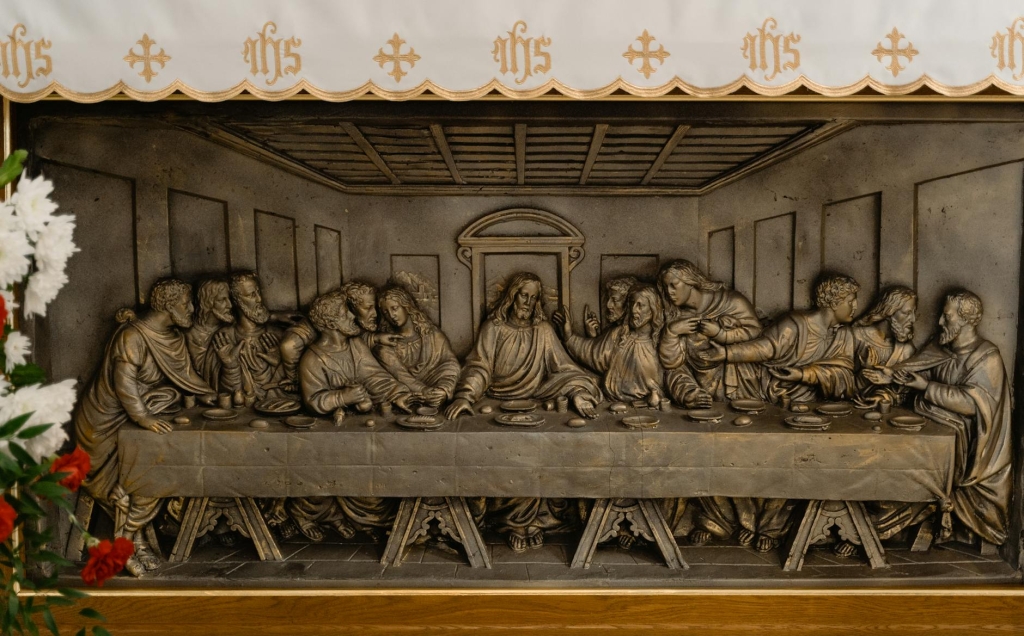
Very interesting with his wonderful guitar music, Klugh’s lyrics – though sparse and repetitive – were loaded in meaning. Consider the line “living inside your love” which is exactly what Jesus said at the Last Supper, “Whoever loves me will keep my word, and my Father will love him, and we will come to him and make our dwelling with him” (John 14:23).

“Living inside one’s love” is what we call as “Divine indwelling”, that is, our home is in God – and with any one we love!

Moreover, consider also Klugh’s first line in his next stanza, “Baby, you made my life so free/ Living inside your love/ You’re where I want to be/ Living inside your love.”

When we love, we enter a relationship that becomes our dwelling, our home where we become free – free to love more, free to be faithful. When we truly love like Christ, the more we find ourselves more free to love, more free in everything because being free is choosing always what is good. We believe that more than a stroke of genius, it was also a kind of divine inspiration about true love that made Klugh at put at the end of this 1976 classic the longer stanza that actually repeated inn order to stress the truth of his first two stanzas.

Can't get over the feeling
Living inside your love
I never want to lose the feeling
Living inside your love
Can't get over the feeling
Living inside your love
I never want to lose the feeling
Living inside your love
I can't get over the feeling
Living inside your love
I never want to lose the feeling
Living inside your love
I can't get over the feeling
Living inside your love

Here is Earl Klugh’s lovely Living Inside Your Love. Have a lovely Sunday and week ahead.

From YouTube.com

Easter is God dwelling in us

Lord My Chef Sunday Recipe for the Soul by Fr. Nicanor F. Lalog II
Sixth Sunday in Easter, Cycle C, 25 May 2025
Acts 15:1-2, 22-29 ><}}}}*> Revelation 21:10-14, 22-23 ><}}}}*> John 14:23-29
Photo by author, Chapel of the Angel of Peace, Our Lady of Fatima University, Valenzuela City, 28 March 2025.

Let us start again our Sunday reflection from the Book of Revelation where we heard last week John mentioning the word “new” four times when he saw “new heaven, new earth, new Jerusalem” coming with a voice of the Lord declaring “I make all things new” (Revelation 21:1, 2, 5).

In continuing his narration this Sunday of his visions while imprisoned in Patmos, John tells us how he not merely “saw” but also “experienced” heaven when he wrote:

The Angel took me in spirit to a great, high mountain and showed me the holy city Jerusalem coming down out of heaven from God. It gleamed with the splendor of God. Its radiance was like that of a precious stone, like jasper, clear as crystal… I saw no temple in the city, for its temple is the Lord God almighty and the Lamb (Revelation 21:10-11, 22).

Photo by Meruyert Gonullu on Pexels.com
I saw no temple in the city, 
for its temple is the Lord God almighty
and the Lamb.

Try imagining John’s experience of heaven, almost indescribable for its beauty and majesty as the very presence of God when he specified “there is no temple in the city for its temple is the Lord God almighty and the Lamb.”

John reminds us again this Sunday that though these new heaven, new earth, new Jerusalem are the things to come at the end of time, these are already happening right now in our midst. His description of heaven like jasper and other precious stones indicate not only the incomparable beauty of heaven but the very truth that our home is in God. Thus, an invitation too for us today to live in the light of God for he dwells among us in Christ.

This “divine indwelling” has always been a part of our Catholic doctrine.

Photo by author, Cabo da Roca, Pundaquit, San Antonio, Zambales, 14 May 2025.

Recall how in the Old Testament during the chosen people’s wandering in the desert when God dwelled among them in a tent or booth called sukkoth where the Ark of the Covenant was kept. God’s presence was marked by a pillar of smoke over the tent at daytime and a pillar of fire at night. From this came their Feast of the Booths being the dwelling of God; hence, at the Transfiguration of Jesus on Mount Tabor, Peter told the Lord how they would build booths for him, Moses and Elijah as he felt they were already in heaven!

Booth or tent or temple. Or church.

These indicate the presence of God now manifest in Jesus Christ, “the word who became flesh and dwelled among us.” That is why these past three Sundays of Easter we returned to his words spoken at the Last Supper to deepen our understanding and appreciation of Easter that teaches us about our relationship in God expressed with one another.

Two Sundays ago Jesus identified himself as the Good Shepherd who knows his sheep, us; then, last Sunday he gave us his “new commandment” of love that is rooted in God, a love that leads to our communion or oneness with God like Jesus and the Father. This Sunday, Jesus deepens that relationship we all have in him in the Father which perfectly matches the vision and experience of John found in the Book of Revelation.

Jesus said to his disciples: “Whoever loves me will keep my word, and my Father will love him, and we will come to him and make our dwelling with him” (John 14:23).

Photo by author, Cabo da Roca, Pundaquit, San Antonio, Zambales, 15 May 2025.

This “dwelling” of Jesus and the Father among those who love him and keep his word is the Church, his Body which we his disciples make up.

In instructing his disciples at the Last Supper that included us today to keep his word and commandment to love, Jesus taught how this love is manifested in the Church, his Body, the indwelling of God in Jesus Christ with us his people.

Recall when the curtain in the temple was torn apart from top to bottom at his death on Good Friday that signaled the end of temple worship when people will worship in truth and in spirit as Jesus had spoken to the Samaritan woman at Jacob’s well.

When Pope Leo XIV was elected two weeks ago, one of the news that have struck me was about the presence of non-Catholics at St. Peter’s Square celebrating on that day. According to the news, the non-Catholics joined the crowds because they never felt such kind of unity where people were one in praising God, celebrating his loving presence in gifting the world – not just Catholics – with a Pope as the Vicar of Christ.

What a beautiful reality we now have of God’s dwelling among us as the Church!

Photo by author, Sacred Heart Novitiate, Novaliches, QC, 20 March 2025.

From the Hebrew concept of qahal or congregation, Jesus linked love and his dwelling with his disciples in forming a community as his Body, the new Temple he had told he would raise in three days we now call the church which in Greek is called ekklesia that literally means to lead out “ek” the people, “kaleo”. Loving and dwelling of God among us is the reality of the Church as a community of believers called to lead others out of darkness into light, out of emptiness into fullness, out of death into life in Jesus Christ – exactly what the early Church did in our first reading today when they agreed not to impose burdens on gentile converts like circumcision and other Jewish traditions.

The Church herself is a Sacrament, a visible sign of Jesus Christ’s saving presence along with the other seven sacraments we have. The challenge is how these sacraments become dynamic ways of living for us, truly a Divine indwelling and not just signs we go through.

Every Sunday in the Mass, we renew our baptismal vows as children of God, expressing our love for each other as a community, visibly the dwelling of God, making the new heaven, the new earth and the new Jerusalem not just a vision but a reality happening now. Let us pray:

Lord Jesus Christ,
dwell in us,
dwell among us
by making us follow your light
not the artificial lights of the world;
let us keep your word
by loving more like you
for where there is love,
there is God dwelling in us
because he is love himself.
Amen.

Easter is always new

Lord My Chef Sunday Recipe for the Soul by Fr. Nicanor F. Lalog II
Fifth Sunday in Easter, Cycle C, 18 May 2025
Acts 14:21-27 ><}}}}*> Revelation 21:1-5 ><}}}}*> John 13:31-33, 34-35
Photo by author, Cabo da Roca Villas, Pundaquit, San Antonio, Zambales, 15 May 2025.

Easter is a reality, an event and experience always new and fresh. And relevant. I refuse to describe it as “ever new” because it is not changing nor evolving; it is “new” as it is “unfolding” like God or a loved one’s person revealed daily.

In his coming to us, Jesus brought God most real and closest to us humans more than ever, enabling us to experience in him a newness in life, so refreshing and relevant always. That is why we heard the word “new” five times in our readings today, four in the Book of Revelation and once in the Gospel.

Photo by author, Cabo da Roca Villas, Pundaquit, San Antonio, Zambales, 14 May 2025.

Then I, John, saw a new heaven and new earth. I also saw the holy city, a new Jerusalem, coming down out of heaven from God, prepared as a bride adorned for her husband. The one who sat on the throne said, “Behold, I make all things new” (Revelation 21:1, 2, 5).

When Judas had left them, Jesus said, “I give you a new commandment: love one another. As I have loved you, so you also should love one another. This is how all will know that you are my disciples, if you have love for one another” (John 13:31, 34-35).


Photo by author, Cabo da Roca Villas, Pundaquit, San Antonio, Zambales, 14 May 2025.

New heaven, new earth, new Jerusalem, new commandment.
With Jesus making all things new.

“New” as a word connotes something fresh and recent, presupposing two conditions: either as something non-existent before that is introduced and made only now or, something already existing before but found and discovered only recently.

As such, anything “new” is actually a supernatural reality, a gift from God waiting to be discovered by anyone with faith, hope and love. It is in God through Jesus Christ’s Resurrection that we actually experience the true meaning of what is “new”.

First, as something not existing before like John’s vision of “new heaven, new earth, new Jerusalem” in the Book of Revelation. John had been clear at the onset of his writing of his final book which is to report to us the things that will happen in the future. And we all hope that indeed, someday there will be a new heaven, a new earth, and a new Jerusalem in the future. How it would look like, we really don’t know but deep in our hearts we hope for that especially in this time of too much crying, pain and death everywhere.

Of course, it sounds too good to be true but for us disciples of Christ, it is something we have to work for and not just pray for. What a joy to hear the new Pope, Leo XIV mentioning in his first public address asking for the release of all hostages in Gaza as well as for peace in Ukraine. We really hope our new Pope will continue with his more direct and firm assertions of Jesus and his teachings than be like the previous Pope who tried accommodating non-Christian religions and beliefs because peace comes only in Christ.

Though John’s vision of new heaven, new earth, and new Jerusalem refers to the end of time where “there shall be no more death or mourning, wailing or pain” (Rev. 21:4), it is something we can experience now if we let Jesus reign in us so he may wipe away the tears in our eyes caused by our continued hardness of the hearts.

A new heaven, a new earth, a new Jerusalem can only happen when we allow Jesus Christ to reign in our hearts more than ever so that the former heaven, former earth and sea pass away. That is why the Prophet Isaiah called the Christ as the Emmanuel, God-is-with-us, precisely the vision saw by John in Revelation, “Behold, God’s dwelling is with the human race. He will dwell with them and they will be his people and God himself will always be with them as their God” (Rev. 21:3).

As we have seen two Sundays ago, no locked doors can prevent Jesus from breaking through to get to us, for us to experience his loving presence. Most of all like last Sunday, we must learn to entrust ourselves confidently to Jesus our Good Shepherd because only he knows us his sheep so well. That confidence in him in making all things new happens when we love like him.

Photo by author, Sacred Heart Novitiate, Novaliches, QC, 17 March 2025.
"I give you a new commandment: love one another. As I have loved you, so you also should love one another. This is how all will know that you are my disciples, if you have love for one another" (John 13:34-35).

What is new in Jesus Christ’s commandment of loving? Answer: it is a love rooted in God the Father to whom Jesus is totally one with, totally entrusting himself even up to dying on the Cross.

It is a love that has long existed before since the very beginning but only discovered and found recently in Jesus Christ, the Son of God who became human like us in everything except sin. It is new because it ever refreshes anyone who loves like Christ. Most of all, it is new because it is most relevant at all times.

Any love not rooted in God will surely pass and fail. Though other religions and movements preach love, only Jesus tells us to love like him who is rooted in the Father who is love himself. See that Christ’s command to love like him is not only new but also radical at the same time as it brings us to the very root of love, God: “God is love… In this is love: not that we have loved God, but that he loved us (first)” (1 Jn.4: 8,10). According to Pope Benedict XVI, “God is love” is the most unique declaration on God not found in other religions except Christianity.

It is a love already existing before and discovered only by the Apostles in their experience of Jesus Christ. That is why in the first reading Paul and Barnabas told the disciples in Antioch to persevere in faith, saying, “It is necessary for us to undergo many hardships to enter the kingdom of God” (Acts 14:22). How sad it is a truth we have all known and proven all along but we continue to disregard even avoid, taking shortcuts in everything that often end in failures.

Photo by Miriam Fischer on Pexels.com

It is said that the more constricted the pupa (chrysalis) of a larva or caterpillar, the better are its chances of transforming into a more colorful butterfly.

The same is true with us humans. Life that is so easy and laid back when everything is provided for without any sweat at all always leads to emptiness and nothingness. Very often, the most fulfilled people – not necessarily successful which is very relative – are those who have gone through a lot of sufferings and hardships in life. They are mostly the men and women of passion for learning, willing to sacrifice a lot even their very selves for the sake of a truth and a love they are so convinced. Actually, what they have found and discovered have always been there hidden for ages even millions of years but due to their intense love, they found something so new that eventually revolutionized our lives and the world for better or for worse.

This Sunday, Jesus offers us to make our lives new and better, definitely more beautiful but not necessarily pain free. Are we willing to love like him to discover something new today or this week?

"Lord Jesus Christ, let us love like you 
so we may be transformed to someone new
and eventually change the world
to something new and better in you.
Amen."
Photo by author, Cabo da Roca Villas, Pundaquit, San Antonio, Zambales, 14 May 2025.

If You Don’t Know Me By Now (1989) cover by Simply Red

Lord My Chef Sunday Music, Fr. Nicanor F. Lalog II, 11 May 2025
Photo by author, Hidden Valley Spring Resort, Calauan, Laguna, February 2025.

It is the Good Shepherd Sunday and also the eve of local elections in our country. Clearly God is speaking to us today of the need to vote wisely by choosing candidates who can be like good shepherds who will lead our nation to greener pastures.

What a tragedy that despite our being a predominantly Christian nation not only in Asia but in the whole world, we have continued to lag in growth and development because we have consistently put into office corrupt and inept officials.

That is why this Sunday we have chosen Simply Red’s 1989 cover of Harold Melvin & the Blue Notes’ original hit in 1972, If You Don’t Know Me by Now. It is a love song of a man’s lament of how his beloved has failed to “know” him so well that they quarrel so often.

Sing the song everybody, c'mon
If you don't know me by now (Moldova!)
You will never never never know me, ooh

Now all the things that we've been through
You should understand me like I understand you
Now girl I know the difference between right and wrong
I ain't gonna do nothing to upset our happy home

Oh, don't get so excited
When I come home a little late at night
You know, we only act like children
When we argue, fuss and fight

Are we not like that in the Philippines? We cannot move forward as we keep on quarreling because we put the wrong people in government. We never think of the greater majority and of the future generations. Worst, we refuse to accept what we know! We know the candidate as corrupt and shallow yet many still vote for them. We know that the candidates are just popular as actors and actresses without any background at all in governance yet many still elect them into office doing nothing except to entertain.

In a deeper sense, it is in knowing that we are able to love most like Jesus Christ in today’s gospel when he declared “My sheep hear my voice. I know them, and they follow me. I give them eternal life, and they shall never perish” (Jn.10:27-28). For the Jews, knowing another person is more of the heart than of the mind; knowing another person is having a relationship not just being aware of one’s name and address.

Knowing and loving work hand in hand: only Jesus can love us immensely despite his knowing of our flaws and weaknesses and sins. Though it is difficult for us humans to imitate, the most we can do is first of all within ourselves to have that self-knowledge that leads us to accept who we really are to become a better person. Anyone who truly loves God and the country will always choose the best candidate for any office after an effort of knowing everything about them. To hear and follow the Good Shepherd means we choose the best, we reject the worst who are often the most sinful.

Candidates who truly love the country, on the other hand, will never pursue an office if they know in themselves they are not capable of the job ahead. It is something they must learn to accept despite their popularity or desire to be in any position.

Like what the song says, nobody’s perfect but if we work hard to know the other person including ourselves, things can get better for more understanding and acceptance. And love.

We all got our own funny moods
I've got mine, I'll bet you woman, you got yours too
You better trust in me, like I trust in you
As long as we'll be together, it should be so easy to do

Just get yourself together
Or we might as well say goodbye
What good is a love affair
When you can't see eye to eye? Oh
If you don't know me by now (if you don't know me, baby)
You will never, never, never know me (no you won't) ooh
No you won't, no you won't, no you won't
If you don't know me by now (twenty long years, we've been together)
You will never, never, never know me ooh (oh)
If you don't know me by now
You will never, never, never know me (no you won't) ooh

We love the original but we find Simply Red Mick Hucknall’s version so moving, especially the live one from Sydney Opera House in 2010. Enjoy.

From Youtube.com

*Please, know your candidates tomorrow and vote wisely. Together let us build a better tomorrow for all of us despite our flaws and weaknesses.

Easter is Jesus inviting us to “break”…fast!

Lord My Chef Sunday Recipe by Fr. Nicanor F. Lalog II
Third Sunday in Easter, Cycle C, 04 May 2025
Acts 5:27-32, 40-41 ><}}}}*> Revelation 5:11-14 ><}}}}*> John 21:1-14
Photo by Valeria Boltneva on Pexels.com

Breakfast came from two words, break + fast when monks in the early days of Christianity used to “break” their “fast” the night before and that is why it is rightly considered as the most important meal of each day.

But the author of the fourth gospel found something deeper in the word “breakfast” that he mentioned it twice in our gospel today. It is another detail only him had noticed like in last Sunday’s “locked doors”. Everyday, Jesus invites us to “breakfast” with him to experience the joy of Easter.

Jesus said to them, “Come, have breakfast.” And none of the disciples dared to ask him, “Who are you?” because they realized it was the Lord. Jesus came over and took the bread and gave it to them, and in like manner the fish. This was now the third time Jesus was revealed to his disciples after being raised from the dead. When they had finished breakfast, Jesus said to Simon Peter, “Simon, son of John, do you love me more than these?’ He said to him, “Yes, Lord, you know that I love you.” Jesus said to him, “Feed my lambs” (John 21:12-15).

Painting by Frenchman James Jacques Tissot (1836-1902), “Jesus Eats Breakfast with Disciples” from http://www.jofullheart.com.

Many times we take breakfast for granted and most often, like me later in life do we realize its importance with the onset of many sickness and diseases. Remember that saying, “eat like king at breakfast, like an ordinary man at lunch and like a pauper or beggar at supper”? That’s very true because breakfast is supposed to give us the boost needed to make headway through the brand new day.

What a beautiful gesture by Jesus when he appeared the third time to his disciples early morning just in time for breakfast. Every day Jesus invites us to breakfast with him, to be filled with him spiritually through prayers and meditations, most especially the Holy Eucharist. That is why it is always best to pray and celebrate Mass first thing in the morning when Jesus fills our soul with his Spirit and then our body with his gifts of food at breakfast. Christ invites us to breakfast everyday before he “breaks” to us some important matters on our selves and relationships with him and with others.

Photo by author, Atok, Benguet, 27 December 2024.

It is the same idea behind “breakfast meetings” or even “luncheon meetings” where the hosts feed us with good food and drinks before baring to us their plans that need our participation. Remember that after the second appearance of Jesus to his disciples, nothing was clear yet to them except that he had risen. The disciples must still be feeling guilty with their actions and attitudes after the arrest and death of Jesus. They must be “nagkakahiyaan” – there was a strong presence of shame within each one on how they have abandoned Jesus after his arrest except the beloved disciple who stood at the Cross until the burial.

How lovely is the Lord’s gesture in appearing this time early in the morning to invite them to a breakfast including us today! Like every host, Jesus wants us to be relaxed and at home, comfortable and at ease with him, assuring us of his love and friendship despite our sins and shortcomings in the past. This is particularly evident with Peter and maybe Thomas who doubted the Lord’s resurrection last week and now back with the others fishing.

Jesus is very much aware of breakfast as a great mood-setter. On that day at the shore of Tiberias until today, Jesus starts each day with us with all his warmth and love, telling us it is a new day with new opportunities because tomorrow is gone so let us start anew. Sadly, many of us forget Jesus present with us every morning when we wake up. Like the disciples, we rarely recognize him as we first look for our cellphone upon waking up, counting the likes and reactions to our previous posts. Others refuse to rise and face the day while others feel grouchy raising hell every morning.

Open your eyes like the beloved disciple. When we see and think of Jesus first thing in the morning, then we see the abundant blessings around us like that great catch of fish by the disciples despite the empty night or day before. Every time we wake up despite the presence of our many problems still unsolved or unresolved, it is already a game won over that we are still alive! Rejoice in the gift of life. That is Easter happening daily. Give in to Jesus Christ’s invitation to breakfast by first communing in him in prayer and praise.

Painting by Frenchman James Jacques Tissot (1836-1902), “Jesus Appears to His Disciples At the Shore of Tiberias” from http://www.dominicanajournal.org.

Now we go deeper into the meaning of “breakfast” which is from the prefix break + fast, the breaking of the fast the night before. What are the other fastings we need to break everyday like the disciples?

There is a beautiful commercial of local medicines that says “huwag mahihiyang magtanong” (don’t be shy to ask). Today Jesus is telling us not to be ashamed to get near him, to speak to him, to be with him. It is a new day. Break all your “fasting” of getting close to him because you are too shy of your sins and failures. It is a new day. Recall those countless times in the past when you have disappointed Jesus and your loved ones a lot but he gave you a chance to rise again. Notice how the beloved disciple recognized Jesus when he recalled too their first meeting with the same situation, a fruitless night before followed by bountiful catch after Jesus instructed them to cast their nets into the deep!

How many times had Jesus given us with all the chances in life to be better, to start anew despite our sins and failures? Many times we cannot recognize Jesus despite his nearness with us like the disciples that morning at Tiberias because we box him as somebody like us who keeps tabs of our wrongdoings, that he might not like us anymore. Unlike us, Jesus is full of mercy with a very poor memory of our past sins and wrongdoings.

Painting by Frenchman James Jacques Tissot (1836-1902), from http://www.jofullheart.com.

Notice that after breakfast, Jesus called Peter by his original name “Simon, son of John”. This is remarkable because not only with Peter, Jesus sees each one of us in our true self as a beloved child of God, so loved, so precious. Like Peter, he invites us everyday to breakaway from our sins and biases against him for he truly loves us, always ready to forgive us and most of all, never changes his mind and heart in his plans for us.

It is only after we have expressed our love to him like Peter that Jesus invites us to more than a breakfast which is to come follow him!

Before we can follow Jesus, we must first love him by breaking away from sins and vices and everything evil. And that starts with having Jesus every morning for breakfast. That is what Luke is telling us in the first reading from the Acts of the Apostles, of how the disciples chose to follow Jesus than obey the Sanhedrin who wanted them to stop preaching about Jesus. Saying yes to Jesus Christ’s invitation to breakfast and to break away from sins and evil is the solid “Amen” of the elders saw by John in his vision of heaven in the second reading. Like them, let us pray:

Dearest Jesus,
thank you for the invitation
every morning,
first thing of each day
to be with you not only
to breakfast but to break
my series of sins and vices;
let me love you more
so I may follow you closely
everyday.
Amen.

“Pick Up the Pieces” by Average White Band (1974)

Lord My Chef Sunday Music by Fr. Nicanor F. Lalog II, 20 April 2025
Photo by author, Atok, Benguet 27 December 2024.

Blessed happy Easter everyone!

We have long been planning to have this instrumental piece in our featured music every Sunday but it was only now we have realized this is most perfect during Easter when Jesus Christ in his Resurrection is telling us to “pick up the pieces” of life amid its many darkness and emptiness.

That is the grace and surprise of Easter: in Christ’s dying and rising to life, death has become a blessing to us all as we have come to share in his glorious resurrection too.

Despite that feeling of emptiness within and in our homes, of the irrevocable reality they are gone forever never to join us in our meals and bonding like Christmas, of never hearing their voices again nor be able to hug and embrace them can be shattering, the angel’s reminder to Mary Magdalene and companion women at the empty tomb echoes in our hearts too: “Why do you seek the living one among the dead? He is not here, but he has been raised. Remember what he said to you while he was still in Galilee, that the Son of Man must be handed over to sinners and be crucified, and rise on the third day.” And they remembered his words (Luke 24:5-8). https://lordmychef.com/2025/04/20/easter-is-god-surprising-us/

Released in 1974 in the UK by a group of Scotsmen musicians who called themselves as Average White Band or AWB, “Pick Up the Pieces” did not perform well in the charts until it was released later in October that same year in the US where it stayed on the top singles in February 1975. According to the late Molly Duncan who was the band’s saxophonist, he had disagreed in releasing the song that had no lyrics only other than the shout “pick up the pieces.”

Moreover, the title spoke so well of their situation at that time when they were hardly noticed in the music scene, not making any money at all until it was released in the US where radio stations took notice of its funky beat’s good vibes. The single eventually became AWB’s turning point that is why the more we find it so appropriately Easter in nature.

We have been aware of the music itself in the 1970’s but it was only in 2010 when we found out its artists –AWB – after Daryl Hall guested AWB bassist-guitarist and co-founder Alan Gorrie in his internet show Live From Daryl’s House. It was a superb performance as usual by Daryl Hall and his musicians but of course, we always prefer the original. Here is AWB with their classic “Pick Up the Pieces” which we believe Jesus would also approve as part of his Easter soundtrack. Amen.

From YouTube.com.

Easter is God surprising us

Lord My Chef Sunday Recipe for the Soul by Fr. Nicanor F. Lalog II
Easter Sunday of the Lord's Resurrection, 20 April 2025

A blessed happy Easter to everyone! The joy of Easter is God surprising us of Christ’s Resurrection as our resurrection too even in the midst of emptiness and darkness of this life here on earth.

Surprisingly, it is only now that it occurred to me after 27 years as priest how our Holy Week readings began and ended with the women disciples of Jesus honoring his death. Actually, the readings of Holy Week and Easter do not change except for the three cycles of Easter Vigil and the two Masses of Easter.

On Holy Monday we heard the gospel about Mary of Bethany recognizing the coming sacrifice of Jesus by pouring “a liter of costly perfumed oil made from genuine aromatic nard” on the feet of the Lord and then dried them with her hair that “the house was filled with the fragrance of the oil” (Jn. 12:3). Last night and this morning we heard from Luke and John how Mary of Magdala with other women went to the tomb “early in the morning, while it was still dark” to anoint Christ’s body with oil but found him nowhere!

Here is our God of surprises at work; but, unlike those funny and annoying surprises from the pranks we see on TikTok and social media, God’s surprises are real, so true, and so touching because they are life-changing which began in that Easter morning!

During my recent annual retreat, my spiritual director asked me to pray and write the blessings I have received in the past twelve months. After five days of praying, I listed only six but they were mostly ordinary things I have taken for granted in life except the fourth one – my mother’s death last May 7.

I was surprised when that came to my prayers because it was painful and difficult time for me. So many things have changed in my life since mommy left us and there lies the paradox and mystery of life and death. It was in her dying when I felt anew so close to God.

First, God surprised me with the tremendous outpouring of love and support from so many people during her wake. Second, despite the grief and depression that followed a few months later, I still felt so blessed and closest to God with the unique intensity of the relationships we keep and instilled by our mom which we have taken for granted all these years. And third, I have experienced and realized how death is profoundly good in so many ways because it was after mommy’s death when I found the answers to my many questions about life. With her death, the more I appreciated the grace of my father’s sudden death 25 years ago right on her birthday.

That is the grace and surprise of Easter: in Christ’s dying and rising to life, death has become a blessing to us all as we have come to share in his glorious resurrection too.

Despite that feeling of emptiness within and in our homes, of the irrevocable reality they are gone forever never to join us in our meals and bonding like Christmas, of never hearing their voices again nor be able to hug and embrace them can be shattering, the angel’s reminder to Mary Magdalene and companion women at the empty tomb echoes in our hearts too: “Why do you seek the living one among the dead? He is not here, but he has been raised. Remember what he said to you while he was still in Galilee, that the Son of Man must be handed over to sinners and be crucified, and rise on the third day.” And they remembered his words (Luke 24:5-8).

Photo by author, Mirador Jesuit Retreat House, Baguio City, 2017.

Every deceased loved one is a testament of Easter, of Christ’s resurrection because they all assure us they are alive and living, never to die again like Jesus. That feeling of somehow seeing them again is a tension borne out of the reality of Easter as supranatural and non-logical. Hence, the call for us like Mary Magdalene to always remember!

Remember!

Not only the painful Good Friday but most of all the words of Christ, the experiences with Christ, the love and hope of Christ there in our hearts. Every time we remember the words and memories of our deceased loved ones, they too point us to the realities of Christ’s resurrection. Jesus and our loved ones will always be one of us, among us.

The word remembering literally means to make a person and an event a “member” of the present moment again, that is, “RE” + “MEMBER”.

That is the greatest surprise of Easter – in the Resurrection of Jesus, there has now come a bond among us all, both living and deceased that cannot be broken, that continues today and hereafter.

That is what Peter was telling his fellow Jews on Pentecost Sunday, asking everyone to remember the words and life of Jesus Christ for that is where we find the surprising moments of life we never realized because we took them for granted.

That is why Paul tells us in the second reading to “seek what is above” – the spiritual things and not the material things because that is where we truly belong. That is where we experience again in the most unique and surprising way the presence of Jesus and of our deceased loved ones.

Great surprises happen on the unseen realms of realities giving meaning to what we see and perceive and feel. In that moment we are surprised that we are suddenly enlightened of why deaths and loss happen because there is something better, more real about to unfold. That moment is a hairline between the temporal and eternal when we get a rare glimpse and taste of the Lord risen, of heaven itself.

Photo by author, Mary of the Poor, Sacred Heart Novitiate, Novaliches, QC, 17 March 2025.

When my mother died last May, I must confess how I had to swallow many of the homilies I have shared in the past because they are so far from the realities of losing a loved one. That is when we realize too the great surprising truth of how death makes us more whole than before. We feel transformed when what we know and what we feel become one and integrated. It is like the feeling of “a basta!” in Tagalog.

Our task and mission is to be like Mary Magdalene, to proclaim the Lord is risen, to awaken everyone of the many surprising moments of God with us in Jesus which we have taken for granted.

Not every death is the same but all deaths are one in Jesus Christ – a grace, a blessing, a reminder of Easter, of our own resurrection. Now, right here.

With mommy’s death last year, now I have realized too why Jesus appeared first to women on Easter and that is because they, especially mothers have the most intimate link with us here on earth. The umblical cord is never cut off because mothers are the first to believe in their children, the first to believe in God that is why they are our first catechists too. Women and mothers especially are the most intimate persons that they have visions that go beyond sights, enabling them to be surprised most often. Has God ever surprised you in unexpected ways like Easter? Or death and loss? Amen.

From Facebook, 04 April 2021: “There is an urgency to announce the Joy, the joy of the Risen Lord.”

Good Friday is thirsting for God

Good Friday Reflection by Fr. Nicanor F. Lalog II, 18 April 2025
Photo by author, Sacred Heart Novitiate, Novaliches, QC, 17 March 2025.

Twenty-seven years ago today, I was ordained as priest with my six other classmates at the Malolos Cathedral by Archbishop Rolando J. Tria-Tirona. I was 33 years old at that time (and less than 200 pounds in weight).

One thing prevailed in me on the eve of that most beautiful event in my life: Jesus Christ died on the Cross when he was 33 years old. Is my ordination my crucifixion too? Maybe. But due to the euphoria that followed after my ordination, I forgot all about it until I approached the age of 40 and my honeymoon stage in the priesthood waned with all the trials and difficulties – and crises – that followed.

It was at that time every year my birthdays and anniversaries came, I prayed only one thing from God – that I would have a more worry free year, that the following year would be a banner one for me. “Sana naman Lord ngayon ako naman ang panalo, ako naman ang bida, ayoko na sa ilalim ng gulong ng palad. Sana ako naman ang nasa itaas.”

God never heard my prayers. They never came. Actually, the opposite happened as I went through more trials, more difficulties, more pains and hurts that many nights in my prayers I felt like Jesus Christ crying on the Cross on that Good Friday, “I thirst” (John 19:28).

Photo by author, Sacred Heart Novitiate, Novaliches, QC, 17 March 2025.

Many times in life, our prayers to God are cries like that of Jesus on the Cross, “I thirst.”

Those are the times we thirst for love and kindness, for care and understanding, sometimes the most simplest recognition as a person or a brother/sister or a friend from our family and friends.

This is the second time Jesus felt thirsty in the fourth gospel. The first time was when he asked the Samaritan woman for water at Jacob’s well where in fact, it was Christ who gave her the “living water” – himself – in the wonderful conversation that followed.

See that in the fourth gospel, water is one of the significant signs used by the evangelist to portray Jesus Christ like in his first miracle at the wedding at Cana when he turned water into wine. In his conversation with Nicodemus one night, Jesus spoke of the power of water in cleansing us into a new person in Baptism.

The thirst of Jesus Christ on that Good Friday on the Cross is also our thirst for love, for kindness, for faith, for life and for one another. And here is the mystery and paradox: that thirst can only quenched by Christ if we too remain in him, with him on the Cross. That is why after he head died, blood and water flowed from his side pierced with a lance by a soldier. All throughout his life, especially while on the Cross, Jesus never ceased from being good, from doing good, from loving us all, giving us even at his death life and love.

After 27 years as a priest now on my senior year, I have realized this as the only thing I desire most in life – Christ, the only water who can quench all my thirst as a person, as a priest. Life is love which is following Jesus on the Cross. To thirst for love is to desire more the Cross which is to love more the one Crucified, Jesus Christ.

The joy and meaning, the peace and fulfillment we long for in life, we thirst for always are found in the Cross, not in material things nor in fame and glory as the soldiers had mistaken on the Good Friday. Unfortunately, many of us are exactly like those Roman soldiers who give money and material things to those crying “I thirst” to us.

Photo by author, Sacred Heart Novitiate, Novaliches, QC, 17 March 2025.

The Cross of Jesus Christ has always been described as a paradox. And that is really what the Cross is – a paradox and mystery of life at the same time.

When you are on the cross, like this sweltering summer, what is one thing you desire or cry for? Water, is it not?

It is during that time when we are on the Cross of intense pains and sufferings when we truly feel how valuable every drop of water is. It is when we are up against the wall when we realize the most important, the most essential in life like love found in persons who all enable us to feel God’s reality in his loving presence.

This Friday is called Good. The only Friday that is Good in the whole year because that is when we remember, when we make present again in our very lives our being one with Jesus at the Cross like the beloved disciple and his mother, the Blessed Virgin Mary when in our intense thirst, there we experienced the refreshing and life-giving living water Jesus Christ himself. This Good Friday as we reflect on the suffering and death of Jesus on the Cross, what is that one thing you also desire from God?

Photo by author, National Shrine of Our Lady of Fatima, Valenzuela City, Good Friday 2025.

We all thirst.

When we thirst, thank God because that means we desire him who is love himself. When we truly thirst like Jesus, that is when we too are on the Cross with him; then, you are at the right place at the right time because it is only on the cross can our thirst be truly quenched in Jesus. Let us follow him always in the Cross for that is what to be loving in the first place which is to be with the One who died on the Cross this Good Friday. Amen.