The Lord Is My Chef Sunday Music by Fr. Nick F. Lalog II, 27 September 2020
Photo by Dr. Mylene A. Santos, MD, at Katmon Harbor Nature Sanctuary in Infanta, Quezon, March 2020.
It’s Ms. Carly Simon again in the house four weeks after featuring her 1972 classic “You’re So Vain” in August. This time we pick her 1986 hit single “Coming Around Again” she had written for the movie Heartburn starring Meryl Streep and Jack Nicholson.
Coming Around Again is an aptly titled work by Ms. Simon that kickstarted the resurgence of her career at that time with the song peaking at number 18 on the US Billboard Hot 100 and number 5 on the Billboard Adult Contemporary chart, not to mention the warm reception it had received from around the world.
We find this song suited well with our Sunday gospel on the parable by Jesus of a father who asked his two sons to work in his vineyard; the elder one refused but later changed mind and went to the vineyard while the younger son said yes without really going there. Jesus used the parable to drive his message that we shall all be judged by our actions, not by our words.
Most of all, Jesus narrated the parable to warn those who highly regard themselves as good and upright, looking down on others like sinners as less important. The Lord is asking us today to soften our hearts especially to those difficult to love, that we must constantly examine ourselves lest we fall into the trap that despite our being “clean” and upright, we could end up more evil than those we find as sinful (https://lordmychef.com/2020/09/26/soften-our-hearts-lord/).
Anyone who truly loves is always humble, willing to empty one’s self and go down for the sake of a loved one that is exactly opposite to the way of the world which is to be always on top as the most popular, the most powerful, the wealthiest.
I know nothing stays the same But if you’re willing to play the game It’s coming around again So don’t mind if I fall apart There’s more room in a broken heart
And I believe in love But what else can I do I’m so in love with you
To better appreciate this song is of course see Heartburn which is the semi-biographical account of its writer, the late Nora Ephron’s marriage to Watergate scandal investigative reporter Carl Bernstein.
Like Bernstein, Ephron was also a writer and a journalist before eventually becoming a filmmaker after Heartburn. She was nominated thrice for an Academy Award for Best Writing in three other films she wrote, Silkwood (1983), When Harry Met Sally (1989) and Sleepless in Seattle (1993).
Another lovely film to her credit is You’ve Got Mail that also starred Tom Hanks. Her last film was Julie & Julia (2009).
Looking back to the story of Heartburn and its soundtrack Coming Around Again, one finds in this woman’s path of self-emptying as perhaps the key to her success as a movie scriptwriter and a playwright.
The Lord Is My Chef Sunday Recipe for the Soul by Fr. Nicanor F. Lalog II
Week XXVI-A in Ordinary Time, 27 September 2020
Ezekiel 18:25-28   |+|   Philippians 2:1-11   |+|   Matthew 21:28-32
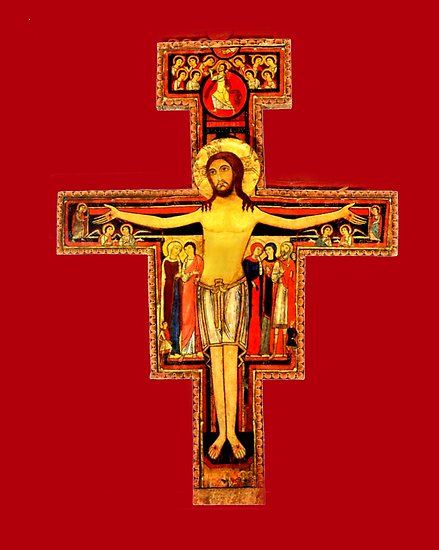
Cross of San Damiano before which St. Francis of Assisi prayed and received Christ’s commission to rebuild His Church. Photo from wikipedia.org.
Brothers and sisters: If there is any encouragement in Christ, any solace in love, any participation in the Spirit, any compassion and mercy, complete my joy by being of the same mind, with the same love, united in heart, thinking one thing. Do nothing out of selfishness or out of vainglory; rather, humbly regard others as more important than yourselves, each looking out not for his own interests, but also for those of others. Have in you the same attitude that is also yours in Christ Jesus, who, though he was in the form of God, did not regard equality with God something to be grasped. Rather, he emptied himself, taking the form of a slave, coming in human likeness; and found human in appearance, he humbled himself, becoming obedient to death, even death on a cross.
Philippians 2:1-8
We priests and religious pray this beautiful hymn by St. Paul every Saturday evening. It is also proclaimed on Palm Sunday to show us Jesus Christ’s self-emptying (kenosis in Greek) to offer himself for our salvation. It is the most important text of St. Paul’s letter to the Philippians that has played a vital role in the discussions of Christ’s preexistence.
Seen in the light of the gospel this Sunday, it is also part of St. Paul’s moral exhortation to the Philippians and us living today to be united as one in Jesus by following his pattern of kenosis that is similar with his teachings that “the first will be last, and the last will be first, that the greatest is the servant of all.”
It is the fundamental model of Christian life, the very essence of following Jesus by denying one’s self and taking up one’s cross but also the most difficult to learn and put into practice as it is exactly the opposite of the way of the world – “upward mobility” — of being rich and famous, of being in control that had divided us with massive walls of indifference, hate, and antagonisms making peace and joy more elusive.
Christ’s kenosis is the only way up in life to be back in God that leads us to unity, peace, and joy.
In this time of the pandemic when we are supposed to be more united and kind and nice with everyone, St. Paul’s call to imitate Jesus Christ’s kenosis is very timely and relevant, calling us to soften our hearts by emptying ourselves of our pride unlike the chief priests and elders of Israel to whom the Lord addressed his parable this Sunday.
Photo by author, wailing of Jerusalem, May 2017.
Our sense of entitlement
Jesus said to the chief priests and elders of the people: “What is your opinion? A man had two sons. He came to the first and said, ‘Son, go out and work in the vineyard today.’ He said in reply, ‘I will not,’ but afterwards changed his mind and went. The man came to the other son and gave the same order. He said in reply, ‘Yes, sir,’ but did not go. Which of the two did his father’s will?” They answered, “The first.” Jesus said to them, “Amen, I say to you, tax collectors and prostitutes are entering the kingdom of God before you.”
Matthew 21:28-31
Beginning today in three successive Sundays, Jesus teaches us again in parables to soften our hearts and let go of our pride that we are better than others, that we deserve more than what is due us like those early workers to the vineyard in last week’s gospel.
In a sense, today’s gospel tells us that there are too many works to be done in God’s kingdom that we have to keep going, imitating Jesus and be careful of falling into the same trap of those workers in last Sunday’s parable who felt entitled to more pay because they worked longer than others.
Notice how Jesus directly addresses his parables in these three Sundays to the same crowd of “chief priests and elders of the people” who have always felt favored by God for being of his “chosen people” since Abraham’s time. They always looked down at others specially the “tax collectors and prostitutes” considered as sinners.
They are not just people from the past who have lived during Christ’s time more than 2000 years ago. Even among us today, there are still chief priests and elders who continue to live and exist!
And here is the rub — among these people who may really be good in faithfully keeping the commandments of the Lord, praying and doing all kinds of devotions and charities are also the worst. Their religiosity are tied only to themselves and never to God, without any love at all.
Keep in mind that every time we feel entitled like the chief priests and elders of the people, it means our hearts have gone hard and cold like the elder son of the merciful father of the parable of the prodigal son or the early workers hired to the vineyard last week.
Photo by author, Mt. St. Paul Spirituality Center, La Trinidad, Benguet, March 2020.
So many times it happens that those who are supposed to be on higher moral grounds turn out to be without any roots and grounding in God at all, becoming harsh and judgmental of others, more sinful than the ones they condemn.
Like the chief priests and elders of the people in the crowd listening to Jesus, they start as the vida only to end up as the contravida like when there is a “black sheep” in the family or a “rotten tomato” in class, that instead of helping them rise from their sinfulness, they who are the ones who condemn and sink others deeper into their holes!
That is why God questions, stirs their hearts through the prophet in the first reading,
Thus says the Lord: You say, “The Lord’s way is not fair!” Hear now, house of Israel: Is it my way that is unfair, or rather, are not your ways unfair?
Ezekiel 18:25
Always examine our hearts for we must all be converted again and again.
We must keep on praising and thanking God for his mercies like in our responsorial psalm this Sunday because he gives us all the chances in life to change and become better persons. Here we find a semblance with the gospel the other Sunday why we must forgive without limits because God’s love for us is infinite.
Actions, not intentions, judge us
Last Monday we celebrated the feast of St. Matthew, the tax collector called by Jesus to become one of his Twelve Apostles who also wrote one of the four gospels. It is very interesting to know that in all gospel accounts, tax collectors and prostitutes are always grouped together because they are the worst sinners at that time.
Tax collectors not only enriched themselves with excessive collections from the people but were seen as traitors who worked for the Roman colonizers of Israel at that time. Prostitutes, on the other hand, have always been considered very low because as women supposed to give birth for the awaited Messiah, they have “dirtied” their womb. Together, tax collectors and prostitutes were seen as the worst sinners in Israel because they have sold their souls to the devil; hence, they were considered beyond redemption, beyond hope, a scourge to their families and to the community that nobody would want to deal with them.
And so, it was very radical, out-of-this-world and totally unimaginable for everybody then when they heard Jesus telling them how “tax collectors and prostitutes” were entering the kingdom of God before the chief priests and elders of the people who were considered very holy at that time!
It was a serious warning to them and us today from the Lord who reminds us that our actions judge us. The parable is an echo of his warning that “not everyone who calls him ‘Lord, Lord’ will enter heaven” (Mt.7:21). St. Matthew is very particular in his gospel account of the complete jibing together of what we say and what we do, of “walking the talk”.
We have so many sayings expressing this important lesson of today’s parable by the Lord like “A single act of good deed is always better than the grandest and best intention” and “Actions always speak louder than words.”
Photo by author, sunset in the parish, August 2020.
In this time of the pandemic when church attendance is limited and we are advised not to sing and reply aloud in the Mass, it is best that we examine how we have become mechanical in our celebrations without realizing the gravity of things we say like when we acclaim after the gospel proclamation “Praise to you, Lord Jesus Christ!”: do we really work hard in his vineyard or are we like the other son who said yes but did not go? When at the end of the Mass we are told “Go in the peace of Jesus Christ” and we say, “Thanks be to God”, do we really go home at peace or still having that festering anger or dislike to someone?
Make your joy complete. Ask Jesus to soften your heart. Take a step backwards like the first son though at first he seemed so bad to disobey his father in refusing to follow his command, do not be ashamed to take back your words and do what is right.
Be careful not with your words but with your actions for which the Lord would judge us in the end.
Find solace in St. Paul’s beautiful hymn this Sunday: the lower we go down, the higher we are lifted up like Jesus. Nobody had ever gone wrong and lost in life going down, of being humble. Many men and women have gone to oblivion, lost and forgotten when their ivory towers collapsed, burying them in the rubble.
The Lord Is My Chef Sunday Music by Fr. Nick F. Lalog II, 20 September 2020
Photo by Dr. Mylene A. Santos, MD at Infanta, Quezon, April 2020.
Lately I have been reflecting more about the heart courtesy of our daily scripture readings for the Masses these past two weeks. When you are “quarantined” in the past six months except for a few essential trips outside, such is a grace-filled moment of this pandemic that we are able to pray and reflect more about our lives and the people we love.
Last Sunday in our gospel, Jesus asked us to forgive from the heart because we are all brothers and sisters in God our Father who forgives us without limits for our many sins.
Today in our gospel, Jesus is asking us to give from the heart, that is, be generous because we are brothers and sisters in God our Father who blesses us abundantly with everything we need.
Generosity is from the heart where we find Jesus dwelling, giving us peace and joy amid the many pains and sufferings of this life because only him suffices that we are willing to let go of everything (https://lordmychef.com/2020/09/19/generosity-comes-from-the-heart/).
David Benoit’s lovely piece called “Take A Look Inside My Heart” from his 1982 album Stages offers us a unique perspective on this looking into our hearts to reflect on God’s love for us and how we share – or selfishly keep – that love with others.
Benoit is one of the most loved jazz artist in the country who performed more that twice in the past. His music is so natural and light, but intense in meaning yet so balanced as in “tamang timpla” or “tamang tama” that is not so slow and sad but not so fast and punky. Listen and see how his lyrics speaks from a loving heart.
It isn’t easy to show you what you mean to me I’m not that kind with all the moves The way I’m feeling goes beyond what you can see I’m crazy ’bout you, crazy ’bout you
I haven’t tried to impress you by the things I do That isn’t really how I am, hmmm… I’d rather let my dreams be opened up to you So you’ll understand, you’ll understand
Take a look inside my heart and you’ll see I have so much love to give beLieve in me Take a Look inside my heart share my Love Take a Look in my heart… yeah…
Imagine God is David Benoit singing these words to you… And yes, like in the gospel, we sometimes complain to him at how he could let injustice continue despite our efforts to work hard and honest like those workers hired early in the parable by Jesus.
Nobody ever is perfect even if they try There may be times I’ve let you down But when I do I hope you’ll turn my heart around By reachin’ inside, reachin’ inside
Take a look inside my heart and you’ll see I have so much love to give beLieve in me Take a Look inside my heart share my Love Take a Look in my heart…
The song tells us of the immense love of the man to his loved one, assuring her of his faith and dedication that she need not worry when things are not going on as planned. Like Jesus telling us today in his parable to be more loving, more generous with his love for others for it is then that we truly experience inner joy and peace.
I wanna promise you honestly I’ll always care That’s what my Love has come here for And every time I smiLe you know there’s something more I’m waiting to share, wanting to share
Take a look inside my heart and you’ll see I have so much love to give beLieve in me Take a Look inside my heart share my Love Take a Look in my heart…
Have a blessed Sunday and week ahead.
And share a generous serving of God’s blessing especially to someone in need of his love.
The Lord Is My Chef Sunday Recipe for the Soul by Fr. Nicanor F. Lalog II
Week XXV-A, Ordinary Time, 20 September 2020
Isaiah 55:6-9   >><)))*>   Philippians 1:20-24, 27   >><)))*>   Matthew 20:1-16
Photo by the author on the way to Petra in Jordan, May 2019.
There was something amusing I realized while praying this Sunday’s gospel of how in our time we no longer hear or use the word “generous” anymore — except when the topic is about food like in the expression “generous servings”!
We all love and enjoy “generous servings” of food and drinks whether in restaurants or at home or at parties because it means something more than what we pay for or come for. And that is the essence of generosity: the giving of more than what is required and just. It is love in the real sense like the prayer for generosity by St. Ignatius of Loyola.
Dearest Lord:
Teach me to be generous.
Teach me to serve you as you deserve,
To give and not to count the cost,
To fight and not heed the wounds,
To toil and not seek for rest,
To labor and ask not for reward, except
To know that I am doing your will.  Amen.
Photo by Mr. Jim Marpa, 2019.
Generosity bonds every community in Christ
Sorry if I have to start our reflection through the stomach because today is our “Pistang Pasasalamat” (Thanksgiving) in the Parish…
Going back to our reflection, my dear reader, recall how in the past two weeks we have heard Jesus teaching us important lessons how our relationships must be based on mutual love through fraternal correction and forgiving of those who have sinned against us.
This Sunday through another parable, Jesus teaches us the importance of generosity as a wonderful expression of love we forget most in our relationships and dealing with others.
Generosity is the glue that keeps our ties stronger and keeps us filled with joy because it is thinking more of the other person than of self. It is love at its finest – charming and elegant as in suave – but so disarming and revealing when overlooked as we shall see in this parable.
Jesus told his disciples this parable: “The kingdom of heaven is like a landowner who went out at dawn to hire laborers for is vineyard. After agreeing with them for the usual daily wage, he sent them into his vineyard. Going out about nine o’clock, he saw others standing idle in the marketplace, and he said to them, ‘You too go into my vineyard, and I will give you what is just.’ So they went off. And he went out again around noon, and around three o’clock, and did likewise. Going out about five o’clock, he found others standing around, and said to them… You too go into my vineyard.’ When it was evening the owner of the vineyard said to his foreman, ‘Summon the laborers and give them their pay, beginning with the last and ending with the first.’ When those who had started about five o’clock came, each received the usual daily wage. So when the the first came, they thought that they would receive more, but each of them also got the usual wage. And on receiving it they grumbled against the landowner, saying, ‘These last ones worked only one hour, and you have made them equal to us, who bore the day’s burden and the heat.’ He said to one of them i reply, ‘My friend, I am not cheating you. Did you not agree with me for the usual daily wage? Take what is yours and go. What if I wish to give this last one the same as you? Or am I not free to do as I wish my own money? Are you envious because I am generous?'”
Matthew 20:1-15
Notice how Jesus again elicited our feelings to drive home his lesson today about love as basis of our relationships. Last week we totally agreed with the king in punishing the merciless servant whose debt he had forgiven but was unmerciful to a fellow servant and debtor.
This Sunday, with whom did we take sides with? Be honest. Did you side with the workers hired in the morning and worked all day only to receive a pay exactly the same with those who worked only for an hour? Did we also feel treated unfairly like them?
But, why are we reacting the same way as those workers who toiled under the sun? What is our complaint? Are we envious because the owner is generous?
Recall our reflections last month about the parable as a simple story conveying deeper truths about life and our selves. From the French parabolein -along the way – Jesus is inviting us to read anew this parable we have heard so many times in the past so we may enter into a dialogue with him to purify and cleanse us to get its whole picture. And hopefully, become generous too.
Nuns bringing goods to the poor during the height of the Luzon-wide lockdown last summer.
Human justice, Divine kindness
The parable is not about social justice and just wages: it is about the immense love of God for us all. Jesus said it at the start, “The kingdom of heaven is like a landowner…” – it is a parable about God and his kingdom.
See the great love of the landowner who went out five times during the day, even at late afternoon so people may have a job to earn some money for the day. We have to keep in mind that the workers were hired because the owner is kind. Period.
The owner is like the good shepherd Jesus described as who would leave the rest of his flock to search for one missing sheep.
How many times have we acted like those early workers, complaining to God when we feel “shortchanged” for our work and efforts, or being better and more good perhaps than others?
It happens so many times when we question him even in the Church and specially in the society and government when we cannot understand how God who is supposed to be just and fair is allowing all injustices and evil to happen like during this time of COVID-19.
The first reading reminds us that to think that way as if we know everything is dangerous because we could be very wrong and mistaken after all. God sees and knows everything that in the end amid all the twists and turns in history and in our personal lives, it is always his will that prevails which proves best for us and mankind. In times like these, we need to have faith in God and trust him more through prayers and reflections.
Seek the Lord while he may be found, call him while he is near… As high as the heavens are above the earth, so high are my ways above your ways and my thoughts above your thoughts.
Isaiah 55:6, 9
Photo by author, Jaffa in Israel, May 2017.
We keep on saying that one immediate fruit of having a prayer life is the heightening of our sensitivities when we see more of God in others than more of ourselves. The problem with those workers hired earlier in the day that instead of thanking God for his kindness in hiring them, they even wanted more in their pay than what they have agreed upon — so selfish and feeling so entitled like some among us!!!
God as the landowner is teaching us not only to be thankful for the blessings we have received from him but also to rejoice when others aside from us are also blessed. As everyone would say these days, “sana all” are blessed, not only a selected few.
Again we find here a similar situation in the parable of the prodigal son where the father told the elder one that “everything I have is yours” (Lk.15:31) when he refused to come home to celebrate the return of his younger brother, citing how he had obeyed the father all his life without being given a young goat to feast with his friends.
Like that loving father of the prodigal son, God is reminding us this Sunday in this parable to rejoice that others have been blessed, instead of grumbling and complaining, demanding for more than what we have, forgetting everything is out of God’s goodness, never because of our merits.
Looking inside our hearts
My dear friends, this time of the pandemic invites us to be generous by looking deep into our hearts, of seeing God more and others than just our self. At this time when life is so difficult and death is so closest to home with everyone, the best thing we can do is to thank God for his gift of life to us each day and to deepen our faith in him.
Lately I have been praying to God to grant me St. Paul’s clarity of mind and purity of heart as we find ourselves in his similar situation of being imprisoned: him for the gospel, us due to COVID-19.
See the faith of St. Paul in God that even in prison with his death approaching each day, he continues to rejoice and experience peace within because he had realized that the success of the gospel is not on human efforts but in Jesus whom we cannot box in our little worlds and beliefs, rites and rituals. In fact, he was so confident that even with his death, the more the gospel would spread.
Photo by Dra. Mylene A. Santos at Katmon Harbor Nature Sanctuary, Infanta, Quezon, March 2020.
Brothers and sisters: Christ will be magnified in my body, whether by life or by death… conduct yourselves in a way worthy of the gospel of Christ.
Philippians 1:20, 27
Last Sunday, Jesus taught us to forgive from the heart, that is, to see one another as a brother and sister in God our Father who forgives us without limits for our many sins.
Today, Jesus is asking us to give from the heart – to be generous – not for anything else but because we are brothers and sisters in God our Father who blesses us without limits despite our sinfulness.
Generosity comes from the heart when in that heart is Jesus whom we find dwelling, giving us peace and joy no matter how much suffering we go through because him alone suffices that we are willing to let go of everything.
Share a generous serving of God’s blessings today to someone in need. Amen.
The Lord Is My Chef Sunday Recipe for the Soul by Fr. Nicanor F. Lalog II
Week XXIV, Cycle A in Ordinary Time, 13 September 2020
Sirach 27:30-28:7     >><)))*>   Romans 14:7-9   >><)))*>   Matthew 18:21-35
Photo by author, dusk in our parish, July 2020.
This Sunday we go deeper into the lessons gathered by Matthew from Jesus regarding love as the basis of our relationships. Last week we were told how mutual love is the sole reason why we correct brothers and sisters going stray in life.
But, more sensitive and delicate, not to mention most difficult than fraternal correction is the question of forgiving.
How many times should we forgive?
Peter approached Jesus and asked him, “Lord, if my brother sins against me, how often must I forgive? As many as seven times?” Jesus answered, “I say to you, not seven times but seventy-seven times. That is why the kingdom of heaven may be likened to a kind who decided to settle accounts wit his servants. When he began the accounting, a debtor was brought before hm who owed him a huge amount. Since he had no way of paying it back, his master ordered him to be sold, along with his wife, his children, and all is property, in payment of the debt. At that, the servant fell down, did him homage, and said, ‘Be patient with me, and I will pay you back in full.’ Moved with compassion the master of that servant let him go and forgave him the loan.
Matthew 18:21-27
Forgiving is always difficult because it is from God, calling us to be one with him, one in him, and be like him as that saying perfectly summed up, “To err is human, to forgive is divine.” It is beyond human abilities, reserved only for God until he became human like us in Jesus Christ who made us share in his greatest expression of love which is forgiveness. Hence, every time we forgive, we also become like God, divine and holy that unfortunately, we refuse and even hate!
Yes, it is very difficult because like love, forgiving is the nature of God. In fact, any kind of love is best expressed when it is forgiving. The good news is that we now share in this great love of God in forgiving others like him as we shall see in today’s parable, keeping in mind also that it was the Risen Lord’s commission to his disciples when he appeared to them on that Easter evening (John 20:22-23).
Photo by author, Baguio Cathedral, January 2018.
Forgiving like God our Father
The beauty of forgiving is that it is always a grace from God freely given to us. It is doable in Jesus Christ. The problem is when we refuse to let God work in us, when we refuse to level up our relationships to that of brothers and sisters in Jesus Christ.
There is always that pride in us exhibited by Peter at the start of the gospel today when he asked Jesus how many times he must forgive his brother. Must it be seven times?
Of course, seven being a “perfect number” does not specify a numerical figure of times to forgive except that it gives enough room to let go of a sinner or an offender. However, it still connotes some form of “counting” or taking tabs at how many times must one forgive, implying a limit.
But Jesus pushed it further when he told Peter to forgive “not seven times but seventy-seven times” — that is, twice the perfect number he had cited!
The Lord is telling Peter, and us today, to forget all about keeping tabs, of counting how many times you must forgive because God forgives us without limits which his parable tells us.
The king or master in the parable is God, so wealthy that he could lend sums exceeding the normal level of what one can borrow. Most surprising is like God, the master lent so much amount beyond the debtor’s ability to pay!
That is how rich our God is — so rich in love and mercy, giving us with so much even beyond our ability to pay him back in return. Exactly what we have in the responsorial psalm: “The Lord is kind and merciful; slow to anger and rich in compassion.”
And when that servant prostrated before his master, then the more we see in that religious gesture the deeper meaning of the parable: the rich mercy of God forgiving us for our debts even after we have lost everything like that debtor with nothing enough to pay his loans, not even his wife and children.
See the contrast of the king moved with compassion echoing the same attitude of Jesus so often like in the wilderness where he fed more than 5000 people and that servant so lost with nothing else left but still forgiven.
The parable could have stopped there but Jesus went on to continue what happened next to teach us the deeper truth of forgiving, which is imitating God our Father because we are brothers and sisters in him.
From Google.
When this servant had left, he found one of his fellow servants who owed him a much smaller amount. He seized him and started to choke him, demanding, ‘Pay back what you owe.’ Falling to his knees, his fellow servant begged him… but he refused. Instead, he had the fellow servant put in prison until he paid back the debt. Now when his fellow servants saw what had happened, they were deeply disturbed, and went to their master and reported the whole affair. His master summoned him and said to him, ‘You wicked servant! I forgave you your entire debt because you begged me to. should you not have had pity on your fellow servant, as I had pity on you?’ Then in anger is master handed him over to the torturers until he should pay back the whole debt. So will my heavenly Father do to you, unless each of you forgives his brother from his heart.”
Matthew 18:28-35
Forgiving from the heart
After hearing the second part of the parable, we all felt like the master, angry and indignant with that merciless servant whose action was very shameless and scandalous. But, more than being like the king who properly judged the conduct of that merciless servant, Jesus is also inviting us to probe deeper into our hearts the realities why we felt like the king in the parable?
How many times have we felt so angry and frustrated during this pandemic period at the many occasions when we heard news of injustices and abuse of powers against the little ones like Mang Dodong or the Marawi verteran shot to death in Quezon City? Of those punished in violating the protocols when its chief implementor got away free after attending a mañanita party?
The list goes on specially in our country where laws favor the abusive rich and powerful, those with connections while ordinary citizens with lesser violations, even without any crimes at all suffer the same fate as the servant with lesser debts.
Photo by author, “patak-dugo”, 2019.
We all feel so angry and very sad because more than the injustices and lack of mercies committed by those in powers, they have forgotten we are brothers and sisters in one God our Father. Parang sila lang ang anak ng Diyos…
We feel like the king in the parable because we felt left out, disregarded, and disrespected despite our kindness and mercy with others.
Forgiving from the heart means to forgive others not because we are fellow servants but most of all as brothers and sisters of a loving and merciful Father who forgives us always from our unpayable debts of sin and evil against each other.
This is the very thing St. Paul is telling us in the second reading, that “None of us lives for oneself, and no one dies for oneself” (Rom.14:7). Sometimes we need to be in control of our lives but the truth is, when we try to live St. Paul’s message that our lives belong to one another in Christ, the more we become truly free and happy.
It is the same reminder from Ben Sirach in the first reading telling us how we must avoid anger and resentment specially revenge because it is contrary to our faith in God. Most of all, we also know so well that we need the mercy of God in forgiving our countless sins.
The example of St. John Paul II about forgiving like God
I know what I am telling you are easier said than done. And I confess that I also find it so hard to forgive people who have wronged me, specially those I have loved and helped. Allow me to end this reflection with this beautiful bit of history that happened in our lifetime.
We were in high school seminary when Mehmet Agca shot and almost killed St. John Paul II at St. Peter’s Square on May 13, 1981. We were shocked, so sad for him and very angry with Agca. But, two years later after Christmas in 1983, we were more shocked in disbelief while at the same time in tears with joy when news came out that St. John Paul II came to visit Agca in his cell to forgive him!
It was a major news that landed on TIME magazine the following year with the cover story so relevant with our gospel today:
From Pinterest.
Those who do not forgive are those who are least capable of changing the circumstances of their lives…
Not to forgive is to be imprisoned by the past, by old grievances that do not permit life to proceed with new business.
Not to forgive is to yield oneself to another’s control. If one does not forgive, then one is controlled by the other’s initiatives and is locked into a sequence of act and response, of outrage and revenge, tit for tat, escalating always. The present is endlessly overwhelmed and devoured by the past. Forgiveness frees the forgiver. It extracts the forgiver from someone else’s nightmare. “Unless there is a breach with the evil past,” says Donald Shriver, “all we get is this stuttering repetition of evil.”
Lance Morrow, TIME Magazine, 19 January 1984
As I searched for photos of the assassination attempt on him by Agca, I came across this photo below of their meeting with an accompanying report that made me admire and love St. “JP2” more than ever.
It said that while recuperating in the hospital, St. JP2 learned from the news how people hated Agca, prompting him to ask everyone to “pray for my brother (Agca)… whom I have sincerely forgiven.” That is how holy is this great Pope of our time! Long before visiting Agca in 1983, St. JP2 had already forgiven him, calling him a “brother” despite the evil and sin done to him.
What a great Amen!
Have a blessed and wonderful week ahead, brothers and sisters in Christ!
The Lord Is My Chef Sunday Music by Fr. Nick F. Lalog II, 06 September 2020
Photo by Dr. Mylene A. Santos, April 2020 at Infanta, Quezon.
The most severe test of our being Christian lies in our being able to love one another specially when it is so difficult to love them, when the one we love like a brother or a sister or a friend sins (https://lordmychef.com/2020/09/05/presence-and-love-of-christ/).
Jesus said to his disciples: “If your brother sins against you, go and tell him his fault between you and him alone. If he listens to you, you have won over your brother. If he does not listen, take one or two others along with you… If he refuses to listen to them, tell the church. If he refuses to listen even to the church, then treat him as you would a Gentile or a tax collector… Again, amen, I say to you, if two of you agree on earth about anything for which they are to pray, it shall be granted them by my heavenly Father. For where two or three are gathered together in my name, there am I in the midst of them.”
Matthew 18:15-16, 19-20
In our Sunday gospel today, Jesus is asking us to have love as basis of our relationships, whether at home or in the community, in the church or in the society. When there is love, there is Jesus, there is order, there is peace and harmony. Even when there is imperfection and sin, when love prevails, life and its struggles become bearable, even fulfilling. But when there is no love, there is always disorder and chaos and life becomes more difficult.
And that is why we go back to Black Eyed Peas’ 2003 hit “Where Is The Love?” for our Sunday music today which is very timely and relevant in this time of the pandemic.
People killin’ people dyin’ Children hurtin’, I hear them cryin’ Can you practice what you preachin’? Would you turn the other cheek again? Mama, mama, mama, tell us what the hell is goin’ on Can’t we all just get along? Father, father, father help us Send some guidance from above ‘Cause people got me, got me Questioning (Where’s the love)
Of course, we all know our kababayan apl.de.ap is part of this group and one of the composers of this smash hit that was also the largest selling record of 2003, earning a nomination to the Grammy the following year for Record of the Year and Best Rap/Sung collaboration. From their third album Elephunk, “Where Is the Love?” gave Black Eyed Peas its first commercial success that also put them onto the mainstream music scene. Not mentioned at its single release was the back-up vocals rendered by Justin Timberlake who showed support to the group even though he was from another record label.
Very interesting is the last stanza which I just realized while reflecting on the song relating it to the gospel this Sunday: our problem is not really the corona virus but a disease within us when we refuse to accept and share that love freely given us by God.
I feel the weight of the world on my shoulders As I’m gettin’ older y’all people gets colder Most of us only care about money makin’ Selfishness got us followin’ the wrong direction Wrong information always shown by the media Negative images is the main criteria Infecting the young minds faster than bacteria Kids wanna act like what they see in the cinemas What happened to the love and the values of humanity? (Where’s the love) What happened to the love and the fairness and equality? (Where’s the love) Instead of spreading love we’re spreading animosity (Where’s the love) Lack of understanding leading us away from unity (Where’s the love)
Some people have been asking me this early how would Christmas 2020 be?
We need not read the news for we can feel and readily see around us the bleak prospects of this coming Christmas — financially and materially speaking. But I am filled with hope that Christmas 2020 amid the pandemic will most likely be one, if not the most meaningful Christmas we shall ever have because when we have less of the material things, that is also when we have more of the spiritual things in life, more of love, more of kindness, more of the person next to me, and most of all, more of Jesus. All we have to do is honestly answer the question, “where is the love?”
Have a blessed Sunday everyone!
Music video by Black Eyed Peas performing Where Is The Love?. (C) 2003 Interscope Geffen (A&M) Records A Division of UMG Recordings Inc.
The Lord Is My Chef Sunday Recipe for the Soul by Fr. Nicanor F. Lalog II
Week XXIII, Cycle A in Ordinary Time, 06 September 2020
Ezekiel 33:7-9 /// Romans 13:8-10 /// Matthew 18:15-20
Photo by Mr. Gelo N. Carpio, January 2020.
For the next three Sundays beginning today, our liturgy directs our gaze to the nature of the Church as the mystical Body of Jesus Christ. For today we hear from Matthew how we as a church or a community of believers are signs of the presence and love of Jesus Christ.
Recall how two weeks ago at Caesarea Philippi Jesus called Simon as “Peter” (“Rock”) to head his “church”, giving him the keys to the kingdom of heaven that whatever he binds on earth shall be bound in heaven and whatever he looses on earth shall be loosed in heaven (Mt.16:17-19).
Matthew is the only evangelist so particular in using the term “church” that he devoted chapter 18 of his gospel on its nature, collecting and giving some of the Lord’s teachings about community life to his own group of disciples or early church.
And off he went to start with the most important part of community life:
Jesus said to his disciples: “If your brother sins against you, go and tell him his fault between you and him alone. If he listens to you, you have won over your brother. If he does not listen, take one or two others along with you… If he refuses to listen to them, tell the church. If he refuses to listen even to the church, then treat him as you would a Gentile or a tax collector… Again, amen, I say to you, if two of you agree on earth about anything for which they are to pray, it shall be granted them by my heavenly Father. For where two or three are gathered together in my name, there am I in the midst of them.”
Matthew 18:15-16, 17, 19-20
Photo by author, dome of the Malolos Cathedral, 2019.
Presence of Jesus in the love and unity of community
In a very short teaching taking a step by step method, Jesus tells us today how our mutual love shall always take precedence above all in our community life as his disciples and sign of presence.
Though we do not find in our gospel this Sunday the word “love”, it is clearly the Lord’s lesson for today: it is mutual love for one another that must guide everyone specially in the delicate matter of fraternal correction when one is going wayward in his/her path of life.
This explains why Jesus spelled out step by step how we correct others primarily because we love, not because we are better than them or that we have such authority or task and duty. Paul beautifully says it in our second reading:
Brothers and sisters: Owe nothing to anyone, except to love one another; for the one who loves another has fulfilled the law. Love does no evil to the neighbor; hence, love is the fulfillment of the law.
Romans 13:8, 10
But of course, we need to clarify that all these lessons of love from the Lord and Paul are based on the love of Jesus Christ who clearly mandated us during his last supper how we must love:
I give you a new commandment: love one another. As I have loved you, so you should love one another. This is how all will know that you are my disciples, if you have love for one another.
John 13:34-35
What makes this loving one another a “new commandment” is loving like Jesus Christ, unlike the pagans in ancient times that are still imitated to this day even by many among us who are also Christians. So often we find specially in media how love is portrayed as mere feelings like physical attraction that always leads up to sex, devoid of any sanctity and inner beauty at all.
St. Augustine called it “disordered love” when we become self-centered and selfish, directing our love solely to attaining what pleases us that we use persons and love things like money.
Love is not just a feeling but a decision, a choice we make and affirm every day specially when times are very rough and tough for us like when we are not loved in return.
Most of all, love is when we find somebody else we can love more than ourselves (Thomas Merton). This is the kind of love that Jesus and Paul as well as all the other saints speak of: the self-sacrificing love Christ showed us when he offered himself on the cross for the forgiveness of our sins.
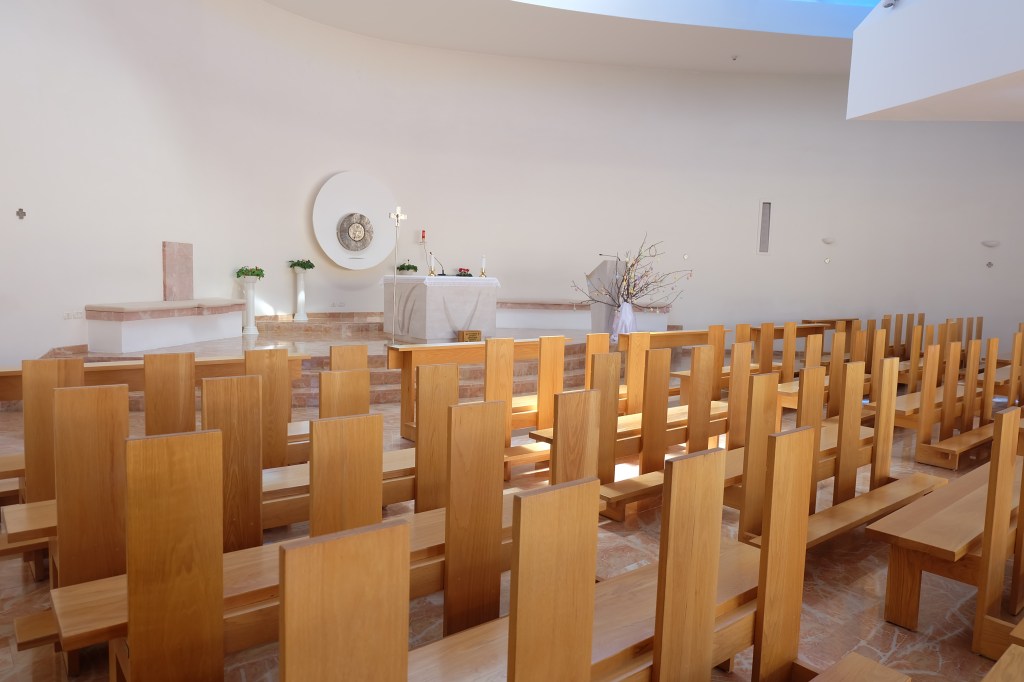
Photo by author, Chapel of the Monastery of the Sisters of Perpetual Adoration of the Blessed Sacrament at the Milk Grotto in Bethlehem where the Holy Family hid before fleeing to Egypt to escape Herod’s order to massacre the Holy Innocents, May 2019.
Love of Jesus builds, not destroys
Applying the law of love to our community is the most severe test of our being disciples of Jesus when we are challenged to be sincere in our love by hating what is evil and holding on to what is good like blessing those who persecute us, foregoing vengeance against those who have wronged us along with other expressions of mutual love in our community that Paul tells us in Romans 12:9-21.
In teaching us mutual love for one another in a step by step manner, it may seem to be a duty that one must follow in the church. It may even sound as contradictory that Jesus seems to be commanding us to strictly follow his law of command because no law can ever impose love.
However, when we try to reflect the ending of his teachings today – “For where two or three are gathered together in my name, there am I in the midst of them” – we find Jesus not ordering us to love but asking us our love because he loves us. He comes to us, grants our prayers because he loves us; therefore, when we love, when we gather as his disciples, we become his presence. And that is when our prayers are most effective because Jesus is in our midst!
Jesus and his love always build people and community; without him and his love, all we have is destruction and divisions. Hence, love is the only debt we owe to anyone. Love as a debt and “duty” is never paid back because the more we love, the more we have love, the more we are indebted to Jesus. It is the only debt that is never burdensome; in fact, the opposite happens when we refuse to love – we are burdened, life becomes heavy and so difficult.
This is what Ezekiel is telling us in the first reading: we are a “watchman”, a brother’s keeper of everyone. St. Pope Gregory the Great wrote a beautiful homily on being a watchman:
Note that a man whom the Lord sends forth as a preacher is called a watchman. A watchman always stands on a height so that he can see from afar what is coming. Anyone appointed to be a watchman for the people must stand on a height for all his life to help them by his foresight.
Office of Readings, Memorial of St. Pope Gregory the Great, 03 September
Photo by author, sunset inside our parish, 25 August 2020.
In the Church, those designated as watchman of the flock of Jesus is the Bishop or episkopos in Greek that means watcher or overseer. It is the bishop’s duty to always be above others in the loving service of the Church that sometimes out of love for Christ, he has to discipline those going astray as instructed in our gospel today, “If he refuses to listen even to the church, then treat him as you would a Gentile or a tax collector”, that is, excommunication or suspensions and other measures not meant to punish but to convert and correct the sinner.
Next Sunday, Matthew deepens our lesson on mutual love when he presents us the teachings of Jesus on how often we must forgive our brother or sister who repeatedly sins against us.
See my dear reader, how after presenting to us who is Jesus Christ last month, in how much he loves us and seeks us, these following Sundays we are challenged by the Lord to be like him – loving and merciful – to truly keep our relationship with him.
It is the first Sunday of September, the -ber months that tell us Christmas is around the corner. But, it seems we are still in a long haul in this pandemic. Having a vaccine will not totally eradicate COVID-19 nor guarantee us this won’t happen again in the future because the disease that is truly plaguing us until now is our refusal to love and live as brothers and sisters in Christ. Let us give it a try. Slowly. Jesus is not rushing us. All he is asking us is be open to his words expressed earlier in our responsorial psalm: “If today you hear his voice, harden not your hearts.”
Have a heart and have a blessed, lovely week, everyone!
Jesus in the gospel today makes his first prediction of his coming pasch or Passion, Death and Resurrection but it was such a terrible “bad news” for Peter that he
… took Jesus aside and began to rebuke him, “God forbid, Lord! No such thing shall ever happen to you.” He turned and said to Peter, “Get behind me, Satan! You are obstacle to me. You are thinking not as God does, but as human beings do.”
Matthew 16:22-23
With Jesus, there is no such thing as “good news, bad news” because all is good news with him. The good news/bad news question is really a non-question to disciples of Christ because whatever suffering we go through and embrace in him is a sharing in his very life. The key is to think as God does, not as a human beings do as Jesus told Peter (https://lordmychef.com/2020/08/29/when-good-news-bad-news-do-not-matter-at-all/).
And that means avoiding being so vain.
That is why we have Carly Simon singing to us this Sunday her 1972 classic “You’re so Vain” that have left our generation guessing who was she referring to in this superb music and poetry. (Personally, I think there is something “genetic” about this guessing game on whomever Ms. Simon was referring to: it was a non-issue among us males even when I have gone working in a radio station for six years. It has been the women who have kept on raising the issue on who could be that man so vain Ms. Simon was narrating in her number one song. And even if Ms. Simon had already identified him as Warren Beatty 40 years after, I still do not care because the song is so good, filled with gospel values too.)
How many times in our being so vain have we refused to embrace pain and sufferings in life, preferring noise than silence, and popularity than hiddenness that are some of the ways of God taught us by Jesus Christ?
Oh, you had me several years ago When I was still quite naive When you said that we made such a pretty pair And that you would never leave But you gave away the things you loved And one of them was me I had some dreams, they were clouds in my coffee Clouds in my coffee, and
You’re so vain You probably think this song is about you You’re so vain (you’re so vain) I’ll bet you think this song is about you Don’t you? Don’t you? Don’t you?
About ten years ago, Al Pacino played the role of Satan in the movie “The Devil’s Advocate” where at the end after tempting the gullible small-town lawyer Keanu Reeves, he proclaimed “vanity… vanity is my most favorite sin.”
This Sunday, Jesus is telling us all is good news with him, no bad news and you can never lose in him. Just come to him with our true self, no matter how sinful and incomplete we are. A blessed week to everyone and happy listening!
Maybe you have been asked so many times with the question, which do you prefer to hear first, the good news or the bad news? Usually we say it all depends to our mood and temperament or to the gravity of the situation. Sometimes, we ask for the bad news first so we can suffer earlier and enjoy the good news later. Or, we ask for the good news first to soften the impact of the bad news.
Our gospel this Sunday is still set in the pagan city of Caesarea Philippi and we heard Jesus giving his disciples – including us – with a strong dosage of “bad news” after hearing last week the good news that he is “the Christ, the Son of the living God.”
Jesus began to show his disciples that he must go to Jerusalem and suffer greatly from the elders, the chief priests, and the scribes, and be killed and on the third day be raised. Then Peter took Jesus aside and began to rebuke him, “God forbid, Lord! No such thing shall ever happen to you.” He turned and said to Peter, “Get behind me, Satan! You are obstacle to me. You are thinking not as God does, but as human beings do.” Then Jesus said to his disciples, “Whoever wishes to come after me must deny himself, take up his cross, and follow me. For whoever wishes to save his life will lose it, but whoever loses his life for my sake will find it.”
Matthew 16:21-25
Our gospel today seems to be a very big, bad news for everyone, with things getting worst before getting any better which the Lord had promised to be only in the end that nobody knows when!
See how Jesus started by saying he would “suffer greatly at the hands of elders, the chief priests, and the scribes and be killed and on the third day be raised again.” Not only that: he now calls Peter as “Satan” from being the Rock last Sunday after giving the right answer as to who he is.
Like Peter, we would probably say the same thing to Jesus why make suffering and death central to life that is meant to enjoy?
Like Peter, the Lord is inviting us today to focus more on the good news than on the bad news of suffering and death which for him – the Paschal mystery we call – is actually the best of good news!
Photo by author, altar flowers in our parish, January 2020.
Jesus Christ’s pasch is the best of good news!
What we have heard as “bad news” from the Lord is his first prediction of his coming pasch or Passion, Death and Resurrection. He would be announcing this prediction of his pasch two more times as they near Jerusalem.
From the He brew word pesach that means to pass over, it connotes suffering and death into new life. It came from the Exodus experience of the Chosen People from Egypt into the Promised Land during the time of Moses, taking its fullest meaning in Jesus Christ, the Son of God who became human like us in everything except sin, “passing over” from eternity to temporal, from Passion and Death to Resurrection.
Authentic discipleship does not require us to seek suffering; no, God is not sadistic as some people with twisted minds would say. However, being faithful to Jesus, witnessing his gospel values bring enough of these sufferings and deaths but on a different level and meaning. We realize that life is a daily exodus, a passing over from darkness into light, from ignorance into wisdom, from sickness into health, from death into new life.
Like the prophet Jeremiah in the first reading, we discover that the more we follow God, the more sufferings we encounter in life but at the same time, we cannot let go of him because his attraction is so powerful! There is something so deep within, so profound and fulfilling in us we realize that living in the ways of God, in the gospel values of Christ can we truly find lasting joy and peace – even if we have to die in our very selves in the process.
You duped me, O Lord, and I let myself be duped; you were too strong for me, and you triumphed. all the day I am an object of laughter; everyone mocks me… But then it becomes like fire burning in my heart, imprisoned in my bones; I grow weary holding it in, I cannot endure it.
Jeremiah 20:7, 9
Photo by author, Gaudete Sunday in our parish, December 2019.
Thinking in God’s ways
Today Jesus is assuring us that there is no such thing as “good news, bad news” with him. The good news/bad news question is really a non-question to disciples of Christ because whatever suffering and death we embrace in him is a sharing in his very life.
Hence, Jesus Christ’s good news is in fact the bestest news we can ever have. Always.
The key is to think as God does, not as human beings do as Jesus pointed out to Peter.
Three things I wish to share with you about thinking in God’s ways:
First is to accept and embrace pains and sufferings not for their own sake but as a way to cleanse our selves to greater glory. As we have said, God is not a sadist; we need to be cleansed like every thing in order to bring out the best in us like diamonds or any precious stone or any material.
Polishing and honing always mean “subtractions” with so many shaving and cutting of the rough edges to bring out the beauty and sharpness of a thing.
Man’s ways has always been to avoid every pain and suffering. No wonder, the most prescribed medicine worldwide is said to be the pain killer. But, experience has taught us this is not true and cannot be the norm of life. Like every gym enthusiast would tell you, “no pain, no gain”. Pain and suffering is part of life and the good news is, Christ has made it holy for us.
Second is to be silent in order to be able to listen to every sound and thus, heighten our sensitivities not only with our true selves but also with God and with others. In this age of social media and instant communications, silent has become a rare commodity. It is always easier to speak even without thinking much than be silent. That is the way of the world: speak out loud, make noises, and let everyone hear you — until they get tired of you.
Photo by author, our parish ceiling at sunset, 25 August 2020.
Third is the most precious in God’s ways of thinking — the way of hiddenness. This is God’s most evident way of making himself felt, experienced, and yes, seen by being hidden and invisible.
Last Thursday we celebrated the memorial of St. Monica, the mother of St. Augustine who narrated the story of how she got sick at Ostia in Italy with his brother hurrying to get back home to Tagaste in Africa so that when she dies, she would be buried there. St. Monica “reproached him with a glance because he had entertained such earthly thoughts”; then, she looked at St. Augustine and told him to bury her anywhere, asking one thing only from him: that he remembers her always in his celebration of the Holy Mass.
So many times, we are so concerned with our popularity that whatever we do has to be made known to everyone to see specially by those so-called “followers” with their “likes” that even up to death, some would spend a fortune for lavish funerals and even mauseleoum.
That’s the way of the world of everybody making a statement, of being known as present, always seen. In the movie “The Devil’s Advocate”, Al Pacino played the role of satan who said it so well at the end after tempting Keanu Reeves, “vanity…vanity is my most favorite sin.”
See the life of Jesus Christ: more than half was spend in hiddenness and silence. He worked only for three years characterized by so many instances of silence and hiddenness too and yet, his impact continues to this day and hereafter.
Beginning with last Sunday after asking us who do we say he is, Jesus is inviting us to follow him in his Passion and Death to be one in his Resurrection. This is also the call by St. Paul in the second reading:
I urge you, brothers and sisters, by the mercies of God, to offer your bodies as a living sacrifice, holy and pleasing to God, your spiritual worship. Do not conform yourselves to this age but be transformed by the renewal of your mind, that you may discern what is the will of God, what is good and pleasing and perfect.
Romans 12:1-2
Jesus is not asking too much from us, no need for any fanfares on our part; simply come to him with our true self, no matter how sinful and incomplete we are. Remember, all is good news with him and you never lose in him. Amen.
A blessed week to everyone!
Photo by author, parish ceiling at sunset, 25 August 2020.
After showing us some glimpses of the person of the Lord these past three weeks, St. Matthew now leads us into the middle of his gospel where Jesus takes a U-turn in his ministry by revealing himself to the Twelve as he heads back to Jerusalem to fulfill his mission.
Jesus went into the region of Caesarea Philippi, he asked his disciples, “Who do people say that the Son of Man is?” They replied, “Some say John the Baptist, others Elijah, still others Jeremiah or one of the prophets.” He said to them, “But who do you say that I am?” Simon Peter said in reply, “You are the Christ, the Son of the living God.” Jesus said to him in reply, “Blessed are you, Simon son of Jonah. For flesh and blood has not revealed this to you, but my heavenly Father.” Then he strictly ordered the disciples to tell no one that he was the Christ.
Matthew 16:13-17, 20
St. Matthew told us last Sunday how Jesus withdrew to the region of Tyre and Sidon where he had healed the daughter of a Canaanite woman tormented by a demon. From there, they headed north to Caesarea Philippi, a pagan major city at that time.
It was a perfect setting for our gospel this Sunday – just like our present milieu that challenges us not only to be identified as a Christian but also to make a stand for Jesus as his true disciple at a time when faith and morals are disregarded, economics takes precedence over spirituality.
Who do people say I am: “what” I know of Jesus
The two questions posed by Jesus to his disciples while at Caesarea Phillip – and to us today – may sound very similar and even simple but are actually distinctly different and even worlds apart from each other.
Photo by Mr. Jim Marpa, 2019.
His first question “Who do people say that the Son of Man is?” is straightforward, seems to demand not much critical thinking and introspection. A plain question with a plain answer like the usual news we hear and read called “straight reporting” in journalism that tells us the essential “who, what, where, and when” of the story.
So many times, we face this question without even being asked at all!
Through our words and actions we reveal “who do you say the Son of Man is?” in how we pray, what we pray for, the things we post on social media, especially those electronic chain letters that if you say “Amen” you will get money. And so many other things when we try to show everyone we know Jesus without really thinking and reflecting well. No wonder, people get so many wrong impressions about who Jesus is: “some say he is John the Baptist, others Elijah, still others Jeremiah” or one of those prophets of wealth and health who make life easier!
Telling who Jesus Christ from “what” we know and believe can always be dangerous and misleading because it is all in our heads that could often be wrong. Telling who Jesus Christ from “what” we know and believe cannot be so reliable because it is always mechanical, by the book, not actual and most of all, not real.
It is always easy to speak highly of Jesus from “what” we know and believe like those many preachers with fire and brimstone or modern apostles, a.k.a. vloggers complete with their “shock” preaching and antics and gimmicks who end up more popular with thousands of followers and likes. And wealthy, too! Jesus Christ? Forgotten and stuck in Facebook, the bible, and tabernacle.
But who do you say I am: “how” I know Jesus
On the other hand, the Lord’s second question is direct and personal, probing our heart and soul, asking not just for answer from our lips but from our total self: “But who do you say that I am?”
See the words of the Lord after Simon had answered he is the Christ, the Son of the living God:
Jesus said to him in reply, “Blessed are you, Simon son of Jonah. For flesh and blood has not revealed this to you, but my heavenly Father.”
Matthew 16:17
More than a play of words, here we find a deeper dimension of saying who Jesus Christ is: not just telling the what but most of all, the how that reveals more than what we know in our minds but how we have experienced Jesus, of how we have been living in him!
Photo by author, house at Jaffa (Jopa), Israel where Peter met some gentiles according to Book of Acts, May 2017.
For us to say who is Jesus Christ is always a how because it is a story of our relationship with him, it is a how we have grown deeper, how we have journeyed in him and with him.
It is the ability to see beyond structures and persons, excesses and sins, faults and misgivings because despite shortcomings, it is how we see Jesus as the foundation of our lives and of our Church.
See the ways of other religious sects, their pastors and members who spend so much time bashing us Catholics, insisting on the what of Jesus and the bible, never the how they live.
No wonder, they can raise their hands in prayers and still clap their hands while the President in maligning us Catholic priests and bishops in their gatherings.
To speak of who is Jesus is more than to tell what we know about him but how we have known him, how we have been since knowing him!
Anyone who can say who Jesus is from his how is always blessed like Simon because our answer is always the fruit of our life in Christ. We all become like Simon, another Peter or Rock whose very life and existence rests on Jesus our Lord. Despite our weaknesses and sinfulness, we are still blessed and entrusted with the keys of heaven because we have allowed Jesus to be our foundation of life. There is a process, a history always. Hence, it is a telling of the how.
In the first reading, we find God dismissing the master of the palace named Shebna to be replaced by Eliakim due to his infidelity. That is the meaning of the whole prophecy by Isaiah, of how the Lord will someday entrust his people to a trustworthy steward, someone who does not only know what God is but one who has truly known and experienced God.
Saying who God is, always a revelation from him
It is interesting that in the Jewish thought, to know another person is not knowing the what but of having a relationship or some degree of intimacy. Again, it speaks of the how we have been saying.
St. Paul shows us in the most beautiful manner in his many writings this saying of who Jesus is with his how, his very personal experience of the Lord in his life that has continued and deepened until his death. See the beautiful hymn he had composed for our second reading today:
Oh, the depth of the riches and wisdom and knowledge of God! How inscrutable are his judgments and how unsearchable his ways! For from him and through him and for him are all things. To him be glory forever. Amen.
Romans 11:33, 36
Like St. Peter, we find here St. Paul so blessed despite his sins and sinfulness, of how he had experienced Christ not just a name or a man like any what he had known in his mind.
No one can ever write such great poetry with profound thoughts without any deep relationship with God. Whatever we know of God is always a revelation from him, too. When we speak of who God is, it is always borne out of how we have been relating with him our Lord which is called “spirituality”; it is deeper than religiosity or being religious that is always at the level of the head and more of our ego than of the reality of God.
Sometimes, we do not even have to speak and say who Jesus Christ is.
We simply have to live out that relationship we have in him and people would know who Jesus is. No need for elaborate and spectacular showmanships we have in our many rites and rituals, even in our liturgies now so maligned with our triumphalism.
Lest we forget, Jesus saved the world by suffering and dying on the Cross, not with activities and debates which would be his topic next Sunday. God bless everyone!




















 lordmychef.com