Lord My Chef Daily Recipe for the Soul by Fr. Nicanor F. Lalog II
Thursday, Memorial of St. Agatha, Virgin & Martyr, 05 February 2026
1 Kings 2:1-4, 10-12     <*((((><  +  ><))))*>     Mark 6:7-13
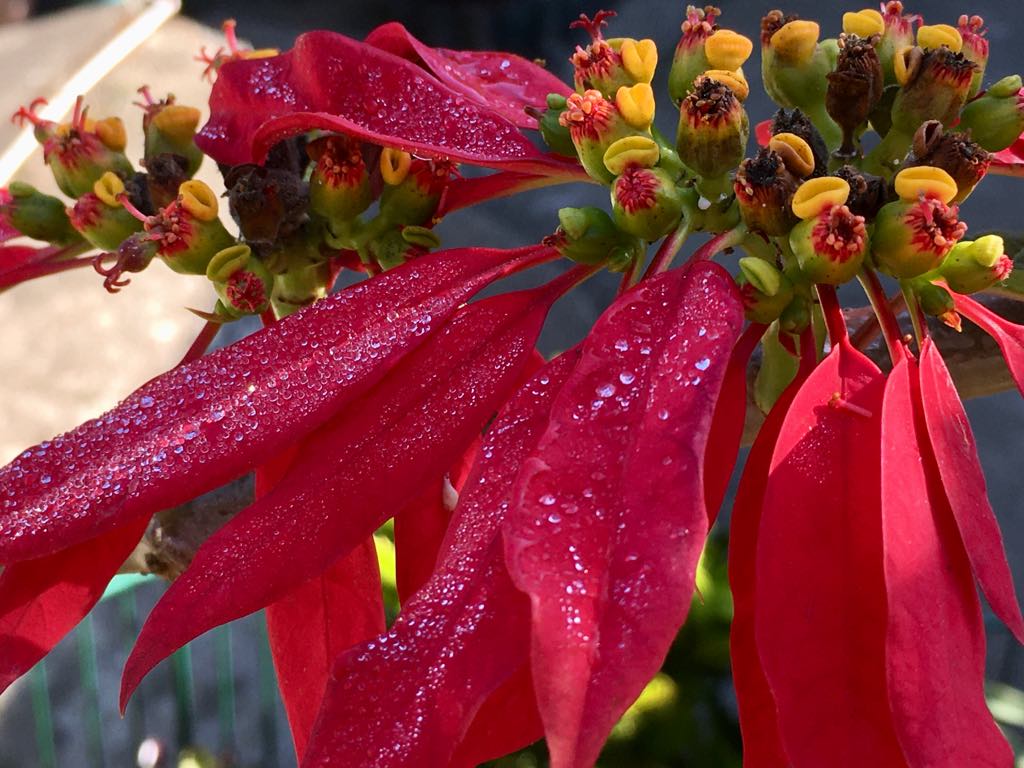
Photo by author, Taiwan, 15 February 2019.
Thank you, dear God
our loving Father
for the gift of freedom
we often misinterpret
as doing whatever pleases us;
the prophets and kings of
Old Testament like David before
his death reminded everyone to
remain faithful to you, O God,
to always choose you and your ways
and commandments but since then
until now, we abuse our freedom
and still refuse to choose what is good,
refusing to follow and obey you,
O God.
When the time of David’s death drew near, he gave these instructions to his son Solomon: “I am going the way of all flesh. Take courage and be a man. Keep the mandate of the Lord, your God, following his ways and observing his statutes, commands, ordinances, and decrees as they are written in the law of Moses, that you may succeed in whatever you do, wherever you turn, and the Lord may fulfill the promise he made on my behalf….” (1 Kings 2:1-4).
We know what happened with
Solomon and the rest of all
their kings with a few exceptions:
they all turned away from you,
O God that disaster fell on them
not as your punishment
but as consequences
of their abuse of freedom;
teach us in Jesus Christ
who had come to show us the way
to true freedom by choosing you,
O God,
doing your will,
doing and being good
by being faithful.
How wonderful,
O God,
that despite our abuse
of freedom,
you have remained faithful
to us,
loving us,
forgiving us like King David,
and still calling us to follow
you in Christ Jesus;
let us trust you more
by choosing you and your ways,
letting go of our baggage
and other false securities
so we can travel light
and preach effectively,
totally free
 and faithful
to you through others.

Through the intercession
of St. Agatha who witnessed
Christ and his gospel
at a very young age,
may we have the courage
to remain true to your call
and teachings.
Amen.
Photo by author, Mt. St. Paul Retreat House, La Trinidad, Benguet, February 2020.
Lord My Chef Daily Recipe for the Soul, 30 September 2025
Tuesday, Memorial of St. Jerome, Priest & Doctor of the Church
Zechariah 8:20-23     <*((((><  +  ><))))*>     Luke 9:51-56
Photo by author, Sacred Heart Novitiate, Novaliches, QC, 19 March 2025.
You were the first,
Lord Jesus Christ,
to teach us to have
the courage to be disliked;
you were the first
to show us true freedom
from what others say
to freely follow what God says;
you were the first
to suffer and die for love,
Lord Jesus Christ
because your being is always clear,
your mission is always clear,
and your love is most clear.
When the days for Jesus to be taken up were fulfilled, he resolutely determined to journey to Jerusalem, and he sent messengers ahead of him. On the way they entered a Samaritan village to prepare for his reception there, but they would not welcome him because the destinations of his journey was Jerusalem. When the disciples James and John saw this, they asked, “Lord, do you want us to call down fire from heaven to consume them?” Jesus turned and rebuked them, and they journeyed to another village (Luke 9:51-56).
You knew very well,
dear Jesus, what awaited you
in Jerusalem yet you "resolutely
determined to journey" there and
when trouble was brewing in a
Samaritan village, you simply
took another route to not waste
energy and time among
the Samaritans.
Grant me the same courage
and freedom, Jesus,
to be disliked,
to be rejected;
teach me to let go
of my past especially
my mistakes and failures,
choosing to be better
than bitter;
keep me anchored in you,
Jesus, of how much you love
me and believe in me so that
I do not have to seek other's
approval except that I am doing
your holy will; most of all,
teach me to be gentle and kind
with myself, that I am not God
who is perfect; like St. Jerome,
let me immerse in your words
to continue following you
despite my imperfections
as Zechariah prophesied.
Amen.

Fr. Nicanor F. Lalog II
Our Lady of Fatima University
Valenzuela City
(lordmychef@gmail.com)
Photo by author, Archdiocesan Shrine of Nuestra Señora De Guia, Ermita, Manila, 28 November 2024.
Lord My Chef Sunday Music by Fr. Nicanor F. Lalog II, 25 May 2025
Photo by author, Angels’ Hills Retreat and Spirituality Center, Tagaytay City, 18 April 2025.
We shift this Sunday into jazz with Earl Klugh’s sophisticated Living Inside Your Love to slow cool down our simmering summer and to feel more the meaning of the Mass readings today as we enter the penultimate week of Easter.
We were already in our early teens when we discovered Earl Klugh along with other jazz greats with the opening of the country’s first and only jazz radio station 101.9 WK-FM in the late 70’s. Maybe it was part of growing up when we experimented on a lot of things for more adventures that I found myself venturing into jazz from rock and pop music, switching from RJ to RT and then WK.
For me, Earl Klugh was the jazz version of rock’s Eric Clapton or Carlos Santana. Klugh has that certain touch or pluck in his guitar that can make you be in love, not necessarily be in love with anyone. It is a nakaka-in love ma-in love na feeling! That is why we remembered his Living Inside Your Love piece from his second studio album released in 1976 by the legendary Blue Note Records and Liberty Records produced by another jazz great, Dave Grusin.
Actually, we just realized today Living Inside sounds like a prelude to the turn of the century’s new age music where Klugh’s masterful playing of the guitar taking the centerstage of a great symphony backed up with cool vocals repeating just a few lines and stanzas of simple verses over and over that is similar with the vision of John in this Sunday’s second reading from the Book of Revelation when he saw and experienced the “new heaven, new earth” in the great luminous light of God who is himself the temple in the city (https://lordmychef.com/2025/05/24/easter-is-god-dwelling-in-us/). See how Klugh inserted the vocals into his great guitar music enhanced by a symphony like John’s vision of heaven:
Can't get over the feeling
Living inside your love
I never want to lose the feeling
Living inside your love

Baby, you made my life so free
Living inside your love
You're just where I want to be
Living inside your love

Baby, you made my life so free
Living inside your love
You're just where I want to be
Living inside your love
Very interesting with his wonderful guitar music, Klugh’s lyrics – though sparse and repetitive – were loaded in meaning. Consider the line “living inside your love” which is exactly what Jesus said at the Last Supper, “Whoever loves me will keep my word, and my Father will love him, and we will come to him and make our dwelling with him” (John 14:23).
“Living inside one’s love” is what we call as “Divine indwelling”, that is, our home is in God – and with any one we love!
Moreover, consider also Klugh’s first line in his next stanza, “Baby, you made my life so free/ Living inside your love/ You’re where I want to be/ Living inside your love.”
When we love, we enter a relationship that becomes our dwelling, our home where we become free – free to love more, free to be faithful. When we truly love like Christ, the more we find ourselves more free to love, more free in everything because being free is choosing always what is good. We believe that more than a stroke of genius, it was also a kind of divine inspiration about true love that made Klugh at put at the end of this 1976 classic the longer stanza that actually repeated inn order to stress the truth of his first two stanzas.
Can't get over the feeling
Living inside your love
I never want to lose the feeling
Living inside your love
Can't get over the feeling
Living inside your love
I never want to lose the feeling
Living inside your love
I can't get over the feeling
Living inside your love
I never want to lose the feeling
Living inside your love
I can't get over the feeling
Living inside your love
Here is Earl Klugh’s lovely Living Inside Your Love. Have a lovely Sunday and week ahead.
Lord My Chef Sunday Recipe, Fr. Nicanor F. Lalog II
Second Sunday in Easter Octave, 27 April 2025
Acts of Apostles 5:12-16 ><}}}}*> Revelation 1:9-11,12-13,17-19 ><}}}}*> John 20:19-13
Photo by author, Angels’ Hills Retreat & Formation Center, Tagaytay, 19 April 2025.
Locked doors. Exactly what I have dreaded most these days not because of claustrophobia but more of amnesia as I often forget my keys that I get locked out of my room.
Many of you probably know that kind of feeling of being locked out of our rooms or even house: we are so stressed that we go through self-blame and self-pity of being so forgetful to intense annoyance when we have to destroy our locks and knobs to replace them with new ones.
But, surely there must be a great difference of being locked inside a room that is more stressful and even fearful leading to claustrophobia. Imagine how the disciples of Jesus felt on that evening of Easter when they have to hide inside the Upper Room and locked the doors for fears of being arrested too following reports of the empty tomb.
On the evening of that first day of the week, when the doors were locked, where the disciples were, for fear of the Jews, Jesus came and stood in their midst and said to them, “Peace be with you.” – John 20:19
Painting by James Tissot (1836-1902) of Jesus Christ’s appearance to his disciples on Easter evening.
Only John tells us this detail of the evening of Easter of how the disciples hid inside locked doors, that despite that, Jesus Christ still came through. Aside from the darkness and empty tomb that characterized Easter which all evangelists narrated, John seems to be telling us something important about those locked doors.
Do you have any locked doors in your life that is why you can’t experience the joy of Easter?
One thing for sure: John included that little detail of the locked doors of the Upper Room where the disciples hid to show us that no obstacle, no locked doors can prevent Jesus from “coming” to us. Jesus had triumphed over sin and death. He is Risen! Nothing can stop Christ from breaking barriers among us and within us to bring his peace and joy of Easter.
However, the problem could be with us as we refuse to recognize Jesus coming to us.
Our refusal to forgive those who have hurt us, especially if they have tried reaching out to us, even apologizing can be a locked door within us. It could be the other way around when who have hurt others have locked inside ourselves in our refusal to ask forgiveness and be reconciled with a loved one.
There may be other locked doors in our life like our fears of failure and disappointment, of lost and separation from our loved ones due to various reasons like betrayal or death. Think of the other kinds of locked doors in our life that have kept us in the darkness of grief and sadness, bitterness and hatred or anger, even hopelessness.
See how in our gospel there are so many elements linked together in experiencing our Risen Lord – the need to believe like Thomas who was not inside the locked doors when Jesus first appeared. The nice thing with Thomas despite his doubts, he came to the room with locked doors to await Christ’s coming and he was not disappointed!
Like Thomas the Apostle, we have to believe Jesus in order to see him. We have to welcome Jesus inside our locked doors. Most of all, we have to come our from our locked doors to be one with others freed by Jesus.
“The Incredultiy of Thomas”, painting by Caravaggio from artsandculture.googe.com.
Every day amid all our daily darkness and emptiness, Jesus breaks our locked doors, coming into our lives like that Easter evening, bringing peace and forgiveness and most of all, joy of finding him, of seeing him, of experiencing him.
The world tells us to see is to believe but Jesus tells us to believe first so that we may see because it is only when we believe that we truly love and when we love, that is when the miracles of Easter begin to happen. Everyday.
Locked doors isolate us and isolation is separation which is the absence of love. This eventually leads to hopelessness which is the exact opposite of love. When we lose hope, we destroy everything, including life. People without hope are the most angry, the most isolated people who would kill and destroy everything because there is nothing to look for nor expect. They are locked inside their own prisons of selfishness.
Jesus rose from the dead to break all barriers to life especially sin and evil that imprison us so that we may believe again, love and hope to live Easter daily.
Easter does not remove the darkness nor emptiness within us but definitely breaks locked doors in us so we can go free to follow the light of Christ, to spread that light with others imprisoned in their locked doors of unbelief.
In the first reading, we find the Apostles after Pentecost continuing the work of Jesus by preaching and healing the sick while in the second reading we heard John thrown into exile to Patmos and yet, still chose to proclaim the gospel and wrote his visions while in prison.
We all know from the Acts of the Apostles that it was not all good news for the early Church that soon faced persecution. But by remaining open to Jesus Christ’s daily coming in themselves and through others like their persecutor named Saul who became Paul, Christianity flourished.
Today in our modern age, St. John Paul II designated in May 2000 this octave or eighth Sunday in Easter as the Divine Mercy Sunday as an invitation to Christians to face with confidence in the Divine Mercy the difficulties and trials that we still have to experience in the years to come.
There will always be darkness and emptiness in life. Including locked rooms. But, Easter is Christ’s triumph over all these. Rejoice in breaking free today. Many times in life, all we need in life is a simple spark of believing in Jesus risen, with us inviting us to come and follow him in his light and life. Amen.
Photo by author, Angels’ Hills Retreat & Formation Center, Tagaytay, 19 April 2025.
Quiet Storm by Fr. Nicanor F. Lalog II, 05 February 2025
Photo by author, Cathedral of St. Catherine of Alexandria, Dumaguete City, 07 November 2024.
Discipline is a word so misunderstood these days that too often, it is frowned upon or even feared by many. In this age of so much “freedom” without any regard to “responsibility”, discipline has become its main casualty.
Discipline has very interesting origins. From the Latin verb discere which is to learn or to follow, its noun is disciplina for teaching or learning from which came the word discipulus for disciple, a follower or a pupil. Hence, a person of discipline is one who follows or obeys teachings.
The more disciplined a person is,
the more free a person becomes!
As we have mentioned at the start, due to the wrong perception of “freedom” these days as the ability to do whatever one wants, many see discipline as suppression of freedom. But what is most true is its opposite – the more disciplined a person is, the more free the person becomes!
Photo by author, sunrise at St. Paul Spirituality Center, Pico, La Trinidad, Benguet, 06 January 2025.
When we discipline ourselves in every aspect of our lives like in food and drink intake, in using our time wisely, in budgeting our money and resources among other things, the more we become free to many other things in life. Remove discipline and do whatever you like in your life, eventually you become “unfree” because definitely you will miss your responsibilities and obligations like studies in school and duties at home and the office.
Freedom is never absolute. It has always been limited to choosing and doing what is good. When freedom is abused, it can lead us into being not free at all.
Likewise, some people think discipline is temporary and optional. Many believe that discipline is just for kids and young people who ought to follow their parents and elders. What about adults following their superiors and those above them in the natural and social hierarchy of things and relationships? This perhaps explain the reason why there is a growing complaint against young people lacking respect to elders and those in authority.
Discipline is a life-long process, the one sure thing we would need even rely upon so much as we age and get old. Discipline is imposed and taught in our younger age so that we would mature, grow and develop as persons. It is a lifelong process, a habit, a good that we keep on doing until we die. Or, even if we get old and sick, discipline is our North Star, the Polaris within ourselves especially when everything is dark, when we seem lost in life. Discipline enables us to succeed and be fulfilled in life. Find any bum and surely you shall find no discipline at all; but, you can never find a successful person without any discipline.
“Jesus Unrolls Book In the Synagogue” painting by James Tissot (1886-1894), brooklynmuseum.org
Our Lord Jesus Christ is the most perfect example of a disciplined person, of leading a disciplined life. All evangelists tell us how Jesus always went to the synagogue on a sabbath to worship and to preach. Most of all, Jesus always prayed early in the morning or later in the evening in some deserted place. These were all forms of discipline He must have learned from His parents Mary and Joseph who were both portrayed in the gospels as devout Jews, both with high degrees of discipline in life even before Christ was born.
Prayer after all is a discipline, something we have to cultivate that leads to a loving relationship with God and with others too! And here we find the deeper reality of discipline which is not just a human effort and endeavor. Discipline is the work of God, His gift and grace to each one of us to have fulfillment in life
Discipline is not just a human effort;
discipline is the work of God too!
Brothers and sisters: You have also forgotten the exhortation addressed to you as children: My son, do not disdain the discipline of the Lord or lose heart when reproved by him; for whom the Lord loves, he disciplines; he scourges every son he acknowledges. Endure your trials as “discipline”… At the time, all discipline seems a cause not for joy but for pain, yet later it brings the peaceful fruit of righteousness to those who are trained by it (Hebrews 12:5-7, 11).
Photo by author, St. Scholastica Spirituality Center, Tagaytay, August 2024.
How I wish parents would still use that analogy by the author of the Letter to the Hebrews regarding discipline. When we were growing up, our parents would always explain to us after scolding us due to misdemeanor or a mistake that it was to discipline us in doing what is right or what is good.
This is something so evident these days, when you hear the older folks saying how life was more orderly before because of discipline unlike today. And one may find this lack of discipline everywhere – in public places not only home, including in churches. Partly to be blamed for that is us, the older folks who have stopped teaching discipline to kids and the youth.
Lately I have been seeing many of my former students in elementary and high school. I have always known many of them hated me when in school because I was a strict teacher (and priest). Including many of our teachers too! That is why whenever we talked about their school days, I always asked them to forgive me for making their lives so difficult as I demanded excellence and precision in their studies and most of all, discipline at all times like cleanliness in their clothing and bearing, order and silence in classrooms, and of course, proper decorum inside the church.
At the wedding of one of my former student with his classmates in January 2020.
Surprisingly, they always ended up thanking me for the discipline I have taught and instilled in them that according to them led to their success in both their personal and professional life. Many of them have their family of their own now with some living overseas. It brings me so much joy with some tears when they tell me how they have taught their own children of the discipline I drilled in them about studies and reading, of prayer, and of simply being the very best for God in everything. It is the same thing with some of our teachers who have remained some of my dearest friends today with some living and working abroad. In fact, they claimed that it was my “terroristic discipline” that greatly prepared them for their lives and work in foreign lands and cultures.
We need to discipline ourselves for God’s grace to work in us. And remember, grace builds on nature – that’s the beauty of discipline: the more we practice it, the more blessed we become! It is a built-in app or program God has installed in each of us. Use it extensively by switching it on always. In case there’s a glitch, still, switch it on and surely it would work. As always. Have a disciplined week ahead.
The Lord Is My Chef Sunday Recipe for the Soul by Fr. Nicanor F. Lalog II
Feast of the Sto. Niño, Cycle C, 19 January 2025
Isaiah 9:1-6  ><}}}}*>  Ephesians 1:3-6, 15-18  ><}}}}*>  Luke 2:41-52
I have never liked children especially infants not until these last twenty years of my life. Before, I could not understand when parents especially mothers giggled with joy in seeing babies, describing how handsome or pretty they are when they all look the same to me.
Everything changed when I became a priest especially when I turned 40 and had my own nieces and nephew. Suddenly, I realized how children could be so nice with their energy and laughter and wits too. As I now approach my 60th birthday serving as a chaplain in a University with a hospital since 2021, I have come to love children that I have been telling my sister to push her two daughters to get married so we could have babies again in the family!
As my attitudes with children changed, the more I understand why our Lord Jesus Christ had insisted in His teachings the need for us to become like them. Until His death, Jesus showed us the importance of being like a child not only in trusting and having faith in the Father but most of all on the true meaning of freedom.
Photo by author, Tagaytay City, 17 January 2025.
Contrary to common beliefs of many, freedom is not the ability to do whatever one likes; freedom is choosing to do what is good. That is why freedom is never absolute. In the Book of Genesis we find God telling Adam and Eve to eat every fruit of trees in Eden except the fruit of the tree in the middle of the garden (cf. Gen. 3:2-3). And we have seen how in the abuse of their freedom, they including us today have become “unfree”.
In Christ’s coming, He made us recover our freedom, giving us the grace to always choose and do what is good, to be free from sin and free to love, free to forgive, free to be kind. This essence of freedom He taught even at His early age as the true Son of God.
Each year his parents went to Jerusalem for the feast of Passover, and when he was twelve years old, they went up according to festival custom. After they had completed its days, as they were returning, the boy Jesus remained behind in Jerusalem but his parents did not know it… After three days they found in the temple, sitting in the midst of the teachers, listening to them and asking them question, and all who heard him were astounded at his understanding and his answers. When his parents saw him, they were astonished, and his mother said to him, “Son, why have you done this to us? Your father and I have been looking for you with great anxiety.” And he said to them, “Why were you looking for me? Did you not know that I must be in my Father’s house?” (Luke 2:41-43, 46-49)
“The Finding of the Savior at the Temple” painting by William Holman Hunt (1860) from en.wikipedia.org.
First thing we notice in our gospel regarding freedom as the ability to choose what is good is Luke’s portrayal of Joseph and Mary as devout Jews who regularly went on pilgrimage to Jerusalem.
Each year his parents went to Jerusalem for the feast of Passover, and when he was twelve years old, they went up according to festival custom.
What a simple expression of the essence of freedom of choosing what is good, choosing God: the parents of Jesus devoutly practiced their faith that Jesus fully imbibed. The gospels teem with many stories of Jesus regularly going to the synagogues on sabbath to proclaim the word and to preach to the people.
This is something many parents today are missing, the Sunday devotion. No wonder that many children today do not understand the meaning and importance of the Sunday Mass, even the preeminence of God in our lives. How sad that many families even on holy days of obligation choose malls and vacation than choose God to worship Him in the church.
And many have the gall to defend this as part of their freedom, an expression of unity as family. But, where is God among them? Most of all, have we really become free by not going to the Sunday Mass?
Definitely not. Even at the surface some people would not seem to have any qualms at all in skipping Sunday Masses, deep inside many are bothered. Many of them feel an emptiness within, a kind of darkness that Isaiah described in the first reading. See how despite the affluence of many people today than three decades ago yet more and more are feeling lost and depressed because they have lost their roots in God who leads us to our rootedness in ourselves and with others.
Photo by author, January 2022.
Speaking of roots, its Latin origin is radix from which the word radical came from.
When we hear the word radical, we associate it always with someone who is a revolutionary, someone who literally or figuratively “destabilizes” our status and ways of thinking like Jesus Christ.
Very often, we find Jesus presented to us as one who was radical in His teachings who was thought to have been a revolutionary member of the Zealot party that worked to overthrow the Roman occupiers in ancient Israel. It was one of the accusations hurled against Him at His trial, citing His declaration to destroy the temple that He would rebuild in three days after its cleansing. Of course, these are not true; Jesus was not a radical revolutionary like the communists or power grabbers of modern century.
However, if we examine His teachings and mission, Jesus was a radical revolutionary because He preached and worked to bring humanity back to our very “root” – radix – who is God Himself. Listen to His words to His Mother after being found in the temple…
And he said to them, "Why were you looking for me? Did you not know that I must be in my Father's house?"
Photo by author, Parish of St. Joseph, Pacdal, Baguio City, 28 December 2024.
Here Jesus showed His Mother and us today that true freedom is being one always with the Father. Jesus was a truly free person because even at His early age, He was totally united with the Father’s will.
All throughout His life and mission, Jesus helped us all attain that freedom of inner communion with God our Father to be truly free from sin and evil to be free to love, free to understand, free to serve and whatever is good.
See how Jesus spoke so plainly to Mary and Joseph, as if reminding them and us today that our roots is in God alone and that is what we must always be concerned with, of how we must remain rooted in God as His children.
In the fourth gospel, we find this imagery of remaining rooted in God in Jesus Christ so beautifully explained during the Lord’s Last Supper discourses specifically in that of the vine and the branches (Jn. 15:15:1-17).
That’s the paradox of true freedom in Christ: being one in God does not limit but rather expands one’s freedom as a person. Any freedom outside of God is a fake and most likely, leads only to bondage because it is only in doing what is good when we truly grow and mature as persons.
Photo by author, Malolos Cathedral January 2022.
This Sunday we celebrate an extra day of Christmas for the Feast of the Sto. Niño in recognition of its great role in the spread of Christianity to our country since its coming in 1521 when Magellan gifted Queen Juana of Cebu with a Sto. Niño image.
The late Nick Joaquin rightly claimed in his many writings that the Philippines was actually conquered by the Sto. Niño than by the guns and cannons of the invading Spaniards more than 500 years ago. That’s probably because of this lesson on true freedom by the Child Jesus.
Let us learn and grow in true freedom by first choosing God especially on Sundays by celebrating the Lord’s Supper, the Holy Mass. Like the Child Jesus, let us remain in the Father, be free to ask most of all to listen and learn about life.
Like Mary and Joseph, it takes time before we can truly understand the words of Jesus Christ; what matters is like them, we keep on choosing always Jesus, only Jesus because Jesus is the truth. May the Lord “enlighten the eyes of our hearts so we may know what is the hope that belongs to his call, what are the riches of glory in his inheritance” (Eph.1:18). Amen. Have a blessed and free week ahead!
The Lord Is My Chef Daily Recipe for the Soul by Fr. Nicanor F. Lalog II
Simbang Gabi-9 Homily, 24 December 2024
2 Samuel 7:1-5, 8-12, 14, 16     <*((((><  +  ><))))*>     Luke 1:67-79
Photo by author, Advent 2022.
Finally! This may be the word and expression today, the 24th of December. Finally, a lot of you would be bragging about having completed the nine-day novena to Christmas. Finally, it would be Christmas day. And finally, we could sleep longer.
But then, finally what?
When Zechariah’s tongue was loosened after naming his son John in fulfillment of the angel’s instruction to him, it was not the word “finally” that came from his mouth but “Blessed be the Lord, the God of Israel!”(Lk.1:68). After being mute for nine months, Zechariah’s silence became praise with gratitude and wonder giving him the voice to speak again.
Zechariah his father, filled with the Holy Spirit, prophesied, saying: “Blessed be the Lord, the God of Israel, for he has come to his people and set them free. He has raised up for us a mighty Savior, born of the house of his servant David. Through his prophets he promised of old that he would save us from our enemies, from the hand of all who hate us, He promised to show mercy to our fathers and to remember his holy covenant. This was the oath he swore to our father Abraham: to set us free from the hand of enemies, free to worship him without fear (Luke 1:67-74).
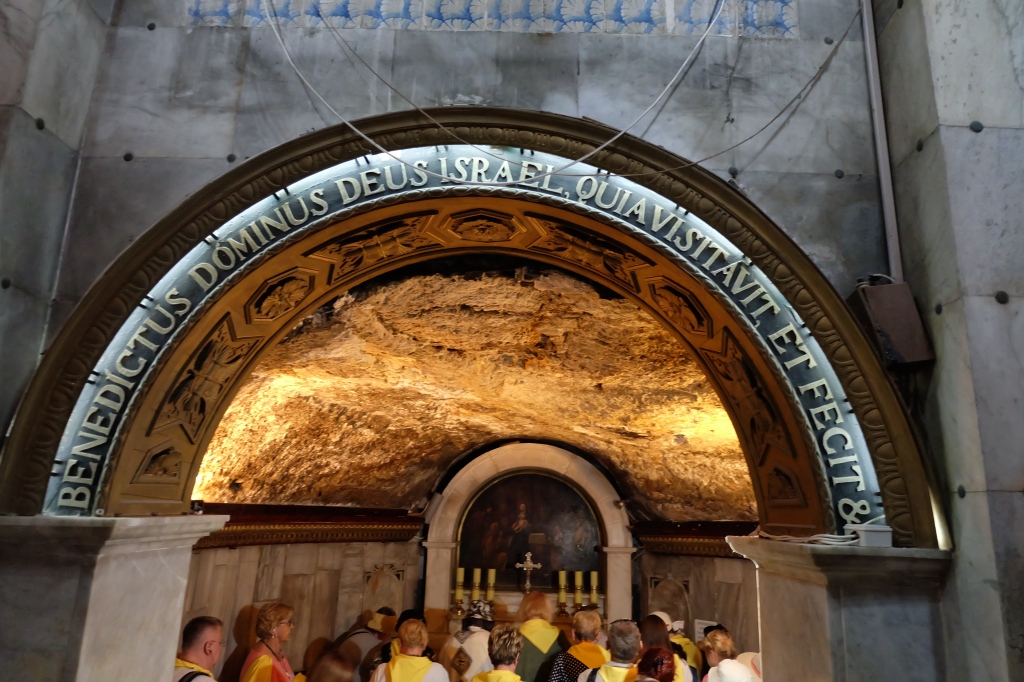
Photo by author, birthplace of St. John the Baptist underneath the church dedicated to him in Judah.
We have reflected last Thursday that Advent and Christmas is a journey that begin in the church, in the celebration of the Mass as Luke opened his Christmas story with the annunciation of John’s birth to Zechariah during their Yom Kippur at the Jerusalem Temple.
Luke’s artistry and mastery in weaving stories brought us right into every scene leading into Christmas – from Jerusalem to Nazareth then to the hill country of Judah in the home of Zechariah until John’s birth where our scene remains today. Tonight and tomorrow, he will be leading us along with Matthew and John to Bethlehem for the birth of the Lord.
But this journeys Luke recounted to us were not only about places but most of all an inner journey into our hearts. As we all know, the destination does not really matter but the journey, the trip. It is most true with our Simbang Gabi too – it is not about completing the nine-day novena that matters most but what have we become!
After tonight and tomorrow’s Masses, our churches would be empty again, only to be filled up on Ash Wednesday, and then Palm Sunday and Holy Thursday. How tragic that on Easter which is “the Mother of all feasts in the Church”, people are miserably absent because they are out in the beach and resort enjoying summer. In fact, more people come to Christmas (Pasko ng Pagsilang) than with Easter (Pasko ng Pagkabuhay) when it is actually the very foundation of our faith.
With our students after Simbang Tanghali last year at the Medicine Lobby of Our Lady of Fatima University, Valenzuela City.
So, what have we become after these nine days of waking up early or staying up late at night, praying, listening and reflecting on the word of God, sharing our material blessings in the collections and gift-giving if we stop going to Mass the whole coming new year?
American Trappist monk Thomas Merton wrote that seeking God is not like searching for a “thing” or a lost object because God is more than an intellectual pursuit or a contemplative illumination of the mind. Merton explained that God reveals Himself to us in our hearts through our communion and fellowships in the Church.
We come to church to celebrate the Mass and pray with the whole community to express our communion with one another in Jesus Christ. It is in this communal aspect of prayer we become holy, when we are transformed and as Zechariah prophesied, we are “set free” by Jesus Christ who is the main focus of his Benedictus.
Who are those enemies Zechariah mentioned twice in his Benedictus? Who are those enemies we have to be set free for God and free to love?
Photo by author, Church of St. John the Baptist, Israel, May 2019.
Again, look at this minute detail Luke used in composing Zechariah’s Benedictus when he spoke twice of the word “enemies”: first of “saving us from our enemies, from the hand of all who hate us” (Lk.1:71) and then, the fulfillment of God’s promise to Abraham “to set us free from the hand of enemies, free to worship him without fear” (Lk.1:74).
Surely, those “enemies” were not just the Romans and other pagans around Israel at that time nor the Pharisees and scribes, the priests and Sadducees of the temple who had hands in Christ’s death for they are now gone. The gospel accounts were written in the past but remain true and relevant at all time in history, especially now more than ever in our own time.
Are we the “enemies” within who think only of our selves even in our religious and spirituality, manipulating God, controlling God?
A friend asked me last week if their priest was right in saying that the Simbang Gabi is the most effective means to obtain special favors from God. I emphatically told her “no”, adding that their priest’s claim is misleading. We cannot dictate God. God blesses everyone, including sinners who do not even go to Mass. We do not need to multiply our prayers as Jesus warned us because God know’s very well our needs before we pray. Then, why pray at all?
We pray and most especially celebrate the Mass especially on Sundays to know what God wants from us because we love God. Period. And that love for God must flow in our loving service and kindness with others. If gaining favors is the main reason we go to Mass or even pray, then, we are the “enemies” who prevent ourselves to freely worship God!
Mr. Paterno Esmaquel of Rappler rightly said it in his Sunday column:
“We are a society obsessed with achievement and success, command and control… Even we who try to complete the Simbang Gabi can plead guilty. During the Simbang Gabi, for example, we are tempted to focus on achieving all the nine days and succeeding for another year. By fulfilling this tradition, we can then ask God (or “command” God, like a genie) to grant our wishes. We can therefore wield greater control over life that is otherwise unpredictable (https://www.rappler.com/voices/thought-leaders/the-wide-shot-missed-simbang-gabi-found-christmas-grace/).
And who are feeding all these misleading and erroneous thoughts on the people? We your priests and bishops!
How sad as we have mentioned last week when many priests have totally lost any sense at all of the sacred in the celebration of the Mass. Some of them not only come unprepared for the celebration without any homily, even so untidy and shabbily dressed and worst of all, make fun of almost everything and everyone that the Mass has become a cheap variety show. Online Masses continue not for evangelization for “shameful profits” in the Sacrament through “likes” and “followers” that some priests are now more concerned in finding ways to be trending and viral instead of how to effectively evangelize the people with our good liturgical celebrations flowing into our witnessing of life.
Yes, we priests and bishops are the enemies right here in the church when we align more with the rich and powerful, when we have no qualms asking/receiving gifts and favors from politicians and still, would want to collect more money and donations from people with our endless envelops that have totally alienated the poor from the church. The poor are the ones who suffer most, paying for the corruption of the politicians who help the clergy in their projects for the poor. Poor Jesus Christ!
Perhaps, on this last day of our novena to Christmas, let us all force ourselves – especially us priests and bishops – to go into silence to identify, to weed out those enemies within and outside us that prevent us from welcoming Jesus Christ in our hearts.
Let us pray to God that He may set us free from these enemies within us, around us so we can be like John the Baptist who will “go before the Lord to prepare his ways, to give his people knowledge of salvation.” Amen.See you tonight or tomorrow, Christmas in the Holy Mass!
Photo by author, Dumaguete City Cathedral, November 2024.
The Lord Is My Chef Daily Recipe for the Soul by Fr. Nicanor F. Lalog II
Friday in the Thirty-Second Week of Ordinary Time, Year II, 15 November 2024
Memorial of St. Albert the Great, Bishop & Doctor of the Church
2 John 4-9     <*{{{{><  +++  ><}}}}*>     Luke 17:26-37
Photo by author, 20 August 2024, St. Scholastica Retreat House, Tagaytay City.
Another short letter
for our first reading today,
Jesus but filled with wonder
and power that impacts our
daily life: help us to keep your love
Lord! The words of your beloved
disciple are strikingly so true to us
these days:
Anyone who is so “progressive” as not to remain in the teaching of the Christ does not have God; whoever remains in the teaching has the Father and the Son (2 John 9).
Forgive us, dear Jesus,
with our so many excuses
and alibis along with our
endless arguments
for the sake of being modern
and progressive
to be excused from your only
law and command which is
to love;
let us love always
for to love is live in your presence;
without love,
there is disorder and sin,
and fear;
with love,
there is true freedom
to be who we truly are
as children of the Father.

Therefore,
open our eyes
that we may consider the wonders
of your laws,
O Lord
(Psalm 119:18).
Amen.
Photo by author, Cathedral of St. Catherine of Alexandria, Dumaguete City, Negros Or., 07 November 2024.
The Lord Is My Chef Daily Recipe for the Soul by Fr. Nicanor F. Lalog II
Monday in the Twenty-eighth Week of Ordinary Time, Year II, 14 October 2024
Galatians 4:22-24, 26-27, 31-5:1     <*((((><  +  ><))))*>     Luke 11:29-32
Photo by Ms. April Oliveros at Mt. Pulag, March 2023.
While still more people gathered in the crowd, Jesus said to them, “This is generation is an evil generation; it seeks a sign, but no sign will be given it, except the sign of Jonah… and there is something greater than Jonah here” (Luke 11:29, 32).
Your words today,
O Lord Jesus are so striking -
so destabilizing on a Monday
morning but looking back
to our lives,
we deserve them
because they are true!
More than the evil
of the sins we have committed
that have hurt us all,
strained our relationships,
and destroyed our environment
is the evil of our continued
disregard for You;
if sin is a turning away from
You, dear Jesus,
more evil is our rejection
of You like those people
in your time.
How sad until now
we keep on seeking signs
of God's presence among us,
of God's love and mercy for us
without realizing You are
God-is-with-us,
the Emmanuel.

Worst than our sins
against each other and You
Jesus is our refusal to recognize
You because we cannot let go
of our own convictions that are
self-centered and self-serving,
thinking it is freedom.

Forgive us, Jesus
in our never-ending lists
of signs we ask from You
to prove us your love,
your presence,
your approval
not realizing that the life
we now have,
and continue to waste,
is more than enough of
your loving presence.


Let us realize, Jesus,
as St. Paul reminds us in the
first reading today
that You have come to set us
free from the slavery of sin
and evil in order to be free to
love and be faithful to You.
Amen.
The Lord Is My Chef Daily Recipe for the Soul by Fr. Nicanor F. Lalog II
Friday, Memorial of St. John Chrysostom, Bishop & Doctor of Church, 13 September 2024
1 Corinthians 9:16-19, 22-27     <*((((><  +  ><))))*>     Luke 6:39-42
Photo by Mr. Jim Marpa, 2018.
Lord Jesus Christ,
help me be like St. Paul,
a man truly free:
free from slavery of sin,
free from selfishness,
free from what others may say
so that I may be truly
free to love,
free to serve,
free to be my true self.
Although I am free in regard to all, I have made myself a slave to all so as to win over as many as possible. I have become all things to all (omnia omnibus), to save at least some. All this I do for the sake of the Gospel, so that I too may have a share in it (1 Corinthians 9:19, 22-23).
In a world when most people
insist on their rights,
you teach us Lord through St. Paul
that inasmuch as the Church is the
your Body, then being a slave to others
is actually the path to true freedom,
making no room for anyone to insist
on his or her rights superseding
the common good;
most of all, in becoming
all things to all men like St. Paul,
then we acknowledge that
the strong and powerful
 must take into consideration
the needs of the weak and powerless;
forgive us, Jesus,
for blindly leading others
to doom and more darkness;
forgive us, Jesus,
for always seeing defects of others
without recognizing our own;
cleanse us with your words
like St. John Chrysostom
who wrote us in one of his letters
on the way to his exile,
"Distance separates us,
but love unites us,
and death itself cannot divide us.
For though my body die,
my soul will live and
be mindful of my people."
Amen.















 lordmychef.com