Our Sabbath faith

Lord My Chef Sunday Recipe for the Soul, 12 October 2025
Twenty-Eighth Sunday in Ordinary Time, Cycle C
2 Kings 5:14-17 ><}}}}*> 2 Timothy 2:8-13 ><}}}}*> Luke 17:11-19
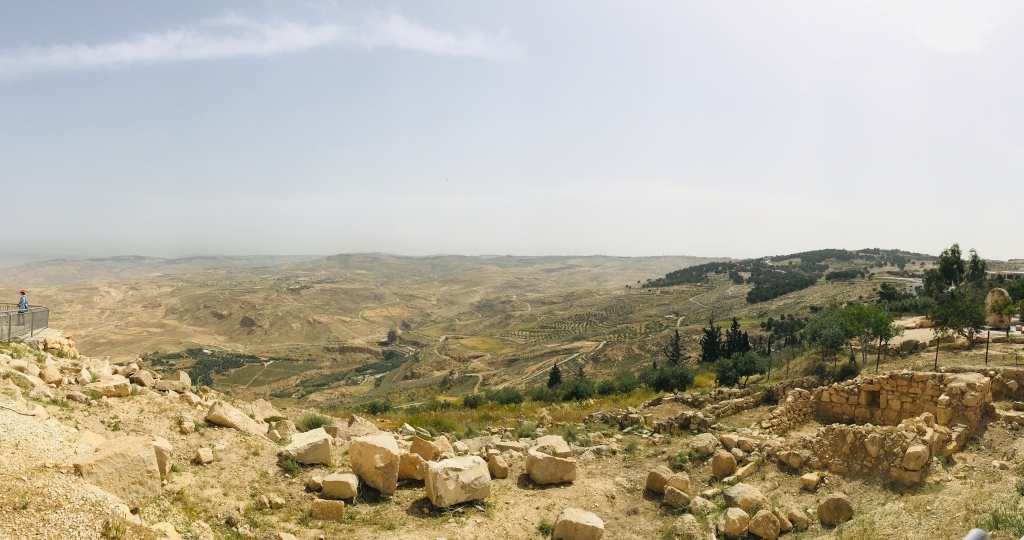
Photo by author, view of Israel from Mt. Nebo, Jordan, May 2019.

Our gospel setting this Sunday strikes a deep lasting impression on anyone who had been on a Holy Land pilgrimage: of those vast expanse of desert in Israel where dusty roads have been replaced by modern concrete or asphalted roads.

Perhaps the feelings remain the same today and during the time of Jesus when he and the Twelve were near the border between Samaria and Galilee, several figures who turned out to be ten lepers appeared at a distance, waving their hands to the Lord. It must have been a surprising sight, then and now, of being found in the desert. Imagine the desperation in their voices of those ten lepers, “Jesus, Master! Have pity on us!” (Lk.17:13).

Jesus right away told them to go show themselves to the priests, and as they went, they were healed. But only one—a Samaritan—returned to thank Jesus who wondered aloud: “Ten were cleansed, were they not? Where are the the other nine? Has none but this foreigner returned to give thanks to God?” Then he said to him, “Stand up and go; your faith has saved you” (Lk.17:17-19).

“The Healing of Ten Lepers” painting by James Tissot en.wikipedia.org

Last Sunday we reflected that faith is primarily a relationship with God; hence, its powers or efficacy will work only when aligned with God and his Holy Will. We will never know how strong we have grown in faith until we get into tests and trials. That is why, the need for us to imitate the Twelve in praying to Jesus, “Increase our faith” (Lk.17:5).

We grow best in faith when we worship God with our fellow believers in the celebration of the Holy Mass especially on Sundays which is our Sabbath. More than a day of rest, Sabbath is a day of restoration to God, with others and most of all, with one’s self. It is a return to Eden, a dress rehearsal of our entry into heaven to dwell in God’s presence eternally.

This is where lies the beauty and significance of this healing of ten lepers – they were not only restored to health but restored in God, to their families, and to their community and fellow believers.

Photo by author, Jerusalem, May 2017.

Those ten lepers have never known any rest at all since getting afflicted with the disease for they were cut off from homes, worship, and community. That is why they could not get near Jesus as they have to keep their distance from everyone according to their laws in order to prevent infecting others and spreading the disease. Likewise, it was the very reason that anyone healed of leprosy or any serious sickness must first present themselves to the priests who have the sole authority to declare one has been healed and therefore may be allowed to reintegrate with their family and community or society in general. Being declared as healed of sickness like leprosy at that time meant the restoration of one’s rights to worship in the temple or synagogue especially on Sabbath.

When Jesus healed them, he restored more than just their bodies and physical health. In sending them to the priests, Jesus invited them into the wholeness of what the Sabbath really is like peace, inclusion, and dignity. 

Or, salvation in short.

Sad to say, only one realized this when he returned to thank Jesus. The healed Samaritan leper knew and felt a deeper healing had taken place within him that he responded with heartfelt gratitude to God in Jesus. There was a deepening of his faith in Jesus when he decided to return to thank the Lord that also expressed his desire to enter into a relationship with Jesus.

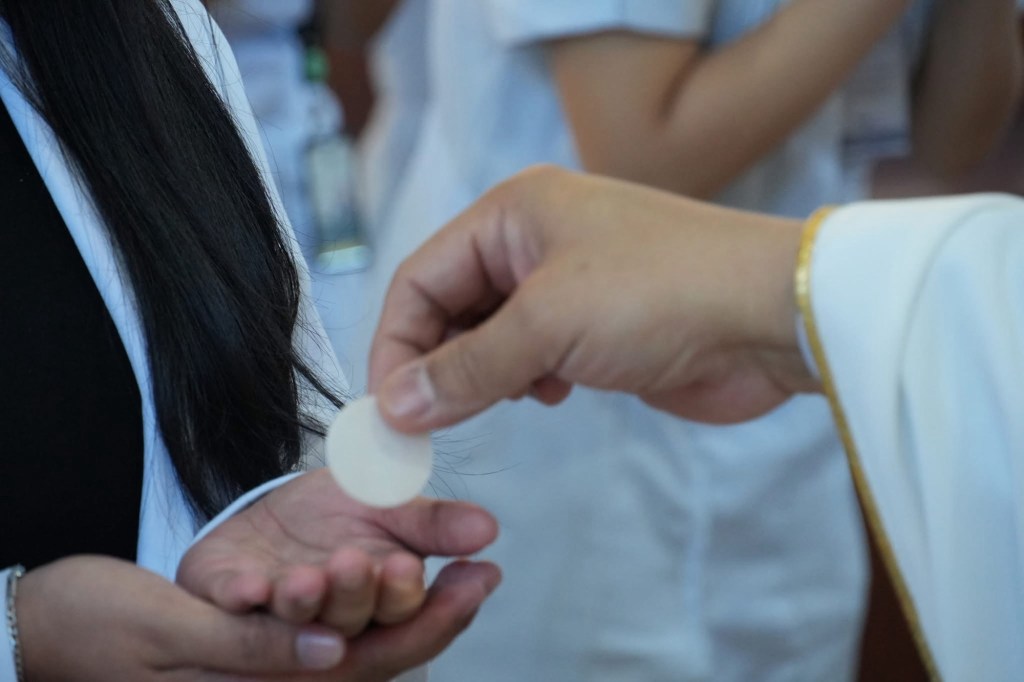
Photo by author, Sacred Heart Novitiate, Novaliches, QC, 20 March 2025.

Whenever we thank people for their kindness no matter how little that may be, it is more than acknowledging the other person but most of all, of expressing our links with them as well as our desire to be one with them, especially with God who showers us with good things daily. That is why the Mass is also called Eucharist – from the Greek eucharistia meaning “thanksgiving”. After his skin was cleansed of leprosy in the first reading, Naaman the Syrian Army General declared before the Prophet Elisha that he would worship the Lord alone as he returned to his home with two mule-loads of Israeli soil.

Sorry to say but whenever we refuse to celebrate the Mass on Sundays, it means that we are one of those nine ungrateful lepers healed by Jesus! Don’t you feel being called like the Samaritan to return and give thanks to Jesus for the many blessings you have received this Sunday?

See how in this age of faith in a mass-mediated culture that we have become so impersonal, trusting more our gadgets and all those apps like Siri and Waze as if we have already lost faith in the human person. And God.

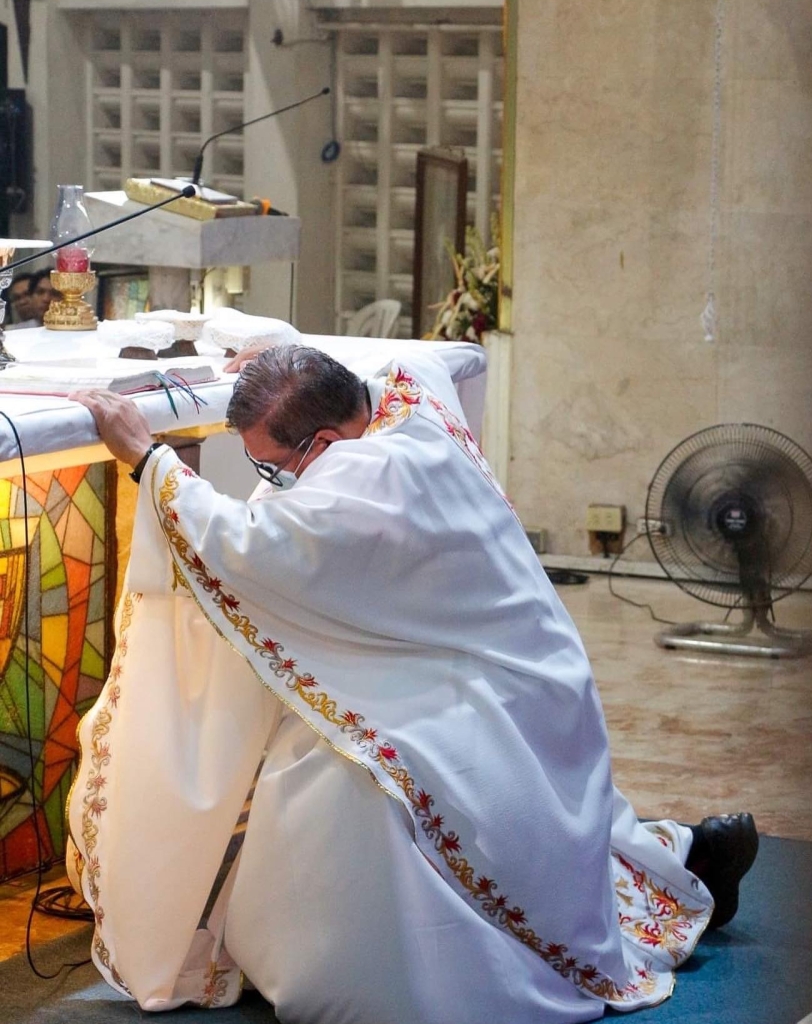
Photo by Mr. Nicko Timbol, Chapel of the Angel of Peace, OLFU-RISE, Valenzuela City, 03 October 2025.

We spend practically our entire days in front of all kinds of screens than with the face of a human person. Again, this sadly extends to the way we worship with many still stuck in the pandemic mode of online Masses not realizing the important and irreplaceable aspect of personal encounter of Jesus in the actual Mass with other believers.

God remains God even if we do not go to Mass every Sunday. It is us who are losing greatly whenever we skip Sunday Masses, our Sabbath. God specifically made his third commandment to “Remember to keep holy the sabbath day” because Sabbath reminds us that life itself is holy in the first place, a sharing in the life of God. What a tremendous blessing still that even if we forget God or disregard God every Sunday, Paul reminds us today of the beautiful truth and reality that “If we have died with Jesus we shall also live with him; if we persevere we shall also reign with him. But if we deny him he will deny us. If we are unfaithful he remains faithful, for he cannot deny himself” (2Tim.2:11-13).

Can you imagine that? If we are unfaithful to Jesus, he remains faithful?

Every Sunday, Jesus tells us to “Stand up and go; your faith has saved you” despite, in spite of our many sins and absences from the Sunday Masses in the past because he wants us to experience the deeper wholeness that comes with faith and gratitude as experienced by that Samaritan leper he had healed. As we continue to journey with Jesus toward Jerusalem facing many trials and sufferings along the way, he calls us to come to him in the Sunday Mass to deepen our faith by resting in his presence.

Is there a space in your life at this stage that you feel like one of those lepers, longing for healing and restoration? In the silence of this Sabbath day in our Sunday Mass, speak to Jesus especially after receiving him Body and Blood in the Holy Communion. Amen. Have a blessed week ahead! Fr. Nicanor F. Lalog II, Our Lady of Fatima University, Valenzuela City (lordmychef@gmail.com).
Our Lady of Fatima University-Valenzuela, June 2025.

People observe, Jesus notices

Lord My Chef Sunday Recipe, 31 August 2025
Twenty-Second Sunday in Ordinary Time, Cycle C
Sirach 3:17-18, 20, 28-29 ><}}}*> Hebrews 12:18-19, 22-24 ><}}}*> Luke 14:1,7-14
“Meal in the House of a Pharisee” 1886-1896 painting by James Tissot from brooklynmusueum.org.

For the next three Sundays beginning today, Luke gathered teachings of Jesus Christ all set on the dining table, a sort of some “table talks” about the great banquet in the end of time and how we could all get in to share in the eternal meal with the Father.

On a sabbath Jesus went to dine at the home of one of the leading Pharisees, and the people there were observing him carefully. He told a parable to those who had been invited, noticing how they were choosing the places of honor at the table (Luke 14:1, 7).

I love the way Luke presented this scene when he said “the people there were observing Jesus carefully” while the Lord told them a parable after “noticing how they were choosing places of honor at the table.”

How lovely! People observe, Jesus notices.

As it had happened in every instances of gatherings with Jesus, people carefully observed him, trying to find something to accuse him in of disregarding their traditions and laws like healing the sick on a sabbath day. They have “boxed” and judged Jesus as a dissident and a trouble-maker among them in his apparent disregard of laws and traditions.

Photo by author, Manila Club, BGC, June 2025.

In a funny twist, Luke tells us in this scene the immense love of Jesus then and now for everyone that despite his noticing and knowing everything in us, he neither counted those things against us nor ever judged us. How sad many of us with that habit of putting God in a box like a cop keeping tabs of our infractions when in fact God simply noticed our actions and behavior to invite us to become better without any judgment at all.

Keep in mind this scene reveals to us its context of the heavenly banquet which took place after the sabbath services at the synagogue where Jesus participated, hosted by a Pharisee, a VIP of the synagogue and of the society at that time. It was a party where every who’s who was supposed to be present, with everyone competing for the best seats closest to the host. And so, Jesus the keen observant but never judgmental used the occasion to teach us the essence of humility to make it to heaven or eternal life that is signified by a wedding banquet like that big meal he attended.

“When you are invited by someone to a wedding banquet, do not recline at table in the place of honor. A more distinguished guest than you may have been invited by him… For everyone who exalts himself will be humbled, but the one who humbles himself will be exalted” (Luke 14:8, 11)

Photo by Pixabay on Pexels.com

These past Sundays, we have seen Christ’s insistence of the Father’s desire to have everyone welcomed into heaven by giving us some instructions of what to do to gain eternal life.

This Sunday while in a big party, Jesus took the occasion to teach us the value of humility to get into heaven. From doing, Jesus now moves into being, our disposition and attitude to make it into heaven where what matters most is not where we are seated but where we stand. Recall how Jesus reminded the brothers James and John with their mother that he has nothing to do with the seating arrangements prepared by the Father in heaven after she requested her two sons to be seated beside him when he comes into his glory.

Heaven is more of where we stand with Jesus where his virtue of humility is most pronounced when he “humbled himself, becoming obedient to death, even death on a cross” (Phil.2:8). That is why St. Augustine taught that “humility is a sign of Christ”, a revelation of Jesus that allows us to recognize him our Lord and Master leading us to the Kingdom of heaven without any feelings of inferiority and despair.

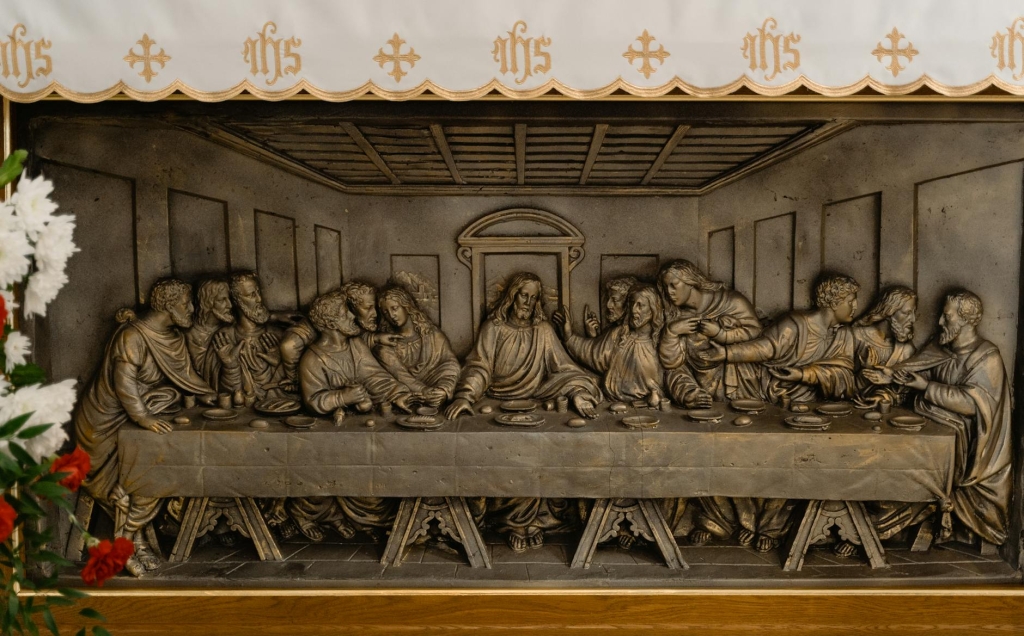
On the Cross which he prefigured at his Last Supper, Jesus showed himself as the most humble of all who went to life’s lowest point of suffering and dying to meet us as he noticed everything in us to lift us up and be like him, humbly standing in our sufferings. It is on the Cross that we find humility as the basic and essential requirement to get into the heavenly banquet of the Lord.

Very often when we examine our state of humility, what comes to our mind are the many negativities we have like our sins and failures, vices and weaknesses, our being unworthy. But, that is when we bow down most to beg for Christ’s mercy like before the Holy Communion when we pray, “Lord, I am not worthy to receive you under my roof but only say the word and I shall be healed.”

That is both the humility of Jesus and of us humans so vividly expressed at the washing of the feet after the Last Supper. Normally, we look up to Jesus in heaven but at the washing of feet, like every time we receive Holy Communion, we take the higher position, looking down at him not with pride but with all humility because Jesus humbled himself first before us. Here we find humility as seeing ourselves the way Jesus sees us – weak and sinful, yet so loved and forgiven. This is what Ben Sirach taught us in the first reading: humility is the fundamental attitude of wisdom because it opens us to the splendor of God when we find our self-worth and value too!

Without humility, it is either we see only the best or the worst in us as a person, without God, without others.

This is the bigger issue with the “nepo babies” now being bashed on social media after flaunting their wealth and ostentatious lifestyles. Their posts were far from inspiring, at most are tasteless and most convulsive. All we have noticed in their posts is their pride not only in lacking humility but most precisely in not finding value in themselves. Sadly but I dare say they are the ugliest and most pitiable persons because they find value only in wealth and things, not in themselves as persons. Hence, the flaunting of their possessions that only make them so pathetic because along that came their utter disregard for others especially the poor who suffer most with their parents’ greed for money through corruption.

Humility is always uplifting in the positive sense, not looking at others as below us but to realize despite our sins and weaknesses, we are loved, we are noticed as a person so worthy, so valuable. When we are humble, then we become joyful too because we are assured of love and acceptance despite our flaws. This is the gist of the message to us this Sunday of the author of the Letter to the Hebrews: unlike the Israelites in the Old Testament who were so fearful to approach God who spoke to them with thunder and lightning, we can get close to God in Jesus who humbled himself to be one with us by dying on the Cross.

True humility keeps us rooted with our selves, with others and with God. It is this rootedness best expressed in the Sunday Eucharist that we are able to follow Jesus in his journey to Jerusalem and eventually into heaven in all eternity. Amen. Have blessed Sunday and most blessed September too!

Photo by the Marketing Office, Our Lady of Fatima University, Valenzuela City, June 2025.

What if St. Paul & Jesus come to our Church today?

Lord My Chef Daily Recipe for the Soul, 25 August 2025
Monday, Twenty-first Week in Ordinary Time, Year I
1 Thessalonians 1:1-5, 8-10 <*((((>< + ><))))*> Matthew 23:13-22
Photo from The Fatima Tribune, Red Wednesday at the Chapel of Angel of Peace, Our Lady of Fatima University, Valenzuela City, 27 November 2024.
Today I wonder,
God our Father,
what if Paul your Apostle
or Jesus Christ your Son
were to visit our church today,
what would they find out?
Would Paul be proud of us
like the Thessalonians of
his time?

We give thanks to God always for all of you, remembering you in our prayers, unceasingly calling to mind your work of faith and labor of love and endurance of hope of our Lord Jesus Christ, before our God and Father, knowing, brothers and sisters loved by God, how you were chosen… In every place your faith in God has gone forth, so that we have no need to say anything (1Thessalonians 1:2-4, 8).

Oh how I envy the Thessalonians
that Paul along with
Silvanus and Timothy
were so proud of their "faith
and labor of love
and endurance in hope";
most of all,
of their "conviction"
that he had no need
to say anything,
as in, "walang masabi".
So beautiful!
How I wish Paul could say
the same things today to our
parish, to our community of
believers with their vibrant
faith, hope and love.
What  I dread, O Father
is when Jesus comes
and begins speaking
the same way to us
his priests and bishops:

Jesus said to the crowds and to his disciples: “Woe to you, scribes and Pharisees, you hypocrites. You lock the Kingdom of heaven before men. You do not enter yourselves, nor do you allow entrance to those trying to enter (Matthew 23:13).

Shame on us, Lord Jesus,
your priests and bishops!
If you were here today,
you would surely say the same
things to us: many of us
your priests do not pray at all
that many have forgotten to
pray properly and celebrate
liturgy meaningfully;
many would rather go on
vacation and recreation than
celebrate Mass and sacraments
for your people;
yes, Lord Jesus,
"woe to us" your servants
for many of us have no plans
of going to heaven at all with the
kind of Eucharist we celebrate
that people have lost faith
in you and your church.
Forgive us, Jesus,
your priests for being
blind fools,
following the limelight
of the world than your path
of the Cross;
lead us back to you, Jesus,
so that your flock may be
enlivened again in their
faith, hope and love
like the Thessalonians
of your great Apostle Paul.
Amen.
Fr. Nicanor F. Lalog II
Our Lady of Fatima University
Valenzuela City
(lordmychef@gmail.com)
Photo from The Fatima Tribune, Red Wednesday at the Chapel of Angel of Peace, Our Lady of Fatima University, Valenzuela City, 27 November 2024.

Re-membering Jesus, Body & Blood

Lord My Chef Sunday Recipe for the Soul by Fr. Nicanor F. Lalog II
Solemnity of the Most Holy Body & Blood of Christ, Cycle C, 22 June 2025
Genesis 14:18-20 ><}}}}*> 1 Corinthians 11:23-26 ><}}}}*> Luke 9:11b-17
Photo by FlickrBrett Streutker from catholic365.com.

From the highest truth of our faith last Sunday which is the Blessed Trinity in one God, we now celebrate in the resumption of Sundays in Ordinary Time the Solemnity of the Most Holy Body and Blood of Christ.

This feast highlights our faith in God who truly exists and had come to us in Christ Jesus, the Second Person of the Holy Trinity. In Christ through the Sacrament of the Eucharist he established at the Last Supper, we are given the “taste” of heaven literally speaking under the signs of bread and wine that become his Body and Blood we share. This was his command on that Holy Thursday evening to always remember him as St. Paul tells us in the second reading, the oldest account of the institution of Eucharist:

Brothers and sisters: I received from the Lord what I also handed on to you, that the Lord Jesus, on the night he was handed over, took bread, and after he had given thanks, broke it and said, “This is my body that is for you. Do this in remembrance of me.” In the same way also the cup, after supper (1 Corinthians 11:23-25).

Photo by MART PRODUCTION on Pexels.com

Two words I wish to share with you on this Solemnity of the Body and Blood of Christ.

First is the word “remembering” or to remember. A very common word we use often but perhaps never aware of its deeper meaning from its root word “member” which means a part. Literally, to remember means “to make part again”. When we remember a person, an event in life, a thing from the past or long gone or not with us, we make them a part of the present moment.

The Eucharist is the highest form of remembering because literally speaking, we make Jesus a member of our present moment. When we re-remember Jesus in the Eucharist, he truly comes to us in Body and Blood! Truly present with us, in us after receiving him in the Holy Communion. Whenever we remember a loved one or a friend long gone or not with us at the moment, all we have is a memory. They become a member of the present but only in the mind unlike Jesus truly present with us, in us, and before us in his words, in his Body and Blood and in one another celebrating the Eucharist.

Photo by author, Old Jerusalem seen from Church of Dominus Flevit, May 2017.

It is not magic but a work of faith, a gift through and through from God in Jesus Christ. By his dying on the Cross and Resurrection at Easter, Jesus superseded and transcended time and space, sharing with us that sacred reality.

St. John Paul II beautifully called that “cosmic reality” when he described in his encyclical Ecclesia De Eucharistia how he felt transported in time and space when the temporal becomes divine because of God’s true presence anywhere he celebrated the Eucharist. We too experience the same cosmic reality in every Mass we celebrate when we are properly disposed, especially the priest and the servers.

That is why I always demand the highest order from priests and servers in celebrating most solemnly as possible the Holy Mass. I can stand kids playing inside the church but what gets to my nerves are servers talking or moving unnecessarily during the Mass and worst of all, when lectors proclaim the word of God incoherently and wrongly. Lest we forget also the choir members feeling so magaling forgetting they are in the Mass not in a concert that they make it a show, forgetting all about God and the people.

What a tragedy when we priests and liturgical ministers are the ones who forget to re-member Jesus in the Eucharist with our too much attention to ourselves. Exactly like the Twelve in our gospel!

As the day was drawing to a close, the Twelve approached him and said, “Dismiss the crowd so that they can go to the surrounding villages and farms and find lodging and provisions; for we are in a deserted place here.” He said to them, “Give them some food yourselves.” They replied, “Five loaves and two fish are all we have, unless we ourselves go and buy food for all these people” (Luke 9:12-13).


Imagine that scene of how the Twelve have totally “forgotten” the more than five thousand people gathered there with them. They were just thinking of themselves because they were in a “deserted place”. What a disrespect!

Respect is lost and disregarded when there is no remembering of others, when we forget others. Respect is from two Latin words re (again) and specere (to look/see) from which the words spectacle and spectacular came from. Re + specere or “respect” means to look again in order to see!

The Twelve were just concerned with themselves, not only forgetting but without respect at all with the people they have failed or refused to recognize as humans too who get tired and hungry like them. As we have cited in earlier, this continues right in our eucharistic celebrations when priests and ministers celebrate unprepared, unmindful of the sanctity of the Mass.

Remembering is not merely “thinking” of others in our mind and memory.

Remembering is making others present in our very selves!

Remembering is making every-body a some-body by giving our very selves to them to be the Body of Christ. Unless we are able to truly share our very selves in person, in body and blood too, then every Mass will remain merely a rite or a ritual. Worst, an activity we just have to fulfill.

The Eucharist is the summit of our Christian life because of this aspect of remembering Jesus Christ that leads us into a true communion of sharing of persons and experiences, in our joys and sorrows, in our hopes and belief. When this happens, then every remembering becomes a thanksgiving too.

And that is our second word I wish to instill in you today – thanksgiving which is the meaning of the Greek word eucharistia.

When there is a real experience of each others’ presence in love and mercy, kindness and care, justice and fairness, gratitude flows naturally resulting in peace and harmony. It is the whole meaning of our first reading when the priest of God named Melchizidek who was also the king of Salem which means “peace” blessed Abram after winning in a battle.

This short scene is a story of remembering God’s goodness to Abram who thanked Melchizidek by giving him a tenth of everything he had won in the battle. In the Holy Mass, what do we really share from our very selves? Not just treasures but even our very time to give totally to Christ without texting.

Now we see the series and cycle of remembering and thanksgiving in sharing of gifts of self which the Body and Blood of Christ signify to us.

This coming Friday we shall celebrate the third consecutive Solemnity in the resumption of Ordinary Time with that of the Most Sacred Heart of Jesus, a reminder to us all to make Jesus present always in ourselves with others especially at this time the world has been deleting from its every aspect God.

Lord Jesus Christ,
transform me like the
bread and wine
into your Body and Blood
to be offered and shared
with others
especially those
in most need.
Amen.
Photo by Pixabay on Pexels.com

Advent & Christmas begin in the church

The Lord Is My Chef Daily Recipe for the Soul by Fr. Nicanor F. Lalog II
Simbang Gabi-4 Homily, 19 December 2024
Judges 13:2-7, 24-25 <*((((>< + ><))))*> Luke 1:5-25
Photo by author, wailing wall of Jerusalem where Jews pray until now being the section closest to the Holy Holies destroyed in year 70AD.

From Matthew, we now shift to Luke to listen to his account of Christmas which is the most complete and detailed. In fact, most artistic renditions of Christmas were inspired by Luke’s gospel.

Very surprising in his Christmas story, Luke started it with the annunciation of the birth of John the Baptist to his father Zechariah who was then serving at the temple of the Lord in Jerusalem. It is a reminder to us all these days that Advent and Christmas begin in the church, in our holy celebrations.

In the days of Herod, King of Judea, there was a priest named Zechariah of the priestly division of Abijah; his wife was from the daughters of Aaron, and her name was Elizabeth. Once when he was serving as priest in his division’s turn before God, according to the practice of the priestly service, he was chosen by lot to enter the sanctuary of the Lord to burn incense. Then, when the whole assembly of the people was praying outside at the hour of the incense offering, the angel of the Lord appeared to him, standing at the right of the altar of incense (Luke 1:5, 8-11).

Luke’s detailed account of the event is the Jewish Day of Atonement (Yom Kippur) when their priests incense yearly between September 18-24 the Holy of Holies where they used to keep the Ark of the Covenant. From this detail by Luke we got the reliable timetable in the celebration of Christmas on December 25 by considering this event as the time of Elizabeth’s conception of John who was born June 24 or nine months after. Tomorrow we shall hear in the gospel how “on the sixth month” of Elizabeth’s pregnancy which fell on March 25, the angel Gabriel announced to Mary the birth of Jesus, the Solemnity of the Annunciation we celebrate on that date. Nine months from March 25, we have December 25! Who said our Christmas date is not in the Bible? We got it here in our gospel today courtesy of Luke!

Photo by author, Parish Church of St. Joseph in Morong, Rizal, January 2021.

It may sound simple yet, it is so profound. In narrating this to us, Luke reminds us today that the Christmas story began in a holy celebration in the temple of Jerusalem now happening in our Eucharistic celebrations in every church around the world.

Many take our Sunday Masses for granted these days with so many excuses and alibis but, let us set aside all these to reflect on this simple detail from Luke’s first story on Christmas.

Photo by Mr. Jim Marpa, 2018.

First, this is a call for us all to go back to the church by finally putting a stop NOW of online Masses. Online Mass as a term is an oxymoron because it presupposes actual presence of people. There can be no virtual Mass because there is no such thing as virtual sacrament nor virtual grace. That is why God introduced Himself to Moses as “I AM WHO AM”, the One who is perfectly present, always actual never virtual.

Since the waning of the COVID virus last year, both the Pope and the CBCP have called for the ending of online Masses but unfortunately, so many priests have remained stubborn with some making “shameful profit” out of it which is strongly prohibited by Canon Law and other Church and papal documents. Unless online Masses are stopped, people will always find reasons and alibis not to go to church on Sundays.

As we reflect on Luke’s account of the celebration at that time of the annunciation of the angel to Zechariah while he was incensing the Holy of Holies, we get the feel of solemnity and sacredness that are sorely missing these days in many of our celebrations of the Mass.

Like Zechariah and the priests of the Jerusalem temple at that time who were all steeped in traditions and presumably spirituality, we have every reason to expect the same, even more, from our bishops and priests today. They are the ones who set the tone of every celebration and of life in the parish; their spirituality or lack of it is manifested in the parish life, from its building structure to its witnessing.

Photo by author, pious Jews and Rabbis in another enclosed section of the wall of the temple of Jerusalem, May 2017.

How sad when priests have lost the sense of the sacred of the Holy Mass when they disregard the solemnity of the celebration with all their antics and gimmicks; worst of all, of coming to Mass unprepared without a homily and good vestments, sometimes without having showered or shaved! What is tragic is when the priest attends all socials in proper attire, but never in the Mass.

The other day, I saw a sticker at the back of a delivery van that asks, “How’s my driving? And my grooming?” Too bad I was not able to get the name of the company of that delivery van but how great are its people must be in giving a premium on how their drivers behave and look!

Some priests shamelessly argue that what is essential is what is inside but they forget that the outward appearance is an indication of what’s inside them too. How can the people feel and experience God if their pastor comes shabbily dressed without any good vestments, so untidy as in dugyot, unprepared for the Mass, without a good homily?

What had become of our churches that have been the shining glory of architecture through the centuries but now look like malls? Some churches look like videoke bars with a lot of giant TV screens while priests serenade the people with their wonderful voices instead of delivering a homily.

How sad that many churches are untidy and ugly. Yes, ugly is the word. And kitschy, bereft of any sense of the holy that people cannot experience God except be played on their emotions with dramas and not to forget, second and third collections. Choirs are on their own with a concert, totally deaf to the fact their music is supposed to lead the congregation into prayerful reflections not to applaud them for a performance. It is about time we restore the dictum of the Roman liturgy of noble simplicity not only of the church and also of celebrations.

Photo by author, Archdiocesan Shrine of Nuestra Señora De Guia, Ermita, Manila, 28 November 2024.

Our gospel invites us today, especially us priests and bishops along with those involved in preparing our parish celebrations to be silent like Elizabeth – lest we be silenced and be made mute by the Lord like Zechariah to finally open ourselves to listen to God’s instructions about His Son’s coming.

Let’s face that sad reality of so many of us clergy and laity in the church who are like Zechariah trying to control everything including God, even playing God who give the people enough reasons to turn away from the Church completely.

Photo by author of the beautiful sacristy of the Archdiocesan Shrine of Nuestra Señora De Guia in Ermita, Manila where even a guest priest could feel at “home” with everything in order.

Like Elizabeth, let us choose to be silent in order to pray truly, awaiting God in the Holy Spirit to stir us into His Divine Plans like Samson in the first reading, “The boy grew up and the Lord blessed him; the Spirit of the Lord first stirred” (Jgs.13:24-25). We find the same thing in the gospel when Gabriel told Zechariah how John while still in Elizabeth’s womb would be filled with the Holy Spirit (Lk.1:15) in accomplishing his mission as precursor of Jesus.

If we could allow ourselves to be stirred by God first – not by fad or ulterior motives in our church celebrations – then every Mass becomes a Christmas, a coming of Christ.

Let us do away with unnecessary things in the church and in our celebrations that call attention to us, to our abilities and talents, even power like Zechariah by being more daring in silence and noble simplicity to experience God’s coming every Mass.

As we shall see in the coming days from the gospel of Luke, Christmas is both a journey into Bethlehem, Jerusalem and other places as well as into the very hearts of Joseph and Mary and of those who would recognize and accept Jesus Christ. May our churches reflect what is in our hearts as disciples of Christ, always with a space for Jesus to come and dwell inside and among us. Amen.
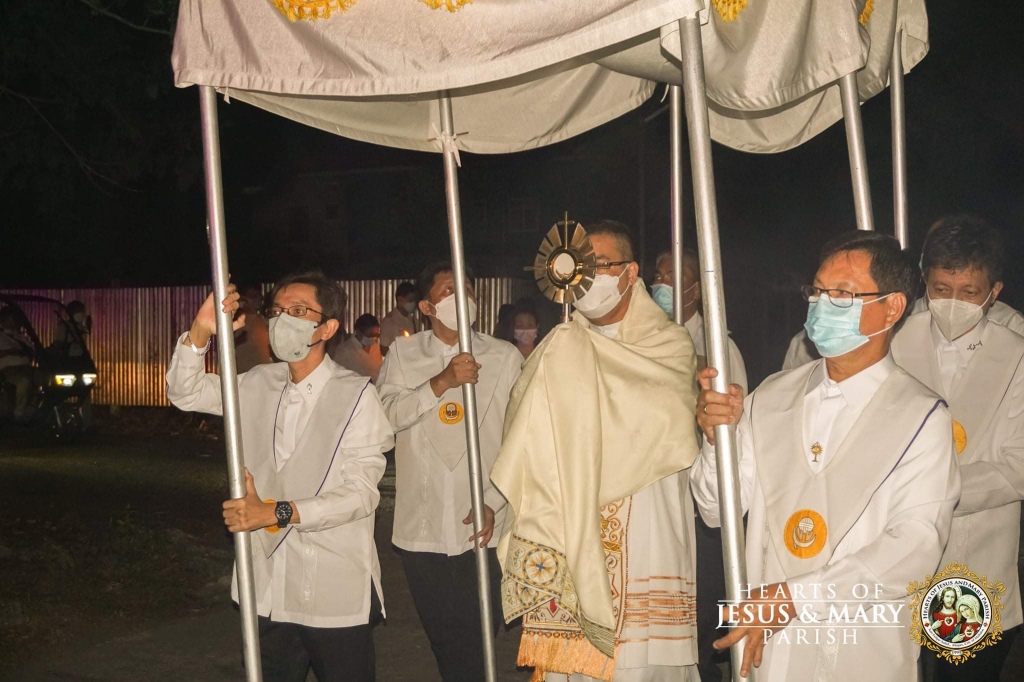
Photo by author, Simbang Gabi in our previous parish, 2018.

Light and sound

The Lord Is My Chef Daily Recipe for the Soul by Fr. Nicanor F. Lalog II
Monday, Memorial of St. Padre Pio, Priest, 23 September 2024
Proverbs 3:27-34 <*((((>< + ><))))*> Luke 8:16-18
Photo by Mr. Jay Javier, 07 September 2024.

Jesus said to the crowd: “No one who lights a lamp conceals it with a vessel or sets it under a bed; rather, he places it on a lampstand so that hose who enter may see the light… Take care, then, how you hear. To anyone who has, more will be given, and from the one who has not, even what he seems to have will be taken away” (Luke 8:16, 18).

God our loving Father,
thank you very much in giving
us a modern saint in San Pedro Pio
who is so beloved not only for his
miracles but most of all
in his bringing your Son Jesus Christ's
light into this dark modern world,
listening always not only to You
but to everyone so weighed down
by sin and all forms of sufferings.
With your so many gifts
to San Padre Pio
especially the stigmata of Jesus,
he remained so humble,
witnessing to this
modern world of excessive
wealth and poverty
in money and spirituality,
San Padre Pio refused no one
whatever good he could offer
to those who came to him
and continue to come to him
for intercession.
Fill us, dear Father,
with St. Padre Pio's same love
of You and love of neighbor
rooted in the meaningful celebration
and deep love for the Holy Eucharist,
always making your light shining
brightly in our life of witnessing
as we too listen intently to your words
through Jesus Christ.
Amen.
What we can do in the work of God

The Lord Is My Chef Sunday Recipe for the Soul by Fr. Nicanor F. Lalog II
Eighteenth Sunday in the Ordinary Time, Cycle B, 04 August 2024
Exodus 16:2-4, 12-15 ><}}}}*> Ephesians 4:17, 20-24 ><}}}}*> John 6:24-35
Photo by author, Lake of Galilee, the Holy Land, May 2017.

We are now back in Capernaum where Jesus used to frequently teach in its synagogue during His ministry.

Remember last Sunday how Jesus fled from the crowd when He felt them wanting to take and make Him a king upon seeing His miraculous feeding of over five thousand people from five loaves of bread and two pieces of fish with a lot of leftovers. The people looked for Him and found Him in Capernaum, the setting of all of our gospel scenes these four Sundays of August.

There at Capernaum was a beautiful exchange in the conversation between Jesus and the people that eventually led to the Bread of Life discourse of the Lord in this sixth chapter of John’s gospel. Remember too that for John, the miracles Jesus performed were signs that pointed to Him as the Christ. Hence, this important reminder to the crowd who have sought Him that day as well as to us living in these interesting times today:

“Do not work for food that perishes but for the food that endures for eternalnlife, which the Son of Man will give you. For on him the Father, God, has set his seal.” So they said to him, “What can we do to accomplish the works of God?” Jesus answered and said to them, “This is the work of God, that you believe in the one he sent” (John 6:27-29).

Photo by author, tourists and pilgrims alike at the ruins of the Capernaum synagogue, May 2017.

“Do not work for food that perishes but for the food that endures for eternal life, which the Son of Man will give you.”

Jesus knows very well the importance of work for us humans, of how hard we have to work to earn our daily bread, to buy and pay for things so needed in life. But, these earthly food we are all busy working for can sustain us only for a life timeas we very well know that we surely die one day.

There is another food that is more essential that “endures for eternal life” we can only receive from Jesus Himself – His words and His Body and Blood in the Holy Eucharist which is the “summit of Christian life.”

Of course, we have to work for this food because it does not come on its own. We must receive and welcome this food as a gift of Jesus Christ whom the Father has sent. We have to work and exert efforts to pray and listen to God’s words, to wake up early and prepare ourselves for the Sunday Mass and other devotions we have. Hence, the second question of the crowd to Jesus:

“What can we do to accomplish to the works of God?”

Photo by Mr. Boy Cabrido, Quiapo Fiesta 2024.

Very striking here is their eagerness to know what they can do to have that food that “endures for eternal life.”

Are we not the same with our desire to really know things about religion and spirituality or just anything we heard to be so good?

It sounded so much like that same zeal displayed by a young man who approached Jesus and asked, “Good teacher, what must I do to inherit eternal life?” (Mk.10:17). Nothing is wrong with this attitude of openness to God but, the problem is when we expect the work to be given to us is something like a shortcut or easy access in having that “food that endures for eternal life” like that young man. Sometimes, we ask self-serving questions about faith and religion not only for the benefits we can have but also for fame like that young man who proudly declared to Jesus he had followed all commandments since childhood; but, when the Lord told him to go and sell his properties to give it to the poor and come follow him, his face fell and left sad. This eventually would become the scene in Capernaum as we shall see in the coming Sundays.

For now, let us reflect on Christ’s answer to the crowd’s question.

“This is the work of God of God, that you believe in the one he sent.”

Photo by author, Mass in Capernaum, May 2017.

This will be the start of the revelation of the true motives of the crowd who have come looking for Jesus. Last Sunday, we reflected how they have followed Jesus because of the many signs they have seen from Him like healing of the sick and raising to life the dead daughter of Jairus.

Slowly we see this Sunday the conceit and pride in their hearts, and perhaps within us too! Jesus is neither proposing new works to accomplish and fulfill in God’s name nor alter or change the commandments given through Moses. As the Christ or Anointed of God, Jesus is demanding complete faith in Him!

It was a most unique and unprecedented demand by Christ from the people then and now, asking us all to have total commitment in Him whom we believe. Whatever we want to do or do not want to do depends entirely in our imitation of Jesus Christ.

Like last Sunday, it is the very person of Jesus Christ that is being stressed here that unfortunately, even the closest disciples Philip and Andrew failed to “see” when they saw more of the problem with the crowd and the scarcity of bread and fish they have. They did not see Jesus despite their having witnessed and experienced His many miracles like us today.

Instead of being humble, the crowd asked Jesus for signs He can do so they would believe Him, even challenged Him with the works by Moses in the desert in feeding their ancestors with manna in their wandering. Like in resisting the temptations of the devil in the wilderness, Jesus declared the basic truth people often forget: the manna fed to the people was not the work by Moses alone but entirely and truly by God the Father in heaven!

This is something we must always remember: the work we have in this life is not ours but God’s so that in everything we do and say, it is God who is proclaimed and made known for He alone can fulfill us in Jesus who said today in closing our gospel scene, “I am the bread of life, whoever comes to me will never hunger, and whoever believes in me will never thirst” (Jn.6:34).

Jesus is the bread from heaven sent down to us by God, prefigured by the manna in the first reading we have heard, the food who brings us to fulfillment in God expressed during the Last Supper that was confirmed the following Good Friday at His Crucifixion.

Life is a call from God for us to do our part in His work through Jesus Christ. We need to collaborate with Him, in Him and through Him as He had declared at the Last Supper to “do this in memory of me.” That is why it is so sad and deplorable how the people behind the opening show of the Paris Olympics made a mockery of the Lord’s Supper. (Even if we shall accept their explanations it wasn’t about the Last Supper, it was still a show so ugly and tasteless, an affront to any person.)

What is most undeniable is the pride of the people behind the Paris Olympics including their defenders who insist until now how everything is clearly about “what can we do” like the proud crowd with Jesus in Capernaum.

What was supposed to show the wonderful contributions and achievements of France to the world in terms of culture and intellectual advancements have all crumbled into a disgraceful display of what is now wrong in France and even the Western world. They have exaggerated the relative truths they hold on to exaggerate themselves. In their claims of being inclusive, they have become exclusive and divisive, so far from the “sign” of the Olympics. Very sad but still, may you all have a blessed week ahead. It is a Sunday, go celebrate Mass with your family and loved ones. Let us pray:

God our loving Father,
thank you in giving us Jesus Christ
your Son as our bread from heaven;
remind us always not about
what we can do or must do
for we just do your work
here on earth but to simply
remember and keep in mind
we are your children in Christ,
to "stop living in the futility of our minds
by putting away our old self
of corrupted and deceitful desires
renewed in the spirit of our minds,
to put on our new self in Christ",
created male and female
"in your way in righteousness
and holiness of truth"
(Ephesians 4:17, 22-24)
Amen.

The Eucharist: our experience of divinity & unity in love

The Lord Is My Chef Sunday Recipe for the Soul by Fr. Nicanor F. Lalog II
Solemnity of the Body and Blood of Christ-B, 02 June 2024
Exodus 24:3-8 ><}}}}}*> Hebrews 9:11-15 ><}}}}}*> Mark 14:12-16, 22-26
Photo by Pranav Jain on Pexels.com

When I was a teacher-administrator of the Immaculate Conception Schoo for Boys (ICSB) in Malolos during my early years in the priesthood, I used to tell my students that in every first date they would have, always bring their girlfriend to a restaurant because what matters most is not the food and drinks but the moments we share together to know each other.

That’s the spirit behind every gathering we host with family and friends. What we really offer our guests are not food and drinks and desserts but our very selves, expressing to them our desire to be closer and intimate in our relationships as family and friends. When we tell them to have more food and drinks including sending home with tons of “Sharon Cuneta”, we actually share to them our selves as food and drinks in the same manner they nourished us with their coming. That’s Filipino hospitality so known even abroad, so appreciated by foreigners as we see in many reels and TikTok in social media.

Photo by author, 24 May 2024.

Universally speaking, every meal is more than eating and drinking but of togetherness, of deepening of our bonds as family and friends nourishing each other, becoming food and drinks for one another.

It is the same thing the happens in a more complete and perfect manner whenever we celebrate the Holy Eucharist. 

By giving us His very self as Body and Blood, Jesus Christ our host in this sacred meal not only nourishes our spiritual and deepest longings but most of all offers us the most intimate communion possible with others and with God. Jesus is the one who makes everything possible for us to be together, calling us to “come to me, all you who are weary and burdened, and I will give you rest…for I am humble and gentle of heart” (Mt.11:28-30).

 On the first day of the Feast of Unleavened Bread, when they sacrifice the Passover lamb, Jesus’ disciples said to him, “Where do you want us to go and prepare for you to eat the Passover?”  He sent two of his disciples and said to them, “Go into the city and a man will meet you, carrying a jar of water.  Follow him.  Wherever he enters, say to the master of the house, “The Teacher says, ‘Where is my guest room where I may eat the Passover with my disciples?’  Then he will show you a large upper room furnished and ready.  Make the preparations for us there.”  The disciples then went off, entered the city, and found it just as he had told them; and they prepared the Passover.

Mark 14:12-16
Photo by MART PRODUCTION on Pexels.com

See how Jesus personally prepared everything for their Passover meal when He arranged everything with coded messages like following “a man carrying a jar of water” because at that time, it was the woman who fetched water.  You cannot find a man carrying a jar of water unless there is something extraordinary like in our gospel today.  And that is how much God loves us, always taking the initiative to meet us, to encounter us, to be closest with us. 

It is always Jesus Christ who takes the initiative to meet us and bless us like in the Holy Eucharist.  Imagine at the start of the Mass, right away He welcomes us even if we are sinners, granting us pardon even before we have asked forgiveness.  In the Eucharist, we receive Jesus Christ personally like the apostles at the Last Supper this time under the signs of bread and wine as His Body and Blood, drawing us closer to Him.

That is what really happens in the sacred meal of the Holy Eucharist, a divine communion! 

I tell people that after receiving Jesus in the Holy Communion, speak to Him in the most personal manner, tell Him everything whatever you want, including your cries and complaints. But, like in every meal, listen too to Jesus who has always has something so personal to tell us.

Here we find an essential element in every meal, in every conversation, in a covenant: our responsibility, our response to the offer of our host Jesus Christ. This is the meaning of Moses splashing the blood of the animal offerings to the people in sealing their covenant with God: the blood symbolized life or gift of self, our giving of ourselves to God our Lord. Jesus perfected this in the sacrament of the Holy Eucharist as the Letter of the Hebrews tells us:

Brothers and sisters: When Christ came as high priest of the good things that have come to be, passing through the greater and more perfect tabernacle not made by hands, that is, not belonging to this creation, he entered once for all into the sanctuary, not with the blood of goats and calves but with his own blood, thus obtaining eternal redemption. For this reason he is mediator of a new covenant: since a death has taken place for deliverance from transgressions under the first covenant, those who are called may receive the promised eternal inheritance.

Hebrews 9:11-12, 15
Photo by author, Chapel of St. Francis Xavier, Sacred Heart Novitiate, Novaliches, QC, 20 March 2024.

Here we find the element and essence of sacrifice of Jesus as sacrifice of the Mass. From the Latin words sacra facere that means to make holy or sacred, Jesus offered Himself as a sacrifice for us to make us holy like Him. In the Mass, we do not repeat His sacrifice but makes it present, actual in ourselves.

For us to receive Jesus Body and Blood in the Eucharist, we too give ourselves to Him to become His very presence in the world not only in the community gathered as His mystical Body or Church but most of all, in our union as family and friends like in Marriage. But, remember that the sacrament is not everything. We have responsibilities to nurture, deepen and protect the grace every Sacrament bestows us. What do we give? What do we sacrifice?

My dear friends, that aspect of mortification in sacrifice is accidental. We do not sacrifice or give up something merely to deny ourselves of something good. To sacrifice is not to deprive oneself of life but actually to offer oneself to a higher life. That is why we sacrifice for our loved ones and even for ourselves to achieve our dreams and aspirations. God asks us to sacrifice not because He needs us but in order to make us better, to make us holy, more equipped to keep our end in His covenant. Hence, divorce is contrary to the Eucharist, to the covenant of God.

Photo by Ka Ruben, National Shrine of Our Lady of Fatima, Valenzuela City, 2022.

There is no perfect marriage nor perfect couples but every marriage is made in heaven, blessed by God. Problems do happen indeed in many marriages or in life in general but these are of human origins – the hardness of our hearts as Jesus declared, not with the sacrament or with life itself.

Everybody has got to give, has to sacrifice. The best things in life are not free, especially a happy marriage. Or a fulfilling ministry or career or whatever. We have to give ourselves too in the same manner Jesus gave us Himself on the Cross. Problem is we no longer sacrifice in these days of instants that even that most wonderful union of man and woman called marriage is being destroyed by some in the pretext of a solution with divorce.

In celebrating the Solemnity of the Body and Blood of Jesus Christ today, we experience the love and unity of God expressed in last week’s celebration of the Blessed Trinity, of how the three Persons in their mutual giving of self to each other outpoured upon us life and abundant blessings. 

Like the three Persons bonded in love, we too can achieve that unity with God and with others through the Holy Eucharist when we too learn to sacrifice, assuring us of God’s presence among us in the ordinary instances in life. Experience God in every movement, in every step as He always takes the initiative to meet us, to be with us so we become like Him. 

Let us pray:

Lord Jesus Christ,
You have given me Your total self
in love, Body and Blood
on the Cross and daily in
the sacrifice of the Mass;
You never asked me to give
myself literally: You merely ask me
to be more loving and kind,
to be more forgiving and merciful,
to be more charitable;
what's more, every good deed
I am able to do actually comes from You!
I practically just have to be Your lips,
Your hands, Your limbs, Your Body and Blood
and yet, I could not give up myself to You!
Help me Jesus
to learn to sacrifice,
to offer my body,
my total self to You
through the loving service of others.
Amen.

Priesthood is the Cross

The Lord Is My Chef Daily Recipe for the Soul by Fr. Nicanor F. Lalog II
Thursday, Feast of Our Lord Jesus Christ, the Eternal High Priest, 23 May 2024
Hebrews 10:11-18 <*{{{{>< + <*{{{{>< + ><}}}}*> + ><}}}}*> Mark 14:22-25
Praise and glory to You,
Lord Jesus Christ for reminding us
this Thursday after the Pentecost
of Your call for us to be like You,
our Eternal High Priest,
in gentleness and mercy,
kindness and love;
and the good news is
all these are already in us
when we were baptized
to share in Your priesthood
the Father had promised
to Jeremiah fulfilled in You:

The holy Spirit also testifiesd to us, for after saying: “This is the covenant I will establish with them after those days, says the Lord: ‘I will put my laws in their hearts, and I will write them upon their minds,'” he also says: “Their sins and their evildoing I will remember no more.” Where there is forgiveness of these, there is no longer offering for sin.

Hebrews 10:15-18
Two Sundays ago,
we celebrated Your Ascension
that is more relational in nature
than spatial, the leveling up of
our relationships with You and
with one another that is affirmed
today by this feast of You,
Jesus our Eternal High Priest
and Mediator when You
established the New Covenant
on that Last Supper:

As they were eating, Jesus took bread, and blessed, and broke it, and gave it to them, and said, “Take; this is my body.” And he took a cup, and when he had given thanks, he gave it to them, and they all drank of it. And he said to them, “This is my blood of the covenant, which is poured out for many.”

Mark 14:22-24
Photo by author, Chapel of St. Francis Xavier, Sacred Heart Novitiate, Novaliches, QC, 20 March 2024.
These words, dear Jesus
You fulfilled on the Cross
the following Good Friday;
in Your self-offering on the Cross,
You fulfilled the temple worship
by putting an end to
those bloody sacrifices,
rites and rituals of the Old that
were empty due to the sins
and weaknesses of
the priests and people;
in Your dying on the Cross
as fulfillment of Your words at
the Last Supper as our
Eternal High Priest and Mediator,
You have consecrated us as
Your holy people;
this perfect offering
is what we celebrate,
what we remember,
what we make present daily
in the Holy Eucharist;
help us, therefore, dear Jesus,
to be faithful and true to You
by being more loving with one
another as we face the Father
in the Sacrifice of the Mass
in You, through You and with You
Jesus by sharing in Your Priesthood,
help us laity and priests alike
to be true in our witnessing,
in our loving sacrifices for each other.

Every priest stands daily at his ministry, offering frequently those same sacrifices that can never take away sins. But this one offered one sacrifice for sins, and took his seat forever at the right hand of God. For by one offering he has made perfect those who are being consecrated.

Hebrews 10:11-12, 14
Photo by author, 2023.
Forgive us,
Your priests and bishops,
dearest Jesus
whom You have called
to act in "persona Christi"
but have become more like
the priests of the Old Testament
so concerned with our
name and position,
power and wealth;
forgive us, Lord Jesus,
when we Your priests and bishops
look and move like matinee idols
or think and speak like managers
than pastors of souls;
forgive us, O Lord,
when we Your priests and bishops
have no more time to kneel daily
be with You in prayers
because we prefer
to socialize and party
with the rich and powerful
that we miserably fail
in finding You
among the poor
and the suffering.

Transform us
priests and bishops
to be more like You
Jesus Christ,
our Eternal Priest and Mediator
in thinking,
in speaking,
in doing,
in living,
most especially in loving.

Let us not forget
that You saved mankind
by suffering and dying on the Cross,
not with with programs
and activities
because Your glory
can only be found on the Cross
where death is conquered
and led to life and light.
Amen.
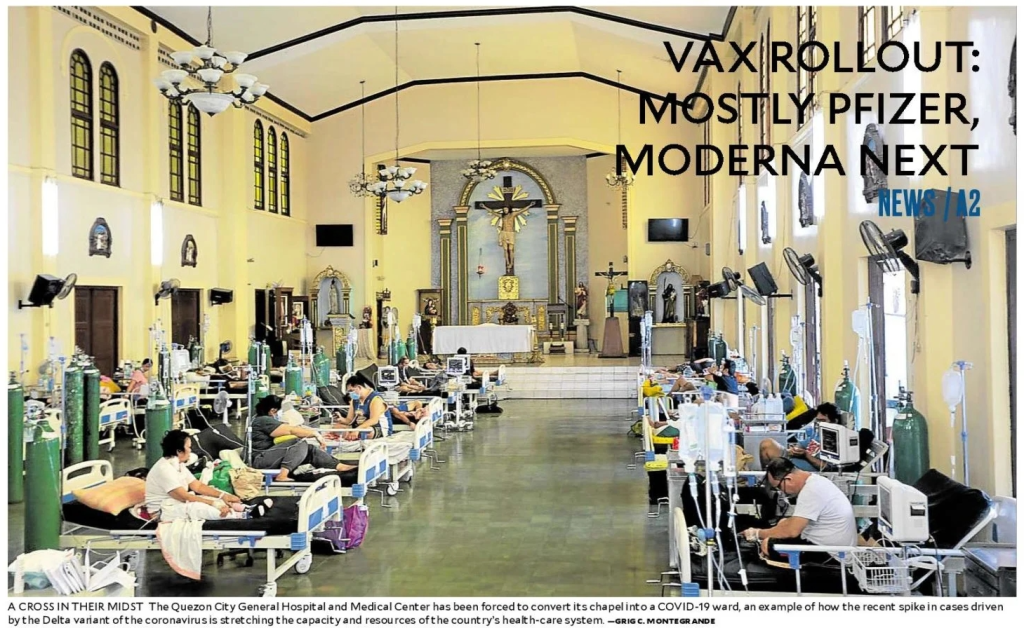
From inquirer.net, 20 August 2021.

Walking with Jesus

The Lord Is My Chef Holy Thursday Recipe, 28 March 2024
Exodus 12:1-8, 11-14 > + < 1 Corinthians 11:23-26 > + < John 13:1-15
Photo from wikipediacommons.org of Christ’s washing of feet of Apostles at Monreale Cathedral in Palermo, Italy.

Tonight we start the Easter Triduum – the three holy days of the Passion, Death, and Resurrection of Jesus Christ with the Mass of the Lord’s Supper and Washing of the Feet. 

In our Mass tonight, there will be no dismissal after Holy Communion that is immediately followed by a short procession inside the church of the Blessed Sacrament to its repository that will be the focus of “Visita Iglesia” (not Stations of the Cross) when people “visit” at least seven churches to pray to the Divine Presence of Jesus. Tomorrow in most parishes is the “via Crucis” or Way of the Cross then in the afternoon after the Veneration of the Holy Cross is the Procession of the Burial of the Lord. 

See how on these most holy days of the year, much of our activities involve a lot of walking – and rightly so because Jesus Christ was always walking even to His Crucifixion and after Resurrection.

Hence, on the night He was betrayed after Supper, He washed the feet of His disciples including us today because He had also known how difficult and tiring it is to always walk in this life.

“…fully aware that the Father had put everything into his power and that he had come from God and was returning to God, he rose from supper and took off his outer garments.  He took a towel and tied it around his waist.  Then he poured water into a basin and began to wash the disciples’ feet and dry them with the towel around his waist.”

John 13:3-5
From IStock/GettyImages.

More than reenacting the washing of the feet, tonight we are reminded by Jesus of the journey ahead to his Crucifixion when – with apologies to Robert Frost – we still have to walk “miles to go before we sleep” by choosing the road less travelled “that made the difference.”

And here lies the problem of our time: with the advancement of technology, our modes of transportation like communication have greatly affected our relationships with others, for better and for worse.  From being peripatetic persons, we have become more accustomed to riding, of getting fast and effortless to our destination that we no longer walk that much unlike before that has affected even our relationships with one another.  How can we continue the work of Jesus when we no longer walk that much? 

Photo by Mr. Raffy Tima of GMA-7 News, 2020.

Observe how it has become so difficult to ask for directions these days because nobody is walking anymore.  Most of us are ensconced in our own vehicles that have become our own little world and tiny universe every time we travel even if it were just a “walking distance”.  Aside from breaking apart from the rest of humanity, we have also become very impersonal in the sense that we now rely more with Google maps and other travel apps than with the ordinary “man on the street.” Worst, we rarely touch the ground with our bare feet that if ever we would walk, it has been relegated to mere physical fitness often done alone with earphones as companions.  We have not only grown apart from others but have also lost touch with earth because we no longer walk that much like Jesus and His disciples.

Two weeks ago during my retreat, I walked around the vast grounds and mini-forests of the Sacred Heart Novitiate in Novaliches when I realized that priesthood is peripatetic in nature because it is a ministry that walks to reach out, search for the missing sheep as per instruction of the Lord.  Jesus even added that in fulfilling our mission, we must carry nothing when we walk except a staff and sandals. 

Walking with our parishioners in the Via Crucis, 01 March 2024.

Moreover, priesthood is a ministry of being companions as shepherds in the journey of the people. That is why Jesus is our Good Shepherd because He is the One who truly journeys with us in this life.  He is the One who continues to walk with us in our many ups and downs, in the many dusty trails and harsh realities of life that no gadget or wealth or media platform could bring comfort and security to any weary traveler. 

It is only in walking when we could truly journey with others in life to converse with them and listen to their doubts and frustrations like the two disciples walking back to Emmaus three days after Good Friday.  It is only in walking can we truly meet the sick, the orphaned and the widowed, the blind and the lame, the sinners and the misfits the world had left behind or pushed onto the margins of the society, far from our superhighways. 

Most of all, when we walk we touch ground, we feel the earth called “humus” in Latin, the origin of the words human and humility.  Could it be that we have become less humble today partly because of our refusal to walk more often?

Forgive us your priests when we have refused to walk with you especially when you are troubled and lost.  Forgive us your priests as we have ceased to be like Jesus who walked most of the time because we have been so obsessed riding and travelling most of the time in our cars and SUV’s as well as mountain bikes and big bikes that have insulated us from your cries and anguish.  We have not only lost the art of walking but have totally forgotten about walking the extra mile to pray and commune with our Lord and Master Jesus Christ found among the poor and the sick, the marginalized peoples forgotten in our upwardly, mobile society. 

Photo by author, Sacred Heart Novitiate, Novaliches 20 March 2024.

We always hear the expression “life is a journey.”  Our first reading tonight attested to this reality when God reminded the chosen people preparing for exodus from Egypt “to eat and dress like those who are in flight”(Ex.12:11). 

The original concept of the restaurant is not just a place where people stop to eat during a long journey.  Restaurants were truly “rest stops” where travelers could rest their feet by soaking them in warm water so that they could travel again to reach their destination. 

The Holy Eucharist is a “sacred restaurant” where we eat and drink the Body and Blood of Christ who nourishes us in our life journey.  Most of all, in the Eucharist and Sacrament of Reconciliation, Jesus continues to wash our feet to cleanse us from our sins and burdens to make this journey of life lighter and easier.  When we receive Him in the Holy Communion, we make Him our “companion” in life filled with darkness and pains, uncertainties and lack of direction.  The word companion literally means “someone you break bread with” – a beautiful picture of the Eucharist described to us by St. Paul in the second reading. 

From istock/GettyImages.

In washing the feet of His disciples, Jesus Christ showed us in His humble gesture that He is indeed our Savior who went down so low even unto death on the Cross to express His immense love and mercy for each of us.  Everything that transpired on the night He was betrayed prefigured the events of Good Friday which we make present every time we celebrate the Eucharist that is summed up in loving service for one another. 

Do we still walk?  And if we walk, who is our companion, the one we break bread with?  Likewise, do we walk our talk of our faith?

May we never leave behind Jesus among our family and friends as we walk through this life.  A blessed Holy Thursday to everyone. Amen.