The inner journey in Christ of St. James the Greater

Lord My Chef Daily Recipe for the Soul, 25 July 2025
Friday, Feast of St. James the Greater, Apostle
2 Corinthians 4:7-15 <*{{{>< + ><}}}*> Matthew 20:20-28

Something struck me while praying the gospel for today’s feast of St. James the Greater – of how his mother approached Jesus with a request for him and his brother James “that these two sons of mine sit, one at your right and the other at your left, in your Kingdom” (Mt. 20:21).

It must be a very interesting company that Jesus had organized during his ministry composed not only of the Twelve and other disciples but most likely with so many others too that included their families like the mother of James and John believed to be the beloved disciple of Jesus. Traditionally known as Salome, their mom could easily be the patroness of “stage mothers” that abound most especially in the Philippines!

But kidding aside, it must be wonderful to tag along with them in following Jesus where everyone is welcomed. It is a journey not meant to cover distances and places but actually an inner journey inside one’s self that we shall see in the life of James the Greater. It is a journey that begins right here in our heart when we too, like James leave everything to follow Jesus.

For astonishment at the catch of fish they had made seized him and all those with him, and likewise James and John, the sons of Zebedee, who were partners of Simon. Jesus said to Simon, “Do not be afraid; from now on you will be catching men.” When they brought their boats to the shore, they left everything and followed him (Luke 5:9-11).

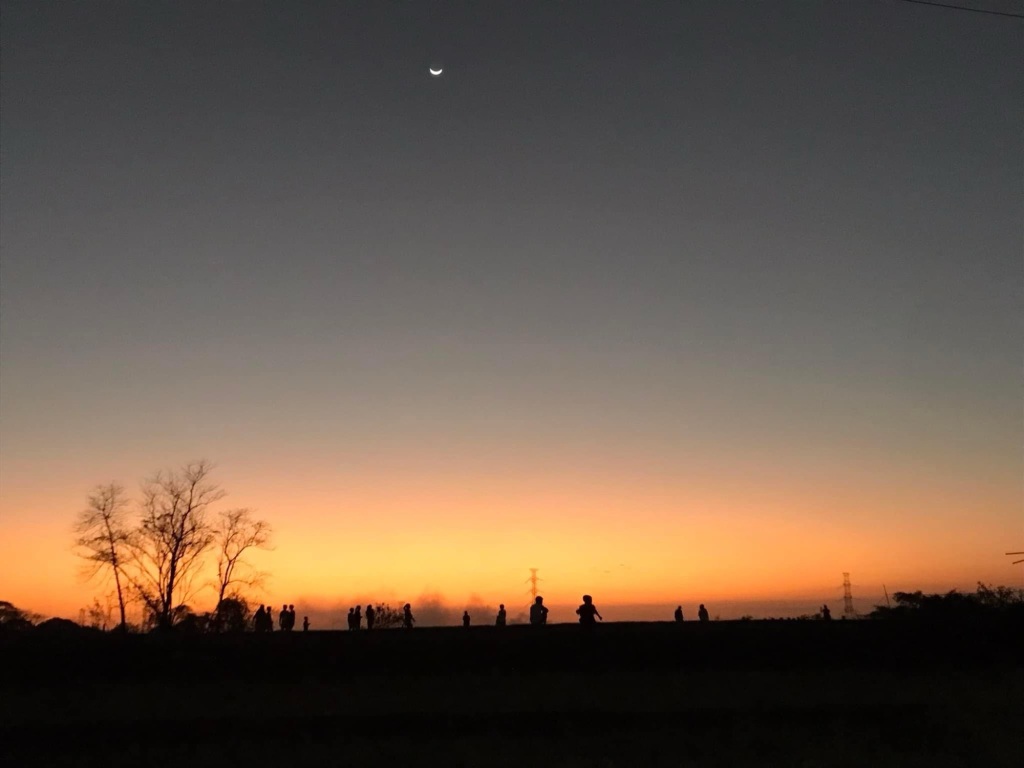
Photo by author, San Juan, La Union, 26 July 2023.

It must have been difficult for James to leave everything including their father Zebedee and follow Jesus. See that in the description by Luke of their call by Jesus, James and John as well as the brothers Simon and Andrew were all “rich kids” with their own fishing boats with hired men as workers at that time!

Clearly, money was not a problem with James and his buddies; however, one thing was missing in them – meaning and direction in life which they found in Jesus while listening to his preaching and finally in that miraculous catch of fish. I have always felt that perhaps, Zebedee allowed his two sons to leave him and their business for the same reasons so that they mature in life and be more responsible. We find this trace of attitudes or sense of entitlement in the brothers James and John when they asked Jesus to rain fire upon a Samaritan village that have refused them passage on their way to Jerusalem (Lk.9:54-56). Hence, Jesus named them as Boanerges for “sons of thunder” (Mk.3:17) due to their temperament.

In following Jesus, James had to learn the hard way the process of formation and transformation in Jesus that began in his heart. All along their journey from the shores of Galilee to Jerusalem, James remained by the side of Jesus Christ, probably unaware of that inner journey taking place right inside his heart to truly become a part of God’s Kingdom by sharing in the Lord’s Passion, Death and Resurrection. He had seen and experienced along with the other Apostles the great powers of Jesus not only in preaching but most especially in calming the storms, walking on sea, exorcising evil spirits, healing all kinds of sickness, and even raising to life some who have died.

Most of all, James was privileged to have witnessed along with his brother John and Peter the two important stops in Jesus Christ’s journey to the Calvary: first, on Mount Tabor for the Transfiguration and second, at Gethsemane for the agony in the garden. In both events in the life of our Lord, James was a privileged witness of his coming glory and then of his passion and death. Our gospel today on his Feast is sandwiched between these two major events of the Transfiguration and Agony in the Garden as this is set shortly before Palm Sunday when Jesus entered Jerusalem that led to his sacred pasch.

Jesus said in reply, “You do not know what you are asking. Can you drink the chalice that I am going to drink?” They said to him, “We can.” He replied, “My chalice you will indeed drink, but to sit at my right and at my left, this is not mine to give but if for those for whom it has been prepared by my Father.” When the ten heard this, they became indignant of the two brothers. But Jesus summoned them and said, “You know that the rulers of the Gentiles lord it over them, and the great ones make their authority over them felt. But it shall not be also among you. Rather, whoever wishes to be great among you shall be your servant; whoever wishes to be first among you shall be your slave. Just so, the Son of Man did not come to be served but to serve and to give is life as a ransom for many” (Matthew 20:22-28).

Painting by El Greco, “Pentecostes” (1597) from commons.wikimedia.org.

It would only be after Easter and the Pentecost when all these major stops in James’ personal journey with Christ would become clear to him and the other Apostles. Eventually, he became the first Apostle to be martyred as Bishop of Jerusalem during the persecution by King Herod of Agrippa in 40 AD (Acts 12:1-2), fulfilling Christ’s words to him that he would indeed “drink from his chalice” to be with him in his Kingdom.

A thousand years later, devotion to James the Greater would spread far and wide in Spain after relics of his body were discovered in Santiago de Compostela. It is one of the world’s oldest and most popular pilgrimage site known as the Camino de Santiago de Compostela (the way of St. James).

Every year, pilgrims from all over the world do the camino from various points of Europe to the Cathedral of Santiago de Compostela where the Apostle’s body is buried as a spiritual hike or retreat and journey for spiritual growth.

Like James the Greater, the camino is more than the kilometers or miles covered but the journey within one’s self that leads to deeper faith in Christ by living out his gospel as portrayed in its marker and symbols of a staff and scroll of the gospel proclaimed by the Apostle .

A marker along the camino de Santiago de Compostela.

It is my fervent prayer that some day I will be able to do a camino de Santiago de Compostela but for the mean time, we strive to continue in following the steps of James the Greater in making that inner journey within one’s self, beginning in our heart by leaving our “boats” of security to remain always at the side of Christ even if he has to smoothen our rough edges as a person and cleanse us of our sins that prevent us in drinking his chalice to be one in his Kingdom. The key is to serve, not to be served as Jesus insisted.

Sometimes in life, we just have to make “sakay” as we used to say as in “sakay lang ng sakay” or “ride on, man, ride on” without really knowing where our trip would lead us.

James the Greater simply made “sakay” in Jesus without knowing Christ was already fulfilling his wish of “drinking from his chalice” which proved that, indeed, the longest journey in life is the distance between the mind and the heart (Dag Hammarskjold). Amen. Have a blessed weekend! Fr. Nicanor F. Lalog II, Our Lady of Fatima University, Valenzuela City (lordmychef@gmail.com).

*All photos from Camino de Santiago de Compostela courtesy of Fr. Jigs Sta. Rita.

Feeling God

Lord My Chef Daily Recipe for the Soul, 15 July 2025
Tuesday, Memorial of St. Bonaventure, Bishop & Doctor of the Church
Exodus 2:1-15 ><))))*> + ><))))*> + ><))))*> Matthew 11:20-24
Photo by Ms. Jo Villafuerte, Atok, Benguet, 03 September 2019.
Sometimes I wonder
O God how it feels to be
in front of you,
of what to feel when you are
so like us humans - sadly
frustrated,
exasperated.

Jesus began to reproach the towns where most of his mighty deeds had been done, since they had not repented. “Woe to you, Chorazin! Woe to you, Bethsaida! For if the mighty deeds done in your midst had been done in Tyre and Sidon, they would long ago have repented in sackcloth and ashes” (Matthew 11:20-21).

Forgive us, dear Jesus
when we are so callous
and numb before you,
not feeling you at all
because we are so absorbed
in our own pride and foolishness,
justifying our sinful ways
that we hardly feel you,
because we could not feel others
nor ourselves as our bloated egos
numbed our humanity; we have lost our
sense of sinfulness and could no longer
appreciate what is good and beautiful,
right and orderly; we have become like
those two Hebrews Moses caught fighting
each other that instead of feeling his care
and concern for them,
they felt separated he would kill
them like the Egyptian officer.
How true were the words
of our Saint for today,
the most pure Bonaventure
who wrote, "If you do not know
your own dignity and condition,
you cannot value anything
at its proper worth."
Help us realize Jesus 
how once mighty cities
like Chorazin, Bethsaida
and Capernaum remains in ruins
to these days, never to have
recaptured their old glory days
because since your time,
they never saw their dignity
and condition as your beloved
ones; let us not fall into ruins too
because of our unrepentance for
our sins. Amen.
Photo by author, Capernaum in Israel, May 2017.

Easter is transformation, conversion

Lord My Chef Daily Recipe for the Soul by Fr. Nicanor F. Lalog II
Friday in the Third Week of Easter, 09 May 2025
Acts 9:1-20 ><]]]]'> + ><]]]]'> + ><]]]]'> John 6:52-59
Photo by author, statue of St. Paul the Apostle, St. Paul Retreat Center, La Trinidad, Benguet, 06 January 2025.
Lord Jesus Christ,
you are alive and always
around us, present in each
one of us that whatever we do
to each one we also do unto you
as you called on Paul before
his conversion, "Saul, Saul,
why are you persecuting me?"
(Acts 9:4)
Enlighten our minds
and our hearts, Lord Jesus
for we are many times more than
a Saul than a Paul; let us admit
the times we "persecute" you
in others like Saul when we
speak ill of them especially in social
media; though we may not be exactly
like Saul with a sword and army of men,
many times we "breathe with murderous
threats" against others who are not like us
in color and creed and outlook in life;
with your grace of light Jesus, remove
our blindness to the many forms of
persecutions we undertake against one
another especially in your name
that until now we are so divided,
"quarreling among ourselves" like those
Jews in Capernaum.
Give us the courage,
Jesus, to confront and
change our behavior and
attitudes that "persecute" others;
help us to go back to you in our
hearts to be converted and
transformed in your Resurrected
Body as better disciples despite
the wounds we may have that are
due to persecutions too have suffered;
let the cycle of persecution stop
in us so we may start
a series of transformation
in ourselves,
in our homes,
and in our community.
Amen.
Photo by author, St. Paul Retreat Center, La Trinidad, Benguet, 06 January 2025.

“My Ever ChangingMoods” (1984) by the Style Council

Lord My Chef Sunday Music by Fr. Nicanor F. Lalog II, 13 April 2025
Photo by author, Sacred Heart Novitiate, Novaliches, QC, 17 March 2025.

Today we begin the Holy Week with the celebration of Palm Sunday in the Lord’s Passion.

See how since the entry of Jesus to Jerusalem more than 2000 years ago, nothing much have really changed among us – we are still the same fickle-minded people who would sing “Hosanna in the highest” and later shout “crucify him! crucify him!”.

Everybody wants to become better, each one wishing for so many things without really realizing the good things we are hoping for are all right in front us if we could just open our eyes or listen more or perhaps have a change of heart to realize everyday is a Palm Sunday too for us when God comes right into us to fulfill us.

However, many times whether in our wishful thinking or future-looking and planning, it is highly probable that what we long for is already present to us.

As we begin the Holy Week with the celebration of Palm Sunday in the Lord’s Passion, we are reminded by the liturgy with its long readings how so often in life, we just need to see with different eyes, hear with different ears, expect with different hearts to find fulfillment, peace and joy.

The sad truth is that many times, we really do not know what we want and most of all, we also do not know what we are doing because we are so far from Jesus Christ. https://lordmychef.com/2025/04/12/when-we-do-not-know-what-we-are-doing/

The night before I wrote my homily yesterday, I was posting some reels in my Instagram account when one of the music I used was the Style Council’s 1984 hit “My Ever Changing Moods”. Composed by the group founder Paul Weller who shot to fame in the 1970’s as lead singer and guitarist of the British rock band The Jam, “My Ever Changing Moods” is the Style Council’s fifth single.

Aside from Weller’s superb vocals, “My Ever Changing Moods” is so remarkable in what shall we describe as “subtle intensity” – ang tindi ng dating as we say. Despite the message conveyed by its title, the song is heavy in meanings that can stir one’s soul with its light and easy poetry yet so penetrating. That is why we right away felt its direct link with Palm Sunday.

Daylight turns to moonlight and I'm at my best
Praising the way it all works, and gazing upon the rest, yeah
The cool before the warm, the calm after the storm

I wish to stay forever, letting this be my food
Oh, but I'm caught up in a whirlwind
And my ever changing moods, yeah

Many times in life, we forget that reality of how everything is like the weather that shifts and changes in a rhythmic pattern, “Daylight turns to moonlight…the cool before the warm, the calm after the storm.” The key is openness to these changes happening in us and around us.

Though Weller and critics claim of the song’s political undertones, we see something deeper, something spiritual that we find it so appropriate in this time as we enter the holiest days of the year. Notice these final four stanzas how they convey love and order, something so similar to Jesus Christ’s first words when crucified more than 2000 years ago, “Father, forgive them for they know not what they do” (Lk.23:24).

Teardrops turn to children who've never had the time
To commit the sins they pay for through another's evil mind
The love after the hate, the love we leave too late

I wish we'd wake up one day, an' everyone feel moved
Oh, but we're caught up in the dailies
And an ever changing mood, yeah

Evil turns to statues and masses form a line
But I know which way I'd run to, if the choice was mine
The past is knowledge, the present our mistake
And the future we always leave too late

I wish we'd come to our senses and see there is no truth
In those who promote the confusion
For this ever changing mood, yeah
Photo by author, Sacred Heart Novitiate, Novaliches, QC, 17 March 2025.

What do we really know at all that we continue to crucify Jesus today, nailing him on the cross with our many sins as we pretend and assume to know so many things in life?

To know in the Jewish mind is to have a relationship, an activity more of the heart than of the mind. To know is to love, to care. Therefore, when Jesus prayed to the Father to forgive them for they know not what they do is to forgive them because they refuse to love which is what sin is all about. And that is what we still do not know until now – to love, to care for one another that we keep on crucifying Jesus Christ.

Until now, we pretend to know a lot that some nations resort to wars while some blind followers insist on what they know as right while evading the truth with their fake news being spread to cover crimes and atrocities. Until now we pretend to know what we are doing that everyday everywhere is a road rage happening often costing lives senselessly because many insist on their rights. And the confusions and quarrels and deaths continue because we do not know what we are doing. Like Paul Weller, we pray to Jesus that we’d come to our senses and see there is no truth// In those who promote the confusion// For this ever changing mood, yeah.

For this piece, we chose the slow version on piano of Style Council’s “My Ever Changing Moods” to be more attuned with Palm Sunday; you may check their original music video which is equally excellent.

From YouTube.com

“I Don’t Know How to Love Him” (1971) by Yvonne Elliman

Lord My Chef Sunday Music by Fr. Nicanor F. Lalog II, 06 April 2025

This is the second time we have featured Ms. Yvonne Elliman’s I Don’t Know How to Love Him in our Sunday Music at this time of the year when the Sunday gospel is about the woman caught committing adultery.

Every time that story comes up, my mind automatically links it with this song sang by Ms. Elliman in both the Broadway and movie versions of the rock-opera Jesus Christ, Superstar where she played the role as Mary Magdalene who was believed for a long time as the woman caught committing adultery. Modern biblical scholarships have long debunked that belief but that song by Andrew Lloyd Weber and Tim Rice plus Elliman’s amazing interpretation has given us with so many perspectives about the gospel itself.

One thing we realized this year is how we – like the woman caught committing adultery meet Jesus Christ face-to-face to experience his immense love and mercy and forgiveness.

We encounter Jesus when we disarm ourselves of our false securities and pretenses, masks and camouflages that all cover our sins. It is when we come face-to-face with our sinful self when we eventually meet Jesus face-to-face too because that is when we surrender in silence like the woman caught in adultery and the mob to some degree because all the charges against us are true.

See also that it is only the fourth gospel that Jesus is portrayed “bending” low – first here before the woman caught committing adultery and secondly at the washing of the feet of his Apostles at their Last Supper. How lovely is that sight to behold, dear friends! Imagine God bending before us, giving us like the sinful woman and the mob that space for us to confront our true self, to realize and accept the whole realities we are all interconnected in love.

Only the woman remained – like the eleven Apostles at the Last Supper – because she was the only one willing to change, probably sorrowful and contrite for her sins. Contrary to our fears, Jesus has only love and mercy, kindness and forgiveness to anyone contrite and sorrowful of one’s sin that so unlike with the people’s wrath and anger, judgment and condemnation. St. Augustine perfectly described that moment in today’s gospel, Relicti sunt duo; misera et miserecordia (Two were left; misery and mercy). https://lordmychef.com/2025/04/05/lent-is-encountering-jesus/

Now, look at the first two stanzas of I Don’t Know How to Love Him:

I don't know how to love him
What to do, how to move him
I've been changed, yes really changed
In these past few days
When I've seen myself
I seem like someone else

I don't know how to take this
I don't see why he moves me
He's a man
He's just a man
And I've had so many
Men before
In very many ways
He's just one more

See the conversion and transformation of the woman caught in adultery expressed by Ms. Elliman in the song: I’ve been changed, yes really changed/ In these past few days/ When I’ve seen myself/ I seem like someone else. It is one of the great ironies in life: when we are most vulnerable and weakest, that is when we are also most truest to our self, that is when we truly grow and mature in life!

And this was all possible because of the gift of love and mercy of Jesus Christ, of encountering the Lord and Savior Himself in our own brokenness which the song and the singer captured so perfectly, He’s just a man/ And I’ve had so many men before/ In very many ways/ He’s just one more.

How amazing that the lyrics and the rendition blended perfectly, making us realize how Jesus is just like any other man but not just another additional man; Jesus is MORE than any one because He is the only who truly loves us most, offering us forgiveness once we strip ourselves naked before Him of all our sins and pride and pretensions. God’s love in Jesus Christ is beyond imagining. This we have seen in the parable of the prodigal son and now in the story of the woman caught committing adultery. Do not let your past sins prevent you from meeting Jesus face-to-face to finally experience that inner peace and joy you have been missing and searching for so long.

We are now in the final Sunday in Lent, next week is Palm Sunday, the start of the Holy Week. We can never experience the joy of Easter unless we join Christ’s Passion of emptying ourselves of sins and pride to be filled with His humility, justice and love.

Here is the lovely Ms. Elliman with her superb singing of I Don’t Know How to Love Him, hoping this helps you prepare in this final week of Lent.

From YouTube.com.

Lent is encountering Jesus

40 Shades of Lent by Fr. Nicanor F. Lalog II
Fifth Sunday in Lent, Cycle C, 06 April 2025
Isaiah 43:16-21 + Philippians 3:8-14 + John 8:1-11
Photo by author, Sacred Heart Novitiate Main Chapel, 17 March 2025.

Our gospel on this last Sunday in Lent is so similar in its beauty and simplicity -and drama – with last week’s parable of the prodigal son. In fact, some believe the style of the woman caught in adultery is very much like Luke but, let’s leave that to the experts.

On this beautiful Sunday, it is John’s turn to invite us to enter into the scene of his story set at the temple area shortly before the arrest of Jesus Christ.

Jesus went to the Mount of Olives. But early in the morning he arrived again in the temple area, and all the people started coming to him, and he sat down and taught them. Then the scribes and the Pharisees brought a woman who had been caught in adultery and made her stand in the middle (John 8:1-3).

Photo by author, Sacred Heart Novitiate, 17 March 2025.

Try entering the scene. See the woman who most likely almost naked draped only in a piece of cloth as proof of her committing adultery. The Pharisees and the scribes were ganging up on her to Jesus whom they wanted to test, “Teacher, this woman was caught in the very act of committing adultery. Now in the law, Moses commanded us to stone such women. So what do you say?”

Imagine being there, standing close to Jesus and the woman. How would you feel? Would you be able to look at the woman straight on her face? Nah… seems not good. Perhaps, glance only as you feel also her pain and shame. But, can you look straight at the angry mob? Probably for a while with much fears and trepidation along with a deep anger within you cannot express.

Most likely, it is only at Jesus you can look intently and longer because he is not looking at you. Tensions were rising and Jesus simply bent down, writing something on the ground with his finger while the Pharisees and scribes raised up their attacks against him and the lowly woman standing listlessly, so embarrassed, so ashamed. Even in tears.

Recall those moments when we too were caught in the midst of an undeniable transgression like her or, simply being a witness, someone caught in between of another person without any way out of his/her predicament. It must be so dark. So scary. And shameful.

Then, the unexpected happened: But when they continued asking him, he (Jesus) straightened up and said to them, “Let the one among you who is without sin be the first to throw a stone at her.” Again he bent down and wrote on the ground. and in response, they went away one by one, beginning with the elders. So he was left alone with the woman before him (John 8:7-9).

Photo by author, Sacred Heart Novitiate Main Chapel, 17 March 2025.

Many times, we encounter Jesus in our most vulnerable situation when we let go of our guards so to speak.

It is one of the great ironies in life: when we are most vulnerable and weakest, that is when we are also most truest to our self. And that is when we truly grow and mature in life.

That is when we feel peace and joy and freedom within when we are left alone with Jesus still looking down, writing with his finger on the ground to give us more space literally and figuratively speaking. It is not that Jesus wants to shame us or whatever but simply wants us to be true as he has always been true to us, full of love and mercy. Most of all, with all of Christ’s humility in bending, that is when we finally admit the need for a Savior, the need to be converted in him.

We encounter Jesus when we disarm ourselves of our false securities and pretenses, masks and camouflages that all cover our sins. It is when we come face-to-face with our sinful self when we eventually meet Jesus face-to-face too because that is when we surrender in silence like the woman caught in adultery and the mob to some degree because all the charges against us are true.

See also that it is only the fourth gospel that Jesus is portrayed “bending” low – first here before the woman caught committing adultery and secondly at the washing of the feet of his Apostles at their Last Supper. How lovely is that sight to behold, dear friends! Imagine God bending before us, giving us like the sinful woman and the mob that space for us to confront our true self, to realize and accept the whole realities we are all interconnected in love.

Only the woman remained – like the eleven Apostles at the Last Supper – because she was the only one willing to change, probably sorrowful and contrite for her sins. Contrary to our fears, Jesus has only love and mercy, kindness and forgiveness to anyone contrite and sorrowful of one’s sin that so unlike with the people’s wrath and anger, judgment and condemnation. St. Augustine perfectly described that moment in today’s gospel, Relicti sunt duo; misera et miserecordia (Two were left; misery and mercy).

Then Jesus straightened up and said to her, “Woman, where are they? Has no one condemned you?” She replied, “No one, sir.” Then Jesus said, “Neither do I condemn you. Go, and from now on do not sin anymore” (John 8:10-11).

Stations of the Cross, Fatima University & Medical Center, Valenzuela City, 28 March 2025.

We are now on the final Sunday of Lent. Next week will be the Palm Sunday of the Lord’s Passion that ushers in the Holy Week leading to the Sacred Triduum of Holy Thursday Evening, Good Friday and Easter Vigil and on to the Mother of all Feasts, Easter.

As we get closer to the holiest week of the year, our liturgy invites us to intensify our Lenten practices to be “conformed to Christ’s death” as St. Paul urged us in the second reading which opened with these beautiful confession:

“Brothers and sisters: I consider everything as a loss because of the supreme good of knowing Christ Jesus as my Lord. For his sake I have accepted the loss of all things and I consider them so much rubbish, that I may gain Christ” (Philippians 3:8).

The pillars of Lent – prayer, fasting and alms-giving – aim to empty us of our very selves, of our pride and sins that all prevent us from encountering Jesus Christ always coming to us full of love and mercy. On this final stretch of Lent, are we ready to let go of ourselves and to let God?

Today, Jesus assures us of his love and forgiveness for our sins. The first reading tells us of God asking us to forget the events of the past. Just come home to him. And never leave him like the woman caught committing adultery. Amen. Have blessed week ahead.

Stations of the Cross, College of Maritime Engineering, Our Lady of FatIma University, 28 March 2025.

Lent is entering darkness of our hearts in the light of Christ

40 Shades of Lent by Fr. Nicanor F. Lalog II
Second Sunday in Lent, Cycle C, 16 March 2025
Genesis 15:5-12, 17-18 + Philippians 3:17-4:1 + Luke 9:28-36
Photo by author, the metropolis at night from Timberland Highlands Resort, San Mateo, Rizal, 08 March 2025.

Both our first reading and gospel this Second Sunday in Lent are set in the darkness of the night. Despite being the favorite setting to portray evil and horror not only in movies but even in the Bible, the darkness of the night has a unique charm of its own.

It is in this darkness of the night when the moon and the stars shine brightest. It is in this darkness of the night when we are delighted with the most wonderful ensemble of sights and sound no stage could duplicate when a sparkle of fireflies outline a treetop while crickets and geckos – tuko – with all the other insects and animals sound like a live symphony orchestra.

So many things in this world and in this life are best seen and experienced in the darkness of the night to be truly appreciated. And that is the call to us this second Sunday in Lent – that we enter the darkness in our hearts with the light of Jesus Christ for us to be transformed and transfigured in his image as his disciples.

Jesus took Peter, John, and James and went up the mountain to pray. While he was praying his face changed in appearance and his clothing became dazzling white. And behold, two men were conversing with him, Moses and Elijah, who appeared in glory and spoke of his exodus he was going to accomplish in Jerusalem (Luke 9:28-31).

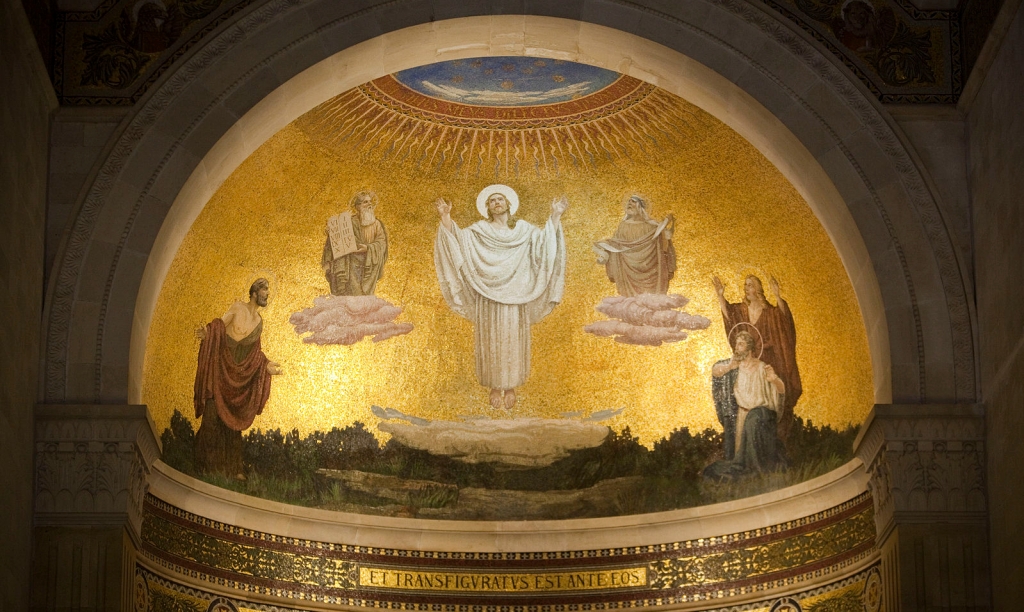
Mosaic inside the Basilica of the Transfiguration on Mt. Tabor, Israel from commons.wikimedia.org.

We have been saying since Ash Wednesday that life is a daily Lent, a daily exodus from darkness into light, from sin into forgiveness, from slavery into freedom.

Every day we “pass over” to many darkness in life like sickness, loss of a loved one, failures and other trials and sufferings that come our way. Sometimes so dark, sometimes not so dark. But most dark of all darkness we go through are those darkness of sin and evil along with its many scars left right in our hearts following the constant temptations by the devil for us to turn away from God, for us to refuse to love others and even our very selves.

Photo by author, St. Paul Spirituality Center, Mt. Pico, La Trinidad, Benguet, 06 January 2025.

Our readings this Sunday assure us that in that it is in those darkness we find God who had come nearest to us in Jesus Christ. It is during those darkness like an exodus that we pass from passion and death to resurrection where Christ is calling us; hence, the need for us to listen to him and follow him. It is from this passing over the darkness of sins and trials when we are purified and transformed, transfigured into better persons and disciples of Jesus because that is where his light is most visible too.

To enter into these dark places in our hearts is the beginning of our conversion, of our daily Lent when we return to God, to his covenant we keep on breaking in sin.

Photo by Ms. Analyn Dela Torre, 12 February 2024 in Bgy. Caypombo, Santa Maria, Bulacan.

Lent as a preparation to Easter is also a renewal this covenant we have in our baptism which we renew every year at the Masses of Easter. That is why we have the story of the covenant of God with Abraham in the first reading that was set at night with the darkness signifying the trials we go through in life.

As the sun was about to set, a trance fell upon Abram, and a deep, terrifying darkness enveloped him. When the sun had set and it was dark, there appeared a smoking brazier and a flaming torch, which passed between those pieces. It was on that occasion that the Lord made a covenant with Abram, saying: “To your descendants I give this land, from the Wadi of Egypt to the Great River, the Euphrates” (Genesis 15:17-18).

Feel the terrifying character of the event as narrated by the author of Genesis; but, remember also how God remained with Abraham that night. It was after this episode that God first promised Abraham to become the father of all nations with children as many as the stars above.

But it was not all light with Abraham after this episode as he went through a lot of darkness in life like when he wondered when God would finally give him his own son as he grew older. When Isaac was finally born and had grown, God tested Abraham, asking him to sacrifice to him Isaac. Abraham willingly obeyed God that as he was about to kill Isaac, an angel stopped him and told him how God was so pleased with him that he was doubly blessed anew! Abraham passed over that very dark night in his life by completely trusting God who never abandoned him in life! Most of all, because Abraham never backed out from darkness.

Photo by author, St. Paul Spirituality Center, Mt. Pico, La Trinidad, Benguet, 06 January 2025.

That is the charm of darkness: it can bring us fears and anxieties but as one poet said, only the brave who dare to walk the darkness of the night shall see the beauty of the moon and stars above. In a little while after all the uncertainties and difficulties of the night, we arrive at a new day. Darkness is the prelude to light and day.

Entering into those dark places in our hearts can be terrifying but it is the only path towards true freedom with Jesus as our companion in our exodus. Refusal to go into those dark places in our hearts will keep us only deeper in darkness – anxious and afraid, always wondering when we shall see light which will never come unless we come out and pass over the night.

Recent turn of events in our country are so Lenten in nature, our own passover and exodus – hopefully – from darkness into light.

After those long six years of darkness in the deadly war on drugs of the past administration, we finally saw the light of God’s mercy and justice coming with the arrest of the former president.

It must have been so tortuously painful to the families left behind by the thousands of victims of tokhang.

Though I feel so glad with the turn of events, I still refuse to celebrate nor even join the heated discussions. I feel more the need for us to pray and reflect, to find God and where he is leading us — maybe into those dark places in our hearts to see how we too have contributed to that dark period in our history.

A reporter-friend who volunteered in the care for orphans of the tokhang victims recently shared her reflections in these turn of events where she claimed “we are Duterte”.

Huh? It is chockful. And shocking.

As I prayed and reflected on it, I agreed with her. Prior to Duterte’s coming to power, we as a nation have allowed the forces of darkness to come upon us with the RH bill later followed by bills and proposals for divorce, same sex marriage, and return of capital punishment. There was already this great darkness hovering above us even before Duterte came to power.

Sad to say, that darkness started in our hearts which St. John Paul II referred in his encyclical Evangelium Vitae as “culture of death”.

Let us heed the calls by St. Paul in today’s second reading to “stand firm” in Jesus (Phil. 4:1) because to conduct ourselves as “enemies of the cross” of Christ will surely lead only to “destruction” (Phil. 3:18-19). Let us avert our total destruction as a nation by finally confronting the many darkness within us in Jesus Christ. Amen. Have a blessed week ahead.

*Photos in the collage are not mine but from various sources like TIME magazine and Mr. Howie Severino of GMA7 News.

Advent is freedom from enemies

The Lord Is My Chef Daily Recipe for the Soul by Fr. Nicanor F. Lalog II
Simbang Gabi-9 Homily, 24 December 2024
2 Samuel 7:1-5, 8-12, 14, 16 <*((((>< + ><))))*> Luke 1:67-79
Photo by author, Advent 2022.

Finally! This may be the word and expression today, the 24th of December. Finally, a lot of you would be bragging about having completed the nine-day novena to Christmas. Finally, it would be Christmas day. And finally, we could sleep longer.

But then, finally what?

When Zechariah’s tongue was loosened after naming his son John in fulfillment of the angel’s instruction to him, it was not the word “finally” that came from his mouth but “Blessed be the Lord, the God of Israel!”(Lk.1:68). After being mute for nine months, Zechariah’s silence became praise with gratitude and wonder giving him the voice to speak again.

Zechariah his father, filled with the Holy Spirit, prophesied, saying: “Blessed be the Lord, the God of Israel, for he has come to his people and set them free. He has raised up for us a mighty Savior, born of the house of his servant David. Through his prophets he promised of old that he would save us from our enemies, from the hand of all who hate us, He promised to show mercy to our fathers and to remember his holy covenant. This was the oath he swore to our father Abraham: to set us free from the hand of enemies, free to worship him without fear (Luke 1:67-74).

Photo by author, birthplace of St. John the Baptist underneath the church dedicated to him in Judah.

We have reflected last Thursday that Advent and Christmas is a journey that begin in the church, in the celebration of the Mass as Luke opened his Christmas story with the annunciation of John’s birth to Zechariah during their Yom Kippur at the Jerusalem Temple.

Luke’s artistry and mastery in weaving stories brought us right into every scene leading into Christmas – from Jerusalem to Nazareth then to the hill country of Judah in the home of Zechariah until John’s birth where our scene remains today. Tonight and tomorrow, he will be leading us along with Matthew and John to Bethlehem for the birth of the Lord.

But this journeys Luke recounted to us were not only about places but most of all an inner journey into our hearts. As we all know, the destination does not really matter but the journey, the trip. It is most true with our Simbang Gabi too – it is not about completing the nine-day novena that matters most but what have we become!

After tonight and tomorrow’s Masses, our churches would be empty again, only to be filled up on Ash Wednesday, and then Palm Sunday and Holy Thursday. How tragic that on Easter which is “the Mother of all feasts in the Church”, people are miserably absent because they are out in the beach and resort enjoying summer. In fact, more people come to Christmas (Pasko ng Pagsilang) than with Easter (Pasko ng Pagkabuhay) when it is actually the very foundation of our faith.

With our students after Simbang Tanghali last year at the Medicine Lobby of Our Lady of Fatima University, Valenzuela City.

So, what have we become after these nine days of waking up early or staying up late at night, praying, listening and reflecting on the word of God, sharing our material blessings in the collections and gift-giving if we stop going to Mass the whole coming new year?

American Trappist monk Thomas Merton wrote that seeking God is not like searching for a “thing” or a lost object because God is more than an intellectual pursuit or a contemplative illumination of the mind. Merton explained that God reveals Himself to us in our hearts through our communion and fellowships in the Church. 

We come to church to celebrate the Mass and pray with the whole community to express our communion with one another in Jesus Christ. It is in this communal aspect of prayer we become holy, when we are transformed and as Zechariah prophesied, we are “set free” by Jesus Christ who is the main focus of his Benedictus.

Who are those enemies Zechariah mentioned twice in his Benedictus? Who are those enemies we have to be set free for God and free to love?

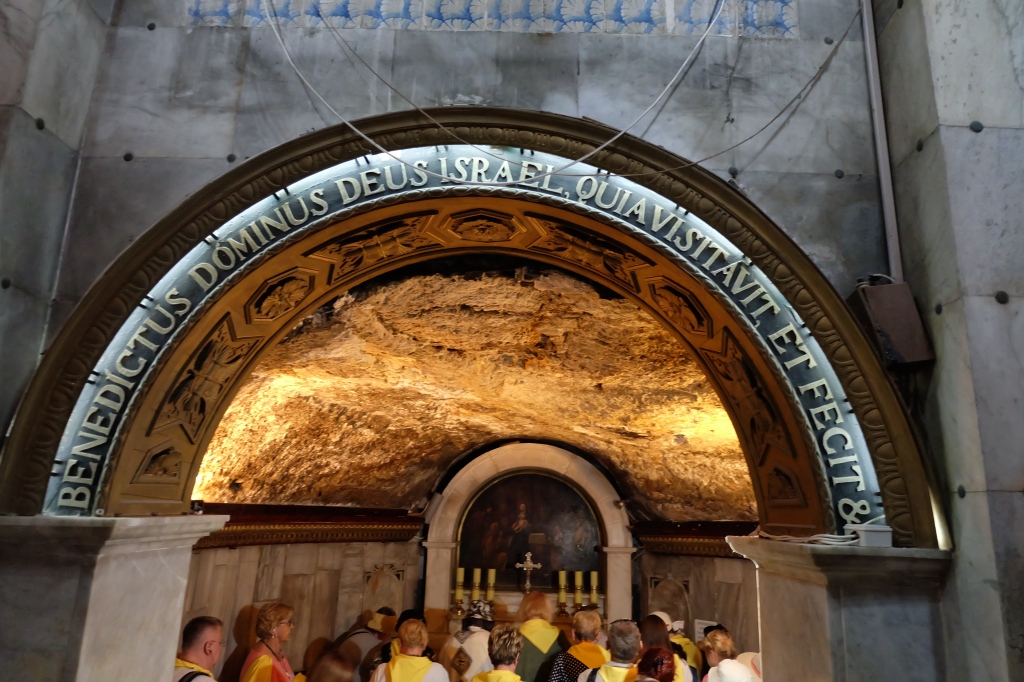
Photo by author, Church of St. John the Baptist, Israel, May 2019.

Again, look at this minute detail Luke used in composing Zechariah’s Benedictus when he spoke twice of the word “enemies”: first of “saving us from our enemies, from the hand of all who hate us” (Lk.1:71) and then, the fulfillment of God’s promise to Abraham “to set us free from the hand of enemies, free to worship him without fear” (Lk.1:74).

Surely, those “enemies” were not just the Romans and other pagans around Israel at that time nor the Pharisees and scribes, the priests and Sadducees of the temple who had hands in Christ’s death for they are now gone. The gospel accounts were written in the past but remain true and relevant at all time in history, especially now more than ever in our own time.

Are we the “enemies” within who think only of our selves even in our religious and spirituality, manipulating God, controlling God?

A friend asked me last week if their priest was right in saying that the Simbang Gabi is the most effective means to obtain special favors from God. I emphatically told her “no”, adding that their priest’s claim is misleading. We cannot dictate God. God blesses everyone, including sinners who do not even go to Mass. We do not need to multiply our prayers as Jesus warned us because God know’s very well our needs before we pray. Then, why pray at all?

We pray and most especially celebrate the Mass especially on Sundays to know what God wants from us because we love God. Period. And that love for God must flow in our loving service and kindness with others. If gaining favors is the main reason we go to Mass or even pray, then, we are the “enemies” who prevent ourselves to freely worship God!

Mr. Paterno Esmaquel of Rappler rightly said it in his Sunday column:

“We are a society obsessed with achievement and success, command and control… Even we who try to complete the Simbang Gabi can plead guilty. During the Simbang Gabi, for example, we are tempted to focus on achieving all the nine days and succeeding for another year. By fulfilling this tradition, we can then ask God (or “command” God, like a genie) to grant our wishes. We can therefore wield greater control over life that is otherwise unpredictable (https://www.rappler.com/voices/thought-leaders/the-wide-shot-missed-simbang-gabi-found-christmas-grace/).

And who are feeding all these misleading and erroneous thoughts on the people? We your priests and bishops!

How sad as we have mentioned last week when many priests have totally lost any sense at all of the sacred in the celebration of the Mass. Some of them not only come unprepared for the celebration without any homily, even so untidy and shabbily dressed and worst of all, make fun of almost everything and everyone that the Mass has become a cheap variety show. Online Masses continue not for evangelization for “shameful profits” in the Sacrament through “likes” and “followers” that some priests are now more concerned in finding ways to be trending and viral instead of how to effectively evangelize the people with our good liturgical celebrations flowing into our witnessing of life.

Yes, we priests and bishops are the enemies right here in the church when we align more with the rich and powerful, when we have no qualms asking/receiving gifts and favors from politicians and still, would want to collect more money and donations from people with our endless envelops that have totally alienated the poor from the church. The poor are the ones who suffer most, paying for the corruption of the politicians who help the clergy in their projects for the poor. Poor Jesus Christ!

Perhaps, on this last day of our novena to Christmas, let us all force ourselves – especially us priests and bishops – to go into silence to identify, to weed out those enemies within and outside us that prevent us from welcoming Jesus Christ in our hearts.

Let us pray to God that He may set us free from these enemies within us, around us so we can be like John the Baptist who will “go before the Lord to prepare his ways, to give his people knowledge of salvation.” Amen. See you tonight or tomorrow, Christmas in the Holy Mass!

Photo by author, Dumaguete City Cathedral, November 2024.

Holiness of work

The Lord Is My Chef Daily Recipe for the Soul by Fr. Nicanor F. Lalog II
Wednesday, Memorial of St. Augustine, Bishop & Doctor of the Church, 28 August 2024
2 Thessalonians 3:6-10, 16-18 <*{{{{>< + ><}}}}*> Matthew 23:27-32
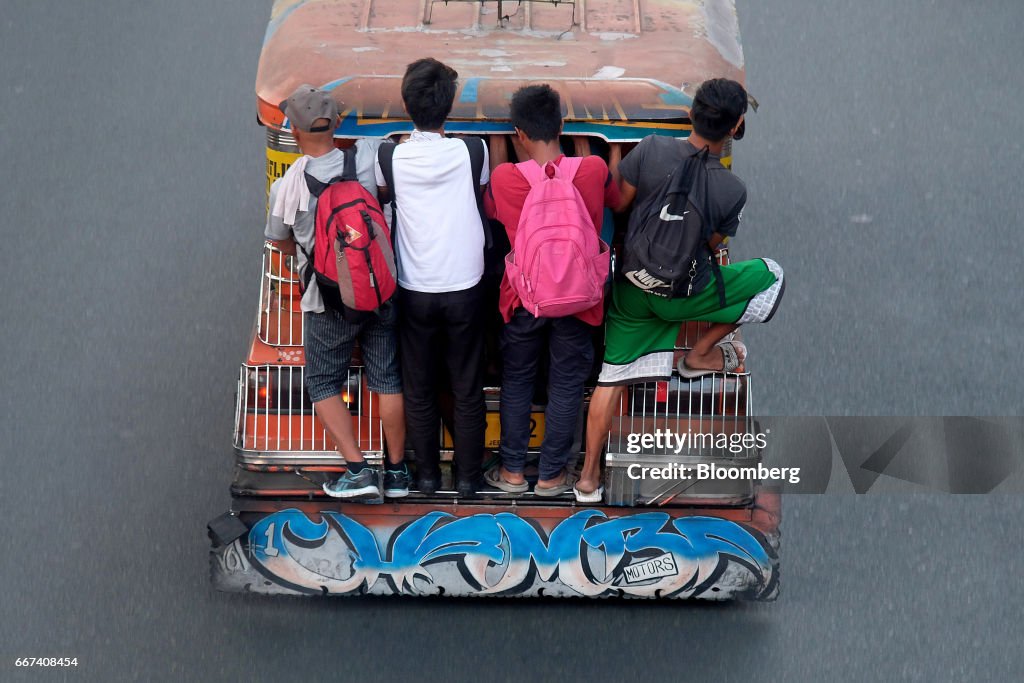
Commuters hang from the back of a jeepney as it travels along a road in Manila, the Philippines, on Sunday, April 9, 2017. Photographer: Veejay Villafranca/Bloomberg via Getty Images.
Glory and praise to you,
God our loving Father
for the gift of this great Saint,
Augustine, son of St. Monica,
Bishop and Teacher of the Church;
in him, O God,
you showed us every saint
has a sinful past
and that no sinner
can be denied of a saintly future.
It was St. Augustine who taught us
among his so many teachings that
"grace builds on nature"
which he must have learned from
his own experiences,
from his conversion to Christianity
to becoming a priest then a bishop
that did not happen like a magic trick
by God but with hard work wrapped in
intense prayers by him and St. Monica;
what a tremendous blessing that
as we honor him today,
our first is from a letter by his inspiration,
St. Paul:

For you know how one must imitate us. For we did not act in a disorderly way among you, nor did we eat food received free from anyone. On the contrary, in toil and drudgery, night and day we worked, so as not to burden any of you. Not that we do not have the right. Rather, we wanted to present ourselves as a model for you, so that you might imitate us. In fact, when we were with you, we instructed you that if anyone was unwilling to work, neither should that one eat (2 Thessalonians 3:7-10).

Remind us, O God
in Jesus Christ like St. Augustine,
what is essential is the inside
not the outside;
let us not be like the Pharisees
and scribes, hypocrites,
looking like "whitewashed tombs
that appear beautiful on then outside
but inside are full of dead men's bones
and every kind of filth"
(Matthew 23:27).
Grant us the zeal and
enthusiasm like St. Augustine
to strive in becoming a better person,
most of all a better Christian
by working hard in cultivating
the prayer life,
love for the Sacred Scriptures
so that Jesus may dwell always
in our hearts.
Amen.
From Pinterest.com.

Transfiguration is more of ears than lips to lead to our hearts

The Lord Is My Chef Daily Recipe for the Soul by Fr. Nicanor F. Lalog II
Tuesday, Feast of the Transfiguration of the Lord, 06 August 2024
Daniel 7:9-10, 13-14 ><}}}}*> 2 Peter 1:16-19 ><}}}}*> Mark 9:2-10
Photo from commons.wikimedia.org of mosaic inside the Basilica of the Transfiguration on Mt. Tabor, Israel.
Thank you very much, Lord Jesus,
"in taking us always with You,
apart from others by ourselves
like Peter, James, and his brother John
to a high mountain” (cf. Mark 9:2);
many times You set us apart from others
amid many darkness like that night
on Mount Tabor
just to be with You,
to experience You;
how ironic in this age of
so much light everywhere
with a world running 24/7,
the more we are plunged
in darkness
that we feel lost and empty.
Continue to invite us
to detach from so much
worldly attachments
that are so irresistible
due to social media
and the glamor that come with them.

And he was transfigured before them, and his clothes became dazzling white, such as no fuller on earth could bleach them… Then a cloud came, casting a shadow over them; then from the cloud came a voice, “This is my beloved Son. Listen to him” (Mark 9:2-3, 7).

Like Peter, James, and John
we also wonder at the meaning
of your Passion and Death when You
are the Christ?
Why all the sufferings happening
in us and among us with all
the confusions and divisions going on?
Like Peter during the Transfiguration,
we do not know what we are saying to you, Lord;
whether we are filled with joy or burdened
with sorrow, we speak without thinking much
even if you know what is in our hearts.
Open our hearts, dear Jesus,
to always listen to You by remaining with You
on the path to Your Cross;
let us listen more than talk
or click more without much reflections;
two ears form the image of heart,
never the mouth nor the lips.
Let us heed Peter in his words today:

Moreover, we possess the prophetic message that is altogether reliable. You will do well to be attentive to it, as to lamp shining in a dark place, until day dawns and the morning star rises in your hearts (2 Peter 1:19).

Bring us back to your path of faith, Jesus;
amidst all these noise and divisions
of relativism and wokism,
open our hearts by listening intently
to your voice when all is dark
and even dead or as it happens these days,
blindingly so bright with artificial lights
because for as long as we return to You,
sin and failures become means for us
to be changed and transformed -
or transfigured
when we rise in your Resurrection.
Amen.
A 1311 painting of the Transfiguration by Italian artist Duccio di Buoninsegna from commons.wikimedia.org.