Lord My Chef Daily Recipe for the Soul by Fr. Nicanor F. Lalog II
Thursday, First Week in Ordinary Time, Year II, 15 January 2026
1 Samuel 4:1-11     <*((((><  +  ><))))*>     Mark 1:40-43
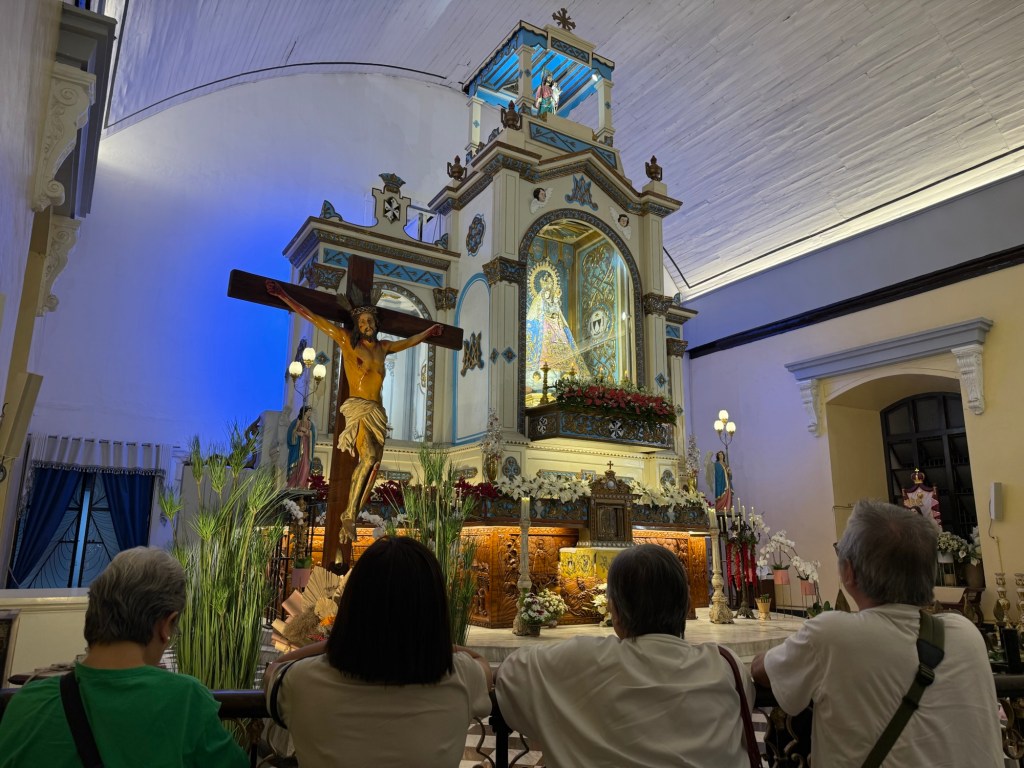
Photo by author, Basilica of Our Lady of Manaoag, 09 January 2026.
Your words since Monday
at the start of Ordinary Time
are so amazing and lovely,
O God our Father;
I love, O Lord,
the contrasts presented
between the first reading
and the gospel just like today
that is so unique
with the striking differences
in approaching you,
dear God.
The Philistines fought and Israel was defeated; every man fled to his own tent. It was a disastrous defeat, in which Israel lost thirty thousand foot soldiers. The ark of God was captured, and Eli’s two sons, Hophni and Phinehas, were among the dead (1 Samuel 4:10-11).
A leper came to him (Jesus) and kneeling down begged him and said, “If you wish, you can make me clean.” Moved with pity, he stretched out his hand, touched the leper, and said to him, “I do will it. Be made clean.” The leprosy left him immediately, and he was made clean (Mark 1:40-42).
Until now,
many of us are still like
those Israelites who brought
the Ark of the Covenant
to the battlefront as if it were an
"anting-anting" in fighting the Philistines
who overwhelmingly defeated them;
the recent Traslacion
that many still continue to defend
is something we ought to rectify
or recalibrate by deepening our
faith to put order and solemnity
in a supposed to be religious
activity; show us the way
in witnessing to others the proper
approach to you, Lord,
is like that leper full of trust
and surrender to your will,
not in insisting our personal
desires and "panata"
that in the process we forget
to imitate your Son Jesus in
being loving and charitable.
Amen.
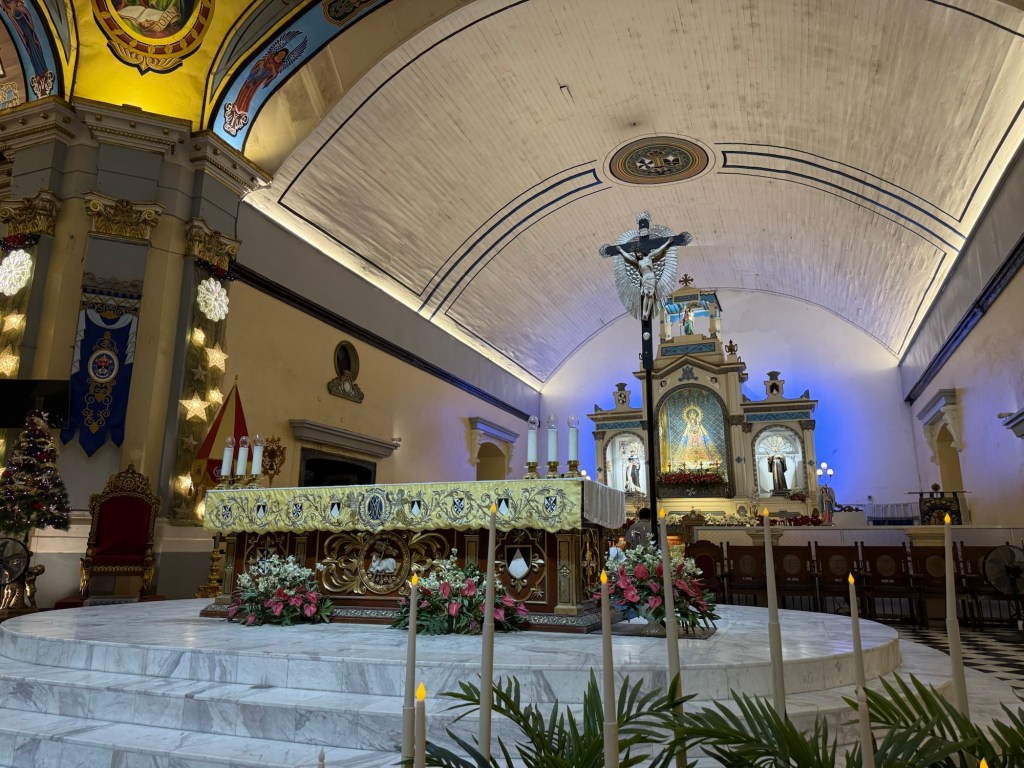
Photo by author, Basilica of Our Lady of Manaoag, 09 January 2026.
Lord My Chef Daily Recipe for the Soul, 19 November 2025
Wednesday in the Thirty-Third Week of Ordinary Time, Year I
2 Maccabees 7:1, 20-31     ><))))*> + ><))))*> + ><))))*>     Luke 19:11-28
Lady of Sorrows from a triptych by the Master of the Stauffenberg Altarpiece, Alsace c. 1455; photo from fraangelicoinstitute.com.
What a lovely phrase,
dear Jesus for today
for us all
especially mothers
and all women:
"womanly heart,
manly courage."
At this time when
a wayward daughter
and sister viciously attacks
her own brother in total
disregard of our family values
and tradition, not to mention
the need for decency and respect
as well as a little sanity too,
here comes out in the open
the nobility of many women and
mothers as well as men still intact;
in this time like during the
Maccabean Revolt when many
sold their souls to evil for the price
of comfort and ease, there are
still more like that mother who dare
to go against the tide of insanity
and folly, indecency and disrespect,
most of all, of idolatrous worship
through religious leaders of the many
sects and cults who use God's name
in vain and shameful profit too.
Keep us strong inside,
Jesus, to be not afraid in
venturing into finding ways of
serving you most than being idle
in keeping your gifts and talents;
teach us anew the virtue of
obedience, of docility
to authority
whether at home and family or
in the society in general
and in other civil institutions.
Lastly,
we pray dear Jesus
for all mothers crying in silence
these days for the many pains
they bear inside their hearts
especially those who have lost a child,
those betrayed by their own husband
or children,
those separated from their families
due to work and employment,
those nursing a sick loved one,
those forgotten even by families
and societies; grant them
a "womanly heart" filled with faith
in God and a "manly courage"
trusting in you alone.
Amen.
Now more than ever, we are proven right: the past administration is the most decadent in our history with its utter lack of respect for life and for women; that its war on drugs was totally a lie. May they “who have contrived every kind of affliction not escape the hands of God” (2 Maccabees 7:31).
Lord My Chef Daily Recipe for the Soul, 14 August 2025
Thursday, Memorial of St. Maximilian Kolbe, Priest & Martyr
Joshua 3:7-10, 11, 13-17     <*((((><  +  ><))))*>     Matthew 18:21-19:1
Photo by Mr. Jim Marpa, 2019.
Praise and glory to you,
God our Father!

Your words today are so lovely
so touching
so personal;
I could feel Joshua leading
your people at the banks
of Jordan River
ready to cross.
The people struck their tents to cross the Jordan, with the priests carrying the ark of the covenant ahead of them. No sooner had these priestly bearers of the ark waded into the waters at the edge of the Jordan…than the waters flowing from upstream halted, backing up in a solid mass for every great distance indeed… while those flowing downstream toward the Salt Sea of the Arabah disappeared entirely. Thus the people crossed over opposite Jericho (Joshua 3:14-15, 16).
Many times, Lord
I am afraid to make
that first step forward
onto the banks of the river of life,
afraid to step on water itself;
many times,
that one little step forward
is all I need but so often
I balked
even chickened out
wasting many opportunites
to grow in faith and trust
in you;
many times, Lord
I am afraid to give
to share
to forgive
because I cannot trust
there would be still enough
for me.
O dear Jesus,
have mercy on me!
Embolden your gift of courage
in me to imitate
the modern saint
Maximilian Kolbe
who was like Joshua
who dared to make that
bold step forward onto the banks
of Jordan River;
like the priestly bearers
of the ark,
St. Maximilian Kolbe
literally stepped forward too
into death by giving himself
for another prisoner at Auschwitz;
what a beautiful imagery
in modern time's darkest moments
that St. Maximilian Kolbe
brought and carried
Jesus Christ
the new ark of the covenant
to bring life not only to
the prisoners of Auschwitz at that time
but even to many among us these
days so lost and trapped
in the gas chambers of
modern forms of
human abuses and exploitation;
Lord Jesus Christ,
grant me the grace
to walk faithfully,
trusting God
who always makes a way
through what seems to be
impassable.
Let me be
the bearer of Christ
to enable others
pass through
from death to life,
from grief to joy,
from hopelessness to love.
Amen.

St. Maximilian Kolbe,
Pray for us.

Fr. Nicanor F. Lalog II
Our Lady of Fatima University
Valenzuela City
(lordmychef@gmail.com)
Lord My Chef Daily Recipe for Soul by Fr. Nicanor F. Lalog II
Sacred Heart Novena Day 1, 18 June 2025
Detalye ng painting ng Sacred Heart of Jesus sa Visitation Monastery, Marclaz, France mula sa godongphoto / Shutterstock.
Tamang-tama ang ating mga pagbasa sa araw na ito ng Miyerkules ng ika-labing isang linggo sa Karaniwang Panahon na nagtutuon ng ating pansin sa ating puso sa unang araw ng nobena sa Kamahal-Mahalang Puso ni Jesus.
Ang mga aral ng Panginoong Jesus sa ebanghelyo na huwag maging pakitang-tao lamang ang ating mga gawa ng kabutihan kungdi magbukal mula sa kaibuturan ng ating mga puso ang siya ring nilalagom ni San Pablo sa kanyang sulat sa mga taga-Corinto at maging sa ating lahat ngayon:
Tandaan ninyo ito: ang naghahasik ng kakaunti ay mag-aani ng kakaunti, at ang naghahasik naman ng marami ay mag-aani ng marami. Ang bawat isa’y dapat magbigay ayon sa sariling pasiya, maluwag sa loob at di napipilitan lamang, sapagkat ang ibig ng Diyos ay kusang pagkakaloob. Magagawa ng Diyos na pasaganain kayo sa lahat ng bagay – higit pa sa inyong pangangailangan – upang may magamit sa pagkakawanggawa (2 Corinto 9:6-8).
Larawan kuha ng may-akda, Sacred Heart Novitiate, Novaliches, Marso 2023.
Mas mainam ang salin sa Inggles ng ika-pitong talata, “God loves a cheerful giver.” Kailan ba tayo nagiging “cheerful giver” o galak na kusang loob sa pagbibigay?
Maraming pagkakataon sa buhay natin na madali tayong magbigay at magbahagi ng ano man mayroon tayo tulad ng salapi, pagkain, damit at iba pang gamit kapag tayo ay sagana sa mga bagay na materyal. Gayon din kung tayo ay panatag ang katayuan kapag walang problema at suliraning mabigat, kapag tayo ika nga ng mga kabataan ay chill-chill lamang.
Subalit, nangyayari din naman na maramot tayo maski tayo ay sagana sa buhay at panatag ang lahat. Para bang bad trip tayong tumulong maski alam naman nating mayroon tayong sapat para sa atin o walang gaanong alalahanin.
Sa kabilang dako naman, may mga pagkakataon na kahit tayo ay hindi naman saganang-sagana sa mga bagay at iba pang uri ng kayamanan ay mapagbigay pa rin naman tayo ng tulong maging ng ngiti at pakikisama. May mga panahon na napakagaan natin sa pagtulong at pagdamay kahit naman tayo mismo ay gipit ang kalagayan. At siyempre naman, hindi rin nating maikakaila na pinakamaramot at masungit tayo kapag tayo ay kapos at salat sa ano mang magaganda sa buhay.
Pagmasdang mabuti. Meron man o wala, maari tayong maging mapagbigay o madamot. Ibig sabihin, wala sa ating mga kamay o laman ng bulsa ang pagiging mapagbigay. Ito ay naroon sa ating puso!
Ang ating puso ang pinagmumulan, hindi ang ating mga kamay ang siyang dahilan at kakayanan ng ating pagiging bukas-palad bagaman ang palad ay bahagi ng kamay; sa lahat ng bahagi ng ating katawan, itong puso ang sentro ng lahat ng ating kilos at galaw maging ng pagpapasya kung kayat nasa puso ang ating buhay at sentro ng katauhan. Kapag namatay ang puso, tayo ay mamamatay. Kaya doon din sa puso nananahan ang Diyos sa atin kung saan bumubukal ating pananampalataya at pagtitiwala sa Kanya.
Magiging cheerful giver lamang tayo at generous o bukas-palad kapag buo tiwala natin sa Diyos na hindi Niya tayo pababayaan magbigay man tayo ng magbigay. At ito ay madarama lamang doon sa puso kung saan nananahan ang Diyos sa atin. Kapag buo ang ating pagtitiwala sa Diyos doon sa puso natin, wala tayong takot magbahagi at maging mabuti, magmahal sa kapwa maski tayo ay sakbibi ng mga sakit dahil panatag ating puso at kalooban sa Diyos na pinagmumulan ng lahat ng kabutihan.
Higit sa lahat, nagiging bukas-palad tayo at cheerful giver dahil malinaw sa atin na ano mang mayroon tayo sa buhay, ito ay sa Diyos pa rin. Ano mang pera o gamit o kabutihan ibigay natin sa iba, hindi ito mauubos ni masasaid dahil sa Diyos na walang hanggan naman ang lahat ng ito. Hindi magmumula sa kaisipan kungdi sa kaibuturan ng puso ang kaalaman at katiyakang ito.
Wika nga ni Papa Leo XIII sa kanyang sulat noong 1899 sa pagtatalaga ng sangkatauhan sa Kamahal-Mahalang Puso ni Jesus, doon aniya sa Sacred Heart natatagpuan ang tanda at larawan ng walang hanggang pagmamahal sa atin ni Jesu-Kristo kaya tayo man ay nakapagmamahal. Sino mang nagmamahal na tunay, siguradong siya ay mapagbigay ng kusa. Higit sa lahat, nagagalak palagi tulad ni Jesus.
Nawa sa unang araw na ito ng ating pagsisiyam sa Dakilang Kapistahan ng Sacred Heart sa isang linggo, suriin nating mabuti ang ating mga puso kung naroon ang pagtitiwala kay Jesus. Ating pagmasdang mabuti ating mga kamay kung ang mga ito ay naka-ugnay doon sa ating puso na siyang sentro at hantungan ng pagkakadugtong-dugtong di lamang ng ating mga kamay at braso kungdi ng lahat ng bahagi ng ating katawan. Hindi tayo makapagmamahal nang tunay, pati ating mga kamay ay tiyak titiklop at sasaradong parang galit na kamao kapag ang puso natin ay tumigas at namatay. Kaya ating idalangin:
O Jesus na mayroong
maamo at mapagkumbabang Puso,
Gawin Mong ang puso nami'y
matulad sa Puso Mo!
Amen.
Lord My Chef Daily Recipe for the Soul by Fr. Nicanor F. Lalog II
Wednesday in the Eleventh Week in Ordinary Time, Year I, 18 June 2025
2 Corinthians 9:6-11     ><}}}*> + ><}}}*> + ><}}}*>     Matthew 6:1-6, 16-18
Photo by the author, La Mesa Dam Eco-Park, QC, February 2023.
What will it take
for me to be a cheerful giver,
Lord?
Maybe, first I must have that
complete trust in you,
Jesus Christ;
no one can be generous
unless one trusts completely
God the source and giver
of all good things in life.
Brothers and sisters: Whoever sows sparingly will also reap sparingl, and whoever sows bountifully will also reap bountifully. Each must do as already determined, without sadness or compulsion, for God loves a cheerful giver. Moreover, God is able to make very grace abndant for you, so that in all things, always having all you need, you may have an abundance for every good work (2 Corinthians 9:6-8).
St. Paul's words in
today's first reading echoed
your teachings, Jesus
in today's gospel,
of the need to do everything
from the heart,
not to please others,
but God alone;
to do anything from the heart
calls
demands
trust!
I have been through
moments of abundance
when sometimes I was generous
and sometimes not generous at all,
when giving was "costly" despite
still having a lot for myself.

Why?

It was not really of the abundance
that I have in my hands that make
me generous, Jesus
but the abundance of faith and
trust I have in you in my heart;
teach me, Jesus
to be more trusting
in you
in order to be more loving
so that I may be generous,
whatever I may have in my hands,
whether I have less or more.
Amen.
Detail of a painting of the Sacred Heart of Jesus in the Visitation Monastery in Marclaz, France. (photo: godongphoto / Shutterstock)
40 Shades of Lent by Fr. Nicanor F. Lalog II, 19 March 2025
Solemnity of St. Joseph, Husband of the Blessed Virgin Mary
2 Samuel 7:4-5, 12-14, 16 + Romans 4:13, 16-18, 22 + Matthew 1:16, 18-21, 24
Photo by author, Sacred Heart Novitiate, Novaliches, QC, 17 March 2025.
God our most loving Father,
thank you for this Solemnity of St. Joseph,
the most chaste husband of the Blessed Virgin Mary
who witnessed to us with his life of faith
the important aspects of Lent
that have become a rarity these days -
silence and stillness in you.
In this world of 24-7
when everything is "instant",
we have lost the sense and beauty
of silence and stillness in you,
O Lord, making us to drift farther
away from you,
not believing you,
not obeying you
relying more in our powers
and control of everything.

But life is not about doing
and things as your Son Jesus
have shown us:
life is about being and loving,
of persons in whom we find you
and meaning of our lives.
Joseph her husband, since he was a righteous man, yet unwilling to expose her to shame, decided to divorce her quietly. Such was his intention when, behold, the angel of the Lord appeared to him in a dream and said, “Joseph, son of David, do not be afraid to take Mary your wife into your home…She will bear a son and you are to name him Jesus, because he will save his people from their sins.” When Joseph awoke, he did as the angel of the Lord had commanded him and took his wife into his home (Matthew 1:19-20, 21, 24).
Photo by author, Sacred Heart Novitiate, Novaliches, QC, 17 March 2025.
Teach us, Jesus
to be like St. Joseph
your foster father
to be holy and righteous:
obedient to your laws
but most of all,
faithful and loving to God
through one another.
Teach us, Jesus
to be like St. Joseph
your foster father
to be silent because
silence is the domain of trust:
let us trust you more
than our selves,
than our gadgets,
than our modern thoughts
and beliefs;
teach us Jesus
to be like St. Joseph
to be still in this time
when everyone is easily
agitated foolishly
by the cacophony of
various shouts and cries
in social media that are mostly
not true.
Photo by author, Sacred Heart Novitiate, Novaliches, QC, 20 March 2024.
Teach us, Jesus,
that life is a daily Lent,
of being silent and still
in your presence,
in your voice,
in your plans
so that like St. Joseph
your foster father
we may take care of you
found in each one of us
especially the weak
and the poor.
Amen.
The Lord Is My Chef Daily Recipe for the Souyl by Fr. Nicanor F. Lalog II
Tuesday, Seventh Week in Ordinary Time, Year I, 25 February 2025
Sirach 2:1-11     ><))))*>  +  ><))))*>  +  ><))))*>     Mark 9:30-37
Photo by Pete Reyes, Sr. Porfiria “Pingping” Ocariza (+) and Sr. Teresita Burias praying the rosary to protect mutineers during the EDSA People Power Revolt in February 1986..
Praise and glory to you,
God our Father
for the gift of EDSA People Power
Revolution that peacefully
ended this day 39 years ago;
your words in today's first reading
are so true:
Compassionate and merciful is the Lord; he forgives sins, he saves in time of trouble and he is a protector to all who seek him in truth (Sirach 2:11).
But what happened after 1986
at EDSA?
We have forgotten, Father
everything!
We have turned away from you,
refusing to stand for justice,
evading trials and difficulties;
we have become impatient in times
of "crushing misfortune";
worst of all,
we have stopped trusting you
unlike those five days of EDSA.
How sad in the years
that followed after 1986,
we "argued" along the way
like your disciples on "who is
the greatest among us" until
the unexpected happened
when a monster came to power
calling you "stupid" as he spewed
indecencies and murder from his mouth
until suddenly,
the ones we kicked out
are back,
now denigrating the significance
of EDSA 1986.
Photo by Linglong Ortiz, 23 February 1986.
Help us learn anew
the lessons of EDSA 1986;
let us return to you
and continue the revolution
in our hearts;
like the psalmist
in today's responsorial psalm,
may we "commit our lives
to you, Lord"
 for you will surely
help us
like in EDSA 1986.
Amen.
The Lord Is My Chef Daily Recipe for the Soul by Fr. Nicanor F. Lalog II
Friday, Memorial of St. John Bosco, Priest, 31 January 2025
Hebrews 10:32-39     <*((((>< <*(((>< + ><)))*> ><))))*>     Mark 4:26-34
Photo by author, Sacred Heart Novitiate, Novaliches, QC, 20 March 2024.
Remember the days past when, after you had been enlightened, you endured a great contest of suffering… Therefore, do not throw away your confidence; it will have great recompense (Hebrews 10:32, 35).
Thank you,
O God our loving Father
for another month past
this new year;
there is indeed no other path
to take but forward
in you and with you
through Jesus.
How amazing,
dear Lord as I look back
to my many setbacks and problems
hurdled in the past,
the more I look forward
into the future!
The more I am excited
of the coming days ahead
because if I made it through
in the past,
through the long, dark nights
of trials and sufferings,
you are always with me
in Jesus.
Photo by author, St. Scholastica Spirituality Center, Tagaytay, August 2024.
Keep me faithful, Jesus;
let me not lose that confidence
in you, Lord, like the farmer
in your parable:
let me keep on sowing your
gospel in words and in deeds
especially among the young and
the underprivileged like
St. John Bosco whose memorial
we celebrate today;
let me do whatever good
I can do today;
most of all,
like St. John Bosco,
let me love without measure
without claiming anything at all
except as your work, Lord Jesus
in sowing seeds until they
sprout to life and grow
until harvest time.
Amen.
Photo by author, Northern Blossoms, Atok, Benguet, 27 December 2024.
The Lord Is My Chef Daily Recipe for the Soul by Fr. Nicanor F. Lalog II
Simbang Gabi-3 Homily, 18 December 2024
Jeremiah 23:5-8     <*[[[[><  +  ><]]]]*>     Matthew 1:18-25
Photo from panmacmillan.com
For those looking for a great gift this Christmas, whether for others or for yourself, I strongly recommend a copy of Before the Coffee Gets Cold. If you can afford, get its four other sequels too!
Written by the Japanese Toshikazu Kawaguchi, Before the Coffee Gets Cold and its sequels is a collection of stories about “time travel” set in a Tokyo cafe with a funny name that is actually the title of 1921 Italian opera song, Funiculi Funicula that means “A Merry Life”. It is very appealing because we all have dreamt or wished of travelling in time with its crucial question – who is that one person you would like to meet in the past or future?
There are many rules to follow for anyone wishing to travel time in the Tokyo cafe like you can only time travel with someone who had been there; you sit only at one particular table inside the small cafe; you may go back to the past or even go to the future but you cannot change them as it would adversely affect the present; and most of all, you have to drink the coffee before it gets cold to return to the present.
The novel is aptly titled Before the Coffee Gets Cold because anyone wishing to travel time, whether in the past or future, one has to drink and swallow all bitterness (coffee) we have in life in order to find fulfillment in the present and future.
Is it not funny that in life and in fantasy like time travel, we are governed by rules as well as commandments? Many times most of us disregard them while some almost worshipped them like the Jews of biblical times, except Joseph.
From vaticannews.va.
After establishing the fact that Jesus Christ is from the lineage of the two greatest personages of the Old Testament, Abraham and David, Matthew logically placed next to his genealogy the circumstances surrounding the birth of the Lord by solemnly declaring, “This is how the birth of Jesus Christ came about (Mt.1:18).”
Notice how Matthew not only stressed Joseph as “the husband of Mary. Of her was born Jesus who is called the Christ (Mt.1:16)” to indicate his royal blood from the lineage of King David but as a true blooded Jew for he was “a righteous man (Mt.1:19).”
In the Bible, a “righteous man” or a “just man” is a “holy man” called a zaddik in Hebrew, one who lives his life according to the sacred Scriptures as word of God, delighting in His laws and commandments, and entrusting everything to the Divine will.
Joseph was exactly that kind of Jewish “zaddik” who lived in constant dialogue with God in His words, concretely living it out minus the legalisms of Pharisees and scribes. For Joseph, the Torah was a “good news” meant to make life better not bitter that it was not difficult for him to choose to leave Mary silently so as to spare her of all the shame and trouble in bearing a child not his if he went by their laws. Eventually after the angel had appeared to him in a dream to explain the virginal conception by Mary, “When Joseph awoke, he did as the angel of the Lord had commanded him and took his wife into his home (Mt.1:24).”
Matthew is teaching us that to be holy like Joseph, we have to make that important decision of bridging our faith with our life, of being obedient to God. Obedience literally in Latin means “to listen intently”; in being open to God’s words and will, Joseph listened intently that he was able to obey and follow God. It required a lot of listening and humility on Joseph’s part to set aside his plans and let God’s will prevail. That early, Joseph realized that for him to accept God in Jesus, he had to take Mary as his wife. And here lies Joseph’s greatness: in taking Mary as his wife as told by the angel, Jesus Christ was born and we have Christmas to celebrate!
Photo by author, March 2024.
As a true blooded Jewish man, Joseph knew all the rules and commandments and lived by them but never in absolute terms especially when they superseded persons. Later, Jesus would insist to His detractors that “the sabbath was created for man not man for sabbath.” Joseph as a righteous man did exactly that when he took Mary as wife and became the Lord’s “foster father” on earth. There was a clear application in life whatever was in the heart and mind of Joseph as he walked his talk (or silence).
Joseph’s holiness in the real sense is best expressed in his ability to sleep soundly in the midst of great crises as he completely trusted God. There were four instances that the angel appeared to Joseph in a dream with important messages from God: first was here in the annunciation of Christ’s birth; then, when he was told to flee to Egypt with Mary and Baby Jesus to escape Herod’s wrath; third, when he was told to return to Israel after Herod’s death, and fourth when he was told to raise Jesus in Mary’s town of Nazareth in fulfillment of the prophecy “he shall be called a Nazorean.”
Joseph was always asleep because he completely trusted God whenever he made decisions in life. He never dilly-dallied with important decisions unlike us who could not firm up our decisions that is why we are restless, could not sleep at all. In the first reading we heard the prophecy of the coming of Christ who shall be called “the Lord our justice (Jer.22:6)” because like Joseph, Jesus would entrust Himself completely to God’s will when He died on the Cross for us.
Photo by author, December 2023.
Sleeping and dying are similar in the closing of our eyes when we entrust ourselves to God completely without knowing what shall happen next if we would still wake up or, in the case of death, rise again.
When we sleep, we travel through time in our dreams, in our hopes and aspirations in the future, and in the pains of the past. We submit them all to God as we sleep hoping for His surprises upon waking up. Christmas happens and Jesus comes to us when like Joseph we abandon everything to God and go to sleep to be ready and prepared for new, unexpected, and even incredible things the following morning. So, face your problems and issues squarely before going to bed, pray and then decide like Joseph and be surprised by the Lord, whether in your dream or upon waking up.
One of the stories in Before the Coffee Gets Cold is about an accomplished Japanese career woman; she asked to travel to her past when her younger boyfriend dated her in the cafe before leaving for the US. The woman was so sad as she felt discarded by her boyfriend in favor of a career in the the States. When she finally travelled in time, she kept her mouth shut unlike in their last meeting; lo, and behold, it was only then she “heard” her boyfriend asking her to wait for him after three years. She never listened to her boyfriend during their last meeting, oblivious to his request that she wait for him after three years when he comes back to get married with her! Everything changed when she returned to the present: without changing the past, she could still change the future in her favor as she happily awaited her boyfriend’s return.
When we are open to God in Jesus, we can also “travel time” in Him for He is eternal, to listen intently to Him as we revisit our past with all its mistakes and sins or peek into the future with all of its fears and uncertainties or simply remain in the present moment with all the problems and trials we grapple. That’s when we admit and swallow the bitterness we have and surprisingly find Jesus Christ in our present, past and future always loving us, calling us, speaking to us. Do we listen to Him and to those around us or, are we so bound by rules and our own prejudices? Amen. Have a blessed day!
Photo by author, Fatima Avenue, Valenzuela City, December 2023.
The Lord Is My Chef Sunday Recipe for the Soul by Fr. Nicanor F. Lalog II
Twenty-fourth Sunday in Ordinary Time, Cycle B, 15 September 2024
Isaiah 50:5-9  <*{{{{>< James 2:14-18  ><}}}}*>  Mark 8:27-35
There is something very striking with the similarities and differences in our gospel last Sunday and today that greatly reveal to us the person of Jesus Christ whom we all imitate and follow as His disciples.
In Decapolis last Sunday, Jesus separated a deaf man – “took him off by himself away from the crowd” – to heal him by putting his fingers into the man’s ears, then spitted and touched his tongue as he groaned “Ephphatha” – be opened – and the man was healed as “he spoke plainly”.
Further up north of Decapolis which is the chief pagan city of Caesarea Philippi, the Apostle Peter took Jesus away from the crowd after the Lord spoke openly of His coming Passion, Death, and Resurrection.
But unlike the deaf mute healed when separated from the rest, Jesus rebuked Peter as He returned to the crowd as He continued to speak openly of His coming Passion, Death, and Resurrection.
He began to teach them that the Son of Man must suffer greatly and be rejected by the elders, the chief priests, and the scribes, and be killed, and rise after three days. He spoke this openly. Then Peter took him aside and began to rebuke him. At this he turned around and, looking at his disciples, rebuked Peter and said, “Get behind me, Satan. You are thinking not as God does, but as human beings do” (Mark 8:31-33).
Photo by author at Petra in Jordan, May 2019.
I love the contrast of these two events Mark tells us so succinctly without missing details that speak so well of God’s ways and man’s ways, of what is to think and act like Jesus and how the devil tricks us into its devious and insidious ploys.
See also how last Sunday the healed deaf-mute “spoke plainly” in Christ while today we are invited by Mark to “openly speak” like Jesus of life’s sufferings and death.
When God separates us from the rest of the people and our usual routines like what happened at Decapolis last Sunday, it is because He wants us to experience Him more closely, for us to be healed, and for us to touch base with Him anew who is the very root of our being. Like that nameless deaf man, we need to separate once in a while from the world for us to be healed of our many deafness so that we may listen more intently to God’s voice and words right in our hearts, in the scriptures, and in the cries of the poor and suffering among us.
Actually, Jesus was continuing in Caesarea Philippi His method last Sunday of “separating” when He first asked the Twelve “Who do people say that I am?” that prompted them to tell Him the many misconceptions about His identity. In a similar way with the deaf at Decapolis, Jesus took off the Twelve in Caesarea Philippi when He asked them the more specific question “But who do you say that I am?” and Peter rightly answered Him, “You are the Christ.”
Matthew has a similar story probably with some additions from other sources that we find Jesus praising Peter for his answer, entrusting to him the church, and promising him with the key to heaven. The rebuke of Peter would happen later in their journey.
Mark had none of that considering his gospel was Matthew’s basis. We find in Mark’s brief account of Peter’s confession at Caesarea Philippi Perhaps how often just as when we feel so close with God like Peter, it is the same moment when the devil comes to trick us to break away from God and follow our own ways, not His.
Photo by author near ancient city of Caesarea Philippi, May 2017.
The event at Caesarea Philippi gives us clearest sign to identify Jesus as the Christ, that is when Jesus speaks openly of His coming Passion, Death, and Resurrection.
He began to teach them that the Son of Man must suffer greatly and be rejected by the elders, the chief priests, and the scribes, and be killed, and rise after three days. He spoke this openly (Mark 8:31-32).
Jesus never hides us from the realities of life as He speaks “openly” of His Pasch. From Caesarea Philippi, Jesus and the Twelve would head back south towards Jerusalem making a stop over on Mount Tabor for the Transfiguration where Christ’s glory was revealed to Peter, James and John.
It was during His Transfiguration that that Father and the Son made clear that Christ’s glory cannot be separated from the Cross. It was after Caesarea Philippi when Jesus announced thrice to the Twelve His coming Passion, Death, and Resurrection.
Notice too that qualifier “must” – that He “must suffer greatly”.
Just one word but so powerful, showing us the consistency of Jesus in speaking about His Pasch, the Cross, and later its relationship with discipleship, of the need for us to forget ourselves, take up our cross and follow Him.
Our motorized procession of the Blessed Sacrament in our previous Parish at the start of the COVID-19 lockdown in March 2020. Photo by Ms. Anne Ramos.
It saddens me when some priests and people in the Church shy away from talking openly about life’s many sufferings. We recognize their good intentions of not forgetting the beautiful and brighter side of being a Christian but to look at the Cross negatively and all its other implications is totally unChristian.
We cannot disregard the pains and darkness that come in being a disciple of Jesus; the Cross is the life of a disciple because it is the center of Christ’s person and teachings as expressed in yesterday’s Feast of the Exaltation of the Cross. All these “health and wealth” style of many preachers even in the Church are red flags of the devil’s ploy, of Peter separating Jesus from the Cross.
We act like Peter rebuking Jesus in Caesarea Philippi whenever we try to soften or hide, even cover the corruption and abuses going on in the society and families, the Church and our communities. That is clearly thinking in man’s ways not in God’s ways.
We cannot arrive at the truth and beauty of life disregarding the falsehoods and negativities around us. That was the problem with the people in mistaking Jesus as one of the prophets who were seen more as miracle workers who instantly healed them of their sickness.
Photo by author in my previous parish, 2017.
And here lies the danger too to us that we will never be able to have a good answer to Christ’s question “But who do you say I am?” if we avoid the many passion and death of this life in Jesus.
To openly speak like Jesus and embrace the sufferings and death we must endure is our first expression of faith with works we heard in the second reading from James.
To openly speak like Jesus and embrace the sufferings and death we must endure is the fulfillment of the first reading’s Song of the Suffering Servant who is Jesus Himself.
When we openly speak and embrace life’s daily sufferings and deaths like Jesus is to trust completely in God like Him. Let us speak openly of the Cross, of love and mercy, of God like Jesus Christ! Let us pray:
Lord Jesus Christ,
let me continue to follow
you closely by separating
from the rest often
to hear you more,
to love you more,
to trust you more;
let me know you more clearly
so that I may love you more dearly
and follow you more closely
speaking plainly,
speaking openly
without sugarcoating your call,
your Cross.
Amen.



 lordmychef.com