Our worship, our life

The Lord Is My Chef Sunday Recipe for the Soul by Fr. Nicanor F. Lalog II
Sunday in the Thirty-first Week of Ordinary Time, Cycle A, 05 November 2023
Malachi 1:14-2:2, 8-10 ><}}}}*> 1 Thessalonians 2:7-9, 13 ><}}}}*> Matthew 23:1-12
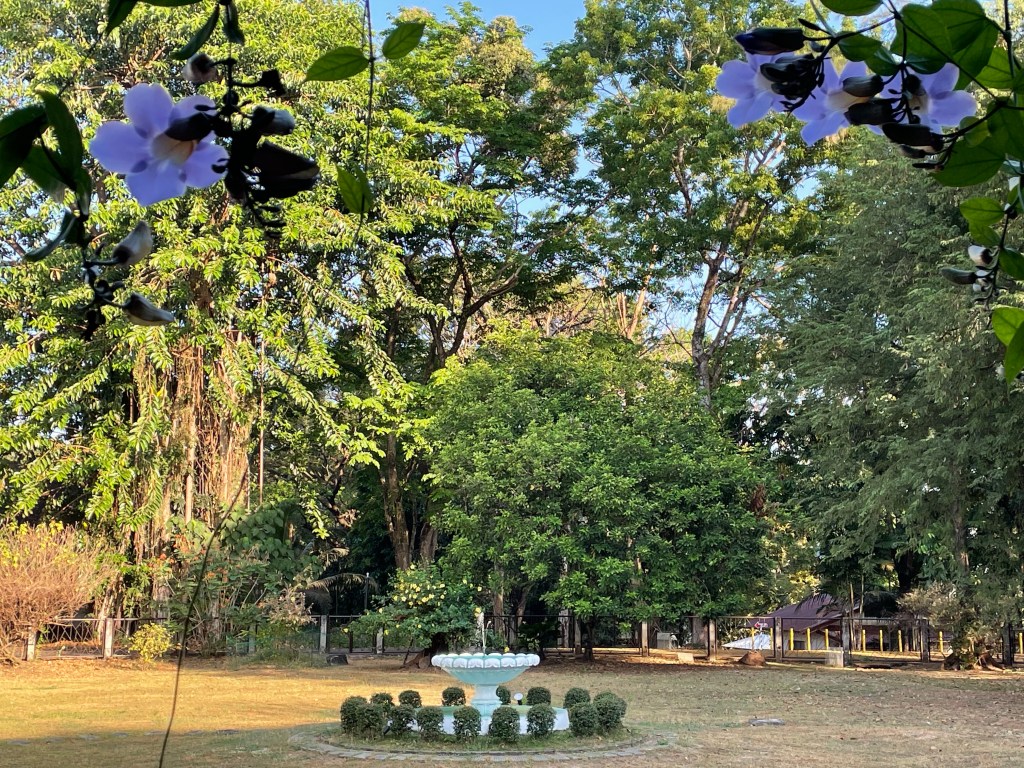
Photo by author, Malagos Orchid Farm, Davao City, 2017.

More than 18 years ago when we were assigned to a parish in our concurrent positions as school administrators in Malolos, an older priest offered to help us think of “gimmicks” so people would come to our parish. He insisted how the Church must have “marketing strategies” to attract more people celebrate Mass especially on Sundays.

After that older priest had left, I told our Rector to dismiss everything he had heard. I explained to him we do not need any marketing strategies because we have the best to offer – God in Jesus Christ. I stressed to him that only two things are essential in the parish: good liturgy that flows to good service.

A few years later, I was assigned to a parish of my own and held on that conviction. Modesty aside, that parish entrusted to me grew and became so vibrant during my nine years of stay there. Even during the pandemic lockdown, we continued with our good liturgies on line and in the ground that enabled us to serve everyone, especially the poor regardless of their religion. We never asked donations but people volunteered to give cash and goods to sustain the parish and our outreach programs.

Photo by Ms. Ria De Vera, Christ the King procession in November 2020.

Our readings today are very timely as the Synod on Synodality concluded in Rome recently that sought new ways in getting everyone in the Church especially those in the margins may journey together in Christ, with Christ to God our Father.

Although we priests and bishops remain as the biggest problems in the Church since the beginning like the Pharisees and scribes during the time of Jesus, having a good and meaningful liturgy that is living and fruitful is everyone’s responsibility.

And now, O priests, this commandment is for you: If you do not listen, and if you do not lay it to heart, to give glory to my name, says the Lird of hosts, I will send a curse upon you and of your blessing I will make a curse. You have turned aside from the way, and have caused many to falter by your instruction; you have made void the covenant of Levi, says the Lord of hosts.

Malachi 2:1-2, 8

How appropriate were the words by Prophet Malachi spoken in 480 BC who invites us too today to examine the manner we celebrate the liturgy in our communities, the spirit and seriousness that animate us, the image of God our celebrations project.

Is God still among us in our liturgy that after every celebration, we find him in our midst?

Is there still a sense of awe and wonder, of mysterium fascinans or we – priests and people – have replaced God in our worship?

Malachi was right on target then and now in echoing God’s anger and frustrations at the sight of our degenerate and perverted worship where anything goes as if God does not see us. And worst, as if we could fool him when our hearts are divided and so far from him and from one another which Jesus tried fixing these past two Sundays.

Photo by Mr. Gelo Nicolas, Bagbaguin, Sta. Maria, Bulacan, February 2020.

Jesus had silenced his enemies today in our gospel, he took it to unleash to them – and us – powerful tirades against their hypocrisies (and ours too), of how far our hearts been from God and one another, lacking in love due to its being so divided.

What a way to conclude his teachings these past two Sundays after failed attempts by his enemies to trick him into saying things that could lead to his arrest and execution.

Jesus spoke to the crowds and to his disciples, saying, “The scribes and the Pharisees have taken their seat on the chair of Moses. Therefore, do and observe all things whatsoever they tell you, but do not follow their example. For they preach but they do not practice. They tie up heavy burdens hard to carry and lay them on people’s shoulders, but they will not lift a finger to move them. All their works are performed to be seen.

Matthew 23:1-5

These past two Sundays, Jesus stressed the need of purifying our hearts so that we may give to God what is due to him which is our total selves. To purify our hearts, to have a clean heart to see God as in his beatitudes we heard proclaimed on All Saints Day means to enter into a communion with Jesus Christ, the One with the purest and cleanest heart who truly loves God and all of us.
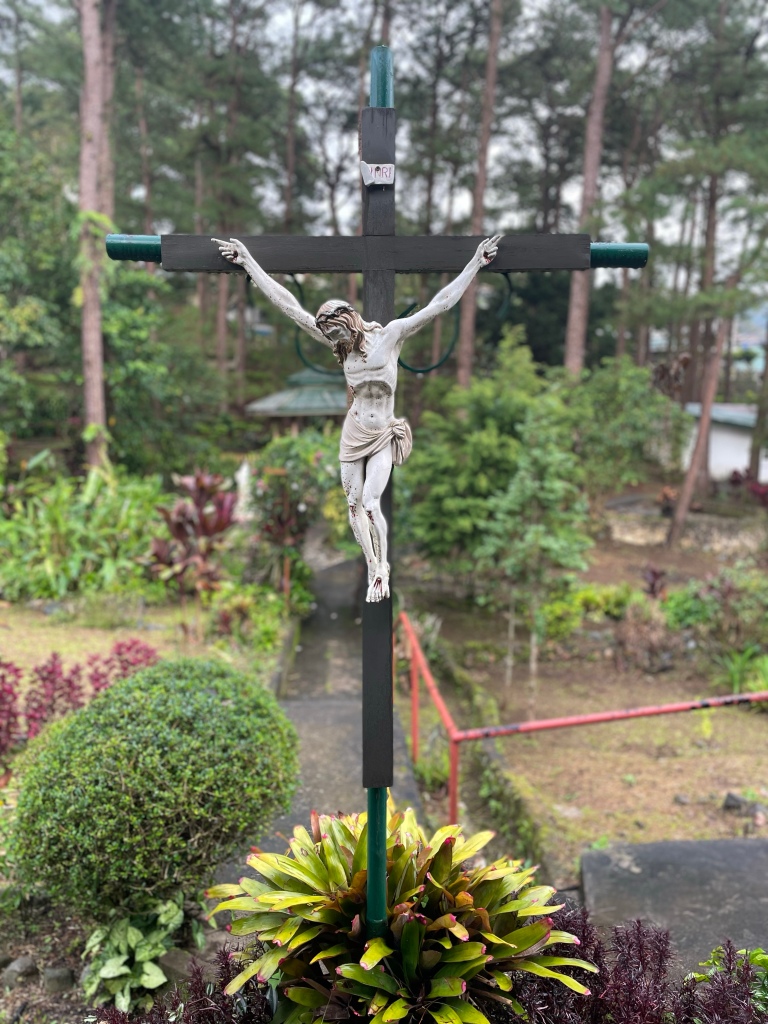
Photo by author, St. Scholastica Retreat House, Baguio City, August 2023.

Today Jesus is calling us to walk our talk, to mean what we believe and say, to be true as his disciples who choose to love and suffer for God, who finds value in God dwelling in our hearts not in things outside like names and ranks, titles and designations, clothes and other signs.

Today Jesus is calling us to live and relate honestly with others wherein our whole selves – words and actions, body and soul – are united by hearts inclined, resting in God.

Today Jesus is calling us to focus on him alone for he is our only true Teacher and Master who lovingly humbled himself as servant of all to lead us to God our one Father in heaven.

Of course, Jesus is not asking us to disregard nor dismiss all titles and designations that define our roles and functions not only in the liturgy but even in the family and society. When we learn to give what is due to Caesar and what is due to God, then we discover that our proper “seat” is in this life is in the place of a servant and that our true “place of honor” is at God’s kingdom where everyone is equal. When we have this clearly in our minds and in our hearts, then, our words and deeds are no longer in opposition like the Pharisees and scribes who did not practice what they preached because we have become witnesses to integrity of self as disciples of Christ.

Photo by author, Our Lady of Fatima University, Valenzuela, 13 September 2023.

Vatican II rightly and beautifully called the liturgy as “fons et culmen” – the fount from which all blessings of our faith flow and the apex or summit of our lives as Christians, as disciples of Christ.

How true is our worship of God?

St. Paul gave us a glimpse of their living worship in Thessalonica, picturesquely telling them how “they were gentle among you, as a nursing mother cares for her children. With such affection for you, we were determined to share with you not only the gospel of God, but our very selves as well, so dearly beloved had tou become to us” (1Thes. 2:7-8).

How I wish we priests could be so sincere like St. Paul to the people and most especially to our Lord! This Sunday, may our worship be our lives too in Jesus like the admonition of St. Augustine to his congregation when distributing the Holy Communion, “Become what you receive: the Body of Christ”. Amen. Have a blessed new week!

Choose love. Always.

The Lord Is My Chef Sunday Recipe for the Soul by Fr. Nicanor F. Lalog II
Sunday in the Thirtieth Week of Ordinary Time, Cycle A, 29 October 2023
Exodus 22:20-26 ><}}}}*> 1 Thessalonians 1:5-10 ><}}}}*> Matthew 22:34-40
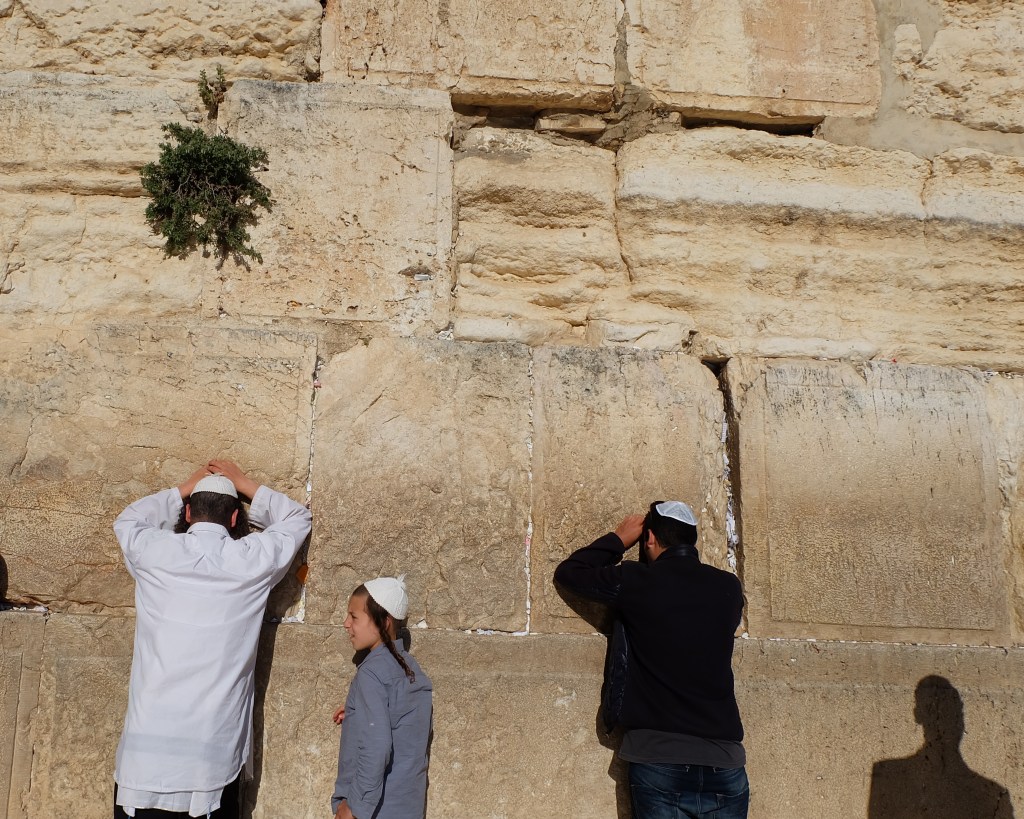
Photo by Dra. Mai Dela Peña, Mt. Carmel, Israel, 2017.

The enemies of Jesus continued with their barrage of questions to trick him into saying something that could lead to his arrest and execution. After failing last Sunday, the Pharisees sent today an expert – a “scholar of the law” – to test him anew with the question:

“Teacher, which commandment in the law is the greatest?” He said to him, “You shall love the Lord, your God, with all your heart, with all your soul, and with all your mind. This is the greatest and the first commandment. The second is like it: You shall love your neighbor as yourself. The whole law and the prophets depend on these two commandments.”

Matthew 22:36-40

For the second straight Sunday, Jesus not only responded to his enemies’ malicious questions with brief and brilliant answers but also taught them, including us today, with important lessons on discipleship.

Once again, Jesus is inviting us to have a wholistic view of life centered on God by healing the divisions within our hearts that are reflected in our broken relationships as individuals and family, church and community, and nation. How often do we reveal that same division in our hearts whenever we ask that same question 2000 years ago by the Pharisee, “which of the commandment in the law is the greatest”?

Photo by author, view from temple of Jerusalem, May 2017.

After receiving the Ten Commandments from God through Moses at Mount Sinai, the Jews dissected them into 613 instructions with 248 of these as positive laws every individual “should do” and the other 365 as negative laws everyone “should not do”.

Naturally, it was very difficult – if not impossible – for them to remember and observe these 613 precepts to guide them in their daily living so that their rabbis devised ways in which the Law could be prioritized with some categorized as “important” or “heavy” that should be followed more than those considered as “less important” or “lighter” in gravity. For example, laws pertaining to persons like parents are more important than those concerning animals that included about bird’s nest (Dt. 22:6-7)! Problem with this was when they circumvented the Law to give priority to lesser things that disregard the more important ones as Jesus pointed out so often to their religious leaders who have emphasized the sabbath by neglecting the human person like the sick.

Photo by author, St. Anne’s Church, Jerusalem, Israel, May 2017.

Another solution they have devised was to establish summary statements of the Law that could help put it all in perspective like “whatever is hateful to you, don’t do it to others”. Again, like in categorizing the Law, putting them into perspectives eventually led to their lost of essence because in our human experience, when many factors are weighed into our daily life, the way we see things are often narrowed and dimmed; then we begin making excuses and alibis to be exempted from our religious instructions. That is why Jesus “leveled up” the people’s perspectives in their views of the Law by telling them to shift their sights to higher level not just its letters but its spirit and source – God himself like the love enemies and the beatitudes.

Here we find the beauty and nobility of Jesus Christ’s answer to the scholar’s question by leading us all into the very essence of the Law which is love who is God too! Eventually on the Cross on Good Friday just like during the sermon on the mount, Jesus would show to everyone he was not only the fulfillment of the Law but the Law himself when he gave himself in love – to God our Father and to us his brothers and sisters. Today he deepens his teaching last Sunday that inasmuch as we have to give to Caesar what is Caesar’s like paying of taxes, then, we have to give our total self, our whole heart to God because that is what is due to God, our Maker and Master. To give our hearts to God is to always choosing to love God and love others as one loves one’s self.

Photo by author, garden beside St. Anne’s Church in Jerusalem, Israel, May 2017.

The moment we start categorizing or putting God’s laws into perspectives, into our own points of view, then we deviate from God himself and his plans. When we divide, separate and split the laws of God to find which could best suit us, then it becomes a DIY (do-it-yourself) Christianity where we choose laws applicable to us and disregard the rest we find difficult, calling them as outdated and conservative like divorce, contraceptives, and abortion.

In summarizing the commandments into the law of love, Jesus is inviting us today to welcome him into our hearts to let him alone dwell and reign over us so that when we are confronted with any issue and dilemma or confusion in life, we resolve them in the light of Christ which is always love. Letting Jesus reign in our hearts is choosing to find him in the other person we must respect and love and care.

Photo by author at Via Dolorosa in Jerusalem, May 2017.

To choose Jesus and his love is to always choose the human person above material things and even with one’s self. And to choose Jesus and his love is choosing his Cross too because he said there is no greater love than to offer one’s self for another. The true sign that we have really loved is when we love somebody more than ourselves like Jesus!

It is difficult and even insane as St. Paul declared “we are fools for Christ” (1 Cor. 4;10) because anyone who loves like Jesus who loves God with one’s total self and loves others like one’s self is crazy in the world’s point of view and standard. It has always been the way of Christianity ever since, always suspected as a threat to the ways of the world because the ways of Christ and his disciples are opposite the ways of the world as St. Paul explained to the Thessalonians “who received the word in great affliction, with joy in the Holy Spirit” (1 Thes. 1:6).

When I was still a young priest giving Marriage Encounter weekends to couples, I used to ask them this question: when husband and wife have an LQ or “lover’s quarrel”, who should make the first move to say sorry and be reconciled?

Many couples laugh, saying it should be the man first while men claim it must be ladies first. Still others reason out it should be the one who had sinned.

My answer: whoever has more love to give must be the first to make the move to reconcile because whoever has more love should love more!

The more we love, the more we are able to love because love is infinite like God. It is the only thing that will remain in the end because God is love. His laws are his expressions and manifestations of his love expressed in his compassion being a personal God relating with us through men and women around us (first reading). His laws fulfilled as love in the person of Jesus Christ light and guide our path in life often darkened by sin and imperfections. Choose love always and you shall never get lost! Amen. Have a lovely long weekend!

Photo by author, Pater Noster Church, Jerusalem, the Holy Land, May 2019.

Our divided hearts, divided lives, divided world

The Lord Is My Chef Sunday Recipe for the Soul by Fr. Nicanor F. Lalog II
Twenty-Ninth Sunday in Ordinary Time, Cycle A, 22 October 2023
Isaiah 45:1, 4-6 ><}}}}*> 1 Thessalonians 1:1-5 ><}}}}*> Matthew 22:15-21
Photo by author, Jerusalem, May 2017.

We are now getting closer toward the end of our liturgical calendar with our gospel scenes of Jesus still at the temple area in Jerusalem where his enemies were growing more intense in banding together to trap him for his arrest and crucifixion.

Many times, that same die-hard religious conceptions of the Lord’s enemies continue to distort our way of Christian living today. First of these is the apparent division between the realms of the world or Caesar and of God and his kingdom.

The Pharisees went off and plotted how they might entrap Jesus in speech. They sent their disciples to him with the Herodians saying, “Tell us, then, what is your opinion: Is it lawful to pay the census tax to Caesar or not?” Knowing their malice, Jesus said, “Why are you testing me, you hypocrites? Show me the coin that pays the census tax.” Then they handed him the Roman coin. He said to them, “Whose image is this and whose inscription?” They replied, “Caesar’s.” At that he said to them, “Then repay to Caesar what belongs to Caesar and to God what belongs to God.”

Matthew 22:15-16, 17-21
Photo by Lauren DeCicca/Getty Images in Laoag City, 08 May 2022.

It’s election fever again in the country (does it ever end?) when talks on the separation of the Church and the state abound in every corner of campaigns and discussions. What is very funny is despite everyone’s insistence of such separation, candidates keep on going to every church and chapel of all faith to meet their religious leaders and followers who in turn endorse some of them!

Then and now, the division was more clearly in our hearts than in religion and political life. Despite everyone’s endless quoting of the Lord’s declaration to “repay to Caesar what belongs to Caesar and to God what belongs to God”, we remain more divided as a people and individuals right in our hearts where the first casualty is Jesus Christ. Then us and our loved ones.

The way of God as Jesus had shown and taught us is not found in opposing civil and religious or spiritual realms of life but in giving ourselves for the good of others in all areas of life, first to God and everything follows. Jesus Christ came to the word to heal our divided hearts, to make us whole again (and be holy) by showing us how we are all one in God, our origin and end. St. Francis of Assisi saw this unity of God’s creation and was so central in his life and teachings that he was able to literally live out the gospel values of both material and spiritual poverty.

Photo by author, Jerusalem, May 2017.

There are no divisions between the material world and the spiritual world because everything is created by God, came from God and will ultimately end in God. “Caesar” is everything of the world we so often give more emphasis in life, more attention and more focus. Primary is our own self as we consciously and unconsciously stamp with the image and inscription of “Caesar” as we try to hide and remove God’s image in us.

See how Jesus in many instances did not bother himself with our worldly affairs like being a judge to divide the share of inheritance of feuding brothers (Lk. 12:13-15) or of James and John asking him to have them seated at his sides when his glory comes (Mk. 10:35-45) because those things separate us from God and each other.

One tragedy of Christ’s time that continues today is when we the supposed religious leaders and guides are divided within each of us, so concerned with our own pride and other priorities in life like fame and wealth. Forgive us your priests and bishops whose lifestyle and way of relating to others betray like the Pharisees who and what is first in our lives.

Keep in mind how the Pharisees were not supposed to have anything that bears semblances of idolatry in the temple area like the Roman coin with image and inscription of the Caesar considered as god and emperor by the Romans. We priests and bishops still have that “Roman coin” today in the form of social media especially Facebook that show and prove more than ever how we are a church for the rich and not of the poor no matter what the gospel and documents say. What a scandal of our time to find priests and bishops shamelessly posted on social media always present, readily available especially for funeral Masses of the rich but never or so rare with the poor! These only prove to the people of the existence of the great divide among us Jesus had supposedly healed more than 2000 years when churchmen continue to play these days the very game of the Pharisees, scribes, chief priests and elders of Christ’s time.

Photo by author, Jerusalem, May 2017.

When we examine world history, it has actually felt easier for us to divide our lives into the material and spiritual realms by giving what is due and proper to each one. This has been the way of the world especially in the past 300 years at the start of the Industrial Revolution that resulted in so many inventions and scientific breakthroughs that have spawned various thoughts and philosophies.

On the outside or in the realm of Caesar, we seem to be better with more technologies and affluence but as persons, we have remained lost and more hurting inside that drive many into suicides and depression. How ironic when we are supposed to be better, crimes against human persons get worst these days with wars and atrocities still happening. Life may had drastically improved especially in the fields of medicine and communications but the gaps among us peoples have grown wider especially these last 20 years known as the “Fourth Industrial Revolution” characterized by digitization and robotics that include Artificial Intelligence or AI. Like in the parable of the wicked tenants, we have usurped everything from God, even our very lives and the world itself.

Of course, the obligations to Caesar and to God are radically different: to the state we pay taxes, but to God we give our undivided hearts, our total being. This is what Isaiah told us in the first reading that everything in history is directed by God for the good of his people. He is the God of history. Let no one mistake any god for God because “I am the Lord, there is no other” (Is.45:6).

When Jesus asked his enemies to show him the coin that pays the census taxes, he is also asking us this Sunday to bare our hearts before him to let him heal us of the divisions within that are reflected by the many wars and divisions in the world. The deepest divide within us in this time is when we live and act like the Pharisees and Herodians with insincere hearts living a big lie of living in “accordance with the truth” (Mt. 22:16).

Let me end this reflection with those beautiful words by St. Paul in our second reading today:

We give thanks to God always for all of you, remembering you in our prayers, unceasingly calling to mind your work of faith and labor of love and endurance in hope of our Lord Jesus Christ, before our God and Father, knowing, brothers and sisters oved by God, how you were chosen. For our gospel did not come to you in word alone, but also in power and in the Holy Spirit and with much conviction.

1 Thessalonians 1:2-5
Photo by author, Church of St. Anne in Jerusalem, May 2017.

So lovely! St. Paul is also talking to us today, assuring us how despite our many sins, of being slaves of Caesar and other gods like the Thessalonians who were pagans before, we too were willed by God to be called as his children in Jesus Christ.

We in the Church are a people despite our many flaws and imperfections especially us your priests were called out of sin and darkness to be God’s own people, beloved children. He has given us life in the Holy Spirit that when we look back in our lives, we are convinced in our hearts it was him who worked in us in the realm of material world. God has always been the “invisible hand” leading us when we felt so down and lost, defeated and almost dead. Here we are, still alive and forging on amid the many difficulties we encounter within and outside us.

When we cooperate with the grace of God and focus more on him than to the many Caesars, when we live in faith in Christ, laboring in his love for others, God becomes more present in our material world, enabling us to endure further life’s challenges in hopes that Jesus Christ will come again. Amen. Have a blessed week ahead.

Life is not a dress rehearsal

The Lord Is My Chef Sunday Recipe for the Soul by Fr. Nicanor F. Lalog II
Twenty-Eighth Sunday in Ordinary Time, Cycle A, 15 October 2023
Isaiah 25:6-10 ><}}}}*> Philippians 4:12-14, 19-20 ><}}}}*> Matthew 22:1-14
Photo by Mr. Jay Javier in Taal, Batangas, 15 February 2014.

I grew up in a generation when dressing properly – meaning, decently – was deeply inculcated both at home and the school. It has always been considered in our time as a sign of maturity when we come properly attired in every occasion.

Now, those days are gone along with the expression “Sunday’s best” when sneakers are paired with formal suits and worn even in weddings! Dressing has become so relative with total disregard for basic fashion sense and worst of all, without any sense of propriety at all in the name of personal comfort and style as well as individuality. That culture on “liberal” or “liberated” dressing has encroached into the church with priests refusing to wear the proper garments and dress as required by Code of Canon law. How ironic that while the lay people appreciate us priests dressed properly for the liturgy and ministry, the harshest insults and negative reactions against it come from some priests who argue using the hot weather as an excuse. Many priests have subscribed to the lame excuse of people that clothes do not make us who we are, that there is much more beneath the clothing we wear of who we really are.

True but not absolutely because what we wear, how we look outside is indicative of who we are, what we value, what we believe in. Dress speaks a lot about ourselves whether we like it or not as the Lord’s parable this Sunday teaches us.

The servants went out into the streets and gathered all they found, bad and good alike, and the hall was filled with guests. But when the king came in to meet the guests he saw a man there not dressed in a wedding garment. He said to him, ‘My friend, how is it that you came in here without a wedding garment?’ But he was reduced to silence. Then the king said to his attendants, ‘Bind his hands and feet, and cast him into the darkness outside, where there will be wailing and grinding of teeth.’ Many are invited, but few are chosen.”

Matthew 22:11-14
Photo by Fr. RA Valmadrid, National Shrine of Our Lady of Fatima, 13 October 2023.

We now come to the third and final series of parables addressed by Jesus Christ directly to his enemies, the chief priests and elders of the people while teaching at the temple area in Jerusalem to underscore to them the need to reform their lives and be converted to his good news of salvation like the tax collectors and prostitutes.

See how in today’s parable some semblances with the parables of the two sons and wicked tenants of the past two weeks to show us God’s loving patience in doing everything to make us come to him like the subjects of the king with all the chances to come to his son’s wedding banquet.

And like with the parables of the past two Sundays, Matthew makes again a crucial twist in today’s parable that can be sufficiently ended in that part when the king was enraged by the continued refusal of his guests to come to his son’s wedding banquet that he ordered them all killed and instead extended his invitation to everyone in the streets.

The wedding banquet is heaven like the vineyard in the parables of the past two Sundays.

But it is not only referring to heaven at the end of time but also speaks so well of the here and now – the present life we live as citizens of the kingdom of God in Jesus Christ. Rejecting the invitation to come to the meal which as an expression of our citizenship in God’s kingdom is an act of disloyalty and treason against him.

Photo by Arch. Philip Santiago, Hearts of Jesus and Mary parish, Malolos City, 2022.

When we were baptized, we became citizens of the kingdom of God. We do our “pledge of allegiance” to God as his citizens every time we pray and most especially celebrate Mass which is just half of the whole deal of being citizens of his kingdom! Like in being Filipinos or whatever nationality we have, we must live up to our citizenship in God’s kingdom by being good and holy. That is the wedding dress referred to in the parable, the life we lead as children and citizens of God and his kingdom.

Jesus invites us today to face squarely the uncomfortable issues that prevent us from being his good and faithful disciples and citizens of God’s kingdom. Many times we are like those invited guests in the parable who allowed something else in their lives like their wealth and possession, businesses and worldly pursuits become more important than their allegiance to the King. Every time we sin, every time we skip the Sunday Mass, that is when we have our new God and King that may be our very selves, gadgets, vices, or the malls we frequent more than the church!

Here we find a deepening in Jesus Christ’s invitation to conversion into conforming our lives into him. St. Paul made a lot of beautiful imageries of “putting on Jesus Christ” as our new clothes and garment which we have retained in the Rite of Baptism when the newly baptized is clothed with the white dress. See how the man caught by the king fell silent when confronted because there was no excuse at all at not wearing the wedding dress in the banquet. The same thing is true with us today. We have no excuse for not being dressed, for not being conformed in Jesus Christ in our lives as his disciples. Everyday he gives us the opportunities of being conformed to him through our daily conversions through prayers and good works. God does not expect us to wear extravagant nor expensive clothes for his wedding banquet; just a clean and decent clothes are enough. Nobody is perfect.

Photo by Dra. Mylene A. Santos, MD at Tagalag, Valenzuela City, 13 September 2023.

One of the things I used to enjoy in my school and seminary days were joining stage plays. Yes, I love acting but I just don’t know if acting (and singing) love me. Nonetheless, one of our most dreaded moments before the actual play was always the dress rehearsal when everything is considered as the “real thing”, the real play as our teaches and nuns have insisted when we were supposed to have memorized our lines and cues.

But, as I grew and matured, I realized that life is not a dress rehearsal at all; each day is an actual “play”, a “live” presentation where we must “perform” or “act” so well. Yes, we are all required to memorize our lines and cues in life but many times, we forget them. Nobody is perfect. And here lies the immense love and kindness of God to us: he allows us to improvise for our selves in case we have forgotten our lines just like those people instantly invited to the wedding banquet of the King’s son. They were able to improvise to make it to the banquet hall except for that one who came not dressed for the occasion. He was silent because he was so lazy to improvise, to find ways like the chief priests and elders in the time of the Lord. Until now, many of us make a lot of excuses and alibis for not being conformed in Christ, from the ordinary excuse of being “difficult” to the most absurd that “I am only human” or tao lamang, mahina at marupok. Keep in mind St. Paul’s words in the second reading, “I can do all things in him who strengthens me… My God will supply whatever you need, in accord with his glorious riches in Christ Jesus” (Phil.4:13, 19).

Photo by Ka Ruben, National Shrine of Our Lady of Fatima, 2022.

Every Sunday we are invited to celebrate with others the coming of Jesus and the salvation he has won for us. This wedding banquet is the Sunday Mass we celebrate, a fulfillment of the first reading from Isaiah of that mountain where “the Lord of hosts will provide for all peoples a feast of rich food and choice wines, juicy, rich food and pure, choice wines” (Is. 25:6). In the Holy Eucharist, we have the choicest food and drinks – the Body and Blood of Jesus Christ – given to us to nourish us and keep us strong in this journey of life into eternity in heaven with the Father.

How amazing that nothing is really imposed upon us in coming to this banquet of the Lord in the Eucharist that is totally free of charge except that we have to come properly dressed on the inside, of being conformed in him.

But please, let’s get dressed also on the outside. No need to wear expensive and beautiful clothes. Just proper and clean ones are more than enough. A good rule of thumb we can rely on is this: God has blessed me tremendously this week and I am coming to celebrate with him, for him. How do I look to to express to him my gratitude and appreciation to his wondrous gifts? Amen. It is a Sunday, go to Mass!

We are the vineyard of the Lord

The Lord Is My Chef Sunday Recipe for the Soul by Fr. Nicanor F. Lalog II
Twenty-Seventh Sunday in Ordinary Time, Cycle A, 08 October 2023
Isaiah 5:1-7 ><}}}}*> Philippians 4:6-9 ><}}}}*> Matthew 21:33-43
Photo by author, San Juan, La Union, 25 July 2023.

A good friend recently came home from a 20-day Marian pilgrimage in Europe. I told him to get some rest and avoid reading the news, “Huwag ka munang magbasa ng balita baka masayang nalanghap mong hangin sa Europe.” He replied that with the very reliable internet service in Europe, they were all updated with the things happening in our country. He added, “parang ayaw ko nang magpunta sa Europe, lalo lang ako naaawa at nahihiya sa Pilipinas.”

Very true.

I rarely travel abroad but with what I have been reading and hearing especially from those visiting Japan and Singapore, the more I feel sad and hopeless for our country the Philippines. At least, God comforts us once in a while in sports like the recent golds in the Asian Games courtesy of EJ Obienna in pole vault, Annie Ramirez in jiu-jitsu, and Gilas Pilipinas in basketball. Aside from sports, nothing good seems to come from the news. Even the newscasts these days are depressing with robots “complementing” sportscasters.

Photo of a vineyard in Southern California by Dra. Carol Reyes-Santos, MD, 01 October 2023.

Our readings this Sunday seem to speak of us Filipinos and the Philippines which is like a wonderful vineyard planted by the Lord, especially when we think of our vast, fertile lands and long coastlines with rich bodies of water but we have to import our food, from rice to galunggong. What a shame that our chicharon producers import pig backfat from the tiny island of Taiwan?! Like Isaiah, we find ourselves asking what happened to our country?

Let me now sing of my friend, my friend’s song concerning his vineyard. My friend had a vineyard on a fertile hillside; he spaded it, cleared it of stones and planted the choicest vines; within it he built a watchtower, and hewed out a wine press. Then he looked for the crop of grapes, but what it yielded was wild grapes.

Isaiah 5:1-2

The vine and wine are important signs widely used in the Old Testament and in the gospel accounts by Jesus. In Isaiah’s writings, the vineyard represented Israel as the chosen people of God, so loved and cared for, saved from Egypt and gifted with a land flowing with milk and honey. Despite these blessings, Israel repeatedly turned away from God with their many sins of infidelity that continued in the time of Jesus Christ who borrowed and perfected this parable of the vineyard of the Lord to make it timely in every generation.

Jesus said to the chief priests and the elders of the people: “Hear another parable. There was a landowner who planted a vineyard, put a hedge around it, dug a wine press in it, and built a tower. Then he leased it to tenants and went on a journey. When vintage time drew near, he sent his servants to the tenants to obtain his produce. But the tenants seized the servants and one they beat, another they killed, and a third they stoned. Again he sent other servants, more numerous than the first ones, but they treated them in the same way. Finally, he sent his son to them, thinking, ‘They will respect my son.’ But when the tenants saw the son, they said to one another, ‘This is the heir. Come, let us kill him and acquire his inheritance.’ They seized him, threw him out of the vineyard, and killed him.

Matthew 21:33-39
Photo by author, Sacred Heart Novitiate, Novaliches, QC, 20 March 2023.

For the second straight Sunday, Jesus preached again at the temple area of Jerusalem and addressed this lesson to his enemies, the chief priests and elders of the people trying to find a probable cause to have him arrested.

See how this parable of the wicked tenants very similar with Isaiah’s but at the same time speaking a lot of ourselves and of our time, of how we have become like those wicked tenants taking the “vineyard” as totally ours like our body and country, arguing it is mine or ours that we can do whatever pleases us. Like those tenants, we have claimed of not belonging to God nor anyone at all, that we can do whatever we want because we are the owners of ourselves and the world. “It is my body, it is mine” and none of your business kind of thing.

How often we hear others claiming “this is my body, this is mine; therefore, I can do whatever I want with my body” like abort a baby, take contraceptives, or have a sex change, have those tattoos and body piercings? And we have spread this line of thinking to our environment with road rage spreading like a pandemic while bigger countries are grabbing territories ironically from their smaller neighbors.

The most tragic way of thinking that underlies this “mine mentality” is how so many of us have accepted – consciously and unconsciously – that most untrue statement of all that God is dead. Many would say they believe in God when actually what they mean is they know there is God and so often, they play that God, too. Pope Benedict XVI described it as “totalitarianism of relativism” when we see everything relative, no more morals and morality because we have made ourselves the measure and standards of everyone and everything – because, the “vineyard” belongs to us.

Photo of a vineyard in Southern California by Dra. Carol Reyes-Santos, MD, 01 October 2023.

More sad is the fact that we are beginning to see what happens next to us and the world with these things happening like families and relationships disintegrating, climate change and threats of wars, and more emptiness among us.

But, it is not that bad after all. Jesus not only updated Isaiah’s parable of the vineyard to speak to us in the present but also to promise us of a greater future. Notice the blessing and threat he used.

“What will the owner of the vineyard do to those tenants when he comes?” They answered him, “He will put those wretched men to a wretched death and lease his vineyard to other tenants who will give him the produce at the proper times.” Jesus said to them, “Did you never read in the Scriptures: The stone that the builders rejected has become the cornerstone; by the Lord has this been done, and it is wonderful in our eyes? Therefore, I say to you, the kingdom of God will be taken away from you and given to a people that will produce its fruit.”

Matthew 21:40-43

Once again, Jesus Christ’s parable asked a question to involve his hearers, including us today, in the story because the truth is, he had involved himself with us in his coming and eventually in his Passion, Death and Resurrection.

Unlike in Isaiah’s parable of the vineyard, God is distinct from the vineyard; but in Christ’s parable, we are in fact the vineyard of the Lord because Jesus is one with us being the son of the owner sent to gather his share of produce.

That is the good news, the blessing this Sunday and while there is also the threat of the vineyard being handed over to better tenants, there is the promise of better produce to be shared and enjoyed in all eternity, in heaven. There will always be darkness and difficulties in this life caused by selfish, arrogant, and self-righteous people who feel they own everything in this world. Many times, we too have wasted God’s bountiful blessings to us like our talents and abilities not put into use or never harnessed; health taken for granted and separation from our loved ones. Jesus Christ had died for us to repair ourselves and our relationships. Let us grab this opportunity today of taking care of the Lord’s vineyard, of sharing his blessings.

Most of all, like what St. Paul asked us in the second reading, let us be witnesses to others by remaining faithful to God, striving for “whatever is pure, whatever is lovely, whatever is gracious” (Phil. 4:8).

Last Thursday was World Teachers Day. I told our teachers during Masses in our university this week to remember St. Augustine’s final lesson to Deogratias his deacon preparing candidates for baptism: “The teacher is the lesson himself/herself.”

Beautiful. If we are the Lord’s vineyard, every time we produce good fruits, every time we share these fruits with others, then we become signs of hope of Christ’s presence among us. That is the most important lesson we can share with others especially in these times of darkness. Amen. Have a blessed week ahead!

Photo by author, Baguio City, 11 July 2023.

The problem with being so sure

The Lord Is My Chef Sunday Recipe for the Soul by Fr. Nicanor F. Lalog II
Twenty-sixth Sunday in Ordinary Time, Cycle A, 01 October 2023
Ezekiel 18:25-28 ><}}}}*> Philippians 2:1-11 ><}}}}*> Matthew 21:28-32
White roses for devotees of St. Therese whose feast is today, October 01; may she intercede for your much needed miracle!

American writer Anne Lamott wrote in one of her books that “The opposite of faith is not doubt, but certainty.” This is most true in our gospel this Sunday as we shift scene when Jesus finally entered Jerusalem and preached in the temple area among his enemies, the chief priests and elders of the people.

Again, we are familiar with today’s parable of the man who had two sons he asked to go and work at their vineyard. The first son refused but later changed his mind and obeyed the father; the second son said “yes” but did not go to the vineyard. Like the chief priests and the elders, we too can easily answer Jesus Christ’s question, “which of the two did his father’s will?” Of course, the first son – but, Matthew’s story did not end there as he recorded the Lord’s words to his enemies that say a lot to us too today:

Jesus said to them, “Amen, I say to you, tax collectors and prostitutes are entering the kingdom of God before you. When John came to you in the way of righteousness, you did not believe him; but tax collectors and prostitutes did. Yet even when you saw that, you did not later change your minds and believe him.”

Matthew 21:31b-32
Photo by author, 2019.

Keep in mind that Matthew insists in his gospel account the matching of our words and actions because “not everyone who says ‘Lord, Lord’ will enter the kingdom of heaven” (Mt. 7:21).

In the next three Sundays, we hear parables having this as its theme: the two sons today, the evil tenants next week and the wedding banquet after that. Notice too that although we still have nine weeks to go before Advent Season in preparation for Christmas, our gospel setting beginning this Sunday will be at the temple area just before the Lord’s Passion, Death and Resurrection. That means Christ’s teachings are getting more intense and challenging to everyone as well.

The sin of the chief priests and elders that Jesus mentioned today – “you did not later change your minds and believe him” – was their refusal to change their minds to accept him as the Christ despite the overwhelming proofs and evidence they have heard and seen, even experienced. They were fixated with their own beliefs and interpretations of the Laws and scriptures; nothing and no one, not even the Son of God Jesus Christ could change their minds, perspectives and opinions.

The same is true with us Christians today! Many times our faith has become so static, could not be changed anymore to become deeper and stronger and vibrant to recognize God present in the changing times. The danger we have today is not only many people are losing their faith but a greater number of us faithful have come to believe more in ourselves than in Christ and his Church led by the Pope! How sad that since last year, there have been so many people, including clergymen casting doubts and refusing to recognize the synod of bishops set to begin this month in Rome.

Photo by author, 2019.

Faith in God is a process that grows and deepens through time. It calls for openness to God in his daily coming to us even in the most unusual people and circumstances. Faith is a daily process of conversion, of kenosis or self-emptying like Jesus which Paul beautifully expressed in our second reading today:

Do nothing out of selfishness or out of vainglory; rather, humbly regard others as more important than yourselves, each looking out not for his own interest, but also for others. Have in you the same attitude that is also yours in Christ Jesus, Who, though he was in the form of God, did not regard equality with God something to be grasped. Rather, he emptied himself, taking the form of a slave, coming in human likeness.

Philippians 2:3-7

Here we find faith is about relationships and commitment, both to God and to one another. It is never static. That is one of the lessons Jesus is emphasizing in his parable today about the father and two sons. Obedience to their father is an expression of their relationship with him. Many times, we are either like the first or the second son. God our Father gives us all the chances and opportunities to make up for our lapses and sins.

That is why in the first reading, God reminds us through Ezekiel that his ways are not unfair because he gives us all every chance to change and become better, the very same principle we have heard in the three teachings of Christ recently about fraternal correction, forgiving, and generosity.

Have you noticed how often people seem unreasonable when they tell us we have changed or have not changed at all? I find those comments insane, even stupid because only change is permanent in this world. We always change. And we must change for the better.

One of my favorite series in the 1980’s was the American comedy “Newhart” starring Bob Newhart. In one of its episodes, Bob and his wife celebrated their anniversary amid so many mishaps and quirks. As usual, Bob saved the day at their renewal of vows when he told his wife that indeed, he had changed through their years of marriage as he had come to love his wife more than ever. So sweet and beautiful, and true!

Many times in weddings, I tell newly wed couples this prayerful wish, “May this day be the least joyful day of their lives.” Weddings and ordinations call for a lot of daily conversions, of growing and maturing, of finding Jesus in our loved ones and people we serve, and in new directions in our lives and ministry.

Photo by author, La Trinidad, Benguet, 12 July 2023.

Every relationship with God and with others can never be fixed for it must grow daily. Don’t worry, we will never run out of space for maturity and deepening of faith and commitments with God and with others. The more changes and flexibilities we go through no matter how difficult they may be physically, emotionally and spiritually, the more surprises and joys and fulfillment we shall experience.

Everyday, ask yourself, “Where did I see God today?” And, what does it mean to me?

Our answers to these two questions will determine how we live differently each day as Christ’s disciples because of what God has revealed to us! Amen. Have a fulfilling week in Jesus this start of October!

We are workers in the Lord’s vineyard

The Lord Is My Chef Sunday Recipe for the Soul by Fr. Nicanor F. Lalog II
Sunday in the Twenty-fifth Week in Ordinary Time, Cycle A, 24 September 2023
Isaiah 55:6-9 ><}}}}*> Philippians 1:20-24, 27 ><}}}}*> Matthew 20:1-16
Photo by author, Church of Dominus Flevit, Jerusalem, May 2017.

We now come to the final installment in the series of teachings by Jesus Christ of what we described as delicate issues affecting even us today. Two Sundays ago it was about fraternal correction, last week was forgiving, and today, something about work and pay that are indeed very delicate for many of us, even ticklish.

Recall that love is the main motivation why we must correct those who sin and go wayward in life. It is also love that moves us to forgive those who repeatedly sin against us.

In today’s parable of the workers in the vineyard, Jesus is also teaching us about love that results when we learn to be just and generous with others because these two are the minimum requirements of love. It is in our field of work and in the issues of pay and wages when our being Christians are most tested when our senses of justice and generosity are blurred and worst, when we even forget God.

Photo by author, 2018, Davao City.

Like last Sunday, Jesus used another parable today to use a simple story of daily life that appeals to our common experiences. What is very interesting is how both parables of the Lord incited hearers to take sides and adopt positions. Last Sunday we too felt indignant against that servant who was forgiven of his loan so huge but could not let go of the debts of his fellow worker that was so little in amount.

But today’s parable has a different twist that we felt swept off by our feet when Jesus through the landowner reacted differently at the grumbling of those workers who worked longer in the vineyard and received same amount with those who worked for less hours yet paid equally.

“When those who have started about five o’clock came, each received the usual daily wage. So when the first came, they thought that they would receive more, but each of them also got the usual wage. And receiving it they grumbled against the landowner, saying, ‘These last workers worked only one hour, and you have made them equal to us, who bore the day’s burden and the heat. He said to one of them in reply, ‘My friend, I am not cheating you. Did you not agree with me for the usual daily wage? Take what is yours and go. What if I wish to give this last one the same as you? Or am I not free to do as I wish with my own money? Are you envious because I am generous?'”

Matthew 20:9-16

Did we not feel surprised, even shocked? Did anyone cry unfair? How could the landowner – God – pay everyone the same amount when others worked so less than the rest?

How sad that when talks are about work and pay, we always insist on justice, especially if we feel the ones shortchanged. And worst, we used it also as our norm for salvation, for entering heaven with some openly declaring who would go to heaven and who would not!

And that is actually the context of the parable when Jesus said “The kingdom of heaven is like a landowner who went out at dawn to hire laborers for his vineyard” (Mt.20:1). This is not just about social justice and just wages but about the goodness of God. The vineyard is God, and heaven. Our salvation. Harvest time means judgment day as well as gathering of everyone in God to receive his blessings of love and salvation, healing and forgiveness.

Jesus Christ came to us like that landowner who never stopped looking and searching for us especially those lost and sinful. Truly a God so loving and merciful, he wants us all saved that as early as dawn and as late as 5 o’clock in the afternoon, he kept looking for workers to be blessed, to have something to bring home and share with their families and loved ones at the end of the day. What a beautiful imagery of God our Father who sent us his Son Jesus Christ so we could all come to him. Here we find the previous two parables still operating in the full sense wherein the landowner’s search for more workers into his vineyard was like Christ’s mandate for us to correct and forgive those who sin.

Photo by author, Church of St. Anne in Jerusalem, May 2017.

This Sunday, Jesus is telling us that each one of us is so loved by God who is overly generous, blessing us with everything we need, giving us all the chances in life to become better.

Therefore, let there be no room among us to own and box God and his blessings! Let us not usurp God’s power and generosity for others. We are all his children. Let no one assume to one’s self that he/she is more worthy to God nor he/she is more entitled much less a favorite of God! Please. Especially those who claim only they would enter heaven?

Today, Jesus is telling us we are all his servants, we are all his workers in his vineyard. Those workers hired at dawn were given a job because God is good. From his kindness, he gave them a silver coin for their wage. It is the same good and loving, kind and generous God who hired the other workers at 9am, noon, 3pm and 5pm with the usual salary. Therefore, it is very wrong for those hired at dawn – for anyone of us today – to complain to God of not receiving more than the others just because we have served longer than them. We have no right at all to command and direct God how he must give or dispense his blessings because whatever we receive from him is out of his goodness and never of our own merit.

Moreover, those workers hired at dawn should actually be grateful to God in giving them work while at the same time rejoice too that God had called others later to receive a decent pay to bring home. Here we find a similarity in the attitude of the elder brother in the parable of the prodigal son who also complained to their father the party thrown for the return of his younger brother (Lk.15:11-32).

We are all workers in the Lord’s vineyard, God’s beloved and forgiven children. What kind of workers, or children of God, are we then?

May we always remember St. Paul’s admonition two Sundays ago to “Owe nothing to anyone, except to love one another” (Rom.13:8). Like in the previous two Sundays, Jesus is inviting us today to imitate him and his ways, to shift_ our existence, our views, our person into higher levels in him, with him and through him. It is the same reminder by Isaiah in the first reading that we must let go of our human ways and thoughts to trust in God’s wisdom always. There are times emotions can run high with us sometimes especially when it comes to remunerations, whether material or spiritual but like the Philippians, we must trust that ultimately, everything in this life is the work of God, even the success of Christ’s gospel. All we need to do is trust in him, be like Jesus, merciful and forgiving. Most of all, generous and loving. Amen. Have a blessed new week!

From Facebook, Easter 2021: “There is an urgency to announce the joy of the Risen Lord.”

Being like our forgiving God

The Lord Is My Chef Sunday Recipe for the Soul by Fr. Nicanor F. Lalog II
Sunday in the Twenty-fourth Week in Ordinary Time, Cycle A, 17 September 2023
Sirach 27:30-28:7 ><}}}}*> Romans 14:7-9 ><}}}}*> Matthew 18:21-35
Photo by author at the RISE Tower, Our Lady of Fatima University, Valenzuela City, 28 July 2023.

This past week has been a very toxic one for us in the hospital where I serve as a chaplain.

Beginning last Sunday morning after our Mass at the University adjacent to our hospital, I had to proceed to the ICU to anoint a critical patient who expired 20 minutes later while I was still attending to seven other patients there in the unit. One died that evening, the other the following day. Last Tuesday and Thursday I had to go back to the hospital to anoint four more patients, two of them eventually died before this Saturday.

When that patient died last Sunday morning, the doctors and nurses at the ICU thanked me, telling me how the deceased must have just waited for me to receive the Sacrament of Anointing. “Hinintay lang po kayo, Father.”

I have heard that so many times even while I was assigned in a parish. And every time people would tell me that, I thank God deep in my heart for his infinite love and mercy, in never allowing patients to die until they have been anointed and absolved of their sins. That is why I am so convinced that almost everybody goes to heaven or purgatory when they die because God ensures that each one of us will have a chance to prepare to meet him in heaven. Only a few, even almost no one, except anyone who would reject God totally goes to hell.

Photo by Dra. Mylene A. Santos, MD at Tagalag, Valenzuela City, 13 September 2023.

My dear friends and family, today we continue the second in a series of what I have told you last Sunday of the Lord’s teaching on some of life’s most delicate issues we are all aware of but find so difficult to accept and practice.

Last Sunday, it was about fraternal correction, of the need for us to speak to those living in sin. Today, Jesus teaches us to forgive those who sin against us.

Peter approached Jesus and asked him, “Lord, if my brother sins against me, how often must I forgive? As many as seven times?” Jesus answered, “I say to you, not seven times but seventy-seven times. That is why the kingdom of heaven may be likened to a king who decided to settle accounts with his servants….”

Matthew 18:21-23

Notice how Jesus used a parable in explaining forgiving to Peter and other apostles along with us today. Forgiving from the heart because of love can never be fully explained as a concept; love is best expressed in forgiveness which Jesus showed us on the Cross where his first words were for the forgiveness of his enemies who “knew not what they were doing”.

Photo by Dean Mon Macatangga, May 2023.

When we love, we level up in our existence and that becomes most true when we forgive. See how love remains the antidote to sin which is lack of love. Both fraternal correction and forgiving are expressions of love that is true, the love of Christ. That is the point of Christ’s parable when he said, “That is why the kingdom of heaven may be likened to a king who decided to settle accounts with his servants.”

To love, to forgive, to correct those who sin are all in the realms of God, of the divine as Shakespeare said, “to err is human, to forgive is divine.” Whenever we forgive because we love like God, we become like him!

Becoming like God, becoming divine happens when we recognize one another as brothers and sisters in Christ. Here lies the beautiful twist in the Lord’s parable: forgiving is in the realm of the kingdom of God where we are brothers and sisters, not just servants who owe God our king or anyone with debts to be paid that are measurable in exact amount or quantity. St. Paul expressed it beautifully last Sunday, “Brothers and sisters: Owe nothing to anyone, except to love one another; for the one who loves another has fulfilled the law” (Rom. 13:8).

Love is the only debt we owe everyone. We can never repay love because it is a debt so huge, like the debt of that servant summoned by the king in today’s parable. Jesus came to “save” us from that debt of love that God asks us not because he needs it repaid but because he showers us with so much of that love. We just have to keep on sharing that love of God that is infinite because love is the essence of our lives. To live is to love and when we love, that is when we truly live. And that is why we must forgive also like him. On our own it is impossible to love and to forgive but that grace has always been there for us to take and share because we are all loved and forgiven children of God. To forget or disregard this truth is to separate from God and from everyone which is what hell is all about.

Photo by Dra. Mylene A. Santos, MD at Tagalag, Valenzuela City, 13 September 2023.

Both teachings and instructions by Jesus to correct our wayward brothers and sisters and to forgive those who often sin against us are expressions of our love of God. Indeed, they are both difficult, most especially forgiving from the heart. Problem with forgiveness is the fact that the most painful hurts we incur are always inflicted by those we love, by those people closest to us and dearest to us. It is a grace we have to pray for always, whether for us who have sinned or hurt by others.

But, there are also practical considerations why we have to forgive as Ben Sirach had noticed since the Old Testament days. It is something we continue to experience these days and sadly, even see on social media like the endless series of road rage everywhere in the world that has become like a pandemic.

How true were the observations by Ben Sirach that “Wrath and anger are hateful things, yet the sinner hugs them tight” (Sir. 27:30) as clips of road rage vividly show us in social media, from the lack of respect of those involved to abuse of authority as well as destruction of lives and properties. Like the other servants in the parable, we feel sorry for the victims of road rage considering mostly are about petty things blown out of proportions.

Photo by Dra. Mylene A. Santos, MD, Quezon Province, August 2022.

Psychologists and experts also tell us the importance of forgiving for practical reasons but they all pale in the light of the simple fact that the obligation to avoid resentment, hatred and violence is strictly enjoined on us who know God and are conscious of our own need for his forgiveness and mercy. In the end, let us forgive one another as St. Paul reminded us today in the second reading that everything will be determined and judged in our relationship with Jesus Christ who suffered and died for our sins. This we constantly honor and deepen when we forgive, when we pray the Our Father, and when we celebrate the Holy Eucharist. Amen. Have a blessed week ahead!

The debt that is never paid off

The Lord Is My Chef sunday Recipe for the Soul by Fr. Nicanor F. Lalog II
Sunday in the Twenty-third Week of Ordinary Time, Cycle A, 10 September 2023
Ezekiel 33:7-9 ><))))*> Romans 13:8-10 ><))))*> Matthew 18:15-20
Photo by author, St. Scholastica Convent, Baguio City, 23 August 2023.

Our gospel this Sunday is very difficult but also one of the simplest and fundamental teachings by Jesus Christ: fraternal correction for more harmonious relationships.

That is very difficult because we have all experienced how when we heard of somebody going wayward in life, of living in a life of sin, our immediate reaction is to talk about them, engage in gossips without any intentions at all to correct them. Sad to say, we even distance ourselves from them – exactly the opposite of what Jesus is teaching us today:

Jesus said to his disciples: “If your brother sins against you, go and tell him his fault between you and him alone. If he listens to you, you have won over your brother. If he does not listen, take one or two other along with you, so that every fact may be established on the testimony of two or three witnesses. If he refuses to listen to them, tell the church. If he refuses to listen to the church, then treat him as you would a Gentile or a tax collector.”

Matthew 18:15-17
Photo by author, St. Scholastica Convent, Baguio City, 23 August 2023.

Jesus is now heading to Jerusalem to fulfill his mission. Along the way, he taught his disciples important lessons about the Church he had just “established” upon Peter, the Rock, while at Caesarea Philippi three weeks ago.

In these next three Sundays, Jesus tackles three delicate issues we continue to face even in our modern time like fraternal correction, forgiving, and work. These are delicate topics because they are all expressions of mutual love for one another.

Very often, we commit the sin of omission in the realms of these three, particularly of fraternal correction as we tend to detach ourselves from others especially if they are committing sin. By distancing from them, we unconsciously allow them to sin. In the movie The Good Nurse based on that true story of a nurse in the US who killed so many patients for some years by transferring to different hospitals, the good nurse asked him why he did it? The serial killer nurse said, “nobody told me to stop doing it.”

The dark side of the sin of omission lies in that tendency within us to not care at all especially with those who prefer to separate from us and lead their lives in the way they wanted. There is that tendency within us to be like Cain even if we are not guilty of any sin or may even be the offended party, saying, “am I my brother’s keeper?” Most sad are our Filipino expressions when somebody sins, “Bahal ka na sa buhay mo…pinili mo iyan, pagdusahan mo.”

Photo by author, Camp John Hay, 12 July 2023.

Fraternal correction is the antidote to sins of omission because it is about keeping our relationships intact as family, friends, brothers and sisters in Christ.

Jesus becomes truly present in the world among us when we live in harmony because “where two or three are gathered together in my name, there am I in the midst of them” (Mt. 18:20).

As early as the Old Testament, God had already insisted on this moral precept as his children that we look after one another like a guard or sentinel in the positive sense as he told the Prophet Ezekiel in the first reading. At that time, the enemies of Judah were closely approaching their borders that they designated watchmen as their first line of defense. Failure by these watchmen to warn the people – as it turned out later – could spell disaster for the kingdom.

The same thing is true with us. We are all interrelated with each other. One rotten tomato can spoil the whole batch. We cannot choose to be indifferent or just be mere bystanders amid the evil and sins happening around us perpetrated by those closest to us. But we must do it all in the spirit of love, not because we are better or holier.

Brothers and sisters: Owe nothing to anyone, except to love one another; for the one who loves another has fulfilled the law. Love does no evil to the neighbor; hence, love is the fulfillment of the law.

Romans 13:8, 10
Photo by author, Sacred Heart Novitiate, Novaliches, QC, 22 March 2023.

Fraternal correction is an expression of our mutual love for one another, the exact opposite of sin of omission. St. Paul offers us a lot today about this love that builds our family and community still from his letter to the Romans.

Let us start with St. Paul’s conclusion that love is the fulfillment of the law which we often hear and even proclaim to others. Main question that arises from this is the nature of this love. For St. Paul, love is the self-sacrificing love that Jesus showed us when he offered himself for us on the cross. Recall last Sunday St. Paul reminded us to offer your bodies as a living sacrifice (Rom. 12:1) like Jesus. In that same chapter, St. Paul spoke about not retaliating or seeking vengeance, an echoing of the Lord’s instruction on love when asked by a scholar of the law which is the greatest of the commandments (Mt.22:37-40).

Here we find, love for St. Paul is the imitation of Jesus Christ, a love that can never be measured at all and even be demanded and decreed! The love of Jesus Christ is so new as he mentioned at his last supper (Jn. 13:34) because it is a love rooted in God, a love that elevates us or as young people say “levels up” every disciple into the mystical plane.

Prior to his telling us today “to owe nothing to anyone, except to love one another”, St. Paul was expounding at the beginning of Romans 13 the theme of obedience to authority, a sort of social responsibilities, of things like justice (vv.1-7). While justice demands we pay off our debts and other dues to one another, to the state and public officials, it is a totally different scenario when it comes to love.

Photo by author, St. Scholastica Convent, Baguio City, 23 August 2023.

Love is not a possession that anyone can receive or give in an exactly measured quantity. St. Mother Teresa said that the measure of love is when you love immeasurably. There is no such thing as a kilo of love. It is either you love or do not love! And when that happens, when we do not love, then we sin. That sin can only be repaired and corrected by love. Sin is when we lack love; to overcome sin, pour in more love.

In all his writings, St. Paul always had love as the basis of his teachings so that without sounding as imposing, he could persuade us to live deeply moral lives as expression of that love in Christ which he eloquently expressed in his ode to love in 1 Corinthians 13. One of the earliest Latin phrases I have learned as a child was from my elementary school days at St. Paul College Bocaue (Bulacan). Our school motto is “Caritas Christi urget nos” – The love of Christ impels us (to love more) – from 2 Corinthians 5:14.

When we examine our true love experiences that are not selfish but other centered, we realize that love is a debt we can never pay off because love is a gift from God. This gift of his love makes us those who receive it in a filial, loving relationship with him our Father. Most of all, we realize we too can love like Jesus Christ!

God does not “order” nor “command” us in the strict sense to love him. He asks for our love because he loves us, because he is love. When we love, we fulfill the commandments of God. We live in peace and harmony with one another like in heaven. That is why it is only love that will remain in heaven where there will be no more fraternal corrections. Most of all, never be paid off as a debt because love is all that shall remain to become our very person in Christ. Amen. It is a Sunday. If you love, celebrate Mass in your parish. Have a blessed, loving week!

Photo by author, La Trinidad, Benguet, 12 July 2023.