Life after life after life

Quiet Storm by Fr. Nicanor F. Lalog II, 17 June 2020

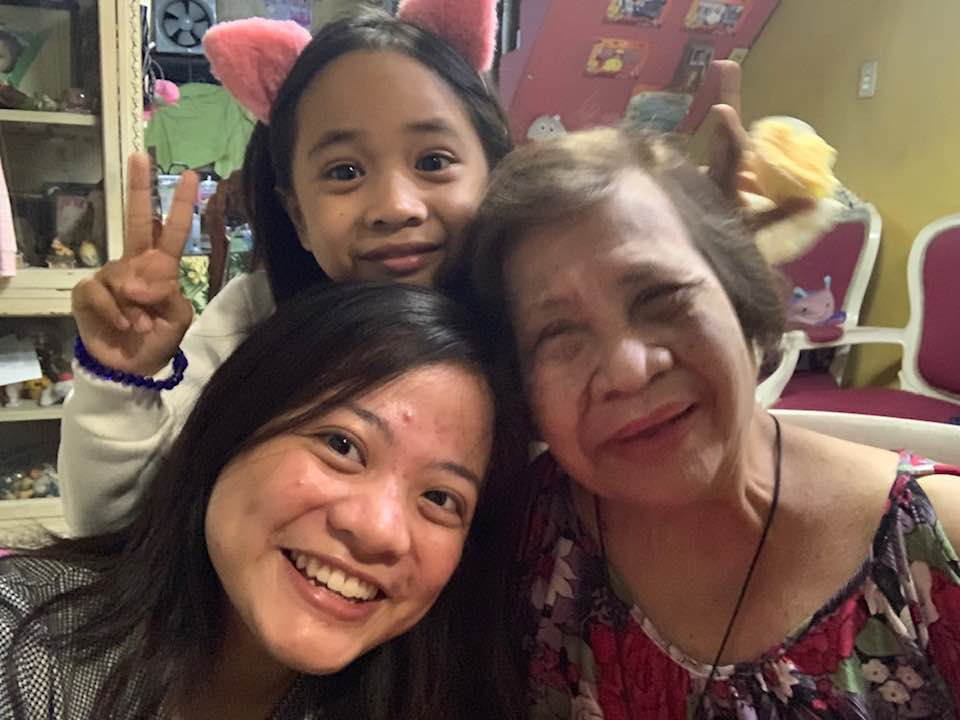
Today is my mother’s 81st birthday and my father’s 20th year of death.

Since June 17, 2000, we have “stopped” celebrating my mother’s birthday as she ordered that date to be remembered more as my father’s birth into heaven.

So many things have happened in our lives as a family, most especially with me as a man and a priest being the eldest.

Yes, I always dread this date, feeling at a loss until now at how to behave or what to say when I come home. There is always a “drama” we have to go through when we get together, with a lot of “dead air” moments during Mass and later at the dinner table.

Though somehow they have lessened in these past 20 years, the sadness is still there.

I thought time heals.

True.

But the pain remains. And the more it gets painful.

Lalong bumabaon, as we say.

With her apos when still able to move freely; Sunday after Mass was always at my father’s gravesite.

Since her 61st birthday, Mamu as she preferred to be called when the apos came, she had “stopped” living because my dad was really her life. We believe her sorrow contributed to her stroke in December 2004.

Growing up until I have become a priest, I have always seen my father preparing coffee and breakfast daily for her. She had in fact forgotten how to cook or learn new dishes because my father was a superb cook — that is why we all have gout in the family.

Most of all, as I would always tell my students before, since childhood until I have become a priest, dad never ate his meals without Mamu at his side or at least to personally tell him to eat because she had gone to a party or some prayer meeting.

Every Sunday after my Masses in a nearby town, I would visit my father’s grave and surely find fresh flowers and candles earlier placed by my mom and sister’s family.

After praying and blessing his gravesite, I would talk to him, telling him, “Dad, there are 365 days in a year. Why did you die on June 17, 2000?”

It took my father more than a year before answering my question.

Yes, he spoke to me in his usual deep, whispering voice I heard from within as I looked down on his grave, “Nick, I died on your mother’s birthday so you would love her more like I have loved her.”

Tears swelled in my eyes and eventually rolled down my cheeks that I almost watered the grass on his gravesite!

It was a very tall order that until now, I really do not know if I have fulfilled.

Mothers are like God

God cannot be everywhere that is why He created mothers.

Jewish saying

Every Thursday I come home to visit Mamu on my day off, as well as during special occasions and gatherings like birthdays of my siblings and pamangkins.

Sometimes I ask myself if I have loved my mom that much as my dad had wanted me to.

This comes strongest to me when going to a sick mother in my parish to anoint with Holy Oil or when presiding at a funeral Mass of a deceased mother; I would listen intently to the “thank you speech” of a son or a daughter and marvel at how great his/her love for the deceased parent.

As a priest, I have always been with so many mothers but not so much with my own mom. But one thing I have experienced since my father died on my mother’s birthday 20 years ago is the life that continues to flow from her very self and presence which flows unto me and spills even up to my parish and community.

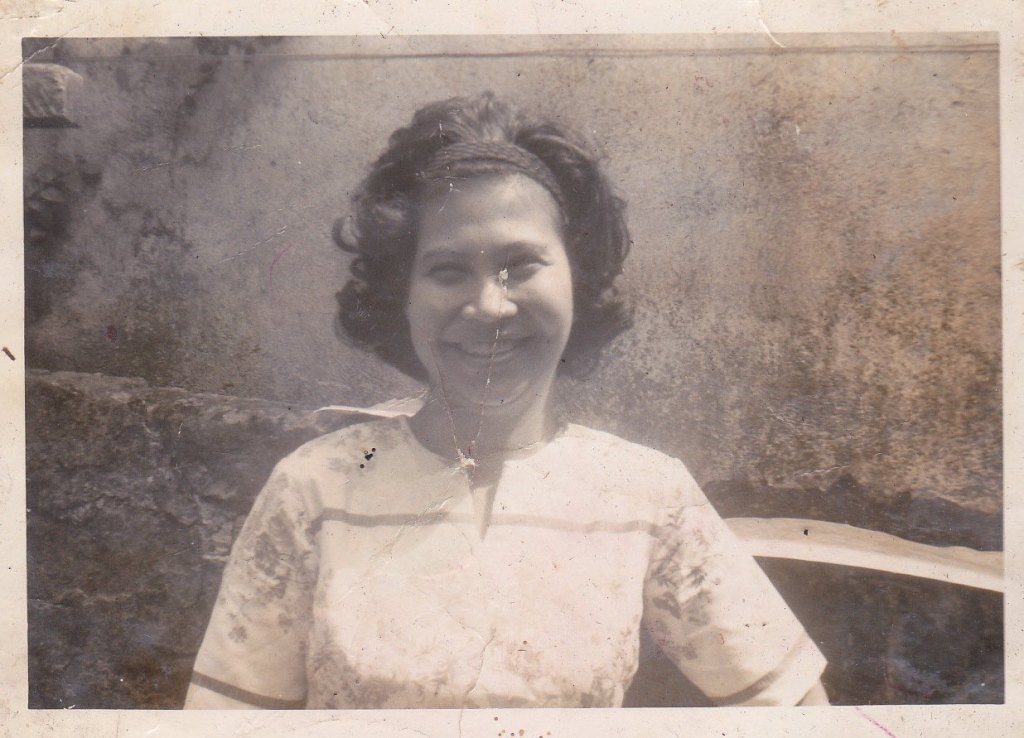
My mom as a teenager.

She’s from the “old school” who had taught me a lot about sacrifices, of keeping things in order like telling me after lunch that while resting, I should mop the floor and dust off the jalousies of our windows downstairs. Resting meant doing something worthwhile like removing cobwebs at ceilings; so, you can just imagine what is housecleaning for her!

Another thing I have learned from her is harimunan wherein you try to save little amounts of money with things you may forego like instead of taking tricycle, I walked for three kilometers or instead of buying soda, drink from the water fountain at school.

The only lesson that I have refused to learn from her which I now admit I should have taken into heart is the art of bargaining or asking “tawad” in the “palengke” (market). It is a gift from God I think reserved for mothers.

One important lesson I have learned from Mamu came via a picture I have found in a copy of a Reader’s Digest. I was five years old then while scanning the new copy of my dad’s magazine, I saw the picture of a baby crying so hard after being delivered.

I asked her why the baby was crying and her explanation had stuck into my mind since then that later as a priest I realized it so existentially true! According to her, when a baby is born crying, that means she/he is alive; if the baby does not cry, that means she/he is dead.

So simple yet so deep.

When we cry, we are alive.

And sometimes, to be alive, we have to cry. A lot.

And I believe that is why mothers continue to give life to us despite the passing away of their husband because they are the ones who cry a lot.

Mothers cry in silence, alone because they are the ones who can truly feel the flowing of life, the slipping away of life.

In a few hours I will be coming home and I could already visualize and feel my mother’s crying on her birthday.

As much as possible I hold my tears, praying that in God’s time, we would just be the ones crying so that finally, Mamu would no longer be crying.

But, that’s another thing I dread so very much…I hope not yet that soon because I really do not know how life will be for me and my siblings.

Thank God for all the Mothers who have given and nurtured our lives even in old age.

Thank God for their tears of love and joy for us.
When our weeping leads to Easter

The Lord Is My Chef Breakfast Recipe, Tuesday of Easter Octave, 14 April 2020

Acts 2:36-41 ><)))*> +++ <*(((>< John 20:11-18

Detail of Italian painter Giotto’s “Noli Me Tangere (Touch Me Not)” of the Risen Lord appearing to Mary Magdalene.

Lord Jesus Christ, you know very well how on this blessed season of Easter, so many of us are crying, weeping due to the threats and deaths brought about by corona virus worldwide.

Yes, it is the saddest Holy Week and Easter for many people in recent history.

But behind all these sadness, deep inside us, many have experienced your more meaningful presence and coming this Easter amid our tears of sadness, of weeping because this is also the time we have missed you so much, we have sought you so much.

How lovely, O dear Jesus, to contemplate the two occasions in the gospel today when Mary was asked why she was weeping.

Mary Magdalene stayed outside the tomb weeping. And as she wept, she bent over into the tomb and saw two angels in white sitting there… And they said to her, “Woman, why are you weeping?” She said, “They have taken my Lord, and I don’t know where they laid him.” When she had said this, she turned around and saw Jesus there, but did not know it was Jesus. Jesus said to her, “Woman, why are you weeping? Whom are you looking for?” She thought it was the gardener and said to him, “Sir, if you carried him away, tell me where you laid him, and I will take him.”

John 20:11-15

We cry, we weep whenever we lost someone or something so precious and valuable like the people we love – or even hardly knew – due to COVID-19.

Give us the grace of tears and realization that in this life, the most beautiful reason we can have in weeping, in crying is that of losing you, dearest Jesus. It is the most beautiful reason for us to cry and weep at this time of the corona virus as it leads us back to you like Mary Magdalene!

Like the listeners of Peter on that Pentecost day, “cut us in our hearts” and may we be like Mary Magdalene desiring only you, searching for you, longing for you alone for in you is our fulfillment in life.

Let us not waste our tears on trivial things and most specially “toxic persons” to help us move forward in your new directions in life amid this pandemic of COVID-19.

At the same time, we pray today for those crying and weeping for varied reasons, too, that they may see you soon to experience comfort and assurance in you. Amen.

Lent is a call to life

40 Shades of Lent, Thursday after Ash Wednesday, 27 February 2020

Deuteronomy 30:15-20 +++ 0 +++ Luke 9:22-25

As we step forward into the second day of Lent, O Lord, you remind us today of your call to conversion which is actually a call to love and a call to life.

Forgive us, O Lord, for those times we have turned away from you in sins, thinking that is the path to life, the path to freedom, the path to fulfillment – only to find out later it is the path to destruction and death.

Moses said to the people: “Today I have set before you life and prosperity, death and doom. If you obey the commandments of the Lord, your God, which I enjoin on you today, loving him, and walking in his ways, and keeping his commandments, statutes and decrees, you will live and grow numerous, and the Lord, your God, will bless you in the land you are entering to occupy. I have set before you life and death, the blessing and the curse. Choose life, then, that you and your descendants may live, by loving the Lord, your God, heeding his voice, and holding fast to him.”

Deuteronomy 30:15-16, 19-20
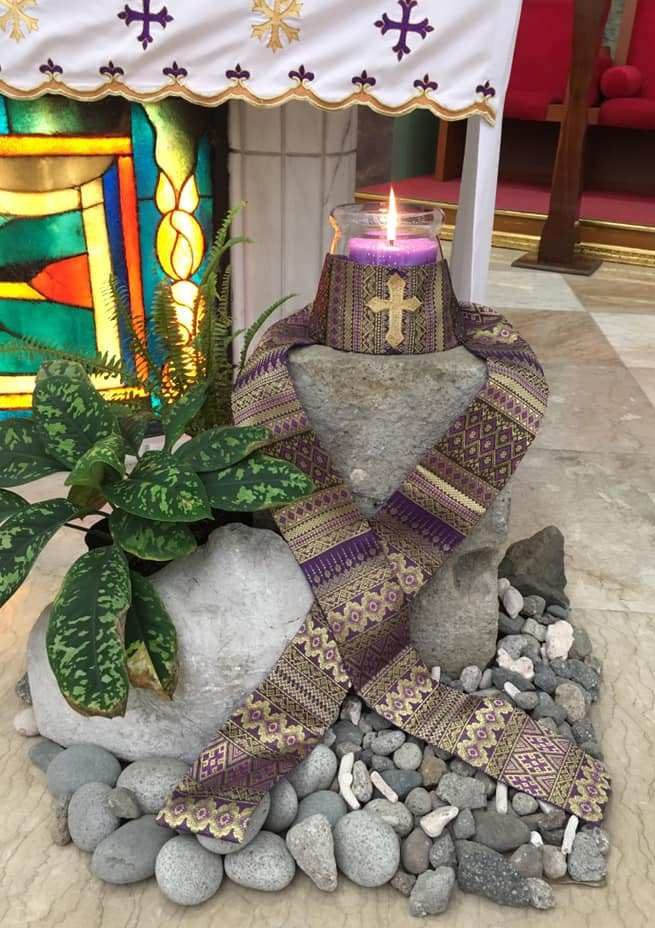
Photo by author, our Parish altar candle, Lent 2019.

Help us, Jesus, “to deny ourselves, take up our crosses daily, and follow you” (Lk.9:23) in the path of conversion and fidelity to your everlasting covenant.

Make us realize that Lent is more than a season we yearly celebrate but a reality of life itself, a life so blessed in your coming to be one with us in our sufferings and struggles.

Give us the strength, dear Jesus, to renew your covenant with us, to always choose God, choose life.

May we also share your love and mercy, understanding and patience, kindness and compassion to our fellow pilgrims in this journey of life so that together in the end, we may all enter into the house of the Father in heaven. Amen.

That “Eureka!” moment of life – and death

The Lord Is My Chef Recipe for the Soul

Homily at the Funeral of Archimedes Lazaro (ICS ’97), 18 February 2020

Wisdom of Solomon 3:1-9 ><)))*> 0 <*(((>< Luke 7:11-17

Photo by Pixabay on Pexels.com

Soon afterward Jesus journeyed to a city called Nain, and his disciples and a large crowd accompanied him. As he drew near to the gate of the city, a man who had died was being carried out, the only son of his mother, and she was a widow. A large crowd from the city was with her. When the Lord saw her, he was moved with pity for her and said to her, “Do not weep.” He stepped forward and touched the coffin; at this the bearers halted, and he said, “Young man, I tell you, arise!” The dead man sat up and began to speak, and Jesus gave him to his mother. Fear seized them all, and they glorified God, exclaiming, “A great prophet has arisen in our midst,” and “God has visited his people.”

Luke 7:11-16

Today, we are like at the city of Nain. Traffic is so heavy outside as many of us – family and friends, former classmates, colleagues at work from all over and neighbors – gather to pray and pay our last respects for Archie.

Celebrating a funeral Mass for a young person is always difficult for me. Like Jesus, I feel so sad for their parents. Normally, it is the children who bury their parents. It must be so painful for parents burying a son or a daughter. That is why in our gospel, Jesus was “moved with pity” with the widow of Nain.

But today, amid the pains and sorrows with the sudden death of Archie last week at a very young age, we actually celebrate life in Jesus Christ.

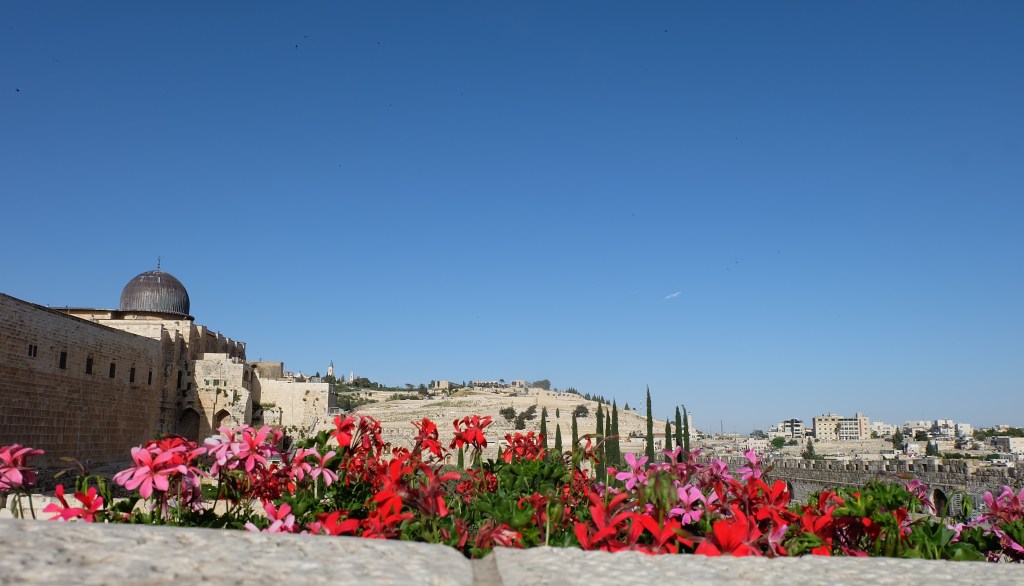
Photo by author of the hills of Galilee from the Walls of Jerusalem, May 2017.

Jesus comes to visit us always

Like in that scene at Nain, we remember and celebrate the life of Archie who had come to visit us even for a short time.

I love that part of the gospel where the people at Nain exclaimed at how “God has visited his people” when Jesus raised the dead young man.

Jesus continues to visit us everyday through one another like Archie.

Despite his many sins and imperfections, Archie made us experience Jesus Christ’s love and friendship, warmth and kindness, especially to his two sons, family, and friends.

Surely, Jesus must have visited Archie, too, during those dark moments of his life.

And the good news is, Archie visited Jesus so often especially these last two years when he started to pick up the pieces of his life.

Last time I saw Archie was last November when he came to celebrate Mass in our Parish. And I have heard how he had sought spiritual guidance from Fr. Carl, driving that far to Paco every month as he renewed his relationship with Christ, trying to follow anew the Lord he had served since elementary as a sacristan and later as a seminarian in our high school seminary.

It is Jesus who first finds us always

Photo by author at Mt. St. Paul Spirituality Center, Baguio, 04 February 2020.

We all know Archie’s tocayo is one of ancient Greece’s great scientist and inventor, Archimedes.

It is said that he discovered the principle of buoyancy – the “Archimedes’ principle” – while taking a bath.

When Archimedes sat onto his bathtub, he observed that “when a body is submerged in a fluid, it experiences an apparent loss in weight that is equal to the weight of fluid displaced by the immersed body.”

Archimedes was so ecstatic with his accidental discovery that he jumped naked from his bathtub out to the streets, shouting “eureka!” or “I have found” the solution to a problem he was trying to solve at that time.

Archimedes had not only enriched the field of mathematics and sciences with his discoveries but also the English language with the word “eureka” or “eureka moment”: when somebody discovers something very significant in business and economics, the sciences especially medicine, and practically in every field and subject.

Most especially in life.

Photo by author, Mt. St. Paul Spirituality Center, Baguio, 04 February 2020.

Archie had the same eureka moment in life: he had found Jesus Christ again that he went back to Mass and Confessions.

He had found meaning in life again after losing hope and directions.

Most of all, Archie had found love again.

Like his namesake of ancient Greece, Archie is now exclaiming “eureka” ecstatically into heaven – naked – with nothing but the love and mercy of Jesus Christ who first found him and brought him back to life a few years ago.

Today as we bring the remains of Archie into his final resting place, we thank God who never stops looking for us, finding us so that we can find him again and finally rest in him.

Today it is Jesus who is most ecstatic of all because he is the first to have found Archie and that is why, he had called him back to him, never to get lost again.

But the souls of the just are in the hand of God, and no torment shall touch them. They seemed, in the view of the foolish, to be dead; and their passing away was thought an affliction and their going forth from us, utter destruction. But they are in peace. In the time of their visitation they shall shine.

Wisdom of Solomon 3:1-3, 7

Amen.

Coming to terms with death is coming to terms with life

Quiet Storm by Fr. Nick F. Lalog II, 13 February 2020

Photo by author, Mt. St. Paul, Trinidad, Benguet, 04 February 2020.

At the Ascension of the Lord, St. Luke tells us something very unique and unusual: the disciples returned to Jerusalem filled with joy.

Unusual and unique because when someone leaves us, either permanently like death or temporarily due to change of residence or jobs, we always feel sad.

But not the Apostles of Jesus along with the other disciples including Mary who were filled joy!

And so are we today because when someone dies, the person or our beloved does not leave us entirely. Though we do not see and feel them physically anymore, we continue to experience them personally.

Sometimes, we even grow more personal that there are people we feel getting closer with them after they have died.

Photo by author, Mt. St. Paul, Trinidad, Benguet, 05 February 2020

As I have been telling you, 2020 for me is tough with so many deaths in our Parish, in my family, and among my friends. Since last week of Christmas until the other week, I have been praying and celebrating funeral Masses almost everywhere.

This week, funeral Masses continue while at the same time, I have started celebrating the 40th days of those relatives and friends who have died last month.

In 1995, my father’s younger sister was stricken with pancreatic cancer. Being the eldest at that time among his nine surviving siblings, another aunt called me to ask my dad’s decision regarding their sick sister, if she would still go through surgery and just go home to Los Banos and wait for the inevitable.

He simply told me, “tell your Tita to just bring home Tita Rose; she had suffered enough and had lived a full life.”

Photo by author, Los Banos, Laguna, 13 February 2020.

That is when I realized that coming to terms with death iscoming toterms with life, and vice versa.

I know it is easier to say but that is how life is: we are often afraid to die because we know we have not fulfilled something yet, a mission or a promise made.

People who enjoy life, people with a sense of contentment are always the ones without regrets, always fulfilled, and ready to go.

And always, they are the ones who truly love that is why they live fullest, Valentine’s day or not.

God bless you and keep loving!

Photo by author, Collegeville Subd., Los Banos, Laguna, 13 February 2020.

In life and in death, one commission

The Lord Is My Chef Breakfast Recipe for the Soul

Thursday, Memorial of St. Pedro Bautista and companion priest-martyrs, Week 4, Year 2, 06 February 2020

1 Kings 2:1-4, 10-12 ><)))*> 0 <*(((>< Mark 6:7-13

Our merciful God and Father, on this memorial of your great priest-missionaries and martyrs – St. Pedro Bautista, St. Paul Miki and companions who have also worked in the Philippines – we pray today in a very special way for our dearly beloved mentor and brother priest, the Rev. Fr. Danny Bermudo.

We are not complaining, Lord, but year 2020 is a very tough year for many of us, right into January that continues to this month of February with many deaths and sickness, problems and trials not only in our own circles of family and friends but also in our country and the whole world in general.

We trust in you, O God, and can clearly see now in your readings especially that essentially, in life and in death, we are commissioned only to one thing — be faithful to you and your instructions, Lord.

While nearing his death, King David perfectly said it to his son and heir to the throne, Solomon:

“I am going the way of all flesh. Take courage and be a man. Keep the mandate of the Lord, your God, following his ways and observing his statutes, commands, ordinances, and decrees as they are written in the law of Moses, that you may succeed in whatever you do, wherever you turn…”

1 Kings 2:2-3

In a similar manner, at the start of his ministry, Jesus said the same thing while sending the Twelve two by two with authority over unclean spirits: leave everything behind in life and solely be focused on you, Lord, so we may fulfill your work and mission.

Photo by author, 2019.

Thank you, O God, for the gift of Fr. Danny who taught us in his classes and most especially in his personal way of being our seminary formator to always be faithful to you and your laws; to always be good and holy like you, our Heavenly Father.

In words and in deeds, in life and in death, Fr. Danny lived out his life totally for you, Lord, dying after fulfilling his mission and ministry of celebrating the Eucharist.

Bless Fr. Danny, O Lord, and may we carry on his lessons until our death like him. Amen.

A poem after reviewing my life

Quiet Storm by Fr. Nick F. Lalog II, 04 February 2020

Photo by author, St. Paul Spirituality Center, Mt. Pico, La Trinidad, Benguet, 04 February 2020
My life may be rife
with so many strifes
causing me to struggle, 
be pained leading into fruition
making life golden.
When I reviewed my life and see 
the past so vast and also fast,
then I realize my life 
is not all mine but His, Divine.
Here in my life
I can see within
where it is going; 
calming, assuring and so promising
the Divine leading me to final joining 
for my life is really in HIM.
Amen.
Photo by author, St. Paul Spirituality Center, Mt. Pico, La Trinidad, Benguet, 04 February 2020

Valuing the human person always: A review of the series “Giri/Haji”

Quiet Storm by Fr. Nick F. Lalog II, 15 January 2020

From The Times.

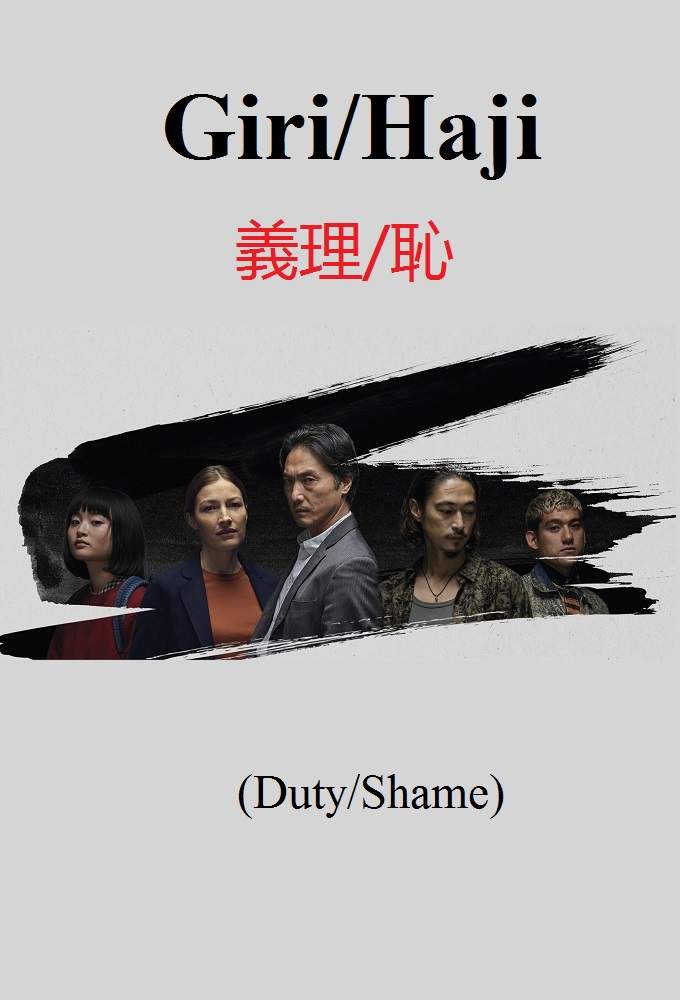
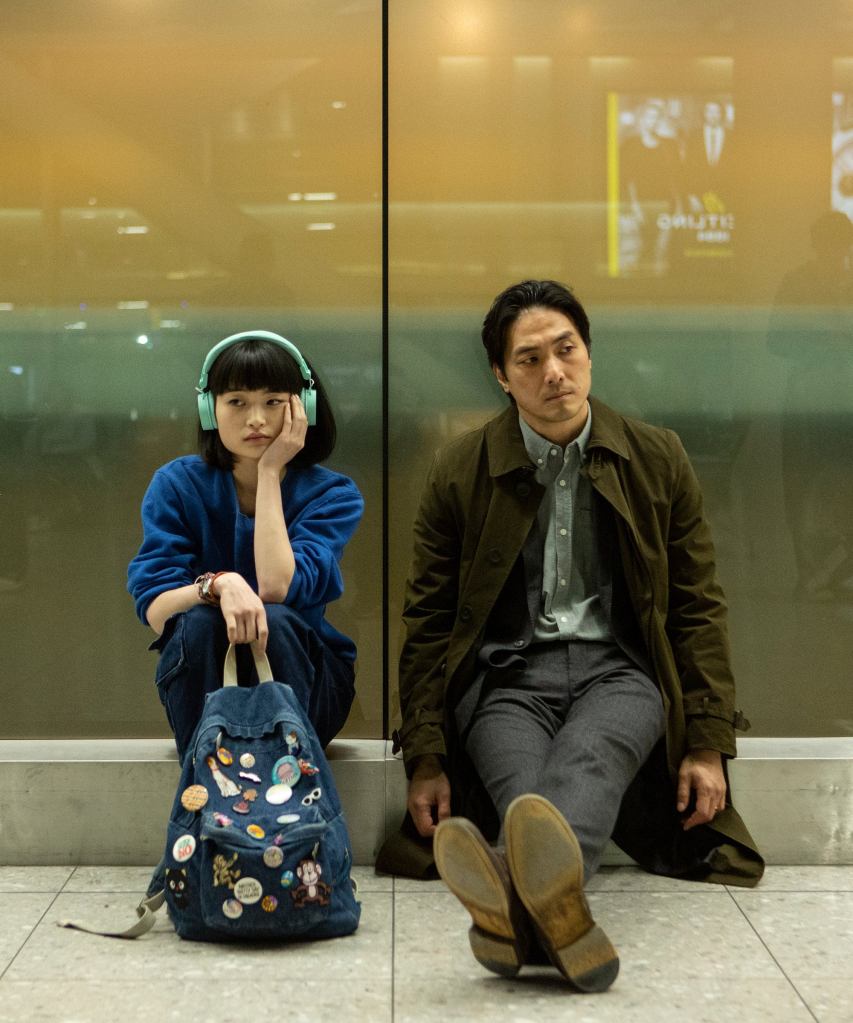
Now streaming at Netflix is this excellent original 2019 BBC production, Giri/Haji (Duty/Shame), a Japanese story of two brothers set almost entirely in London seemingly inspired by French existentialist writer Albert Camus with closing scenes set in Paris.

Midway through the series, one notices right away the complexities or, absurdities of life that one cannot simply categorize it between “duty and shame”, or good and evil, right and wrong, black and white.

It is a series that hits our innermost core when we find ourselves in those gray areas of confronting what we believe as right and just versus the value of every human person that Camus beautifully expressed in his 1947 novel “The Plague”:

“A loveless world is a dead world, and always there comes an hour when one is weary of prisons, of one’s work, and of devotion to duty; and all one craves for is a loved face, the warmth and wonder of a loving heart.”

Albert Camus, The Plague

Like most Netflix series, Giri/Haji is rated 18+ for its violence, language, substance, and nudity but everything is done beautifully and artistically.

It is a masterpiece that shows some common threads among us humans regardless of our color and culture, gender and age, belief and language. How the creators were able to perfectly blend these all with the excellent cinematography, music, and fine prints into uncluttered and pure simplicity of Japanese Zen principles are a work of art and film genius.

Simple plot but very personal and universal

The plot is simple: an elder, straight brother is a cop with a younger brother who is a Yakuza member hiding in London after being presumed dead when he got the daughter of his boss pregnant. He staged his revenge in London where he killed a Japanese executive with the knife of his former boss that had sparked a war among Yakuza families in Tokyo that was going out of control. Cop-brother comes to London to bring his gangster brother back to Japan to atone for his sins so that peace is restored among the Yakuzas.

Along the way, the two brothers’ stories converged with the stories of three other main characters that provided the many uneventful twists to be united by the element of deaths in various forms and circumstances.

From Google.

Giri/Haji honestly confronts our basic issues of love and acceptance so lacking or taken for granted in our own families that lead to a host of so many other problems and situations like drugs and other crimes, infidelity and promiscuity, as well as homosexuality and sexual orientations.

What is so unique with the series is how it was able to take these sensitive issues as subjects to be seen in relation with persons, not as objects to be studied or examined apart from anyone that it becomes more of an experience, not just an entertainment.

Giri/Haji is so personal, you can feel yourself “slashed” so you experience the subjects’ pains and hurts, longings and desires, dreams and aspirations.

Like the samurai blade that can cut through almost anything, the series hits you at almost every turn that you find yourself laughing and weeping without realizing that along with the characters, you have also laid your soul bare for serious self-confrontation and examination about your very self and the people around you in the relationships you keep as well as skipped or taken for granted.

Death and new life

There is no glorification of evil and immoralities but Giri/Haji invites us to see these as realities in our imperfect world that must be seen more with our hearts than with our minds and convictions. The series contrasts the Western frame of mind of morals as codes to be followed to the minutest details that slashes even persons into categories with the Oriental point of view of seeing morality in the totality of the person.

How it is resolved in the end is amazing!

And despite its genre being crime and violence, I would still say Giri/Haji is so lovely, even quaint and as Japanese as it can be especially with the depiction of changing of seasons that peaked at autumn.

Despite the dark and gloomy nature of the topics of death in all of its forms, there is the radiance of hope always that will lead to new life. The series teems with other symbolisms and signs including great music selections that add intensity to its drama and tragedy that make us hope the new season comes soonest.

For the meantime, listen to the beautiful music theme of the Giri/Haji by British singer Tom Odell.

Take my mind
And take my pain
Like an empty bottle takes the rain
And heal, heal, heal, heal
And take my past
And take my sense
Like an empty sail takes the wind
And heal, heal, heal, heal

Of funerals and weddings and Alzheimer’s in between

Quiet Storm by Fr. Nick F. Lalog II, 13 January 2020

Photo by my high school seminary friend, Mr. Chester Ocampo, taken at the UST Senior High where he teaches art (2019).

Life goes on, long after the thrill of living is gone..

John Mellencamp, “Jack & Diane” (1982)

Maybe this is part of getting old, of maturing. Of learning to grapple with life’s mortal realities and still be excited with living. It is a grace that is both fulfilling but also deeply moving and often, chilling.

An uncle and a friend have commented to me in our recent chats how 2020 had come in hard and difficult with so many sickness and deaths in the family.

Some relatives have to fly to Singapore on New Year’s Day to support a cousin whose husband had an office accident that left him in comatose for five days following a brain surgery. He eventually died and had to be cremated a few days later.

December 11 I had to drive to Manila to visit and anoint the father of my best friend from high school seminary who arrived December 2 from the States, fell ill December 4, and had to spen Christmas and New year in the hospital.

Less than 24 hours after being discharged January 3, he died the following morning after talking with my friend based in Chicago, three days short before eldest daughter arrived to accompany him and wife back to New Jersey this week.

Meanwhile last January 2, I had to rush again this time to Quezon City for the wake of our high school seminary classmate Rommel who had died of multiple complications morning of December 31.

He is the third to “rest in peace” in our batch of 18 men who graduated the minor seminary in 1982. We last saw him in our reunion, September 9, 1990 (9-9-90).

Suddenly, I felt myself in some kind of a time warp when everything seemed to be not too long ago, as if we have just graduated recently, or that my dad and their dads have just passed away one after the other these past months.

Death can sometimes be magical when life is lived in love

I realized that when we have so much love for everyone like relatives and friends, including parishioners in the last eight years, time stands still after their deaths. You do not count the days and weeks and months and years you were together and when they have all gone.

They all seem to be still present because you are focused on how those departed have enriched your very life, your very person no matter how fleeting or long ago you were together.

Death can sometimes be magical, most of all grace-filled, when our lives are lived in love.

Life goes on, long after the thrill of living is gone…

John Mellencamp, “Jack & Diane” (1982)
Photo by author, our sacristy 2019.

Memories and knowledge fade, but love remains

Finally I had the chance to visit my mom – for Christmas! – evening of January 6. It was so good that just before leaving, a cousin arrived with his family to visit also my mother who is the younger sister of his mother, my Tita Celia.

It was only at that evening we have finally confirmed that Tita Celia has Alzheimer’s, the reason why her ways and attitudes have been noticeably erratic in 2019 as she was slowly losing grip of her senses.

And now, it is almost all gone according to my cousin whose sadness I strongly felt as he narrated to me the deterioration of his mother, of forgetting and losing so many things, of not recognizing familiar people like relatives and friends.

That same night, we also learned from him how our moms’ younger brother seem to be having signs of the onset of Alzheimer’s disease that are very similar with Tita Celia.

Again, I found myself in a “time warp” while they were happily conversing I was silently trying to recall the last time I have seen my mother’s siblings now afflicted with Alzheimer’s disease, wondering if they will still recognize me if I visit them later.

Moreover, I also realized how afraid I am with the prospects of getting sick in old age than of dying, sooner or later!

In fact, I was so scared that I had a nightmare that same night: in my dream I found myself lost, apparently with Alzheimer’s as I was searching for my parish rectory, looking for my bedroom, asking people about my parish staff, crying like a child.

What a relief when I woke up Tuesday morning that it was just a dream, that I was in fact in my bed, inside my room, in my parish rectory, so alive and still whole!

It seems it is easier to think and accept of one’s death than of getting sick and incapacitated later in old age. It is something we have to slowly come to terms with while still younger and stronger, and perhaps wiser.

How?

As I recalled our conversations with my cousin Louie that Monday night at home, I was amazed at his great love for his mother, Tita Celia. I remembered how he would always have pasalubong for his mother even upon coming home from school!

Maybe that is why even she had forgotten most of us her relatives, she always remembers Louie her son because he is the one who has truly loved her next to the late Tito Memo, her husband. The same is true with others taking care of their old parents afflicted with Alzheimer’s: they are recognized and remembered because they love.

Our memories and knowledge may be erased but the love we have in our hearts, the love we have experienced always remain even if everything has failed in life. That is why St. Paul declared that “love is the greatest of all gifts of God”.

Life goes on, long after the thrill of living is gone…

John Mellencamp, “Jack & Diane” (1982)
With my former students at the Cubao Cathedral after the wedding of their classmate. I felt so proud, and old, that afternoon seeing them all with their career and family, of how they have maintained their friendships all these years like brothers, of they love one another. Photo by Peter dela Cruz, one in blue.

To live is to love

December 2019 and January 2020 are perhaps my most “marrying months” in my 21 years of priesthood.

Aside from the weddings of friends and students I have officiated these past two months, three more are coming next month of February.

Again, as I saw friends and especially former students getting married, I could not believe at how fast time had passed.

Should I really be surprised when I find out my former students already in their early 30’s, some with families of their own and children whom they instruct to kiss my hand, calling me Lolo Fr. Nick?

It was a very “existential” experience that they are already old, and most of all, I am really that old after all!

Maybe that is what my married friends are telling me of the joy of fatherhood, of having your kids getting married, of having grandchildren, of the inner satisfaction that you have brought life to fruition.

That you have truly loved and now being loved.

It is perhaps the joy of getting old, of maturing, of dying or even forgetting everything when afflicted later with Alzheimer’s that you start to fade from the scene and hand over the stage to the next generation, thinking that life will still go on after us because you have loved much.

What really matters in the end is how we have lived and loved the people around us, of how we have enriched each other’s lives so that as the young ones discover life’s meaning in love, we who are older find life’s fulfillment still in the love from the relationships we keep.

Here’s a hill-billy rock music about love to drive your Monday’s blues away.

“I Still Haven’t Found What I’m Looking For” by U2 (1987)

The Lord Is My Chef Sunday Music, 05 January 2020

Merry Christmas!

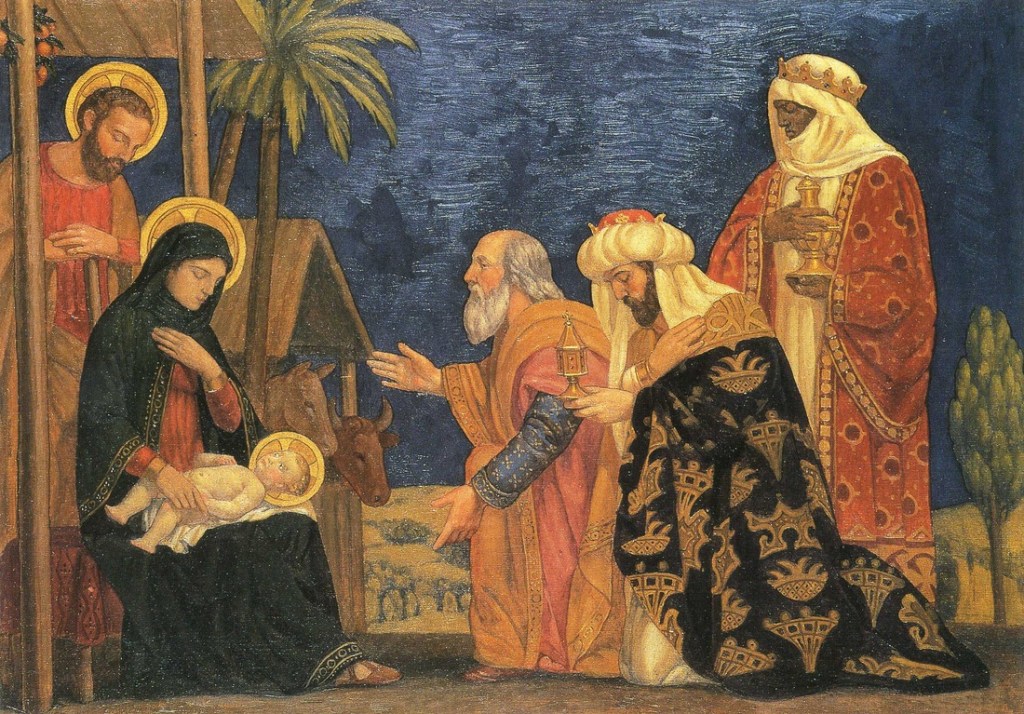
And welcome to our first Sunday Music this 2020 as we celebrate the Epiphany of the Lord Jesus Christ, the third major celebration of Christmastime after the Nativity of the Lord (December 25) and Mary Mother of God (January 01).

From the Greek word epiphanes meaning manifestation, today’s celebration reminds us of God’s great love for everyone. Jesus came for us all, to give us life and fulfillment.

Jesus is the true and only star “wise men” always seek.

Our Sunday Music featured today is from U2’s “Joshua Tree” album released in 1987 and inspired by gospel music.

However, lead singer Bono admits it is not about faith but rather more about doubts.

I have climbed the highest mountains
I have run through the fields
Only to be with you
Only to be with you
I have run I have crawled
I have scaled these city walls
These city walls
Only to be with you
But I still haven’t found
What I’m looking for
But I still haven’t found
What I’m looking for

We are all looking or searching for something deeper, more profound, larger and bigger than ourselves and whatever we have. It is a given, a grace in everyone.

When we were younger, we search for more ordinary and mundane things like fame and wealth. But as we mature in life, we start looking for deeper and bigger realities of life like meaning, peace and serenity, joy and fulfillment.

Whatever it may be, it is always God, our semper major (always greater), the ultimate in everything.

St. Augustine perfectly expressed it in his Confessiones, “You have made us for yourself, O Lord, and our heart is restless until it rests in you.”

U2’s hit “I Still Haven’t Found What I’m Looking For” was like an anthem for us young college graduates of the mid-80’s, searching for meaning in life. The music video is very interesting as it was set in Las Vegas to remind us that whatever we are truly searching in life can never be found in money and material things.

Though the song speaks of God in the line “kingdom come”, in the end, it is not really us who find God – it is the other way around: it is always God who finds us! After all, this life we live here on earth is planned and designed in heaven.

God always tries to invite us to follow his ways, to find him so he can direct us to our fulfillment, for us to find whatever we are looking for.

Here are three lessons we can learn from the magi who eventually found what they were looking for, “the newborn king of the Jews”, Jesus Christ:

First is to welcome darkness and troubles in life. Discontentment and problems are always a prelude to spiritual growth. When the magi arrived in Jerusalem searching for the child Jesus, King Herod and the whole city were deeply troubled; but, it led to their knowing where Jesus was born! Like in the story of creation found in Genesis, out of chaos comes order. We learn and find more lessons in life in adversarial situations than in our comfort zones.

Second is to always pray the Sacred Scriptures. Herod consulted the chief priests and scribes of Jerusalem to ask them what the prophets have told about where the Messiah would be born. Ironically, they found the answer in Prophet Malachi’s book which is Bethlehem yet, they never followed it! Prayer opens us to be humble to learn the lessons of the darkness and troubles happening in us.

Third lesson from the magi is: what are you willing to give up and offer to find whatever you are looking for? There are no shortcuts in life and definitely, no one is born entitled in this world. We have to earn and work for everything because essentially, that is the path that Jesus is telling us in life: whoever loses his life shall gain it and whoever keeps his life will lose it.

Hope you find what you are looking for this 2020.