Advent as a dialogue leading to Christmas, the presence of God

The Lord Is My Chef Daily Recipe for the Soul by Fr. Nicanor F. Lalog II
Simbang Gabi-5 Homily, 20 December 2024
Isaiah 7:10-14 <*((((>< + ><))))*> Luke 1:26-38
Photo by Mr. Boy Cabrido, National Shrine of Our Lady of Mt. Carmel, QC, 16 December 2024.

Last Monday at the start of Simbang Gabi, one of our priests became viral when at the recessional of their Mass while the choir was joyfully singing “Pasko na! Pasko na!”, he sarcastically sang “Hindi pa! Hindi pa!”

Many people laughed at the viral video with some commenting that Father was right because it wasn’t Christmas yet while a liturgist advised choirs to check the many choices of Advent songs now available online. But, sad to say, the people missed the whole point of the incident.

What our brother-priest did was not funny at all in putting to shame his own choir members and most of all, in destroying the solemnity of the Mass.

And the problem was not really the choir at all but the priest himself. What the priest did at the end of the Mass was a self-indictment of his lack of formation for his choir members and of any dialogue at all.

Photo by author, Advent in previous parish, 2018.

Advent is a dialogue between God and humans that led to the presence of God among us in Jesus Christ on Christmas. It is a process that continues in our own time as we are all called to be open to God and with others for dialogue like Mary in the annunciation of Christ’s birth by Archangel Gabriel.

Dialogue is more than conversing to improve relationships among people in a community or organization but a way of being with others as opposed to a way of thinking through issues and problems only. Dialogue is being present with others, of giving one’s self to feel and listen and experience the other person.

Luke shows us in his second Christmas story today how this true meaning of dialogue between God and Mary happened.

In the sixth month, the angel Gabriel was sent from God to a town of Galilee called Nazareth, to a virgin betrothed to a man named Joseph, of the house of David, and the virgin’s name was Mary. And coming of her, he said, “Hail, full of grace! Then Lord is with you.” But she was greatloy troubled at what was said and pondered what sort of greeting this might be. Then the angel said to her, “Do not be afraid, Mary, for you have found favor with God… But Mary said to the angel, “How can this be, since I have no relations with a man?” And the angel said to her in reply, “The Holy spirit will come upon you, and the power of the Most High will overshadow you. Therefore the child to be born will be called holy, the Son of God. And behold, Elizabeth, your relative, has also conceived a son in her old age, and this is the sixth month for her who was called barren; for nothing will be impossible for God” (Luke 1:26-30, 34-37).

“Cestello Annunciation” by Botticelli painted in 1490; from en.wikipedia.org.

See the artistry and genius of Luke as a storyteller. Yesterday he presented to us the annunciation of the birth of John the Baptist to his father Zechariah while incensing the Holy of Holies in the temple of Jerusalem.

Notice the great differences in the flow of conversations and dialogue in the two annunciations narrated by Luke. Both Zechariah and Mary were troubled at the coming of the angel. And who would not be in a such unprecedented event? However, there is one minute detail we find in Luke’s narration of the two annunciations that reveal something so big and deep in meaning.

According to Luke, “Zechariah was troubled by what he saw, and fear came upon him” (Lk. 1:12) while Mary “was greatly troubled at what was said and pondered what sort of greeting this might be” (Lk. 1:29). Both were troubled which is normal but their reactions differed so great with Zechariah becoming proud while Mary was humbled.

I believe that it was more than their age and differences in social status that Zechariah was simply “troubled” while Mary was “greatly troubled” but it was largely due to their dispositions and openness to God.

Zechariah was proud of his stature and of his intelligence, trying to take hold and control of everything that is why he was seized with fear. When he told the angel, “How shall I know this? For I am an old man, and my wife is advanced in years” (Lk.1:18), Zechariah was troubled and fearful because he felt challenged as a priest much respected in the community, choosing to stand proud of his position and intelligence as if having a child is all an effort of man and woman alone! There was no dialogue as Zechariah was proud that is why he was made mute by the angel. He had forgotten all about God!

Photo by author, Basilica of the Annunciation, Nazareth, Israel, May 2019.

Compare Mary’s reaction to the annunciation, “But she was greatly troubled at what was said and pondered what sort of greeting this might be.”

Luke always portrayed Mary as the listener and doer of the word, the one who ponders at the words spoken to her not only by the angel here but later at the birth of Jesus those spoken by the shepherds, then by Simeon at the Presentation and by Jesus Himself at the wedding in Cana. Mary has always been open to dialogue, to feeling the other person conversing with her. She was not concerned only with the news and information but with the persons involved.

In that sense, there is her remarkable humility and great courage at the same time. True humility is not really about being submissive but most of all being filled with courage, not with fear. Mary as the very young virgin from a poor family in a town nobody gave importance stood fearless before the angel as she took hold of herself to ponder on the words spoken to her. Despite the very unprecedented moment with an angel, Mary had that inner engagement with the words she had just heard without any violent reactions.

Photo by author, December 2018.

Unlike Zechariah, Mary was the one actually in control of herself and of her emotions. The Jedi Master Yoda of Star Wars said it so well, “fear leads to anger, anger leads to destruction”. Zechariah was afraid of losing power and control but Mary was not bothered at all. In fact, she faced the challenge head on, reflecting deep in her what is this going on? Am I awake, is this a dream would most likely be the words playing in her mind and heart. Mary had presence as she tried to feel the angel and later God that no wonder, Jesus came to her womb and we have Christmas!

The humility and courage of Mary became more evident when she said to the angel, “How can this be, since I have no relations with a man?”

She was not afraid at all to be become the Mother of God! There was already her willingness to submit, as if telling the angel, “OK let’s do it but tell me how?” whereas Zechariah was argumentative, trying to escape responsibilities? Such was the attitude too of Ahaz in the first reading, denying he won’t test God when in fact he had already aligned with other kings in the region as he feared the invading enemies near his borders.

It was at this moment when the good news became most closest to us through Mary when the angel explained of the coming of the Holy Spirit, of how the power of God would overshadow her, assuring her that nothing is impossible with God.

How wonderful is this scene for us to emulate Mary so that we experience Christmas daily in our lives, not only of God coming but being present in us and among us. Can we dare to be open before God like Mary? Have a blessed Friday!

Photo by author, Fatima Avenue, Valenzuela City, December 2024.

Advent & Christmas begin in the church

The Lord Is My Chef Daily Recipe for the Soul by Fr. Nicanor F. Lalog II
Simbang Gabi-4 Homily, 19 December 2024
Judges 13:2-7, 24-25 <*((((>< + ><))))*> Luke 1:5-25
Photo by author, wailing wall of Jerusalem where Jews pray until now being the section closest to the Holy Holies destroyed in year 70AD.

From Matthew, we now shift to Luke to listen to his account of Christmas which is the most complete and detailed. In fact, most artistic renditions of Christmas were inspired by Luke’s gospel.

Very surprising in his Christmas story, Luke started it with the annunciation of the birth of John the Baptist to his father Zechariah who was then serving at the temple of the Lord in Jerusalem. It is a reminder to us all these days that Advent and Christmas begin in the church, in our holy celebrations.

In the days of Herod, King of Judea, there was a priest named Zechariah of the priestly division of Abijah; his wife was from the daughters of Aaron, and her name was Elizabeth. Once when he was serving as priest in his division’s turn before God, according to the practice of the priestly service, he was chosen by lot to enter the sanctuary of the Lord to burn incense. Then, when the whole assembly of the people was praying outside at the hour of the incense offering, the angel of the Lord appeared to him, standing at the right of the altar of incense (Luke 1:5, 8-11).

Luke’s detailed account of the event is the Jewish Day of Atonement (Yom Kippur) when their priests incense yearly between September 18-24 the Holy of Holies where they used to keep the Ark of the Covenant. From this detail by Luke we got the reliable timetable in the celebration of Christmas on December 25 by considering this event as the time of Elizabeth’s conception of John who was born June 24 or nine months after. Tomorrow we shall hear in the gospel how “on the sixth month” of Elizabeth’s pregnancy which fell on March 25, the angel Gabriel announced to Mary the birth of Jesus, the Solemnity of the Annunciation we celebrate on that date. Nine months from March 25, we have December 25! Who said our Christmas date is not in the Bible? We got it here in our gospel today courtesy of Luke!

Photo by author, Parish Church of St. Joseph in Morong, Rizal, January 2021.

It may sound simple yet, it is so profound. In narrating this to us, Luke reminds us today that the Christmas story began in a holy celebration in the temple of Jerusalem now happening in our Eucharistic celebrations in every church around the world.

Many take our Sunday Masses for granted these days with so many excuses and alibis but, let us set aside all these to reflect on this simple detail from Luke’s first story on Christmas.

Photo by Mr. Jim Marpa, 2018.

First, this is a call for us all to go back to the church by finally putting a stop NOW of online Masses. Online Mass as a term is an oxymoron because it presupposes actual presence of people. There can be no virtual Mass because there is no such thing as virtual sacrament nor virtual grace. That is why God introduced Himself to Moses as “I AM WHO AM”, the One who is perfectly present, always actual never virtual.

Since the waning of the COVID virus last year, both the Pope and the CBCP have called for the ending of online Masses but unfortunately, so many priests have remained stubborn with some making “shameful profit” out of it which is strongly prohibited by Canon Law and other Church and papal documents. Unless online Masses are stopped, people will always find reasons and alibis not to go to church on Sundays.

As we reflect on Luke’s account of the celebration at that time of the annunciation of the angel to Zechariah while he was incensing the Holy of Holies, we get the feel of solemnity and sacredness that are sorely missing these days in many of our celebrations of the Mass.

Like Zechariah and the priests of the Jerusalem temple at that time who were all steeped in traditions and presumably spirituality, we have every reason to expect the same, even more, from our bishops and priests today. They are the ones who set the tone of every celebration and of life in the parish; their spirituality or lack of it is manifested in the parish life, from its building structure to its witnessing.

Photo by author, pious Jews and Rabbis in another enclosed section of the wall of the temple of Jerusalem, May 2017.

How sad when priests have lost the sense of the sacred of the Holy Mass when they disregard the solemnity of the celebration with all their antics and gimmicks; worst of all, of coming to Mass unprepared without a homily and good vestments, sometimes without having showered or shaved! What is tragic is when the priest attends all socials in proper attire, but never in the Mass.

The other day, I saw a sticker at the back of a delivery van that asks, “How’s my driving? And my grooming?” Too bad I was not able to get the name of the company of that delivery van but how great are its people must be in giving a premium on how their drivers behave and look!

Some priests shamelessly argue that what is essential is what is inside but they forget that the outward appearance is an indication of what’s inside them too. How can the people feel and experience God if their pastor comes shabbily dressed without any good vestments, so untidy as in dugyot, unprepared for the Mass, without a good homily?

What had become of our churches that have been the shining glory of architecture through the centuries but now look like malls? Some churches look like videoke bars with a lot of giant TV screens while priests serenade the people with their wonderful voices instead of delivering a homily.

How sad that many churches are untidy and ugly. Yes, ugly is the word. And kitschy, bereft of any sense of the holy that people cannot experience God except be played on their emotions with dramas and not to forget, second and third collections. Choirs are on their own with a concert, totally deaf to the fact their music is supposed to lead the congregation into prayerful reflections not to applaud them for a performance. It is about time we restore the dictum of the Roman liturgy of noble simplicity not only of the church and also of celebrations.

Photo by author, Archdiocesan Shrine of Nuestra Señora De Guia, Ermita, Manila, 28 November 2024.

Our gospel invites us today, especially us priests and bishops along with those involved in preparing our parish celebrations to be silent like Elizabeth – lest we be silenced and be made mute by the Lord like Zechariah to finally open ourselves to listen to God’s instructions about His Son’s coming.

Let’s face that sad reality of so many of us clergy and laity in the church who are like Zechariah trying to control everything including God, even playing God who give the people enough reasons to turn away from the Church completely.

Photo by author of the beautiful sacristy of the Archdiocesan Shrine of Nuestra Señora De Guia in Ermita, Manila where even a guest priest could feel at “home” with everything in order.

Like Elizabeth, let us choose to be silent in order to pray truly, awaiting God in the Holy Spirit to stir us into His Divine Plans like Samson in the first reading, “The boy grew up and the Lord blessed him; the Spirit of the Lord first stirred” (Jgs.13:24-25). We find the same thing in the gospel when Gabriel told Zechariah how John while still in Elizabeth’s womb would be filled with the Holy Spirit (Lk.1:15) in accomplishing his mission as precursor of Jesus.

If we could allow ourselves to be stirred by God first – not by fad or ulterior motives in our church celebrations – then every Mass becomes a Christmas, a coming of Christ.

Let us do away with unnecessary things in the church and in our celebrations that call attention to us, to our abilities and talents, even power like Zechariah by being more daring in silence and noble simplicity to experience God’s coming every Mass.

As we shall see in the coming days from the gospel of Luke, Christmas is both a journey into Bethlehem, Jerusalem and other places as well as into the very hearts of Joseph and Mary and of those who would recognize and accept Jesus Christ. May our churches reflect what is in our hearts as disciples of Christ, always with a space for Jesus to come and dwell inside and among us. Amen.

Photo by author, Simbang Gabi in our previous parish, 2018.

Advent a time machine?

The Lord Is My Chef Daily Recipe for the Soul by Fr. Nicanor F. Lalog II
Simbang Gabi-3 Homily, 18 December 2024
Jeremiah 23:5-8 <*[[[[>< + ><]]]]*> Matthew 1:18-25
Photo from panmacmillan.com

For those looking for a great gift this Christmas, whether for others or for yourself, I strongly recommend a copy of Before the Coffee Gets Cold. If you can afford, get its four other sequels too!

Written by the Japanese Toshikazu Kawaguchi, Before the Coffee Gets Cold and its sequels is a collection of stories about “time travel” set in a Tokyo cafe with a funny name that is actually the title of 1921 Italian opera song, Funiculi Funicula that means “A Merry Life”. It is very appealing because we all have dreamt or wished of travelling in time with its crucial question – who is that one person you would like to meet in the past or future?

There are many rules to follow for anyone wishing to travel time in the Tokyo cafe like you can only time travel with someone who had been there; you sit only at one particular table inside the small cafe; you may go back to the past or even go to the future but you cannot change them as it would adversely affect the present; and most of all, you have to drink the coffee before it gets cold to return to the present.

The novel is aptly titled Before the Coffee Gets Cold because anyone wishing to travel time, whether in the past or future, one has to drink and swallow all bitterness (coffee) we have in life in order to find fulfillment in the present and future.

Is it not funny that in life and in fantasy like time travel, we are governed by rules as well as commandments? Many times most of us disregard them while some almost worshipped them like the Jews of biblical times, except Joseph.

From vaticannews.va.

After establishing the fact that Jesus Christ is from the lineage of the two greatest personages of the Old Testament, Abraham and David, Matthew logically placed next to his genealogy the circumstances surrounding the birth of the Lord by solemnly declaring, “This is how the birth of Jesus Christ came about (Mt.1:18).” 

Notice how Matthew not only stressed Joseph as “the husband of Mary.  Of her was born Jesus who is called the Christ (Mt.1:16)” to indicate his royal blood from the lineage of King David but as a true blooded Jew for he was “a righteous man (Mt.1:19).”

In the Bible, a “righteous man” or a “just man” is a “holy man” called a zaddik in Hebrew, one who lives his life according to the sacred Scriptures as word of God, delighting in His laws and commandments, and entrusting everything to the Divine will. 

Joseph was exactly that kind of Jewish “zaddik” who lived in constant dialogue with God in His words, concretely living it out minus the legalisms of Pharisees and scribes.  For Joseph, the Torah was a “good news” meant to make life better not bitter that it was not difficult for him to choose to leave Mary silently so as to spare her of all the shame and trouble in bearing a child not his if he went by their laws. Eventually after the angel had appeared to him in a dream to explain the virginal conception by Mary, “When Joseph awoke, he did as the angel of the Lord had commanded him and took his wife into his home (Mt.1:24).”

Matthew is teaching us that to be holy like Joseph, we have to make that important decision of bridging our faith with our life, of being obedient to God. Obedience literally in Latin means “to listen intently”; in being open to God’s words and will, Joseph listened intently that he was able to obey and follow God. It required a lot of listening and humility on Joseph’s part to set aside his plans and let God’s will prevail. That early, Joseph realized that for him to accept God in Jesus, he had to take Mary as his wife. And here lies Joseph’s greatness: in taking Mary as his wife as told by the angel, Jesus Christ was born and we have Christmas to celebrate!

Photo by author, March 2024.

As a true blooded Jewish man, Joseph knew all the rules and commandments and lived by them but never in absolute terms especially when they superseded persons. Later, Jesus would insist to His detractors that “the sabbath was created for man not man for sabbath.” Joseph as a righteous man did exactly that when he took Mary as wife and became the Lord’s “foster father” on earth.  There was a clear application in life whatever was in the heart and mind of Joseph as he walked his talk (or silence). 

Joseph’s holiness in the real sense is best expressed in his ability to sleep soundly in the midst of great crises as he completely trusted God. There were four instances that the angel appeared to Joseph in a dream with important messages from God: first was here in the annunciation of Christ’s birth; then, when he was told to flee to Egypt with Mary and Baby Jesus to escape Herod’s wrath; third, when he was told to return to Israel after Herod’s death, and fourth when he was told to raise Jesus in Mary’s town of Nazareth in fulfillment of the prophecy “he shall be called a Nazorean.”

Joseph was always asleep because he completely trusted God whenever he made decisions in life.  He never dilly-dallied with important decisions unlike us who could not firm up our decisions that is why we are restless, could not sleep at all. In the first reading we heard the prophecy of the coming of Christ who shall be called “the Lord our justice (Jer.22:6)” because like Joseph, Jesus would entrust Himself completely to God’s will when He died on the Cross for us. 

Photo by author, December 2023.

Sleeping and dying are similar in the closing of our eyes when we entrust ourselves to God completely without knowing what shall happen next if we would still wake up or, in the case of death, rise again. 

When we sleep, we travel through time in our dreams, in our hopes and aspirations in the future, and in the pains of the past. We submit them all to God as we sleep hoping for His surprises upon waking up. Christmas happens and Jesus comes to us when like Joseph we abandon everything to God and go to sleep to be ready and prepared for new, unexpected, and even incredible things the following morning. So, face your problems and issues squarely before going to bed, pray and then decide like Joseph and be surprised by the Lord, whether in your dream or upon waking up.

One of the stories in Before the Coffee Gets Cold is about an accomplished Japanese career woman; she asked to travel to her past when her younger boyfriend dated her in the cafe before leaving for the US. The woman was so sad as she felt discarded by her boyfriend in favor of a career in the the States. When she finally travelled in time, she kept her mouth shut unlike in their last meeting; lo, and behold, it was only then she “heard” her boyfriend asking her to wait for him after three years. She never listened to her boyfriend during their last meeting, oblivious to his request that she wait for him after three years when he comes back to get married with her! Everything changed when she returned to the present: without changing the past, she could still change the future in her favor as she happily awaited her boyfriend’s return.

When we are open to God in Jesus, we can also “travel time” in Him for He is eternal, to listen intently to Him as we revisit our past with all its mistakes and sins or peek into the future with all of its fears and uncertainties or simply remain in the present moment with all the problems and trials we grapple. That’s when we admit and swallow the bitterness we have and surprisingly find Jesus Christ in our present, past and future always loving us, calling us, speaking to us. Do we listen to Him and to those around us or, are we so bound by rules and our own prejudices? Amen. Have a blessed day!

Photo by author, Fatima Avenue, Valenzuela City, December 2023.

Are we all lost stars trying to light up the dark?

The Lord Is My Chef Daily Recipe for the Soul by Fr. Nicanor F. Lalog II
Simbang Gabi-2 Homily, Tuesday, 17 December 2024
Genesis 49:2, 8-10 <*[[[[>< + ><]]]]'> Matthew 1:1-17
Photo by Atty. Polaris Grace R. Beron atop Mt. Sinai in Egypt, May 2019.

Some of you must have noticed – even sang – the title of our second Simbang Gabi homily is from the lyrics of the song Lost Stars of the 2013 movie “Begin Again” starring Keira Knightley, Mark Ruffalo, Adam Levine and James Corden.

Every time the Advent season would come since the pandemic in 2020, Lost Stars would always come to my mind as it has some semblance with Isaiah’s prophecy about the coming of the Messiah when peace would finally be achieved with predators and preys living in harmony. It is a passage so lovely that it is used twice or thrice during Advent until Christmas.

Then the wolf shall be a guest of the lamb, and leopard shall lie down with the kid; the calf and the young lion shall browse together, with a little child to guide them. The cow and the bear shall b e neighbors, together their young shall rest; the lion shall eat hay like ox. The baby shall play by the cobra’s den, and the child lay his hand on the adder’s lair (Isaiah 11:6-8).

See now its semblance with Lost Stars and if you know the song, sing it:

And God
Tell us the reason youth is wasted on the young
It's hunting season and this lamb is on the run
We're searching for meaning
But are we all lost stars
Trying to light up the dark?

Who are we?
Just a speck of dust within the galaxy
Woe is me

If we're not careful turns into reality
Don't you dare let our best memories bring you sorrow
Yesterday I saw a lion kiss a deer
Turn the page, maybe we'll find a brand new ending
Where we're dancing in our tears

Begin Again and Lost Stars are unlikely movie and song for Christmas but you will be surprised that they are indeed so perfectly apt for this season which is about love and loss, friendships and ties, hopes and dreams of a better future.

Christmas is actually a story about mankind “beginning again” in Jesus, of us like the prodigal son who was a “lost star” but found again by Christ. These realities we find in both our readings today from Genesis and from Matthew’s account of the genealogy of Jesus.

The world had always been at a loss since the fall of Adam and Eve. Mankind was in darkness that is why God sent His Son Jesus so that we can “begin again” no longer as “lost stars trying to light up the dark” but this time sharing Christ who is the true light of the world as we have reflected yesterday.

Like in that movie Begin Again, the coming of Jesus did not simply happen. There were a lot of twists and turns in the lives of the different characters in the story who were totally unaware and uncertain of what would happen next but, as every good love story would end, and they lived happily ever after.

Photo by author, BED Chapel, Our Lady of Fatima University, Valenzuela City, 2022.

The same is true with the coming of Jesus and with us today: how amazing and interesting that our Savior came from a lineage of family just like ours – imperfect even crazy and weird people. But, the good news is, eventually at the coming of Jesus, everything was neatly tied up by God in His grace we tremendously enjoy now.

Both the first reading and the gospel traced to us the roots of Jesus to the very beginning of Israel and Judaism, from Abraham, Isaac, Jacob and his sons led by Judah from whom came their greatest King, David, an ancestor of the Christ.

Of Jacob’s twelve sons, we wonder why Judah was the one blessed when it was Joseph who saved them all from famine and gave them a new start in Egypt. In fact, Judah would have a son with his daughter-in-law Tamar who disguised herself a prostitute to lure him into sex so she can have a son after her husband, Jacob’s son died and left her childless. Their children were Perez and Zerah (Mt. 1:3).

Photo by author, San Fernando, Pampanga December 2022.

Meanwhile, if Tamar pretended to be a prostitute, the second woman in the Lord’s genealogy was actually a prostitute named Rahab who was the mamasan of the brothel in Jericho where the spies sent by Joshua hid before attacking the ancient city. Rahab welcomed the Israelite spies led by Salmon after securing a pledge from them to save her family after their attack. Jericho fell and so were Salmon and Rahab. They named their son Boaz who later married a pagan woman named Ruth that was a big no-no among jews at that time. They had a son named Obed who became the father of Jesse, the father of King David.

Known as the greatest king of Israel from whose lineage the Savior would come, David was not totally a good king. He sinned big time against God not once: first, he not only took the wife of his army officer but even had him killed in a scheme after Bathsheba got pregnant with Solomon. One of his sons in his previous wife overthrew him but was later beheaded by his loyalist soldiers that caused David deep sorrow to compose Psalm 51.

Photo by author, Fatima Avenue, Valenzuela City, December 2023.

Behind all those names in the Lord’s genealogy by Matthew are great materials for modern-day telenovela with its unique plots with exciting twists and turns.

However, we hear it proclaimed today as we shift our focus into the second aspect of Advent of preparing for the first coming of Christ more than 2000 years ago to remind us that Jesus did not just appear as an isolated human being. He came from God, no doubt about it, but, He is also intimately and crucially linked with the history of His own people. And because of that, so are we.

All four evangelists have as their primary objective in writing their gospel accounts the provence, or origin of Jesus Christ, the Promised One of God. That had to be clear before everything else because they have to established clearly the identity of Jesus Christ.

Matthew opened his gospel account with the genealogy of Jesus to remind us too today of our origin in faith in Christ who gives us a new beginning in God. May this second day of our Simbang Gabi be our new beginning, no longer a lost star but a true star in the eyes of God meant to light the dark in Christ. Amen.

Photo by author, Sacred Heart Novitiate, Novaliches, QC, 20 March 2024.

*You might be interested to listen to “Lost Stars”…better, watch “Begin Again” to warm your heart this Christmas.

From YouTube.com

Advent is sharing the light of Christ

The Lord Is My Chef Daily Recipe for the Soul by Fr. Nicanor F. Lalog II
Simbang Gabi-1 Homily, Monday, 16 December 2024
Isaiah 56:1-3, 6-8 <*((((>< +. ><))))*> John 5:33-36
Photo by Mr. Boy Cabrido at Mt. Carmel Shrine, QC, December 2023.

Today – or last night – we begin our nine-day novena to Christmas more known as Simbang Gabi which actually began last night or Misa de Gallo which is the pre-dawn Mass most of the faithful observe.

How you call it does not really matter for as long as you complete the nine-day Masses before Christmas which is actually a novena to the Blessed Mother Mary known as Nuestra Señora dela Expectacion. And of course, the other important thing is the setting of the Simbang Gabi, that of darkness that calls us to muster enough courage and strength to be awake and vigilant, praying for the Lord’s coming.

Night time and darkness in the bible connote evil and other negativities that Jesus conquered in His coming to us. In fact, His birthdate was pegged at December 25 partly because it is the darkest night of the year, making Jesus truly the light of the world.

Photo by cottonbro studio on Pexels.com

It is very interesting that during our Christmas celebrations, our brothers and sisters in the Jewish faith celebrate their Hanukkah (Chanukah) or eight-day festival of lights beginning December 25 to January 2, 2025. It commemorates the victory of the Maccabean brothers and followers against their Syrian-Greek occupiers led by King Antiochus IV who defiled the Jerusalem Temple during their brief take-over of Judah around the year 170 BC. After driving out the pagans, Judas Maccabeus and his followers cleaned the temple and found only a small amount of consecrated oil lamp left that was good only to last for a day. Miraculously, the lamp burned for eight consecutive days, giving them enough time to prepare according to their rituals new sets of holy oil for their temple lamp.

During their Hanukkah, every Jewish family celebrate at home by lighting eight candles in their menorah that means “to shine” in Hebrew to remember and thank God for those eight days of light in their temple as well as their deliverance from their enemies despite their being outnumbered.

Regardless of faith, there is one truth we all believe in, that God’s love and mercy abides in us not only for one day or eight days but all the days of our lives even through all eternity. That is actually the meaning of eight-days which we Catholics borrowed from the Jewish liturgy in having Christmas and Easter octaves to signify eternity. We have always stressed that we do not have weekend because the week does not end but simply goes on and on because after the seventh day of Saturday, we have Sunday again which is eighth day! (The Beatles were right after all when they sang, “eight days a week… I looooo-ve you.”)

Photo by author, San Fernando, Pampanga, December 2021.

Whether it is the menorah or the beautiful parol (lantern) that lights our homes during this season, they all remind us of God’s abiding love and presence in the midst of many darkness in our lives.

In the story of creation in the Book of Genesis, God created light first of all on the first day because light is so essential that it also means life itself. In light, we find things easier, we travel better. And we need light so much – literally and figuratively speaking – to move on in life.

As we go through our Simbang Gabi – whether at night or at dawn in preparation for Christmas, Jesus reminds us at the start of our novena to continue searching, following and sharing Him as the true light of the world.

During that time, Jesus said to the Jews, “He (John) was a burning and shining lamp, and for a while you were content to rejoice in his light. But I have testimony greater than John’s. The works that the Father gave me to accomplish, these works that I perform testify on my behalf that the Father has sent me” (John 5:35-36).

It is very sad, even tragic despite our many advancements achieved in science and technology that our world today is still in a lot of darkness due to wars going on especially in the Holy Land, of natural calamities displacing many people that claimed many lives almost everywhere this year, as well as poverty, hunger, and oppression in all forms that put so much sufferings especially to children, women and elderly.

Everyone of us is challenged, as God told Isaiah in the first reading to “observe what is right, do what is just” (Is.56:1) to alleviate and ease the hardships of so many of our brothers and sisters who have to face survival daily.

Let us be the light of Christ with our loving service and presence with others especially those facing financial challenges at this time, those grieving at the loss of a loved one, and others not having a merry Christmas this year. May we share the light of Christ too to those losing hope and faith in life and mankind because of being in too much or prolonged darkness in life. Amen. Have a blessed Simbang Gabi everyone!

Artwork by Kay Bratt in Facebook, 13 December 2023.

Immaculate Conception is God making room in us; do we make a room for God too?

The Lord Is My Chef Daily Recipe for the Soul by Fr. Nicanor F. Lalog II
Monday, Solemnity of the Immaculate Conception of Mary, 09 December 2024
Genesis 3:9-15, 20 ><}}}}*> Ephesians 1:3-6, 11-12 ><}}}}*> Luke 1:26-38
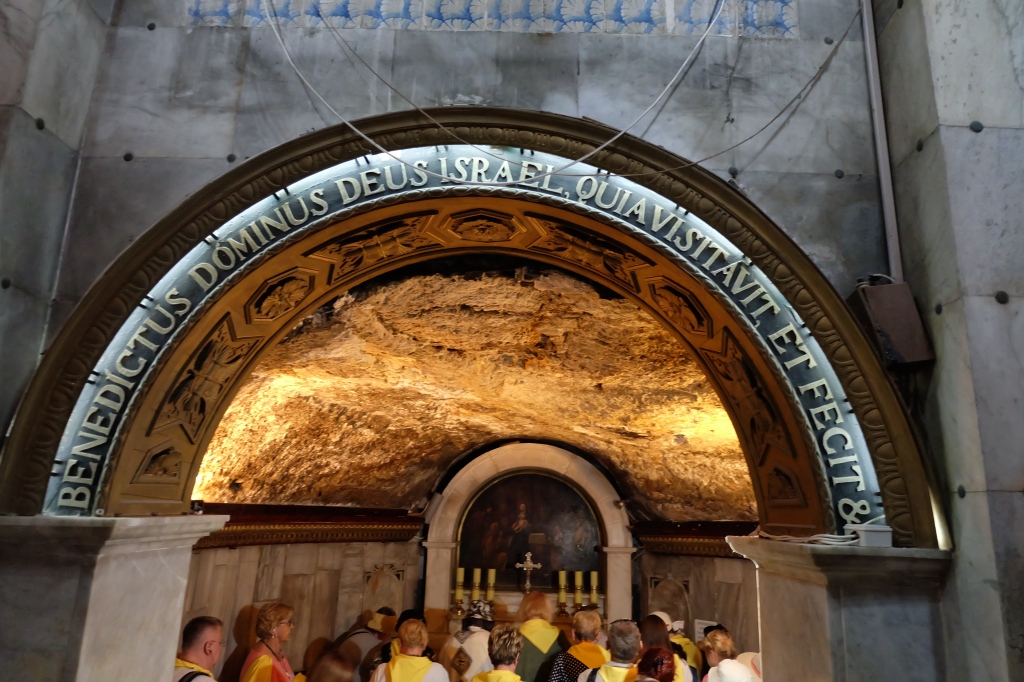
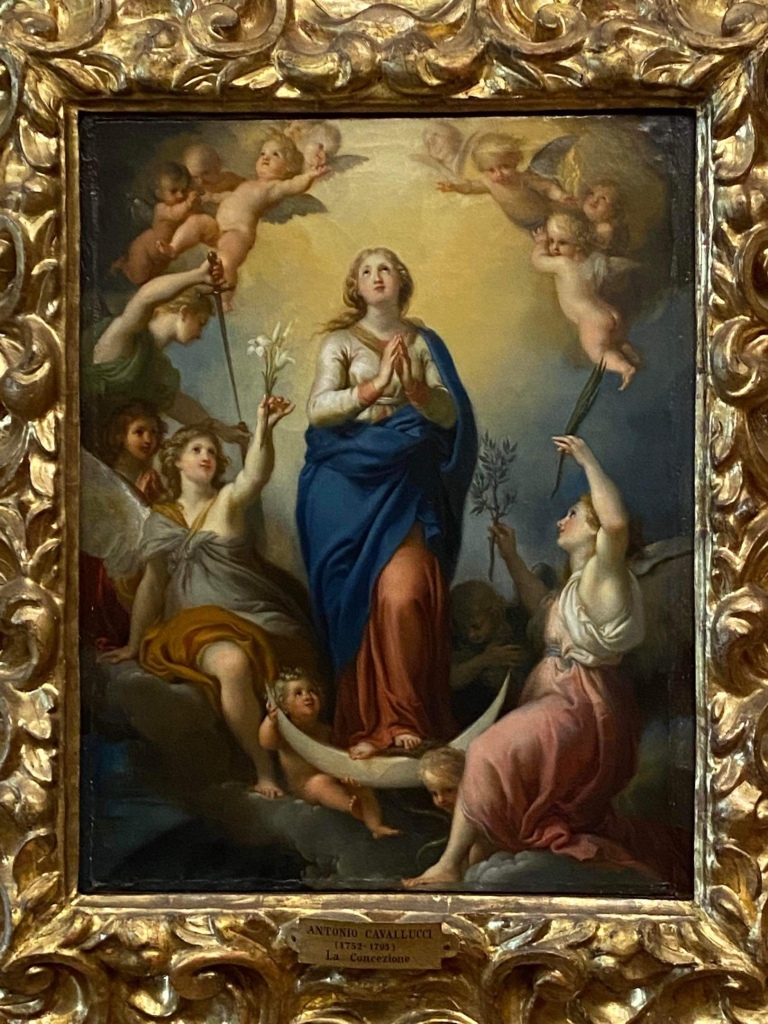
Photo by Rev. Fr. Gerry Pascual at Palazzo Borromeo, Isola Bella, Stresa, Italia 2019.

The Solemnity of the Immaculate Conception of the Blessed Virgin Mary is one of the most awaited feasts in our predominantly Catholic Christian country due to its timing that is so close to Christmas as well as our deep devotion to the Blessed Mother.

Yet, it is also the most problematic because every year, the biblical passage we hear in its celebration is the Annunciation of the Birth of Jesus Christ that is held on March 25 so that people often confuse the December 8 Solemnity as Mary’s Immaculate Conception of Jesus. Of course, there is no direct quotation in the bible of Mary’s Immaculate Conception for it is a fruit of long process of deliberations and reflections in the Church that was finally made official in 1854 as a Dogma.

For those still confused, today’s celebration is when Mary was immaculately conceived in St. Anne’s womb through the merits of Jesus in all eternity, being freed from any stain of original sin so that she may bear our Savior, the Son of God, all-perfect, into the world who is the Christ.

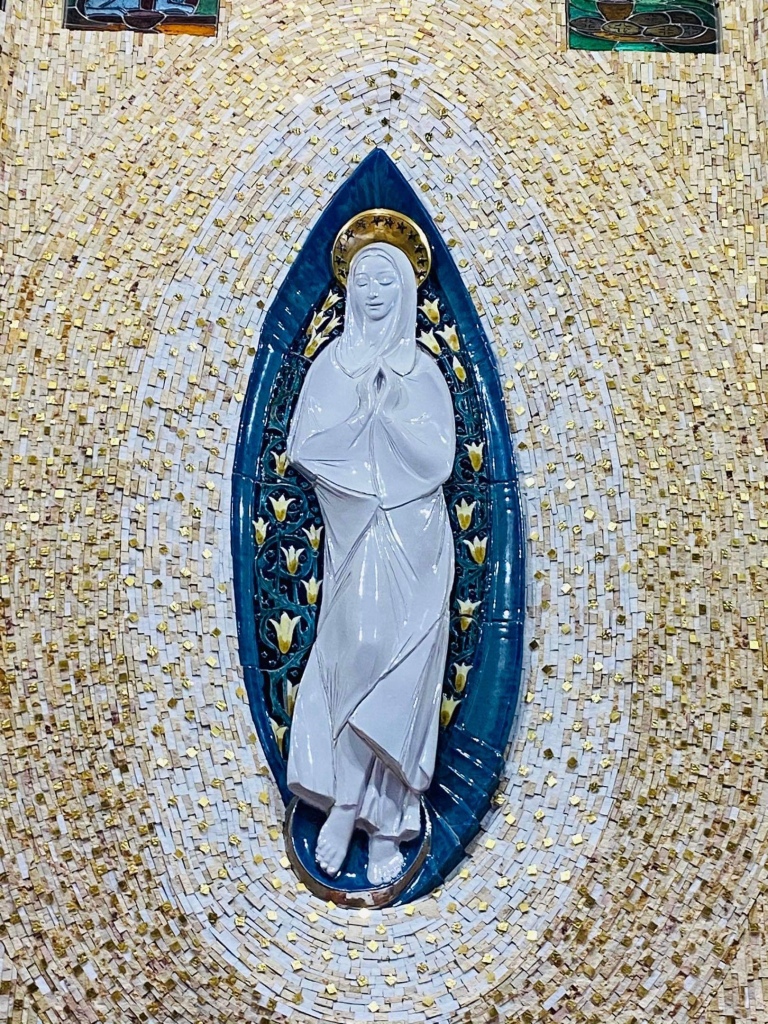
Photo by Rev. Fr. Gerry Pascual of Iba, Zambales at Santuario di Greccio, Rieti, Italy in 2019.

Mary was chosen by God to be His Son’s Mother not because of her having any special traits but purely out of God’s goodness. It is a beautiful story that continues to happen daily we hardly notice nor recognize when God intervenes into our time to bless us not because we deserve to be blessed but simply out of His immense love for us.

This is what we celebrate in the Immaculate Conception of the Blessed Virgin Mary: we have a very loving God making a room among us so we may dwell and live in His grace since the very beginning of time.

In the bible and in spirituality, the words room and dwelling actually refer to communion of man and God. In fact, the first letter of God’s name “Yahweh” is shaped like a door of a house in Hebrew writing. At the last supper, Jesus told the Twelve that in His Father’s house are many rooms where He shall go first to prepare one for us all. It is not a literal room but a relationship with God that begins here.

In Genesis, paradise as dwelling place of Adam and Eve was more of their oneness with God they have destroyed with sin.

God truly loves us, never gave up on us when He sent Jesus Christ to redeem us to take us back to Him by renewing that relationship with Him. It had always been part of the divine plan even before the fall of man as reflected by St. Paul in the second reading, “as he chose us in him, before the foundation of the world, to be holy and without blemish before him” (Eph. 1:4).

Every December 8 (or 9, like today when the solemnity falls on a Sunday), we hear Luke’s beautiful account of the annunciation of Christ’s birth because it also conveys to us the same message of the Immaculate Conception of Mary who made a room too for God in her self.

The angel Gabriel was sent from God to a town of Galilee called Nazareth, to a virgin betrothed to a man named Joseph, of the house of David, and the virgin’s name was Mary (Luke 1:26-27).

“Cestello Annunciation” by Botticelli painted in 1490; from en.wikipedia.org.

The scene preceding this is the annunciation of John’s birth to Zechariah during the Jewish major feast of Yom Kippur or Day of Atonement at the temple in Jerusalem. Observe Luke’s account and we see how God entered through human activities in that scene. Nakisabay, naki-ride on ang Diyos sa takbo ng panahon noon nang ibalita ang pagsilang ni Juan Bautista.

In the Annunciation of the birth of Jesus, it was different: it was God setting everything on His own as we feel from Luke’s solemn reportage. The five major “W’s” of news were there present, namely, who (Mary), what (birth of Jesus), where (Nazareth), when (sixth month of Elizabeth’s pregnancy) and why (Jesus to save the world).

With Mary in Nazareth, the major event was the Annunciation itself of Christ’s birth. It is the entrance of the eternal God into the temporal and finite time of man. That is why we pray the Angelus thrice a day, to sanctify our day as we remember that great event of God becoming human like us in Jesus. (Sadly, so few people pray the Angelus these days, giving more importance to social media, video games and noon time shows or news programs.)

Mary’s Immaculate Conception actually had its fullness in the Annunciation when Mary said yes to God by making a room for Jesus in herself and in her life that led to Christ’s birth and fulfillment of His mission of salvation for us. We see this also in Joseph as narrated by Matthew.

God made everything possible to restore this relationship through Mary who had to be immaculately conceived in order to be the room who would receive His Son Jesus Christ.

Photo by author, left side of the facade of the Basilica of the Annunciation in Nazareth, Holy Land, May 2019.

Nazareth is the only major place in the New Testament never mentioned in the Old Testament unlike Bethlehem, the birthplace of Jesus and actually His very root being from the lineage of King David was mentioned many times in the Old Testament.

Nazareth was Mary’s hometown, obscured and unknown like her. After returning from Egypt, the angel told Joseph to bring the Holy Family there to avoid Herod, son and namesake of his father who ordered the massacre of children in Bethlehem upon learning from the Magi the birth of the new king of Israel, Jesus Christ. Though officially from Bethlehem, Jesus grew up in Nazareth that is why the people refused to acknowledge Him as the Messiah who would come from Bethlehem.

Nazareth was so insignificant at that time that it was the butt of jokes in Israel. When one of the Lord’s early disciples Philip told Nathanael (Bartholomew) that they have found “the one about whom Moses wrote in the law” as the Messiah, Jesus of Nazareth, Nathanael replied, “Can anything good come from Nazareth?” (Jn.1:45-46). Jesus did not reprimand Nathanael for his comment because it was true, even praising him as a true Israelite without guile!

Photo by author, Nazareth Square, Holy Land, may 2019.

In the first reading, it was God who chose paradise as dwelling of Adam and Eve; in the New Testament, it was God anew who chose the obscured town of Nazareth as the room and dwelling of His Son Jesus Christ, so perfectly jibed with Mary also obscured, so young and perhaps no voice nor say in the Jewish society at that time.

That is how God works, always in silence, often choosing people and places so insignificant in human standards to eventually display His glory like in Mary.

Inasmuch as the Immaculate Conception is God making a room for us to dwell in Him in Mary, God needs also our cooperation and participation in the process. It is not a one-shot deal but an ongoing process, something that continues and most of all, we cultivate and nurture. It is a gift freely given by God, reminding us of our original state and being as clean and pure.

Like Mary, do we have a room for Jesus within us to come especially in this world so preoccupied with man’s pride and achievements? Let us reclaim our original status and pure and clean children of God in making a room for Him in our lives today. Amen.

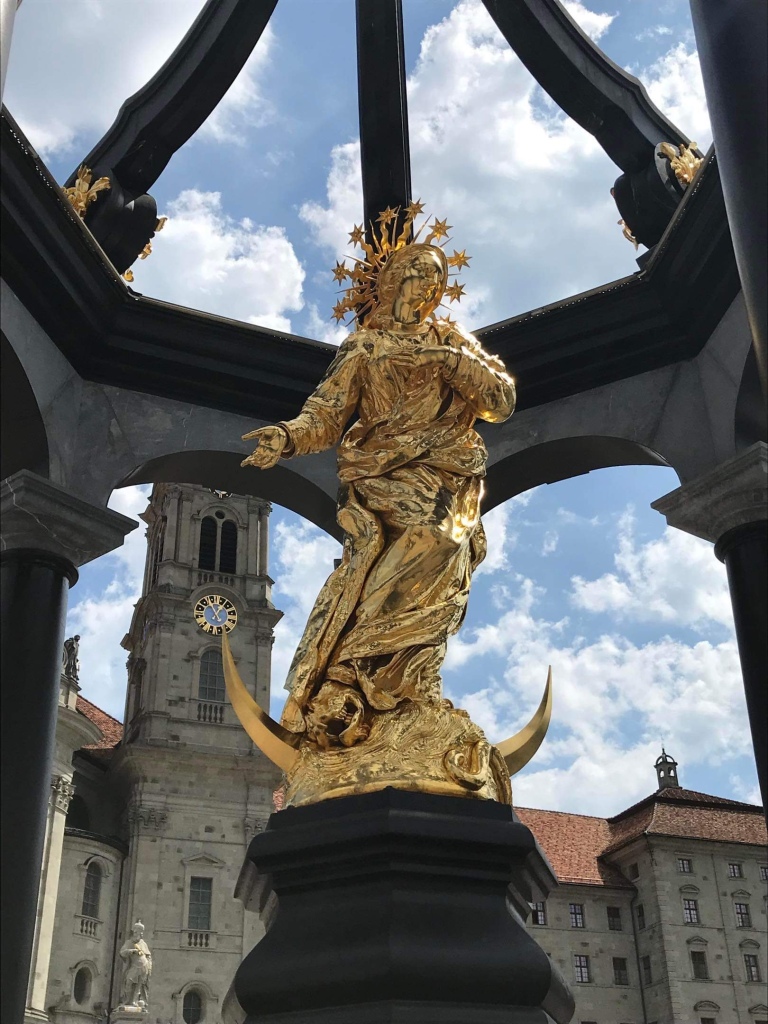
Photo by Fr. Gerry Pascual of Iba, Zambales at Einsiedeln Abbey, Einsiedeln, Switzerland, 2019.

Pope Francis’ rule of 8

Quiet Storm by Fr. Nicanor F. Lalog II, 05 December 2024
Pope Francis waves to pilgrims as he enters St. Peter’s Square for his general audience on Wednesday, Dec. 4, 2024. Credit: Julia Cassell/CNA

Pope Francis again called on us priests to keep our homilies short during his General Audience at the Vatican yesterday, December 04, 2024. He said, “Preachers must preach an idea, a feeling, and a call to action. Beyond eight minutes the preaching starts to fade, it is not understood.”

According to the Catholic News Agency, the pilgrims applauded the Pope’s remarks that is again sweeping the social media circles of many Catholics especially in the Philippines. It is trending, in fact, because our people are so fed up with our long, boring homilies.

However, I find the Pope’s reminder lacking in substance, in what is most essential.

Photo from Catholic News Agency, 12 June 2024.

This is the second time this year since June and the third since 2018 that Pope Francis urged priests to be brief with their homilies. It is actually an echo to the recommendations by Archbishop Nikola Eterovic’s 2010 book on the 2008 Synod on the Word of God that advised bishops to keep their homilies to eight minutes or shorter to avoid “improvisations” at the pulpit.

(Now you see, the problem actually is with the bishops who mostly give poor homilies but effective tranquilizers. In fact, Pope Francis’ homily last Holy Thursday was over 20 minutes, but, of course, he is the Supreme Pontiff…)

Instead of focusing on the duration of the homily, Pope Francis should have adopted St. Augustine’s stance: the priest must first and foremost pray to give a good homily. Duration and length of homily is secondary when the priest’s homily is the fruit of his prayers (and studies).

From Pinterest.com.

In the fourth book of his Doctrina Cristiana, St. Augustine said that “every homily is from God” when truly prayed upon by the priest and deacon. He admitted that not every priest is gifted in preparing good homilies that is why he encouraged priests to share homilies that others may imitate. St. Augustine categorically wrote that there is no problem in copying the homily of other priests; what is unacceptable (and sinful) is when the priest’s homily and life do not jibe, when the priest does not walk his talk.

That is why when people ask me what is the most difficult part of priesthood, I always say since my first year as a priest, it is the prayer life – not celibacy nor poverty. Both are hinged on the priest’s prayer life.

Prayer is always difficult because it is the work of the Holy Spirit, demanding our time and total self. When we pray, we strip ourselves naked before God, facing our true selves minus our many pretensions and masks as a person. And a priest.

Hence, whatever we preach is the fruit of our prayer which is very scary. When we priests deliver our homily, we subject ourselves to your scrutiny. And that’s how we are judged by the people: does this priest practice what he preaches?

I have been a priest for more than 26 years but I still get nervous and scared before every celebration of the Mass, specially in delivering the homily.

When the Alleluia is sung and we bow our heads before the altar to recite our silent prayer – “Lord, cleanse my heart and my lips that I may worthily proclaim the Gospel” – I always add the words of John the Baptist to Jesus at Jordan before His baptism, “Lord, let me decrease so that you will increase.”

We priests are the first to be affected by our preaching. Kami ang unang nasasaktan at tinatamaan sa katotohanang ipinahahayag namin. That is when true connection with people and the gospel happens which Pope Francis discussed lengthily in his 2013 Apostolic Exhortation “Evangelii Gaudium”, giving practical tips in preparing homilies in its third chapter, “Proclaiming the Gospel”. Always at the very core of every homily and of the priesthood in particular is prayer, our communion with Jesus Christ, our Eternal Priest.

When the priest lacks the passion in celebrating the Sacraments particularly Holy Eucharist and Confession, when he habitually skips giving a homily, and worst, when he avoids celebrating the Mass daily – he is no longer praying. That is 100% sure. Most likely, Father is in crisis, deep into a vice, or a relationship.

Therefore, instead of zeroing into the duration of the homily, the Holy Father must encourage – or demand – us priests and bishops to have a prayer life, to go back to Jesus in prayer as the late Pope Benedict XVI had insisted until shortly before his death in December 2022.

And this falls upon you, too, our dear lay people. Please stop inviting us priests too often to late night socials and coffee. Give us the space and time to be home before 9PM or better, to keep us in our rectory in the evening to study and pray for our celebration of the Holy Mass the following day. We may go out at night but not so often. It is not our way of life.

Let me end this with another worthy lesson from St. Augustine in his other book about teaching catechism called De Catechizandis Rudibus, “the catechist is the lesson himself/herself.” In the same manner, “the priest is the homily himself”, too! Pray for us your priests and help us remain holy and prayerful.

The uniqueness of the Cross

The Lord Is My Chef Daily Recipe for the Soul by Fr. Nicanor F. Lalog II
Saturday, Feast of the Exaltation of the Cross, 14 September 2024
Numbers 21:4-9 ><}}}}*> Philippians 2:6-11 ><}}}}*> John 3:13-17
Photo by author in my previous parish, 2017.

Today we celebrate a most unique Feast, the Exaltation of the Cross.

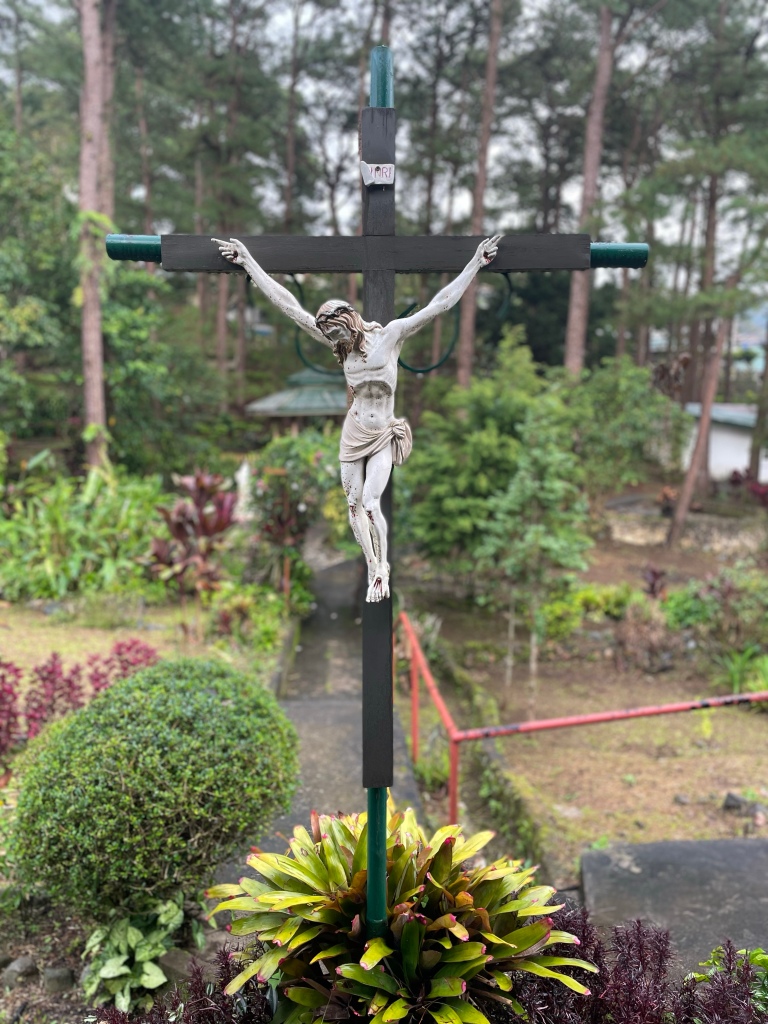
It is so unique because first of all, the cross is perhaps the most unique thing on earth made up of two pieces of wood that are so ordinary yet so deeply extraordinary in meaning, a sign of God’s immense love for us humans through Jesus Christ’s Passion and Death.

From being the sign of the most inhuman punishment in history, the Cross is now the very sign of how God “so loved the world that he gave his only Son, so that he who believes in him might not perish but might have eternal life” (Jn.3:16). It encapsulates the whole mystery of Jesus Christ, of how this all-powerful God beyond the ordinary became weak like us in everything except sin so that we too may be like Him, divine and more than ordinary. In His suffering and death on the Cross, Jesus made the lowly wood so ordinary to be so exalted to become His sign of love and mercy, power and majesty.

Photo by author, Jerusalem, May 2017.

Hence, in the Cross is the power of God’s love to transform us to better persons.

In the Cross is God’s power to lead us closer to Him with its vertical beam and to others with its horizontal beam.

In the Cross is the power of good if we choose to embrace it with Christ Jesus as our Lord and Master.

The Cross is most unique of all signs in the world because underneath its ordinariness, that is where we see God’s glory and majesty. It was underneath the Cross of darkness and gloom on Good Friday that humanity began to see light and hope in life’s many absurdities. Most of all, it was underneath that Cross of suffering and death of Jesus Christ that we feel and experience the assurance of the Resurrection.

How?

Through our own pains and sufferings that are most uniquely ours too!

With their patience worn out by the journey, the people complained against God and Moses, “Why have you brought us up from Egypt to die in this desert, where there is no food or water? We are disgusted with this wretched food!” In punishment the Lord sent among the people saraph serpents, which bit the people so that many of them died (Numbers 21:4-6).

Photo by author, Dominican Hills, Baguio City, January 2018.

You must have heard that old story of a man who came to Jesus to return the cross given for him to carry; he asked Jesus to have it replaced with a lighter one. Jesus then led the man to a huge room with all kinds of crosses for him to choose which he prefers as the best one for him so that he would stop complaining.

After closely examining the specs of so many crosses, the man finally decided to pick one he deemed as perfect for him after considering its weight and other dimensions, only to find out from Jesus Himself that it was the same cross he had actually returned for exchange!

Many times in life we are like those people in the first reading, never ending in their complaints to God, even challenging Him, accusing Him of forsaking us, of being unfair when life becomes difficult and unbearable. There are times we feel being on the distaff side of life always like a flat tire, never on top. We cry foul to God especially with all our hurts and pains inflicted by others, asking Him where was He when most needed?

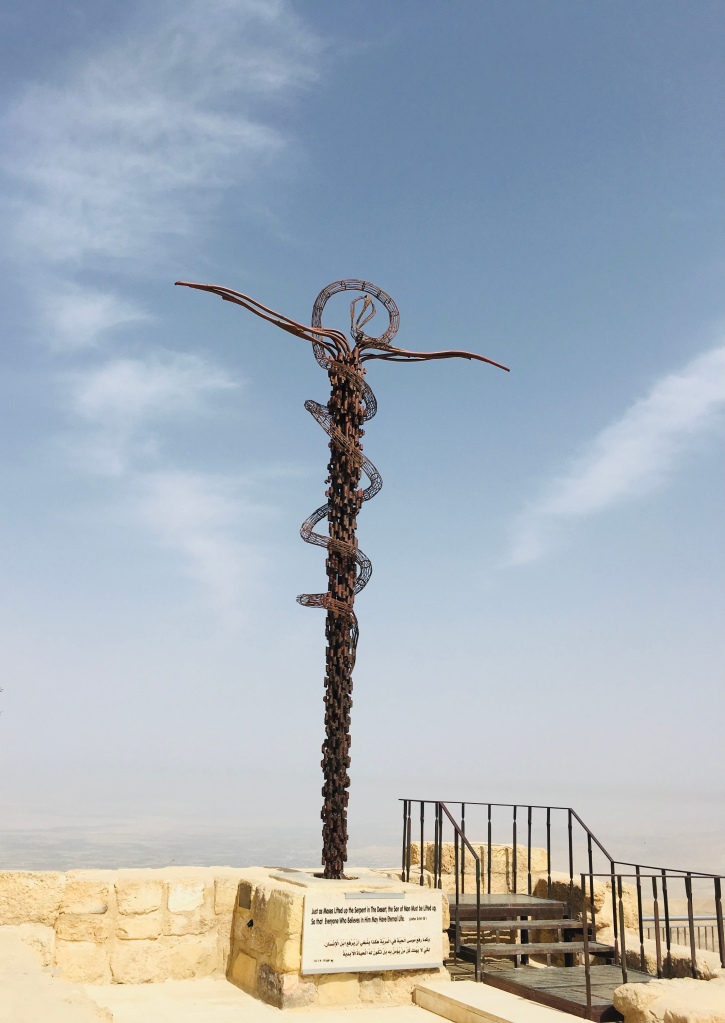
Photo by author in Jordan near the Israeli border where Moses put up the bronze serpent as instructed by God to heal those bitten by the snakes after they have complained of their conditions in the wilderness, May 2019.

While it is true life is indeed difficult, the cross reminds us of the fact that the pains and hurts we have are uniquely ours too, something we have to accept and most of all, own.

There are pains that are so deep and won’t go away that have in fact affected us dismally in our lives already. Instead of self-blaming and self-pity, we just have to ask for God’s grace to accept and own them like Jesus Christ. We just have to “bring it home” – that imagery of the Cross planted on the Calvary – into our very selves, in our being as something so true and real. And uniquely ours.

Stop thinking of others’ pains and hurts. We are not all the same. If ever we have similar experiences, the hues and shades even gravity and circumstances are not same because each pain and hurt, like the cross, is uniquely ours. Like every person, every cross is unique because it is also a gift, a mystery, and life. We have to “befriend” our pains and hurts, our own cross instead of resist it. It is in “befriending” our pains and hurts, our cross in life that we grow and mature, becoming more free to love and to be joyful because that is when the cross triumphs over its disgrace and shame in us and with others. That is when our pains and hurts, when our crosses begin to reveal to us the many beautiful truths of Easter awaiting us.

The Cross of Christ triumphed because Jesus carried it wholeheartedly, allowing those two pieces of wood to reveal not only to Him who knew everything beforehand its meaning but most of all to everyone of us the deeper truths the Cross signifies as St. Paul eloquently expressed in our second reading.

The Cross of Christ atop the church of our Lady of Lourdes in France. Photo by my former student Philip Santiago during his pilgrimage, September 2018.

One thing I realized after my mother died in May is the fact that while there are so many pains and sufferings in this world, my own pain and suffering in losing her are most difficult to bear; hence, something I must carry because it is uniquely mine.

But, one thing so unique I noticed is that the more I see my cross following my mother’s death, the more I saw also the cross of others. The Cross of Jesus triumphed truly in me when I embraced and owned my cross, when I befriended my pains and hurts that eventually led me to recognize and see, to feel more and experience too the crosses of others.

When we become conscious of each one’s unique cross, slowly we are able to reveal to them the meaning of their personal crosses too because we become more sympathetic, more open, more silent to listen more, love more, care more and be more present with those in their own unique cross. No wonder, I find conversing more engaging with others who also grieve because we can see each other’s unique crosses!

Jesus calls us to imitate Him that by embracing and owning our cross, we too may lead others to finding the meaning of their own cross and thus experience Easter soon. Let us pray:

Give us the grace, O God, 
to always embrace the Cross
like your Son Jesus Christ
where we can all be empty
of ourselves to be filled
with your Holy Spirit
to make your love visible in us. 
Amen.

Sacred Heart, love language of God

The Lord Is My Chef Daily Recipe for the Soul by Fr. Nicanor F. Lalog II
Friday, Solemnity of the Most Sacred Heart of Jesus-B, 07 June 2024
Hosea 11:1, 3-4, 8-9 ><}}}*> Ephesians 3:8-12, 14-19 ><}}}*> John 19:31-37

You must be wondering why this photo of a quote from Tom Hanks’ 1994 character Forrest Gump on the Solemnity of the Most Sacred Heart of Jesus. What’s with shoes and the Sacred Heart of Jesus? Let me explain…

Last Tuesday while checking on my Facebook, I saw the post of a former seminarian who said, “Buying us shoes has been the love language of my parents to us… It will not change.” Posted below were photos of him buying two kids with new pairs of shoes.

How I admired him for being a father to those less fortunate kids! And that’s why I remembered Forrest Gump too who said how his mother used to tell him that shoes tell a lot about people, “Where they are going. Where they been.”

There’s something special with our feet, with the shoes we wear. Or do not wear. One is clear, though: our feet being at the lowest part of our body are most cared when we are growing up but later forgotten though overworked. That is why, it is so wonderful to go back to those days of childhood when our parents used to buy us with new pair of shoes, of how they would stoop down to help us fit the right ones for us. Just like God who is a Father to each one of us!

Thus says the Lord: when Israel was a child I loved him, out of Egypt I called my son. Yet it was I who taught Ephraim to walk, who took them in my arms; I drew them with human cords, with bands of love; I fostered them like one who raises an infant to his cheeks; Yet, though I stooped to feed my child, they did not know that I was their healer.

Hosea 11:1, 3-4
Photo by Pixabay on Pexels.com

That’s the tenderness of God, so Fatherly to us in taking care of us, teaching us to walk, taking us to his arms, lovingly raising us to his cheeks while we burst in laughter. Try reading that whole quotation to include the second verse skipped by our lectionary today, the more you can feel God’s tenderness. And our sinfulness.

Thus says the Lord: When Israel was a child I loved him, out of Egypt I called my son.  The more I called them, the farther they went away from me.

Hosea 11:1-2

Is it not this is how our love relationship is with our parents and family including God?

When we were kids, we loved running to our parents, taking pride for being their son or daughter, always clinging to their big hands. Or, like couples at their early years in marriage who seem to be inseparable and always together. Then, as years passed by as we find new friends and new relationships, we drift apart from our parents or spouse, including God.  And worst, we drive them away, even feeling ashamed of them especially when they come near us with their gestures of love and concern. But, when problems arise like betrayal and infidelity, failures and losses, we return to our parents or to our original spouse or family, and most especially to God, rediscovering their genuine love that is so tender and very comforting again:  “I took you in my arms, drew you with human cords with bands of love. I fostered you like one who raises an infant to his cheeks; yet, though I stooped to feed you my child, you did not know I am your healer” (Hos.11:3-7).

From GettyImages.com.

That “stooping down” by God He had spoken to Hosea hundreds of years earlier took its deepest plunge when He sent us Jesus Christ His Son as our Savior by dying on the Cross. In fact, Jesus literally “stooped down” on the night He was betrayed when He washed the feet of His disciples to portray to them the depth of His love for us all.

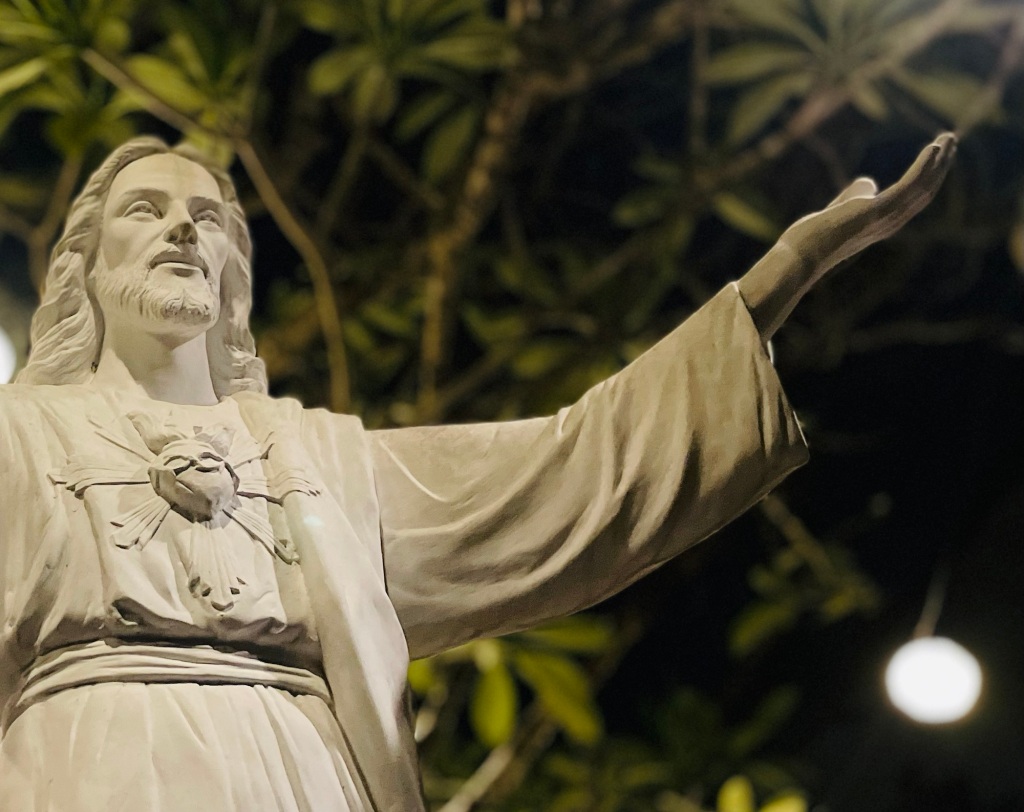
From His birth to His passion and death, Jesus Christ, therefore, is the Father’s love language.

This was very evident on Good Friday as John narrated how the soldiers broke the legs of the other two thieves crucified with Jesus to hasten their death; but, when they saw Jesus “already dead, they did not break his legs, but one soldier thrust his lance into his side, and immediately blood and water flowed out. For this happened so that the Scripture passage might be fulfilled: Not a bone of it will be broken. And again another passage says: They will look upon him whom they have pierced” (Jn.19:33-34, 36-37).

Jesus Christ is the Father’s love language to us all because His death on the Cross is the most tender moment of love in history when our God who personally loves us by becoming like us in everything except sin loved us until the last drop of His blood because we are His beloved brothers and sisters in His loving and faithful Father in heaven we have always deserted in our many sins. 

Photo by author, Baguio City, 2023.

Indeed, when blood and water flowed out from His pierced side on the Cross, the ocean of Divine Mercy flowed out for us, forgiving our most grievous sins, regardless of our many weaknesses. 

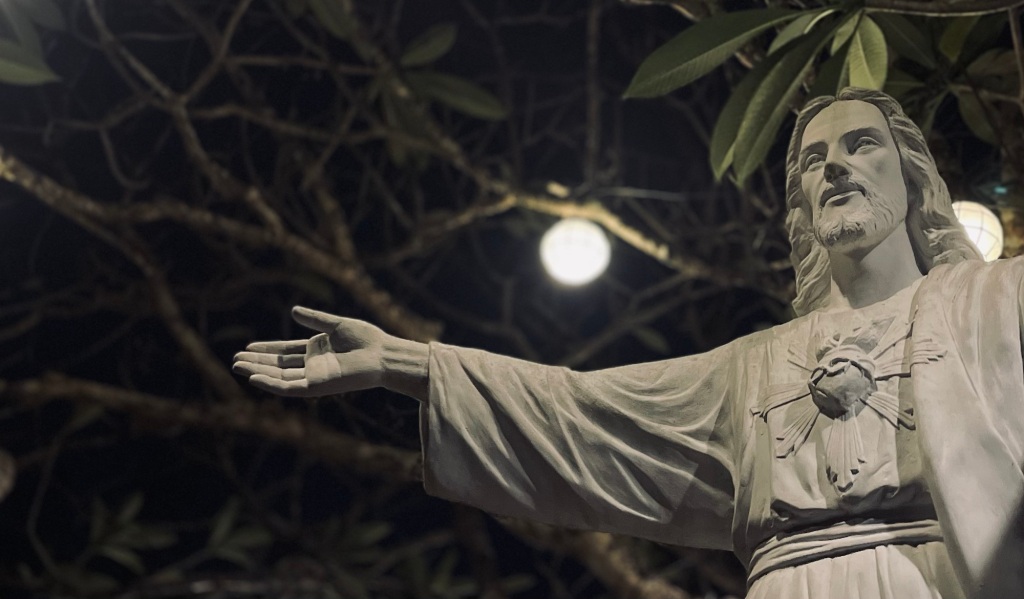
In His Most Sacred heart, Jesus is inviting us to have tender moments with Him, to have the same “love language” of sacrifice and giving of self for others so that “He may dwell also in our hearts through faith so that once we are rooted and grounded in His love, we may have the strength to comprehend the breadth and length and height and depth of His love that surpasses knowledge and be filled with the fullness of God”(Eph.3:17-19). 

Unlike us humans, God makes no mistakes in loving.  He remains faithful to us with His love, even “allowing” us often to sin and commit mistakes so that eventually, when we hit rock bottom, we rediscover Him and His love that is so real and so personal. 

That is why we must heed St. Paul’s admonition in the second reading to be “rooted and grounded in His love” because human love is always imperfect.  Only God can love us perfectly in Christ Jesus who offered Himself on the Cross to fulfill what we have failed since the beginning – that is, to love God and others.

Photo by author, Sacred Heart Novitiate, Novaliches, QC, 20 March 2024.

Today we complete the series of three Solemnities in Ordinary Time right after the great season of Easter:  Trinity, Body and Blood of Christ, and now, the Most Sacred Heart of Jesus.  All three Solemnities tell us how great is this God we believe in, someone so immense and powerful, yet so loving and so gentle; most of all, a God so personal that He is much like us but at the same time so different from us.

This Solemnity of the Sacred Heart of Jesus is an occasion for us to meditate deeply on how God touches us in the most intimate manner when He stooped down in Christ through the Cross to experience His love and mercy so that we could make others feel that too. 

Like John who witnessed everything on the Cross, we need to see more with the eyes of faith the realities of God’s immense love for us who gave His Son Jesus as the new Lamb offered for our many sins and that is why, in accordance with the Jewish law and with the Old Testament, not one of His bones were broken on the Cross. May we learn to stoop down like God in Jesus by looking down to our feet by first examining our hearts as we pray, Jesus meek and humble heart make my heart like thine! Amen.  

Photo by author, Sacred Heart Novitiate, Novaliches, QC, 20 March 2024.

Pagbabalik-loob vs. pagbabago

Lawiswis Ng Salita ni P. Nicanor F. Lalog II
Kapistahan ng Pagbabalik-loob ni San Pablo, Ika-25 ng Enero, 2024
Gawa ng mga Apostol 22:3-16 ><}}}*> + ><}}}*> + ><}}}*> Marcos 16:15-18
Painting ng “The Conversion of St. Paul” ni Luca Giordano noong 1690 mula sa wikipedia.org.

“Magbago ka na!” Iyan ang mga salitang madalas nating marinig at sinasabi sa mga tao na alam nating mayroong masamang pag-uugali at gawain. Madalas bitiwan mga salitang iyan tuwing Bagong Taon at mga Mahal na Araw.

Ngunit, maari nga ba talagang magbago ng pag-uugali o ng pagkatao ang sino man? Ibig bang sabihin yung dating iyakin magiging bungisngis o dating madaldal magiging tahimik? Iyon bang matapang kapag nagbago magiging duwag o dating palaban magiging walang kibo at imik?

Kung isasalin sa sariling wika natin ang salitang “conversion”, nagpapahiwatig ito ng pagbabago tulad ng na-convert sa ibang relihiyon o sa ibang anyo o gamit. Ngunit sa bawat pagbabago, mayroong higit na malalim na nababago na hindi namang ibig sabihin ay nag-iiba o naging different.

Kasi iyong sinasabing conversion ni San Pablo o ng sino pa mang tao ay hindi naman pagbabago ng pagkatao kung tutuusin; sa bawat conversion, hindi naman nababago ating pagkatao talaga kungdi ating puso na naroon sa ating kalooban. 

Kaya tinatawag itong pagbabalik-loob, di lamang pagbabagong-buhay. 

Binabalikan natin ang Diyos na nananahan sa puso natin, doon sa kalooban natin. 

Higit na malalim at makahulugang isalin ang conversion sa katagang “pagbabalik-loob” dahil ang totoo naman ay bumabalik tayo sa Diyos na naroon sa loob ng ating sarili. 

Dito ipinakikita rin na likas tayong mabuti sapagkat mula tayo sa Diyos na mismong Kabutihan. Kailangang pagsisihan mga kasalanan, talikuran at talikdan kasamaan na siyang mga balakid sa ano mang pagbabalik-loob at saka pa lamang mababago ating pamumuhay. 

Katulad ni San Pablo, sino man sa atin na makatagpo sa liwanag ng Diyos, nagiging maliwanag ang lahat kayat atin nang hahangarin ang Diyos na lamang at kanyang kalooban. Nananatili ating katauhan at pag-uugali ngunit naiiba direksiyon at pokus. 

Kapansin-pansin na bawat nagkakasala wika nga ay malayo ang loob sa Diyos na ibig sabihin ay “ayaw sa Diyos” gaya ng ating pakahulugan tuwing sinasabing “malayo ang loob”. Ang nagbabalik-loob ay lumalapit, nagbabalik-loob at pumapaloob sa Diyos.

Pangangaral ni San Pablo sa Areopagus sa Athens (larawan mula sa wikipedia.org).

Isang magandang paalala sa ating lahat itong Kapistahan ng Pagbabalik-loob ni San Pablo na hindi malayo at hindi rin mahirap maabot, bumalik sa Diyos sa pamamagitan ni Kristo Jesus. Maari itong mangyari sa gitna mismo ng ating sira at maruming sarili.

Hindi nabago pagkatao at pag-uugali ni San Pablo kung tutuusin: nanatili pa rin siyang masugid, matapang at masigasig. Nabago lamang ang direksiyon at pokus o tuon ng kanyang pag-uugali at pagkatao. At siya pa rin iyon. Inamin niya sa ating unang pagbasa ngayon na siya ay “isang Judio, ipinanganak sa Tarso ng Cilicia ngunit lumaki rin sa Jerusalem. Nag-aral kay Gamaliel at buong higpit na tinuruan sa Kautusuan ng mga ninuno at masugid na naglilingkod sa Diyos” (Gawa 22:3). 

Nanatiling masugid sa Diyos si San Pablo ngunit naiba na ang batayan na dati ay sa mga Kautusan at tradisyon ngunit sa kanyang pagbabalik-loob, si Jesu-Kristo na ang batayan ng kanyang pananampalataya. Personal niyang naranasan si Jesus kaya gayon na lamang kanyang pagiging masugid na alagad. Sinasabing kung hindi siya nadakip at nakulong hanggang sa patayin marahil ay umabot siya sa Africa sa pagpapalaganap ng Mabuting Balita.

Hindi rin nabawasan kanyang tapang; bagkus pa nga ay higit pa siyang tumapang. Lahat ng hirap tiniis niya at hinarap gaya ng pambubugbog sa kanila, ma-shipwreck sa isla, mabilanggo ng ilang ulit at ni minsan hindi umatras sa mga balitaktakan at paliwanagan sa mga Judio at maging kay San Pedro ay kanyang kayang salungatin at pagsabihan kung kinakailangan.

Gayon na lamang ang malasakit ni San Pablo sa Panginoong Jesu-Kristo at kanyang Mabuting Balita kaya naman sabay ang pagdiriwang ng kanilang Dakilang Kapistahan ni San Pedro tuwing ika-29 ng Hunyo dahil magkapantay kanilang kahalagahan sa pagpapatatag, pamumuno at pagpapalaganap ng pananampalataya at Simbahan.

Ordinasyon sa pagka-diyakano sa Katedral sa Malolos, ika-12 ng Hunyo 2019.

Alalaong-baga, katulad ni San Pablo, ano man ating pagkatao at pag-uugali siya pa ring mga dahilan kaya tayo tinatawag ng Panginoon upang maglingkod sa kanya; ililihis at ihihilig lamang niya mga ito ayon sa kanyang panukala at kalooban.

Kaming mga pari kapag inordenahan ay ganoon pa rin naman pagkatao at pag-uugali ngunit nababago direksiyon at tuon sa bagong estado ng buhay at misyon.

Gayun din ang mga mag-asawa. Lalabas at lalabas tunay na pagkatao at pag-uugali ngunit hindi iyon mga sagwil upang lumago at lumalim sila sa pagmamahalan at pagsasama bilang mag-asawa.

Wika nga sa Inggles, “God does not call the qualified; he qualifies the call.” Maraming pagkakataon tinatawag tayo ng Diyos maglingkod sa kanya di dahil sa tayo ay magagaling at mahusay; madalas nagugulat pa tayo na mismong ating kapintasan at kakulangan ang ginagamit ng Diyos para tayo maging mabisa sa pagtupad sa kanyang tawag.

Madalas at hindi naman maaalis na sumablay pa rin tayo at sumulpot paulit-ulit dating pag-uugali. Kaya naman isang proseso na nagpapatuloy, hindi natatapos ang pagbabalik-loob sa Diyos. Araw-araw tinatawagan tayong magbalik-loob.

Larawan kuha ni G. Jim Marpa sa Dabaw, 15 Enero 2024.

Gaya ni San Pablo nang siya ay ma-bad trip kay Juan Marcos na iniwan sila ni Bernabe sa una nilang pagmimisyon. Batay sa kasulatan, ibig pagbigayn pa ni San Bernabe na muling isama si Juan Marcos sa pangalawang pagmimisyon nila ngunit mariin ang pagtanggi at pagtutol ni San Pablo kaya’t sila ay naghiwalay ng landas bagamat nanatili silang mga alagad ni Kristo. Sa bandang huli naman ay nagkapatawaran sila.

Ganoon din tayo, hindi ba? Walang perfect. Ang mahalaga araw-araw nagbabalik-loob tayo sa Diyos dahil araw-araw lumiligwak din tayo sa ating maling pag-uugali at mahunang pagkatao. 

Higit sa lahat, sa ating patuloy na pagbabalik-loob, doon lamang magiging maliwanag sa ating ang kalooban ng Diyos na palagi nating inaalam sapagkat batid nating ito ang pinakamabuti para sa atin. Ang kalooban ng Diyos ang magtuturo sa atin ng tamang landas na tatahakin upang ating buhay ay maging ganap at kasiya-siya.

Subalit kadalasan tayo ay nabibigo, naguguluhan kung ano ang kalooban ng Diyos dahil akala natin para itong tanong na isang pindot ay malalaman kaagad ang sagot tulad ng sa Google. Mahirap mabatid kalooban ng Diyos kung tayo ay malayo sa kanya dahil sa mga kasalanan. Kaya tulad ni San Pablo, idalangin natin sa Ama sa pamamagitan ni Jesu-Kristong Anak niya na magpatuloy tayo sa pagbabalik-loob upang manatili tayong nakapaloob sa Diyos. Amen. San Pablo, ipanalangin mo kami!