When we drag words down

The Lord Is My Chef Sunday Recipe for the Soul by Fr. Nicanor F. Lalog II
Sunday in the Fifteenth Week of Ordinary Time, Cycle A, 16 
Isaiah 55:10-11 ><]]]]'> Romans 8:18-23 ><]]]]'> Matthew 13:1-23
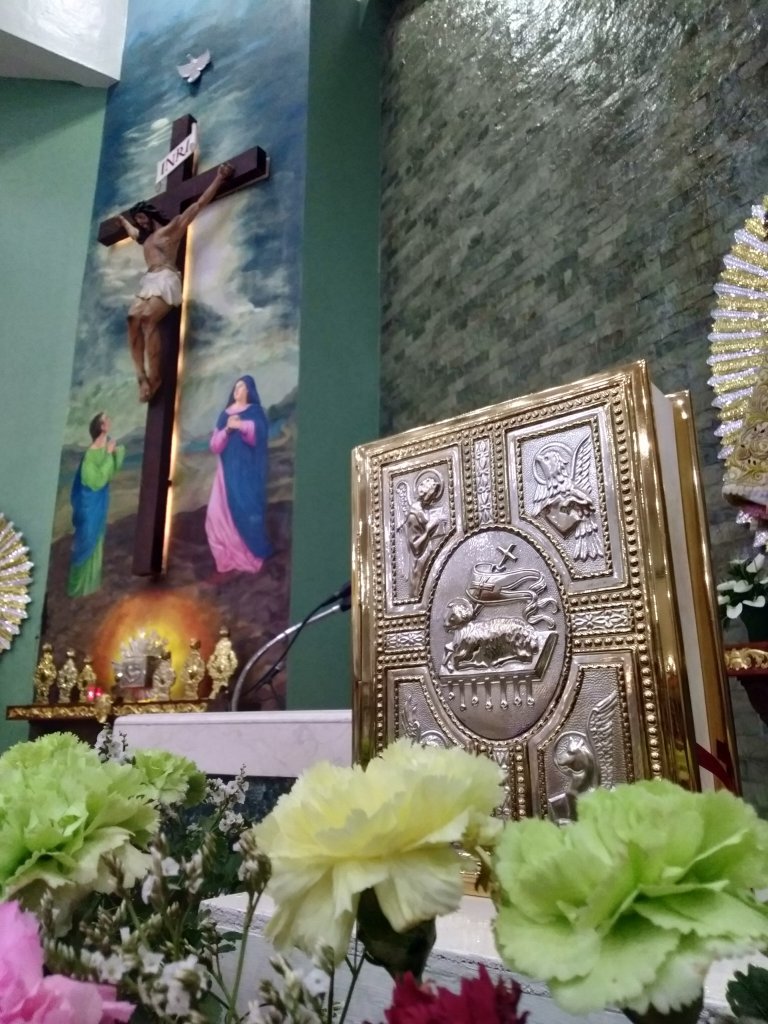
Photo by author, Bgy. Bahong, La Trinidad, Benguet, 12 July 2023.

Surely you will hear in almost all homilies today something about that blasphemous drag version of the Lord’s Prayer trending in social media. What a coincidence that our Scripture readings this Sunday say a lot about words that teach us so much in dealing with this new kind of pandemic sweeping the world, the “LGBTQ+ woke” syndrome happening in the realm of words and languages.

In the light of recent things happening in our society, today’s readings tell us two important things we have forgotten or have deliberately disregarded: the power of God’s word and the need to listen.

Thus says the Lord: Just as from the heavens the rain and snow come down and do not return there till they have watered the earth, making it fertile and fruitful, giving seed to him who sows and bread to him who eats, so shall my word be that goes forth from my mouth; it shall not return to me void, but shall do my will, achieving the end for which I sent it.

Isaiah 55:10-11
Photo by author, Bgy. Alno, La Trinidad, Benguet, 11 July 2023.
The power of God's word

Our short reading from Isaiah perfectly introduces us to the sequence of Christ’s teachings in the next three Sundays beginning today about the power of God’s word, a preparation for us to understand the parable of the sower.

Here we find from the Prophet Isaiah God’s word as totally “other” – ibang-iba sa lahat – as it reveals and acts because it is the truth and effectiveness in one. See how Isaiah picturesquely expressed the power of God’s word, “Just as from the heavens the rain and snow come down and do not return there till they have watered the earth, making it fertile and fruitful… so shall my word be; it shall not return to me void, but shall do my will, achieving the end for which I sent it.

The Bible never fails in attesting to this conviction, of how God means what he says that has become the very basis of our hopes in him since the very beginning. Everything flows from God’s word, from the creation of the world and the universe to its fulfillment in Jesus Christ until he comes again at the end of time. God’s word creates history with power to renew and restore life, the power to save us as experienced by the thief on the Cross when he said, “Jesus, remember me when you come into your kingdom” (Lk.23:42).

Photo by author, Camp John Hay, Baguio City, 12 July 2023.

Contrast God’s word with our human experience aptly expressed by Shakespeare in Hamlet’s famous quote, “words, words, words!” – of how we use so many words in the belief more is powerful when in fact our words are vain and empty, lacking in substance. Instead of giving life, many times our words hurt and even kill others. In this age of social media, see how we use words to distort truth with lies and deceptions. Its worst aspect is not found in the words we use but in us who pronounce them when we say things without any commitment at all so that many times, our words never stood the test of time because they are easily forgotten when spoken or heard.

St. Paul said it so well in the second reading, of how “all creation is groaning in labor pains even until now” (Rom.8:22) especially when we distort the truth of our words, when we do not mean what we say, when we our words divide instead of unite, when our words destroy instead of build.

See how sin entered through the “words” of the devil that deceived Adam and Eve with the first “fake news” in history that they would not die if they ate the forbidden fruit but instead become like God. Sin took on its ugly face in the use of words again after the first crime of murder committed by Cain who dared to say to God “am I my brother’s keeper” when asked of the whereabouts of Abel.

Words continued to be the means through which sin permeated humans reaching its lowest point when people played God again by building the Tower of Babel to reach the heavens. God punished them by making them speak different languages that resulted in confusion and the collapse of the tower.

How sad that these days, human words are made louder, spread faster by technologies try so hard to undermine God’s word. There is no doubt on the power of the word of God for he himself had shown and assured it. For his words to be fully operational and experienced, we must first listen to Jesus, the word who became flesh.

Photo by author, Camp John Hay, Baguio City, 12 July 2023.
Listening to the word of God

“Whoever has ears ought to hear.”

Matthew 13:9

Jesus used these words seven times in the synoptic gospels, usually in connection with parables like in Matthew chapter 13 which we shall be using in the next three Sundays. We heard it first today and again next Sunday when Jesus explained the parable of the weeds.

His command to “hear” requires more than just taking in the words he speaks to us. To truly hear what Jesus is saying especially within the context of the parables, we must profoundly ponder what he wishes us to know. Just like in our prayers: what is essential is to be able to listen more to God than to tell him our needs which he already knew.

This can only happen in the spirit of silence and openness to God when we suspend our many preconceptions and other ideas especially about the parables we have been so familiar with.

Photo by author, Camp John Hay, Baguio City, 12 July 2023.

The seed is the word of God and Jesus is the Sower who comes to us everyday, speaking to us, telling us the most important things we need to know and do in this life for us to be fulfilled and joyful.

But, do we have our ears attuned to the word of God? Many of us practically live in media, so hooked with gadgets either or both the cellphone and headsets or pods. Nobody seems to listen anymore as we are so engrossed in our own little world centered in the endless me, me, me and I.

In the parable, it does not really matter where the seeds fell; it is always good, at least even as food for the birds! Wherever it fell, the seed always sprang into life! That is the power of the word of God! We just have to give it a chance to grow and mature to bear fruits of “a hundred or sixty or thirtyfold”.

To hear the word of God means also to have our hearts opened to receive God so we can gain insight into the kingdom of God. It is in our hearts where the word of God is sown. Stones and thorns refer to the hardness of our hearts, our refusal to welcome Jesus Christ because we have been dominated by fame and power and other cares of this modern world.

Receiving the word of God is a process, not just a one-shot deal. It is a relationship we have to cultivate in Jesus Christ, just like the ones we try to have with our plants. The Lord himself had warned us repeatedly in the gospels of how there would always be opposition and indifference, even mockery and blasphemy right in the very places where his word should manifest its effectiveness like in our country, the only Christian-nation in this part of the world. If ever the word is not fruitful, it is primarily due to our dispositions and attitudes to God and his word.

Photo by author, Camp John Hay, Baguio City, 12 July 2023.

How timely that at this particular moment in our country we heard again this classic parable of the sower by Jesus Christ.

We, especially in the Church, are being reminded anew to humbly open ourselves to God and his word, to give it a chance to grow and bear fruit, including our rules and other documents especially in the liturgy.

In spending so much time about the posture the laypeople should take in praying the Our Father in the Mass notwithstanding what the rubric says, the devil sneaked into the scene with this drag cover of the Lord’s Prayer. This is something we must reflect. Why even the drag queen had joined the discussion of the Our Father that have deeply hurt us all! With this recent decision by the bishops, the more it seems that the drag version of the Lord’s Prayer is partly our fault too. Let us go back to God and trust his word anew. And the words of the liturgy too. Amen. Have a blessed week ahead!

Coming to Jesus who comes

The Lord Is My Chef Daily Recipe for the Soul by Fr. Nicanor F. Lalog II
Monday in the First Week of Advent, 28 November 2022
Isaiah 4:2-6   ><000'> + ><000'> + ><000'>   Matthew 8:5-11
Photo by author, 27 November 2022.
Thank you very much,
dear Jesus for the gift of Advent,
for your promise to come again
after you have come
and still come;
let me come rejoicing
to your house, O Lord!

I rejoiced because they said to me, “We will go up to the house of the Lord.” And now have set foot within your gates, O Jerusalem. Because of my relatives and friends I will say, “Peace be within you!” Because of the house of the Lord, our God, I will pray for your good.

Psalm 122: 1-2, 8-9
As I look back to 2022 about to end,
the more I believe in your Second Coming,
Lord Jesus; with grateful heart,
I praise and thank you, Lord,
in letting us survive this year,
in letting us survive this pandemic
as you washed us all clean from our sins
that was long seen by Isaiah
and fulfilled in your coming.
Let me come to you, Lord,
like that centurion,
filled with faith and trust
in his belief in you,
in your powerful coming
even in words.
Amen.

Listening leads to presence

The Lord Is My Chef Sunday Recipe for the Soul by Fr. Nicanor F. Lalog II
Sunday III-C in Ordinary Time, 23 January 2022
Nehemiah 8:2-4, 5-6, 8-10 ><}}}*> 1 Corinthians 12:12-14, 27 ><}}}*> Luke 1:1-4, 4:14-21
Photo by author, Baguio Cathedral, January 2019.

I am still in quarantine after testing positive for COVID last Monday. One good thing I have realized these past days is how precious every moment of life as I counted each day, checking on my vital signs three times daily until I will have completed soon the required seven days.

Sometimes, we only realize the existential meaning and gravity of every “today” when we go through a difficult phase in life like getting COVID or like the Israelites finally getting home from exile, suddenly hearing the word of God proclaimed after many years of silence:

Then Ezra the priest-scribe said to all the people “Today is holy to the Lord your God. Do not be sad, and do not weep,” for all the people were weeping as they heard the words of the law. He said further, “Go, eat rich foods and drink sweet drinks, and allot portions to those who had nothing prepared; for today is holy to our Lord. Do not be saddened this day, for rejoicing in the Lord must be your strength!”

Nehemiah 8:9-10

There are also times in our lives when suddenly we become so open to God’s words, so focused on Jesus to experience his presence like that sabbath day in a synagogue in Nazareth:

Photo by author, January 2019.

Rolling up the scroll, he handed it back to the attendant and sat down, and the yes of all in the synagogue looked intently at him. He said to them, “Today this scripture passage is fulfilled in your hearing.”

Luke 4:20-21

Thanks to COVID that now I have felt how difficult it is to be separated from everyone, considering the mild symptoms I had as a fully vaxxed with booster too. It must have been so traumatizing for those who caught the virus during the early surges of 2020 and 2021 without the benefits of the vaccines and other modern medicines. Many of them who survived COVID or have lost loved ones until now feel the pains and hurts of those experiences. Indeed, it is after a difficult situation when we truly realize the value of every present moment we have with our loved ones, when everyone becomes so real and precious, when every present is truly a gift.

Today our readings invite us to slow down, to saunter – so to speak – as we journey in Jesus with Luke as our guide who at his prologue to his gospel tells us how he had “investigated everything accurately anew” regarding the “certainty of teachings of Jesus handed down” to us since the beginning (cf. Lk.1:3-4). Like with our loved ones we miss so much these days of quarantine and surge, Jesus reminds us to always listen to make everyone and him present in us.

Our conscious coming into the Father’s house

Last Sunday at the Feast of the Sto. Niño we reflected how we exercise our child-like traits before God whenever we go into “the Father’s house” like the 12-year old Jesus who was found at the Temple. Our going into the Father’s house to pray and receive the Sacraments expresses our rootedness and oneness with God through Jesus Christ.

This Sunday in our gospel, we find Jesus going again into his Father’s house to “proclaim and claim” the word of God as his very presence among us.

Imagine his movements in “slo-mo” when “He came to Nazareth, where he had grown up and went according to his custom into the synagogue on the sabbath day. He stood up to read and was handed a scroll of the prophet Isaiah. He unrolled the scroll and found the passage where it was written: “The Spirit of the Lord is upon me…” (Lk.4:16-18).

It must have been a moving moment for everyone. So mesmerizing for here was a man so present, so strongly felt with something in him freely walking up to proclaim the word of God. And what an experience for everyone that after “Rolling up the scroll, he handed it back to the attendant and sat down, and the eyes of all in the synagogue looked intently at him. He said to them, “Today this scripture passage is fulfilled in your hearing” (Lk.4:21).

That “today” would be repeated by Jesus with the same intensity on Good Friday shortly before he died when he promised to Dimas “today you will be with me in Paradise” (Lk.23:43).

But, do we make that conscious approach in coming into the Father’s house to celebrate the Sacraments particularly the Sunday Eucharist where the first part itself is devoted to the liturgy of the Word?

Photo by author, April 2020.

In non-verbal communications, we have that communication of spaces called “proxemics”, of how places are designed and positioned to convey something special and profound. Houses of worship of every faith are built on this important aspect of proxemics as every space conveys something about God and his people.

One example of proxemics is the patio of the church with its tall cross at the middle to remind the faithful they are about to enter the Father’s house, of their need to dispose themselves both inside and outside by being silent and being dressed properly.

Sadly, many churches in the country has no patio at all or its patio had become a parking area and worst, a basketball court. What is most tragic is how all these dispositions of coming into the Sunday Mass are disregarded by many people, led by church volunteers who talk endlessly with one another while some priests dress and look sloppily. This is one of the positive aspects of the Tridentine or Latin Mass where the atmosphere of solemnity fills the church and the people as well – and that is why many of the faithful are asking for it! A good example of what St. Paul tells us about the unity in diversity within the Church in the Holy Spirit.

How can we experience the “today” of Jesus being present in us and among us when we do not have such kind of attitude and disposition to listen to him which begins outside the church? If we cannot do it in the proxemics or spatial level, how can we even do it right inside our hearts, whether we are laypeople or the clergy?

Listening to Christ today

One of my favorite writings by the great St. John Paul II is Ecclesia de Eucharistia published in 2003. He tells us something so beautiful about the “universal and cosmic character” of the Eucharist which for me captures the essence of the “today” mentioned by Jesus in the gospel:

Yes, cosmic! Because even when it is celebrated on the humble altar of a country church, the Eucharist is always in some way celebrated on the altar of the world. It unites heaven and earth. It embraces and permeates all creation” (Ecclesia de Eucharistia, #8).

Ecclesia de Eucharistia, #8

This is very true but we rarely experience it happening because we have refused to immerse ourselves in the very words of God. So few among our people read and pray the scriptures while many of us priests rarely speak the Lord’s words as we prefer to tell what we have seen or heard in media or from some famous theologians or thinkers.

Whatever our vocation and place in the Church and the assembly, each of us must immerse one’s self in the word of God first because it is his very presence too. In the story of creation, we learned how everything came into being simply with the words spoken by God.

Photo by author, ruins of the synagogue at Capernaum in Galilee frequented by Jesus, May 2017.

This Sunday we have heard how Jesus “read” on a sabbath at a synagogue in Nazareth, of how in his proclamation of that part of the Book of Isaiah the very words were fulfilled in their hearing.

It happens daily in the celebration of the Mass everywhere in the world whenever we – lay and clergy alike – imitate Jesus, asking us first of all to come with strong desire to be one with the Father, whether in his house of worship or in our room when we pray the scriptures.

Let us enter God with Jesus and in Jesus in the Sacred Books to find him there so we can listen to him how and what he reads, not what we want to hear and say.

We can only touch the hearts of the people and make them hear God speaking again in his words offered us daily in the Mass if we first learn and listen to what Jesus reads and tells us. It is only then when we hear the Word who became flesh that we are able to respond, “Your words, Lord, are Spirit and life.” Amen.

Have a blessed week ahead.

Praying when to speak

The Lord Is My Chef Daily Recipe for the Soul by Fr. Nicanor F. Lalog II
Wednesday in the Week I of Ordinary Time, 12 January 2022
1 Samuel 3:1-10, 19-20   ><]]]]*> + <*[[[[><   Mark 1:29-39
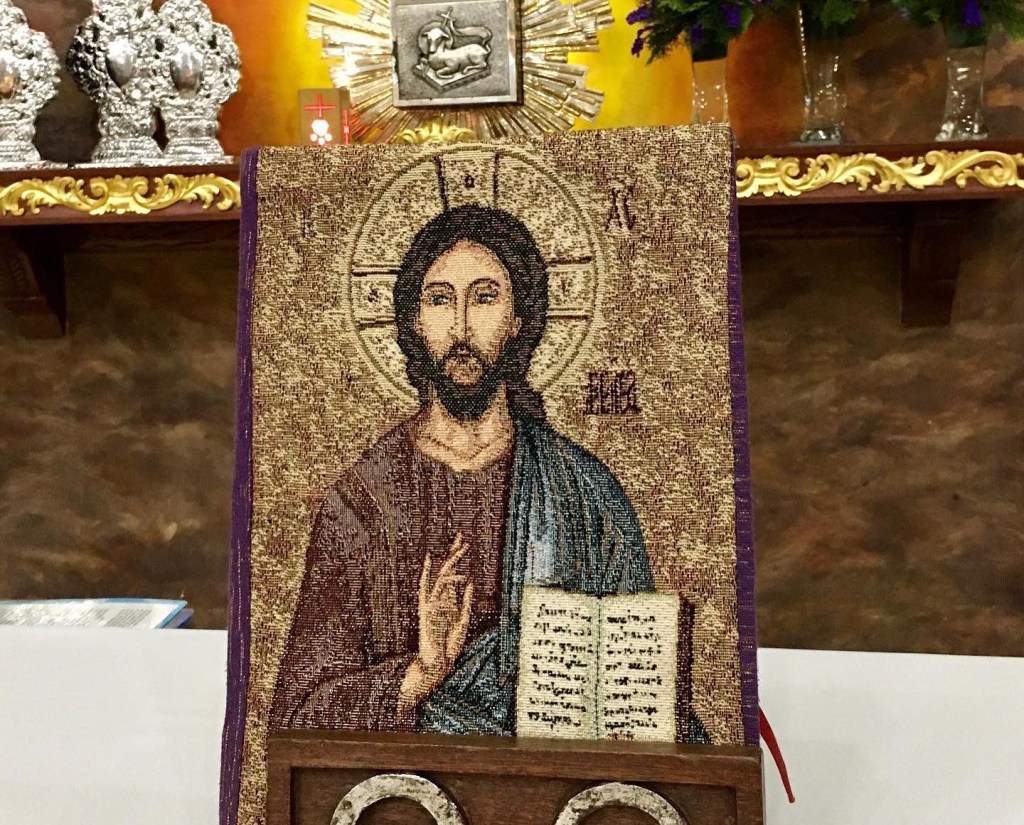
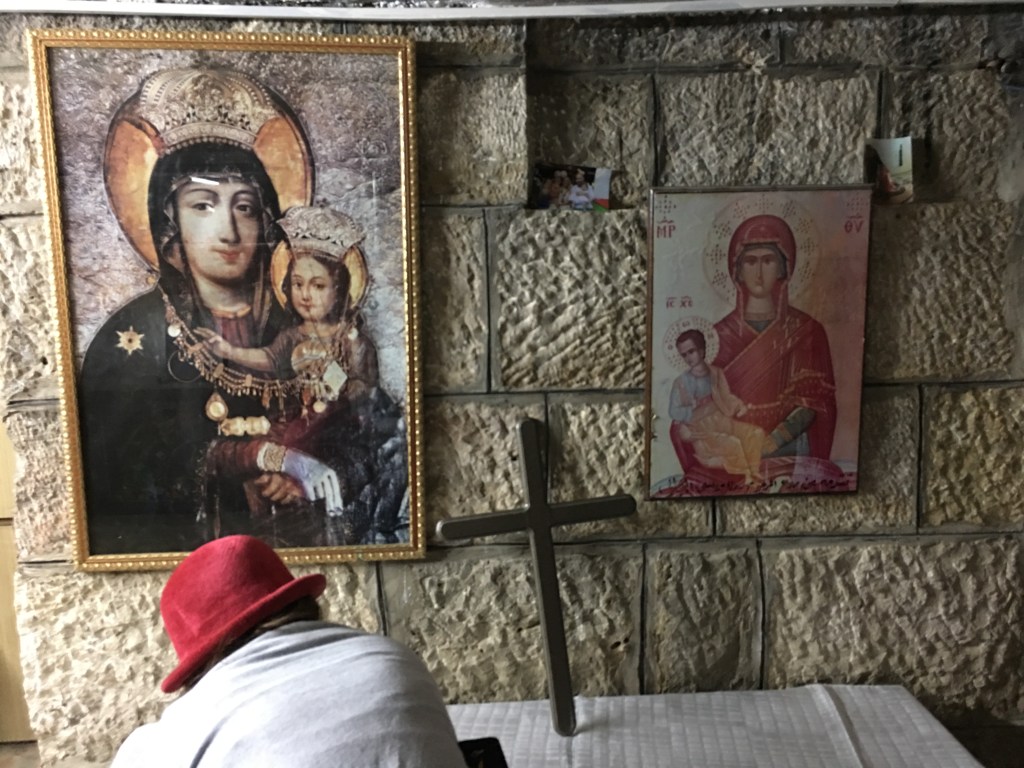
Photo by author at St. George’s Greek Orthodox Church in Madaba, Jordan, May 2019.
Teach me, O Lord, when to speak -
not only how and what to speak;
Teach me, O Lord, to speak only 
when you want me to speak,
only after you have spoken and 
I have listened.

When Samuel went to sleep in his place, the Lord came and revealed his presence, calling out as before, “Samuel, Samuel!” Samuel answered, “Speak, for your servant is listening.” Samuel grew up, and the Lord was with him, not permitting any word of his to be without effect.

1 Samuel 3:10, 19
So many times my words are
without effect because they are
empty of you, Jesus, the Word who
became flesh; many times my words
are without effect because they are
empty of truth and sincerity, no love 
nor mercy, without any kindness and
care or concern.
Sad to say, many times, my words
are filled with evil and malice and lies; 
like the demons you have driven out
in the gospel, never allow me to speak
when my words are not coming from you.
O Lord open my lips,
cleanse my heart of every evil 
and worthless thoughts
so that my mouth shall 
declare your praise.  Amen.

Words, words, words!

The Lord Is My Chef Breakfast Recipe for the Soul by Fr. Nicanor F. Lalog II
Thursday, Week XX, Year I in Ordinary Time, 19 August 2021
Judges 11:29-39   ><)))*> + ><)))*> + ><)))*>   Matthew 22:1-14
Photo by author, Jerusalem at dawn, May 2017.
God our loving Father,
please make me conscious
beginning today of every word
that I say, of its meaning and
implications; better, teach me
to be silent and still, to speak only
when necessary, avoiding especially
making any oath even before you.

Jephthah made a vow to the Lord. “If you deliver the Ammonites into my power,” he said, “whoever comes ot of the doors of my house to meet me when I return in triumph from the Ammonites shall belong to the Lord. I shall offer him up as a burnt offering. When Jephthah returned to his house in Mizpah (after defeating the Ammonites), it was his daughter who came forth, playing the tambourines and dancing. She was an only child: he had neither son nor daughter besides her. When he saw her, he rent his garments and said, “Alas, daughter, you have struck me down and brought calamity upon me. For I have made a vow to the Lord and I cannot retract.”

Judges 11:30-31, 34-35
"Words, words, words!" 
Like Hamlet, we read and say 
many words without meaning, 
falsely believing words become true
when multiplied and said over and over
not realizing the most powerful words
ever spoken where those borne out of
silence when you created everything.
Give us the grace, dear God,
to be like Jesus your Son, 
"the Word who became flesh"
to be a person of credibility
and integrity whose "yes" means "yes"
and "no" means "no" - always dressed
in "wedding garment" for your
banquet in heaven (cf.Mt.22:12-14).
Amen.

When people malign us

The Lord Is My Chef Breakfast Recipe for the Soul by Fr. Nicanor F. Lalog II
Tuesday, Week XVIII, Year I in Ordinary Time, 03 August 2021
Numbers 12:1-13   ><]]]]'> + ><]]]]'> + ><]]]]'>   Matthew 14:22-36
Photo by Mr. Raffy Tima of GMA7-News, Batanes, September 2018.
Dearest God our Father,
you are just, always demanding 
us to be fair and just like you,
to never malign and bear false
witness against one another
especially those serving you.
We pray, loving Father
for those among us buffeted
with nasty talks, malicious
stories and gossips especially 
fake news that besmirch one's name
just to make them or their masters look good.
Miriam and Aaron spoke against Moses
on the pretext of the marriage he had
contracted with Cushite woman.
Now, Moses himself was by far
 the meekest man on the face of the earth.
So at once the Lord said to Moses and 
Aaron and Miriam, "Come out,
you three, to the meeting tent."
Then the Lord came down
in the column of cloud,
and standing at the entrance of the tent,
called Aaron and Miriam.
When both came forward, he said,
"Now listen to the words of the Lord:
Why, then, did you not fear to speak
against my servant Moses?"
So angry was the Lord against them
that when he departed, and the cloud
withdrew from the tent, there was
Miriam, a snow-white leper!
(Numbers 12:1, 3-6, 8-9)
Please, Lord, keep us
 and those being maligned
 to be meek like Moses,
 remaining kind to those
who speak ill about us, especially those
supposed to be closest or dear to us.
Jesus said, "Come."
Peter got out of the boat
and began to walk on the water
toward Jesus.  But when he saw
how strong the wind was
he became frightened; and,
beginning to sink, he cried out,
"Lord, save me!"
(Matthew 14:29-30)
Give us, O God, the courage
and strength to withstand the fierce
winds of criticisms and lies hurled
by our detractors, unlike Peter
let us never doubt the love and mercy
and protection of your Son Jesus we follow.  
Amen.

Making room for God, finding our home in God

The Lord Is My Chef Breakfast Recipe for the Soul by Fr. Nicanor F. Lalog II
Friday, Week XVI, Year I, 23 July 2021
Exodus 20:1-17   ><]]]]'> + ><]]]]'> + ><]]]]'>   Matthew 13:18-23
“The Sower” by Van Gogh from commons.wikimedia.org
It has been raining for a week,
loving God and Father.
Farmers and sowers must be so
delighted to come out in the fields
to sow their seeds while we stay home
trying to keep ourselves dry and warm.
Help us to make room for you, dear Father,
to open up ourselves to the seeds 
of your presence that come to us daily
in your words in the Sacred Scriptures.
Let us be like the fertile soil in the parable
by Jesus "who hears the word and 
understands it, who indeed  bears fruit
and yields a hundred or sixty or 
thirtyfold."  (Matthew 13:23)
Your seed is always good
springing into life wherever it falls
for you alone, O God, is good!
How lovely it is to imagine
that all Ten Commandments sprang up
from just one seed that is YOU, dear Father -
You are the seed we always reject
when You are the seed we all need.
Whenever we choose to commit sin,
we take on other strange gods
and idols besides You that
we worship and follow.
May we open ourselves to You, God
welcoming you like a seed into our little room
so we may find home in You when it blooms.
Amen.

Listening attentively, selectively

The Lord Is My Chef Breakfast Recipe for the Soul by Fr. Nicanor F. Lalog II
Wednesday, Week XVI, Year I in Ordinary Time, 21 July 2021
Exodus 16:1-5, 9-15   ><]]]]'>  +  <'[[[[><   Matthew 13:1-9
Photo by Mr. Jim Marpa, 2018.
Every day God, 
we pray to you
"Our Father in heaven
hallowed be thy name...
Give us each day
our daily bread"
without realizing the daily bread 
you give us that truly nourishes us:
your words of truth and of life
that became flesh in Jesus Christ.
On that day, Jesus went out of the house
and sat down by the sea.
Such large crowds gathered around him
that he got into a boat and sat down,
and the whole crowd stood along the shore.
And he spoke to them at length in parables.
(Matthew 13:1-3)
Thank you very much, dear God
for listening to our prayers,
in giving us the food we need
to nourish our bodies
and your words that sustain us
especially in these trying times.
May we hunger more
for this daily bread from heaven,
listening attentively,
fulfilling your words as you willed them so.
Then the Lord said to Moses,
"I will now rain down bread 
from heaven for you.
Each day the people are to go out
and gather their daily portion;
thus will I test them,
to see whether they follow
my instructions or not."
(Exodus 16:4)
But most of all, O God
teach us to be like you: to be more
selective in our listening,
to be more circumspect with what
to hear and process wherein 
we listen more on essential things 
that matter most than on trivial
and mundane words that are
divisive, preventing our growth
and maturity in our relationships.
If you would listen and act
on everything we say, especially 
our grumblings and complaints, 
no one among us would still be alive;
but you are kind and understanding,
unlike us who listen more on petty
than essential things said by others.
May we be like the good soil
that is open to listen and nurture
words that build and give life.  Amen.

The authority of Jesus

The Lord Is My Chef Sunday Recipe for the Soul
Fourth Week in Ordinary Time, Cycle B, 31 January 2021
Deuteronomy 18:15-20  +  1 Corinthians 7:32-35  +  Mark 1:21-28
Photo by author, ruins of the old Capernaum where Jesus lived, May 2017.

As Jesus began his public ministry last week by the shores of the Lake of Galilee calling his first disciples, Mark presents us beginning today some glimpses into the life and person of the Lord in Capernaum where he grew up and would temporarily base himself.

Then they came to Capernaum, and on the sabbath Jesus entered the synagogue and taught. The people were astonished at his teaching, for taught them as one having authority and not as the scribes. In their synagogue was a man with an unclean spirit… All were amazed and asked one another, “What is this? A new teaching with authority. He commands even the unclean spirits and they obey him.” His fame spread everywhere throughout the whole region of Galilee.

Mark 1:21-23, 27-28

First thing we notice with Jesus is his devotion to Judaism, his going to the synagogue at sabbath to worship God his Father; later we find how during major feasts he would also come to the temple at Jerusalem. What a beautiful reminder that personal faith and relationship with God has to be expressed and lived in a community like in our parishes.

In this glimpse into a typical sabbath day in the life of Jesus, we also find the reason why he launched his ministry from the province of Galilee and not at the center of Israel which is Jerusalem: and that is to serve the poor and marginalized, those neglected with nothing in life who always felt left out and forgotten by everyone.

That is no longer true as we heard him declared last Sunday, “This is the time of fulfillment. The kingdom of God is at hand. Repent, and believe in the gospel” (Mk.1:15).

The author with friends and former colleagues at the ruins of the synagogue at Capernaum where Jesus preached on sabbath (May 2017).

A new teaching, proclaimed with authority

Mark tells us twice in our short gospel this Sunday how the people experienced Christ’s having authority in the way he spoke that was so unlike their scribes. Most of all, the people were amazed at his authority and power of words that expelled an “unclean spirit” from a man at their synagogue.

It was definitely something totally new and different that they wondered if it were a new kind of teaching, not knowing it was already God right in their midst in Jesus Christ, the Word who became flesh!

Today Jesus is teaching us the real meaning of power, his power of authority that actualizes persons and communities. Like the first disciples he had called last week, the people at the synagogue felt his words affecting them within. Their hearts must have been stirred and moved that they felt so good, moving them to share it with everyone that they all shared in the joy of hearing something new, something fresh and uplifting.

And it did not stop there.

The people then witnessed Jesus how drove away with his words an unclean spirit from a possessed man. They were amazed more upon seeing the possessed man freed from unclean spirit that “His fame spread everywhere throughout the whole region of Galilee.”

Such was the impact Jesus made on that day of sabbath at Capernaum that continues to our day especially when we gather for the Sunday Eucharist if we can only share in his authority.

Authority as power is always a service that sets people free.

Photo by author, a column among the ruins of the Capernaum synagogue in Galilee, May 2017.

The word authority came from the Latin verb augere, augeribus meaning “to make something increase” or become better. Akin to the word authority is also the word “author” as in the writer of a book or of a document whose words are regarded as true and correct, worth listening and following.

Therefore, real authority is not just having the power over the people to rule and subjugate them as most of us would always think.

Authority in the real sense is service, the power to enable and empower people so that they may become better persons, that they may mature and transcend themselves to grow as persons with so much potentials for change and development.

True authority always leads people to freedom from darkness and sins, sickness and evil that brings out their giftedness as beloved children of God.

That is the authority of Jesus who declared that he had come to serve and not to be served by giving his life as a ransom for many (Mt.20:28) so that we may all have life in him as our good shepherd, a life in abundance (Jn.10:10).

Jesus is the prophet promised by God to Moses in the first reading who shall come to his people to speak to them his very words of life. And by tracing our being prophets with authority to Moses, the first reading gives us too the only criterion for recognizing the true spokesperson of God: he must always speak the word of God that is always actualizing when spoken with humility and sincerity.

Notice how in our language and culture the close linkages of words and authority are so clearly pronounced and recognized: we call people with authority as “mga taong may sinasabi” because people who wield power always have a say in everything.

But what are they saying? What words would always come out of their mouths? Are they life-giving or inducing death, glorifying evil?

So many times, people say so many things that are nothing and senseless. Ang dami-daming sinasabi wala namang sinabi! That is how we call people without impact and true authority: walang sinabi.

Photo by author before celebrating a Mass at the back of Capernaum near the shore of the Lake of Galilee, May 2017.

How sad these recent years, we priests and bishops complain so often how people would no longer listen to us in the Church.

Could it be that this is due to the fact we have stopped speaking the words of God, when all we care to speak of is what we know, what we think of so we would be powerful and famous specially in the various social media platforms? (See https://lordmychef.com/2021/01/27/from-the-ear-to-the-heart/)

We say so many things but fall on deaf ears, no impact, no life at all because they are not the words of Christ whom we have long forgotten.

Worst, how tragic when we impose our own words, insisting our authority on the people that most often is self-serving, far from true and loving service of Jesus Christ.

Whatever happened to that ideal of lay-empowerment when we would not let people speak or at least listen to their voices and thoughts in running their parish?

Before we can make people listen to the words of God, we in the Church must be the first to listen to his words that come to us in a life of prayer and devotion to the Eucharist. What a hypocrisy on our part when we who are supposed to be unmarried and celibate who are “anxious about the things of the Lord, how he may please the Lord” (1Cor.7:32) would not even spend time to pray and listen to Jesus in the Blessed Sacrament daily.

Every day especially in every celebration of the Mass, Jesus comes to us in his authority to set us free from our fears and anxieties, sickness and sins, anger and resentments, compulsions and addictions among other things that hinder us from truly experiencing the beauty of this life.

Let us all pray today for us to have a share in the authority of Jesus Christ to set us free from our being deaf and dumb, blind and lame in the Church that is also his Body. Amen.

The old and charming Church at Baras, Rizal.

From quarantine to cleansing and proclaiming…

The Lord Is My Chef Breakfast Recipe for the Soul by Fr. Nicanor F. Lalog II
Friday, Week XXXIII, Year II in Ordinary Time, 20 November 2020
Revelation 10:8-11    >><)))*> + >><)))*> + >><)))*>     Luke 19:45-48
Photo by author, National Bible Sunday, 26 January 2020.

Praise and glory to you, Lord Jesus that through this pandemic, you continue to bless us, teaching us valuable lessons we have taken for granted for so long. For the past eight months, we have been doing many quarantine measures to cleanse us and keep us COVID free and healthy, reminding us of the truth of that “cleanliness is next to Godliness”.

Today’s gospel reminds us so well of this need to cleanse ourselves first before we can cleanse people and institutions.

Jesus entered the temple area and proceeded to drive out those who were selling things, saying to them, “It is written, My house shall be a house of prayer, but you have made it a den of thieves.” And every day he was teaching in the temple area. The chief priests, the scribes, and the leaders of the people, meanwhile, were seeking to put him to death, but they could find no way to accomplish their purpose because all the people were hanging on his words.

Luke 19:45-48

People were “hanging on your words”, Lord Jesus, because they could feel power and authority in them for you are the Word who became flesh and dwelt among us.

Purify us, Jesus, like you so that our words may be filled with you.

Let your words not remain sweet only on our lips as experienced by St. John when he ate the small scroll given by the angel to him; let your words disturb us, turn our stomach sour (Rev.10:10) to cleanse us first inside, emptying us of our pride so you can fill us with your Holy Spirit to proclaim your good news of salvation.

May we desire more of being disturbed by your words than being pleased with its beauty that is superficial and can be misleading.

Most of all, may we keep in mind that it is you, dear Jesus, who must increase, who must be known not us in sharing and proclaiming your words. Amen.