The Lord Is My Chef Breakfast Recipe for the Soul by Fr. Nicanor F. Lalog II
Monday, Memorial of St. Aloysius Gonzaga, SJ, 21 June 2021
Genesis 12:1-9   ><)))*> + <*(((><   Matthew 7:1-5
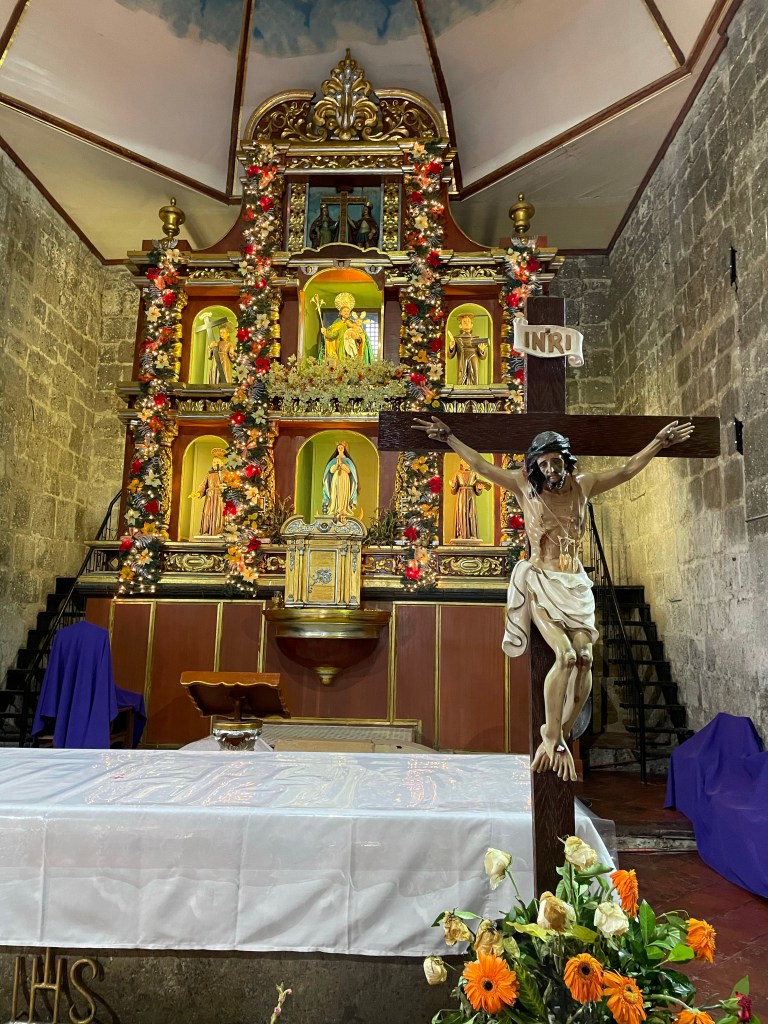
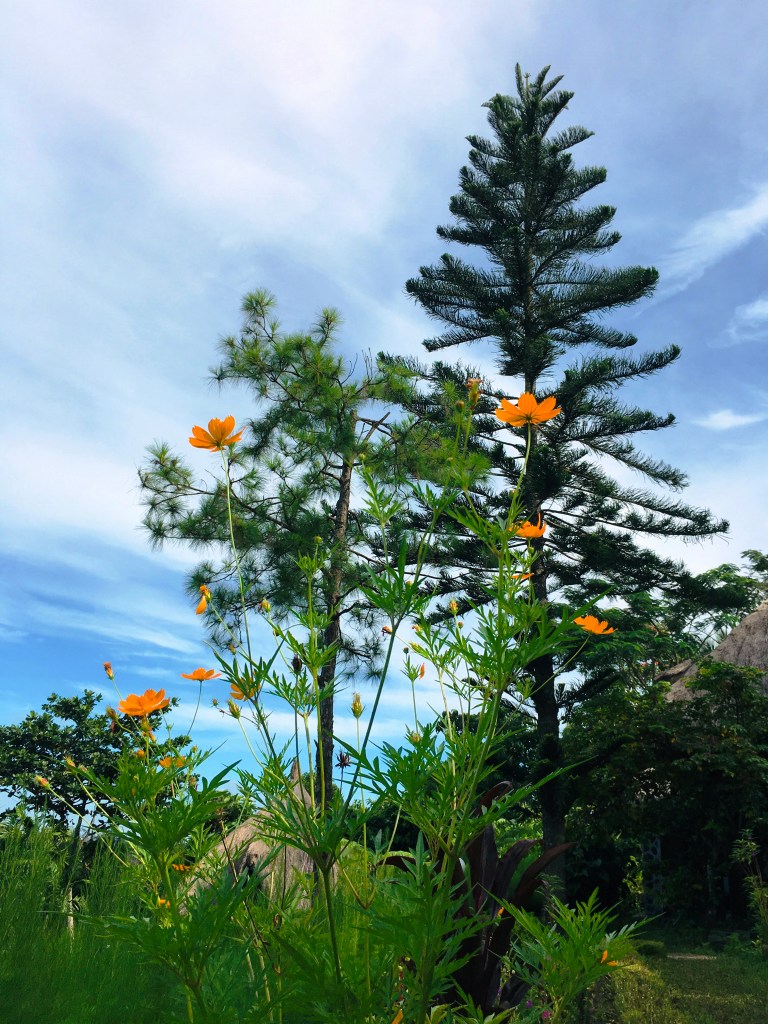
Photo by author, Pulilan, Bulacan 25 February 2020.
Sometimes I imagine dear God if ever the world would ever stop for a while, when everything and everyone freezes from whatever we are doing so that we can take a break from all that is going on in our lives, both good and bad.
I remember this silly thought as I prayed on your words today as we celebrate the Memorial of the Jesuit St. Aloysius Gonzaga, a very young and wealthy scion during the middle ages. In the first reading, you have called Abram, a very old man at 75 years of age and also very wealthy and prosperous.
I guess we will never stop, O God, because you keep on calling us to you, whether young or old.
And always wealthy.
More than the material wealth and possessions of Abram and St. Aloysius, you call each one of us to serve you because everyone is so blessed with something always to offer and give. Even give up and surrender to you.
You always see each one of us with so much love and trust, of being gifted with so much to offer and give.
Problem is we cannot see ourselves the way you see us.
Too often, we waste our energies and time stopping to look at others, to criticize others and find faults at everyone except us.
How ironic that you see only the good things in us whether young or old while we are busy finding faults and unpleasant things with others!
Help us through Jesus Christ your Son to “Stop judging, that we may not be judged. For as we judge, so shall we be judged, and measures with which we measure will be measured out to us” (cf. Mt.7:1-2).
Please, open our eyes dear God see ourselves the way you see us with love and appreciation for our many gifts and talents that are wasted as we find faults with others. Amen.
The Lord Is My Chef Breakfast Recipe for the Soul by Fr. Nicanor F. Lalog II
Friday, Solemnity of the Most Sacred Heart of Jesus, 11 June 2021
Hosea 11:1, 3-4, 8c-9  ><)))'>  Ephesians 3:8-12, 14-19  ><)))'>  John 19:31-37
Photo by author, Sacred Heart Spirituality Center, Novaliches, QC, 2018.
So many times in life, we think we have loved so much, that we are a good and loving person when it is all an illusion because in reality, we have actually failed in truly loving the people and institutions we profess to love so much.
It is always easy to say in so many words, even to brag to our very selves and others of how much we love our family and friends, our country, our Church, and our company. But, when a little discomfort happens that result from misunderstanding or miscommunications, or a few mistakes and shortcomings, we flare up in anger expressing it in harsh words and deeds, hurting the people we supposedly love.
Not only that. Long after an unloving incident, we later hold grudges that we cannot forgive and forget, hurting us most in the process when sanity returns and see how we have broken a beautiful relationship.
But, it is not all that bad.
We all have our low moments in not showing how much we truly love like Simon Peter denied knowing the Lord three times on Holy Thursday evening while being tried by members of the Sanhedrin after their last supper. And very much like him too at the shore of Lake Tiberias eight days after Easter, we profess to Jesus and our loved ones that “you know everything; you know I love you” (Jn.21:17).
Our imperfect human love in God’s perfect love
We celebrate today the Solemnity of the Sacred Heart to be reminded of God’s immense love for us despite our failures and fears in expressing that love he continues to pour upon us through his Son Jesus Christ our Lord.
It is the third major feast of the Lord since we have resumed the Ordinary Time after Pentecost to instill in us God’s deep, personal love for us through Jesus Christ with whom we have become brothers and sisters, beloved children of the Father in heaven.
Thus says the Lord: When Israel was a child I loved him, out of Egypt I called my son. Yet it was I who taught Ephraim to walk, who took them in my arms; I drew them with human cords, with bands of love; I fostered them like one who raises an infant to his cheeks; yet, though I stooped to feed my child, they did not know that I was their healer.
Hosea 11:1, 3-4
See how God had always loved us like a loving father to his son or daughter.
Try to feel God speaking through Hosea in the first reading reminding us of his great love for us, doing everything to free us from the bondage and slavery of every form of evil.
But, like our own experiences with our parents as we grow older, the more we distance ourselves away from them and from God who always come to get nearer and intimate with us: “A child I loved you, I called you my son; and the more I called you, the farther you went away from me” (cf. Hos.11:1-2).
What have happened to us as we matured?
We have become so cerebral, thinking more, and feeling less, always trying to assert our independence, our strength, and self-reliance when the sad truth is we are all weak inside who cannot accept and believe the fact that we are truly loved by God and by others!
Imagine this lovely scene of God reminding us of his great love for us just like our Dad: “I took you in my arms with hands of love; I fostered you like one who raises an infant to his cheeks yet though I stooped to feed my child, you did not know I was your healer” (cf. Hos.11:4).
Here lies the problem with all our praying and loving that are detached from God, something like an echo of the elder brother in the parable of the prodigal son!
When our love for God is superficial, our love to our family and friends, to our institutions and other relationships become skin deep too. Our many love experiences are forgotten as we give more emphasis on others’ shortcomings and to our expectations from them.
We find it so hard and difficult
to truly love God and those dearest to us
not because we are bad and evil
but primarily we ourselves are not convinced we are loved.
Today's readings remind us
that human love is imperfect,
only God can love us perfectly.
We find it difficult to truly love unconditionally because deep inside us is a festering anger or hatred for our parents or siblings or friends who have hurt us a long time ago but we are so afraid to bring out in the open or just simply cast away or transcend so we can move forward to deeper and matured love in Christ.
Of course, there is that love remaining in our hearts but inert because we cannot accept nor be convinced that we are truly loved by God and by others.
We find it so hard and difficult to truly love God and those dearest to us not because we are bad and evil but primarily we ourselves are not convinced we are loved. Today’s readings remind us that human love is imperfect, only God can love us perfectly.
Thus says the Lord: My heart is overwhelmed, my pity is stirred. I will not give vent to my blazing anger, I will not destroy Ephraim again. For I am God and not man, the Holy One present among you. I will not let the flames consume you.
Hosea 11:8-9
Just keep on loving no matter how imperfect we may be for God perfectly knows us so well as humans with so many weaknesses and limitations.
God’s universal and personal love for us in Christ
We can never truly experience
God's personal love for us in Jesus Christ
unless we are first convinced of his great love for us
despite our sinfulness and weaknesses.
The more we doubt the love of Jesus,
the more we hurt him,
the more we hurt others,
and the more we hurt our selves.
Photo by author, St. Joseph Parish, Baras, Rizal, January 2021.
This personal and fatherly love of God is what St. Paul had always shared and elaborated in his many writings and teachings. See how he humbly introduced himself in our second reading as “the very least of all the holy ones, this grace was given, to preach to the Gentiles the inscrutable riches of Christ” (Eph.3:8).
More sinful compared to Simon Peter, Saul as he was called before his conversion persecuted the first Christians, having a direct hand in the stoning to death of our first martyr St. Stephen (Acts 8:1). Yet, in God’s fatherly love and mercy, Jesus appeared to him on the road to Damascus that led to his conversion. He would later insist in his letters how he had experienced both the universal and personal love of God through Jesus Christ.
St. Paul was so good and effective as an apostle because he was so convinced that while Jesus had died and rose for all, he also died personally for him (St. Paul) as an individual! He was the first to elaborate the universality of God’s love through Jesus Christ’s dying on the Cross and the subjectivity of his death and love for each one of us.
From being a sinner to becoming a believer, from a persecutor to an apostle, St. Paul tells us in the second reading today how he had experienced this love of Christ in himself which we can all personally experience too, praying that we may “be strengthened with the Holy Spirit to comprehend the breadth and length and height and depth, and to know the love of Christ that surpasses knowledge, so that we may be filled all the fullness of God” (Eph.3:16, 18-19).
We can never truly experience God’s personal love for us in Jesus Christ unless we are first convinced of his great love for us despite our sinfulness and weaknesses. The more we doubt the love of Jesus, the more we hurt him, the more we hurt others, and the more we hurt our selves.
Thank goodness God knows us so well that despite our doubts in him, his mercy is always stirred, not allowing his anger to consume or destroy us. On the contrary, the more we hurt God, the more he loves us until we are convinced that we are truly loved by him!
So the soldiers came and broke the legs of the first and then of the other one who was crucified with Jesus. But when they came to Jesus and saw he was already dead, they did not break his legs, but one soldier thrust his lance into his side, and immediately blood and water flowed out.
John 19:32-34
It was from this scene that we find the meaning of the Sacred Heart of Jesus that was pierced after offering himself on the Cross as the sign and symbol of God’s unique love for us all. For the evangelist, that flowing of blood and water from the pierced side of Jesus was a special “sign” pointing to the work and mission of Christ which is our own salvation.
But aside from linking the blood and water that flowed out from the Lord’s pierced side with the two prominent sacraments known by then early Christians, namely, Baptism and Eucharist, St. John as a witness to the event showed us how two natural elements that are so personal to everyone as signs of God’s intimacy with us.
On this Solemnity of the Sacred Heart, God is reminding us of his immense love for us expressed most personally in the self-sacrifice of his Son our Lord Jesus Christ in whom we have all become the Father’s beloved children.
Despite our ingratitude to his Fatherly love for us, God cannot let himself be angry to chastise us as we deserve. Instead, he kept on forgiving us for our sins, sending us his Son Jesus Christ to redeem us.
Today Jesus is inviting us to go back to our Father – our Dad who watched and guided us through life without our knowing – to be convinced of his personal love for each of us. Outside of him, we can never find peace nor joy nor fulfillment. That is why the human heart of Jesus is always here with us as the revelation of the Father’s boundless love for us.
Let us experience anew his tenderness and forgiveness so that we may grow too in our love for God through one another despite our many sins and weaknesses.
Jesus, meek and humble of heart, make our hearts like yours! Amen.
The Lord Is My Chef Breakfast Recipe for the Soul by Fr. Nicanor F. Lalog II
Wednesday in the Fifth Week of Easter, 05 May 2021
Acts 15:1-6  ><)))'> + <'(((><   John 15:1-8
Photo by author, Mount St. Paul Center for Spirituality, La Trinidad, Benguet, January 2020.
Jesus said to his disciples:
"I am the true vine, and my Father
is the vine grower.  He takes away every branch
that does not bear fruit, and everyone that does
he prunes so that it bears more fruit.
You are already pruned
because of the word that I spoke to you."
(John 15:1-3)
Thank you very much, Lord Jesus Christ, for finding me, taking me, and making me a branch of you our true vine. Most of all, thank you that I have been “pruned” because of the word you spoke to me.
But, what does it really mean to be pruned?
Yes, it has been a very, very long and tedious journey with you, Lord Jesus. And just maybe, I have grown and been fruitful after all those years in having identified with you closely and with your values and ideals. However, it is not enough.
I know… the pruning never stops until it is only you who is seen in me as I fade from the scene.
I could feel my need for more pruning, Lord, especially at times when I still insist on myself, on what I believe, on what I see as most important for you and for others.
Like those early Jewish converts to Christianity, particularly those who belonged to the party of Pharisees insisting that Gentile converts must be circumcised and observe other prescriptions of the Mosaic law (Acts 15:5).
There are still many things to be pruned in me, a lot of trimmings here and there that need to be cut off and removed until the “me” in me is totally gone, and only you remain.
Preparing for a Mass by the shore of Lake Tiberias in Capernaum, 2017.
Pruning is painful, Lord, but as time goes by, as the Father prunes me unknowingly in daily prayers and striving to be patient and better person, perhaps it is slowly bearing fruit as I begin to see you more clearly in my life.
And all the more the pruning must continue until everything becomes new in me!
Keep me open to you, dear Jesus, like the Apostles and the presbyters who met together to see about the issues raised by the Jewish converts to Christianity in the first reading.
Let me be open to other possibilities of meeting you, of sharing you, of working in you and with you by denying some of my natural appetites and tendencies.
Give me the grace to gladly and willingly give up whatever I hold on and keep that is contrary to you so that in the end, You are are my only joy and consolation, O dear Jesus. Amen.
40 Shades of Lent by Fr. Nicanor F. Lalog II
Thursday, Fourth Week in Lent, 18 March 2021 (St. Cyril of Jerusalem)
Exodus 32:7-14     ><}}}*>  +  <*{{{><     John 5:31-47
Illustration from chabad.org.
God our Father in heaven, forgive us for being constantly in the same situation like your people at the wilderness when Moses was up conversing with you on Mount Sinai. So many times we are like them, creating our own golden calves, turning away from you our true God.
So many times in life, we simply want to be in total control of everything that we doubt you, even grow impatient with you because we have other agendas in life like being god like you! And so, we make golden calves of everything we like to believe in, including in our selves.
Jesus said to the Jews: “You search the Scriptures, because you think you have eternal life through them; even they testify on my behalf. But you do not want to come to me to have life. I do not accept human praise; moreover, I know that you do not have the love of God in you. I came in the name of my Father, but you do not accept me; yet if another comes in his own name, you will accept him.”
John 5:39-43
You said it perfectly right, Lord Jesus: “I know that you do not have the love of God in you. I came in the name of my Father, but you do not accept me; yet if another comes in his own name, you will accept him.”
As we turn to idolatrous worship of our selves, then we stop loving you in others both in our hearts and in our hands. When we begin manipulating everything and everyone even our very own belief system, especially your gift of faith in each of us, that is when we become gods.
When we stop believing in you, then we stop loving, we stop relating, we stop authentic living as we forget others.
Forgive us, Lord, and look kindly upon us like at Sinai, reminding us always of the many blessings the Father showers us despite our sinfulness. Teach us to be grateful always so we may learn humility and embrace our humanity to start believing in you and love again by turning away from sins.
Once again, let your tender compassion, Lord, break upon us this Lent so we may begin to love and care, be tender with those who suffer amid our own pains and trials in life. Teach us to believe in you again to realize that wherever there is loving service, tenderness, and care for the weak and lowly, there you are too! Amen.
40 Shades of Lent by Fr. Nicanor F. Lalog II
Ash Wednesday, 17 February 2021
Joel 2:12-18   >><)))*>  2Corinthians 5:20-6:2  >><)))*>  Matthew 6:1-6, 16-18
Photo by author, chapel at Franciscan Monastery at Mt. Nebo in Jordan overlooking the Promised Land or Holy Land, May 2019.
Today we begin our annual Lenten pilgrimage with Ash Wednesday in the very different situation and conditions of the COVID-19 pandemic now in its first full year. Although this may be the most unusual, both unreal and surreal Lent since the end of Second World War, this could also be our most real Lent so far.
Being real means getting into the very core of our very selves, focusing on the more essential that are invisible to the eyes. Since the popularity of social media and smart phones, life has become more of a big show than of living that we care more of lifestyles than life itself.
All three readings today invite us to get real, to confront our true selves, stop all pretensions by letting go of our many excuses and alibis. No more ifs and buts. Just our bare selves before God for tomorrow or later may be too late. St. Paul’s words perfectly express the challenge and beauty of Lent 2021:
Brothers and sisters: We are ambassadors for Christ, as if God were appealing through us. We implore you on behalf of Christ, be reconciled to God. Behold, now is a very acceptable time; behold, now is the day of salvation.
2 Corinthians 5:20, 6:2
Lent is a journey into inner self
to reach out to God through others.
The forty days of Lent are a journey characterized by three important acts so central not only to Christianity but also to the other two great faiths of the world, Judaism and Islam. These are fasting, prayer and alms giving. Through these acts, we journey back into our very selves in order to reach out to God through others.
And we start by cleansing our very selves through the putting of dry ashes on the crown of our head instead of the more usual imposition on forehead to prevent the spread of COVID-19.
The use of ashes as an outward sign of our inner cleansing beautifully tells us of its being natural cleansing agents long before the invention of chemical solutions. As such, being closest to earth, ashes remind us so well of our mortality, “for dust thou art and unto dust shall you return”!
However, though we are all marked for death as the ashes signify, they are blessed at the start of today’s Mass to remind us too that we die in Jesus Christ because ultimately, we return to God who is our true origin and end.
Hence, the need to cleanse our very selves by emptying ourselves of all the dirt and filth of sin inside that have marred our image and likeness in God. More than the outward appearance of putting ashes on our heads to signify cleansing is its internal significance of cleansing within by self- emptying through fasting.
In fasting, we cleanse our inner selves by denying ourselves not only of food but also of the usual things that fill us especially in this age of affluence and consumerism. Not only of material things but anything that make us forget God and others, that make us forget that we are mere mortals, weak and imperfect.
By fasting, we empty ourselves of our pride to be filled with Christ’s humility, justice, and love so we realize the world does not revolve around us. That we do not need so many “likes” and “followers” like in social media that inflate our ego but still leave us empty and lost.
And now is the perfect time, as St. Paul reminds us.
When we look back in this past year, so many of our relatives and friends have died, some alone, due to COVID-19 and other illnesses. The pandemic had grimly reminded us of life’s fragility and the need to be more loving always because we’ll never know if we can still be with everyone.
Fasting reminds us who and what are most essential in this life like God, life, and loved ones. Not likes or followers, luxuries, money, fame, or food.
In Tagalog, the word for meat is “laman”; to fast and go without meat literally means “walang laman” which also means “empty”!
When we fast and become empty, then we create space for God and for others.
That is why it is easier to pray and be one with God in meditation and contemplation when our stomach and senses are empty because we become more sensitive to his presence in Jesus. Silence in itself is a kind of fasting, the very key to any form of prayer.
Who needs to look gloomy when fasting when we are filled with the most wonderful and essential in this life who is God as Jesus tells us in the gospel, “When you fast, do not look gloomy like the hypocrites” (Mt.6:16).
In the same manner, whatever we save in our fasting, whatever we deny ourselves, we give and share with others in alms giving. Try opening your Facebook. What fills up your page? Your selfies? Your me-time? Your work and errands? Whatever fills your FB page, most often it always gratifies you for better and for worse. And yes, of course, they all indicate how glamorous and fabulous is your life.
This Lent 2021, so many people have lost their jobs. So many are struggling to make ends meet. Others’ sufferings have become more unbearable not only with financial difficulties but simply due to difficult conditions traveling to undergo chemotherapy or dialysis.
Life has been so unreal, even surreal for all of us since last year. And God is the one most sad of all in what we have been going through in this pandemic. But he cannot do anything for us because we still rely so much with our very selves, with our science and technology that all feed on to our pride and selfishness. Every day we hear of news of all kinds of abuses and lack of kindness going on, even among states and governments in the allocation of vaccines.
The pandemic is not purely medical and biological in nature but something spiritual.
Now, more than ever, is the Prophet Joel’s call more true:
Even now, says the Lord, return to me with your whole heart, with fasting, and weeping, and mourning. Rend your hearts, not your garments, and return to the Lord, your God. For gracious and merciful is he, slow to anger, rich in kindness, and relenting in punishment.
Joel 2:12-13
If there is anyone who wishes this pandemic to end so we can see and be near with each other without any fear of getting sick, of dying, that must be God. Like St. Paul, let us implore everyone to be reconciled with God right in our hearts by taking our fasting, praying, and alms giving seriously. Amen.
The Lord Is My Chef Breakfast Recipe for the Soul
Wednesday, Memorial of St. Scholastica, Virgin, 10 February 2021
Genesis 2:4-9, 15-17     >><)))*>  +  >><)))*>  +  >><)))*>     Mark 7:14-23
Photo by author, Camp John Hay, August 2019.
Praise and glory to you, God our loving Father and Creator of heaven and earth. Yes, we may be so small in this vast universe but it is in our smallness you have made us so great by creating us at the center of all your creation, the master of our world!
the Lord God formed man out of the clay of the ground and blew into his nostrils the breath of life, and so man became a living being. Then the Lord God planted a garden in Eden, in the east, and he placed there the man whom he had formed. The Lord God then took the man and settled him in the garden of Eden, to cultivate and care for it. The Lord God gave man this order: “You are free to eat from any of the trees of the garden except the tree of knowledge of good and evil. From that tree you shall not eat; the moment you eat from it you are surely doomed to die.”
Genesis 2:7-8, 15-17
Forgive us, dear God when we always forget that our freedom is never absolute; that from the beginning there has always been exception in doing everything.
Yes, we are the master of our world but YOU remain our Master; hence, the primary task of keeping this relationship with you always intact, always maintained, always whole and never separated from you.
From this relationship flows everything that is beautiful in your creation, O God: from each one of us who is a microcosm of the universe, a paradise within with all the gifts and abilities to become according to your plan and, on to the whole world you have given to us as a gift we must take care and nurture by responsibly enjoying it, neither harming nor destroying it.
Photo by author, Petra at Jordan, May 2019.
Alas, like what Jesus reminds us today in the gospel, we have defiled our inner selves with evil and sins so that from our hearts come unclean thoughts and actions.
Though we may no longer have those issues of unclean food like during your time, dear Jesus, we remain focus on so many trivial things that we ignore the real evils right in our hearts.
Through the prayers of St. Scholastica, help us to consecrate ourselves to you, O God, to be pure and simple in our thoughts and ideals, words and actions that reflect your true beauty and majesty in simply being good and holy. Amen.
The Lord Is My Chef Breakfast Recipe for the Soul by Fr. Nicanor F. Lalog II
Thursday, Memorial of St. John Paul II, Pope, 22 October 2020
Ephesians 3:14-21     >><)))*>  +  <*(((><<     Luke 12:49-53
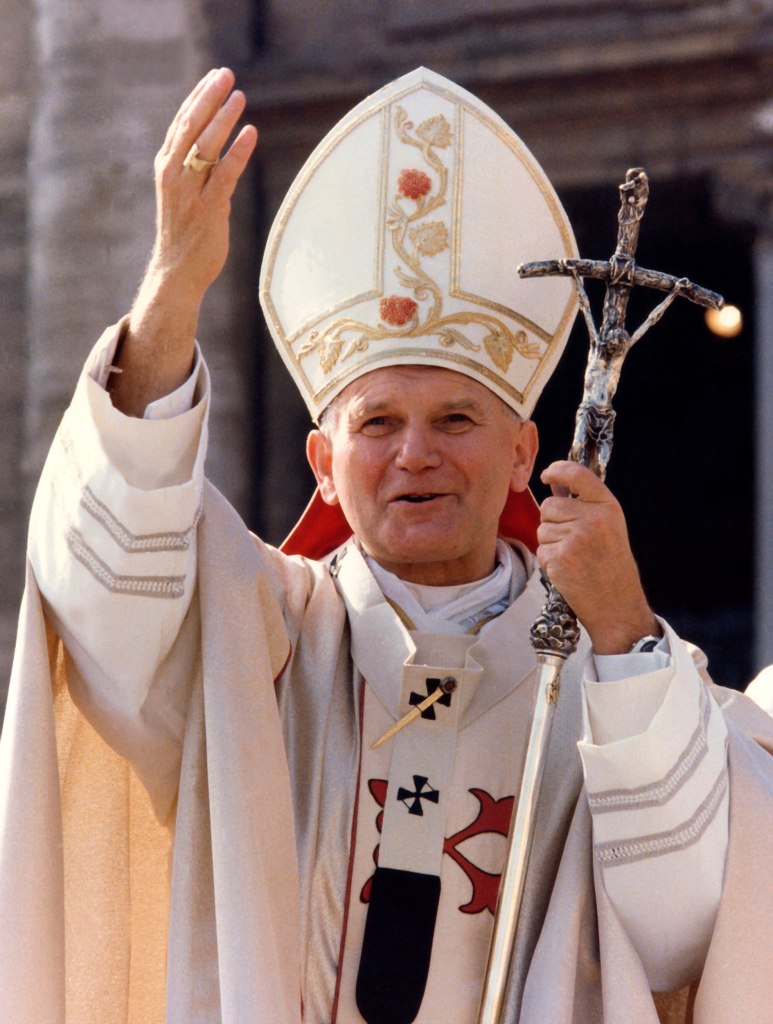
Pope John Paul II waves to well-wishers in St. Peter’s Square at the Vatican in 1978 when he was elected as the 263rd successor to St. Peter (CNS photo/Arturo Mari, L’Osservatore Romano).
One of the things I am so thankful to you, O God our Father in making me live in this generation is your gift to us of a great shepherd in St. John Paul II whose memorial we celebrate today. It is a tremendous blessing from you to grace our years of existence along with a great man like him who had overcome so many difficulties and struggles in life, being orphaned at a very young age from his mother, then from his father and later from his only beloved brother, not to mention his coming from Poland, a country exploited by foreign powers and subjected to communism for the longest time.
In his entire life, Lord, you have always manifested your loving presence in him and destined him to be your sign in this most difficult period in history when men and women have gravely challenged you with so many evil and sins, including some priests you have called to serve.
Praise and glory to you, O God, for the great St. John Paul II, a man rooted and grounded in love!
and that Christ may dwell in your hearts through faith; that you, rooted and grounded in love, may have strength to comprehend with all the holy ones what is the breadth and length and height and depth, and to know the love of Christ that surpasses knowledge, so that you may be filled with all the fullness of God.
Ephesians 3:17-19
What a beautiful prayer by St. Paul after extolling your love to call us all to be your children by having faith in your Son Jesus Christ!
What a beautiful prayer by St. Paul so perfect for today the memorial of St. John Paul II, a man rooted and grounded in love!
But, beyond the beautiful language, teach us, Father, what is to be rooted and grounded in love to know the love of Christ that surpasses knowledge, to be filled with all of your fullness?
Roots refer to something inside, deep within and hidden, not seen; on the other hand, grounded is something outside, above and seen.
What do you mean, Father?
It is so demanding but that is what to follow you, to be set on a blazing fire of purification in Jesus Christ (Lk. 12:49), to be one with him on the Cross so that inside and outside, we are totally yours with Mary like St. John Paul II’s Totus Tuus!
St. John Paul II, pray for us to be not afraid to follow Jesus and be one with the Father in the power of the Holy Spirit. Amen.
The Lord Is My Chef Breakfast Recipe for the Soul by Fr. Nicanor F. Lalog II
Thursday, Week XXV, Year II in Ordinary Time, 24 September 2020
Ecclesiastes 1:2-11     >><)))*>  +  +  +  <*(((><<     Luke 9:7-9
Photo by author, Shambala in Silang, Cavite, 22 September 2020.
Vanity of vanities, says Qoheleth, vanity of vanities! All things are vanity! What has been, that will be; what has been done, that will be done. Nothing is new under the sun. Even the thing of which we say, “See, this is new!” has already existed in the ages that preceded us.
Ecclesiastes 1:2, 9-10
Praise and glory to you, O God our loving Father for this brand new day that offers us with fresh opportunities to become better and the best. Most of all, a call to be more loving, more gentle, and more kind like you.
Yes, it is true that “Nothing is new under the sun. Even the thing of which we say, ‘See, this is new!’ has already existed in the ages that preceded us.” Everything in life becomes a vanity if lived without you.
In the beginning at Genesis, you have made everything beautiful, entrusting it all to us with the sacred task of keeping that beauty making us your co-workers in the world. But, alas! We have turned away from you in sins that we have disfigured ourselves and destroyed nature in the process.
The temptation to be like you, O God, that tempted Adam and Eve continues to this day and the more we pretend to be all-knowing and all-powerful like you, the more everything becomes a vanity.
Like Herod in the gospel, the more we try to set the new order of things in life, the more we are disturbed of the past because it is only in you O God our Father through Jesus Christ your Son has everything been made new again. You were the one who have designed everything in this life and had ordered it all to one definite direction of ending in you because everything is yours after all.
Forgive us for playing gods, manipulating not only ourselves but even others and nature.
Teach us through Jesus to be humble, to welcome the good news of salvation into our lives for it is only in our hearts full of contrition for our sins where everything becomes new again in this world as we begin seeing everything and everyone in your light. Amen.
Photo by author, sunset at Shambala in Silang, Cavite, 22 September 2020.
The Lord Is My Chef Breakfast Recipe for the Soul by Fr. Nicanor F. Lalog II
Monday, Feast of St. Matthew, Apostle and Evangelist, 21 September 2020
Ephesians 4:1-7, 11-13   >><)))*>   +   <*(((><<   Matthew 9:9-13
Photo by author, Lake of Galilee at the side of Capernaum where Jesus called Matthew the tax collector, May 2019.
Glory and praise to you, O God our loving Father! Your Son Jesus Christ never fails to surprise us with your wondrous plans for us, with your ways of calling us, and of coming to us!
As we celebrate today on this first working day of the week the feast of St. Matthew, you fill us with hope and inspiration to work harder and pray hardest in life to find fulfillment in you our God.
Thank you for being so kind to come and call us like St. Matthew, Lord Jesus. It was a very extraordinary call not because we are so special but actually unimportant with Matthew also known as Levi belonged to the most despised group of people at that time in Israel, the tax collectors who were always mentioned along with sinners and prostitutes. And so were Matthews’s contemporaries at Capernaum, the brothers Simon and Andrew, James and John who were all fishermen, the most ordinary folks doing the most ordinary jobs of that time.
We were all just like them – nothing special and unimportant! If not for your call, we would be nobody at all even in our family circles.
What a joy that even if some people reject us for various reasons, you O Lord never exclude anyone of us from your friendship. Most of all, you even defend us.
While he was at table in his (Matthew’s) house, many tax collectors and sinners came and sat with Jesus and his disciples. The Pharisees saw this and said to his disciples, “Why does your teacher eat with tax collectors and sinners?” He heard this and said, “Those who are well do not need a physician, but the sick do. Go and learn the meaning of the words, I desire mercy, not sacrifice. I did not come to call the righteous but sinners.”
Matthew 9:10-13
Give us the readiness and firmness of St. Matthew in leaving everything behind to follow you, Lord.
Like St. Matthew who “got up (rose in some translations) and followed you” (Mt.9:9) right after you have called him, help us realize that following you requires our detachment from our sinful situations, from things and people who prevent us from totally loving you and serving you.
Help us Lord to arise from our dark, sinful past so we can radiate your light in our version of your gospel like St. Matthew. Amen.
“The Calling of St. Matthew”, painting by Caravaggio (1599-1600) said to be one of the favorite pieces of art Pope Francis used to frequent while still a student in Rome. Photo from Wikipedia.org.
The Lord Is My Chef Breakfast Recipe for the Soul by Fr. Nicanor F. Lalog II
Thursday, Week XXIV, Year II in Ordinary Time, 17 September 2020
1 Corinthians 15:1-11     ///     Luke 7:36-50
Photo by author, Church of the Our Father, outside Jerusalem, May 2019.
I have noticed lately, Lord Jesus, how your words are so relevant with how things are going in our lives as individuals and as a nation in this time of the pandemic. How sad that until now we still do not get the full meaning of this pandemic, of how our morals are being put into test, our faith and beliefs challenged to be more authentic, and be real with the love you have poured upon us.
Like the Corinthians, we are so concerned with our trivial pursuits for things that are selfish and self-centered, forgetting the heart of the gospel the Church proclaims since the time of the Apostles: your saving death and resurrection, O sweet Jesus, that has been faithfully handed on from believing generations to the next.
Maybe if we believers focused more on this saving message and its implications, there would be less divisions among us in the Church because we would be more loving to one another, especially to fellow sinners trying to rise from sinful lives.
Like in the gospel scene where the Pharisees were so concerned with the sinfulness of the woman who poured oil and perfume on your feet, Lord. So often, we forget we are all forgiven sinners, becoming arrogant, feeling better and higher than the rest.
Jesus said to him in reply, “Simon, I have something to say to you.” “Tell me, teacher,” he said. “Two people were in debt to a certain creditor; one owed 500 days’ wages and the other owed 50. Since they were unable to repay the debt, he forgave it for both. Which of them will love him more?” Simon said in reply, “The one, I suppose, whose larger debt was forgiven.” He said to him, “You have judged rightly.”
Luke 7:40-43
Let us always remember, Lord, that faith in you, in your Passion, Death, and Resurrection is a call for us to be more loving with others. Let us be concerned in sharing this love in words and in deeds like your Jesuit St. Robert Bellarmine who labored so hard for the Church in keeping your love alive during his time. Amen.