The Lord Is My Chef Daily Recipe for the Soul by Fr. Nicanor F. Lalog II
Friday, Memorial of St. Bonaventure, Bishop & Doctor of the Church, 15 July 2022
Isaiah 38:1-6, 21-22, 7-8   ><]]]'> + ><]]]'> + ><]]]'>   Matthew 12:1-8
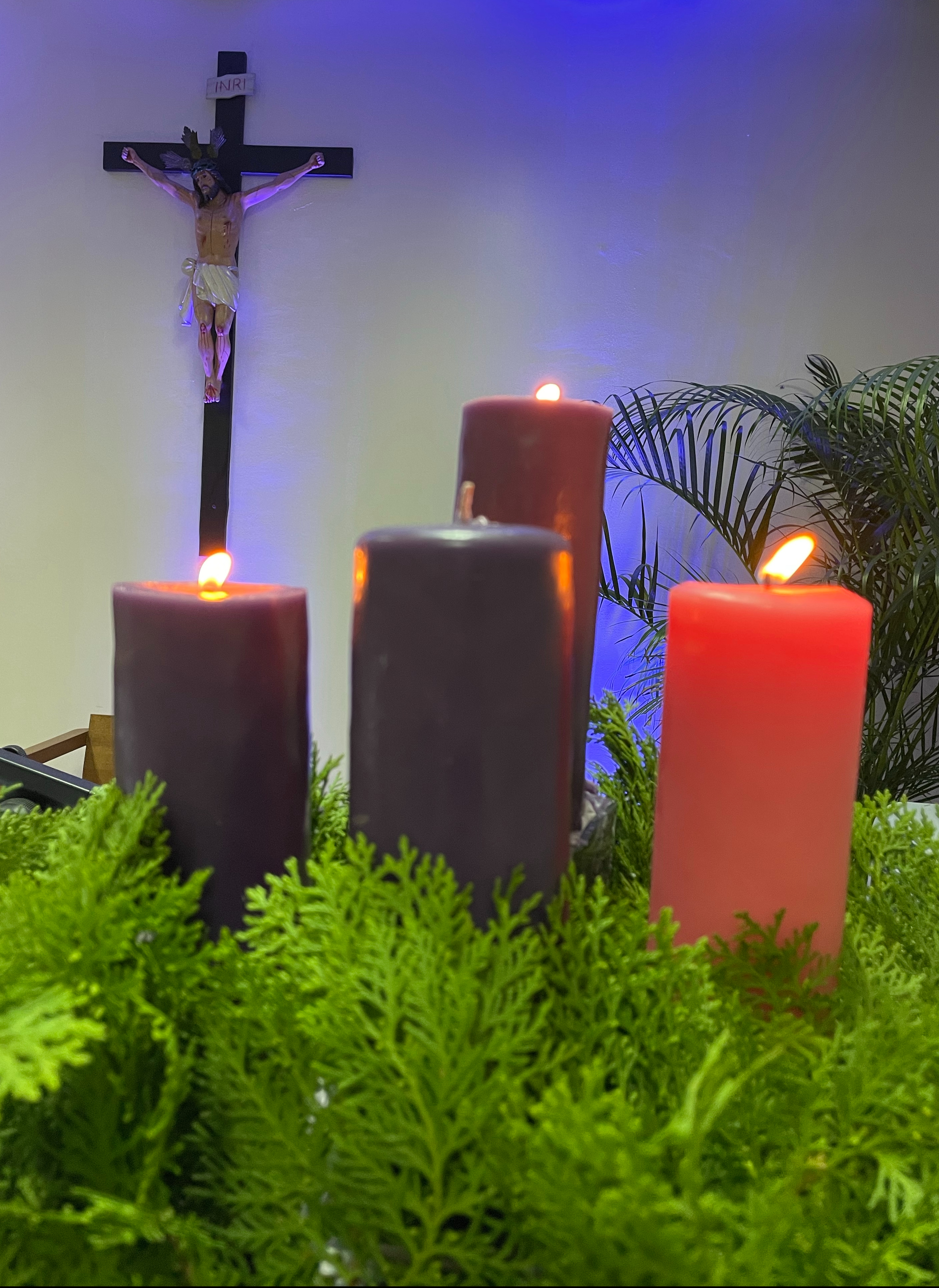
Photo by author, 2020.
Praise and glory to you,
our loving God and Father
for another week that had passed,
we are halfway through July,
and most of all,
thank you for all the wonderful
gifts and blessings you
have given us without us even asking
you these.
Truly, that is how much you love us
which we fail to recognize, of how you
lavish us with blessings we never asked
for but so necessary, so important.
Teach us to be like you, God:  to be more
loving than precise in keeping tabs
with our obligations;
Teach us to be like King Hezekiah in
the first reading:  he never asked to be
healed of his sickness nor be given
another chance to live when told he
would die; he simply reminded you of how good
and kind he had been all his life, of "how faithfully
and wholeheartedly" he conducted himself in
serving you that you.
Then the word of the Lord came to Isaiah: “Go, tell Hezekiah: Thus says the Lord, the God of your Father David: I have heard your prayer and seen your tears. I will heal you; in three days you shall go up to the Lord’s temple; I will add fifteen years to your life.”
Isaiah 38:4-5
Forgive us, Father,
when we get to focused with
the letters of your laws like
the Pharisees that we forget its
aim which is for us to love you
more through the people we meet,
the people who come to us asking
for help.
May we love more than
obey your laws;
May we put more love
in our obedience to you
and your laws, Father;
Like St. Bonaventure, may
we seek answers to our many
questions in God's grace,
not in doctrine; in the longing
of the will, not in the understanding;
in the sighs of prayer, not in research;
and look not to the light but rather
to the raging fire that carries the soul
to God with intense fervor and
glowing love.
Amen.
The Lord Is My Chef Sunday Recipe by Fr. Nicanor F. Lalog II
Fourteenth Sunday in Ordinary Time, Cycle C, 03 July 2022
Isaiah 66:10-14 ><}}}*> Galatians 6:14-18 ><}}}*> Luke 10:1-12, 17-20
One of the most repeated messages you see upon entering North Luzon Expressway in its electronic billboards is the call to “maintain safe braking distance” that, unfortunately, many do not observe, causing accidents daily that result into monstrous jams at the super highway.
That warning to “maintain safe braking distance” is what Jesus Christ is also telling us today in the gospel after the 72 disciples he had sent returned to him, rejoicing at their successes that even demons were subject to them because of the Lord’s name.
Jesus said, “I have observed Satan fall like lightning from the sky. Behold, I have given you the power to ‘tread upon serpents and scorpions and upon the full force of the nemey and nothing will harm you. Nevertheless, do not rejoice because the spirits are subject to you, but rejoice because your names are written in heaven.”
Luke 10:18-20
From Facebook, April 2021: “There is an urgency to announce the Joy, the joy of the Risen Lord!”
Resolutely determined in the name of Jesus
We have seen last Sunday how Jesus was “resolutely determined” to go to Jerusalem, asking us with the same resolve in following him, imitating him, and doing his work for the people; but, being resolutely determined like him is not about powers but union with the Father.
The “harvest is always abundant” – there are so many things to be done but the most important thing of all is our oneness with God in Jesus Christ. What matters most in discipleship is not the accomplishments we have but relationships we keep with God and one another. St. Mother Teresa said it so well, “We are called to be faithful, not successful.”
That is why Jesus asked us to pray for more laborers, not budget nor gadgets nor things but persons to work in the abundant harvest that refers to the kingdom of God; hence, the Lord’s reminder to “do not rejoice because the spirits are subject to you, but rejoice because your names are written in heaven.” To have our names written in heaven is to be one with God because heaven is about relationship with God, an intimacy with God. Hell is separation from God.
Hence, a disciple can only share and give peace to others when the disciple himself/herself is in good relationships with one’s self, with others and with God.
Photo by Fr. Pop dela Cruz in San Miguel, Bulacan, 15 June 2022.
Peace happens when there is the gift of presence with self, others, and God, implying a loving relationship. This is the very essence of the second reading from Paul’s letter to the Galatians wherein the apostle explained the meaning of being justified in Christ through his Cross: we are saved, our names are written in heaven not by our own doing but by the Lord’s self-giving. Our task is to nurture and deepen these relationships effected by Jesus in his coming to us, in making us one again in the Father. It is very interesting how Paul ended his letter to the Galatians by using his standard greeting in letters:
The grace of our Lord Jesus Christ be with your sprit, brothers and sisters. Amen.
Galatians 6:18
Experts say that Paul could have employed a secretary in writing this letter who altered his style by placing his usual salutations to the ending. On the other hand, other experts believe there is a hidden meaning in the construction of the conclusion, that if we let the grace of Jesus in our relationships, the more we regard each other as brothers and sisters in Christ.
When Jesus decided to resolutely determined to go to Jerusalem, his focus was not the place but the people, always stopping to interact with everyone by teaching them, healing the sick and blessing the children.
Photo by author, 19 April 2022, Pangasinan.
As we mature in life, we realize and imitate Jesus in this journey by seeing it more as a direction than a destination. We have experienced how our journey and trips have become more fulfilling and enriching from the more fun and adventure we discover in our many stops and detours than going straight to our destinations. Life is more of seeking directions than fixation on a destination to be reached that becomes very rigid and bereft of meaning and sense that can be found only among fellow human beings, not things.
In the first reading, we find a hint of this direction than destination with the prophecy by Isaiah of the coming home of the exiles to Jerusalem. There is always the joy of coming home but, we cannot all go at the same time, the tension of already here but not yet of heaven. There is always the need of keeping and nurturing our relationships and presence, peace and oneness with one another in Jesus Christ amid the abundant harvest of heaven for us all.
Going back to our analogy of the NLEX reminder of maintaining a safe braking distance, entering the super highway assures us of many directions to take in our journey to Jesus, journey with Jesus. But we have to be alert and careful in our driving, be mindful of others using the roads. We need to be alert and careful in driving to avoid causing accidents and mishaps that could misdirect us to the hospital or, worst, six feet below ground!
In the same manner, we are already in the harvest time, in this time of Christ’s presence and oneness with the Father and with everyone of us. This Sunday, Jesus reminds us to maintain safe braking distance in our many pursuits and attention in our abundant harvests that in the process we have forgotten those dearest to us, those we love and who love us truly. Amen.
Have a blessed week ahead!
Photo by Ms. Jo Villafuerte, Atok, Benguet, September 2019.
The Lord Is My Chef Daily Recipe for the Soul by Fr. Nicanor F. Lalog II
Wednesday, Solemnity of Sts. Peter & Paul, Apostles, 29 June 2022
Acts 12:1-11 ><}}}*> 2 Timothy 4:6-8, 17-18 ><}}}*> Matthew 16:13-19
Photo by Mr. Lorenzo Atienza, Malolos Cathedral, 12 June 2019.
God our loving Father,
as we celebrate today the
Solemnity of the two pillars
of the Church, St. Peter and St. Paul
who are poles apart in their
temperament and in their social,
cultural, and religious backgrounds,
help us imitate them in being open
to your grace always, in being open
to your plans so we may set aside
our own agendas in order to be won
over by your Son Jesus Christ.
Nothing is impossible with you,
dear Father:
Peter denied Jesus
during the passion while
Paul persecuted Jesus in
the persons of his disciples;
Peter was impetuous and
presumptuous but sometimes
hesitant yet solidly loyal to
Christ while Paul was proud
of his Roman citizenship and of
his being a Pharisee, demanding
his title as Apostle but likewise,
admits his fragility as a "pot of
clay", most unworthy vessel of Christ;
Peter was attached to his Jewish
roots and convictions but did not resist
the Holy Spirit in leading him where
he did not want to go while Paul was
resolute in being led by the Spirit in
proclaiming Jesus to the gentiles
while deep inside was torn within
by the resistance and
rejection of his fellow Jews.
Merciful Father,
let your Son Jesus Christ
win over us like what he did
to St. Peter and St. Paul
who both gave their lives as
a living worship to you,
witnessing your love and mercy,
kindness and majesty;
give us the grace to know Jesus
and love Jesus first so we may
follow him to his Cross
for your greater glory.
Amen.
Photo by Mr. Lorenzo Atienza, Malolos Cathedral, 12 June 2019.
The Lord Is My Chef Sunday Recipe for the Soul by Fr. Nicanor F. Lalog II
Solemnity of the Body and Blood of Jesus Christ, 19 June 2022
Genesis 14:18-20 ><}}}}*> 1 Corinthians 11:23-26 ><}}}}*> Luke 9:11-17
Photo by Ms. Ria De Vera in Bagbaguin, Sta. Maria, Bulacan, November 2020.
A week after celebrating the Solemnity of the Blessed Trinity, we celebrate today the reality of this mystery of our personal God who relates with us with the Solemnity of the Body and Blood of Jesus Christ.
This Solemnity of the Body and Blood of Jesus Christ reminds us of the great honor of every person, of everybody as a part of the Body of Christ who became human like us to share his very self so that we too may become food for everyone. It is a very timely and appropriate feast when we are deluged with news here and abroad of how people are treated as nobody.
The recent viral video of an SUV driver bumping a security guard in a busy intersection in Mandaluyong remains a hot trending topic precisely because it is a story of how poor people are disregarded in this nation. Although the suspect had surrendered to authorities after a week of “no-show” to summons, statements especially by his mother ignited only more fire into the blazing topic. Adding insult to injuries to the nation is the press conference called by the police in presenting and speaking for the suspect which is absurd and directly opposite to how they deal with poor people involved in similar offenses.
Over in the United States where one loses count of victims of shootings happening almost every week, lawmakers grandstand for more gun controls for the protection of children when in fact, the same lawmakers refuse to consider the child in the mother’s womb as a person with a right to life that they have legalized abortion. Almost everywhere in the world, see how people take some people as somebody and others as nobody. So contrary to what Jesus is telling us in the gospel today, that everybody is a somebody. Observe how the disciples of Jesus acted in the gospel:
Jesus spoke to the crowds about the kingdom of God, and he healed those who needed to be cured. As the day was drawing to a close, the Twelve approached him and said, “Dismiss the crowd so that they can go to the surrounding villages and farms and find lodging and provisions; for we are in a deserted place here.” He said to them, “Give them some food yourselves.” They replied, “Five loaves and two fish are all we have, unless we ourselves go and buy food for all these people.” Now the men there numbered about five thousand. Then he said to his disciples, “Have them sit down in groups of about fifty. They all ate and were satisfied. And when the leftover fragments were picked up, they filled twelve wicker baskets.
Luke 9:11-14, 17
Photo from istock-studios.com by Getty Images.
We have heard this story so many times and yet, we continue to miss its whole meaning that it continues to happen in our lives minus the miracle of Jesus. See how Luke tells us first that Jesus spoke to the people about the kingdom of God.
We will never experience Jesus in his person, in his Body and Blood unless we listen first to his words, to his teachings of the kingdom of God. That is why in the Mass, the first part is the liturgy of the word to prepare us for the liturgy of the eucharist. So many times in life, we dismiss right away anything that is spiritual in nature like prayers and the sacred scriptures, of faith in God.
Luke does not tell us how Jesus multiplied the loaves and fish; we have to leave it to him how he did it. After all, he is the Son of God. Recall how during his temptation by the devil to turn stones into bread and he answered that “one does not live by bread alone but by every word that comes forth from the mouth of God” (Mt.4:4). Here in this scene, his words were precisely fulfilled when he fed the people after they have opened themselves to God’s words, to God himself.
Miracles happen in our lives when we first open ourselves to God himself. And opening to God means opening to others too by seeing everyone as a brother and sister in Christ whom we must care for.
Photo by Fr. Howard John Tarrayo, August 2021.
Too often, we tend to isolate ourselves from others, thinking only of ourselves and own good and comfort like the Twelve who asked Jesus to dismiss the crowds so they would find food and lodging for themselves in the wilderness.
What a sad reality still happening today, of how even parents and couples would proudly say how difficult it is to have another child because it is expensive. We have become so utilitarian in our perspectives in life that we compute everything as a cost, forgetting God except when praying which is precisely for asking for more blessings without even seeing the overflowing abundance of gifts from God.
Notice that despite the affluence of many these days, both as individuals and as nations, many are afflicted with the scarcity mentality, of not having enough, fearful of losing money and other resources like oil that we now have this exorbitant fuel prices.
When Jesus told the Twelve to “give the crowds some food yourselves”, he is telling us to look at God first for he is a God of abundance. Abraham in the first reading gives us the best example of always trusting God, of finding God behind every blessings we have. Abraham had just won a war with several kings in the region by the power of God who sent his priest named Melchizedek to bless him with bread and wine after. But unlike other victors in war, Abraham never had intentions of taking all the wealth and treasures of the kings he had beaten and instead gave Melchizedek the priest of God “a tenth of everything” (Gen.14:20).
Our response to God’s many blessings to us is to “tithe” ourselves like Abraham but not just ten percent as the Old Testament had taught but like Jesus in the New Testament by giving all of our very selves. This is the meaning of Paul’s words in the second reading of “proclaiming the death of the Lord until he comes” as often as we eat this bread and drink the cup (1 Cor.11:26).
We have learned and realized (hopefully) during the past Lenten and Easter seasons that death leads to new life in Jesus Christ when we share our very selves like him. God blesses us abundantly daily with his life and other blessings. There is enough for everyone. That is the meaning of the leftovers of twelve wicker baskets, one each for every apostle of the Lord who represented us.
This Solemnity of the Body and Blood of Jesus we receive in the Eucharist reminds us not only of the sublime gifts of God to each of us but also of our ultimate response of dying to ourselves so we may share Christ’s life to the world so dead with ego and selfishness, a world of “I” and “me” and “my” and “mine” totally disregarding everybody as nobody.
As we celebrate today the Body and Blood of Christ honoring him with Masses, vigils and processions, remember how not everybody in the world is considered a somebody unless one has wealth and power. It is the new meaning given by modern man to the golden rule – he who has gold rules, implying that the poor are always taken as a nobody, bearing all the abuses of those in power and authority.
Let us examine ourselves how we have contributed to these abuses still going on, even in our thoughts at the way we perceive others, especially those not like us in status and beliefs and colors.
After receiving Jesus Christ’s Body and Blood in the Eucharist, silently pray:
Dearest Lord Jesus Christ:
empty myself of pride and
fill me with your humility, justice and love;
reign in my heart now and always.
Amen.
The Lord Is My Chef Daily Recipe for the Soul by Fr. Nicanor F. Lalog II
Thursday after the Ascension of the Lord, 02 June 2022
Acts 22:30; 23:6-11     ><]]]]'> + <'[[[[><     John 17:20-26
Photo by author, Chapel of the Most Holy Rosary, SM Grand Central, Caloocan City, 26 May 2022.
Forgive me, Jesus
but my initial reaction upon
reading today's gospel was to
sing George Harrison's "My Sweet Lord"
because your words are so sweet indeed,
so comforting!
Lifting up his eyes to heaven, Jesus prayed, saying: “I pray notn only for these, but also for those who will believe in me through their word, so that they may all be one, as you, Father, are in me and I in you, that they may also be in us, that the world may believe that you sent me. Father, they are your gift to me. I wish that where I am they also may be with me, that they may see my glory that you gave me, because you loved me before the foundation of the world.
John 17:20, 24
Who are we,
who am I to be considered
as a gift to you, my Lord and my God?
Are we not the ones supposed to say
and claim that you are, dear Jesus,
the Father's gift to us and not the other
way around?
But, great thanks, sweet Lord Jesus
in taking us as the Father's gifts to you;
deepen in us your gift of faith in you
so we may work hard for the unity you
prayed for us, that we may truly enter
into a communion with the Father
and one another in you and
through you.
Do not allow us, dear Jesus
to be divided like the Pharisees and
Sadducees who both claimed to be
the followers of God but could not
agree on anything about him except
in being your enemies.
Let us be the visible signs
of your loving service and presence
in this world plagued with so much divisions
and violence as many among us continue
to refuse in seeing each one's giftedness
in God our Father through you, dear Jesus.
Amen.
Photo by author, Chapel of the Most Holy Rosary, SM Grand Central, Caloocan City, 26 May 2022.
The Lord Is My Chef Sunday Recipe for the Soul by Fr. Nicanor F. Lalog II
Fourth Sunday in Easter-C, 08 May 2022
Acts 13:14, 43-52 ><}}}}*> Revelation 7:9, 14-17 ><}}}}*> John 10:27-30
The Good Shepherd is the earliest portrayal of our Lord Jesus Christ in art. Mostly done in paintings in the catacombs of Rome, Jesus the Good Shepherd is shown as a young, muscular man to signify his eternity carrying on his shoulders a lost sheep.
But that imagery of a shepherd taking care of the lost sheep and flock was an original thought among peoples in the ancient Near East that included Israel. Kings in Babylonia and Assyria regarded themselves as shepherds tasked by their gods to care especially for the weak. This concept we also find in the Old Testament like in the Books of Psalms and of the prophets Jeremiah and Ezekiel where God promised to send true “shepherds after his own heart” (Jer. 3:15) who shall lead his flock Israel with justice back to him.
That prophecy is fulfilled in Jesus Christ who is not just a shepherd but “the good shepherd who lays down his life for the sheep” (Jn.10:11) because he is one with his flock.
Oneness is an inner sense of belongingness in personhood and experiences, a common union or communion of selves and experiences like in Jesus becoming human like us to be one in our pains and sufferings and death so that we may be like him in his glorious resurrection and eternal life.
Jesus said: “My sheep hear my voice; I know them, and they follow me. I give them eternal life, and they shall never perish. No one can take them out of my hand. The Father and I are one.”
John 10:27-28, 30
Photo from Pinterest.com.
Jesus knows us, gives us eternal life; we hear and follow him.
To know in Jewish thought is not merely an intellectual activity of having information and details especially when used in relation with persons. To know somebody means to have a relationship. Knowing is belonging.
Jesus as the Good Shepherd knows us his sheep because we belong to him, and whether we like it or not, we know him precisely because we are his! Recall that during his trial before Pilate, Jesus declared “You say I am a king. For this I was born and for this I came into the world to testify to the truth. Everyone who belongs to the truth listens to my voice” (Jn.18:37).
Photo by Dr. Mylene A. Santos, MD, 2020.
From the very start, we have always belonged to God so that out of his great love for us he sent us his Son Jesus Christ so we can find our way back home to him. We are all God’s children created in his “image and likeness” who have become in many instances prodigal sons and daughters living like lost and injured sheep who need all the care and redemption to gain our status again as the Father’s beloved.
Our “belonging” to God is different from “possessing” in the same manner we belong to our parents or spouses to their partner. Human belongingness is way different from things as belongings, although so many times, it happens that people treat persons as things and objects to be possessed than subjects to be loved and cherished.
What do we mean? Children belong to parents and spouses belong to their partner but they can never be considered as possessions or property to be used and manipulated. People belong to one another like children to parents, husband to wife, and wife to husband as most cherished possessions in the sense that they are gifts from God, so unique in one’s self, free to grow and mature as a person. We belong to one another in mutual responsibility not as property; hence, the need for us to accept and support each other in love which leads to deeper communion and oneness through intimacy that extends to eternity!
Now we see why Jesus said he knows his sheep and gives them eternal life. Here we find the image of Jesus the Good Shepherd is in fact the image of Christ the King of the universe which sheds light on his very kingship as seen by John in his vision in our second reading today “of a great multitude, which no one could count, from every nation, race, people, and tongue. They stood before the throne and before the Lamb, wearing white robes and holding palm branches in their hands” (Rev. 7:9) which is reminiscent of his triumphal entry to Jerusalem on Palm Sunday.
In the first reading we have also heard how from the very beginning, it has been God’s plan to lead all men to salvation in Jesus Christ. Despite the setbacks encountered by Paul and Barnabas in Antioch when they were rejected by their fellow Jews, their decision to turn to the gentiles to proclaim the Gospel was in fulfillment of of the Lord’s will that “have made them a light to the Gentiles to be instruments of salvation to the ends of the earth” (Acts 13:47).
The mark of a true shepherd is like a light who leads us to Jesus Christ and his values of prayer, life, persons, family, and justice among others. Here is the distinction between the true shepherd and a thief – a robber does not pass through Jesus, the gate of the sheep (Jn.10:1ff). A thief like many politicians and dictators including their handlers see the flock as things and properties they own and possess who can be bought and be forgotten, even disregarded, until the next elections. (So, vote wisely by listening more to Jesus than to anyone like the candidates’ endorsers.)
Photo by author, Sacred Heart Novitiate, Novaliches, QC, 2018.
Belonging and mutuality
Human belongingness calls for mutuality for it to truly lead to oneness and communion. Jesus said he knows us and gives us eternal life because according to him, we his sheep hear his voice and follow him (v.27).
Do we listen to him and follow him?
Today we are also celebrating Mother’s Day. What a wonderful tribute to mothers who are indeed one of the truest good shepherdess in the world – the one to whom we all belong to, having cared for us from the very beginning in their womb.
Mothers are the most loving, most merciful, and most forgiving of all persons in the world, just like Jesus our Good Shepherd but sad to say, the one we most hurt when we disrespect her, from answering her back to swearing and sadly, when we disobey her. Ironically, when things go wrong with us and our lives, the first person we go to and accepts us is our mother too!
So many times, mothers bear all pains and hardships in life just to see their children fulfilled in life, choosing to suffer and cry in silence to hide the great difficulties they face daily, both physically and emotionally. That is how loving mothers are that in the Old Testament, God introduced himself as a mother, “Can a mother forget her infant, be without tenderness for the child of her womb? Even should she forget, I will never forget you” (Is.49:15).
It is so easy to say “we love our mom” like claiming “Jesus is our Good Shepherd” but it is entirely another thing to live as a mother’s child or Christ’s sheep.
The grace of this Good Shepherd Sunday is Christ’s coming to us not only to lead us to greener pastures but to renew our relationships, our belonging to him and the Father to experience fulfillment in life. Whether at home or in our nation, may we listen more to Jesus by being mutual in our respect and love for one another and to our Motherland too!
May we have a peaceful and matured elections this Monday! Amen.
40 Shades of Lent by Fr. Nicanor F. Lalog II
First Sunday of Lent-C, 06 March 2022
Deuteronomy 26:4-10 ><}}}*> Romans 10:8-13 ><}}}*> Luke 4:1-13
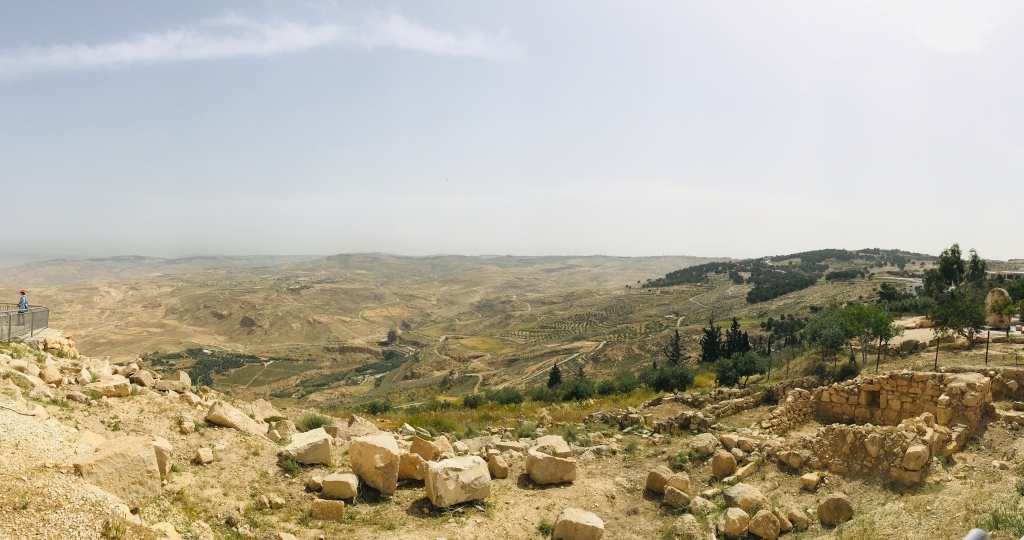
Photo by author, view of Israel from Mount Nebo in Jordan, May 2019.
Pope Emeritus Benedict XVI used to say that the imagery of the desert during the season of Lent is an invitation for us to remember, to revisit and to return to our very “first love” of all – God.
Yes! God is our first love for he is the first to love us, always calling us to come to him to have more of his love. Pope Benedict wrote in his first encyclical in 2005, Deus Caritas Est, that “Love can be commanded (by God) because it has first been given by him”, and that “love grows through love”.
And that is why every first Sunday of Lent, we hear the story of the temptation of Jesus by the devil in the desert as he invites us to go back to our first love, God our Father, teaching us and giving us the grace to overcome temptations that have brought us apart from God and everyone.
Filled with the Holy Spirit, Jesus returned from the Jordan and was led by the Spirit into the desert for forty days, to be tempted by the devil. He ate nothing during those days, and when they were over he was hungry.
Luke 4:1-2
Photo by author, view of Israel from Mount Nebo in Jordan, May 2019.
Let your love flow.
Of the three evangelists who recorded the temptation of Jesus in the desert by the devil, only Luke gives us a more detailed and sober version that you could feel Christ’s docility to the Holy Spirit; Matthew and Mark were both abrupt, as if Jesus was hurriedly led by the Spirit into the desert after his baptism at Jordan.
Luke’s version gives us a sense of peace and tranquility in Jesus who obeyed the Holy Spirit spontaneously which he would always do throughout his ministry; this his disciples would imitate as we shall see in Luke’s second book, the Acts of the Apostles.
This short introduction by Luke to the temptation of the Lord in the desert teaches us the first step in every Lent and ultimately in life: our docility to the Holy Spirit like Jesus Christ.
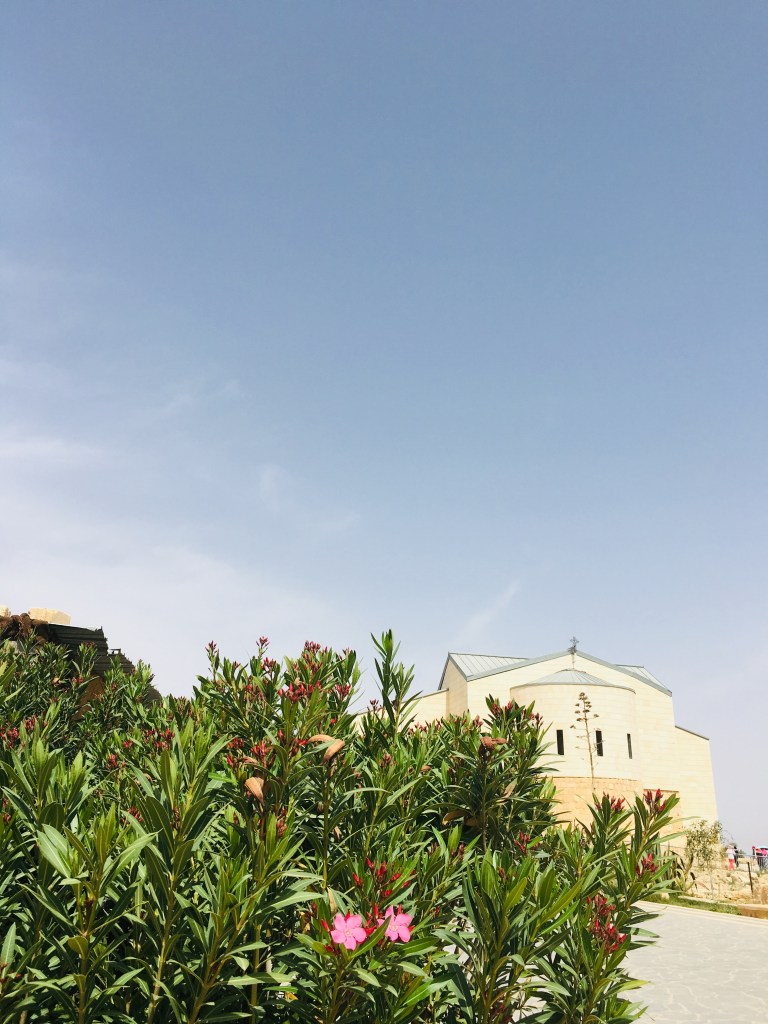
Photo by author, Mount Nebo, Jordan, May 2019.
And there lies the problem with us as we refuse to love God, when we refuse to mature in love as we keep on looking even inventing our own loves that in the end leaves us empty and alienated.
In this age of too much gadgets and instants plus emphasis on freedom and independence, we have forgotten to be docile and submissive in the good sense as we keep on asserting our very selves, always trying to be in command of everything.
Experience tells us that the key to truly experiencing love – to love and be loved – is to let yourself be led by your beloved, by a loved one. To simply let your love flow.
The three pillars of Lent: prayer, fasting and alms-giving rest on our willingness to submit ourselves to God, to trust him and rely only in him.
To be filled with the Spirit is to be filled with love that we first search God to love him and have more of his love to share with others.
The three “faces” of power that ruin love
Too often, we resist God by subduing our inner call to love, preferring to control everything and everyone. We prefer power than love, thinking wrongly that we can force or impose love on others.
Remember the movie “Bruce Almighty” about 20 years ago?
The turning point of the movie happened when Jennifer Aniston left her boyfriend Jim Carrey who could not submit himself and follow his heart to propose to her; Jim could not understand why can’t just God played by Morgan Freeman impose love on his girlfriend Jennifer to save him all the efforts and time in proving his love and proposing to her. Freeman as God simply told Bruce he cannot force love because that’s the way it is, so free that is why love is so wonderful!
Love and power cannot go together. Love is ruined when power and control come in any relationship. Adam and Eve desired the powers of God that led them into sin and be banished from Paradise.
This we see in the three temptations of Jesus Christ by the devil which is centered on power; notice how Jesus resisted temptation by choosing the path of love of God which is the path of powerlessness.
Photo from commons.wikipedia.org, Basilica di San Marco, Venice, Italy.
The devil said to him, “If you are the Son of God, command this stone to become bread.” Jesus answered him, “It is written, One does not live by bread alone.”
Luke 4:3-4
The first temptation of power is the ability to do everything. Every suitor is guilty of this when he tries to do everything just to win the heart of the woman of his dreams which often ends sadly, even miserably or tragic.
Too often, we feel and believe that it is love when we try to do everything just for the beloved.
No! We are not God. We cannot do everything. Love is not about doing but being.
Jesus could have turned that stone into bread but he did not do it because it is not the proof of his being the Son of God. His docility to the Father, his fidelity to his words and will expressed by his self-sacrifice at the Cross proved that he is indeed the Christ.
At the same time, his love for people is not in doing everything, especially in giving us the quick-fixes to our many problems and sufferings. In the wilderness, Jesus fed more than 5000 people from just five loaves of bread and two pieces of fish after he had found the people ready to love, ready to accept him and one anther.
The problem with power to do everything is we cease from becoming a person who “feels” and experiences pain and hunger, sadness and failures that eventually make us stronger and deeper in love and convictions. When we keep on doing everything believing in our powers, then we get burned in the process, becoming resentful and bitter later after skipping the normal courses of life.
We are loved not by what we can do nor achieve but what we could become – a nicer, kinder, forgiving and understanding and loving person.
Then he took him up and showed him all the kingdoms of the world in a single instant. The devil said to him, “I shall give to you all this power and their glory; for it has been handed over to me, and I may give it to whomever I wish. All this will be yours, if you worship me.” Jesus said to him in reply, “It is written: You shall worship the Lord, your God, and him alone shall you serve.”
Luke 4: 5-8
The second temptation of power is to dominate others. If you cannot do everything, subjugate others who can do things for you. Entice them with everything and whatever you have; buy their souls like our politicians who shamelessly forget history and values of freedom and democracy for the sake of winning an office.
Photo by author, 2019.
Love begets love. Jesus had no need to be popular, to be viral and liked by everyone. He loves us so much and the love he offers us is a love that is willing to die in one’s self, a love that goes for the Cross because that is true love. Never convenient nor comforting. Love is always difficult because it is a decision we keep and stand for every day.
This is the gist of the first reading when Moses reminded the people to always remember and review their history to be aware of how God had never left them, loving them despite their sinfulness. Remembering keeps our love alive because it always reminds us of the persons behind every events in our lives, keeping us united to the person in love even up to the present moment. Recall those time you have “lover’s quarrel” or LQ: what is usually the first thing that comes to your mind? Is it not your love story, of how you met and dreamt together, of how you love each other?
Love is about persons, not about things like wealth and fame. The Beatles said it so well in the 60’s, All You Need is Love.
Then he led him to Jerusalem, made him stand on the parapet of the temple, and said to him, “If you are the Son of God, throw yourself down from here, for it is written: He will command his angels concerning you, to guard you, and : With their hands they will support you, lest you dash your foot against a stone.” Jesus said to him in reply, “It also says, You shall not put the Lord, your God, to the test.”
Luke 4:9-12
The third temptation of power is to manipulate, even God, the all-powerful. This is the most insidious temptation that hides its sinister plans in a lot of “loving” and “caring” facades of fakeries.
It is the worst of the three as it enters one’s psyche, the highest degree of brainwashing. See how the devil had chosen the site of the temple, citing the scriptures in tempting the Lord.
The devil does the same with us, especially those toxic people who would try to massage our egos, trying to win us over unto them only to manipulate us and when worst comes to worst, play victims to us.
Love is never manipulative; the more you love, the more you become free to be your true self, your better self. Love is always a desire to become like the one you love, a movement to becoming like the beloved, not imposing one’s self to another. Love is always an invitation to journey, to be a companion, to come and follow without hidden agendas and plans.
Love is self-emptying, of giving, of baring one’s self to another to share life, never to take advantage or pull-off a big gain or profit from another. That is why St. Paul reminds us in the second reading that God is never far from us for his word is “near you, in your mouth and in your heart” (Rom.10:8).
The grace of this First Sunday of Lent is Jesus taking the first step by coming to us out of his great love for us so that we can begin the journey back to the Father, our first love, helping us overcome the many temptations not to love. May we follow his path of powerlessness, of docility to the Holy Spirit to truly experience God’s abounding love for us. Amen.
40 Shades of Lent by Fr. Nicanor F. Lalog II
Thursday after Ash Wednesday, 03 March 2022
Deuteronomy 30:15-20   ><)))*> + <*(((><   Luke 9:22-25
Photo by author, Sonia’s Garden, Tagaytay City, 15 February 2022.
Thank you very much,
dear God our loving Father
for the gift of prayer today:
to pray to you, to remember you
is already a choice for life,
a rejection of death.
Moses said to the people: “I call heaven and earth today to witness against you: I have set before you life and death, the blessing and the curse. Choose life, then, that you and your descendants may live, by loving the Lord, your God, heeding his voice, and holding fast to him. For that will mean life for you, a long life for you to live on the land that the Lord swore he would give to your fathers Abraham, Isaac, and Jacob.”
Deuteronomy 30:19-20
Thank you for the gift of these
40 days of Lent for us to be
conscious again of our decision
to choose life, to choose you;
but, Lord, what is to choose life,
what is to choose YOU?
Then Jesus said to all, “If anyone wishes to come after me, he must deny himself and take up his cross daily and follow me. For whoever wishes to save his life will lose it, but whoever loses his life for my sake will save it. What profit is there for one to gain the whole world yet lose or forfeit himself?”
Luke 9:23-25
Choosing life, choosing YOU
dear God means choosing to love
myself, you, and others;
choosing life, choosing YOU
dear God means choosing the
Cross of Jesus Christ your Son;
how ironic that with love being
the best we can have in life,
it is what we always reject too
as we find it hard to love our very
selves and in the process, love you
and others.
Choosing to love myself is to accept my
giftedness, to see myself as you
see me despite my sins and flaws
yet still loved and forgiven;
to love you, O Lord, means to
enter into a personal relationship
with you, to love whom you love,
to simply love; and to love others is
to love as myself, to find you in them
especially the sick and the poor.
Oh God!  How easy it is to say these
because it is indeed a cross - sometimes
too heavy when I love myself more than
I love you or others;  while we always
choose life and love, in reality we choose
death because we refuse to love like
Jesus who gave his life for our sake
so that we may also love like him.
Send me the Holy Spirit to enlighten
my mind and my heart always so that
in every choice I make beginning
this Lent, may I be more focused with
the "who" or person than the "what" or thing
because it is only in YOU found within me
and in every person I meet that there can
truly be life, love and blessings.  Amen.
The Lord Is My Chef Sunday Recipe for the Soul by Fr. Nicanor F. Lalog II
Sunday Week VII-C in Ordinary Time, 20 February 2022
1 Samuel 26:2, 7-9, 12-13, 22-23 ><}}}*> 1 Corinthians 15:45-49 ><}}}*> Luke 6:27-38
Photo by author, 15 February 2022.
Jesus continues with his sermon on the plains, going into the details of his main lesson, the Beatitudes which is about love. But not just love as we know and practice: twice Jesus tells us to “Love your enemies” (Lk.6:27, 35).
His instruction to “love your enemies” captures all the other moral injunctions in his lessons this Sunday meant to teach us to love like God as revealed by Jesus Christ. Recall how these past three Sundays we have been assured of the grace of God of the paradoxical happiness in life’s many contradictions we as disciples of Christ are invited to adopt by being poor, hungry, weeping and persecuted.
Jesus is teaching us his disciples to trust in him always, to look at everything in his perspective so that we may live and act like God our Father who loves everyone without measure. And to love without measure even one’s enemies begins in foregoing revenge as shown by David in the first reading.
In those day, Saul went down to the desert of Ziph with three thousand picked men of Israel, to search for David. So David and Abishai went among Saul’s soldiers by night and found Saul lying asleep within the barricade, with his spear thrust into the ground at his head and Abner and his men sleeping around him. Going across to an opposite slope, David stood on a remote hilltop at a great distance from Abner and the troops. He said: “Here is the king’s spear. Let an attendant come over to get it. The Lord will reward each man for his justice and faithfulness. Today, the Lord delivered you into my grasp, I would not harm the Lord’s anointed.”
1 Samuel 26:2, 7, 13, 22-23
Photo by author, Dead Sea desert, 2017.
Imitating Christ in his love
David is a type of Jesus Christ, a prefiguration of his coming, of someone who completely trusts in God and his words promised to him. If we read on further, this scene beautifully ends with Saul blessing David for sparing his life as they parted ways while David tells the king, “As I valued your life highly today, so may the Lord value my life highly and deliver me from all difficulties” (1 Sam. 26:24).
To avenge one’s self on an evil doer is a “fairly” spontaneous reaction, something so automatic with our human nature. But to renounce punishment, to not retaliate like the Bishop of Belgium who was recently attacked and mocked by half-naked women recently for his stand against homosexual lifestyles is something so different and unusual. That is why the Bible teems with so many stories of similar accounts how men of God patiently bore all humiliations and pains to educate and form our conscience, forego vengeance and retaliations by trusting in the Lord always who will render to each one his and her due.
One of the most unforgettable story in modern time of such trust in God is by St. John Paul II who went to forgive assassin Mehmet Agca a year after seriously shooting him at the Vatican Square in 1981. Pope emeritus Benedict XVI shows the same confidence in God as his Savior in his latest pronouncements following recent attacks by some people regarding his handling of a sexual abuse case in Germany, not to mention his old age and sickness.
Photo by author, Tagaytay City, 15 February 2022.
Love begins with respect, seeing the worth of a person
Jesus is not asking us to be passive nor resigned in the face of injustice and violence happening around us; very clear at the inauguration of his ministry in the synagogue at Nazareth how Jesus declared he had come to heal our sickness and liberate those oppressed.
In asking us to return good for evil, to love one’s enemies is above all to love like God like he had shown us in its highest expression at the Cross. It is not something reserved only for Jesus as the Son of God nor for the saints or holy men like St. John Paul II, Pope Emeritus Benedict XVI or that Bishop in Belgium.
God does not love only those who do good or finds worthy; God loves everyone because of our very existence.
This is what Jesus is telling us to always look at, to find and see in everyone. We are persons to be loved, not things and objects to be owned and possessed that when no longer useful nor “good” who can be simply dismissed or thrown away.
An important component of love is respect which literally means “to look again” from the Latin words “re” for again and “specere” to look or see. From specere came the words spectacle/s, spectator, and spectacular.
It is when we fail or refuse to look and see an individual as a person – somebody like us with feelings and dreams, someone who cannot be simply defined by history or background, color or creed but another being with life who is from God alone – that is when we sin, that is when we fight and quarrel, making enemies.
When there is no respect, when we refuse to look and see the other as another person with a face reminding us of our very selves and God as our common Source and End, that is when hate and revenge get out of bounds because we have judged the other as somebody not like us or less than us.
It is from respect for the other person where all other virtues like justice and kindness, love and forgiveness spring form because it puts us at the same level despite the wrongs done to us. Respect is recognizing and affirming the personhood of each one of us in God that must guide us in relating.
Now that COVID seems to be waning in the country, may we keep the lessons of the face mask and social distancing which is the value of every person, to always reach out to others, and most of all, to look into the eyes, to find and feel the warmth of every person’s face as image and likeness of God.
To love is to find Jesus in everyone
All the teachings and moral instructions in the Bible – from the prophets to Jesus Christ – are not only doctrines and precepts to be followed but actually the self-revelations of our personal God who relates with each of us in every person. This is why at the end of his teachings this Sunday, Jesus reminds us that the “measure with which you measure will in return be measured out to you” (Lk.6:38).
Let us not look beyond for any other basis for our love and respect. Jesus alone is the One why we love without measure, even our enemies because in him we find the new Adam, the spiritual One according to St. Paul presents in the second reading whom we find in everyone as well as in our very selves. Amen.
You are loved. Have a blessed week ahead.
Photo by Mr. Vincent Go, 2020, Mang Dodong of Caloocan City who was forcibly quarantined in Navotas for a month after being caught without an ID while buying some fish to peddle in his neighborhood while a police general got free of any punishments celebrating his birthday mañanita.
The Lord Is My Chef Simbang Gabi Recipe by Fr. Nicanor F. Lalog II
Saturday, Day 3, 18 December 2021
Jeremiah 23:5-8   ><}}}*> + <*{{{><   Matthew 1:18-25
Photo by author, Baguio Cathedral, January 2018.
We have just concluded the “Year of St. Joseph” last December 8 but it seems due to the pandemic, we have not celebrated truly enough to realize the virtues and person of the most silent character in the New Testament, St. Joseph.
We find no story in the gospels with St. Joseph either speaking or conversing with anyone at all. At least the Blessed Virgin Mary conversed with the angel during the Annunciation and spoke to Jesus her Son upon finding him at the Temple and at the wedding feast at Cana. St. Joseph was totally silent and most of all, could sleep soundly despite the tremendous stress he must have gone through! Truly a man of great faith and trust in God!
This is how the birth of Jesus Christ came about. When his mother Mary was betrothed to Joseph, but before they lived together, she was found with child through the Holy Spirit. Joseph her husband, since he was a righteous man, yet unwilling to expose her to shame, decided to divorce her quietly. Such was his intention when, behold, the angel of the Lord appeared to him in a dream and said, “Joseph, son of David, do not be afraid to take Mary your wife into your home. For it is through the Holy Spirit that this child has been conceived in her.”
Matthew 1:18-20
Photo from vaticannews.va, December 2020.
Notice how Matthew presented the climax of his genealogy not only with the coming of Jesus Christ at the end but also in his lineage to St. Joseph he described as “a righteous man” and addressed by the angel in a dream as “son of David”.
In him we find that expression “silent water runs deep” so very true. Imagine the maturity and deep spirituality of St. Joseph being called as a righteous man or a holy man which for the Jews is one who obeys the Laws of Israel.
But in this scene of the Annunciation of Christ’s birth to him in a dream, Matthew goes deeper into what is to be holy as more than obeying the the Laws but most of all, abiding by the will of God always as described in many instances in the Old Testament like the Book of Psalms. If holiness were simply an adherence to the Laws, St. Joseph would have not decided to silently leave Mary found pregnant with a child not his; in their laws, she would have been shamed in public which St. Joseph avoided in trying to leave her silently. For him, higher than the letters of the law was the welfare and well-being of Mary and her Child that until then he did not know was the Christ.
At the same time, here we find the deep spirituality of St. Joseph: compared with Mary to whom the angel appeared and spoke in person while with St. Joseph, the angel appeared only in a dream. He had a more difficult situation discerning whether his dream was real or not, which we all experience upon waking up from a dream so real!
Only a man with deep spirituality, so attuned with God like St. Joseph could perceive the divine in fact while at the same time discern it as very true the will of God that “When Joseph awoke, he did as the angel of the Lord had commanded him and took his wife into his home. He had no relations with her until she bore a son, and he named him Jesus” (Mt.1:24-25).
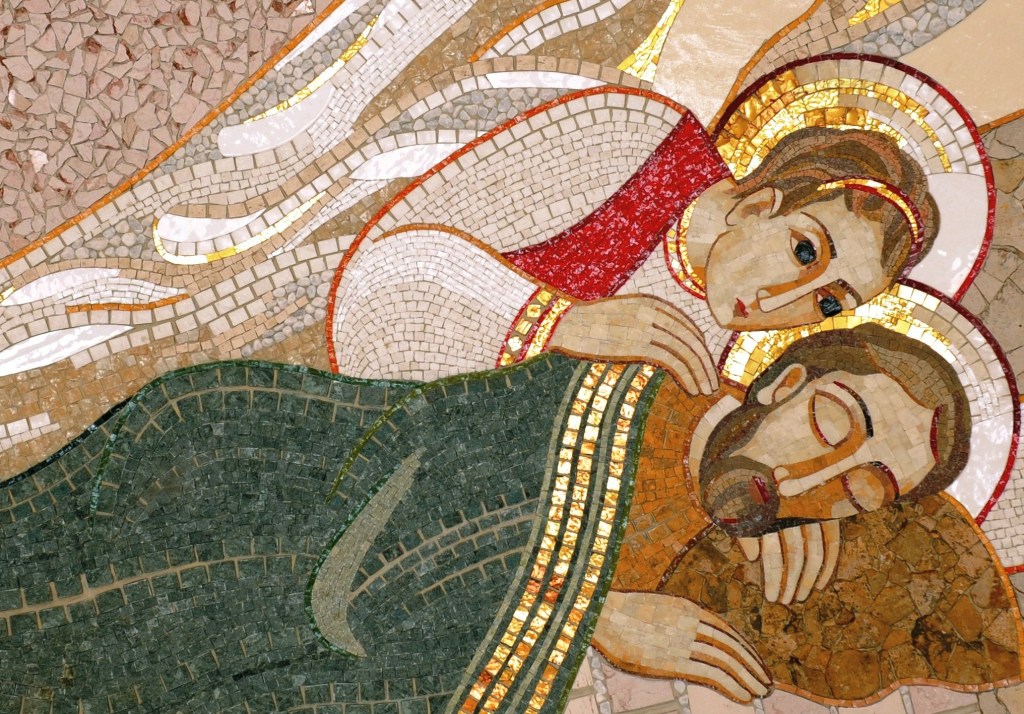
Photo by Arch. Philip Santiago, mosaic of the Annunciation to Joseph at the Shrine of St. Padre Pio in San Giovanni di Rotondo, Italy, 2017.
In a very concise manner – like our very silent saint and foster father of Jesus – Matthew presents to us in this short story of the Annunciation of the Birth of Jesus to St. Joseph all the critical and essential elements about the mystery of the Incarnation.
As we have reflected yesterday at the genealogy, Matthew now goes deeper into the humanity and divinity of Jesus Christ as the fulfillment of the Old Testament promises of God. This he beautifully presented also through the person of St. Joseph, a reminder of the need for us to be vessels of God’s graces and instruments of God’s works.
St. Joseph showed in this brief scene the true meaning of holiness, of being whole by seeking to find ways to bring into unity their laws and love and persons, something which Jesus Christ would keep on elaborating in his entire ministry, like his favorite expression “Sabbath was created for man, not man for sabbath.”
See how he tried to give more importance to Mary whom he loved so much that he was intent in not putting her to shame and harm. And upon listening and discerning the angel’s message to him in a dream, he obeyed everything, showing us the unity of the laws in love long before Jesus came to show it on the Cross himself. In accepting God and Jesus, St. Joseph had to take Mary; and in taking Mary, Jesus came into the world.
Here we are challenged by the example of St. Joseph that we too become an Emmanuel in the sense that in our lives, we become the sign that God-is-with-us specially in this time of the pandemic and with coming elections next year. We need to pray more deeply and be attuned with God for his divine will that always takes unexpected turns, so different from our own ways and methods.
Photo by author, 15 December 2021.
To be an Emmanuel like Jesus and St. Joseph, one has to be definitely pro-life, one who values life and every person, regardless of his/her status in life.
Like St. Joseph, let us learn to be silent for God and be louder with our actions, always choosing and standing for life and for every person’s dignity.
Like St. Joseph, he chose from the very start the value of Mary as a person which is the hallmark of Jesus as Emmanuel, the God who became human to be with us because it is good to be human. Amen.