Life is not a dress rehearsal

The Lord Is My Chef Sunday Recipe for the Soul by Fr. Nicanor F. Lalog II
Twenty-Eighth Sunday in Ordinary Time, Cycle A, 15 October 2023
Isaiah 25:6-10 ><}}}}*> Philippians 4:12-14, 19-20 ><}}}}*> Matthew 22:1-14
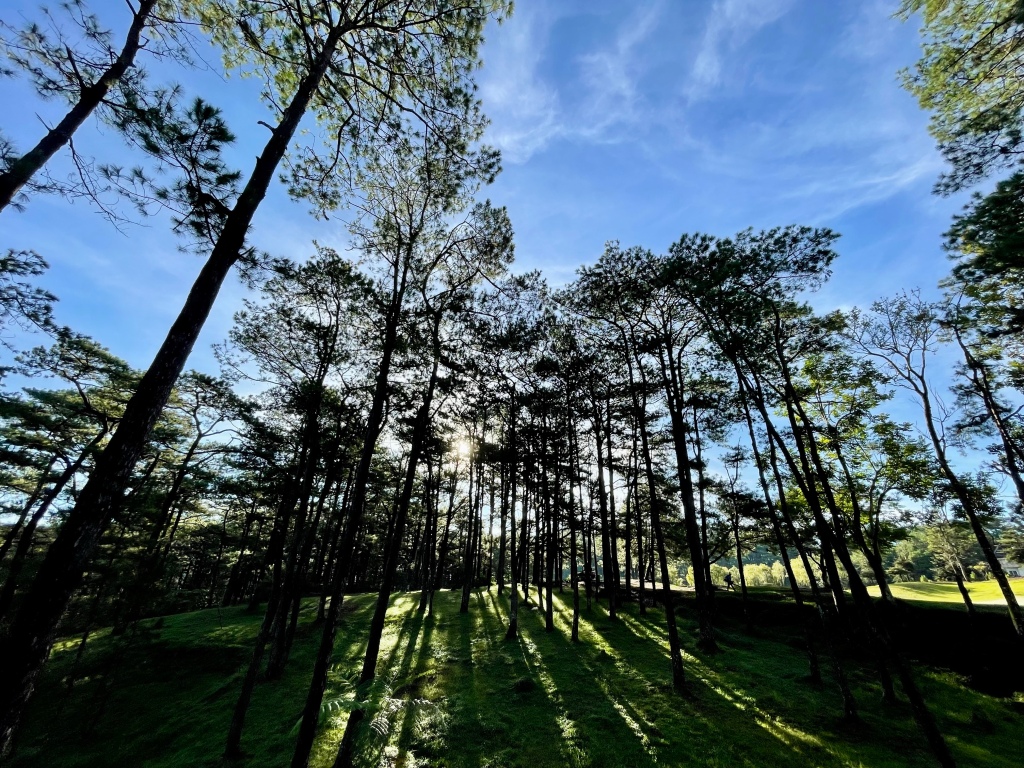
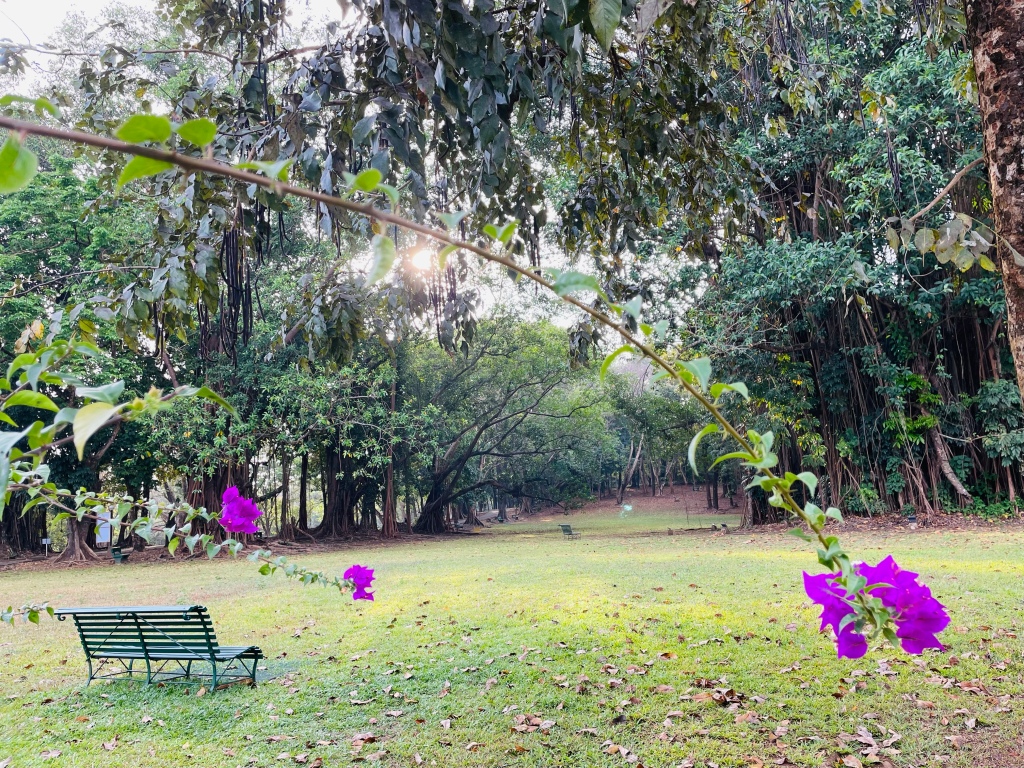
Photo by Mr. Jay Javier in Taal, Batangas, 15 February 2014.

I grew up in a generation when dressing properly – meaning, decently – was deeply inculcated both at home and the school. It has always been considered in our time as a sign of maturity when we come properly attired in every occasion.

Now, those days are gone along with the expression “Sunday’s best” when sneakers are paired with formal suits and worn even in weddings! Dressing has become so relative with total disregard for basic fashion sense and worst of all, without any sense of propriety at all in the name of personal comfort and style as well as individuality. That culture on “liberal” or “liberated” dressing has encroached into the church with priests refusing to wear the proper garments and dress as required by Code of Canon law. How ironic that while the lay people appreciate us priests dressed properly for the liturgy and ministry, the harshest insults and negative reactions against it come from some priests who argue using the hot weather as an excuse. Many priests have subscribed to the lame excuse of people that clothes do not make us who we are, that there is much more beneath the clothing we wear of who we really are.

True but not absolutely because what we wear, how we look outside is indicative of who we are, what we value, what we believe in. Dress speaks a lot about ourselves whether we like it or not as the Lord’s parable this Sunday teaches us.

The servants went out into the streets and gathered all they found, bad and good alike, and the hall was filled with guests. But when the king came in to meet the guests he saw a man there not dressed in a wedding garment. He said to him, ‘My friend, how is it that you came in here without a wedding garment?’ But he was reduced to silence. Then the king said to his attendants, ‘Bind his hands and feet, and cast him into the darkness outside, where there will be wailing and grinding of teeth.’ Many are invited, but few are chosen.”

Matthew 22:11-14
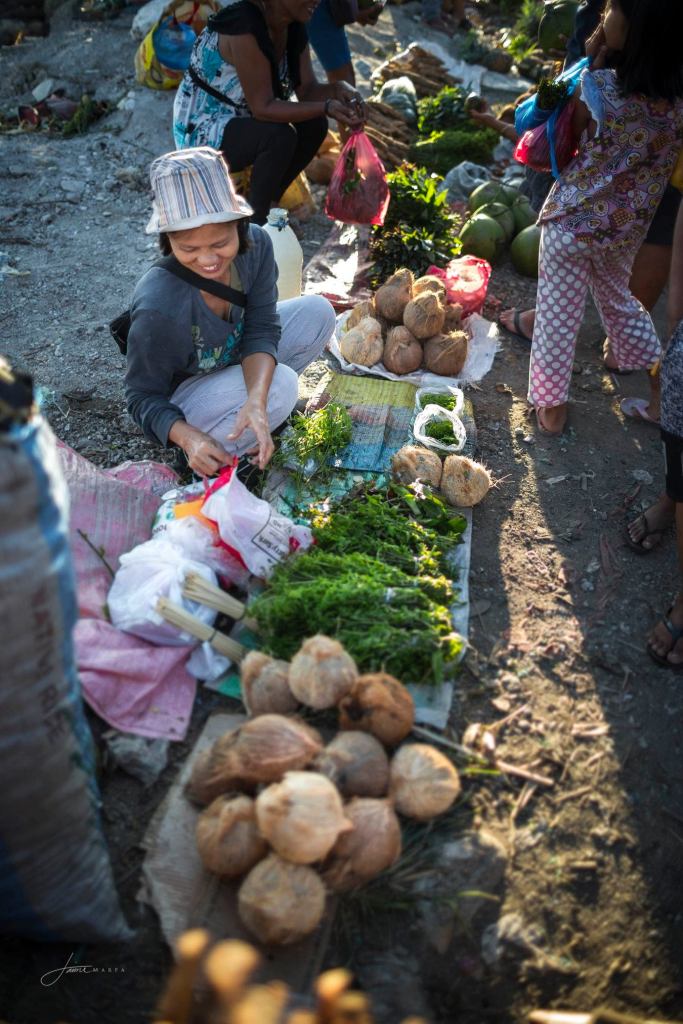
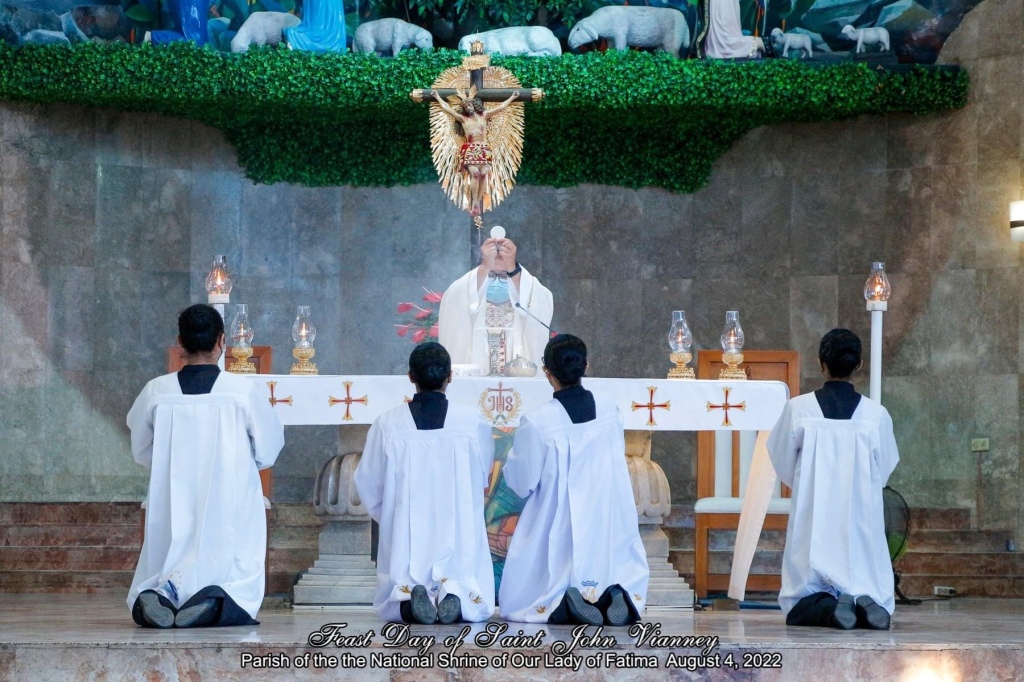
Photo by Fr. RA Valmadrid, National Shrine of Our Lady of Fatima, 13 October 2023.

We now come to the third and final series of parables addressed by Jesus Christ directly to his enemies, the chief priests and elders of the people while teaching at the temple area in Jerusalem to underscore to them the need to reform their lives and be converted to his good news of salvation like the tax collectors and prostitutes.

See how in today’s parable some semblances with the parables of the two sons and wicked tenants of the past two weeks to show us God’s loving patience in doing everything to make us come to him like the subjects of the king with all the chances to come to his son’s wedding banquet.

And like with the parables of the past two Sundays, Matthew makes again a crucial twist in today’s parable that can be sufficiently ended in that part when the king was enraged by the continued refusal of his guests to come to his son’s wedding banquet that he ordered them all killed and instead extended his invitation to everyone in the streets.

The wedding banquet is heaven like the vineyard in the parables of the past two Sundays.

But it is not only referring to heaven at the end of time but also speaks so well of the here and now – the present life we live as citizens of the kingdom of God in Jesus Christ. Rejecting the invitation to come to the meal which as an expression of our citizenship in God’s kingdom is an act of disloyalty and treason against him.

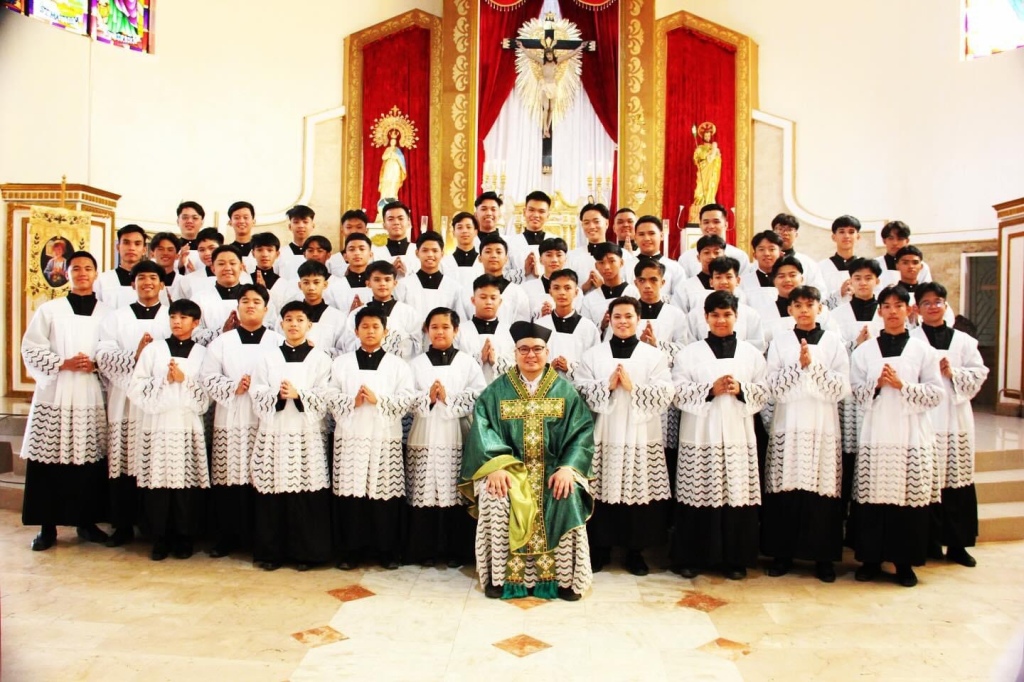
Photo by Arch. Philip Santiago, Hearts of Jesus and Mary parish, Malolos City, 2022.

When we were baptized, we became citizens of the kingdom of God. We do our “pledge of allegiance” to God as his citizens every time we pray and most especially celebrate Mass which is just half of the whole deal of being citizens of his kingdom! Like in being Filipinos or whatever nationality we have, we must live up to our citizenship in God’s kingdom by being good and holy. That is the wedding dress referred to in the parable, the life we lead as children and citizens of God and his kingdom.

Jesus invites us today to face squarely the uncomfortable issues that prevent us from being his good and faithful disciples and citizens of God’s kingdom. Many times we are like those invited guests in the parable who allowed something else in their lives like their wealth and possession, businesses and worldly pursuits become more important than their allegiance to the King. Every time we sin, every time we skip the Sunday Mass, that is when we have our new God and King that may be our very selves, gadgets, vices, or the malls we frequent more than the church!

Here we find a deepening in Jesus Christ’s invitation to conversion into conforming our lives into him. St. Paul made a lot of beautiful imageries of “putting on Jesus Christ” as our new clothes and garment which we have retained in the Rite of Baptism when the newly baptized is clothed with the white dress. See how the man caught by the king fell silent when confronted because there was no excuse at all at not wearing the wedding dress in the banquet. The same thing is true with us today. We have no excuse for not being dressed, for not being conformed in Jesus Christ in our lives as his disciples. Everyday he gives us the opportunities of being conformed to him through our daily conversions through prayers and good works. God does not expect us to wear extravagant nor expensive clothes for his wedding banquet; just a clean and decent clothes are enough. Nobody is perfect.

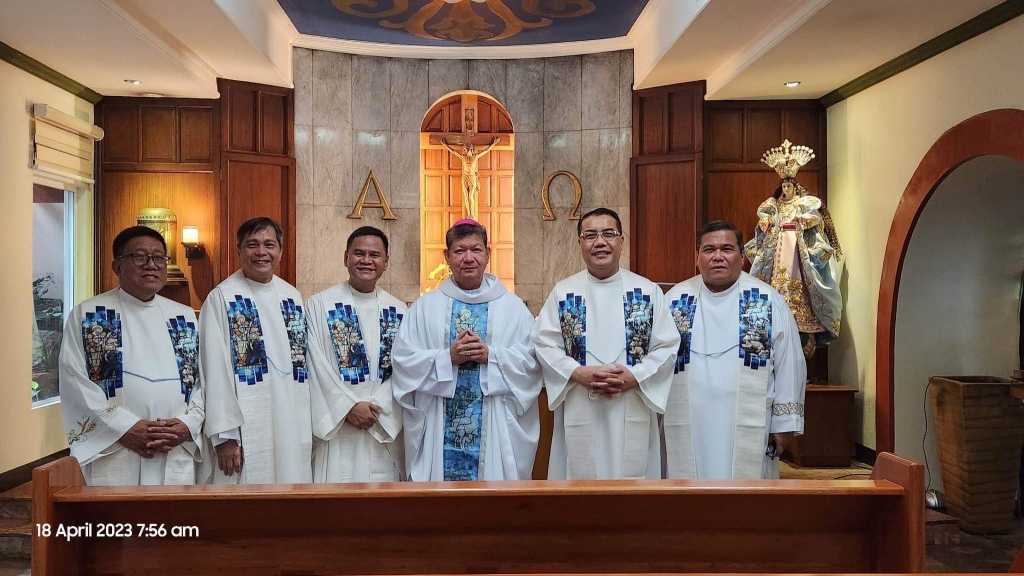
Photo by Dra. Mylene A. Santos, MD at Tagalag, Valenzuela City, 13 September 2023.

One of the things I used to enjoy in my school and seminary days were joining stage plays. Yes, I love acting but I just don’t know if acting (and singing) love me. Nonetheless, one of our most dreaded moments before the actual play was always the dress rehearsal when everything is considered as the “real thing”, the real play as our teaches and nuns have insisted when we were supposed to have memorized our lines and cues.

But, as I grew and matured, I realized that life is not a dress rehearsal at all; each day is an actual “play”, a “live” presentation where we must “perform” or “act” so well. Yes, we are all required to memorize our lines and cues in life but many times, we forget them. Nobody is perfect. And here lies the immense love and kindness of God to us: he allows us to improvise for our selves in case we have forgotten our lines just like those people instantly invited to the wedding banquet of the King’s son. They were able to improvise to make it to the banquet hall except for that one who came not dressed for the occasion. He was silent because he was so lazy to improvise, to find ways like the chief priests and elders in the time of the Lord. Until now, many of us make a lot of excuses and alibis for not being conformed in Christ, from the ordinary excuse of being “difficult” to the most absurd that “I am only human” or tao lamang, mahina at marupok. Keep in mind St. Paul’s words in the second reading, “I can do all things in him who strengthens me… My God will supply whatever you need, in accord with his glorious riches in Christ Jesus” (Phil.4:13, 19).

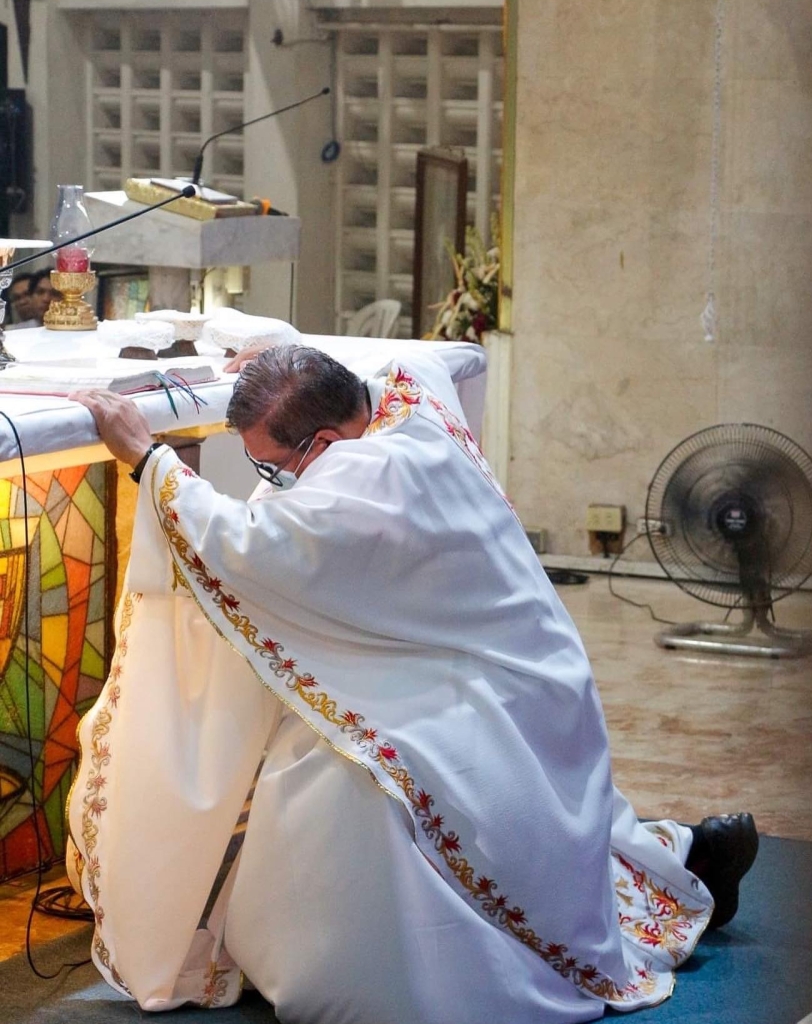
Photo by Ka Ruben, National Shrine of Our Lady of Fatima, 2022.

Every Sunday we are invited to celebrate with others the coming of Jesus and the salvation he has won for us. This wedding banquet is the Sunday Mass we celebrate, a fulfillment of the first reading from Isaiah of that mountain where “the Lord of hosts will provide for all peoples a feast of rich food and choice wines, juicy, rich food and pure, choice wines” (Is. 25:6). In the Holy Eucharist, we have the choicest food and drinks – the Body and Blood of Jesus Christ – given to us to nourish us and keep us strong in this journey of life into eternity in heaven with the Father.

How amazing that nothing is really imposed upon us in coming to this banquet of the Lord in the Eucharist that is totally free of charge except that we have to come properly dressed on the inside, of being conformed in him.

But please, let’s get dressed also on the outside. No need to wear expensive and beautiful clothes. Just proper and clean ones are more than enough. A good rule of thumb we can rely on is this: God has blessed me tremendously this week and I am coming to celebrate with him, for him. How do I look to to express to him my gratitude and appreciation to his wondrous gifts? Amen. It is a Sunday, go to Mass!

We are the vineyard of the Lord

The Lord Is My Chef Sunday Recipe for the Soul by Fr. Nicanor F. Lalog II
Twenty-Seventh Sunday in Ordinary Time, Cycle A, 08 October 2023
Isaiah 5:1-7 ><}}}}*> Philippians 4:6-9 ><}}}}*> Matthew 21:33-43
Photo by author, San Juan, La Union, 25 July 2023.

A good friend recently came home from a 20-day Marian pilgrimage in Europe. I told him to get some rest and avoid reading the news, “Huwag ka munang magbasa ng balita baka masayang nalanghap mong hangin sa Europe.” He replied that with the very reliable internet service in Europe, they were all updated with the things happening in our country. He added, “parang ayaw ko nang magpunta sa Europe, lalo lang ako naaawa at nahihiya sa Pilipinas.”

Very true.

I rarely travel abroad but with what I have been reading and hearing especially from those visiting Japan and Singapore, the more I feel sad and hopeless for our country the Philippines. At least, God comforts us once in a while in sports like the recent golds in the Asian Games courtesy of EJ Obienna in pole vault, Annie Ramirez in jiu-jitsu, and Gilas Pilipinas in basketball. Aside from sports, nothing good seems to come from the news. Even the newscasts these days are depressing with robots “complementing” sportscasters.

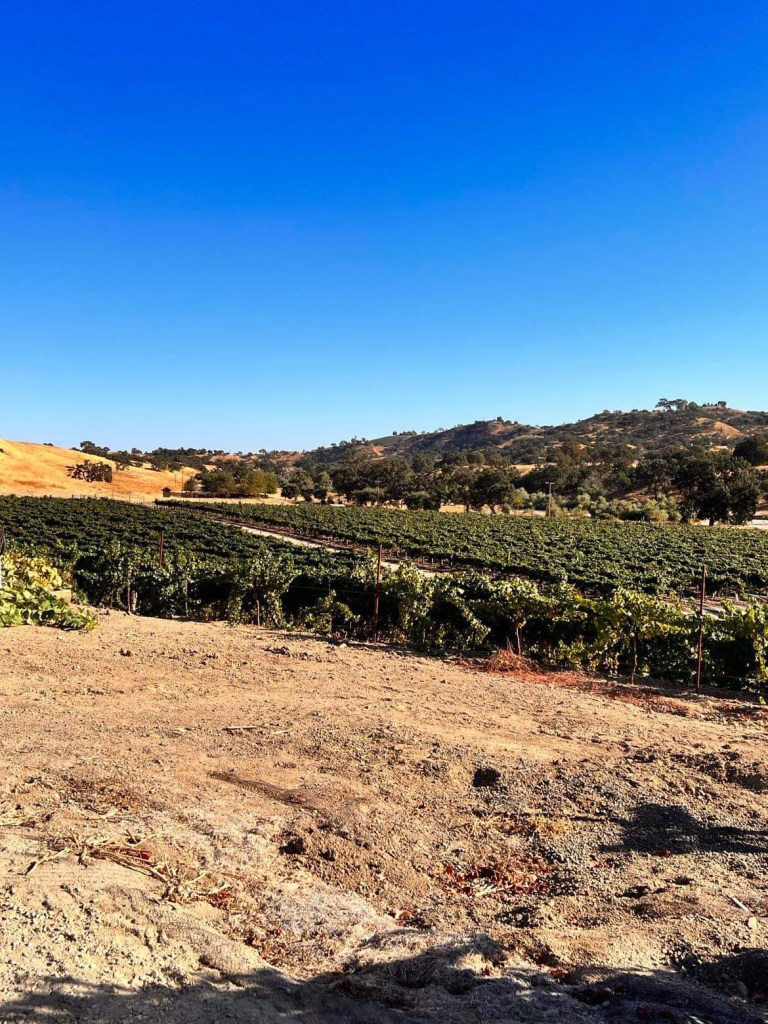
Photo of a vineyard in Southern California by Dra. Carol Reyes-Santos, MD, 01 October 2023.

Our readings this Sunday seem to speak of us Filipinos and the Philippines which is like a wonderful vineyard planted by the Lord, especially when we think of our vast, fertile lands and long coastlines with rich bodies of water but we have to import our food, from rice to galunggong. What a shame that our chicharon producers import pig backfat from the tiny island of Taiwan?! Like Isaiah, we find ourselves asking what happened to our country?

Let me now sing of my friend, my friend’s song concerning his vineyard. My friend had a vineyard on a fertile hillside; he spaded it, cleared it of stones and planted the choicest vines; within it he built a watchtower, and hewed out a wine press. Then he looked for the crop of grapes, but what it yielded was wild grapes.

Isaiah 5:1-2

The vine and wine are important signs widely used in the Old Testament and in the gospel accounts by Jesus. In Isaiah’s writings, the vineyard represented Israel as the chosen people of God, so loved and cared for, saved from Egypt and gifted with a land flowing with milk and honey. Despite these blessings, Israel repeatedly turned away from God with their many sins of infidelity that continued in the time of Jesus Christ who borrowed and perfected this parable of the vineyard of the Lord to make it timely in every generation.

Jesus said to the chief priests and the elders of the people: “Hear another parable. There was a landowner who planted a vineyard, put a hedge around it, dug a wine press in it, and built a tower. Then he leased it to tenants and went on a journey. When vintage time drew near, he sent his servants to the tenants to obtain his produce. But the tenants seized the servants and one they beat, another they killed, and a third they stoned. Again he sent other servants, more numerous than the first ones, but they treated them in the same way. Finally, he sent his son to them, thinking, ‘They will respect my son.’ But when the tenants saw the son, they said to one another, ‘This is the heir. Come, let us kill him and acquire his inheritance.’ They seized him, threw him out of the vineyard, and killed him.

Matthew 21:33-39
Photo by author, Sacred Heart Novitiate, Novaliches, QC, 20 March 2023.

For the second straight Sunday, Jesus preached again at the temple area of Jerusalem and addressed this lesson to his enemies, the chief priests and elders of the people trying to find a probable cause to have him arrested.

See how this parable of the wicked tenants very similar with Isaiah’s but at the same time speaking a lot of ourselves and of our time, of how we have become like those wicked tenants taking the “vineyard” as totally ours like our body and country, arguing it is mine or ours that we can do whatever pleases us. Like those tenants, we have claimed of not belonging to God nor anyone at all, that we can do whatever we want because we are the owners of ourselves and the world. “It is my body, it is mine” and none of your business kind of thing.

How often we hear others claiming “this is my body, this is mine; therefore, I can do whatever I want with my body” like abort a baby, take contraceptives, or have a sex change, have those tattoos and body piercings? And we have spread this line of thinking to our environment with road rage spreading like a pandemic while bigger countries are grabbing territories ironically from their smaller neighbors.

The most tragic way of thinking that underlies this “mine mentality” is how so many of us have accepted – consciously and unconsciously – that most untrue statement of all that God is dead. Many would say they believe in God when actually what they mean is they know there is God and so often, they play that God, too. Pope Benedict XVI described it as “totalitarianism of relativism” when we see everything relative, no more morals and morality because we have made ourselves the measure and standards of everyone and everything – because, the “vineyard” belongs to us.

Photo of a vineyard in Southern California by Dra. Carol Reyes-Santos, MD, 01 October 2023.

More sad is the fact that we are beginning to see what happens next to us and the world with these things happening like families and relationships disintegrating, climate change and threats of wars, and more emptiness among us.

But, it is not that bad after all. Jesus not only updated Isaiah’s parable of the vineyard to speak to us in the present but also to promise us of a greater future. Notice the blessing and threat he used.

“What will the owner of the vineyard do to those tenants when he comes?” They answered him, “He will put those wretched men to a wretched death and lease his vineyard to other tenants who will give him the produce at the proper times.” Jesus said to them, “Did you never read in the Scriptures: The stone that the builders rejected has become the cornerstone; by the Lord has this been done, and it is wonderful in our eyes? Therefore, I say to you, the kingdom of God will be taken away from you and given to a people that will produce its fruit.”

Matthew 21:40-43

Once again, Jesus Christ’s parable asked a question to involve his hearers, including us today, in the story because the truth is, he had involved himself with us in his coming and eventually in his Passion, Death and Resurrection.

Unlike in Isaiah’s parable of the vineyard, God is distinct from the vineyard; but in Christ’s parable, we are in fact the vineyard of the Lord because Jesus is one with us being the son of the owner sent to gather his share of produce.

That is the good news, the blessing this Sunday and while there is also the threat of the vineyard being handed over to better tenants, there is the promise of better produce to be shared and enjoyed in all eternity, in heaven. There will always be darkness and difficulties in this life caused by selfish, arrogant, and self-righteous people who feel they own everything in this world. Many times, we too have wasted God’s bountiful blessings to us like our talents and abilities not put into use or never harnessed; health taken for granted and separation from our loved ones. Jesus Christ had died for us to repair ourselves and our relationships. Let us grab this opportunity today of taking care of the Lord’s vineyard, of sharing his blessings.

Most of all, like what St. Paul asked us in the second reading, let us be witnesses to others by remaining faithful to God, striving for “whatever is pure, whatever is lovely, whatever is gracious” (Phil. 4:8).

Last Thursday was World Teachers Day. I told our teachers during Masses in our university this week to remember St. Augustine’s final lesson to Deogratias his deacon preparing candidates for baptism: “The teacher is the lesson himself/herself.”

Beautiful. If we are the Lord’s vineyard, every time we produce good fruits, every time we share these fruits with others, then we become signs of hope of Christ’s presence among us. That is the most important lesson we can share with others especially in these times of darkness. Amen. Have a blessed week ahead!

Photo by author, Baguio City, 11 July 2023.

The problem with being so sure

The Lord Is My Chef Sunday Recipe for the Soul by Fr. Nicanor F. Lalog II
Twenty-sixth Sunday in Ordinary Time, Cycle A, 01 October 2023
Ezekiel 18:25-28 ><}}}}*> Philippians 2:1-11 ><}}}}*> Matthew 21:28-32
White roses for devotees of St. Therese whose feast is today, October 01; may she intercede for your much needed miracle!

American writer Anne Lamott wrote in one of her books that “The opposite of faith is not doubt, but certainty.” This is most true in our gospel this Sunday as we shift scene when Jesus finally entered Jerusalem and preached in the temple area among his enemies, the chief priests and elders of the people.

Again, we are familiar with today’s parable of the man who had two sons he asked to go and work at their vineyard. The first son refused but later changed his mind and obeyed the father; the second son said “yes” but did not go to the vineyard. Like the chief priests and the elders, we too can easily answer Jesus Christ’s question, “which of the two did his father’s will?” Of course, the first son – but, Matthew’s story did not end there as he recorded the Lord’s words to his enemies that say a lot to us too today:

Jesus said to them, “Amen, I say to you, tax collectors and prostitutes are entering the kingdom of God before you. When John came to you in the way of righteousness, you did not believe him; but tax collectors and prostitutes did. Yet even when you saw that, you did not later change your minds and believe him.”

Matthew 21:31b-32
Photo by author, 2019.

Keep in mind that Matthew insists in his gospel account the matching of our words and actions because “not everyone who says ‘Lord, Lord’ will enter the kingdom of heaven” (Mt. 7:21).

In the next three Sundays, we hear parables having this as its theme: the two sons today, the evil tenants next week and the wedding banquet after that. Notice too that although we still have nine weeks to go before Advent Season in preparation for Christmas, our gospel setting beginning this Sunday will be at the temple area just before the Lord’s Passion, Death and Resurrection. That means Christ’s teachings are getting more intense and challenging to everyone as well.

The sin of the chief priests and elders that Jesus mentioned today – “you did not later change your minds and believe him” – was their refusal to change their minds to accept him as the Christ despite the overwhelming proofs and evidence they have heard and seen, even experienced. They were fixated with their own beliefs and interpretations of the Laws and scriptures; nothing and no one, not even the Son of God Jesus Christ could change their minds, perspectives and opinions.

The same is true with us Christians today! Many times our faith has become so static, could not be changed anymore to become deeper and stronger and vibrant to recognize God present in the changing times. The danger we have today is not only many people are losing their faith but a greater number of us faithful have come to believe more in ourselves than in Christ and his Church led by the Pope! How sad that since last year, there have been so many people, including clergymen casting doubts and refusing to recognize the synod of bishops set to begin this month in Rome.

Photo by author, 2019.

Faith in God is a process that grows and deepens through time. It calls for openness to God in his daily coming to us even in the most unusual people and circumstances. Faith is a daily process of conversion, of kenosis or self-emptying like Jesus which Paul beautifully expressed in our second reading today:

Do nothing out of selfishness or out of vainglory; rather, humbly regard others as more important than yourselves, each looking out not for his own interest, but also for others. Have in you the same attitude that is also yours in Christ Jesus, Who, though he was in the form of God, did not regard equality with God something to be grasped. Rather, he emptied himself, taking the form of a slave, coming in human likeness.

Philippians 2:3-7

Here we find faith is about relationships and commitment, both to God and to one another. It is never static. That is one of the lessons Jesus is emphasizing in his parable today about the father and two sons. Obedience to their father is an expression of their relationship with him. Many times, we are either like the first or the second son. God our Father gives us all the chances and opportunities to make up for our lapses and sins.

That is why in the first reading, God reminds us through Ezekiel that his ways are not unfair because he gives us all every chance to change and become better, the very same principle we have heard in the three teachings of Christ recently about fraternal correction, forgiving, and generosity.

Have you noticed how often people seem unreasonable when they tell us we have changed or have not changed at all? I find those comments insane, even stupid because only change is permanent in this world. We always change. And we must change for the better.

One of my favorite series in the 1980’s was the American comedy “Newhart” starring Bob Newhart. In one of its episodes, Bob and his wife celebrated their anniversary amid so many mishaps and quirks. As usual, Bob saved the day at their renewal of vows when he told his wife that indeed, he had changed through their years of marriage as he had come to love his wife more than ever. So sweet and beautiful, and true!

Many times in weddings, I tell newly wed couples this prayerful wish, “May this day be the least joyful day of their lives.” Weddings and ordinations call for a lot of daily conversions, of growing and maturing, of finding Jesus in our loved ones and people we serve, and in new directions in our lives and ministry.

Photo by author, La Trinidad, Benguet, 12 July 2023.

Every relationship with God and with others can never be fixed for it must grow daily. Don’t worry, we will never run out of space for maturity and deepening of faith and commitments with God and with others. The more changes and flexibilities we go through no matter how difficult they may be physically, emotionally and spiritually, the more surprises and joys and fulfillment we shall experience.

Everyday, ask yourself, “Where did I see God today?” And, what does it mean to me?

Our answers to these two questions will determine how we live differently each day as Christ’s disciples because of what God has revealed to us! Amen. Have a fulfilling week in Jesus this start of October!

Being like our forgiving God

The Lord Is My Chef Sunday Recipe for the Soul by Fr. Nicanor F. Lalog II
Sunday in the Twenty-fourth Week in Ordinary Time, Cycle A, 17 September 2023
Sirach 27:30-28:7 ><}}}}*> Romans 14:7-9 ><}}}}*> Matthew 18:21-35
Photo by author at the RISE Tower, Our Lady of Fatima University, Valenzuela City, 28 July 2023.

This past week has been a very toxic one for us in the hospital where I serve as a chaplain.

Beginning last Sunday morning after our Mass at the University adjacent to our hospital, I had to proceed to the ICU to anoint a critical patient who expired 20 minutes later while I was still attending to seven other patients there in the unit. One died that evening, the other the following day. Last Tuesday and Thursday I had to go back to the hospital to anoint four more patients, two of them eventually died before this Saturday.

When that patient died last Sunday morning, the doctors and nurses at the ICU thanked me, telling me how the deceased must have just waited for me to receive the Sacrament of Anointing. “Hinintay lang po kayo, Father.”

I have heard that so many times even while I was assigned in a parish. And every time people would tell me that, I thank God deep in my heart for his infinite love and mercy, in never allowing patients to die until they have been anointed and absolved of their sins. That is why I am so convinced that almost everybody goes to heaven or purgatory when they die because God ensures that each one of us will have a chance to prepare to meet him in heaven. Only a few, even almost no one, except anyone who would reject God totally goes to hell.

Photo by Dra. Mylene A. Santos, MD at Tagalag, Valenzuela City, 13 September 2023.

My dear friends and family, today we continue the second in a series of what I have told you last Sunday of the Lord’s teaching on some of life’s most delicate issues we are all aware of but find so difficult to accept and practice.

Last Sunday, it was about fraternal correction, of the need for us to speak to those living in sin. Today, Jesus teaches us to forgive those who sin against us.

Peter approached Jesus and asked him, “Lord, if my brother sins against me, how often must I forgive? As many as seven times?” Jesus answered, “I say to you, not seven times but seventy-seven times. That is why the kingdom of heaven may be likened to a king who decided to settle accounts with his servants….”

Matthew 18:21-23

Notice how Jesus used a parable in explaining forgiving to Peter and other apostles along with us today. Forgiving from the heart because of love can never be fully explained as a concept; love is best expressed in forgiveness which Jesus showed us on the Cross where his first words were for the forgiveness of his enemies who “knew not what they were doing”.

Photo by Dean Mon Macatangga, May 2023.

When we love, we level up in our existence and that becomes most true when we forgive. See how love remains the antidote to sin which is lack of love. Both fraternal correction and forgiving are expressions of love that is true, the love of Christ. That is the point of Christ’s parable when he said, “That is why the kingdom of heaven may be likened to a king who decided to settle accounts with his servants.”

To love, to forgive, to correct those who sin are all in the realms of God, of the divine as Shakespeare said, “to err is human, to forgive is divine.” Whenever we forgive because we love like God, we become like him!

Becoming like God, becoming divine happens when we recognize one another as brothers and sisters in Christ. Here lies the beautiful twist in the Lord’s parable: forgiving is in the realm of the kingdom of God where we are brothers and sisters, not just servants who owe God our king or anyone with debts to be paid that are measurable in exact amount or quantity. St. Paul expressed it beautifully last Sunday, “Brothers and sisters: Owe nothing to anyone, except to love one another; for the one who loves another has fulfilled the law” (Rom. 13:8).

Love is the only debt we owe everyone. We can never repay love because it is a debt so huge, like the debt of that servant summoned by the king in today’s parable. Jesus came to “save” us from that debt of love that God asks us not because he needs it repaid but because he showers us with so much of that love. We just have to keep on sharing that love of God that is infinite because love is the essence of our lives. To live is to love and when we love, that is when we truly live. And that is why we must forgive also like him. On our own it is impossible to love and to forgive but that grace has always been there for us to take and share because we are all loved and forgiven children of God. To forget or disregard this truth is to separate from God and from everyone which is what hell is all about.

Photo by Dra. Mylene A. Santos, MD at Tagalag, Valenzuela City, 13 September 2023.

Both teachings and instructions by Jesus to correct our wayward brothers and sisters and to forgive those who often sin against us are expressions of our love of God. Indeed, they are both difficult, most especially forgiving from the heart. Problem with forgiveness is the fact that the most painful hurts we incur are always inflicted by those we love, by those people closest to us and dearest to us. It is a grace we have to pray for always, whether for us who have sinned or hurt by others.

But, there are also practical considerations why we have to forgive as Ben Sirach had noticed since the Old Testament days. It is something we continue to experience these days and sadly, even see on social media like the endless series of road rage everywhere in the world that has become like a pandemic.

How true were the observations by Ben Sirach that “Wrath and anger are hateful things, yet the sinner hugs them tight” (Sir. 27:30) as clips of road rage vividly show us in social media, from the lack of respect of those involved to abuse of authority as well as destruction of lives and properties. Like the other servants in the parable, we feel sorry for the victims of road rage considering mostly are about petty things blown out of proportions.

Photo by Dra. Mylene A. Santos, MD, Quezon Province, August 2022.

Psychologists and experts also tell us the importance of forgiving for practical reasons but they all pale in the light of the simple fact that the obligation to avoid resentment, hatred and violence is strictly enjoined on us who know God and are conscious of our own need for his forgiveness and mercy. In the end, let us forgive one another as St. Paul reminded us today in the second reading that everything will be determined and judged in our relationship with Jesus Christ who suffered and died for our sins. This we constantly honor and deepen when we forgive, when we pray the Our Father, and when we celebrate the Holy Eucharist. Amen. Have a blessed week ahead!

Waiting for God who is waiting for us

The Lord Is My Chef Daily Recipe for the Soul by Fr. Nicanor F. Lalog II
Monday, Memorial of St. Ignatius of Loyola, Priest, 31 July 2023
Exodus 32:15-24, 30-34   <*((((>< + ><))))*>   Matthew 13:31-35
Photo by author Camp John Hay, Baguio City, 12 July 2023.
Glory and praise to you,
God our loving Father,
our Lord and Master,
our Origin and Home;
thank you for the gift
of St. Ignatius of Loyola
who taught us through his
"Spiritual Exercises" 
to truly pray by seeking
you and only you alone.
Teach me, O Lord, 
to be patient
and persevering
in my prayer life,
to never be contented
with mere feelings and
self-absorption that are 
manipulative like what your people
felt at the foot of Mount Sinai
while awaiting Moses; 
let me be at home
with desolation and dryness,
being still when nothing seems to happen,
 finding you when you seem nowhere,
desiring you most while amid
all of these like in awaiting the
sprouting of a mustard seed
or the leavening of bread
in Christ's parable. 
Many times we feel
we are awaiting you, God 
when actually it is you who
awaits us always to experience
you and your presence,
your love and mercy
if we could just be still and 
silent.  Amen.

St. Ignatius of Loyola,
Pray for us.

“Habang Buhay” by Zack Tabudlo (2021)

The Lord Is My Chef Sunday Music by Fr. Nicanor F. Lalog II, 30 July 2023
Photo by author in San Juan, La Union, 26 July 2023.

Finally we’re back! Sorry for being silent with our Sunday music blog relating secular songs with the Gospel of Jesus Christ.

For our return engagement since our last blog in June 11, 2023 with Stephen Bishop’s Parked Cars (https://lordmychef.com/2023/06/11/parked-cars-by-stephen-bishop/), we feature this Sunday one of our favorite local talents, Mr. Zack Tabudlo with his 2021 hit Habang Buhay from his album called Episode.

We can’t recall where and when we first heard this swinging OPM love song that sounds like from our era of VST & Co. Fact is, Tabudlo has other previous hits before Habang Buhay which struck us with two important things we find so close to our Sunday gospel.

First is its melodic upbeat tune teeming with profundity despite its being so light and refreshing to listening (and dancing). Though we find traces of influence from the late 1970 to1980’s disco era in Tabudlo’s music, Habang Buhay is so sincere with its Gen Z identity that is authentically so Pinoy especially with its shouts of Halika nga that is twice repeated.

Aking sinta, ano ba'ng mayro'n sa iyo?
'Pag nakikita ka na, bumabagal ang mundo

'Pag ngumingiti ka, para bang may iba
'Pag tumitingin sa 'kin, mapupungay mong mga mata
Wala akong takas sa nakakalunod mong ganda, ha
Halika nga (ha, ha, ha)

That shout of Halika nga is so typically Pinoy, so warm and genteel like Jesus Christ calling us to be open to his parables, to find God hidden in the most simplest things of ordinary life. Halika nga evokes those tender, loving calls of our Lola during summer vacation calling us to change clothes soaked in dirt and perspiration with a glass of Julep or Sunny Orange juice during those endless afternoons of fun and games.

Halika nga sometimes is an expression of playfulness masking as deeply serious. It is something we rarely hear these days because nobody seems to offer us with comfort and company, with love and concern anymore.

In Habang Buhay, Tabudlo is overjoyed, playfully or teasingly calling his beloved halika nga for them to bask and savor this wonderful love they have found. If we could just hear Jesus calling us too, telling us halika nga to stay with him to discover God as the only worthwhile love and treasure we could ever have in this life.

And where do we find that kind of love? In Christ’s dying for us on the Cross which Tabuldo had thought of as the true expression of his love that is faithful until the end.

Andito 'ko hanggang sa 'ting pagtanda
Mamahalin kita basta't 'pag nahulog
Nakahawak ako, 'wag ka lang bibitaw
Habang-buhay na ako'y iyo

Wala nang ibang nakagawa sa 'kin nang ganito
Kundi ikaw, nag-iisang diyosa ng buhay ko

'Wag ka nang matakot, 'wag kang mangamba
Andito ako 'pag ika'y mag-isa
Wala akong takas sa nakakalunod mong ganda, ha
Halika nga (ha, ha, ha)

This is the second thing that struck us in Habang Buhay, an amazing song that speaks of love that is pure and true, and most of all, willing to suffer and sacrifice. Like in the gospel today of the parables of the treasure buried in the field that prompted the farmer to sell all his possessions to acquire that property and of the fine pearl found by a merchant who also sold everything he had just to have it. The same is true with love, and with God: what are we willing to let go to have the love of our life?

It’s a rarity in this fast-paced world to hear from young people speaking about love in its deeper sense like the giving of self for a beloved, giving us deep sighs of relief that we’re leaving this world in good hands. Habang Buhay assures us not only of a love that is forever but invites us too to trust the next generation by witnessing to them Christ’s love found on the Cross. Amen.

From YouTube.com

On choosing well

The Lord Is My Chef Sunday Recipe for the Soul by Fr. Nicanor F. Lalog II
Sunday in the Seventeenth Week of Ordinary Time, Cycle A, 30 July 2023
1 Kings 3:5, 7-12 >><}}}}*> Romans 8:28-30 >><}}}}*> Matthew 13:44-46
Photo by author, San Juan, La Union, 24 July 2023.

We are now in the final installment of Jesus Christ’s parables this third consecutive Sunday of his teachings on the kingdom of heaven. It is hoped by this time we have learned and realized God is the only treasure we must have in this life.

And the good news is that God our treasure is found in the most ordinary things!

Many times he simply comes to us even without us looking for him while often would also appear if we truly seek him like in the two short parables we heard this Sunday.

Jesus said to his disciples: “The kingdom of heaven is like a treasure buried in a field, which a person finds and hides again, and out of joy goes and sells all that he has and buys that field. Again, the kingdom of heaven is like a merchant searching for fine pearls. When he finds a pearl of great price, he goes and sells all that he has and buys it.”

Matthew 13:44-46
Photo by author, San Juan, La Union, 25 July 2023.

Our gospel may be the shortest these past three Sundays but it challenges us to be wiser in making choices to acquire the only worthy treasure of all – God.

Both the farmer and the merchant exemplify to us this wisdom in letting go of their other possessions just to have the buried treasure and pearl they have found.

Note how the farmer merely chanced upon the treasure buried in a field not his, while the merchant finally found the fine pearl after years of searching all his life. Here we are reminded how God is not that difficult to find by those truly seeking him. The problem lies with us when we refuse to be the good soil so that the seeds sown in us may grow and bear fruit even amid the weeds! Many times, we have stopped having that sense of awe, of being surprised by God who is like a treasure buried in a field somewhere waiting to be found. Worst, a lot often we have simply given up searching for God as if it is impossible to find him like a fine pearl. God is with us in Jesus Christ, our Emmanuel.

This is the good news of our short parables today. Moreover, God even comes to ask us what we want in life like King Solomon in the first reading. Later in the gospel we find Jesus Christ also asking the blind Bartimaeus what does he want while passing by the city of Jericho. Notice how those healed by Jesus always had clear thoughts and focus, so wise in their choices of what they wanted in life like King Solomon. Can we be wise enough like Solomon in choosing well, in asking the right thing from God?

The Lord appeared to Solomon in a dream at night. God said, “Ask something of me and I will give it to you.” Solomon answered: “O Lord, my God, you have made me, your servant, king to succeed my father David; but I am a mere youth, not knowing at all how to act. Give your servant, therefore, an understanding heart to judge your people and to distinguish right from wrong. For who is able to govern this vast people of yours?” the Lord was pleased that Solomon made this request.

1 Kings 3:5-7, 9-10
Photo by author, San Juan, La Union, 25 July 2023.

What is so beautiful, even wonderful here is not just the nearness of God with us but his kindness in asking us what we want. Imagine God saying, “Ask something of me and I will give it to you.”

What shall we ask God if he were to come to us in a dream tonight like Solomon? Perhaps we would be at a loss! Remember, God is asking for just one thing we want. At least the genie usually gives three wishes, with only the third one as most crucial being the last for which we are told to always ask for three more wishes!

Here we find again Simon Sinek’s book Start with Why most useful because our whys give us the reason and meaning for whatever we wish to accomplish. Exactly what Solomon must have considered as he laid out to God his situation, his needs, most of all his weakness, “I am a mere youth, not knowing at all how to act.” See why Solomon asked for that grace instead of wealth or fame or strong army?

It is that consciousness of being small and weak before God that pleases him most in granting our prayers. Earlier before this scene Jesus praised and thanked God in giving wisdom to the little ones who accepted him than the wise and the learned who rejected him (Mt.11:25). That is the attitude of being a “good soil” who allows the seed to penetrate and absorb us!

God was so pleased with Solomon because he knew so well his whys that to govern Israel so well amid his many weaknesses, he needed God more than ever. Unlike Adam and Eve who tried to usurp God in his power in knowing right from wrong, Solomon recognized it as divine prerogative we can only share with God. Actually, what he asked for was God himself who is the treasure hidden in the field and the fine pearl found by the merchant. Solomon did not want to be like God inasmuch as he never thought of being wealthy and powerful nor famous that are of no value at all compared to having wisdom, in having a discerning heart to know right from wrong.

Photo by author, shore of the Lake of Galilee in Capernaum, Israel, May 2017.

I have realized in my 25 years as a priest that what we treasure most are not the ones that give us pleasure but the ones who complete us. We ask and pray to God for something or someone not because of need but more of fulfillment found only in Jesus Christ who promised that whatever we ask from his Father would be granted to us in his name if it is for the mission he had entrusted to us. That is why in my prayers, I no longer ask God for anything except of being with him in eternity because I am so sure that whatever I need, he would give. Most of all, if I have God, then I am complete.

The parables of Jesus are inexhaustibly rich yet so accessible to everyone with open minds and open hearts to meet God in Christ through the simple realities of life. That is why St. Paul tells us in the second reading today that “all things work for good for those who love God, who are called according to his purpose” (Rom. 8:28).

Let us pray for more zeal and enthusiasm in being the good soil, in choosing wisely the only treasure worthy in this life who is Jesus Christ, our Emmanuel or God-is-with-us. Let us welcome him in the many parables of life we take for granted that are all part of God’s plan of salvation for us leading to glory that is our destiny. Amen. Today is Sunday, go to Mass and pray for those severely affected by super typhoon Egay especially our brothers and sisters in northern Luzon.

Becoming the good soil

The Lord Is My Chef Daily Recipe for the Soul by Fr. Nicanor F. Lalog II
Friday in the Sixteenth Week of Ordinary Time, Year I, 28 July 2023
Exodus 20:1-27   ><]]]]'> + ><]]]]'> + ><]]]]'>   Matthew 13:18-23
Photo by Ms. Nikki Vergara in Victoria, Laguna, July 2020.
God our loving Father,
make me a good soil,
a real "good earth" who
welcomes your word
to penetrate my heart.
Let me be a
good soil, O Lord,
by allowing myself
to be absorbed 
by your word, 
your seed.
Let your word,
O God, grow
and bear fruit 
in my heart!
Forgive us
that until now
from Mount Sinai
where you gave us
your Ten Commandments
to the shores of Galilee
where Jesus spoke to us
in parables of your kingdom
up to now in the comforts
of our homes and 
parish church amid
the squalor of our many
brothers and sisters
without decent home,
your words seem to have
fallen on deaf ears.
O how you amaze me
so greatly, loving God
for your patience in 
continuing to speak to us,
inviting us to enter into a 
dialogue and relationship
with you; and yet, here we 
are, not listening,
still stubborn;
teach me to give myself
to you completely so
you would absorb me
and fill me with your life
and energy.
Amen.

Start with Why

The Lord Is My Chef Sunday Recipe for the Soul by Fr. Nicanor F. Lalog II
Sunday in the Sixteenth Week of Ordinary Time, Cycle A, 22 July 2023
Wisdom 12:13, 16-19 ><}}}*> Romans 8:26-27 ><}}}*> Matthew 13:24-30
Photo by author, Bgy. Alno, La Trinidad, Benguet, 11 July 2023.

Start with Why is Simon Sinek’s bestselling book written more than a decade ago about the need to focus on asking first “why” before making any choice and decision in life. I have found it very enlightening and useful even in matters of spirituality and prayers.

This is seen in our readings too this Sunday as we continue to listen to our Lord’s teachings using parables until next week. In all occasions of his teachings, his disciples asked him always Why do you speak to them in parables?” (Mt. 13:10).

As we have explained many times before, parables are simple stories we usually take for granted that reveal to us profound truths about life and our very selves, most especially of God and his kingdom which Jesus had come to proclaim.

The key to unlocking the beauty and lessons within parables is having that spirit of openness and sincerity of heart, especially in asking why which may often take different forms.

Jesus proposed another parable to the crowds, saying: “The kingdom of heaven may be likened to a man who sowed good seed in his field. While everyone was asleep his enemy came and sowed weeds all through the wheat, and then went off. When the crop grew and bore fruit, the weeds appeared as well. The slaves of the householder came to him and said, ‘Master, did you not sow good seed in your field? Where have the weeds come from?'”

Matthew 13:24-27
Photo by Onnye on Pexels.com

It is the question we ask most often, why is there evil at all if God our Creator is good? It is most difficult, even scandalizing when evil happens to us despite our efforts to be better and holy.

Today’s parable of the weeds among the wheat answers those many whys we have in life. It is a beautiful continuation of last Sunday’s parable of the sower that offers us Christians with many insights and challenges for the deepening of our faith and commitment to our mission.

First is our sense of sinfulness. It is one of the most serious problem Christianity, even the whole humanity is facing today. More and more people are losing that sense of sinfulness with so many becoming complacent in their faith and morals, always having reasons and alibis, worst, even justifications in committing sins. Or just about everything!

Today’s parable reminds us to always ask like the slaves, “Master, did you not sow good seed in your field? Where have the weeds come from?”

Photo by author, Bgy. Bahong, La Trinidad, Benguet, 12 July 2023.

Why all the evil in the world today?

How sad that many people have grown cynical with evil, simply accepting its existence in the world as a given reality, to be accepted wholly as if we can do nothing about it. Some even go to the extent of thinking the devil does not exist at all with evil simply existing like weeds?!

Here we find the importance of prayer life when we get to examine our conscience daily, asking why all the evils are happening. From there, we learn humility by examining too how we may have contributed in the commission of evil. Most of all, it makes us aware of that tricky “sins of omission”, of how we might have failed by omitting in doing what is good that have contributed to the spread of evil and sin. It is always easy to look outside blaming others, pointing at others for all the evil happening without seeing our own sins.

Second is the danger of neglect and complacency among us disciples of Christ. See the genius of Jesus as a storyteller when he mentioned that the planting of the bad seed or weeds happened while the Master was asleep, “The kingdom of heaven may be likened to a man who sowed good seed in his field. While everyone was asleep his enemy came and sowed weeds all through the wheat, and then went off. When the crop grew and bore fruit, the weeds appeared as well.”

From Pinterest.com.

In the New Testament, sleep is a metaphor for neglect. Jesus cautions us his disciples that if we are not vigilant and discerning of what we allow to influence us, bad seeds can get planted in our lives, families and relationships, even in the Church and in our ministry!

In some translations, the word used for the weeds is darnel, a kind of weed that looks like the wheat to show how evil works itself into our lives by masking itself to look something as good and harmless for a moment. “Wala namang masama” is our usual excuse until later when that evil is unmasked and revealed, its devastating impact had already wreak havoc on us because we have complacently tolerated its growth for some time.

Remember the saying, the devil is in the details. Likewise, keep in mind that the devil does not merely want us to sin but to eventually destroy our lives! “Be sober and vigilant. Your opponent the devil is prowling around like a roaring lion looking for someone to devour” (1 Pt. 5:8).

Third is Christ’s call for us to be patient but firm in dealing with evil and sin. We live in an imperfect world. There will always be evil and sin like this growing trend called liberalism and wokism that stress everyone’s rights without any regard at all with personal responsibility and accountability. These liberals and wokes who have infiltrated the media and government, maybe even the Church, want the natural order of things be changed like gender and marriage. For them, everything is relative. To each his own like praying the Our Father in a drag version.

Photo by Fr. Pop dela Cruz, San Miguel, Bulacan, 2022.

We have to be patient with them and fight them squarely with more reason and charity, to never stoop down to their level that only shows their weaknesses within.

The author of the Book of Wisdom tells us today how God in his power and might chose to be patient and moderate with us sinners precisely because he is strong; the exercise of strength like being noisy, the flexing of muscles with large gatherings actually indicate weakness.

That is why St. Paul in the second reading reminds us of our own weaknesses too in this time of hope and waiting for Christ’s Second Coming while in the midst of all these evils happening. Hence, our need to pray for the Holy Spirit to enable us to carry out our mission in this world marred by sin.

Here we find again the primacy of prayer life. Not just the recitation of prayers. What St. Paul envisions in our short reading today is the kind of prayer wherein God’s own Spirit is the one interceding for us according to God’s will. Teaching people to pray effectively is one of the most challenging of all pastoral duties because we priests and bishops must first be the ones deep into prayer. When we live in the Spirit, we would always be faithfully in prayer.

Sorry to mention here again our disappointment to our bishops in failing to reflect more on the reasons of upholding the rule that only the priest extends his hands in praying the Our Father. It is fidelity to the liturgy to prevent us from being misled by plain emotions that is already happening like in those “charismatic” Mass and gatherings with emphasis on health and wealth (gagaling, gagaling…siksik, liglig at umaapaw) interspersed with clapping of hands.

Photo by author, Bgy. Alno, La Trinidad, Benguet, 11 July 2023.

Jesus assures us in this parable there will be a time for separation, judgment, and punishment but it is not ours to carry out those actions in the present. Let us continue probing our hearts in prayer. Always start by asking why, not with what we think we know. Many times, as the parables of Jesus tell us, the kingdom of God is found in the simplest things in life like a simple word or a sentence we tend to interpret with our many assumptions. Amen. Have a blessed week ahead everyone!