Hollowed, then hallowed

Lord My Chef Daily Recipe for the Soul by Fr. Nicanor F. Lalog II
Friday, Memorial of the Presentation of the Blessed Virgin Mary, 21 November 2025
1 Maccabees 4:36-37, 52-59 <*{{{{>< + ><}}}}*> Luke 19:45-48
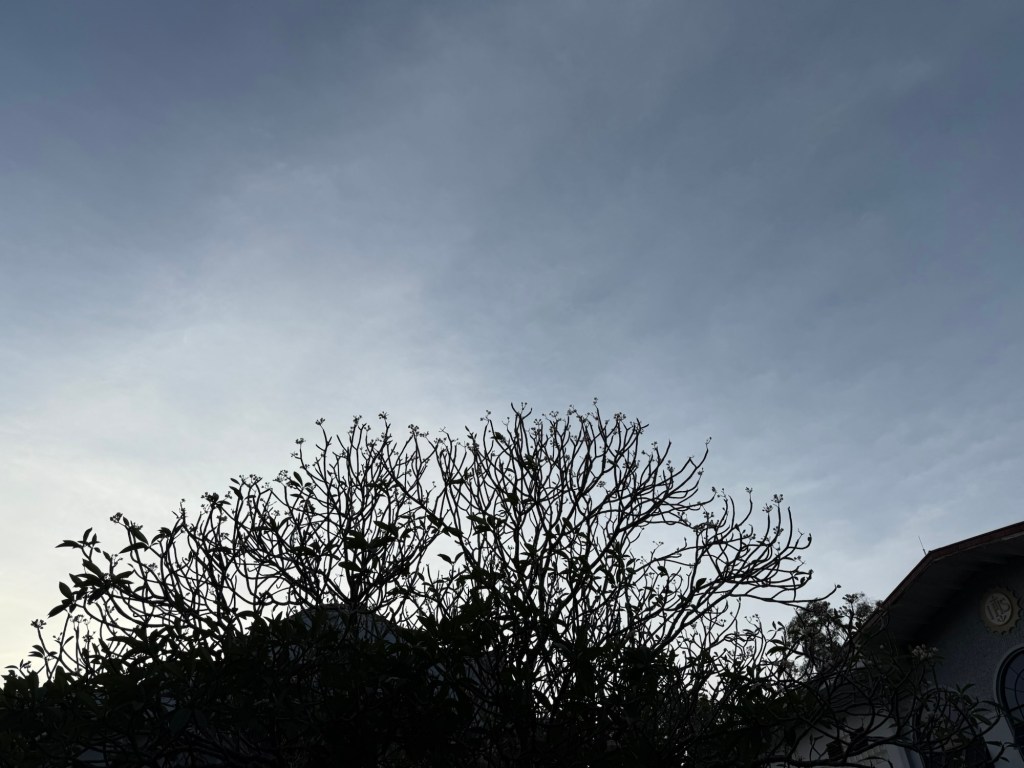
Photo by author, Mary’s home in Ephesus, 03 November 2025.
God our loving Father,
today I praise and thank you again
for the recent chance to travel
and experience your majesty
and beauty abroad
and among other peoples
of different culture;
most of all,
I am grateful to have been
to the home of the Blessed
Virgin Mary in Ephesus;
until now,
I am savoring,
"masticating" the blessed
experience.

Jesus entered the temple area and proceeded to drive out those who were selling things, saying to them, “It is written, My house shall be a house of prayer, but you have made it a den of thieves” (Luke 19:45-46).

As I recall 
that brief moment of stay
inside the Ephesus home of Mary,
I felt my whole being emptied - hollowed -
and as I knelt and prayed
without any distractions,
no worries about pictures nor of time,
slowly I felt being filled within
by you, O God: from hollowedness
to holiness or hallowed;
that is why Jesus drove away
the merchants out of temple:
every temple,
every place of worship
including our very selves
is a home and dwelling place of God;
the chief priests, scribes
and leader of the people
felt under attack by Jesus
because they were empty of God,
filled of the world and its things;
the people were spellbound
on the other hand because
they have realized that
truly, we are the indwelling
of God; therefore, let us cleanse
ourselves always within
not only of sin but also of
so many things that distract
us away from God
to dwell in us
like social media.
O Blessed Virgin Mary,
from the very start you have
been reserved by God from any stain
of sin to be the Mother of the Christ
but it was also fulfilled because
of human cooperation: of your parents
dedicating you to God and most of all,
of your fiat to God.
Pray for us, Mama Mary
that we may cultivate a prayer life
that shall make us a home
to God; let us express our
fiat to him daily by presenting
ourselves to him like you.
Amen.
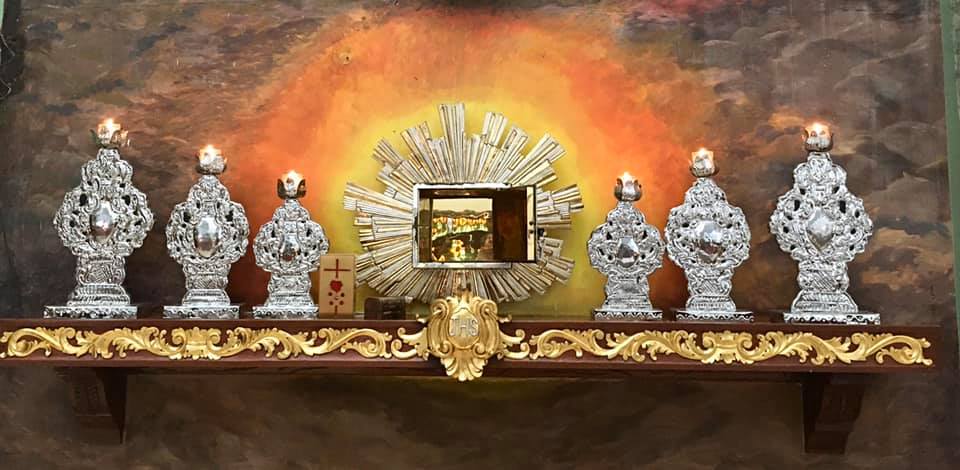
Photo by author, back of Mary’s home in Ephesus, 03 November 2025.

Our imperfect love: a Maundy Thursday reflection

Quiet Storm by Fr. Nicanor F. Lalog II, 17 April 2025
Photo by author, Sacred heart Novitiate, Novaliches, QC, 17 March 2025.

I have always loved Thursday since my first job in 1986 at GMA-7 News and Public Affairs. It was the day-off given to me by our office because I have to write news for our radio stations DZBB-AM and DWLS-FM even on Saturdays and cover news for television on Sundays.

After resigning from my job to enter the seminary in 1991 and got ordained as priest in 1998, I still chose Thursday as my day off from the ministry.

The reason for this is from a news I have found from the wires of United Press International during my GMA days that reported the findings by researchers in a US university that people are more kind on Thursday. According to the report which I used in our two radio stations, people are normally grouchy on Monday because of hangover from the weekend. They only start working on Tuesday, getting so tired on Wednesday, the two most toxic days in the week. Friday is TGIF when employees shelve their work in preparation for the weekend.

It is only on Thursday when people are most human and kind as they wanted to get everything done before TGIF. Hence, it is also the best day in the week to ask for a raise or to ask for favors from anyone. It is also on Thursdays when traffic is lighter because people are more relaxed, not so stressed out than the other days of weekday.

Photo from wikipediacommons.org of Christ’s washing of feet of Apostles at Monreale Cathedral in Palermo, Italy.

Perhaps it is no coincidence at all, in fact truly a part of the mystery of Jesus Christ’s Incarnation, i.e., his becoming human like us in everything except sin that he gave us his new commandment during their last supper also on a Thursday.

“I give you a new commandment: love one another. As I have loved you, so you also should love one another. This is how all will know that you are my disciples, if you have love for one another” (John 13:34-35).

This is the reason Holy Thursday is called Maundy Thursday from the Latin word mandatum or commandment when Jesus gave us his commandment of love.

Love is the only thing we all have to do in life. This love is expressed in our love for God through one another. That is why Jesus clarified that during his ministry: love of God is always expressed in our love for one another. Love as a commandment is like a face with two cheeks always together. Isang mukha, dalawang pisngi.

Every time we sin, it is not only a breaking of a law of God or human but most of all a refusal to love, a refusal to obey Christ’s commandment to love. Our Tagalog word for sin says it all: kasalanan from the root word sala which is “to miss” or “to fail”. Every sin – a kasalanan – is a failure, a missing (sala) of our one task which is to love. Every time we sin, we become less of a loving person.

It is indeed a very tall order from the Lord, to love like the way he loves us.

So when he had washed their feet and put his garments back on and reclined at table again, he said to them, “Do you realize what I have done for you? You call me ‘teacher’ and ‘master’, and rightly so, for indeed I am. If I, therefore, the master ands teacher, have washed your feet, you ought to wash one another’s feet. I have given you a model to follow, so that as I have done for you, you shouild also do” (John 13:12-15).

From gettyimages.com.

However, Jesus is not the stiff nor strict at all in demanding that we totally be like him right away in our love for one another. All he asks us is to try, to persevere in his love. He knows very well that our love is imperfect, that only him can love us perfectly.

Many times we complain (rightly so!) as we get hurt emotionally, physically and even spiritually from people we look up to like priests and teachers and to those supposed to love us most like parents and siblings and friends.

It is part of the mystery of life and of love specifically that the ones we love most are the ones we hurt most too and vice versa. That pain is from that love that ironically fails always. And that is because we are not God. Our love is always imperfect. We need to have some room within us for others’ sins and failures.

Photo by author, last supper scene of our youth’s senakulo, 15 April 2025.

We are all imperfect that is why our love is also imperfect. There are times we think the love we share or give is the very best but to our beloved, it could be misconstrued as not love at all like parents being too strict with their children. There are times when we think our beloved would love our gifts as expression of our love but unknown to us they were expecting something else.

Only God can love us perfectly. That is the love of Jesus Christ for us on the Cross so vividly portrayed in his last supper on Holy Thursday evening when he washed the feet of his disciples.

Jesus washed the disciples’ feet because he knew they would get dirty again. And that would need constant washing by those he would leave behind, including us. To wash another’s feet is the highest or deepest form and expression of love because it is an imitation of Jesus Christ.

Imagine how Jesus bowed down to each of the Twelve that Holy Thursday evening. Every day, Jesus does that to us too!

Normally, we look up to God in the heavens to pray, to beg his mercy, to ask for his favors, to praise and thank him. Jesus reversed this at his last supper: with him washing our feet, Jesus is the one looking up to us mere mortals and sinners?!

That is the love of Christ for us he proved the following Good Friday when he plunged himself to the lowest point of life, of dying on the Cross because of his immense love for each of us that led to his Resurrection at Easter.

Photo by author, Holy Thursday 2020.

At the start of the Mass of the Lord’s Supper this afternoon before sundown, the rubrics instructs that “the tabernacle should be entirely empty, but a sufficient amount of bread should be consecrated in this Mass for the Communion of the Clergy and the people on this and the following day.”

This is a beautiful reminder too for us as we come for the celebration of Jesus Christ’s supper and sacrifice, we too must empty ourselves of our pride, to accept our own imperfections in order to have some room for others also imperfect just like us. Let us empty ourselves of our sins for us to be filled with Christ’s love and mercy, kindness and forgiveness.

This Maundy Thursday, let us reflect on how deep is our love for Christ and for one another. Look at your feet and admit how difficult it is to even wash our own feet. Whose feet do not get dirty in this life’s journey? Everyone does. Let’s admit that and start helping each other in washing our feet. That is love. We do not stop loving because that is all we have to do in life and afterlife. Amen.

Lent is being consistently kind

40 Shades of Lent by Fr. Nicanor F. Lalog II
Friday, First Week in Lent, 14 March 2025
Ezekiel 18:21-28 + + + Matthew 5:20-26
Photo by Pixabay on Pexels.com
God our loving Father,
as we end this first week
in Lent, teach us more on the
need to be empty of ourselves,
empty of our pride
for us to be consistent
and most especially,
kind.
We have been so filled 
with the world that our
hearts burn with anger
and hate, totally disregarding
reason and morals
with so many parents
still in grief, crying for
their children mercilessly
killed on mere suspicions
while friends and neighbors
even family are caught
in a huge web of lies
everyone believes;
worst, everyone sees
one's self being so right
while others so wrong,
even accusing you, O God,
of being "unfair" like during
the time of Ezekiel.
How sad in this age of
boundless and instant
communications,
our world had shrunk
into little worlds and galaxies
of "me and mine and I";
teach us your way of kindness
in Jesus so we may see
everyone as a "kin" -
a kindred,
a one of us
filled with goodwill
for one another;
remind us always, Jesus,
that it is not enough that
we do not just kill anyone
but most of all has goodwill
with everyone right in our hearts
as a sign of true worship
for it is only when we see
each one as a kin
that loving can begin
consistently.
Amen.
Photo by author, Northern Blossoms Farm, Atok, Benguet, 27 December 2024.

Advent is God’s tenderness & sweetness

The Lord Is My Chef Sunday Recipe for the Soul by Fr. Nicanor F. Lalog II
Fourth Sunday in Advent-C, Simbang Gabi-7, 22 December 2024
Micah 5:1-4 ><}}}}*> Hebrews 10:5-10 ><}}}}*> Luke 1:39-45
Photo by author, Baguio City, March 2020.

Christmas is a story of love, about the meeting of lovers with God as the Great Lover who gave us His only Son because of His immense love for us. But, this love is not the kind of love conveyed by the cheesy Christmas tunes “Pasko na Sinta Ko” and “Last Christmas”.

The word “lovers” may be too serious as a term for us to relate this with today’s gospel of the Visitation of Mary to her cousin Elizabeth though both women were so in love with God who clearly loved them so much with children in their womb bound to change the course of human history forever. They were also filled with love for each other as expression of their love for God. And when there is love, there is always tenderness and sweetness that all happen in the context of a visitation that we must first clarify.

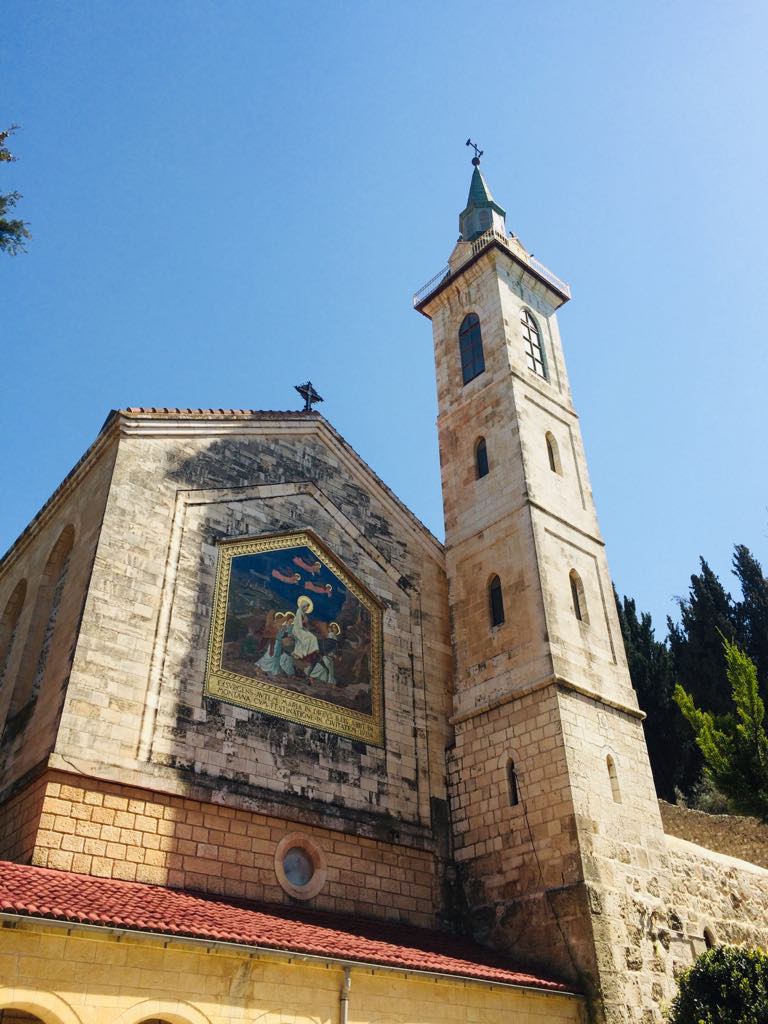
Photo by author, Church of Visitation, Israel, May 2017.

Visit and visitation may seem to be one and the same as both share the Latin root vidi, videre which is the verb “to see” as in video and visual. But, a visit is more casual and informal without intimacy because it is just “a passing by” or merely to see. It is more concerned with the place or the location and site and not the person to be visited. We say it clearly in Filipino as in “napadaan lang” when it just so happened you were passing by a place and even without any intentions, you tried seeing someone there. 

On the other hand, visitation is more commonly used in church language like when a bishop or priests come to see the parishioners in remote places; hence, a chapel is always called a visita where priests “visit” to celebrate Mass and check on the well-being of people living in areas far from the parish. Aside from being the venue for the celebration of Masses, the visita serves as classroom for catechism classes and other religious even social gatherings in remote barrios. Now as a chaplain in a University with a hospital, I do sick visitations every Sunday after our Mass to anoint and bring communion to our patients.

Thus, visitation connotes a deeper sense in meaning because there is an expression care and concern among people, a kind of love shared by the visitator/visitor and the one visited like Mary and Elizabeth. Visitation is more of entering into someone’s life or personhood as reported by Luke on Mary’s visitation to Elizabeth where Mary “entered the house of Zechariah and greeted Elizabeth” (Lk.1:40), implying communion or the sharing of a common experience.  In this case, the two women shared the great experience of being blessed with the presence of God in their wombs! 

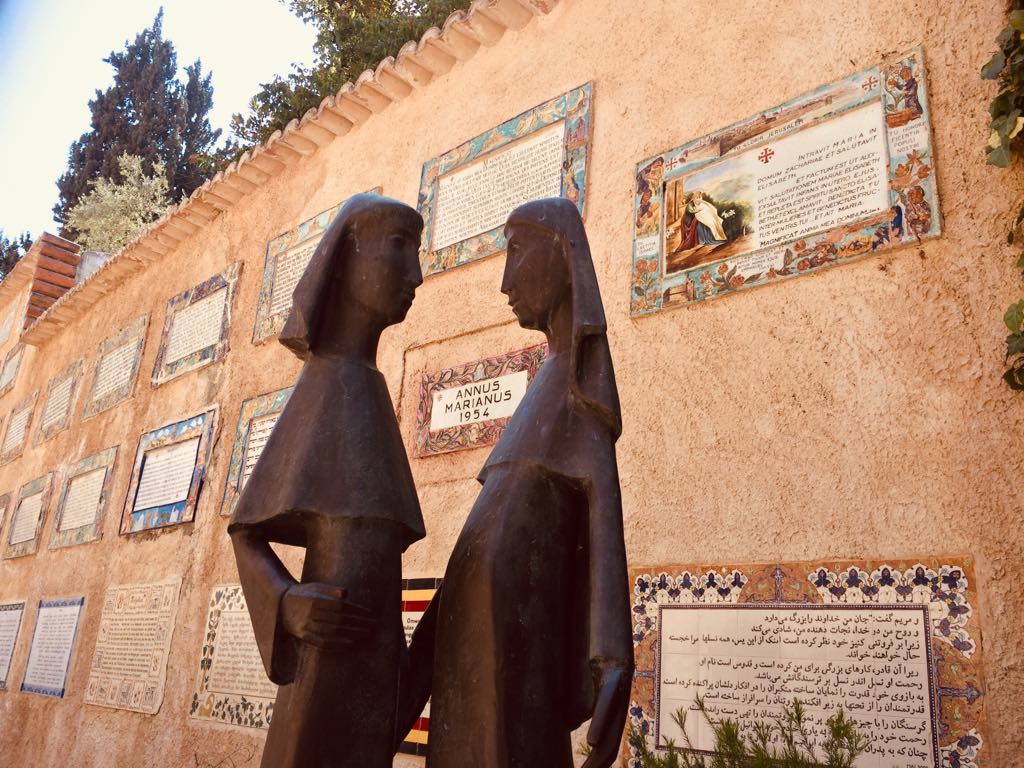
Photo by author, bronze statues of Mary and Elizabeth at the patio of the Church of Visitation, Israel, May 2017.

Visitation is a sharing or oneness in the joys and pains of those dear to us.  The word becomes more meaningful when we try to examine its Filipino equivalent –“pagdalaw” from the root word “dala” that can be something you bring or a verb to bring. 

When we come for a visitation, we dala or bring something like food or any gift. But most of all we bring our very selves like a gift of presence wherein we share our total selves with our time and talents, joys and sadness, and everything to those being visited that Mary did exactly in her visitation of Elizabeth where she brought with her the Lord Jesus Christ in her womb.

This fourth Sunday of Advent, we are invited to become like Mary in the visitation of others to bring Christmas and Jesus Himself to others by allowing our very body to be the “bringer” or taga-dala of Christ, the highest good we can bring as pasalubong in every visitation we make. Here again is another beautiful Filipino word, pasalubong that is literally the gift you bring when you visit somebody. It has a verb equivalent that is salubong or meeting/encounter. To salubong or meet another person, one has to leave one’s place, one has to leave behind one’s biases and mistrust to be empty to meet the other person.

How lovely and sweet if we can leave our negativities behind this Advent and Christmas so we can dala (bring) Jesus to family and friends and strangers to therefore salubong (meet) to experience God’s tenderness and sweetness in Jesus Christ.

Photo by author, Fourth Sunday of Advent 2022, Chapel of Basic Education, Our Lady of Fatima University, Valenzuela City.

Tenderness and sweetness in Filipino are often translated in just one word which is “malambing” from “lambing” that has no direct English translation except that it connotes a loving affection; however, both terms are more than just affections but stirrings from the heart that move us into action. 

Tenderness is very much like gentleness; the former is more focused while the latter is very general attitude. Tenderness is more than being soft and gentle but an awareness of the other person’s weaknesses, needs and vulnerabilities. A tender person is one who tries not to add more insult to one’s injuries or rub salt onto one’s wounds so to speak. A tender person is one who tries to soothe and calm a hurting person, trying to heal his/her wounds like God often portrayed in many instances in the bible in lovingly dealing with sinners filled with mercy. 

Like God, a person filled with tenderness is one who comes to comfort and heal the sick and those taking on a lot of beatings in life. When Jesus Christ came, He also personified this tenderness of God like when He was moved with pity and compassion for the sick, the widows, the women and the children and the voiceless in the society. Tenderness is coming to heal the wounds of those wounded and hurt, trying to “lullaby” the restless and sleepless. Mary visited Elizabeth because she also knew the many wounds of her cousin who for a long time bore no child, living in “disgrace before others” as she had claimed (Lk.1:25).

Photo from The Valenzuela Times, 02 July 2024.

Sweetness always goes with tenderness. It is the essence of God who is love. Anyone who loves is always sweet, something that comes naturally from within, bringing out good vibes.  It is never artificial like Splenda, always flowing freely and naturally that leaves a good taste and feeling to anyone. In the Hail Holy Queen, Mary is portrayed as “O clement, O loving, O sweet Virgin Mary” to show her sweetness as a mother. There are no pretensions and pompousness in being sweet, never needs much effort to exert in showing it for it comes out naturally and instantly.

Tenderness and sweetness are the most God-like qualities we all have but have buried deep into our innermost selves, refusing them to come out because of our refusal to love for fears of getting hurt and left behind or, even lost. When Mary heard Elizabeth’s condition, she simply followed her human and motherly instincts that are in fact so Godly – she went in haste to visit her. Tenderness and sweetness are the twin gifts of Christmas to humanity when God almighty became little and vulnerable like us so we can be great and powerful like Him in being able to love. 

Photo by author, Archdiocesan Shrine of Nuestra Señora De Guia, Ermita, Manila, 28 November 2024.

It is the final Sunday of Advent. In a few days it will be Christmas day and we still have enough time to empty our hearts of sins and bitterness to be filled with God’s love, sweetness and tenderness in Christ.

Let me leave you with my favorite quote from the novel “The Plague” by Albert Camus, “A loveless world is a dead world, and always there comes an hour when one is weary of prisons, of one’s work, and of devotion to duty, and all one craves for is a loved face, the warmth and wonder of a loving heart.” 

Let that love in you come out this Christmas and hereafter; simply be like the child Jesus and be surprised with His tremendous power to transform the world.  Amen. Have a blessed, sweet and tender Christ-filled week ahead!

When is life empty?

The Lord Is My Chef Daily Recipe for the Soul by Fr. Nicanor F. Lalog II
Friday, Memorial of St. Andrew Kim Tae-gon & Companion Martyrs, 20 September 2024
1 Corinthians 15:12-20 <8{{{{>< + ><}}}}8> Luke 8:1-3
Photo by author in Bolinao, Pangasinan, 2022.

"And if Christ 
has not been raised,
then empty too is our preaching;
empty, too, your faith"....

and empty too is our life!
St. Paul's words 
to the Corinthians
echo so well in our own time
when many of us believers
live as though there will be no
resurrection of the dead;
so many of us believers today
see life limited only to this
temporal world
that we indulge in everything
that is material and pleasing,
avoiding all pains and sufferings,
simply subscribing to that dictum
to drink and be merry
for tomorrow
we shall die.
Forgive us,
Jesus, when we see
life's fullness is found only
in things and pleasures
of the world that we forget
the truth that life is empty
without your Cross
because it leads us to
Resurrection each day
like the sunrise;
life is empty when we have
more of the world
and less of God
whose ultimate reality
is in the resurrection
and life everlasting.
Grant us the grace
of those holy women
who followed you in your
ministry, giving up everything
they have especially their
sinful past because in you
they found and experienced
resurrection; most of all,
like the more than 100 martyrs
of Korea whom we remember today,
let us bear our cross of witnessing
to you and your gospel,
Jesus, so that people may
realize that truly,
life is most meaningful
most fulfilled
only in you.
Amen.
St. Andrew Kim Taegon, first Korean priest with his lay associate St. Paul Chong Hasan with 113 other Koreans died as martyrs between 1839 and 1867.

Blessedness of desert

The Lord Is My Chef Daily Recipe for the Soul by Fr. Nicanor F. Lalog II
Monday in the Fourteenth Week of Ordinary Time, Year II, 08 July 2024
Hosea 2:16,17-18, 21-22 <*((((><< + >><))))*> Matthew 9:18-26
Photo by Walid Ahmad on Pexels.com

Thus says the Lord: I will allure her; I will lead her into the desert and speak to her heart… I will espouse you to me forever: I will espouse you in right and in justice, in love and in mercy; I will espouse you in fidelity, and you shall know the Lord (Hosea 2:16, 21-22).

Praise and glory to You,
God our loving Father!
Lead us back to You,
lead us back to the desert -
to that state of dryness,
of emptiness,
of nothingness
for us to find and
experience You again;
lead us to the desert,
Father, for us to feel
our heart again
that You are our first love
after all!
Forgive us, Father,
when life is in abundance
we are filled of our selves
we forget You and others;
when life is affluent,
we disregard what is right
and just, we become so greedy
with nothing enough;
when life is going on smoothly
without problems, we disregard
love and mercy as we see more
of things than persons as we veer
away from You,
sinking into infidelity,
not knowing You.
I do not ask for too much
pain and suffering;
just something enough to
knock our heads
like that father in the gospel
and woman suffering hemorrhages
for 12 years who both felt so
isolated from the rest
like in a desert
to realize there is only You
in Jesus Christ to restore us
back to life,
back to community,
back to our real selves
and back to You.
Amen.

An Ode to Silence

Quiet Storm by Fr. Nicanor F. Lalog II, 03 May 2024
Photo by author, Anvaya Cove in Morong, Bataan, 15 April 2024.
How I wish I could strum and sing
like Simon and Garfunkel
saying hello and listening
to the sound of silence
that nobody hears,
nobody cares;
what a lovely commodity
now a rarity in the time of Siri,
everybody is so afraid of silence
when its loudest sound is
less than a breath,
feebler than a whisper.
How foolish have we become
to disregard silence
when it is the only sound
before we have all become
that is why when death comes,
in silence we shall return;
woe the Walkman that pushed us back
to the caves of our own world
enslaved by gadgets that muffle
our ears and head
from the warmth of another soul
speaking in silence.
Let us touch and be disturbed
by the sound of silence!
Listen to its wisdom and truth
for it is not emptiness but fullness;
embrace silence, feel its warmth
to see life's vibrance in its natural sound
telling us to trust again
so we can love anew
that is most true
when words are few
because the heart is empty,
silently awaiting YOU!
Photo by author, Anvaya Cove in Morong, Bataan, 15 April 2024.

“Is It Over” by Ronnie Milsap (1983)

The Lord Is My Chef Sunday Music, 31 March 2024
Photo by author, Sacred Heart Novitiate, Novaliches, QC, 20 March 2024.

Blessed happy Easter everyone! We take a melancholic love song on this day of celebrating the triumph of love in Jesus Christ’s Resurrection because Easter is a continuing journey with Him, in Him and through Him amid darkness and emptiness in life (https://lordmychef.com/2024/03/30/easter-is-signs-scripture-together-always/).

Like the story of that first Easter morning while still dark when Mary Magdalene and later Simon Peter with the beloved disciple found the tomb of Jesus empty except for His burial cloths neatly folded to indicate the Lord’s rising from the dead, Ronnie Milsap’s 1983 hit Is It Over speaks a lot of the essence of Easter about faith in the love of Jesus Christ.

Milsap’s Is it Over invites his beloved to sincerely search her heart to get over her former relationship so that theirs would flourish and grow; in the same manner, we need to get over our Good Fridays in order to experience the glory of Easter Sundays in life.

Is it over, are you really over him
Is it over, or will you take him back again
If it’s over you can let his memory in
Come on over, we’ll let our love begin.

You say you can’t count the times that he’s hurt you
And he’s hurt you for the last time
Now you say I’m the one that you’re needing
But is the need in your heart or just in your mind.

Is it over, are you really over him
Is it over, or will you take him back again
If it’s over you can let his memory in
Come on over, we’ll let our love begin.

Like Jesus calling us every day in our lives to come over to Him by leaving behind our past hurts, Is it Over tells on the need to move on in life, to embrace the present by learning from the past. Most of all, of the need to confront one’s true self in the heart, not just in the mind in order to move on in life.

Milsap’s music and voice are uniquely refreshing that sound very Easter perhaps due to his personal experiences. Born partially blind and abandoned by his mother after birth, Milsap grew up in poverty with his grandparents in the Smoky Mountains of North Carolina. Despite his handicap and poverty, he was found exceptionally brilliant and talented even while in his early childhood when he was sent to a school for the blind at the age of five where he developed his musical talent at age seven. He was later sent to Governor Moorehead to formally begin studies in classical music. It was there in his early teens when Mislap learned to play several musical instruments and chose to master the piano.

At age 14, Milsap became totally blind after being slapped on his left eye by one of the houseparents but that never affected his pursuits in learning as well as music. He was able to finish college through scholarships and was already in law school as a full scholar when he decided to leave to concentrate in music in 1964.

He met his wife Joyce Reeves in one of their gigs the following year, got married and remained together until her death in 2021 due to cancer. They had a son, Ronald who died in 2019 aged 49 apparently due to a medical condition

Is It Over follows the style of Milsap’s earlier and biggest breakthrough in 1977, It Was almost Like a Song that topped the Billboard charts in many categories. Both songs are very popular among us Filipinos who are certified romantics.

Now aged 81, Milsap remains active in the music scene as a composer, collaborating with some of the biggest names in the industry. His life is a beautiful example of the Easter glory amid many darkness and emptiness. Although officially retired, it isn’t over yet for Mislap as he continues to record and busies himself with a podcast as well as an amateur radio enthusiast.

Here now is Milsap’s lovely song, Is It Over.

From YouTube.com

What’s inside you?

The Lord Is My Chef Daily Recipe for the Soul by Fr. Nicanor F. Lalog II
Tuesday, Misa De Gallo IV, 19 December 2023
Judges 13:2-7, 24-25 <'[[[[>< + ><]]]]'> Luke 1:5-25
Photo by Taryn Elliott on Pexels.com

Here’s another beautiful story I got from a blogger I recently followed from Spain at wordpress.com. It is actually an analogy which may sound simple but very true.

You are holding a cup of coffee when someone comes along and bumps into you or shakes your arm, making you spill your coffee everywhere. 
Why did you spill the coffee?

"Because someone bumped into me!!!"

Wrong answer. You spilled the coffee because there was coffee in your cup. Had there been tea in the cup, you would have spilled tea. Whatever is inside the cup is what will spill out.

Therefore, when life comes along and shakes you - which surely happens all the time - whatever is inside you will come out. It's easy to fake it, until you get rattled. So, we have to ask ourselves, "what's in my cup?" When life gets tough, what spills over from me? 

(see, https://pkmundo.com/2023/12/17/i-love-this-analogy/comment-page-1/#respond)
Photo by Mr. Boy Cabrido, Quiapo Church, Misa de Gallo, 17 December 2023.

My dear friends, we are now on the fourth day of our Misa de Gallo and I find that story/analogy so appropriate with our readings today. 

How interesting that Zechariah with his wife Elizabeth – according to St. Luke – prayed so hard all their lives to have a child but when God was about to fulfill it, Zechariah doubted it despite being told by an angel from God. Like in that story/analogy we presented above, Zechariah was “rattled” by the angel’s good news. “What was inside Zechariah that he doubted the good news”? 

Then Zechariah said to the angel, “How shall I know this? For I am an old man, and my wife is advanced in years.” And the angel said to him in reply, “I am Gabriel, who stand before God. I was sent to speak to you and to announce to you this good news. But now you will be speechless and unable to talk until the days these things take place, because you did not believe my words, which will be fulfilled at their proper time.”

Luke 1:18-20
Photo by author, Wailing Wall of Jerusalem, May 2017, the section of the remaining parts of the temple closest to the Holy of Holies where priests used to incense once a year.

Advent is the presence of God but sometimes when we are overburdened with so many things like anxieties and problems in life, frustrations and disappointments, sickness and death in the family, we become unaware of his divine presence even if we continue to pray and do our religious duties and devotions.  Too often we lack the conscious awareness of God in our lives that we take him for granted, considering him more as a given than a presence and a reality.

This is exactly what we told you yesterday about some of us pretending to be real disciples of Christ when in reality we are merely dreaming in a sleepwalking existence. It is a kind of spiritual immaturity due to our lack of honesty and sincerity with one’s self and with God that we remain a spiritual dwarf. Like Zechariah who happened to be a priest who must be more attuned and rooted in God, we too hardly notice God’s coming or even doubt him and his powers because we want to hold on to our comfort zone or insist our own agenda. 

God is never put off by our queries in life but what “irritates” him is when we question him, when we doubt him, when we ask about his character like Zechariah.  That is a lack of faith in God, a lack of trust, and lack of personal relationship with him unlike St. Joseph in our reflection yesterday, truly a righteous man. 

Contrast Zechariah with his wife Elizabeth who is presented by St. Luke in a better position despite her being barren. In the Bible, barrenness is a sign of lifelessness and absence of God’s blessings. Worst, it was seen as a punishment from God for one’s sins.

Yet in this opening scene of St. Luke’s infancy story beginning with the annunciation of John’s birth, we find God’s power at its fullest when we are most emptied which is exactly the imagery of Elizabeth being barren and old. She had nothing at all to be proud of unlike Zechariah who still had duties to perform as a priest. 

As we have reflected yesterday too, we burst in great rejoicing actually in those moments filled with negativities, with a lot of “no” answers of rejections and failure. That was how Elizabeth felt after being pregnant with John.

After this time, his wife Elizabeth conceived, and she went into seclusion for five months, saying, “So has the Lord done for me at a time when he has seen fit to take away my disgrace before others.”

Luke 1:24-25

Earlier, we asked what was inside Zechariah that he doubted the good news of the angel; now, we imagine what was inside the barren Elizabeth who welcomed the good news rejoicing by voluntarily going into a seclusion?

The story of the elderly couple Zechariah and Elizabeth finally being blessed by God with a child shows us God’s consistency not only in keeping his promises but most of all in working best even in our worst conditions, in the most unusual circumstances. In these two stories, one from the Old Testament and in the New Testament, we find the importance of being filled with God always.

Recall our story/analogy above. What is inside us that comes out when we are shaken? What spills over from our cup, is it joy, gratitude, and peace? Or, anger, bitterness, harsh words and reactions long festering within?

In starting his Christmas story with the annunciation of the birth of John the Baptist, St. Luke is telling us an important aspect in celebrating this blessed season – the need to fill ourselves with God. 

See how Zechariah was forced to be silent and made mute so that he could spend more time listening and rediscovering God anew in his heart, of filling himself with God. On the other hand, Elizabeth opted to go into seclusion also to contemplate God already dwelling in her though she may have never known before that is why she wanted to listen more intently to his other plans with the gift of John. Similarly like her in the first reading was the wife of Manoah who remained silent and open when a man of God told her she would bear a son to be called Samson, saying that “I did not ask him where he came from” (Jgs.3: 6). Advent invites us to simply be still to be filled by God, with God.

The other day I joined my nieces and nephew for lunch. After dropping me off at the parish, they asked for a nearby Starbuck’s because my nephew had to buy a coffee mug for his exchange gift in their class. When I asked him why he had to give a Starbuck’s mug as gift, it turned out that is now the way it is in class Christmas party – your exchange gift partner can make a wish for the gift to receive for as long as it is within the agreed budget by the class.

Anyway, our life gives us the cup or the mug. We make the decision, the choice to fill it with coffee or chocolate or tea, in the same manner we fill ourselves with joy or bitterness, anger or serenity, gratitude or complaints. Or God.

Like Zechariah in the gospel today, we could be so tired already of doing so much, of banging our heads on the wall to solve everything, to answer everything.  In this final stretch before Christmas, let us empty our cups or mugs of our selves and fill it with God who alone can truly fill us with life despite our dryness and barrenness. Amen.Have a blessed Tuesday!