The Lord Is My Chef Daily Recipe for the Soul by Fr. Nicanor F. Lalog II
Wednesday, Feast of St. Matthew, Apostle, 21 September 2022
Ephesians 4:1-7, 11-13     <*{{{{><  +  ><}}}}*>     Matthew 9:9-13
Photo by author, Lake Tiberias from the side of Capernaum where Jesus called Matthew to follow him.
You never fail to amaze me,
Lord Jesus Christ with your
unique manner and ways
of finding us, calling us,
and loving us.
Of your Twelve Apostles,
only five were called while
working:  the brothers Simon
and Andrew, James and John
who were fishermen and
Matthew, a tax collector;
the first four belonged
to the most ordinary
and lowliest job of the time,
fishing, while Matthew did
the most despicable job of
collecting taxes unjustly for
Roman colonizers making him
both a sinner and a traitor.
But, you have your plans
that are so different from our
ways when you told the Pharisees
and scribes that "Those who are well
do not need a physician,
but the sick do... I did not come
to call the righteous
but sinners" (Mt.9:12, 13).
Thank you, Lord Jesus
for still calling me when
I was at my lowest point in life,
when I was most sinful,
when everyone was rejecting me;
thank you, Jesus,
for believing in me,
in calling me to come,
follow you; help me to rise
from my pit of anger and
bitterness, hopelessness
and desolation like Matthew,
leaving all evil and sins
to follow you
and share you with
everyone.
Help me, Jesus,
to write the fifth gospel
according to my life
like Matthew
by "living in a manner
worthy of the call I have
received" (Eph. 4:1).
Amen.

St. Matthew,
pray for us!
Caravaggio’s painting, “Calling of St. Matthew” from en.wikipedia.org.
*You may also want to check our reflection on Caravaggio’s painting “Calling of St. Matthew” by clicking this link:
The Lord Is My Chef Sunday Recipe for the Soul by Fr. Nicanor F. Lalog II
Twenty-Fourth Sunday in Ordinary Time, Cycle-C, 11 September 2022
Exodus 32:7-11, 13-14 ><}}}}*> 1 Timothy 1:12-17 ><}}}}*> Luke 15:1-10
Photo by author, 2018.
Last Wednesday morning during breakfast, we heard on television news the interview of the undersecretary of agriculture blaming our farmers for the recent oversupply of garlic in Batanes and cabbage in Benguet, saying “they plant crops but they don’t think about the market for their harvests.”
We have been so used to such comments by many heartless government officials ever since; and, they also happen everywhere like in our schools where teachers blame students, at homes with parents blaming children and siblings blaming one another and of course, not to be left out is our church where priests always blame people for whatever problems and mishaps that happen in the parish.
No wonder, we feel more comfortable with God depicted in the Old Testament like in our first reading today when God was so angry and instructed to immediately get down from the mountain to punish the people who have created a golden calf to worship.
We find it so difficult to fully and truly accept despite Christ’s words and assurances that God our Father finds joy in forgiving as depicted today in our gospel. So often, we are like the Pharisees and scribes who could not understand why we have to share in the joy of God when a sinner repents.
Tax collectors and sinners were all drawing near to listen to Jesus, but the Pharisees and scribes began to complain, saying, “This man welcomes sinners and eats with them. So to them he addressed this parable.
Luke 15:1-3
Photo by author, 2018.
Jesus reminded us these past two Sundays of the demands of discipleship, of the need for us to conform to his very person and not just with morality and even religiosity. Discipleship is being like Jesus, always having him as our top priority in life.
This progression of Christ’s teaching on discipleship reaches its peak as we move into the 15th chapter of Luke’s gospel account considered as the “heart” of the Gospel in presenting to us three parables showing God full of mercy and forgiveness for sinners. Actually, it does not merely present God as forgiving but in fact as the One who finds joy in forgiving, who is inviting us to share in his joy of forgiving repentant sinners.
There are three parables in Luke chapter 15: the lost sheep, the lost coin and the lost son known as prodigal son. We have opted to consider the shorter form of the gospel which skips the third parable which we have already reflected in the recent Season of Lent.
Photo by Dr. Mylene A. Santos, MD, in Quezon, July 2022.
The first two parables deal with things that are lost, a lamb and a coin; both deal with only one person like “one of you” and “a woman”. On surface, the two parables seem very ordinary but Jesus – and Luke – have a very captivating manner of narrating them, similarly ending each parable with great sense of rejoicing after finding the lost sheep and lost coin.
Simply put, Jesus is appealing to our common experience of how one lost item would surely claim our attention, no matter how small or even insignificant it may be compared with the rest of what we have.
How do you feel when after losing something you were so worried and disturbed searching for it then someone tells you, “para yun lang?”
We feel so mad, like being rubbed with salt on our wounds because such comment “para yun lang?” betrays their lack of concern and love for us, of not knowing at all or at least recognizing how much that missing thing means to us!
How much more with persons like family and friends who have gone wayward in life like the prodigal son and suddenly coming back to us, saying sorry, trying to pick up the broken pieces of our lives to be whole again as friends and family? Would we not also rejoice when they come home, when we finally find them again?
Photo by Dr. Mylene A. Santos, MD, 2020.
In narrating the two parables in such manner so common with us, Jesus now affirms the incomparable value of every repentant sinner. Moreover, Jesus is showing us in these parables the more deeper ties we have with each other that we must rejoice when a sinner is converted. Hence, the demand too on the part of the sinner, of everyone, to recognize our sinfulness first.
Notice how Luke began this new chapter by telling us how “Tax collectors and sinners were all drawing near to listen to Jesus, but the Pharisees and scribes began to complain, saying, ‘This man welcomes sinners and eats with them.’ So to them he addressed this parable.”
Look at the attitudes of the Pharisees and scribes that are not just snobbish but recriminating against the tax collectors and sinners; for them, those kind of people were hopeless, improbable to change that no one should be socializing with them like Jesus.
But, what really got to their nerves that they were complaining why Jesus was sharing meals with them was the fact that tax collectors and sinners were not turning to the Law but to Jesus himself, following him, and even preferring him more than everything! They felt left out when in fact they were the first to separate themselves from everyone.
That’s what they could not accept, that they were no longer relevant.
And the main stumbling block to that was their lost their sense of sinfulness as they have believed so much with themselves as if they were like God, so pure and so clean. Due to their lost sense of sinfulness, they have been totally detached from God and from others as well because they were playing gods, setting them apart from everyone even from God himself because they believed they were sinless. In that sense, they felt God had nothing to do with them because they were sufficient in themselves.
There is nothing God cannot forgive.
This is the grace of this 24th Sunday in Ordinary Time.
Whenever we admit and confess our sins to him,
it is God who is first of all filled with so much joy
 for he has long been searching
and waiting for us to return to him.
Photo by author, 2019.
This is the problem we have in this modern time, when we have all kinds of excuses and alibis, reasons and arguments in doing just everything, losing our sense of sin that unconsciously, we feel like God, in fact always playing God when we presume to know everything that we would neither rejoice when people change for the better nor sympathize with those suffering and in misery. Like the Pharisees and scribes and those heartless people in power and authority in government and schools, at home and in the church, they have no time to even see and review why and what have caused people to sin.
In the first reading, Moses is teaching us the attitude of a true disciple, of one who intercedes for the people by confessing the tender mercy and fidelity of God to his promises and to his people; Moses did not bargain with God to relent in punishing the people. Notice his language, his manner of praying to God, appealing to him as “Lord” filled with faith in God’s boundless mercy and forgiveness. We all know how in a twist of humor, it was Moses who was so furious later when he saw the people worshipping the golden calf that he threw on them the two tablets of stone of God’s Ten Commandments.
In the second reading, St. Paul reminds us through Timothy of God’s boundless love expressed in his mercy and forgiveness to us all sinners. We can never experience this unless we first realize and admit and own our sinfulness like St. Paul who may be considered the worst of sinners for having persecuted the early Christians. There are so many other saints who followed after him with so dark and sinful pasts but became great men and women of faith because they first admitted their sins and sinfulness. As the saying goes, there is no saint without a sinful past and there is no sinner who is denied of a saintly future.
There is nothing God cannot forgive. This is the grace of this 24th Sunday in Ordinary Time. Whenever we admit and confess our sins to him, it is God who is first of all filled with so much joy for he has long been searching and waiting for us to return to him. Amen.
Have a blessed week ahead!
Photo by author, Mount Sinai at the Monastery of St. Catherine, Egypt, 2019.
The Lord Is My Chef Daily Recipe for the Soul by Fr. Nicanor F. Lalog II
Thursday in the Seventeenth Week of Ordinary Time, 28 July 2022
Jeremiah 18:1-6   ><))))*> + ><))))*> + ><))))*>   Matthew 13:47-53
Photo by author, St. Anne Church, Jerusalem, May 2017.
Bless me today,
loving God our Father;
help me to be still,
to be silent, and be like
a clay in your hands.
Do whatever you want
with me for I have offered you
myself long ago though like
your prophet Jeremiah, there
were times I have whined and
complained, or worst even indulged
in self-pity when I felt you
have left me or forgotten me
when things get rough and tough
with me.
Thank you, loving Father
for what and who I am today -
these are all because you have
molded me like a clay in the potter's
hand:  so many times I have to be
mashed over and over again,
remodeled, redesigned, reconstructed
until your desired image appears;
truly, all we can do is to propose but
ultimately, it is you, O God, who disposes.
Then the word of the Lord came to me: “Can I not do to you, house of Israel, as this potter has done?” says the Lord. “Indeed, like clay in the hand of the potter, so are you in my hand, house of Israel.”
Jeremiah 18:5-6
When I look back to those difficult
and even painful days of molding,
everything was pure grace from you
and your loving hands:  nothing was
wasted because I have become a better
person, I have learned to blend what is
new and what is old.
And he replied, “Then every scribe who has been instructed in the Kingdom of heaven is like the head of a household who brings from his storeroom both the new and the old.”
Matthew 13:52
In the name of Jesus
your Son, keep me strong,
fill me with courage to forge on
with life's many trials as you
mold me into your beautiful
masterpiece, an "earthen vessel"
of your glory and mystery.
Amen.
The Lord Is My Chef Daily Recipe for the Soul by Fr. Nicanor F. Lalog II
Monday, Feast of St. James the Greater, Apostle, 25 July 2022
2 Corinthians 4:7-15   ><)))*> + ><)))*> + ><)))*>   Matthew 20:20-28
Photo by author, 2018.
Praise and glory to you,
Lord Jesus Christ for your
saint and apostle, James the
Greater!
His martyrdom and holiness
are testaments to your
gentleness, Lord,
for we are all earthen vessels
keeping you, proclaiming you
to all nations.
Brothers and sisters: We hold this treasure in earthen vessels that the surpassing power may be of God and not from us. We are afflicted in every way, but not constrained; perplexed, but not driven to despair; persecuted, but not abandoned; struck down, but not destroyed; always carrying about in the body the dying of Jesus, so that the life of Jesus may also be manifested in our body.
2 Corinthians 4:7-10
Despite his weaknesses
in having a big ego as seen
in many instances like when he
his brother John told you to send
fire to a Samaritan village that have
refused you to pass through and
making a request through their mother
to be seated at your right later when
you have established your kingdom,
you never dismissed James as a
hopeless case; instead, full of love and
mercy, kindness and patience, you
"handled him with so much care" by
bringing him along during your transfiguration
and agony in the garden; you let him
experienced your gentleness and humility
that after you have gone back in heaven,
he became the first bishop of Jerusalem
and because of that, the first among
your Apostles to die like you,
for you and your flock.
Dearest Jesus,
please be patient with me,
with my pride and arrogance;
let me realize that I am nothing
but like an earthen vessel, a claypot
so privileged not because of my own
merit but due to your own choosing
to be a vessel of your love and mercy.
Thank you, Jesus,
for taking care of me,
for handling me with care
the way you did with James
the Greater and all the others saints
who were all like us - sinful and weak
but so loved and blessed by the Father
in you.  Amen.
Homily by Fr. Nicanor F. Lalog II, Baccalaureate Mass of Senior High School,
Our Lady of Fatima University, Valenzuela City, 08 July 2022
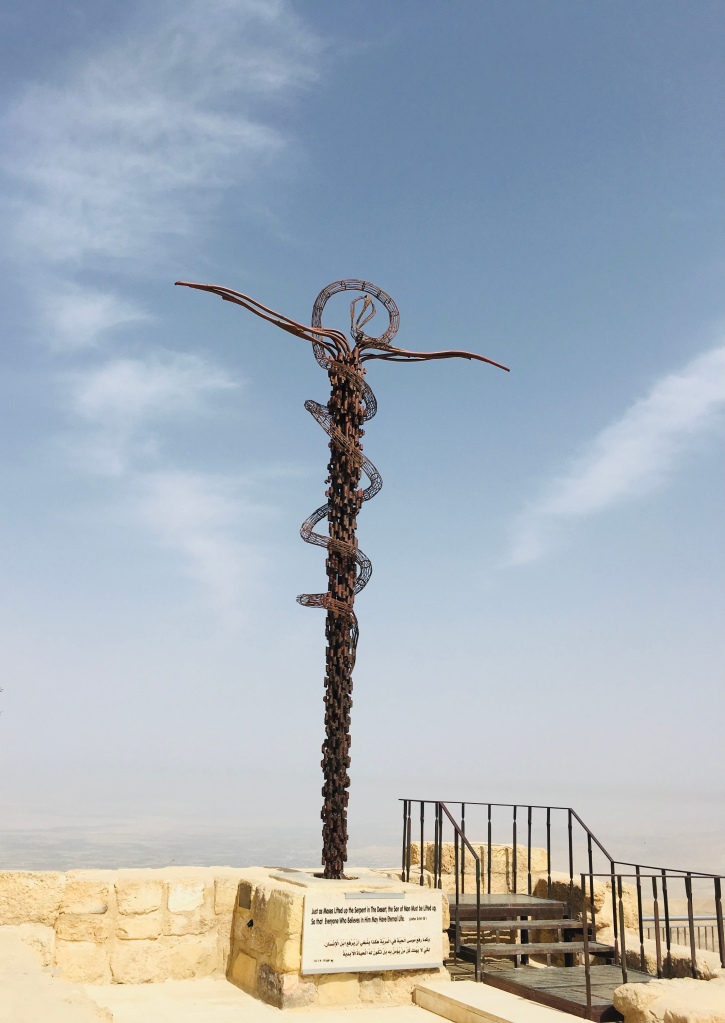
Photo by author at Mt. Nebo, Jordan overlooking the Holy Land, May 2019. Modern sculpture of the bronze serpent God told Moses to erect in the desert so that those bitten by snakes would be healed when they looked up to it, a prefiguration of Christ himself.
Congratulations, our dear graduates of Senior High School. You are so blessed today because our gospel is like a valedictory address given to you by no less than our Lord Jesus Christ whose message is so simple, yet so rich and so timely during this COVID-19 pandemic.
Jesus said to his Apostles: “Behold, I am sending you like sheep in the midst of wolves; so be shrewd as serpents and simple as doves.”
Matthew 10:16
You are the modern apostles of Jesus Christ.
You are so special, Senior High Batch 2022. The past two years are the most difficult in modern history, and probably doubly difficult for young people like you who were supposed to be outside learning and discovering more about life beyond the classrooms but COVID-19 kept you grounded.
But, here you are! Nakatapos din! – despite the poor internet services, the boring online classes, and limited personal interaction with others, you are graduating, soon fulfilling your dreams to become doctors, engineers, nurses, teachers.
Truly as Jesus Christ had said in the gospel today, you are being sent like sheep among wolves, a very wild world indeed where evil and darkness seem to prevail especially when you listen to all the news of missing ladies or even adults.
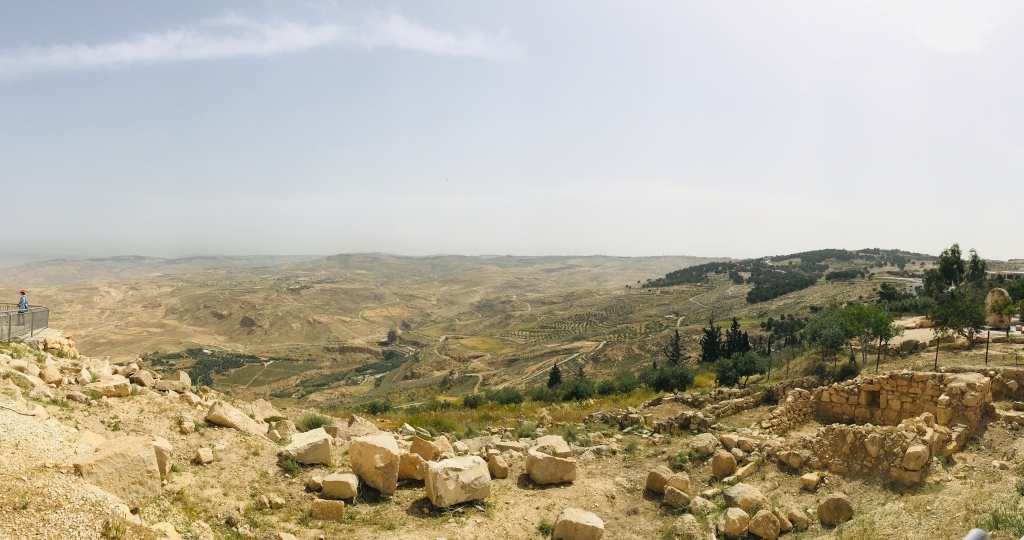
Photo by author, view of the desert to the Holy Land as seen from Jordan, May 2019.
I refuse to use that expression when somebody graduates, “welcome to the real world”. Was there any moment in your lives that was not real like, kunwa-kunwarian lang? What you went through in senior high was real, what you have experienced were all true. Lahat ay totohanang buhay especially those two years of isolation and lockdowns which may continue for the next three or five years according to experts.
Life will be more difficult in college but most challenging for growth and maturity.
Yes, there are so many dangers from within and from the outside but trust in God for in him alone can we find life and fulfillment as the prophet Hosea reminds us in the first reading today.
Thus says the Lord: “Let him who is wise understand these things, let him who is prudent know them. Straight are the paths of the Lord, in them the just walk, but sinners stumble.”
Hosea 14:10
What Hosea is telling us is to be wise, to be filled with wisdom which begins in having that holy fear of the Lord. Handle life with prayer. As I would always tell you, “study hard, work harder, pray hardest”. In God alone can we find meaning and fulfillment in life.
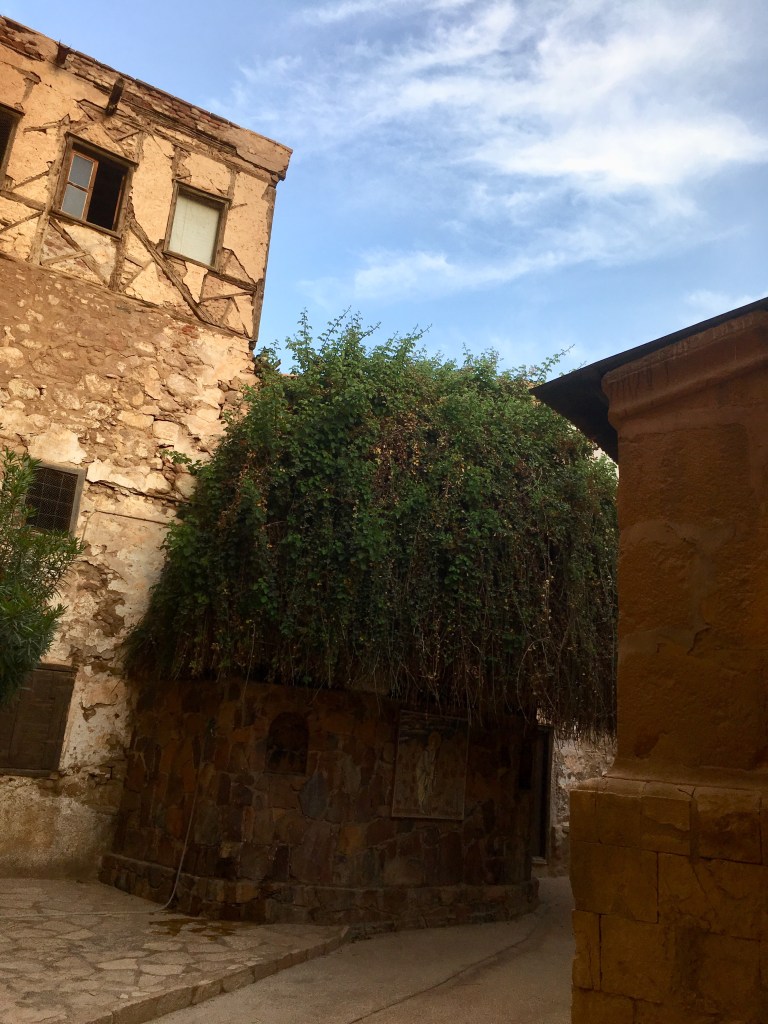
Photo by author, St. Catherine’s Monastery near Mt. Sinai, Egypt, May 2019.
Maybe you are wondering why Jesus is asking us to be shrewd like the serpents. As you must have learned in world literature and world history, the ancient peoples like the Egyptians have always considered snakes as symbols of wisdom. But what I wish to focus more is the revision of the older translation of this passage from “be wise as the serpents” to “be shrewd as the serpents”.
Being shrewd is often mistaken into a negative trait because it suggests a practical wisdom that does not necessarily look deeply into things at all but wily and conscious of its personal interests.
That’s according to the late Dr. S. I. Hayakawa of the the veritable Reader’s Digest guide to synonyms, “Use the Right Word”. However, Dr. Hayakawa explained that the word “shrewd” is often used to indicate an unusual mental agility or perceptiveness of taking advantage of hidden opportunities. It speaks of a more penetrating kind of wisdom that is why the new versions of bible of “be shrewd as the serpents” is more precise and exact.
In that sense, too, you are all shrewd as the serpents during your senior high school because you were able to perceive hidden opportunities during the pandemic that you strived in your studies. Believe me, you are well-equipped for life because of the online classes during the pandemic, teaching you, showing you so many opportunities our generation had never seen.
Here is the more interesting part of being shrewd like the serpents….
From reddit.com.
The snake is the only one in the animal kingdom that regularly sheds off its skin, a sign of renewal. In Filipino, we call that “paghuhunos ng balat”. During Lent, we hear the elders telling us “maghunos dili” – literally to shed some of one’s self or pride and ego. In short, be converted.
The snake is shrewd because it sheds its skin so often, renewing itself, adjusting and adapting to new situations.
And that is true wisdom – adjusting and adapting to new situations. Most of all, spiritually speaking, it is a daily conversion in God.
Conversion is not changing our personality, like a very courageous person becoming timid or a talkative person becoming silent. Conversion means having new directions in our selves. Perfect example is St. Paul who used to persecute Christians but upon conversion, became the missionary of the gospel of Christ. He was practically the same person still – zealous and full of enthusiasm but no longer in persecuting Christians but promoting Christ.
Conversion is being like the snake in shedding its skin, letting go of the old ways and self to be renewed – still a snake but a better snake after each shedding of skin. That’s being shrewd like the serpents: of the many lessons taught to us by this COVID-19 pandemic, one of the leading lessons is the need for us to adapt and adjust when things are not going good.
And you are the experts in this because during those two years of online classes – for better and for worst – you must have perfected the art of adjustments, of adaptation. Nobody ever expected or even predicted the things that happened in 2020. The COVID-19 pandemic is so unique, even surreal. We were so used to our comfort zones, so used to what has always been long before but COVID forced us to abandon that frame of mind and be like serpents, to adjust to situations by shedding off our skins, our pride to be more attuned with the environment to eventually emerge victorious. And we are all better now, especially you who are graduating soon!
Of course, you do not have to adjust and adapt to everything. You have to weigh things carefully. That is why Jesus balanced his instruction to be shrewd as the serpents with being simple as doves. We do not change and renew ourselves for the sake of adapting to new situations; we renew and adapt to become better persons, to become holier.
Remember, you are like the sheep – symbol of humility and holiness – being sent among wolves.
Be shrewd as the serpents and simple as doves. God bless you more in your college studies, Batch 2022!
The Lord Is My Chef Daily Recipe for the Soul by Fr. Nicanor F. Lalog II
Friday in the Fourteenth Week of Ordinary Time, 08 July 2022
Hosea 14:2-10   ><]]]'> + ><]]]'> + ><]]]'>   Matthew 10:16-23
Photo by Dr. Mylene A. Santos, MD in France, March 2022.
Another week is closing,
another brand new week coming
but here I am, O God, still undecided,
dilly-dallying when to follow you,
when to change my ways,
when will I ever be true
in walking my talk; this time,
may I take with me my words
of contrition, of decision to turn
away from sin and follow your path
in Jesus Christ your Son.
Thus says the Lord: Return, O Israel, to the Lord, your God; you have collapsed through your guilt. Take with you words, and return to the Lord, say to him, “Forgive all iniquity, and receive what is good, that we may render as offerings the bullocks from our stalls.”
Hosea 14:2-3
Grant me, O Lord,
the courage to be wise as the serpent
and gentle as the dove in this world
so filled with wolves and other
predators out for a kill with
their seductive temptations
to rule and dominate; may I always
have the presence of mind to think
what is fair and just, true and good
that I may not be tempted to take
shortcuts in life; inspire me to innovate
and be creative in proclaiming
and living out the gospel of Jesus
in this highly modern and complex
world; most of all, keep me faithful
to you, to always walk your path
for you are the way, the truth and
the life.
Let him who is wise understand these things; let him who is prudent know them. Straight are the paths of the Lord, in them the just walk, but sinners stumble in them.
Hosea 14:10
There is no other way
to life, Lord, except you
and this is the reason why
so many want to remove you,
to delete you from life, from
the world so that they can do
what is most pleasing to themselves
without realizing nor admitting
the collapse and slow death
they are experiencing.
Amen.
The Lord Is My Chef Daily Recipe for the Soul by Fr. Nicanor F. Lalog II
Monday in the Fourth Week of Easter, 09 May 2022
Acts 11:1-18   ><))))*> + <*((((><   John 10:1-10
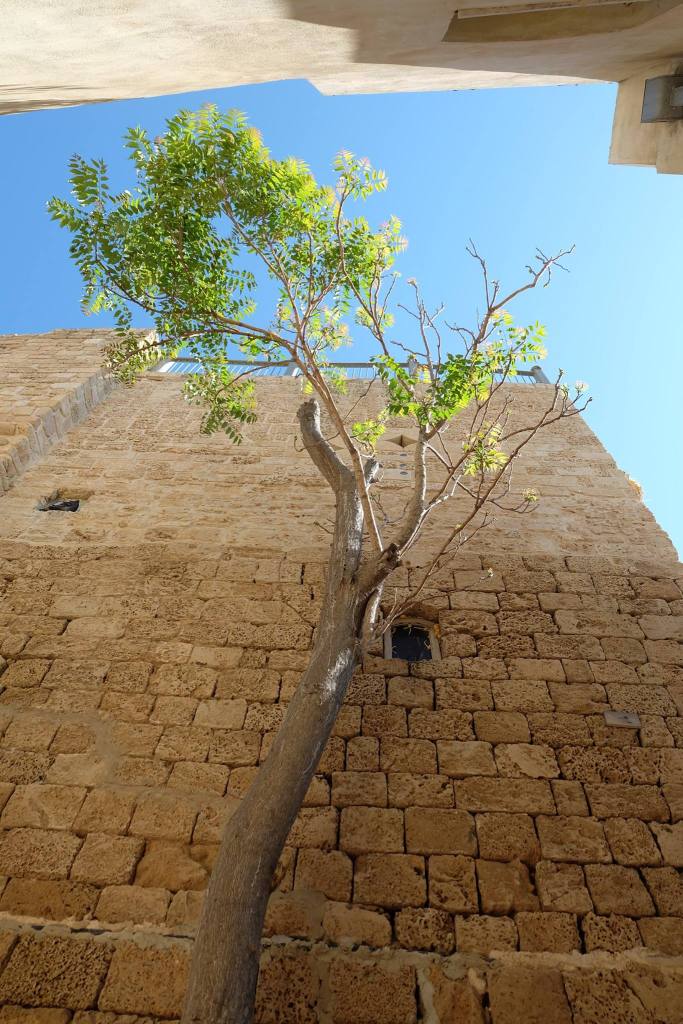
Photo by author, a house near the home of Cornelius in Jaffa, Israel, 2017.
Today O Lord we go to the polls
to cast our votes for the next group
of national and local leaders of our
nation; we have long been praying
for these elections to be peaceful
and orderly.
Most of all, a matured and intelligent one.
That we finally learn to vote according
to our informed and guided conscience,
carefully and prayerfully evaluating every
candidate, listening more to the voice
of Jesus the Good Shepherd.
But for us to be able to listen to Jesus,
let us first pass through him, our
only door.
Jesus said: “Amen, amen, I say to you, whoever does not enter a sheepfold through the gate but climbs over elsewhere is a thief and a robber.” So Jesus said again, “Amen, amen, I say to you, I am the gate for the sheep.”
John 10:1, 7
To pass through Jesus our gate
requires our own conversion to him;
and not just a conversion like that of
unbelievers and Gentiles in the first
reading but to be converted like Peter
himself and the rest of his fellow
believers who were of Jewish roots:
Peter began and explained it to them (Apostles and brothers in Jerusalem) step by step, saying, “If then God gave them the same gift he gave us when we came to believe in the Lord Jesus Christ, who was I to be able to hinder God?” When they heard this, they stopped objecting and glorified God, saying, “God has then granted life-saving repentance to the Gentiles too.”
Acts 11:4,17-18
To pass through you, dear Jesus,
is to be one in you which calls for our
daily conversion to you; so many times
we feel complacent, resting on whatever
we have achieved or reached in our
relating with you; it is in our daily-
conversion in you that truly leads us
to communion in you.  Amen.
The Lord Is My Chef Sunday Music by Fr. Nick F. Lalog II, 03 April 2022
Photo by author, Lent 2019.
It’s the final Sunday of our 40-day journey this Lenten season. As we get closer to Holy Week, it is presupposed that by this time, we have also gone closer to God our Father in Christ Jesus.
Last Sunday we have heard the parable of the merciful father more known as the parable of the prodigal son, the beautiful story of coming home to God; this Sunday, we encounter the Father in Jesus Christ in this beautiful story by John of the woman caught in adultery.
And there’s no other song more appropriate that comes to our mind and memory than that moving scene in the 1971 rock opera Jesus Christ Superstar where Mary Magdalene played by Ms. Yvonne Elliman sang “I Don’t Know How to Love Him”, referring to Jesus who had forgiven her after being caught committing adultery by the Pharisees and scribes. Of course, that was based on the long held belief that the woman caught committing adultery was Magdalene although latest biblical scholarships have unanimously debunked it as totally false.
Nonetheless, the song composed by Andrew Lloyd Weber and Tim Rice is hailed as the high point of the rock opera that until now critics acclaim Ms. Elliman for a very superb performance, combining “power and purity of tone” (Simpson, Paul, 2003. The Rough Guide to Cult Pop. London: The Penguin Group. p. 141. ISBN978-1843532293).
I don't know how to love him
What to do, how to move him
I've been changed, yes really changed
In these past few days
When I've seen myself
I seem like someone else

I don't know how to take this
I don't see why he moves me
He's a man, he's just a man
And I've had so many men before
In very many ways
He's just one more
The woman caught in adultery remains one of the beautiful scenes in the fourth gospel that is so simple yet set in the most profound language and imageries by John that Weber and Rice have apparently emulated with the lovely music and lyrics of this song. Very interesting are the lines by Ms. Elliman claiming “I’ve been changed, yes really changed// In these past few days// When I’ve seen myself I seem like someone else//.”
Here we not only experience God’s love and mercy but most of all the kindness of Jesus, his bending twice to show the sinful woman as well as her equally sinful accusers that despite their sins, God chose to go down to our level in order to raise us up to regain our lost dignity as children of God (https://lordmychef.com/2022/04/02/the-joy-of-meeting-god/).
More than a stroke of genius, it was likewise a divine inspiration that Weber and Rice have written these moving words about Jesus, “He’s a man, he’s just a man// And I’ve had so many men before// In very many ways// He’s just one more//” that invite us to imitate the kindness of God with one another, especially for those who have sinned.
The gospel scene and the song assure us of God’s boundless mercy to everyone who have sinned and willing to reform, “to go and sin no more”. It is not a passport to sins but a call to change our sinful ways to holiness, to being like God, loving and kind to everyone.
And that begins with our being kind first of all to ourselves. Amen.
*We have no intentions of infringing into the copyrights of this music and its uploader except to share its beauty and listening pleasure.
40 Shades of Lent by Fr. Nicanor F. Lalog II
Third Sunday in Lent-C, 20 March 2022
Exodus 3:1-8, 13-15 ><}}}*> 1 Corinthians 10:1-6, 10-12 ><}}}*> Luke 13:1-9
Photo by author, July 2020 in Bagbaguin, Santa Maria, Bulacan.
As I have told you at the start of this 40-day journey, Lent is like a coming home to God with Ash Wednesday until Saturday after as the porch and each Sunday a door leading us into the inner rooms closer to God.
At each door these past two Sundays, we were opened to God’s majesty and wonder, love and mercy in Jesus Christ who had come to help us triumph over many temptations in life, to be transformed and transfigured in him.
With Luke as our guide this year, he had opened to us each Sunday a very unique door to experience God’s majesty and mystery, his love and mercy offered in Jesus Christ.
This becomes most pronounced this Third and Fourth Sundays when we find his gospel stories as exclusively his alone: Christ’s call to repentance following the news of Pilate’s massacre of 18 Galileans during a temple worship and the parable of the Merciful Father more known as parable of the Prodigal Son.
Some people told Jesus about the Galileans whose blood Pilate had mingled with the blood of their sacrifices. Jesus said to them in reply, “Do you think that because these Galileans suffered in this way they were greater sinners than all other Galileans? By no means! But I tell you, if you do not repent, you will all perish as they did! Or those eighteen people who were killed when the tower at Siloam fell on them – do you think they were more guilty than everyone else who lived in Jerusalem? By no means! But I tell you, if you do not repent, you will all perish as they did!”
Luke 13:1-5
Photo by author, parish Via Crucis, 11 March 2022.
Our “blaming game”
At first hearing, our gospel today sounds like a news broadcast of brutalities and mishaps, trials and sufferings happening almost daily around the world. So many times, they happen closest to us personally or within our own circles of family and friends.
Only Luke has this account of teaching by Jesus; nowhere would you find in the gospels any account of Pilate ordering this massacre of Galileans but the Jewish historian Josephus had recorded many instances of the Roman governor’s ruthless reign.
And here we find the artistry of Luke in inserting this scene in his gospel the Church has chosen as part of our Lenten itinerary. So often in life, we keep on blaming somebody else except our very selves for every negative things happening to us and around us, even considering it as “divine chastisements” or karma to those people we consider as evil.
It is true that evil begets evil, but the seeming dominion of sin and evil in the world is so wide for us to attribute blame only to certain persons as if others, including ourselves, had no part in it. It always takes two to tango!
Worst case of this “blaming game” of ours is to even link our sufferings and trials with God.
Nothing bad can ever come from God like disasters and catastrophes, sickness and turmoils because God is love. God offers only life, never death nor destruction for he does only what is good. It is very wrong to think at all that God has something to do with any of these problems happening in the world like the pandemic or in our personal lives.
Photo by author, Sinai Mountain Range in Egypt, May 2019.
This is the gist of the Lord’s response to the people bringing him the bad news of the 18 Galileans ordered massacred by Pilate, “Do you think that because these Galileans suffered in this way they were greater sinners than all other Galileans? By no means!”. God does not punish at all! Bad things happen because of sins and that is what we always have to look inside us, how have we contributed to the evil happening.
And to make it clearer that God has nothing to do whatsoever with all these bad things happening to us, Jesus added, “Or those eighteen people who were killed when the tower at Siloam fell on them – do you think they were more guilty than everyone else who lived in Jerusalem? By no means!”.
However, Jesus is not telling us to be resigned to the absurdities of the world and of humankind. We can all do something to greatly prevent and reduce all these misfortunes and sufferings around us and that is the way of repentance, of conversion – the very calls of the prophets in the Old Testament and by John the Baptist.
Now, Jesus our Savior, the Son of God, is voicing out this call of repentance with urgency and new authority not only because it is the only way back to God but precisely due to his very nature of being loving and patient, merciful and forgiving.
The kind of God we have, the only one there is
The grace of this third Sunday of Lent is the revelation of the kind of God we have, the only one there is: a very loving and patient, merciful and forgiving God who is also perfectly present among us in Jesus Christ.
Photo by author, site of the burning bush in Sinai now inside St. Catherine’s Monastery in Egypt.
In the first reading, we are told of that unforgettable scene of Moses at the burning bush where God revealed himself as “I AM WHO AM” – the One who is always present with us in the past, in the future, and most especially in every here and now, the present moment.
When we think of God, what comes to our mind, what do we say about him?
God told Moses “Thus you say to the Israelites: The Lord, the God of your fathers, the God of Abraham, the God of Isaac, the God of Jacob, has sent me to you” (Ex. 3:15) to remind them that this God has always been present with his people.
With Abraham, God first made the promise of being the father of all nations (last Sunday’s first reading), to Isaac he revealed himself in the stairway to heaven, and to Jacob that he would bring them to Egypt and liberate them after. Now in Moses, everything is coming into fulfillment of this great nation to be set free by God, a prefiguration Christ and his saving mission.
Throughout history, God never left his people, working great marvels in the past to deliver them from slavery, a passing over and exodus, assuring us of his presence and salvation in the future by remaining at our side.
History is cyclic, everything seems to be happening again but with an upward trajectory towards God; in every repetition of history, the question is where are we standing with God, are we still the same the first time we encountered him, descending to vice and sins or have we grown in virtues and holiness?
Salvation history and secular history continue to unfold for both are one in God; hence, we must not waste every moment to return to God, to repent and be converted. Beware of Paul’s warning, “Therefore, whoever thinks he is standing secure should take care not to fall” (1 Cor. 10:12)! Remember those Galileans massacred by Pilate or those 18 people at Siloam crushed to death by tower that had fallen – anything can happen with us, so be ready. Never leave God who is always with us, assuring us with salvation in Jesus.
Beginning this Sunday, continuing to next week with the parable of the prodigal son and finally on the fifth Sunday of Lent when we skip Luke’s gospel to borrow from John for the story of the woman caught in adultery, we are being immersed into the deeper mystery of this God we call Father made known to us by Jesus Christ through his own passion, death and resurrection.
The more we enter God’s mystery every Sunday of Lent, the more his “height, breath and depth” (Eph. 3:18) appear to us, making us realize he is real, very true like another person we can feel and hear, always with us, patiently waiting for us to bear fruit like the owner of the fig tree in the parable.
How have you experienced God’s presence this past week?
What else do we need to be convinced of his love and mercy that we still refuse to repent and be converted in Jesus Christ?
The time is now, not yesterday or tomorrow for God is I AM WHO AM, one who is in the present. Amen.Have a blessed week.
Thank you for the prayers; I am home trying to recuperate from my surgery.
Photo by author, inside St. Catherine Monastery with Mt. Sinai at the background in Egypt, May 2019.
40 Shades of Lent by Fr. Nicanor F. Lalog II
Friday in the First Week of Lent, 11 March 2022
Ezekiel 18:21-28   <'[[[[>< + ><]]]]'>   Matthew 5:20-26
Photo by author, Chapel of the Holy Family, Sacred Heart Novitiate, 2017.
You, O God,
are indeed so good and loving!
How true is our Responsorial Psalm
as we close Lent’s first week,
“If you, O Lord, mark iniquities,
who can stand?” because nothing
can be hidden from you;
yet, so many times you pretend like
a dumb - “nagtatanga- tangahan" po kayo -
as if not knowing our sins and evil
just because you love us like when
Jesus said in the gospel,
“if you bring your gift to the altar,
and there recall that your brother
has anything against you,
leave your gift there at the altar,
go first and be reconciled with your brother,
and then come and offer your gift (Mt.5:23-24).”
When does
a “brother has anything against us?”, Lord?
If you mean, dear Jesus,
that a brother/sister has something
against us because of his/her wrongdoing,
then we could never be able
to offer anything at all to you
because we all have something
against each other!
But here, it is very clear,
“a brother has anything against you”
because we have done something wrong
against somebody; the burden is on us
that is why we are obliged,
even ought to be
“reconciled with him first then offer our gift”
because we’re the guilty one.
Forgive us, Jesus,
for always pretending to be
the offended or aggrieved ones
when in fact, we are the offender,
the sinner who had done wrong
to another that is why he/she
has anything against us".
We pray for those who have something
against us because of our own making,
of our own provocations; let us be real
with you, O God, to change our ways
beginning this Lent as you assure us
through Prophet Ezekiel,
“When someone virtuous
turns away from virtue to commit iniquity,
and dies, it is because of the iniquity
he committed that he must die.
But if the wicked, turning from wickedness
he has committed, does what is right and just,
he shall preserve his life;
since he has turned away from all the sins
that he committed, he shall surely live,
he shall not die (18:26-28).”Amen.















 lordmychef.com