The Lord Is My Chef Daily Recipe for the Soul by Fr. Nicanor F. Lalog II
Monday, Memorial of Dedication of St. Mary Major in Rome, 05 August 2024
Jeremiah 28:1-17     <*((((><  +  ><))))*>     Matthew 14:13-21
From en.wikipedia.org
God our loving Father,
teach us to appreciate bad news
that comes our way because
most often from it comes too
the good news;
like in the life of your prophet Jeremiah
who spoke always of bad news,
of gloom and doom to the people of Judah
so that they would repent and be converted;
but they chose to listen to the good news
of Hananiah you have not authorized
to speak on your behalf,
greatly misleading them
with false hopes of liberation
from the Babylonians that
actually worsened as Jeremiah
had told them.
Truth hurts
but we must always hear
and accept it so that we may
grow and mature like the Apostles
when Jesus told them,
"There is no need for them to go away;
give them some food yourselves"
(Matthew 14:16);
from that bad news,
the Apostles were able to surrender
themselves and their loaves of bread
to Jesus who multiplied them to
satisfy the great crowds with
so many leftovers!
The construction and
dedication of St. Mary Major in Rome
happened during those problematic
years of the fourth century Church
with many bad news like
Nestorianism that denied Christ's divinity;
in accepting all the bad news at that time,
the church of St. Mary Major
was miraculously built
and finally named in honor
of Mary, Mother of God
after resolving the heresy of Nestorianism.
In this time of so many bad news
especially when immorality and decadence
seem to prevail and govern lives these days,
help us dear Jesus to hold on more to you,
to implore the Holy Spirit to
enlighten our minds and our hearts
in seeking, following and standing
by your truth
to finally win over people
back to sanity
and deceny.
Amen.
The Lord Is My Chef Daily Recipe for the Soul by Fr. Nicanor F. Lalog II
Prayers in the storm and after the storm, 24-25 July 2024
Photo by author, Parish of the National Shrine of Our Lady of Fatima, Valenzuela City, 24 July 2024.
We did not sleep well Tuesday night, worried with the serious impact of heavy rains to our brothers and sisters living in shanties and low-lying areas. Electricity was cut off early yesterday as we received reports of widespread flooding in the Parish. Immediately, the Parish Priest with the Parish Pastoral Council gathered dry clothings, jackets, and blankets for the evacuees in a nearby school, sending some breakfast too. This was our prayer on that rainy Wednesday:
God our loving Father,
we thank you for the rains
we have long been waiting for
to fill our dams,
to water our fields and plants,
to cool our climate;
but because of our continued
disregard for your creation
and for one another,
these blessed rains have brought
many problems too
especially floods that
are getting worse every year;
forgive us for we never learn
to respect not only nature
but especially one another;
rich and poor alike failed
to take care of each other
thinking only of one's self.
May these rains wash away
our selfishness,
cleanse our conscience
to think more of others
and enable us to finally
take concrete steps
in changing our lifestyle
as Pope Francis had long
called for in Laudato Si
so that we may finally see
our interconnectedness in this
one home and planet we call
Earth.
Amen.
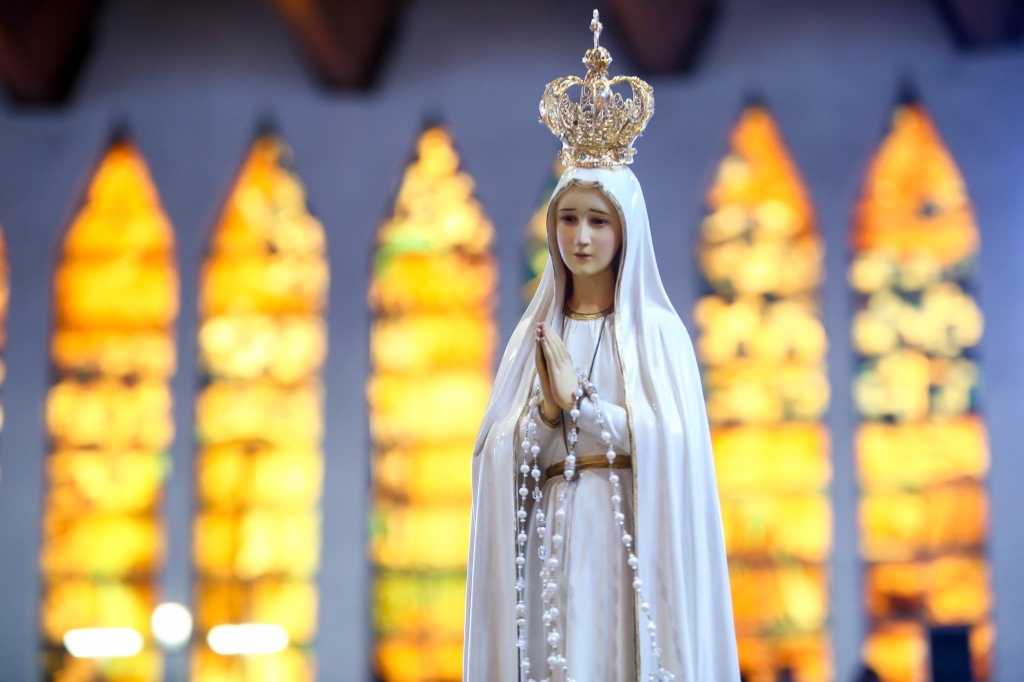
Photo by author, the Fatima image we use for procession after Sunday Masses at the Shrine taking cover from the strong rains and winds yesterday.
Rains heavily poured with a lot of thunders before noon yesterday; more parishioners sent help in kind and food for the 60 evacuees near the Shrine. This we composed for our noontime prayer during that thunderstorms:
God our Father,
thank you for the midday rest
on this stormy Wednesday;
many of us are bearing with
the discomfort of no electricity,
of not being able to move around,
of idly staying at home;
forgive us for the complaints
especially when we forget there are
more who are going through severe
tests and sufferings at this time:
dilapidated and leaky homes with
still more moving to evacuation
centers; many people have nothing
at all in their pockets for these rainy days;
help us reach out to our poor brothers
and sisters especially the children
who haven’t have breakfast nor have rested
at all since last night!
Father, we pray for the daily wage earners
who could not work today
due to bad weather;
we pray also for those living alone
as well as those who could not come home.
Bless every home,
fill us with more love and kindness
to keep warm everyone in this time
of calamity.
We ask this in Jesus Christ’s name
with the Holy Spirit. Amen.

O blessed Mother Mary,
our Lady of Fatima,
Pray for us!
There was still no electricity and rains continued to pour in the afternoon with a handful people celebrating the 6PM Mass at the Shrine. Up in our rectory, our staff and PPC officers were busy preparing packed meals for the families evacuated in a nearby school. This was our prayer that afternoon:
God our loving
and merciful Father,
thank you for bringing us to the
end of this day;
thank you for the gift of life,
for the selfless people who served
in all rescue and relief efforts
for those affected by the heavy
rains that still continue;
thank you and bless those who remained
faithful to their call of duty especially
those in the police and military,
the journalists who risked their lives
to keep us informed of the situations,
our weathermen who tracked Carina
and the habagat;
most of all, we thank you
for the doctors and nurses
who came to hospitals as
extensions of your healing hands in this
time of calamity.
Keep them all safe.
Bring us all home safely tonight
guided by your light of love and care
in Jesus Christ
in the power of the Holy Spirit.
Amen.

Mary our Mother,
Our Lady of Fatima,
Pray for us.
Photo by author, Blessed Sacrament in the Chapel of Angel of Peace, RISE Tower, Our Lady of Fatima University, Valenzuela City, 26 June 2024.
Darkness enveloped the whole city of Valenzuela by nightfall as we remained without electricity but the good news of rains finally stopping with the ebbing of the floods were most welcomed news to bring joy to many among us. We continued with our prayers and this is what we shared:
Most loving Father,
many of us will not sleep tonight:
some are working overnight
to ensure tomorrow we’ll have
food and power while others are
keeping watch for everyone’s
safety and wellbeing;
bless them,
give them the strength to do their
tasks and duties,
and keep them safe.
It has been a very long,
cold, and wet day, Father;
help us set aside our worries,
to trust and hope in You
that it is always after the rains
and the storms leaves are greenest;
it is after the floods when rich top soil
are deposited, conducive for farming;
it is during calamities when love
and charity surprise us most.
Amen.

Jesus, King of Mercy,
we trust in You!

Our Lady of Fatima,
Pray for us!
Photo by author, Fatima Avenue, Valenzuela City after the storm this morning, 25 July 2024 with Our Blessed Virgin’s old statue reminding us of her motherly care.
Finally, we saw the sun at the start of this new day still with some rains and the heavy tasks of cleaning and clearing the debris left by the floods. Will we ever learn to respect nature which is actually an expression of our respect for each other too?
Our prayer after the storm:
Praise and glory to you,
God our loving Father!
Thank you for this new day,
thank you for the gift of life,
thank you for guiding us
during these stormy days.
Bless our doctors and nurses,
the selfless volunteers and staffmembers
of rescue and emergency units
along with our police and military
personnel as well as the weathermen
who continue to work and serve us
today after the storm.
Help us to do better
in responding to emergencies
next time while we finally learn
to change our lifestyles in caring
for the environment and ultimately,
for one another.
Let us appreciate
each one’s giftedness
in Christ Jesus our Lord
as we celebrate life
in the Holy Spirit
today.
Amen.

Our Lady of Fatima,
Pray for us!
St. James the Great,
Pray for us!
Photo by author, Fatima Avenue, Marulas, Valenzuela City, 25 July 2024.
The Lord Is My Chef Daily Recipe for the Soul by Fr. Nicanor F. Lalog II
Tuesday in the Eleventh Week in Ordinary Time, Year II, 18 June 2024
1 Kings 21:17-29     <'[[[[><<  +  ><]]]]'>     Matthew 5:43-48
Photo by author, Sacred Heart Novitiate, Novaliches, QC, 20 March 2024.
God our merciful Father,
grant me the grace today
to understand my sins more
clearly so that I may come to
sorrow for them,
sorrow that leads to love
of your Son Jesus Christ
and not despair;
let me keep in mind
that sin is not just a breaking
of your laws and rules but
simply a refusal to love
You and others around me;
and the worst part of sin
we are not aware of is how
it seriously affects our personality,
our personhood
because whenever we sin
we become a less-loving
person.
So be perfect, just as your heavenly Father is perfect.
Matthew 5:48
Being perfect,
being holy like You,
dear Father,
means being filled
by You
which is a process
of daily conversion
when we ask
your forgiveness Father,
to gain a better self-knowledge
of ourselves
to identify our weaknesses
and sinfulness
so that in your grace,
we become a better person
than before.
Let us have within us
that sense of sinfulness
and sense of sin,
Father
so that we
we may grow in your love.
Amen.
The Lord Is My Chef Easter Recipe by Fr. Nicanor F. Lalog II
Tuesday in the Easter Octave, 02 April 2024
Acts 2:36-41     <*{{{{>< + ><}}}}*>     John 20:11-18
Photo by author, Sacred Heart Novitiate, Novaliches, QC, 20 March 2024.
Oh, yes...dear God!
In this Season of Easter
today's Responsorial Psalm
is so true,
"The earth is full
of the goodness of the Lord"
when despite the many
darkness pervading over us
and the emptiness we find
and experience,
You give us things to do
to rectify our mistakes,
to make life better after
so many mistakes and
sins: to repent in Jesus Christ
and surrender ourselves to Him
in order to receive
the gift of the
Holy Spirit.
Now when they heard this, they were cut to the heart, and they asked Peter and the other Apostles, “What are we to do, my brothers?” Peter said to them, “Repent and be baptized, every one of you, in the name of Jesus Christ for the forgiveness of your sins; and you will receive the gift of the Holy Spirit.
Acts 2:37-38
Photo by author, Sacred Heart Novitiate, Novaliches, QC, 19 March 2024.
Many times we are like
Mary Magdalene,
O Lord:
we cannot see and experience
You because we are still
looking for You in our old ways,
in our comfort zones,
in the superficialities of life
like the more obvious
physical aspects;
teach us to
"stop holding on to You",
Lord,
in those old ways
and manners
by going deeper,
taking that deep plunge
to trust in You more,
be matured,
more trusting and faithful
to You in the midst of
darkness and
emptiness.

Open the eyes of our heart
and soul to see more
of You in the hidden beauties
as well as in the
ugly and uncomfortable
realities of life.
Amen.
Painting by Giotto of the Risen Lord Jesus Christ appearing to St. Mary Magdalene from commons.wikimedia.org.
In this season of Lent,
teach us, Lord, to be
consistent in our contrition;
let us realize that true
contrition for our sins is
not only when we have cried,
nor when we have beaten
our breasts with mea culpa,
mea culpa, mea maxima culpa,
nor when we say sorry to
everyone we have sinned.
Being sorry for our sins
before you, God our Father,
is being consistent -
when our contrition leads us
to change our evil ways
and most of all, when we
become consistent in our
prayer and lives
that we stop with our
sins and evil ways.
Azariah stood up in the fire and prayed aloud: “For we are reduced, O Lord, beyond any other nation, brought low everywhere in the world this day because of our sins. But with contrite heart and humble spirit let us be received; as though it were burnt offerings of rams and bullocks, or thousands of fat lambs, so let our sacrifice be inn your presence today as we follow you unreservedly; for those who trust in you cannot be put to shame.
Daniel 3:25, 37, 39
Most of all,
O God,
to be contrite for our sins
is being consistent also
in being forgiving
with our fellow sinners;
every day, we call you
God "Our Father",
asking you to forgive us
our sins as we forgive
those who sin against us
but so often,
we just say these words
without really acting on them,
fulfilling them by forgiving
our fellow sinners;
to be sorry for our own sins
is to see also the pure
heart of another sinner
asking for forgiveness
of sins.

To be contrite
is to be consistent
in forgiving others
from one's heart
because a truly contrite heart
sees and feels
a fellow contrite heart too!
Amen.
40 Shades of Lent by Fr. Nicanor F. Lalog II
Tuesday in the Second Week of Lent, 27 February 2024
Isaiah 1;10, 16-20     <*[[[[>< + + + ><]]]]*>     Matthew 23:1-12
Praise and glory
to you, God our Father,
for this Season of Lent!
Though it is characterized
with sobriety due to the
the spirit of penance,
you have ensured
it not to be dull nor drab
with the joy of Easter
we all anticipate.
And so, what a joy
to listen to your words
today of the bursts of reds
you promised to cleanse
and turn into white as snow.
Come now, let us set things right, says the Lord. Though your sins be like scarlet, they may become white as snow; though they be crimson red, they may become white as wool.
Isaiah 1:18
Your words make me wonder,
Lord, why sins be like scarlet
and crimson?
Could it be because both
shades evoke power we
humans always abuse
that consciously or
unconsciously, we draw
blood that in the process
take life of others
because of our sinful
desires and schemes;
forgive us, O Lord,
for our hypocrisies
that have killed
others literally
and figuratively.
In Jesus' name,
help us, O God
to "set things right",
to be true and humble
before you for
"Whoever exalts himself
will be humbled; but whoever
humbles himself will be
exalted" (Matthew 23:12);
let us set things right
by being fair and just
especially to those
weak and marginalized;
let us set things right
by giving back
what we have stolen
from others;
let us set things right
by being concerned
with others through
love and good works
that uplift people
physically,
morally,
and spiritually.
Amen.
Photo by Ms. Ria De Vera in Calgary, Alberta, 21 February 2024.
40 Shades of Lent by Fr. Nicanor F. Lalog II
Friday in the First Week of Lent, 23 February 2024
Ezekiel 18:21-28     <*[[[[>< + + + ><]]]]*>     Matthew 5:20-26
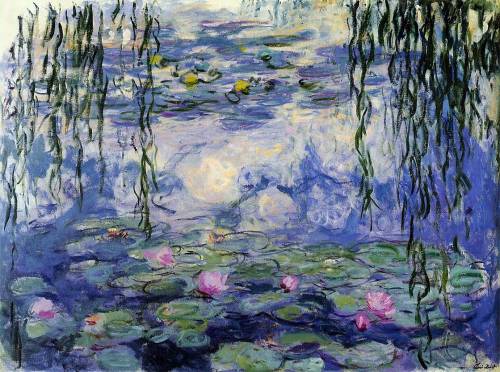
“Water Lilies” (1916-1919) painting by Frenchman Claude Monet from lopificio.it
As we come to close
 the first week of Lent today,
your words in our Responsorial Psalm
are so true, O God because nothing
can be hidden from you,
“If you, O Lord, mark iniquities,
who can stand?”
Jesus said to his disciples: “Therefore, if you bring your gift to the altar, and there recall that your brother has anything against you, leave your gift there at the altar, go first and be reconciled with your brother, and then come and offer your gift.”
Matthew 5:23-24
When does a "brother has
anything against us", Lord Jesus?

  The Filipino translation
 “kung may sama ng loob
 sa iyo ang iyong kapatid”
  implies the problem lies
with the brother, not us;
but, here you are telling us
 we are the offender,
 who are obliged,
even ought to be
 “reconciled with him first
 then offer your gift”
 as we are the guilty one!
Forgive us for acting
immaturely clean and innocent
 when our feuds and animosities
 with others are due to our pretending
 to be the offended ones
 when in fact,
we are the offender.
Let us get real with ourselves
 beginning this Lent
 for we can never fool you,
God our Father.
“When someone virtuous turns away from virtue to commit iniquity, and dies, it is because of the iniquity he committed that he must die. But if the wicked, turning from wickedness he has committed, does what is right and just, he shall preserve his life; since he has turned away from all the sins that he committed, he shall surely live, he shall not die.”
Ezekiel 18:26-28
 Thank you dear Father
for being true with us always
that we may also get real
with you and everybody else.
Amen.
Lawiswis Ng Salita ni P. Nicanor F. Lalog II
Kapistahan ng Pagbabalik-loob ni San Pablo, Ika-25 ng Enero, 2024
Gawa ng mga Apostol 22:3-16 ><}}}*> + ><}}}*> + ><}}}*> Marcos 16:15-18
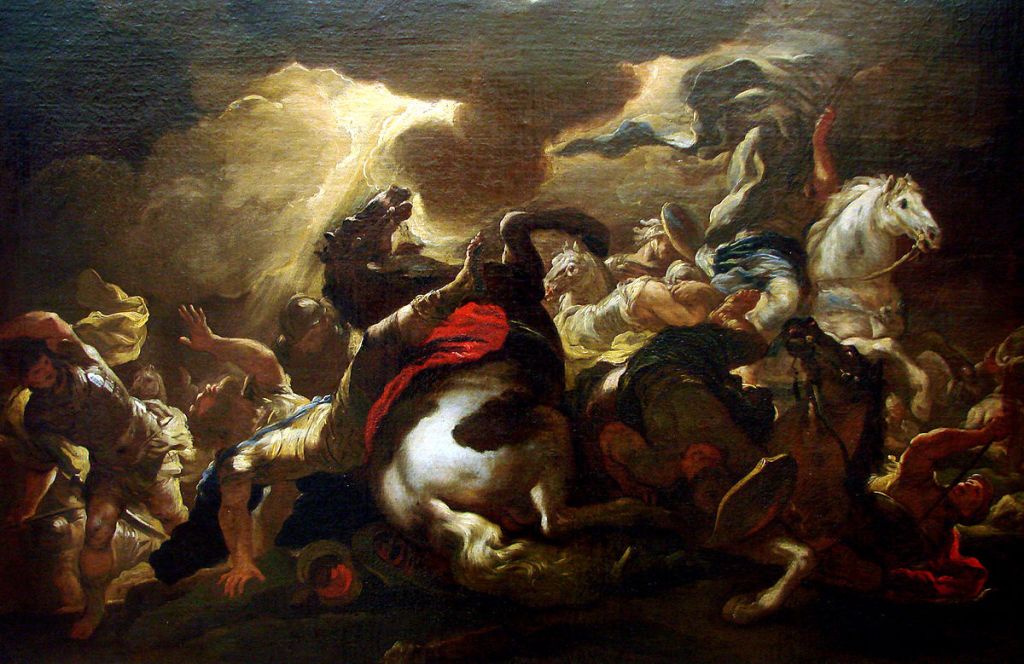
Painting ng “The Conversion of St. Paul” ni Luca Giordano noong 1690 mula sa wikipedia.org.
“Magbago ka na!” Iyan ang mga salitang madalas nating marinig at sinasabi sa mga tao na alam nating mayroong masamang pag-uugali at gawain. Madalas bitiwan mga salitang iyan tuwing Bagong Taon at mga Mahal na Araw.
Ngunit, maari nga ba talagang magbago ng pag-uugali o ng pagkatao ang sino man? Ibig bang sabihin yung dating iyakin magiging bungisngis o dating madaldal magiging tahimik? Iyon bang matapang kapag nagbago magiging duwag o dating palaban magiging walang kibo at imik?
Kung isasalin sa sariling wika natin ang salitang “conversion”, nagpapahiwatig ito ng pagbabago tulad ng na-convert sa ibang relihiyon o sa ibang anyo o gamit. Ngunit sa bawat pagbabago, mayroong higit na malalim na nababago na hindi namang ibig sabihin ay nag-iiba o naging different.
Kasi iyong sinasabing conversion ni San Pablo o ng sino pa mang tao ay hindi naman pagbabago ng pagkatao kung tutuusin; sa bawat conversion, hindi naman nababago ating pagkatao talaga kungdi ating puso na naroon sa ating kalooban.
Kaya tinatawag itong pagbabalik-loob, di lamang pagbabagong-buhay.
Binabalikan natin ang Diyos na nananahan sa puso natin, doon sa kalooban natin.
Higit na malalim at makahulugang isalin ang conversion sa katagang “pagbabalik-loob” dahil ang totoo naman ay bumabalik tayo sa Diyos na naroon sa loob ng ating sarili.
Dito ipinakikita rin na likas tayong mabuti sapagkat mula tayo sa Diyos na mismong Kabutihan. Kailangang pagsisihan mga kasalanan, talikuran at talikdan kasamaan na siyang mga balakid sa ano mang pagbabalik-loob at saka pa lamang mababago ating pamumuhay.
Katulad ni San Pablo, sino man sa atin na makatagpo sa liwanag ng Diyos, nagiging maliwanag ang lahat kayat atin nang hahangarin ang Diyos na lamang at kanyang kalooban. Nananatili ating katauhan at pag-uugali ngunit naiiba direksiyon at pokus.
Kapansin-pansin na bawat nagkakasala wika nga ay malayo ang loob sa Diyos na ibig sabihin ay “ayaw sa Diyos” gaya ng ating pakahulugan tuwing sinasabing “malayo ang loob”. Ang nagbabalik-loob ay lumalapit, nagbabalik-loob at pumapaloob sa Diyos.
Pangangaral ni San Pablo sa Areopagus sa Athens (larawan mula sa wikipedia.org).
Isang magandang paalala sa ating lahat itong Kapistahan ng Pagbabalik-loob ni San Pablo na hindi malayo at hindi rin mahirap maabot, bumalik sa Diyos sa pamamagitan ni Kristo Jesus. Maari itong mangyari sa gitna mismo ng ating sira at maruming sarili.
Hindi nabago pagkatao at pag-uugali ni San Pablo kung tutuusin: nanatili pa rin siyang masugid, matapang at masigasig. Nabago lamang ang direksiyon at pokus o tuon ng kanyang pag-uugali at pagkatao. At siya pa rin iyon. Inamin niya sa ating unang pagbasa ngayon na siya ay “isang Judio, ipinanganak sa Tarso ng Cilicia ngunit lumaki rin sa Jerusalem. Nag-aral kay Gamaliel at buong higpit na tinuruan sa Kautusuan ng mga ninuno at masugid na naglilingkod sa Diyos” (Gawa 22:3).
Nanatiling masugid sa Diyos si San Pablo ngunit naiba na ang batayan na dati ay sa mga Kautusan at tradisyon ngunit sa kanyang pagbabalik-loob, si Jesu-Kristo na ang batayan ng kanyang pananampalataya. Personal niyang naranasan si Jesus kaya gayon na lamang kanyang pagiging masugid na alagad. Sinasabing kung hindi siya nadakip at nakulong hanggang sa patayin marahil ay umabot siya sa Africa sa pagpapalaganap ng Mabuting Balita.
Hindi rin nabawasan kanyang tapang; bagkus pa nga ay higit pa siyang tumapang. Lahat ng hirap tiniis niya at hinarap gaya ng pambubugbog sa kanila, ma-shipwreck sa isla, mabilanggo ng ilang ulit at ni minsan hindi umatras sa mga balitaktakan at paliwanagan sa mga Judio at maging kay San Pedro ay kanyang kayang salungatin at pagsabihan kung kinakailangan.
Gayon na lamang ang malasakit ni San Pablo sa Panginoong Jesu-Kristo at kanyang Mabuting Balita kaya naman sabay ang pagdiriwang ng kanilang Dakilang Kapistahan ni San Pedro tuwing ika-29 ng Hunyo dahil magkapantay kanilang kahalagahan sa pagpapatatag, pamumuno at pagpapalaganap ng pananampalataya at Simbahan.
Ordinasyon sa pagka-diyakano sa Katedral sa Malolos, ika-12 ng Hunyo 2019.
Alalaong-baga, katulad ni San Pablo, ano man ating pagkatao at pag-uugali siya pa ring mga dahilan kaya tayo tinatawag ng Panginoon upang maglingkod sa kanya; ililihis at ihihilig lamang niya mga ito ayon sa kanyang panukala at kalooban.
Kaming mga pari kapag inordenahan ay ganoon pa rin naman pagkatao at pag-uugali ngunit nababago direksiyon at tuon sa bagong estado ng buhay at misyon.
Gayun din ang mga mag-asawa. Lalabas at lalabas tunay na pagkatao at pag-uugali ngunit hindi iyon mga sagwil upang lumago at lumalim sila sa pagmamahalan at pagsasama bilang mag-asawa.
Wika nga sa Inggles, “God does not call the qualified; he qualifies the call.” Maraming pagkakataon tinatawag tayo ng Diyos maglingkod sa kanya di dahil sa tayo ay magagaling at mahusay; madalas nagugulat pa tayo na mismong ating kapintasan at kakulangan ang ginagamit ng Diyos para tayo maging mabisa sa pagtupad sa kanyang tawag.
Madalas at hindi naman maaalis na sumablay pa rin tayo at sumulpot paulit-ulit dating pag-uugali. Kaya naman isang proseso na nagpapatuloy, hindi natatapos ang pagbabalik-loob sa Diyos. Araw-araw tinatawagan tayong magbalik-loob.
Larawan kuha ni G. Jim Marpa sa Dabaw, 15 Enero 2024.
Gaya ni San Pablo nang siya ay ma-bad trip kay Juan Marcos na iniwan sila ni Bernabe sa una nilang pagmimisyon. Batay sa kasulatan, ibig pagbigayn pa ni San Bernabe na muling isama si Juan Marcos sa pangalawang pagmimisyon nila ngunit mariin ang pagtanggi at pagtutol ni San Pablo kaya’t sila ay naghiwalay ng landas bagamat nanatili silang mga alagad ni Kristo. Sa bandang huli naman ay nagkapatawaran sila.
Ganoon din tayo, hindi ba? Walang perfect. Ang mahalaga araw-araw nagbabalik-loob tayo sa Diyos dahil araw-araw lumiligwak din tayo sa ating maling pag-uugali at mahunang pagkatao.
Higit sa lahat, sa ating patuloy na pagbabalik-loob, doon lamang magiging maliwanag sa ating ang kalooban ng Diyos na palagi nating inaalam sapagkat batid nating ito ang pinakamabuti para sa atin. Ang kalooban ng Diyos ang magtuturo sa atin ng tamang landas na tatahakin upang ating buhay ay maging ganap at kasiya-siya.
Subalit kadalasan tayo ay nabibigo, naguguluhan kung ano ang kalooban ng Diyos dahil akala natin para itong tanong na isang pindot ay malalaman kaagad ang sagot tulad ng sa Google. Mahirap mabatid kalooban ng Diyos kung tayo ay malayo sa kanya dahil sa mga kasalanan. Kaya tulad ni San Pablo, idalangin natin sa Ama sa pamamagitan ni Jesu-Kristong Anak niya na magpatuloy tayo sa pagbabalik-loob upang manatili tayong nakapaloob sa Diyos. Amen. San Pablo, ipanalangin mo kami!
The Lord Is My Chef Daily Recipe for the Soul by Fr. Nicanor F. Lalog II
Friday, 106th Anniversary of Last Apparition in Fatima, 13 October 2023
Joel 4:12-21   ><]]]]'> + ><]]]]'> + ><]]]]'>   Luke 11:15-20
From cbcpnews.net, 13 May 2022, at the Parish of the National Shrine of Our Lady of Fatima, Valenzuela City.
Praise and glory to you,
God our loving Father
in sending us your Son
Jesus Christ who gave us
his Mother, the Blessed Virgin Mary
to be our Mother too!

As we remember today
the 106th year
of her last appearance at
Fatima in Portugal,
we pray most especially anew
for her intercession
for peace in the world,
peace in our Church,
peace in our hearts.
Her apparitions at Fatima
were the most amazing
proofs of your love and mercy
to us in recent history,
reminding us of the need
to reform our lives,
to be converted,
and be reconciled with you,
Father,
through Jesus Christ.

Sadly, until now,
we have refused to heed
her calls of true conversion
so there would be true
reconciliation among us
in Jesus with a new and
stronger commitment
to live our Christian life.
Every year at the start
of Lent on Ash Wednesday
we hear the same words of
your prophet Joel calling
on us today in the first reading
"to gird ourselves and weep and
fast for the day of the Lord is near"
(Joel 1:13-15) but we never heed
them; 106 years ago, the Blessed
Virgin Mary called on the same
things from us and yet,
we have remained stubborn.
Forgive us, Father.
We have strayed so far
from you; our eyes feast on
the many wondrous deeds
you continue to do in our lives
but our hearts are so far from you
like those people who tested Jesus
after he had driven out a demon
(Lk. 11:15-26);
how unfortunate and sad
when many of us today
believe more in the power of
the devil under so many
disguises in technologies
and modern thoughts
and lifestyles by
continuing to refuse
to surrender
ourselves to your
healing power
in Jesus Christ.
Through our Lady of Fatima,
teach us humility and simplicity
like her visionaries in 1917,
the siblings St. Francisco
and St. Jacinta Marto
and their cousin now declared
Venerable Sr. Lucia;
like them, help us put into our
hearts not just in our minds
your calls of repentance
and conversion so there
will truly be reconciliation
among us and be committed
in working for lasting peace.
Amen.
The Lord Is My Chef Daily Recipe for the Soul by Fr. Nicanor F. Lalog II
Homily for the 106th Anniversary of Last Apparition in Fatima, 13 October 2023
Isaiah 61:9-11 ><}}}}*> Galatians 4:4-7 ><}}}}*> Luke 11:27-28
Today – October 13, 2023 – is the 106th anniversary of the last apparition of the Blessed Virgin Mary at Fatima, Portugal when the “Miracle of the Sun” happened, witnessed by about 70,000 people. It was her sixth apparition to the three young children at Cova da Iria that started in May 13, 1917.
Except for the month of August when authorities jailed the three children on August 13 on their way to Cova da Iria to force them to recant their earlier statements of the apparition, the Blessed Mother appeared to them on August 19 at the nearby Valinhos where she repeated her calls for prayers and sacrifices as well as the request for them to come every 13th day until the coming October when she reveals herself after a great miracle.
What is significant with the 13th day of each month that Mary appeared in Fatima from May to October 1917 that we have continued with this 13th Day Devotion?
From Pinterest.com.
The Blessed Mother never explained to the three children, now St. Francisco and his sister St. Jacinta Marto and their cousin Sr. Lucia dos Santos why she appeared to them every 13th day of each month.
According to later interviews with Sr. Lucia who became a Carmelite sister and the last to die of the three children in 2005, she believed as the fruit of her prayers that the number 13 signified the Blessed Trinity. Sr. Lucia explained that number “13” illustrates to us that there is one (“1”) God in three (“3”) Persons (she was recently declared Venerable by Pope Francis to pave the way for her sainthood).
Here we find anew in the Fatima apparitions the consistency of truths found in our Church teachings and doctrines, specifically, the Blessed Trinity, that there is One God in Three Persons. Saints have also tried to explain the Blessed Trinity in simple analogies like the number 13 reflection of the Venerable Sr. Lucia.
In a 2022 article by Catholic author Joseph Pronechen that appeared in Soul magazine (see, https://www.bluearmy.com/the-significance-of-fatimas-13th-day/), he presented how the number “13” has many biblical foundations to be chosen by the Blessed Mother in Fatima as date of her apparitions. Foremost of this is found in the Old Testament Book of Esther.
Esther was among the Jewish exiles living in Persia after the Babylonian captivity. She was said to be so lovely and beautiful that the Persian king, Ahasuerus chose her to be his Queen among his many wives. Her uncle named Mordecai was the King’s most trusted adviser too that earned the jealousy among Persians in the royal court. Both Mordecai and Queen Esther remained faithful to God despite their royal positions. Esther then discovered a plot by some of the King’s men to exterminate all the Jews in Persia, especially her uncle Mordecai. It was at this instance that she prayed so hard to God for her to be able to warn her King of his men’s evil plot against the Jews even it could have cost her own life.
By the grace of God, Esther was able to muster all the strength and courage to speak to King Ahasuerus to foil the evil plot of his men set on “the 13th day of the twelfth month of Adar” (Esther 3:7).
The Persian king truly loved Queen Esther and ordered the arrest and execution of his aide (Haman) to prevent the murder of so many Jews. Queen Esther thus saved her fellow Jews on the 13th day of the Jewish month of Adar! And because of her intervention, King Ahasuerus ordered Jews in his kingdom to freely worship their God with assurance of protection from enemies.
Like Queen Esther, the Blessed Virgin Mary is also our Queen being the Mother of the King of kings, Jesus Christ. Every August 22 we celebrate her Queenship and in the Glorious Mysteries, we meditate her being Queen of heaven and earth.
Most of all, like Queen Esther, the Blessed Virgin Mary in Fatima intervened on October 13, 1917 to save the world from the ongoing WWI that began in 1914 and ended the following year in 1918. Sad to say, the world was plunged anew into the darkness of WWII that was more deadlier in 1939-1945 as predicted by our Lady at Fatima if the world would not heed calls for repentance and conversion of sinners. In recent history we have witnessed how our Queen Mother Mary saved St. John Paul II on May 13, 1981 – her feast day as our Lady of Fatima – from a deadly assassination attempt at St. Peter Square in the Vatican. Again, the world is in the darkness of deadly wars right in the Holy Land and in Ukraine by Russia whom the Virgin Mary had specifically mentioned in her October 13, 1917 apparition at Fatima.
When are we going to follow her maternal instructions of repentance and conversion, something which she merely repeated from similar calls by Prophets in the Old Testament and by her Son Jesus Christ in the gospels?
If we truly consider Mary is our Queen, why can’t we obey her and follow her instructions more than 100 years ago?
See how in today’s gospel Jesus underscored the importance of listening and following his words as main component of being part of his family. Mary was the first to listen and act on his word at the Annunciation and until now, she does the same thing so we may be saved from the wraths of evil caused by man’s inhumanity to one another.
Page from Ilustração Portuguesa, 29 October 1917, showing the people looking at the Sun during the Fátima apparitions attributed to the Virgin Mary. From en.wikipedia.org.
Going back to the Sacred Scriptures, we find more bases of the significance of number “13” used by the Blessed Mother at Fatima in 1917. In the Book of Acts, we find that when the Holy Spirit came on Pentecost, the 12 Apostles (Matthias replaced Judas Iscariot) were with “Mary the mother of Jesus” (Acts 1:14). Here we find 12 (Apostles) + 1 (Mary) = 13!
In the gospel accounts, we know Jesus Christ’s choice of 12 apostles was from the “12 tribes of Israel” or 12 sons of Jacob who was also called by God as “Israel”. Again, 12 + 1 = 13.
According to an interview by Pronechen of a Jewish rabbi, the meaning of number 13 in Hebrew is “bonding of many into one”. Every time we pray the Apostle’s Creed, we profess our faith not only in God in Three Persons but also to the Catholic Church that bonds us into Christ’s body who was born of the Virgin Mary. In Fatima on October 13, 1917, our Lady called on us to be one in God through Jesus in prayers, fasting and sacrifices, and commitment to live as true Christians.
Most of all, Pronechen explained that according to the Jewish rabbi he had interviewed, every letter in the Hebrew language has a numeric value. The word “love” which is ahava in Hebrew is connected with God with a numeric value of 13. Now, consider that when the Virgin Mary first appeared at Fatima on May 13, 1917, it was the original feast of Our Lady of the Blessed Sacrament. Here we find another intimate link in our Lady of Fatima’s insistence in celebrating Mass and receiving Jesus in the Holy Communion often because the Holy Eucharist is the Sacrament of Love.
How wonderful to meditate that our Blessed Mother Mary appeared in Fatima 106 years ago today with that singular message and expression of God’s love for us all!
When are we going to listen to her call for us to truly live in the love of God expressed by Jesus Christ on the Cross? Amen. Have a blessed weekend everyone!
From cbcpnews.net, 13 May 2022, at the Parish of the National Shrine of Our Lady of Fatima, Valenzuela City.









 lordmychef.com