Roadtrip in time of COVID-19, Part 2

Quiet Storm by Fr. Nicanor F. Lalog II, 26 January 2021

Every road trip is filled with music. A lot of music. In fact, it is not a road trip without any kind of music! As I was telling you, this road trip was inspired by that line from Steely Dan’s Kid Charlemagne, “Is there gas in the car?”

As we drove to Tanay from Baras Church, our playlist had Rod Stewart singing one of our generation’s staple music so “relate much” with our own experiences…

I didn’t know what day it was
When you walked into the room
I said, “Hello” unnoticed
You said goodbye too soon

Breezing through the clientele
Spinning yarns that were so lyrical
I really must confess right here
The attraction was purely physical (oh, yeah)

Okay. Suspend your judgments for now and let me say too that when men get together whether on a road trip or not, surely topic would always be on women and past relationships.

Always. Even with priests like me who had studied and worked for a long time “outside” the seminary. There is always that somebody in the group who would pop up with that question “have you had a girlfriend before”?

Sorry… you have to go with me in an actual road trip to hear my stories while I am obliged with the “seal of confession” of sorts to keep my lips zipped with Dindo’s stories as we talked about our past relationships while singing with Rod Stewart on our way to Tanay. One thing for sure, though, like real gentlemen, when we talked about women, it was very true, so divine, like those lines …

My love for you is immeasurable
My respect for you immense
You’re ageless, timeless, lace and fineness
You’re beauty and elegance

You’re a rhapsody, a comedy
You’re a symphony and a play
You’re every love song ever written
But honey, what do you see in me?

You’re in my heart, you’re in my soul
You’ll be my breath should I grow old
You are my lover, you’re my best friend
You’re in my soul

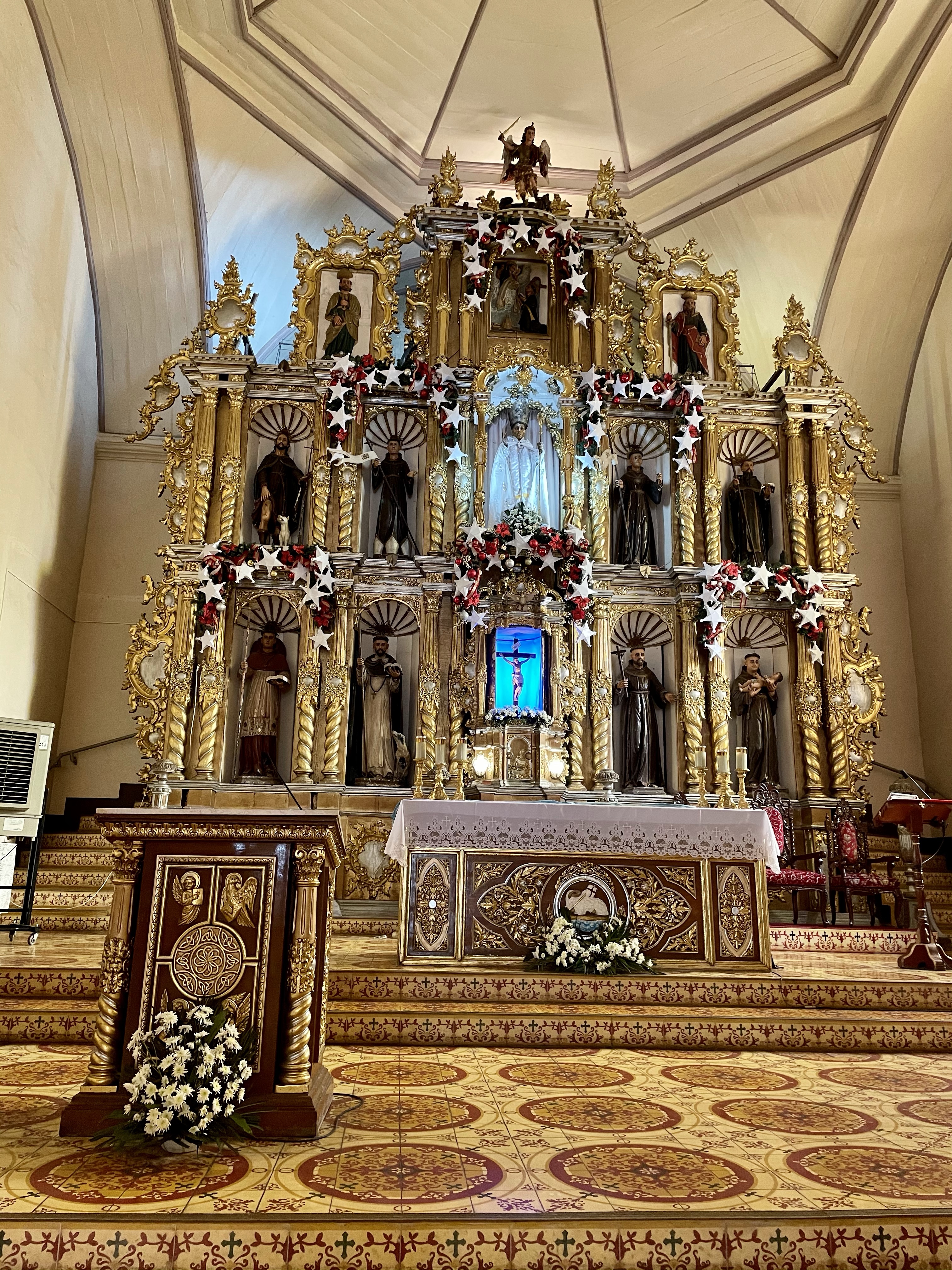
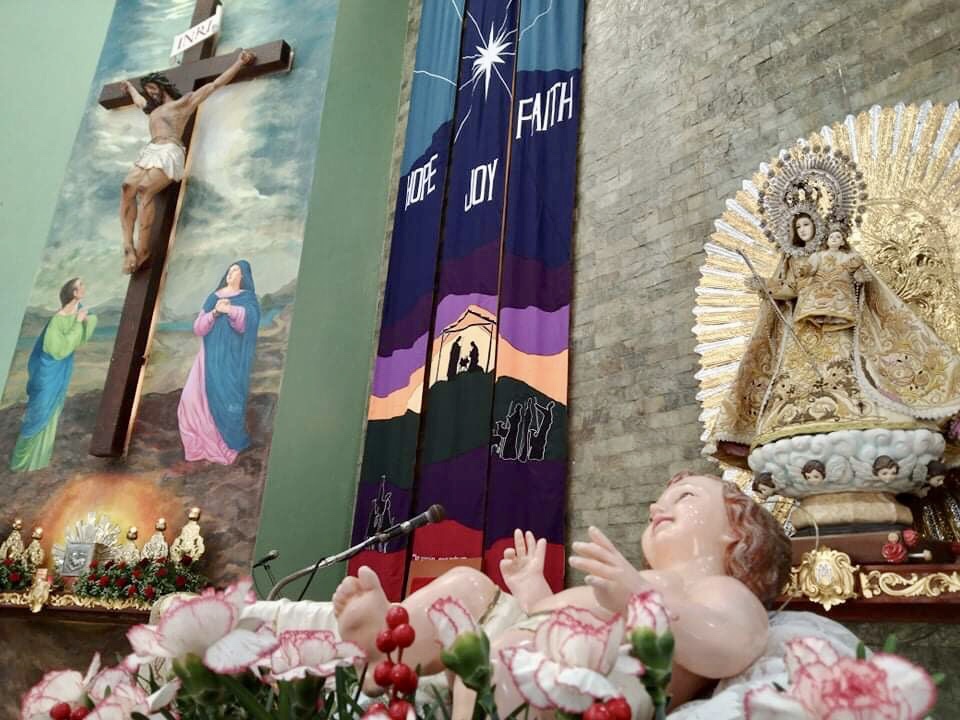
Main altar of the Parish of St. Ildephonse in Tanay, Rizal declared by the National Museum of the Philippines as “National Cultural Treasure”, another example of maintaining the noble simplicity of old churches.

The way we relate with women
indicates how we relate with God.

Twenty years ago, I have read from one of the writings by Papal Preacher Raniero Cardinal de Cantalamessa how an American Dominican exegete had put forward that the way we relate with women mirrors our way of relating with God.

That is very true.

Women are God’s loveliest creations that without them, we men would never be complete. Some even claim that women must be the one closest to God in appearance, more perfect than us men that is why she was created last.

What is amazing again with this road trip is how our second stop at the Tanay Church confirmed our discussions of women.

First, it was a woman who directed us to the main entrance to the church because its gate was partly hidden by some obstructions at that time from the main road. Then, inside the church, three women catechists warmly welcomed us near its magnificent altar.

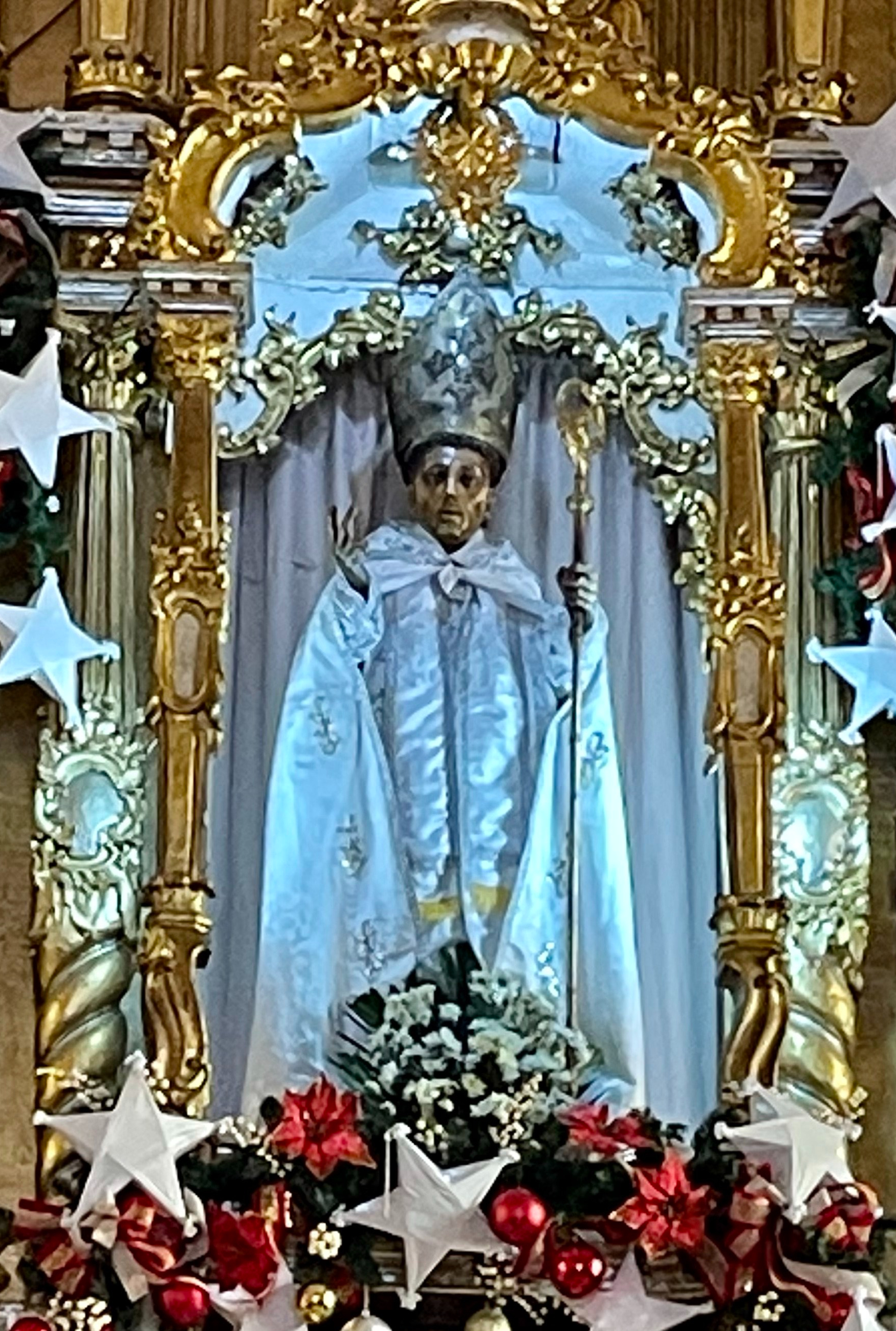
And when I recognized its Patron is St. Ildephonse of Toledo in Spain, I realized again how this road trip “was taking us instead of us taking the trip” on that rainy Thursday, January 07, 2021.

When I was ordained deacon in 1997, I was assigned to help the late Fr. Johann Sebastian in a parish at Pinaod, San Ildefonso town in Bulacan. Of course, San Ildefonso is St. Ildephonse…

Next, Fr. Johann was a resident of San Ildefonso whose house was across the Parish Church where we used to watch the procession during his feast on January 23.

Most of all, it was from Fr. Johann that I learned so much about St. Ildephonse who had lived around the years 607-667 in Toledo, Spain that used to be the main seat of the Church in Spain before Madrid. Outside Fr. Johann’s room used to be displayed a huge painting of the Blessed Virgin Mary appearing to St. Ildephonse while giving him heavenly vestments (chasuble) as gifts for his efforts in propagating devotions to her. In fact, St. Ildephonse was one of the early bishops who had written about the Immaculate Conception of Mary that was finally declared a dogma of the Church in 1854.

Here we are in the beautiful church of Tanay recently declared by the National Museum of the Philippines as a “National Cultural Treasure” under the patronage of St. Ildephonse, truly a holy and a gentleman with a great devotion to the Mother of God that mirrored his fidelity in serving God his Master and Lord!

Shortly after praying and exchanging stories with the three catechists, the Parish Priest, Msgr. Rigoberto de Guzman came to meet and formally welcomed us in his church. Actually, we were hesitant to meet Msgr. Rigs as we did not want to disturb him but we were told that he usually welcomed pilgrims to their parish.

Likewise, I was not so sure if he could still recall me since we have met only twice ten years ago when he was the Rector of the Antipolo Cathedral during the time of Bishop Gabby Reyes while I was with Radio Veritas. And, lo and behold — Msgr. Rigs still knew me, even telling me how he had come across some of my reflections in the Sabbath publication!

A very soft spoken and kind-hearted man of God, Msgr. Rigs thanked me on behalf of our diocese in forming many of their priests who have graduated from our Major Seminary. As a token of his appreciation especially after learning that I teach and serve as a spiritual director in our major seminary, he gave me a framed image of Our Lady of the Poor and Suffering known also as Our Lady of Banneux in Belgium where she appeared eleven times to an 11-year old girl in 1933.

Oh my God!

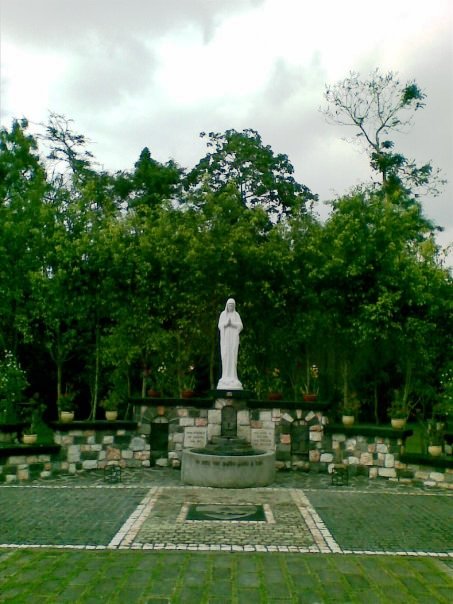
First, it was St. Joseph who greeted us at Baras; now, we have my second most favorite image of the Blessed Virgin Mary of Banneux welcoming us in Tanay! As I thanked Msgr. Rigs for his gift, he led me to the side of their church where stood an exact replica of the Virgin of Banneux — something we have overlooked earlier due to the rains!

At that very moment, I felt the Blessed Mother’s comforting assurance of love and guidance, especially with my new assignment as chaplain of the Our Lady of Fatima University and Medical Center effective February 16, 2021. What a pleasant morning talking about the women in our lives now capped with the most wonderful woman of all, our Mother, the Blessed Virgin Mary.

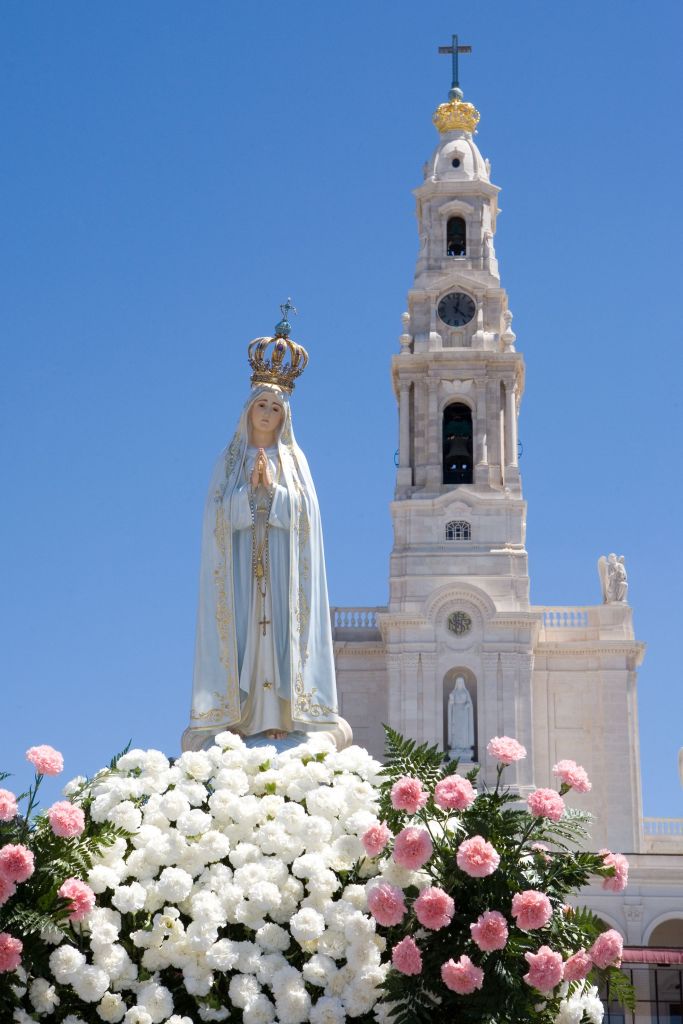
The first time I learned about Our Lady of Banneux was when I met the sisters in charge of the Boys’ Town and Girls’ Town in Cavite way back in 2007 after learning about the works of their founder, the Venerable Fr. Al Schwartz, an American priest who worked here among the poorest of the poor. He was a devotee of the Our Lady of Banneux who is very much like the Our Lady of Fatima, so lovely and very simple. Both appeared in the early 20th century in Europe to show Mary’s oneness with humanity going through so many sufferings and afflictions up to this age. It is something many devotees in our diocese in Bulacan seem to be missing with their pomp and pageantry in crowning every image of the Blessed Virgin to be found, even in a bodega or a patio!

That is the beauty and charm of the two old churches we have visited in Baras and Tanay: both are simply elegant, not extravagant nor loud where one can have time with God and the sacred.

After the rains have stopped, Msgr. Rigs prayed over us and blessed us as we left for Pililla while listening this time to Hall and Oates. More rock and roll reflections in our final installment. See ya!

Dindo Alberto, Msgr. Rigs de Guzman, and author.

E-mail me at <lordmychef@gmail.com>.

Being true collaborators of Christ

The Lord Is My Chef Breakfast Recipe for the Soul
Tuesday, Memorial of Sts. Timothy and Titus, Bishops, 26 January 2021
2 Timothy 1:1-8    >><)))*>   +++   <*(((><<     Luke 10:1-9
Photo by Mr. Raffy Tima of GMA-7 News, sunrise at Natonin, Mountain Province after a devastating landslide in October 2018.

Dearest Lord Jesus Christ:

A day after celebrating the feast of the conversion of your great Apostle Paul, we now remember his two collaborators and companions in fulfilling his mission from you, Timothy and Titus, trustworthy men who carried out so many of his works.

And so today, we pray Lord Jesus in your name to please send us collaborators in your mission, men and women who are trustworthy who share in your vision and mission, endeavors and responsibilities. Collaborators in you, Lord, who are willing and ready to serve the Gospel with generosity like Timothy and Titus who represented Paul in many circumstances far from easy.

Send us, dear Jesus, more workers in your field, collaborators in you with our bishops and priests, even with our leaders in government who shall think more of serving the people, thinking more of the welfare of others than one’s personal advantages like power and fame.

“The harvest is abundant but the laborers are few; so ask the master of harvest to send out laborers for his harvest. Go on your way; behold, I am sending you like lambs among wolves.”

Luke 10:2-3

What will happen to your people, Lord Jesus when your servants and collaborators become the wolves, unmindful of the needs of the people, forgetting their mission of proclaiming your Gospel, of celebrating your Holy Sacrifice of the Mass much needed these days?

What will happen to your people, Lord Jesus when your servants and collaborators become afraid of doing what is true and right, trying to please men and women than God, avoiding problems and difficulties?

Photo by Dr. Mai B. Dela Peña, MD, Carmelite Monastery, the Holy Land, 2017.

“For this reason, I remind you to stir into flame the gift of God that you have through the imposition of my hands. For God did not give us a spirit of cowardice but rather of power and love and self-control … bear your share of hardship for the Gospel with the strength that comes from God.”

2 Timothy 1:6-7, 8

Help us follow, dear Jesus, your Apostle Paul’s recommendation to Titus, “I desire you to insist on these things, so that those who have believed in God may be careful to apply to themselves to good deeds; these are excellent and profitable to men.”

May we be more committed to you, Jesus Christ than to anyone else, even to our selfish motives so that we may be rich in good deeds to open the doors of the world to you our Lord and Master. Amen.

Sight and Vision

The Lord Is My Chef Recipe for the Soul by Fr. Nicanor F. Lalog II
27 December 2020, Feast of St. John the Apostle and Evangelist, Patron of our Parish
1 John 1:1-14 >><)))*> John 20:2-8
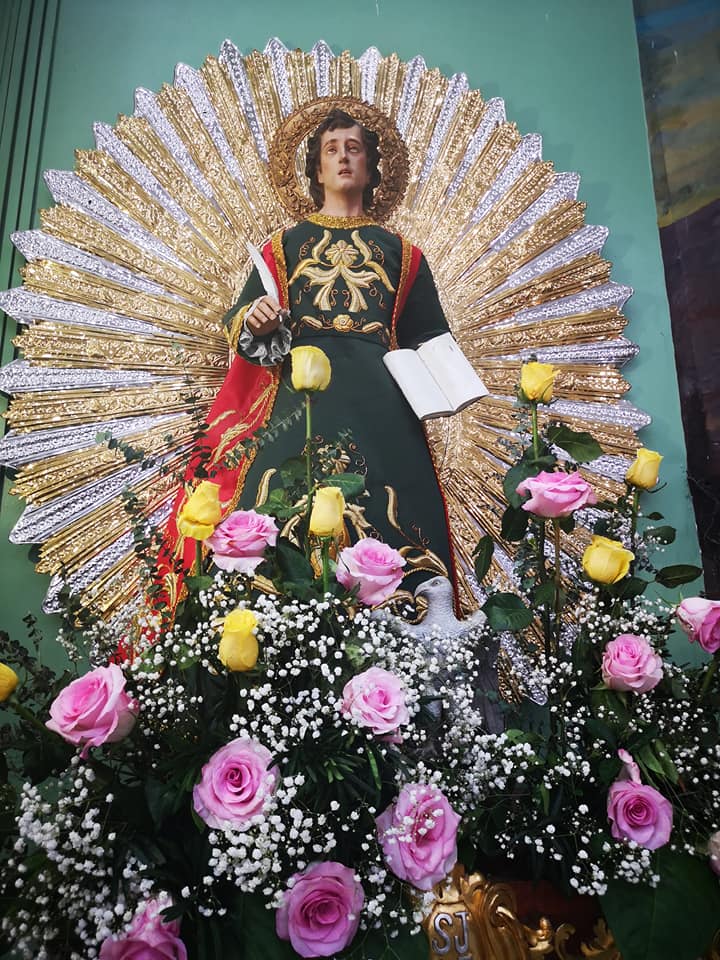
Our Parish Patron, the beloved disciple of the Lord, St. John the Apostle and Evangelist (Photo by Ms. Jo Villafuerte, Sept. 2018).

Today we celebrate in our Parish the feast of our Patron Saint, John the Apostle and Evangelist also known as “the beloved disciple of the Lord”. Although it is a Sunday in the Christmas octave when the Feast of the Holy Family is celebrated by the universal Church, parishes and dioceses with the beloved disciple as patron as exempted. Perhaps, it is St. John’s gift to me before I move to my new assignment in February next year that I celebrate his feast for the last time this Sunday.

I tell my parishioners to love St. John; that is their first task as parishioners, to love and support their Patron Saint. Moreover, I have always stressed to them how St. John the Apostle is so special, and not an ordinary saint or Apostle. Next to his being the beloved disciple of Jesus, he is the only Apostle to have not died a martyr but grew old to witness the growth of the Church; he was the one who took care of the Blessed Virgin Mary as per instruction by the Lord Himself before He died on the Cross on Good Friday; and though there are only a few parishes dedicated to him, mostly are Cathedrals like the one at Dagupan-Lingayen in Pangasinan, at Naga City in Camarines Sur, and of course, the Cathedral of Rome, the St. John Lateran, the Mother of all churches in the world.

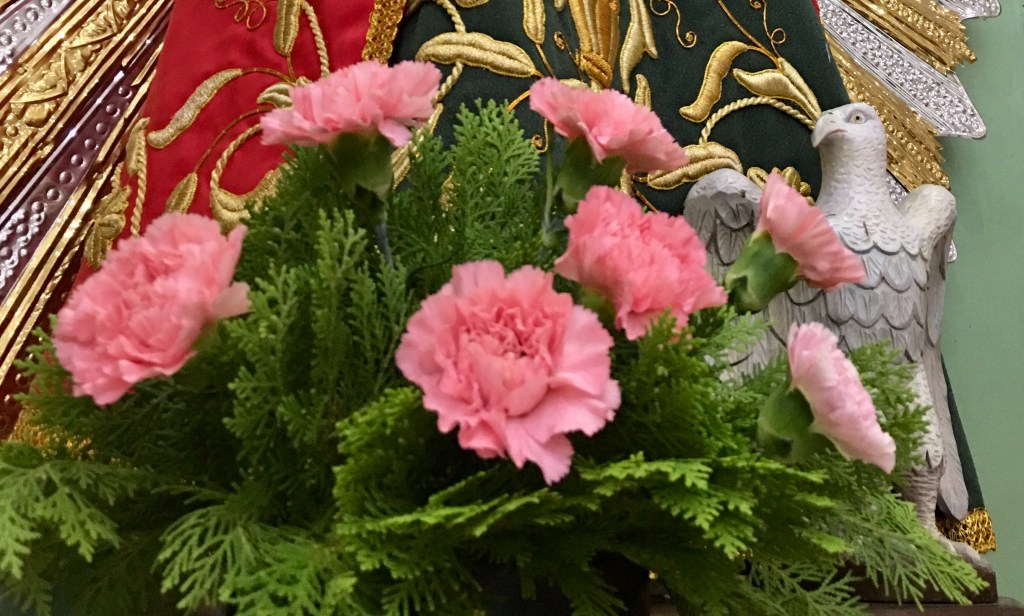
He is often symbolized by the eagle for his sharp and incisive way of looking at things and events in the life of teachings of Jesus that he is the only one able to tell us about the wedding feast at Cana, the man born blind, the raising of Lazarus as well as the more detailed account of the teachings after the feeding of five thousand people.

The great American writer Helen Keller, a blind woman, said it so well, “The only thing worse than being blind is having sight but no vision.”

I wish to reflect on that vision of St. John, on what had he seen in our Lord Jesus that hopefully we may always try to look into in our own lives.

Photo by author, Gaudete Sunday 2020.

Seeing Jesus, a real man among us

I used to say in my wedding homilies that women should always look for men who not only has sights but also vision. We all have sights but not everyone has a vision, the ability to see and look beyond what is on the surface, on what can only be seen but also perceived further.

St. John the Evangelist had a great vision of who Jesus Christ is. No wonder towards the end of his life while a prisoner at the island of Patmos off Greece, the Lord offered him a vision of heaven which he had recorded to us in the most difficult book of the Bible, the Revelation; his other four writings, the Gospel and three letters are also difficult to understand due to the different layers of meaning that only the beloved disciple was able to perceive.

Such is the kind of the vision of St. John said to be like the eagle, believed to be the only creature that can stare directly into light without getting blinded — very sharp and keen, as we say in Filipino, “matang-lawin” or eagle sight.

Being the only Apostle of the Lord to have grown old and spared from dying a martyr like the rest, St. John witnessed the first errors or heresies of early Christians concerning the humanity of Jesus Christ. They could not accept the Son of God took on a genuinely human body so that in a mistaken zeal for spirituality, they condemned everything material as evil, claiming the humanity of Jesus was just an appearance. As a result, these heretics like the gnostics taught that to be fully united with God meant to withdraw as much as possible from everything material.

St. John wrote his letters primarily to address this wrongful and erroneous views (which would persist for 400 years, still echoing in our present time), insisting that Jesus Christ is true God, and true man. We have heard him declare that on Christmas day when his prologue was proclaimed when he claimed “the Word became flesh and dwelled among us” – that Jesus Christ fully entered into our humanity and material condition by blessing and making it holy!

Today St. John insists on this contact with the real, bodily Jesus, repeating the words “seen” and “visible” about five times in four verses, emphasizing contact with a real, bodily Christ.

What was from the beginning, what we have heard, what we have seen with our eyes, what we looked upon and touched with our hands concerns the Word of life — for the life was made visible…

1 John 1:1-2

Here we find what St. John tells us also after the Resurrection in his gospel account how Jesus invited the doubting Thomas to touch and feel him, “Put your finger here and see my hands, and bring your your hand and put it into my side, and do be unbelieving, but believe” (Jn.20:27).

It is this physical, truly human, touchable Jesus that the Church proclaims every Christmas. Yet, how tragic that through the ages, we in the Church had always had that tendency to withdraw from the material that perhaps had led to so many problems with the human body and sexuality so that we have all these sex scams happening even long before.

Part of the mystery of the Incarnation is for us to be at home with our humanity like Jesus our Lord because everything God had made is good. Mention SEX, even in seminaries or Catholic schools, you hear for sure that rising crescendo of whispers and impish laughters.

Everything that God made is good. That is why Jesus became human to show us it is good to be a human being, it is the path back to God, into heaven. If we cannot accept Jesus as truly human, how can we truly love God whom we do not see? Hence, we find this beautiful flow of reason and reflection of St. John in his first letter:

No one has ever seen God. Yet if we love one another, God remains in us and his love is brought o perfection in us. God is love, and whoever remains in love remains in God and God in him. We love because he first loved us. If anyone says, “I love God,” but hates his brother, he is a liar; for whoever does not love a brother whom he has seen cannot love God whom he has not seen.

1 John 4:12, 16, 19-20
Photo by Mr. Marc Angelo Nicolas Carpio, Christmas 2020.

In short, to love God and to love others, we must first love our very selves, accept our “human-ness” like Jesus, a real man in everything except sin. The more we accept each other, the more we “see” God among us as a community, as a Church, the Body of Christ.

The Church, the Body of Christ

This vision of the Church as the body of Christ by St. John came from the empty tomb of Jesus at Easter, when the Lord was paradoxically not in sight!

When Simon Peter arrived after him, he went into the tomb and saw the burial cloths there, and the cloth that had covered his head, not with the burial cloths but rolled up in a separate place. Then the other disciple also went in, the one who had arrived at the tomb first, and he saw and believed.

John 20:6-8

What did our Patron Saint “see” that he believed, not like Simon Peter who was the leader of the Apostles?

Photo by author, August 2020.

This is the best example of St. John’s vision, of seeing beyond the physical, of seeing the significance of the folded cloth that covered the Lord’s face that has its basis in the story of Moses who had to put on a veil whenever he would converse with God face to face (cf. Exodus 34) due to the immense brightness of God, of His overwhelming presence. This the Israelites have seen every time after Moses had spoken with God, his face shone so brightly.

With the cloth that covered the head of Jesus folded and separated from the burial cloths, it meant that Jesus had met the Father, the veil to cover His face was no longer needed.

At that instance, everything became clearer for St. John – from the cleansing of the temple to His conversations with that Samaritan woman at Jacob’s well – convincing him that Jesus had risen to new life, to new level of existence. Years later, we find Jesus appearing to Saul on his way to Damascus, asking him, “Saul, Saul, why are you persecuting me?(Acts 9:1-5)” to indicate that whatsoever you do anyone, you do unto Jesus (Matt. 25:40).

In His glorified body, we are now able to look at God also in the new body of Jesus, the Church. It is in this aspect that we have to learn so much from the beloved disciple, St. John. Our lack of any sense of community like the collective effort in stopping the spread of COVID-19 shows of the great need for us to have wider and sharper vision of Jesus among us especially in the Church. May we strive to love more Jesus to find Him in our humanity. Amen.

Photo by author, Malolos Cathedral, September 2020.

Advent is being consistent

The Lord Is My Chef Sunday Recipe for the Soul by Fr. Nicanor F. Lalog II
Fourth Sunday of Advent, Year B, 20 December 2020
2 Samuel 7:1-5, 8-12, 14, 16  >><)))*>  Romans 16:25-27  >><)))*>  Luke 1:26-38
Photo by author, Christmas 2019.

We are now on the final week of our four Sundays of preparations for Christmas. We have been saying Christmas 2020 is surely the most different and difficult in our lives due to the pandemic. However, it may also be the most meaningful when we have more of spiritual values, less of material things; more of the other persons, less of ourselves; and, more of Jesus, less of the Christmas trimmings.

Today we heard the beautiful story of the annunciation of the birth of Jesus Christ found only in the gospel of Luke, the source of many inspirations in arts for many centuries even today. The scene reveals to us the artistry and spirituality of Luke believed to be a medical doctor who was a disciple of St. Paul. He is the only evangelist who admitted he had “investigated everything accurately anew, to write it down in an orderly sequence (the events about Jesus Christ) so that you may realize the certainty of the teachings you have received” (Lk.1:3-4).

And what is that certainty Luke looked into? That Jesus Christ is the Son of God, the fulfillment of the Old Testament promises to the patriarchs and prophets, who is the very presence of God among us. That is why Luke wrote a second volume to his gospel, the Acts of the Apostles to show us Jesus still present in the Church in the power of the Holy Spirit. In this beautiful canvass painted to us by Luke on Jesus the Christ in his Gospel and Acts we also find in a supporting role the Blessed Virgin Mary, His own Mother and model disciple.

The angel Gabriel was sent from God to a town of Galilee called Nazareth, to a virgin betrothed to a man named Joseph, of the house of David, and the virgin’s name was Mary. And coming to her, he said, “Hail, full of grace! The Lord is with you.” But she was greatly troubled at what was said and pondered what sort of greeting this might be. then the angel said to her, “do not be afraid, Mary, for you have found favor with God. Behold you will conceive in your womb and bear a son, and you shall name him Jesus. He will be great and will be called Son of the Most High, and Lord God will give him the throne of David his father, and he will rule over the house of jacob forever, and of his kingdom there will be no end”

Luke 1:26-33

The discipleship of Mary

As a former journalist, I have always considered the four evangelists as the premiere reporters of Jesus Christ. Mark is the old school type of straight news reporting, writing the basic who, what, where, when and why, making his gospel the first to be written and shortest as he was in a hurry, a true journalist. Matthew is more of a feature writer or interpretative reporter while John was a news analyst, an op-ed columnist.

Luke is the modern journalist using the “digital platform” who goes on “live as it happens” with all the colors and actions without losing depth and focus like the BBC and Al Jazeera. He brings us where the news is happening as you must have noticed yesterday in the story of the annunciation of the birth of John the Baptist to Zechariah which also served as introduction to his lead story of Christmas, the annunciation of the birth of Jesus Christ.

Here we see the unique position of Mary as a disciple of Jesus Christ. Unlike Mark and Matthew, Luke tells us how Mary is the only one to have believed in a “situation of contemporaneity” as Fr. Cantalamessa would love to say, meaning, she believed while the event was taking place and prior to any confirmation by the event or history.

See how Matthew presented some facts already known to him in narrating the annunciation to Joseph where the angel clarified Mary’s pregnancy was due to the Holy Spirit. Luke, on the other hand, is like reporting live in real time, so realistic with Mary and the angel conversing to each other!

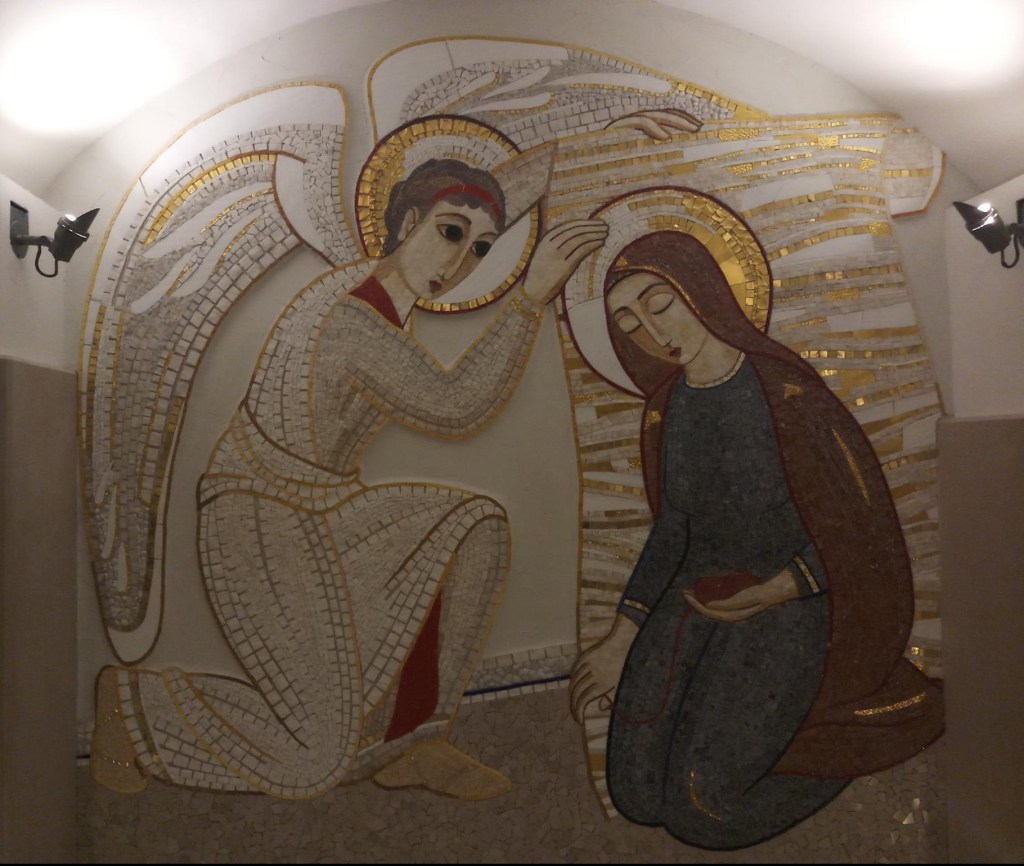
Photo by Arch. Philip Santiago, mosaic of the Annunciation at the San Padre Pio Church in San Giovanni Rotondo, Italy, 2016.

Writing in Greek like the rest of the authors in the New Testament, Luke did not use the usual Hebrew greeting of “Shalom” when Gabriel appeared to Mary, addressing her instead with chaire or “Rejoice favored one” that means especially graced from which came our translation from the Latin “Hail, full of grace!” in 1:28.

The favor or grace of Mary has found with God in 1:30 is explained in 1:31 in the future tense, “you will conceive in your womb and bear a son“. What is amazing here is that there is the sense of certitude on the part of the angel that the future will definitely take place because Mary has already been highly favored one by God before this event. How?

Though Mary will finally become a disciple at the end by saying “Behold, I am the handmaid of the Lord. May it be done to me according to your word” in 1:38, we find in 1:29 how she had always been disposed to the will and grace of God when Luke described how “she was greatly troubled at what was said and pondered what sort of greeting this might be“.

Mary “pondered – meaning, she prayed, she meditated right away the greetings to her, indicating her openness and disposition to listen and follow the will of God. That shows how even before the annunciation happened, Mary had always been obedient to God that is why she could say yes to Him when asked to be the Mother of the Savior.

Here we find Mary’s consistency as a disciple of the Lord, her Son Jesus still to be born but already existing in eternity!

When we were growing up, our mother would always tell us that once our names are called either by her or by our father, we only say one thing, “Opo… ano po iyon?” (Yes, what is it?). That is old school discipline where we literally obeyed first even without any instruction yet because we have always been assured parents would never tell kids to do something bad or wrong. And we believed that. Unlike today’s generations where the usual reply to parents’ call is “wait” that no wonder, we now ask God wait before he can speak to us. Thank God I did not get married….

Going back to Mary, we now find the contrast with yesterday’s annunciation to Zechariah: Mary pondered and felt everything in her heart and soul while Zechariah reasoned out, used more his head than his heart – something we must ponder this Christmas. Mary right away had her heart, her very self onto the Christmas Nativity while Zechariah was stuck in his negativity.

Mary believed while the event, the annunciation, was taking place, prior to any confir­mation by the event itself or by history. Later we shall see that expression “pondering in her heart” repeated often by Luke and also by John in presenting Mary: after listening to the words of the shepherds who came to see baby Jesus at His birth in Bethlehem, at finding Jesus at the temple aged 12, and during the wedding feast at Cana where He did His first miracle.

Photo by author of the site where the annunciation to Mary took place found below the Basilica of the Annunciation in Nazareth (2019).

The faith of Mary

From the annunciation of the birth of Jesus to His crucifixion, Easter and Pentecost, Mary always believed. During the Visitation, Elizabeth praised her, becoming the first to call Mary as “blessed” because “you believed what was spoken to you by the Lord would be fulfilled” (Lk.1:45).

Eight days after Easter, Jesus said to Thomas, “Have you believed because you have seen me? Blessed are those who have not seen and yet believe! ” (Jn 20:29). Early at the annunciation, Mary was the first to have believed without having seen Jesus Christ!

Mary teaches us the importance of subjective faith or the act of simply believing and trusting God, a person-to-person relationship with Him.

But it is not enough because it could lead to isolationism when we become individualistic and begin to have our own concept of God like what is happening these days especially with many Catholics with their own interpretations of God, heaven, evil and sin among other things.

Like Mary, we need to cultivate also objective faith, believe in the content of faith of the community. Mary believed God relating with the ancient prophets and patriarchs of Israel which the angel mentioned to her during the annunciation. See that after the annunciation, Mary hastily went to visit Elizabeth to share her good news and her faith. In her we learn that faith leads to a mission that is seen in the context of a community, the Church where Mary was portrayed to us praying with the disciples of Jesus during the Pentecost at the Upper Room in Jerusalem.

So here we find the consistency of Mary even before the annunciation that continued on in the life of the Church we still experience today in her many apparitions and messages always centered on Jesus not herself.

That is the call of Advent to us all: to be consistently clear with our faith with the one to be born at Christmas, Jesus Christ who is the Son of the Father, our Savior promised in Old Testament, now the very presence of God among us.

People kneeling on the streets during our Christ the King celebrations, 22 November 2020.

It is not enough that we just pray and believe; like Mary, we need to get out of ourselves and give ourselves to God and the Church. This is especially true with us priests who seem to believe more to himself and to media than with God! We must constantly examine ourselves if we truly believe in what we preach, in the kind of lives we lead. Is Jesus still center of our lives or us that we are so concerned always with our “image”, always seeking “likes” and “followers” than anything else?

If there is anyone who should be the first to be consistent in faith in God in any community, that must be the priest or pastor.

A few weeks ago while striving through the many challenges of my personal life and my ministry since this pandemic began, a parishioner told me how they draw strength and inspiration from me. I asked her why and how? What does my personal life has anything to do with them?

She explained that whenever they see me still going through with my ministry, holding on in my prayers and daily Masses, still smiling and can still laugh and crack jokes — they just feel they too can overcome their trials and difficulties.

I have realized in that short conversation more than preaching and explaining faith and its content, people look more at how faithful are we truly are as men of faith. That aside from dispensing the sacraments and doing all the ministries in my parish, there is also the task so unknown to me before of enkindling the faith of my flock, of guiding and leading them to God based on how do I live that faith in God with joy and patience.

People believe in God and the Church when they experience their pastor believing first in God and the Church. Like the COVID-19 virus, faith is contagious that spreads by coming into contact with. We priests must be the first to be “infected” with faith in the parish so that everyone would be “positive” with it, creating a “pandemic” in faith!

That is the consistency of Mary as a disciple — she is a “carrier” of a deep, joyful and active faith in Jesus, “infecting” everyone so positively that despite the difficult and trying situations we are into, we celebrate Christ’s coming amid the pandemic.

A blessed Sunday as we prepare for Christmas!

Priesthood is loving Jesus first

Quiet Storm by Fr. Nicanor F. Lalog II on the occasion of 
the First Year Anniversary of Ordination 
to the Priesthood of Rev. Fr. Howard Tarrayo
Cathedral-Basilica of the Immaculate Conception
Malolos City, 10 December 2020
Photo by author of Lake Tiberias (Galilee) at sunrise, May 2019.

This preaching should have been last year.

Fr. Howard was the very first person to have invited me to be his predicador at his Primera Missa Solemne while still a seminarian — and that is why I think he was delayed for almost two years before getting ordained exactly a year ago today!

That gospel scene you have chosen for this occasion at the shores of Lake Tiberias is something that happens everyday in our lives as priests, from day one of ordination way into our old age in with Jesus asking us, like, “Simon, son of Jonah, do you love Me?” (Jn.21:17)

Priesthood is essentially loving Jesus Christ first of all. That is why Jesus had to ask Simon Peter thrice with the same question, “Do you love me?” because we have to love him first before we can truly follow him.

When the priesthood or the Call becomes the very core and center of our lives and not Jesus our Caller, sooner or later, we replace Christ that we become the Lord and Master in our parish, in our ministry.

Today, we are celebrating Fr. Howard your remaining in love with Jesus, of loving Him first, a year after your ordination and we pray that every year, it will always be the very reason you celebrate your ordination anniversary.


When they had finished breakfast,
Jesus said to Simon Peter, 
"Simon, son of John, do you love me
more than these?"
He said to him, "Yes, Lord, you know 
that I love you." 
He said to him, "Feed my lambs."
(John 21:15)

Loving Jesus first is growing deeper in our prayer life in him. People who love are always together; they have a ritual or a schedule that like the fox telling the Little Prince, an hour before their appointed meeting, his heart is already beating for him, excited with his presence that he is coming.

Photo by author, parish sacristy, 05 December 2020.

It is my hope that during this pandemic we priests have rediscovered the value and beauty of having that seminary schedule during our formation years that must have ingrained in us discipline. Like schedules, prayer is a discipline. Love goes through a process, it matures, becomes more disciplined. That is why a disciple is not only a follower but also a disciplined one, a true lover!

It is good to bond with brother priests and friends and family once in a while but not every night or every other night that we have practically made every Starbucks outlet a parish or even a diocese where 1/3 of the clergy get together religiously (pun intended)! Any loving husband would always be home at night to be with his wife. The same is true with every priest — be home at night in your parish to be with Jesus at prayer. He awaits you, He misses you!

Whenever people ask me what is the most difficult part of priesthood, I always tell them it is praying every day. And I mean real prayer when we have to strip ourselves naked before God in our truest selves. Kaya sabihin man nila walanghiya o salvahe ang sino mang pari, pero kung araw-araw lalo na sa gabi siya ay nananalangin, mabuting pari pa rin siya kasi maski minsan, nagiging totoo siya sa sarili at sa Diyos. And masama kapag hindi na siya nagdarasal nang tunay, iyon ang simula ng pagkaligaw ng sino mang pari.

Whatever is the fruit of our prayer, that is our homily and that is when all tests happen: the moment we deliver a homily, people measure us if we “walk our talk”. The priest is the homily himself. When a priest stops celebrating Mass, most especially refuses to give homilies, maybe Father is no longer praying. Baka may iba na siyang mahal kesa kay Jesus.

Remaining in love with Jesus is being a man of prayer.


He then said to him a second time,
"Simon, son of John, do you love me?"
He said to him, 
"Yes, Lord, you know that I love you."
He said to him, "Tend my sheep."
(John 21:16)

Loving Jesus first means keeping in mind that everything is a gift from Jesus, that whatever we have, whatever we share, whether material or spiritual things, is always from Christ. We have nothing except Him. Even if sometimes we feel bad in our ministry like going on a sick call when we are so tired or blessing a dead cat or hearing confessions of a parishioner who have maligned you, just do it! Whatever you give them, it is not yours but Jesus’!

Photo by author, parish sacristy, 05 December 2020.

Huwag maging maramot, Father. Maging mapagmahal, matulunging, maunawain, mapagpasensiya, mapagbigay, mapagpatawad — kasi ano mang pagmamahal, tulong, pang-unawa, pagpapasensiya, kapatawaran o ano mang ating maibibigay kanino man ay hindi naman talagang atin kungdi kay Kristo at Kristo pa rin!

Here lies the danger when we are so focused with our call or vocation when we feel the one who must be understood and cared for — we turn the ones being served instead of the one serving! Kasi feeling natin magaling tayo kaya tayo naging pari! Para tayong artista at politiko na “FGLG”: feeling guapo, looking gago. Parang lahat may utang na loob sa atin. Kaya kung magmayabang tayo: ako nagpagawa niyan, ako nakaisip niyan, ako, ako, ako…. Nasaan si Jesus? Nandun sa tabernakulo, nabuburo.

I wish to share with you a prayer I have written during our retreat with a Cenacle sister at the Theologate when we were in third year: “Lord Jesus Christ, you have given me with so much and I have given so little; teach me to give more of my self and more of You to others. Amen.”


He said to him a third time, 
"Simon, son of John, do you love me?"
Peter was distressed that he had said to him
a third time, "Do you love me?" and he said to him,
"Lord, you know everything; you know that I love you."
Jesus said to him, "Feed my sheep."
And when he had said this, he said to him,
"Follow me."
(John 21:17, 19)

Father Howard, we have learned in Holy Matrimony that a man and a woman marries not only each other but also their families; the same is very true in priesthood. Loving Jesus first means the priest’s family must love Jesus more than their priest son and Kuya Pari or Tito Pari.

Profession of faith by Rev. Fr. Howard with his mother and sister before Bishop Dennis, 10 December 2019.

Nanay Nelia and Mary Grace… kung mahal ninyo si Father Howard, mas mahalin ninyo si Jesus. Ang pagmamahal ng pamilya sa kanilang anak o kapatid na pari ay naroon din sa kanilang higit na pagmamahal kay Jesus. Kapag si Jesus ang minahal ninyo una at higit sa lahat katulad naming mga pari, manalig kayo lalong mamahalin ni Jesus si Father. Hindi siya pababayaan.

We are told that after this third question by Jesus “Do you love me?”, Simon Peter was distressed because he remembered how he had denied the Lord three times after His arrest on Holy Thursday evening.

What can be more distressing especially at this time of the pandemic for us priests than be caught between our family and ministry?

You were still preparing for your Diaconal ordination last year, Father Howard when your mother had a stroke, then followed by the death of your father. It must have been so difficult, so painful. But looking back, did God ever forget you, Father?

Ate Nelia and Mary Grace, give Father Howard to Jesus. Huwag ninyo siyang hahanapan. Magkusa na kayo sa inyong sarili kasi iba piniling buhay ni Father. And I address this to every parent, brother and sister, relatives and friends of Fr. Howard and every priest. Huwag ninyo siyang hanapan. Kung mayroon man kayong hahanapin palagi kay Father Howard, iyon si Jesus. Always Jesus, only Jesus.

There is still something more “distressing” for us priests with our family that I wish to share with you, Father Howard. When Jesus told us to leave our father and mother, brothers and sisters behind to follow Him, he never meant to turn our backs from them. We still have to love them but more on a different level as silent witnesses of Christ.

The most difficult part of our ministry is ministering to our own family with all our biases and past histories before us. We are so familiar with each other that inevitably, these would surely show on many occasions when least expected. Be on guard, for the pendulum swings to extremes when we sometimes become so lax or so harsh with them.

Most “distressing” is when Jesus asks us “Do you love me?” while we continue to hold on to the pains and hurts, frustrations and disappointments our families have inflicted on us.

It is in our own families when we are asked to be more like St. Francis of Assisi, of preaching the gospel, speaking only when necessary.

Father Howard, be the first to understand and to embrace the strains and the past in your family; Jesus called you despite your imperfect family to make you perfect and eventually, through your life of total love for Him, perfect your family too.

It is very difficult to love, most especially our Lord Jesus, Father Howard. How I wished you have never asked me to do this because so many times I have failed Jesus. And continues to fail Him, not loving him that much.

But that is exactly what happened at the shores of Tiberias that morning after breakfast when Jesus asked Simon Peter three times, “Do you love me?”

Don’t worry, Father. Jesus knows everything how much we love Him. You are never alone with Jesus and us. Let us keep saying “yes, Jesus, I love you” with our brother priests every day, specially during anniversaries like this. Amen.

God bless you more, Father Howard!

Ang Mahal na Birheng Maria at corona virus

Lawiswis ng Salita ni P. Nicanor F. Lalog II, Ika-26 ng Nobyembre 2020
Larawan kuha ni Arch. Philip Santiago, Lourdes, France, 2016.
Sana'y inyong ipagpaumanhin
at ako ma'y patawarin
ng Mahal na Ina natin
sa aking sasabihin
na noon pa man 
hindi ko inililihim:
Ano itong pagkahumaling
ng marami sa mga kapatid natin
sa pagkokorona sa Birheng Maria?
Mayroon pa bang hihigit
sa kanyang koronasyon 
sa langit?
Hindi kaya ito kalabisan
kaartehan 
o inggitan ng iilan
na ang tanging sandigan
ng debosyon kay Maria
ay panglabas lamang
upang hilig ay mapagbigyan
kahit walang kabuluhan
at katuturan
habang sambayanan
nanonood lamang
sa isang palabas na walang laman?
Pasiklaban, pabonggahan
tanging mga katangian nitong pagkokorona 
hindi birong halaga ginagasta
sa gitna ng isang pandemya
tila baga nawala na rin
panglasa at pang-amoy
nahawahan na rin
ng corona virus
debosyon sa masintahing Ina
di nila alintana
sila-sila lang nasa eksena
wala naman ang balana.
Larawan mula sa Pinterest.
Sana'y tigilan na
itong pagkokorona
ng Birheng Maria
na lumalaganap tulad ng virus
dahil natitiyak ko
hindi rin siya masaya
sa gayong parangal sa kanya;
malamang ipapaalala
din niya tulad ni Hesus
propesiya ni Oseas:
"habag ang nais ko
hindi mga susunuging hain."
Ang higit na nakakabahala
sa ginagawa nilang pagkokorona
sa Birheng Maria bilang Reyna
wala na ring pinagkaiba
sa mga monarkiya
lalo na sa Europa
na sadyang pang-aliw
na lamang sa mga turista
walang kahulugan ni
katuturan sa takbo ng buhay
maliban sa lumipas na kasaysayan
at yaman ng kanilang kalinangan.
Hindi ba ang korona
ng Birheng Maria
 ay ang putong niyang
katapatan at kababaang-loob
sa harap ng Diyos,
buod ng kanyang Magnificat?
Siya na ating Reyna
kayamanan at korona
ay mga dukha
at mahihina,
ningning at kinang
wala sa ginto at ano mang brilyante!
Balikan, higit sa lahat pagnilayan,
pagpapakita ng Birheng Maria
sa makabagong panahon
doon sa Lourdes, Fatima at Banneux
dama kanyang pagka-Reyna
dahil kaisa niya mga bata at dukha;
higit sa lahat, si Maria
ang tinutularan, pilit inaalam
kanyang larawan
hindi tulad ng kinagagawian
kanya-kanyang larawan
malayo sa katotohanan at kabanalan! 
Ang hamon ng Birheng Maria
siya ang ating makatulad
hindi siya manika o sagala 
na inaayusan dahil sa sariling kagustuhan!
Larawan niya ay karukhaan at kababaang-loob
hindi kapalaluan na pinaglalaruan;
huwag nating ipilit ang sa atin
korona ni Maria ay sirain
at maging koronang tinik
sakit at hapis ang kapalit;
koronang putik na ang dungis sa atin babahid
o corona virus sadyang wala na si Hesus!
Larawan kuha ng may-akda, Our Lady of the Poor ng Banneux, Belgium sa retreat house ng Boys Town sa Cavite, 2007.

Righteous acts of God

The Lord Is My Chef Breakfast Recipe for the Soul by Fr. Nicanor F. Lalog II
Red Wednesday, 25 November 2020
Revelation 15:1-4     >><)))*>  +++  <*(((><<     Luke 21:12-19
Photo by author, Red Wednesday 2020.

Once again, dear Jesus, we pray in the most special way this Red Wednesday for your persecuted Church including those severely affected by the COVID-19 pandemic like the medical frontliners, the survivors and their families, and the poor who have sank deeper into poverty due to the prolonged lockdowns we have had.

We pray that we may find your good news behind every persecution we suffer and go through as a community of your believers and disciples because where there are sufferings, there are hearts and souls willing to comfort, willing to share, willing to sacrifice.

When there are sufferings, there is the color RED that means LOVE because that is when we have your Cross, Jesus Christ, and therefore share in your own destiny of glory!

It is in every shade of red like the blood poured out by Christ and the martyrs after him that the Father’s “righteous acts have been revealed” (Rev.15:4), that is, when we experience more of God’s protection and salvation in the face of grave dangers and even death.

Grant us the grace, Lord Jesus, to persevere in your words and ways so we may secure our lives in you. Amen.

Photo by author, Red Wednesday 2020.

Bayan ng Diyos, Biyaya ng Diyos

Lawiswis ng Salita ni P. Nicanor F. Lalog II, Ika-20 ng Nobyembre 2020
Larawan kuha ng may-akda, 2019.

Labing-tatlong taon na akong pari nang ako ay maging kura paroko sa unang pagkakataon dito sa Parokya ni San Juan Apostol at Ebanghelista sa Bagbaguin, Santa Maria, Bulacan noong 2011. Dapat sana’y anim na taon lamang ang aking panunungkulan nguni’t dahil sa maraming pangayari na ang pinakahuli ay COVID-19, halos abutin na ako ng sampung taon dito hanggang sa paglilipatan sa 2021.

Wala akong pinagsisihan at pinanghihinayangan sapagkat tunay napagyaman ang aking pagkatao at pagkapari sa parokyang ito sa loob ng siyam na taon. At maipagmamalaki ko na maganda at mabuti ang parokyang ito sapagka’t kumbinsido ako na bawat parokya bilang bayan ng Diyos ay biyaya ng Diyos.


Unang aral sa parokya:
pangalawa sa Diyos ay mahalin
at pagmalasakitan ng mga tao kanilang parokya.

Wala akong mga karanasan at kaalaman sa buhay parokya bilang pari nang dumating dito nguni’t unti-unti sa pananalangin at pagninilay, aking natutuhan ang maraming bagay. Una na rito ang tungkulin ng mga tao pangalawa sa pag-ibig at katapatan sa Diyos ay ang pagmamahal at malasakit sa kanilang parokya na kinabibilangan.

Ang mga pari ay dumarating at umaalis, palipat-lipat ng mga parokya nguni’t ang mga tao ang naiiwan at nananatili sa kanilang parokya. Kaya dapat lamang sila ang higit na bigyan pahalagahan sa ano mang usapin ukol sa kanilang katipunan bilang mga alagad ng Panginoon.

Kaya naman tungkuling din naming mga kura paroko na unang ituro sa mga tao ang pagmamahal at pagmamalasakit nila sa kailang sariling parokya, lalo’t higit sa kanilang patron at mga kaugalian kung ang mga ito naman ay tunay na naunawaan at nasa katuwiran.

Isinasaad sa Vatican II lalo’t higit sa “Gaudium et Spes” ang pangangalaga sa kalinangan ng bawat lunan sapagkat doon nangungusap at naramdaman ng mga tao ang pagparito ng Panginoong Hesu-Kristo.

Malaking trahedya kapag nakalimutan ang mayamang kasaysayan at mga tradisyon ng isang bayan alang-alang sa mga kung anu-anong naiisipang gimik at kaartehan gaya ng sari-saring debosyon na umuusbong na wala namang pinag-ugatan sa karanasan ng mga tao.

Maliwanag wala doon ang Panginoong Diyos na palaging nagpapakilala sa isang pamayanan, hindi lamang sa iilan lalo na kung ito ang nagiging sanhi ng pagkakawatak-watak sa halip na kaisahan.

Larawan kuha ng may-akda, Marso 2020.

Ang ating Patron ng Parokya,
gabay sa buhay dito sa lupa
hanggang sa kabila.

Isang bagay na nagpatingkad nito sa akin ang sariling karanasan ng aking Lola Cedeng na tiyahin ng aking Ina. Siya ang kauna-unahang may-sakit na aking dinasalan at pinahiran ng Banal na Langis matapos mag-comatose ilang linggo pagkaraan ng aking ordenasyon noong Abril 1998.

Akala noon ng aking Ina at kanyang mga kapatid ay magtutuluy-tuloy na sa kamatayan ang Lola Cedeng kaya dagli nilang inihanda lahat ng gagamitin sa libing – damit, kabaong, sementeryo nguni’t gaya ng kasabihan, humahaba pa raw ang buhay ng may sakit kapag pinaghahandaan kanyang kamatayan.

Pagkaraan nga ng isang linggo ay nagkamalay ang Lola Cedeng at tumagal pa ang buhay ng limang taon!

Dagli ko siyang dinalaw at ang unang hiniling niya sa akin ay ipanalangin siya kay San Martin ng Tours, ang patron namin sa bayan ng Bukawe (dalawa lang kaming bayan sa Pilipinas na ang patron ay si San Martin ng Tours;Taal sa Batangas ang isa pa na mas nauna).

At ito ang dahilan ng kanyang kahilingan: isinaysay sa akin ni Lola Cedeng kung paano sa kanyang NDE o “near death experience” habang naglalakad sa madilim na kalsada nang kanyang makita na dumarating si San Martin ng Tours nakasakay ng kabayo.

Sinabi raw sa kanya ni San Martin, “Cedeng… bumalik ka na sa Bunlo (ang aming baranggay). Nagkamali lamang at hindi mo pa oras,” aniya.

Pagkasabi daw niyon ay kaagad tumalikod si San Martin at umalis habang siya naman daw ay natigilan, iniisip paano siya nakilala ni San Martin?

Maya maya daw ay bumalik si San Martin at tinanong niya, “Hindi po ba kayo si San Martin ng Tours? Paano po ninyo ako nakilala at nalaman aking pangalan at tirahan?”

“Paanong hindi kita makikilala Cedeng,” paliwanag daw sa kanya ni San Martin, “hindi ba’t palagi kang nagsisimba sa Bukawe tuwing pista ng Mahal na Krus sa Wawa at sa akin tuwing Nobyembre onse? Sigue, umuwi ka na.”

Noon din daw ay natuwa ang aking Lola Cedeng, tumalikod at nagulat na lamang siya paano siya napunta sa Mt. Carmel Hospital!

Larawan mula sa Facebook ng Parokya ni San Martin ng Tours, Bocaue, Bulacan.

Naniniwala ako sa kuwento ng aking Lola Cedeng dahil pagkalipas ng limang taon, pagkaraan ng kanyang kaarawan noong ika-29 ng Hunyo 2003 bago sumapit ang Pista ng Krus sa Wawa noong ika-03 ng Hulyo ng taong iyon, siya ay aking dinalaw at mismong sa harap ko nalagutan ng hininga at pumanaw.

Habang hinihintay ko aking mga tiyo at tiya na tumawag ng duktor, kaagad ako nag-alay ng Misa sa tabi niya.

Pagkaraan pa ng ilang panahon mula noon nang aking mapagtanto mga kahulugan niyon, na kung paano si San Martin ng Tours ang gumabay sa aking Lola Cedeng habang nabubuhay, siya marahil din ang umalalay sa isang Bukaweñong tunay patungo sa buhay na walang hanggan.

Iyan ang kahalagahan ng mga Patron natin sa parokya. Sila ang ating mga tagapamagitan sa Diyos. Sila ang ating mga gabay at patnubay sa buhay hanggang kamatayan.

Kung saan marubdob ang pagmamahal at malasakit sa patron ng parokya, palaging buhay ang pananampalataya. Sino mang pari mapunta roon sa kabila ng kanilang maraming kapintasan maging kakulangan, palaging buhay ang parokya sapagkat sila’y nakasandig sa Diyos at hindi sa kung sinu-sinong tao lamang.

Gayon din naman, wala sa mga gusaling bato at kung anu-anong gawain matatagpuan ang buhay ng parokya kungdi sa buhay na pamimintuho sa patron nila na nagbubuklod sa kanila bilang isang bayan ng Diyos, mga alagad ni Kristo na nagmamahal at nagmamalasakit sa bawat isa.

Sa panahong ito ng pandemya, nawa higit nating makita wala sa karangyaan at luho ng simbahan at mga pagdiriwang ang diwa ng parokya kungdi sa pagiging payak at bukas palagi sa galaw ng Banal na Espiritu patungo sa higit na makabuluhang katipunan ng mga alagad ni Kristo. Amen.

Praying for our Church and churches

The Lord Is My Chef Breakfast Recipe for the Soul by Fr. Nicanor F. Lalog II
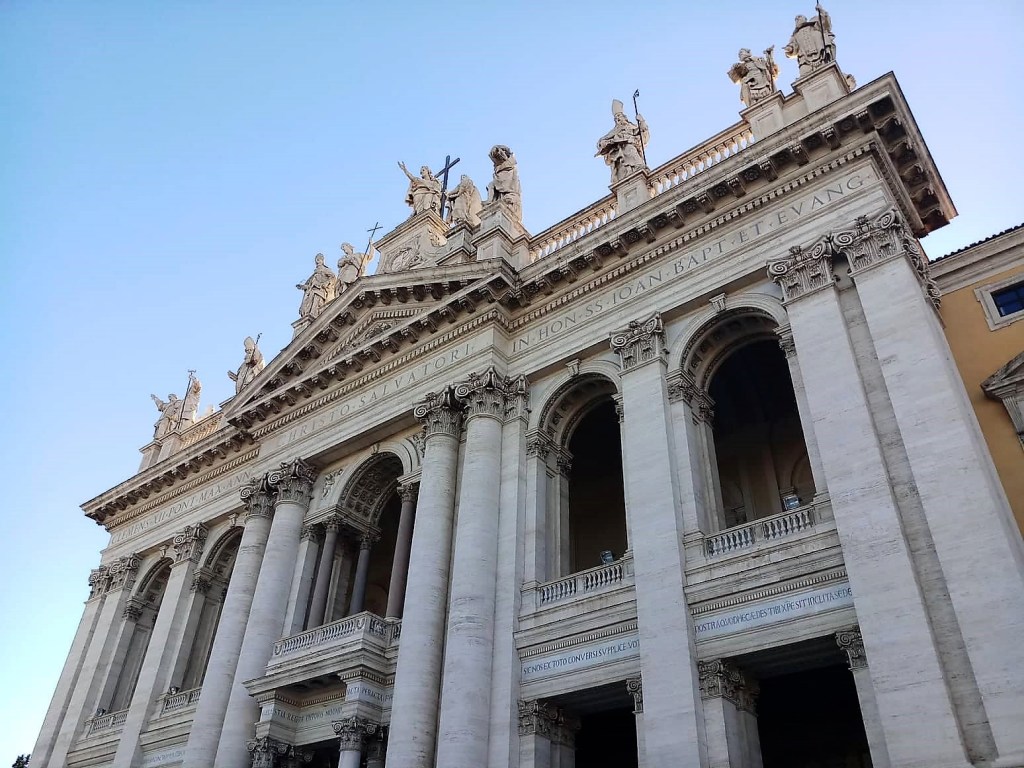
Monday, Feast of Dedication of the Lateran Basilica, 09 November 2020
Ezekiel 47:1-2, 8-9, 12  >><)))*>  1 Corinthians 3:9-11, 16-17  >><)))*>  John 2:13-22
Photo by Arch. Philip Santiago, 2018.

Glory and praise to you O God our Father who had sent us your Son Jesus Christ to establish his Body among us, both as the Church made up of his people and made of stones. As we celebrate the Feast of the Dedication the Cathedral of Rome, the Basilica of St. John Lateran, we pray also for Pope Francis, all bishops and priests, and all the faithful who make us the Body of Christ.

May our temple of stones be a symbol of the living Church, the Christian community, your Building among us as St. Paul reminds us today.

Let life flow like waters from the vision of Ezekiel in the first reading from our Church and give life to its members especially the sick and the poor, the marginalized and the forgotten.

Dearest Jesus, help us draw inspiration from the beauty and harmony of your beautiful churches despite our many flaws and sins to form a unity in you in the Holy Eucharist we celebrate day in, day out in our sacred buildings to proclaim your glory and majesty.

At the same time, as we strive to follow your will in building a spiritual temple of people who worship in truth and in spirit, may this feast remind us also to take special care in keeping your house in order where we meet you in our liturgy. Guide us with the Holy Spirit to make every sacred building a living temple of your love, a church of the poor. Amen.
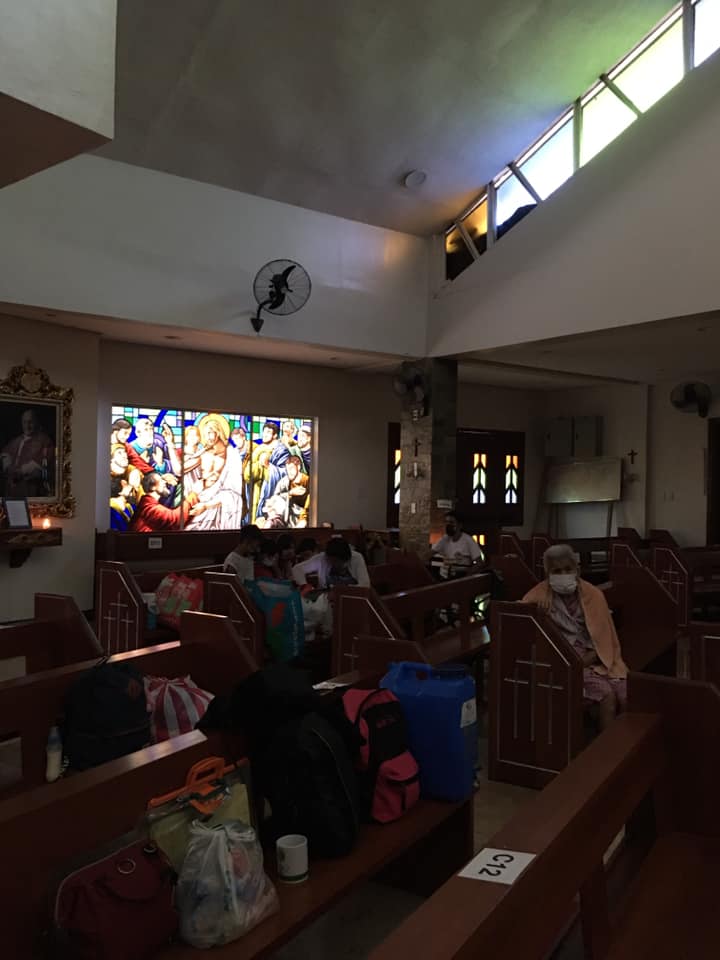
Photo by Arch. Philip Santiago, 2018.

Prayer to rediscover the beauty of the Church

The Lord Is My Chef Breakfast Recipe for the Soul by Fr. Nicanor F. Lalog II
Wednesday, Feasts of Saints Simon and Jude, Apostles, 28 October 2020
Ephesians 2:19-22   >><)))*> + <*(((><<  ||  >><)))*> + <*(((><<   Luke 6:12-16
Photo by author, Malolos Cathedral, August 2020.

Dearest Lord Jesus:

What did you pray for on the night before you named your Twelve Apostles?

Jesus went up the mountain to pray, and he spent the night in prayer to God. When day came, he called his disciples to himself, and from them he chose Twelve, whom he also named Apostles:

Luke 6:12-13

What an amazing sight, a scene to behold you, Jesus who is true God and true man, praying to the Father, spending the night just to name the Twelve Apostles! Most likely, you prayed for them individually so they may be strong in their commitment to you. What an honor!

And the most beautiful part in every call you make specially with the Twelve Apostles is how you have chosen them from their so diverse backgrounds and temperaments to prove that what interests you most Lord Jesus are people or persons, not labels or backgrounds.

Remind us always, dear Jesus of this reality, of how you value each of us that you have called us to be your followers as Christians.

Open our eyes and our hearts to always have the zeal and passion of St. Simon.

His two nicknames given by Luke as a “Zealot” belonging to Zealots Party demanding the ouster from Israel of the occupying Romans and that by Mark as “Cananean” from the Hebrew verb qana for “to be jealous, ardent” both mean being filled with passion for his Jewish identity for God, his People Israel and Torah or the Laws.

In choosing Simon as an Apostle, may we be reminded of always having room in the Church for all charisms and human qualities of all peoples who find their communion in our Lord Jesus Christ.

Likewise, we pray to be like Jude Thaddeus who stood firmly by his faith in you, Lord Jesus in writing a short letter to remind the early Church of keeping their Christian identity, of not being deceived by some preachers who sowed confusion and division with their thoughts and ideas.

Pray for us, dear Jesus in this modern time when we who are in the Church who are lacking in passion and drive to make you known not only in words but also in deeds.

Pray for us, still Lord Jesus in this modern age that we may have the strength, clarity, and courage in defending and upholding our Christian identity amidst the many contradictions of the world in which we live in.

May St. Simon and St. Jude help us rediscover the beauty of our Christian faith and live it faithfully, witnessing to its beauty and truth. Amen.
From catholicnewsagency.com.