Advent is conversion in the desert

Lord My Chef Sunday Recipe for the Soul by Fr. Nicanor F. Lalog II
Second Sunday in Advent-A, 07 December 2025
Isaiah 11:1-10 ><}}}}*> Romans 15:4-9 ><}}}}*> Matthew 3:1-12
Photo by author, The Deesis Mosaic in the Hagia Sophia, Istanbul, Turkiye, 01 November 2025.

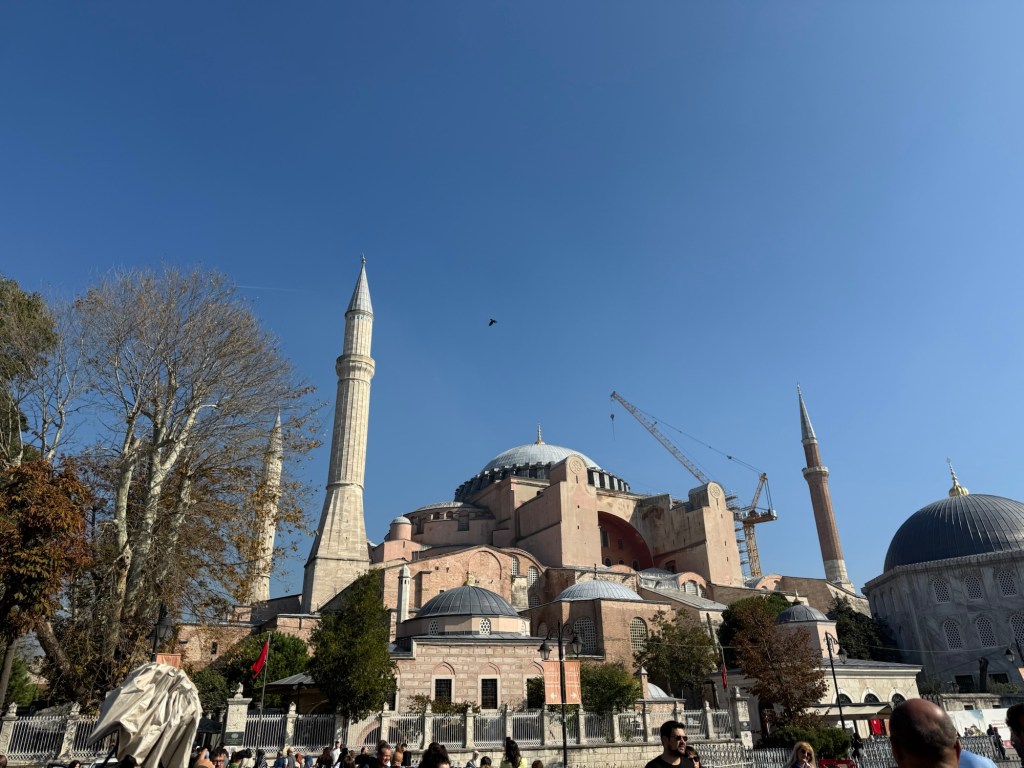
A few weeks before the Holy Father visited Turkiye recently, we were also in Istanbul and had the great chance of visiting the magnificent Hagia Sophia. And we wonder why Pope Leo XIV skipped the more historical and popular Hagia Sophia to visit instead the Blue Mosque just across.

The Hagia Sophia or “Holy Wisdom” was the largest church in the Eastern Roman Empire when Istanbul was called Constantinople until the Ottoman Turks conquered the city and converted the church into a mosque. More than a hundred years ago when Turkiye became a republic, the government made Hagia Sophia a museum until recently when it was reverted into a mosque again.

My initial feeling when I got inside Hagia Sophia was deep sadness. “Malaking panghihinayang” as in “sayang na sayang” in Filipino because it used to be ours but due to the Great Schism of 1054 when the Eastern Roman Church broke away from Rome, it fell into the hands of the Moslems who made it into a mosque, altering or hiding the many great works of art there that date back to the Byzantine era 1200 to 1400 years ago.

Photo by author, The Deesis Mosaic in the Hagia Sophia, Istanbul, Turkiye, 01 November 2025.

One of its many treasures you might be familiar found in history books and magazines is the “Deesis Mosaic” of Jesus flanked to his left by his Mother Mary and John the Baptist to his right.

From the Greek word “deesis” that means supplication or intercession, the mosaic features Mary and John beseeching Jesus to forgive mankind at his Second Coming. Though the three images have been badly deteriorated due to the elements passing through the window beside it, its beauty remains intact, especially the evocative faces of Mary, Jesus and John.

Seeing it personally, one could feel the pagsusumamo of John the Baptist and Mother Mary expressed in the softness of their face in earnestly asking Jesus to forgive mankind on the day of judgment. And it seems to be working so well as you could feel too the tender compassion of Jesus Christ’s look as he raised his right hand in a blessing position while holding with his other hand a thick book that is perhaps a Bible.

Detail of John the Baptist from the Deesis Mosaic in his abbreviated Greek name Ionnes Prodromos; photo by author, Istanbul, 01 November 2025.

The Deesis Mosaic is very Advent in character because it is about God’s mercy and forgiveness in Christ Jesus at his Second Coming at the end of time.

Here we find how early on in the ancient Church they have been preoccupied in this first aspect of Advent, the Second Coming of Christ at the end of time and of Advent’s essence – our conversion from sins. At the forefront of that call is the Lord’s Precursor, John the Baptist, that is why every second and third Sundays of Advent we hear in the gospel his ministry at Jordan.

John the Baptist appeared, preaching in the desert of Judea and saying, “Repent, for the kingdom of heaven is at hand!” It was of him that the prophet Isaiah had spoken when he said: A voice crying out in the desert, Prepare the way of the Lord, make straight his paths. … At that time Jerusalem, all Judea, and the whole region aroun d the Jordan were going out to him and were being baptized by him in the Jordan River as they acknowledged their sins (Matthew 3:1-3, 5-6).

John the Baptist remains relevant in preparing for the Lord’s coming, whether at the end of time or in preparation for our Christmas celebration. Like him, we are all called to be an Advent person, vigilantly preparing ourselves for Christ’s coming at the end of time that happens in every here and now, right in our own desert in this modern time.

Yes, we are like John the Baptist living in our own desert, a world we describe as a global village wired and connected by the internet yet so apart from each other. Instead of bringing us closer with one another, all these modern inventions have actually grown us more detached from one another like when eating in a fast food. It is so alienating especially for us seniors to be placing our orders on those tall electronic boards programmed for us to order more food and drinks not healthy at all.

Or, take those TNVS or Transport Network Vehicle Services like Grab. We no longer travel in the real sense as we just move to destinations with that desert feeling when inside a Grab car with the driver too far from us passengers in front, following instructions from apps while we at the back sit silently scrolling our phones or pounding a laptop. See also how driving has become going in the wilderness with the horrendous traffic where humans turn into monsters in road rage while machines and CCTVs monitor who’s violating traffic rules and who gets through the RFID.

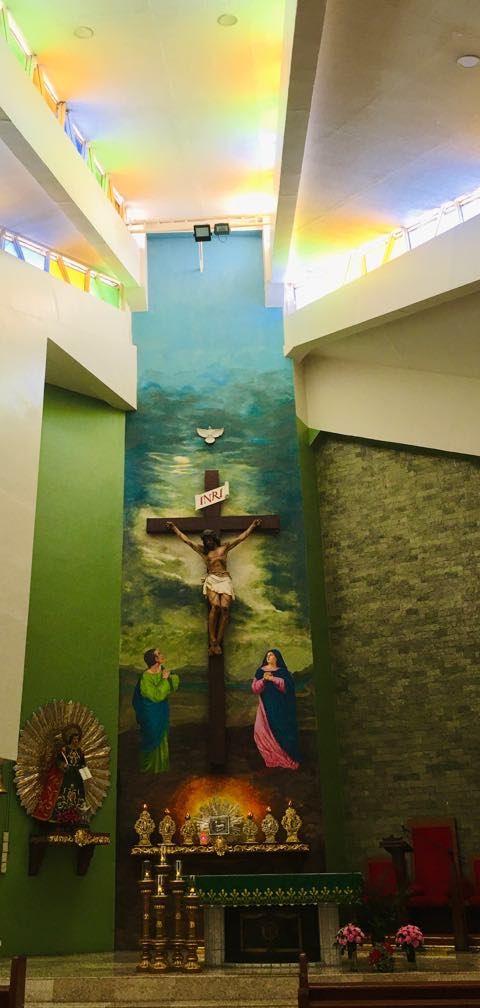
Photo by author, Basic Education Department Chapel, Our Lady of Fatima University, Valenzuela City, December 2023.

This Second Sunday in Advent, John the Baptist invites us to be aware of the desert we are living into where we have become less personal, less human as we move away from God that we have lost our sense of sin, acting more on impulses without much thinking its effects and consequences.

We think more of ourselves than of God and others, overextending our rights insisting on our ways that actually destroy lives through abortions and gender manipulations. We no longer speak of what is true and good by simply following trends and what is convenient. No more feelings, no more compassion. No more others. No more God nor heaven and eternity.

“St. John the Baptist Preaching in the Wilderness” by German painter Anton Raphael Mengs (1728-1779) from commons.wikimedia.org.

We do not have to dress on camel’s hair nor eat locusts and wild honey like John but simply make a space within us for God and for others.

We would be gravely wrong to think John was only speaking to the people of his time especially to the Pharisees and Sadducees; Matthew wrote his gospel account at that time to nourish the faith of early Christians facing persecutions and many challenges in life like in our own time when it is so tempting to follow the evil ways of the world.

John continues to warn us today of the sure return of the Christ when everyone shall face judgment which is not something to be feared like a sword of Damocles hanging above our heads ready to strike us anytime. It is a call and a demand for concrete actions of conversion, of leaving our sinful ways to follow Christ’s path of holiness.

“Even now the ax lies at the root of the trees. Therefore every tree that does not bear good fruit will be cut down and thrown into the fire. I am baptizing you with water, for repentance, but the one who is coming after me is mightier than I. I am not worthy to carry his sandals. He will baptize you with the Holy Spirit and fire” (Matthew 3:10-11).

Advent assures us of Christ’s Second Coming when he shall purify and renew us to fulfill Isaiah’s prophecy in the first reading when “the wolf shall be a guest of the lamb, the leopard shall lie down with the kid… the calf and young lion shall browse together, with a little child to guide them… the cow and bear shall be neighbors, together their young shall rest, the lion shall eat hay like the ox… the baby shall play by the cobra’s den, and the child lay his hand on the adder’s lair”(Isaiah 11:6-8).

“Peaceable Kingdom”, a painting based on Is.11:1-10 by American Edward Hicks, a Quaker pastor (1780-1849) from wikimedia.org.

As we have reflected last Sunday, every coming of Jesus is a day of judgment but not a catastrophe. It becomes a disaster for those unprepared, living in sin. But for those like John the Baptist, striving to live the gospel amid the desert of this world, Christ’s coming is salvation and peace for Jesus is full of love and compassion and tenderness for his people.

Life is so difficult these days especially when we see our great disparities with the corrupt who simply steal our money and those we call “lumalaban ng patas sa buhay”. Imagine how in our country the world is like a desert, so hostile with the weak and the poor who have to wrestle with 500 pesos – if ever they have – to stretch it for a noche buena on Christmas Eve.

St. Paul reminds us in the second reading that in times like these, we look up to God and his Sacred Words, to keep hoping, trusting and believing in Christ’s coming already happening especially in the Sunday Eucharist. Let us gather together as one community, encouraging each other in Christ like John in Jordan while awaiting the Lord’s coming, rejoicing like the psalmist today who sang, “Justice shall flourish in his time, and fullness of peace forever” (Ps. 72:7). Amen. A blessed Second Week in Advent everyone!
God surely comes

Lord My Chef Sunday Recipe for the Soul, Fr. Nicanor F. Lalog II
First Sunday of Advent-A, 30 November 2025
Isaiah 2:1-5 ><}}}}*> Romans 13:11-14 ><}}}}*> Matthew 24:37-44
Photo by author, the Hagia Sophia, Istanbul, Turkiye, 01 November 2025.

I rarely travel abroad and though I am joyful and grateful for those rare occasions especially through the kindness of some friends, I feel so sad seeing how other countries are doing so well, so good – so unlike us in the Philippines.

After my recent trip to Turkiye and Romania, the more I am convinced I would never experience a better Philippines at least in my lifetime for sure.

Photo by author, Bucharest, Romania, 07 November 2025.

Look at Hong Kong: while firemen were still fighting the blaze in a high-rise housing complex last Wednesday that caused over 120 deaths with scores wounded and missing, authorities have already arrested in less than 24 hours at least three suspects linked with the deadly fires while here in the Philippines, all the key players in the multi-billion peso ghost project scam remain free with some already hiding abroad.

And just as we are about to end November for the merry month of December, the secretary of Trade and Industry came out in the news insanely insisting that anyone with 500 pesos can have a noche buena of ham, spaghetti and fruit salad?! What else can we say but a heavy sigh with OMG…

Sorry for the lamentations. In times like these you really can’t avoid wonder sometimes where is God? Has he forgotten us in the Philippines? So very sad.

Photo by author, Camp John Hay, Baguio City, 01 December 2018.

Oh, by the way, a blessed “Happy New Year” to everyone! We begin this first Sunday of Advent as the new year in our Church calendar.
From the Latin adventus that means “coming” that used to designate the arrival of the Roman emperor in the provinces and colonies of the ancient Roman empire, we have adopted it in the Church as a season of preparing for the coming of the true King of kings, Jesus Christ. Notice how we closed last Sunday our Church calendar with Christ the King and now opens it with preparations for the coming of Christ, the King of kings.

Advent has two aspects: from this Sunday until December 16, all readings and prayers are directed to the Second Coming of Christ or parousia at the end of time; from December 17-24, all prayers and readings shift our attention to look back and reflect at the first coming of Christ in Bethlehem more than 2000 years ago. That is the meaning of the four candles in our Advent wreath.

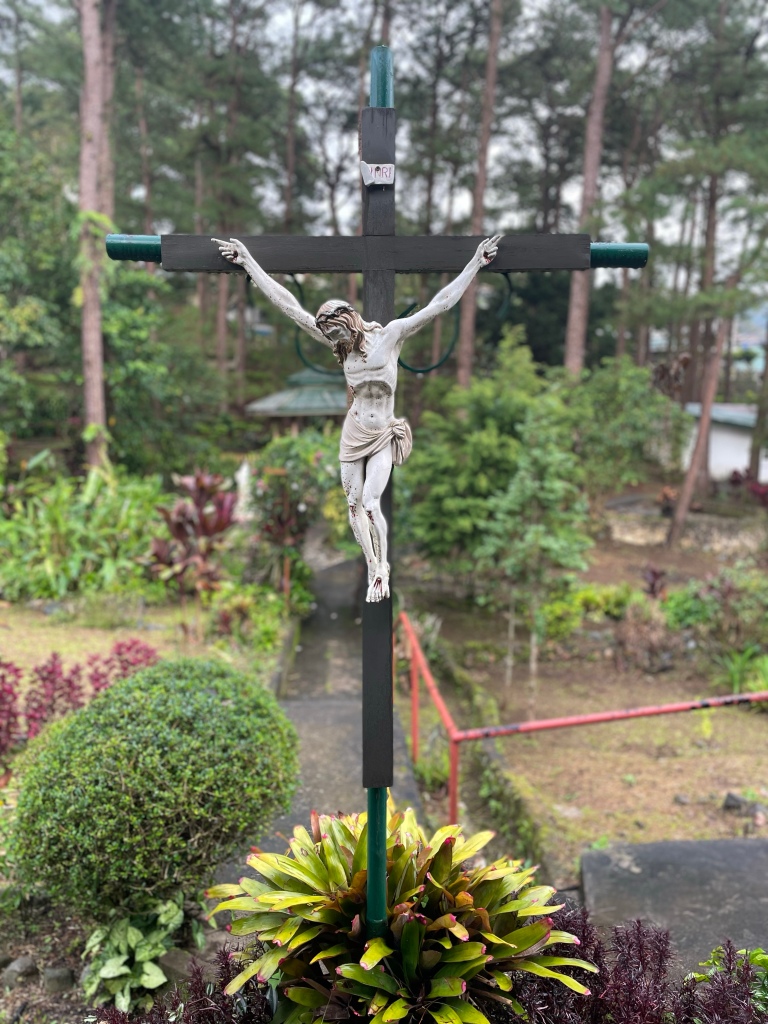
Photo by author, Basic Education Department Chapel, Our Lady of Fatima University, Valenzuela City, 2021.

Between these Second and First comings of Jesus that Advent prepares us, we celebrate every day Christ’s Third Coming according to St. Bernard of Clairvaux which is the meaning of the very words of the Lord to his disciples then and now as narrated this Sunday by Matthew in the gospel:

Jesus said to this disciples: “As it was in the days of Noah, so it will be at the coming of the Son of Man. In those days before the flood, they were eating and drinking, marrying and giving in marriage, up to the day that Noah entered the ark. They did not know until the flood came and carried them all away. So will it be also at the coming of the Son of Man” (Matthew 24:37-39).

Despite all the negative news we have in the country and from around the world, despite all the darkness and problems we have in our lives, we are still blessed today because Jesus has come, will come again, and always comes. Welcome!

Let us get that feeling therefore on this first Sunday of Advent of having “arrived” to another year of journey in our spiritual life with Matthew as guide every Sunday Mass, praying for God’s grace for us to prepare not only for the Second Coming of Christ at the end of time but most especially for his daily coming to us which could also mean our death.

Jesus comes every day and therefore, every day is judgment day.

But it does not mean catastrophe because Christ’s coming at the end of time is about our attitude in living as he pointed out to his disciples during the days of Noah. Jesus comes in the most ordinary circumstances without us even knowing at all that it could be the end just like when the floods came after Noah’s family have entered and locked the ark.

It is not being morbid nor pessimistic in life. We know for sure death’s certainty except its precise moment. Death is not something to be afraid of but something we have to prepare for as it leads us to eternal life in God. It is scary for those not living life fully in God. To meet Jesus Christ is to live fully and authentically, to find life’s meaning in him not in things. How sad that many people these days live superficially without any qualms at all about God and spirituality and morality. More sad is the fact that many practically live their lives in social media without even knowing it at all! Observe what we post, the language we speak, our line of thoughts that are all influenced by media. Reflect on the great amounts of screen time we make daily and weekly that eat up our very existence!

Photo by author, 2019.

Advent is the season of vigilance, of being awake. Jesus reminds us today never to doubt his coming for he surely comes. If we are negligent, we end in disaster and catastrophe like in his example:

“Two men will be out in the field; one will be taken, and one will be left. Two women will be grinding at the mill; one will be taken, and one will be left. Therefore, stay awake! For you do not know on which day your Lord will come” (Matthew 24:40-42).

The prophet Isaiah tells us in the first reading how the coming of the Messiah is so sure that it does not depend in the vagaries of history because our God is the God of history himself. He fulfills his promises according to his plans, not according to man’s designs and manipulations. Despite the many wars and natural calamities the world has experienced in history, Jesus had come and keeps on coming. How foolish governments spend billions of dollars and countless hours studying how to find life in outer space while working on how to annihilate each other, destroy life at its weakest moments of infancy and old age while forgetting the hungry and dying among us. If we could just open our minds and our hearts to Christ’s daily coming then we fulfill Isaiah’s prophecy, “They shall beat their swords into plowshares and their spears into pruning hooks” (Is.2:4).

Photo by author, 2018.

This can only happen when we recognize every here and now, every present moment as Christ’s coming that is already taking place in our midst as St. Paul reminds us in the second reading, “For our salvation is nearer now than when we first believed; the night is advanced, the day is at hand. Let us then throw off the works of darkness and put on the armor of light” (Rom. 13:11-12).

Aside from preparing for our salvation that happens in Christ’s coming, Advent is also the season when we are called to share the light of Jesus to those in darkness. This early, so many malls, offices and homes have already put up with their colorful Christmas decorations like lanterns and Christmas trees. May we not forget to share most of all the light of Jesus Christ that brings joy and peace from our firm faith, fervent hope and unceasing charity and love especially when times are dark and rough for that is when the Lord truly comes. Amen. A blessed Advent season to everyone!
Advent: Reawakening our hopes amid a defiant history

The Lord Is My Chef Sunday Recipe for the Soul by Fr. Nicanor F. Lalog II
First Sunday of Advent, Cycle C, 01 December 2024
Jeremiah 33:14-16 ><}}}}*> 1 Thessalonians 3:12-4:2 ><}}}}*> Luke 21:25-28, 34-36
Photo by author, Advent 2018.

Blessed happy New Year, everyone! We officially start the new year in the Church on this first Sunday of Advent; that is why the Mass we have every January 1 is the Solemnity of Mary, Mother of God, not New Year as many believe.

This is the reason I insist on everyone to stop greeting “Happy New Year” after December 25 because Christmas is until Epiphany Sunday. And this is the problem with us every Christmas season – we have forgotten its very essence Jesus Christ, replacing Him with all the trimmings of this consumerist and materialistic world we live in.

Photo by author, Advent 2021 at BED Chapel, Our Lady of Fatima University, Valenzuela City.

The first Sunday of Advent is our new year, our new beginning in our journey in life in God through His Son Jesus Christ who had come, would come again, and continues to come daily in our lives. Beginning today until December 16, Advent invites us to focus on Christ’s Second Coming or Parousia at the end of time which nobody knows when except the Father in heaven; from December 17 to 24 and Christmas, we look back to the stories around Christ’s First Coming more than 2000 years ago. Between these two comings of Jesus is His coming in our daily living, in the here and now which St. Bernard of Clairvaux called Christ’s “Third Coming.”

There lies the tension in those three comings of Jesus Christ that have really taken so long that we get impatient or begin to doubt God especially with how world history has unfolded until now with wars as well as natural calamities. Just recently some parts of our country were devastated by a series of powerful typhoons while some parts of the world like Spain had its share of catastrophic flooding that claimed so many lives. Making things worst is how politics has rocked our country this week, trying to undermine our democracy as well as our sense of decency as a nation that had decayed during the past administration.

Photo by author, Dau, Mabalacat, Pampanga, November 2022.

Many are feeling disgusted everywhere in the world with how history is unfolding, wondering if life is going to get any better at all. Some have imitated Pilate in the gospel last Sunday, putting God on trial again, asking Jesus what He had done for all these upheavals and problems going on in history.

Like them, we are also tempted to ask, where is Jesus Christ? Or, the all-powerful and loving God our Father?

The days are coming, says the Lord, when I will fulfill the promise I made to the house of Israel and Judah. In those days, in that time, I will raise up for David a just shoot; he shall do what is right and just in the land. In those days Judah shall be safe and Jerusalem shall dwell secure, this is what they shall call her: “The Lord our justice” (Jeremiah 33:14-16).

Photo by author, Pulong Sampalok, DRT, Bulacan, 23 November 2024.

The Prophet Jeremiah sets the tone of Advent this Sunday, reawakening our hopes in God amid history’s defiance as seen in the many cycles of sufferings and calamities that continue to shake our lives.

Yes, the “days are coming” and indeed had come when God fulfilled His promise in sending us His Son Jesus Christ who redeemed us from our sins and renewed us in Him with fulfillment in life even while here despite the many trials and tribulations we go through.

The “days are coming” as foretold by Jeremiah long ago and most true these days because the promised Messiah Jesus is now with us, acting in subtle and and complex ways beyond our imaginations, always surprising us with how things turn out than what we believe or expected.

Yes, the “days are coming” – right now – as Jeremiah meant that day after Jerusalem had fallen that amid all the chaos around us, God is among us in Jesus Christ who works among visible realities we cannot see, always coming and going among us unnoticed. That time of great salvation is already among us, being accomplished now by Jesus in silence, in secret.

Hence, the need for us to be vigilant through prayers which Luke emphasized in his gospel account.

Jesus said to his disciples: “But when these signs begin to happen, stand erect and raise your heads because your redemption is at hand. Beware that your hearts do not become drowsy from carousing and drunkenness and the anxieties of daily life, and that day catch you by surprise… Be vigilant at all times and pray that you have the strength to escape the tribulations that are imminent and to stand before the Son of Man” (Luke 21:28, 34-35, 36).

Photo by author, San Fernando, Pampanga, November 2021.

On this new liturgical year designated as “Cycle C”, all our gospel readings on Sundays will be from Luke (Cycle A has Matthew and Cycle B, Mark; John is used partly in cycle B and for great feasts).

Of the four evangelists, Luke is the one who emphasized the importance of prayer in his gospel account wherein he always portrayed Jesus in prayer; hence, not surprisingly, he tells us today that “praying at all times” is being “vigilant at all times” too.

And this we have been told ever since as prayer has always been central in all our teachings. It is in prayer when we are one with God in Jesus. It is in prayer when our senses are heightened that we become open to God’s subtle movements in us and among us.

Everything begins in prayer, both in our personal prayers and as a community like in the Sunday Mass where Christ’s presence is unveiled, where we experience Him most in us and among us and in the world that we are then filled with hope in God despite the darkness and sufferings going on.

Recently, our University joined the annual Red Wednesday celebration of the Church when we remember our Christian brothers and sisters persecuted in various forms in many parts of the world in this modern time. I was overwhelmed at the sight of the great number of our students who joined us, many standing outside our chapel.

What touched me was after the dismissal, some students remained inside the chapel lit in red with flickering candles at the altar, still praying. That for me is the sign of that “little shoot” God promised Jeremiah who would come to bring justice and peace on earth.

Photo courtesy of The Tribune, official publication of Our Lady of Fatima University.

To keep watch in prayer (which we mean as a way of life not just mere recitation of formula prayers) while remaining upright and abounding in love as St. Paul instructed us in the second reading is to be open to Jesus Christ, ready to receive Him without fear amid the tumults in the world when He comes in His final glory.

Yes, the world is still plagued with so many imperfections, even darkness and evil that may dishearten us even make us doubt God in His goodness why these bad things are happening. Advent invites us to reawaken our hope in the salvation that had come, that still comes now, and will surely come in the fullness of the Day of the Lord when Jesus comes again.

Lord Jesus Christ,
fill us with fervent hope
in You amid the many darkness
and sufferings in life;
reawaken our hope amid
our hopelessness and be surprised
with Your loving coming and presence.
Amen.
Photo courtesy of The Tribune, official publication of Our Lady of Fatima University.

Time is running out, the world is passing away

The Lord Is My Chef Daily Recipe for the Soul by Fr. Nicanor F. Lalog II
Wednesday in the Twenty-third Week of Ordinary Time, Year II, 11 September 2024
1 Corinthians 7:25-31 <*[[[[>< + ><]]]]*> Luke 6:20-26
Photo by author at Anvaya Beach Resort, Morong, Bataan, April 2024.

I tell you, brothers, the time is running out. From now on, let those having wives act as not having them, those weeping as not weeping, those rejoicing as not rejoicing, those buying as not owning, those using the world as not using it fully. For the world in its present form is passing away (1 Corinthians 7:29-31).

Thank you, dear Father
for these timely and wonderful
reminders as we often compare
our selves with others or
are never contented with what we have
or where we stand,
always wondering amid
great temptations that
"the grass is greener at the
other side of the fence."
Teach us contentment
in your Son Jesus Christ;
teach us dear Father
to be always aware of the
day of the Lord,
of Parousia;
while many times most Christians
believe in parousia,
only a few believe it will happen
in their lifetime;
many of us forget that
even if the parousia does not
occur in our lifetime,
our life will definitely end,
making us stand before the
judgment seat of Christ for sure;
help us realize that to live as if
our life will never end is the height of folly,
while to live with the knowledge
that our life will end is the beginning of wisdom.
That is why, Jesus calls us blessed
when we are poor,
when we hunger,
when we weep,
when we are hated
and maligned
because in your beatitudes
you make us look forward
what is beyond material and temporary,
that is passing away;
let us set our sights more
on things that shall remain after
everything has ended,
with things that shall persist
in eternity like our souls
and You, O God.
Amen.

Life is a daily Advent, a new beginning in Christ

The Lord Is My Chef Sunday Recipe for the Soul by Fr. Nicanor F. Lalog II
Second Sunday in Advent, Cycle B, 10 December 2023
Isaiah 40:1-5, 9-11 ><}}}*> 2 Peter 3:8-14 ><}}}*> Mark 1:1-8
Photo by author, the Forest Lodge, Camp John Hay, Baguio City, 12 July 2023.

It has been a week since we started our new liturgical year with the Season of Advent. And let’s admit that we have hardly noticed how fast time passes by these days with all the parties and gatherings we have been having since December started!

And that is the joy of patient waiting even in the dark during this time of active waiting for Jesus Christ’s Second Coming which is the first phase of this Season of Advent.

If we remain and persevere to be faithful in Jesus and his teachings, we realize that every day in life is always a new beginning in Christ to start anew in becoming a better disciple. We hardly notice the passing of time when we love and serve God in others because we experience that life is more of a series of beginnings than of endings as Mark reminds us at the start of his gospel account:

The beginning of the gospel of Jesus Christ the Son of God.

Mark1:1
Photo by author, Malolos Cathedral Advent 2019.

Mark was the first to write a gospel account, composing it in Rome in the year 70 AD when the early Christians who were mostly of Jewish origins were under persecution. For his audience of Jewish origins, the word beginning meant a lot like the Book of Genesis, connoting how God is always present amid the persecution, of how order comes after chaos.

In simply declaring to us “The beginning of the gospel of Jesus Christ the Son of God”, Mark is reminding us how God is always starting a new creation, a new order, a new revelation in us and among us.

Very often, beginning connotes an ending; but, not with God nor with the gospel who is Jesus Christ. Remember how Mark’s gospel ended abruptly and unexpectedly in the discovery of the empty tomb by Mary Magdalene, Mary mother of James and Salome who all “fled… bewildered and trembling… in great fear that they said nothing to anyone” (Mk.16:1-8).

By “ending” his gospel account that way, Mark actually wanted his listeners that include us today to continue writing and proclaiming the gospel of Jesus Christ in our own lives. For Mark, the gospel never ends but simply begins over and over again through the lives of disciples who meet and befriend Jesus Christ, the Son of God.

Photo by author, Advent 2018.

Now, to think of the beginning is to remember our origin or starting point, the person of Jesus Christ.

The late Fr. Henri Nouwen used to say that the word remember means “to make a member a part again”; hence, re-membering our beginning is making God in Jesus Christ a part of our lives again, of our present moment again.

More than just going back to the basics shouted by everyone these days even in the Church, remembering our beginning is bringing back the person of Jesus Christ in our lives today. That is what a new beginning means, a return to the person of Jesus Christ who is the essence of Christmas, of the Church, of the world.

Everything in life becomes clear when we begin in Jesus Christ. All these questions we have been asking inside, the many whys of life, will only be answered and clarified when we begin in Jesus. Many in the world would say it is very simplistic but, the problems of the world then and now are all due to the removal Jesus Christ from our hearts, homes, offices, and classrooms, and relationships. Begin again in Christ and see how everything, everyone becomes new and beautiful again!

Photo by author, Advent 2018.

Sometimes, Mark’s gospel is called the “Gospel of Beginnings” because of his frequent mention of Jesus “beginning” to do something like when “he began to teach” in many occasions in the synagogue and temple area (Mk. 4:1, 6:2 and 34, and 8:31) or when “he began to speak in parables” (Mk. 12:1); when Jesus came to Jerusalem and entered the temple, “he began to cleanse” it (Mk.11:15) while at the agony in the garden, “he began to be troubled” (Mk. 14:33).

All these indicate how our ministries began in Jesus Christ and nowhere do we find Mark telling us Jesus had ended them all. In fact, in the longer ending of his gospel that was later on added by his followers, we find Jesus telling his disciples that include us today to continue with his works and mission. Every mission we have in life especially in the Church must always begin in Jesus Christ.

After all, when we reflect on Mark’s brief opening sentence to his gospel account that associated the word beginning with the Lord’s name Jesus Christ, we find him telling us that same truth that everything created began in Jesus Christ as expounded by John at his prologue (Jn. 1:1-5) and Paul in his letter to the Colossians 1:15-20.

Examine how John and Paul beautifully expressed in poetry their theology simply expressed by Mark as “The beginning of the gospel of Jesus Christ the Son of God”.

Here we find that even if Mark’s gospel is the shortest of the four gospel accounts, “brevity is the soul of wit” (Shakespeare in Hamlet). And that is the short of all these things we believe in and hold so dearly in our faith: Jesus Christ as the beginning and the origin of everything.

There lies the challenge to us these days when people no longer remember, and even willing to forget God and Jesus Christ: of how like Mark we can always begin each day, our work and ministries, our missions and everything in Jesus Christ. In the first reading, God calls us through the Prophet Isaiah to comfort his people, especially those sick and weary, those losing hope in life that until now happens. Perhaps because what we keep on offering others are not really the essential one, Jesus Christ, our beginning.

It is a brand new week again as we get closer to Christmas and most especially to Parousia. The problems and darkness remain in our lives. The words of Peter in the second reading today are scary when God “dissolves” everything at the Parousia; however, it is a call for us believers to witness the hope in Christ’s coming not by our words and beliefs but by our witnessing to Jesus Christ, by the holiness of our lives that begin in Jesus Christ. Amen.

We are never empty & alone when waiting patiently even in the dark

The Lord Is My Chef Sunday recipe for the Soul by Fr. Nicanor F. Lalog II
First Sunday in the Season of Advent, Cycle B, 03 December 2023
Isaiah 63:16-17, 19; 64:2-7 ><}}}*> 1 Corinthians 1:3-9 ><}}}*> Mark 13:33-37
Photo by author, National Shrine of Our Lady of Fatima, 08 December 2022.

I was literally waiting the “advent” or coming of my doctors last Thursday as I wrote this homily for this first Sunday of Advent, the new year in our Church calendar. It was a hazy morning with some drizzle when I arrived for my doctors’ appointments.

But, it was a graceful moment too as I rediscovered the virtue of patience by being a patient myself again.

Sick people are called patients precisely because healing requires a lot of patience. Tons of patience in fact, especially if we are incapacitated or too weak to move. And the most difficult part of patience is waiting, from the simple waiting for doctors and nurses, waiting for the end of the day to waiting for our complete healing until we are well again.

Photo by author, First Sunday of Advent 2021, Basic Education Department, Our Lady of Fatima University, Valenzuela City.

The difficult part of waiting is that we are so conscious of time which we find to be flowing so slowly, making us irritable even doubtful if ever the one we are awaiting would ever come or materialize at all. That is why patience has become a virtue so rare these days.

Many people reject, even abhor patience in this age of instants when everybody wants to bear fruit but resent how it takes time to ripen. We want to have everything now na! We do not want to wait because we are no longer contented with whatever comes to us so that we advance our salaries and buy things in credit cards. Worst is this notorious practice of advancing public holidays to other dates closest to weekends to have “long weekend” celebrations. Even Christmas is not spared from our impatience! See how malls and local government buildings, homes and radio stations could not wait after the Halloween with all the lighting of Christmas trees and decors everywhere.

Unknown to us, we are robbing ourselves of very essence of the event of Christ’s coming to us when we manipulate time and its natural flow. When we lose patience, we stop waiting, then we miss the essence of life, of persons, of everything because we think waiting is being empty.

That is not true! Waiting is never empty. On the contrary, waiting is actually fullness because the very fact that we wait means we have.

Photo by author, lanterns for sale in San Fernando, Pampanga, November 2020.

When we were growing up, we loved waiting for dad’s coming home from work. We were filled with joy the moment we heard jeepneys stopping, hoping it was dad. Even if he would come home later in the evening when it was dark, we always felt so sure and excited of his arrival with pasalubong because he was always in our hearts.

That is the greatest joy of patient waiting – it is fullness of love due to our relationships. People who can’t wait, who are impatient are often loners, even complainers because they always feel empty within without any regard at all for relationships. Most likely, they have no relationships at all!

Photo by author, lanterns for sale in San Fernando, Pampanga, November 2020.

The first reading reminds us of this great beauty of patient waiting, of already having God himself within us with Isaiah calling God “our father, our redeemer” that both indicate kinship and relationships with him.

You, Lord, are our father, our redeemer you are named forever.

Isaiah 63:16

Very notable is the word “redeemer” that is go’el in the Hebrew language – the family relative who pays off debts or redeems a foreclosed property so that their family or tribe could keep it.

That is exactly what Jesus came for – to redeem us, to ransom us from our debt we could not repay God which is love. By dying on the Cross, Jesus saved us, redeemed us from the clutches of death and evil to be filled with life again. And that is why he is coming again to ultimately vanish all evil and sin to bring us to new heaven and new earth.

Physically we do not see Jesus but realistically, spiritually, we are certain he is with us, within us. Therefore, our waiting for him is never empty but always full of Jesus precisely due to the relationship we have in him and with him.

Photo by author, Advent 2019 in our former parish.

Waiting for Jesus is an expression of our faith. And we wait with him, just like the apostles in the agony of the garden. Notice how Mark narrated to us this calls for being watchful by Jesus; unlike Matthew, Mark mentions the time of Christ’s coming – at night.

Jesus said to his disciples: “Be watchful! Be alert! You do not know when the time will come… whether in the evening, or at midnight, or at cockcrow, or in the morning. May he not come suddenly and find you sleeping. What I say to you, I say to all: ‘Watch!'”

Mark 13:33, 35-37

This may be a minute detail for us but not for Mark who was the first to write the gospel of Jesus which happens to be the shortest and most concise. Night time in the Bible evokes darkness when evil seems to dominate the time which we continue to think of in the present.

But, we are children of light as St. Paul reminds us in one of his letters. And this Sunday he assures us in the second reading that “God is faithful” who “called us to fellowship” in him through Jesus Christ (1 Cor. 1:9). Let us not be afraid of the dark and long waiting for Jesus because he had conquered it when he walked on water, when he stilled the storm in the sea, when he rose again on Easter. Do not forget too that Jesus was born during the darkest night of the year, a reminder and assurance to us that no matter how dark our lives may be, Jesus is near, Jesus is here. So, have no fear in him, our brother and kin who had saved us!

Photo by author, Advent 2019 in our former parish.

Watch and be on guard on Christ’s coming and presence in darkness because too often, we are the ones who miss the Lord. Keep in mind that it is at night, it is in darkness when it is best to believe in the light. Here, we again find that waiting even in darkness in never empty because that is when we are so sure there would be great light bursting forth soon as Isaiah had prophesied that was eventually fulfilled in Jesus Christ. Sometimes, we get bored even impatient or sleepy waiting for Jesus like the five wise virgins who brought extra oil waiting for the groom to arrive. The key is to remain in Jesus, only Jesus, always Jesus as we pray like John the Beloved, Maranatha, “Come, Lord Jesus!” Amen.

Standing up for Christ

The Lord Is My Chef Daily Recipe for the Soul by Fr. Nicanor F. Lalog II
Wednesday in the Thirty-fourth Week of Ordinary Time, Year I, 29 November 2023
Daniel 5:1-6, 13-14, 16-17, 23-28   <'[[[[>< + ><]]]]'>   Luke 21:12-19
Photo by author, St. Scholastica Retreat House, Baguio City, 23 August 2023.
God our merciful Father,
help us to stand always 
for what is true and good,
just and proper;
give us the courage to
give testimony in Jesus Christ
especially in moments of trials
when the lures of the world 
like power and fame 
are so strong.
Teach us to be like your
servant Daniel:

Daniel answered the king: “You may keep your gifts, or give your present to someone else; but the writing I will read for you, O king, and tell you what it means. You have rebelled against the Lord of heaven. But the God in whose hand is your life breath and the whole course of your life, you did not glorify.

Daniel 5:17, 23
So many times, O God,
especially us your priests
and servants are so afraid,
others too numb, shamelessly 
choosing and preferring 
comforts than difficulties, 
oblivious to your call for sacrifices
have given in to the temptations
of the world, embracing more
the rich and powerful,
gracing all their affairs and parties
unmindful of the needs of the poor.
Worst, many of us 
have turned away from the 
Cross of Jesus Christ,
refusing to give testimony
to him and his teachings,
sorely lacking in any
perseverance at all.
Have mercy on us, Father;
may we live each day 
as our last day
here on earth,
each day a Parousia 
of your Son Jesus,
so that like Daniel,
we serve you alone,
our God and Master
lest we too find 
your words and writings
on the wall - MENE, TEKEL, PERES
warning of our downfall.
Amen.

Living in the end of time

The Lord Is My Chef Sunday Recipe for the Soul by Fr. Nicanor F. Lalog II
Sunday in the Thirty-second Week of Ordinary Time, Cycle A, 12 November 2023
Wisdom 6:12-16 ><}}}}*> 1 Thessalonians 4:13-18 ><}}}}*> Matthew 25:1-13
Photo by author, PDDM Chapel, James Alberione Center, G. Araneta Ave., QC, 09 November 2023.

For the next two Sundays before the Solemnity of Christ the King, our readings deal with the urgency of the end of time, of the final judgment when Jesus comes again. Every Sunday in the Mass we profess in the Creed that “Jesus will come again to judge the living and the dead” and proclaim after Consecration that “Christ has died, Christ is risen, Christ will come again!”

But, do we really take Christ’s Second Coming to our hearts?

Maybe not at all if you scan the social media like Facebook or the news these days. Many people live as if there is no God nor final judgment. Worst, many have lost the virtue of waiting as nobody waits anymore in this age of instants! So unlike the Thessalonians during the time of St. Paul who all believed Jesus would come again in their lifetime. In fact, they were even so concerned with the sequence of entrance to heaven after some of them died ahead of the Parousia (Greek for Christ’s Second Coming). In explaining Christ’s return at the end of time, St. Paul insisted on two important points in his letter we have heard today.

Photo by author, National Shrine of Our Lady of Fatima, Valenzuela City, 06 November 2023.

First, the Resurrection of Jesus is the beginning of the end of time. We have to live daily as if it is the end of time. Easter is not an isolated event in the past; it is directly linked with everyone for all ages. Like Jesus, all those who have died shall go through “general resurrection” at the end of time when he comes again anytime he wishes. “For if we believe that Jesus died and rose, so too will God, through Jesus, bring with him those who have fallen asleep” (1 Thes. 4:14).

Second, the Parousia is God’s final victory over sin and death. Jesus had definitively won over sin and death on the Cross on Good Friday but its “powers” would finally cease and end at the end of time when Christ comes again to start anew everything in God with “new heaven, new earth”. That is why while awaiting his Parousia, we persevere in witnessing his gospel message of salvation amid the many sufferings we go through in this world like diseases and sickness, famine and poverty, wars and violence.

Here lies our problem – and foolishness – when we turn away from God, refusing to wait by falling into the devil’s temptation of “turning stones into bread” for instant solutions that have left us more divided, more miserable. We need faith in God who is our oil to keep our lamps aglow, giving light in this dark world even if we “become drowsy and fall asleep” while awaiting Christ’s return.

Jesus told the disciples this parable: “The Kingdom of heaven will be like ten virgins who took their lamps and went out to meet the bridegroom. Five of them were foolish and five were wise. The foolish ones, when taking their lamps, brought no oil with them, but the wise brought flasks of oil with their lamps. Since the bridegroom was long delayed, they all became drowsy and fell asleep.

Matthew 25:1-5
Photo by author, Chapel of the Holy Family, Sacred Heart Novitiate, Novaliches, QC, 2016.

Nobody knows when the Parousia will happen, not even Jesus except the Father. But the good news is that Jesus assures us today that it is normal to be drowsy and fall asleep in our lives while awaiting his final coming.

There are times we get so used to the darkness around us in life that we become cynical and even indifferent in our attitudes. We fall asleep, choosing to be mere bystanders, seeing nothing, hearing nothing, saying nothing, and doing nothing.

It is not good, of course. But, it can happen as we find our hands so full of our own personal and family issues that many times, we would opt to just “pray” than actively take part in advocacies and crusades against the many problems that plague the world today from poverty to hunger, wars and violence, human trafficking and prostitution to the destruction of our environment and climate change.

Becoming drowsy and falling asleep mean we get tired of all the problems and chaos in the world, even in our personal lives that we just want to stop and be detached, away from all troubles. No more dramas. To be silent until Jesus Christ comes to us in the dead of the night. Like the wise virgins, we keep focused on Jesus even if we become drowsy and fall asleep in his sure arrival.

Photo by Irina Anastasiu on Pexels.com

Being foolish like those other five virgins in the parable is abandoning God, not waiting for him, being busy with worldly concerns without thinking and looking into the wider horizons of life and realities.

Many times, the world seeks quick fixes to our many problems only to create bigger problems. Jesus had to wait until the hearts of the more than 5000 people who have followed him in the wilderness were opened to God and to one another before he miraculously fed them with bread and fish.

Being wise is having faith in God with good works. How sad that many people have foolishly turned away from God, even declared “God is dead” as they relied more on themselves and their technologies and modern thoughts that are often old mistakes in the past being repeated. Our bodies may get tired but never should we let our minds and spirits droop and fall behind, joining the materialistic and selfish bandwagon of the world. Being wise is to continuously seek God and his ways for a more meaningful way of living. This is the message of the author of the Book of Wisdom we heard today where God is personified as Wisdom like a beloved being sought.

Resplendent and unfading is wisdom, and she is readily perceived by those who love her, and found by those who seek her… because she makes her own rounds, seeking those worthy of her, and graciously appears to them in the ways, and meets them with all solicitude.

Wisdom 6:12, 16
Photo by author, 2019.

God is never far from those who truly seek him, who truly await him. There are always delays as God takes time before coming to us until we are ready for him and his plans.

There are many times in life that the solution to our problems require long waiting not only to find the best answers but most of all to purify our very selves. After all, the problems in the world are mere reflections of what is within each one of us as Jesuit Fr. Manoling Francisco expressed in his song One More Gift.

This is the sad thing with social media around us. Many times, some people use social media only to advance their own agendas that only add flames of hatred and violence. Instead of gathering first the facts and evaluating them prayerfully, we tend to react quickly, becoming emotional that we forget the face of every human person already suffering on the ground, regardless of their color and creed, thus continue the cycle of sins and evil.

Being wise is being grounded in Jesus, believing and trusting in his presence among us in everyone, that he shall surely come to save us and change everything for the best. Far from making us nervous and anxious, discouraged and careless in the uncertainty of his Second Coming, Jesus invites us today to be watchful and attentive to his presence especially in our Sunday Mass when we live in the end time, rehearsing our entrance into heaven as we wait. Amen. Have a blessed week!

Coming & returning, staying & leaving

The Lord Is My Chef Daily Recipe for the Soul by Fr. Nicanor F. Lalog II
Monday in the Twenty-Second Week of Ordinary Time, Year I, 04 September 2023
1 Thessalonians 4:13-18   ><]]]]'> + ><]]]]'> + ><]]]]'>   Luke 4:16-30
Photo by author, San Juan, La Union, 25 July 2023.
Thank you dear God,
loving Father for coming to us
today,
for staying with us last night,
and remaining with us always.

Does it really matter 
whether you come or leave,
stay or return,
when you are 
perfect presence?

We do not want you to be unaware, brothers and sisters, about those who have fallen asleep, so that you may not grieve like the rest, who have no hope.

1 Thessalonians 4:13
The early Christians
were so concerned 
who would come first
and next when Jesus returns;
many Christians today
do not care at all if
Christ comes like his
townsfolk!

Jesus came to Nazareth, where he had grown up, and went according to his custom into the synagogue on the sabbath day. He stood up to read … They also asked, “Is this not the son of Joseph?”

Luke 4:16, 22
Dear God,
forgive us for being
on the extremes
on your coming
or on your returning
for that does not matter
because you are with us
always; you are presence!
Make us realize 
we must be more concerned
not with your coming nor 
returning but more with 
our leaving!
Let us confront that
crucial question of
each day 
when you come
and return
and stay with us:
are we ready to go
to you?
with you?
Amen.

Face-to-Face with Christ’s glory

The Lord Is My Chef Sunday Recipe for the Soul by Fr. Nicanor F. Lalog II
Feast of the Transfiguration of the Lord, Cycle A, 06 August 2023
Daniel 7:9-10, 13-14 ><}}}*> 2 Peter 1:16-19 ><}}}*> Matthew 17:1-9
Photo of the mosaic inside the Basilica of the Transfiguration on Mt. Tabor, Israel (from commons.wikimedia.org).

Today we take a break from our gospel readings to celebrate the Feast of Transfiguration (August 06) that falls on a Sunday this year. The segue fits perfectly the series of parables we heard these past three Sundays that mentioned judgment day at the end of time.

Recall how Jesus interpreted his parables especially the separation of the weeds and wheat at harvest time as well as keeping the good fish caught in the net, throwing the bad ones that all evoke of judgement day in the end of time. For Matthew, the transfiguration of Jesus is exactly about the end of time when Christ’s glory is revealed at his Resurrection and ultimately in his Second Coming.

Jesus took Peter, James, and his brother, John, and led them up a high mountain by themselves. And he was transfigured before them; his face shone like the sun and his clothes became white as light.

Matthew 17:1-2
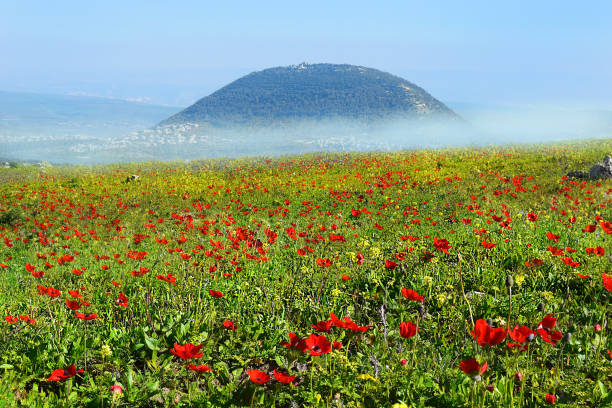
Mt. Tabor, believed to be the site of the Transfiguration of Jesus. Photo from iStockphoto.com.

In the Gospel according to Matthew, major events in the life of Jesus Christ mostly happened on a mountain: his temptation (Mt. 4:8), his inaugural teaching, the sermon on the mount (Mt. 5:1) and the sending of his apostles on their mission throughout the world until the end of time (Mt. 28:16).

Here at his transfiguration on top of the “high mountain” of Tabor we find glimpses of Christ’s explanation of the parable of the weeds among the wheat when he said that “the righteous will shine like the sun in the kingdom of their Father” (Mt. 13:43). See how this transfiguration of the elect at the end of time that was shown to Daniel in the first reading is expressed exactly in the same way as that of the face of Jesus on Mount Tabor that had “shone like the sun” as witnessed by the three apostles. Peter strongly attested to it later as we have heard in the second reading.

Last week in the daily readings from Exodus we have heard how the face of Moses also shone like the sun after he had conversed with God on Mount Sinai and every time he would see God at his tent called the dwelling in their journey in the desert. That is the context why Peter volunteered to build three tents for Jesus, Moses and Elijah during the transfiguration. The Jews have a celebration called feast of booths or tents they called sukkoth. The tent is the dwelling place of God in the wilderness that eventually became the temple of Jerusalem. It was the closest thing they have with God and with heaven. At the transfiguration of Jesus, the three apostles were enthralled at the experience and sight they did not want to go down because it was literally heaven, being with God. The transfiguration event itself for them was the fulfillment of their faith and everything in the Old Testament.

They would realize later that to dwell with God means to continue the journey in Christ, with Christ marked with many ascents and descents happening not just in space or physically but more of the interior kind. That is how we are transfigured, always inside. Right in our heart and soul. That was the deeper meaning of Moses entering God’s dwelling in the desert – of him being one in God, with God – that his face would shone after, prompting him to cover it because people were scared.

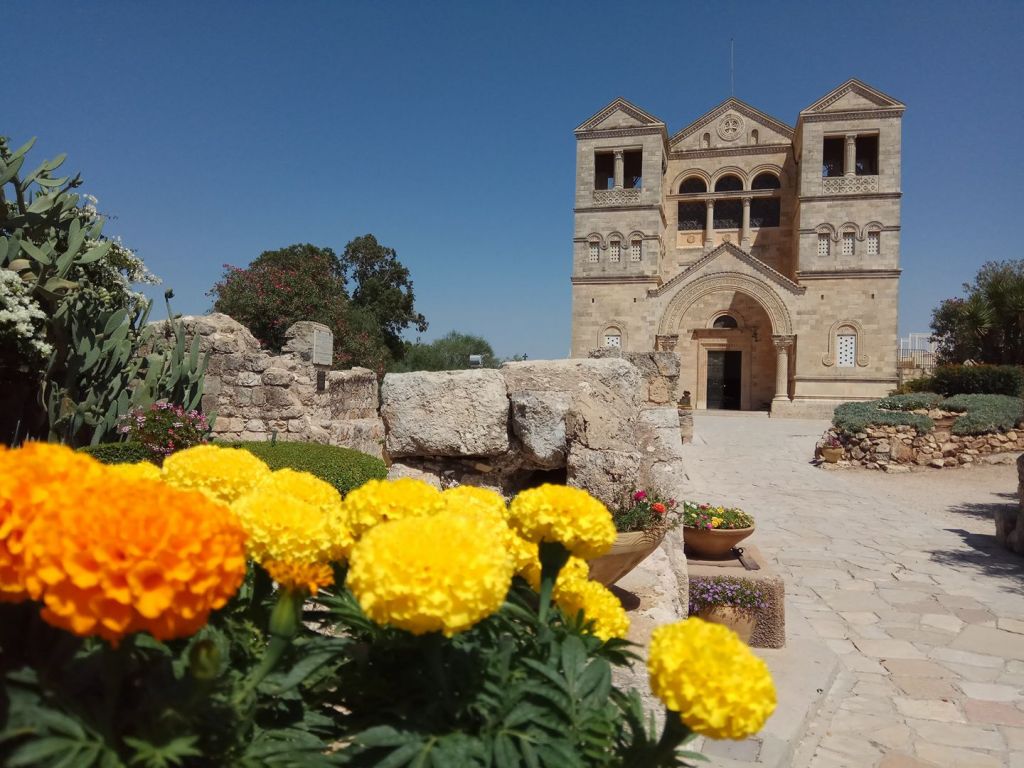
Photo from custodia.org, Basilica of the Transfiguration on Mt. Tabor, Israel.

Whatever is found on the face is always a reflection of what is in the heart and soul. No amount of cosmetics and beauty procedures can ever bring out that glow and radiance of anyone’s face beaming with joy and fulfillment, peace and contentment.

The face is the reflection of the depths – or shallowness – of one’s heart and soul. There is an English word used to describe this inner dynamics of the face – countenance. Any change in our countenance indicates something is being transformed within us as a result of our communion with God. That is why we describe some people even we do not know them as malalim or deep, or magaling magdala ng problema because of their countenance. In the same manner, we easily notice something rotting inside a person when despite one’s having good features like flawless skin or aquiline nose, beautiful eyes and the like. This is what the young people would call as “uma-aura” when they pose for FB or IG. Aura is the spirit within evoked by one’s face that cannot be manipulated.

The face of Jesus shone like the sun at his transfiguration primarily because deep inside him is his complete and perfect union in the Father. Jesus would always insist on this reality within him, his perfect communion in the Father from which also flows his total obedience which will reach its highest point at his Passion and Death on the Cross, his own Pasch or exodus.

There at Mount Tabor in his transfiguration, we are shown that Christ’s glory cannot be separated from the Cross. His majesty and triumph shall come from his pasch. And so are we his disciples. That is why the voice heard by the apostles said, “This is my beloved Son, with whom I am well-pleased; listen to him”. From now on, Christ would be speaking of his coming Passion, Death and Resurrection. All his lessons after Mount Tabor are about our participation in his paschal mysteries. Do we listen?

The apostles learned and embraced all these lessons in a process slowly with the guidance of the Holy Spirit after Pentecost. That is why Jesus told them to come down from Tabor to continue their journey to Jerusalem to fulfill his mission. Through them we have believed despite our not having seen Jesus that is how he would appear as “Lord” on the mountain that we the faithful are climbing to participate in the ultimate manifestation of his return at the end of time.

And there lies the good news of this Feast of Transfiguration happening in this dry month of August, often described as ghost month too. As we go through the last half of Ordinary Time’s remaining 17 weeks, may we continue to ascend in Christ, with Christ with his Cross in sharing his paschal mysteries in our daily lives. After the euphoria of Easter Season that had closed on Pentecost Sunday, we are reminded anew this sixth of August to never lose sigh of the Cross of Good Friday as our path to glorious transfiguration of Jesus Christ.

To journey with Christ, listening and obeying his voice is something of the inside and not just of space or place. Discipleship demands persistent practice of the Lord’s teachings and examples as we shall hear from the gospel these coming Sundays.

As COVID-19 virus wanes that we resume most of our activities minus the many protocols before while still being cautious and careful, may we face our inner issues in Christ and the Holy Spirit to be transfigured in him. Amen. Have a blessed week ahead. It is a Sunday, celebrate Mass with others in your Parish, pray for those still suffering from the effects of typhoon Egay and Falcon.

Painting of the Transfiguration by Italian artist Duccio di Buoninsegna between 1308 and 1311 from commons.wikimedia.org.