Lent is arising, not being afraid

40 Shades of Lent by Fr. Nicanor F. Lalog II
Second Sunday in Lent-A, 05 March 2023
Genesis 12:1-4 >+< 2 Timothy 1:8-10 >+< Matthew 17:1-9
Photo by author, sunrise at Taal Lake, 08 February 2023.

Something so personal has happened with me this past week. It is something that is still unfolding, making me realize so many things in my life and ministry that as I continue to reflect on the death last Sunday of our elderly priest, Msgr. Vicente Manlapig, at the Fatima University Medical Center where I serve as its chaplain.

I was out when told about Msgr. Manlapig’s passing shortly before 3PM. It was the First Sunday of Lent. After saying a prayer for him, it suddenly dawned upon me that he was the second elderly priest I had taken cared of who also died in this blessed Season of Lent. The first was Msgr. Macario Manahan who died 16 March 2014, the Second Sunday of Lent at that time. I was with him when he died that afternoon as he lived very near my former parish assignment.

What a tremendous blessing God has given me to have attended to their spiritual needs preparing them for their deaths, of how life indeed is a daily Lent preparing for Easter when we have to go through many difficult series of temptations and sufferings that lead us to our transfiguration (https://lordmychef.com/2023/02/27/deaths-in-lent/).

It is the very path of life and death of every disciple of Jesus, from temptations in the wilderness to transfiguration on the high mountain. It is something we all have to go through in Christ, with Christ and through Christ.

Jesus took Peter, James and John his brother, and led them up a high mountain by themselves. And he was transfigured before them; his face shone like the sun and his clothes became white as light. And behold, Moses and Elijah appeared to them, conversing with him. Then Peter said to Jesus in reply, “Lord, it is good that we are here…” While he was still speaking, behold, a bright cloud cast a shadow over them, then from the cloud came a voice that said, “This is my beloved Son, with whom I am well pleased; listen to him.” When the disciples heard this, they fell prostrate and were very much afraid. But Jesus came and touched them, saying, “Rise, and do not be afraid.” And when the disciples raised their eyes, they saw no one else but Jesus alone. As they were coming down from the mountain, Jesus charged them, “Do not tell the vision to anyone until the Son of Man has been raised from the dead.”

Matthew 17:1-4, 5-9
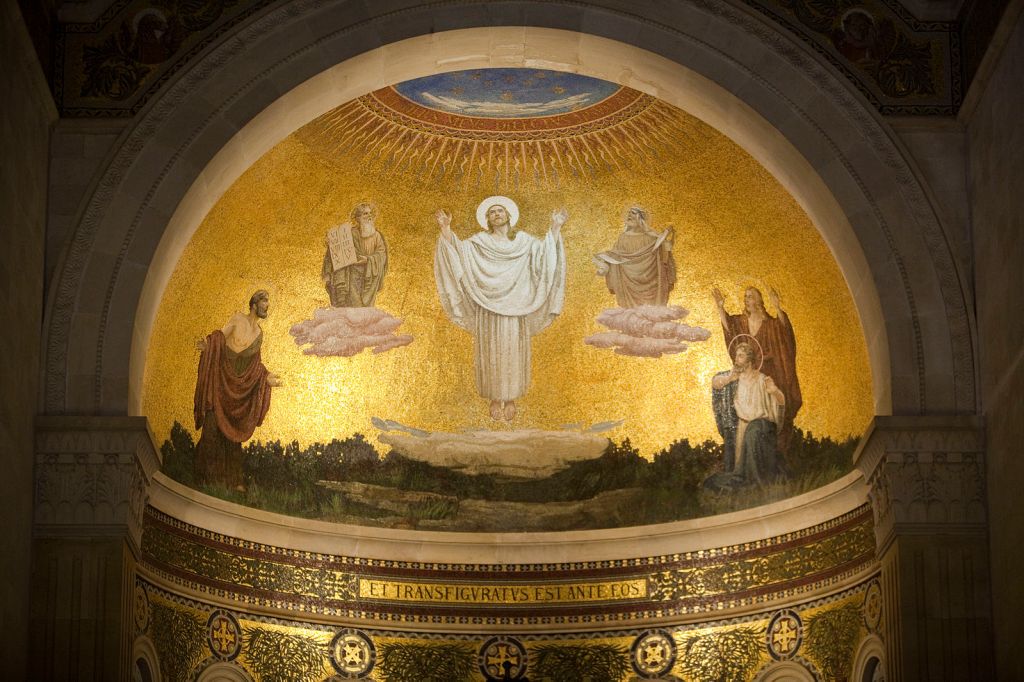
Photo from commons.wikimedia.org of mosaic inside the Basilica of the Transfiguration on Mt. Tabor, Israel.

Unlike Luke’s account that was set in the context of a prayer, Matthew’s version of the transfiguration of Jesus Christ illuminates the Lenten pilgrimage of the Church that is the tragedy of the Cross being seen always in the perspective of the Easter radiance. It is the oneness and inseparability of Christ’s divinity and glory with the Cross through which we get to know Jesus correctly.

Recall that the transfiguration happened after Peter’s confession of Jesus as “the Messiah, the Son of the living God” at Caesarea Philippi (Mt.16:16) where Jesus also made the first prediction of his passion, death and resurrection. From that day on, Jesus began instilling into the Twelve his conditions of discipleship, “Whoever wishes to come after me must deny himself, take up his cross and follow me” (Mt. 16:24). It was a very difficult lesson for them to learn and accept that triggered Judas to betray Jesus. The remaining disciples would only fully appreciate it after the Easter event with the help of the Holy Spirit on Pentecost.

That is why the transfiguration was actually some sort of a “teaching aid” for this most difficult lesson of his disciples when Jesus gave Peter, James and John a glimpse of his coming glory after his pasch. See that very clearly, Matthew recorded Christ’s instruction not to tell the “vision” to anyone until Easter; the transfiguration did happen and was seen by everyone there as Matthew used the word vision to describe it.

Like the three disciples, many of us are given with this unique privilege by Jesus to have a glimpse and vision of Easter, of glory when we join him on the Cross with our own sufferings and trials and when we accompany those in severe tests in life like the sick and dying.
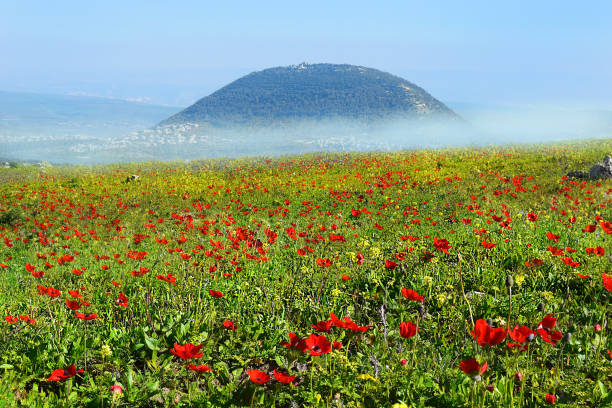
Photo from iStockphoto.com of Mount Tabor in Israel where Jesus is believed to have transfigured.

Amid the pain and hurts we go through or see in others, we “see” Jesus, we feel Jesus, we experience Jesus.

Many times like Peter we speak and do things without really thinking well about them because we are overwhelmed by the experience as well as the vision and sight.

And most of the time, the sight and experiences are very frightening when God speaks to us, telling us to listen to Jesus his Son, to simply obey him and trust him.

Here we have a deepening of our reflection last Sunday of the need to fix our eyes on Jesus son that we may not fall into temptations and sin. Many times we do not see everything clearly but if we close our eyes and have faith in Christ, things get clearer until it is him alone do we see with us especially after passing over a turmoil or a test in life. Like the first man and woman, our eyes are misled by so many things that look so good but not good at all. In fact, there are things that look bad that could really be good after all like pains and sufferings in life!

In the second reading, St. Paul tells us through St. Timothy to “bear your share of hardship for the gospel with the strength that comes from God” (2 Tim. 1:8) which matches directly the instruction in the voice heard during the transfiguration, “This is my beloved Son, with whom I am well pleased; listen to him” (Mt. 17:5). After the transfiguration, everything that Jesus would tell his disciples and everyone that include us today is his coming passion, death and resurrection as well as the conditions of discipleship we mentioned earlier. God wants us to listen and follow his Son Jesus Christ to the Cross in order to join him in the glory of Easter.

We are transfigured and transformed into better persons by our pains and sufferings. That is the irony and tragedy of this age: we have everything like gadgets and money and other resources to make lives easier and comfortable but we have become more lost and alienated, empty and no direction in life. There cannot be all glory without sorrow; no Easter Sunday without Good Friday.

Lent is a journey back home to God who wants us all to share in his glory through Jesus Christ’s passion, death and resurrection. It is a blessed season we are reminded to always arise in Christ, to have courage and be not fearful of failures because right now, we are already assured of victory and glory in Jesus. Let us ascend with him the high mountain of sacrifices and hard work, of prayers and patience, mercy and forgiveness to be transfigured and glorified like him. Let us imitate Abraham in the first reading to respond to this call by God with faith and hope, obedience and perseverance. Amen. Have blessed and transformative week ahead.
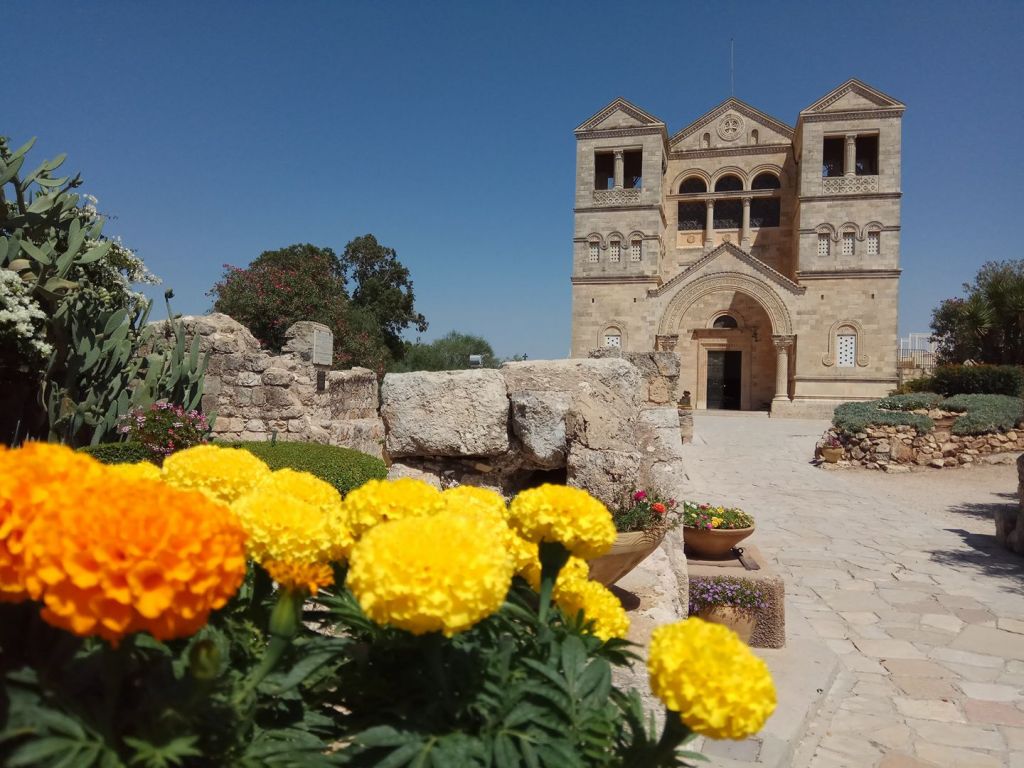
Photo from custodia.org of Basilica of the Transfiguration on Mt. Tabor, Israel.

Praying, working for peace

The Lord Is My Chef Daily Recipe for the Soul by Fr. Nicanor F. Lalog II
Wednesday in the Second Week of Ordinary Time, Year I, 18 January 2023
Hebrews 7:1-3, 15-17   ><)))*> + <*(((>< - ><)))*> + <*(((><   Mark 3:1-6
Photo by author, Ubihan Is., Meycauayan, Bulacan, 31 December 2021.
Beginning today 
until next Wednesday,
Mother Church invites us 
to observe the Week of Prayer
for Christian Unity especially
for the evangelization of peoples
and for the persecuted Christians
around the world; may our prayers
lead us to work for peace
most especially in our home,
in our parish and community,
and in our country.
May we stop and
put an end to those cliches
of wishing for peace like in 
most beauty contests that 
make a mockery of peace;
may we realize that peace is
God's greatest gift to us which
we have often taken for granted,
something God freely gives 
if we are willing to give up and
sacrifice our very selves
for the sake of peace like
Abraham in the Old Testament.

Melchizedek, king of Salem and priest of God Most High, met Abraham as he returned from his defeat of the kings and blessed him. And Abraham apportioned to him a tenth of everything. His name means righteous king, and he was also “king of Salem,” that is, king of peace.

Hebrews 7:1-2
Peace finally came to us
in Christ Jesus who is likened
to Melchizedek, God's high priest
in the Old Testament; like Melchizedek,
Jesus is our High Priest for he is
"without father, mother, or ancestry,
without beginning of days or 
end of life" (Heb.7:3); but,
unlike Melchizedek, Jesus is our
High Priest because he is 
the Son of God who offered himself
for us as a sacrifice, dying on the
Cross but rose to life on the 
third day!  On the evening of that
Easter, Jesus appeared to his
disciples, greeting them with
"peace" as his precious gift of
his resurrection.
Loving Father,
give us the grace to
value this immense gift 
of peace by Jesus Christ
won through his Cross;
like Jesus, may we choose
the path of peace by doing
what is good not evil;
of choosing persons not 
things and rituals and laws;
of choosing God above all
than selfish interests.
As we close our hands to pray
for peace and unity, may we learn
to let go of whatever we are holding,
of being empty handed like Jesus;
like that man with withered hand
Jesus healed in the temple on a sabbath,
may we stretch out our hands to reach
out to those in need,
to those persecuted,
to those sick and dying,
to those forgotten.
Let your peace, O God,
begin within me,
right in my heart empty of
pride, filled with the humility,
justice, and love of Jesus.
Amen.

Passion, not efficiency

The Lord Is My Chef Daily Recipe for the Soul by Fr. Nicanor F. Lalog II
Monday in the Twenty-Seventh Week of Ordinary Time, Year II, 03 October 2022
Galatians 1:6-12   ><000'> + ><000'> + ><000'>   Luke 10:25-37
Photo by Dr. Mylene A. Santos, MD, 10 September 2022.
Praise and glory
to you, O God our loving Father!
Thank you for this great
Monday, the first working
day of October!
Stir into flame your gift
to me, dear God, (2 Tim. 1:6),
fill me with zest 
fill me with passion
fill me with life
to forge on amid all
the difficulties and trials
this day
this week
may bring to me.
Like the zeal 
and enthusiasm
of St. Paul,
let me be firm
in asserting your 
Good News of salvation
in Christ Jesus:
"If I were still trying 
to please people, 
I would not be a slave
of Christ" (Galatians 1:10c).
Keep me faithful to you,
Lord, and stop me from
pretending somebody
else, impressing people
by claiming to be your
disciple in all of its outward
signs without your Cross.

Keep me faithful to you,
Lord and stop me from 
seeking attention,
perks and privileges
to be famous by claiming
to be your disciple but
afraid to suffer, afraid of 
losing, afraid of failures.

Keep me faithful to you,
Lord, not to the cultic 
signs and symbols we have
developed in deepening our
faith in you but, like the
priest and the Levite in 
your parable today, 
have totally disregarded 
the wounded and sick, 
the abandoned and
lost, the sinful and poor.
Deepen my faith,
strengthen my faith
to have passion in doing
your works, Lord; 
forgive me, Jesus,
when I think and see more
of efficiency and programs
without meeting and
experiencing persons,
building relationships
in you, with you, and
through you.
Amen.

Light but not easy

The Lord Is My Chef Daily Recipe for the Soul by Fr. Nicanor F. Lalog II
Thursday in the Fifteenth Week in Ordinary Time, 14 July 2022
Isaiah 26:7-9, 11, 16-19   ><}}}*> + ><}}}*> + ><}}}*>   Matthew 11:28-30
From argusleader.com
God our loving Father,
thank you for sending us 
your Son Jesus Christ to clarify
to us what is really to be "light" 
in this age when we always want
to have our cake and eat it too!
When we are so obsessed in being "light",
with everything that is "light" especially
food and drinks that would give us
the satisfaction minus the guilt
feelings of calories and sugar, fats and carbs.
For the world, being "light" means
being easy but Jesus tells us it is 
not true at all.

Jesus said: “Come to me, all you who labor and are burdened, and I will give you rest. Take my yoke upon you and learn from me, for I am meek and humble of heart; you will find rest for yourselves. For my yoke is easy, and my burden light.”

Matthew 11:28-30
Help us realize,
please enlighten our minds
and hearts that being "light"
still means carrying our 
cross but this time with you;
being "light" does not mean 
doing everything and anything
lightly without any sense of 
responsibilities like what the light
food and drinks try to portray 
that resulted to nothing as 
Israel had experienced when they
turned away from you, Lord.

As a woman about to give birth writhes and cries out in her pains, so were we in your presence, O Lord. We conceived and writhed in pain, giving birth to wind; salvation we have not achieved for the earth, the inhabitants of the world cannot bring it forth.

Isaiah 26:17-18
May we continue to learn from you,
Jesus our Lord and Teacher,
how to be a light leading others
to you by seeing you in us
through our love and sacrifices
the world sees as burdens
but in fact very light when done
in your most holy Name.
Amen.

Praying for peace

The Lord Is My Chef Daily Recipe for the Soul by Fr. Nicanor F. Lalog II
Tuesday in the Fifth Week of Easter, 17 May 2022
Acts 14:19-28   ><]]]]'> + <'[[[[><   John 14:27-31
Photo by author, Bolinao, Pangasinan, 20 April 2022.
Jesus said to his disciples:
"Peace I leave with you;
my peace I give you.
Not as the world gives
do I give it to you.  Do not let
your hearts be troubled or 
afraid" (John 14:27).
Lord Jesus Christ,
forgive us for taking the gift
of peace so lightly,
turning it into a cliche
and worse, making it a joke;
yet, it is always the one gift
we all desire and wish for but
so afraid of truly having it
because it demands
great things from us
like faith in you so that
we can follow you carrying our
cross, bearing all pains and willing
to sacrifice to achieve real peace.

They (Paul and Barnabas) strengthened the spirits of the disciples and exhorted them to persevere in the faith, saying, “It is necessary for us to undergo many hardships to enter the kingdom of God.”

Acts 14:22
Your peace, dear Jesus,
is so different from the "peace"
the world gives or knows about
which is a peace that is centered on
man than on God our Father; 
your peace, Lord Jesus, demands 
that we make the world know 
that we love the Father like you
(cf. Jn.14:31) because it is a peace
borne out of justice and love, virtues
that call us to forget ourselves and
think more of others.  Amen.

Life is more than #POV

The Lord Is My Chef Sunday Recipe for the Soul by Fr. Nicanor F. Lalog II
Sunday XXXII-B in Ordinary Time, 07 November 2021
1 Kings 17:10-16 ><]]]]'> Hebrews 9:24-28 ><]]]]'> Mark 12:38-44
Photo by Min An on Pexels.com

Perspectives and points of view play important roles in our lives, affecting our judgements and conduct; however, we also know by experience that perspectives and points of view are not enough, cannot be entirely reliable that lead us into stereotyping of people.

I just learned recently from the teenaged daughters of a friend that the #POV for “point of view” may be used in two ways: first, to express “this is my personal point of view” to which everyone is entitled that should not be contradicted because “it is how I see things”; the second is to present a “first person point of view”, that is, through the eyes of the one who uploads a video to show exactly how things are like the first steps of a baby.

This Sunday, Jesus is challenging our perspectives, our #POV on wealth and poverty, sharing and grandstanding, on our selves before God and other people.

Since last month we have seen how Jesus refused to get into debates with people on persistent issues humans have always been discussing like divorce (Oct.3), power and positions (Oct. 17), and the most important laws to follow (Oct. 31) because Jesus came to reveal to us the will of the Father so we may level up in our perceptions about self, others, and life itself.

Jesus was still in the temple area; he had silenced his enemies from asking him further with other questions to test him. After going on the offensive attacking the scribes’ hypocrisies, Jesus sat to observe the people dropped their donations into the temple treasury.

He sat down opposite the treasury and observed how the crowd put money into the the treasury. Many rich people put in large sums. A poor widow also came and put in two small coins worth a few cents. Calling his disciples to himself, he said to them, “Amen, I say to you, this poor widow put in more than all the other contributors to the treasury. For they have all contributed from their surplus wealth, but she, from her poverty, has contributed all she had, her whole livelihood.”

Mark 12:41-44
Photo by author, Jerusalem, 2017.

A Tale of Two Widows

Before going into that story of the widow praised by Jesus, let us consider first the story of another widow mentioned earlier in our first reading, the widow of Zarephath, a region governed by Queen Jezebel’s father. Queen Jezebel was the pagan wife of Israel’s King Ahab who had ordered troops to kill Elijah after putting to shame the priests of her pagan god “baal”.

After 40 days of hiding in the mountain fed by birds with a stream providing him fresh water, God instructed Elijah to proceed to Zarephath to meet the widow who would take care of him during the drought that would come as a punishment to Israel.

More than the miracle of living through the year of drought that hit the region at that time, it is a marvelous story of the faith of both Elijah and the pagan widow. We can understand the deep faith and total obedience of Elijah to God who had told him everything that would happen while hiding in enemy territory.

Things were greatly different with the widow of Zarephath who was first of all a pagan, in fact, a worshipper of the false god baal Elijah had openly bashed in every occasion everywhere. Her faith is so admirable that she risked her own life including her son in welcoming into her home an enemy of their king. Most of all, she put her complete faith in the words of God spoken through Elijah whom she hardly knew.

She left and did as Elijah had said. She was able to eat for a year, and he and her son as well; the jar of flour did not go empty, nor the jug of oil run dry, as the Lord had foretold through Elijah.

1 Kings 17:15-16

In a very similar manner, it was the very nature of faith of the simple and poor widow at the temple treasury that earned praises from Jesus. Keep in mind that money was meant for the upkeep of the Temple, not for the poor; therefore, the very act of donating money into the treasury was in fact an act of faith by the poor widow on God. She was convinced that her offering goes directly to God himself!

It is in this aspect that we must see the whole point of the story which is not about big money and small coins but our personal attitude and faith in giving that is ultimately linked with God. Every amount we offer to church and charities indicates the kind of relationship we have with God.

Jesus had nothing against giving “large sums” of money to the temple collection box; it was not the amount of donation he was raising issue with as he contrasted how the rich “have all contributed from their surplus wealth, but she, from her poverty, has contributed all she had, her whole livelihood.”

It is always easy to honor God – even self – with one’s huge donations while still relying on our false securities of money and wealth unlike the poor widow who offered her very self to God. In a sense, Jesus had seen in the poor widow’s offering his coming total gift of self on the Cross soon to happen at Jerusalem!

The beauty of both women, widow and poor having lived in totally different times – one in Zarephath, a pagan and another in Jerusalem, so pious and religious – is in their total entrusting of themselves to God, forgetting their very selves in the process, unmindful of the dangers and uncertainties ahead in life except that firm faith in a loving and merciful God.

From Facebook, 24 March 2020.

Our many concerns in life

I was recently interviewed for a special program that focuses on our lives as priests. At the end of the interview, I was asked by the hosts: “what legacy do I wish to leave after my term of office in my present assignment”? It was not really a difficult question at all but I was surprised because that such was the frame of mind of my interviewers. Their perspective and POV, so to speak.

After a few seconds, I politely told them that I no longer think such things as legacies to leave behind even in this life, explaining that priesthood is a journey wherein we come and leave to different assignments and tasks with just one purpose which is to make Jesus Christ known and experienced by the people we serve. After every assignment, I tell people to forget me and that is why I never come to visit my previous assignments. For me, it is only Jesus, always Jesus whom people must remember and keep. No one else, nothing else.

That I think is discipleship: a shift in our perspectives and points of view into God’s very own perspectives and POV wherein we present ourselves before God and not before humans.

Discipleship in Christ does not mean doing great things nor achieving heroic feats in life; God knows our limits, our weaknesses. We are all small and poor before him like those two widows in Zarephath and Jerusalem; but, if we can be like them completely trusting and faithful to God, giving our very selves to him, then, the little amount we offer can eventually accomplish the love and mercy God expects from us.

See the many concerns we have in life. The more we address them, the less we actually have in life like those abusive scribes Jesus mentioned: they have everything like status and fame, clothes and money but have lost God and the people while the poor may have nothing material but have everything in Jesus Christ.

That is what the author of the Letter to the Hebrews is telling us in the second reading: in the Priesthood of Christ, he had accomplished everything for us by offering himself on the Cross, forgiving us our sins to lead us to eternal life. Like Jesus, are we willing to give our very selves to him through others so we may gain him and everything?

What have you offered lately to God?

A blessed new week ahead! Amen.

Photo by Irina Anastasiu on Pexels.com

Our foolish pride

The Lord Is My Chef Breakfast Recipe for the Soul by Fr. Nicanor F. Lalog II
Thursday, Memorial of St. Gregory the Great, Pope and Doctor of the Church, 03 September 2020
1 Corinthians 3:18-23 >><)))*> | >><)))*> | >><)))*> | >><)))*> Luke 5:1-11
One of the best ads during the lockdown last summer from Smart.

What a wonderful lesson we have today from St. Paul about your wisdom, O God our Father that is found in the scandal of the Cross of your Son Jesus Christ!

Brothers and sisters: Let no one deceive himself. If anyone among you considers himself wise in this stage, let him become a fool so as to become wise. For the wisdom of this world is foolishness in the eyes of God, for it is written: God catches the wise in their own ruses, and again: The Lord knows the thoughts of the wise, that they are vain.

1 Corinthians 3:18-20

This we have realized at the start of this pandemic when everything in the world stopped and forever changed because of microscopic COVID-19 virus, affecting even the most advanced countries of the world.

Most of all, everybody – rich and poor alike – suffered greatly from this virus, teaching us to value persons more when people we took for granted for so long have become our “saviors” during this prolonged quarantine periods like vendors and delivery personnel, our househelpers, and others we used to look down upon who continued to serve us with food and other needs.

Not to be forgotten too are the members of neglected sectors of our society, specially those in the medical and healthcare system and the agriculture who showed us the importance of human and natural resources over imports and technology as well as entertainment.

What a great lesson about wisdom of God and foolishness of man in this modern time!

One thing very clear, O Lord, that to be a fool for you is first of all to let go of our foolish pride and be humble before you and others.

It is the only way we can let you do your work of changing us and the world when we learn to let go of our foolish pride like St. Peter in today’s gospel when he as an experienced fisherman heeded your command to cast his nets into the deep even though you are the carpenter’s son.

When we review the lives of all saints, they are all men and women of exceptional humility before you, Lord; like St. Gregory the Great who focused more on you that he was able to reform our liturgy, set up schools and monasteries, sent missionaries to England, and instill holiness among the clergy in his “Pastoral Instructions.”

Help us to believe more in you than in ourselves so that you may do your work in us and through us. May we value your Cross, Lord Jesus, considered as foolish in this sophisticated age yet has continued to prove that it is the only path to our transformation as persons and nations. Amen.

Photo by author, XVth Station of the Cross, the Resurrection, Mount St. Paul, La Trinidad, Benguet, February 2020.

Healed by God’s mercy

The Lord Is My Chef Breakfast Recipe for the Soul by Fr. Nicanor F. Lalog II
Friday, Week XV, Year II in Ordinary Time, 17 July 2020
Isaiah 38:1-6, 21-22, 7-8 >><)))*> >><)))*> >><)))*> Matthew 12:1-8
Photo by Mr. Raffy Tima of GMA-7 News at the start of COVID-19 lockdown, March 2020.

Our loving and merciful Father, every time I hear the siren of an ambulance or stories of people I know getting sick, I grapple with words in praying for them and those who take care of them.

I could not find the words what to pray for them except to beg for your mercy that whomever inside a rushing ambulance or my parishioner or friend or relative may get well soon, may be healed totally in their mind, body and soul.

There are just too much sickness and death going on these days, Lord, and the truth is, deep inside me you know very well my own prayer even if it does not pass through my lips – spare me of any sickness at least during this pandemic.

Thank you for your loving mercy, Father, that have sustained me since March, especially when I feel low and sad, even depressed thinking if I would ever survive this COVID-19 pandemic.

Your words today are very consoling and reassuring: you are more than willing to heal us of our sickness, Lord.

Like your servant King Hezekiah, I turn to you merciful Father on behalf of those stricken with COVID-19 and other illnesses in this time of the corona to give them a chance to recover their health to serve you and their families too.

I pray also for their loved ones looking after them to keep them faithful and filled with hope hurdling this sickness.

Then Hezekiah turned his face to the wall and prayed to the Lord: “O Lord, remember how faithfully and wholeheartedly I conducted myself in your presence, doing what was pleasing to you!” And Hezekiah wept bitterly. Then the word of the Lord came to Isaiah: “Go, tell Hezekiah: thus says the Lord, the God of your Father David: I have heard your prayer and seen your tears. I will heal you…”

Isaiah 38:2-5

Unlike Hezekiah who must have been so extraordinary before you, we are not asking any signs from you. Just heal us, strengthen our medical frontliners and caregivers. Most of all, spare us of any sickness in this time of the pandemic.

Father, we beg you in this most trying time of our history as a nation, that we may be filled with your mercy so that we in turn may share this same mercy to those living in the margins, that we may be more compassionate and kind to people so hard-pressed with life these days.

Yes, indeed, your Son’s reminder to the Pharisees are also meant for us today when we are so concerned with laws than with persons:

Jesus said to them: “If you knew what this meant, I desire mercy, not sacrifice, you would not have condemned these innocent men. For the Son of Man is Lord of the sabbath.”

Matthew 12:7-8

Amen.

Photo by Onnye on Pexels.com

Lent is about God, not us

40 Shades of Lent, Ash Wednesday, 26 February 2020

Joel 2:12-18 + + + 2 Corinthians 5:20-6:2 + + + Matthew 6:1-6,16-18

From Google.

We begin today the Season of Lent, the 40 days of prayers and fasting, contrition and alms-giving in preparation for Easter Sunday. It is the only season in our liturgical calendar that starts on an ordinary day, Ash Wednesday when we are reminded of that basic truth in life we have always evaded: that we all die and go back to God.

“Remember man that dust thou art, and unto dust shalt thou return.”

In this age of social media where many practically live in media making known to everyone everything happening to them from confinement to hospital to drinking coffee somewhere or simply saying “thank you” to someone just beside for a gift they have received, the more we need this blessed season to recover the essential realities in life like our true self and God.

So unlike Adam and Eve who went into hiding after their fall, modern men and women have shamelessly flaunt everything they think they have that actually indicate what they lack – depth and meaning, sense and respect.

Ash Wednesday enables us to find anew our bearings in life that must be centered in God, our very life and meaning of being and existence.

Life is a daily Lent.

From Google.

St. Benedict tells his followers in his Rule that “the life of a monk ought to be a continuous Lent”. And this is also very true for every Christian who follows Jesus Christ as Lord and Master.

Our life is a daily Exodus from darkness into light, from sin into grace, from failure into victory, from slavery into freedom when we experience the Paschal mystery of Jesus Christ even if we are not aware of it.

And the sooner we become aware of this reality, the better for us because that is when we find more meaning in life, the deeper our existence becomes.

Pope Francis tells us in his Lenten Message this year that “Jesus’ Pasch is not a past event; rather, through the power of the Holy Spirit it is ever present, enabling us to see and touch with faith the flesh of Christ in those who suffer.”

Life is all about God. This life we live is a sharing in his very life and the more are aware of this reality and link, the more we discover its beauty because we get to know God more in Jesus Christ who have come in flesh and blood for us.

“Brothers and sisters: We are ambassadors for Christ, as if God were appealing through us. We implore you on behalf of Christ, be reconciled to God.”

2 Corinthians 5:20

To be reconciled to God is to be one in God in Christ Jesus through daily conversion. This we achieve through the many sacrifices and corporal and spiritual works of mercy during this season. Fact is, these pious practices are meant to be done even outside the Lenten season so we never lose sight that life is all about God, not us.

From Google.

Lent is a journey into our hearts, and into the heart of God, too!

In these 40 days of Lent, we try little by little to “rend our hearts, not our garments to return to the Lord our God” (Joel 2:13) through prayers and sacrifices. These are done not for others to see but primarily for us to find and meet God waiting for us always to experience his love and mercy, his life and his fullness right in our hearts.

Like in our gospels these past two weeks when we reflected on the “education of the heart”, it is the truth of the heart that is being worked out in Lent. It is our heart that must be strengthened and converted by all these religious practices of the season.

It is in our hearts where God dwells and resides though we often try to bury and disregard.

All these fasting and abstinence, confessions and alms-giving as well as other works of mercy are meant to create a space in our hearts for God and for others. Without the proper attitude in our hearts, everything then becomes a hypocrisy that neither deceives God nor fools humans.

See how Jesus in the gospel which is also a part of his Sermon on the Mount which we have been reflecting these past three Sundays of Ordinary Time have painstakingly reminded us to guard against pleasing humans than God.

Jesus said to his disciples: “Take care not to perform righteous deeds in order that people may see them; otherwise, you will have no recompense from your heavenly Father.”

Matthew 6:1

It is not that we are encouraged to give alms, pray and fast to get rewards from God that Jesus is telling us to practice these pieties but in order to be more focused with the Father. Ultimately, getting into heaven is the reason why Jesus came to save us, to assure us of this reward of being with the Father eternally. There is nothing else greater than that.

This is why Lent is all about God, not us.

From Google.

In our journey to him this season, both as an individual and as a community, Lent enables us to free ourselves from our strong individualistic drives within so we can truly experience conversion in the midst of a community of believers.

The more we see God, we see our sinful selves, and that is when we are converted and renewed in Christ.

This is always marked with a deep realization that we are not alone, that there are also others suffering with whom we must share with God’s rich mercy and love rather than keep these for ourselves alone.

That is what that ash on our forehead reminds us, of God who loves us all, dwelling within each one of us, renewing us, loving us, and most of all, forgiving us. Amen.

God is love

The Lord Is My Chef Breakfast Recipe for the Soul

Tuesday After Epiphany of the Lord, 07 January 2020

1 John 4:7-10 ><)))*> ><)))*> ><)))*> Mark 6:34-44

Baby Jesus near our ambo, Christmas 2019. Photo by author.

Praise and thanksgiving to you, O Lord Jesus Christ in coming to us, in becoming human like us that we have experienced and realized deeply all about love.

Christmas itself can be spelled as L-O-V-E.

It is your birthday yet you were the one who gave us yourself as both “the gift and the giver” according to the great Karl Rahner, SJ. Most of all, even it is your birthday we celebrate, we are still the ones receiving gifts at Christmas!

In this is love: not that we have loved God, but that he loved us and sent us his son as expiation for our sins.

1 John 4:7-10

In our gospel today, Lord Jesus, you have shown us that your being “love” is your very person because love is being with others, a gift of presence, of staying and remaining with the people.

Love, dear Jesus, is exactly what you did in the feeding of the more than 5000 people in the wilderness when you blessed, broke and gave the little bread you have with the people.

At our sacristy, December 2019.

Love, dear Jesus, is exactly what you did in the feeding of the more than 5000 people in the wilderness when you divided the two pieces of fish to be shared with the crowd there in the wilderness.

And still, Lord Jesus, after feeding them, love is still being the one to pick up the pieces of leftovers to be kept by the 12 among themselves.

You are love, dearest Jesus because your very person is love, a giving of self to others.

Teach us to love like you, dearest Jesus. Amen.