Poverty in priesthood

Quiet Storm by Fr. Nicanor F. Lalog II, 01 September 2022
Photo by author, Dominus Flevit Church overlooking Old Jerusalem, 2017.

Along with the vow of celibacy, the vow of poverty has become very contentious even among us priests these days which is very sad that one wonders why they got ordained in the first place if they were not totally sold out to being celibate and poor.

For most people especially Filipinos, how their priests practice poverty weighs more than their fidelity to celibacy, claiming they could understand and forgive priests getting into relationships with women than priests becoming “mukhang pera” (money-faced). For them, a priest falling in love with a woman is natural and therefore, understandable and “forgiveable”; but, a priest who worships money to the point of making his ministry a business endeavor even stealing from the church funds and donation boxes is what people detest most. In some parts of Bulacan and Cavite, they have a saying which is so vulgar to stress this point, “hindi bale madapa and pari sa puki kesa sa piso” (better for a priest to fall on a vagina than peso).

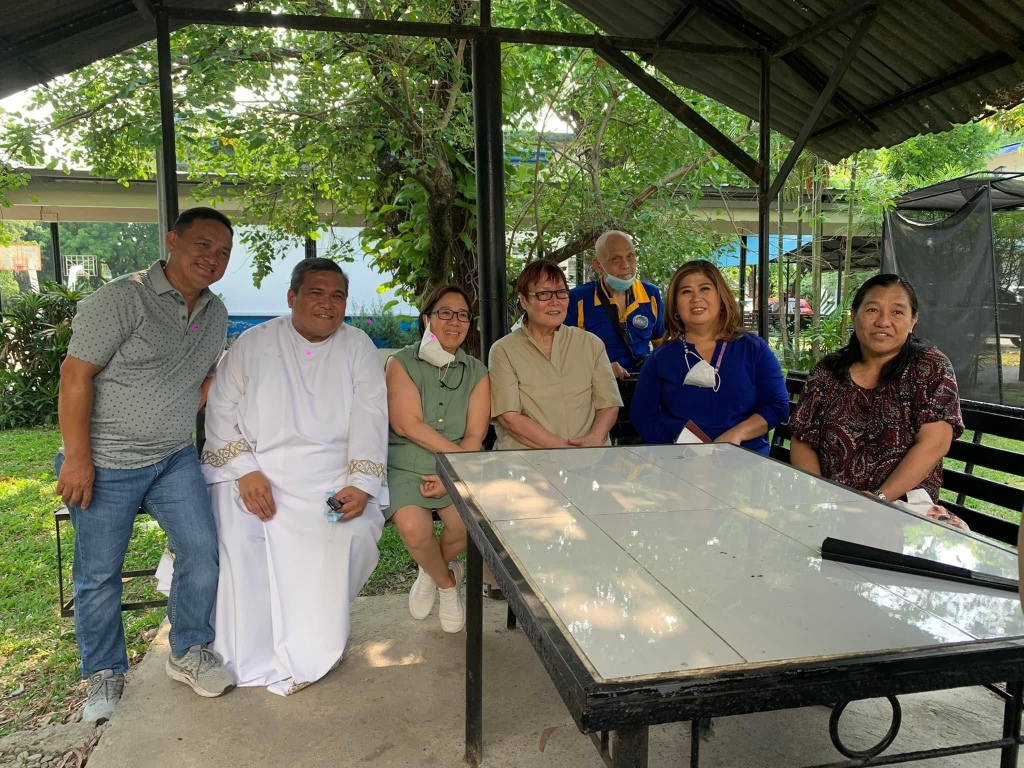
Photo by Ka Ruben, 24 June 2022.

Of course, it is always wrong to break any of these two important vows priests have made along with the third one which is obedience to his bishop because celibacy and poverty are closely related with each other for they both lead us priests to intimacy with God, our Caller. That is why, most often, when a priest has become “mukhang pera”, falling into the trap of money and luxuries, most likely he also has problems with celibacy. Even St. Ignatius had warned in his Spiritual Exercises that money is the first temptation the devil uses against every priest.

Like celibacy, poverty is a spiritual reality that is lived and felt by everyone in the material sense. More than being poor or having less in life, poverty is a choice we make for it to be real.  It is our attitude with material things in life: there are priests with so much and yet still feel poor like in advanced countries where cars and appliances are very common and ordinary while there are those with almost nothing and yet so attached with the little they have or wish to have and possess! One priest may have a brand-new car extensively using it to reach and serve his parishioners while another may have a second-hand car or owner-type jeep he tinkers daily, possessing him in the process. 

In our previous blog, we have mentioned that people should rejoice when their priest gives away their gifts because that means Father is not selfish, acting as the vessel or conduit of God’s graces and blessings to the poor and needy (https://lordmychef.com/2022/08/08/prayerful-requests-of-a-priest-to-parishioners/). 

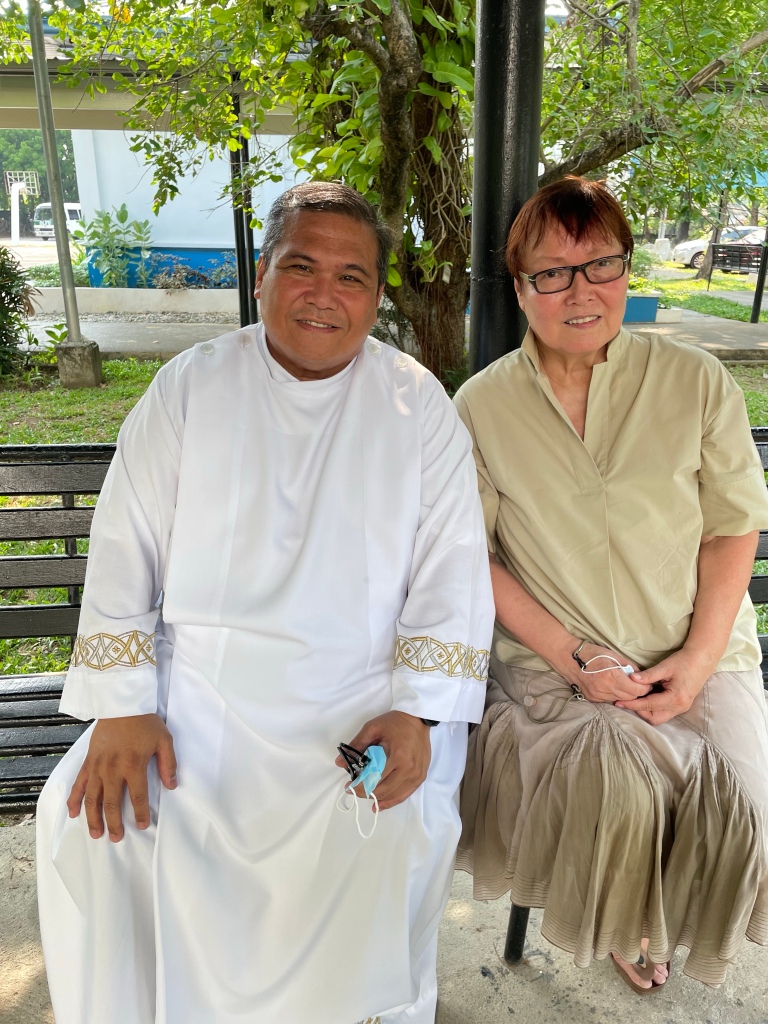
Photo from inquirer.net, 2021.

Poverty is not a question of how much do we have but more of the question of how much do we share. See that very often, we are preoccupied thinking what we already and must still have without ever thinking how much do we share.

It is in sharing when we truly experience poverty; a priest who hoards everything – even people like benefactors and friends – is a priest in trouble. Here we find the direct relationship of poverty and celibacy: we renounce marriage which is a wonderful kind of wealth in the spiritual sense for something higher and better which is to be solely for Jesus Christ. That is the essence of our poverty, our being poor and empty so that we are wholly for Christ alone and his Church. It is being poor, materially and spiritually do we find our true wealth as priests, Jesus Christ and his Church or “people of God” as Vatican II rightly called.

Like everyone else, no priest can have everything in life; nobody is perfect but it is always the truth that we evade, priests and lay alike. Many people including priests often convince themselves of being self-sufficient, that we are the greatest, the most powerful so that we never ran out of construction projects in the church.  This is the mentality of the “dream-teams” or the “powerhouses” who claim to have everything and yet in reality, they rarely last long nor achieve much.  When everybody feels like a “heavyweight” – literally and figuratively speaking, always throwing their weight around, soon enough, he/she would surely sink. The Greeks call it hubris, another common ailment among us priests.

Photo by author, Capernaum, Israel, May 2017.

In my 24 years in the ministry, I have found and experienced that the key in any community and organization including family, profession and vocation like the priesthood is not in having everything, materially and non-materially speaking like talents and abilities that always end up into a mere show, a “palabas” even if it may be spectacular.  Life is not about dazzling others with our gifts and abilities but finding our limits and poverty. When we focus on what we do not have like our weaknesses and other limitations, our poverty becomes a wealth because that is when we are most creative and productive, achieving more in life.  Why is it when we do not have much on the table that there is always a leftover with everyone feeling satisfied? But when there is a plethora of food, we just feel satiated, filled up but not satisfied? 

Look at how many of our churches have become like birthday cakes that are so kitschy or baduy, tastelessly overdecorated looking like dirty old men (DOMs) and their counterparts, the matronix afflicted with hepatitis with all their gold trimmings. Many parishes are afflicted with a different virus more contagious than COVID without a vaccine where priests go “imeldific” in church decorations and renovations including liturgies that even the Blessed Virgin Mary is turned into a Miss Universe being “crowned” amid all pomp and pageantry. It is the virus of triumphalism with its ugly face of priests have too much of everything except God. The best priest, the holiest priest is often the poorest one, the one with less because that is when we have more of God. It is in poverty – and celibacy – we priests witness Christ’s lesson that “whoever saves his life loses it and whoever loses his life gains it” (Mk. 8:37-38). 

The problem of the priesthood for me is among other things a problem of poverty. I know that not all priests are necessarily committed, by their priesthood, to absolute poverty. But for my own part it seems to me that the two are connected.

To be a priest means, at least in my particular case, to have nothing, desire nothing, and be nothing but to belong to Christ. Mihi vivere Christus est et mori lucrum. In order to have everything, desire to have nothing.

Thomas Merton, The Sign of Jonas, page 191.
Photo by Fr. Howard Tarrayo, August 2021.

Poverty is blessedness because in our weak and fragile humanity, God chose to be one with us so that we can share in his divinity and thereby share in his life.  When we see each other’s wealth, the more we feel so poor and helpless; but when we see each other’s poverty, the more we see each one’s value. And we start enriching each one’s life.  This is the beauty of our poverty as priests when being poor is not to be destitute but be available to God and everyone. No wonder, poverty is the first of all beatitudes taught by Christ, “Blessed are the poor in spirit for theirs is the kingdom of God” (Mt. 5:3).

When we try to have less and become poor, that is when we discover the value of life, of every person created in the image and likeness of God. Then, we begin to share and give, to sacrifice and let go, truly loving one another by being forgiving and merciful and kind like Jesus Christ, “who, though he is God, he did not deem equality with God something to be grasped at but rather emptied himself by being born in the likeness of men” (Phil.2:6-7).

Again, help us your priests live simple lives, to be poor so it would not be difficult for you to support us too. Thank you and God bless! 

Intimacy and our priestly celibacy

Quiet Storm by Fr. Nicanor F. Lalog II, 18 August 2022
Photo by author, Sacred Heart Spirituality Center, Novaliches, QC, 2018.

Intimacy with God and with others is a journey that is often long and difficult, painstaking but so wonderful. It is a process with highs and lows but something that could come out as a precious gift we must keep and nurture.

Mr. Webster defines intimacy as “close familiarity or friendship” or simply, “closeness”.

But being close does not necessarily mean intimacy. True closeness in intimacy means finding and sharing a “sacred space” with someone that is built on mutual trust and sincerity where we bare our true selves to offer it to the other person. It is in this sacred space where intimacy grows as we become “engaging” with the other person, even with God, like in bantering.

There is one beautiful incident in the gospel I always love relating with the topic of intimacy, the story of the Canaanite woman who begged Jesus to heal her daughter.

At that time Jesus withdrew to the region of Tyre and Sidon. And behold, a Canaanite woman of that district came and called out, “Have pity on me, Lord, Son of David! My daughter is tormented by a demon.” But he did not say a word in answer to her. His disciples came and asked him, “Send her away, for she keeps calling out after us.”

Matthew 15:21-23
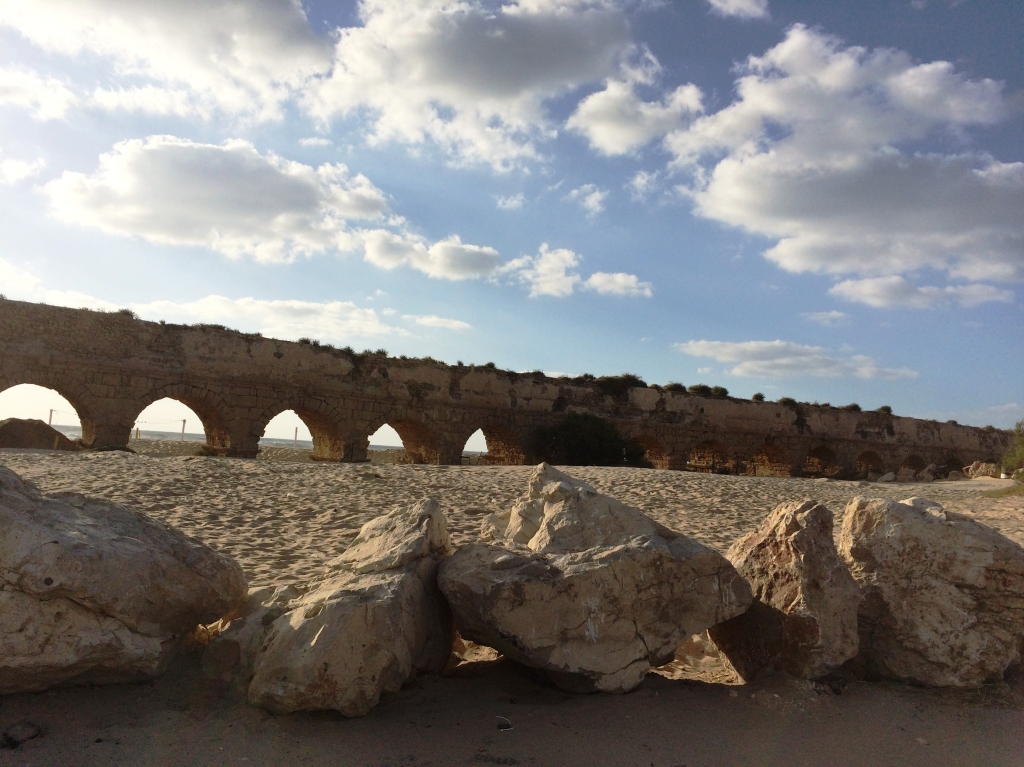
Photo by author, Caesarea in Israel, May 2017.

Here we find the first difficulty with intimacy which happens often in the most unexpected situations like Jesus going to a foreign territory where we are not most comfortable or most at home, where we are so uncertain with everything and everyone.

Is it not that is when we grow intimate with others and with God, when we were in the most desolate situations, when we were weakest when suddenly somebody came to strengthen us in our journey?

It was not a simple walk in the park though because it was as if like adding salt to our injuries when at our lowest point in our lives we were asked to even go lower, bare our vulnerabilities further until we were stripped naked of our pretensions and defenses, standing naked and true.


"That is intimacy, of still believing, of being sincere, of still being beautiful and good in the worst situations with one's self with the other person.  It is a sacred space where anyone can come and be welcomed, be affirmed, or simply be safe for a moment while the storm is passing through you."

Photo by Dr. Mylene A. Santos, MD, 2021.

Notice how Jesus tested the Canaanite woman to see how engaging she could be in their conversation, of how willing was she to get closer to him and be intimate to gain his healing.

But the woman came and did him homage, saying, “Lord, help me.” He said in reply, “It is not right to take the food of the children and throw it to the dogs.” She said, “Please, Lord, for even the dogs eat the scraps that fall from the table of their masters.” Then Jesus said to her in reply, “O woman, great is your faith! Let it be done for you as you wish.” And her daughter was healed from that hour.

Matthew 15:25-28

I like this part; it was more of the woman bantering with Jesus than bargaining. Try situating yourself there as if the woman was already feeling close with Jesus, engaging him in their conversation when he used the colloquial expression “dog” used by Jews at that time to refer to Gentiles or pagans. Of course, there was no any racial or malicious intent on the part of Jesus in using that common expression of his time; in some translations, he used the word “puppies”.

And that is where intimacy kicked in: when the Canaanite woman told him how dogs – or puppies – eat just the scraps from the master’s table. Here is a woman baring everything to Jesus, taking off all her defenses totally accepting the realities of life, of them outside the own circle of Jesus who was a Jew but still believing in him and in herself that she is worthy of attention, of healing for her daughter.

Photo by author, sunrise at Lake Tiberias, Israel, May 2017.

That is intimacy, of still believing, of being sincere, of still being beautiful and good in the worst situations with one’s self with the other person. It is a sacred space where anyone can come and be welcomed, be affirmed, or simply be safe for a moment while the storm is passing through you. This is very true for those who had undergone surgery when you were there on the narrow operating table, naked and everything, just praying and hoping everything would go well, without any complications later. That is why I admired doctors more than ever because after a surgery and you visit them for follow up consultations, it is as if he had not seen the worst in you, still friendly and casual. Most of all, trying so hard to keep you well and healthy!


"Intimacy is the reason why everyone says life is a journey."

To be intimate with Jesus is like continuing the journey with him in foreign territories like when a man and a woman get married not knowing what’s really in store for them or a young man getting ordained as priest or a lady taking religious vows without realizing the real weight of Christ’s cross to carry. Many times in life, we just forge on in life with our family and friends, and with God most especially, engaging him in conversations even debates to show him how convinced we are in ourselves, in our cause, in our prayers. We grow intimate only with someone who is willing to accept us.

Intimacy is the reason why everyone says life is a journey – you always have a companion, somebody you break bread with which is the literal meaning of “companion” from the Latin terms cum panis.

The most beautiful part of this journey in intimacy, whether with God or with another person is that as we become one in being intimate with the other, the more we become free, not constricted nor limited because the more we love, the more we trust each other that even when we are not together physically, we can still be intimate — because intimacy is actually a spiritual reality, a gift only God can give for those willing to take the difficult journey.

That is why, we priests remain celibate: our celibacy is the clearest sign of our intimacy not only with Jesus our Eternal Priest but also with you, our flock, the people of God which is the Church.

When parishioners give their pastors a good chance to pray and recreate to nurture their intimacy with Jesus, the more priests value their celibacy, the more they are true and faithful in serving the people, the Body of Christ, the Church.

Anyone who finds true intimacy finds true love who is God alone. That is the essence of our celibacy as priests. And that is why, priests and religious, as well as married couples and singles joyful in their state of life too who have found intimacy would never venture to look for other “loves” because they have already found God, our true intimacy. It would be madness to any priest to break his vow of celibacy or, even to married couples to go on extra-marital affairs when you already have God. Amen.

May you find and experience intimacy in your life journey.

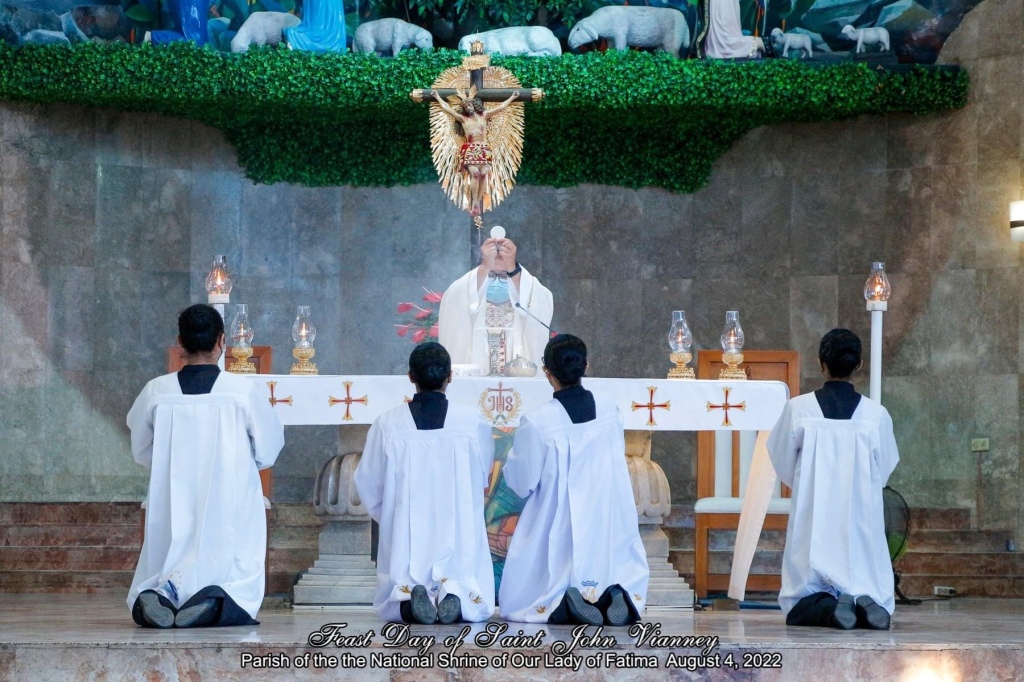
Photo by Ka Ruben, National Shrine of Our Lady of Fatima, Valenzuela City, 04 August 2022.

Create a clean heart in us your priests, O God

The Lord Is My Chef Daily Recipe for the Soul by Fr. Nicanor F. Lalog II
Thursday, Feast of St. John Marie Vianney, Priest, 04 August 2022
Jeremiah 31:1-7   ><}}}*> + ><}}}*> + ><}}}*>   Matthew 16:13-23
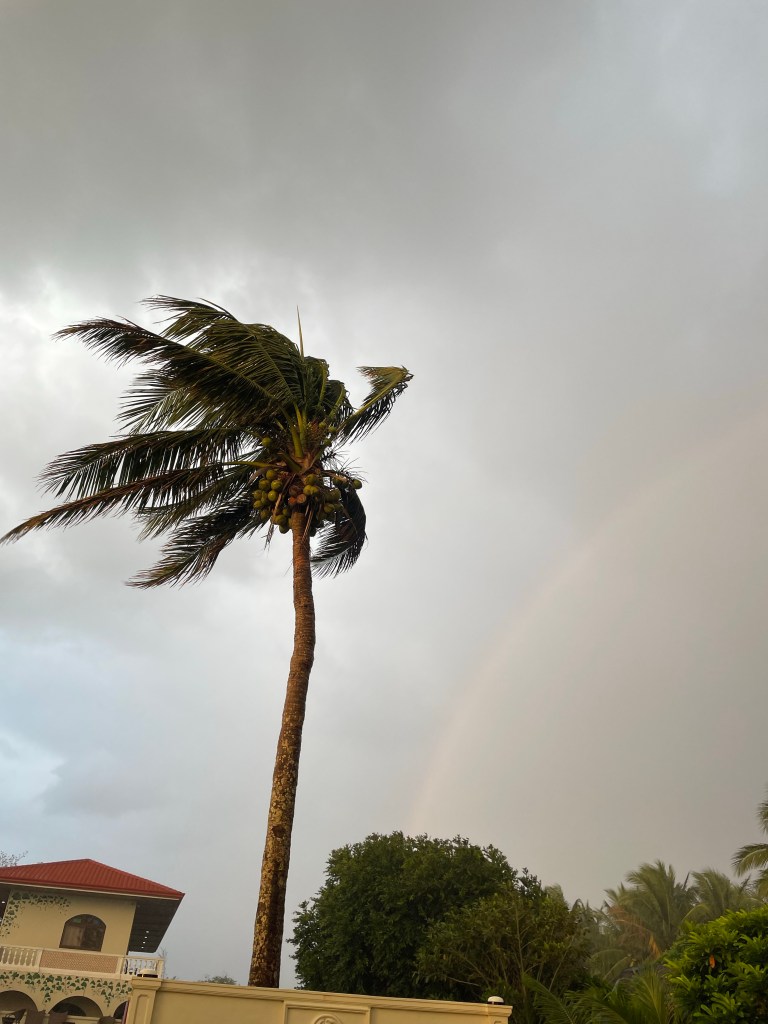
Photo by Mr. Jay Javier, Acacias at UP, Diliman, QC, April 2022.
Glory and praise to you,
dear Jesus for the gift of
priesthood!
Thank you for the grace of
St. John Marie Vianney our 
patron who taught us that
"The priesthood is the love
of the heart of Jesus". 
That is why on this day of the
priests, we pray like the psalmist: 
A clean heart create for me, O God, 
and a steadfast spirit renew within me.  
Cast me not out from your presence, 
and your Holy Spirit take not from me.  
Give me back the joy of your salvation, 
and a willing spirit sustain in me.  
I will teach transgressors your ways, 
and sinners shall return to you.  
For you are not pleased with sacrifices; 
should I offer a burnt offering, 
you would not accept it.  
My sacrifice, O God, is a contrite spirit; 
a heart contrite and humbled, 
O God, you will not spurn.
(Psalm 51:12-13, 14-15, 18-19)
Indeed, dear Jesus, 
it is the heart of us your
priests that must be cleansed 
and purified for it is where
your new covenant is written
as Jeremiah prophesied 
in the first reading today:  
"I will place my law within them,
and write it upon their hearts; 
I will be their God, 
and they shall be my people.
No longer will they have need to
teach their friends and relatives
how to know the Lord" 
(Jeremiah 31:33-34).

In your many teachings, Jesus,
especially in the Beatitudes,
you have always declared the heart 
as the wholeness of every person 
that must be purified to be open 
and free to see God because 
our intellect is never enough;
like Peter when he confessed "you
are the Christ" at Caesarea Philippi,
let our hearts be silent to listen to
the voice of the Father revealing 
you in our hearts (Matthew 16:16-17).

Most of all, purify and cleanse
the hearts of us your priests, 
dear Jesus so that we may have 
a loving heart that is obedient to you 
in serving your people; a heart that
is one with you, O Lord, on the 
Cross for it is only in humbling 
ourselves, in going down like you 
can we truly be loving to have a heart 
like your Most Sacred Heart.
Amen.

St. John Marie Vianney,
Pray for us priests!
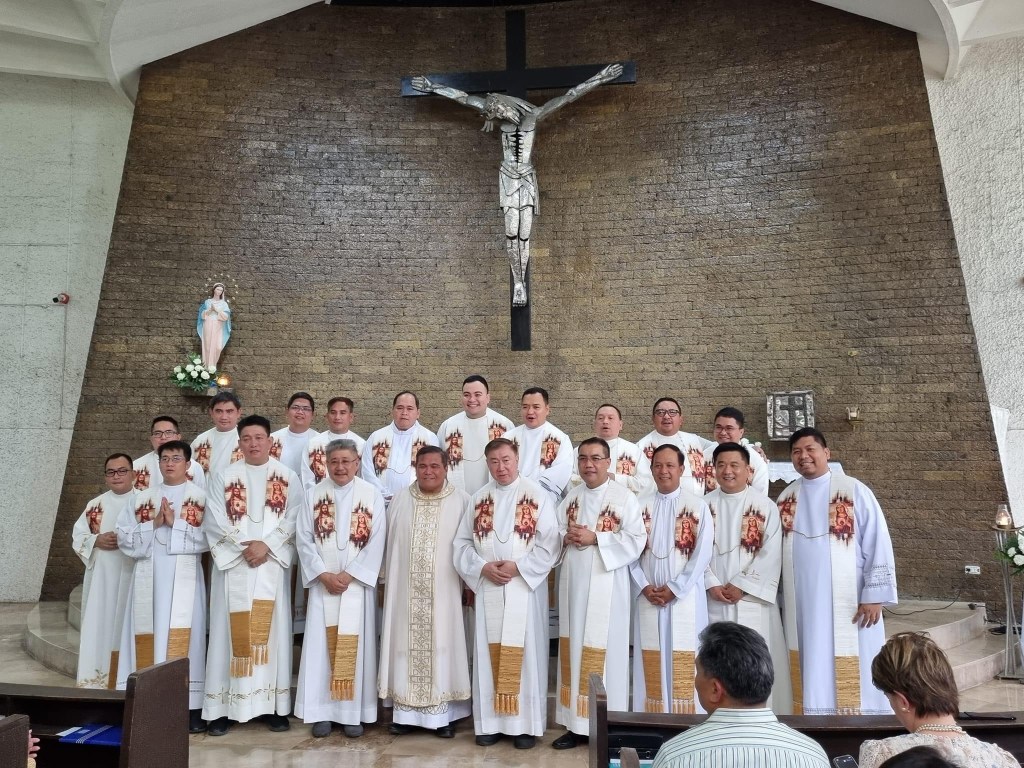
Photo by Ka Ruben, National Shrine of Our Lady of Fatima, 24 June 2022.

Praying to fulfill Christ’s prayer for us

The Lord Is My Chef Daily Recipe for the Soul by Fr. Nicanor F. Lalog II
Thursday After Pentecost, Feast of Jesus Christ, Our Eternal Priest, 09 June 2022
Hebrews 2:10-18   ><]]]]'> + ><]]]]'> + ><]]]]'>   John 17:1-2, 9, 14-26
Photo by author, Garden of Gethsemane, Israel, May 2017.
O dearest Lord Jesus Christ,
our Eternal Priest and Savior,
thank you so much for praying 
for us your disciples, 
thank you for consecrating us
to the Father in truth, most of all,
thank you for praying for our
protection against the evil one
(John 17:14-19).
How lovely it is that you, 
O Lord, personally prayed for us!
It is so touching, so humbling.
But most blessed of all, 
dear Jesus, is how you have
fulfilled yourself your prayer
said at the Last Supper right
away the following day on the Cross.

Therefore, he had to become like his brothers in every way, that he might be a merciful and faithful high priest before God to expiate the sins of the people. Because he himself was tested through what he suffered, he is able to help those who are being tested.

Hebrews 2:17-18
Forgive us, Jesus
when we especially your ordained
priests live so detached from you,
when we have forgotten your priesthood
is for others, not for us; when we think
more of our comfort and well-being,
enslaved by the lures of the world,
from flesh to the latest gadgets and 
even way of life.
Forgive us, Jesus
when we especially your ordained
priests forget the very essence of
your victimhood as Priest, 
offering your very self, flesh and blood,
to nourish the people when we escape
and deny all kinds of pains and sufferings,
or the Cross itself.
Continue to pray for us, 
Lord Jesus Christ, 
our Eternal Priest that like you,
we your disciples especially us
your ordained priests may 
imitate you, live like you,
suffer like you so that we may rise
to new life like you.
Pray that we may fulfill your prayers
for us in words and in deeds.
Amen.
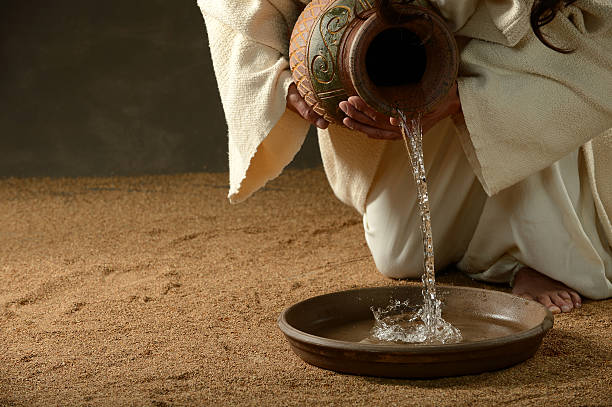
Photo from gettyimages.com.