Lord My Chef Daily Recipe for the Soul, 25 August 2025
Monday, Twenty-first Week in Ordinary Time, Year I
1 Thessalonians 1:1-5, 8-10     <*((((>< + ><))))*>     Matthew 23:13-22
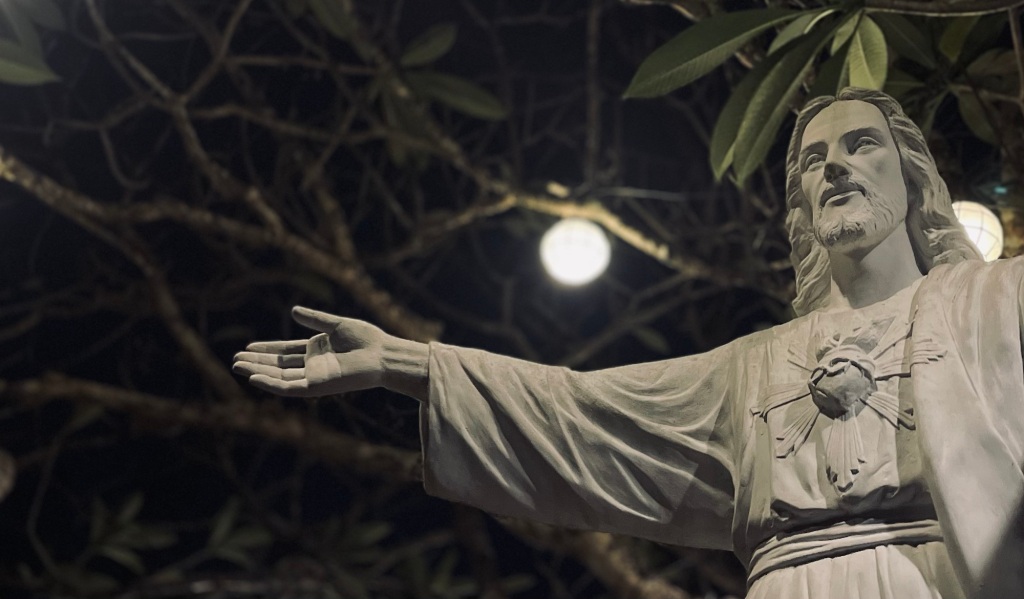
Photo from The Fatima Tribune, Red Wednesday at the Chapel of Angel of Peace, Our Lady of Fatima University, Valenzuela City, 27 November 2024.
Today I wonder,
God our Father,
what if Paul your Apostle
or Jesus Christ your Son
were to visit our church today,
what would they find out?
Would Paul be proud of us
like the Thessalonians of
his time?
We give thanks to God always for all of you, remembering you in our prayers, unceasingly calling to mind your work of faith and labor of love and endurance of hope of our Lord Jesus Christ, before our God and Father, knowing, brothers and sisters loved by God, how you were chosen… In every place your faith in God has gone forth, so that we have no need to say anything (1Thessalonians 1:2-4, 8).
Oh how I envy the Thessalonians
that Paul along with
Silvanus and Timothy
were so proud of their "faith
and labor of love
and endurance in hope";
most of all,
of their "conviction"
that he had no need
 to say anything,
as in, "walang masabi".
So beautiful!
How I wish Paul could say
the same things today to our
parish, to our community of
believers with their vibrant
faith, hope and love.
What  I dread, O Father
is when Jesus comes
and begins speaking
the same way to us
his priests and bishops:
Jesus said to the crowds and to his disciples: “Woe to you, scribes and Pharisees, you hypocrites. You lock the Kingdom of heaven before men. You do not enter yourselves, nor do you allow entrance to those trying to enter (Matthew 23:13).
Shame on us, Lord Jesus,
your priests and bishops!
If you were here today,
you would surely say the same
things to us: many of us
your priests do not pray at all
that many have forgotten to
pray properly and celebrate
liturgy meaningfully;
many would rather go on
vacation and recreation than
celebrate Mass and sacraments
for your people;
yes, Lord Jesus,
"woe to us" your servants
for many of us have no plans
of going to heaven at all with the
kind of Eucharist we celebrate
that people have lost faith
in you and your church.
Forgive us, Jesus,
your priests for being
blind fools,
following the limelight
of the world than your path
of the Cross;
lead us back to you, Jesus,
so that your flock may be
enlivened again in their
faith, hope and love
like the Thessalonians
of your great Apostle Paul.
Amen.

Fr. Nicanor F. Lalog II
Our Lady of Fatima University
Valenzuela City
(lordmychef@gmail.com)
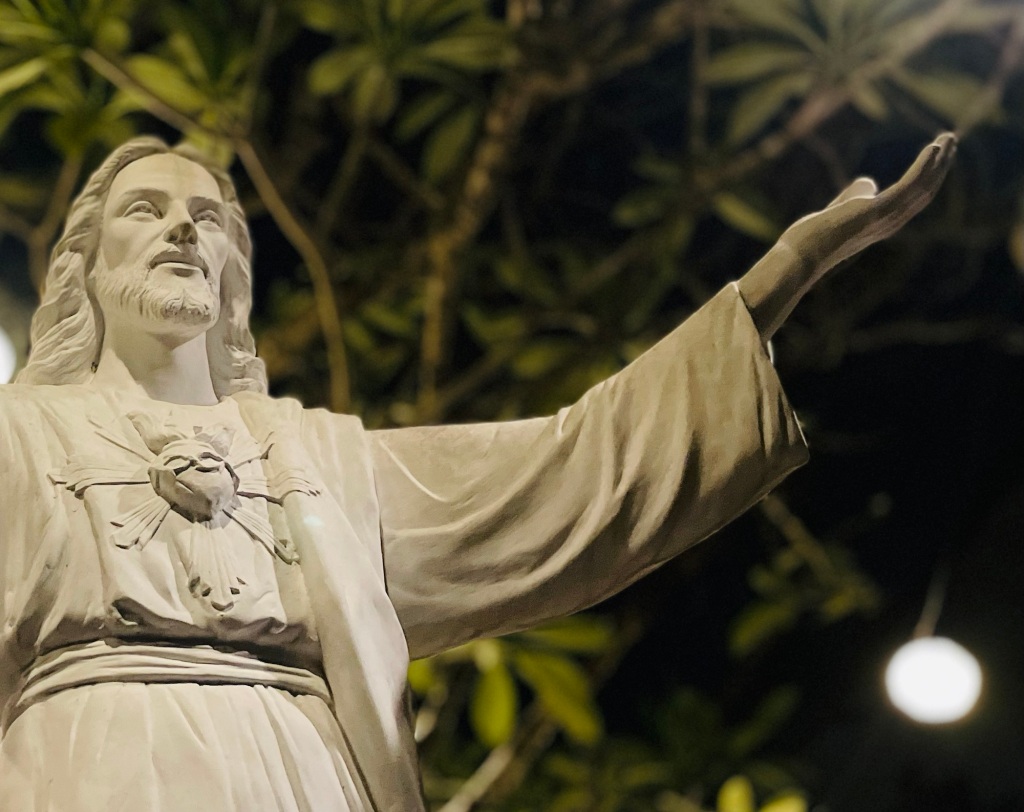
Photo from The Fatima Tribune, Red Wednesday at the Chapel of Angel of Peace, Our Lady of Fatima University, Valenzuela City, 27 November 2024.
Lord My Chef Daily Recipe for the Soul, 19 August 2025
Tuesday, Memorial of St. Ezechiel Moreno, Bishop
Judges 6:11-24     ><))))*> + ><))))*> + ><))))*>     Matthew 19:23-30
Photo by author, RISE Tower, Our Lady of Fatima University, Valenzuela City, 09 August 2025.
God our loving Father,
today I feel like Gideon:
in our beautiful story today
of your call for him to be a judge
of your people,
you have taught me
that discipleship is not
about work like
an apprenticeship
but a relationship
because a disciple's
first task is to love you,
O Lord, our Master
that is why despite the
great dangers during his time,
Gideon continued to work
even in hiding from their enemies
because he believed in you,
he trusted you,
he loved you.
Discipleship is relationship
because it is more of
looking at you,
Lord Almighty
the Caller,
the Believer,
and the Sender
of my poor me!
Discipleship is not
about me that is why,
after that meeting with
Gideon, he built an altar
to you and called it
Yahweh-shalom.
Gideon, now aware that it had been the angel of the Lord, said, “Alas, Lord God, that I have seen the angel of the Lord face to face!” The Lord answered Gideon, “Be calm, do not fear. You shall not die.” So Gideon built there an altar to the Lord and called it Yahweh-shalom (Judges 6:22-23).
Shalom is peace
and you are our peace,
our total well-being
O God
 that can only come
 from a relationship
with you,
in you;
this is what your Son
our Lord Jesus Christ
tells us today through Peter,
of the need to leave everything
and everyone in order to have you.
Calm me,
Lord,
 like Gideon
for only one thing is
necessary: that we remain
in you who is our peace
so that even there are
turmoils in our ministry,
we continue
because of our relationship
than of work.
Amen.
Fr. Nicanor F. Lalog II
Our Lady of Fatima University
Valenzuela City
(lordmychef@gmail.com)
Photo by author, RISE Tower, Our Lady of Fatima University, Valenzuela City, 09 August 2025.
Lord My Chef Daily Recipe for the Soul, 18 August 2025
Monday, Twentieth Week in Ordinary Time, Year I
Judges 2:11-19     <*((((><  +  ><))))*>     Matthew 19:16-22
Photo by Mr. Vigie Ongleo, Virginia, USA, August 2021.
Your words today,
O God our Father
are so disheartening
not only because after
a week of joyful stories of
Moses and Joshua and the
Israelites finally nearing the
Promised Land,
we begin work and classes
this Monday with the distaff
side of Israel's history,
of their low point of being
repeatedly attacked and
defeated by their enemies.

But more sad
and disheartening is the fact
that low point in their history
was also their low point in their
faith in you -
it was all due to their repeated
falling into sin of idolatry,
of worshipping false gods
instead of you alone.
Whenever the Lord raised up judges for them, he would be with the judge and save them from the power of their enemies as long as the judge lived; it was thus the Lord took pity on their distressful cries of affliction under their oppressors. But when the judge died, they would relapse and do worse than their ancestors, following other gods in service and worship, relinquishing none of their evil practices or stubborn conduct (Judges 2:18-19).
And that is the painful
truth of the story,
of the fact still true
among us today:
the problem,
the trouble
are all with us.

Yes, Lord,
many times we are like
your people during that
time of the judges:
you keep on saving us
from troubles of our own making
but once we are able to rebound
in life, we go back to our old ways
of sins and self-centeredness,
forgetting you and your love;
we do not have the false gods
of old like Baal
but we keep on turning
away from you, Lord,
worshipping
fame and wealth,
power and control,
comfort and safety;
though through all these
you keep on coming to save us,
giving us all the chances
to be better in Jesus Christ your Son,
we are like the young man
in the gospel who can't let go
of our many possessions,
choosing to leave sad
than follow Jesus empty
but filled with love and
and meaning in life.
Help us fix this
trouble in us, Lord.
Amen.
Lord My Chef Daily Recipe for the Soul, 15 August 2025
Friday, Solemnity of the Assumption of the Blessed Virgin Mary
Revelation 11:19, 12:1-6, 10 ><}}}*> 1 Corinthian 15:20-27 ><}}}*> Luke 1:39-56
“The Assumption of the Virgin” by Italian Renaissance painter Titian completed in 1518 for the main altar of Frari church in Venice. Photo from wikidata.org.
Thank you,
Most Blessed Virgin Mary
for being our Mother
and most of all,
our model disciple
in your Son Jesus Christ.
As we celebrate today
the Solemnity of your Assumption
into heaven,
we also celebrate our blessed
assurance and hope
that someday
we too may join you with God
body and soul
if we remain one and united
in Jesus Christ our Savior.
Pray for me,
O Blessed Mother
that I too may rejoice in God
for all that he does for me
while seeing my lowliness
not my pride.
Mary set out and travelled to the hill country in haste to a town of Judah, where she entered the house of Zechariah and greeted Elizabeth (Luke 1:39-40).
Pray for me,
Blessed Mother
to go in haste
filled with joy
and excitement in the Lord,
determined and committed
to the mission to proclaim
the coming of our Savior Jesus Christ;
pray for me, dear Mary
to go in haste
filled with joy
and excitement in the Lord
for his love for me I have to share
with everyone like you;
pray for me,
Blessed Mother
to go in haste
celebrating the Christ's
presence and coming,
our fulfillment in him.
When Elizabeth heard Mary’s greeting, the infant leaped in her womb, and Elizabeth, filled with the Holy Spirit, cried out in a loud voice and said, “Blessed are you among women, and blessed is the fruit of your womb…Blessed are you who believed that what was spoken to you by the Lord would be fulfilled.” And Mary said: “My soul proclaims the greatness of the Lord; my Spirit rejoices in God my Savior” (Luke 1:41-42, 45-47).
Dear Jesus,
forgive me when I am filled
with pride,
doubts,
and mistrust in you
that slow me
from sharing
you with others and
the world;
fill me with humility
like Mary,
that I may sing too
a magnificat to you,
singing your saving grace
because every time
we rejoice in you
and your works in us
that is when we experience
heaven
our ultimate end
when in body and soul
we shall celebrate you
with Mary our Mother too.
Amen.

Fr. Nicanor F. Lalog II
Our Lady of Fatima University
Valenzuela City
(lordmychef@gmail.com)
Lord My Chef Sunday Recipe for the Soul, 03 August 2025
Eighteenth Sunday in Ordinary Time, Cycle C
Ecclesiastes 1:2; 2:21-23 ><}}}*> Colossians 3:1-5, 9-11 ><}}}*> Luke 12:13-21
Photo by author, Sacred Heart Novitiate, Novaliches, QC, March 2024.
Our gospel this Sunday is very interesting as it is similar with what we have heard last July 20, the sixteenth Sunday when Jesus visited the home of Martha who asked him, “Lord, do you not care that my sister has left me by myself to do the serving? Tell her to help me” (Lk.10:40).
Compare that with our gospel today:
Someone in the crowd said to Jesus, “Teacher, tell my brother to share the inheritance with me.” He replied to him, “Friend, who appointed me as your judge and arbitrator?” Then he said to the crowd, “Take care to guard against all greed, for though one may be rich, one’s life does not consist of possessions” (Luke 12:13-15).
Photo by author, PDDM Chapel, Araneta Ave., QC, August 2024.
“Tell my sister…tell my brother.”
How funny we waste energy complaining to Jesus about others when he is not interested at all because he is actually most interested with us! In Martha’s home and in this scene, the Lord shows us that he came here for each of us personally, as if telling us to stop all those pointing to others because each one of us will definitely be dealt with individually, personally by him in the end. But, are we ready like that rich man in the parable?
That is why Luke tells us this amusing anecdote in the journey of Jesus to Jerusalem to remind us anew that in the spirit of Christ’s teaching last week on prayer, he is most concerned with our relationship with God our Father – not with our petty quarrels on money and inheritance or politics. We have to stop that “holier-than-thou” attitude, of being sanctimonious pointing at others without looking deep into ourselves, “Why do you notice the splinter in your brother’s eye, but do not perceive the wooden beam in your own eye?” (Mt.7:1,3).
This Sunday, we hear one of Jesus Christ’s many warnings against relying on wealth, possession and even status for our well-being and security. He invites us to look deep into ourselves than look at others.
Photo by author, Sacred Heart Novitiate, Novaliches, QC, March 2024.
“Take care to guard against all greed, for though one may be rich, one’s life does not consist of possessions.”
A very tough warning from Jesus that sends chills down our spine. It is always easier to point at others than look into ourselves in responding to him, on what is to be “rich in the sight of God” we are all struggling with, though, admittedly many of us truly aspire to be.
There are so many anxieties and other feelings within each of us that push us against the words of Jesus not only here. And Jesus knows very well how we turn to many things other than God for our security and well-being like the rich man in the parable he told the crowd.
We call that “security blanket” which we use to cover ourselves that often temporarily relieves us of our fears and anxieties but ultimately gives us away in the end like that rich man in the parable. He thought he would be safe and secured by building a bigger barn for his “bountiful harvest” that year that would sustain all his needs. But, that night he was taken by the Lord and died, leaving everything behind him.
We can easily identify with that rich man in the parable who portrays what each of us harbors in the depth of our hearts of never having enough. Palaging kulang, palaging bitin at kapos ano man mayroon tayo. We are always afraid that what we have may not be enough that we want to increase, to have more of whatever we think gives us security and well-being in the face of life’s many exigencies and unpredictability.
But, when is enough really enough? In this age of affluence, we have totally forgotten about the value of contentment, of relying more to God than to ourselves. It is not really a question of what we have but of our attitude in what we have, no matter how much or how less that may be.
Of course, we need to be prudent and wise in responsibly planning for our future but Jesus tells us in this parable that what really matters in life is our relationship with God expressed in the Our Father last week. What we need to store in our “barn” is not material things but more of spiritual values like love, kindness, compassion, fidelity, mercy and compassion.
Jesus is inviting us today to examine and clean out of our “barn” to make room for God who alone matters in the end. Let God be the only possession we have who possesses us in the end – not our cellphones and gadgets nor our popularity nor negatives feelings like bitterness we have kept so long in our hearts.
Qoheleth in the first reading is neither promoting cynicism nor any negative thoughts about life but simply warned us of the great “sorrow and grief” of too much focus on things of the world that vanish like vapor. The reason we work so hard, fulfilling many tasks and obligations is not merely to earn a living and have nice homes, wonderful vacations here and abroad, education of children and better retirement; we work because we want to have fullness of life. That is why I prefer the Pilipino word for “work” – hanap buhay that literally means “to search life” because we work to find the meaning of life. But, what happens if we become enslaved by our jobs and professions while our possessions eventually possess us that in the process, we lost our very selves and those dearest to us in our relationships?
Fullness of life can only be found in God through Jesus who gave us himself totally on the Cross we receive every Mass in the Eucharist. That is why beginning this Sunday and in the next three weeks, we find Luke presenting to us various teachings of Jesus on the way to Jerusalem with a stress on the need to always consider the End, that is, God himself who alone gives us fullness of life. St. Paul speaks of this in the second reading that amid our many concerns in life, let us be focused into things of heaven that are eternal, not of earth that are passing.
Last Friday I read a beautiful story of a man taking care of his critically sick mother that he fell asleep by her side. When he woke up, she was gone forever. He checked their CCTV and saw how in her final moments, the mother saw her son not properly covered that she used all her remaining strength to pull the blanket over him. Then she closed her eyes and died peacefully. It was her final act of love: she tucked her son in bed the day he was born, she tucked him the day she died.
We reflected last Sunday that prayer changes us not the situations. This Sunday, let us pray to Jesus to help us clean and clear our “barn” of worldly things to make more room for God in ourselves to become better persons. And – beginning today – for us to stop pointing at others, asking Jesus to check on them; instead. let us focus on our personal transformation into Christ as better disciples and witnesses. Amen. Have a blessed week ahead! Fr. Nicanor F. Lalog II, Our Lady of Fatima University, Valenzuela City (lordmychef@gmail.com).
Lord My Chef Daily Recipe for the Soul, 22 July 2025
Tuesday, Feast of St. Mary Magdalene, Sixteenth Week in Ordinary Time
Song of Songs 3:1-4     ><}}}*> + ><}}}*> + ><}}}*>     John 20:1-2, 11-18
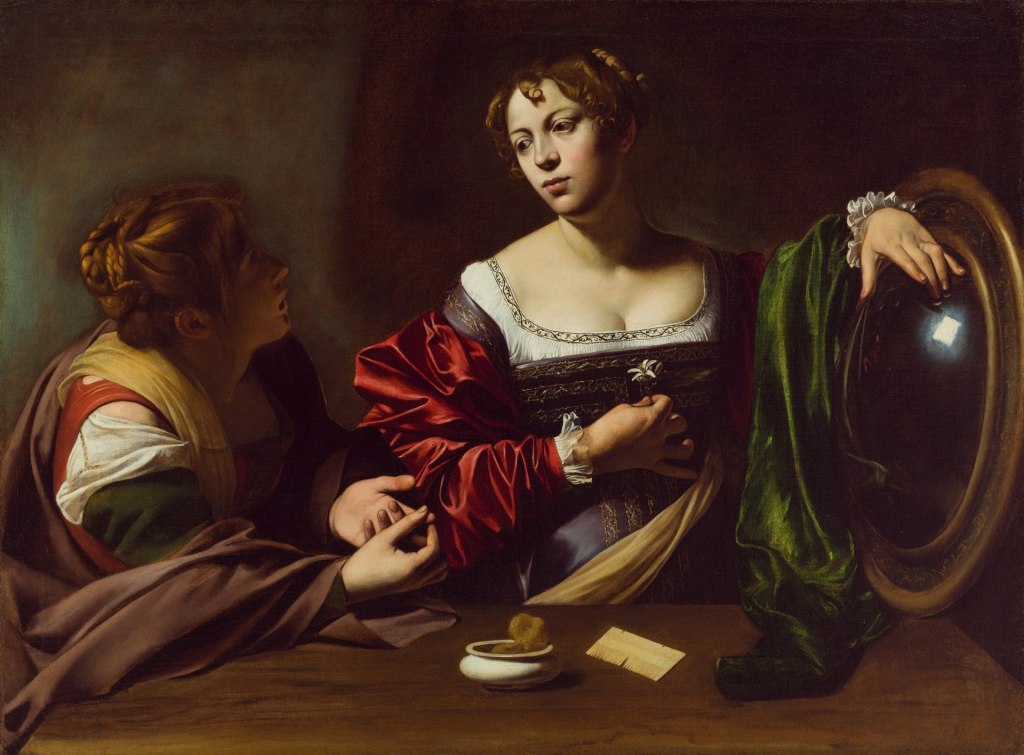
“Martha and Mary Magdalene” painting by Caravaggio (1598). The painting shows Martha of Bethany and Mary Magdalene long considered to have been sisters. Martha is in the act of converting Mary from her life of pleasure to the life of virtue in Christ. Martha, her face shadowed, leans forward, passionately arguing with Mary, who twirls an orange blossom between her fingers as she holds a mirror, symbolising the vanity she is about to give up. The power of the image lies in Mary’s face, caught at the moment when conversion begins (from en.wikipedia.org).
Thank you dear Jesus
in giving us a chance to revisit
your Resurrection with this Feast
of St. Mary Magdalene,
the Apostle to the Apostles;
she whom you love so much
by forgiving her sins and later
called her by name on that
Easter morning reminds us of
your lavish mercy and love
for each of us; how lovely that
in that crucial moment of darkness
as she grieved your death
with your body missing,
she suddenly burst into deep joy
filled with life
upon seeing you!
Mary Magdalene went and announced to the disciples, “I have seen the Lord,” and what he told her (John 20:18).
“The Appearance of Christ to Mary Magdalene” painting by Alexander Ivanov (1834-1836) at the Russian Museum, St. Petersburg, Russia from commons.wikimedia.org.
"I have seen the Lord."
I have seen you,
Jesus when I stop
 clinging to my sinful past,
when I stop doubting
your mercy and forgiveness,
wondering how I could move
 the huge and heavy stone of my
weaknesses and failures,
addictions and vices
that make me mistake
you into somebody else
 like the gardener
 because I am so preoccupied
 with many things in life.

Teach me, Jesus
to stop clinging to you,
"touching" you and having you
according to my own view
and perception not as
 who you really are
 so that I may meet you
 to personally experience you
right here inside my heart
like St. Mary Magdalene
that Easter.
The Bride says: The watchmen came upon me as they made their rounds of the city. Have you seen him whom my heart loves? I have hardly left them when I found him whom my heart loves (Song of Songs 3:1, 3-4).
"I have seen the Lord."
I have seen you,
 Jesus when I love truly
like the Bride in the first reading
when I seek you in persons
not in wealth and power,
 in silence not in the noise
and cacophony of vanity and fame;
let me see you Jesus
by being still,
patiently
waiting
and listening
for your coming
and calling of my name
to proclaim You are risen
to others who believe in You,
also searching You,
waiting for You.
Amen.

Fr. Nicanor F. Lalog II
Our Lady of Fatima University
Valenzuela City
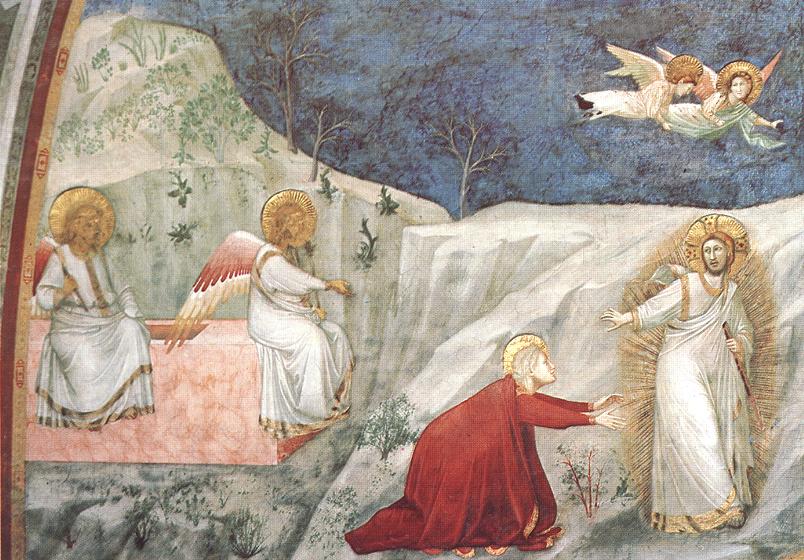
Painting by Giotto of the Risen Lord Jesus Christ appearing to St. Mary Magdalene from commons.wikimedia.org.
Lord My Chef Daily Recipe for the Soul by Fr. Nicanor F. Lalog II
Sacred Heart Novena Day 6, 23 June 2025
Detalye ng painting ng Sacred Heart of Jesus sa Visitation Monastery, Marclaz, France mula sa godongphoto / Shutterstock.
Sigurado, sasabihin ninyo ako ay kumakanta na naman sa pagninilay dahil sa ating pamagat na “Tag-Araw, Tag-Ulan” mula sa awitin ng yumaong si Haji Alejandro noong aming kabataan ng 1977.
Bata pa lamang po ako ay mahilig na ako sa radyo at tugtugin kaya hindi ko maiwasang maugnay palagi maski sa pagdarasal ang maraming awiting aking nagisnan.
At heto na nga po ang titik ng awit ni Haji na noon ay tinaguriang “kilabot ng mga kolehiyala” di lamang sa kanyang porma kungdi sa ganda ng boses at mga tema ng pag-ibig sa kanyang musika katulad ng “Tag-Araw, Tag-Ulan”:
Tag-araw, sa may dagat namasyal
At pagdilim, sa may baybay humimlay
At nagyakap, sabay sa pagsabog ng alon
Sabay sa paghuni ng ibon, saksi ay liwanag ng buwan
'Di ba sabi mo pa, na wala pang iba
Na ako ang una sa pagmamahal mo, sinta?

At ang buhay nating dal'wa ay nagbunga
Ng makulay na pag-ibig na dakila
Ngunit, bakit ngayong umuugong ang hangi't ulan
'Sing lamig ng gabi ang mga halik mo?
Ni wala nang apoy, titig mo sa akin
Naglaho ba ang pagmamahal mo, sinta?
Larawan kuha ng may-akda, La Trinidad, Benguet, 12 Hulyo 2023.
Hanapin na lamang po ninyo sa YouTube.com ang awit ni Haji na “Tag-Araw, Tag-Ulan” dahil ngayong ika-anim na araw ng ating Nobena sa Kamahal-Mahalang Puso ni Jesus ay bisperas din ng Dakilang Kapistahan ng Pagsilang ni San Juan Bautista, ang tagapaghanda ng Kristo.
Bukod tanging siya lamang at si Jesus ang ipinagdiriwang natin ang kaarawan ng pagsilang bilang Dakilang Kapistahan o Solemnity, ang pinaka-mataas na antas ng selebrasyon sa Simbahan. Palaging pinag-ugnay ng mga ebanghelista lalo ni San Lukas ang buhay at misyon nina San Juan Bautista at Panginoong Jesus na magpinsang makalawa.
Bagama’t ating ipinagdiriwang din ang pagsilang ng Mahal na Birheng Maria tuwing ika-walo ng Setyembre, ito ay Kapistahan lamang o Feast. Kaya kung inyong napapansin, ang kapistahan kadalasan ng mga Santo at Santa ay petsa ng kanilang kamatayan dahild doon sila pumasok sa buhay na walang hanggan.
Marahil sa bahaging ito nagtataka na kayo nasaan ang kaugnayan ng ating introduction na awitin ni Haji na “Tag-Araw, Tag-Ulan” at nina Jua Bautista at Jesu-Kristo at ng Kanyang Kamahal-Mahalang Puso? Heto po mga kaugnayang iyon:
Isinilang si Juan Bautista panahon ng summer solstice, ang pinakamahaba at pinaka-maliwanag na araw sa buong taon tuwing Hunyo habang si Jesus naman ay isinilang ng winter solstice, pinaka-mahaba at pinaka-madilim na araw tuwing Disyembre upang ipakita kanilang ugnayan: dala ni Juan Bautista ang liwanag ni Kristo na siyang liwanag sa gitna ng malaking kadiliman ng mundo.
Ang salitang “SOLSTICE” ay mula sa wikang Latin ng pinagsamang mga kataga na “SOL” (araw o sun) at “SISTERE” (tigil o hinto, stop o stand still gaya ng “to desist/resist” sa Ingles) na kung saan pansamantalang tumitigil o humihinto ang mundo at tumututok sa araw kaya pinaka-maliwanag din ang araw na iyon. Ayon sa PAGASA, naganap ang summer solstice ng 2025 sa bansa noong Sabado, ika-21 ng Hunyo bandang alas-10:42 ng umaga;magaganap ang winter solstice naman sa ika-21 ng Disyembre, 2025 ganap na alas-11:03 ng gabi na siyang pinakamahaba at madilim na araw naman.
Yung awit ni Haji ay “summer solstice” sa Pilipinas na kung saan ating nararanasan ang tag-ulan sa tag-araw, hindi ba? Sa awit ni Haji, nagtataka siya bakit huminto ang kanilang pagmamahalan na tila lumalabo na kanilang samahan katulad ng malakas na ulan sa gitna ng sikat ng araw.
Larawan kuha ng may-akda sa St. Paul Spirituality Center, La Trinidad, Benguet, 06 Enero 2025.
Ang ganda ng larawan, hindi ba?
Subalit, hindi ba ganyan din kadalasan ugnayan natin sa Diyos, parang malabo na di maintindihan? Alalaong-baga, itinakda ng Diyos na natural na tumigil (sistere) pansamanatala ang mundo sa harap ng araw (sol) upang magkaroon ng SOLSTICE upang pahabain at paliwanagin ang araw minsan kada Hunyo at dagdagan ang dilim ng gabi minsan kapag Disyembre upang mabalanse ang init at lamig sa daigdig. Kapag walang solstice, maaring masunog at matusta siguro ang mundo! Kaya mahalaga ang solstice na siya ring panawagan ng Diyos sa ating lahat ngayon.
Dumating si Juan Bautista upang magkaroon ng sosltice kung baga upang tumigil at magisis ng mga kasalanan at magsuri ng sarili upang magbalik sa Diyos sa pamamagitan ng pagkilala at pagmamalasakit sa kapwa.
Ito rin ang kailangan natin sa buhay ngayon, ang pagtigil at pananahimik. Tingnang paanong pinatahimik ng anghel si Zacarias na ama ni Juan Bautista. Katulad niya tayong mga tao ngayon. Puro tayo mema – memasabi lang. Puro kuda ika ng mga bata. Lahat iniisip natin maski problema ng Diyos, problema ng mga kung sinu-sino.
Napansin ko sa aking pagiging chaplain dito sa unibersidad, maraming mga bata ngayon ang “over-thinker” pero hindi na man “critical-thinker”.
Senyales ng kawalan ng pagtitiwala maging ng pananampalatay ang pagiging overthinker – lahat kasi inaalala at kinatatakutan. Madalas mga overthinker ay manipulator at control freak din. Wala kasing tiwala katulad ni Zacarias na ang lakas ng loob hamunin ang angel sa tanong niya kung paano niya matitiyak na totoo ang mabuting balita sa kanya ng pagkakaroon ng anak gayong baog at matanda na si Elizabeth na kanyang may-bahay?
Sa kabilang dako naman, pagmasdan ang kusang pananahimik o pagtigil (sistere) ni Elizabeth sa loob ng kanilang tahanan ng anim na buwan nang siya ay magdalantao kay Juan Bautista. Puno siya ng tiwala at pananampalatay sa Diyos katulad ng kanyang pinsang si Maria na pagkaraan ng anim na buwan ay babalitaan din ng anghel ng pagsilang niya sa Kristo.
Katulad din niya si Jeremias na tinawag at hinirang ng Diyos sa unang pagbasa upang maging kanyang propeta. Bagaman ipinakikita ng tagpo ng unang pagbasa ang pagkakahalintulad ng misyon nina Jeremias at Juan Bautista bilang tagapagsalita ng Diyos, ipinakikita rin sa atin ang attitude niya na tumigil at tumalima sa atas ng Diyos.
Larawan kuha ng may-akda, Cabo de Roca, Pundaquit, San Antonio, Zambales, 14 Mayo 2025.
Sa kuwento ng pagsilang ni Juan Bautista, ipinakikita sa atin kung paanong ang Diyos ay pumapasok sa ating panahon at buhay upang isagawa ang kanyang pagliligtas. Subalit malinaw din sa kuwentong ito ang pakikipag-isa ng tao tulad nina Zacarias at Elizabeth maging ni Jeremias upang maganap plano ng Diyos kay Jesu-Kristo.
Ito ang misyon na ipinagpapatuloy ng Simbahan gaya ng pagninilay at paliwanag ni San Pedro sa ikalawang pagbasa. Kung titingnan natin, madalas parang malabo ang Diyos, parang tag-ulan sa tag-araw na tinatawag tayo sa misyon kay Kristo gayong kay rumi natin sa kasalanan, kay daming kapintasan. Madalas pa nga ay tumatanggi tayo o naghahamon gaya ni Zacarias.
Subalit isang bagay ang malinaw: hindi titigil ang Diyos hanggat hindi tayo napapatigil din upang makinig at sumunod sa kanya. Sa araw na ito, hiling sa ating ng Sacred Heart ay magkaroon ng solstice – huminto at tumigil pansamantala at itutok ating tuon at sarili sa alab ng apoy ng pag-ibig ni Jesus sa atin.
O Jesus na mayroong
maamo at mapagkumbabang Puso,
Gawin Mong ang puso nami'y
matulad sa Puso Mo!
Amen.
*And ideya ng SOLSTICE ay aking hinalaw mula sa pagninilay naman sa mga panahon ni Sr. Renee Yann, RSM sa kanyang blog na aking sinusundan; napakaganda ng kanyang mga lathalain at bakas ang kanyang kabanalan at karunungan. Tingnan sa link na ito: http://lavishmercy.wordpress.com
Lord My Chef Daily Recipe by Fr. Nicanor F. Lalog II
Sacred Heart Novena Day 2, 19 June 2025
Detalye ng painting ng Sacred Heart of Jesus sa Visitation Monastery, Marclaz, France mula sa godongphoto / Shutterstock.
Nakatutuwa itong ating wika. Mabulaklak na kahit hindi ka isang makata minsa’y di sinasadya ika’y nakakatha ng kahit maigsing tula.
Madalas ating mabasa sa mga panitikan at mapakinggan saan man kuwentuhan na tila baga itong puso ay nagsasalita gayong wala naman itong bibig. Mismo ang Panginoong Jesus noon ay nagsabi na “ano man ang bukambibig, siyang laman ng dibdib” (Mt.12:34 at Lk.6:45) upang ipakita ang pagkakadugtong ng puso at bibig tulad ng kaisahan nito sa ating kamay batay sa pagninilay kahapon.
Samakatwid, nangungusap nga itong ating puso. At iyan ang ibig kong pagnilayan ngayong ikalawang araw ng ating pagsisiyam para sa Dakilang Kapistahan ng Kamahal-Mahalang Puso ni Jesus. Ito ang sinasaad sa ating napakinggan ngayong araw na bahagi ng pangangaral ni Jesus sa mga tao mula sa kanyang sermon sa bundok.
“Sa pananalangin ninyo’y huwag kayong gagamit ngn napakaraming salita, gaya ng ginagawa ng mga Hentil. Ang akala nila’y pakikinggan sila ng Diyos dahil sa dami ng kanilang salita. Huwag ninyo silang tutularan. Sapagkat alam na ng inyong Ama ang inyong kinakailangan bago pa man ninyo hingin sa kanya. Ganito kayo mananalangin: ‘Ama naming nasa langit, sambahin nawa ang pangalan mo'” (Mateo 6:7-9).
Isa sa mga madalas na itanong sa akin ng mga mag-aaral dito sa Our Lady of Fatima University bilang kanilang chaplain ay alin daw ba ang dapat nilang pakinggan, sigaw ng puso o sigaw ng isipan?
Palagi kong tugon sa kanila ay ang pabirong paalala na unahin nilang pakinggan lagi ang sigaw ng kanilang mga magulang.
Pagkaraan ng ilang tawanan, saka ko binabalik sa kanila ang tanong sa ibang anyo naman: humihiyaw nga ba ang puso gayong ang pagtibok nito ay napakahina? Hindi kaya sa pakikipag-usap sa atin nitong ating puso, ang ibig nito ay taimtim na pakikinig dahil kung ito ay mangusap, madalas ay pabulong.
Larawan kuha ng may-akda, Atok, Benguet, 27 Disyembre 2024.
Mag-imagine tayo kunwari ay naroon tayo sa bundok sa sermon ni Jesus. Siguradong malakas ang tinig niya sa pangangaral ngunit sa aking pakiwari mayroong indayog ang kanyang pananalita na kung saan minsan-minsan marahil siya ay bumubulong katulad nitong sa pagtuturo niya kung paano tayo mananalangin. Mahigpit ang kanyang bilin na huwag tutularan mga Hentil na napakaraming sinasabi sa Diyos sa pakiwaring sila ay pakikinggan. Hindi natin kailangang maging maingay at daanin sa dami ng sinasabi ang Diyos bagkus higit na mainam ang pananahimik upang mapakinggan sinasabi sa atin ng Diyos. Sinabi na ni Jesus na alam ng Diyos ating pangangailangan bago pa man tayo dumulog sa kanya sa pagdarasal. Kaya tayo nagdarasal ay upang pakinggan kalooban ng Diyos.
Kaya gumagamit ng stethoscope mga duktor at nurse kasi nga mahina ang tinig ng puso natin. At yon ang unang kinakailangan sa pananalangin – katahimikan upang Diyos ay mapakinggan!
Kung ang puso man ay humihiyaw, marahil wala na tayong masyadong alitan at mga kaguluhan dahil tiyak ating maririnig at mapapakinggan bawat pintig ng puso na iisa ang sinasabi kungdi ang tayo ay magmahal nang tunay. Ito ang buod ng “Ama Namin” at lahat ng mga panalangin. Ang pag-ibig ng Diyos sa ating lahat na ating tinutugunan ng pagmamahal sa ating kapwa dito sa lupang ibabaw lalo na sa pagpapatawad sa kanilang pagkakasala sa atin.
Sa Kamahal-Mahalang Puso ni Jesus, doon ay malinaw na inihahayag ang dakilang pag-ibig ng Diyos sa ating lahat ngunit walang nakikinig dahil mas nahahalina ang marami sa malalakas at maiingay na tinig ng daigdig. Ito yung ikinalulungkot ni San Pablo sa mga taga-Corinto sa unang pagbasa ngayon dahil napakadali nilang nalinlang at napasunod sa mga kakaibang turo ng ibang nangangaral sa kanila. Katulad din natin ngayon na maraming nagpapaniwala at nahahalina sa mga kung anu-anong kaisipan ng mundo gaya ng new age at wokism at iba pang mga ideya na wala nang pakialam sa Diyos at moralidad gaya ng relativism na siyang sanhi ng paniniwala sa same sex marriage at abortion.
Larawan kuha ng may-akda sa Liputan, Meycauayan, Bulacan, 31 Disyembre 2022.
Imagine din natin na first time napakinggan ang panalanging “Ama Namin.” Malamang pabulong at marahang binigkas ni Jesus ang mga titik ng panalanging ito upang tumimo ng higit sa puso at kalooban ng mga tagapakinig.
Kakaibang kaisipan noon iyon sa mga Hudyo sapagkat ang Diyos sa pagkakaalam nila ay makapangyarihan at hindi maaabot doon sa langit. Ngunit kay Jesus, malapit ang Diyos tulad ng sino mang ama sa lupa. Isang personal at mapagmahal na parang tao ang Diyos na pinakilala ni Jesus sa kanila at maging sa atin ngayon kaya mas malamang ay malumanay na malumanay ang pagbigkas ni Jesus lalo ng “Ama naming nasa langit” dahil puno ng pagmamahal at pag-galang. Hindi ba noong una tayong ma-in love ay tahimik din tayo? Hindi natin pinagsasabi yung pers lab natin?
Ayon sa mga dalubhasa sa bibliya, mas mahaba ang tala ni San Mateo sa pagtuturo ni Jesus ng “Ama namin” kesa sa bersiyon ni San Lukas; layunin anila ni San Mateo na ituro ang ating disposisyon sa pananalangin habang si San Lukas naman ang tuon ay naroon sa laman ng ating dasal.
Sa madaling sabi, pagmamahal ang disposisyon nating dapat sa pananalangin di lamang ng “Ama namin” kungdi mismo sa ating pakikipag-ugnayan sa kapwa na siyang paghahayag ng ating ugnayan sa Diyos.
Ang Ama namin at lahat ng pananalangin ay paghahayag ng ugnayan kaya ang mga ito ay dinarama, nilalasap dahil ito ay isang karanasan na pinaninindigan at pinatutunayan sa mabubuting gawa.
Noong bata pa tayo at wala pang kamuwang-muwang sa mga kalokohan at kasamaan ng mundo, napakadali nating napapakinggan bulong ng puso na magmahal, makipag-bati, magsorry, magsabi ng please at thank you, at maging mabuting tao. Subalit sa ating pagtanda, atin nang tinuturuan ang puso natin ng sariling kagustuhan na dapat laging sundin at pakinggan. Magsinungaling kung kinakailangan.
Masaklap na bunga nito ang ating pagkakawatak-watak. Hindi maramdaman ang ating ugnayan dahil maraming ayaw nang magmahal, ayaw nang kilalanin bawat isa bilang kapatid at kapwa sa iisang Ama nating Diyos.
Ngayong ikalawang araw sa ating pagnonobena sa Sacred Heart, matuto tayong muli na manahimik at makinig sa tinig at pintig ng puso natin upang muli tayong makiniig sa Diyos na Ama natin. Kapag muli nating ninamnam ang katotohanang ito, mapagtatanto na rin natin ang ating kapatiran sa iisang Ama kay Kristong kapatid natin.
Sa ating panahong napaka-ingay at kay dami-daming nag-aagawan sa ating atensiyon upang pakinggan at sundin, marahil ay humihiyaw na nga itong puso natin ng pabulong dahil hirap na itong maiahon ang katotohanan ng pag-ibig na ating ibinaon. Pagmasdan paanong palaging kalakip ng debosyon sa Mahal na Puso ni Jesus ang pagtitika sa mga kasalanan at pagbabalik-loob sa Diyos at kapwa. Kasi nga, ang magkasala ay hayagang pagtanggi natin na magmahal. Iyon ang salita at pangungusap tuwina ng puso – magmahal, magmahal, at magmahal pa rin! Manalangin tayo:
O Jesus na mayroong
maamo at mapagkumbabang Puso,
Gawin Mong ang puso nami'y
matulad sa Puso Mo!
Amen.
Lord My Chef Daily Recipe for the Soul by Fr. Nicanor F. Lalog II
Wednesday in the Eleventh Week in Ordinary Time, Year I, 18 June 2025
2 Corinthians 9:6-11     ><}}}*> + ><}}}*> + ><}}}*>     Matthew 6:1-6, 16-18
Photo by the author, La Mesa Dam Eco-Park, QC, February 2023.
What will it take
for me to be a cheerful giver,
Lord?
Maybe, first I must have that
complete trust in you,
Jesus Christ;
no one can be generous
unless one trusts completely
God the source and giver
of all good things in life.
Brothers and sisters: Whoever sows sparingly will also reap sparingl, and whoever sows bountifully will also reap bountifully. Each must do as already determined, without sadness or compulsion, for God loves a cheerful giver. Moreover, God is able to make very grace abndant for you, so that in all things, always having all you need, you may have an abundance for every good work (2 Corinthians 9:6-8).
St. Paul's words in
today's first reading echoed
your teachings, Jesus
in today's gospel,
of the need to do everything
from the heart,
not to please others,
but God alone;
to do anything from the heart
calls
demands
trust!
I have been through
moments of abundance
when sometimes I was generous
and sometimes not generous at all,
when giving was "costly" despite
still having a lot for myself.

Why?

It was not really of the abundance
that I have in my hands that make
me generous, Jesus
but the abundance of faith and
trust I have in you in my heart;
teach me, Jesus
to be more trusting
in you
in order to be more loving
so that I may be generous,
whatever I may have in my hands,
whether I have less or more.
Amen.
Detail of a painting of the Sacred Heart of Jesus in the Visitation Monastery in Marclaz, France. (photo: godongphoto / Shutterstock)
Lord My Chef Daily Recipe for the Soul by Fr. Nicanor F. Lalog II
Tuesday in the Eleventh Week of Ordinary Time, Year I, 17 June 2025
2 Corinthians 8:1-9     ><]]]'> + ><]]]'> + ><]]]'>     Matthew 5:43-48
Photo by author, Archdiocesan Shrine of Nuestra Señora De Guia, Ermita, Manila, 28 November 2024.
Your words struck me hard
again today, Lord Jesus:
can we really be perfect
just as our heavenly Father
is perfect?
(Matthew 5:48)
Jesus said to his disciples: “You have heard that it was said, You shall love your neighbor and hate your enemy. But I say to you, love your enemies and pray for those who persecute you, that you may be children of your heavenly Father, for he makes his sun rise on the bad and the good, and causes rain to fall on the just and the unjust” (Matthew 5:43-45).
When I recall your mercies,
Jesus as you spared me
from the bad things I deserved
due to my many and repeated sins,
the more I must be loving
and perfect like the Father;
when I think, O Lord,
of your many graces poured
upon me, of the many good things
that are mostly I never asked
and certainly I never deserved,
it is but natural that I must be loving
and perfect like the Father;
when I examine my life
and experience how you have filled
and blessed me, Jesus,
with all your mercy and grace
despite and in spite of who I am,
the more I am convinced
of my need to be perfect
like the Father.
Dearest Jesus,
we are all undeserving of your
love and grace,
mercy and blessings
but you simply showered us with
these all because you love us;
let our love for you be genuine
with our concern for others
like you who became poor
for us so that we may become rich
for God through others
(2 Corinthians 8:9).
Start in me,
Lord Jesus,
a revolution of love
in tenderness
and kindness
in a world that has
become so harsh
and inhospitable.
Amen.
Photo by author, sunflower farm, Benguet Province, 12 July 2024.