The Lord Is My Chef Daily Recipe for the Soul by Fr. Nicanor F. Lalog II
Friday, Feast of Archangels Michael, Gabriel & Raphael, 29 September 2023
Daniel 7:9-10, 13-14 >><}}}}*> + <*{{{{><< John 1:47-51
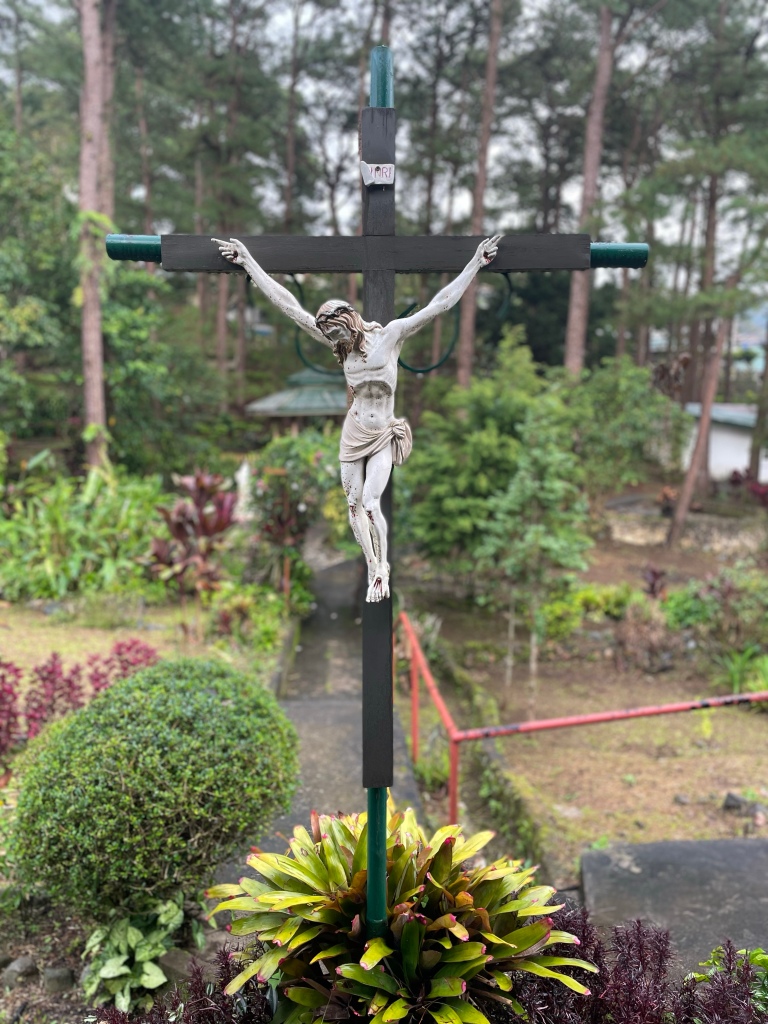
Photo by author, St. Scholastica Convent, Baguio City, 23 August 2023.
Lord Jesus Christ,
thank you for coming
to us, opening the heaven
anew for us after the Father
had it closed when Adam
and Eve sinned;
thank you, too,
dear Jesus,
for in your coming,
the heaven was opened
for us to see "angels of God
ascending and descending
on the Son of Man" (Jn. 1:51).
Lord Jesus,
you are
the ultimate message
and ultimate messenger
of the Father;
let us adhere to you,
believe in you
and follow you
to experience
your archangels:
keep us firm in our faith
in you so we may be strong
like St. Michael whose
name means "who is like God?";
enliven our hope
so we may be open to your coming
even in the many darkness of life
to welcome St. Gabriel who brought
the good news of your birth
to the Blessed Virgin Mary;
and lastly, grant us
unceasing charity and
love to be your healing
presence like St. Raphael.
In the sight
of the angels,
let me sing your praises,
Lord.
Amen.
The Lord Is My Chef Sunday Recipe for the Soul by Fr. Nicanor F. Lalog II
Sunday in the Twenty-fifth Week in Ordinary Time, Cycle A, 24 September 2023
Isaiah 55:6-9 ><}}}}*> Philippians 1:20-24, 27 ><}}}}*> Matthew 20:1-16
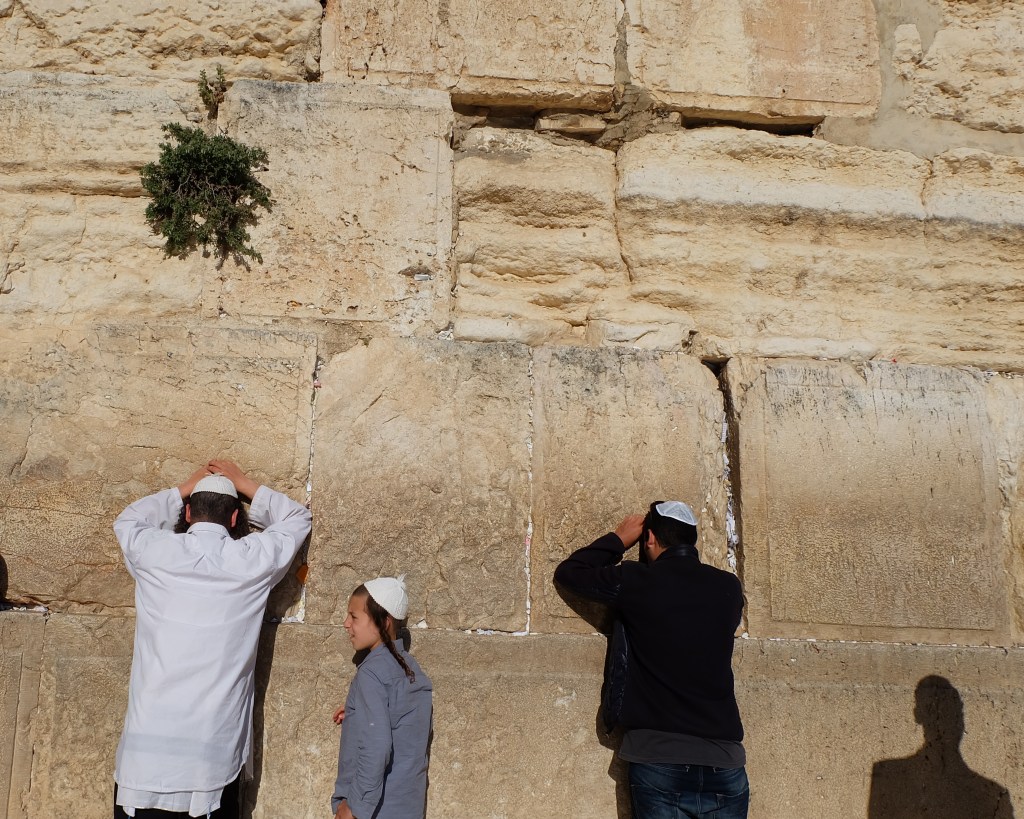
Photo by author, Church of Dominus Flevit, Jerusalem, May 2017.
We now come to the final installment in the series of teachings by Jesus Christ of what we described as delicate issues affecting even us today. Two Sundays ago it was about fraternal correction, last week was forgiving, and today, something about work and pay that are indeed very delicate for many of us, even ticklish.
Recall that love is the main motivation why we must correct those who sin and go wayward in life. It is also love that moves us to forgive those who repeatedly sin against us.
In today’s parable of the workers in the vineyard, Jesus is also teaching us about love that results when we learn to be just and generous with others because these two are the minimum requirements of love. It is in our field of work and in the issues of pay and wages when our being Christians are most tested when our senses of justice and generosity are blurred and worst, when we even forget God.
Photo by author, 2018, Davao City.
Like last Sunday, Jesus used another parable today to use a simple story of daily life that appeals to our common experiences. What is very interesting is how both parables of the Lord incited hearers to take sides and adopt positions. Last Sunday we too felt indignant against that servant who was forgiven of his loan so huge but could not let go of the debts of his fellow worker that was so little in amount.
But today’s parable has a different twist that we felt swept off by our feet when Jesus through the landowner reacted differently at the grumbling of those workers who worked longer in the vineyard and received same amount with those who worked for less hours yet paid equally.
“When those who have started about five o’clock came, each received the usual daily wage. So when the first came, they thought that they would receive more, but each of them also got the usual wage. And receiving it they grumbled against the landowner, saying, ‘These last workers worked only one hour, and you have made them equal to us, who bore the day’s burden and the heat. He said to one of them in reply, ‘My friend, I am not cheating you. Did you not agree with me for the usual daily wage? Take what is yours and go. What if I wish to give this last one the same as you? Or am I not free to do as I wish with my own money? Are you envious because I am generous?'”
Matthew 20:9-16
Did we not feel surprised, even shocked? Did anyone cry unfair? How could the landowner – God – pay everyone the same amount when others worked so less than the rest?
How sad that when talks are about work and pay, we always insist on justice, especially if we feel the ones shortchanged. And worst, we used it also as our norm for salvation, for entering heaven with some openly declaring who would go to heaven and who would not!
And that is actually the context of the parable when Jesus said “The kingdom of heaven is like a landowner who went out at dawn to hire laborers for his vineyard” (Mt.20:1). This is not just about social justice and just wages but about the goodness of God. The vineyard is God, and heaven. Our salvation. Harvest time means judgment day as well as gathering of everyone in God to receive his blessings of love and salvation, healing and forgiveness.
Jesus Christ came to us like that landowner who never stopped looking and searching for us especially those lost and sinful. Truly a God so loving and merciful, he wants us all saved that as early as dawn and as late as 5 o’clock in the afternoon, he kept looking for workers to be blessed, to have something to bring home and share with their families and loved ones at the end of the day. What a beautiful imagery of God our Father who sent us his Son Jesus Christ so we could all come to him. Here we find the previous two parables still operating in the full sense wherein the landowner’s search for more workers into his vineyard was like Christ’s mandate for us to correct and forgive those who sin.
Photo by author, Church of St. Anne in Jerusalem, May 2017.
This Sunday, Jesus is telling us that each one of us is so loved by God who is overly generous, blessing us with everything we need, giving us all the chances in life to become better.
Therefore, let there be no room among us to own and box God and his blessings! Let us not usurp God’s power and generosity for others. We are all his children. Let no one assume to one’s self that he/she is more worthy to God nor he/she is more entitled much less a favorite of God! Please. Especially those who claim only they would enter heaven?
Today, Jesus is telling us we are all his servants, we are all his workers in his vineyard. Those workers hired at dawn were given a job because God is good. From his kindness, he gave them a silver coin for their wage. It is the same good and loving, kind and generous God who hired the other workers at 9am, noon, 3pm and 5pm with the usual salary. Therefore, it is very wrong for those hired at dawn – for anyone of us today – to complain to God of not receiving more than the others just because we have served longer than them. We have no right at all to command and direct God how he must give or dispense his blessings because whatever we receive from him is out of his goodness and never of our own merit.
Moreover, those workers hired at dawn should actually be grateful to God in giving them work while at the same time rejoice too that God had called others later to receive a decent pay to bring home. Here we find a similarity in the attitude of the elder brother in the parable of the prodigal son who also complained to their father the party thrown for the return of his younger brother (Lk.15:11-32).
We are all workers in the Lord’s vineyard, God’s beloved and forgiven children. What kind of workers, or children of God, are we then?
May we always remember St. Paul’s admonition two Sundays ago to “Owe nothing to anyone, except to love one another” (Rom.13:8). Like in the previous two Sundays, Jesus is inviting us today to imitate him and his ways, to shift_ our existence, our views, our person into higher levels in him, with him and through him. It is the same reminder by Isaiah in the first reading that we must let go of our human ways and thoughts to trust in God’s wisdom always. There are times emotions can run high with us sometimes especially when it comes to remunerations, whether material or spiritual but like the Philippians, we must trust that ultimately, everything in this life is the work of God, even the success of Christ’s gospel. All we need to do is trust in him, be like Jesus, merciful and forgiving. Most of all, generous and loving. Amen. Have a blessed new week!
From Facebook, Easter 2021: “There is an urgency to announce the joy of the Risen Lord.”
The Lord Is My Chef Sunday Recipe for the Soul by Fr. Nicanor F. Lalog II
Sunday in the Twenty-fourth Week in Ordinary Time, Cycle A, 17 September 2023
Sirach 27:30-28:7 ><}}}}*> Romans 14:7-9 ><}}}}*> Matthew 18:21-35
Photo by author at the RISE Tower, Our Lady of Fatima University, Valenzuela City, 28 July 2023.
This past week has been a very toxic one for us in the hospital where I serve as a chaplain.
Beginning last Sunday morning after our Mass at the University adjacent to our hospital, I had to proceed to the ICU to anoint a critical patient who expired 20 minutes later while I was still attending to seven other patients there in the unit. One died that evening, the other the following day. Last Tuesday and Thursday I had to go back to the hospital to anoint four more patients, two of them eventually died before this Saturday.
When that patient died last Sunday morning, the doctors and nurses at the ICU thanked me, telling me how the deceased must have just waited for me to receive the Sacrament of Anointing. “Hinintay lang po kayo, Father.”
I have heard that so many times even while I was assigned in a parish. And every time people would tell me that, I thank God deep in my heart for his infinite love and mercy, in never allowing patients to die until they have been anointed and absolved of their sins. That is why I am so convinced that almost everybody goes to heaven or purgatory when they die because God ensures that each one of us will have a chance to prepare to meet him in heaven. Only a few, even almost no one, except anyone who would reject God totally goes to hell.
Photo by Dra. Mylene A. Santos, MD at Tagalag, Valenzuela City, 13 September 2023.
My dear friends and family, today we continue the second in a series of what I have told you last Sunday of the Lord’s teaching on some of life’s most delicate issues we are all aware of but find so difficult to accept and practice.
Last Sunday, it was about fraternal correction, of the need for us to speak to those living in sin. Today, Jesus teaches us to forgive those who sin against us.
Peter approached Jesus and asked him, “Lord, if my brother sins against me, how often must I forgive? As many as seven times?” Jesus answered, “I say to you, not seven times but seventy-seven times. That is why the kingdom of heaven may be likened to a king who decided to settle accounts with his servants….”
Matthew 18:21-23
Notice how Jesus used a parable in explaining forgiving to Peter and other apostles along with us today. Forgiving from the heart because of love can never be fully explained as a concept; love is best expressed in forgiveness which Jesus showed us on the Cross where his first words were for the forgiveness of his enemies who “knew not what they were doing”.
Photo by Dean Mon Macatangga, May 2023.
When we love, we level up in our existence and that becomes most true when we forgive. See how love remains the antidote to sin which is lack of love. Both fraternal correction and forgiving are expressions of love that is true, the love of Christ. That is the point of Christ’s parable when he said, “That is why the kingdom of heaven may be likened to a king who decided to settle accounts with his servants.”
To love, to forgive, to correct those who sin are all in the realms of God, of the divine as Shakespeare said, “to err is human, to forgive is divine.” Whenever we forgive because we love like God, we become like him!
Becoming like God, becoming divine happens when we recognize one another as brothers and sisters in Christ. Here lies the beautiful twist in the Lord’s parable: forgiving is in the realm of the kingdom of God where we are brothers and sisters, not just servants who owe God our king or anyone with debts to be paid that are measurable in exact amount or quantity. St. Paul expressed it beautifully last Sunday, “Brothers and sisters: Owe nothing to anyone, except to love one another; for the one who loves another has fulfilled the law” (Rom. 13:8).
Love is the only debt we owe everyone. We can never repay love because it is a debt so huge, like the debt of that servant summoned by the king in today’s parable. Jesus came to “save” us from that debt of love that God asks us not because he needs it repaid but because he showers us with so much of that love. We just have to keep on sharing that love of God that is infinite because love is the essence of our lives. To live is to love and when we love, that is when we truly live. And that is why we must forgive also like him. On our own it is impossible to love and to forgive but that grace has always been there for us to take and share because we are all loved and forgiven children of God. To forget or disregard this truth is to separate from God and from everyone which is what hell is all about.
Photo by Dra. Mylene A. Santos, MD at Tagalag, Valenzuela City, 13 September 2023.
Both teachings and instructions by Jesus to correct our wayward brothers and sisters and to forgive those who often sin against us are expressions of our love of God. Indeed, they are both difficult, most especially forgiving from the heart. Problem with forgiveness is the fact that the most painful hurts we incur are always inflicted by those we love, by those people closest to us and dearest to us. It is a grace we have to pray for always, whether for us who have sinned or hurt by others.
But, there are also practical considerations why we have to forgive as Ben Sirach had noticed since the Old Testament days. It is something we continue to experience these days and sadly, even see on social media like the endless series of road rage everywhere in the world that has become like a pandemic.
How true were the observations by Ben Sirach that “Wrath and anger are hateful things, yet the sinner hugs them tight” (Sir. 27:30) as clips of road rage vividly show us in social media, from the lack of respect of those involved to abuse of authority as well as destruction of lives and properties. Like the other servants in the parable, we feel sorry for the victims of road rage considering mostly are about petty things blown out of proportions.
Photo by Dra. Mylene A. Santos, MD, Quezon Province, August 2022.
Psychologists and experts also tell us the importance of forgiving for practical reasons but they all pale in the light of the simple fact that the obligation to avoid resentment, hatred and violence is strictly enjoined on us who know God and are conscious of our own need for his forgiveness and mercy. In the end, let us forgive one another as St. Paul reminded us today in the second reading that everything will be determined and judged in our relationship with Jesus Christ who suffered and died for our sins. This we constantly honor and deepen when we forgive, when we pray the Our Father, and when we celebrate the Holy Eucharist. Amen. Have a blessed week ahead!
The Lord Is My Chef sunday Recipe for the Soul by Fr. Nicanor F. Lalog II
Sunday in the Twenty-third Week of Ordinary Time, Cycle A, 10 September 2023
Ezekiel 33:7-9 ><))))*> Romans 13:8-10 ><))))*> Matthew 18:15-20
Photo by author, St. Scholastica Convent, Baguio City, 23 August 2023.
Our gospel this Sunday is very difficult but also one of the simplest and fundamental teachings by Jesus Christ: fraternal correction for more harmonious relationships.
That is very difficult because we have all experienced how when we heard of somebody going wayward in life, of living in a life of sin, our immediate reaction is to talk about them, engage in gossips without any intentions at all to correct them. Sad to say, we even distance ourselves from them – exactly the opposite of what Jesus is teaching us today:
Jesus said to his disciples: “If your brother sins against you, go and tell him his fault between you and him alone. If he listens to you, you have won over your brother. If he does not listen, take one or two other along with you, so that every fact may be established on the testimony of two or three witnesses. If he refuses to listen to them, tell the church. If he refuses to listen to the church, then treat him as you would a Gentile or a tax collector.”
Matthew 18:15-17
Photo by author, St. Scholastica Convent, Baguio City, 23 August 2023.
Jesus is now heading to Jerusalem to fulfill his mission. Along the way, he taught his disciples important lessons about the Church he had just “established” upon Peter, the Rock, while at Caesarea Philippi three weeks ago.
In these next three Sundays, Jesus tackles three delicate issues we continue to face even in our modern time like fraternal correction, forgiving, and work. These are delicate topics because they are all expressions of mutual love for one another.
Very often, we commit the sin of omission in the realms of these three, particularly of fraternal correction as we tend to detach ourselves from others especially if they are committing sin. By distancing from them, we unconsciously allow them to sin. In the movie The Good Nurse based on that true story of a nurse in the US who killed so many patients for some years by transferring to different hospitals, the good nurse asked him why he did it? The serial killer nurse said, “nobody told me to stop doing it.”
The dark side of the sin of omission lies in that tendency within us to not care at all especially with those who prefer to separate from us and lead their lives in the way they wanted. There is that tendency within us to be like Cain even if we are not guilty of any sin or may even be the offended party, saying, “am I my brother’s keeper?” Most sad are our Filipino expressions when somebody sins, “Bahal ka na sa buhay mo…pinili mo iyan, pagdusahan mo.”
Photo by author, Camp John Hay, 12 July 2023.
Fraternal correction is the antidote to sins of omission because it is about keeping our relationships intact as family, friends, brothers and sisters in Christ.
Jesus becomes truly present in the world among us when we live in harmony because “where two or three are gathered together in my name, there am I in the midst of them” (Mt. 18:20).
As early as the Old Testament, God had already insisted on this moral precept as his children that we look after one another like a guard or sentinel in the positive sense as he told the Prophet Ezekiel in the first reading. At that time, the enemies of Judah were closely approaching their borders that they designated watchmen as their first line of defense. Failure by these watchmen to warn the people – as it turned out later – could spell disaster for the kingdom.
The same thing is true with us. We are all interrelated with each other. One rotten tomato can spoil the whole batch. We cannot choose to be indifferent or just be mere bystanders amid the evil and sins happening around us perpetrated by those closest to us. But we must do it all in the spirit of love, not because we are better or holier.
Brothers and sisters: Owe nothing to anyone, except to love one another; for the one who loves another has fulfilled the law. Love does no evil to the neighbor; hence, love is the fulfillment of the law.
Romans 13:8, 10
Photo by author, Sacred Heart Novitiate, Novaliches, QC, 22 March 2023.
Fraternal correction is an expression of our mutual love for one another, the exact opposite of sin of omission. St. Paul offers us a lot today about this love that builds our family and community still from his letter to the Romans.
Let us start with St. Paul’s conclusion that love is the fulfillment of the law which we often hear and even proclaim to others. Main question that arises from this is the nature of this love. For St. Paul, love is the self-sacrificing love that Jesus showed us when he offered himself for us on the cross. Recall last Sunday St. Paul reminded us to offer your bodies as a living sacrifice(Rom. 12:1) like Jesus. In that same chapter, St. Paul spoke about not retaliating or seeking vengeance, an echoing of the Lord’s instruction on love when asked by a scholar of the law which is the greatest of the commandments (Mt.22:37-40).
Here we find, love for St. Paul is the imitation of Jesus Christ, a love that can never be measured at all and even be demanded and decreed! The love of Jesus Christ is so new as he mentioned at his last supper (Jn. 13:34) because it is a love rooted in God, a love that elevates us or as young people say “levels up” every disciple into the mystical plane.
Prior to his telling us today “to owe nothing to anyone, except to love one another”, St. Paul was expounding at the beginning of Romans 13 the theme of obedience to authority, a sort of social responsibilities, of things like justice (vv.1-7). While justice demands we pay off our debts and other dues to one another, to the state and public officials, it is a totally different scenario when it comes to love.
Photo by author, St. Scholastica Convent, Baguio City, 23 August 2023.
Love is not a possession that anyone can receive or give in an exactly measured quantity. St. Mother Teresa said that the measure of love is when you love immeasurably. There is no such thing as a kilo of love. It is either you love or do not love! And when that happens, when we do not love, then we sin. That sin can only be repaired and corrected by love. Sin is when we lack love; to overcome sin, pour in more love.
In all his writings, St. Paul always had love as the basis of his teachings so that without sounding as imposing, he could persuade us to live deeply moral lives as expression of that love in Christ which he eloquently expressed in his ode to love in 1 Corinthians 13. One of the earliest Latin phrases I have learned as a child was from my elementary school days at St. Paul College Bocaue (Bulacan). Our school motto is “Caritas Christi urget nos” – The love of Christ impels us (to love more) – from 2 Corinthians 5:14.
When we examine our true love experiences that are not selfish but other centered, we realize that love is a debt we can never pay off because love is a gift from God. This gift of his love makes us those who receive it in a filial, loving relationship with him our Father. Most of all, we realize we too can love like Jesus Christ!
God does not “order” nor “command” us in the strict sense to love him. He asks for our love because he loves us, because he is love. When we love, we fulfill the commandments of God. We live in peace and harmony with one another like in heaven. That is why it is only love that will remain in heaven where there will be no more fraternal corrections. Most of all, never be paid off as a debt because love is all that shall remain to become our very person in Christ. Amen.It is a Sunday. If you love, celebrate Mass in your parish. Have a blessed, loving week!
Photo by author, La Trinidad, Benguet, 12 July 2023.
The Lord Is My Chef Daily Recipe for the Soul by Fr. Nicanor F. Lalog II
Thursday in the Twenty-first Week of Ordinary Time, Year I, 31 August 2023
1 Thessalonians 3:7-13 ><))))*> + <*((((>< Matthew 24:42-51
I just realized today
while praying your words,
O Lord, from St. Paul
the true meaning of
goodbye: it is not really
an end but beginning
of another meeting,
of another coming together.
How lovely is St. Paul's
prayer to the early
Christians he had not seen
for so long!
Now may God himself, our Father, and our Lord Jesus direct our way to you, and may the Lord make you increase and abound in love for one another and for all, just as we have for you, so as to strengthen your hearts, to be blameless in holiness before our God and Father at the coming of our Lord Jesus with all his holy one. Amen.
1 Thessalonians 3:11-13
Teach me to live in the present
moment, Lord;
let me savor the beauty
and joy of each moment,
of each day filled with life;
let me celebrate the presence
of every person I meet
and enable them too
to celebrate life in you;
let me not waste my life
awaiting for your coming
or return, awaiting for my
own end and death
for every here and now
is also my last moment.
Goodbye, O Lord,
is not departure
but coming together
again, until we meet
again. Wherever,
whenever. Even in forever.
Amen.
Lord My Chef Daily Recipe for the Soul by Fr. Nicanor F. Lalog II
Friday in the Twentieth Week of Ordinary Time, 25 August 2023
Ruth 1:1, 3-6, 14-16, 22 <*{{{{>< + ><}}}}*> Matthew 22:34-40
Photo by Mr. Jay Javier at Tayabas, Quezon, 13 August 2023.
O how often,
Lord Jesus Christ
that we ask you until now
the same question by
a scholar of the law:
"Teacher,
which commandment
of the law is the greatest?"
(Matthew 22:34).
And we have always known
your answer, which is, loving God
with one's total self
and loving others as we love our
very selves.
But why do we keep on asking
the same question until now?
Because, we have always believed
that loving is having,
that loving is fullness,
when in fact, it is the
exact opposite:
loving is not having,
loving is being poor,
loving is emptiness,
loving is letting go,
loving is surrendering
for the one you love.
Just like Ruth,
that Moabite woman,
a pagan who left everything
to join her widowed
mother-in-law Naomi to go
back to Bethlehem;
both of them were
widowed, both were
childless and empty,
so poor without anything
except each other
and God.
Let the words of Ruth
be our prayer today
to those we love
without if nor buts,
especially those empty
and poor, sick and dying:
"Do not ask me to abandon
or forsake you! for wherever
you go I will go, wherever
you lodge I will lodge,
your people shall by my people,
and your God my God"
(Ruth 1:16).
God our Father,
help us to remain faithful
and to keep loving when
in the midst of sufferings
and trials, of emptiness
and nothingness like Ruth
to Naomi; how lovely to recall
that Ruth's love for Naomi led
to her becoming the grandmother
of King David and one of the four women
in Matthew's genealogy of Jesus
for it is loving without nothing in return
that we gain, and it is in loving
even in losing ourselves
that we find ourselves in you.
Amen.
The Lord Is My Chef Daily Recipe for the Soul by Fr. Nicanor F. Lalog II
Wednesday, Memorial of St. Rose of Lima, 23 August 2023
Judges 9:6-15 ><))))*> + ><))))*> + ><))))*> Matthew 20:1-16
Photo by author, St. Scholastica Spirituality Center, 22 August 2023.
How lovely are your words
today, god our loving Father,
expressed in fables and parables
to remind us to remain true
to our self to be faithful to our calls.
Once the trees went to anoint a king over themselves. So they said to the olive tree, ‘Reign over us.’ But the olive tree answered them, ‘Must I give up my rich oil, whereby men and gods are honored, and go to wave over the trees?’ Then the trees said to the fig tree, ‘Come; you reign over us!’ But the fig tree answered them, ‘Must I give up my sweetness and my good fruit, and go to wave over the trees?’ Then the trees said to the vine, ‘Come you, reign over us.’ But the vine answered them, ‘Must I give up my wine that cheers gods and men, and go to wave over the trees?'”
Judges 9:8-13
Heal us inside, Lord,
make us whole again
and regain our nature,
our identity,
of who we are
so we may do what we are
supposed to do;
many times we are divided inside
that we also divide those around us
and peace becomes elusive
precisely because we are
not at peace.
Let us be like you,
O God, in the parable
of vineyard owner:
filled with love and justice,
fair and kind to everyone;
never preoccupied with
competition because
everyone is regarded
as a beloved.
Amen.
Photo by author, St. Scholastica Spirituality Center, 22 August 2023.
Lawiswis Ng Salita ni P. Nicanor F. Lalog II, Ika-07 ng Agosto 2023
Larawan kuha ni Dra. Mylene A. Santos, MD, sa France, 2022.
Matapos nating pagnilayan kaibahan ng reklamo at hinaing, ngayon ay masinsinang suriin natin ang sama at kabuktutan – ang kapangitan – nitong pagrereklamo. Bukod sa sinasadya itong pag-isipan upang manipulahin mga tao maging Diyos, ang masaklap na mukha ng pagrereklamo ay naroon ito palagi sa mga taong malalapit sa atin tulad ng pamilya at kaibigan.
Sina Miriam at Aaron ay nag-usap laban kay Moises tungkol sa asawa niyang taga-Cus. And sabi nila, “Si Moises lamang ba ang kinausap ni Yahweh? Hindi ba’t tayo man?” Hindi kaila kay Yahweh ang usapan nilang ito.
Bilang 12:1-2
Larawan kuha ng may-akda sa San Juan, La Union, 24 Hulyo 2023.
Ito ang masakit na katotohanan sa pagrereklamo: ang mga unang-unang nagrereklamo laban sa atin palagi yung pinakamalapit sa atin, iyong mga taong inaasahan natin na sana higit nakaka-unawa sa atin, na sana ang mga tagapagtanggol at kakampi natin, mga nagmamahal sa atin.
Kahapon sa unang pagbasa ating natunghayan paanong nagreklamo mga Israelita laban kay Moises nang sila ay nahirapan at nagutom sa ilang. Dinig na dinig ni Moises kanilang mga reklamo kaya siya ay naghinaing sa Diyos. Dapat sana sina Aaron at Miriam na mga kapatid niya ang dumamay sa kanya subalit sa ating pagbasa ngayon, sumama pa sila sa pagrereklamo laban kay Moises!
At hindi lamang iyon! Nang-intriga pa ang magkapatid laban sa kanilang kapatid. Ginawang isyu nina Aaron at Miriam ang taga-Cus na asawa ni Moises na si Zipporah. Ating napagnilayan kung paanong sa pagrereklamo mayroon palaging panunumbat, panunukat at paghahamon sa mga inirereklamong tao kungdi pati sa Panginoong Diyos tulad sa tagpong ito (https://lordmychef.com/2023/08/07/masama-magreklamo-pananalangin-ang-dumaing/).
Alam naman nina Aaron at Miriam bakit nakapag-asawa si Moises ng hindi Judio dahil nga siya ay tumakas at nagtago sa ilang matapos niyang mapatay isang bantay na Egipsiyo. Sa pagkakataong ito, kanila ring kinukuwestiyon nila pagkatao ni Moises na kapatid nila.
Higit sa lahat, dito ating nakita ang pangit at mabahong katotohanan ng pagrereklamo na bunsod ng simpleng inggit. Tingnan kung paanong kayang wasakin ng pagka-inggit ating pagiging magkakapatid at pamilya!
Nagngingitngit sa inggit sina Aaron at Miriam laban kay Moises at maging kay Yahweh dahil hindi sila makabida sa mga tao. Ibig nilang umepal sa mga tao. Sa mga susunod na kabanata, ganito rin ang kuwento ng mga kalalakihang nainggit sa mga hinirang na propeta ni Yahwen sa ilang. Katulad ni Miriam, sila ma’y pinarusahan ng Diyos.
Larawan kuha ng may-akda sa San Juan, La Union, 25 Hulyo 2023.
Dapat nating matanggap na bawat isa sa atin ay mayroong gampaning papel at misyon sa buhay mula sa Diyos. Huwag nating sukatin o kuwentahin uri ng ating gampanin sapagkat walang maliit o malaking bagay sa Diyos. Ang pinaka-mahalaga sa kanya ay ang ating katapatan sa kanyang iniatas na gawain at misyon. Kung ang ibig ng Diyos na papel natin sa mundo ay tagapagpatay ng ilaw o taga-kaway ng munting bandila tuwing dumaraan ang tren sa crossing, iyon na iyon! Ang ningning at kahalagahan ng bawat gawain ay nakabatay sa Diyos at hindi sa ano pa mang sukatan o pamantayan ng tao. Kaya sa halip mainggit, ating pagbutihin mga gawain natin.
Sa ebanghelyo sa araw na ito ating natunghayan si Simon Pedro “umepal” kay Jesus na naglakad sa ibabaw ng tubig nang hilingin niyang palapitan din siya doon ng Panginoon. At pinagbigyan naman siya ni Jesus ngunit nang maramdaman ni Pedro ang malalakas na hangin, unti-unti siyang lumubog dahil sa takot kaya napasigaw siya sa paghingi ng saklolo kay Jesus.
Madali kasing makita ang ganda ng tanawing naglalakad sa ibabaw ng tubig o masarap siguro maranasan ikaw ay ginagalang ng lahat katulad ni Moises. Pero, iyon na ba lahat?
Hindi natin alintana mga likas na problema at hirap nakaatang sa kanya-kanyang balikat sa bawat tungkulin sa buhay at sa pamilya, sa opisina at sa pamayanan, o kahit saan man. Katulad ni Pedro nang maramdaman niya napakalakas na hangin nang maglakad sa ibabaw ng tubig katulad ni Jesus kaya natakot siya. Hindi lamang ganoon ang magreklamo at mainggit sa mga tao na ating hinahangaan o tinitingala.
Larawan ni Sto. Domingo mula sa Google.
Ngayong ika-walo ng Agosto ay paggunita kay Sto. Domingo, tagapagtatag ng Order of Preachers (OP) na tinaguriang mga Dominicano.
Batay sa mga kuwento noong ipagbuntis siya ng kanyang ina, nanaginip ito ng aso na tumatakbong may kagat-kagat na sulo, paikot-ikot sa madidilim na kalsada dahil gabi. Saan man magtungo ang naturang aso ay naghahatid siya ng liwanag dahil sa sulo sa kanyang kagat-kagat sa bibig.
Alalaong-baga, ipinalagay na ang sanggol niyang isisilang ay maghahatid ng liwanag sa buong daigdig katulad ng aso sa panaginip kaya pinangalanan siyang Domingo o Dominic na mula sa Domini Canes sa wikang Latin na ibig sabihin ay “Aso ng Panginoon”. At iyon nga ang nangyari sa buhay ni Sto. Domingo: siya at ang kanyang mga taga-sunod mula noon hanggang ngayon sa pamamagitan ng pagtuturo ay naghahatid ng liwanag ni Kristo sa daigdig na balot ng kadiliman ng kasamaan at kasalanan.
Hilingin natin kay Sto. Domingo tayo ay kanyang ipanalanging maliwanagan ating mga sarili upang mapawi lalo’t higit mga dilim ng inggit at pagrereklamo na bumabalot sa atin. Amen.
The Lord Is My Chef Sunday Music by Fr. Nicanor F. Lalog II, 30 July 2023
Photo by author in San Juan, La Union, 26 July 2023.
Finally we’re back! Sorry for being silent with our Sunday music blog relating secular songs with the Gospel of Jesus Christ.
For our return engagement since our last blog in June 11, 2023 with Stephen Bishop’s Parked Cars (https://lordmychef.com/2023/06/11/parked-cars-by-stephen-bishop/), we feature this Sunday one of our favorite local talents, Mr. Zack Tabudlo with his 2021 hit Habang Buhay from his album called Episode.
We can’t recall where and when we first heard this swinging OPM love song that sounds like from our era of VST & Co. Fact is, Tabudlo has other previous hits before Habang Buhay which struck us with two important things we find so close to our Sunday gospel.
First is its melodic upbeat tune teeming with profundity despite its being so light and refreshing to listening (and dancing). Though we find traces of influence from the late 1970 to1980’s disco era in Tabudlo’s music, Habang Buhay is so sincere with its Gen Z identity that is authentically so Pinoy especially with its shouts of Halika nga that is twice repeated.
Aking sinta, ano ba'ng mayro'n sa iyo?
'Pag nakikita ka na, bumabagal ang mundo
'Pag ngumingiti ka, para bang may iba
'Pag tumitingin sa 'kin, mapupungay mong mga mata
Wala akong takas sa nakakalunod mong ganda, ha
Halika nga (ha, ha, ha)
That shout of Halika nga is so typically Pinoy, so warm and genteel like Jesus Christ calling us to be open to his parables, to find God hidden in the most simplest things of ordinary life. Halika nga evokes those tender, loving calls of our Lola during summer vacation calling us to change clothes soaked in dirt and perspiration with a glass of Julep or Sunny Orange juice during those endless afternoons of fun and games.
Halika nga sometimes is an expression of playfulness masking as deeply serious. It is something we rarely hear these days because nobody seems to offer us with comfort and company, with love and concern anymore.
In Habang Buhay, Tabudlo is overjoyed, playfully or teasingly calling his beloved halika nga for them to bask and savor this wonderful love they have found. If we could just hear Jesus calling us too, telling us halika nga to stay with him to discover God as the only worthwhile love and treasure we could ever have in this life.
And where do we find that kind of love? In Christ’s dying for us on the Cross which Tabuldo had thought of as the true expression of his love that is faithful until the end.
Andito 'ko hanggang sa 'ting pagtanda
Mamahalin kita basta't 'pag nahulog
Nakahawak ako, 'wag ka lang bibitaw
Habang-buhay na ako'y iyo
Wala nang ibang nakagawa sa 'kin nang ganito
Kundi ikaw, nag-iisang diyosa ng buhay ko
'Wag ka nang matakot, 'wag kang mangamba
Andito ako 'pag ika'y mag-isa
Wala akong takas sa nakakalunod mong ganda, ha
Halika nga (ha, ha, ha)
This is the second thing that struck us in Habang Buhay, an amazing song that speaks of love that is pure and true, and most of all, willing to suffer and sacrifice. Like in the gospel today of the parables of the treasure buried in the field that prompted the farmer to sell all his possessions to acquire that property and of the fine pearl found by a merchant who also sold everything he had just to have it. The same is true with love, and with God: what are we willing to let go to have the love of our life?
It’s a rarity in this fast-paced world to hear from young people speaking about love in its deeper sense like the giving of self for a beloved, giving us deep sighs of relief that we’re leaving this world in good hands. Habang Buhay assures us not only of a love that is forever but invites us too to trust the next generation by witnessing to them Christ’s love found on the Cross. Amen.
A Wedding Homily for a Nephew, Raymond Immanuel Alonzo & Charlene Patricia Moya
The Manila Cathedral of the Basilica Minore of Immaculate Conception, 07 July 2023
Ephesians 5:25-31 ><]]]]'> + <'[[[[>< John 15:12-17
All praise and thanksgiving to God our loving Father for this day, Immi and Pat! This is the day God had set to be your wedding day. Not last year, not next month nor any other day except this seventh day of July 2023.
Jesus Christ said in our gospel today, “It was not you who chose me, but I who chose you and appointed you to go and bear fruit that will remain, so that whatever you ask the Father in my name he may give you” (John 15:16).
Surprised? Yes, Immi and Pat, you have both felt God surprising you many times since you met each other, mysteriously weaving your lives seamlessly together that today you are before him at his altar to pledge your love for each other.
Photo by Ms. Jo Villafuerte, Atok, Benguet, 01 September 2019.
That is what I wish to share with you this afternoon: keep that element of surprise in your lives together, Immi and Pat. Never lose that sense of wonder because it is when we are surprised that we start to believe; when we believe, we get closer and then we love. The more we love, the more we are surprised and the more we believe until that love matures into more than feelings but a decision and commitment to love until death.
Hindi ba, Immi and Pat, that is why you are here today because you have finally decided to grow together in this love because you believe in each other and most of all in God?
There were many occasions you were both surprised at the twists and turns in your lives as individuals, beginning at how you got to know each other in the office.
Hindi naman love at first sight iyon. Hindi nga kayo magka-type pareho kaya nag-aasaran kayo palagi.
You were opposites but the more you were surprised in discovering new things about each other, the more you gravitated to each other, the more you believe in each other, surprisingly realizing that actually, you are not opposites but share a lot in common.
That’s when you became good friends caring for each other, conversing more often with topics getting deeper like plans and views in life until one day, Pat had so much of these surprises as she juggled many things in her life and asked to speak with you, Immi, to avoid confusion and complicate things further in your friendship.
Wala pa siyang sinasabi maliban sa “mag-usap tayo” and you just told her, “Let’s go out on a date”.Iyon na yun! Kayo na! Dehins na hangout, date na. Wow, tamis!
The problem in our time is that everything, everyone is exposed. Even overexposed!
With social media all around us, everything is shown and displayed for all to see, leaving no room at all for surprises.
Many people these days want everything to be certain. Lahat segurista na ngayon.
No more surprises, no more faith because many of us have stopped believing. Remember, “Faith is the realization of what is hoped for and evidence of things not seen” (Heb. 11:1). That is why, when we are surprised, then we believe. Then as we believe more and get surprised more, we love.
Immi and Pat, always have faith, believe and be surprised with each other and with God.
The world tells us, “to see is to believe” but our faith teaches us, “believe so that we would see.” Remember when Jesus told Thomas a week after Easter, “Blessed are those who have not seen and have believed “(John 21:29b).
Keep that childlike attitude in you of being surprised always, of having that sense of awe and wonder. That is why kids believe and trust always.
Photo by Ms. Jo Villafuerte in Atok, Benguet, 01 September 2019.
Being surprised is being open with the simple realities of life, of the joys of being alive and sharing this life with a special someone in love. Being surprised is being open to getting hurt because we believe there is that special someone who would always take care of us, with whom we can be our true selves no matter what. Being surprised is being open to the realities and ecstasy of loving and of being loved in return. Being surprised is believing in God who is a God of surprises because he loves us so much.
In the Book of Genesis, we find Jacob falling asleep at Bethel with a stone as his pillow, dreaming of a stairway to heaven. It was so good because he saw God and his angels ascending and descending the stairway to heaven that upon waking up, Jacob had that sense of wonder and awe, “Truly the Lord is in this spot, although I did not know it!” (Gen.28:16). Jacob was surprised. Then he believed. And loved and served God. In 1971, we heard Jimmy Page and Robert Plant singing, “makes me wonder” over and over in their hit Stairway to Heaven.
But, Edith Piaf said it best in 1946, of how she was surprised in finding love with her classic song La vie en rose. No, I will not sing it but will just read it to remind you God’s many surprises for you, Immi and Pat.
I thought that love was just a word
They sang about in songs I heard
It took your kisses to reveal
That I was wrong, and love is real
Hold me close and hold me fast
The magic spell you cast
This is la vie en rose
When you kiss me heaven sighs
And though I close my eyes
I see la vie en rose
When you press me to your heart
I'm in a world apart
A world where roses bloom
And when you speak, angels sing from above
Everyday words seem to turn into love songs
Give your heart and soul to me
And life will always be
La vie en rose.
Immi and Pat, God has a lot of surprises for you. Remain faithful with each other, remain faithful to Jesus Christ who have called and chosen you. Have Christ always between you in your relationship. Pray, believe and have trust in him so you both would see more surprises, more life, more love in your married life. God bless you, Immi and Pat! Amen.
For those wishing to listen and perhaps use this classic piece, here is its English version.