The Lord Is My Chef Daily Recipe for the Soul by Fr. Nicanor F. Lalog II Monday, Memorial of St. Padre Pio, Priest, 23 September 2024 Proverbs 3:27-34 <*((((>< + ><))))*> Luke 8:16-18
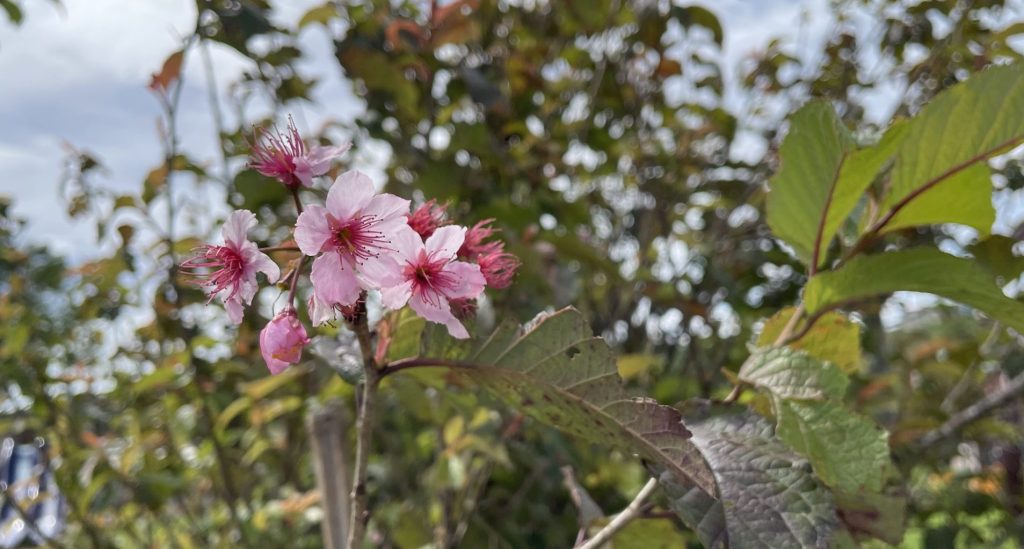
Photo by Mr. Jay Javier, 07 September 2024.
Jesus said to the crowd: “No one who lights a lamp conceals it with a vessel or sets it under a bed; rather, he places it on a lampstand so that hose who enter may see the light… Take care, then, how you hear. To anyone who has, more will be given, and from the one who has not, even what he seems to have will be taken away” (Luke 8:16, 18).
God our loving Father, thank you very much in giving us a modern saint in San Pedro Pio who is so beloved not only for his miracles but most of all in his bringing your Son Jesus Christ's light into this dark modern world, listening always not only to You but to everyone so weighed down by sin and all forms of sufferings.
With your so many gifts to San Padre Pio especially the stigmata of Jesus, he remained so humble, witnessing to this modern world of excessive wealth and poverty in money and spirituality, San Padre Pio refused no one whatever good he could offer to those who came to him and continue to come to him for intercession.
Fill us, dear Father, with St. Padre Pio's same love of You and love of neighbor rooted in the meaningful celebration and deep love for the Holy Eucharist, always making your light shining brightly in our life of witnessing as we too listen intently to your words through Jesus Christ. Amen.
The Lord Is My Chef Sunday Recipe for the Soul by Fr. Nicanor F. Lalog II Sunday in the Twenty-fifth Week of Ordinary Time, Cycle B, 22 September 2024 Wisdom 2:12, 17-20 ><}}}}*> James 3:16-4:3 ><}}}}*> Mark 9:30-37
Photo by author in Caesarea Philippi, Israel, May 2017.
Time flies so fast these days and so does our gospel reading with Mark telling us in quick succession Jesus journeying south towards Jerusalem, passing through Galilee then making a stopover in a house in Capernaum.
Jesus is now intensifying His teachings to the Twelve – and us too today. For the second time since Sunday after being identified as the Christ, Jesus “spoke openly” of His coming Passion, Death, and Resurrection to His Apostles; but, unlike last Sunday, the Twelve remained silent and instead debated on who among them is the greatest as they grappled on the meaning of their Master’s coming Pasch.
Jesus was teaching his disciples and telling them, “The Son of Man is to be handed over to men and they will kill him, and three days after his death the Son will rise.” But they did not understand the saying, and they were afraid to question him. They came to Capernaum and, once inside the house, he began to ask them, “What were you arguing about on the way?” But they remained silent. They had been discussing among themselves on the way who was the greatest (Mark 9:31-34).
Photo by Ms. Marissa La Torre Flores in Switzerland, August 2024.
Did you notice that beautiful interplay again in the scene with the preceding Sunday?
Last Sunday, Jesus spoke openly of His coming Passion, Death, and Resurrection where Peter reacted by taking Him aside to protest. Jesus rebuked Peter, telling him how he thought in man’s ways than God’s ways.
Today, Jesus spoke openly anew of His coming Pasch but this time, the Twelve fell silent because according to Mark, “they did not understand the saying, and they were afraid to question him.”
Are we not like the Twelve so often with Jesus? We follow Him, we believe Him, we listen to Him but never understand His words and worst, so afraid to question Him?
What do we not understand in His words? Or, is it more of still refusing to accept the reality of His Passion, Death, and Resurrection like Peter last week?
We are afraid to ask Jesus the meaning of His words, of His plans for us not because they have hidden meanings but usually due to our own hidden agendas.
Photo by Mr. Jay Javier, 07 September 2024.
We find it hard to trust Jesus enough unlike the upright in the first reading especially in this age of social media and instant fame and popularity when numbers of “likes” and votes prevail over what is true, good, and beautiful. Real talents, innate goodness and whatever natural are disregarded. That is why I have never watched nor believed in any beauty or singing contest these days because winners are decided not really on their talents or beauty and intelligence but more on the votes they get from viewers and people. Life has become more of a popularity contest often seen in terms of money. Pera pera lang?
This propensity of equating number of votes and likes with what is true and good and beautiful reeks with a lot of those stinky attitudes of the wicked in the first reading. The author of the Book of Wisdom perfectly expressed the inner thoughts and dynamics of the wicked who are intolerant of contradiction in whatever form, most especially unbearable to them is the living reproach and challenge of the life of just persons in their midst. This was fulfilled in Christ Jesus, the Just One of God the wicked men have crucified.
The wicked say: Let us beset the just one, because he is obnoxious to us; he sets himself against our doings, reproaches us for transgressions of the law and charges us with violations of our training… Let us condemn him to a shameful death; for according to his own words, God will take care of him” (Wisdom 2:12, 20).
Photo by Mr. Jim Marpa, 2018.
Jesus Christ’s teaching of the Cross is the perfect spirit of being a child that runs contradictory to the ways of the world. To be like a child these days as Jesus showed the Twelve is to invite sarcasm and ridicule, unacceptable to those who live in the dictates of the world of power and force, wealth and fame that certainly lead to more divisions and destruction.
Jesus invites us this Sunday to “speak openly” to Him like a child filled with trust and enthusiasm to know and learn more about life and its meanings like our doubts and fears, incomprehension and uncertainties.
See how children’s face light up when grown-ups recognize their inquiries even without any explanations at all. The same is most true with Jesus in whom anything that is dull and drab shines brightly when seen in His light.
Photo by author, St. Scholastica Retreat Center, Baguio City,
We cannot escape the scandal of the Cross. To dwell on Easter Sunday without the Good Friday only makes our life journey difficult and tiring without any direction, a waste of time and energy circling around the ways of the world that has always been proven wrong.
The essence of Christ’s Passion, Death, and Resurrection is found in being a child in the same manner Jesus remained the Son of God there on the Cross. He has always been clear with this; though He knew His fate, Jesus was totally free in choosing to suffer and die on the Cross because He fully entrusted Himself to the Father as He prayed before dying on the Cross, “Father, into your hands I commend my spirit” (Lk.23:46).
That beautiful imagery of a child Jesus placed in their midst as He put His arms around him encapsulated perfectly His own Passion and Death:
Then he sat down, called the Twelve, and said to them, “If anyone wishes to be first, he shall be the last of all and the servant of all.” Taking a child he placed it in their midst, and putting his arms around it he said to them, “Whoever receives one child such as this in my name, receives me; and whoever receives me, receives not me but the One who sent me” (Mark 9:35-37).
Photo by Mr. Red Santiago of his son Clyde, January 2020.
Every Sunday, Jesus gathers us in the Eucharist, just like the house in Capernaum where He spoke privately to the Twelve to explain the Cross and being like a child.
Let us not be afraid to speak these openly to Jesus because in our shame or fears of questioning Him, the more we live in rivalries among each other, the more we covet and envy, the more peace becomes elusive because as St. James rightly said, “You do not possess because you do not ask. You ask but not receive, because you ask wrongly, to spend it on your passions” (James 4:2c-3).
Let us gather around Jesus every Sunday, speak openly to Him especially after receiving Him Body and Blood in Holy Communion to cast unto Him all our worries and doubts in life. Let us take time to listen to Him and be imbued with His teachings. Amen.Have a blessed week ahead, everyone.
The Lord Is My Chef Daily Recipe for the Soul by Fr. Nicanor F. Lalog II Friday, Memorial of St. Andrew Kim Tae-gon & Companion Martyrs, 20 September 2024 1 Corinthians 15:12-20 <8{{{{>< + ><}}}}8> Luke 8:1-3
Photo by author in Bolinao, Pangasinan, 2022.
"And if Christ has not been raised, then empty too is our preaching; empty, too, your faith"....
and empty too is our life!
St. Paul's words to the Corinthians echo so well in our own time when many of us believers live as though there will be no resurrection of the dead; so many of us believers today see life limited only to this temporal world that we indulge in everything that is material and pleasing, avoiding all pains and sufferings, simply subscribing to that dictum to drink and be merry for tomorrow we shall die.
Forgive us, Jesus, when we see life's fullness is found only in things and pleasures of the world that we forget the truth that life is empty without your Cross because it leads us to Resurrection each day like the sunrise; life is empty when we have more of the world and less of God whose ultimate reality is in the resurrection and life everlasting.
Grant us the grace of those holy women who followed you in your ministry, giving up everything they have especially their sinful past because in you they found and experienced resurrection; most of all, like the more than 100 martyrs of Korea whom we remember today, let us bear our cross of witnessing to you and your gospel, Jesus, so that people may realize that truly, life is most meaningful most fulfilled only in you. Amen.
St. Andrew Kim Taegon, first Korean priest with his lay associate St. Paul Chong Hasan with 113 other Koreans died as martyrs between 1839 and 1867.
The Lord Is My Chef Daily Recipe for the Soul by Fr. Nicanor F. Lalog II Thursday in the Twenty-fourth Week of Ordinary Time, Year II, 19 September 2024 1 Corinthians 15:1-11 ><))))*> + <*((((>< Luke 7:36-50
Photo by author, St. Scholastica Spirtuality Center, Tagaytay City, 21 August 2024.
Praise and glory to you, God our loving Father! Thank you for your unending gifts of grace for us despite our many sins and our being undeserving.
Truly like St. Paul, we too feel so small, "the least" for our so many sins yet you never denied us with that immense grace of mercy and forgiveness, redemption and new life in Christ Jesus our Lord that we so often forget.
Let us affirm and be grateful by cultivating this great grace you have given us in Jesus be who we are in your sight, never making your grace "ineffective" like the Pharisees in today's gospel who could not stand the sight of Jesus interacting with a sinful woman, of Jesus speaking to a sinner, of Jesus forgiving so great a sin.
May we keep in our heart and mind your tremendous gift of grace to be near you, to be like you, to be filled with you by living out your grace in grateful witnessing of loving and joyful service to others.
Help us remember that like in the Annunciation to Mary, rejoicing and grace are always together: from the Greek words charis for grace and chara for rejoicing, rejoicing and joy are clearest signs of grace anywhere like that woman who washed and anointed the Lord's feet. Amen.
The Lord Is My Chef Daily Recipe for the Soul by Fr. Nicanor F. Lalog II Wednesday in the Twenty-fourth Week of Ordinary Time, Year II, 18 September 2024 1 Corinthians 12:31-13:13 <*{{{{>< + ><}}}}*> Luke 7:31-35
Photo by author, 20 August 2024.
What a lovely Wednesday today, O God our merciful Father! Thank you for this wonderful moment, thank you for your presence, thank you for the gift of life. Thank you for the love.
St. Paul tells us today that love is the greatest of all your gifts, O God because no amount of goodness and giftedness will ever be worthy without love. And what is love?
Love is. That is, being present always. Never absent.
Love happens in the present moment, never in the past nor the future.
That is why love is patient, love is kind, love is not jealous, love is not pompous, love is not inflated, love is not rude, love is not self-interested, love is not quick-tempered, love does not brood over injury, love does not rejoice over wrongdoing, love rejoices with the truth, love bears all things, love believes all things, love hopes all things, love endures all things (1 Corinthians 13:4-7) because precisely, love is always in present tense.
Jesus said to the crowds: “Then to what shall I compare the people of this generation? What are they like? They are the children who sit in the marketplace and call to one another, ‘We played the flute for you, but you did not dance. We sang a dirge, but you did not weep'” (Luke 7:31-32).
Forgive us, dear Jesus for being loveless, always missing every moment to love, missing every chance to be kind to others, for desiring and having always the best intentions but never having even the the smallest kind deeds for anyone; let us live in every present moment, that thin line between here and now called present which is the other word for gift.
Let us live, O Lord, in love, finding and cherishing the gift of every presence right here, right now. By being a gift too to others in You. Amen.
I have been searching the internet since last night of images of the widow of Nain whose only son was raised to life by Jesus in today’s gospel. After reading and praying over this scene found only in Luke’s gospel, it struck me differently last night, touching something so deep within me unlike before that I wanted to see how artists portrayed her.
Unfortunately despite the many paintings based on this story by Luke, only a few artists took time to paint with focus and emphasis on the widow of Nain. Despite Luke’s detail in saying that Jesus was moved with pity with her than with the young dead son, artists seemed to have looked more into the whole scene than the persons involved.
Jesus journeyed to a city called Nain, and his disciples and a large crowd accompanied him. As he drew near to the gate of the city, a man who had died was being carried out, the only son of his mother, and she was a widow. A large crowd from the city was with her. When the Lord saw her, he was moved with pity for her and said to her, “Do not weep” (Luke 7:11-13).
What a sorrowful sight it must have been with the widow of Nain burying her only child and son after losing her husband because she had practically lost everything in life!
The widow of Nain could have been a most wonderful subject for any painter or artist as she had melted the heart of Jesus who was prompted to raise to life her dead young son. In fact, this was the only third time Jesus had raised the dead to life in all four gospel accounts as He felt the enormous loss of the widow of Nain which remains so true to every widow these days.
In this brief and lovely story, Jesus reminds us of the special care we must have for widows and widowers who have lost everything in life while at the same time bares to us too the more disheartening aspect about death, of losing a beloved. Especially when it concerns a mother.
Photo by Mr. Jim Marpa, 2018.
The most striking truth I have realized until now since my mother died in May is how she meant everything to me and my siblings that I always say, “iisa lang siyang nawala sa amin pero lahat nawala.”
That’s the pain I feel most hurting inside me. I really could not picture our house without her every morning sweeping its front or watering her orchids or combing her dog. More painful was looking inside our home now so empty without her as I imagined those days she used to feed her aquarium fish named “pitimini” and “fetunia” and other flowers I did not know at all or simply bantering with her myna bird. Whenever I would come home, I still could not look long into her room now occupied by my brother because she’s all I see and feel inside.
The story of Jesus being moved with pity at the widow of Nain proclaims how every woman is a gospel herself, especially mothers who from the very start a part of us. See how the author of Genesis rightly narrated when God decided to create the woman, He said “Let us create a suitable partner for him” (2:18).
Photo by Mr. Jim Marpa, 2018.
Every woman is apart-ner of every man, especially mothers. Our umbilical cords are never cut off from our mom even after birth for our link with her continues even long after she – or us – is gone.
That’s because every woman is everything for each one of us as the Bee Gees sang it so well in one of the scenes in Saturday Night Fever, “more than a woman to me” because
Here in your arms I found my paradise My only chance for happiness And if I lose you now, I think I would die Oh, say you'll always be my baby, we can make it shine We can take forever, just a minute at a time
More than a woman More than a woman to me...
During our Mass this morning, I chose to celebrate the Memorial of St. Hildegard von Bingen, a German Benedictine nun who lived over 1000 years ago. She was a mystic and a prolific writer, thinker and spiritual master who was beatified in 1326 but was only canonized in 2012 by Pope Benedict XVI who declared her a Doctor of the Church.
Like the other German woman saint, Teresa Benedicta of the Cross or Edith Stein, St. Hildegard’s writings are so deeply true but tenderly expressed that one could feel the woman touch of God. One of her quotes I used in reflecting on the widow of Nain says, “The mystery of God hugs you in its all-encompassing mystery.”
That’s what mothers do best, they hug us with God’s mystery as they themselves are a mystery to us that John Lennon rightly called woman as “the other half of the sky”.
Make a widow, a mother smile today for that would surely go a long, long way to heaven. God bless all the women of the world!
The Lord Is My Chef Daily Recipe for the Soul by Fr. Nicanor F. Lalog II Tuesday, Memorial of St. Hildegard, Virgin & Doctor of Church, 17 September 2024 1 Corinthians 12:12-14, 27-31 <'[[[[>< + ><]]]]'> Luke 7:11-17
Jesus journeyed to a city called Nain, and his disciples and a large crowd accompnaied him. As he drew near to the gate of the city, a man who had died was being carried out, the only son of his mother, and she was a widow. When the Lord saw her, he was moved with pity for her and said to her, “Do not weep” (Luke 7:11-13).
Today, O God our Father, you remind us of life's fragility, of life's daily crossings into a gate, a portal of death and life, of weeping and rejoicing, of absence and presence like Jesus drawing near to the gate of the city of Nain; you give us each day a chance to enter each day filled with life and joy, love and mercy of your Son Jesus Christ.
We pray most especially for widows who have lost everything: their husband, their son or daughter, their joy and meaning in life; help them cross each day's gate and portal of their daily Nain; how lovely that Jesus was moved by the widowed mother not by the dead son to be buried; many times we forget the living especially widows without realizing the unique pains and hurts they go through in losing a husband and a child.
Take care, dear Jesus, of the widows and widowers too who often cry alone, suffer in silence for their loss; visit them today with your warmth and joy to comfort them with your loving presence through their family and friends, the Church which is your Body. Through the intercession of the great mystic St. Hildegarde von Bingen, may widows and widowers experience what she had written that "The mystery of God hugs you in its all-encompassing mystery." Amen.
The Lord Is My Chef Daily Recipe for the Soul by Fr. Nicanor F. Lalog II Monday, Sts. Cornelius, Pope, and Cyprian, Bishop, Martyrs, 16 September 2024 1 Corinthians 11:17-26, 33 <*((((>< + ><))))*> Luke 7:1-10
Photo by author, Alfonso, Cavite, 21 April 2024.
Therefore, my brothers and sisters, when you come together to eat, wait for one another (1 Corinthians 11:33).
Lovely words, God our Father, for this lovely, cold Monday of overcast skies most likely with a lot of rains ahead.
Wash us clean, O God, with your rains of mercy and wisdom: it must be so easy to understand what St. Paul meant that we "wait for one another" when we come to eat together but that is exactly what has become a rarity these days; forgive us, Father, for like the Corinthians we have become like pagans, so unChristian in our lives especially at the Eucharist of your Son Jesus Christ; we no longer "wait" for one another as in we do not celebrate as one due to factions and selfishness that come in all forms; we no longer "wait" not serving each other truly as brothers and sisters; worst of all, we live for the present moment alone, being so unwise like unfaithful servants not "waiting" for Christ's return.
Let us "wait" for you, Jesus, like the people in Capernaum: the locals "waiting" for the centurion as they "strongly urged" you to help him because of his kindness to Jews; lovely was how the centurion "waited" for you, sending emissaries asking you Jesus for the healing of his slave; but, most wonderful of all, was the centurion's faith in you, Lord as he described how his slave faithfully "waited" on him, prompting him to tell you:
“Lord, do not trouble yourself, for I am not worthy to have you enter under my roof; but say the word and let my servant be healed. For I too am a person subject to authority, with soldiers subject to me. And I say to one ‘Go’, and he goes; and to another, ‘Come here,’ and he comes; and to my slave, ‘Do this,’ and he does it” (Luke 7:6, 7-8).
Indeed, dear Jesus, to "wait" is to serve; to "wait" is to be one with others and with you; to "wait" to find myself always not worthy to receive you but you chose to "wait" for us in the Cross with your words of mercy and forgiveness that we are all healed, we are saved.
Pray for us, holy martyrs Pope Cornelius and Bishop Cyprian who both waited faithfully for their flock especially those who have lapsed in faith, those who have sinned and erred. Amen.
The Lord Is My Chef Sunday Recipe for the Soul by Fr. Nicanor F. Lalog II Twenty-fourth Sunday in Ordinary Time, Cycle B, 15 September 2024 Isaiah 50:5-9 <*{{{{>< James 2:14-18 ><}}}}*> Mark 8:27-35
There is something very striking with the similarities and differences in our gospel last Sunday and today that greatly reveal to us the person of Jesus Christ whom we all imitate and follow as His disciples.
In Decapolis last Sunday, Jesus separated a deaf man – “took him off by himself away from the crowd” – to heal him by putting his fingers into the man’s ears, then spitted and touched his tongue as he groaned “Ephphatha” – be opened – and the man was healed as “he spoke plainly”.
Further up north of Decapolis which is the chief pagan city of Caesarea Philippi, the Apostle Peter took Jesus away from the crowd after the Lord spoke openly of His coming Passion, Death, and Resurrection.
But unlike the deaf mute healed when separated from the rest, Jesus rebuked Peter as He returned to the crowd as He continued to speak openly of His coming Passion, Death, and Resurrection.
He began to teach them that the Son of Man must suffer greatly and be rejected by the elders, the chief priests, and the scribes, and be killed, and rise after three days. He spoke this openly. Then Peter took him aside and began to rebuke him. At this he turned around and, looking at his disciples, rebuked Peter and said, “Get behind me, Satan. You are thinking not as God does, but as human beings do” (Mark 8:31-33).
Photo by author at Petra in Jordan, May 2019.
I love the contrast of these two events Mark tells us so succinctly without missing details that speak so well of God’s ways and man’s ways, of what is to think and act like Jesus and how the devil tricks us into its devious and insidious ploys.
See also how last Sunday the healed deaf-mute “spoke plainly” in Christ while today we are invited by Mark to “openly speak” like Jesus of life’s sufferings and death.
When God separates us from the rest of the people and our usual routines like what happened at Decapolis last Sunday, it is because He wants us to experience Him more closely, for us to be healed, and for us to touch base with Him anew who is the very root of our being. Like that nameless deaf man, we need to separate once in a while from the world for us to be healed of our many deafness so that we may listen more intently to God’s voice and words right in our hearts, in the scriptures, and in the cries of the poor and suffering among us.
Actually, Jesus was continuing in Caesarea Philippi His method last Sunday of “separating” when He first asked the Twelve “Who do people say that I am?” that prompted them to tell Him the many misconceptions about His identity. In a similar way with the deaf at Decapolis, Jesus took off the Twelve in Caesarea Philippi when He asked them the more specific question “But who do you say that I am?” and Peter rightly answered Him, “You are the Christ.”
Matthew has a similar story probably with some additions from other sources that we find Jesus praising Peter for his answer, entrusting to him the church, and promising him with the key to heaven. The rebuke of Peter would happen later in their journey.
Mark had none of that considering his gospel was Matthew’s basis. We find in Mark’s brief account of Peter’s confession at Caesarea Philippi Perhaps how often just as when we feel so close with God like Peter, it is the same moment when the devil comes to trick us to break away from God and follow our own ways, not His.
Photo by author near ancient city of Caesarea Philippi, May 2017.
The event at Caesarea Philippi gives us clearest sign to identify Jesus as the Christ, that is when Jesus speaks openly of His coming Passion, Death, and Resurrection.
He began to teach them that the Son of Man must suffer greatly and be rejected by the elders, the chief priests, and the scribes, and be killed, and rise after three days. He spoke this openly (Mark 8:31-32).
Jesus never hides us from the realities of life as He speaks “openly” of His Pasch. From Caesarea Philippi, Jesus and the Twelve would head back south towards Jerusalem making a stop over on Mount Tabor for the Transfiguration where Christ’s glory was revealed to Peter, James and John.
It was during His Transfiguration that that Father and the Son made clear that Christ’s glory cannot be separated from the Cross. It was after Caesarea Philippi when Jesus announced thrice to the Twelve His coming Passion, Death, and Resurrection.
Notice too that qualifier “must” – that He “must suffer greatly”.
Just one word but so powerful, showing us the consistency of Jesus in speaking about His Pasch, the Cross, and later its relationship with discipleship, of the need for us to forget ourselves, take up our cross and follow Him.
Our motorized procession of the Blessed Sacrament in our previous Parish at the start of the COVID-19 lockdown in March 2020. Photo by Ms. Anne Ramos.
It saddens me when some priests and people in the Church shy away from talking openly about life’s many sufferings. We recognize their good intentions of not forgetting the beautiful and brighter side of being a Christian but to look at the Cross negatively and all its other implications is totally unChristian.
We cannot disregard the pains and darkness that come in being a disciple of Jesus; the Cross is the life of a disciple because it is the center of Christ’s person and teachings as expressed in yesterday’s Feast of the Exaltation of the Cross. All these “health and wealth” style of many preachers even in the Church are red flags of the devil’s ploy, of Peter separating Jesus from the Cross.
We act like Peter rebuking Jesus in Caesarea Philippi whenever we try to soften or hide, even cover the corruption and abuses going on in the society and families, the Church and our communities. That is clearly thinking in man’s ways not in God’s ways.
We cannot arrive at the truth and beauty of life disregarding the falsehoods and negativities around us. That was the problem with the people in mistaking Jesus as one of the prophets who were seen more as miracle workers who instantly healed them of their sickness.
Photo by author in my previous parish, 2017.
And here lies the danger too to us that we will never be able to have a good answer to Christ’s question “But who do you say I am?” if we avoid the many passion and death of this life in Jesus.
To openly speak like Jesus and embrace the sufferings and death we must endure is our first expression of faith with works we heard in the second reading from James.
To openly speak like Jesus and embrace the sufferings and death we must endure is the fulfillment of the first reading’s Song of the Suffering Servant who is Jesus Himself.
When we openly speak and embrace life’s daily sufferings and deaths like Jesus is to trust completely in God like Him. Let us speak openly of the Cross, of love and mercy, of God like Jesus Christ! Let us pray:
Lord Jesus Christ, let me continue to follow you closely by separating from the rest often to hear you more, to love you more, to trust you more; let me know you more clearly so that I may love you more dearly and follow you more closely speaking plainly, speaking openly without sugarcoating your call, your Cross. Amen.
The Lord Is My Chef Daily Recipe for the Soul by Fr. Nicanor F. Lalog II Saturday, Feast of the Exaltation of the Cross, 14 September 2024 Numbers 21:4-9 ><}}}}*> Philippians 2:6-11 ><}}}}*> John 3:13-17
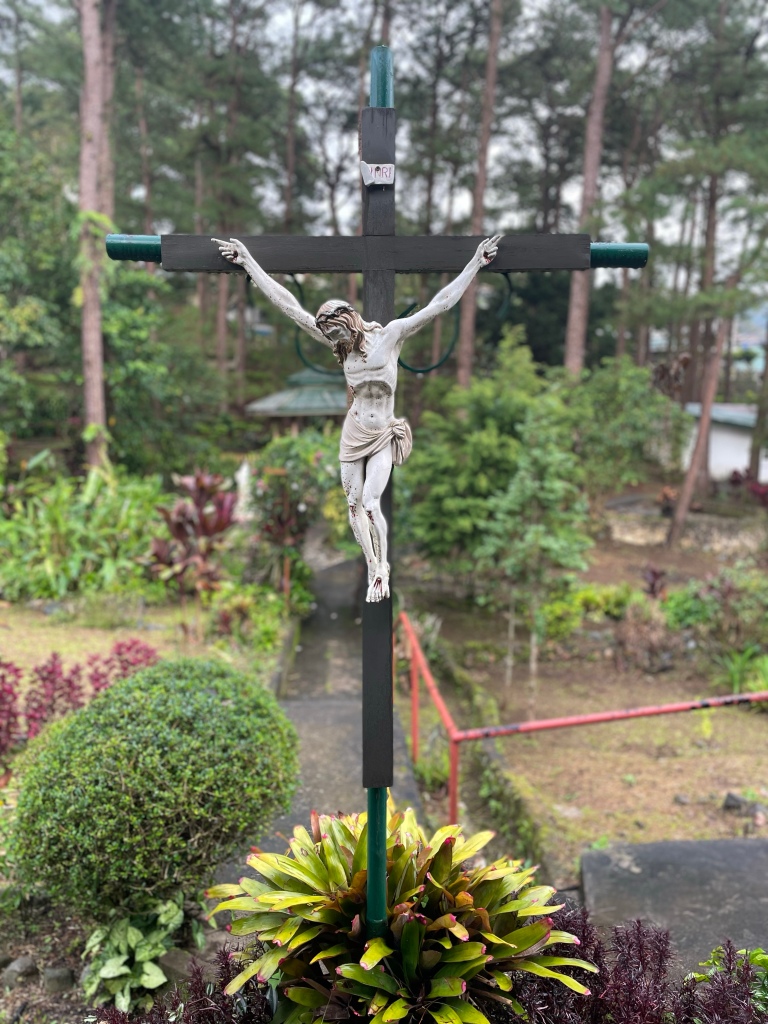
Photo by author in my previous parish, 2017.
Today we celebrate a most unique Feast, the Exaltation of the Cross.
It is so unique because first of all, the cross is perhaps the most unique thing on earth made up of two pieces of wood that are so ordinary yet so deeply extraordinary in meaning, a sign of God’s immense love for us humans through Jesus Christ’s Passion and Death.
From being the sign of the most inhuman punishment in history, the Cross is now the very sign of how God “so loved the world that he gave his only Son, so that he who believes in him might not perish but might have eternal life” (Jn.3:16). It encapsulates the whole mystery of Jesus Christ, of how this all-powerful God beyond the ordinary became weak like us in everything except sin so that we too may be like Him, divine and more than ordinary. In His suffering and death on the Cross, Jesus made the lowly wood so ordinary to be so exalted to become His sign of love and mercy, power and majesty.
Photo by author, Jerusalem, May 2017.
Hence, in the Cross is the power of God’s love to transform us to better persons.
In the Cross is God’s power to lead us closer to Him with its vertical beam and to others with its horizontal beam.
In the Cross is the power of good if we choose to embrace it with Christ Jesus as our Lord and Master.
The Cross is most unique of all signs in the world because underneath its ordinariness, that is where we see God’s glory and majesty. It was underneath the Cross of darkness and gloom on Good Friday that humanity began to see light and hope in life’s many absurdities. Most of all, it was underneath that Cross of suffering and death of Jesus Christ that we feel and experience the assurance of the Resurrection.
How?
Through our own pains and sufferings that are most uniquely ours too!
With their patience worn out by the journey, the people complained against God and Moses, “Why have you brought us up from Egypt to die in this desert, where there is no food or water? We are disgusted with this wretched food!” In punishment the Lord sent among the people saraph serpents, which bit the people so that many of them died (Numbers 21:4-6).
Photo by author, Dominican Hills, Baguio City, January 2018.
You must have heard that old story of a man who came to Jesus to return the cross given for him to carry; he asked Jesus to have it replaced with a lighter one. Jesus then led the man to a huge room with all kinds of crosses for him to choose which he prefers as the best one for him so that he would stop complaining.
After closely examining the specs of so many crosses, the man finally decided to pick one he deemed as perfect for him after considering its weight and other dimensions, only to find out from Jesus Himself that it was the same cross he had actually returned for exchange!
Many times in life we are like those people in the first reading, never ending in their complaints to God, even challenging Him, accusing Him of forsaking us, of being unfair when life becomes difficult and unbearable. There are times we feel being on the distaff side of life always like a flat tire, never on top. We cry foul to God especially with all our hurts and pains inflicted by others, asking Him where was He when most needed?
Photo by author in Jordan near the Israeli border where Moses put up the bronze serpent as instructed by God to heal those bitten by the snakes after they have complained of their conditions in the wilderness, May 2019.
While it is true life is indeed difficult, the cross reminds us of the fact that the pains and hurts we have are uniquely ours too, something we have to accept and most of all, own.
There are pains that are so deep and won’t go away that have in fact affected us dismally in our lives already. Instead of self-blaming and self-pity, we just have to ask for God’s grace to accept and own them like Jesus Christ. We just have to “bring it home” – that imagery of the Cross planted on the Calvary – into our very selves, in our being as something so true and real. And uniquely ours.
Stop thinking of others’ pains and hurts. We are not all the same. If ever we have similar experiences, the hues and shades even gravity and circumstances are not same because each pain and hurt, like the cross, is uniquely ours. Like every person, every cross is unique because it is also a gift, a mystery, and life. We have to “befriend” our pains and hurts, our own cross instead of resist it. It is in “befriending” our pains and hurts, our cross in life that we grow and mature, becoming more free to love and to be joyful because that is when the cross triumphs over its disgrace and shame in us and with others. That is when our pains and hurts, when our crosses begin to reveal to us the many beautiful truths of Easter awaiting us.
The Cross of Christ triumphed because Jesus carried it wholeheartedly, allowing those two pieces of wood to reveal not only to Him who knew everything beforehand its meaning but most of all to everyone of us the deeper truths the Cross signifies as St. Paul eloquently expressed in our second reading.
The Cross of Christ atop the church of our Lady of Lourdes in France. Photo by my former student Philip Santiago during his pilgrimage, September 2018.
One thing I realized after my mother died in May is the fact that while there are so many pains and sufferings in this world, my own pain and suffering in losing her are most difficult to bear; hence, something I must carry because it is uniquely mine.
But, one thing so unique I noticed is that the more I see my cross following my mother’s death, the more I saw also the cross of others. The Cross of Jesus triumphed truly in me when I embraced and owned my cross, when I befriended my pains and hurts that eventually led me to recognize and see, to feel more and experience too the crosses of others.
When we become conscious of each one’s unique cross, slowly we are able to reveal to them the meaning of their personal crosses too because we become more sympathetic, more open, more silent to listen more, love more, care more and be more present with those in their own unique cross. No wonder, I find conversing more engaging with others who also grieve because we can see each other’s unique crosses!
Jesus calls us to imitate Him that by embracing and owning our cross, we too may lead others to finding the meaning of their own cross and thus experience Easter soon. Let us pray:
Give us the grace, O God, to always embrace the Cross like your Son Jesus Christ where we can all be empty of ourselves to be filled with your Holy Spirit to make your love visible in us. Amen.