40 Shades of Lent by Fr. Nicanor F. Lalog II
Tuesday, First Week in Lent, 11 March 2025
Isaiah 55:10-11     + + +     Matthew 6:7-15
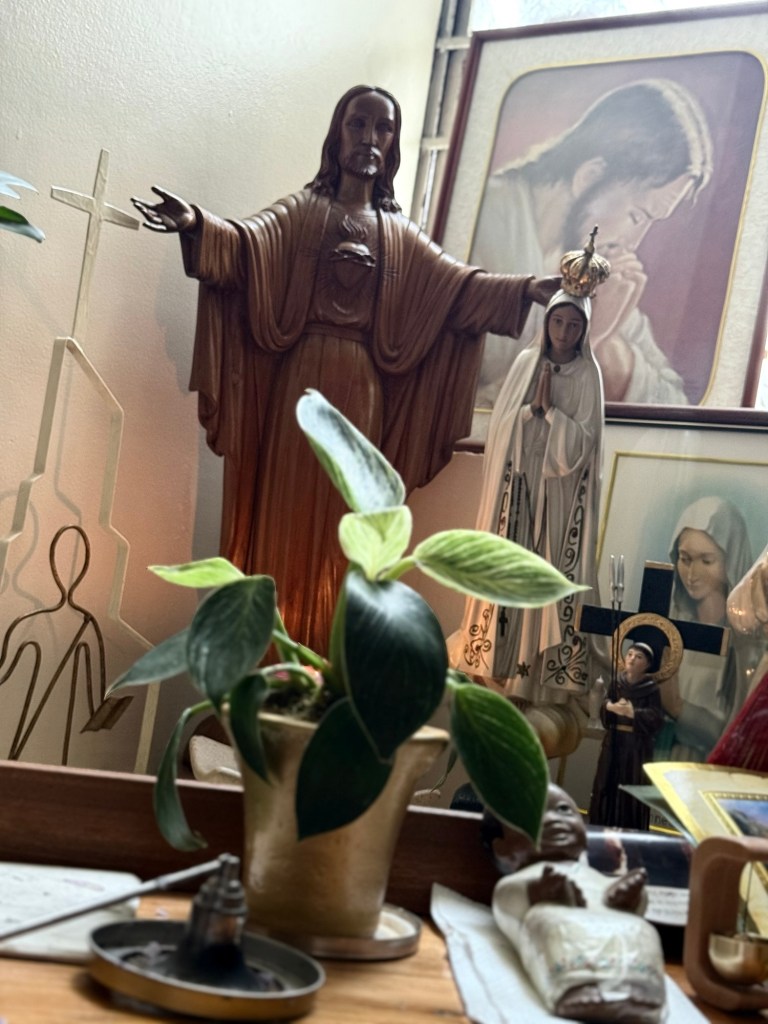
Photo by author, 10 March 2025.
How lovely,
dear Jesus that every time
I receive a plant or flower from anyone,
automatically I offer them to you
on my prayer altar;
and here now,
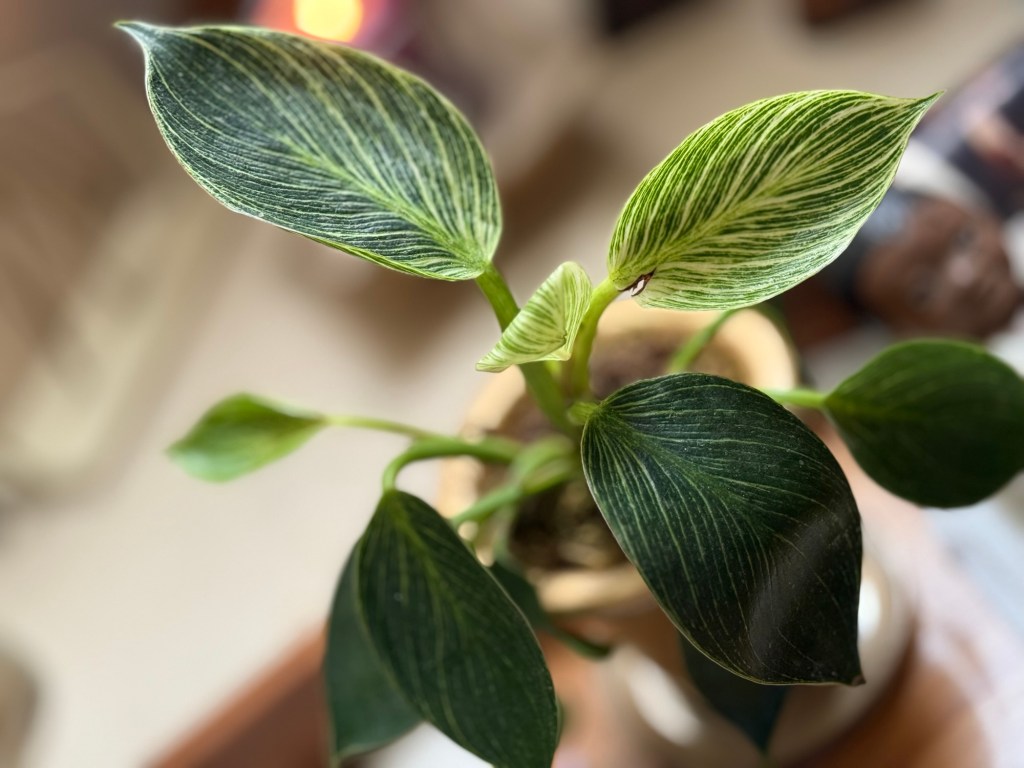
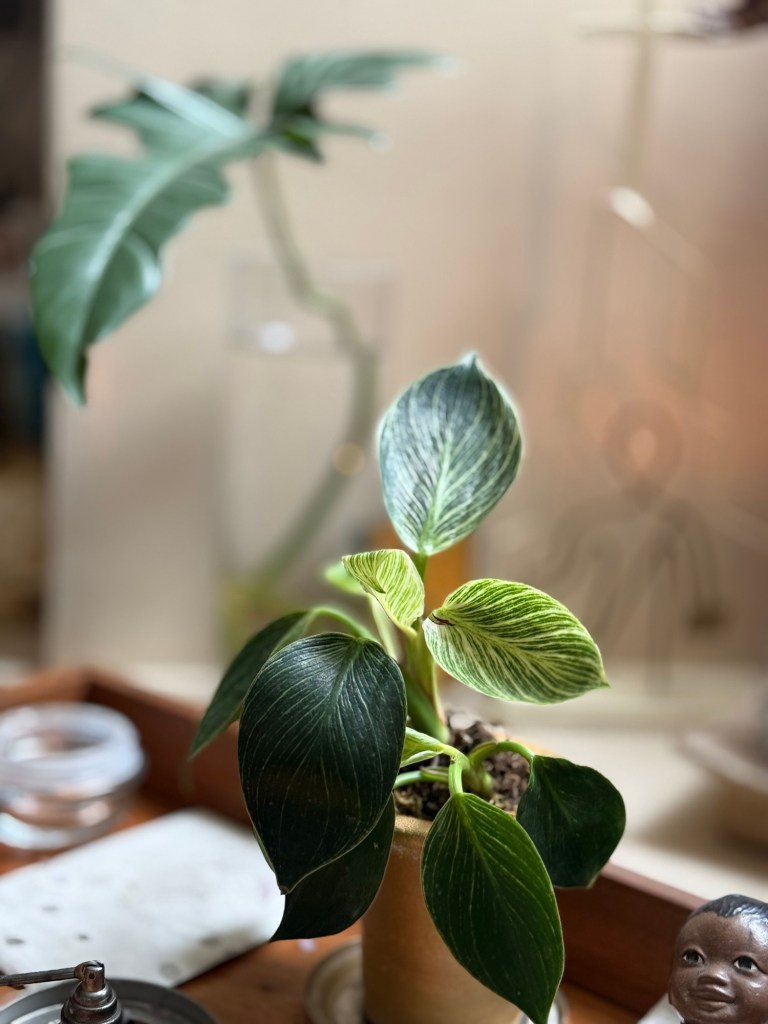
my newest plant "abloom"
with my prayer today!
Thus says the Lord: Just as from the heavens the rain and snow come down and do not return there till they have watered the earth, making it fertile and fruitful, giving seed to him who sows and bread to him who eats, so shall my word be that goes forth from my mouth. It shall not return to me void, but shall do my will, achieving the end for which I send it (Isaiah 55:10-11).
Photo by author, 10 March 2025.
In a few days
I am turning 60 years old
and in a month,
I shall have been a priest for 28 years;
in all those years, Lord,
it is prayer that has sustained me,
that has nourished me,
that has always been my life
even many times I never
knew it;
you have nurtured me in prayers
that at first was like a chore
taught to me by my parents
that later like a rain -
sometimes an outpour,
many times a drizzle,
and most often just a dew
to keep me moist.
Photo by author, 10 March 2025.
Keep me fertile like
the soil, Jesus,
and keep my leaves green
even without flowers
or fruit;
just keep me soaked
in your words,
gently, subtly and
intimately to quench
my thirst for you,
for meaning,
for life
that in the end,
I come and open myself
daily to God in your prayer,
saying,
"our Father".
Amen.
Quiet Storm by Fr. Nicanor F. Lalog II, 10 March 2025
When the devil
first tempted Jesus
"If you are
the Son of God,
command this stone
to become bread"
the devil tempts us too
to forget our being
beloved children of God
by doing everything
and anything
for us to be reduced to
human doing
forgetting we are
human being.
And so, Jesus told
the devil, "One does not live
by bread alone",
he tells us too today
even if we cannot do anything
because we are weak and sick,
even if we fail to do something
because we have forgotten or
was so afraid,
we are still loved
for God is greater than
our hearts who cannot be seen
yet so true and so real,
fulfilling not just satisfying
than any bread.
Photo by author, Timberland Highlands Resort, San Mateo, Rizal, 08 March 2025.
When the devil tempted
Jesus the third time,
"If you are the Son of God,
throw yourself down
from here",
the devil tempts us too
to totally forget God
because, after all,
whatever we do,
God still loves us;
of course,
that is true: we are humans
loved and cared
in our being
not in our doing.
And so, Jesus told
the devil "You should not
put the Lord, your God
to the test",
he tells us too today
for us to stop pushing
the limits of morality
and decency,
and simply let
the mysteries of God
and of life wrap us because
they are greater than us,
not problems to be
solved nor principles
to be understood.
Photo by author, 10 March 2025.
Life is a daily Lent,
a journey towards Easter,
a return to our first love,
 - God
in Jesus Christ his Son
in whom we have been baptized
and adopted
as his beloved children
as our being and identity:
so let us simply be
our true selves -
his beloved
since the beginning -
loving him totally
in our loving service to others.
This Lent
let us journey in Jesus
in prayer to be one in him;
in fasting to create space for him within;
in alms-giving to be one with
fellow human beings
for we are not
human doings
who cannot do everything
who cannot know
and explain everything
except to wonder more,
to love more,
to appreciate more,
to believe and trust God more.
*Collage are photos of our students last February 09, 2025 spending a Sunday afternoon of love with children with cerebral palsy and family.

**Special thanks to our sister in faith, Nicola who gave us the idea for this poem, the beautiful terms "human being, human doing" from her blog https://eaglesight.blog/2025/03/02/rest-and-replenish/.
40 Shades of Lent by Fr. Nicanor F. Lalog II
Monday, First Week in Lent, 10 March 2025
Leviticus 19:1-2, 11-18     + + +     Matthew 25:31-46
Photo by author, view of Metro Manila from balcony of Timberland Highlands Resort, San Mateo, Rizal, 08 March 2025.
Then the righteous will
answer him and say,
"Lord,
when did
we see you hungry and feed you,
or thirsty and give you drink?
When did
we see you a stranger and
welcome you, or naked
and clothe you?
When did
we see you ill or in prison,
and visit you?"
(Matthew 25:37-39)
How I long and pray
I would someday be asking
this same question to you,
Lord, totally surprised,
wondering what happened
when all I did was do something
naturally as second nature,
without much thinking and ado
in being kind and charitable,
in responding to anyone who is
hungry or thirsty,
stranger or naked,
ill or in prison.
You are so great,
dear Jesus in teaching us
not to think of kindness and
being Christian as a list to be
kept and checked always
but simply a way of life
in doing what is right,
what is good
for we are all your kin
in one God and Father
who is Lord of all
(first reading).
Photo by author, same view taken later that night,Timberland Highlands Resort, San Mateo, Rizal, 08 March 2025.
Then they (the accursed)
will answer and say,
"Lord,
when did
we see you hungry or thirsty
or a stranger or naked or ill
or in prison,
and not minister to your needs?"
He will answer them,
"Amen, I say to you,
what you did not do
for one of these least ones,
you did not do for me"
(Matthew 25:44-45).
Forgive us,
Jesus when our being
Christian is more on duties
and tasks like a code of ethics;
teach us to be utterly different
from others as your followers
reflecting the Father and his love
in a whole new way
especially in this time
when everyone seems
to be so cold and numb
even callous
with others around them;
animate us with your
warm presence
of joy and love
to everyone
for them to realize
there is one true Lord God
above all.
Amen.
Photo by author, same view taken with different exposure,Timberland Highlands Resort, San Mateo, Rizal, 08 March 2025.
On this first Sunday in Lent, we find our Lord Jesus Christ led into the desert by the Holy Spirit after his baptism at Jordan for forty days to pray and later tempted by the devil. It is exactly the picture of our daily life wherein the closer we come to God, the more we strive to be good and holy, the more we are intensely tempted by the devil.
Indeed, life is a daily Lent of spiritual battles with the devil and as we enter the first Sunday of this 40-day journey, Jesus reminds us we too can overcome this temptations if we remain in God by taking into heart his words that give life.
Of course, Jesus was tempted by the devil not just thrice but many times until his crucifixion; however, turn your attention my dear friend to the first and third temptations that are very similar:
The devil said to him, “If you are the Son of God, command this stone to become bread.” Jesus answered him, “It is written, One does not live by bread alone” ….. Then he led him to Jerusalem, made him stand on the parapet of the temple, and said to him, “If you are the Son of God, throw yourself down from here, for it is written: He will command his angels concerning you, to guard you, and: With their hands they will support you, lest you dash your foot against a stone.” Jesus said to him in reply, “It also says, You shall not put the Lord, your God, to the test” (Luke 4:3-4, 9-12).
In this scene that comes right after the baptism of Jesus at Jordan by John the Baptist, Luke wants us to see how the devil would always challenge the identity of Jesus Christ, “If you are the Son of God.”
Recall that after his baptism while praying, the heaven opened with the Holy Spirit descending on him in the form of a dove with a voice declaring “You are my beloved Son; with you I am well pleased” (Lk. 3:22). Everyday the devil tempts us too in that way, always challenging us with the same line, “if you are the Child of God, do this, do that” as if our identity is on doing than being.
In our baptism, we have become the beloved children of God in Christ which is our identity and being that is an inherent gift from God no one can take away which the devil works so hard to destroy. The devil’s devious line of challenging us “if you are the child of God” to prove ourselves by doing certain actions is designed to wear us off and eventually for us to self-destruct for not keeping up with the demands of the world and of others.
Our worth is not found in what we can do; we are worthy because God made us in his own image and likeness, giving us the unique identity as his beloved children in Jesus Christ. Even when we get old and sick in the future, not able to do anything worthwhile for the economy or the family, we remain worthy and valuable in God’s eyes.
Photo by author, Sakura Farm, Atok, Benguet, 27 December 2024.
Like Jesus we face intense spiritual battle with the devil daily, tempting us in various ways with desires for wealth and fame, power and pleasures. He tempts us in our personal and professional lives, in our relationships with God and with others, even with our very selves with long lists of things to do to prove our worth.
Remember, the devil tempts us not just to sin but ultimately to destroy our lives by separating us from our grounding, our root who is God our Father.
The devil’s dare to Jesus that “If you are the Son of God… turn this stone into bread” is echoed daily in our own temptations when the evil one through people aided by the consumerist culture ask us to prove our worth by doing many things without any regard to the values of life and human person, or the importance of virtues and spirituality.
When the devil repeated the same line of temptation to Jesus “If you are the Son of God… throw yourself down from the parapet of the temple”, the same trick is played on us by the world luring us to forget morals, to disregard traditions that in the process we already deny the value of life and persons by pushing the crazy, modern ideas of relativism and wokism.
How sad in this world today when everyday we are dared to prove our worth in doing not realizing that our worth remains even if we can’t do so much. That is why youth and strength are glorified while sickness, disability and old age are frowned upon these days simply because we can’t do as much, including life in its earliest and weakest stage in the mother’s womb. Our worth as a person is in our being, not doing.
It is so crazy that eventually we have replaced life with lifestyles, while persons are degraded as objects and commodities to be possessed than loved and cherished. In our desire to prove our worth with everything we can do and accomplish, we end up more empty and lost in the process, reduced to nothingness.
Now see the ways of Jesus which is the theme of Lent every year – conversion of sinners, a return to God our Father by trusting his words again as our source of life and being.
When Jesus answered the devil that man does not live by bread alone, the Lord is inviting us to have a more wholistic view on life, on those hidden and not seen, on the mysterious that makes us experience life more not just skin-deep but within no one can snatch nor steal. In a world so amazed with big, spectacular things, the truth remains that the most wonderful things in life are those found within our hearts and lips, those words that build and comfort us as St. Paul tells us in the second reading.
In the third temptation, Jesus thwarted the devil completely when he declared you must not put God to the test. It is a clear reminder for us to keep in mind always that we are the creatures not the creator, telling us all those vain attempts of playing God since time immemorial have gone to nothing.
We can’t just do anything nor everything in this world and in this life. All of the mysteries around us and within us are not meant to be solved but simply accepted and embraced, allowing ourselves to be wrapped in God to find him deep inside us that in itself a vast universe of beauty and majesty.
This is what Moses was telling the people in the wilderness as they prepared to enter the Promised Land. See how the first reading is like a dream sequence, of the many beautiful scenarios that could happen once they entered the Promised Land. Moses was telling his people and us today to be ready with God’s many surprises if we abide in him and trust him. No need to test God nor play God because we are all covered in God’s grace!
This first Sunday, Jesus invites us back to the wilderness of our lives to be still, to rest in God, to trust his words as we experience and appreciate our giftedness in him even if we can no longer move and do things because more than anything else in this world, each of us is precious in God’s sight and presence. Amen. Have a blessed week! Keep yourself hydrated this summer.
Photo by Dra. Mylene A. Santos, MD, somewhere in Palawan, 2023.
40 Shades of Lent by Fr. Nicanor F. Lalog II
Friday after Ash Wednesday, 07 March 2025
Isaiah 58:1-9     + + +     Matthew 9:14-15
Photo by author, Hidden Springs Valley Resort, Calauan, Laguna, 20 February 2025.
I love your words today,
Lord God our Father
through the Prophet Isaiah:
Thus says the Lord God: Cry out full-throatedand unsparingly, lift up your voice like a trumpet blast; tell my people their wickedness, and the house of Jacob their sins (Isaiah 58:1-9).
So strong was the word
your great prophet had used,
"full-throated" which is
to express confidently,
with strong feeling
and without limit;
to shout our loudly
in no uncertain terms;
to mince no words,
to emphatically declare
what it really is.
Photo by author, Hidden Springs Valley Resort, Calauan, Laguna, 20 February 2025.
O God forgive us,
as a nation and as a church,
as a community of your disciples
for being so soft,
so disturbingly quiet
and selectively silent
in denouncing
injustice and abuses
happening not only around us
but even by those among us;
we have been so lax,
overly lenient,
always trying to please
everyone
that we have forgotten to stand
for you in Christ Jesus
that so many among us your
priests have abused your
worship,
your prayers,
your liturgy.
Teach us to be like your
tall trees,
so magnificently imposing
minus the pride and airs
many of us exude;
simply rooted and grounded
in you, O Lord,
 firm and unshakeable,
truly a presence in
Christ.
Photo by author, Atok, Benguet, 27 December 2024.
Let us take the challenges
of the Prophet Isaiah
to see fasting not just
as refraining from food
and drink but about how
our behavior affect others;
let us empty ourselves first
of the bonds of wickedness
that bind us so that in our fasting
we set the oppressed free
by breaking every yoke (Is.58:6);
let us be one with the hungry
and homeless by realizing our
nakedness in you, that more
essential than food and things
are those of the Spirit to
experience you among the poor
like the hungry and the homeless (Is.58:7);
let us be your presence in this world
by shouting full-throated
not just with our voice
but most especially with our
actions and witnessing of your
justice and love.
Loving Father,
you have given us with so
much and we have given
so little
if not nothing at all;
teach us the essence
of fasting which is to give more
of ourselves with others
and to give more of you
and your love,
and kindness,
and mercy,
and joy and life.
Amen.
40 Shades of Lent by Fr. Nicanor F. Lalog II
Thursday after Ash Wednesday, 06 March 2025
Deuteronomy 30:15-20  +  Luke 9:22-25
Why always the Cross,
Lord Jesus Christ?
Many times
I grapple not only
with myself but especially
with others at how to explain,
what to tell them
the need for your Cross
when all in our lives
has always been the cross.
Even the simple act of choosing,
of deciding
is a cross.

And yet,
we still foolishly
choose
death in the process
by avoiding your Cross,
Lord.
Moses said to the people: “Today I have set before you life and prosperity, death and doom” (Deuteronomy 30:15).
In this Season of Lent,
let me appreciate anew
the beauty and majesty,
nobility and divinity
of your Cross,
Jesus;
always looming in our lives
is your Cross
because that is where
you are always found,
that is where you stay
most of the time
to heal us,
to forgive us,
to save us.
There is always
the Cross in our lives
because it is the direction
to life,
to fulfillment,
to fruitfulness
in you, Jesus
who was the first
to suffer and die
on the Cross
for us
so we can have life.
Let us carry our Cross
to make that crossing
into life in you.
Amen.
40 Shades of Lent by Fr. Nicanor F. Lalog II
Ash Wednesday, 05 March 2025
Joel 2:12-18 + 2 Corinthians 5:20-6:2 + Matthew 6:1-6, 16-18
As we begin our
40-day journey to Easter
this Season of Lent
with Ash Wednesday,
I pray only for one thing,
dear Lord Jesus:
let me find my way,
my direction
to you.
Rend my heart, Jesus:
take away my pride
and fill me with your
humility,
justice,
and love;
let me enter my heart
more often these days
to commune in you
to be one with you
as you dwell here
in my heart.
Help me create
a space for you, Jesus
and for others
I have taken for granted
especially those who
truly care for me,
those at the margins
those I avoid;
let me be reconciled
with you, Jesus
beginning today
a very acceptable time,
a day of salvation in you.
May this ash on my
forehead direct me
to my origin
and destination in the Father
in heaven
through you, Jesus,
who suffered,
died and rose again
for me.
Amen.
40 Shades of Lent by Fr. Nicanor F. Lalog II
Ash Wednesday, 05 March 2025
Joel 2:12-18 ><}}}*> 2 Corinthians 5:20-6:2 ><}}}*> Matthew 6:1-6, 16-18
Life is a daily Lent, a journey towards Easter.
We go through a pasch everyday like Jesus Christ’s Passion, Death and Resurrection when we “pass over” from sin into grace, from darkness into light, from death into life.
Life is a daily Lent because everyday, we go through an “exodus” from another day to the next new day, from sunset to sunrise. However, Lent as a journey is about direction, not destination. This we find clearly at the start of our 40-day journey of Lent with Ash Wednesday.
“Even now, says the Lord, return to me with your whole heart, with fasting, and weeping, and mourning; Rend your hearts, not your garments, and return to the Lord, your God” (Joel 2:12-13).
It is strange that while Jesus Christ asked us in the gospel to “Take care not to perform righteous deeds in order that people may see them; otherwise, you will have no recompense from your heavenly Father” (Mt.6:1), what we are doing this Ash Wednesday is exactly the opposite!
Alam na this… that if you meet anyone with ashes on his/her forehead, definitely he/she is a Catholic who had gone to Mass or at least had observed Ash Wednesday.
There are some who would surely be teased by friends as being too serious as they practice abstinence by avoiding meat today and on Fridays this Lent. Most likely too, many would be giving alms today in the collections for the poor in the parishes all because for the reason it is Ash Wednesday.
These three pillars of Lent – prayer, fasting and alms-giving are not only meant for this Season that lasts only for 40 days but something we are hoped to practice the whole year through until we are slowly transformed into the likeness of Jesus Christ.
The purpose of Jesus in asking us in the gospel to do these all in secret is to avoid falling into the trap of the people of His time who flaunted to everyone their prayer, fasting and alms-giving, forgetting God in the process because focus had been on them. And yes, it continues among us that we have religiosity without spirituality, devotion without evangelization.
Moreover, to practice these in secret is actually to enter into our very selves, into our hearts where God dwells, where we meet Him personally.
Our Lenten journey becomes a direction when we take it into our hearts, when we open and rend our hearts to let Jesus come and dwell within by letting Him empty us of our pride to be filled with His humility, justice and love.
Lent then becomes a direction leading us not only to daily Easter but ultimately to our eternal salvation not just in heaven or any “place” but to be one with the Person of God Himself and the persons along the way we shall meet with whom we are called by Christ to be one with in Him.
Therefore, Lent as a direction is an inner transformation as companions in Christ.
In this age of WAZE and GPS, we can easily seek directions to a particular destination. Problem with being focused more on destination is we miss the fun and adventure of every journey. When we reach our destination, what do we do?
We cross out from our list of travel goals every destination that we make and start looking for new places to visit until we have been to every place on earth that we plan to visit the Moon and Mars next! Eventually we get tired with travels and after covering so many distances and destination, we still feel lacking and incomplete. There is no more destination to go to that we confront ourselves with the existential question, is this really what I need most in life? Is this all?
To see life more as a direction means to find its meaning in God that we keep on maturing, we keep on sustaining our journey in Him and with Him. It does not matter wherever He leads me or where I go or stay because what matters most is I am in and with God.
Lent is entering God in and through Jesus Christ. It is going back to Him, staying in Him and with Him in love. This is the reason why we fast, we empty ourselves even our sights and other senses so that we become more sensitive to God’s presence. There are no flowers, no decors, no Alleluia, no Gloria in the church and liturgy. Everything is bare essential so we are not distracted in finding and following God right in our hearts.
Recall the first time you truly fell in love, when truly loved that you literally see and hear even smell your beloved everywhere and in everyone. You always thought it is your beloved whom you saw walking or speaking somewhere but it wasn’t really she! Akala mo lang…
When we truly love, the time and place are not important because all we have are the here and the now together.
Oh how easy to say we love God or somebody! But if we try to probe deeper into ourselves, we find that we have not truly loved God or anyone that much because in many instances, we always prevail over them. We choose our own will than God’s or our beloved’s.
That is when we sin as we turn away from God and our beloved. To sin is not just to break laws and turn away from God and our beloved but ultimately a refusal to love which is actually losing one’s direction in life.
Lent is the wonderful season of finding again our direction in life, our true love, God. Love needs no justifications. And we can only love persons, not things. Hence the need for oneness, for reconciliation as St. Paul asked us in the second reading to be “reconciled with God” (2 Cor.5:20).
Working together, then, we appeal to you not to receive the grace of God in vain. For he says: In an acceptable time I heard you, and on the day of salvation I helped you. Behold, now is a very acceptable time; behold, now is the day of salvation (2 Corinthians 6:1-2).
Now is the best time to find our life direction in God in our personal and communal worship and practices this Lent. When you find your direction, you find God, yourself and others. And that is when you find joy and peace which is Easter, the direction of every Lent and life. Amen.
The Lord Is My Chef Wedding Recipe by Fr. Nicanor F. Lalog II
Homily, Wedding of Dra. Arianna Julia Enriquez & Dr. Dexter Falcon
Santuario de San Jose Parish, Greenhills, Mandaluyong
28 February 2025
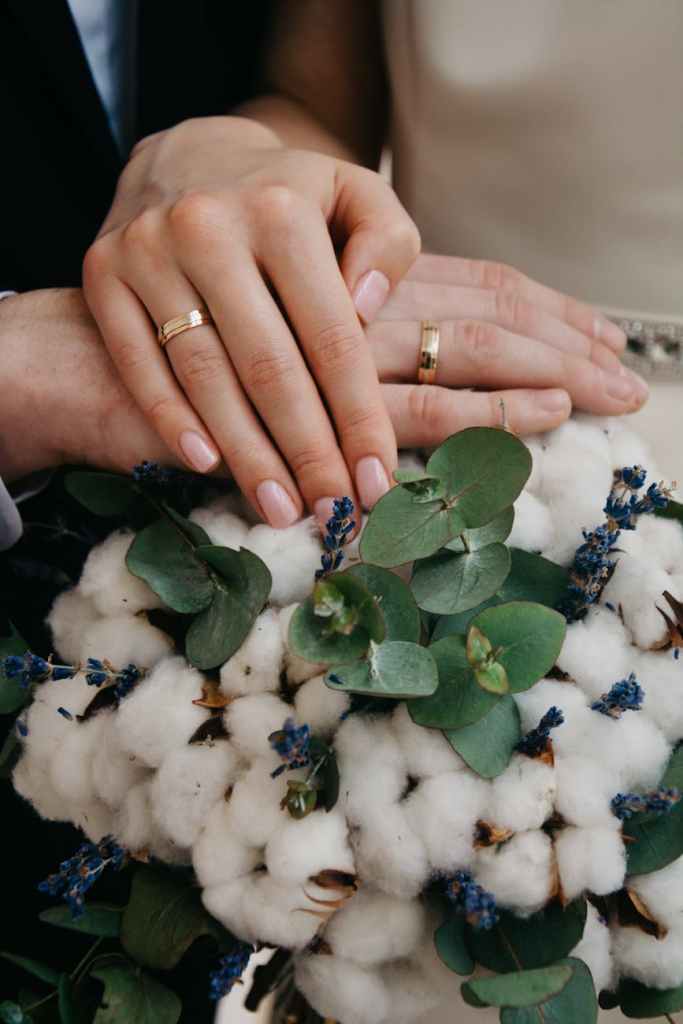
Congratulations, Dra. Arianna and Doc Dexter in choosing to get married in the Church. Many people these days disregard the Sacrament of Marriage, sadly seeing it more in human terms and most sad of all, many would rather follow superstitions than faith in getting married.
When I was still in a parish in Bulacan, a couple met with me due to a problem with the date they wanted to get married that fell on a Saturday. I offered to them a Friday but the mother of the bride said “araw po ng mga mangkukulam ang Biyernes!” Whoa! Did you know that?
Trying to hide my laughter, I told the couple how about on a Thursday which is my day off and would just cancel it to officiate their wedding. The mother again interjected, “nakupo Father… lalo na po ang Huwebes! Araw ng kasal ng mga tikbalang!” I could not contain myself anymore and I told the mother, “Katoliko pala mga tikbalang dito sa inyo!”
I mentioned this experience because in the provinces, very few couples get married in the month of February like you. Your Tita, Dra Mylene knows this very well… happy birthday po! When people find out you were born in February, they say “kaya ka pala ganyan, kulang-kulang.” And that’s how most people see February – kulang or incomplete – that is why even couples avoid it as a date for their wedding.
Of course that is not true. Every day is a perfect day for wedding for each day is blessed by God – most especially the days of February, the most perfect month in number of days. February was added to our calendar to complete the 365 days of revolution of Earth around the Sun to make it a year. It is February that completes the year as it fills the missing days following the miscalculations by the early Romans.
And that’s marriage. A man and a woman get married to complete each other.
Remember God’s declaration in the first reading, “It is not good for man to be alone.”
See how in creating the woman, God cast a deep sleep on man and took his rib to form it into a woman. The man was totally unaware of what was going on when God created and gave him the woman as his “suitable partner.”
This is most true with you, Dra. Arianna and Doc Dexter: you were both totally unaware in the beginning of how God worked silently in the background that you would eventually complete each other as friends, as lovers and now as husband and wife.
You have realized after your long relationship from pre-med to med proper and now as full-pledged doctors that you both cannot be complete without each other that even if you were separated by time and distance, you still made efforts to be together because that is love. You have realized that you can only be complete and whole with each other. Ikaw lang, sapat na!
Nothing is so toxic and difficult, nothing is most joyous when you think of each other, when you love each other. And so, simply love, love, and love! Huwag kayong magbibilangan! No need to have the numbers “224” tattooed on your arms like Philmar and Andi Eigenman.
When you have an LQ, who must make the first move to reach out and make peace?
Some couples say the man should make the first move but what happened to the rule “ladies first”? Others say the first to reconcile and say sorry is the one who started the lover’s quarrel but, would anyone really admit that?
The answer is this: when couples have an LQ, the one who has the most love to give must be the first to make the move for peace and reconciliation. Yung higit na nagmamahal ang unang kikibo.
Love is not a competition and love cannot be really measured. The true measure of love is when you love without measure. Nobody is perfect; hence, human love is also imperfect. Only God can love us perfectly. That is why, just keep on loving each other, letting your love flow to each other by taking care of each other.
That is the beautiful imagery of the ribs – inside the rib cage, the most vital organs of the body are protected and kept safe like the heart, the lungs, the liver. Lalo na ikaw, Doc Dexter: you are lacking in one rib and that is Dra. Arianna. Alagaan mo siyang mabuti. Boss namin siya…
God willed in all eternity that the two of you get married today not tomorrow nor next year nor last year. It was God who set February 28 as your wedding date because on this day God completes you.
However, though the husband and the wife complete each other, it is Jesus Christ who cements their union in the Sacrament of Holy Matrimony. Jesus is the “gold paint” in the Japanese kintsugi art of repairing broken pottery.
Kintsugi is the Japanese art of joining together the broken pieces of a jar or a vase with a glue and then pain with gold its cracks to make the broken piece more beautiful. Along this line of thought is St. Paul the Apostle who described us as “earthen vessels” – palayok in Tagalog: so delicate and easily broken yet God still fills us with Himself and His grace because He loves us so much.
And that is my second final reflection for you dear Dra. Arianna and Doc Dexter: love is not natural but supernatural – it is divine because it is rooted in God! Love is more than a feeling which is natural. Love is a decision, requiring your cooperation with God who pours out His blessings to you since you met despite your imperfections and flaws. That is the meaning of Marriage as a Sacrament – it is more than a human and natural bond but a supernatural, divine union of man and woman who become the signs of Christ’s saving presence in the world.
Heed the call of Jesus in our gospel today, “remain in me and make my joy complete.”
How lovely is your love story! Clearly of divine origin that you met in a theology class during your senior year in college. You did not meet in a party nor in any of those rows of restaurants across Ateneo or at the parking lot. You met in a theology class where you learned about God.
And the more you discovered God, the more you discovered each other, realizing in the process that the more you need God to make you both complete which is the principle and foundation of St. Ignatius of Loyola’s Spiritual Exercises.
We are able to love because God loved us first as the beloved disciple wrote in his first letter. That is the mystery of love, of married love specifically that Ben & Ben said so well in their song, “Mahiwaga… Pipiliin ka sa araw-araw… Mahiwaga… and nadarama sa iyo ay malinaw.”
When I think of this mystery of divine love in married couples, the image that comes to my mind are the “praying hands”. Each hand represents the husband and the wife. They retain their individuality as they freely pursue growth and maturity and fulfillment in life and career. Both hands are flexible and can move freely.
But, look at these two praying hands: as you get closer with each other, you also create a sacred space between you for Jesus Christ. Like that glue painted gold in the Japanese art of kintsugi, it is Jesus who makes you one and complete, it is Jesus who joins you together in his love.
Hence, whatever you do to each other, you do it first to Jesus. When you are faithful and true to Dra . Arianna, you are first faithful and true Doc Dexter to Jesus. The same with you Dra. Arianna: when you bake pastries and cakes for Doc Dexter, it is Jesus whom you first make happy and delighted.
But the moment you Doc Dexter cheat and lie to Dra. Arianna, you first fool Jesus. When you make taray to Doc Dexter, you first make taray to Jesus, Dra. Arianna.
Handle your life always with prayer. Every day, invite Jesus into your married life, Dra. Arianna and Doc Dexter in the same manner you have both invited Him today on your wedding day. God bless you always, Dra. Arianna and Doc Dexter! May today be your least happiest day in your life as couple! Amen.
The Lord Is My Chef Daily Recipe for the Soul by Fr. Nicanor F. Lalog II
Monday, Eighth Week in Ordinary Time, Year I, 03 March 2025
Sirach 17:20-24     <*((((><  +  ><))))*>     Mark 10:17-27
Photo by author, Atok, Benguet, 27 December 2024.
To the penitent God provides a way back, he encourages those who are losing hope and has chosen for them the lot of truth. Return to him and give up sin, pray to the Lord and make your offenses few (Sirach 17:20).
In that long poem by
your faithful French writer
Charles Peguy (1873-1914),
you claimed O God that
hope is your favorite virtue
because it surprises you.
How lovely,
dear Father to imagine
you our God,
all-powerful
all-knowing
is still surprised,
something we have lost
in this time
when everything
is predictable,
nothing ever hidden.
Many times
I see myself that young man
in the Gospel
running to you in Jesus,
excitedly asking what must
I do to inherit eternal life?
But, when you answered
and asked me to give up
my possessions,
I balk,
I turn away sadly
because I just can't
give up all I have.
But, then
comes your greatest
surprise of all when we
reject you,
when we turn away from you:
you still look at us filled with
love!
There is always hope in you,
Lord if we can just go back
to you in Jesus;
there is always hope
in this world,
in this life
because you never run out
of surprises for us
because "all things are
possible for God"
(Mark 10:27).
Amen.