Malapit sa Diyos, naglalapit sa Diyos

Lawiswis Ng Salita ni P. Nicanor F. Lalog II, Ika-02 ng Pebrero 2022
Kapistahan ng Paghahandog kay Jesus sa Templo
Malakias 3:1-4 ><}}}}*> Hebreo 2:14-18 ><}}}}*> Lucas 2:22-40
Larawan mula sa crossroadinitiative.com.

Ngayon ang ika-40 araw mula ng Pasko ng Pagsilang ng Panginoong Hesus sa Bethlehem, Kapistahan ng Paghahandog sa Kanya sa Templo ng kanyang mga magulang na sina Maria at Jose.

Bukod tangi lamang itong salaysay na matatagpuan sa ebanghelyo ni San Lucas sapagkat ibig niyang ipakita noon sa kanyang mga mambabasa at mga taga-sunod na pumarito si Hesus para sa lahat ng tao, hindi lamang sa mga Hudyo.

Una itong pinagdiwang ng mga Kristiyano sa Jerusalem at lumaganap sa Silangan noong taong 500 kung saan ito tinawag sa wikang Griyego na “Ypapante” na ibig sabihi’y ang “Pagtatagpo” nina Hesus at ng dalawang matanda sa templo na sina Simeon at Anna.

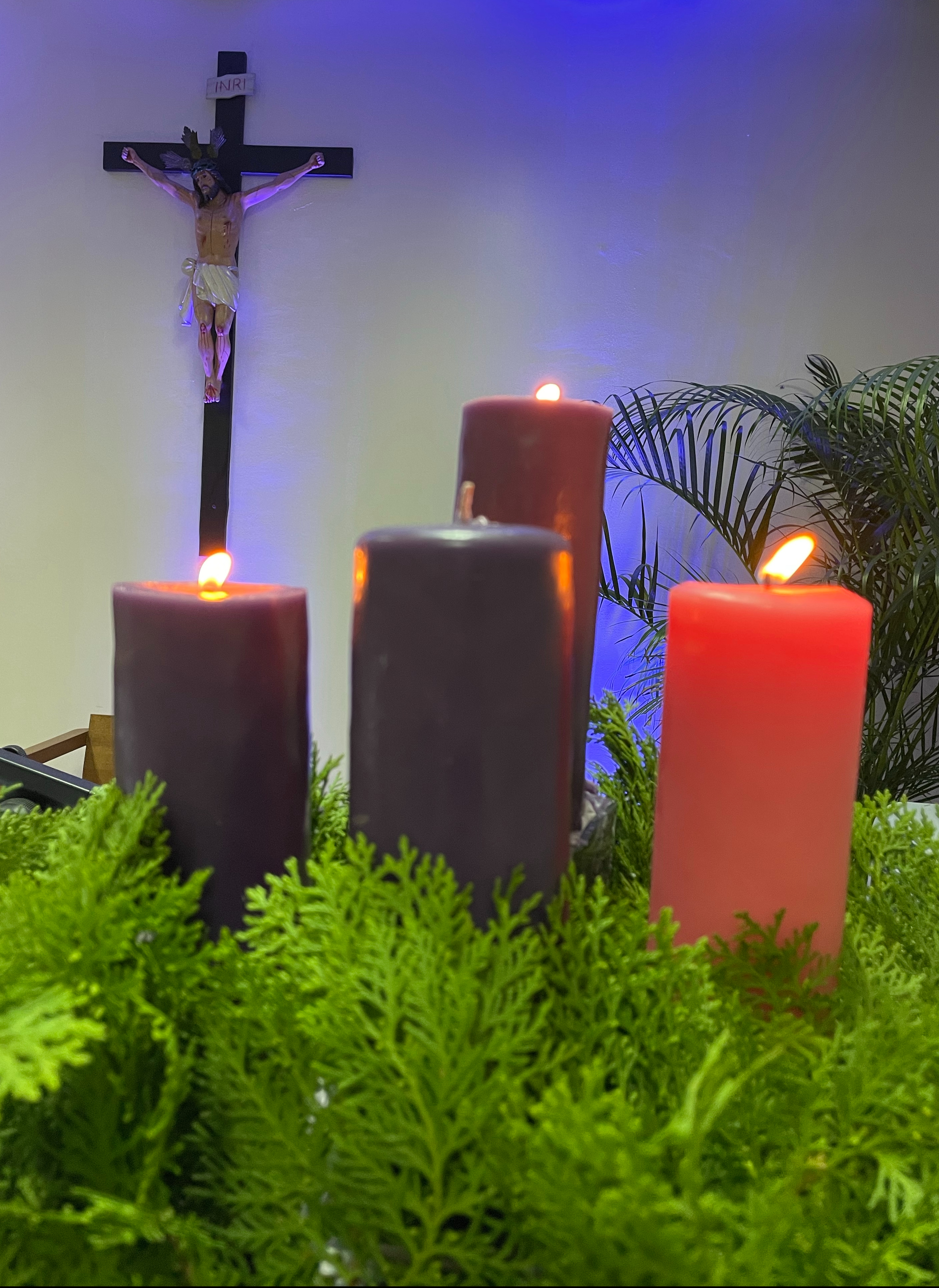
Mula Silangan, umabot ang pagdiriwang na ito sa Europa na nakilala bilang kapistahan din ng Paglilinis ni Maria o “Purification of Mary”. Sa France, nagkaroon ng seremonyas ang mga Kristiyano ng pagbabasbas at pagsisindi ng mga kandila bago pumasok ng simbahan bilang pagkilala kay Hesus na tanglaw ng mundo ayon sa pahayag ni Simeon sa templo, “Liwanag itong tatanglaw sa mga Hentil, At magbibigay-karangalan sa iyong bayang Israel” (Luc. 2:32).

Kaya nang makarating sa Roma ang tradisyong ito noong taong 800, ito rin ang ginawang seremonya ni Papa Sergio I kaya tinagurian itong Candelaria (kandila). Makalipas ang mahigit isang libong taon noong 1962 sa Vatican II, ibinalik sa tunay na pangalan ito bilang Kapistahan ng Paghahandog sa Templo ngunit pinanatili ng mga obispo ang tradisyon ng pagbabasbas at pagsisindi ng mga kandila upang ipakita na si Hesus ang tunay na liwanag sa mundo sa aakay sa atin pabalik sa Diyos.

Kuha ni G. Cristian Pasion, Pasko ng Pagkabuhay, 2021.

Mahalaga na ating mapagnilayang muli at makita sa panahong ito na si Hesus ang tanging liwanag sa ating buhay na tumatanglaw sa gitna ng maraming artipisyal na mga ilaw, mga ilaw na ang binibigyang liwanag ay mga tao at kung sinu-sinong ibig na maging sikat o ibig kilalanin.

Ito yaong mga artipisyal na ilaw ng mga kamera at media na ang pinakikita o ang tinatampok bilang “highlight” ay mga karangyaan, kapangyarihan, katanyagan at mga kapalaluan sa mundo.

Inaanyayahan tayo ng kapistahang ito na tularan sina Simeon at Anna na inabangan buong buhay nila si Hesus na siyang tunay na liwanag ng ating buhay na dapat din nating hanapin, lapitan at sundan.

May isang tao noon sa Jerusalem, ang pangala’y Simeon. Matapat at malapit sa Diyos ang lalaking ito at naghihintay sa katubusan ng Israel. Sumasakanya ang Espiritu Santo na nagpahayag sa kanya na hindi siya mamamatay hangga’t hindi niya nakikita ang Mesiyas na ipinangako ng Panginoon.

Lucas 2:25-26

Bukod sa tanging si San Lucas lamang ang may kuwento ng tagpong ito, mayroon din siyang ginamit na kataga na hindi ginamit ng sinumang manunulat ng Bagong Tipan o maging ng alin mang aklat sa buong Bibliya.

Ito yung salitang naglalarawan kay Simeon bilang , “malapit sa Diyos” na sa Inggles ay “devout”.

Alam na natin yung salitang “righteous” o “matapat” na ginamit din ni San Mateo upang ilarawan si San Jose bilang taong matuwid o banal na tumutupad sa mga batas at alituntunin ng kanilang relihiyon.

“Simeon’s Moment” ni American illustrator Ron DiCianni mula sa  http://www.tapestryproductions.com.

Ngunit iyong “malapit” o “devout” sa Inggles o “deboto” sa pangkaraniwang pananalita, tanging si San Lucas lamang ang gumamit niyon sa buong Bibliya. Apat na ulit niya itong ginamit: minsan sa ebanghelyo na ating napakinggan at tatlong ulit sa ikalawang aklat niyang sinulat, Gawa ng mga Apostol.

Mas maliwanag ito sa Inggles nang tawagin ni San Lukas ang mga Hudyong pumunta sa Jerusalem noong Pentecostes bilang mga “devout Jews” o “mga taong palasamba sa Diyos” (Gawa 2:5); tinawag din niyang mga “devout men” o “mga taong may takot sa Diyos” yaong mga naglibing sa ating unang Martir na si San Esteban (Gawa 8:2); at sa pagsasalaysay ni San Pablo ng kanyang pagbabalik-loob, ginamit na salita muli ni San Lucas sa kanyang kuwento upang ilarawan si Ananias bilang “a devout observer of the law” o “taong may takot sa Diyos” (Gawa 22:12).

Alalaong-baga, para kay San Lucas, ang isang “devout” na tao, o wika nga natin deboto ay isang taong malapit sa Diyos dahil siya ay mayroong takot sa Diyos kaya tumutupad sa Kanyang mga utos! Hindi lamang sila matapat o faithful kungdi mayroong malinis na puso at laging handang tumupad ng buong tapang sa kalooban ng Diyos.

Kaya nga sa ating mga Pinoy, ang deboto ay taong malapit, yaong mayroong matalik na ugnayan sa Diyos at sa kapwa!

Sila yaong mga kaibigang maaasahan, mayroong sariling kusa at hindi naghihintay na pagsabihan pa kung ano ang gagawain. Mayroong sariling-palo katulad nina Simeon at Anna na kusang naghihintay, lumalapit sa Diyos at Panginoon.

“Presentation at the Temple” painting ng Italian Renaissance artist Andrea Mantegna noong 1455; hawak ni Mari ang Banal na Sanggol habang si San Jose naman sa gitna ay nakatingin kay Simeon na mayroong balbas na puti. Larawan buhat sa wikipedia.org.

Nadadalisay ang ating pagiging malapit sa Diyos sa isang buhay-panalangin na kung saan mayroong disiplina sa pagdarasal na hindi lamang mga salitang inuusal ng bibig kungdi sinasapuso.

Masdan paanong sinabi ni San Lucas sina Simeon at Anna na palaging nasa templo nananalangin. Higit sa lahat, ang pananalangin ay kaisahan sa Diyos kaya nabatid kaagad ng dalawang matanda na dumating na si Hesus sa pag-uudyok sa kanila ng Espiritu Santo.

Katulad din yan ng pagkakaroon ng matalik na kaibigan: palagi kayong nag-uusap, nagbabahaginan at nag-uunawaan kaya mayroong kaisahan.

Ang pagiging malapit sa Diyos o deboto ay hindi lamang pagaalaga at pagkolekta ng mga imahen at aklat dasalan kungdi pumapaloob sa kalooban ng Diyos na siyang sinasabi ni propeta Malakias sa unang pagbasa na biglang darating ang Panginoon sa kanyang templo na siyang ating mga sarili.

Gayun din naman, ang taong malapit sa Diyos palaging malapit sa kapwa, lalo na sa mga maliliit at nahihirapan sa buhay gaya ng mga may-sakit at kapansanan. Pagmasdan paanong kinilala ni Simeon mga magulang ni Hesus sina Maria at Jose. Binigyan niya ng halaga kanyang mga kapwa-tao hindi lamang ang Panginoong Hesus.

Ang tunay na kaibigang matalik ay yaong naglalapit sa atin sa Diyos at kabutihan, hindi kasalanan at kapahamakan. Nakakatagpo natin si Hesus sa ating mga kapwa tao gaya ng sinasabi ng may-akda ng sulat sa mga Hebreo na ating napakinggan.

Higit sa lahat, ang taong malapit sa Diyos o isang deboto ay puno ng tuwa at kagalakan. Damang-dama ang tuwa at galak nina Simeon at Anna nang makatagpo at makalong si Hesus na sa sobrang tuwa nila sila’y handa nang mamatay.

Iyon ang tunay na palatandaan ng malapit at nakatagpo sa Diyos: puno ng tuwa na anuman ang sapitin sa buhay, hindi niya alintana ang mga takot at pangamba, maging kamatayan sapagkat ito ang maghahatid sa tunay na paglapit at pagbuklod sa Ama kay Kristo Hesus. Amen.

Larawan kuha ng may-akda, Santo Niño Exhibit sa katedral ng Malolos, Enero 2022.

Panatilihin ang Alab sa Diyos

Lawiswis ng Salita ni P. Nicanor F. Lalog II
Miyerkules, Paggunita kina San Timoteo at San Tito, mga Obispo, 26 Enero 2022
2 Timoteo 1:1-8   ><}}}}*> + ><}}}}*> + ><}}}}*>   Lucas 10:1-9
Larawan kuha ni Irina Anastasiu sa Pexels.com

Tatlong taon bago nagsimula ang pandemya noong 2017, naanyayahan ako na pangunahan ang pananalangin sa “retirement ceremony” ng kaibigan na dati ring kasamahan sa trabaho. 

Nakatutuwa pala na makita at makausap muli mga dating kasamahan maging mga naging “bossing” namin na dati’y aming iniilagan dahil baka kami masabon.  Ganoon pala ang magka-edad, ang pumalo sa 50 anyos pataas, pare-pareho kaming nakasalamin at malalabo mga mata, mapuputi ang mga buhok at bago kumain, umiinom ng iba’t ibang mga gamot. 

At ang mga usapan, puro “noong araw”!

Kaya naman hindi maiwasan magkumparahan sa bagong henerasyon at isang nakatatanda na retiree dati naming boss ang nagsabi, “bakit kaya mga bata ngayon maski 40 anyos na, bata pa rin?”            

Napagnilay ako ng katanungang iyon at habang nagkakasiyahan kami sa mga alaala ng aming kabataan, naalala ko ang mga kuwentuhan namin noon kasi ay bihirang-bihira mapag-usapan ang Diyos at mga tungkol sa Kanya gaya ng pagsisimba at mga paksang espiritwal maliban lamang na ako ay kanilang tatanungin lalo na kapag nasa lamayan.

Kaya nawika ko sa aking sarili “marahil kaya bata pa rin mga bata ngayon maski 40 anyos na” dahil nagkulang kaming nakatatanda, ang mga magulang at mga lolo at lola ngayon sa pagdiriin ng pangangaral at pagsasabuhay ng pananampalataya. 

Pansinin po natin si San Pablo paano niya itinuring sina San Timoteo at San Tito bilang kanyang mga anak habang ipinagdiinan ang kanilang pagkamulat sa pananampalataya:  “Hindi ko malilimutan ang tapat mong pananampalataya, katulad ng pananampalataya ng iyong Lola Loida at ni Eunice na iyong ina.  Natitiyak kong taglay mo pa ngayon ang pananampalatayang iyon. Dahil dito, ipinaalala ko sa iyo na maging masigasig ka sa pagtupad sa tungkuling tinanggap mo sa Diyos nang ipatong ko ang aking mga kamay sa ulo mo. Sapagkat hindi espiritu ng kaduwagan ang ibinigay sa atin ng Diyos kundi Espiritu ng kapangyarihan, pag-ibig, at pagpipigil ng sarili” (1Tim.1:5-7).

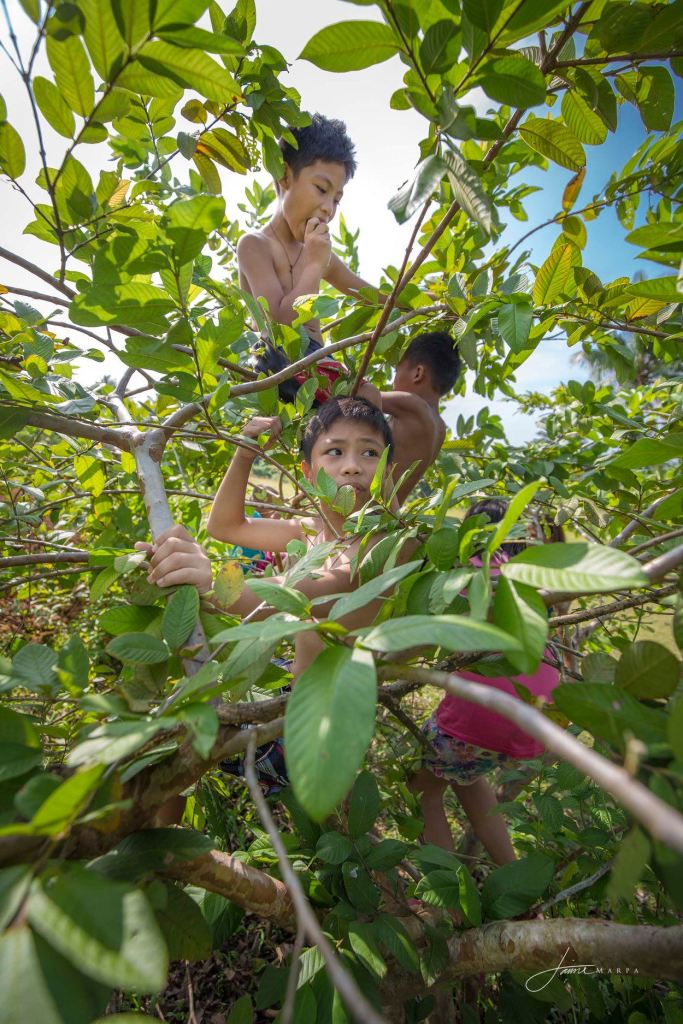
Larawan kuha ni G. Jim Marpa, 2017.

Hindi ba nakakahiyang isipin na sa ngayon, ang mag-igib at maglinis ng bahay ay pawang mga “reality games” na lang sa telebisyon gayong ganito ang ating buhay noon? 

Hindi ba nakakabahala na parang malaking balita ngayon yung makarinig ng mga tao na nagsusumakit sa pagsisikap na maging mabuti at marangal sa buhay at gawain?

Bakit mangha-mangha mga tao ngayon sa mga kuwento ng pagmamalasakitan ng pamilya at magkakaibigan gayong dapat naman ganoon talaga tayo sa buhay?

Hindi kaya masyadong na-spoil mga henerasyon ngayon, lahat ng kanilang hilig ay ibinigay ng mga magulang at lolo at lola di alintana masamang epekto sa gawi at pag-uugali ng mga bata?  At dahil nga “napanis” o na-spoil ang mga bata, pati ang disiplina ng buhay espiritwal gaya ng pagdarasal at pagsisimba ay napabayaan. 

Opo, disiplina ang pagdarasal at pagsisimba. Kapag pinabayaan mga ito at nawala sa mga tao, wala na tayong igagalang na kapwa o lugar man lamang at pagkakataon dahil maski Diyos at simbahan hindi na kayang igalang pa. 

Nananatili hanggang ngayon lalo sa ating nakatatanda at di lamang sa mga bata ang misyon ni Hesus kaya siya humirang pa ng pitumpu’t dalawang mga alagad na kanyang sinugo na mauna sa kanya (Luc.10:1-9).

Larawan kuha ni G. Jim Marpa, 2019.

Tayo ang mga iyon sa panahong ito, tayong mga nakatatanda na dapat puno ng alab para sa Panginoon at Kanyang mabuting balita na hatid sa lahat na sa panahong ito ay litong-lito maski na sagana sa mga bagay na materyal.

Tayo ang inaasahan ni Hesus na gagabay sa maraming naliligaw ng landas, lalo na mga kabataan na ibig siluin at lapain ng mga nagkalat na “asong-gubat” sa gitna ng saganang anihin.

Tayo ang mga makabagong San Timoteo at San Tito, dalawang banal na nagparubdob ng alab para sa Diyos sa pagpapahayag nila noon sa salita at gawa na “Nalalapit na ang paghahari ng Diyos sa inyo” (Luc. 10:9) dahil sila rin mismong dalawa ay naranasan ang sigasig sa pananampalataya ng kanilang mga magulang at ninuno noon.  Amen. 

Pagbabalik-loob, pagpapaloob sa kalooban ng Diyos

Lawiswis ng Salita ni P. Nicanor F. Lalog II
Kapistahan ng Pagbabalik-loob ni San Pablo, Ika-25 ng Enero 2022
Gawa ng mga Apostol 22:3-16  ><}}}*> + <*{{{><  Marcos 16:15-18
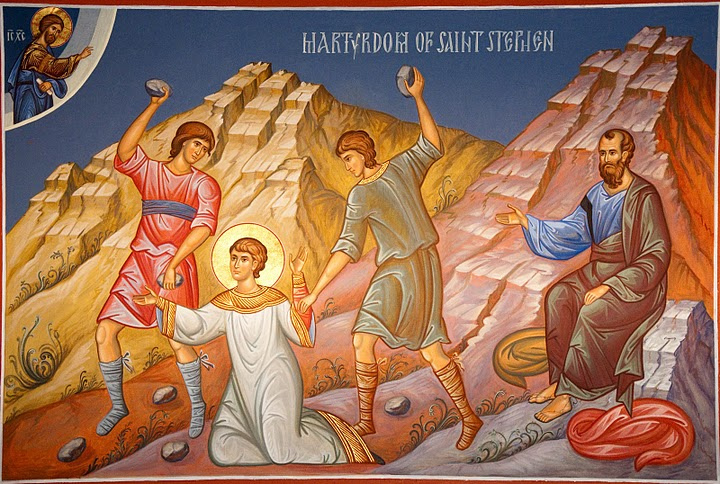
Larawan mula sa en.holyordersofststephen.org ipinapakita pagkamatay ng unang martir ng Simbahan si San Esteban habang pinapanood ni Saul na noo’y taga-usig ng mga Kristiyano habang napakita naman mula sa langit ang Panginoong Jesu-Kristo.

“Kalooban ng Diyos.”  Ito ang sa tuwina palagi nating inaalam sapagkat batid nating ito ang pinakamabuti para sa atin.  Subalit kadalasan tayo ay nabibigo, naguguluhan kung ano ang kalooban ng Diyos dahil madalas akala natin para itong tanong na isang pindot ay malalaman kaagad ang sagot tulad ng sa Google.

Kauna-unahang hinihingi sa atin upang mabatid ang kalooban ng Diyos ang tayo muna ay “pumaloob sa Diyos” na ibig sabihi’y dapat nasa loob tayo ng Diyos. Kung ikaw ay nasa labas ng Diyos, tiyak ikaw ay lumayo sa Kanya dahil sa kasalanan; kaya, pagbabalik-loob sa Kanya ang kinakailangan.

Ibig kong simulan dito ang pagninilay sa Kapistahan ng Pagbabagong-buhay ni San Pablo Apostol na ating ipinagdiriwang sa araw na ito. Ito ang upisyal na salin mula sa Inggles ng “Feast of the Conversion of St. Paul the Apostle” na tila may kulang.

Ganito kasi iyon: Tama rin namang sabihing “pagbabagong-buhay” dahil bawat conversion wika nga ay pagbabago tulad ng na-convert sa ibang relihiyon o sa ibang anyo o gamit. Ngunit sa bawat pagbabago, mayroong higit na malalim na nababago na hindi namang ibig sabihin ay nag-iiba o nagiging different.

Kasi iyong sinasabing conversion ni San Pablo o ng sino pa mang tao ay hindi naman pagbabago ng pagkatao kung tutuusin; sa bawat conversion ng isang makasalanan o masamang tao, hindi naman nababago yaong tao talaga kungdi kanyang puso na siyang naroon sa kanyang kalooban.

Ibig bang sabihin ang pagbabagong buhay ay yaong dating masayahin o palatawa magiging malungkutin o iyakin? Yaong dating mapusok at malakas ang loob magiging duwag? O yaong pagbigla-bigla at padaskol-daskol ay magiging makupad at mabagal sa pagdedesisyon?

Sa pagbabagong-buhay ng sino man tulad ni San Pablo, hindi nababago ang pagkatao: mapusok pa rin si San Pablo, palaban at matapang nang tawagin at sumunod kay Kristo. Hindi naman nabago kanyang karakter pero nabago kanyang puso na nahilig sa kalooban ng Diyos pagkaraan. Iyong kanyang dating kapusukan at katapangan sa pag-uusig ng mga Kristiyano ay nalihis naman sa pagpapahayag ng Mabuting Balita ni Hesus sa mga Hentil at kapwa niya Judio.

Kaya naman higit na malalim at makahulugang isalin ang conversion ng sino man sa katagang “pagbabalik-loob”. Bawat nagkakasala ay lumalayo ang loob mula sa Diyos na ibig sabihin ay “ayaw sa Diyos” gaya ng ating pakahulugan tuwing sinasabing “malayo ang loob”.

Kapag nagsisi at tumalikod sa kasalanan ang isang tao, hindi lamang siya nagbabagong-buhay o nag-iiba ng pamumuhay kungdi higit sa lahat, siya ay “nagbabalik-loob” sa Diyos. Tatlong bagay ang itinuturo sa ating ni San Pablo sa kanyang karanasan ng pagbabalik-loob sa Diyos.  

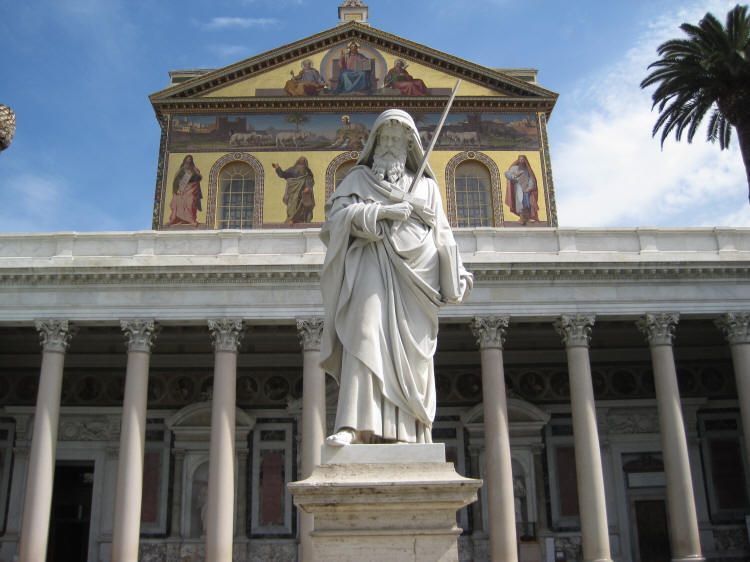
Larawan mula sa en.wikipedia.org ni San Pablo sa harapan ng Basilica ni San Pablo sa Roma, Italya.

Una, bawat pagbabalik-loob ay isang personal na pagtawag at paanyaya mula sa Panginoong Hesus.  Batay sa salaysay ni San Pablo, “Nasubasob ako sa lupa, at narinig ko ang isang tinig sa akin, ‘Saulo, Saulo!’”(Gawa 22:7).  

Araw-araw inaanyayahan tayo ni Hesus na magbalik-loob sa Kanya. 

Iyong mabatid lamang natin sa ating kalooban na mali ang ating ginagawa o kaya tayo ay kabahan at matakot sa isang masamang gawain, iyon na ang tinig ni Hesus na tumatawag sa atin katulad kay San Pablo. 

Huwag na nating hintayin pa ang isang “dramatic” o “bonggang” pagkakataon wika nga upang pakinggan ang tawag ng Panginoon katulad nang mahulog sa kanyang kabayo si San Pablo.  Hindi ibig ng Diyos na sumadsad pa ang ating buhay sa kasamaan at mawala na ang lahat ng pagkakataong makabalik pa sa Kanya.            

Ikalawa, madalas kapag tayo tinawag ng Diyos na magbalik-loob sa Kanya ay hindi kaagad maliwanag ang lahat sa atin kaya kailangan natin ng taga-akay: “Nabulag ako dahil sa kaningningan ng liwanag na iyon, kaya’t ako’y inakay na lamang ng mga kasama ko papasok sa Damaso” (Gawa 22:11). 

Larawan kuha ni G. Jim Marpa, 2019.

At hindi lamang basta taga-akay ang kailangan natin sa bawat pagbabalik-loob kungdi isang mahusay na gabay katulad ni Ananias na “isang taong may takot sa Diyos, tumutupad sa Kautusan, at iginagalang ng mga Judiong naninirahan sa Damasco” (Gawa 22:12). 

Si Ananias ang ginamit ng Diyos upang mapagaling ang pagkabulag ni San Pablo at malahad sa kanya ang kalooban ng Diyos na mapalaganap ang Mabuting Balita.

Ang mahusay na gabay ay yaong pumapawi at nagpapagaling sa ating mga pagkabulag sa katotohanan ng Diyos sa buhay na ito. Wika mismo ni Hesus, maaring bang maging taga-akay ng mga bulag ang isa pang kapwa bulag?

Magkaroon ng isang mabuting taga-akay o spiritual director na hindi namang dapat pari o madre lamang kungdi yaong isang mabuting pastol na kalakbay at kaagapay sa ating spiritual journey.

Ikatlo, bawat tawag sa pagbabalik-loob sa Diyos ay palaging paanyayang pumasok sa isang komunyon o kaisahan kay Hesus at Kanyang pamayanan o komunidad.  Ito ang magandang bahagi ng pagtawag kay San Pablo:  nagpakilala si Jesus bilang kanyang inuusig na Kristiyano, “Saulo, Saulo!  Bakit mo ako pinag-uusig?  Ako’y si Jesus na taga-Nazaret na iyong pinag-uusig” (Gawa 22:7,8)

Ang totoong pagbabalik-loob o pagbabagong-buhay ay yaong hindi lamang makita ang sarili kungdi makita ang kanyang kaisahan kay Hesus at sa kapwa-tao.  Walang kabuluhan ang ano mang pagpapakabuti ng sarili na nakahiwalay sa Diyos at sa kapwa.  Hindi kabutihan kungdi kapalaluan ang walang ibang makita kungdi sarili.  


Madaling sabihin ang mga bagay na ito at sadyang mahirap gawin.  Subalit kung ating susuriin ang naging buhay ni San Pablo, hindi lamang minsanang pangyayari ang magbalik-loob sa Diyos.

Isang mahabang proseso ang kanyang pinagdaanan sa kanyang pagbabalik-loob o pagbabagong-buhay; katulad natin marahil siya ma’y nagkakasala minsan-minsan sa Panginoon. 

Larawan kuha ng may-akda, 2019.

Ang mahalaga ay ang patuloy niyang pagninilay at pananalangin, ang pagsisikap niyang “pumaloob sa Diyos” upang mabatid at maisakatuparan ang Kanyang Banal na Kalooban na “Humayo kayo sa buong sanlibutan at ipangaral ninyo sa lahat ang Mabuting Balita” (Mc.16:15).  

Kaya, huwag manghinawa sakaling mabagal ang iyong “pagbabagong-buhay”; minsa’y akala mo lamang wala namang nababago at masama ka pa rin.

Hindi totoo iyan dahil batid ni Hesus, nakikita ni Hesus ang pagsisikap natin mula sa kaloob-looban natin hindi pa man tayo pumapaloob sa Kanya.

Ang totoo kasi, palagi namang nasa loob natin si Hesus, kahit anong pilit nating lumayo sa Kanya. Amen.

Dream. Believe. And live.

The Lord Is My Chef Simbang Gabi Recipe for the Soul by Fr. Nicanor F. Lalog II
Tuesday, Simbang Gabi 6, 21 December 2021
Zephaniah 3:14-18   ><)))*> + ><)))*> + ><)))*>  Luke 1:39-45
Photo by Mr. Chester Ocampo, Pico de Loro, Batangas, 19 December 2021.

You must be wondering why we have the story again of the Visitation of Mary to her cousin Elizabeth on this sixth day of our Simbang Gabi after listening to it twice over the weekend. As I have told you, beginning December 17 our liturgy shifts focus on the days leading to the first Christmas with each date having its fixed readings and prayers; yesterday, we heard the story of the Annunciation to Mary that is immediately followed by her Visitation of Elizabeth.

Mary set out in those days and traveled to the hill country in haste t a town of Judah, where she entered the house of Zechariah and greeted Elizabeth.

Luke 1:39-40

Let us rewind to yesterday’s scene: after Mary had given her “fiat” or “faithful yes” to God to become the mother of Jesus, Luke simply said “Then the angel departed from her”  and then “Mary set out and traveled to the hill country in haste to a town of Judah, where she entered the house of Zechariah and greeted Elizabeth (Lk.1:38, 39-40).”      

See the remarkable maturity in faith of Mary who must have been 16 years old at that time that she immediately went to visit Elizabeth without anyone guiding or accompanying her to share in the joy of her cousin’s pregnancy. Without any intentions of putting down the most blessed Joseph her husband who had a more difficult manner of receiving the Annunciation in a dream, an angel continued to appear to him to guide him at least four times. But with Mary, she was left alone by the angel. She literally had to walk the path with eyes of faith in God and in Jesus Christ all her life here on earth.        

Photo by author, September 2021.

When I was about to receive my First Holy Communion in 1973 while at Grade 2, my parents drilled into me the great responsibility I shall have in receiving the Body of Christ. They told me that since I will be having Christ in me in the Holy Communion, I have to be always good because my guardian angel would be leave me to decide on my own.

Of course, I never questioned them especially my mom even if she would remind me to call on my “angel dela guardia” when all the while they were telling me he was gone. 

Now that I am a priest and supposed to know more than them about angels who never actually leave us, it is still very interesting to reflect Luke’s report how the “angel departed Mary” after the Annunciation and left her on her own throughout her life.

Here we find anew the artistry of Luke and let us “photoshop” it with GMA-7’s talent search a few years ago called “Starstruck”:  the Virgin Mary with the child Jesus in her womb visiting her old and barren cousin Elizabeth on the sixth month of pregnancy with John the Baptizer. 

Two women of matured faith who were “starstruck” with God’s wondrous works because they both “dreamed, believed, and lived”— not “survived” as they did not merely overcome the trials and difficulties of child-bearing but lived in fulfillment and holiness.  We are told again today how Elizabeth was filled with the Holy Spirit at Mary’s visitation and tomorrow we shall hear the Blessed Virgin singing her praises to God with her Magnificat.

After giving birth to Jesus Christ, Luke would continue to tell us how Mary always believed in “what was spoken to her by the Lord would be fulfilled,” presenting her as the original listener and doer of the Word of God.  No wonder in John’s Gospel, she would remain standing under her Son’s Cross because she had always believed.  And no wonder too that in the Spiritual Exercises of Ignatius of Loyola, Jesus appeared first to Mary because she had always believed in His words He would rise again which became the basis of our Easter “salubong.”  

Photo by author, December 2020.

In one of his homilies during the Year of Faith, Pope emeritus Benedict XVI said that to have faith in God is the starting point of everything in life.  According to him, one of the tragedies of modern society is the lack or even denial of the supremacy of God.  Benedict explained that belief in God is the source of all truths about man because it is only God Who truly gives meaning and direction to our lives.            

How sad that despite the affluence and too much material things in the world today, man seems to be never contented; in fact, we have become empty and lost more than ever as we look at the countless problems and miseries we are into like this COVID-19 pandemic and climate change, plus those found in our family and home, office and community, country and the world. 

Worst is how we also “pervert” our religious beliefs because of too much faith in our selves than in God, making religion an excuse to amass wealth and power by sowing hatred to others.

Imagine the many darkness in Mary’s life “without the angel by her side” and had to ponder and rely, believe always in the words she had received in the Annunciation.            

To truly receive Jesus Christ in the Eucharist, we must first believe in His words, that He is the Bread from heaven, our Bread of life.  For all the darkness in our lives, in our family, in our society, we need to go back to God Whom we have always left behind, ignored and even rejected or ridiculed.  For all our dreams, let us believe in God like Mary and Elizabeth to start living in fulfillment despite the many difficulties we are into.  A blessed Tuesday to you! 

Advent is God’s transforming presence

The Lord Is My Chef Simbang Gabi Recipe for the Soul by Fr. Nicanor F. Lalog II
Monday, Simbang Gabi 5, 20 December 2021
Isaiah 7:10-14   ><)))*> + ><)))*> + ><)))*>   Luke 1:26-38
Photo by author, an altar near the Chapel at the site of the Annunciation below the Basilica of the Annunciation, Nazareth, Israel, 2019.

We are now at the final stretch of the week leading to Christmas as cash registers ring following the renewed economic activities with the lowering of COVID cases this month after a long lull since this pandemic began early last year.

Though the commercial hubbub is all around us, let us not forget that unlike the commercial green and red shades of Christmas, our Advent color is violet like Lent to signify the spirit of penance though in a more subdued manner. Amid our busy schedules, let us not forget that Advent is a preparation of our inner selves, of our interior disposition for a deeper meaning and nature of Christmas. With still a week to go, we are invited to empty our selves of sins, of pride and of other excess baggages so we can create a space for Christ’s coming right in our hearts, like our Blessed Virgin Mary.

In the sixth month, the angel Gabriel was sent from God to a town of Galilee called Nazareth, to a virgin betrothed to a man named Joseph, of the house of David, and the virgin’s name was Mary. And coming to her, he said, “Hail, full of grace! The Lord is with you.” She was greatly troubled at what was said and pondered what sort of greeting this might be.

Luke 1:26-29
Photo by author, site of the Annunciation beneath the Basilica of the Annunciation at Nazareth, Israel, 2019.

One of the most beautiful characteristic of Mary as a disciple is her openness to God. She always had that empty space in her solely for God, an inner disposition nurtured by her deep prayer life.

See the very solemn narration by Luke of the Annunciation, specifically mentioning to us the time, place, persons and circumstance involved in this “sacred moment” we have reflected yesterday. Mary must have been deeply in prayer when the angel came, a sign she was always attuned with God.

Notice that next to her surprise with the coming of the angel with the good news was her “pondering” what sort of greeting that might be. What an image of the Blessed Mother disposed to God’s calling and plans that immediately during her conversations with the angel, she was already reflecting on the meaning of the message. No hesitations or whatsoever. Just clarifications but willing to obey.

Luke tells us in other instances how Mary would “ponder” on words and events in her life like when the shepherds came to visit her newly-born child Jesus and after finding Jesus at the temple. Mary would always ponder the words and events that came her way, an indication of open acceptance, of a welcoming attitude to God’s works and wonder.

Photo by author outside Basilica of the Annunciation, Nazareth, 2019.

Her pondering on the words of the angel Gabriel was very significant; we can’t help compare her attitude to Zechariah who was made mute after questioning the angel’s announcement his wife Elizabeth would bear a child six months earlier.

There’s nothing wrong asking God and seeking clarifications with his plans for us but, never challenge and dare him like Zechariah who doubted the good news brought to him by the same angel Gabriel whose name means “the presence of God.”

But Mary said to the angel, “How can this be, since I have no relations with a man?” And the angel said said to her in reply, “The Holy Spirit will come upon you, and the power of the Most High will overshadow you. Therefore the child to be born will be called holy, the Son of God… for nothing will be impossible for God.”

Luke 1:34-35, 37

In asking the angel “How can this be”, we find in Mary an honest and sincere, an innocent question already inclined to accept and cooperate with the plan. In fact, Mary indicated no resistance at all to the plan to be the Mother of Jesus – she just wanted to know the “script” or her role in the Divine plan of the Incarnation.

It is here where we find the transforming presence of God coming upon her at that moment when the angel told her “The Holy Spirit will come upon you, and the power of the Most High will overshadow you”.

What a picturesque description that only an artist like Luke could express so vividly well.

The Holy Spirit will come upon you – God coming down to her, becoming present in her. And the power of the Most High will overshadow you – that is the clincher!

Look at the wonderful flow and unfolding of the Incarnation: a coming down, a descent of the Holy Spirit and an overshadowing of the power as some sort of being “possessed” by the Divine! Observe how Luke would repeat in his second book, the Acts of the Apostles the same sequence of coming down of the Holy Spirit and overshadowing of the Apostles with Mary!- at the Pentecost in Jerusalem. Their striking similarities remind us of the tremendous grace and power coming upon us when like Mary and later the Apostles we entrust our total self, including our future to God. It is only then when God’s transforming presence begins to work wondrously among us.

Photo by Ezra Acayan of Getty Images, February 2020 in Baclaran Church.

Too often, we feel uncomfortable and even not amenable to being overwhelmed by another. Our sense of independence is so strong, deeply ingrained in us even in childhood when we would always assert our very selves, insist on what we want that along the way, we also feel very suspicious of anyone trying to get too close, too soon with us.

It is funny that even with too much presence in social media like Facebook, we get that feeling of being violated or at least slighted by someone too close for comfort in posting and commenting on our walls.

At the Annunciation, we find Mary personally giving her yes to God, calling herself the handmaid of the Lord to let his will be done upon her. And the rest is history. That is why we have this joyous season of Christmas today when Mary allowed herself to be overwhelmed, transformed by Christ’s presence in her womb.

While we were so busy with our Simbang Gabi and Christmas preparations last week, another powerful typhoon battered the southern part of our country resulting in many losses of lives and properties. So typical of the stronger than usual typhoons hitting our country this past decade in this part of the year, it makes us wonder where is God amid all these things happening while we are in a pandemic.

Where is the transforming presence of God in this time of pandemic and calamities and inanities of so many gunning for the top positions of the land?

Photo by author, 2019.

We need not look far and beyond us. Like Mary, let us look into our hearts to see if there is room in my life for God. Recall in the Book of Genesis how out of chaos God’s transforming presence created everything good and, how in the darkness of Israel’s and mankind’s history came the Christ.

In this time of darkness and calamities, God is very much present among us, so raring to transform the world and our lives to something better. But, is there anyone among us willing to be like Mary telling God, “I am the servant of the Lord; may it be done to me according to your word”?

To transform this world into a better one, let us first be transformed in Jesus Christ. With Mary. Amen.

Have a blessed Monday!

Each of us an “Emmanuel” too!

The Lord Is My Chef Simbang Gabi Recipe by Fr. Nicanor F. Lalog II
Saturday, Day 3, 18 December 2021
Jeremiah 23:5-8   ><}}}*> + <*{{{><   Matthew 1:18-25
Photo by author, Baguio Cathedral, January 2018.

We have just concluded the “Year of St. Joseph” last December 8 but it seems due to the pandemic, we have not celebrated truly enough to realize the virtues and person of the most silent character in the New Testament, St. Joseph.

We find no story in the gospels with St. Joseph either speaking or conversing with anyone at all. At least the Blessed Virgin Mary conversed with the angel during the Annunciation and spoke to Jesus her Son upon finding him at the Temple and at the wedding feast at Cana. St. Joseph was totally silent and most of all, could sleep soundly despite the tremendous stress he must have gone through! Truly a man of great faith and trust in God!

This is how the birth of Jesus Christ came about. When his mother Mary was betrothed to Joseph, but before they lived together, she was found with child through the Holy Spirit. Joseph her husband, since he was a righteous man, yet unwilling to expose her to shame, decided to divorce her quietly. Such was his intention when, behold, the angel of the Lord appeared to him in a dream and said, “Joseph, son of David, do not be afraid to take Mary your wife into your home. For it is through the Holy Spirit that this child has been conceived in her.”

Matthew 1:18-20
Photo from vaticannews.va, December 2020.

Notice how Matthew presented the climax of his genealogy not only with the coming of Jesus Christ at the end but also in his lineage to St. Joseph he described as “a righteous man” and addressed by the angel in a dream as “son of David”.

In him we find that expression “silent water runs deep” so very true. Imagine the maturity and deep spirituality of St. Joseph being called as a righteous man or a holy man which for the Jews is one who obeys the Laws of Israel.

But in this scene of the Annunciation of Christ’s birth to him in a dream, Matthew goes deeper into what is to be holy as more than obeying the the Laws but most of all, abiding by the will of God always as described in many instances in the Old Testament like the Book of Psalms. If holiness were simply an adherence to the Laws, St. Joseph would have not decided to silently leave Mary found pregnant with a child not his; in their laws, she would have been shamed in public which St. Joseph avoided in trying to leave her silently. For him, higher than the letters of the law was the welfare and well-being of Mary and her Child that until then he did not know was the Christ.

At the same time, here we find the deep spirituality of St. Joseph: compared with Mary to whom the angel appeared and spoke in person while with St. Joseph, the angel appeared only in a dream. He had a more difficult situation discerning whether his dream was real or not, which we all experience upon waking up from a dream so real!

Only a man with deep spirituality, so attuned with God like St. Joseph could perceive the divine in fact while at the same time discern it as very true the will of God that “When Joseph awoke, he did as the angel of the Lord had commanded him and took his wife into his home. He had no relations with her until she bore a son, and he named him Jesus” (Mt.1:24-25).

Photo by Arch. Philip Santiago, mosaic of the Annunciation to Joseph at the Shrine of St. Padre Pio in San Giovanni di Rotondo, Italy, 2017.

In a very concise manner – like our very silent saint and foster father of Jesus – Matthew presents to us in this short story of the Annunciation of the Birth of Jesus to St. Joseph all the critical and essential elements about the mystery of the Incarnation.

As we have reflected yesterday at the genealogy, Matthew now goes deeper into the humanity and divinity of Jesus Christ as the fulfillment of the Old Testament promises of God. This he beautifully presented also through the person of St. Joseph, a reminder of the need for us to be vessels of God’s graces and instruments of God’s works.

St. Joseph showed in this brief scene the true meaning of holiness, of being whole by seeking to find ways to bring into unity their laws and love and persons, something which Jesus Christ would keep on elaborating in his entire ministry, like his favorite expression “Sabbath was created for man, not man for sabbath.”

See how he tried to give more importance to Mary whom he loved so much that he was intent in not putting her to shame and harm. And upon listening and discerning the angel’s message to him in a dream, he obeyed everything, showing us the unity of the laws in love long before Jesus came to show it on the Cross himself. In accepting God and Jesus, St. Joseph had to take Mary; and in taking Mary, Jesus came into the world.

Here we are challenged by the example of St. Joseph that we too become an Emmanuel in the sense that in our lives, we become the sign that God-is-with-us specially in this time of the pandemic and with coming elections next year. We need to pray more deeply and be attuned with God for his divine will that always takes unexpected turns, so different from our own ways and methods.

Photo by author, 15 December 2021.

To be an Emmanuel like Jesus and St. Joseph, one has to be definitely pro-life, one who values life and every person, regardless of his/her status in life.

Like St. Joseph, let us learn to be silent for God and be louder with our actions, always choosing and standing for life and for every person’s dignity.

Like St. Joseph, he chose from the very start the value of Mary as a person which is the hallmark of Jesus as Emmanuel, the God who became human to be with us because it is good to be human. Amen.

Mary, advocate of grace and model of holiness

The Lord Is My Chef Daily Recipe for the Soul by Fr. Nicanor F. Lalog II
Wednesday, Solemnity of the Immaculate Conception, 08 December 2021
Genesis 3:9-15, 20 ><}}}*> Ephesians 1:3-6, 11-12 ><}}}*> Luke 1:26-38
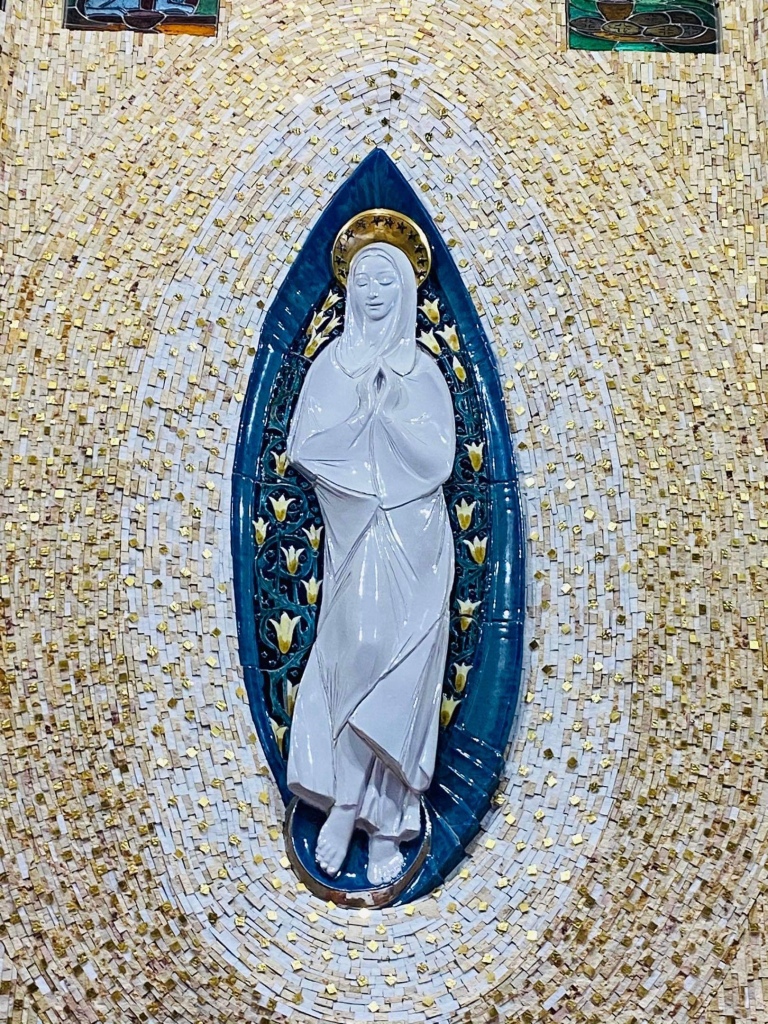
Photo by Rev. Fr. Gerry Pascual at Palazzo Borromeo, Isola Bella, Stresa, Italia, 2019.

Recently I saw on a Facebook post the photo of American model Kendall Jenner in a swimsuit showing what for many is the “perfect body” in a woman. The photo had reportedly gone viral last year.

What caught my attention was the other photo posted opposite Jenner: that of 19-year-old Alyssa Carson who became the youngest female in history to pass all NASA aerospace tests to train as astronaut for future travel to Mars! The caption said it so well, lamenting the fact how the world gives so much attention to “fashion models” with many going insane imitating their bodies forgetting the more essential like inner beauty and intelligence.

More sad is how we have fixed our human understanding and analogies of a “model” as someone who poses and remains still to be painted or photographed for glossy magazines and giant billboards that people are willing to buy or pay for just to view and let their senses feast on.

It may sound funny but those two photos accompanied me while praying and preparing for our celebration today of the Solemnity of the Immaculate Conception. Sorry, I am not going to show you the link to those photos but wha I want to share with you are the two beautiful expressions depicting Mary as “advocate of grace” and “model of holiness” found in the Preface of today’s Mass (that is the prayer before the Holy, Holy leading to the consecration): “She, the most pure Virgin, was to bring forth a Son, the innocent lamb who would wipe away our offenses; you placed her above all others to be for your people an advocate of grace and a model of holiness.”

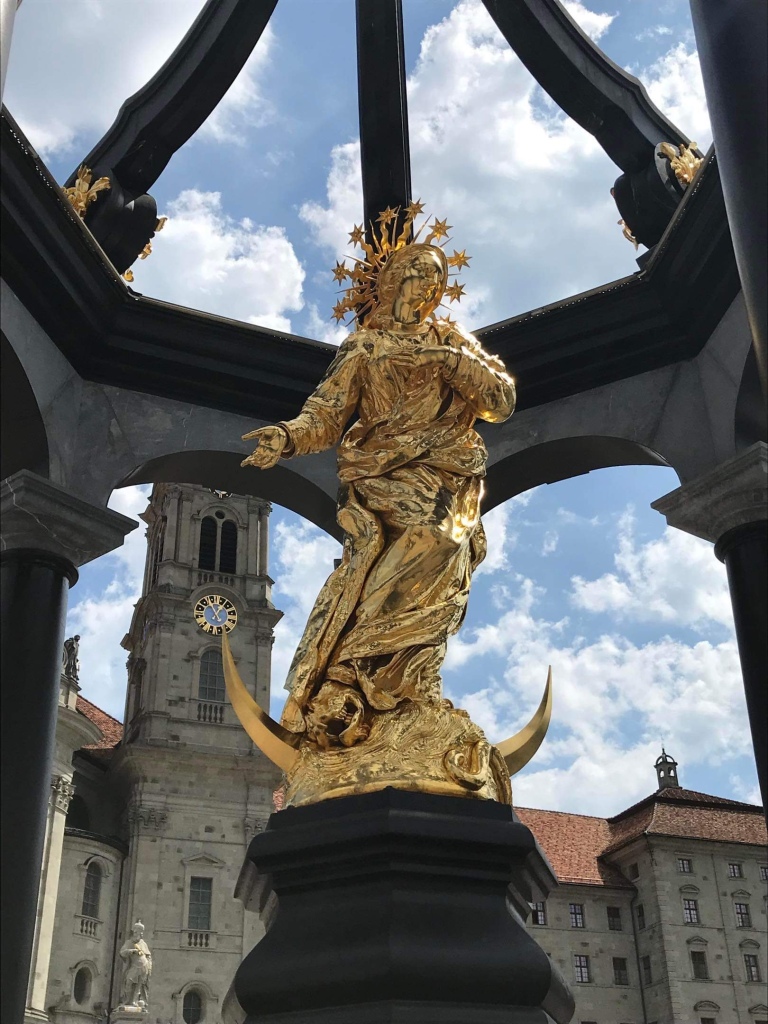
Photo by Fr. Gerry Pascual at Einsiedeln Abbey, Einsiedeln, Switzerland, 2019.

So often with Marian feasts, many people complain and find it hard to relate with the Blessed Virgin because they find them as celebrations of the privileges of Mary who was so blessed and unique, thinking she’s almost a god, not human anymore whom we cannot imitate and emulate.

That is totally untrue and baseless!

Of course, only she has the distinction of being immaculately conceived, one never stained by sin but, aside from that, Mary is like all of us, so human; and we too can be like her, full of grace and holy!

Brothers and sisters: Blessed be the God and Father of our Lord Jesus Christ, who has blessed us in Christ with every spiritual blessing in the heavens, as he chose us in him, before the foundation of the world, to be holy and without blemish before him. In love he destined us for adoption to himself through Jesus Christ, in accord with the favor of his will.

Ephesians 1:3-5

Very clear in this reflection by St. Paul in our second reading that our truest destiny is to be holy and without blemish – that is, immaculate. It is the plan of God since the beginning that we all become his people until sin came and destroyed momentarily that divine plan as we have heard in the first reading.

With the coming of Jesus through his sacrifice on the Cross, we were redeemed from sin to become God’s holy people which the same Preface mentions Mary as the “beginning of the Church”. The same prayer reiterates to us our universal calling from God which is to be holy and blameless before God through Jesus Christ. It is very doable and attainable “for nothing is impossible for God” as the Archangel Gabriel told Mary during the Annunciation (Lk.1:37). And Mary is our proof to that!

Photo by Rev. Fr. Gerry Pascual at Santuario di Greccio, Rieti, Italy in 2019.

While it is very true that nothing is impossible for God, today’s celebration of the Immaculate Conception reminds of how God “needs” us to cooperate and participate in his beautiful plans for us like Mary to be his instrument or seedbed for his Divine Word to receive and grow and bloom.

That is the meaning of Mary as “advocate of grace” who became the vessel in the coming of Jesus Christ. See how St. Luke was very clear in narrating Mary’s “supporting” role and place in the plan of God: she remains a human being – not God – like us except she was full of grace, that is, immaculately conceived.

Behold, you will conceive in your womb and bear a son, and you shall name him Jesus. He will be great and will be called Son of the Most High, and the Lord God will give him the throne of David his father, and he will rule over the house of Jacob forever, and of his kingdom there will be no end… The Holy Spirit will come upon you, and the power of the Most High will overshadow you. Therefore the child to be born will be called holy, the Son of God.”

Luke 1:31-33, 35

The Church Fathers used to call Mary as the “aquaeductus ecclesiae” or neck of the Church connecting Jesus the caput or head and us the corpus or body. Mary as an advocate of grace is that vessel of all blessings we now have in Jesus Christ because of her obedience and participation in that plan of God of sending Jesus.

Keep in mind that as advocate of grace, Mary brings us all to Jesus as the one Mediator, not away from him. True devotees of Mary bring others to Jesus not away from him for he alone is the Mediator. A true and authentic devotion to Mary always result in deeper knowledge and intimacy with Jesus and his gospel. Notice this in her apparitions especially at Fatima in 1911 where her messages call us to get closer to Jesus, not her.

Mary continues as our advocate of grace telling us the very same words she had told the servers at Cana to “do whatever he tells you” (Jn.2:5).

Do we do the same? Or, mislead others into putting Mary at par or even above Jesus her Son and Lord? In this time of pandemic, are we like Mary as an advocate of grace, a vessel and instrument of blessings to others or do we grab every credit of “charity” and “kindness”, grandstanding for more media mileage of “likes” and “followers” to be viral and trending?

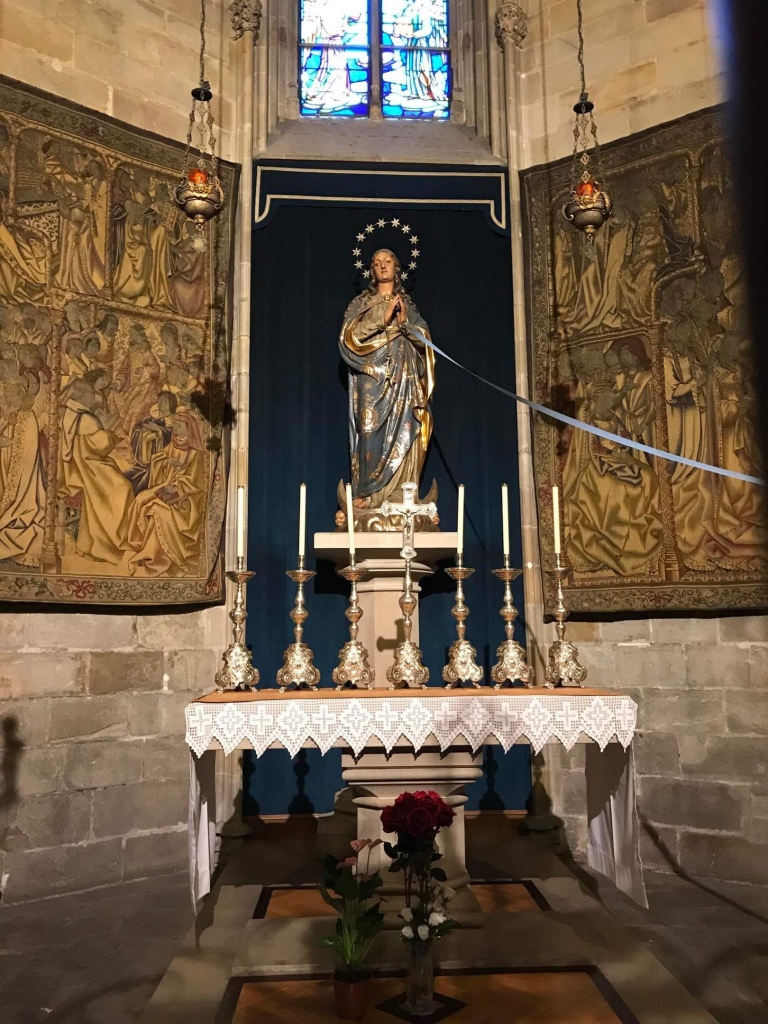
Photo by Fr. Gerry Pascual at the Cathedral of Barcelona, Spain in 2019.

From her being an “advocate of grace”, Mary thus becomes our “model of holiness” too as she reminds us of God’s original plan for us, created in his image and likeness destroyed by sin with the fall of Adam and Eve. See how God immediately promised salvation through the woman fulfilled in Mary as he reprimanded the serpent in tempting Eve:

“I will put enmity between you and the woman, and between your offspring and hers; He will strike you at your head, while you strike at his heel.”

Genesis 3:15

Because of her being the advocate of grace of God by giving birth to Jesus, Mary stands before us as the perfect reminder of Christ’s work of purification and recovery of the image of God in us. Described as the “perfect disciple” and “doer of the Word”, Mary had shown us in her very life which continues to this day in her intercessions and apparitions how discipleship is a life-long process and commitment of holiness. From giving birth to Jesus to his dying on the Cross until his burial, Mary had always been with Jesus that on Easter, it was to her that the Risen Lord first appeared because she was the first to believe totally in him.

At the Pentecost, Mary was with the Apostles awaiting the coming of the Holy Spirit that became the coming out party of the Church. In her life, Mary is the model of holiness because she keeps on working with us and in us, guiding us in following Jesus our Lord and Master so that we might be “conformed to his image” (Rom. 8:29).

Photo by author, Christmas 2020.

Holiness is not being sinless but being filled with God who is all-holy, being like Jesus Christ. Mary showed us the way to holiness is being humble before God, seeing herself as the “handmaid” or servant of the Lord.

If there is one thing the world needs now so badly in this time of the pandemic, it is holiness. Before the pandemic came, mankind was so filled with self, so arrogant and proud acting like god, manipulating everything.

How ironic that a microscopic virus with the simplest signs similar to the common colds made the world stood still for some time, reminding us that there is a God all-powerful who is in control of everything.

Through Mary, may this Solemnity of her Immaculate Conception lead us back to God to recover in us his image and likeness, cleansed and purified of our blemishes and wrinkles of sin by having an enlightened devotion to her, the servant of the Lord par excellence. Amen.

A blessed day to everyone!

Losing to win, lesson of Our Lady of the Rosary

The Lord Is My Chef Daily Recipe for the Soul by Fr. Nicanor F. Lalog II
Thursday, Memorial of Our Lady of the Rosary, 07 October 2021
Acts 1:12-14   ><}}}*> + ><}}}*> + ><}}}*>   Luke 1:26-28
Photo from canningliturgicalarts.com.

This feast of the Holy Rosary has its origin in the victory of Christian forces against the Ottoman Turks in the Battle of Lepanto Bay in 1571 that decisively stopped the Moslems from occupying Europe.  The first Dominican Pope, St. Pius V attributed that victory to the recitation of the Holy Rosary.  Popularity and devotion to the Rosary eventually grew and spread when subsequent other victories in various parts of the world, including the Philippines’ La Naval were attributed to our Lady of the Most Holy Rosary. 

In our gospel today, we find the key behind every victory attributed to the praying of the Holy Rosary:  it is when we “lose” that we actually “win”!  After explaining to her the plan of God, Mary said, “Behold, I am the handmaid of the Lord.  May it be done to me according to your word.”  Then the angel departed her (Lk.1:38).  In a sense, Mary was a loser— she “lost” herself to God and eventually became an instrument for our victory in the salvation through her Son Jesus Christ.  The Lord Himself was crucified, another “loser” in a sense but truly a victor because in dying on the cross, Jesus Christ resurrected on the third day and won over death and sin.

Sometimes it can happen we feel at a loss, when we have lost in some battles in life when later on, we find out we have actually won

Some may have been bullied while in school. Or, sometimes we fail an exam or flunk a semester but eventually we graduated, now have a career, a wonderful family.

In business, sometimes investors and entrepreneurs may go bankrupt before hitting gold.

That’s how it is with life. Win or lose, in the end, it is always a win. Especially when we in God.

When we choose to be like Mary, to submit ourselves to the will and plans of God, we must be ready to endure so many sufferings and hardships in life that sometimes we feel like we are at the losing end.  When we try to be patient, when we try to understand, when we forgive, when we bear all the pains because we love, that is when we win as we lose ourselves and begins to be filled with Christ Jesus like Mary in the gospel. 

True, a lot often we lose so many battles when we try to stand for what is true and good but in the end, we actually win the war against evil.  That is the greatest victory Christ had gifted us, first His Mother Mary:  salvation.  Hence, we find in Marian prayers and hymns the requests for the Blessed Mother’s prayer for us sinners to be saved from hell and be brought to her Son Jesus Christ in eternity.  That’s the final victory we all hope for in praying and living out the Holy Rosary with Mary. 

But first, lose yourself to Jesus.  

Being small, and blessed

The Lord Is My Chef Breakfast Recipe for the Soul by Fr. Nicanor F. Lalog II
Wednesday, Feast of the Birth of the Blessed Virgin Mary, 08 September 2021
Micah 5:1-4     ><]]]]*> + ><]]]]*> + ><]]]]*>     Matthew 1:18-23
“The Birth of the Blessed Virgin Mary”, a 1305 painting by Renaissance artist Giotto in the Scrovegni Chapel in Padua, Italy. The two babies are Mary: below is Mary upon birth wrapped in swaddling cloth and washed by attendants and then above being handed to St. Anne her mother. Photo from en.wikipedia.org.

We rarely celebrate birthdays in our liturgy, except for the birth of our Lord Jesus Christ on December 25 and of his precursor John the Baptist on June 24. Feasts of the saints are often based on the date of their death or when their remains were transferred for proper burial.

Today is different: it is the birth of the Mother of God, the Blessed Virgin Mary. And so we celebrate!

Nine months after her Immaculate Conception celebrated as a Solemnity on December 8, we now have the Feast of her Nativity which is lower in status or ranking of celebrations. Nonetheless, aside from Jesus and John the Baptist, her birth is still celebrated as it is the completion of her Immaculate Conception by St. Anne.

But in this time of the pandemic when everyone’s birthday celebration is kept at the simplest level unless you are a police general or a corrupt government official or a callous lawmaker, it is good to reflect anew on the significance of a birthday. Thanks a lot to Facebook in making every birthday so special, alerting everyone of someone’s birth every day.

Photo by author, December 2018.

"Every birthday is a small Christmas 
because with the birth of every person 
comes Jesus Christ."

In his 1995 Encyclical Evangelium Vitae (The Gospel of Life), the great St. John Paul II beautifully expressed that “Every birthday is a small Christmas because with the birth of every person comes Jesus Christ.”

What makes that so true with every birthday beginning with the Blessed Virgin Mary is God’s great mystery of becoming small, of being a little one. In the birth of his Son Jesus Christ, God revealed to us that true greatness is in becoming small, in being silent. Even insignificant.

This we find right in the place of birth of the Christ prophesied in the Old Testament.

“You, Bethlehem-Ephrathah too small to be among the clans of Judah, from you shall come forth for me one who is to be ruler in Israel; whose origin is from of old, from ancient times.”

Micah 5:1

And if we go further, we find this true greatness of God in being small found also in the Mother of Jesus, the Blessed Virgin Mary who came from the obscure town of Nazareth, the only place in the New Testament never mentioned in the Old Testament. Recall how the Apostle Bartholomew (Nathanael) belittled the Lord’s hometown after being told by Philip that they have found the Messiah from Nazareth, saying, “Can anything good come from Nazareth?” (Jn.1:46).

Nazareth was totally unknown.

And so was Mary!

That is why it is so disappointing and sad when many Catholics unfortunately led by some priests have the misimpression of portraying Mary as a “beauty queen” with flawless skin and Western features when she is clearly Middle Eastern woman. Worst of all is the pomp and pageantries we have in the recent fads of processions and coronations.

Photo by author, La Niña Maria at the National Shrine of Our Lady of Fatima, Valenzuela City, 07 September 2021.

How sad we have missed how the Blessed Virgin Mary as the model disciple of Jesus was the first to embody his teaching of being small like little children with her simplicity and humility so very well expressed in her 20th century apparitions in Fatima, Portugal and Banneux, Belgium.

Thanks in part to the COVID-19 pandemic that has given us so much time and opportunities to “reboot” or “reset” our priorities in every aspect of our lives, including in our religious devotions and faith itself.

With a total stop to those Marian “extravaganzas” that have been going out of control in recent years, the pandemic is now teaching us in this Feast of the Nativity of Mary of the need for us to rediscover the values of being small and simple, silent and hidden.

Enough with our imeldific celebrations even in our religious gatherings that have sometimes become egregious display of wealth and power.

Being simple and small like Mary, both as a child and as an adult, enable us to see again the value of life and of every person.


The more simple and true 
we are like Mary and Joseph, 
the more Jesus is seen 
and experienced in us!  

Aside from the lack of any account on the birth of Mary, we heard proclaimed today the birth of Jesus to teach us that truth expressed by St. John Paul II that in every person comes Jesus Christ. The more simple and true we are like Mary and Joseph, the more Jesus is seen and experienced in us!

That is why when we greet somebody a “happy birthday”, what we really mean telling him/her is “I love you, I thank you for making me who I am today.” Through one’s simplicity and littleness in Christ, we are transformed into better persons because we are able to have glimpse of God’s love and kindness.

Photo by author, December 2020.

The true joy of celebrating a birthday is not found in the externalities of gifts and parties and guests with all the fun that come along. In this time of the pandemic as we learn to celebrate simpler birthdays, we are reminded of life’s beginning and direction that is eternal life.

And how do we get there? Through death or dying – the one reality in life Jesus has taught us in his Cross which we have avoided that has suddenly become so common these days of the pandemic.

Like in the birth of Jesus Christ, we are reminded by every birthday that life is precious because it is so fragile – any infant and every person can be easily hurt and harmed, be sick and eventually die.

Like Mary and Joseph, the little Child born in Bethlehem asks us, even begs us to take care of him found in everyone among us. Let us be more loving and kind, understanding and caring, even merciful and forgiving with one another not only in this time of the pandemic.

Such is the wisdom of God in making life small and fragile so that we may care and value it because there lies also its greatness. The best birthday greeting we can express to the Blessed Mother Mary today is to start being small and simple like her to share Jesus with everyone. Amen.

Schooling in time of COVID-19

Homily by Fr. Nicanor F. Lalog II 
Mass of the Holy Spirit for the College Department
Our Lady of Fatima University, Valenzuela City
06 September 2021
Photo by Dr. Mylene A. Santos, MD, April 2021.
"Those who seek truth seek God,
whether they realize it or not."
- St. Teresa Benedicta of the Cross

Last August 9 we celebrated the memorial of a modern saint who died at the gas chambers of Auschwitz during the Second World War. She was a German Jew named Edith Stein who became an atheist but later regained her faith as she pursued higher learning in the field of philosophy that was so rare for women at that time.

As she progressed into her philosophical studies working as an assistant to Prof. Edmund Husserl known as the “father of phenomenology”, she converted into Catholicism, eventually leaving her teaching post at a university to become a Carmelite contemplative nun, adopting the name Teresa Benedicta dela Cruz.


Congratulations, our dear students in college who dare to learn and seek the truth by enrolling in this Academic Year 2021-2022.

Students and teachers are both seekers of truth. As St. Teresa Benedicta had experienced, every search for truth leads us to God, the ultimate Truth.

This is a very difficult and trying year for us all but like St. Teresa Benedicta and all the other saints as well as great men and women of history, they all sought for the truth in the most troubled time in history. Trials and hardships in life make learning more “fun” – and an imperative at the same time. In fact, the more we must study and search the truth during critical moments in history and in our lives in order to learn more lessons that are valuable not only to us in dealing with our problems but also with the succeeding generations.

Two important virtues we need to cultivate in seeking the truth, in learning our lessons in this time of the pandemic that I hope you, teachers and students will rediscover this Academic Year: patience and humility.


This pandemic may be considered as another Pentecost, 
teaching us the value of patience, 
of patient waiting for everything, 
reminding us that the beauty of life is best experienced 
by allowing nature to take its course, 
without shortcuts nor rush, to enjoy its beauty as it unfolds before us.

Photo by author, 2019.

Patience is from the Latin “patior” that means “to suffer, to bear with.”

Learning is a process. We cannot know everything right away. It requires a lot of patience on every student and teacher.

This is the reason why Jesus assured his disciples at the Last Supper that he would send them the Holy Spirit he referred to as the Advocate.

“When the Advocate comes whom I will send you from the Father, the Spirit of truth that proceeds from the Father, he will testify to me. And you also testify, because you have been with me from the beginning… I have much more to tell you, but you cannot bear it now. But when he comes, the Spirit of truth, he will guide you to all truth.

John 15:26-27, 16:12

In the last 20 years, so much have changed in our lives brought about by modern means of communication.

Great volumes of information have become so readily accessible at great speed, that many in the younger generation have seemed to have lost the virtue of patience. At the snap of your fingers, you can easily have almost everything you need aside from information and music – including food and groceries, clothes and appliances, plants and pets, even medicines and dates!

But life, most especially learning, takes time, requiring a lot of patience in waiting and searching.

Like the Apostles of Jesus who had to wait for the descent of the Holy Spirit at the Upper Room in Jerusalem.

This pandemic may be considered as another Pentecost, teaching us the value of patience, of patient waiting for everything, reminding us that the beauty of life is best experienced by allowing nature to take its course, without shortcuts, to enjoy its beauty as it unfolds before us.

Let our Lord Jesus Christ be our example in following in the path of patience, of suffering; every trial becomes a blessing, a moment of transformation when seen in the light of Jesus Christ who suffered and died for us on the Cross. His very life tells us that there can be no Easter Sunday without a Good Friday.

This pandemic period is an extended Good Friday but in between those moments of sufferings, we experience little Easter if we try to be patient like what some of you have experienced when you graduated in this time of the pandemic.


Photo by author, January 2020.

The second virtue I wish to invite you to rediscover, teachers and students alike, is humility which is again from the Latin word humus that literally means “soil”.

From humus came the words human and humor.

Man was created from clay, a kind of soil. A person with a sense of humor is one who can laugh at things because he or she is rooted on the ground. We call a person with sense of humor in Filipino as “mababaw” or shallow – not empty but close to the ground or deeply rooted.

It is very difficult to learn anything nor discover the truth unless we first become humble. Pride and ego are the greatest stumbling blocks to any kind of learning. You will find in history, even in our personal lives how many opportunities in the past were lost simply because of our pride or “ego trip”.

Pride was the very sin of Adam and Eve that led to their fall. That is why when Jesus came to save us from effects of that Fall, humility became his central teaching when he demanded us to forget ourselves and, most of all, to become like that of a child so we shall enter the kingdom of heaven.

This humility Jesus himself showed us the path by being born like us – small and helpless.

And that has always been the way of God ever since: the small and little ones, those taken for granted, the unknown and rejected are always the ones used as God’s instruments, the ones always effecting the most far-reaching changes in history and our personal lives.

Even in the story of the Pentecost, the coming of the Holy Spirit, we find the centrality of becoming small to become a part of the whole.

It is the exact opposite of the story at Babel when people in the Old Testament dared to build a tower reaching to the skies; because of their pride, God confused them by making them speak different languages that led to the collapse of their tower and ambitions. During the Pentecost, the people were all united as one despite the different languages they speak because everybody was willing to listen, to become small in themselves to give way to others.

Like during the Pentecost, let us allow the “tongues of fire” and the “strong, driving wind” of the Holy Spirit part us of our fears and indifference, pride and ego during this Academic year 2021-2022 to fully realize and learn the important lessons and truth this pandemic is teaching us.

Photo from vaticannews,va, 13 May 2017.

Whenever, and wherever there is a search for truth that leads to the discovery of God through our patience and humility, there springs simultaneously the growth of a community. It is no wonder that wherever there is prayer and worship, there is always learning leading to bonding, or communing.

The first universities – from the Latin term universitas or “community of teachers and scholars” – where all offshoots of the efforts of the monks in their monastery as they evangelized peoples, teaching them not only prayers but also the basics of learning like reading and writing. Eventually monasteries had annex buildings as schools and universities that led to the establishment of towns and cities in Europe that spawned the growth of commerce and trade following the great many interactions among peoples.

Here we find the beautiful interplay of the search for truth that leads to discovery of God that bears fruit into mercy and love among people.

Another learned Saint who sought the Truth, Thomas Aquinas said that the more we learn the truth, the more we become intelligent, the more we must become holy.

How lovely it is, my dear students and teachers of Our Lady of Fatima University that wherever there is Truth which is Veritas, there is also Misericordia, the two mottos of our beloved University.

Amid the threats of COVID-19, amid the difficulties of online learning, let us continue to seek the truth, be patient and humble with one another as we try to build a community of “achievers” by “improving man as man”, “rising to the top” not to be conceited and proud but to be able to offer ourselves in the service of the country and of the world, for the praise and glory of God.

May our Patroness, the Our Lady of Fatima, lead us closer to Jesus Christ who is “the Way, the Truth and the Life.” Amen.

From Facebook.com/fatima.university.