Quiet Storm by Fr. Nicanor F. Lalog II
The Seven Last Words, 06 April 2023
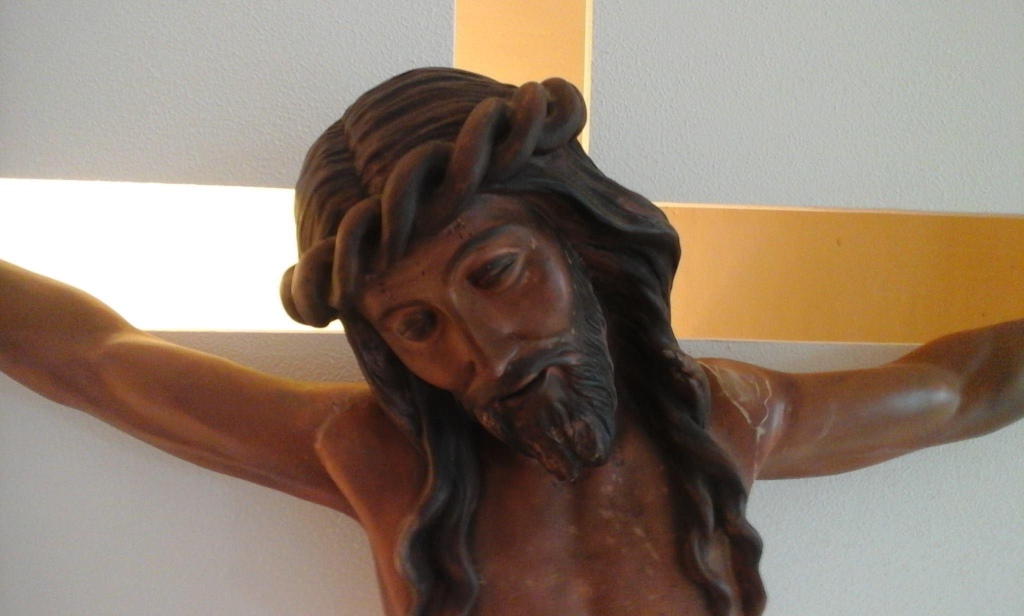
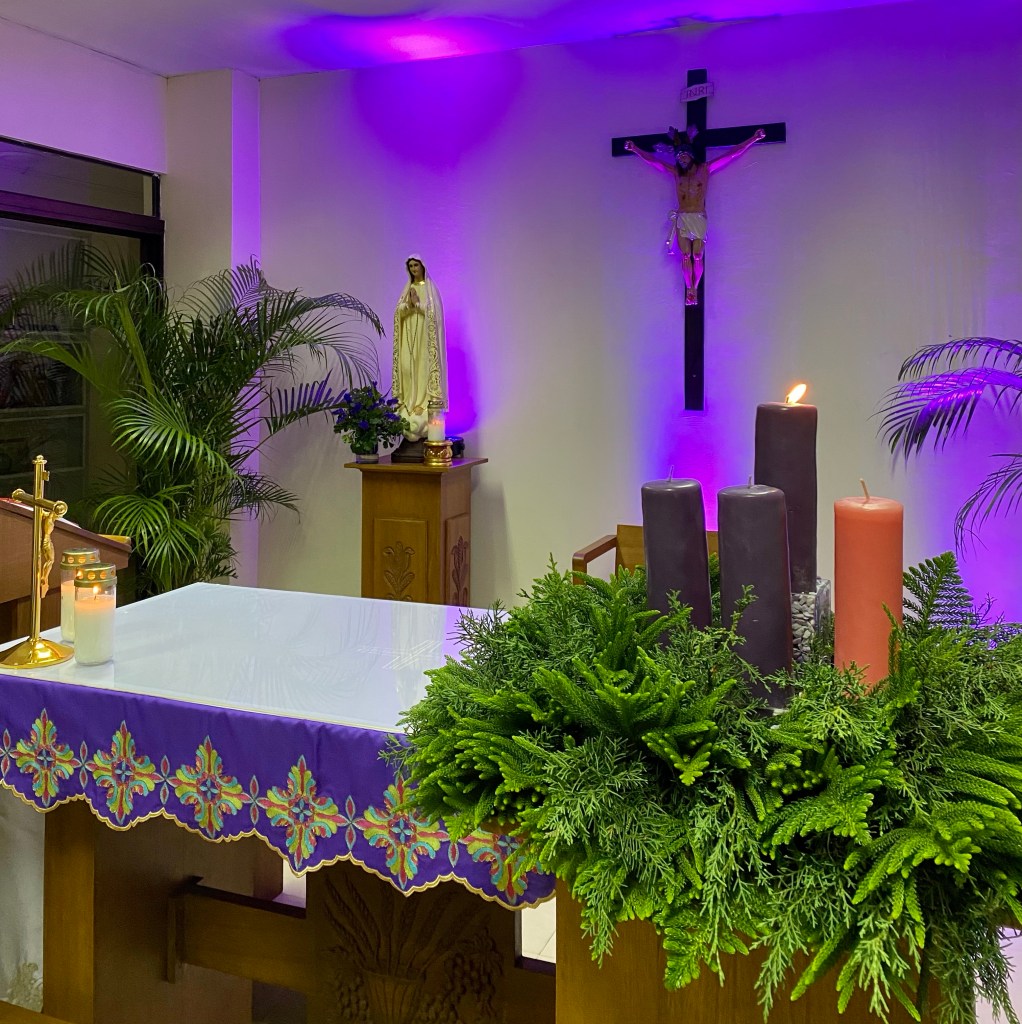
Photo by author, Chapel of the Holy Family, Sacred Heart Novitiate, Novaliches, Quezon City, 2014.
There was a vessel filled with common wine. So they put a sponge soaked in wine on a sprig of hyssop and put it up to his mouth. When Jesus had taken the wine, he said, “It is finished.” And bowing his head, he handed over the spirit.
John 19:29-30
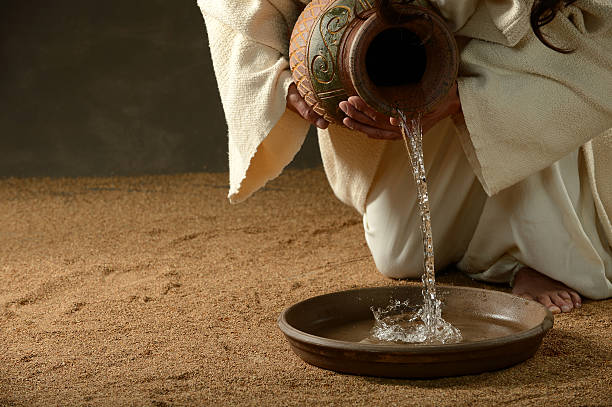
Every Maundy Thursday, people await that most unique part of the Mass every year when the priest washes the feet of some members of the community. As a priest, it is one of the most humbling experiences I have had when a brother priest washed my feet on that Mass I attended in 2008 and 2021.
But there is something more beautiful to the ritual washing of feet. It is the context and words that accompany that: “Before the feast of Passover, Jesus knew that his hour had come to pass from this world to the Father. He loved his own in the world and he loved them to the end” (John 13:1).
The Greek word for the “end” is telos which is not just a terminal end in itself but indicates or connotes direction. Or fulfillment and perfection, not just a ceasing or end or stoppage of life or any operation.
When Jesus said on the Cross “It is finished”, he meant he had fulfilled his mission, that is, he had perfectly loved us to the end by giving us his very life.
At his death on the Cross, Jesus showed us perfectly in no uncertain terms his love for us, the Father’s love for us that he had told to Nicodemus at the start of the fourth gospel that “God so loved the world that he gave his only Son” (Jn. 3:16).
There on the Cross this was definitively fulfilled and perfected more than ever. Jesus did not have to die on the Cross but he chose to go through it because of his love for us.
Here we find the beautiful meaning of love. It is not just obeying the commandments nor being good and kind with everyone. Love in its totality is the perfection of life. It is our only destiny in life, our call to life from the very beginning. Love, love, love. Keep on loving until it hurts. Until the end.
Beloved, if God so loved us, we also must love one another. No one has ever seen God. yet, if we love one another, God remains in us, and his love is brought to perfection in us.
1 John 4:11-12
From that same letter, John declared at the very start that God is love which according to Pope Benedict XVI in his first encyclical is the most profound statement about God found only in Christianity.
My dear friends, only God can love us perfectly. Only Jesus can love us perfectly like what he did on the Cross. Human love is always imperfect. In our imperfect love, let us find Jesus filling up, making whole, perfecting our love for each other. Let us die in our selves sometimes when we have to let go with each one’s imperfection like when they make side comments. Forget all about revenge. Forgive. Understand the shortcomings of everyone. Accept and own the pains and hurts inflicted on us by our loved ones like our mom and dad, your former wife or husband, your friends, of those who have hurt you in words and deeds. That is being like Christ, dying on the Cross because of love.
Let us pray for those we love and those who love us despite our imperfections.
Lord Jesus Christ,
how I wish I could love until the end,
how I wish I could say too like you
"It is finished";
forgive me because many times with me,
the pains and hurts I have had are not yet
finished, even festering inside me,
eating me up, rotting inside me
that I could not grow and bloom in you.
Forgive me and teach me to forgive too
for it is in forgiving we truly love
perfectly like you.
Amen.
Photo by my former student, Ms. April Oliveros on their ascent to Mt. Pulag, 25 March 2023.
The Lord Is My Chef Recipe for the Soul by Fr. Nicanor F. Lalog II
Maundy Thursday, 06 April 2023
Exodus 12:1-8, 11-14  +  1 Corinthians 11:23-26  +  John 13:1-15
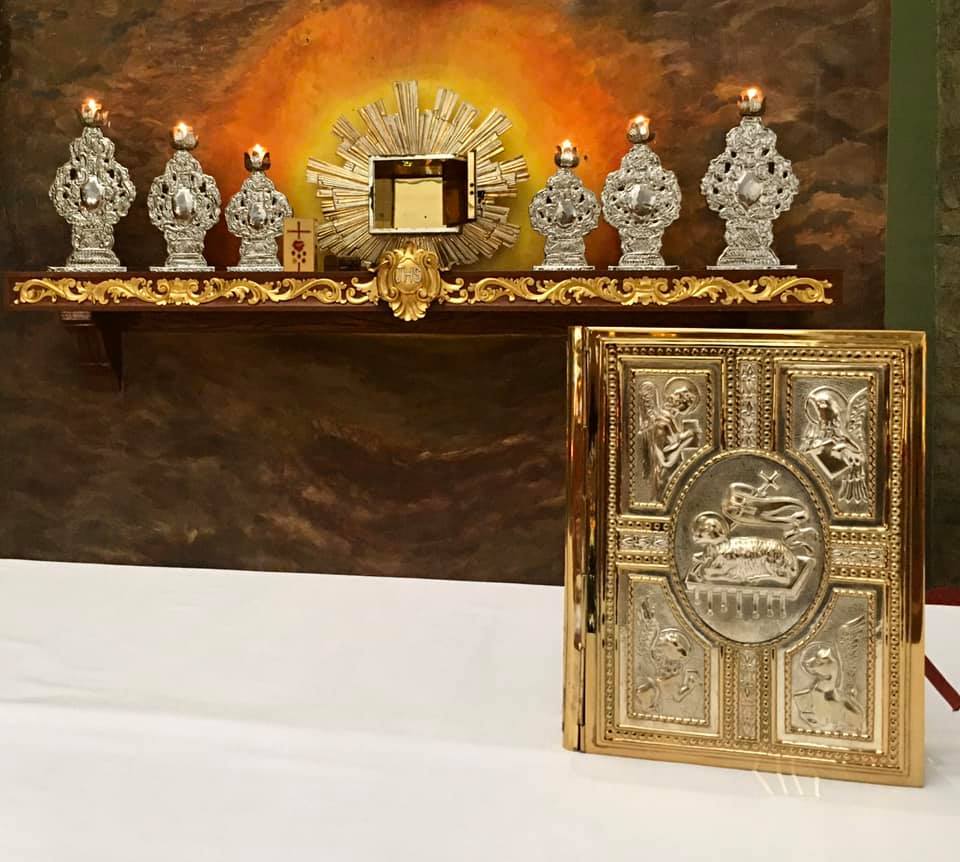
Photo by author, Holy Thursday 2019, Parokya ni San Juan Apostol at Ebanghelista, Bagbaguin, Sta. Maria, Bulacan.
Tonight we begin the most solemn days of the year called the “Holy Triduum” of Maundy Thursday, Good Friday, and Easter Vigil. All roads rightly lead to the Parish Church at sundown for the celebration of the Holy Eucharist that begins with the Tabernacle empty. There will be no dismissal at the end of the Mass, it is open ended. Most of unique of all in tonight’s Mass is the ritual of the washing of feet of some members of the community.
But there is something more beautiful to the ritual washing of feet. It is the context and words from John’s gospel that set the mood of tonight’s mood and tone of celebration as well as the hint of the meaning of Good Friday too.
Before the feast of Passover, Jesus knew that his hour had come to pass from this world to the Father. He loved his own in the world and he loved them to the end.
John 13:1
Photo by author, Holy Thursday 2019, Parokya ni San Juan Apostol at Ebanghelista, Bagbaguin, Sta. Maria, Bulacan.
First thing we have to consider here is the fact that “Jesus knew his hour had come to pass from this world to the Father.” He was never caught by surprise. Jesus knew everything, was never taken over by events. Luke said it beautifully after his identification as the Christ at Caesarea Philippi, When the days for his being taken up were fulfilled, he resolutely determined to journey to Jerusalem (Lk. 9:51).
We have heard in the first reading the story of the exodus of the Israelites, their passover from Egypt to the Promised Land, their passover from slavery to freedom that was perfected by Christ’s own pasch beginning tonight with his Passion, Death and Resurrection. This is our call, to live Christ’s Paschal Mystery daily, to be one in him, one with him, one through him in passing over life’s many challenges and trials.
To passover means to grow, to mature, to overcome, to hurdle. Every day we go through many series of passovers, from sickness to health, from sinfulness to forgiveness, from failures to victory, from our little deaths to our daily rising to new life in Jesus. This we can only accomplish with love, the kind of love by Jesus Christ.
That is the second, most important thing we must consider in John’s brief introduction to our gospel tonight, Jesus “loved his own in the world and he loved them to the end”. The Greek word for the “end” is telos which is not just a terminal end in itself but indicates or connotes direction. Or fulfillment and perfection, not just a ceasing or end or stoppage of life or any operation. Jesus knew everything that is why his life here on earth had direction which is back to the Father, with us. Everything he said and did was out of love for the Father and for us.
From google.
Love is the sole reason Jesus came to the world to save us because we have failed to love from the very beginning. It is love that Jesus showed us on that Holy Thursday evening to be fully expressed on Good Friday when he died on the Cross. His whole life was love because he himself is love. This he showed when he washed the apostles feet and after that, asked them and us to do the same with each other. That is love’s highest point when we are able to get to our lowest point of service and love. In our daily passover, it is love that moves us to keep on going with life’s many ups and downs because we love our parents, our siblings, your wife or husband, your children. Our vocation and the people entrusted to us. We go through our passover we because we love.
When Jesus died on the Cross, he said, “It is finished” – meaning, he had fulfilled his mission, that is, he had perfectly loved us to the end by giving us his very life. At his death on the Cross, Jesus showed us perfectly his love for us, the Father’s love for us that he had told to Nicodemus at the start of John’s gospel that “God so loved the world that he gave his only Son” (Jn. 3:16).
This is the love Jesus spoke of during that supper that rightly prompted St. Paul to put into writing, the very first one to do so in the New Testament:
Photo by author, 2019.
Brothers and sisters: I received from the Lord what I also handed on to you, that the Lord Jesus, on the night he was handed over, took bread, and, after he had given thanks broke it and said, “This is my body that is for you…” In the same way also the cup, after supper, saying, “This cup is the new covenant in my blood. Do this in remembrance of me.”
1 Corinthians 11:23-24, 25
There on the Cross this was definitively fulfilled and perfected more than ever. Jesus did not have to die on the Cross but he chose to go through it because of his love for us.
Here we find the beautiful meaning of love expressed to us in the celebration of the Holy Eucharist. More than obedience to commandments and keeping the laws of God by being good and kind with everyone, love is the perfection of life.
Love is our true destiny – end – in life, our call to life from the very beginning.
Keep on loving until it hurts. Until the end because God is love as John wrote in his first letter where he beautifully expressed, Beloved, if God so loved us, we also must love one another. No one has ever seen God. yet, if we love one another, God remains in us, and his love is brought to perfection in us(1 Jn. 4:11-12).
Love, love, love.
Photo by Ms. April Oliveros, Mt. Pulag, 25 March 2023.
My dear friends, only God can love us perfectly. Only Jesus can love us perfectly like what he did on the Cross.
Human love is always imperfect. That is why Jesus showed us the example of washing the feet of his apostles at the Last Supper.
In the Holy Mass, we all bow down before God and with everyone at the start to confess our sins, to admit our sinfulness “in what we have done and failed to do.”
In the Eucharist, Jesus fills up, completes our imperfect love with his love found in his words, in his peace we share with others, and most especially in his Body and Blood we receive.
St. Paul rightly reminded us of this meaning of the Eucharist, For as often as you eat this bread and drink the cup, you proclaim the death of the Lord until he comes (1 Cor. 11:26). This is why we have to celebrate Mass every Sunday. Most especially on holy days like tonight and Easter. Please, complete the Holy Triduum until Easter. Go on vacation some other date. Give these days to God who gave us his Son Jesus Christ by dying on the Cross for us.
Let us pray silently, be wrapped and awed by that mystery of the Eucharist Jesus established on that Holy Thursday evening at the Upper room.
Dearest Jesus,
teach us to love you more
by imitating your love,
of humbly going down to serve
even those who betray us,
of bending our hearts
to forego all bitterness
and festering anger within,
"let our tongues sing the
mysteries telling of your Body,
price excelling of your Blood"
in a life of loving service,
of daily dying in you
with you and
through you.
Amen.
Have a blessed and meaningful Holy Triduum. Please pray and reflect on God’s love for us these days at home, in the church.
Quiet Storm by Fr. Nicanor F. Lalog II
The Seven Last Words, 02 April 2023
Photo by author, Chapel of the Holy Family, Sacred Heart Novitiate, Novaliches, Quezon City, 2014.
Then he said, “Jesus, remember me when you come into your kingdom.” He replied to him, “Amen, I say to you, today you will be with me in Paradise.”
Luke 23:42
Every time we feel good, whenever we see something so beautiful, whenever we are with those we love, we describe the feelings as “like paradise” or “heaven”. For us, paradise is all bliss. No sickness, no problems, no sufferings, nothing bad, nothing dark, nothing unpleasant. It is all good. In fact, perfect.
And that is why heaven or paradise is! From the ancient Persian word paradiso, it referred to the innermost room in the palace where only the most trusted ministers of the King were allowed to enter along with his immediate family, From that came the idea that paradise must be so beautiful that the Greek translators of the Bible used it to refer to heaven as God’s dwelling. After all, our God is the only One who is perfect and supreme than any king in the world.
Recall that when Adam and Eve sinned, they were banished from Paradise that was henceforth closed until that Good Friday when Jesus promised Paradise – of all people – to a former thief!
Yes, Paradise is for every sinner ready to beg forgiveness, ready to claim Jesus Christ as our Savior!
And that is just one of the surprising things about Paradise or Heaven according to Jesus on that Good Friday.
See that Jesus never promised “Paradise” when He was freely going around Galilee, preaching and healing the people, when He was dining with sinners and tax collectors, when He was very well and strong.
Jesus promised Paradise when he was dying there on the Cross, not when He was strong and free!
See also how He said the words to Dimas, “today you will be with me in Paradise”.
Jesus promised Paradise at that very moment they were on the Cross, hanging and dying. Not later when they died nor on Sunday when He resurrected from the dead.
Jesus promised Paradise at that very moment they were suffering and dying, in extreme, excruciating pains never imagined by anyone, presumably with all the fears, negative thoughts and feelings that went with it.
And that is precisely when we enter Paradise with Jesus, too.
When we are suffering from our sickness and disabilities especially over a long period of time, when we are deep in pains in our heart for all the hurts inflicted by a loved one, when we are old and bed-ridden awaiting the final moment of death, when we are in agony for the loss of a loved one, when deep in trials and disappointments, or whenever we are so weak and dying literally or figuratively speaking.
That is when we slowly enter Paradise.
In a world where the most prescribed medicine is the pain reliever, where everything is invented to minimize even eradicate difficulties and hardships, Jesus is reminding us that we enter Paradise when we are with Him suffering there on the Cross.
That is the value and meaning of the Cross we always evade these days. It is not all suffering but also a foretaste of eternal bliss, of perfect joy and happiness because it is during our darkest moments in life that we get a glimpse of Christ’s eternal light, when we are transformed and made stronger and better as persons soon enough to be worthy to enter the most exclusive circle of all – Paradise – to dwell in the Lord with His angels and Saints.
Let us pray for those going through many sufferings these days, including ourselves.
Lord Jesus Christ,
before all these pains and trials
came to my life,
You were there FIRST for me on the Cross;
You were there FIRST for me to suffer and die
on the Cross.
 Let me stay with you on Your Cross
so I may enter Paradise with You,
right now,
right here.
Amen.
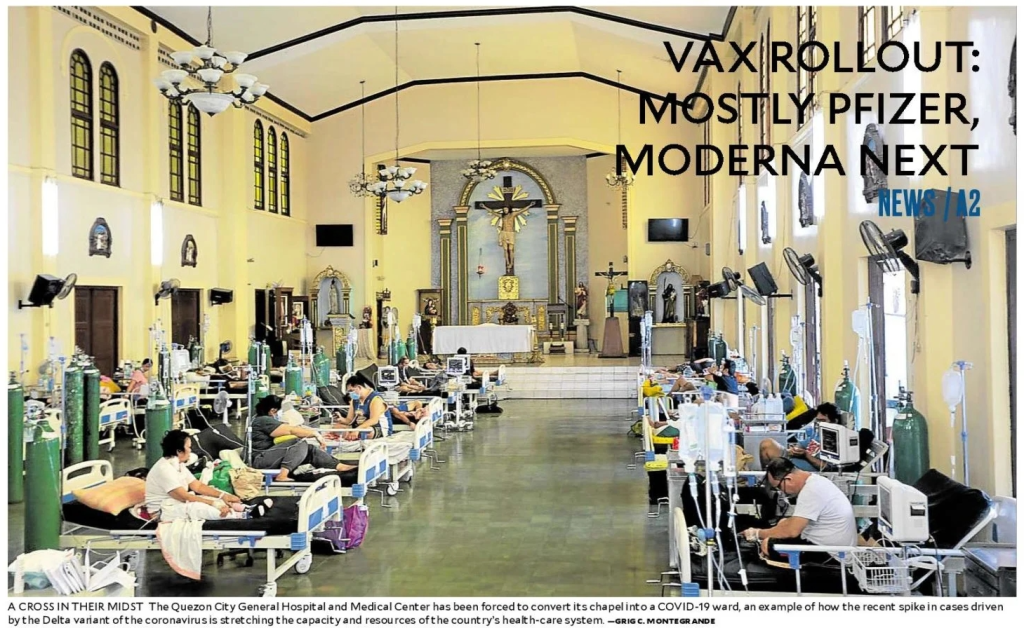
One of the most beautiful front page photos I have seen in many years. Taken in August 2021 when we were in the midst of a surge in COVID-19 cases, the photo evokes Paradise, “right here, right now” while people were suffering in Jesus, with Jesus and through Jesus. Photo from inquirer.net.
Quiet Storm by Fr. Nicanor F. Lalog II
The Seven Last Words, 01 April 2023
Photo by author, Chapel of the Holy Family, Sacred Heart Novitiate, Novaliches, Quezon City, 2014.
When they came to the place called the Skull, they crucified him and the criminals there, one on his right, the other on his left. Then Jesus said, “Father, forgive them, they know not what they do.”
Luke 23:33-34
Such is “the breadth, and length, and depth, and height of Christ’s love for us all” (Eph. 3:18-19) that right upon His crucifixion, Jesus begged God for our forgiveness. And that was not only for those who nailed Him on the cross on that Good Friday but also for us today who continue to crucify Him whenever we destroy our relationships.
In the Jewish thought, “to know” is not just of the mind but of the heart because to know is to have or enter into a relationship with others. Hence, Jesus begged first for our forgiveness when crucified because if there is something we must “know” above all is the fact that we are brothers and sisters in Him, one family in God our Father.
Every time there is a breakdown in our relationships, when we destroy our ties with one another, that is when we sin and know not what we do. And crucify Jesus anew.
We sin and know not what we do when we hurt those dearest to us – our mom and dad, sisters and brothers, relatives and friends – when we speak harsh words to them, calling them names, denigrating their persons as things.
We sin and know not what we do when we betray the trust of those with whom we promised to love forever, keep their secrets and protect them like your husband or wife, your children, your BFF, your student, your ward.
We sin and know not what we do when we lose hope in persons around us, choosing to do them evil because we thought they could no longer change for better, that they could never learn and overcome life’s pains and tragedies, that they could no longer get well from an illness or, sadly, because they are old and dying.
We sin and know not what we do when we cheat on those true to us, when we hide from those open to us, when we back stab those who believe and support us.
We sin and know not what we do when we abuse and use those people we are supposed to serve and protect, when we regard persons as objects to be possessed even if we do not know them personally.
Is there anyone whom you might have hurt in words or in deeds which you might not be aware of?
Who are the people who cause you pains and sufferings, who do not know what they are doing?
Let us pray:
Lord Jesus Christ,
I am sorry in crucifying You again,
when I know not what I am doing
like hurting the people You give and send me
to experience your love and mercy,
your trust and confidence
your kindness and fidelity;
I pray also for those who make me
suffer physically and emotionally,
those who do not know what they are doing;
help us build again
our many broken relationships;
make us humble and true;
let us believe in Your love
expressed by our family and friends
and by everyone who cares for us.
Amen.
Photo above is a sculpture called “Love” by Ukrainian artist Alexander Milov he created in 2015 showing two adults after a disagreement sitting with their back to each other while their inner child in both of them wanting to connect. A beautiful expression of how we are all interconnected and related as brothers and sisters. This Holy Week, let us mend and heal our broken relationships, let the inner child within us come out and simply say “I am sorry” or “I forgive you” and most especially, “I love you”. Photo from reddit.com. See also our blog, https://lordmychef.com/2023/01/14/the-human-child-mystery-of-gods-love/.
40 Shades of Lent by Fr. Nicanor F. Lalog II
Second Sunday in Lent-A, 05 March 2023
Genesis 12:1-4 >+< 2 Timothy 1:8-10 >+< Matthew 17:1-9
Photo by author, sunrise at Taal Lake, 08 February 2023.
Something so personal has happened with me this past week. It is something that is still unfolding, making me realize so many things in my life and ministry that as I continue to reflect on the death last Sunday of our elderly priest, Msgr. Vicente Manlapig, at the Fatima University Medical Center where I serve as its chaplain.
I was out when told about Msgr. Manlapig’s passing shortly before 3PM. It was the First Sunday of Lent. After saying a prayer for him, it suddenly dawned upon me that he was the second elderly priest I had taken cared of who also died in this blessed Season of Lent. The first was Msgr. Macario Manahan who died 16 March 2014, the Second Sunday of Lent at that time. I was with him when he died that afternoon as he lived very near my former parish assignment.
What a tremendous blessing God has given me to have attended to their spiritual needs preparing them for their deaths, of how life indeed is a daily Lent preparing for Easter when we have to go through many difficult series of temptations and sufferings that lead us to our transfiguration (https://lordmychef.com/2023/02/27/deaths-in-lent/).
It is the very path of life and death of every disciple of Jesus, from temptations in the wilderness to transfiguration on the high mountain. It is something we all have to go through in Christ, with Christ and through Christ.
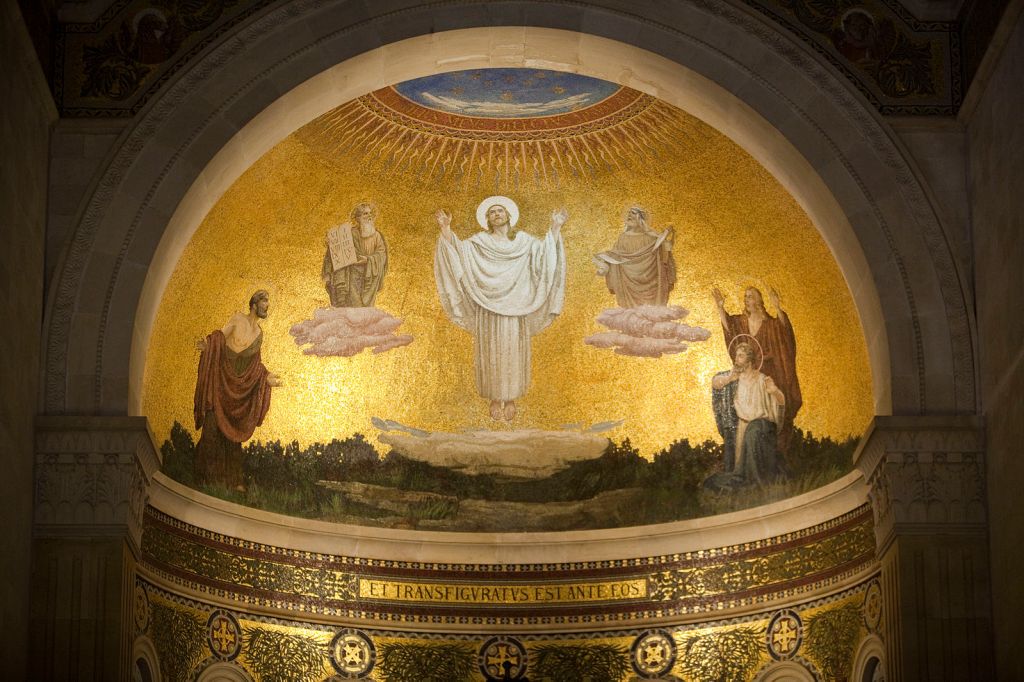
Jesus took Peter, James and John his brother, and led them up a high mountain by themselves. And he was transfigured before them; his face shone like the sun and his clothes became white as light. And behold, Moses and Elijah appeared to them, conversing with him. Then Peter said to Jesus in reply, “Lord, it is good that we are here…” While he was still speaking, behold, a bright cloud cast a shadow over them, then from the cloud came a voice that said, “This is my beloved Son, with whom I am well pleased; listen to him.” When the disciples heard this, they fell prostrate and were very much afraid. But Jesus came and touched them, saying, “Rise, and do not be afraid.” And when the disciples raised their eyes, they saw no one else but Jesus alone. As they were coming down from the mountain, Jesus charged them, “Do not tell the vision to anyone until the Son of Man has been raised from the dead.”
Matthew 17:1-4, 5-9
Photo from commons.wikimedia.org of mosaic inside the Basilica of the Transfiguration on Mt. Tabor, Israel.
Unlike Luke’s account that was set in the context of a prayer, Matthew’s version of the transfiguration of Jesus Christ illuminates the Lenten pilgrimage of the Church that is the tragedy of the Cross being seen always in the perspective of the Easter radiance. It is the oneness and inseparability of Christ’s divinity and glory with the Cross through which we get to know Jesus correctly.
Recall that the transfiguration happened after Peter’s confession of Jesus as “the Messiah, the Son of the living God” at Caesarea Philippi (Mt.16:16) where Jesus also made the first prediction of his passion, death and resurrection. From that day on, Jesus began instilling into the Twelve his conditions of discipleship, “Whoever wishes to come after me must deny himself, take up his cross and follow me” (Mt. 16:24). It was a very difficult lesson for them to learn and accept that triggered Judas to betray Jesus. The remaining disciples would only fully appreciate it after the Easter event with the help of the Holy Spirit on Pentecost.
That is why the transfiguration was actually some sort of a “teaching aid” for this most difficult lesson of his disciples when Jesus gave Peter, James and John a glimpse of his coming glory after his pasch. See that very clearly, Matthew recorded Christ’s instruction not to tell the “vision” to anyone until Easter; the transfiguration did happen and was seen by everyone there as Matthew used the word vision to describe it.
Like the three disciples, many of us are given with this unique privilege by Jesus to have a glimpse and vision of Easter, of glory when we join him on the Cross with our own sufferings and trials and when we accompany those in severe tests in life like the sick and dying.
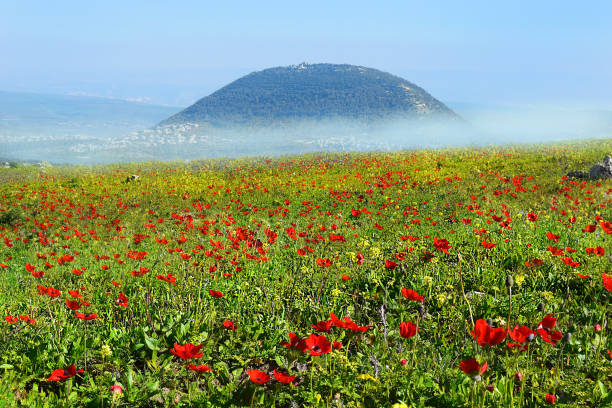
Photo from iStockphoto.com of Mount Tabor in Israel where Jesus is believed to have transfigured.
Amid the pain and hurts we go through or see in others, we “see” Jesus, we feel Jesus, we experience Jesus.
Many times like Peter we speak and do things without really thinking well about them because we are overwhelmed by the experience as well as the vision and sight.
And most of the time, the sight and experiences are very frightening when God speaks to us, telling us to listen to Jesus his Son, to simply obey him and trust him.
Here we have a deepening of our reflection last Sunday of the need to fix our eyes on Jesus son that we may not fall into temptations and sin. Many times we do not see everything clearly but if we close our eyes and have faith in Christ, things get clearer until it is him alone do we see with us especially after passing over a turmoil or a test in life. Like the first man and woman, our eyes are misled by so many things that look so good but not good at all. In fact, there are things that look bad that could really be good after all like pains and sufferings in life!
In the second reading, St. Paul tells us through St. Timothy to “bear your share of hardship for the gospel with the strength that comes from God” (2 Tim. 1:8) which matches directly the instruction in the voice heard during the transfiguration, “This is my beloved Son, with whom I am well pleased; listen to him” (Mt. 17:5). After the transfiguration, everything that Jesus would tell his disciples and everyone that include us today is his coming passion, death and resurrection as well as the conditions of discipleship we mentioned earlier. God wants us to listen and follow his Son Jesus Christ to the Cross in order to join him in the glory of Easter.
We are transfigured and transformed into better persons by our pains and sufferings. That is the irony and tragedy of this age: we have everything like gadgets and money and other resources to make lives easier and comfortable but we have become more lost and alienated, empty and no direction in life. There cannot be all glory without sorrow; no Easter Sunday without Good Friday.
Lent is a journey back home to God who wants us all to share in his glory through Jesus Christ’s passion, death and resurrection. It is a blessed season we are reminded to always arise in Christ, to have courage and be not fearful of failures because right now, we are already assured of victory and glory in Jesus. Let us ascend with him the high mountain of sacrifices and hard work, of prayers and patience, mercy and forgiveness to be transfigured and glorified like him. Let us imitate Abraham in the first reading to respond to this call by God with faith and hope, obedience and perseverance. Amen. Have blessed and transformative week ahead.
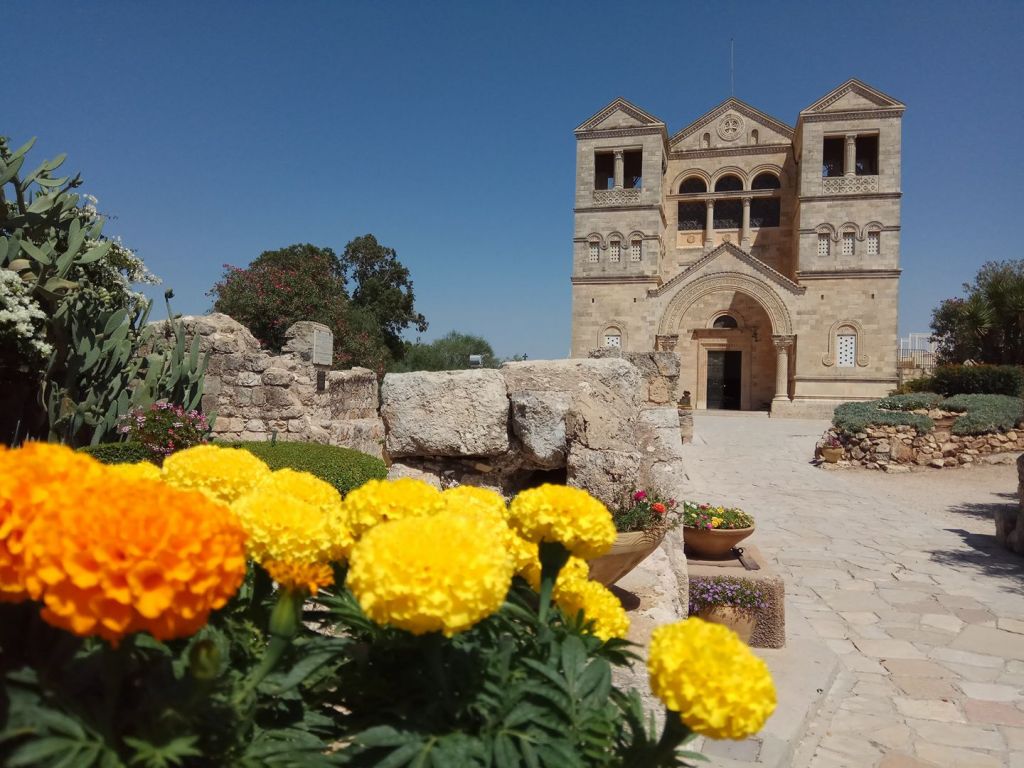
Photo from custodia.org of Basilica of the Transfiguration on Mt. Tabor, Israel.
40 Shades of Lent by Fr. Nicanor F. Lalog II
Thursday after Ash Wednesday, 23 February 2023
Deuteronomy 30:15-20   ><000'> + ><000'> + ><000'>   Luke 9:22-25
Everyday you bless us,
O God, with that great power
to choose freely what we desire
best for us; but, many times, we make
the wrong choices that often lead us
to more pains and emptiness,
sadness and that feeling of being
lost.
Most of all,
we choose sin,
we choose evil,
than choosing good,
than choosing you, O God.
Moses said to the people: “I call heaven and earth today to witness against you: I have set before you life and death, the blessing and the curse. Choose life, then, that you and your descendants may live, by loving the Lord, your God, heeding his voice, and holding fast to him. For that will mean life for you, a long life for you to live on the land that the Lord swore he would give to your fathers Abraham, Isaac and Jacob.”
Deuteronomy 30:19-20
So many times
we make the wrong choices
when we insist on what we like
without really knowing what it is;
we make wrong choices
when we choose to disregard
you and your ways, Lord;
worst, we make the wrong choices
because we reject our very selves!
What a tragedy
when we ourselves refuse
to believe in ourselves,
in our worth,
in our possibilities
because we have lost all hope
in life, in you, and in others
due to failures or disappointments
or frustrations in life;
we choose wrongly when we
avoid pains and sufferings,
when we refuse to choose
the Cross not realizing
it is the one that truly leads
to life and prosperity
because every suffering,
every pain
leads to maturity
that make us better
and more open to
life and prosperity.
These 40 days of Lent,
let us choose you, Jesus
including your Cross;
let us choose people and
things outside of ourselves
because you have chosen to
care us and all our needs;
let us trust you
so we may always choose you
because the times we choose
wrongly in life,
when we choose people
and things that are seemingly
favorable to us,
that is when
we do doubt you,
when we do not
trust you.
Amen.

Jesus,
King of Mercy,
we trust in you!
The Lord Is My Chef Daily Recipe for the Soul by Fr. Nicanor F. Lalog II
Friday in the Sixth Week of Ordinary Time, Year I, 17 February 2023
Genesis 11:1-9   ><]]]]'> + ><]]]]'> + ><]]]]'>   Mark 8:34-9:1
Thank you, O God our loving Father
for this wonderful Friday;
after a week of stories of our Creation
and Fall, your words today invite us
anew to look deeper into our hearts
to find you and see your plans for us.
The story of the tower of Babel reveals
many things about our hearts,
of how we would always start seeming
to be good, like being one and united
as a people which you have always desired;
but, like the people at that time, our seemingly
good and innocent plans reveal sinister
evil within our hearts:  "Come,
let us build ourselves a city
and a tower with its top in the sky,
and so make a name for ourselves;
otherwise we shall be scattered
all over the earth" (Genesis 11:4).
Forgive us, O God,
the many times we have tried
manipulating you, fooling our selves
with our supposed to be good intentions
when in fact full of evil and selfish motives;
how funny we have never learned that in
our efforts to preserve ourselves through
our many selfish schemes, the more we fall,
the more we ended up divided like at Babel.
The Lord brings to nought the plans of nations; he foils the designs of peoples. But the plan of the Lord stands forever, the design of his heart through all generations.
Psalm 33:10-11
Let us not confuse unity
with oneness right away;
yes we have to be one in you
through others, but never one
in ourselves or with others for a
vested interest for it shall surely collapse
and crash like Babel;
take away our arrogance that pretend
to be sincere and true in always having
the best intentions, the most beautiful plans
when in fact are all self-serving,
trying to impose our very selves on others;
make us realize that life is fragile,
that anything can always happen
with us and with our plans,
that we have no total control of everything
and hence, simply be open to your
new directions and instructions.

Help us forget our selves,
to take up our cross and follow
your Son Jesus Christ
in humility and simplicity,
in hiddenness and silence,
in kindness and love
for others which is your
original plan for us as a people.
Make us one in you, dear Father,
regardless of our language and color,
or any other differences like at Pentecost.
Amen.
The Lord Is My Chef Sunday Recipe for the Soul by Fr. Nicanor F. Lalog II
Sunday in the Fourth Week of Ordinary Time, Year A, 29 January 2023
Zephaniah 2:3, 3:12-13 ><}}}*> 1 Corinthians 1:26-31 ><}}}*> Matthew 5:1-12
Photo by author, 2020.
Blessedness is a very contentious term for us Filipinos. Very often, we equate blessedness with being rich and wealthy like having a lot of money, a beautiful house, and the latest car model as well as clothes and gadgets. Being blessed sometimes means being lucky or fortunate like winning the lotto or having a child graduating in college or getting promoted in one’s job.
In the Visitation, Elizabeth defined for us the true meaning of being blessed like Mary as someone who believed that what the Lord had promised her would be fulfilled (Lk.1:45). Blessedness is essentially a spiritual reality than a material one; however, it implies that being blessed results from doing something good like being faithful to God.
Today in our gospel from Matthew, Jesus shows us that blessedness is still a spiritual reality than a material one but, it is more of a being – like a status in Facebook – than of doing.
Most of all, being blessed is not being in a good situation or condition when all is well and everything proceeding smoothly in life; blessedness according to Jesus at his sermon on the mount is when we are on the distaff side of life like being poor, being hungry, being persecuted and insulted – being like him!
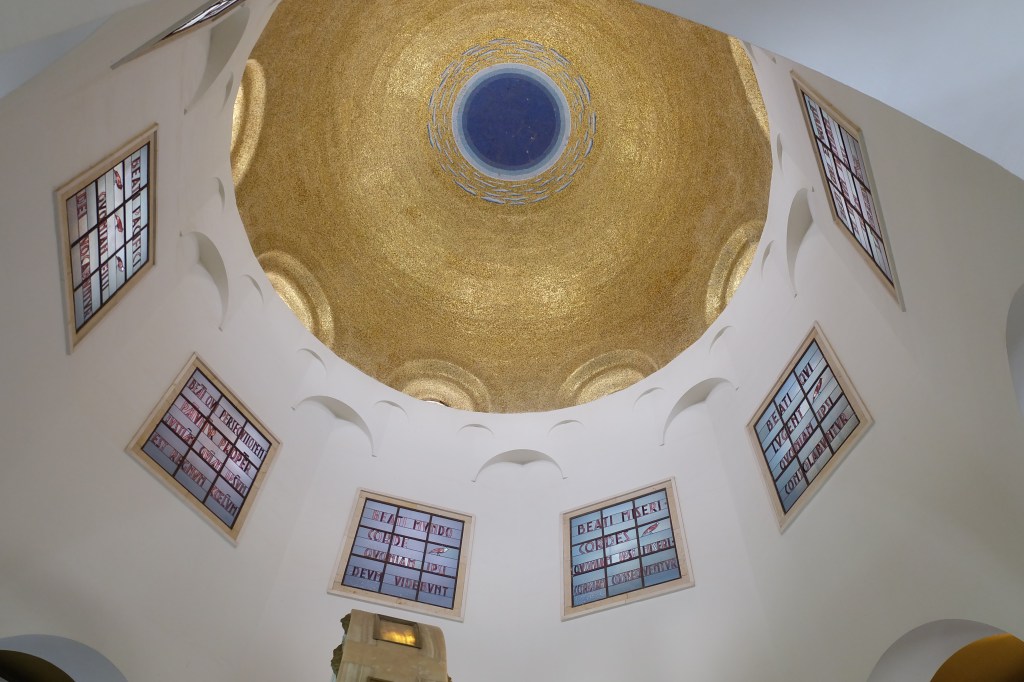
Photo by author, Church of the Beatitudes, Israel, 2019.
“Blessed are the poor in spirit, for theirs is the kingdom of heaven. Blessed are they who mourn, for they will be comforted. Blessed are the meek, for they will inherit the land. Blessed are they who hunger and thirst for righteousness, for they will be satisfied. Blessed are the merciful, for they will be shown mercy. Blessed are the clean of heart, for they will see God. Blessed are the peacemakers, for they will be called children of God. Blessed are they who are persecuted for the sake of righteousness, for theirs is the kingdom of heaven. Blessed are you when they insult and persecute you and utter every kind of evil against you falsely because of me. Rejoice and be glad, for your reward will be great in heaven.”
Matthew 5:3-12
After going around the shores of Galilee, preaching and healing the people, Jesus went up a mountain upon seeing crowds were following him. They were mostly poor people with deep faith in God, hoping and trusting only in him for their deliverance called the anawims.
They were in painful and difficult situations, maybe like many of us, fed up with the traffic and rising costs of everything, fed up with the corruption among public officials and most of all, disillusioned with our priests and bishops!
Then, Jesus called them blessed.
Now, please consider that it is more understandable and normal to say that after being persecuted or after losing a loved one, after all these sufferings that people would be blessed, that the kingdom of God would be theirs.
But, that is not the case with the beatitudes whereby Jesus called them already blessed now, right in their state of being poor, being persecuted, being maligned!
Keep in mind that Matthew’s audience were his fellow Jewish converts to Christianity. By situating Jesus on the mountain preaching his first major discourse, Matthew was reminding his fellow Jewish converts of their great lawgiver, Moses who stood on Mount Sinai to give them the Ten Commandments from God.
However, in the sermon on the mount, Matthew was presenting Jesus not just as the new Moses but in fact more than Moses because Jesus himself is the Law. His very person is what we follow that is why we are called Christians and our faith is properly called Christianity so unlike other religions that are like philosophies or any other -ism.
To understand the beatitudes, one has to turn and enter into Jesus Christ for he is the one truly poor in spirit, meek, hungry and thirsty, merciful, clean of heart, who was persecuted, died but rose again and now seated at the righthand of the Father in heaven. Essentially, the Beatitudes personify Jesus Christ himself. Those who share what he had gone through while here on earth, those who identify with him in his poverty and meekness, mercy and peace efforts, and suffering and death now share in his blessedness.
Therefore, the Beatitudes are paths to keeping our relationship with Jesus Christ who calls us to be like him – poor, hungry and thirsty, meek, clean of heart and persecuted. The Beatitudes are not on the moral plane like the Decalogue that tells us what to do and not to do. Have you ever used the Beatitudes as a guide in examining your conscience when going to Confessions? Never, because the Beatitudes are goals in life to be continuously pursued daily by Christ’s disciples.
Photo by author, Church of the Beatitudes, Israel, 2017.
The Beatitudes are more on the spiritual and mystical plane of our lives that when we try imitating Jesus in his being poor and merciful, meek and clean of heart, then we realize and experience blessedness as we learn the distinctions between joy and happiness, being fruitful and successful.
That is when we find fulfillment while still here on earth amid all the sufferings and trials we go through because in the beatitudes we have Jesus, a relationship we begin to keep and nurture who is also the Kingdom of God. Of course, we experience its fullness in the afterlife but nonetheless, we reap its rewards while here in this life.
As we have noted at the start, we must not take the beatitudes in their material aspect but always in the spiritual meaning. This we find in the first beatitude, Blessed are the poor in spirit, for theirs is the kingdom of heaven.
Actually, this first beatitude is the very essence of all eight other blessedness. Everything springs forth from being poor in spirit, of having that inner attitude and disposition of humility before God. We cannot be merciful and meek, nor pure of heart nor peacemakers unless we become first of all poor in spirit like Jesus, who, “though he was in the form of God, did not regard equality with God something to be grasped. Rather he emptied himself, taking the form of a slave, coming in human likeness and humbled himself” (Phil. 2:6-7, 8).
The prophet Zephaniah showed us in the first reading that poverty in the Old Testament does not only define a social status but more of one’s availability and openness to God with his gifts and calls to us to experience him and make him known. Experience had taught us so well that material poverty is one of life’s best teacher as it leads us to maturity and redemption best expressed in the Cross of Jesus Christ.
In this sense, the beatitude is also the “be-attitude” of every disciple who carries his cross in following Christ. See that each beatitude does not refer to a different person; every disciple of Jesus goes through each beatitude if he/she immerses himself/herself in Christ. That is why last week Jesus preached repentance which leads to conversion. Notice that the beatitudes of Christ are clearly opposite and contrary to the ways of the world as St. Paul tells us in the second reading with God calling the weak and lowly to manifest his power and glory.
Many times in life, we fail to recognize our blessedness when we are so focused with what we are going through, with our work and duties and obligations. This Sunday, Jesus takes us up on the mountain, in the celebration of the Holy Eucharist for us to see ourselves blessed and loved right in the midst of our simplicity and bareness, sufferings and pains. Stop for a while. Find Christ in all your troubles or darkness in life. If you do not find Jesus in your labors and burdens, you are just punishing yourself. If you find Christ because you see more the face of other persons that you become merciful, you work for peace, you mourn and bear all insults and persecution… then, you must be loving a lot. Therefore, you are blessed! Amen.
Have a blessed week ahead!
Photo by author, Church of the Beatitudes, Israel, 2017.
The Lord Is My Chef Daily Recipe for the Soul by Fr. Nicanor F. Lalog II
Wednesday in the First Week of Advent, Feast of St. Andrew the Apostle, 30 November 2022
Romans 10:9-18   ><}}}}*> + ><}}}}*> + ><}}}}*>   Matthew 4:18-22
Brothers and sisters: If you confess with your mouth that Jesus is Lord and believe in your heart that God raised him from the dead, you will be saved.
Romans 10:9
If Advent is the preparation
for your coming, Lord Jesus Christ,
then Advent is also the preparation
for the coming of your Cross!
As St. Paul had taught us in all his
writings, there can be no proclamation of
of your salvation for us without preaching
your Cross, O Lord Jesus Christ!
Without your Cross, O Lord,
all your words and deeds
would be empty;
that is why, there is no saint
without a love for your Cross!
Teach us to love the cross
you have assigned each of us
because it is on the Cross
where you are found, Lord Jesus;
like St. Andrew, make us realize
that our own crosses can only have value
if we consider and accept them
as part of your own Cross;
though our crosses may be
of different shapes or colors,
each one is always a reflection of
your eternal light, dear Jesus,
that ennobles our sufferings and pains.
Amen.
The Lord Is My Chef Daily Recipe for the Soul by Fr. Nicanor F. Lalog II
Friday, Memorial of St. Charles Borromeo, Bishop, 04 November 2022
Philippians 3:17-4:1   ><}}}*> + ><}}}*> + ><}}}*>   Luke 16:1-8
Praise and thanksgiving,
God our loving Father
for the grace of your Son
Jesus Christ
who had come
to make us closer to you
more than ever,
making us "citizens of heaven"
(Philippinas 3:20).
Teach us, dear Jesus,
to be imitators of St. Paul
witnessing your Cross,
the only path to salvation
because it is our liberation from sin;
do not allow us to be
"enemies of the cross"
whose "God is their stomach;
their glory is in their shame.
Their minds occupied with earthly
things" (Philippians 3:18-19);
keep us faithful to your teachings
and example, Lord Jesus Christ
by living your paschal mystery.
Like St. Charles Borromeo
whose memorial we celebrate today,
give us the grace of determination
and perseverance in keeping us
true and faithful to you
by making things happen
like making Christ present
no matter how difficult and
unpopular it may be especially
when others especially our pastors
have forgotten to live in your footsteps,
when too much time and emphasis
are spent with outward appearances
forgetting internal reformation;
let us stop wishful thinking that
things may get better by being just idle,
simply awaiting for events to happen.
Like that shrewd steward in the gospel,
let us find ways, O Lord, in making
justice and mercy,
love and kindness
become realities
by making them happen
by standing firm in you
Jesus Christ.
Amen.









 lordmychef.com