Re-membering Jesus, Body & Blood

Lord My Chef Sunday Recipe for the Soul by Fr. Nicanor F. Lalog II
Solemnity of the Most Holy Body & Blood of Christ, Cycle C, 22 June 2025
Genesis 14:18-20 ><}}}}*> 1 Corinthians 11:23-26 ><}}}}*> Luke 9:11b-17
Photo by FlickrBrett Streutker from catholic365.com.

From the highest truth of our faith last Sunday which is the Blessed Trinity in one God, we now celebrate in the resumption of Sundays in Ordinary Time the Solemnity of the Most Holy Body and Blood of Christ.

This feast highlights our faith in God who truly exists and had come to us in Christ Jesus, the Second Person of the Holy Trinity. In Christ through the Sacrament of the Eucharist he established at the Last Supper, we are given the “taste” of heaven literally speaking under the signs of bread and wine that become his Body and Blood we share. This was his command on that Holy Thursday evening to always remember him as St. Paul tells us in the second reading, the oldest account of the institution of Eucharist:

Brothers and sisters: I received from the Lord what I also handed on to you, that the Lord Jesus, on the night he was handed over, took bread, and after he had given thanks, broke it and said, “This is my body that is for you. Do this in remembrance of me.” In the same way also the cup, after supper (1 Corinthians 11:23-25).
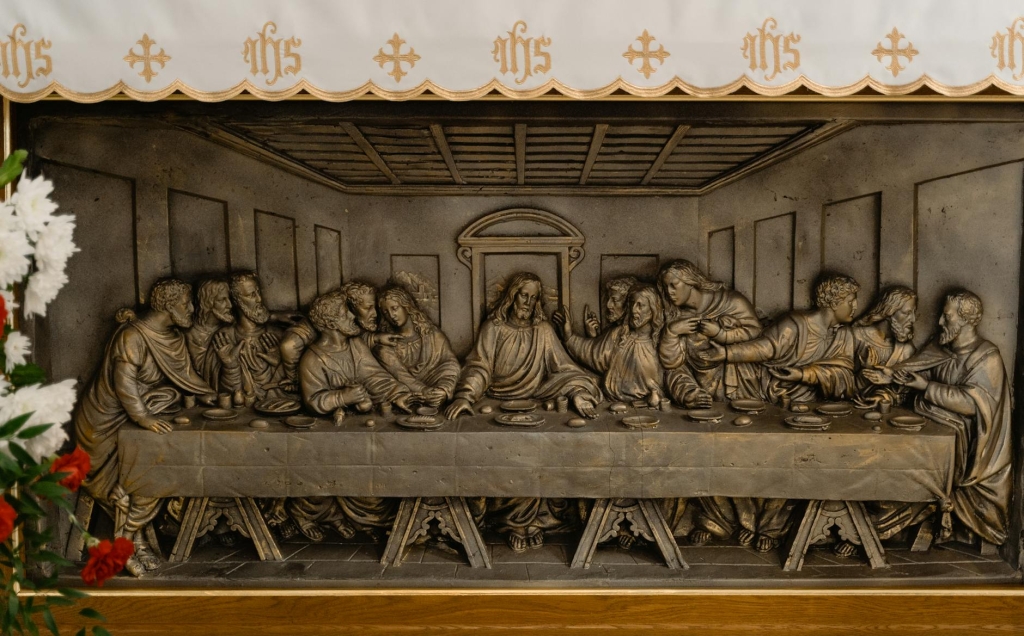
Photo by MART PRODUCTION on Pexels.com

Two words I wish to share with you on this Solemnity of the Body and Blood of Christ.

First is the word “remembering” or to remember. A very common word we use often but perhaps never aware of its deeper meaning from its root word “member” which means a part. Literally, to remember means “to make part again”. When we remember a person, an event in life, a thing from the past or long gone or not with us, we make them a part of the present moment.

The Eucharist is the highest form of remembering because literally speaking, we make Jesus a member of our present moment. When we re-remember Jesus in the Eucharist, he truly comes to us in Body and Blood! Truly present with us, in us after receiving him in the Holy Communion. Whenever we remember a loved one or a friend long gone or not with us at the moment, all we have is a memory. They become a member of the present but only in the mind unlike Jesus truly present with us, in us, and before us in his words, in his Body and Blood and in one another celebrating the Eucharist.

Photo by author, Old Jerusalem seen from Church of Dominus Flevit, May 2017.

It is not magic but a work of faith, a gift through and through from God in Jesus Christ. By his dying on the Cross and Resurrection at Easter, Jesus superseded and transcended time and space, sharing with us that sacred reality.

St. John Paul II beautifully called that “cosmic reality” when he described in his encyclical Ecclesia De Eucharistia how he felt transported in time and space when the temporal becomes divine because of God’s true presence anywhere he celebrated the Eucharist. We too experience the same cosmic reality in every Mass we celebrate when we are properly disposed, especially the priest and the servers.

That is why I always demand the highest order from priests and servers in celebrating most solemnly as possible the Holy Mass. I can stand kids playing inside the church but what gets to my nerves are servers talking or moving unnecessarily during the Mass and worst of all, when lectors proclaim the word of God incoherently and wrongly. Lest we forget also the choir members feeling so magaling forgetting they are in the Mass not in a concert that they make it a show, forgetting all about God and the people.

What a tragedy when we priests and liturgical ministers are the ones who forget to re-member Jesus in the Eucharist with our too much attention to ourselves. Exactly like the Twelve in our gospel!

As the day was drawing to a close, the Twelve approached him and said, “Dismiss the crowd so that they can go to the surrounding villages and farms and find lodging and provisions; for we are in a deserted place here.” He said to them, “Give them some food yourselves.” They replied, “Five loaves and two fish are all we have, unless we ourselves go and buy food for all these people” (Luke 9:12-13).


Imagine that scene of how the Twelve have totally “forgotten” the more than five thousand people gathered there with them. They were just thinking of themselves because they were in a “deserted place”. What a disrespect!

Respect is lost and disregarded when there is no remembering of others, when we forget others. Respect is from two Latin words re (again) and specere (to look/see) from which the words spectacle and spectacular came from. Re + specere or “respect” means to look again in order to see!

The Twelve were just concerned with themselves, not only forgetting but without respect at all with the people they have failed or refused to recognize as humans too who get tired and hungry like them. As we have cited in earlier, this continues right in our eucharistic celebrations when priests and ministers celebrate unprepared, unmindful of the sanctity of the Mass.

Remembering is not merely “thinking” of others in our mind and memory.

Remembering is making others present in our very selves!

Remembering is making every-body a some-body by giving our very selves to them to be the Body of Christ. Unless we are able to truly share our very selves in person, in body and blood too, then every Mass will remain merely a rite or a ritual. Worst, an activity we just have to fulfill.
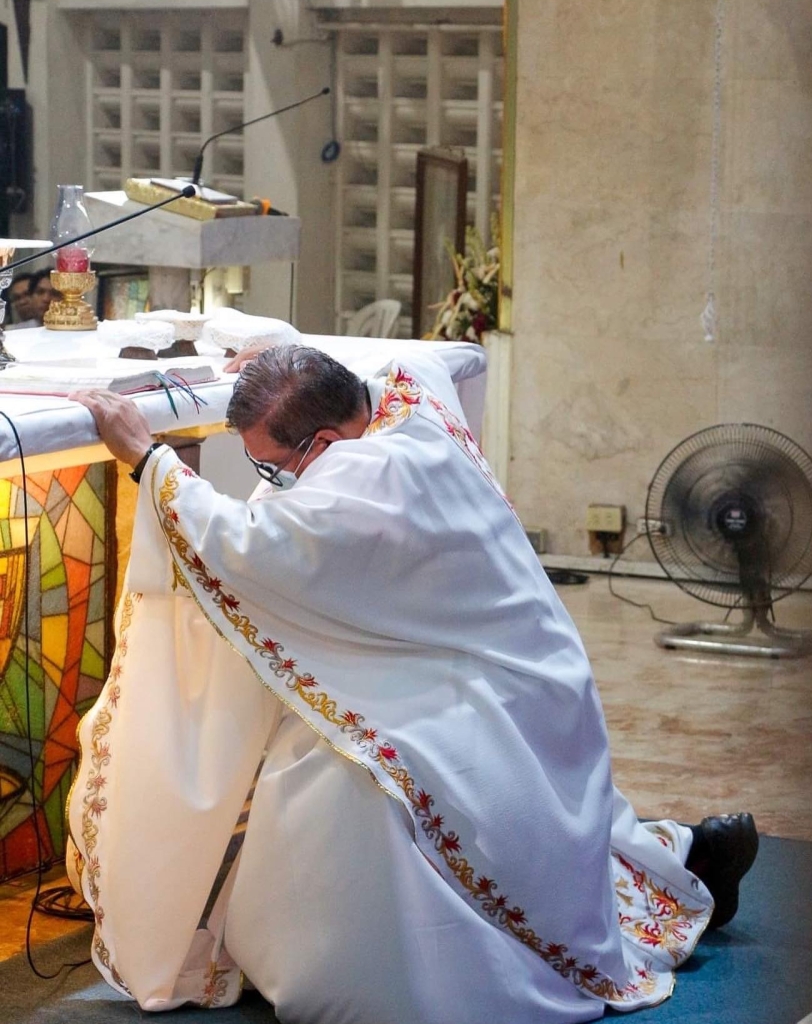
The Eucharist is the summit of our Christian life because of this aspect of remembering Jesus Christ that leads us into a true communion of sharing of persons and experiences, in our joys and sorrows, in our hopes and belief. When this happens, then every remembering becomes a thanksgiving too.

And that is our second word I wish to instill in you today – thanksgiving which is the meaning of the Greek word eucharistia.

When there is a real experience of each others’ presence in love and mercy, kindness and care, justice and fairness, gratitude flows naturally resulting in peace and harmony. It is the whole meaning of our first reading when the priest of God named Melchizidek who was also the king of Salem which means “peace” blessed Abram after winning in a battle.

This short scene is a story of remembering God’s goodness to Abram who thanked Melchizidek by giving him a tenth of everything he had won in the battle. In the Holy Mass, what do we really share from our very selves? Not just treasures but even our very time to give totally to Christ without texting.

Now we see the series and cycle of remembering and thanksgiving in sharing of gifts of self which the Body and Blood of Christ signify to us.

This coming Friday we shall celebrate the third consecutive Solemnity in the resumption of Ordinary Time with that of the Most Sacred Heart of Jesus, a reminder to us all to make Jesus present always in ourselves with others especially at this time the world has been deleting from its every aspect God.

Lord Jesus Christ,
transform me like the
bread and wine
into your Body and Blood
to be offered and shared
with others
especially those
in most need.
Amen.
Photo by Pixabay on Pexels.com

The gift of self

The Lord Is My Chef Sunday Recipe for the Soul by Fr. Nicanor F. Lalog II
Solemnity of the Body & Blood of Jesus Christ, 11 June 2023
Deuteronomy 8:2-3, 14-16 ><}}}}*> 1 Corinthians 10:16-17 ><}}}}*> John 6:51-58
Photo by author, 2018.

There is a weird British series in Netflix called the Inside Man about a professor of criminology at the death row in the States for the murder of his own wife. He had deep perceptions and analysis of events that people came to see him in prison to consult in locating their missing loved ones. One of them is an American journalist trying to do a story about him while at the same time seeking his expertise in locating her missing friend, a math tutor in England held hostage in the basement by a pastor and his wife.

Though the series is weird, it has some interesting lines about life and death like when the wife of the pastor told him how she had spent the whole afternoon searching the internet how to kill their son’s math tutor they have thrown in their basement. The wife found it unusual there was nothing in Google that tells of ways of killing another person (so weird, is it not?); however, she was surprised that almost everything she had found in the internet and social media was mainly about sex as he teased her husband that it is not love that makes the world go round but sex!

Yes, it is very funny and weird but her observations seem to be true because nobody in his right mind would ever want to destroy life except terrorists and lunatics. People generally love life that our social media are saturated with contents that try to show how we can enjoy this life through sex, food, and travels in that order. Also with cars for boys aged 5 to 95.

Photo by author, March 2020.

Of course, we all know that is not what life is all about that is filled with mysteries.

Last Sunday we reflected in the Solemnity of the Holy Trinity that mysteries are not problems to be solved but realities to embrace to discover life’s truest meaning found in our relationships with God and with others

This Sunday we celebrate the second most important doctrine and mystery of our faith, the Incarnation of the Son of God Jesus Christ. It is a mystery not only how the Son of God became human like us in everything except sin but most of all, of how he has given us his very flesh and blood as our food and drink in this journey called life.

Jesus said to the crowds: “I am the living bread that came down from heaven; whoever eats this bread will live forever; and the bread that I will give is my flesh for the life of the world.” The Jews quarreled among themselves saying, “How can this man give us his flesh to eat?” Jesus said to them, “Amen, amen, I say to you, unless you eat the flesh of the Son of Man and drink his blood, you do not have life within you. For my flesh is true food, and my blood is true drink.”

John 6:51-53, 55
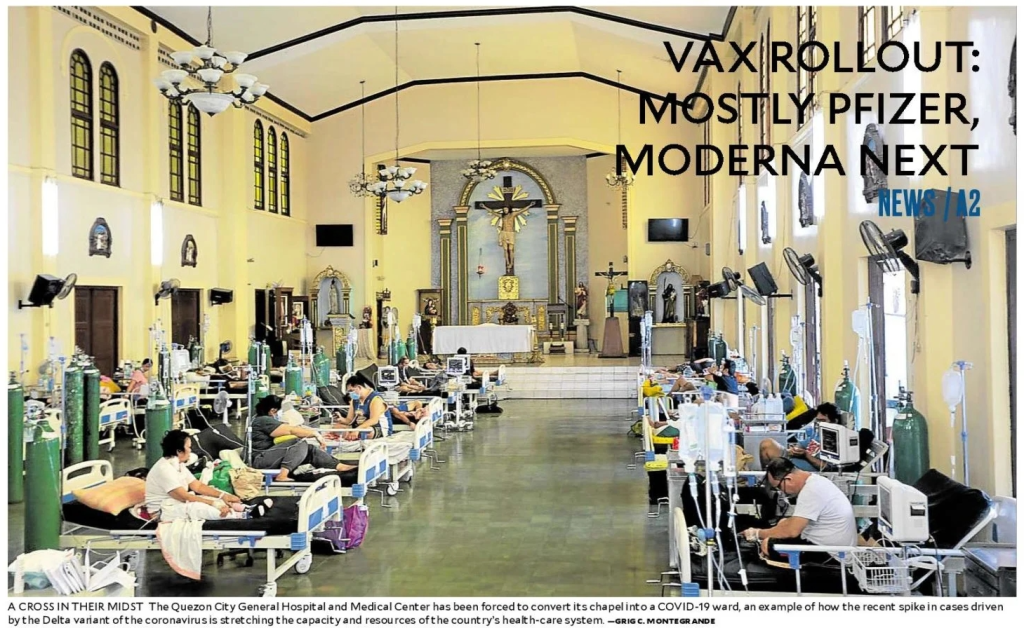
My favorite front page photo during the Delta outbreak of the COVID-19 pandemic published by the Inquirer on 20 August 2021. So evocative of the truth of Jesus himself being our true food and drink – and medicine.

As we have reflected last Sunday, a mystery is a divine truth revealed by God we learn through the gift of faith. It is non-logical but not illogical. It can be explained and understood but not fully.

Here in the mystery of the Body and Blood of Christ we call as the Eucharist, the mystery of our Triune God becomes a reality in our life truly present in perceptible signs of bread and wine. From relating, we now come to the mystery of sharing of our selves like God who shared us his Son Jesus Christ who in turn gave himself for us on the Cross that continues today in the Holy Eucharist as his everlasting sign of his loving presence and service.

See how Jesus spoke clearly in this passage of his giving us his physical body and blood that to receive it, we have to actually eat it too.

First we notice is how in other parts of the New Testament that the term soma is used to refer to the Eucharist which is the Greek word for “body” that may have symbolic meanings; but in this passage, Jesus used the word sarx which means “flesh” in Greek that means only one thing, the corporeal reality of his physical body. Jesus is telling us in no uncertain terms in this passage after the miracle feeding of more than 5000 in the wilderness that he himself is truly and really present as flesh and blood in the Eucharist. Recall that at his Prologue to his gospel, John also used the same term sarx in declaring “the Word became flesh” (Jn.1:14) to correct misunderstandings and doubts that were already developing during the first century of Christianity regarding the physical Incarnation of Jesus the Eternal Word and his true presence in the Eucharist.

Second term used by Jesus four times as he emphasized the reality of his Body and Blood in the Eucharist is the word trogein which in Greek means “to munch” or “bite”; the other Greek word for the verb to eat is phragein which evokes many symbolic meanings like “digesting” a book or “assimilating” the culture. Again, when Jesus said we have to eat his flesh and drink his blood, he truly meant himself as a true food and true drink to nourish and sustain us in this life and hereafter.

Photo by Kuya Ruben, 04 August 2022.

There lies the beauty of this mystery of the Eucharist: Jesus himself is the one we receive, who comes to us personally, physically to be one with us in our very selves. We do not have to wait for death and be in heaven to experience fullness of life in Christ because he comes truly to us while in this life when we receive him in the Holy Communion.

St. Paul reminds us in the second reading with his rhetorical questions, “The cup of blessing that we bless, is it not a participation in the blood of Christ? The bread that we break: is it not a participation in the body of Christ?” (1 Cor. 10:16) of this reality of Christ’s presence in us and among us. He was not waiting for answers of yes or no but posed those questions to affirm the very truth we all know that Jesus is really present in us and among us especially when we are broken like the Israelites in the first reading. This is where the mystery deepens, becomes more real and more fascinating. Jesus the Son of God emptying himself to be like us in everything except sin so that we may become like him, holy and divine.

This I have learned in my two years of being a chaplain in the hospital. Admittedly, it is difficult especially for me as I could easily be carried away by emotions in seeing the sick and suffering while at the same time, can often have my stomach overturned by sights of blood and wounds of others. But, there is always that indescribable feelings of joy and fulfillment after visiting and anointing our sick patients.

Photo by Kuya Ruben, June 2022.

I have no claims to holiness as I am a sinner too but the Eucharist has become most truest to me these past two years in the hospital and university as well as I get into contact with the sick and the students. When I touch patients to pray over them or help in moving them, when students cry to me or ask for hugs after confessions, they all flash to me during the consecration as I raise and say, This is my Body… This is my Blood. Jesus is most truest in the Eucharist when we too imitate him in giving ourselves to others to be broken and shared.

The Eucharist is the most wonderful gift of God to us when we receive his Son Body and Blood to make us strong and holy like him in this life.

That is why we have to go to Mass every Sunday. That is why a priest has to celebrate Mass daily for the people to be strengthened like him in this journey of life filled with trials and sufferings. That is why Moses kept on reminding the Israelites of their many hardships from their exodus into their wandering in the wilderness. That is why this coming Friday, we cap these three weeks of transition into the Ordinary Time with the Solemnity of the Most Sacred Heart of Jesus, another mystery of Christ truly among us and within us as we experience his love most truly right here in our hearts.

What an awesome God we have indeed who has become so small and so simple like us so we can be great like him. Like the simple bread and wine, in the Mass through the Holy Spirit, they become Christ’s Body and Blood. Let’s make it happen this Sunday in our celebration of the Mass. Amen. Have a blessed week ahead.

Praying to be a “devout” person

The Lord Is My Chef Daily Recipe for the Soul by Fr. Nicanor F. Lalog II
Wednesday in the Third Week of Easter, 26 April 2023
Acts 8:1-8   ><]]]]'> + ><]]]]'> + ><]]]]'>   John 6:35-40
Photo by Mr. Jim Marpa, 2019.
Lord Jesus,
teach me to be a "devout"
person; not just righteous or
holy but devout as well
like those "Devout men (who)
buried Stephen and made a loud
lament over him" (Acts 8:2).

Yesterday, you taught us dear Lord
that whatever is in our heart is
reflected on our face;
today you teach us that
to be "devout" is still of the heart
which is to be of a good heart 
ready to believe and act openly
with courage on that belief.
Only St. Luke used the adjective
"devout" to describe some persons
like Simeon who praised God upon
seeing Jesus when presented to the
temple by his parents; the Jews from
all over the world who came to observe
Pentecost day in Jerusalem;
the men who buried Stephen, and
Ananias who sought Saul while 
still blind to bring him to the Church.
Many times dear Lord
our being devout is 
self-serving when we merely
open our eyes for things 
that are seen in our many 
devotions, seeing more our selves
failing to see Christ in 
the other persons
who have to be loved
and cared for, understood
and forgiven, accepted and
affirmed.  
No wonder until now,
though we receive you Jesus
in the Eucharist, we do not 
experience and feel your Body,
your Person because our hearts
are not open at all to you through
others especially the sick and
suffering.  Amen.

Grateful for the gift of Church

The Lord Is My Chef Daily Recipe for the Soul by Fr. Nicanor F. Lalog II
Wednesday, Feast of the Dedication of the Lateran Basilica in Rome, 09 November 2022
Ezekiel 47:1-2, 8-9, 12 ><}}}*> 1 Corinthians 3:9-11, 16-17 ><}}}*> John 2:13-22
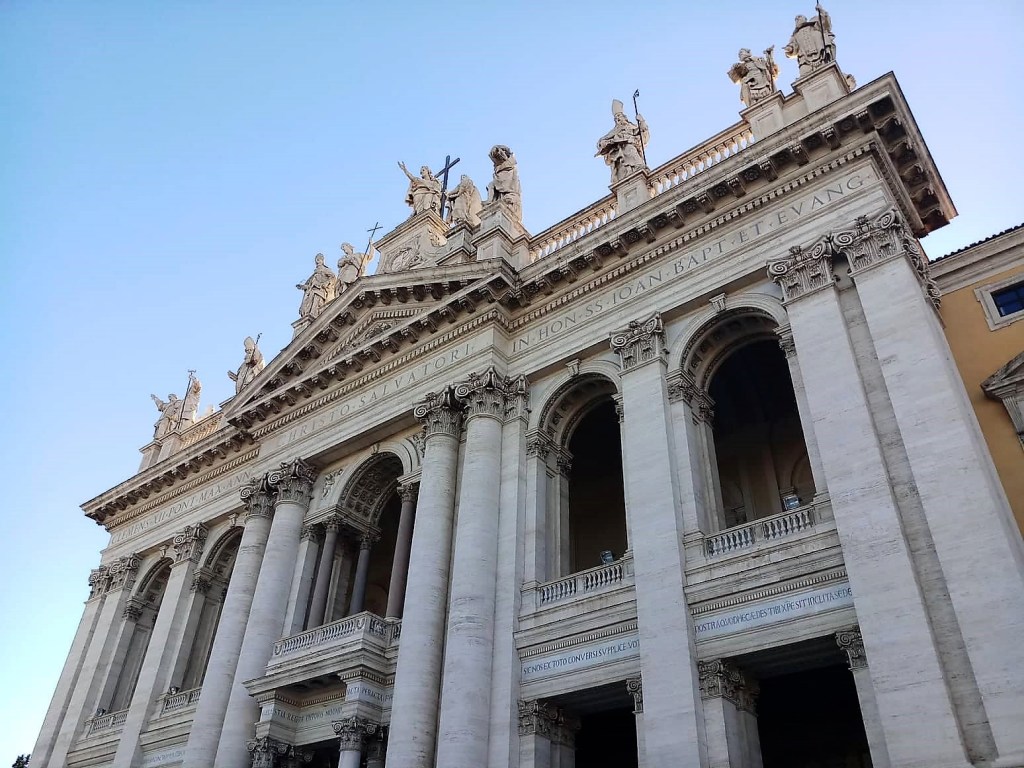
Photo of the Lateran Basilica by Fr. Gerry Pascual.
On this feast of the Dedication 
of the Lateran Basilica in Rome
which is "the mother and mistress
of all churches in Rome and the world"
being the Pope's church as Bishop of Rome,
we praise and thank you O God
for the gift of the Church. 
So often, we rarely think of the
Church as your gift, dear God;
sadly, many times we hurt the Church
not only with our attacks that defame
the Body of Christ here on earth
but most especially when we your
priests cause it to bleed with so many
wounds following our sins of
infidelities.
Help us realize this holy giftedness
of the Church as a means for us
to be closer to you, O God,
for us to be saved in Christ,
for us to be blessed and made holy
as your people finally gathered
as one in your Most Holy Name; 
most of all, in giving life
and sustaining life abundantly in Christ.

The angel brought me back to the entrance of the temple, and I saw water flowing out from beneath the threshold of the temple toward the east, for the facade of the temple was toward the east; the water flowed down from the southern side of the temple, south of the altar. He said to me, “Wherever the river flows, every sort of living creature that can multiply shall live, and there shall be abundant fish, for wherever this water comes the sea shall be made fresh. Along both baqnk of the river, fruit trees of every kind shall grow; their leaves shall ot fade, nor their fruit fail. Every month they shall bear fresh fruit, for they shall be watered by the flow from the sanctuary. Their fruit shall serve for food, and their leaves for medicine.”

Ezekiel 47:1, 9, 12
Since Jesus had ascended into heaven,
his Church has always been his sign of unity,
of communion that has continued to exist to this day
despite so many efforts by many men and women
to destroy it both from within and from outside;
all these years, the Church has remained like that
beautiful vision by Prophet Ezekiel from
which all life springs forth.
Cleanse us, dear Jesus,
whip us with your cords,
overturn our various tables of
comforts and new thoughts
especially our attachment with 
the ways of the world
so that we may truly be called
"the Father's house" (Jn.2:15-16).
Most dear Jesus,
let us stop hurting your Church,
let us stop lording over your Church,
let us stop desecrating your Church
as we keep in mind and heart
that it is you, O Lord,
who is the true foundation
of this Church
that begins right in our hearts.
Amen.
Photo of the Cathedra of the Lateran Basilica by Fr. Gerry Pascual.

Corpus Christi: Everybody a somebody

The Lord Is My Chef Sunday Recipe for the Soul by Fr. Nicanor F. Lalog II
Solemnity of the Body and Blood of Jesus Christ, 19 June 2022
Genesis 14:18-20 ><}}}}*> 1 Corinthians 11:23-26 ><}}}}*> Luke 9:11-17
Photo by Ms. Ria De Vera in Bagbaguin, Sta. Maria, Bulacan, November 2020.

A week after celebrating the Solemnity of the Blessed Trinity, we celebrate today the reality of this mystery of our personal God who relates with us with the Solemnity of the Body and Blood of Jesus Christ.

This Solemnity of the Body and Blood of Jesus Christ reminds us of the great honor of every person, of everybody as a part of the Body of Christ who became human like us to share his very self so that we too may become food for everyone. It is a very timely and appropriate feast when we are deluged with news here and abroad of how people are treated as nobody.

The recent viral video of an SUV driver bumping a security guard in a busy intersection in Mandaluyong remains a hot trending topic precisely because it is a story of how poor people are disregarded in this nation. Although the suspect had surrendered to authorities after a week of “no-show” to summons, statements especially by his mother ignited only more fire into the blazing topic. Adding insult to injuries to the nation is the press conference called by the police in presenting and speaking for the suspect which is absurd and directly opposite to how they deal with poor people involved in similar offenses.

Over in the United States where one loses count of victims of shootings happening almost every week, lawmakers grandstand for more gun controls for the protection of children when in fact, the same lawmakers refuse to consider the child in the mother’s womb as a person with a right to life that they have legalized abortion. Almost everywhere in the world, see how people take some people as somebody and others as nobody. So contrary to what Jesus is telling us in the gospel today, that everybody is a somebody. Observe how the disciples of Jesus acted in the gospel:

Jesus spoke to the crowds about the kingdom of God, and he healed those who needed to be cured. As the day was drawing to a close, the Twelve approached him and said, “Dismiss the crowd so that they can go to the surrounding villages and farms and find lodging and provisions; for we are in a deserted place here.” He said to them, “Give them some food yourselves.” They replied, “Five loaves and two fish are all we have, unless we ourselves go and buy food for all these people.” Now the men there numbered about five thousand. Then he said to his disciples, “Have them sit down in groups of about fifty. They all ate and were satisfied. And when the leftover fragments were picked up, they filled twelve wicker baskets.

Luke 9:11-14, 17
Photo from istock-studios.com by Getty Images.

We have heard this story so many times and yet, we continue to miss its whole meaning that it continues to happen in our lives minus the miracle of Jesus. See how Luke tells us first that Jesus spoke to the people about the kingdom of God.

We will never experience Jesus in his person, in his Body and Blood unless we listen first to his words, to his teachings of the kingdom of God. That is why in the Mass, the first part is the liturgy of the word to prepare us for the liturgy of the eucharist. So many times in life, we dismiss right away anything that is spiritual in nature like prayers and the sacred scriptures, of faith in God.

Luke does not tell us how Jesus multiplied the loaves and fish; we have to leave it to him how he did it. After all, he is the Son of God. Recall how during his temptation by the devil to turn stones into bread and he answered that “one does not live by bread alone but by every word that comes forth from the mouth of God” (Mt.4:4). Here in this scene, his words were precisely fulfilled when he fed the people after they have opened themselves to God’s words, to God himself.

Miracles happen in our lives when we first open ourselves to God himself. And opening to God means opening to others too by seeing everyone as a brother and sister in Christ whom we must care for.

Photo by Fr. Howard John Tarrayo, August 2021.

Too often, we tend to isolate ourselves from others, thinking only of ourselves and own good and comfort like the Twelve who asked Jesus to dismiss the crowds so they would find food and lodging for themselves in the wilderness.

What a sad reality still happening today, of how even parents and couples would proudly say how difficult it is to have another child because it is expensive. We have become so utilitarian in our perspectives in life that we compute everything as a cost, forgetting God except when praying which is precisely for asking for more blessings without even seeing the overflowing abundance of gifts from God.

Notice that despite the affluence of many these days, both as individuals and as nations, many are afflicted with the scarcity mentality, of not having enough, fearful of losing money and other resources like oil that we now have this exorbitant fuel prices.

When Jesus told the Twelve to “give the crowds some food yourselves”, he is telling us to look at God first for he is a God of abundance. Abraham in the first reading gives us the best example of always trusting God, of finding God behind every blessings we have. Abraham had just won a war with several kings in the region by the power of God who sent his priest named Melchizedek to bless him with bread and wine after. But unlike other victors in war, Abraham never had intentions of taking all the wealth and treasures of the kings he had beaten and instead gave Melchizedek the priest of God “a tenth of everything” (Gen.14:20).

Our response to God’s many blessings to us is to “tithe” ourselves like Abraham but not just ten percent as the Old Testament had taught but like Jesus in the New Testament by giving all of our very selves. This is the meaning of Paul’s words in the second reading of “proclaiming the death of the Lord until he comes” as often as we eat this bread and drink the cup (1 Cor.11:26).

We have learned and realized (hopefully) during the past Lenten and Easter seasons that death leads to new life in Jesus Christ when we share our very selves like him. God blesses us abundantly daily with his life and other blessings. There is enough for everyone. That is the meaning of the leftovers of twelve wicker baskets, one each for every apostle of the Lord who represented us.

Photo by Pixabay on Pexels.com

This Solemnity of the Body and Blood of Jesus we receive in the Eucharist reminds us not only of the sublime gifts of God to each of us but also of our ultimate response of dying to ourselves so we may share Christ’s life to the world so dead with ego and selfishness, a world of “I” and “me” and “my” and “mine” totally disregarding everybody as nobody.

As we celebrate today the Body and Blood of Christ honoring him with Masses, vigils and processions, remember how not everybody in the world is considered a somebody unless one has wealth and power. It is the new meaning given by modern man to the golden rule – he who has gold rules, implying that the poor are always taken as a nobody, bearing all the abuses of those in power and authority.

Let us examine ourselves how we have contributed to these abuses still going on, even in our thoughts at the way we perceive others, especially those not like us in status and beliefs and colors.

After receiving Jesus Christ’s Body and Blood in the Eucharist, silently pray:

Dearest Lord Jesus Christ:
empty myself of pride and 
fill me with your humility, justice and love;
reign in my heart now and always.
Amen.

A blessed week to everyone!

Photo by author, 2019.

Jesus, our glorious temple

The Lord Is My Chef Breakfast Recipe for the Soul by Fr. Nicanor F. Lalog II
Friday, Week XXV, Year I in Ordinary Time, 24 September 2021
Haggai 1:15-2:1-9   ><]]]]'> + ><]]]]*> + ><]]]]'>   Luke 9:18-22
Good Friday 2020 in my former parish.
I could feel and hear you, Lord
speaking to me, asking me like Haggai:
"Who is left among you that saw
this house in its former glory?
And how do you see it now?
Does it not seem nothing 
in your eyes?" (Haggai 2:3)
When I remember the images 
of the first few months of pandemic
last year that fell on the Holy Week
and Easter Season, I felt like Haggai
and the returning exiles to Jerusalem
seeing their temple in ruins, still under
construction;  how I long, O Lord, to those
glory days when we celebrate and adore
you in our beautiful church!
But now, with the pandemic's second 
year, our churches remain half empty.
How long shall we wait, Lord,
for COVID-19 to end so we can
go back to our church to celebrate
your presence, your love, your
salvation in Jesus Christ?
Strengthen us, dear God;
deepen our faith in you,
awaken our hope in you;
let us take courage like your
priests and returning exiles
to Jerusalem to await your promise
to "shake the heavens and the earth,
the sea and the dry land...
to shake all nations" (Haggai 2:6-7)
when you bring back the glory days
of worshipping you again in your
temple.
Most of all, open our minds
and our hearts to be shaken
inside for us to realize and 
wholly embrace the Passion,
Death, and Resurrection of 
Jesus your Christ (Luke 9:22), dear Father:
he is our glorious temple,
more magnificent than any church
or edifice when found in the hearts
of your people who abide in you,
who rely only on you.  Amen.
Easter 2020 in our former Parish.

When “where” and “there” are persons, not locations

The Lord Is My Chef Sunday Recipe for the Soul by Fr. Nicanor F. Lalog II
Sunday XVII-B in Ordinary Time, 25 July 2021
2 Kings 4:42-44 ><]]]]*> Ephesians 4:1-6 ><]]]]*> John 6:1-15
Photo by Mr. Raffy Tima of GMA7-News, Batanes after a storm, 2018.

Beginning today until August 22, 2021, our Sunday gospel will be from the sixth chapter of John who continues last week’s scene of the great crowd following Jesus and his disciples to a deserted place in order to rest after returning from their first mission.

We were told by Mark how Jesus was “moved with pity” upon seeing the people who were “like sheep without a shepherd” that he taught them with so many things (Mk.6:34); after teaching them, Jesus fed them – about 5000 men excluding children and women – from just five loaves of bread and two pieces of fish with a lot of leftovers gathered that filled 12 wicker baskets!

It is a very beautiful story found in all four gospel accounts but it is only in John’s gospel where we are presented with a more complete and detailed story of the event followed by Jesus Christ’s “bread of life discourse” at Capernaum. Let us focus at the conversations among Jesus, Philip, and Andrew before the miracle where they used the demonstrative pronouns “where” and “there” that indicate deeper meanings.

The Jewish feast of Passover was near. When Jesus raised his eyes and saw that a large crowd was coming to him, he said to Philip, “Where can we buy enough food for them to eat?” He said this to test him, because he himself knew what he was going to do. Philip answered him, “Two hundred days’ wages worth of food would not be enough for each of them to have a little bit.” One of his disciples, Andrew, the brother of Simon Peter, said to him, “There is a boy here who has five barley loaves and two fish; but what good are these for so many?”

John 6:4-9
Photo from iStock/Studio-Annika.

When all directions point to Jesus – but we miss!

While praying over today’s gospel, one song kept playing in my mind, the Beatles’ 1966 classic love song by Paul McCartney, Here, There and Everywhere. It is a very lovely music, so unique in many aspects that it is also McCartney’s most favorite as a member of the Fab Four.

What struck me with this Beatles hit are the demonstrative pronouns here, there and everywhere used not to point at directions but to a person, the girlfriend of McCartney at that time he so loved who would also be his Here, There and Everywhere!

To lead a better life, I need my love to be here
Here, making each day of the year
Changing my life with a wave of her hand
Nobody can deny that there's something there

There, running my hands through her hair
Both of us thinking how good it can be
Someone is speaking
But she doesn't know he's there

The same is so true with Jesus today asking Philip Where can we buy enough food for them to eat?”

Jesus was not asking for a store in that deserted place to buy and get food for the people. John tells us that Jesus said this to test Philip because “he himself knew what he was going to do”. He wanted Philip to look deeper, to see beyond places and things even if his answer was correct, that “two hundred days’ wages worth of food would not be enough for each of them to have a little bit.”

When odds are against us, when things are beyond us and humanly impossible, where do we go to?

Of course, we go to God!

Where else do we go when we are in deep or great troubles?

We go to prayers, we go to church, we go to the prayer room or Adoration Chapel, or wherever there is peace and silence where we can be with God.

When this pandemic started, where did we go during lockdown? To God with our online Masses at home, daily praying of the Rosary with the whole family. But when the quarantines were eased, we suddenly forgot God, regarding every where as merely a place, a location.

Every where is where God is, where Jesus is!

From Facebook, May 2020.

We now come to that second demonstrative pronoun in the same scene before the miraculous feeding of five thousand said by Simon Peter’s brother Andrew who told Jesus, “There is a boy here who has five barley loaves and two fish; but what good are these for so many?”

How unfair that the boy who actually had Jesus working on his miraculous feeding of the crowd with those five barley loaves and two fish he had given was merely referred by Andrew as there or here!

See how Andrew did not bother to ask the boy’s name because during that time, any male kid had no any significance at all except by the time they reached 13 years of age for the bar mitzvah, when boys begin to read the Torah. In fact, John noted in this narrative how the children and women were not even counted to show their grave error at that time of giving importance only to men.

How sad the same thing continues to our own time when we are taken for granted as a person, reduced to mere statistics, to mere numbers, to there and here!

Despite our insistence on the use of inclusive terms for all, it seems that the more we have actually degraded the human person into objects as we personified objects. Listen to commercials and newscasts to realize what I mean: food is described as “masarap siya” while typhoon is referred to as “siya ay lalabas ng Philippine Area of Responsibility” while persons are made into objects like handsome men called “yummy” or “delicious”. No wonder, people have become like food, good only when young and fresh but when old, discarded like trash! Sometimes, people are labelled like ice cream as “flavor of the month” or “all-time favorite” when rich and famous while ordinary folks are called “dirty ice cream”.

There is always a person to be respected and recognized in every here and there!

Let us heed St. Paul in the second reading telling us “to live in a manner worthy of the call” we have received as beloved children of God “with all humility and gentleness, with patience, bearing with one another through love, striving to preserve the unity of the spirit through the bond of peace” (cf. Eph. 4:1-3).

How sad that we cannot even look at one another as a brother and a sister, even in our own family circles because we are so focused on the bread, that is, the money and wealth we could get for ourselves. And that is the great irony in this scene: the boy was willing to let go of his five loaves of bread and two pieces of fish yet Andrew did not notice at all the face, the personhood of the boy so kind to share what he had, thinking more of others than himself!

What a tragedy in our time, in our own family and circle of friends, at work and in school, even in our parish community when some people would give more value to things than persons, who would rather maintain or keep their honor and dignity at the expense of others.

Photo by Marc Angelo Nicolas Carpio, January 2020, Bagbaguin, Santa Maria, Bulacan.

When the “where” and “there” of Jesus meet on the Cross

This story of the multiplication of bread occupies an exceptional place in all four gospels. However, it was only John who added a long discourse preached by Jesus at Capernaum after this event to reveal its full meaning.

For John, the multiplication of bread is more than a miracle but a sign, a revelation of supernatural power above the ordinary pointing to Jesus as the Christ, the Son of God who is the bread from heaven who had come down to nourish us in this journey of life to eternity like during the time of Moses in the wilderness. Or like Elisha in the first reading, Jesus multiplied the loaves of bread to satisfy the hunger of not just 100 people but over 5000 with leftovers of 12 wicker baskets.

Photo by author, March 2020.

We are reminded of other instances in the Old Testament like the Jewish feast of Passover as backgrounds of this sign by Jesus in the deserted place as a prelude to the sign of the Holy Eucharist he instituted on Holy Thursday that we celebrate daily especially on Sundays as one body, one family. This in turn will reach its highest point on Good Friday as the ultimate sign Jesus Christ’s loving presence when his being the “where” and “there” of God would be revealed in the final sign of the Crucifixion that many would still miss to recognize.

That is why in the next four weeks, we shall hear John narrating to us the discourse by Jesus to explain the full meaning of this multiplication of bread in that deserted place.

When the people saw the sign he had done, they said, “This is truly the Prophet, the one who is to come into the world.” Since Jesus knew that they were going to come and carry him 0ff to make him king, he withdrew again to the mountain alone.

John 6:14-15

Let us “capture” Jesus in the Holy Communion of the Mass later when the priest holds high the Body of Christ saying, “Behold the Lamb of God, behold him who takes away the sins of the world. Blessed are those called to the supper of the Lamb.”

Here in the Mass, it is very clear this is where Jesus is, where we get the real food to eat. Tell it to everyone, point unto Jesus, there is the Lamb of God who takes away the sins of the world like John the Baptist. Most of all, it is in the the Holy Mass where Jesus is present here, there, and everywhere – in his words proclaimed, Body and Blood shared, and with everyone celebrating!

Have a blessed week! Keep safe and stay dry. Amen.

Photo by Pixabay on Pexels.com

God. Simply present, always here.

The Lord Is My Chef Sunday Recipe for the Soul by Fr. Nicanor F. Lalog II
Solemnity of the Body and Blood of Jesus Christ, 06 June 2021
Exodus 24:3-8  ><}}}'>  Hebrews 9:11-15  ><}}}'>  Mark 14:12-16, 22-26 
Photo by Fr. Pop Dela Cruz, Binuangan Is., Obando, Bulacan, May 2021.

The one most important thing this pandemic has cost us for over a year now is the simple joy of presence of our loved ones. For more than a year, we have stopped or limited our visits and celebrations with relatives and friends for fears of spreading the virus especially to our older folks.

It has become so insane for many of us, most especially with those health protocols when even couples were prevented from riding together in bikes!

But at least, the pandemic had taught us the value and importance of presence of everyone, of being present to those we love who, unfortunately, many have also died this year due to the virus and other sickness without us even seeing them at all.

This is the gist of our celebration today, of the Solemnity of the Body and Blood of Jesus Christ: the simplicity of God and his simple presence among us.

For the second Sunday in a row after the Pentecost, we celebrate another major feast of the Lord in Ordinary Time to show us that our God is a reality, not just a mystery of the Trinity that we cannot fully understand nor explain.


When Jesus Christ said 
"this is my body" and "this is my blood of the covenant", 
he brought to new significance 
the insignificant gestures of hosting a meal 
and the insignificant food of bread and wine 
so common among peoples in every nation and culture. 

Photo by author, 2018.

The simplicity of God.

Last Sunday we celebrated and reflected on the central mystery of our one God in three Persons called the Holy Trinity. Today we celebrate his meaning and reality as a person, a God who relates with us in the most personal manner with his presence.

Recall our basic catechism of God being perfect – all knowing, all powerful, and always present because of his main attribute: his simplicity.

In our world that has become so complicated like our Facebook relationships or with all those gadgets and apps we have including our “intelligent” cars and homes, God remains so true, so real, so present with us because he is simple. No fuss, no nothing. Just pure presence among those who are willing to be still and simple. And present in the moment.

The disciples then went off, entered the city, and found it just as he had told them; and they prepared the Passover. While they were eating, he took bread, said the blessing, broke it, and gave it to them, and said, “Take it; this is my body.” Then he took a cup, gave thanks, and gave it to them, “This is my blood of the covenant, which will be shed for many.”

Mark 14:16, 22-24

See the simplicity of the story, the simplicity of Jesus Christ who took the initiative to prepare everything for their Passover meal that his disciples “found it just as he had told them”.

When Jesus Christ said “this is my body” and “this is my blood of the covenant”, he brought to new significance the insignificant gestures of hosting a meal and the insignificant food of bread and wine so common among peoples in every nation and culture.

During their supper, Jesus gave a new meaning not only to their Passover meal but even to our most basic and common act of having a meal, of eating together to become a celebration of life, not just to feed one’s body but also one’s soul!

In becoming human like us, sharing in all of our experiences except sin, Jesus leveled up our very being and lives at his Last Supper when he established the Sacrament of the Holy Eucharist to be the everlasting sign of his loving presence among us and thus, revealed to us the deeper meaning of the common meal we used to take with everybody as a giving and sharing of our very selves with others.

Brothers and sisters: When Christ came as high priest of the good things that have come to be, passing through the greater and more perfect tabernacle not made by human hands… he entered once for all into the sanctuary, not with the blood of goats and calves but with his won blood, thus obtaining eternal redemption… cleanse our consciences from dead works to worship the living God.

Hebrews 9:11, 12, 14

Like Jesus Christ, it is not really the food and drinks that we share whenever we eat together and dine with others but our very selves. No wonder, in every celebration and milestone of our lives, from a simple date of a young man and woman trying to get to know each other to weddings, birthdays, and other significant occasions, there is always a meal we host to share our joys, our triumphs, our lives with others.

And the most beautiful part of these meals we share with everyone is the deeper meaning we convey that it is essentially a thanksgiving to God for all of his abounding love and grace poured upon us which is the meaning of the Greek word “eucharistia”.

Photo by Pixabay on Pexels.com

Our presence in the Lord with others

The word present, of being here now, is the other word we use to refer to “gift” like when we say birthday present or Christmas present. And that is the meaning of this Solemnity of the Lord’s Body and Blood: God as the gift and the giver in Jesus Christ.

In the Holy Eucharist, we receive Jesus Christ wholly, nourishing us, blessing us, and most of all, enabling us to offer also ourselves to him through others.

But, are we present to him?

Are we willing to give ourselves to him?

From the very start since God entered into a covenant with his chosen people, he had shown his simple presence demanding nothing except our simple presence too to him and with others. This is the meaning of the offering of blood which symbolizes life, our sharing in the life of God.

But unlike the pagans, we offer our selves to God not to lose but to transformed our lives in him. With Christ’s self-sacrifice on the Cross on Good Friday foreshadowed by his Last Supper on Holy Thursday, we discover how life given to God is not lost but saved which is the meaning of the ratification by Moses of the covenant in the wilderness with the Israelites:

Taking the book of the covenant, Moses read it aloud to the people, who answered, “All that the Lord has said, we will heed and do.” Then he took the blood and sprinkled it on the people, saying, “This is the blood of the covenant that the Lord has made with you in accordance with all these words of life.”

Exodus 24:7-8

Every time we celebrate the Holy Mass, we ratify the new covenant of Christ with us, when we give our great “Amen” to him like the Israelites at the desert, vowing to “heed and do” whatever he told us. That is also the meaning of attending a party or a dinner hosted by a relative or a friend: we renew our ties with them, promising to be there to give ourselves to them especially in times of need and danger.

But, how willing are we to remain true and faithful, always present to God, our family and friends especially in this time of the pandemic?

What a tragedy that while celebrating the Sunday Eucharist, we turn away from God in our sins in the same manner we turn against those people we share meal with and attended parties they hosted.


Let us be still 
in the calming presence of God 
in Jesus Christ's Body and Blood.  
He is more than enough 
to suffice all our needs and longing in this life.  
Like the bread and wine, 
we can all be transformed 
into his Body and Blood 
to be a present to others.

In celebrating this Solemnity of the Lord’s Body and Blood on this second Sunday of Ordinary Time, we are challenged in our faith and conviction of truly being present like Jesus before him and with others in our daily life especially in this time of the pandemic with so many in great need of basic necessities.

Like the Lord Jesus Christ, do we take the time and effort to prepare for every Sunday Mass celebration as he prepared their Passover meal?

Jesus is not asking us to be particular with the details. All we need is the essential: our very presence with the Lord. Simply be our selves: no need to fake anything, to be somebody else because Jesus loves us as we are.

It is good to remember on this Solemnity too how take simplicity for granted as being bare, without much fanfare and even spectacle as we always want something to feast our eyes on like what we have done to many of our rites and rituals. We are never contented that less is always more that many times, our religious celebrations have become banal in nature with all the pomp and pageantry we have added like to our processions. Instead of turning to God, our attentions had turned into our very selves, clearly a case of “triumphalism” when we “exaggerate” even spiritual activities.

Let us be still in the calming presence of God in Jesus Christ’s Body and Blood. He is more than enough to suffice all our needs and longing in this life. Like the bread and wine, we can all be transformed into his Body and Blood to be a present to others. Amen.

Photo by Fr. Pop Dela Cruz at Binuangan Is., Obando, Bulacan, May 2021.

Praying for our Church and churches

The Lord Is My Chef Breakfast Recipe for the Soul by Fr. Nicanor F. Lalog II
Monday, Feast of Dedication of the Lateran Basilica, 09 November 2020
Ezekiel 47:1-2, 8-9, 12  >><)))*>  1 Corinthians 3:9-11, 16-17  >><)))*>  John 2:13-22
Photo by Arch. Philip Santiago, 2018.

Glory and praise to you O God our Father who had sent us your Son Jesus Christ to establish his Body among us, both as the Church made up of his people and made of stones. As we celebrate the Feast of the Dedication the Cathedral of Rome, the Basilica of St. John Lateran, we pray also for Pope Francis, all bishops and priests, and all the faithful who make us the Body of Christ.

May our temple of stones be a symbol of the living Church, the Christian community, your Building among us as St. Paul reminds us today.

Let life flow like waters from the vision of Ezekiel in the first reading from our Church and give life to its members especially the sick and the poor, the marginalized and the forgotten.

Dearest Jesus, help us draw inspiration from the beauty and harmony of your beautiful churches despite our many flaws and sins to form a unity in you in the Holy Eucharist we celebrate day in, day out in our sacred buildings to proclaim your glory and majesty.

At the same time, as we strive to follow your will in building a spiritual temple of people who worship in truth and in spirit, may this feast remind us also to take special care in keeping your house in order where we meet you in our liturgy. Guide us with the Holy Spirit to make every sacred building a living temple of your love, a church of the poor. Amen.

Photo by Arch. Philip Santiago, 2018.

The Body of Christ

Quiet Storm by Fr. Nicanor F. Lalog II, 28 October 2020
Photo by Pixabay on Pexels.com
Everyday 
I hold your Body
for every-body to see
saying again your words
on the night before you were betrayed:
"Take this, 
all of you, 
and eat of it,
for this is my Body,
which will be given up for you."
THIS IS MY BODY.
We have studied and learned
theology of your Body
but it was only lately
after I have held
someone's body
with a malady
so sick, so weak, and untidy
have I truly felt your Body.
The nobility and beauty,
the awe and wonder
of holding your Body
dear Jesus came to me
after I have given up my own body
to some-body
in need of my body.
Oh, how I felt your Body
next to me after I have held another body;
it was just the tip of my fingers
touching you but as I looked at you
I felt you in my whole body
filling me with your mystery
unfolding daily in the liturgy;
why did I not see, was it due to apathy,
when some-body comes to me
and treats him a no-body? 
Photo from Reuters/Lucas Jackson via The Economist, 2019.