Stop “overthinking” to be a good Samaritan

Lord My Chef Sunday Recipe, 13 July 2025
Fifteenth Sunday in Ordinary Time, Cycle C
Deuteronomy 30:10-14 ><}}}*> Colossians 1:15-20 ><}}}*> Luke 10:25-37
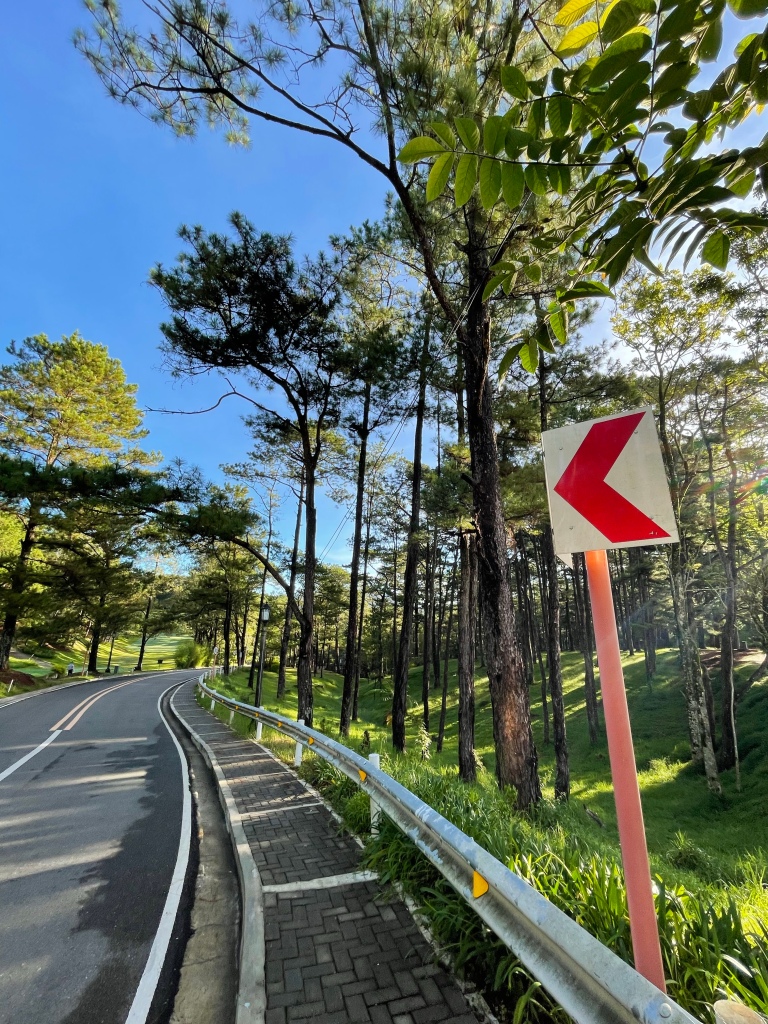
Photo by author, Katmon Nature Sanctuary & Beach Resort, Infanta, Quezon, 17 March 2023.

Jesus continues his journey to Jerusalem with his disciples, teaching us with some important things “to do” following the questions of some people along the way.

Last Sunday Jesus taught us the five do’s and five don’ts of discipleship; today, he teaches us what we must do to inherit eternal life with the parable of the good Samaritan.

There was a scholar of the law who stood up to test Jesus and said, “Teacher, what must I do to inherit eternal life?” Jesus said to him, “What is written in the law? How do you read it?” He said in reply, “You shall love the Lord, your God, with all your heart, with all your being, with all your strength, and with all your mind, and your neighbor as yourself.” He replied to him, “You have answered correctly; do this and you will live.” But because he wished to justify himself, he said to Jesus, “And who is my neighbor?” Jesus replied, “A man fell victim to robbers as he went down from Jerusalem to Jericho.” (Luke 10:25-30)

First thing we notice is our similarity with the scholar of the law who already knew the answer to the question “what must I do to inherit eternal life?” We know deep in our hearts the answer and like in the gospel, we have felt Jesus affirming us many times like the lawyer. But, Jesus wants us to revisit his parable of the Good Samaritan this Sunday to realize its meaning as we continue to imitate the lawyer with the same question “who is my neighbor?”

But because he wished to justify himself, 
he said to Jesus,
"And who is my neighbor?"
Photo by author, Grand Canyon Woods, Batangas, March 2025.

The Filipino translation gives us a better picture of the lawyer justifying himself, “Sa hangad ng eskriba na huwag siyang lumabas na kahiya-hiya, tinanong niya uli si Jesus, ‘Sino naman ang aking kapwa?'”

See how Jesus did not give a straightforward answer but situated the lawyer including us today into something very concrete so that we stop thinking more and start feeling more. That was the problem with the scholar of the law and with us today: we analyze everything that we have become “over thinkers” but not necessarily “critical thinkers”. We know so many things about our faith but, we still ask for more clarifications because we think more than feel more.

As a chaplain giving recollections and talks to our students, I have seen many young people today are over thinkers but not critical thinkers. I always remind them that critical thinking is about comprehension and analysis of data and information gathered. Over thinking is different. It is not of the mind but of the heart because overthinking is lack of trust. It is a vice when we worry a lot – over think – because we lack trust with others and with ourselves. And ultimately with God!

Photo by author, Camp John Hay, Baguio City, 12 July 2023.

The scholar of the law was overthinking when he asked “who is my neighbor?” because for them at that time, their neighbors were just their fellow Jews. Sad to say, until now our society remains stratified into categories of people like ice cream – the old rich and famous as “all-time favorites”, the recent rich and popular as “flavor of the month” and the ordinary folks as “dirty ice cream” or sorbetes cheaply sold in carts pushed usually by old men.

Of course we know everyone is our neighbor or whoever needs us. But the problem with this all-encompassing view is that it leads us to casuistic argumentation, a kind of over thinking like when we start citing exceptions and excuses or alibis. That is why Jesus used the characters of a priest and Levite who were examples of holiness vis-a-vis a Samaritan who was an enemy of the Jews at that time.

The priest and the Levite passed by the victim of robbery to maintain the Jewish purity law of not touching a corpse to perform their tasks and duties in the temple, both were “overthinking” of their rites and rituals than the dying person. Holiness for Jesus is beyond names and titles but more of the heart seeing and feeling the other person like the Samaritan who alone acted out of his good naturedness as a person, even beyond giving first aid to the robbery victim.

From forbes.com, 2019.

Many times we are like the priest and Levite when we come up with many arguments like “do I not have any other obligation” or “does it really fall on me personally” and so on and so forth when confronted in real life with some people so badly injured or in need of attention.

We overthink with what would happen if we personally get involved with somebody in trouble that people these days are more quick in pulling out cellphones to record an accident and mishap instead of doing something to help.

We over think like the lawyer in the gospel, forgetting to feel more of the other person. That is why in answering his question, Jesus threw it back to him him in another form that is more personal and experiential, “Which of these three, in your opinion, was neighbor to the robbers’ victim?”

Photo by author, 2019.

St. Therese of the Child Jesus wrote in her journal more than a hundred years ago, “I have understood that true greatness is found not in the name but in the soul.”

Beautiful! If we would just look more into our heart, into our soul, we find Jesus, we find our true self, and we find everyone our neighbor to be loved and respected, cared and understood. This is what Moses is telling us in the first reading that the Lord and his commandment are right there in our hearts.

That is exactly what the scholar of the law felt after hearing the story of the good Samaritan that he forgot all labels and categories, answering Jesus’ question with, “The one who treated him with mercy.” There is no need to justify ourselves, of who we are, or even ask who is our neighbor. Everyone is our neighbor because everyone is a brother and sister in Christ; hence, no need to ask that question at all!

But, there is still something deeper to this. When Jesus ended their conversation with the instruction to “Go and do likewise”, the Lord is telling us this Sunday that whenever we encounter a person in need of help, regardless of who she/he is, let us put ourself in that person’s place for it is them – not us – who shall recognize us whether we acted as neighbor to them, or saw them as neighbor!

Photo by Mr. Chester Ocampo, UST Senior High School Building, 2019.

Recall those moments we were down when those dearest to us abandoned us and of all people, the least we expected were the ones who acted as neighbor to us. It is when we are down and low when we come to recognize our neighbor, not when we are up and able, when we feel proud asking what must I do to gain eternal life.

Stop all these over thinking. Simply remember and find Jesus in every person who is the “image of the invisible God” who “reconciled all things for him”(Col.1:15, 20) for he alone is our truest neighbor always present when needed most. Amen. Have a blessed week ahead, everyone! Fr. Nicanor F. Lalog II, Our Lady of Fatima University, Valenzuela City (lordmychef@gmail.com).

Representing Jesus well

Lord My Chef Sunday Recipe, 06 July 2025
Fourteenth Sunday in Ordinary Time, Cycle C
Isaiah 66:10-14 ><}}}*> Galatians 6:14-18 ><}}}*> Luke 10:1-12
Photo by author, Atok, Benguet, 27 December 2024.

Finally, we hit the fourteenth Sunday in Ordinary Time with Luke as our guide after a month of Solemnities.

We are at the turning point in the gospel of Luke – chapter 9 and first half of chapter 10 – where Jesus was identified by Peter as the Messiah (9:20) while Jesus for the first time made known his coming pasch (9:22). From this point on, Luke tells us of how Jesus “resolutely determined to journey to Jerusalem” (9:51) to fulfill his mission as they took a detour from a Samaritan town that had refused them passage (9:53). After this scene comes our gospel this Sunday.

At that time the Lord appointed seventy-two others whom he sent ahead of him in pairs to every town and place he intended to visit. He said to them, “The harvest is abundant but the laborers are few; so ask the master of harvest to send out laborers for his harvest. Go on your way; behold, I am sending you like lambs among wolves. Carry no money bag, no sack, no sandals; greet no one along the way. Into whatever house you enter, first say, ‘Peace to this household’… Stay in the same house and eat and drink what is offered to you, for the laborer deserves his payment. Do not move about from one house to another. Whatever town you and enter and they welcome you, eat what is set before you, cure the sick in it and say to them, ‘The kingdom of God is at hand for you.'” (Luke 10:1-5, 7-9)

First thing we notice about discipleship according to Jesus is that it is never easy, “behold, I am sending you like lambs among wolves.” Disciples need to be “resolutely determined” in the mission like Jesus, focused only on Jesus.

Early in his teachings during the Sermon on the Plain, Jesus enunciated in his Beatitudes the contradictions of his life and teachings to the ways of the world his followers have to imitate. Hence, his list of “do’s” and “don’ts” of discipleship in today’s gospel.

Do’s: greet peace every household they entered; stay in same house; eat and drink whatever is offered; cure the sick; and proclaim “the kingdom of God is at hand.”

Don’ts: no money, no sack, no sandals, no greetings along the way, and do not move about from one house to another.

Notice there are five do’s and five don’ts. And there are only two “do’s” that require speaking: to greet every household with peace and then the other is to proclaim to everyone the kingdom of God is at hand (10:5, 9) which is the sum of discipleship in Christ.

Photo by author, Sacred Heart Novitiate, Novaliches, QC, 20 March 2025.

“Into whatever house you enter, first say, ‘Peace to this household'”…

The only valuable we as disciples of Christ must have is peace that we have to offer generously to everyone.

Peace is the work of the Holy Spirit, a sign of the coming of the Kingdom of God as the angels proclaimed on Christmas, “on earth peace to those on whom his favor rests” (Lk. 2:14). Most of all, peace is the fruit of Easter that the Risen Lord offered his disciples upon seeing them on that evening, “Peace be with you” (Jn.20:19).

Vatican II defined peace “is not merely the absence of war… but the fruit of love which goes beyond what justice can provide” (Gaudium et Spes 78). Peace is something we all have to work and strive for, entailing wounds and sacrifices for us to achieve it by cooperating with the grace of Jesus Christ in overcoming sin and evil. It is a process that never stops, calling for perseverance and daily conversion on our part.

Peace comes when we disciples are open for Christ, for others, and for change and transformation. That is why Jesus insisted us his disciples not to bring anything material that may influence our dealings with others, especially with those who are poor.

The great irony of our time is that the more we have grown affluent with wealth and material things, the more we have become empty in meaning and directions in life. So many are disturbed, longing for peace but could not have it because we the disciples are also lost in the things and the ways of the world.

Photo by author, Sacred Heart Novitiate, Novaliches, QC, 20 March 2025.

“…cure the sick in it and say to them, ‘The kingdom of God is at hand for you.'”

In the Luminous Mysteries of the Holy Rosary introduced by St. John Paul in 2002 is its third mystery, the proclamation of the Kingdom of God.

It is truly a mystery of light because Jesus is the Kingdom of God! To proclaim the coming of the Kingdom of God is to proclaim the coming of Jesus Christ in our midst. When John the Baptist’s disciples asked Jesus if he was the One they were waiting for or had to wait for another, Jesus said in reply, “Go and tell John what you have seen and heard: the blind regain their sight, the lame walk, lepers are cleansed, the deaf hear, the dead are raised, the poor have the good news proclaimed to them” (Lk.7:22).

Where there is healing, there is new life, there is proclamation of the good news, there is Jesus Christ! Proclaiming the Kingdom of God is representing Jesus in our lives, in our mission.

From vaticannews.va

In the previous chapter and scenes before our gospel this Sunday, Jesus asked his disciples what people said about him, the very same gospel we have last Sunday during the Solemnity of Sts. Peter and Paul.

Recall how Jesus was mistaken for John the Baptist, Elijah and Jeremiah or one of the prophets.

That’s the problem we still have today: many followers of Jesus do not represent him well that people are lost at who he really is! And it first happens right in the Sunday Eucharist as noted by a Facebook group called Catholic Fortress in its series this past week.

Many reacted positively for the series that was really good and timely for us priests and ministers at the altar who have unconsciously abused the Mass, unknowingly deviating from Christ himself who could no longer be found and experienced by the people. Truly the Mass is about Jesus; but, when it becomes like a showbiz with so many ek-ek and palabas by the priest, the servers and ministers and the choir, then it leads us away from Jesus who is paloob or inside our hearts.

In 400 AD, St. Augustine wrote the first manual for catechism called De Catechizandis De Rudibus (On Instructing Beginners) detailing, step by step the many things to consider and lessons to teach people being prepared for Baptism. From a simple request by his deacon named Deogratias, St. Augustine came up with an entire book on how to catechize with a final lesson that is the heart of his book when he wrote, “Remember, the catechist is the lesson himself.”

The same thing is very true with us priests and altar ministers and every disciple of Jesus Christ! Do we have Jesus Christ or not especially in the celebration of the Holy Mass where we proclaim the Kingdom of God is at hand and share peace with everyone?

How can there be peace of Christ among us when priests fail to love first of all Jesus in prayers as reflected in his love for the people by preparing for the Mass so that the sick and the burdened may experience Jesus – not an actor or actress of a telenovela no matter how popular it may be?

Where is the Kingdom of God when people have to bear the tantrums and antics and hangups of their priest as they already have so much burdens in life? Or, when people have a hard time tightening their belts and the priest keeps on asking for collections without any reports?

Where is the Kingdom of God when priests play favorites among the parishioners and servers, when some support Pride Movement and corrupt officials?

How can there be peace when all we have in the Mass is clapping of hands that we never have time to listen to God speaking to us in silence?

Photo by author, St. Joseph’s Chapel of the Order of Friars, Tagaytay City, 17 January 2025.

This Sunday, Jesus invites us to examine our faith journey in him if we are still following him or somebody else.

Let us pray for that grace to represent Jesus well always in our lives as priests and laity alike that we truly become the Body of Christ, his presence on earth.

It is the relationships that we have with God that matters in discipleship which Isaiah likened to that of a mother and child in the first reading. This finds it fulfillment when like St. Paul in the second reading, it is Christ’s Cross that we carry in ourselves – not bags nor money nor self and fame. Amen. Fr. Nicanor F. Lalog II, Our Lady of Fatima University, Valenzuela City.

Seeing ourselves as Jesus sees us

Lord My Chef Sunday Recipe, Fr. Nicanor F. Lalog II
Solemnity of Sts. Peter & Paul, Apostles, 29 June 2025
Acts 12:1-11 ><}}}}*> 2 Timothy 4:6-8, 17-18 ><}}}}*> Matthew 16:13-19
St. Peter’s Square at the Vatican in Rome.

We enter today the 13th week in Ordinary Time with a fourth celebration on a Sunday of another Solemnity, that of Saints Peter and Paul, the two pillars of the Church Jesus Christ established over 2000 years ago.

Sts. Peter and Paul were men of diverse backgrounds with Peter the fisherman, impulsive and so human while Paul the Pharisee was an intellectual converted by an encounter with Jesus on the road to Damascus. Both were flawed as persons yet so loved and called by the Lord – Peter as first leader of his church and Paul as its first missionary to the Gentiles. Their Solemnity reminds us of Christ’s call for us to build his Body, his Church here on earth.

While this celebration is about the two great apostles of Jesus, our readings direct us to God’s goodness and grace in his actions on behalf of the church founded by Christ. Its focus is on God, not ourselves.

Statues of Sts. Peter & Paul, st. Peter’s Basilica, Rome; photos from opusdei.org

Being an apostle of Jesus is not about doing great things or being so good but more of encountering and keeping faith in Christ our Lord. By recognizing ourselves as the church – the Body of Christ as we have reflected last Sunday, all of our actions are indeed God’s actions on behalf of the church because it is through us that the proclamation of the Gospel of Jesus’ death and resurrection is continued and completed in this age.

What is essential is we constantly enter into a conversation with Jesus in prayer not only to tell him things but most especially for us to realize how he sees us!

When Jesus went into the region of Caesarea Philippi he asked his disciples, “Who do people say that the Son of Man is?” They replied, “Some say John the Baptist, others Elijah, still others Jeremiah or one of the prophets.” He said to them, “But who do you say that I am?” Simon Peter said in reply, “You are the Christ, the Son of the living God.” Jesus said to him in reply, “Blessed are you, Simon son of Jonah. For flesh and blood has not revealed this to you, but my heavenly Father. And so I say to you, you are Peter, and upon this rock I will build my church, and the gates of the netherworld shall not prevail against it” (Matthew 16:13-18).

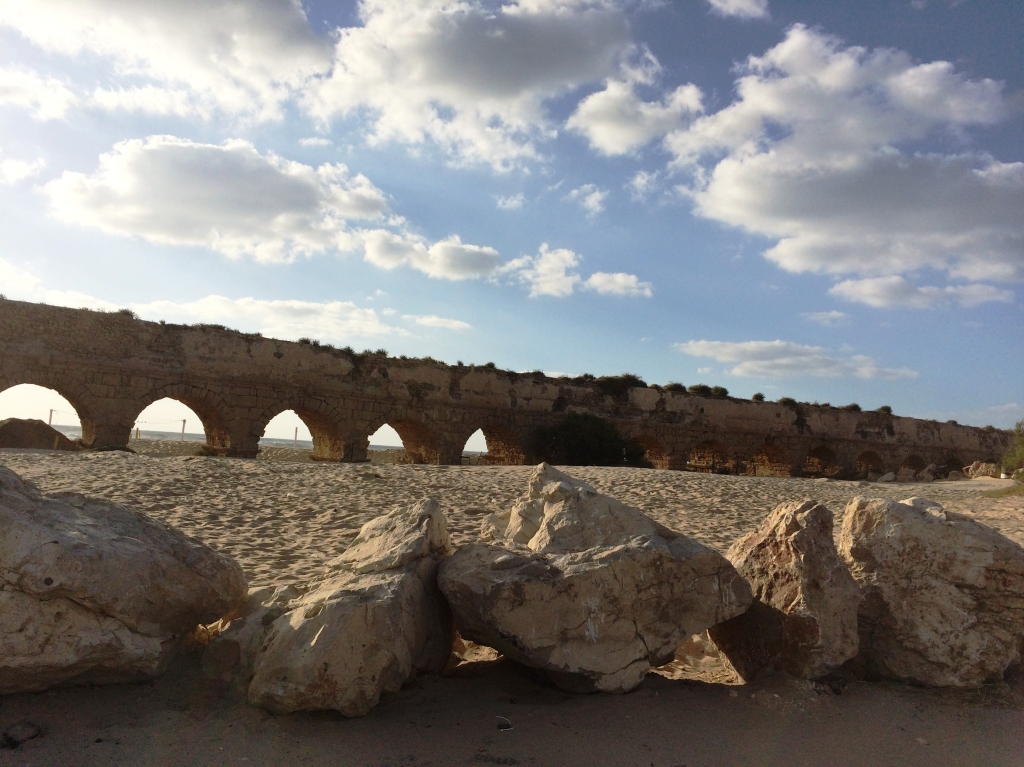
Photo by author at Caesarea, Israel, May 2017.

What really happened at Caesarea Philippi was a close encounter of the apostles with Jesus, especially Simon whom would he called as Peter on that day on.

Very often in most reflections and commentaries, we are told to answer the question of Jesus like Peter in our most personal way not based from what we have read or heard: “who do you say I am?”

Of course, what else can we say but imitate Peter’s answer that seems to be the most correct answer.

But, is it really the best answer? Not really.

Paul later in his many writings will declare similar answers but far more better like when he said “For me to live is Christ, and to die is gain” (Phil.1:21).

Jesus is telling us something else in this scene, as if asking us too, would you want to know “who do I say you are?” What the Lord is actually telling us in this scene is the fact that he knows us so well inasmuch as he knows himself perfectly because he is God. In fact, he had said there was no need for him to have human testimony as the Christ (Jn. 2:25; 5:34).

Photo by author, Sea of Galilee, Israel, May 2019.

What I see more at Caesarea Philippi is Jesus Christ’s omniscience as God who knows everything – even that early he already knew Peter would deny him thrice, that Judas Iscariot would betray him, so on and so forth.

Jesus knows everything about us but he chose to love and believe in us that despite and in spite of everything he knew that could go wrong with us later in life, of how we would fall into sin over and over, STILL – he calls us, he sends us on a mission because he believes in us, he loves us.

Many times in life, we forget the truth about the saints who are just like us, ordinary people with many weaknesses and flaws, imperfections and even idiosyncrasies. What made them stand out and did all those great feats for the Lord was because they were able to see themselves the way Jesus sees them.

That’s the very core of the story at Caesarea Philippi – Jesus made the apostles felt especially Peter how valuable they were, how they were all loved, of how Jesus saw them as his ambassadors later when he returns to the Father.

Bass relief of St. Peter at the Malolos Cathedral, 2019.

Jesus had no need of knowing what people were saying about him because he knew himself so well aside from the fact he surely knew what they were saying about him. Actually, the answers the apostles gave him were for them to know and think about why people wrongly perceived Jesus.

Most of all, Jesus had no need to know what everyone of us is saying about who he is because, again, he knows himself perfectly. Whatever answer others would have given about him would have been surely appreciated and praised by Jesus. What matters most for everyone to realize is the fact that despite Christ’s foreknowledge of Peter’s fall and weaknesses, he still dared to call him to head his church. The same holds true with everyone of us. Jesus wants us to continue building his Body, his church here on earth, to make Jesus more present in us in this world so dark and lost searching for meaning except in Christ.

The same thing is true with Paul when Jesus called him on the road to Damascus to persecute the first Christians. Jesus knew everything Paul was doing; most of all, Jesus knew that even when converted, Paul would still be stubborn and insistent, would eventually quarrel with other disciples like Peter, Barnabas and John Mark but still, Jesus called him and even set him aside for a special mission to the Gentiles.

Bass relief of St. Paul at Malolos Cathedral 2019.

Again in his experiences, Paul saw how Jesus loved and trusted him that even he were the worst of all the apostles of the Lord, he was given such great task of proclaiming the gospel to the ends of the earth at that time. That is why in our second reading we find Paul giving up his whole life in the service of Jesus after experiencing Christ’s tremendous love for him.

Like Peter and Paul, we are all gifted with the same faith in Christ Jesus who challenges us to accept the same mission to continue in this modern time of proclaiming his gospel of love and mercy, of building up his Body the church so that there would be a more humane and just society here on earth as Vatican II envisioned (Lumen Gentium).

Many times when God works in us and through us, we could not believe it as happening like Peter when set free from prison by an angel at night. There are times we are resigned with our situations, of being deserving of the many hardships and sufferings without realizing that there are more bad things we deserve to suffer in this life but Jesus spared us because he believes in us that he sends us to some more missions for him.

Lord Jesus Christ,
thank you for still calling me,
sending me to a mission
despite my many flaws
and imperfections;
thank you for trusting me,
believing me;
let me see myself the way
you see me as someone
worth loving and trusting.
Amen.

St. Peter and St. Paul,
pray for us!

Re-membering Jesus, Body & Blood

Lord My Chef Sunday Recipe for the Soul by Fr. Nicanor F. Lalog II
Solemnity of the Most Holy Body & Blood of Christ, Cycle C, 22 June 2025
Genesis 14:18-20 ><}}}}*> 1 Corinthians 11:23-26 ><}}}}*> Luke 9:11b-17
Photo by FlickrBrett Streutker from catholic365.com.

From the highest truth of our faith last Sunday which is the Blessed Trinity in one God, we now celebrate in the resumption of Sundays in Ordinary Time the Solemnity of the Most Holy Body and Blood of Christ.

This feast highlights our faith in God who truly exists and had come to us in Christ Jesus, the Second Person of the Holy Trinity. In Christ through the Sacrament of the Eucharist he established at the Last Supper, we are given the “taste” of heaven literally speaking under the signs of bread and wine that become his Body and Blood we share. This was his command on that Holy Thursday evening to always remember him as St. Paul tells us in the second reading, the oldest account of the institution of Eucharist:

Brothers and sisters: I received from the Lord what I also handed on to you, that the Lord Jesus, on the night he was handed over, took bread, and after he had given thanks, broke it and said, “This is my body that is for you. Do this in remembrance of me.” In the same way also the cup, after supper (1 Corinthians 11:23-25).

Photo by MART PRODUCTION on Pexels.com

Two words I wish to share with you on this Solemnity of the Body and Blood of Christ.

First is the word “remembering” or to remember. A very common word we use often but perhaps never aware of its deeper meaning from its root word “member” which means a part. Literally, to remember means “to make part again”. When we remember a person, an event in life, a thing from the past or long gone or not with us, we make them a part of the present moment.

The Eucharist is the highest form of remembering because literally speaking, we make Jesus a member of our present moment. When we re-remember Jesus in the Eucharist, he truly comes to us in Body and Blood! Truly present with us, in us after receiving him in the Holy Communion. Whenever we remember a loved one or a friend long gone or not with us at the moment, all we have is a memory. They become a member of the present but only in the mind unlike Jesus truly present with us, in us, and before us in his words, in his Body and Blood and in one another celebrating the Eucharist.

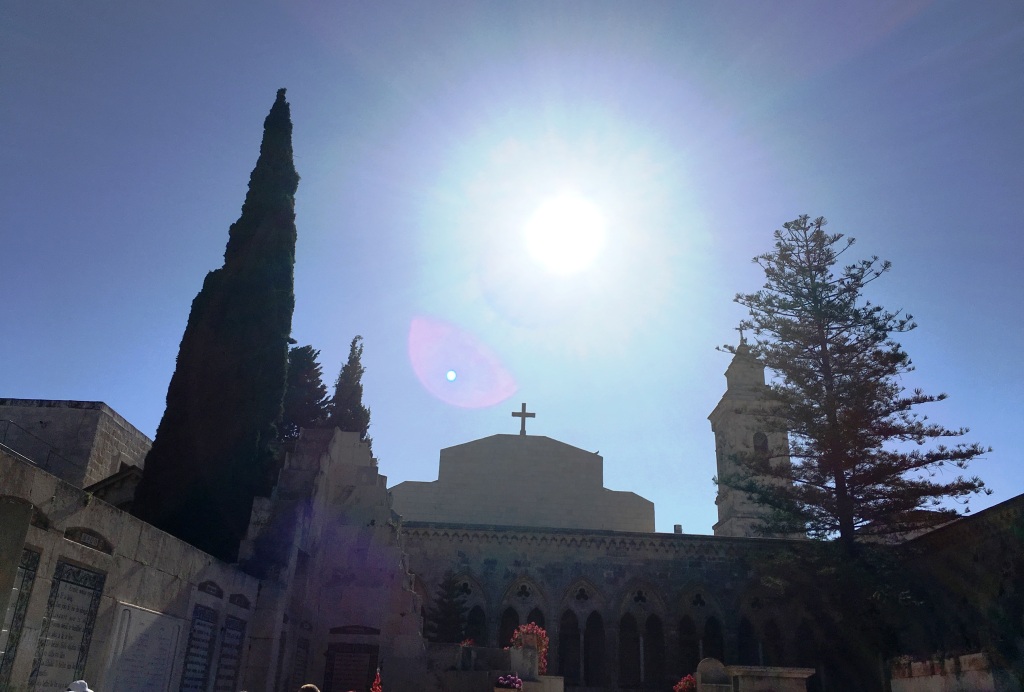
Photo by author, Old Jerusalem seen from Church of Dominus Flevit, May 2017.

It is not magic but a work of faith, a gift through and through from God in Jesus Christ. By his dying on the Cross and Resurrection at Easter, Jesus superseded and transcended time and space, sharing with us that sacred reality.

St. John Paul II beautifully called that “cosmic reality” when he described in his encyclical Ecclesia De Eucharistia how he felt transported in time and space when the temporal becomes divine because of God’s true presence anywhere he celebrated the Eucharist. We too experience the same cosmic reality in every Mass we celebrate when we are properly disposed, especially the priest and the servers.

That is why I always demand the highest order from priests and servers in celebrating most solemnly as possible the Holy Mass. I can stand kids playing inside the church but what gets to my nerves are servers talking or moving unnecessarily during the Mass and worst of all, when lectors proclaim the word of God incoherently and wrongly. Lest we forget also the choir members feeling so magaling forgetting they are in the Mass not in a concert that they make it a show, forgetting all about God and the people.

What a tragedy when we priests and liturgical ministers are the ones who forget to re-member Jesus in the Eucharist with our too much attention to ourselves. Exactly like the Twelve in our gospel!

As the day was drawing to a close, the Twelve approached him and said, “Dismiss the crowd so that they can go to the surrounding villages and farms and find lodging and provisions; for we are in a deserted place here.” He said to them, “Give them some food yourselves.” They replied, “Five loaves and two fish are all we have, unless we ourselves go and buy food for all these people” (Luke 9:12-13).


Imagine that scene of how the Twelve have totally “forgotten” the more than five thousand people gathered there with them. They were just thinking of themselves because they were in a “deserted place”. What a disrespect!

Respect is lost and disregarded when there is no remembering of others, when we forget others. Respect is from two Latin words re (again) and specere (to look/see) from which the words spectacle and spectacular came from. Re + specere or “respect” means to look again in order to see!

The Twelve were just concerned with themselves, not only forgetting but without respect at all with the people they have failed or refused to recognize as humans too who get tired and hungry like them. As we have cited in earlier, this continues right in our eucharistic celebrations when priests and ministers celebrate unprepared, unmindful of the sanctity of the Mass.

Remembering is not merely “thinking” of others in our mind and memory.

Remembering is making others present in our very selves!

Remembering is making every-body a some-body by giving our very selves to them to be the Body of Christ. Unless we are able to truly share our very selves in person, in body and blood too, then every Mass will remain merely a rite or a ritual. Worst, an activity we just have to fulfill.

The Eucharist is the summit of our Christian life because of this aspect of remembering Jesus Christ that leads us into a true communion of sharing of persons and experiences, in our joys and sorrows, in our hopes and belief. When this happens, then every remembering becomes a thanksgiving too.

And that is our second word I wish to instill in you today – thanksgiving which is the meaning of the Greek word eucharistia.

When there is a real experience of each others’ presence in love and mercy, kindness and care, justice and fairness, gratitude flows naturally resulting in peace and harmony. It is the whole meaning of our first reading when the priest of God named Melchizidek who was also the king of Salem which means “peace” blessed Abram after winning in a battle.

This short scene is a story of remembering God’s goodness to Abram who thanked Melchizidek by giving him a tenth of everything he had won in the battle. In the Holy Mass, what do we really share from our very selves? Not just treasures but even our very time to give totally to Christ without texting.

Now we see the series and cycle of remembering and thanksgiving in sharing of gifts of self which the Body and Blood of Christ signify to us.

This coming Friday we shall celebrate the third consecutive Solemnity in the resumption of Ordinary Time with that of the Most Sacred Heart of Jesus, a reminder to us all to make Jesus present always in ourselves with others especially at this time the world has been deleting from its every aspect God.

Lord Jesus Christ,
transform me like the
bread and wine
into your Body and Blood
to be offered and shared
with others
especially those
in most need.
Amen.
Photo by Pixabay on Pexels.com

The God we delightfully await

Lord My Chef Sunday Recipe by Fr. Nicanor F. Lalog II
Solemnity of the the Holy Trinity, Cycle C, 15 June 2025
Proverbs 8:22-31 ><}}}}*> Romans 5:1-5 ><}}}}*> John 16:12-15
Photo by author, Hidden Spring Resort, Calauan, Laguna, 20 February 2025.

We resume the Sundays in Ordinary Time with the Solemnity of the Holy Trinity today that is the highest truth in our Church teachings often referred to as a “mystery” or something so difficult to explain and understand.

We find this context of “mystery” right in our gospel this Sunday that takes us back again to the Last Supper scene as in the final Sundays of Eastertide.

Jesus said to his disciples: “I have much more to tell you, but you cannot bear it now. But when he comes, the Spirit of truth, he will guide you to all truth. He will not speak on his own, but he will speak what he hears, and will declare to you the things that are coming” (John 16:12-13).

Photo by author, Hidden Spring Resort, Calauan, Laguna, 20 February 2025.

What is the “more” Jesus has to tell his disciples that include us today which we cannot bear, that we need to be guided by the Holy Spirit?

“I have much more to tell you, but you cannot bear it now.”

As we have learned in the scriptures especially during the Holy Week and Easter, Jesus was speaking at that time of his life and death prefigured by his Last Supper. He was preparing his disciples to do the same as he expressly said after washing their feet.

It is the same lesson Jesus teaches us every Sunday in the Holy Eucharist, of how we his modern disciples must learn to offer our lives with others which is what the Holy Trinity is all about – a sharing and giving of life of the Three Persons in One God. Unity happens only in the total union of one’s self-giving.

This is the mystery of our personal or relating God revealed to us slowly through time, from the Old Testament that reached its highest point in Jesus Christ in the New Testament that continues to these days because each one of us is a reality of the Holy Trinity.

This Holy Trinity sharing and mutuality of Persons in One God is an ongoing lesson we undergo as disciples of Jesus because like the Apostles, we too continue to cling to life, finding it so hard to let go and let God.

Photo by author, Sacred Heart Novitiate, Novaliches, 20 March 2025.

As we move on with life, we realize that life is not in clinging but in dying and letting go, in giving and sharing than having or taking or keeping. We realize as we age and mature that more than the wealth and recognition we all aspired for when younger were nothing but a waste in life because what really matters most is our relationships – with God and with others.

It is a lesson that unfolds to us every day, getting better as we age, when we look back to our past especially to our very roots like our parents with whom we find not only proximity and intimacy but most of all, delight and pride in being one with them. This is exactly what the first reading is telling us about Wisdom said to be the personification of Jesus Christ as the Second Person of the Trinity who is one with the Father:

Thus says the wisdom of God: “The Lord possessed me, the beginning of his ways, the forerunner of his prodigies long ago; from of all I was poured forth, at the first, before the earth… When the Lord established the heavens I was there, when he marked out the vault over the face of the deep… then was I beside him as his craftsman, and I was his delight day by day, playing before him all the while, playing on the surface of his earth; and I found delight in the human race” (Proverbs 8:22-23, 27, 30-31).

Photo by Mr. Boy Cabrido, EDSA 1986 People Power Revolution.

Life and man are all a mystery. Many times there are no easy answers to our many questions in life. There are times when our questions in life are actually answered in deaths like in the passing of our loved ones. Most of all, many questions in life can never be answered at all.

But, the joy of living is in still asking more questions. Man is known more in the questions he asks because the answers he gives are often wrong or off-tangent. When we ask the right questions, even if we do not arrive at the right answers, somehow we get a grasp or glimpse of the bigger realities and mysteries of life, of the things to come that Jesus tells us today.

I have always been curious as a child, always asking my father on the various things I heard from him and my mother or from the television and later from books I have read. After explaining things to me or passages I have read that I still could not understand, daddy would assure me that “pag-tanda mo maiintindihan mo rin yan.”

Those are my fondest memories of childhood with my father – the delight of learning, of discovering, of understanding. Now that I am a priest and a senior, there is still that deep joy and delight in searching and asking because like what Jesus said, there is so much more to learn in this life and in our very selves. There is that desire and attraction within that leads us outside our very selves to search for more meaning – like resulting from faith and hope in God as reflected by St. Paul speaks in the second reading wherein the Holy Spirit leads us to the glory of God.

Photo by Ms. Ria De Vera in Delia, Alberta, Canada, 03 June 2025.

A senator recently made a mockery of the Holy Spirit, claiming his move to dismiss the impeachment complaint as a leading of the Holy Spirit. Making things worst and most unbelievable is the fact that another senator, son of a founder of a local church and preacher played a real devil in quashing efforts to find the truth about the charges of corruption against the Vice President of the Republic.

Clearly, it was not of the Holy Spirit but more of the devil that is divisive and most untruthful, totally unmindful of our relationships as a nation.

The “more” that Jesus speaks of in sending us the Holy Spirit is for each of us to realize our being a Trinity in our very selves, our connectedness as one in God. It is sad that for many, the Blessed Trinity does not really matter that much for them to appreciate or even understand. For many, it is enough to believe in God just like the others in various religions and sects or worst, like those who do not care at all about God except that they “believe” in a Supreme Being.

As we resume the Sundays of Ordinary Time, this Solemnity of the Holy Trinity evokes the most concrete reality of God, that he is a Person like a Father who is the giver of life because he is life himself with whom alone we owe our lives. This we realize and experience in the Son Jesus Christ who became like us humans so we may become like him again as divine, with honor and dignity. It is the Holy Spirit, the third Person of the Trinity who guides us to more realities and truth of this loving God so immense, delighting us in awaiting our union in him. Let us pray:

Come, Holy Spirit!
Fill our hearts with that
desire to continuously await
God's coming in Jesus Christ,
as we delight in a life of
giving and sharing,
of caring and kindness,
of mercy and forgiving
until that day we shall be one
in the Father in heaven
in his love.
Amen.

Happy Father’s Day too!

Pentecost is home

Lord My Chef Sunday Recipe for the Soul by Fr. Nicanor F. Lalog II
Solemnity of the Pentecost, Cycle C, 08 June 2025
Acts 2:1-11 ><}}}}*> Romans 8:8-17 ><}}}}*> John 14:15-16, 23-26
VATICAN CITY, VATICAN – MAY 08: Faithful in St. Peter’s Square participate in the first blessing of Pope Leo XIV immediately after the white smoke on May 08, 2025 in Vatican City, Vatican. Photo by Ivan Romano/Getty Images.

The other “good news” I heard next to the election of Pope Leo XIV last month were reports of people from different countries and other religions who went to join the pilgrims at the Vatican Square celebrating the election of our new Holy Father.

According to news, many of those non-Catholics who came there were so attracted and drawn by the unity of the people in rejoicing and celebrating Pope Leo XIV’s election to the papacy. That is Pentecost in modern time happening whenever people are one with each other in God by the Holy Spirit.

Painting by El Greco, “Pentecostes” (1597) from commons.wikimedia.org.

When the time for Pentecost was fulfilled, they were all in one place together… Then there appeared to them tongues as of fire, which parted and came to rest on each one of them. And they were all filled with the Holy Spirit and began to speak in different tongues, as the Spirit enabled them to proclaim. Now there were devout Jews from every nation under heaven staying in Jerusalem… They were astounded, and in amazement they asked, “Are not all these people who are speaking Galileans? Then how does each of us hear them in his own native language?” (Acts 2:1, 3-5, 7-8).

The Pentecost is an old Jewish Feast commemorating the ratification 50 days after of their covenant with God through Moses at the Sinai desert; today in the Church, we celebrate it 50 days (pente) after Christ’s Resurrection that also closes the Easter Season.

Considered as the birthday of the Church, see how appropriate the way Luke described the Church “born” on that day, “When the time for Pentecost was fulfilled, they were all in one place together.”

They were all in one place. There has always been the oneness or gathering of people as one body. However, it was more than being physically together in one place but of being one heart and one mind of the Church that continue to this day in our own time despite our many physical differences. What we celebrate today is not just a remote event in the past but a reality that continues in the Church and in various churches everyday.

The Pentecost is the fulfillment of those reflections we have had these past weeks on Jesus Christ’s commandment to love so that God would dwell among us. It is again our gospel this Sunday that was experienced by the Jews from other parts of the world there in Jerusalem on that day when they were astounded at how the Apostles were speaking in their own languages of God’s mighty deeds. They felt the love among everyone that they felt home. It was the complete opposite of what happened at the Babel’s Tower in the Old Testament.

They were astounded, and in amazement they asked, “Are not all these people who are speaking Galileans? Then how does each of us hear them in his own native language? We are Parthians, Medes, and Elamites, inhabitants of Mesopotamia, Judea and Cappadocia, Pontus and Asia, Phrygia and Pamphylia, Egypt and the districts of Libya near Cyrene, as well as travelers from Rome, both Jews and converts to Judaism, Cretans and Arabs, yet we hear them speaking in our own tongues of the mighty acts of God” (Acts 2:7-11).

Biblical vector illustration series, Pentecost also called Whit Sunday, Whitsunday or Whitsun. It commemorates the descent of the Holy Spirit upon the Apostles and other followers of Jesus Christ
"We hear them speaking in our own tongues of the mighty acts of God" 

The social media was recently abuzz with a post by a vlogger who brought to Facebook his misgivings with Starbuck’s for wrongfully calling him “JC” instead of “JP” notwithstanding his earlier insistence on not making a mistake with his name’s spelling.

He is labeled as OA – overacting – or maarte in bringing to social media his experience which has anyway been a trademark of most coffee shops. What really got the attention of everyone that made his post viral was his declaration of how Starbuck’s had lost one loyal customer following that mistake which became the subject of many memes with some parodies that are thought-provoking. One is by a brother priest, Fr. Ritz who called his parody with the long title NOT ONLY A COFFEEHOUSE MAY LOSE A LOYAL CUSTOMER TODAY.

Fr. Ritz satirically narrated the two common laments of parishioners almost everywhere, namely, the priest’s boring homilies and lack of transparency with the faithful’s financial contributions. Sadly true, many of our faithful have become lukewarm in their faith and have stopped coming to church especially on Sundays due to these particular reasons.

Of course, we can’t put all the blame on the priests but we can’t blame either the lay faithful who make up the Church, the flock of Christ entrusted to us to love and care for by bringing out their giftedness in order to build this mystical Body of Christ on earth. The Church is more than Starbuck’s or any food and service entity but they all essentially share the same things like love and care among others to keep their relationships for existence and relevance or meaning.

Of course, that vlogger’s post about his experience at Starbuck’s was way off the mark but it is something we need to look deeper. How did it happen that people are now more concerned and more eager in coming to Starbuck’s than to our parish church? Maybe because like him who had given albeit wrongly his loyalty to a mere coffee shop, some of our faithful have felt taken for granted. We cannot claim “para yun lang” because certain things no matter small may be the world for some like being called in their name, being greeted or simply acknowledged as present on a weekday Mass. Or being enriched by a good homily which is after all the right of every baptized Christian.

At Pentecost, imagine the great joy of the Jews from diaspora visiting Jerusalem, hearing others speaking their language. They must have felt at home!

Are we at home in our Church?

Do we find and experience solace and comfort in our parish? Is there justice and sense of being fair from the priests instead of taking sides with the rich and famous? Can we feel our pastors and church volunteers and servants one with us?

Many times some of our parish workers and volunteers are more strict than the priests, throwing their weight around with their own rules and regulations. The single most important PR department of any parish is its office but sadly, some of its staff members scrimp on their smiles, feeling grouchy when ordinary folks come to inquire or get some certificates. Some are so unmindful of people walking for an hour only to be told they are still closed or about to close for lunch.

How sad when we are left out in the singing because the choir members stage a concert every Mass, experimenting with their voicing even with the most common Christian prayer of Our Father that people just stand and stare waiting for the communion to come and get home. Worst, as a preparation for the Father’s homily that often unprepared anyway, there are also the unprepared lectors lost which readings to proclaim or totally unmindful of the dignity of the ministry.

Above all these things, is the total lack of sense of prayer and silence among church servers who lead the Maritess sessions before and after each Mass right there inside the church. Worst, they cap each service with selfies and photo sessions at the altar as if it was their last serve. Clearly many of us live in the flesh than in the Spirit as St. Paul reminded us in the second reading. Where is the love that Jesus Christ had sent us in the Holy Spirit to make us one, feel at home joyful, safe and loved?

On this Pentecost Sunday, let us start practicing silence to feel the Holy Spirit within so that we can be in touch with everyone around us in love and kindness. Let us allow the Holy Spirit to teach us everything and remind us of all that Jesus had told us (Jn. 14:26). Amen. Have a blessed week ahead everyone!

Living Inside Your Love (1976) by Earl Klugh

Lord My Chef Sunday Music by Fr. Nicanor F. Lalog II, 25 May 2025
Photo by author, Angels’ Hills Retreat and Spirituality Center, Tagaytay City, 18 April 2025.

We shift this Sunday into jazz with Earl Klugh’s sophisticated Living Inside Your Love to slow cool down our simmering summer and to feel more the meaning of the Mass readings today as we enter the penultimate week of Easter.

We were already in our early teens when we discovered Earl Klugh along with other jazz greats with the opening of the country’s first and only jazz radio station 101.9 WK-FM in the late 70’s. Maybe it was part of growing up when we experimented on a lot of things for more adventures that I found myself venturing into jazz from rock and pop music, switching from RJ to RT and then WK.

For me, Earl Klugh was the jazz version of rock’s Eric Clapton or Carlos Santana. Klugh has that certain touch or pluck in his guitar that can make you be in love, not necessarily be in love with anyone. It is a nakaka-in love ma-in love na feeling! That is why we remembered his Living Inside Your Love piece from his second studio album released in 1976 by the legendary Blue Note Records and Liberty Records produced by another jazz great, Dave Grusin.

Actually, we just realized today Living Inside sounds like a prelude to the turn of the century’s new age music where Klugh’s masterful playing of the guitar taking the centerstage of a great symphony backed up with cool vocals repeating just a few lines and stanzas of simple verses over and over that is similar with the vision of John in this Sunday’s second reading from the Book of Revelation when he saw and experienced the “new heaven, new earth” in the great luminous light of God who is himself the temple in the city (https://lordmychef.com/2025/05/24/easter-is-god-dwelling-in-us/). See how Klugh inserted the vocals into his great guitar music enhanced by a symphony like John’s vision of heaven:

Can't get over the feeling
Living inside your love
I never want to lose the feeling
Living inside your love

Baby, you made my life so free
Living inside your love
You're just where I want to be
Living inside your love

Baby, you made my life so free
Living inside your love
You're just where I want to be
Living inside your love

Very interesting with his wonderful guitar music, Klugh’s lyrics – though sparse and repetitive – were loaded in meaning. Consider the line “living inside your love” which is exactly what Jesus said at the Last Supper, “Whoever loves me will keep my word, and my Father will love him, and we will come to him and make our dwelling with him” (John 14:23).

“Living inside one’s love” is what we call as “Divine indwelling”, that is, our home is in God – and with any one we love!

Moreover, consider also Klugh’s first line in his next stanza, “Baby, you made my life so free/ Living inside your love/ You’re where I want to be/ Living inside your love.”

When we love, we enter a relationship that becomes our dwelling, our home where we become free – free to love more, free to be faithful. When we truly love like Christ, the more we find ourselves more free to love, more free in everything because being free is choosing always what is good. We believe that more than a stroke of genius, it was also a kind of divine inspiration about true love that made Klugh at put at the end of this 1976 classic the longer stanza that actually repeated inn order to stress the truth of his first two stanzas.

Can't get over the feeling
Living inside your love
I never want to lose the feeling
Living inside your love
Can't get over the feeling
Living inside your love
I never want to lose the feeling
Living inside your love
I can't get over the feeling
Living inside your love
I never want to lose the feeling
Living inside your love
I can't get over the feeling
Living inside your love

Here is Earl Klugh’s lovely Living Inside Your Love. Have a lovely Sunday and week ahead.

From YouTube.com

Lent is encountering Jesus

40 Shades of Lent by Fr. Nicanor F. Lalog II
Fifth Sunday in Lent, Cycle C, 06 April 2025
Isaiah 43:16-21 + Philippians 3:8-14 + John 8:1-11
Photo by author, Sacred Heart Novitiate Main Chapel, 17 March 2025.

Our gospel on this last Sunday in Lent is so similar in its beauty and simplicity -and drama – with last week’s parable of the prodigal son. In fact, some believe the style of the woman caught in adultery is very much like Luke but, let’s leave that to the experts.

On this beautiful Sunday, it is John’s turn to invite us to enter into the scene of his story set at the temple area shortly before the arrest of Jesus Christ.

Jesus went to the Mount of Olives. But early in the morning he arrived again in the temple area, and all the people started coming to him, and he sat down and taught them. Then the scribes and the Pharisees brought a woman who had been caught in adultery and made her stand in the middle (John 8:1-3).

Photo by author, Sacred Heart Novitiate, 17 March 2025.

Try entering the scene. See the woman who most likely almost naked draped only in a piece of cloth as proof of her committing adultery. The Pharisees and the scribes were ganging up on her to Jesus whom they wanted to test, “Teacher, this woman was caught in the very act of committing adultery. Now in the law, Moses commanded us to stone such women. So what do you say?”

Imagine being there, standing close to Jesus and the woman. How would you feel? Would you be able to look at the woman straight on her face? Nah… seems not good. Perhaps, glance only as you feel also her pain and shame. But, can you look straight at the angry mob? Probably for a while with much fears and trepidation along with a deep anger within you cannot express.

Most likely, it is only at Jesus you can look intently and longer because he is not looking at you. Tensions were rising and Jesus simply bent down, writing something on the ground with his finger while the Pharisees and scribes raised up their attacks against him and the lowly woman standing listlessly, so embarrassed, so ashamed. Even in tears.

Recall those moments when we too were caught in the midst of an undeniable transgression like her or, simply being a witness, someone caught in between of another person without any way out of his/her predicament. It must be so dark. So scary. And shameful.

Then, the unexpected happened: But when they continued asking him, he (Jesus) straightened up and said to them, “Let the one among you who is without sin be the first to throw a stone at her.” Again he bent down and wrote on the ground. and in response, they went away one by one, beginning with the elders. So he was left alone with the woman before him (John 8:7-9).

Photo by author, Sacred Heart Novitiate Main Chapel, 17 March 2025.

Many times, we encounter Jesus in our most vulnerable situation when we let go of our guards so to speak.

It is one of the great ironies in life: when we are most vulnerable and weakest, that is when we are also most truest to our self. And that is when we truly grow and mature in life.

That is when we feel peace and joy and freedom within when we are left alone with Jesus still looking down, writing with his finger on the ground to give us more space literally and figuratively speaking. It is not that Jesus wants to shame us or whatever but simply wants us to be true as he has always been true to us, full of love and mercy. Most of all, with all of Christ’s humility in bending, that is when we finally admit the need for a Savior, the need to be converted in him.

We encounter Jesus when we disarm ourselves of our false securities and pretenses, masks and camouflages that all cover our sins. It is when we come face-to-face with our sinful self when we eventually meet Jesus face-to-face too because that is when we surrender in silence like the woman caught in adultery and the mob to some degree because all the charges against us are true.

See also that it is only the fourth gospel that Jesus is portrayed “bending” low – first here before the woman caught committing adultery and secondly at the washing of the feet of his Apostles at their Last Supper. How lovely is that sight to behold, dear friends! Imagine God bending before us, giving us like the sinful woman and the mob that space for us to confront our true self, to realize and accept the whole realities we are all interconnected in love.

Only the woman remained – like the eleven Apostles at the Last Supper – because she was the only one willing to change, probably sorrowful and contrite for her sins. Contrary to our fears, Jesus has only love and mercy, kindness and forgiveness to anyone contrite and sorrowful of one’s sin that so unlike with the people’s wrath and anger, judgment and condemnation. St. Augustine perfectly described that moment in today’s gospel, Relicti sunt duo; misera et miserecordia (Two were left; misery and mercy).

Then Jesus straightened up and said to her, “Woman, where are they? Has no one condemned you?” She replied, “No one, sir.” Then Jesus said, “Neither do I condemn you. Go, and from now on do not sin anymore” (John 8:10-11).

Stations of the Cross, Fatima University & Medical Center, Valenzuela City, 28 March 2025.

We are now on the final Sunday of Lent. Next week will be the Palm Sunday of the Lord’s Passion that ushers in the Holy Week leading to the Sacred Triduum of Holy Thursday Evening, Good Friday and Easter Vigil and on to the Mother of all Feasts, Easter.

As we get closer to the holiest week of the year, our liturgy invites us to intensify our Lenten practices to be “conformed to Christ’s death” as St. Paul urged us in the second reading which opened with these beautiful confession:

“Brothers and sisters: I consider everything as a loss because of the supreme good of knowing Christ Jesus as my Lord. For his sake I have accepted the loss of all things and I consider them so much rubbish, that I may gain Christ” (Philippians 3:8).

The pillars of Lent – prayer, fasting and alms-giving – aim to empty us of our very selves, of our pride and sins that all prevent us from encountering Jesus Christ always coming to us full of love and mercy. On this final stretch of Lent, are we ready to let go of ourselves and to let God?

Today, Jesus assures us of his love and forgiveness for our sins. The first reading tells us of God asking us to forget the events of the past. Just come home to him. And never leave him like the woman caught committing adultery. Amen. Have blessed week ahead.

Stations of the Cross, College of Maritime Engineering, Our Lady of FatIma University, 28 March 2025.

Standing with Jesus, standing like Jesus

The Lord Is My Chef Sunday Recipe for the Soul by Fr. Nicanor F. Lalog II
Third Sunday in Ordinary Time, Cycle C, 26 January 2025
Nehemiah 8:2-4, 5-6, 8-10 ><}}}*> 1 Corinthians 12:12-30 ><}}}*> Luke 1:1-4; 4:14-21

Doctors tell us that prolonged periods of sitting can lead to many health issues like increased risks of heart disease, diabetes, certain cancers, obesity as well as depression. They have been sounding the alarm for several decades with the rise of “couch potatoes” and now had worsened as we get tied to our seats due to continuous use of computers and other gadgets.

Along with this worsening scenario of our prolonged sitting is the growing “competition” among us these days – consciously or unconsciously – for our places of seat in jeepneys and buses or airplanes, in classrooms and offices, on dining tables, in meeting rooms and in churches. People are so concerned where to be seated not realizing that what really matters in life is where we stand than where we sit!

The verb “to stand” evokes firmness and stability not only in the physical sense but also emotionally and spiritually speaking. Very close to it is the word “stance” that indicates our “stand”, of where we “stand” with our beliefs and convictions regarding issues. Before the coming of social media where we often make our stand while seated, there were placards calling us to “make a stand”.

In this age when most people prefer to sit than to stand as well as kneel to pray, our Sunday readings today are very timely as they teem with the words and images of standing for God.

He came to Nazareth, where he had grown up, and went according to his custom into the synagogue on the sabbath day. He stood up to read and was handed a scroll of the prophet Isaiah. He unrolled the scroll and found the passage where it was written… (Luke 4:16-17).

“Jesus Unrolls Book In the Synagogue” painting by James Tissot (1886-1894), brooklynmuseum.org

We now dive into the Sunday Ordinary Time with Luke giving us a glimpse of how Jesus spent a typical sabbath day proclaiming the word of God by first “standing to read.”

It was not the first time Jesus stood to read as He always stood teaching and preaching to the people. Jesus was a man who literally stood for the Father, stood for what is true and good, stood for what is just and fair. Most of all, He stood for all of us that He died on the Cross.

This Sunday as He launched His public ministry in His hometown Nazareth in Galilee, Jesus made it clear that He is the “word who became flesh” as He stood to read the scripture, claiming what He proclaimed from the Prophet Isaiah:

“The Spirit of the Lord is upon me, because he has anointed me to bring glad tidings to the poor. He has sent me to proclaim liberty to captives and recovery of sight to the blind, to let the oppressed go free, and to proclaim a year acceptable to the Lord” (Luke 4:18-19).

Imagine present there. More than being spellbind, there must have been that feeling of fulfillment, of the true reality unfolding as Jesus clearly stood by the word of God because He is the word who became flesh.

Our Filipino word paninindigan evokes it so well like in Pinanindigan ni Jesus ang kanyang ipinahayag (Jesus stood by what He proclaimed). From its root tindig which is “to stand” in English, paninindigan is conviction. Jesus spoke with such conviction and authority that those in the synagogue were amazed with Him. Interestingly, our Filipino synonym for paninindigan is pangatawanan which is from the root katawan or “body” in English. Pangatawanan ang salita is to stand by one’s word, like Pinangatawanan ni Jesus ang Kanyang sinabi (Jesus stood by what He said).

See how our readings this Sunday are so interesting, so beautiful especially for us in the Philippines because the words of “standing” and “body” are related, capturing in our own language discipleship in Christ, our standing for Jesus and His gospel.

“Jesus Unrolls Book In the Synagogue” painting by James Tissot (1886-1894), brooklynmuseum.org

At the end of this scene in the synagogue, Luke told us how Jesus declared as He sat that His words were “fulfilled in your hearing” which amazed the people because Christ “walked the talk” even before this took place.

Anyone wishing to have any kind of fulfillment in life has to first make a stand for whatever he believes in. To walk the talk, one has to stand first. Nothing gets fulfilled by sitting. We have to make a stand for everything and everyone we care and love most.

Like Jesus, we can only bring glad tidings to the poor by standing by their side, standing with them to uplift them. In the same manner, liberty for captives and recovery of sight to the blind can only happen standing, by actually being present with them and never remotely from a distant office or setting where we are comfortably seated. The oppressed can only go free as we proclaim a jubilee like this 2025 when we stand for justice and truth instead of simply affixing our “like” to some posts “standing” for whatever causes.

Photo by author, ambo in our Chapel of the Angel of Peace, RISE Tower, Our Lady of Fatima University, Valenzuela City, 25 December 2024.

In the first reading we find the priest Ezra standing as he proclaimed the words of God from a book recovered after their exile from Jerusalem.

Ezra convinced the people so well in his proclamation of the scriptures that people cried and bowed their heads before finally prostrating themselves to God because they felt and experienced the Scriptures as so true.

The words “standing” and “stood” were repeated thrice to underscore not only the physical posture taken by Ezra and Nehemiah but most of all to indicate their emotional and spiritual bearings.

Going back to our gospel scene, see how before narrating to us Jesus in the synagogue, the Church had rightly chosen to include for this third Sunday the prologue of Luke where he laid down the reason for writing his gospel account – so that we “may realize the certainty of the teachings” about the Christ. In writing his prologue, Luke naturally sat but in mentioning that word “certainty”, he tells us a lot of standing he had to make in completing his two-volume work, the gospel and the Acts.

Here we find that like all the evangelists and saints for that matter, they spent much time standing than sitting, second only perhaps to kneeling or praying.

There is a beautiful prayer attributed to St. Teresa of Avila called “Christ has no body” which goes this way, “Christ has no body but yours, no hands, no feet on earth but yours.”

Can we make a stand for Jesus, stand with Jesus, and stand like Jesus to be His body as St. Paul explained to us in the second reading?

“Brothers and sisters: As a body is one though it has many parts, and all the parts of the body, though many, are one body, so also Christ… Now the body is not a single part, but many” (1 Corinthians 12:12, 14).

Photo by author, Chapel of Angel of Peace, RISE Tower, Our Lady of Fatima University, Valenzueal City, June 2024.

As we embark into this long journey of Ordinary Time with Luke as our guide every Sunday, may we do the work of Jesus by standing along with our fellow believers and disciples.

Together let us make that collective stand for truth and justice, for decency and reason in this time when people are so fragmented, held captive by so many thoughts and beliefs propagated from the arrogant chairs of entitlement by some lazy minds influencing the world remotely. Together we stand and experience life as it is in Jesus Christ, even at His Cross. Amen. Have a blessed week ahead as we close January 2025!

True freedom is being like children

The Lord Is My Chef Sunday Recipe for the Soul by Fr. Nicanor F. Lalog II
Feast of the Sto. Niño, Cycle C, 19 January 2025
Isaiah 9:1-6 ><}}}}*> Ephesians 1:3-6, 15-18 ><}}}}*> Luke 2:41-52
Photo by Daniel Reche on Pexels.com

I have never liked children especially infants not until these last twenty years of my life. Before, I could not understand when parents especially mothers giggled with joy in seeing babies, describing how handsome or pretty they are when they all look the same to me.

Everything changed when I became a priest especially when I turned 40 and had my own nieces and nephew. Suddenly, I realized how children could be so nice with their energy and laughter and wits too. As I now approach my 60th birthday serving as a chaplain in a University with a hospital since 2021, I have come to love children that I have been telling my sister to push her two daughters to get married so we could have babies again in the family!

As my attitudes with children changed, the more I understand why our Lord Jesus Christ had insisted in His teachings the need for us to become like them. Until His death, Jesus showed us the importance of being like a child not only in trusting and having faith in the Father but most of all on the true meaning of freedom.

Photo by author, Tagaytay City, 17 January 2025.

Contrary to common beliefs of many, freedom is not the ability to do whatever one likes; freedom is choosing to do what is good. That is why freedom is never absolute. In the Book of Genesis we find God telling Adam and Eve to eat every fruit of trees in Eden except the fruit of the tree in the middle of the garden (cf. Gen. 3:2-3). And we have seen how in the abuse of their freedom, they including us today have become “unfree”.

In Christ’s coming, He made us recover our freedom, giving us the grace to always choose and do what is good, to be free from sin and free to love, free to forgive, free to be kind. This essence of freedom He taught even at His early age as the true Son of God.

Each year his parents went to Jerusalem for the feast of Passover, and when he was twelve years old, they went up according to festival custom. After they had completed its days, as they were returning, the boy Jesus remained behind in Jerusalem but his parents did not know it… After three days they found in the temple, sitting in the midst of the teachers, listening to them and asking them question, and all who heard him were astounded at his understanding and his answers. When his parents saw him, they were astonished, and his mother said to him, “Son, why have you done this to us? Your father and I have been looking for you with great anxiety.” And he said to them, “Why were you looking for me? Did you not know that I must be in my Father’s house?” (Luke 2:41-43, 46-49)

“The Finding of the Savior at the Temple” painting by William Holman Hunt (1860) from en.wikipedia.org.

First thing we notice in our gospel regarding freedom as the ability to choose what is good is Luke’s portrayal of Joseph and Mary as devout Jews who regularly went on pilgrimage to Jerusalem.

Each year his parents went to Jerusalem for the feast of Passover, and when he was twelve years old, they went up according to festival custom. 

What a simple expression of the essence of freedom of choosing what is good, choosing God: the parents of Jesus devoutly practiced their faith that Jesus fully imbibed. The gospels teem with many stories of Jesus regularly going to the synagogues on sabbath to proclaim the word and to preach to the people.

This is something many parents today are missing, the Sunday devotion. No wonder that many children today do not understand the meaning and importance of the Sunday Mass, even the preeminence of God in our lives. How sad that many families even on holy days of obligation choose malls and vacation than choose God to worship Him in the church.

And many have the gall to defend this as part of their freedom, an expression of unity as family. But, where is God among them? Most of all, have we really become free by not going to the Sunday Mass?

Definitely not. Even at the surface some people would not seem to have any qualms at all in skipping Sunday Masses, deep inside many are bothered. Many of them feel an emptiness within, a kind of darkness that Isaiah described in the first reading. See how despite the affluence of many people today than three decades ago yet more and more are feeling lost and depressed because they have lost their roots in God who leads us to our rootedness in ourselves and with others.

Photo by author, January 2022.

Speaking of roots, its Latin origin is radix from which the word radical came from.

When we hear the word radical, we associate it always with someone who is a revolutionary, someone who literally or figuratively “destabilizes” our status and ways of thinking like Jesus Christ.

Very often, we find Jesus presented to us as one who was radical in His teachings who was thought to have been a revolutionary member of the Zealot party that worked to overthrow the Roman occupiers in ancient Israel. It was one of the accusations hurled against Him at His trial, citing His declaration to destroy the temple that He would rebuild in three days after its cleansing. Of course, these are not true; Jesus was not a radical revolutionary like the communists or power grabbers of modern century.

However, if we examine His teachings and mission, Jesus was a radical revolutionary because He preached and worked to bring humanity back to our very “root” – radix – who is God Himself. Listen to His words to His Mother after being found in the temple…

And he said to them, "Why were you looking for me? Did you not know that I must be in my Father's house?" 
Photo by author, Parish of St. Joseph, Pacdal, Baguio City, 28 December 2024.

Here Jesus showed His Mother and us today that true freedom is being one always with the Father. Jesus was a truly free person because even at His early age, He was totally united with the Father’s will.

All throughout His life and mission, Jesus helped us all attain that freedom of inner communion with God our Father to be truly free from sin and evil to be free to love, free to understand, free to serve and whatever is good.

See how Jesus spoke so plainly to Mary and Joseph, as if reminding them and us today that our roots is in God alone and that is what we must always be concerned with, of how we must remain rooted in God as His children.

In the fourth gospel, we find this imagery of remaining rooted in God in Jesus Christ so beautifully explained during the Lord’s Last Supper discourses specifically in that of the vine and the branches (Jn. 15:15:1-17).

That’s the paradox of true freedom in Christ: being one in God does not limit but rather expands one’s freedom as a person. Any freedom outside of God is a fake and most likely, leads only to bondage because it is only in doing what is good when we truly grow and mature as persons.

Photo by author, Malolos Cathedral January 2022.

This Sunday we celebrate an extra day of Christmas for the Feast of the Sto. Niño in recognition of its great role in the spread of Christianity to our country since its coming in 1521 when Magellan gifted Queen Juana of Cebu with a Sto. Niño image.

The late Nick Joaquin rightly claimed in his many writings that the Philippines was actually conquered by the Sto. Niño than by the guns and cannons of the invading Spaniards more than 500 years ago. That’s probably because of this lesson on true freedom by the Child Jesus.

Let us learn and grow in true freedom by first choosing God especially on Sundays by celebrating the Lord’s Supper, the Holy Mass. Like the Child Jesus, let us remain in the Father, be free to ask most of all to listen and learn about life.

Like Mary and Joseph, it takes time before we can truly understand the words of Jesus Christ; what matters is like them, we keep on choosing always Jesus, only Jesus because Jesus is the truth. May the Lord “enlighten the eyes of our hearts so we may know what is the hope that belongs to his call, what are the riches of glory in his inheritance” (Eph.1:18). Amen. Have a blessed and free week ahead!

Photo by Mr. Jim Marpa, 2018.