Photo from catholicworldreport.com, “The Beheading of St. John the Baptist” (1869) by Pierre Puvis de Chevannes.
Your gospel today, O Lord, is so appropriate and timely: while we were busy, albeit foolishly discussing the novel coronavirus in every fora, a technical committee in the House of Representatives has approved three measures seeking to legalize divorce in the country.
We do not know what have really happened but it is so sad that no one among the Catholic and Christian lawmakers there made a solid stand against these measures like St. John the Baptist who was imprisoned on account of his objection to Herod’s taking of his brother’s wife Herodias.
So many times, Lord, we are so afraid and worried of what others might say against us when we make a stand for what is right and just, for what is proper and decent, for what is right and good, for what is your will.
Worst, O Lord, many of us are like Herodias who have prostituted our very selves in the service of the worldly allures of sex, fame, and wealth, choosing to be silent with all the many immoralities going on in government, in the society, and even in the church!
Give us the same courage, Lord, you have given your precursor St. John the Baptist to be prophets in this modern age, to be a voice in the wilderness, making a stand for what is holy, true, and just.
Like David, may we always seek your ways, ask for your grace to do your will against the giants and monsters of this world who ram into us every modern thought and idea that disregard the sanctity of life, the value of every person, as well as the sanctity of marriage.
Let us not be silent anymore with the growing impunity of many in their arrogant display of authority, throwing their weight around us with their cuss words and fallacious arguments that dignify their truncated egos and pride for the sake of progress and modernity. Amen.
The thing we dearly miss in Baguio is the beautiful scenery now marred by houses and buildings sprouting everywhere that pose grave risks to lives in case of calamities.
O God our Father, you are so loving and merciful. You have only one desire for each one of us to be fulfilled in life that you always insist on our obedience and fidelity to you.
One thing we fail to see is the reality of evil that is sin found actually within each one of us, not from without or outside of us. Worst part of sin is how we kind of “assert” its reality in the world through us!
In the first reading, you have given David three options to choose from as his punishment for his grave sin (again) in ordering a census of Israel; he chose pestilence than fall into the hands of his enemies as well as three years of pestilence in his kingdom.
But upon seeing the severity of the pestilence that happened during the wheat harvest, David felt so sorry for his people. Most of all, so guilty of his sin. Just like us whenever we commit grave sins, when we never think of its serious repercussions on others, especially those dearest to us.
When David saw the angel who was striking the people, he said to the Lord: “It is I who have sinned; it is I, the shepherd, who have done wrong. But these are sheep; what have they done? Punish me and my kindred.”
2 Samuel 24:17
In the gospel, we also find ourselves among the town folks of Jesus Christ who “took offense at him” (Mk.6:3) that he was not able to perform any mighty deed there because of their lack of faith.
Yes, Lord Jesus, the problem is with us, not with you.
We are the ones who always make life so miserable and unbearable for us and for others because of our sinfulness.
Forgive us, Lord, for those many times when we were so absorbed with our selves that we totally ignored those around us who have to suffer the consequences of our sins.
Today we pray for the gift of sensitivity and consideration for others. Amen.
Quiet Storm by Fr. Nick F. Lalog II, 03 February 2020
Detail of the Presentation painting by Italian artist Andrea Mantegna (1431-1506) with Mary handing the Child Jesus to Simeon at the temple of Jerusalem (man at the middle Mary’s husband, Joseph).
As we come to close today’s Feast of the Presentation of the Lord, I wish to share with you a Quiet Storm brewing within me which I call “the Nunc Dimittis experience”.
Nunc dimittis is the Latin opening line of Simeon’s Canticle that says “Now you dismiss” when he was filled with joy by the Holy Spirit upon meeting our Lord and Savior on his presentation at the temple.
According to St. Luke’s account, God had promised Simeon that “he would not see death before he had seen the Christ of the Lord” (Lk. 2:26). Hence, the overflowing joy of Simeon when he finally met the Child Jesus at the temple 40 days after Christmas!
Part of St. Luke’s artistry in his Christmas story is to put songs on the lips of some of its important characters to express their profound joys in their unique experiences of the coming of Christ.
The Nunc Dimittis is the fourth canticle in the Lucan Christmas story: first is Mary’s Magnificat when she visited her cousin Elizabeth who was six months pregnant with St. John the Baptizer; second is the Benedictus by Zechariah when he regained his speech after naming his son John; and third is the Gloria sang by the angels when Christ was born in Bethlehem.
Of these four canticles recorded by St. Luke, Simeon’s Nunc Dimittis sounds the highest level of all, the fulfillment of time within each one of us when we personally recognize and meet Jesus the Christ our Savior like Simeon.
And so often, when we are overjoyed in experiencing Jesus Christ, that is also when we feel like saying “now I am ready to go, ready to die” exactly like Simeon because we have met the Lord.
That is why I call it “the Nunc Dimittis experience”: real joy can only come from that experience and intimacy with Jesus Christ, when we feel so close with him. It does not really matter whether we experience him here in this life or hereafter. What matters most is we feel so close with him, as if embracing him, here and now.
This may be a religious experience like after listening to a homily that really touched us, or after a good confession, or while attending a wonderful retreat or recollection. It may also happen when we feel so loved and accepted, when we are vindicated, or when assured of support and trust and confidence while going through difficult trials in life.
Our Nunc dimittis experience always comes at the end of each day, when we feel despite our failures and shortcomings, we are in God’s loving presence.
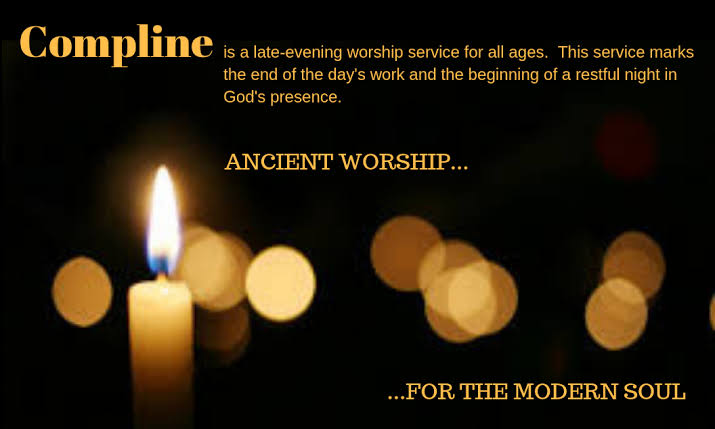
Simeon’s Canticle, our Night Prayer
Since the early sixth century during the time of St. Benedict, the “Nunc Dimittis” has been sung in the monks’ night prayer or “compline” from the Latin completorium or completion of the working day. Eventually, it was adopted into the Liturgy of the Hours or the prayers of the Church usually recited by priests and religious. (St. John Paul II had suggested in his encyclical Novo Millennio Innuete after the Great Jubilee of 2000 that the lay faithful also pray the Liturgy of the Hours.)
After the praying of the psalms and meditation of the Sacred Scriptures, there is a Responsory that declares, “Into your hands, Lord, I commend my spirit.” Like Jesus before he died on the Cross, we offer to God our very selves. This is takes on a beautiful dimension especially if we have done a good examination of conscience at the start of the compline, before the psalms and readings.
Then, we recite the antiphon that introduces the Nunc dimittis: “Protect us, Lord, as we stay awake; watch over us as we sleep, that awake, we may keep watch with Christ, and asleep, rest in his peace.”
The antiphon in itself is already a prayer!
It is after the antiphon that we chant or recite Simeon’s Canticle:
Lord, now you let your servant go in peace; your word has been fulfilled: my own eyes have seen the salvation which you have prepared in the sight of every people: a light to reveal you to the nations and the glory of your people Israel.
From the Compline of the Breviary
The antiphon is repeated and immediately followed by the Closing Prayer.
The cross atop our parish church at night with the moon above taken with my iPhone camera, 02 February 2020.
Capping the compline is the blessing at the end that says: “May the all-powerful Lord grant us a restful night and a peaceful death. Amen.”
Usually, a hymn to Mary is sung, then all the lights are turned off and the great silence (magnum silencium) begins until the morning prayers or lauds (Latin for praise).
See how our night prayer or the compline is oriented towards meeting God, or to put it bluntly, towards death.
Yes, it is always easy to say we are ready to die. It is a lot whole different when we are already face to face with death itself.
But, when we come to think of it, we realize that indeed, in death, “there is nothing to fear but fear itself”.
When we die, everything happens so fast. We may not even feel anything at all. And unknown to us, every night when we go to sleep, we rehearse our death, so to speak!
And what a tremendous joy to keep in mind how every night, the Lord fills us with joy and faith within us even if we often forget him. Every night when we sleep, it is automatic within us to entrust everything to God “unconsciously” without even thinking we may never wake up!
It is a “Nunc Dimittis” experience too because most of us go to bed filled with joy, full of hope the following morning would be a better day than today. And that is Jesus still coming to us at the end of the day to assure us of his love and concern, never bothering us at all of this tremendous grace gratuitously given to us.
Next time you sleep, remember how blessed you are to have come to the end of another day, blessed and loved.
Pray, and start experiencing Jesus more from the beginning to the end of each day and forevermore. Amen.
Friday, St. John Bosco, Priest, Patron of the Youth, 31 January 2020
2 Samuel 11:1-4, 5-10,13-17 ><)))*> 0 <*(((>< Mark 4:26-34
Pilgrims waiting for their turn into the Ascension Chapel at the Mount of Olives outside Jerusalem in Israel. Photo by author, May 2019.
On this last day of January 2020, we thank you God our Father for the grace of being alive and safe, for not forsaking us in this most trying first month of the year where we have seen and experienced many calamities here and abroad, deaths and sickness even among our relatives and friends as well people we look up to for inspirations.
It was a very trying month, Lord, that have sent many of us down into our knees in prayer and reflection, making us realize the many moments you have talked to us “in private” – the same way you did to your Apostles to explain the parables you have narrated (Mk.4:34).
How lovely are those words indeed, evoking a sense of kinship and intimacy with you and the Twelve. You know very well everything in our hearts, our innermost thoughts and feelings that you talk to us personally, in private.
What a shame, O Lord, when we commit despicable sins, believing we do them “in private” like David who had relations with Bathsheba and caused the death of her husband Uriah to cover up his sins.
So many times, Lord, we act like David as if nobody would ever know our sins and evil ways except us alone in private – “walang makakaalam kungdi ako lang” -as if you are not all-powerful (omnipotent), all-knowing (omniscient), and ever-present (omnipresent).
It is so foolish of us, Lord! And we are sorry.
Remind us that our most private moments are in fact the time you are most present with us, and in us. That there is no other path to follow in this life except your path, O Lord. Walk us through, Lord.
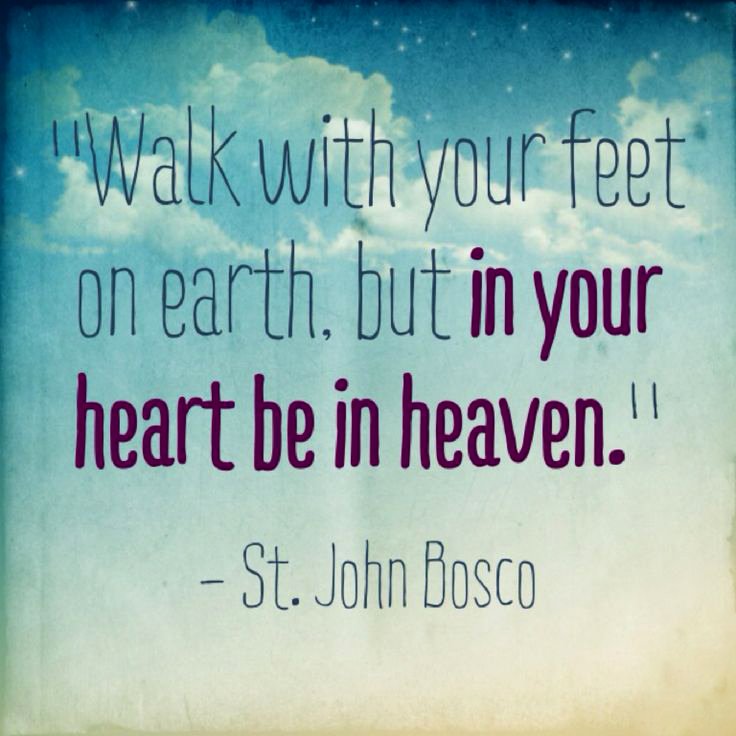
Like St. John Bosco, instill in our hearts this beautiful lesson he had taught us with:
From twitter.com
Like St. John Bosco, may we “always have fun in life, but never sin”, thinking only the glory of heaven as the ultimate end of everything we do in life! Amen.
Friday, Memorial of St. Anthony, Abbot, 17 January 2020
1 Samuel 8:4-7, 10-22 ><)))*> ><)))*> ><)))*> Mark 2:1-12
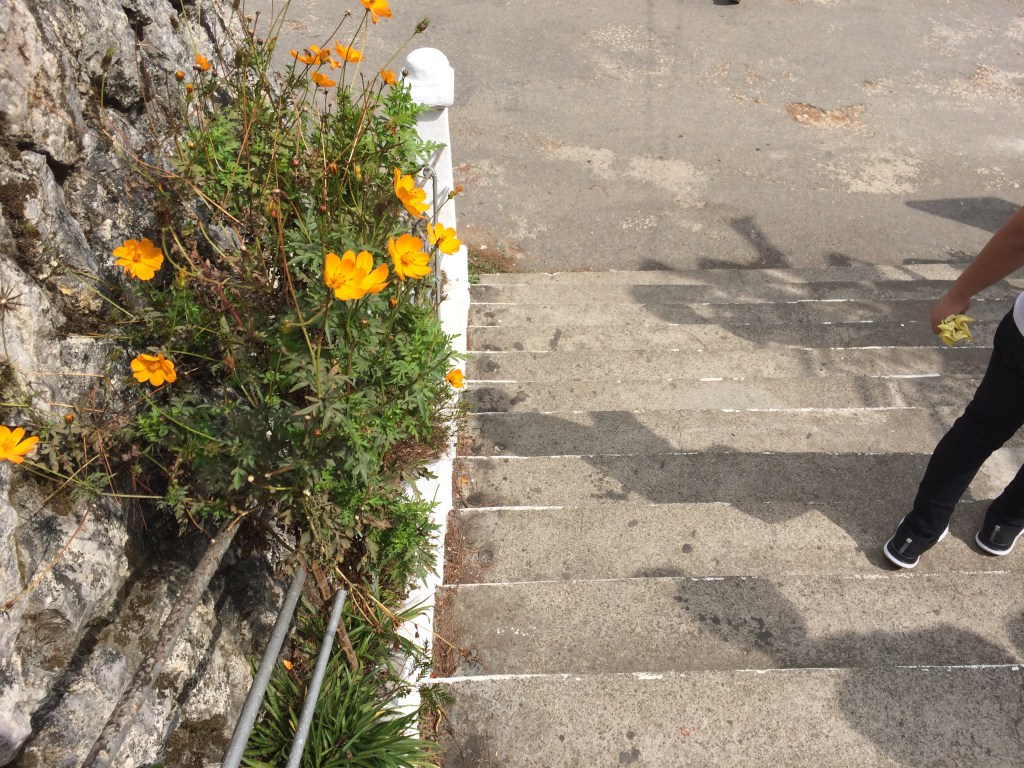
Grotto, Baguio City, January 2019.
Thank you very much, O God for another week of work and school about to close this day. Most of all, thank you for for the rest you have given us these past few days from our restive Taal Volcano. Continue to keep everyone safe and ready for any worst eventuality.
Today we pray, O Lord, for those people who have rejected us, those who have rejected our friendships, those who continue to reject our peace offerings, those who still reject the mercy and forgiveness we have given them.
Our lives have all been marred with so many rejections. Too often, we do not complain and just take them as part of life, the risk in any relationships, though, deep inside, we are hurt.
But, so often, we also forget how we have always rejected you, O God, in our lives. Of how we would rather choose our own ways that often lead us into sins and destruction, rejecting your wonderful plans that simply ask us to trust in you, to believe in you, and to rely in you.
Samuel was displeased when they asked for a king to judge them. He prayed to the Lord, however, who said in answer: “Grant the people’s every request. It is not you they reject, they are rejecting me as their king.”
1 Samuel 8:6-7
Teach us, O God, to open up to you again. To be open to your love and mercy, to your mercy and forgiveness brought to us by your Son Jesus Christ.
Help us to break this cycle of rejections we within that lead us to sin.
Every time we reject you, O Lord, or our brothers and sisters in love and mercy to insist on our own ways, our own ideas and thoughts, and beliefs, that is when we often sin.
Help us to be like St. Antony who left everything in life to be a hermit in the desert in order to find you and follow you. Help us find our own desert of desolation where we can always be alone with you to rely only in you, to accept your truths to guide us in our daily life. Amen.
St. Anthony the Abbot, a.k.a. the Great, pray for us!
The Lord Is My Chef Sunday Recipe, Week XXXI-C, 03 November 2019
Wisdom 11:22-12:2 ><}}}*> 2 Thessalonians 1:11-2:2 ><}}}*> Luke 19:1-10
A giant sycamore tree at the center of Jericho, the world’s oldest city. Photo by author, May 2019.
Jesus is now on the final leg of his “resolute journey to Jerusalem” as he passed by the world’s oldest city of Jericho. Next week, he would be teaching at the Temple area in Jerusalem where his enemies would gang up against him, eventually sending him to death as we shall hear on the 24th of this month, the Solemnity of Christ the King.
Today we find a very interesting story that is in stark contrast with last Sunday’s parable of the Pharisee and tax collector praying at the Temple.
And this time, our story is not a fiction but an event found only in St. Luke’s gospel about a real tax collector named Zacchaeus, a very wealthy man indeed.
The fictional Pharisee Jesus narrated in his parable last week was a very proud one, of high stature literally and figuratively speaking that he would always stand and pray inside the Temple to be seen by everyone.
He was a self-righteous man who despised everyone else, especially tax collectors.
But, according to Jesus, the Pharisee’s prayer was not heard by God because he was not really seeking God but seeking adulation for himself!
Treetop of a sycamore tree in Jericho today.
Contrast that Pharisee with the chief tax collector in Jericho named Zacchaeus: he was of small stature, literally and figuratively speaking, that he had to climb a sycamore tree in order to see “who Jesus was” (Lk.19:3).
We can safely surmise that from St. Luke’s narration, nobody loved Zacchaeus in Jericho: he must be really so small in their eyes that he is hardly noticed maybe except when people paid taxes.
And that is why when he learned Jesus of Nazareth was passing by their city, he went to climb a sycamore tree to have a glimpse of the man he must have heard so often performing miracles and doing all good things for sinners like him.
Then, a strange thing happened…
When he reached the place, Jesus looked up and said, “Zacchaeus, come down quickly, for today I must stay at your house.” And he came down quickly and received him with joy. When they all saw this, they began to grumble, saying, “He has gone to stay at the house of a sinner.” But Zacchaeus stood there and said to the Lord, “Behold, half of my possessions, Lord, I shall give to the poor, and if I have extorted anything from anyone I shall repay it four times over.” And Jesus said to him, “Today salvation has come to this house because this man too is a descendant of Abraham. For the Son of Man has come to seek and to save what was lost.”
Luke 19:5-10
Was it serendipity or divine destiny?
Jesus was just passing through Jericho while Zacchaeus was merely interested in seeing the Lord. Never in his wildest dream, so to speak, did he intend to meet him personally.
From Google.
But, as we all believe and have realised, there are no coincidences or accidents in life.
Everything that happens in our lives has a purpose, a meaning that may either make us or unmake us.
It all depends on us whether we make the right decision in making the most out of whatever life offers us, of what comes to us. Either we become better or bitter – so choose wisely.
More so with salvation from God who never stops coming to us everywhere, anytime like with Zacchaeus when Jesus suddenly came to meet him.
The Catholic Parish Church in Jericho run by the Franciscans, May 2019.
Here we find again a story about faith that leads to conversion and salvation or justification.
It does not really matter how little faith we have like when the Apostles asked Jesus on the first Sunday of October, “Lord, increase our faith in God” (Lk. 17:5,Wk. 27). What matters is that we always have that option for God, a desire for God.
This is specially true as St. Paul assures us in the second reading that Christ will come again at the end of time. Nobody knows when or how he will come again but like Zacchaeus, we must have that desire for Jesus who first comes into our hearts before entering into our homes or churches, no matter how grandiose they may be.
Every desire for God in itself is an expression of faith in him. And God comes to those who truly seek him because that is how great God is: not in his power to do everything but to be small and forgiving!
Before the Lord, the whole universe is as a grain from a balance, or a drop of morning dew come down upon the earth. But you have mercy on all, because you can do all things; and you overlook people’s sins that they may repent. But you spare all things, because they are yours, O Lord and lover of souls.
Wisdom 11:22-23, 26
Inside the Catholic Parish of the Good Shepherd in Jericho, May 2019.
Like in the parable of the persevering widow and judge as well as that of the Pharisee and tax collector praying at the temple last Sunday, today’s story of Zacchaeus meeting Jesus shows us how God never abandons us his children, always ready to grant our desires and wishes even beyond what we are asking for — if we have faith in him.
Our salvation depends solely in our faith to God in Christ Jesus, like Abraham in the Old Testament that we can now rightly be called as his children like Zacchaeus.
No one is excluded from this tremendous grace of God brought to us through Jesus Christ who had come to seek those who are lost.
Like Zacchaeus upon receiving salvation from the Lord on that simple day, may we joyfully turn away from sins and most of all, cheerfully rid ourselves of so many other things that hamper us from following Jesus resolutely to Jerusalem. Amen.
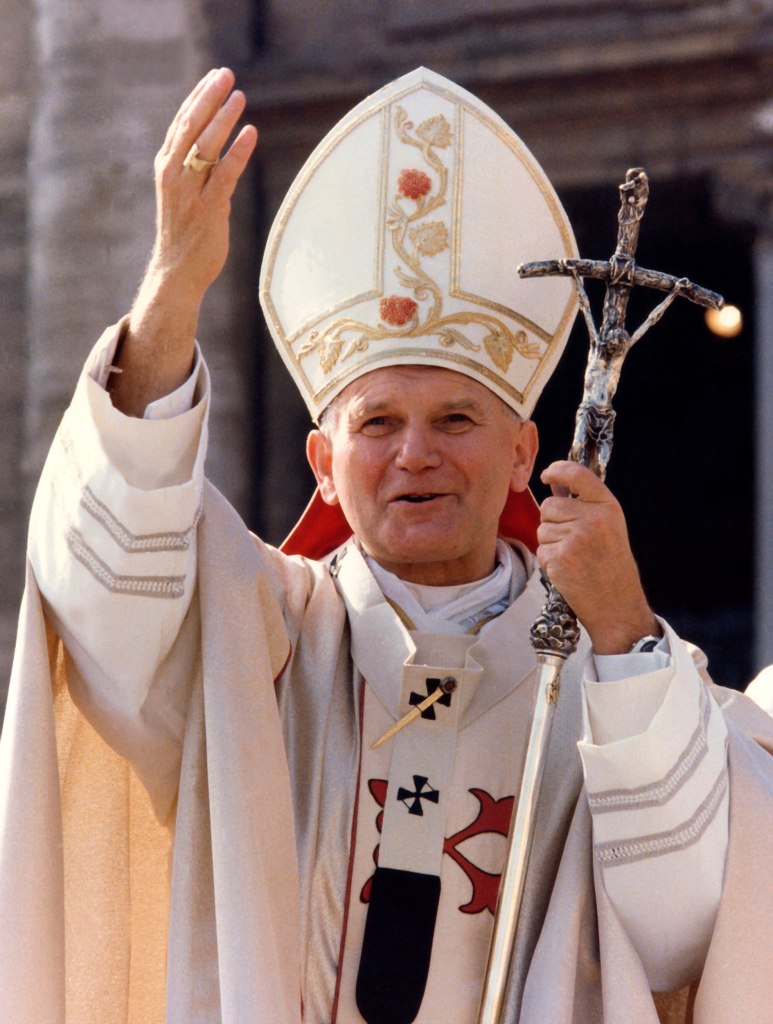
Tuesday, Memorial of St. Pope John Paul II, 22 October 2019
Romans 5:12. 15. 17-19. 20-21 ><)))*> Luke 12:35-38
From Google.
Praise and glory to you, O God our loving Father!
Thank you very much in giving us the great St. John Paul II.
When I think and remember him, the more I feel the reality of St. Paul’s words today:
Where sin increased, grace overflowed all the more, so that, as sin reigned in death, grace also might reign through justification for eternal life through Jesus Christ our Lord.
Romans 5:20-21
Yes, you made us experience your loving presence among us O God in Jesus Christ during the pontificate of St. John Paul II. He lived in our own time when there was so much sin and evil in the world that he courageously battled head on with his life and preaching.
How true were the words of St. Paul today: there is that part of our sinful humanity in Adam still thriving in the world with its “culture of death” as St. John Paul II would always say.
On the other hand, St. John Paul II showed us in his life, words and examples our redeemed humanity in Christ, especially when he would always insist we can only find fulfillment in you, O dear Jesus.
Reawaken within us O Lord today on this memorial of St. John Paul II his favorite quote from you when he was elected St. Peter’s successor on October 16, 1978 – “Be not afraid!”
Let us “gird our loins” to continue to proclaim you, Lord Jesus Christ into this new millennium the way St. John Paul II envisioned when we crossed into the great jubilee of 2000. Amen.
“See that you do not despise one of these little ones, for I say to you that their angels in heaven always look upon the face of my heavenly Father.”
Matthew 18:10
Almost all the religions in the world believe in the existence of guardian angels who guide people and protect them from harm.
From the Greek angelos that means “messenger”, angels are exactly that: messengers from God or “divine apps” who work like Messenger!
Last summer break, I have learned something “millennial” and at the same time very theological or spiritual when some of our former teachers in a school where I used to be assigned reprimanded me – even scolded me – for putting them always on “seen zone”. If you are a dinosaur like me, seen zone is when you send somebody a message (PM) and that person sees it but refuses to give any reply, to the extent of ignoring not only your message but most of all, you. I still have contentions against this but, that’s how most of people take a seen zone: a kind of disrespect, that you are not important.
What was so embarrassing with my new learning was the realization of how stupid I have been until recently when I would “seen zone” people with pathetic late response saying, “sorry just saw your message now”. How I wish I could turn back the time…
Anyway, I have learned my lesson so well that since May I have been very careful with “PM’s” as I tried to be more kind and gentle in Messenger.
But, there is something very interesting in this popular app in relation with our celebration today of the memorial of the guardian angels.
So many times, we give our guardian angel or God’s messenger with the “seen zone” like in Messenger. We ignore the angel’s admonition to avoid sin and do what is good. Like in Messenger’s seen zone, we totally ignore and disregard our guardian angel until we get into the “sin zone”.
Ignore what you have read in Messenger, you go into a seen zone that may be temporary and not really that serious at all. But, lo! worse is the “sin zone” when you ignore the Divine messenger because you ignore God who sent us his angels with his messages of love and mercy, peace and salvation!
Today we are reminded that inasmuch as we try to behave properly in social media where we interact virtually in real time, God and his angels do relate with us in real time but not in virtual but actual reality.
If we try hard doing everything not to hurt our friends with seen zone, all the more we must try to avoid the sin zone that have more serious repercussions up to eternal life. Amen.
1 Timothy 1: 1-2, 12-14 ><}}}*> ><}}}*> ><}}}*> Luke 6:39-42
From Google.
Thanks be to you, O God our loving Father for this merciful day of Friday. Today, the whole Church praises you with that beautiful Psalm 51, “The Miserere Nobis”.
Have mercy on me, God, in your kindness. In your compassion blot out my offense. O wash me more and more from my guilt and cleanse me from my sin.
My offenses truly I know them; my sin in always before me. Against you, you alone, have I sinned; what is evil in your sight I have done… O see, in guilt I was born, a sinner was I conceived.
From the Breviary
Like St. Paul in today’s first reading, give us the grace of having that “sense of sinfulness” within us, Lord.
So many times, we deny the presence of sin in our lives as we keep on justifying our actions, always having that feeling of uprightness, of never erring. Worst, we have become blind guides you have mentioned, O Lord, in the gospel today.
Give us the grace of a deep sense of sinfulness within us, Jesus, so that like St. Paul and all the other saints who were all sinners before, including Dimas the thief who died with you on the Cross on that Good Friday, we may also have that sense of the Father’s rich mercy.
Garden of Gethsemane, May 2019.
Let us not be blinded by our self-righteousness that make us deny the presence of sin in us that ultimately deny ourselves of your mercy. May we realise that only those who have been forgiven can understand what it means to receive the Father’s mercy. Amen.
Lawiswis ng Salita ni P. Nicanor F. Lalog II, ika-18 ng Marso 2019
Panginoong aming mahal
Sa panahong itong banal
Aming dalangin kami'y palayain
Sa mga sala na umaalipin sa amin.
Ito ang iyong misyon at hangarin
Nang iyong sabihin at ganapin yaring propesiya:
"Sumasaakin ang Espiritu ng Panginoon;
Sinugo niya ako upang ipahayag sa mga bihag na sila'y lalaya."
Kami Panginoon ang mga bihag na iyon
Alipin ng mga kasalanan at kasamaan
Madalas hindi namim nalalaman
Kaya kami'y tulungan manhid na budhi ay mabuksan.
Kadalasan ika'y aming nalilimutan
Sa aming pagkagahaman sa atensiyon at kayamanan
At kung minsan nama'y tinatalikuran
Sa aming kapalaluan na huwag kaming mapapangunahan.
Marami pang ibang pagkakataon
Hindi ka namin nililingon Panginoon
Dahil lagi kaming nakatuon
Sa mga sariling pagkagumon.
Tulungan po ninyo kami, O Panginoon
Na aming matunton iyong mga panuntunan;
Huwag nawa kaming pakatiwala sa aming mga tuntungan
Dahil ang totoo'y munti lamang ito'ng mundo na aming alam.
Isang katatawanan, laging huli na kung aming malaman
Sa aming mga kasalanan wala pala kaming tunay na kalayaan
Bagkus pawang mga nalinlang ng sandaling kaligayahan
Kaya't kami'y mga bihag at alipin lamang.










 lordmychef.com