The Lord Is My Chef Daily Recipe for the Soul by Fr. Nicanor F. Lalog II
Friday, Memorial of St. Leo the Great, Pope & Doctor of the Church, 10 November 2023
Romans 15:14-21   ><]]]]’> + ><]]]]’> + ><]]]]’>   Luke 16:1-8
Photo by author, San Juan, La Union, July 2023.
I just realized today,
God our Father,
how the word “miss”
has a variety of meanings:
as something we failed or
something or someone we remember
or, someone or something we
forget and neglected.
How sad that very often,
the people we miss -
those we forget,
even taken for granted
because they are common,
are those nearest to us like
family and friends,
those in our inner circles.
Thus I aspire to proclaim the Gospel not where Christ has already been named, so that I do not build on another’s foundation, but as it is written: Those who have never been told of him shall see, and those who have never heard of him shall understand.
Romans 15:20-21
Is it not so funny that the
ones we meet inside the church
every day and every Sunday are
also the very ones who are
like us - evangelized or simply
know Jesus and his teachings;
but, where are the rest?
the unchurched?
the ones we say who must hear the
good news?
Lord Jesus Christ,
teach us to be wise like
that steward in your parable today:
to save face and himself, he went to
see his master’s debtors he himself
must have missed,
disregarded and never given any
importance at all because they
were common, below him in stature;
let us realize like that shrewd steward,
like St. Paul to look for those we
miss most because of proximity
and ordinariness; they could be our
family members who have stopped praying
or celebrating Mass
or those living closest to our church
or chapel and have lost interest in the
sacraments and liturgy
or former colleagues in the ministry
who have lapsed in their practice
of faith.
Let us go out today
to find them and make them
feel and experience they are
loved,
they are missed most
in Christ Jesus.
Amen.
Quiet Storm by Fr. Nicanor F. Lalog II, 08 November 2023
Photo by author, National Shrine of Our Lady of Fatima, Valenzuela City, 06 November 2023.
A very dear friend died last October 16 after more than three years of fighting cancer. She used to be one of our elementary teachers at the school I was first assigned after ordination. She later resigned to teach abroad but every year whenever she was home for summer vacation, she always invited me to join their mini-reunions of former co-teachers.
Everything changed in 2020 when she had to retire early to return home for her cancer treatment. We could not visit her during the pandemic lockdown, occasionally meeting her via zoom and video phone calls. When COVID subsided a little in late 2021 and early 2022, we finally met briefly. She seemed to be responding well to her chemotherapy except that she had lost hair that was natural. Last December, we were finally able to go out with other fellow co-teachers twice after Christmas and after New Year’s day last January. We were so glad she had regained weight and strength. And hair too!
Saw her again last June but in late August, she stopped answering our messages. It turned out that her cancer had metastasized to her lungs and liver. When I came to see her October 7, the first thing she told me was for me to “allow her to die”. According to her brothers and elder sister, she had also asked them for “permission to die” earlier that night because she said, she was already tired and was ready to go back to God.
Photo by author, National Shrine of Our Lady of Fatima, Valenzuela City, 06 November 2023.
It was not the first time somebody had asked me a “permission to die”, especially since I have become a hospital chaplain two years ago. But, I must confess, in all instances, there was always hesitancy on my part in giving “permission to die” especially when those dying are close to me like friends and relatives. In fact, the first person who asked me “permission to die” was my best friend from high school seminary. I just cried, said nothing when he calmly told me he was ready to go.
That scene remains vivid to my memory to this day, including the many lessons he had taught about life and dying.
By the way, let me put it clear that what we are referring here as giving “permission to die” is allowing death take its natural course, not mercy killing or euthanasia which is intrinsically evil we should never allow.
In my 25 years in the priesthood, two years as hospital chaplain since 2021, I have always felt the process of dying as a “grace-filled moment” too like in the birth of an infant or recovery of a sick person. Both the dying and their family and friends are blessed when death approaches or had come, like when Jesus visited Martha and Mary four days after the death of their brother Lazarus. That scene of Jesus speaking to Martha before bringing Lazarus back to life assures us of how God had turned death into a blessing in Christ: Jesus told her, “I am the resurrection and the life; whoever believes in me, even if he dies, will live, and everyone who lives and believes in me will never die. Do you believe this?” (Jn. 11:25-26)
Photo by author, National Shrine of Our Lady of Fatima, Valenzuela City, 06 November 2023.
If we believe Jesus and his words to Martha, we too shall find him coming to us when a beloved is dying, especially when they ask us that “permission to die” which is not actually a permission per se because only God decides when we are going to die.
When patients ask for “permission to die”, they are actually bidding us goodbye. Dying people always knew when they had to go because they have already accepted the reality. This is very noticeable at the serenity, even of joy, on their face. Despite their sickness, dying patients who have truly made peace with God and had given up everything to Him always have that grace of composure like Jesus when he died on the Cross, crying his same prayer, “Father, into your hands I commend my spirit” (Lk.23:46).
Photo by author, National Shrine of Our Lady of Fatima, Valenzuela City, September 2021.
Giving “permission to die” is a grace from God He gives to relatives and friends to accept and embrace that difficult reality.
“Permitting” our loved ones to die is to assure them of our love and forgiveness of their sins against us. It is our final act of love for them when we assist them to that great passageway onto eternity like when we would lead our guests out to the door to ensure them our separation is just temporary until we meet again soon.
Due to this great amount of love in our final goodbyes, some people sometimes “fake” their dying moments, creating a “drama” in asking “permission to die” when actually, they are not yet ready to die but merely demanding love and care from family and friends. One clear sign is they tend to be more cerebral than cordial, becoming bitter and angry than ever. Even amid sufferings, they think more of themselves than feel others around them. Like the boy who cried wolf, they have not yet really seen death approaching because most likely, they have not yet faced life and living truly. Coming to terms with death is coming to terms with life. When loved ones “fake” their dying, what they really seek is how to live fully and responsibly, to be their true self. But that’s a different topic…
Photo by author, Malagos Orchid Farm, Davao City, 2017.
Death is the most terrifying moment in life because we do not know what’s next, where we are going. That is why, when people truly mean that they have accepted death, that is also when they have accepted life in its fullness. They do not reason out. They just feel God and those around them. Most of all, they have peace within amid pains.
The same thing happens with us relatives and friends of the dying. We feel their sense of peace within, affecting us, infecting us. Hence, we get lost at how to express our giving them of that permission to die. Very often, we cry because our hearts overflow with love. When we feel their seeking of permission to die is genuine, our mouths and tongues are shut, incapable of expressing our love for them that is diverted into our eyes as tears, bursting forth like waters from a collapsed dam that cleanse also us of our fears and sadness at our impending loss.
Finally, giving permission to die to our beloved is an expression of our faith in God, affirming we all came from God and would someday go home to God in heaven. Thus, giving permission to die is actually to comfort – literally, “to give strength to” – the dying of their faith in God while facing their final tests and temptations in life, assuring them that soon, we shall join them in eternal joy.
Many times, our family and friends suffer so much before death because of our refusal to let them go too. We keep on holding them back that terrify them in making the great crossover. Giving them permission to die is easing and sharing their fears so they can finally let go and let God, that is, die – the meaning of the letter “d” that stands between the words “go” and “God”. According to the prayer by St. Francis of Assisi, it is in dying when we are born into eternal life. Amen.
*Aside from All Saints’ Day and All Souls Day, the whole month of November is a traditional time for visiting the graves of our loved ones. Go and offer them prayers, especially that “permission to die” if you are still holding them and have not yet let them go.
The Lord Is My Chef Daily Recipe for the Soul by Fr. Nicanor F. Lalog II
Wednesday in the Thirty-first Week of Ordinary Time, Year I, 08 November 2023
Romans 13:8-10   ><}}}}*> + ><}}}}*> + ><}}}}*>   Luke 14:25-33
Photo by author, Sacred Heart Novitiate, Novaliches, QC, 20 March 2023.
How can I not resist
by simply being silent,
O God our Father,
with your beautiful words
spoken today by the great
St. Paul?
Brothers and sisters: Owe nothing to anyone, except to love one another; for the one who loves another has fulfilled the law. Love does no evil to the neighbors; hence, love is the fulfillment of the law.
Romans 13:8, 10
But, what is really love,
according to St. Paul?
Since yesterday,
he has been telling us
to love sincerely which is
to love like Jesus Christ
who offered himself for us
on the Cross;
to love like Jesus as the
fulfillment of the law is
to love without measure
because it is rooted in you,
dear God who is love yourself,
God who is both transcendent
and immanent!
In telling us to love one another,
Jesus clarified with his love that
you neither order nor command us to
love you, God, in the strict sense;
you ask us to love
because you love us,
because you are love, O God;
when we love,
we fulfill your commandments,
enabling us to live in peace
and harmony with one another
like in heaven;
"I-love-you" is the only "I-O-U",
the only debt never paid off
because the more we love,
the more we become like you
in Jesus Christ,
eternal and without end.
Amen.
The Lord Is My Chef Daily Recipe for the Soul by Fr. Nicanor F. Lalog II
Friday in the Twenty-Eighth Week of Ordinary Time, Year I, 20 October 2023
Romans 4:1-8   ><]]]]'> + ><]]]]'> + ><]]]]'>   Luke 12:1-7
Photo by author, Liputan Island, Meycauayan City, Bulacan, 31 December 2021.
Our loving God and Father,
help us learn St. Paul's beautiful
teaching today about your
righteousness and our justification -
that, essentially, everything
in this life is our relationship with you
and with one another.
You justified and redeemed us
in your Son Jesus whom you
sent to restore that relationship with you
broken by sin in Adam and Eve;
to renew and make that relationship
work, you made us new in Christ
to make us worthy before you
and with one another in your grace.
How wonderful as St. Paul explained
that long before your Laws came,
that relationship has always been there
wondrously expressed most especially
by Abraham in his deep faith in you;
faith is a relationship which Abraham
proved thrice to you:
when he obeyed your command for him
to leave his family and city to go to
the land you would show him;
when he believed even in his old age
you would give him a son in his wife
Sarah to become the father of all nations;
and when Isaac was finally born
as he grew up, Abraham willingly
gave him up to you when you asked
him to be offered.
In all three instances,
Abraham never sinned to you
because he upheld and
valued so much your relationship
with him.
Help us, God,
to be like Abraham in
upholding and preserving
most dearly this relationship
with you and with one another
we keep and nurture in faith.
For what does the Scripture say? Abraham believed God, and it was credited to him as righteousness. A worker’s wage is credited not as a gift, but as something due. But when one does not work, yet believes in the one who justifies the ungodly, his faith is credited as righteousness.
Romans 4:3-5
Forgive us,
merciful Father,
for being so proud,
always proving our worth
with all our works without
realizing that you have done
everything in our favor,
that there is nothing we can do
nor we may do for us to be saved
in ourselves, by ourselves
except to believe in you like
Abraham; let us not be hypocrites
like the Pharisees who do not
realize that everything is revealed
in you, including our thoughts;
let us remember that sin is
more than the evil acts we do
but most of all, our lack of faith
in you that we destroy
our beautiful relationships with
you and with one another.
Amen.
The Lord Is My Chef Daily Recipe for the Soul by Fr. Nicanor F. Lalog II
Wednesday, Memorial of St. John XXIII, Pope, 11 October 2023
Jonah 4:1-11   ><]]]]'> + ><]]]]'> + ><]]]]'>   Luke 11:1-4
Photo by Dr. Mylene A. Santos, MD, 2021.
God our Father,
the world is once again
in chaos; when there is war
in your Holy Land of Israel,
it is always something else
that hits each one of us
to our deepest core
because
it speaks something
deeper and older
than religion and faith,
convictions and ideologies;
since the time of the
Old Testament,
every war and turmoil
in your Promised Land
always has its roots
in our hearts.
Jonah was greatly displeased and he became angry that God did not carry out the evil he threatened against Nineveh. Then the Lord said, “You are concerned over the plant which cost you no labor and which you did not raise; it came up in one night and in one night it perished. And should I not be concerned over Nineveh, the great city, in which there are more than a hundred and twenty thousand persons who cannot distinguish their right hand from their left, not to mention the many cattle?”
Jonah 4:1, 10-11
Dear God,
so many times in life
we have our priorities
so misplaced,
so askew,
so inhuman
and lacking with reason
at all.

Like Jonah,
we continue seething
in anger against each other
with no one willing to
sit and listen,
to give peace a chance;
all we have are mistrust
and animosities against
each other,
giving more priorities
with things than with persons;
we allow our old wounds
and hurts to fester
until it blows up beyond
controls; worst, like Jonah,
we find death as easiest
way out in every misery.
Your Son Jesus Christ
taught us how to pray,
in effect,
taught us how to prioritize
in life by calling out to you
as "Father" - our source of life
and being,
creator of everything!

Help us realize,
dear Jesus that to pray
calling God "Father" is
to prioritize first on persons,
on humans as my brothers
and sisters regardless of
their religion,
gender,
color,
nationality,
occupation,
and age.
Through the intercession
of St. John XXIII,
the "good Pope",
may we prioritize
God above all so
that we too may seek
openings to lead us
to move closer
as brothers and sisters
in Christ.  Amen.
The Lord Is My Chef Sunday Recipe for the Soul by Fr. Nicanor F. Lalog II
Twenty-Seventh Sunday in Ordinary Time, Cycle A, 08 October 2023
Isaiah 5:1-7 ><}}}}*> Philippians 4:6-9 ><}}}}*> Matthew 21:33-43
Photo by author, San Juan, La Union, 25 July 2023.
A good friend recently came home from a 20-day Marian pilgrimage in Europe. I told him to get some rest and avoid reading the news, “Huwag ka munang magbasa ng balita baka masayang nalanghap mong hangin sa Europe.” He replied that with the very reliable internet service in Europe, they were all updated with the things happening in our country. He added, “parang ayaw ko nang magpunta sa Europe, lalo lang ako naaawa at nahihiya sa Pilipinas.”
Very true.
I rarely travel abroad but with what I have been reading and hearing especially from those visiting Japan and Singapore, the more I feel sad and hopeless for our country the Philippines. At least, God comforts us once in a while in sports like the recent golds in the Asian Games courtesy of EJ Obienna in pole vault, Annie Ramirez in jiu-jitsu, and Gilas Pilipinas in basketball. Aside from sports, nothing good seems to come from the news. Even the newscasts these days are depressing with robots “complementing” sportscasters.
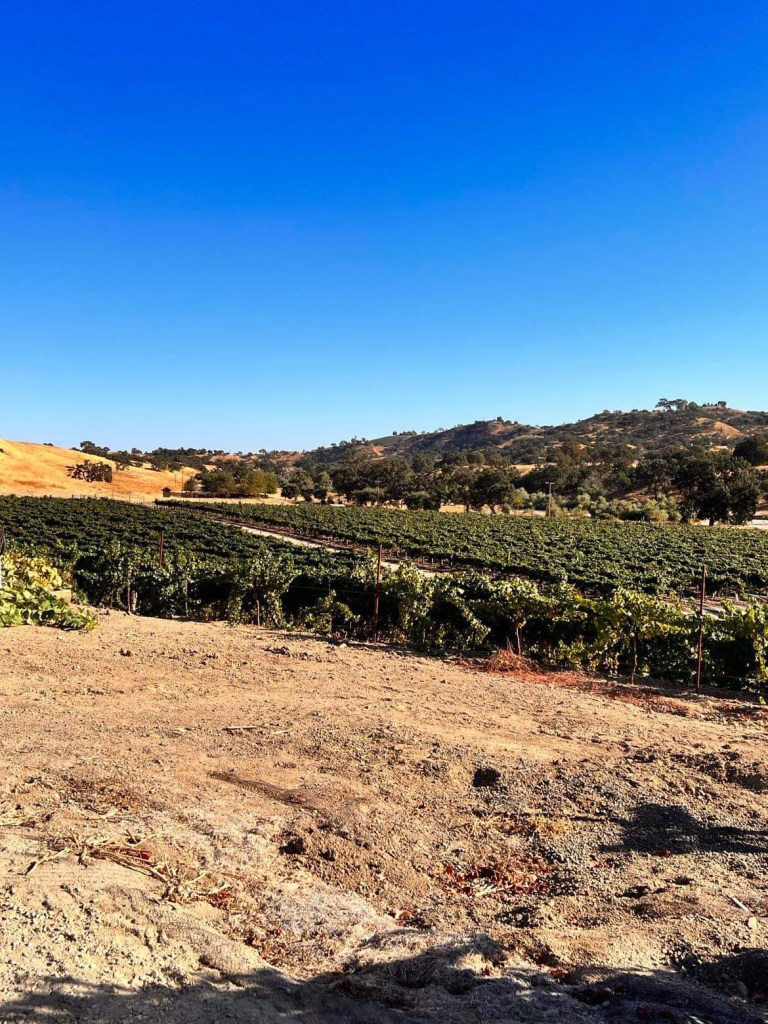
Photo of a vineyard in Southern California by Dra. Carol Reyes-Santos, MD, 01October 2023.
Our readings this Sunday seem to speak of us Filipinos and the Philippines which is like a wonderful vineyard planted by the Lord, especially when we think of our vast, fertile lands and long coastlines with rich bodies of water but we have to import our food, from rice to galunggong. What a shame that our chicharon producers import pig backfat from the tiny island of Taiwan?! Like Isaiah, we find ourselves asking what happened to our country?
Let me now sing of my friend, my friend’s song concerning his vineyard. My friend had a vineyard on a fertile hillside; he spaded it, cleared it of stones and planted the choicest vines; within it he built a watchtower, and hewed out a wine press. Then he looked for the crop of grapes, but what it yielded was wild grapes.
Isaiah 5:1-2
The vine and wine are important signs widely used in the Old Testament and in the gospel accounts by Jesus. In Isaiah’s writings, the vineyard represented Israel as the chosen people of God, so loved and cared for, saved from Egypt and gifted with a land flowing with milk and honey. Despite these blessings, Israel repeatedly turned away from God with their many sins of infidelity that continued in the time of Jesus Christ who borrowed and perfected this parable of the vineyard of the Lord to make it timely in every generation.
Jesus said to the chief priests and the elders of the people: “Hear another parable. There was a landowner who planted a vineyard, put a hedge around it, dug a wine press in it, and built a tower. Then he leased it to tenants and went on a journey. When vintage time drew near, he sent his servants to the tenants to obtain his produce. But the tenants seized the servants and one they beat, another they killed, and a third they stoned. Again he sent other servants, more numerous than the first ones, but they treated them in the same way. Finally, he sent his son to them, thinking, ‘They will respect my son.’ But when the tenants saw the son, they said to one another, ‘This is the heir. Come, let us kill him and acquire his inheritance.’ They seized him, threw him out of the vineyard, and killed him.
Matthew 21:33-39
Photo by author, Sacred Heart Novitiate, Novaliches, QC, 20 March 2023.
For the second straight Sunday, Jesus preached again at the temple area of Jerusalem and addressed this lesson to his enemies, the chief priests and elders of the people trying to find a probable cause to have him arrested.
See how this parable of the wicked tenants very similar with Isaiah’s but at the same time speaking a lot of ourselves and of our time, of how we have become like those wicked tenants taking the “vineyard” as totally ours like our body and country, arguing it is mine or ours that we can do whatever pleases us. Like those tenants, we have claimed of not belonging to God nor anyone at all, that we can do whatever we want because we are the owners of ourselves and the world. “It is my body, it is mine” and none of your business kind of thing.
How often we hear others claiming “this is my body, this is mine; therefore, I can do whatever I want with my body” like abort a baby, take contraceptives, or have a sex change, have those tattoos and body piercings? And we have spread this line of thinking to our environment with road rage spreading like a pandemic while bigger countries are grabbing territories ironically from their smaller neighbors.
The most tragic way of thinking that underlies this “mine mentality” is how so many of us have accepted – consciously and unconsciously – that most untrue statement of all that God is dead. Many would say they believe in God when actually what they mean is they know there is God and so often, they play that God, too. Pope Benedict XVI described it as “totalitarianism of relativism” when we see everything relative, no more morals and morality because we have made ourselves the measure and standards of everyone and everything – because, the “vineyard” belongs to us.
Photo of a vineyard in Southern California by Dra. Carol Reyes-Santos, MD, 01 October 2023.
More sad is the fact that we are beginning to see what happens next to us and the world with these things happening like families and relationships disintegrating, climate change and threats of wars, and more emptiness among us.
But, it is not that bad after all. Jesus not only updated Isaiah’s parable of the vineyard to speak to us in the present but also to promise us of a greater future. Notice the blessing and threat he used.
“What will the owner of the vineyard do to those tenants when he comes?” They answered him, “He will put those wretched men to a wretched death and lease his vineyard to other tenants who will give him the produce at the proper times.” Jesus said to them, “Did you never read in the Scriptures: The stone that the builders rejected has become the cornerstone; by the Lord has this been done, and it is wonderful in our eyes? Therefore, I say to you, the kingdom of God will be taken away from you and given to a people that will produce its fruit.”
Matthew 21:40-43
Once again, Jesus Christ’s parable asked a question to involve his hearers, including us today, in the story because the truth is, he had involved himself with us in his coming and eventually in his Passion, Death and Resurrection.
Unlike in Isaiah’s parable of the vineyard, God is distinct from the vineyard; but in Christ’s parable, we are in fact the vineyard of the Lord because Jesus is one with us being the son of the owner sent to gather his share of produce.
That is the good news, the blessing this Sunday and while there is also the threat of the vineyard being handed over to better tenants, there is the promise of better produce to be shared and enjoyed in all eternity, in heaven. There will always be darkness and difficulties in this life caused by selfish, arrogant, and self-righteous people who feel they own everything in this world. Many times, we too have wasted God’s bountiful blessings to us like our talents and abilities not put into use or never harnessed; health taken for granted and separation from our loved ones. Jesus Christ had died for us to repair ourselves and our relationships. Let us grab this opportunity today of taking care of the Lord’s vineyard, of sharing his blessings.
Most of all, like what St. Paul asked us in the second reading, let us be witnesses to others by remaining faithful to God, striving for “whatever is pure, whatever is lovely, whatever is gracious” (Phil. 4:8).
Last Thursday was World Teachers Day. I told our teachers during Masses in our university this week to remember St. Augustine’s final lesson to Deogratias his deacon preparing candidates for baptism: “The teacher is the lesson himself/herself.”
Beautiful. If we are the Lord’s vineyard, every time we produce good fruits, every time we share these fruits with others, then we become signs of hope of Christ’s presence among us. That is the most important lesson we can share with others especially in these times of darkness. Amen. Have a blessed week ahead!
The Lord Is My Chef Sunday Recipe for the Soul by Fr. Nicanor F. Lalog II
Twenty-sixth Sunday in Ordinary Time, Cycle A, 01 October 2023
Ezekiel 18:25-28 ><}}}}*> Philippians 2:1-11 ><}}}}*> Matthew 21:28-32
White roses for devotees of St. Therese whose feast is today, October 01; may she intercede for your much needed miracle!
American writer Anne Lamott wrote in one of her books that “The opposite of faith is not doubt, but certainty.” This is most true in our gospel this Sunday as we shift scene when Jesus finally entered Jerusalem and preached in the temple area among his enemies, the chief priests and elders of the people.
Again, we are familiar with today’s parable of the man who had two sons he asked to go and work at their vineyard. The first son refused but later changed his mind and obeyed the father; the second son said “yes” but did not go to the vineyard. Like the chief priests and the elders, we too can easily answer Jesus Christ’s question, “which of the two did his father’s will?” Of course, the first son – but, Matthew’s story did not end there as he recorded the Lord’s words to his enemies that say a lot to us too today:
Jesus said to them, “Amen, I say to you, tax collectors and prostitutes are entering the kingdom of God before you. When John came to you in the way of righteousness, you did not believe him; but tax collectors and prostitutes did. Yet even when you saw that, you did not later change your minds and believe him.”
Matthew 21:31b-32
Photo by author, 2019.
Keep in mind that Matthew insists in his gospel account the matching of our words and actions because “not everyone who says ‘Lord, Lord’ will enter the kingdom of heaven” (Mt. 7:21).
In the next three Sundays, we hear parables having this as its theme: the two sons today, the evil tenants next week and the wedding banquet after that. Notice too that although we still have nine weeks to go before Advent Season in preparation for Christmas, our gospel setting beginning this Sunday will be at the temple area just before the Lord’s Passion, Death and Resurrection. That means Christ’s teachings are getting more intense and challenging to everyone as well.
The sin of the chief priests and elders that Jesus mentioned today – “you did not later change your minds and believe him” – was their refusal to change their minds to accept him as the Christ despite the overwhelming proofs and evidence they have heard and seen, even experienced. They were fixated with their own beliefs and interpretations of the Laws and scriptures; nothing and no one, not even the Son of God Jesus Christ could change their minds, perspectives and opinions.
The same is true with us Christians today! Many times our faith has become so static, could not be changed anymore to become deeper and stronger and vibrant to recognize God present in the changing times. The danger we have today is not only many people are losing their faith but a greater number of us faithful have come to believe more in ourselves than in Christ and his Church led by the Pope! How sad that since last year, there have been so many people, including clergymen casting doubts and refusing to recognize the synod of bishops set to begin this month in Rome.
Photo by author, 2019.
Faith in God is a process that grows and deepens through time. It calls for openness to God in his daily coming to us even in the most unusual people and circumstances. Faith is a daily process of conversion, of kenosis or self-emptying like Jesus which Paul beautifully expressed in our second reading today:
Do nothing out of selfishness or out of vainglory; rather, humbly regard others as more important than yourselves, each looking out not for his own interest, but also for others. Have in you the same attitude that is also yours in Christ Jesus, Who, though he was in the form of God, did not regard equality with God something to be grasped. Rather, he emptied himself, taking the form of a slave, coming in human likeness.
Philippians 2:3-7
Here we find faith is about relationships and commitment, both to God and to one another. It is never static. That is one of the lessons Jesus is emphasizing in his parable today about the father and two sons. Obedience to their father is an expression of their relationship with him. Many times, we are either like the first or the second son. God our Father gives us all the chances and opportunities to make up for our lapses and sins.
That is why in the first reading, God reminds us through Ezekiel that his ways are not unfair because he gives us all every chance to change and become better, the very same principle we have heard in the three teachings of Christ recently about fraternal correction, forgiving, and generosity.
Have you noticed how often people seem unreasonable when they tell us we have changed or have not changed at all? I find those comments insane, even stupid because only change is permanent in this world. We always change. And we must change for the better.
One of my favorite series in the 1980’s was the American comedy “Newhart” starring Bob Newhart. In one of its episodes, Bob and his wife celebrated their anniversary amid so many mishaps and quirks. As usual, Bob saved the day at their renewal of vows when he told his wife that indeed, he had changed through their years of marriage as he had come to love his wife more than ever. So sweet and beautiful, and true!
Many times in weddings, I tell newly wed couples this prayerful wish, “May this day be the least joyful day of their lives.” Weddings and ordinations call for a lot of daily conversions, of growing and maturing, of finding Jesus in our loved ones and people we serve, and in new directions in our lives and ministry.
Photo by author, La Trinidad, Benguet, 12 July 2023.
Every relationship with God and with others can never be fixed for it must grow daily. Don’t worry, we will never run out of space for maturity and deepening of faith and commitments with God and with others. The more changes and flexibilities we go through no matter how difficult they may be physically, emotionally and spiritually, the more surprises and joys and fulfillment we shall experience.
Everyday, ask yourself, “Where did I see God today?” And, what does it mean to me?
Our answers to these two questions will determine how we live differently each day as Christ’s disciples because of what God has revealed to us! Amen. Have a fulfilling week in Jesus this start of October!
Lawiswis ng Salita ni P. Nicanor F. Lalog II, Ika-26 ng Setyembre 2023
Larawan mula sa redditt.com ng iskulturang pinamagatang “Love” ni Ukrainian artist Alexander Milov naglalarawan ng inner child sa bawat isa sa atin na ibig palaging makipag-ugnayan sa kapwa.
Hindi po tungkol sa pulitika ang aking lathalain kungdi ukol sa tila lumalabis nang pagkahumaling ng mga tao sa computer at mga makabagong teknolohiya. Sa aking palagay ay sumusobra na pagsaklaw ng teknolihiya sa ating buhay at nawawala na ating pagkatao. Hindi ako magtataka na bukas makalawa, magkakatotoo na nga yata yung dating ipinangangamba na pananakop ng mga robot sa ating buhay o mismo sa ating mga tao!
Ang katotohanan po ay tumigil na akong kumain sa mga fastfood restaurant hindi dahil sa magastos at unhealthy nilang pagkain at inumin kungdi ang mga nakaka-inis na sisteng kailangang pa akong umorder nang nagpipindot sa mga screen nila ng kakanin gayong may mga crew naman sila.
Minsan pauwi ako mula sa pagmimisa sa lamay sa patay sa Bulacan. Hindi ako gaanong nakakain kaya dumaan ako sa McDonald’s sa Nlex Drive and Dine. Ayokong mag-drive thru para doon na rin makapagpahinga ng konti sabay pagpag na rin maski hindi ako naniniwala doon.
Sising-sisi ako at dumaan pa ako doon; sana nga pala ay nag-drive thru na lang ako kasi naman ay ganito po ang nangyari.
Larawan mula sa news.abs-cbn.com
Pagpasok ko sa McDonald’s doon ay tumambad sa akin ang mga higanteng screen na doon daw oorder. Kasinglaki ni Ronald McDonald yung mga screen pero hindi sila friendly kasi natakot ako. Aminado akong tanga at walang alam sa mga iyon. Hindi po ako techie. Kahit naka-iPhone ako, inaamin kong hindi ko pa rin alam hanggang ngayon kung paano ito gamitin. Di ko naintidihan yang mga hacks na iyan.
Wala akong nagawa kungdi sumunod sa crew na naka-ngiti naman. Binasa ko instructions. Pindot dito, pindot doon. Ewan ko. Naghalo na rin siguro gutom at katangahan, pabalik-balik ako sa simula at hindi maka-order. Mayroon akong nakasabay na engot din at lumapit sa amin yung guwardiya upang tulungan kami. Nawalan na ako ng ganang kumain sa inis sa screen, sa sarili ko na rin, at sa pamunuan ng McDonald’s. Bakit hindi na lang kinuha order ko kesa pinahirapan pa ako doon sa electronic counter na yun?
Bakit kailangang pilitin ang lahat na gumamit ng computer para sa pag-order? Hindi ba naiisip ng mga fastfood na ito na mayroong mga taong hindi pa rin gamay at handa sa gayong uri ng transsaksiyon? Ang pinaka-ayoko sa sisteng ito ng modernisasyon na ang lahat ay automated at computerized ay nawawala ang ating “pagkatao”, iyon bang human touch at humanness ika sa Inggles.
Larawan mula sa NLEX.
Sa expressway ay mauunawaan ko pa dahil upang mapabilis ang biyahe, mainam ang RFID. Ngunit may mga pagkakataon na hindi ako nagmamadali na pagkaraan ng nakakapagod na pagmamaneho sa trapik, ang ibig ko lang ay mayroong makitang isang kapwa-tao. Yung bang madama lang yung “warmth of another human person” ay malaking bagay na rin upang mapawi pagod at stress, na para bang nagsasabing hindi ka nag-iisa. Noong dati ay nakakausap ko pa ng kaunti mga teller sa Nlex sa paniniwala na makapagpasaya lang ako ng isa pang nilalang na maaring bigat na bigat sa problema. Ngayon, wala na yung koneksiyon na iyon kaya hindi kataka-taka, marami sa atin ang disconnected sa isa’t-isa maging sa sarili! Kaya sabog maraming tao ngayon. Siguro kung maibabalik lang natin marami nang nawalang human interaction, mababawasan yang mga road rage sa lansangan.
Isang nakakamiss para sa akin ang magpunta sa bangko at pumila, makahunta ilang mga tao doong kakilala pati na ang manager at magagandang teller. Iyon ang wala sa electronic banking. Totoong convenient at mabilis ang pagbabangko gamit ang cellphone o computer ngunit napaka-impersonal! Iyon na ba ang mahalaga sa atin ngayon, kaginhawahan kesa ugnayan sa kapwa tao?
Pakikipag-ugnayan ang layon ng komunikasyon. Para sa akin, ang pinakamagandang paglalahad ng kahulugan ng komunikasyon ay mula sa Pastoral Instruction na Communio et Progressio sa pagpapatupad ng dokumento ng Vatican II sa social communication na Inter Mirifica:
Communication is more than the expression of ideas and the indication of emotion. At its most profound level it is the giving of self in love. Christ’s communication was, in fact, spirit and life.
Communio et Progessio, #11
Sa lahat ng nilalang ng Diyos, tao lamang ang kanyang binahaginan ng kanyang kapangyarihang makipagtalastasan o komunikasyon. Ang aso ay tumatahol, pusa nagme-meow at ang baboy ay nag-o-oink-oink. Ngunit ang tao, nagsasalita, nangungusap. Naiintindihan, nauunawaan. At kapag nangyari iyon, nagkakaroon ng ugnayan at kaisahan. Communication, tapos communion.
Hindi ito nangyayari sa computer. Manapa, madalas pakiwari ko ay inuulol tayo ng mga ito! Ano kalokohan yung alam mo namang AI (artificial intelligence) o robot ang “kausap” mo tapos sasagot ka sa kahon na “I am not a robot”? At, mantakin mong utusan ka ng Waze o Google map na pakiwari mas alam niya lahat kesa iyo?
Kaya siguro maraming high blood din ngayon kasi nga kapag sumablay mga teknolohiyang ito lalo na ang mahinang signal, tapos na lahat ng usapan. Sa gayon, walang napagkakayarian, walang napagkakasunduan kaya wala ring kaisahan.
Ito rin ang hindi ko magustuhan sa ipinagmamalaki ng dati kong upisina at network, iyong kailang AI-sportscasters.
larawan mula sa gmanetwork.com.
Heto na yata ang rurok ng kalabisan sa pagkamaliw ng karamihan sa teknolohiya. Unang tanong natin dito ay ano po ba ang turing ng mga kumpanyang gumagamit nito sa kanilang mga taga-tangkilik? Tayo ba ay pinahahalagahan pa nila at ipinauubaya na lamang tayo sa mga robot?
Higit sa maraming mahuhusay na tagapagbalita, sa ganang akin walang puwang sa newscast o ano mang uri ng pagbabalita ang mga AI dahil ang komunikasyon ay ugnayan. Communication is a relationship, lalo na balita at isports. Kahit na maperfect pa ang teknolohiyang iyan, hindi mapapalitan at di dapat mapalitan ang tao sa pakikipag-ugnayan sa kapwa tao.
Ikalawa, ano ang dahilan para magkaroon ng AI na sportscaster? Magmalaki? Magyabang? Ano pa kaya gusto ng GMA-7 gayong wala na silang kalaban?
At dapat nilang asikasuhin ay mabigyan tayo ng buhay na mga programa, coverage na umaantig sa aming pagkatao, kayang hipuin kaibuturan ng aming sarili upang madama tuwa at lungkot ng bawat tagumpay at kabiguan saan mang larangan ng buhay. Maramdaman nating hindi tayo nag-iisa sa pag-aasam ng tagumpay at kaunlaran dahil mayroong kaming mga kalakbay sa biyaheng ito ng buhay. Iyon ang kahulugahan ng integrated news – buo. Paanong naging integrated news kung hindi naman tao ang sportscaster nila? Hindi ba doon pa lamang ay sira na ang kabuuan? Sila ba ay mayroong puso para ituring na Kapuso?
Ang kailangan ay isang kapwa na makakasama sa buhay lalo na sa media. Sa Inggles, tawag doon ay companion. Mula sa dalawang salitang Latin, cum na ibig sabihi’y with o kasama at panis na kahulugan ay bread o tinapay; sa literal na salin, ang companion – cum panis – ay kahati sa tinapay. “Someone you break bread with.” Ang tinapay naman ay tanda ng ating sarili, ng ating buhay. .
Samakatwid, ang companion o kasama ay isang kapwa na nagbabahagi ng kanyang sarili sa kapwa upang mabuhay din. Iyan ang dangal at karangalan ng pagbabalita na sadya namang maipagmamalaki ng GMA News mula marami nilang mahuhusay na newscasters at reporters. Kaya lahat ay nalungkot nang pumanaw si G. Mike Enriquez na naging bahagi ng buhay ng maraming kababayan natin sa kanyang estilo ng pagbabalita. Taong-tao siya, ika nga.
Larawan kuha ng may-akda, Our Lady of Fatima University, Valenzuela City, 13 Setyembre 2023.
Kaya rin naman sa Banal na Misa, ang tawag doon ay Banal na Komunyon, ang pagbabahagi at pagtanggap sa Katawan ni Kristo sa anyo ng tinapay. Nakiisa sa atin si Jesus sa lahat ng bagay sa ating katauhan liban sa kasalanan tulad ng gutom at uhaw, lungkot at hapis, kabiguan maging sakit at kamatayan upang makabahagi niya tayo sa kanyang buhay at tagumpay.
Walang ganyang umiiral sa mga AI na ito at computerization ng mga sistema sa ating buhay. Sana ay isaalang-alang ito ng mga negosyante at umuugit sa mga industriya lalo na sa media. Ang masakit na katotohanan kasi ay kunwari ay kaunlaran at kadalian o convenience ang kanilang dahilan (para kanino?) kungdi kitang kita naman, pera lang ang suma total. Sa gayon, sa landas na ito ng pagiging impersonal na kalakaran ng maraming bagay gamit ang teknolohiya, unti unti rin tayong nade-dehumanize, nawawala katauhan. Kapag nawala ang katauhan, ano ang pumapalit? Alam na natin iyan. Salamuch po.
The Lord Is My Chef Daily Recipe for the Soul by Fr. Nicanor F. Lalog II
Tuesday in the Twenty-fourth Week of Ordinary Time, Year I, 19 September 2023
1 Timothy 3:1-13   ><))))*> _ ><))))*> _ ><))))*>   Luke 7:11-17
Photo by author, CLLEX-Tarlac, 19 July 2023.
Your words today,
O God our loving Father,
are very encouraging
and assuring
with our varied
aspirations in life:
Beloved: This saying is trustworthy: whoever aspires to the office of bishop desires a noble task.
1 Timothy 3:1
When is an aspiration
to any office or post,
not just in the Church,
is a desire for a noble task?
Help us,
dear Jesus to make
our aspiration a desire
for a noble task
by first looking at the needs
of others and not for our
personal advantages;
looking at how
to console others,
alleviate their sufferings
and strengthen their
faith and hopes in life
like you did to the widow
at Nain when you were moved
with pity upon seeing the grieving
mother who had been widowed
with no one to turn to in life;
awaken and heighten
our sensitivities,
our sense of empathy
to the silent sufferings
of so many people these
days who sometimes hide
their grief because no one
seem to care at all for them.
Secondly,
make our aspirations a
noble task by sincerely
confronting our very selves
if we have the qualifications
for any office; let us not aspire
for positions for selfish, personal motives
nor to what would please us;
like the criteria set by St. Paul
for those seeking to become
bishop and deacon, may we
realize that you also give the
gifts necessary to respond
to your call; let us not insist
on ourselves, Lord.
Lastly,
may we always leave
your mark, dear Jesus
in our works
as the surest sign
that ours is an aspiration
for a noble task; may God
our Father be the only One
recognized and seen,
felt and experienced
in our tasks like when
you raised the dead
young man in Nain
with everyone exclaiming
"God has visited
his people" (Lk. 7:16).
Many times,
O God, many are losing
that aspiration to serve
you in others lest they be
mistaken for many
opportunists politicians
who shamelessly aspire
for posts with purely
personal motives;
send us, dear God,
with many people
who would aspire
for noble tasks
of serving you
through our poor and
marginalized brothers
and sisters totally forgotten
in our many social equations.
Amen.
Quiet Storm by Fr. Nicanor F. Lalog II, 18 September 2023
Photo by author, Katmon Nature Sanctuary & Beach Resort, Infant, Quezon, 04 March 2023.
It was my mother who taught us how to pray early in childhood. Beginning with the Sign of the Cross, she taught us also to be more specific in our prayers by mentioning our names to God as well as everything we need.
We were still two siblings then, with me as the eldest. After instructing us how to put on our kulambo with its long lines of cord tied to nails on the walls because our beds have no posts, Mommy would always ensure that me and my sister pray as she tucked us in our respective bed which went like this:
Thank you very much God for today;
please bless my Daddy Will and my Mommy Cory,
my sister Meg, and I, Nick.  Amen.
Later on came my second sister Bing-Bing and she was added to our list of names to mention in prayer every night. When Bing-Bing was learning to speak and her turn to learn to pray, Mommy added another prayer just for her, had to learn to pray, “God, give me patatas” because she loved potatoes found in our favorite nilaga, pochero, afritada, even the little cubes of menudo!
I still pray this prayer that had automatically added the names of new members of our family, from our bunso my only brother Willy born in 1973 to my brother-in-law when Meg got married, all my four nieces and only nephew, Mommy’s two yayas, along with other relatives and friends that include some of my parishioners as well as brother priests in the ministry all kept in a list in my breviary. Lately, I have been praying that God would bless my nieces and nephew with good marriage partners so I can already have apo, and I don’t mind mentioning their names in my future prayers!
With my two sisters and three pamangkins in a recent Baguio vacation.
The only other person next to my mother who had taught me to pray mentioning the names of the people I pray for is my Jesuit spiritual guide Fr. Arthur Shea (RIP). During our 30-day retreat in 1995 before our third year in theology, Fr. Shea asked us to always mention the names of the people we pray for, whether still living or already dead because according to him, that makes our prayer truly personal. He assured us that something beautiful happens within us when we mention the names of the people we pray for. And I believed him 100%!
Now I am 58 years old and 25 years as a priest, I have realized that the most effective prayer is always those most personal when we specify the people with their names and the intentions we pray for.
Prayers change and transform people, not situations; when people are transformed, relationships improve, peace and harmony happen among us. Mentioning the name of people we pray for is practical as it lessens the anger and negativities we have against any person. Most of all, it is difficult to pray for people we hate and thus, mentioning their names not only make our prayers effective but also affective.
Even if we do not mention the names of people we pray for, at least when we specify the kinds of people we are praying for produce the same results, both effective and affective. One of the beautiful prayers I have learned in high school seminary was praying for specific people we hardly know but who affect us directly or indirectly like those working overnight to deliver us goods we need the following morning such as drivers and delivery men, market vendors, and bakers. Also included in our night prayers then were those traveling overnight that they may reach their destinations safely and for prisoners languishing in jail especially the innocent ones. It was in those prayers where I learned to think more of other people, to see more outside of myself and search for those in the margins and forgotten whom God loves so much.
Call me crazy or funny, I pray also for our local and world leaders by mentioning their names even if they do not know me or did not elected them at all! When I was in first year theology in 1993, I was so overjoyed that I submitted as my reflection in one of our subjects the historic meeting in Oslo, Norway of Israeli PM Yitzhak Rabin (later assassinated) and the late PLO Chairman Yasser Arafat; I have been praying for the peace process in Israel since I re-entered the seminary and I felt God answered my prayer with that historic meeting between the leaders of two bitter enemies. I just felt so good inside that God heard my prayer, convincing me that God answers prayers of his children, no matter how simple or complicated it may be. That Oslo Accord led to the 2000 Camp David Summit hosted by American President Bill Clinton between Israel and the PLO. Though peace remains elusive in that part of the world, I still pray for the people especially after I had visited the Holy Land thrice.
Of course, God knows everything and what is needed in this world not only in our lives. For sure, he knows us all by name too! But, when we pray for one another as St. Paul tells Timothy, that is when we begin to identify everyone and find our relationships with them as brothers and sisters whom we must love and respect to make this world a better place to live in.
Photo by author, Our Lady of Fatima University, Valenzuela, 13 September 2023.
Beloved: First of all, I ask that supplications, prayers, petitions, and thanksgiving be offered for everyone, for kings and for all in authority, that we may lead a quiet and tranquil life in all devotion and dignity.
1 Timothy 2:1-2
It all begins in our hearts when we pray. When we make a space in our hearts for other people by mentioning their names or simply identifying them in particular needs and situations, that is when God truly comes to fill us with his Spirit. Everything then follows like peace and harmony as we have seen in today’s gospel account of the healing the centurion’s servant by Jesus (Lk. 7:1-10).
See how the Jews “approached Jesus and strongly urged him to come, saying, ‘He deserves to have you do this for him, for he loves our nation and he built the synagogue for us.’ And Jesus went with them” (Lk.7: 4-6). Jesus answered their prayers by coming with them already! He must have been so surprised too with their attitude toward the pagan because finally, they saw not differences but similarities as persons believing in God. When we mention names of people, that is when we recognize them as one of us too, making our prayers effective and affective as change and miracles begin to happen. Amen. Have a blessed Monday!



















 lordmychef.com