Continuing the Christmas story

The Lord Is My Chef Sunday Recipe for the Soul

Baptism of the Lord, 12 January 2020

Isaiah 42:1-4, 6-7 ><}}}*> Acts 10:34-38 ><}}}*> Matthew 3:13-17

From Google.

Today is our “holy birthday” as children of God, the Feast of the Baptism of Jesus. That explains the sprinkling of Holy Water at the start of our Mass to remind us of continuing the Christmas story the whole year through as sons and daughters of God.

With this feast, we close the Christmas Season by celebrating the great mystery of Christ’s Nativity when he became human like us so that we can become divine like him as children of the Father in heaven.

Jesus came from Galilee to John at the Jordan to be baptized by him. John tried to prevent him, saying, “I need to be baptized by you and yet you are coming to me?” Jesus said to him in reply, “Allow it now, for thus it is fitting for us to fulfill all righteousness.” Then he allowed him. After Jesus was baptized, he came up from the water and behold, the heavens were opened for him, and he saw the Spirit of God descending like a dove and coming upon him. And a voice came from the heavens, saying, “This is my beloved Son, with whom I am well pleased.”

Matthew 3:13-17

We are the children of God

Sunrise at Atok, Benguet. Photo by Ms. Jo Villafuerte, September 2019.

Every morning when we wake up, the same thing happens with us with Jesus at Jordan: as we arise whether filled with joy or saddled with so many pains and worries from the previous day or night, Christ joins us in every brand new day as his brother and sister in the Father.

Despite all our anxieties and fears with every new day of work and school, the heavens open and the Holy Spirit comes down to us with our Father in heaven declaring to all his creation, “This is my beloved child, with whom I am well pleased.”

That is the mystery of Christmas we must celebrate daily when Jesus became human like us in everything except sin. In Baptism, we have become sons and daughters of the Father in his Son Jesus Christ our Lord through the power of the Holy Spirit.

That coming down of Jesus to John to be baptized in Jordan is the message of Christmas, of how God became human like us to be one with us in our dirt and stain so he may cleanse us in his Passion and Death in order to share in the glory of his Resurrection .

That is why Christmas is a continuing story we have to keep on telling and sharing with our life of holiness with others.

As children of God, we are called to holiness

Please don’t be scared with the call to “holiness”, my dear reader and follower.

Holiness is not being sinless.

Holiness is being filled with God.

Holiness is following Jesus who calls us to be holy like the Father in heaven with all of our imperfections and sinfulness.
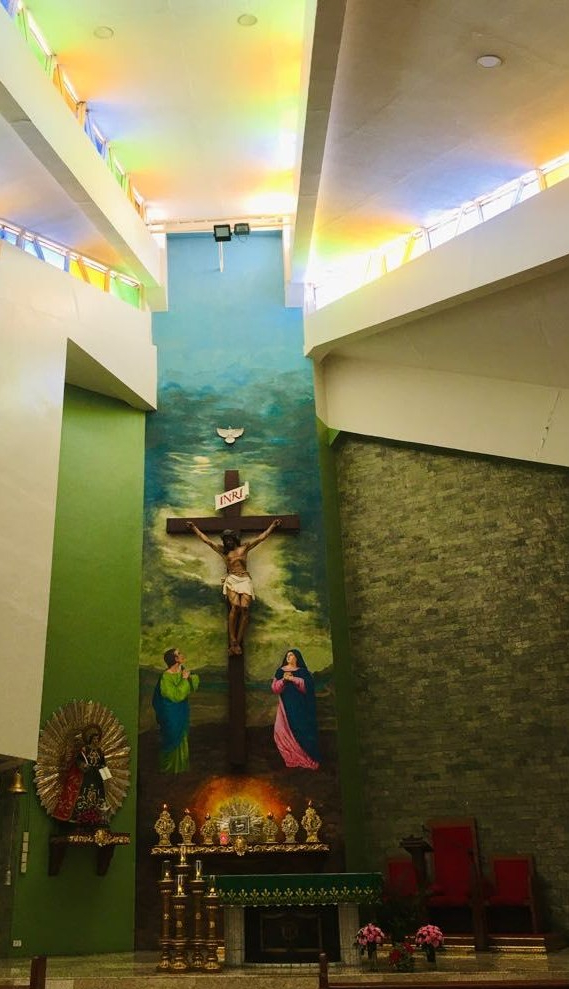
Morning in our Parish. Photo by author, 2019.

So many times in our lives, as we strive to lead holy lives by being good individuals, we also feel so tired and exhausted that we question or wonder if we are still doing the right things in life especially when we try to be faithful to God and with others.

There are times we just cry and suffer in silence in order not to hurt with our words and actions those people dearest to us who are oblivious or even do not care at all to the pains and difficulties they cause us.

Like a slave driver boss, demanding and exacting parents, a perfectionist husband or wife or partner, a naive sibling.

It is very difficult to be holy, to be like Jesus who is so loving and merciful, kind and understanding.

And that is why he chose to come to us, to be with us, to help us, to assure us that “the Father is so well pleased with us”!
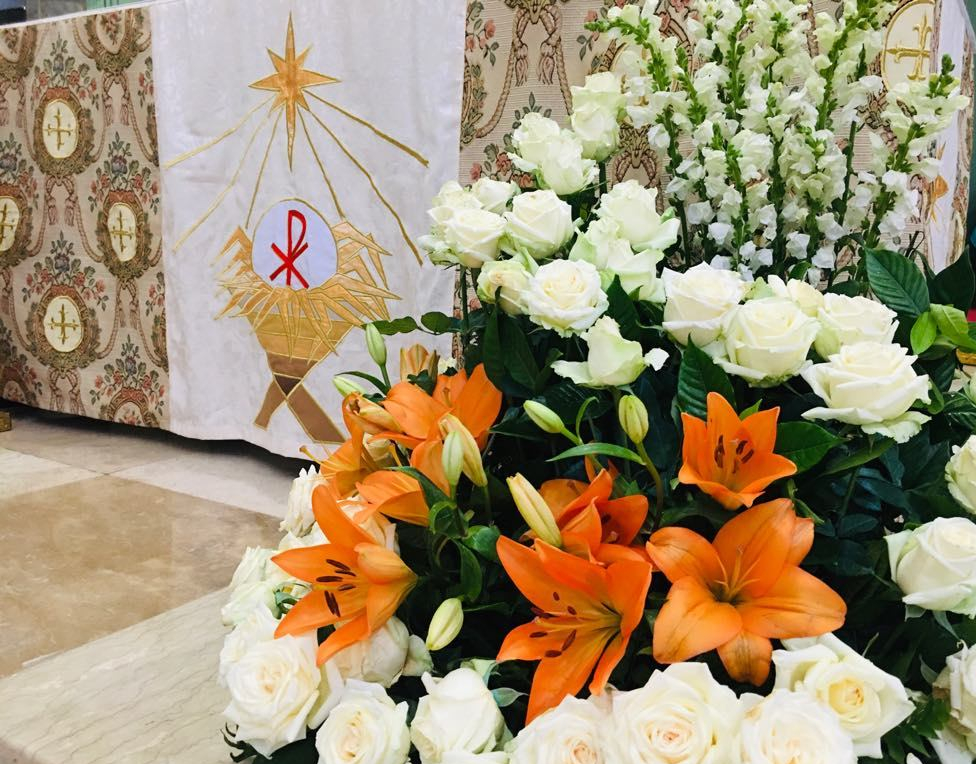
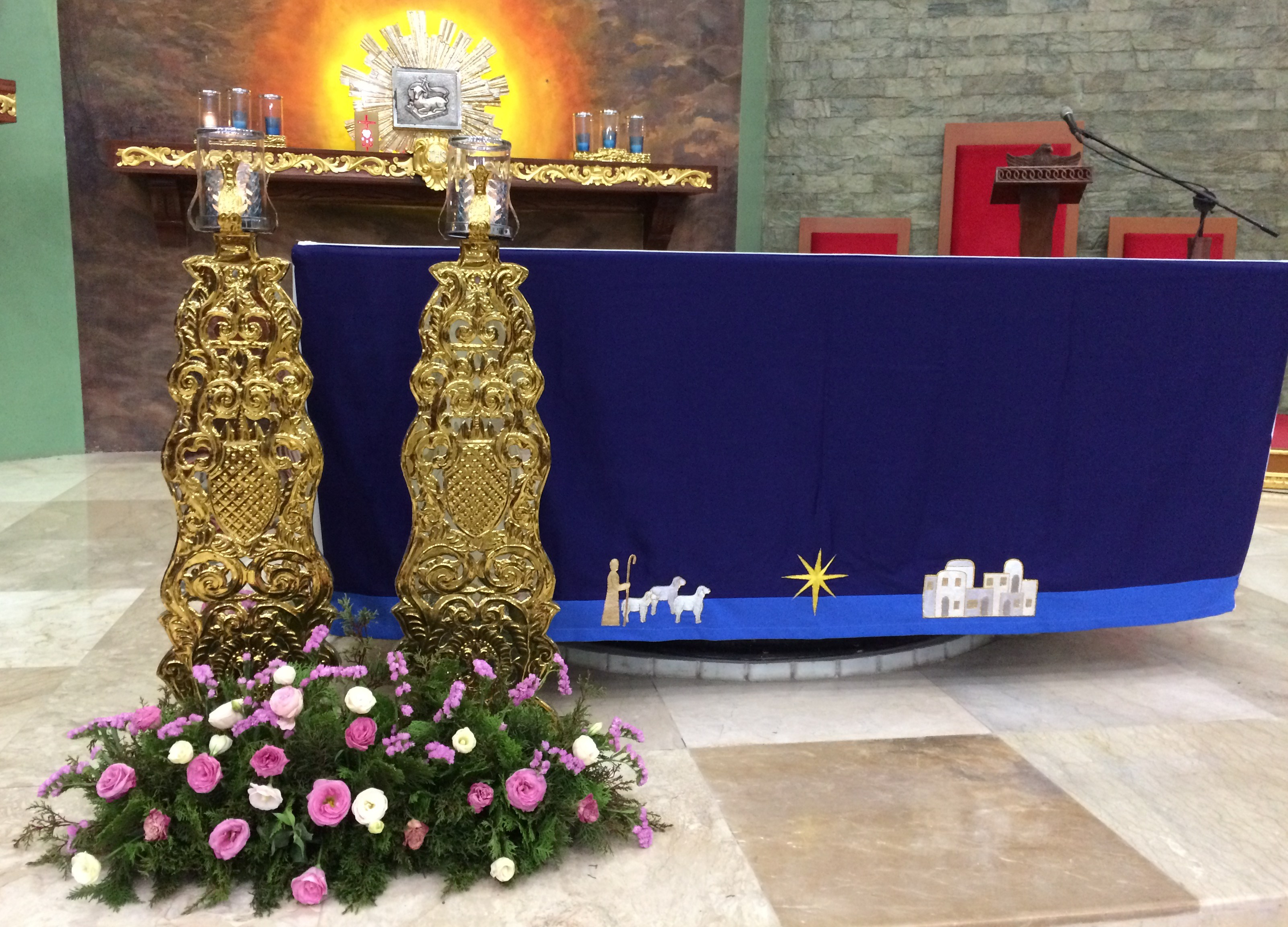
Flowers at our Altar, Epiphany Sunday 2020. Photo by author.

God is well pleased with us

Three things I wish to share with you this lovely Sunday, especially for some of us feeling tired and exhausted this early with our many tasks and responsibilities at home, the school, the office, and even the church and community.

First is get it done. We all have roles to play in life. Remain faithful and stay focused with the mission not with the person. Yes, it is easier said than done but like Jesus instructing John for his baptism, he said, “Allow it now, for thus it is fitting for us to fulfill all righteousness” (Mt.3:15). It must have been so difficult for John to baptize Jesus the Son of God but the Lord told him anyway, get it done! And just as John did his role, everything happened according to God’s plan.

Second is give others the chance to do the will of God. Sometimes many of us have that “messianic complex” as if we are the saviour of the world. No! That is Jesus alone and he has tasked all us with specific roles in doing his mission. Let others do their part. Stop monopolizing all good deeds because when there is a monopoly of holiness, certainly there is already a pervading evil. Jesus as the Christ is the definitely the holy one but he told John to baptize him and he in turn “allowed” the baptism to take place.

Third is do whatever is good. Always. That’s what Jesus told John, “Allow it now, for thus it is fitting for us to fulfill all righteousness” (Mt.3:15). Doing what is righteous is doing what is good, what is holy, what is just. But, it is not that easy. I know.

“Minsan nakakapikon na magpakabuti lalo na kapag tila walang pakialam yung mga ginagawan mo ng kabutihan.”

We have felt so many times that being good, doing what is right can take its toll. We always wonder “when is enough really enough” with people who have made it their way of life of hurting us, of stressing us, of being pain in the ass.

We want to scream, to spill the beans, to unmask them to reveal them as fakes and hypocrites!

But, don’t!

Do not be like them.

Be good like Jesus, the one prophesied by Isaiah in the first reading.

Thus says the Lord: Here is my servant whom I uphold, my chosen one with whom I am pleased, upon whom I have put my spirit; he shall bring forth justice to the nations, not crying out, not shouting, not making his voice heard in the street. A bruised reed he shall not break, and a smoldering wick he shall not quench…

Isaiah 42:1-3
Baby Jesus on a bed of white roses in our Sanctuary area, Epiphany 2020. Photo by author.

In the second reading, we heard St. Peter preaching after the Pentecost of how “Jesus went about doing good and healing all those oppressed by the devil, for God was with him” (Acts 10:38).

Whatever difficulty you are going through at this very moment, you are still God’s beloved child with whom he is well pleased. God is always with you. Continue the beautiful Christmas story with your life of loving service, even to people who hurt you.

A blessed Sunday to you!

Our “Bestest” Gift of Christmas

Quiet Storm by Fr. Nicanor F. Lalog II, 30 December 2019

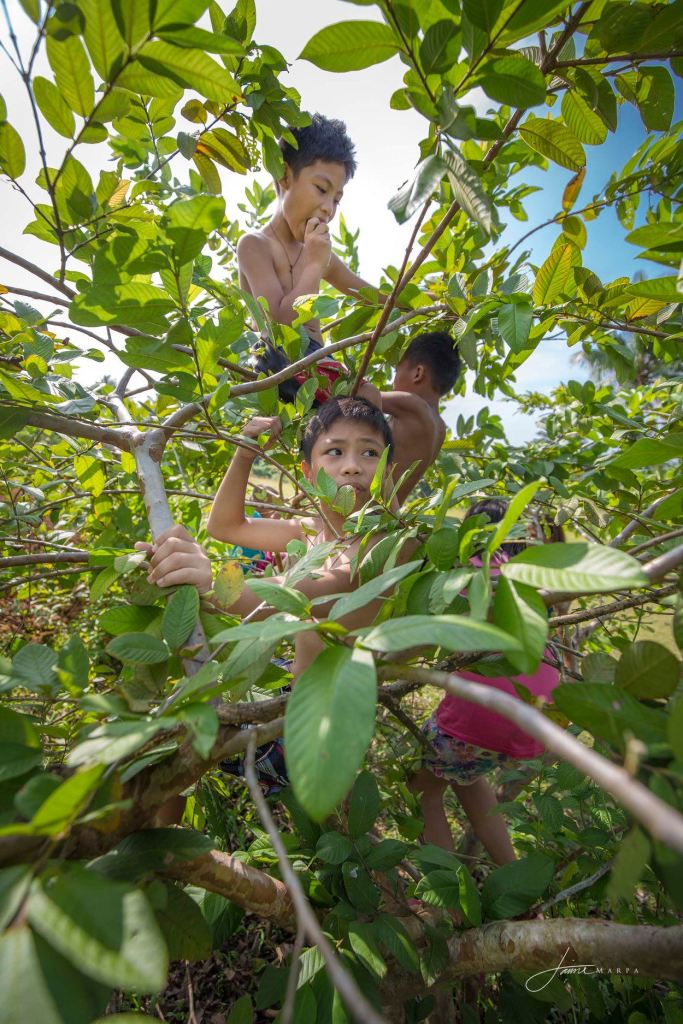
Photo by Mr. Jim Marpa, Carigara, September 2019.

Today we conclude our series on the best Christmas gifts we have received following Christ’s coming more than 2000 years ago: the gift of childhood, of being child-like.

What a joy to keep in mind how God the Almighty chose to become human like us to show us that the path to true greatness and power is in becoming small like an infant, being like a child.

How foolish that we always “play” God to be great and powerful!

The central mystery of Christianity is our transformation from world-wise, self-sufficient “adults” into abiding children of the Father of Jesus by the grace of the Holy Spirit. All else in the Gospel, from the Incarnation of the Lord to his hidden and public lives, his miracles and preaching, his Passion, Death and Resurrection has been for this, of becoming like a child.

The late Cardinal Hans Urs von Balthasar, “Unless You Become Like this Child” (1991, Ignatius Press)

The child-like attitude of Jesus Christ

The best gift we can have this Christmas is to be child-like, to regain and reclaim our sense of childhood, of attending to that “inner child” within us when we trust more, believe more!

Photo by Mr. Jim Marpa, Carigara, September 2019.

See how Jesus Christ entrusts himself not only to his Father but most of all to us!

That is the touching message of the Nativity scene, of how our Lord and God, the King of kings through whom everything was created giving himself to us like a baby, asking us to love him, to take care of him, to be gentle with him, to protect and keep him safe from all harm.

And the key to claiming this great gift of being like a child is for us to learn again how to trust more and fear less like Jesus who showed us by example, not only with words his being child-like.

His constant acknowledgement of God his Father always speaking and doing his will tells us how Jesus from childhood into is adulthood remained like a child by entrusting his total self to God, reaching its highest point on the Cross when he cried out, “Father, into your hands I commend my spirit” (Lk.23:46).

Trust more, fear less

To be like a child according to the example of Jesus Christ is to always trust God and others, and fear less.

Like us, Jesus experienced fears, getting afraid of death but unlike us, he courageously faced death by trusting the Father by “resolutely” going to Jerusalem to be crucified!

When the days for his being taken up were fulfilled, Jesus resolutely determined to journey to Jerusalem.

Luke 9:51

It is normal to have fears, to be afraid.

Fear is not totally negative; it has its good effects that have actually led mankind to every great progress in life like the discovery of new lands and territories, new medicines, new inventions and other things. 

Fear becomes a liability when it prevents us to trust more like little children. 

Photo by Mr. Jim Marpa, 2018.

Kids and young people are often “positively” fearless because they trust so much nobody would hurt them or no one would forsake them. 

As we age, our fears increase because our trust decreases:  we fear so many things because we are afraid of losing the little we have, we are afraid of getting hurt, we are afraid of starting all over again.

We are afraid of getting old, of getting sick, and of dying. 

What an irony how we started in life fearing almost nothing as babies and kids that we grew up so fast but as we aged and matured, we fear so many things that we have stopped growing and stopped living even long before we actually die.

The other day, December 28, we celebrated “Niños Innocentes” or “Holy Innocents” to remember those male children below two years old ordered killed by King Herod for fears of the “newborn king of Israel.” 

Herod lived in constant fears of being deposed in power that he ordered the killing of his three sons and ten wives after suspecting them of trying to overthrow him.

We may not be like Herod with the way we react with our many fears but like him, we end up with same effects like death of friendships, death of love, death of everything, the end of life and adventure.

Maybe that explains why somehow as we get older, we “mellow” and become like children again, realizing we cannot control everything in life, that it is always best to act than to react in every situation.

Do not miss out this great gift of Christmas of becoming like a child.

Trust Jesus Christ who called on us not to be afraid for he is with us always!

Best Gifts of Christmas, II

Quiet Storm by Fr. Nicanor F. Lalog II, 28 December 2019

Italian artist Giorgione’s “Adoration of the Shepherds” (1510) showing an intimate scene set up against a distant landscape. The shepherds’ gently kneeling and bowing their heads down show their humility and fascination with the Infant Jesus while the long road behind them shows the long and tiring journey they have taken before reaching their destination.

We continue with our enumeration of the best gifts of Christmas which is above all the coming of our Lord Jesus Christ. And because of his coming as human like us, we have come to share in his dignity and glory, thus, making us also the best gifts to share and receive every Christmas!

We await Christmas every year because we await Jesus Christ, the most beloved person of all we can know and have as friend.

We wait only for persons, not things.

Waiting is beautiful because we never wait alone. There is always another person waiting with us, waiting for us. And when we finally come and meet with the other person also awaiting us, then we become present, a gift for one another.

In our presence with each other comes the wonderful gift of intimacy.

“God became a human being so that in one person you could both have something to see and something to believe.”

St. Augustine, Sermon 126, 5
The spot where Jesus Christ is believed to have been born now covered and protected by this hole under the main altar of the Church of the Nativity of the Lord in Bethlehem. May 2019

Christmas is a story about persons called by God to bring us his Son Jesus Christ. It is a living story that continues to our own time. Here are some of the best gifts of Christmas coming from the gift of our personhood.

  1. The gift of family. Christmas happens in a family of husband and wife and children. Very much like Joseph, Mary, and Jesus. Remove one and the Nativity scene becomes incomplete. Let us be thankful for our family, let us pray for the unity of our family. When Jesus was lost at the age of 12, Joseph and Mary decided to return to Jerusalem – symbolizing God – and eventually found him there in the temple. Let us always turn to God, ask for his guidance and protection of every family, for the healing of our family, for the mending of our broken relationships. Let us pray for all broken families whose members from the husband and wife to their children are all aching deep inside for the pains of separation.
  2. The gift of women and of motherhood. When God created man, he found “it is not good for man to be alone” that is why he created the woman as man’s “suitable partner” (Gen.2:18). What a beautiful term for woman, part-ner, a part of man who is never complete by himself alone. How sad that until now, it is right inside the home where every woman first experience physical, verbal and emotional pains. Women are the best signs of fidelity and faith: Elizabeth called Mary “blessed” because she believed the words spoken to her by the angel from God will be fulfilled. Let us pray for the women in our lives especially own own mother and sisters, lola and aunties, cousins and nieces. Remember, the way we relate with women reflect to a great extent the way we relate with God. Love and bless the women!
  3. The gift of men and fatherhood. When Jesus taught us how to pray, he taught us that God is like a “Father” whom we shall call “Our Father”. There is a crisis in fatherhood and manhood these days because many men have forgotten to be truly man enough like God our Father: a giver of life and protector of life as well. Most of all, when children lose this gift of life, it is the father who restores the life lost like the merciful father of the prodigal son in Luke’s gospel chapter 15.
Aleteia, December 2019.

This Christmas break, spend time with your family, hug your mommy and your daddy tightly and feel their presence again.

Thank your family, your mom and dad.

Pray for your departed loved ones, visit the cemetery and say a prayer for them, talk to them. Most of all, listen to them and feel them again.

Best gifts of Christmas

Quiet Storm by Fr. Nicanor F. Lalog II, 27 December 2019

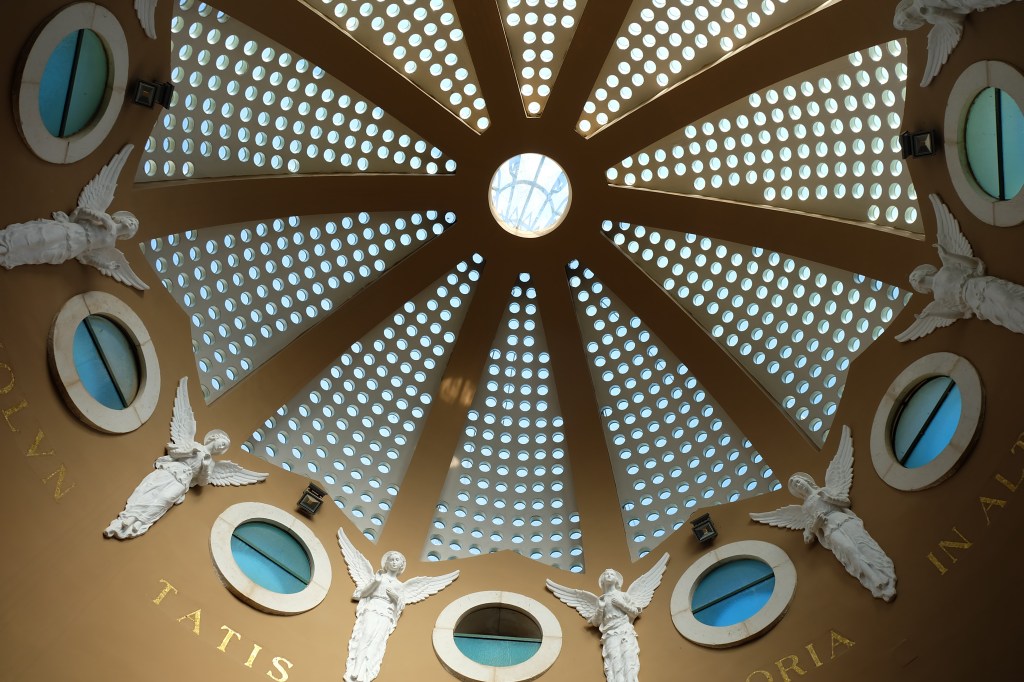
Dome of the chapel at Shepherd’s Field near Bethlehem where the angels appeared to some shepherds to announce the birth of Jesus Christ more than 2000 years ago.

By this time, many of you must have opened the gifts you have received this Christmas. Some are happy, some are not – even disappointed – while there are others who simply do not care at all with the gifts they have received.

But gifts are not everything. What really matters most are the persons and the love and thoughts that come with every gift we have received this blessed season.

Below are some spiritual gifts I feel we need to be thankful too!

The “little door” that leads into the Church of Nativity in Bethlehem that has come to mean the need to bow low and be humble in order to meet Jesus Christ not only inside but also in our daily life. Photo by author, May 2019.
  1. The gift of hope. Hope is not thinking positively that things can get better like the weather. Hope is having a firm belief that even if things get worst, there is God who always loves us, who takes care of us. People with hope always look forward in the future whether here or in eternal life. They are also the most loving people around, the most understanding and most forgiving. They always strive, work hard to make things better for them and for others. Those without hope are the most evil: they will kill and destroy everything and everyone because they have nothing to look forward to in this life or hereafter. The kind of life we live always indicates the kind of hope we have. Or do not have.
  2. The gift of desert. Sometimes, life becomes a desert for us, when we are desolate and so barren with everything dry and even lifeless. But it is during our desert moments in life when we not only meet our true selves but most of all, that is when we meet God. It is in this meeting with God in our desert we experience healing from all our hurts and disappointments in life. We need to withdraw once in a while to our desert to silently pray in order to hear God’s voice anew in our inner selves. In our mass mediated world today when we are bombarded with wants and needs to be rich and famous, the more we end up empty and lost. But when we dare stay in our desert and try to listen in silence, the more we are attuned with life’s realities, the more we are enriched and deepened in our lives.
  3. The gift of intimacy. From our desert experiences of barrenness and desolation, of silence and prayer, and a lot of reflections and introspections come the great gift of intimacy with God and with others. We come to realize who our true friends are when our chips are down, when we are alone and badly bruised and beaten in life. How ironic that when we are so filled with material things, that is when life for us becomes superficial and shallow. But whenever we go through many desert storms, that is when we come to realize the most important in life – the persons who have touched us for better or for worse, the persons who make us experience to be loved and to love.
An oasis at the Dead Sea desert. Photo by author, May 2017.

We shall continue with our other lists of spiritual gifts this Christmas tomorrow.

How about you, what are the spiritual gifts you wish to share with us that may also help us deepen our Christmas celebrations this 2019?

We’ll be glad to hear from you also.

A blessed Christmas weekend to you.

What is in a name?

The Lord Is My Chef Simbang Gabi Recipe, 17 December 2019

Genesis 49:2.8-10 ><)))*> ><)))*> ><)))*> Matthew 1:1-17

Parokya ng Banal na Mag-Anak, Violeta Village, Guiguinto, Bulacan. Photo by Arch. Philip Santiago.

Today we shift our focus in our Advent preparations to the first coming of Jesus Christ when he was born in Bethlehem more than 2000 years ago. Strictly speaking, the Christmas countdown officially starts only today especially with our very long but beautiful gospel from Matthew.

Maybe you are wondering what’s good with our gospel today when it is all about names that mostly sound very funny.

Importance of names: origin and mission

In ancient time, giving name to children was a very serious matter among peoples, especially the Jews.

For them, a name indicates two very important things about a person: one’s origin and mission in life, something parents of today have entirely forgotten, even ignorant because they are more concerned with fad and being unique in naming their children that always end up as a joke as it is always bizarre and weird.

And their poor kid suffers for the rest of his/her life like that man named “Fantastic”. All his life he felt so sad being called Fantastic that he told his wife when he dies, never put his name on his tombstone.

Eventually Mr. Fantastic died and the wife kept her promise not to put his name on his marker. But she felt the need to honor her beloved husband who was so good and honest that in lieu of his name, she asked a tribute written to honor him.

It said, “Here lies a very gentle and loving husband and father who never looked at other women except his wife.”

Every time passersby see and read that tribute, they would always exclaim “Fantastic!”

From Google.

Going back to the importance of giving names….

Corporations are more serious than parents in choosing names and trademarks to their products and services. Every trademark and brand always evokes deeper meanings than just being a product or entity that some of them have entered the vocabulary of many languages like Google, Xerox, and Frigidaire.

And the sad thing about this is how many babies are now being named to follow things and products than the other way around, giving more value to things than human beings!

The book of the genealogy of Jesus Christ, the son of David, the son of Abraham. Abraham became the father of Isaac, Isaac the father of Jacob, Jacob the father of Judah and his brothers.

Matthew 1:1-2
Detail of the ceiling of Parokya ng Banal na Mag-anak after the front or main door: the genealogy of Jesus Christ that starts with Abraham. Great concept by the Parish Priest, Fr. Ed Rodriguez. Photo by Arch. Philip Santiago.

Genealogy of Jesus as direction of Matthew’s Gospel

St. Matthew opens his gospel account with the genealogy of Jesus to settle right at the very start the question about the origin and mission of Jesus Christ.

Here we find the artistry and genius of St. Matthew, some 2000 years ahead of the late Stephen Covey’s third habit of highly effective people: “begin with an end in mind.”

By starting his genealogy with Abraham and David, St. Matthew gives us the whole gospel message in a glance because they are the two key figures in the beginning and realization of God’s promise to send Jesus Christ who would save us all.

Let us just focus on Abraham which means “he who is the father of many.”

It was to him that the story of God’s promise began after the dispersal of mankind following the collapse of the Tower of Babel.

From then on, Abraham points to what is ahead in God’s divine plan, not only for himself but also for the whole mankind for it is through him that blessings come to all. His journey from his birthplace of Ur into Canaan is symbolic of his journey from the present into the future, walking in faith following the Lord’s path and divine plan.

In Abraham we find God starting anew the history of mankind after the Fall that leads up to Jesus Christ who came to lead us all back into the Father.

With Abraham as the main header of Christ’s genealogy, we find not only the beginning but also the end of St. Matthew’s gospel which is the universality of God’s plan of salvation with Jesus telling his disciples to make disciples of all nations (Mt.28:19).

Detail of the ceiling near the sanctuary of Parokya ng Banal na Mag-Anak, the culmination of the genealogy of Jesus. Photo by Arch. Philip Santiago.

Imitating Abraham into our time

Last December 10 was a very important date for me and my parish: it was the ordination date of our first priest.

While waiting for the start of the Mass at the front door (which is actually the back of the Cathedral or any church), I just prayed in silence thinking about my role in the ordination of Fr. RA Valmadrid.

While I marveled at the beautiful renovations of our Cathedral, my sight was slowly moved towards the altar.

It was like an “Abraham experience” in Matthew’s genealogy for me: a wayfarer on a journey into the future, towards God, walking in faith.

In a quick glance, I kind of saw the future glory of every faithful coming to the altar to receive Jesus Christ in the sacraments especially the Holy Eucharist.

I just felt the beauty of entering the Cathedral, or any church which is more than stepping into a building but more of entering God himself, our point of origin and final destination.

Do we realize this tremendous blessing and grace of being baptized, of being a child of God, not only given with a name but most of all, of being counted into the family of God our Father?

In the first reading we have heard Jacob calling his 12 sons. What is so striking here is the blessing Jacob had bestowed upon Judah, instead of Joseph who was the best of all his sons, the holiest and most intelligent.

Like Abraham and Judah, or anyone in the genealogy of Jesus Christ, we can find our own selves too not as the vida or contravida but simply being called to be God’s instrument in fulfilling his plan in sending his Son Jesus Christ.

Truth is, God always comes in the most unexpected situations and peoples most of the time.

In Christ Jesus through our Baptism and faith, we find our genealogy – our origin and mission – as children of God.

If you want to get a feel of this reality, try reading aloud, very slowly, the genealogy of Jesus Christ. At the end, include your self, mention your name, your mother and father. Then close your eyes and let your life flash back in silence.

In the silence of your heart, do you find God coming more to you than you to God?

So amazing, is it not? We are all part of Christ’s genealogy. Let’s bring him forth into the world in our life of faithful witnessing like Abraham. Amen.

Malolos Cathedral. Photo by author.

Inclusive Christmas

The Lord Is My Chef Simbang Gabi Recipe, 16 December 2019

Isaiah 56:1-3. 6-8 ><)))*> ><)))*> ><)))*> John 5:33-36

Our Parish Altar, Simbang Gabi 2018. Photo by author.

When we were still seminarians, our spiritual director became a victim of “hold-up” while walking home from an evening mass nearby. He is now a Trappist monk at Guimaras, a very kind and gentle priest we fondly call “Fr. Esteng”.

According to Fr. Esteng, everything happened so fast. But, after taking all his money, the suspect demanded Fr. Esteng’s big bag too, his “mass kit”. This time, Fr. Esteng refused to give into the demand of the hold-up man, insisting there’s nothing of value inside because they are things for celebrating the Mass of which no one would really buy.

To convince the hold-up man, Fr. Esteng got the “brilliant idea” of inviting the suspect to come with him to the seminary to get some food so he would no longer need more money.

Good that the hold up man did not accept the “invitation” of our good priest who got some “scolding” the following morning from his brother priests the following day after learning his brilliant idea, telling him to never to invite thieves into the seminary again!

“For my house shall be called a house of prayer for all peoples. Thus says the Lord God, who gathers the dispersed of Israel: Others will I gather to him besides those already gathered.”

Isaiah 56:7b-8

Inclusive God, exclusive people.

Praying at the Wall of Jerusalem Temple, 2017.

Welcome everyone!

It’s the start of our Simbang Gabi, our nine-day novena before the Lord’s birthday on Christmas.

God tells us in the first reading how he welcomes everyone into his house without any exceptions. That is how good and loving our God who is not contented in calling us all into his house but even sent us his only Son Jesus Christ to gather and lead us back to him.

Our God is very inclusive, always including everyone especially those rejected, those in the margins.

So unlike us people who are very exclusive and judgmental of others too.

We want everything exclusively ours. Just us. And when we meet strangers, those who do not look like us or do not speak and dress like us, we feel uncomfortable.

Worst is when we meet people of different faith and beliefs that we feel uneasy and even threatened simply because they are not like us!

It is good that for this final year before we celebrate our 500 years of Christianization, our bishops have dedicated 2020 to be the “Year of Ecumenism, Interreligious Dialogue, and Indigenous Peoples”.

This is to “celebrate human fraternity by promoting the culture of dialogue as a path of peace.” The Church wants to “work for unity and harmony while respecting diversity and to recognize peoples’ identities, spiritualities and ancestral domain.”

Logo for the Year of Ecumenism, Interreligious Dialogue, and Indigenous Peoples.

Jesus told the crowd, “But I have testimony greater than John’s. The works that the Father gave me to accomplish, these works that I perform testify on my behalf that the Father has sent me.”

John 5:36

See everyone and everything in Christ.

In our gospel today, Jesus was questioned by the Jews for healing a man sick for 38 years on a sabbath day at Bethesda.

Jesus was so different from them who have fallen into rituals and replaced God himself with their laws and traditions. They wanted Jesus stopped and even put to death simply because he did things so differently when, in fact, he was trying to bring back what was lost like the precedence of God and human life over laws and rituals.

Pope Francis reminds us that the Church exists to remind us that God loves and welcomes everyone. He is absolutely right that so often it happens right in our churches, in our celebrations we go on our own exclusivistic ways forgetting we are supposed to be a community.

On this first day of our Simbang Gabi, let us focus more on Jesus so we may find him among other people easily because when we are focused with our “work” and ministry, the more we see ourselves and forget Christ among the poor and marginalized.

Do we find Jesus when we serve and celebrate the liturgy or do we simply have ourselves?

Is it Jesus Christ whom we share with others in our dealings and service in the Church or our proud self?

Where is Jesus really in our lives today that we simply do things for the sake of doing it, because it is a tradition and not because of a personal conviction and relationship with him?

A blessed Monday to you!

Our sacristy, Advent 2018. Photo by author.

Advent is regaining our sight and vision

Quiet Storm by Fr. Nicanor F. Lalog II, 06 December 2019

Advent 2019, Parokya ng San Juan Apostol at Ebanghelista, Bagbaguin, Santa Maria, Bulacan.

Advent and Lent are two beautiful seasons in our Church calendar that prepare us for the great feasts of Christmas and Easter, respectively. Both have violet as motif though Advent is supposed to have a more bluish hue to distinguish it from Lent’s penitential character.

They both invite us to “look forward” into that future glory of Jesus Christ when he comes again at the end of time to establish “new heaven and new earth” where peace would finally reign, removing all sufferings and pains, wiping away all our tears to fill us with perfect joy.

On that day the deaf shall hear the words of a book; and out of gloom and darkness, the eyes of the blind shall see. The lowly will ever find joy in the Lord, and the poor rejoice in the Holy One of Israel.

Isaiah 29:18-19

Advent is renewed relationships

More than the promise of a new order of things in the Second Coming of Christ, Advent invites us also to look forward into renewed relationships with God through others.

Our Advent Candle 2019.

Jesus Christ comes first in our hearts, his new manger. Unfortunately, we seem to have forgotten Jesus, remembering only his birthday and its trimmings. Fanned by social media, people are going crazy as early as August with their own Christmas countdown with those memes of Jose Mari Chan poised to sing his popular “Christmas in Our hearts”, forgetting its beautiful message of opening our hearts to Jesus through one another.

How sad that more than ever, people are so excited with Christmas for the wrong reasons like gifts and money, parties and vacations but not Jesus himself.

Advent invites us to “actively wait” Christ’s coming by renewing our relationships with our family and friends in every here and now of our daily living.

As Jesus passed by, two blind men followed him, crying out, “Son of David, have pity on us!” When he entered the house, the blind men approached him and Jesus said to them, “Do you believe that I can do this?” “Yes, Lord,” they said to him. Then he touched their eyes… and their eyes were opened.

Matthew 9:27-29, 30

Need to remove our “blindness”

Advent is a season to remove our blindness to Jesus present in us and in every person we meet. Our gospel today tells us a short story of Christ’s healing of two blind men with a twist of humor.

According to St. Matthew, the two blind men kept following Jesus after teaching a crowd, begging him to restore their sight.

How they were able to follow Jesus, your guess is as wild as mine… but, most funny is how they followed Jesus home to finally heal them!

Go figure it out. How did it happen if both men were blind, following Jesus every step of the way into his home?

But they both teach us a valuable lesson not only for this Advent but for everyday living: of the need to remove our blindness so we may see Christ coming to us day in, day out.

How sad when most of us have eyes but cannot see or even refuse to see Jesus Christ coming to us personally and among other people especially our family and friends, among the ordinary and usual people we meet everyday in our lives.

Last Tuesday amid heavy rains and winds of Supertyphoon “Tisoy”, two elderly couples in the parish requested for the Sacrament of Anointing of the Sick.

After hearing their confessions, anointing them with Oil, and giving them the Holy Communion, I decided to stay longer when I found out they live by themselves despite having six children living in the vicinity with their many apos!

Making things worst for the couple are the two children living abroad: one in the States have totally cut ties with them without any communication in 15 years while the other living Down Under refusing to help them in their medical needs.

May the light of Christ heal us of our many blindness so we may see him among our families and friends.

The way we live and what we hope

I have been told the elderly couple I have visited were not really that “good parents” and neighbors as well. But, I explained to everyone after my visitation that is not important, nor the issue at hand.

What matters most is who would take care or look after these two elderly people, an arthritic father and a mother stricken with stroke? Must we allow ourselves to be blinded by past sins and hurts and pains that we fail to see Christ coming in the present?

Yes, this is easier said than done but, in this life, we only have two choices to make, either we become better or bitter. Make the right and better choice always!

Last Sunday I told my congregation that the way we live dictates our hope.

Photo by Jo Villafuerte at Atok, Benguet, 01 September 2019

Those who strive in life to do what is good, to become better in whatever form are those who truly hope. And truly love because they believe in the future, they look forward to something better if not in this life, maybe after.

But those who do nothing in this life, those who feel resigned, “enjoying” their miseries in life are the ones who do not hope. And surely do not love at all for they see only death and destruction, nothing to look forward to. They do not mind hurting even killing others because they believe there is no future at all.

Indeed, as TIME Magazine’s Lance Morrow wrote in 1991, the opposite of love is not really evil but hopelessness. Very true.

As we end this first week of Advent moving closer to Christmas, let us pray for the grace of Jesus Christ to heal us of our many blindness in life so we may see him anew in us and in others too. A blessed weekend to you!

Going out of our families and friends

The Lord Is My Chef Breakfast Recipe for the Soul

Thursday, Memorial of the Presentation of Mary to the Temple, 21 November 2019

Zechariah 2:14-17 ><)))*> <*(((>< Matthew 12:46-50

Feast of the Presentation of Mary at the Temple originated from the Eastern Church where it is known as “The Introduction of the Theotokos (Mother of God) to the Temple”. Photo from Google.

Dearest Lord Jesus Christ:

As we celebrate the memorial of your Mother Mary’s presentation at the Temple, I am deeply struck by the gospel scene for this feast.

Someone told Jesus, “Your mother and your brothers are standing outside, asking to speak with you.” But he said in reply to the one who told him, “Who is my mother? Who are my brothers?” And stretching out his hand toward his disciples, he said, “Here are my mother and my brothers. For whoever does the will of my heavenly Father is my brother, and sister, and mother.”

Matthew 12:47-50

This is so striking to me, Lord because here you are asserting your authority outside your family circle. Here you are telling us of the need to eventually leave our family and friends in order to join you in your mission and journey.

It is very true that we find our first sense of belonging in our family and circle of friends but as we get older like you in Nazareth, our larger sense of belonging to God our Father can only happen when we break free from our family and friends.

Not because we do not love them but primarily because each of us has a calling and mission from you that must be followed and fulfilled. And to do so, we have to leave our family and friends in order to heed and follow your call, O Lord.

In this age of social media, there are some family and friends who get the wrong notion that belonging and possessing or ownership go together, that parents own their children, and friends own each other.

I pray for all parents to imitate St. Joachim and St. Anne who clearly knew they did not own Mary their daughter, that she is God’s that they have to offer her to him at the temple.

May we all grow into maturity that there comes a time when we have to leave our family and friends, even say “no” to them to be like you to freely say “yes” to the Father. Amen.

Betania Tagaytay, 2017.

“Midnight Diner: Tokyo Stories” are recipes for troubled hearts and lonely souls

Quiet Storm by Fr. Nick F. Lalog II, 20 November 2019

A chef is basically a person who loves people. And that is why for any chef, cooking is both a passion and an art. His menu are not only meant to feed the body but most especially enrich the heart and soul of every diner.

Welcome to Netflix original series “Midnight Diner: Tokyo Stories”!

Each episode is exactly like every recipe the main character called “Master” dishes out to his patrons and customers who come from all walks of life with their unique burdens and story to share and eventually, resolve after tasting his fresh and easy to cook meals.

Midnight Diner is as Japanese as the ramen and sake the Master serves his guests. Everything is in Nihongo with English subtitles that demand one’s total attention to understand the conversations briefly interspersed with first person accounts by the Master.

At the opening, the Master gives us the warm and nice ambience of the series set at midnight until seven in the morning for people who do not wish to go home straight after their office hours.

It turns out that they are not only looking for good food but for warm company as well which the Master ably provides with his total attention and communion.

Very interesting to note that the Master is a celibate, reason why he can devote himself wholly to his diners, listening to their joys and sorrows, victories and defeats. So far, from what I have seen in its two seasons, he has no love interests although it won’t be surprising if in the third season he turns out to be a character from one of Murakami’s novels or short stories.

Though he is a fictional character, he is rightly called “Master” for his commanding presence that is not intimidating but so warm and gentle, so unlike the celebrity chefs we see on TV.

The Master can cook anything, including fancy corndogs and pancakes that are very American. He always has a “menu of the day” as title of each episode.

Should anyone ask for any kind of dish, he willingly prepares it subject to availability of ingredients that turns out he always has or sometimes, like a true chef, finds other alternatives just to fulfill a customer’s cravings. In one episode, a patron comes nightly with his own three pieces of bread so the Master can make him “yakisoba sandwiches” — exactly how we Filipinos eat pancit with another carbohydrate!

What makes the series so good is that the Master is more than a chef — he is the Tokyo counterpart of Paris’ Cafe Anglais famed lady chef “Babette” of the 1987 Danish film “Babette’s Feast” and James Taylor’s 1977 hit single “Handy Man” rolled into one.

More than the food he passionately serves, the Master delights and comforts every troubled heart and lonely soul longing for love and relationships, forgiveness and kindness they finally find in his Midnight Diner.

Most of all, neither the Master nor his food is the main focus of each episode but the story of every customer who comes to his diner at the most unholiest hours – between 12 midnight and seven in the morning – searching for food for their souls!

Mainstays of the Midnight Diner.

Helping the Master in processing every customer are his interesting mix of characters of regular patrons: LGBTQ members, career ladies mostly single, retirees, professional gamblers and of course, Yakuza gang members.

They are the Master’s “secret spices” who bring out all the flavors and aroma of every customer’s life story like a widowed lawyer searching for his lost step brother to a nightclub stripper sought and saved from miserable life by her high school teacher suffering the early stage of Alzheimer’s disease. Sometimes they act like the Master’s garnishings, adding taste and beauty with some sprinklings of life lessons to lost customers.

Though most stories are understandably peculiar to Japanese culture, they all touch a common chord within us for our basic need of acceptance which the Master warmly provides like his steaming hot dishes.

Unlike most TV series, Midnight Diner’s pacing is so fast and without any pretensions that prevent it from becoming dragging and boring. In less than 30 minutes, each episode is deftly resolved just as magically how the Master came out with a superb meal from his limited resources and tiny kitchen.

But the best attraction of the show is how the viewer eventually finds one’s self warmly welcomed into the diner, laughing or crying, sympathizing or objecting to whatever situation is presented by every guest.

It is a very lovely series that transcends language barriers and cultures because it nourishes and warms our soul that never rest nowadays due to the demands of modern living. Somehow, inside the little Midnight Diner, there is always a space welcoming everyone including us viewers to unwind and be fulfilled with good food, nice people, and meaningful conversations.

Hoping for the next season soon.

Irasshaimase!

“When It Was Done” by Hugo Montenegro (1970)

The Lord Is My Chef Sunday Music, 17 November 2019

Photo by Johannes Plenio on Pexels.com

Today’s gospel speaks about the end of time, the Second Coming of Jesus Christ when he predicted the fall of Jerusalem and destruction of its Temple in 70 A.D.

Every coming of Jesus Christ is a day of judgment and salvation, a call to love, love, and love.

When Jesus comes again at the end of time, he won’t be asking us how much money we have but how much do we share?

He won’t be asking us what car do we drive but how we move people with our kindness and warmth?

Jesus will not ask us those questions we are so preoccupied in this life but instead ask us the basic question we have always avoided answering, “how much do you love”?

Everything follows from that question because only those who truly love are the ones willing to suffer and sacrifice, even give life so others may live.

And that is why we have chosen this very poetic song, When It Was Done by the famed American composer Jimmy Webb in 1969 and first recorded by Winter Wanderley that same year.

There are other artists who have covered this beautiful song but Hugo Montenegro’s version is the best, giving it a more ethereal quality despite its poignant character.

It is a story of a man’s love presumably to a very lovely woman he never had the chance to express his feelings because she had been taken by somebody else.

If I could bind your mind to mine in
time, to keep you from that world of his
If I could change the strangers in
your kind, then I’d know where your soul is
Then I’d know what song I’d have to
sing, to touch that chord within you
Then I would weave such wondrous
songs, and when it was done, I’d win you
If I could stand with the stars on
either hand, and say girl this ain’t the answer
If I had been where you’re going, but then I’ll never be no dancer
If I was I’d know what step to take, and laugh at what had freed me
And smash the great wall down girl,
and when it was done, you’d need me

Too late… but the gentleman pins his hopes to the end of time when probably on judgment day he could have the chance to finally have that lovely woman.

If I can face the fate that waits to cast me into shambles
And sit across the velvet boards from God then I would gamble
And if I could,
I’d know what chance to take and before the devil sold you
I’d bet my soul against the stars, and when it as done, I’d hold you

Of course, it is all wishful thinking. And that is why – “when all was done” – there’s no more going back because it is judgement day. So let’s do whatever good we can in the here and now where Christ comes again.

Meanwhile, enjoy this lovely piece and shower your loved ones with all the love you now have.