Our Sabbath faith

Lord My Chef Sunday Recipe for the Soul, 12 October 2025
Twenty-Eighth Sunday in Ordinary Time, Cycle C
2 Kings 5:14-17 ><}}}}*> 2 Timothy 2:8-13 ><}}}}*> Luke 17:11-19
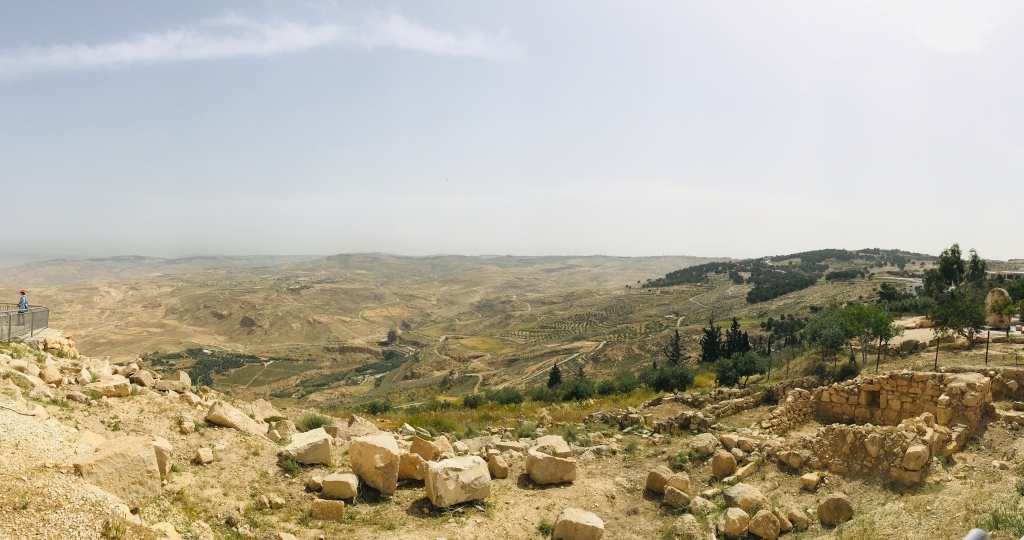
Photo by author, view of Israel from Mt. Nebo, Jordan, May 2019.

Our gospel setting this Sunday strikes a deep lasting impression on anyone who had been on a Holy Land pilgrimage: of those vast expanse of desert in Israel where dusty roads have been replaced by modern concrete or asphalted roads.

Perhaps the feelings remain the same today and during the time of Jesus when he and the Twelve were near the border between Samaria and Galilee, several figures who turned out to be ten lepers appeared at a distance, waving their hands to the Lord. It must have been a surprising sight, then and now, of being found in the desert. Imagine the desperation in their voices of those ten lepers, “Jesus, Master! Have pity on us!” (Lk.17:13).

Jesus right away told them to go show themselves to the priests, and as they went, they were healed. But only one—a Samaritan—returned to thank Jesus who wondered aloud: “Ten were cleansed, were they not? Where are the the other nine? Has none but this foreigner returned to give thanks to God?” Then he said to him, “Stand up and go; your faith has saved you” (Lk.17:17-19).

“The Healing of Ten Lepers” painting by James Tissot en.wikipedia.org

Last Sunday we reflected that faith is primarily a relationship with God; hence, its powers or efficacy will work only when aligned with God and his Holy Will. We will never know how strong we have grown in faith until we get into tests and trials. That is why, the need for us to imitate the Twelve in praying to Jesus, “Increase our faith” (Lk.17:5).

We grow best in faith when we worship God with our fellow believers in the celebration of the Holy Mass especially on Sundays which is our Sabbath. More than a day of rest, Sabbath is a day of restoration to God, with others and most of all, with one’s self. It is a return to Eden, a dress rehearsal of our entry into heaven to dwell in God’s presence eternally.

This is where lies the beauty and significance of this healing of ten lepers – they were not only restored to health but restored in God, to their families, and to their community and fellow believers.

Photo by author, Jerusalem, May 2017.

Those ten lepers have never known any rest at all since getting afflicted with the disease for they were cut off from homes, worship, and community. That is why they could not get near Jesus as they have to keep their distance from everyone according to their laws in order to prevent infecting others and spreading the disease. Likewise, it was the very reason that anyone healed of leprosy or any serious sickness must first present themselves to the priests who have the sole authority to declare one has been healed and therefore may be allowed to reintegrate with their family and community or society in general. Being declared as healed of sickness like leprosy at that time meant the restoration of one’s rights to worship in the temple or synagogue especially on Sabbath.

When Jesus healed them, he restored more than just their bodies and physical health. In sending them to the priests, Jesus invited them into the wholeness of what the Sabbath really is like peace, inclusion, and dignity. 

Or, salvation in short.

Sad to say, only one realized this when he returned to thank Jesus. The healed Samaritan leper knew and felt a deeper healing had taken place within him that he responded with heartfelt gratitude to God in Jesus. There was a deepening of his faith in Jesus when he decided to return to thank the Lord that also expressed his desire to enter into a relationship with Jesus.

Photo by author, Sacred Heart Novitiate, Novaliches, QC, 20 March 2025.

Whenever we thank people for their kindness no matter how little that may be, it is more than acknowledging the other person but most of all, of expressing our links with them as well as our desire to be one with them, especially with God who showers us with good things daily. That is why the Mass is also called Eucharist – from the Greek eucharistia meaning “thanksgiving”. After his skin was cleansed of leprosy in the first reading, Naaman the Syrian Army General declared before the Prophet Elisha that he would worship the Lord alone as he returned to his home with two mule-loads of Israeli soil.

Sorry to say but whenever we refuse to celebrate the Mass on Sundays, it means that we are one of those nine ungrateful lepers healed by Jesus! Don’t you feel being called like the Samaritan to return and give thanks to Jesus for the many blessings you have received this Sunday?

See how in this age of faith in a mass-mediated culture that we have become so impersonal, trusting more our gadgets and all those apps like Siri and Waze as if we have already lost faith in the human person. And God.

Photo by Mr. Nicko Timbol, Chapel of the Angel of Peace, OLFU-RISE, Valenzuela City, 03 October 2025.

We spend practically our entire days in front of all kinds of screens than with the face of a human person. Again, this sadly extends to the way we worship with many still stuck in the pandemic mode of online Masses not realizing the important and irreplaceable aspect of personal encounter of Jesus in the actual Mass with other believers.

God remains God even if we do not go to Mass every Sunday. It is us who are losing greatly whenever we skip Sunday Masses, our Sabbath. God specifically made his third commandment to “Remember to keep holy the sabbath day” because Sabbath reminds us that life itself is holy in the first place, a sharing in the life of God. What a tremendous blessing still that even if we forget God or disregard God every Sunday, Paul reminds us today of the beautiful truth and reality that “If we have died with Jesus we shall also live with him; if we persevere we shall also reign with him. But if we deny him he will deny us. If we are unfaithful he remains faithful, for he cannot deny himself” (2Tim.2:11-13).

Can you imagine that? If we are unfaithful to Jesus, he remains faithful?

Every Sunday, Jesus tells us to “Stand up and go; your faith has saved you” despite, in spite of our many sins and absences from the Sunday Masses in the past because he wants us to experience the deeper wholeness that comes with faith and gratitude as experienced by that Samaritan leper he had healed. As we continue to journey with Jesus toward Jerusalem facing many trials and sufferings along the way, he calls us to come to him in the Sunday Mass to deepen our faith by resting in his presence.

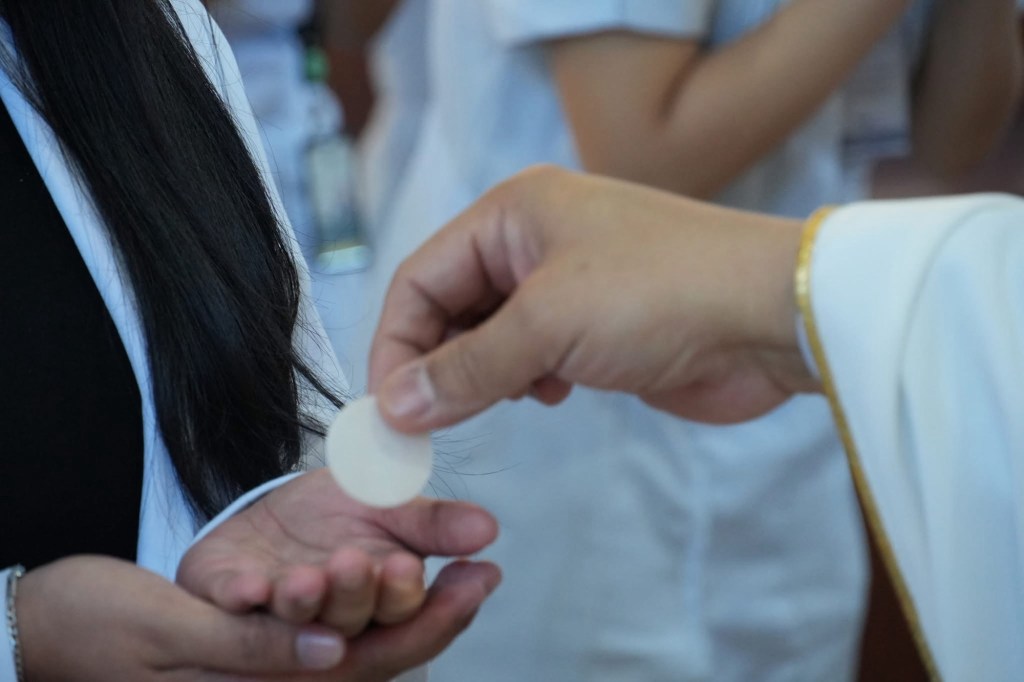
Is there a space in your life at this stage that you feel like one of those lepers, longing for healing and restoration? In the silence of this Sabbath day in our Sunday Mass, speak to Jesus especially after receiving him Body and Blood in the Holy Communion. Amen. Have a blessed week ahead! Fr. Nicanor F. Lalog II, Our Lady of Fatima University, Valenzuela City (lordmychef@gmail.com).

Our Lady of Fatima University-Valenzuela, June 2025.

The heart of the priest

Lord My Chef Daily Recipe for the Soul, 04 August 2025
Monday, Memorial of St. John Baptiste Marie Vianney, Priest
Numbers 11:4-15 <*{{{{>< + ><}}}}*> Matthew 14:13-21
St. John Baptiste Marie Vianney from https://liturgiadashoras.online/.

People complain and ask me why our patron saint, St. John Baptiste Marie Vianney is always portrayed “unattractive” as old, balding and so thin who seemed to be so tired, even sad. Para daw hirap na hirap.

Usually I smile at them because when I entered the seminary, I felt the same way too upon seeing his images. But as I learned about his life and teachings, the more I realized St. John Baptiste Marie Vianney is actually one of the original “rock star” saints of the Church with his white, balding hair so much like Jimmy Page of Led Zeppelin!

There is something so deeply within him when we try to feel and observe his portrayals in the arts as more than images but a reality and experience of a man deemed weak yet so strong with an intensity of a Michael Jordan in his life and ministry. He was another St. Paul who had truly let “Christ lived in him” (Gal. 2:20), “strongest when weakest” (2Cor.12:10) who declared with conviction that “the priesthood is the love of the heart of Jesus.” Hence in my prayers last night and today, I asked Jesus to give me a heart “so big, so wide to welcome everyone and life’s many challenges” (https://lordmychef.com/2025/08/03/praying-with-our-patron-saint-john-baptiste-marie-vianney/).

Detail of a painting of the Sacred Heart of Jesus at Visitation Monastery, Marclaz, France from godongphoto / Shutterstock.

The readings this Monday of the eighteenth week in Ordinary Time perfectly jibed the celebration of the Memorial of St. John Baptiste Marie Vianney as they spoke of the heart of the priest.

In the first reading we heard of Moses lamenting to God of the difficulty in dealing with his people who were so stubborn and refused to recognize God’s immense love for them, so similar with us priests in many occasions when we feel so frustrated and sad when parishioners fail to see the good things we are doing for them.

When Moses heard the people, family after family, crying at the entrance of their tents, so that the Lord became very angry, he was grieved. “Why do you treat your servant so badly?” Moses asked the Lord. “Why are you so displeased with me that you burden me with all this people?”… I cannot carry all this people by myself, for they are too heavy for me. If this is the way you will deal with me, then please do me the favor of killing me at once, so that I need no longer face this distress” (Numbers 11:10-11, 14-15).

Many times, we priests feel like Moses who cannot voice out problems with the people who would never understand it at all. Worst, people would even blame us priests why we work so hard or why do we bother at all with their lives. “Pabayaan na lang ninyo kami…sanay na kami” are what they often say. It can be frustrating when people refuse to match the fire and ardor of their priests.

In this scene, we find one of the many instances in the life of Moses that was centered on God in prayers. The heart of the priest is a heart in prayer. The attitude of Moses in the first reading conversing with God in prayer shows us that in our life and ministry, there is no one to turn to except God alone with whom we can be our most personal self, even dare God to “take us” or “kill us” when we are so fed up. The good news is, God never took those words seriously as he knew Moses and the prophets including us who spoke to him that way never knew what we were saying at all.

There is a saying that goes, “if you can’t bear the heat, leave the kitchen”; but, it cannot be applied with the priesthood that is neither a profession nor a job one can easily walk out from and start into another venture or career. Priesthood is a call or a “vocation” from God; however, priesthood is more of the Caller than the call. It is a life centered on prayer to become like Jesus Christ who alone feels and understands and appreciates all our ups and downs in the ministry. The more we get closer to Jesus in the Cross, the more we experience fulfillment that we would never dare to trade it for anything or anyone else, not even the prettiest woman on earth.

Photo by author, Chapel of St. Francis Xavier, Sacred Novitiate, Novaliches, QC, March 2024.

Priesthood is the love of the heart of Jesus that continues to be wounded and hurt by sins of men and women in this modern age so selfish and materialistic. Thus, every priest is called to be a “wounded healer” too like Christ who in his woundedness healed the wounds of others. We remind people of the paradox and scandal of the Cross of Jesus, of life itself by taking into heart Christ’s teaching, “For whoever wishes to save his life will lose it, but whoever loses his life for my sake will find it” (Mt. 16:25).

Let us now reflect on our gospel.

When Jesus heard of death of John the Baptist, he withdrew in a boat to a deserted place by himself. the crowds heard of this and followed him on for from their towns. When he disembarked and saw the vast crowd, his heart was moved with pity for them, and he cured their sick (Matthew 14:13-14).

Observe the brevity of Matthew in narrating the situation at the scene without losing its very soul and meaning especially for us priests: Jesus did not have any intentions to go after Herod nor to challenge him for his execution of John the Baptist who spoke the truth.

Instead, Jesus sought solitude. Like Moses in the first reading, Jesus turned to God in his grief and anguish of the death of John the Baptist. He crossed the lake to pray and be one with the Father to pour out his sadness and most of all, to reflect on what to do next after John’s death.

Jesus shows us in this scene of his going into solitude that our low points in life as priests are also our high points like Christ’s Transfiguration. Every prayer moment is a transfiguration moment because that is when we get closest with Jesus. It has been consistently proven in our collective and personal experiences as priests verified by studies that crises in the priesthood happen when we stop praying because that is detaching from Jesus Christ, our Caller.

Priesthood is not only difficult but very difficult starting with the vestments we have to wear. What a shame when priests prefer to do away with the proper vestments as well as wearing of shoes during celebrations of the Mass and other sacraments because the weather is so hot. What then are we going to bear if the weather is already a big issue for us? One of the teachings of St. John Vianney that I have always followed is the value of putting on good vestments in the celebration of Sacraments because they are a homily in themselves, proclaiming the glory and love of God for us all.

Photo by FlickrBrett Streutker from catholic365.com.

Many times, people forget priests have personal concerns and problems too, that we get hurt, get lonely, get sick and grieve at the death of family and friends. Despite all these lows in our life as priests, we go and follow the Caller Jesus Christ when people come and ask for our help and service. Woe to our brother priests who forget this and think more of themselves especially of their comfort!

See how when Jesus was praying in solitude and the crowd followed him, it was not difficult for him to forget his own worries that his heart was moved with pity upon seeing them disembarked from their boats. Despite his sadness at the death of John, Jesus taught the crowd who have followed him and healed the sick among them. And when the Twelve told him to drive away the crowd to search for their own food and lodging, Jesus told them to give them food themselves. What followed was the great miracle of the feeding of over five thousand people from five loaves of bread and two pieces of fish. It was the event that prepared the Twelve and the people to the Last Supper of the Lord and the road to Emmaus where Jesus was recognized at his “breaking of bread”.

The whole life of St. John Baptiste Marie Vianney was a prayer of praise and thanksgiving to God in Christ’s priesthood. He had a heart so big and wide, hearing confessions daily up to 16 hours! Pray for us your priests to have big hearts too to bear all the wounds and hurts because only the heart that suffers, that is “broken” can truly sing of the joys and pains of living, of the sense and meaning of serving to the point of being emptied, and of the healing and transforming power of Christ’s love and mercy. Amen. Pray for us your priests. Salamuch. Fr. Nicanor F. Lalog II, Our Lady of Fatima University, Valenzuela City (lordmychef@gmail.com).

 have not been to France nor do I know French but while searching for images of St. John Marie Vianney, I found this from the French website, https://www.notrehistoireavecmarie.com/; it is perhaps the depiction of the new pastor speaking to the young Antoine whom he asked for directions to Ars.

Praying with our patron saint, John Baptiste Marie Vianney

Lord My Chef Daily Recipe for the Soul, 04 August 2025
Monday, Memorial of St. John Baptiste Marie Vianney, Priest
Numbers 11:4-15 <*((((>< + ><))))*> Matthew 14:13-21
I have not been to France nor do I know French but while searching for images of St. John Marie Vianney, I found this from the French website, https://www.notrehistoireavecmarie.com/; it is perhaps the depiction of the new pastor speaking to the young Antoine whom he asked for directions to Ars.
On this feast of our Patron Saint,
John Baptiste Marie Vianney,
I praise and thank you dear Jesus
for the gift of vocation to the priesthood;
thank you for calling me to become your priest;
thank you for the courage and strength
to accept your call;
most of all, thank you for your patience
in me despite my repeated sins
and failures as your priest.

Onn this feast of our Patron Saint,
John Baptiste Marie Vianney,
I pray to you Lord Jesus
our Eternal Priest to give me
a big heart,
a heart so wide to welcome
everyone and life's many
challenges.

When Jesus heard of death of John the Baptist, he withdrew in a boat to a deserted place by himself. the crowds heard of this and followed him on for from their towns. When he disembarked and saw the vast crowd, his heart was moved with pity for them, and he cured their sick (Matthew 14:13-14).

Photo by FlickrBrett Streutker from catholic365.com.
O Jesus,
only a heart so wide
like yours can take those
kind of "beatings" -
to withdraw in silence,
perhaps cry in silence,
to be hurting alone with
the pain of the suffering and
death of a brother in ministry;
you bore all our pains
and went straight to the Father
to find solace and strength
for the terrible news nobody else
would really feel nor understand;
make me a good,
loving brother to other priests,
Jesus;
on the other hand,
despite your grief and sadness,
you did not drive away the crowd
so eager to have you in feeding them
with your words and teachings,
in healing their sick notwithstanding
the pains you have in the death of
John the Baptist; where did you get
that kind of immense feeling of
oneness with the crowd
that when you saw them,
your "heart was moved with pity
for them" and cured their sick
and eventually fed them not only
with your words but with true bread!
That is why I pray
for a bigger heart as your priest,
Lord Jesus -
a heart so big to willingly accept
and bear every pain
and hurt in your name
because only a wounded heart
like yours can truly sing
of the joys and pains of living,
of the sense and meaning of serving,
of the healing power of your love.
Detail of a painting of the Sacred Heart of Jesus at Visitation Monastery, Marclaz, France from godongphoto / Shutterstock.
Forgive me, Jesus,
when many times I feel like
giving up,
complaining to you
like Moses
in today's first reading,
hurting deep inside
when your people could not
see and realize
all the good things you have
been doing for them;
hence,
I pray for a big heart
to bear the pains and
disappointments of your people
even if they are not reasonable
nor valid at all;
most of all,
give me a big heart,
Lord,
because according to
St. John Baptiste
Marie Vianney,
"the priesthood
is the love
of the heart
of Jesus."
Amen.

St. John Baptiste Marie Vianney,
Pray for us priests!
Amen.

Fr. Nicanor F. Lalog II, Our Lady of Fatima University, Valenzuela City (lordmychef@gmail.com).

From https://liturgiadashoras.online/.

The inner journey in Christ of St. James the Greater

Lord My Chef Daily Recipe for the Soul, 25 July 2025
Friday, Feast of St. James the Greater, Apostle
2 Corinthians 4:7-15 <*{{{>< + ><}}}*> Matthew 20:20-28

Something struck me while praying the gospel for today’s feast of St. James the Greater – of how his mother approached Jesus with a request for him and his brother James “that these two sons of mine sit, one at your right and the other at your left, in your Kingdom” (Mt. 20:21).

It must be a very interesting company that Jesus had organized during his ministry composed not only of the Twelve and other disciples but most likely with so many others too that included their families like the mother of James and John believed to be the beloved disciple of Jesus. Traditionally known as Salome, their mom could easily be the patroness of “stage mothers” that abound most especially in the Philippines!

But kidding aside, it must be wonderful to tag along with them in following Jesus where everyone is welcomed. It is a journey not meant to cover distances and places but actually an inner journey inside one’s self that we shall see in the life of James the Greater. It is a journey that begins right here in our heart when we too, like James leave everything to follow Jesus.

For astonishment at the catch of fish they had made seized him and all those with him, and likewise James and John, the sons of Zebedee, who were partners of Simon. Jesus said to Simon, “Do not be afraid; from now on you will be catching men.” When they brought their boats to the shore, they left everything and followed him (Luke 5:9-11).

Photo by author, San Juan, La Union, 26 July 2023.

It must have been difficult for James to leave everything including their father Zebedee and follow Jesus. See that in the description by Luke of their call by Jesus, James and John as well as the brothers Simon and Andrew were all “rich kids” with their own fishing boats with hired men as workers at that time!

Clearly, money was not a problem with James and his buddies; however, one thing was missing in them – meaning and direction in life which they found in Jesus while listening to his preaching and finally in that miraculous catch of fish. I have always felt that perhaps, Zebedee allowed his two sons to leave him and their business for the same reasons so that they mature in life and be more responsible. We find this trace of attitudes or sense of entitlement in the brothers James and John when they asked Jesus to rain fire upon a Samaritan village that have refused them passage on their way to Jerusalem (Lk.9:54-56). Hence, Jesus named them as Boanerges for “sons of thunder” (Mk.3:17) due to their temperament.

In following Jesus, James had to learn the hard way the process of formation and transformation in Jesus that began in his heart. All along their journey from the shores of Galilee to Jerusalem, James remained by the side of Jesus Christ, probably unaware of that inner journey taking place right inside his heart to truly become a part of God’s Kingdom by sharing in the Lord’s Passion, Death and Resurrection. He had seen and experienced along with the other Apostles the great powers of Jesus not only in preaching but most especially in calming the storms, walking on sea, exorcising evil spirits, healing all kinds of sickness, and even raising to life some who have died.

Most of all, James was privileged to have witnessed along with his brother John and Peter the two important stops in Jesus Christ’s journey to the Calvary: first, on Mount Tabor for the Transfiguration and second, at Gethsemane for the agony in the garden. In both events in the life of our Lord, James was a privileged witness of his coming glory and then of his passion and death. Our gospel today on his Feast is sandwiched between these two major events of the Transfiguration and Agony in the Garden as this is set shortly before Palm Sunday when Jesus entered Jerusalem that led to his sacred pasch.

Jesus said in reply, “You do not know what you are asking. Can you drink the chalice that I am going to drink?” They said to him, “We can.” He replied, “My chalice you will indeed drink, but to sit at my right and at my left, this is not mine to give but if for those for whom it has been prepared by my Father.” When the ten heard this, they became indignant of the two brothers. But Jesus summoned them and said, “You know that the rulers of the Gentiles lord it over them, and the great ones make their authority over them felt. But it shall not be also among you. Rather, whoever wishes to be great among you shall be your servant; whoever wishes to be first among you shall be your slave. Just so, the Son of Man did not come to be served but to serve and to give is life as a ransom for many” (Matthew 20:22-28).

Painting by El Greco, “Pentecostes” (1597) from commons.wikimedia.org.

It would only be after Easter and the Pentecost when all these major stops in James’ personal journey with Christ would become clear to him and the other Apostles. Eventually, he became the first Apostle to be martyred as Bishop of Jerusalem during the persecution by King Herod of Agrippa in 40 AD (Acts 12:1-2), fulfilling Christ’s words to him that he would indeed “drink from his chalice” to be with him in his Kingdom.

A thousand years later, devotion to James the Greater would spread far and wide in Spain after relics of his body were discovered in Santiago de Compostela. It is one of the world’s oldest and most popular pilgrimage site known as the Camino de Santiago de Compostela (the way of St. James).

Every year, pilgrims from all over the world do the camino from various points of Europe to the Cathedral of Santiago de Compostela where the Apostle’s body is buried as a spiritual hike or retreat and journey for spiritual growth.

Like James the Greater, the camino is more than the kilometers or miles covered but the journey within one’s self that leads to deeper faith in Christ by living out his gospel as portrayed in its marker and symbols of a staff and scroll of the gospel proclaimed by the Apostle .

A marker along the camino de Santiago de Compostela.

It is my fervent prayer that some day I will be able to do a camino de Santiago de Compostela but for the mean time, we strive to continue in following the steps of James the Greater in making that inner journey within one’s self, beginning in our heart by leaving our “boats” of security to remain always at the side of Christ even if he has to smoothen our rough edges as a person and cleanse us of our sins that prevent us in drinking his chalice to be one in his Kingdom. The key is to serve, not to be served as Jesus insisted.

Sometimes in life, we just have to make “sakay” as we used to say as in “sakay lang ng sakay” or “ride on, man, ride on” without really knowing where our trip would lead us.

James the Greater simply made “sakay” in Jesus without knowing Christ was already fulfilling his wish of “drinking from his chalice” which proved that, indeed, the longest journey in life is the distance between the mind and the heart (Dag Hammarskjold). Amen. Have a blessed weekend! Fr. Nicanor F. Lalog II, Our Lady of Fatima University, Valenzuela City (lordmychef@gmail.com).

*All photos from Camino de Santiago de Compostela courtesy of Fr. Jigs Sta. Rita.

Sacred Heart para sa “cold heart” at “heartless world”

Lord My Chef Daily Recipe, Fr. Nicanor F. Lalog II
Solemnity of Sacred Heart, 27 June 2025
Detalye ng painting ng Sacred Heart of Jesus sa Visitation Monastery, Marclaz, France mula sa godongphoto / Shutterstock.

Nag-senior citizen ako noong Marso at masasabi ko na sa tanang buhay ko, itong 2025 ang pinaka-mainit at maalinsangang taon sa lahat. Mula pa man noong dati, gabi lang ako gumagamit ng aircon ngunit mula nitong Abril, maghapon na ako kung mag-aircon sa silid. Kung minsan nga ay pati electric fan binubuksan ko kapag gabi sa labis na init ng panahon nitong nagdaang tag-araw.

Hindi lamang minsan ko narinig ang maraming nagsabing parang “impierno” ang summer 2025 dahil para sa atin, sukdulan ang apoy sa impierno kaya napaka-init.

Subalit ayon kay Dante Alighierri, isang batikang makata ng Italya noong unang panahon na sumulat ng Divine Comedy, ang kailaliman daw ng impierno ay hindi naman pagka-init-init dahil sa apoy kungdi pagkalamig-lamig parang yelo!

Ayon sa kanyang tula na nobela, ang pinaka-masaklap aniya sa lahat ng kasalanan at kasamaan magagawa ng tao ay ang manlamig ang puso. Magkaroon ng “cold heart” sa Ingles hanggang sa mawalan na ng puso ang mga tao gaya ng sinasaad sa isa pang English expression na “heartless world.”

Larawan mula sa forbes.com 2018, fashion week sa New York.

Ang mga katagang ito na cold heart at heartless world ay mas mainam na huwag nang isalin sa ating sariling wika sapagkat mas mananamnam at mailalarawan natin ang kahulugan sa wikang Ingles kesa sabihing malamig na puso o daigdig na walang puso. Kapag sinabing cold heart o malamig na puso, ito ay patay na puso, walang buhay parang bangkay. O bato. Kapag ang mga tao ay naging ganito, mismo ang daidig ay wala na ring puso, walang pagmamahal, walang awa, walang malasakit, walang pakialam.

Gayon ang kahulugan ng puso para sa sangkatauhan – hindi lamang ito sumasagisag sa pag-ibig at pagmamahal kungdi sa buhay. Sa malasakit, sa kabutihan, maging sa kaalaman gaya ng sinasaad ng English expression na “to know by heart” na ibig sabihin ay makabisado, matandaan.

At paano natin tinatandaan ang mga bagay-bagay? Ito ay ating inire-record na mula sa dalawang kataga ng wikang Latin, re (uliting muli) at cord na mula sa cor o puso. Alalaong-baga, ang tandaan, ang memoryahin at kabisaduhin ay isapusong muli sapagkat dito sa ating puso natatago ang lahat-lahat ng ating alaala at kaalaman maging pakiramdam gaya ng kutob na nagsasaad ng pakiramdam at kaalaman na di maipaliwanag ngunit totoo.

Higit sa lahat, dito sa ating puso nananahan ang Diyos sa atin gaya ng sinasaad ng dokumento ng Vatican II sa makabagong mundo (Gaudium Spes). Kaya ngayong Dakilang Kapistahan ng Kamahal-Mahalang Puso ni Jesus, pinapaala sa atin ng pagdiriwang ito ang hiwaga ng katotohanan ng pag-ibig ng Diyos sa lahat ng tao sa lahat ng panahon.

Hindi tayo nabibigo sa ating pag-asa, sapagkat ang pag-ibig ng Diyos ay ibinuhos sa ating mga puso sa pamamagitan ng Espiritu Santo na ipinagkaloob sa atin. Sapagkat noong tayo’y mahihina pa, namatay si Cristo sa takdang panahon para sa mga makasalanan. Mahirap mangyaring ialay ninuman ang kanyang buhayn alang-alang sa isang mabuting tao. Ngunit ipinadama sa atin ng Diyos ang kanyang pag-ibig sa atin nang mamatay si Cristo para sa atin noong tayo ay makasalanan pa (Roma 5:5-8).

Gayon na lamang ang pagmamahal ng Diyos sa atin – hindi masukat gaya ng pahayag ni Jesus kay Nicodemo dahil ito ibinubuhos hindi inuunti-unti, hindi tinitingi. Binubuhos. Palaging marami ang pag-ibig na kanyang binibigay sa atin sapagkat napakalaki ng kanyang puso ni Jesus.

Lahat tayo kasya sa kanyang napakalaking Puso kaya tayo man ay inaanyayahan ni Jesus na lumusong at maglublob sa kanyang puso kung saan ang kanyang pag-ibig ay naghahanap sa nawawala at naliligaw; pag-ibig na umuunawa at umiintindi sa naguguluhan at nalilito; pag-ibig na palaging bukas at tumatanggap sa sino mang ibig manahan, tumahan kung umiiyak sa lungkot at hapis.

Ito ang Puso ni Jesus na sinasaad ng larawan ng isang Mabuting Pastol gaya ng propesiya ni Ezekiel sa Unang Pagbasa at mismong kinukuwento ni Jesus sa kanyang talinghaga sa ebanghelyo ngayon.

Makakapasok lamang tayo sa Kamahal-Mahalang Puso ni Jesus kapag atin munang pinasok ating sariling puso kung saan mismo siya nananahan sa atin. Palagi nating sinasabi ang puso ang sentro ng ating katauhan at iyan ay totoo kasi nga doon din nananahan si Jesus.

Subalit dahil sa ating mga kasalanan, sa marami nating hilig at kagustuhan at sinusundang ibang diyus-diyosan, nawawala tayo sa puso ni Jesus dahil ang totoo, nawawala na rin ating puso. Ang pinaka-simpleng paliwanag ng kasalanan na aking ginagamit palagi ay ito: sin is a refusal to love.

Ang kasalanan ay pagtanggi na magmahal. Mula sa salitang ugat na sala na ibig sabihin ay sumala o magmintis o hindi magampanan dapat gampanan, ang kasalanan ay sumala sa iisang atas ni Jesus na magmahal. Sa tuwing hindi tayo nagmamahal, tayo ay nagkakasala. Kapag tayo ay nababad sa kasalanan, nagiging manhid tayo kaya di na tayo makaramdam ng iba at kapwa. ?Dito na manlalamig ang ating puso dahil tayo ay mahihiwalay na sa iba at kapwa, wala na tayong pakialam. Tayo ay napuputol at nag-iisa, hiwalay sa Diyos at kapwa, maging sa ating sariling katauhan kaya madalas ang mga makasalanan ay hindi makapagmahal kasi nga nawawala sa sarili.

At ganyan ang takbo ng daigdig ngayon, kanya-kanya, wala sa sarili tila baga bawat isa kaya lahat na lang dinaraan sa pera-pera. Ang lahat na lamang ay sinusukat, kinukuwenta, tinatantiya katulad ng algorithm sa social media kung saan nakukuha ang marami nating pattern sa buhay gaya ng mga hilig at gusto. Nagiging “commodity” na lamang ang tao ngayon, parang produkto at kasangkapan na ginagamit, binebenta at binibili.

Huwag nating hayaang magpatuloy na lamang ito na ang mundo ay manatiling materyal lamang – malamig at manhid, walang pakiramdam. Ibalik natin ang buhay, ang ating pagkatao na pakikibahagi sa buhay ng Diyos na nanahan dito sa ating puso. Gaya ng talinghaga ni Jesus, ang Diyos ay hindi isang observer na tagamasid o spectator na manonood lamang ng takbo ng ating buhay ng mga tao. Kaya sinugo ng Ama si Jesus sa atin sapagkat mula pa man noon ibig niyang makilahok sa buhay natin dangan lamang ay lagi natin siyang pinupuwera. Lalo ngayon sa makabagong panahon na pilit inaalis na ang Diyos sa buhay ng tao!

Larawan mula sa Pinterest.com.

Sa Sacred Heart ni Jesus, muling nabubuo ang tao sa kanyang sarili at ang sangkatauhan sapagkat ang pag-ibig niya ay pag-ibig na hinahanap ang mga sira at pira-piraso nating sarili upang makumpuni at mabuong muli. Ipinapaalala sa atin ng Kamahal-Mahalang Puso ni Jesus ang pag-ibig ng Diyos ay hindi isang ideya lamang o dalumat na nakalutang sa alapaap kungdi nakatapak sa lupa – isang pag-ibig na aktibo, marubdob at matalik na nakikipag-ugnayan gaya ng ating mga naranasan noong tayo ay gulung-gulo, litong-lito, nawawala at halos wala nang saysay ang buhay. Buhaying muli ating mga puso upang maranasan tunay na kagandahan ng buhay ng tao, hindi ng robot o makina. Ating dasalin palagi:

O Jesus na mayroong
maamo at mapagkumbabang Puso,
Gawin Mong ang puso nami'y
matulad sa Puso Mo!
Amen.

Ang tunay na kayamanan, nakikita ng mata, nakikilala ng puso

Lord My Chef Daily Recipe by Fr. Nicanor F. Lalog II
Sacred Heart Novena Day 3, 20 June 2025
Detalye ng painting ng Sacred Heart of Jesus sa Visitation Monastery, Marclaz, France mula sa godongphoto / Shutterstock.

Kamangha-mangang pakinggan mga obserbasyon ng Panginoong Jesus sa maraming bagay sa ating buhay na nagpapatunay na taong-tao nga siya katulad natin. Nakatapak siya sa lupa at dama lahat ng ating karanasan at pinagdaraanan katulad nitong pahayag niya sa ebanghelyo sa araw na ito na muling tumugma sa ating pagnonobena sa Sacred Heart.

Sinabi ni Jesus, “Huwag kayong mag-impok ng mga kayamanan dito sa lupa; dito’y may naninirang tanga at kalawang at may nakakapasok na magnanakaw. Sa halip, impukin ninyo ay mga kayamanan sa langit; doo’y walang naninirang tanga at kalawang, at walang nakakapasok na magnanakaw. Sapagkat kung saan naroon ang inyong kayamanan, naroon din naman ang inyong puso” (Mateo 6:19-21).

Higit pa sa isang obserbasyon, inaanyayahan at hinahamon din tayo ngayon ni Jesus na suriing mabuti upang matapat nating maamin sa sarili kung saan nga ba nakatuon ang puso natin. Ano o sino nga ba ang ating tanging yaman o tunay na kayamanan sa buhay?

Photo by Lara Jameson on Pexels.com

Hindi pa rin mabura sa aking isipan isang katotohanang tumambad sa akin nitong nakaraang Christmas party sa opisina kung saan noong parlor game na “bring me” ay tinanong ng emcee kung “ano ang una mong hinahanap pagkagising sa umaga?”

Sagot ko ay salamin upang mabasa ko ang oras subalit laking gulat ko na ang tumpak na sagot daw ay cellphone!

Nagsurvey ako sa elevator hanggang sa Misa noong hapon na iyon sa chapel maging noong Simbang Gabi sa parokya at ang sagot ng bayan – cellphone pa rin!

Naisip-isip ko, wala bang naghahanap ng tsinelas o kape o ng asawa o ng anak man lang pagkagising kungdi cellphone?

Paano na ang Diyos, may naghahanap pa ba sa kanya tuwing umaga? Siguro kapag mayroon na lang krisis o matinding pagsubok ang tao sa kanyang buhay. Ngunit kung sagana at maayos ang pamumuhay, mga materyal na bagay ating inaatupag marahil, lalo na ang cellphone at social media.

Pagmasdan kung paanong halos sambahin ng mga tao ngayon ang cellphone na pirming dala-dala hanggang sa loob ng simbahan o palikuran. Sa mga sasakyan at tahanan at kung saan-saan, nakakagulat makita lalo mga bata nakasubsob ang ulo sa cellphone. Ang malungkot, isa sa mga unang inaalam ng karamihan ngayon ay kung anong cellphone ang gamit mo dahil dito na sinusukat ang pagkatao lalo na kapag gamit mo ay iPhone 16 Pro-Max! May nagtatanong pa nga kung “fully paid” daw ba iyong Pro-Max?

At hindi biro ang halaga ng mga cellphone ngayon kaya nga para tayong mga baliw hindi lang sa pagbili nito kungdi sa labis na pagpapahalaga. Pagmasdan kapag nawawala ang cellphone nino man – hindi mapakali at parang kiti-kiti sa pagkapkap ng buong katawan at pag-aapuhap sa kapaligiran para matagpuan nawawalang cellphone. Kay saklap na katotohanan subalit halos lahat tayo ay guilty, your honor.

Larawan kuha ng may-akda, Sacred Heart Novitiate, Novaliches, 2015.

Sa ikatlong araw din na ito ng ating nobenaryo sa Kamahal-Mahalang Puso ni Jesus, tayo man ay kanyang inaanyayahan na maging malinaw at matalas ating mga mata upang makita natin higit na mahahalaga sa buhay.

“Ang mata ang pinakailaw ng katawan. Kaya’t kung malinaw ang iyong mata, maliliwanagan ang buo mong katawan. Ngunit kung malabo ang iyong mata, madirimlan ang buo mong katawan. Kaya’t kung ang liwanag na nasa iyo ay kadiliman pala, napakadilim niyan!” (Mateo 6:22-23)

Kapag malabo ating mga mata, kapag mga bagay na materyal lang pinapansin at binibigyang halaga at ayaw nang tumanaw sa malalalim na katotohanan sa buhay, iba ang kahihiligan ng ating puso.

Mananatili tayong salat at dukha sa tunay na kayamanan sa Diyos na tanging sa kanya lamang matatagpuan sa pamamagitan ng ating mga ugnayan sa ating mga kapwa lalo na sa ating pamilya at mga kamag-anak pati na mga kaibigan. Sa ating pakikipag-ugnayan, doon lumalalim at yumayaman ating katauhan sa iba’t ibang karanasan ating napagdaraanan lalo na ng mga pagsubok at dagok sa buhay tulad ng hindi mahalin, tanggihan o talikuran at pagtaksilan, masaktan at mabigo, magkasakit at maghikahos sa buhay, maging mamatayan.

Iyan ang itinuturo ni San Pablo sa unang pagbasa: para sa kanya, ang ipinagmamalaki niyang higit ay ang kanyang mga kahinaan at kabiguan dahil doon nahahayag kapangyarihan at kadakilaan ni Jesus. Taliwas at salungat sa gawi ng mundo lalo ngayon na puro payabangan, pahusayan, pasikatan mga tao lalo na sa social media.

Subalit batid din natin naman ang masaklap na katotohanan na sa kabila ng maraming karangyaan at kayamanan, kapangyarihan at katanyagan, lalo namang naliligaw at nawawala mga tao sa ngayon. Kulang at kulang pa rin ating kagalakan at kaganapan o fulfillment sa buhay.

Wika nga ni San Agustin, “Ginawa mo kami para sa Iyo, O Panginoon, at hindi mapapanatag aming puso hanggat hindi napapahingalay sa Iyo” (You have made us for yourself, O Lord, and our hearts are restless until they rest in you”).

Ngayong ikatlong araw ng ating pagsisiyam sa Kamahal-Mahalang Puso ni Jesus, buong kababaang loob tayo dumulog sa kanya at ilahad ating mga pusong dukha at salat sa tuwa at kagalakan, ang ating mga puso na taksil at puno ng kasalanan. Higit sa lahat, atin ding mga puso na sugatan sa maraming sakit at hapis na pinagdaanan. Hayaan nating linisin, hilumin at panibaguhin ni Jesus ating mga puso upang siya na ang lumuklok at manahan dito yaman rin lamang na Siya ang ating tanging yaman. Managing tayo:

O Jesus na mayroong
maamo at mapagkumbabang Puso,
Gawin Mong ang puso nami'y
matulad sa Puso Mo!
Amen.

Nasa puso, hindi sa mga kamay ang pagiging bukas-palad

Lord My Chef Daily Recipe for Soul by Fr. Nicanor F. Lalog II 
Sacred Heart Novena Day 1, 18 June 2025
Detalye ng painting ng Sacred Heart of Jesus sa Visitation Monastery, Marclaz, France mula sa godongphoto / Shutterstock.

Tamang-tama ang ating mga pagbasa sa araw na ito ng Miyerkules ng ika-labing isang linggo sa Karaniwang Panahon na nagtutuon ng ating pansin sa ating puso sa unang araw ng nobena sa Kamahal-Mahalang Puso ni Jesus.

Ang mga aral ng Panginoong Jesus sa ebanghelyo na huwag maging pakitang-tao lamang ang ating mga gawa ng kabutihan kungdi magbukal mula sa kaibuturan ng ating mga puso ang siya ring nilalagom ni San Pablo sa kanyang sulat sa mga taga-Corinto at maging sa ating lahat ngayon:

Tandaan ninyo ito: ang naghahasik ng kakaunti ay mag-aani ng kakaunti, at ang naghahasik naman ng marami ay mag-aani ng marami. Ang bawat isa’y dapat magbigay ayon sa sariling pasiya, maluwag sa loob at di napipilitan lamang, sapagkat ang ibig ng Diyos ay kusang pagkakaloob. Magagawa ng Diyos na pasaganain kayo sa lahat ng bagay – higit pa sa inyong pangangailangan – upang may magamit sa pagkakawanggawa (2 Corinto 9:6-8).

Larawan kuha ng may-akda, Sacred Heart Novitiate, Novaliches, Marso 2023.

Mas mainam ang salin sa Inggles ng ika-pitong talata, “God loves a cheerful giver.” Kailan ba tayo nagiging “cheerful giver” o galak na kusang loob sa pagbibigay?

Maraming pagkakataon sa buhay natin na madali tayong magbigay at magbahagi ng ano man mayroon tayo tulad ng salapi, pagkain, damit at iba pang gamit kapag tayo ay sagana sa mga bagay na materyal. Gayon din kung tayo ay panatag ang katayuan kapag walang problema at suliraning mabigat, kapag tayo ika nga ng mga kabataan ay chill-chill lamang.

Subalit, nangyayari din naman na maramot tayo maski tayo ay sagana sa buhay at panatag ang lahat. Para bang bad trip tayong tumulong maski alam naman nating mayroon tayong sapat para sa atin o walang gaanong alalahanin.

Sa kabilang dako naman, may mga pagkakataon na kahit tayo ay hindi naman saganang-sagana sa mga bagay at iba pang uri ng kayamanan ay mapagbigay pa rin naman tayo ng tulong maging ng ngiti at pakikisama. May mga panahon na napakagaan natin sa pagtulong at pagdamay kahit naman tayo mismo ay gipit ang kalagayan. At siyempre naman, hindi rin nating maikakaila na pinakamaramot at masungit tayo kapag tayo ay kapos at salat sa ano mang magaganda sa buhay.

Pagmasdang mabuti. Meron man o wala, maari tayong maging mapagbigay o madamot. Ibig sabihin, wala sa ating mga kamay o laman ng bulsa ang pagiging mapagbigay. Ito ay naroon sa ating puso!

Ang ating puso ang pinagmumulan, hindi ang ating mga kamay ang siyang dahilan at kakayanan ng ating pagiging bukas-palad bagaman ang palad ay bahagi ng kamay; sa lahat ng bahagi ng ating katawan, itong puso ang sentro ng lahat ng ating kilos at galaw maging ng pagpapasya kung kayat nasa puso ang ating buhay at sentro ng katauhan. Kapag namatay ang puso, tayo ay mamamatay. Kaya doon din sa puso nananahan ang Diyos sa atin kung saan bumubukal ating pananampalataya at pagtitiwala sa Kanya.

Magiging cheerful giver lamang tayo at generous o bukas-palad kapag buo tiwala natin sa Diyos na hindi Niya tayo pababayaan magbigay man tayo ng magbigay. At ito ay madarama lamang doon sa puso kung saan nananahan ang Diyos sa atin. Kapag buo ang ating pagtitiwala sa Diyos doon sa puso natin, wala tayong takot magbahagi at maging mabuti, magmahal sa kapwa maski tayo ay sakbibi ng mga sakit dahil panatag ating puso at kalooban sa Diyos na pinagmumulan ng lahat ng kabutihan.

Higit sa lahat, nagiging bukas-palad tayo at cheerful giver dahil malinaw sa atin na ano mang mayroon tayo sa buhay, ito ay sa Diyos pa rin. Ano mang pera o gamit o kabutihan ibigay natin sa iba, hindi ito mauubos ni masasaid dahil sa Diyos na walang hanggan naman ang lahat ng ito. Hindi magmumula sa kaisipan kungdi sa kaibuturan ng puso ang kaalaman at katiyakang ito.

Wika nga ni Papa Leo XIII sa kanyang sulat noong 1899 sa pagtatalaga ng sangkatauhan sa Kamahal-Mahalang Puso ni Jesus, doon aniya sa Sacred Heart natatagpuan ang tanda at larawan ng walang hanggang pagmamahal sa atin ni Jesu-Kristo kaya tayo man ay nakapagmamahal. Sino mang nagmamahal na tunay, siguradong siya ay mapagbigay ng kusa. Higit sa lahat, nagagalak palagi tulad ni Jesus.

Nawa sa unang araw na ito ng ating pagsisiyam sa Dakilang Kapistahan ng Sacred Heart sa isang linggo, suriin nating mabuti ang ating mga puso kung naroon ang pagtitiwala kay Jesus. Ating pagmasdang mabuti ating mga kamay kung ang mga ito ay naka-ugnay doon sa ating puso na siyang sentro at hantungan ng pagkakadugtong-dugtong di lamang ng ating mga kamay at braso kungdi ng lahat ng bahagi ng ating katawan. Hindi tayo makapagmamahal nang tunay, pati ating mga kamay ay tiyak titiklop at sasaradong parang galit na kamao kapag ang puso natin ay tumigas at namatay. Kaya ating idalangin:

O Jesus na mayroong
maamo at mapagkumbabang Puso,
Gawin Mong ang puso nami'y
matulad sa Puso Mo!
Amen.

Praying for joy

Lord My Chef Daily Recipe for the Soul by Fr. Nicanor F. Lalog II
Friday in the Sixth Week of Easter, 30 May 2025
Acts 18:9-18 <*((((>< + ><))))*> John 16:20-23
Photo by author, Cabo da Roca, Pundaquit, San Antonio, Zambales, 14 May 2025.
In a few days you are
going to "leave" us, Jesus;
this Sunday is your Ascension,
your physical departure from us
and you described so well our situation:

Jesus said to his disciples: “Amen, amen, I say to you, you will weep and mourn, while the world rejoices; you will grieve, but your grief will become joy. When a woman is in labor, as she is in anguish because her hour has arrived; but when she has given birth to a child, she no longer remembers the pain because of her joy that a child has been born into the world. So you also are now in anguish. But I will see you again, and your hearts will rejoice, and no one will take your joy away from you. On that day you will not question me about anything. Amen, amen, I say to you, whatever you ask the Father in my name he will give you” (John 16:20-23).

What has been "born"
in me in your Rising from the dead?
What is that joy like a woman
in the pangs of childbirth
suddenly becoming a joy so
incomparable?
Oh, it is that joy of having you
in my heart, Jesus:
I have found joy more in my heart
than outside of me;
your joy is that assurance
you are with me always
no matter what,
as certain as the rising and
the setting of the sun,
as lovely as the blooming of flowers,
soothing like the hush of the wind
or the gushing of water in a river
or the rush of the waves to
the shore.
Keep that joy in my heart,
Jesus that no one can take away;
a joy in my heart that even
if I do not receive the things
I ask in prayer,
I still believe,
I still hope,
I still rejoice
in you.
Sorry, Jesus,
I still question you on anything
despite that joy of knowing you,
of having you
but many times I wonder
why all the pains and sufferings
with me and those close to me;
there are times,
Lord that I lose my heart
that I could not feel that joy of you
when you don't answer
my prayers.
But, 
to still keep on praying
even if it not answered at all
is already pure joy in you,
Jesus!
Like peace,
true joy is so difficult
and elusive when not found
in you, Jesus
that we always have to wait
for you,
feel you,
suffer and cry with you
and sometimes die in you
so that joy shall be
born in us
again
and again
and again.
Amen.
Photo by author, Cabo da Roca, Pundaquit, San Antonio, Zambales, 14 May 2025.

Easter is Jesus personally knowing each of us

Lord My Chef Sunday Recipe by Fr. Nicanor F. Lalog II
Fourth Sunday in Easter, Cycle C, 11 May 2025
Acts 13:14, 43-52 ><}}}}*> Revelation 7:9, 14-17 ><}}}}*> John 10:27-30
The new Pope, Leo XIV, appears on the balcony of St. Peter’s Basilica, 09 May 2025; photo from vaticannews.va

What a lovely fourth Sunday in Easter also known as “Good Shepherd Sunday” when we are blessed with a new Pope – Leo XIV – who will shepherd us into this modern time. Truly, Jesus Christ our Good Shepherd knows us so well that he did not make us wait long in having a new Pope in this troubled time.

Jesus said: “My sheep hear my voice; I know them, and they follow me. I give them eternal life, and they shall never perish” (John 10:27-28).

Photo by Pixabay on Pexels.com

“I know them.” How lovely are these words of Jesus to us, his “sheep” especially for those going through a lot of trials and difficulties, for those feeling lost and empty, for those about to give up on life.

Let us dwell on his words “I know them”.

For the Jews and in the Bible, knowing is more of the heart than of the mind. Knowing a person is not just knowing one’s name but most of all of being in a personal relationship, an affinity with the person.

In declaring “I know them”, Jesus affirms how he personally regards each one as somebody dear to him, somebody close to him. We are all a somebody, a someone to Jesus whom he personally loves and cares for.

This we have seen among the people we have met in Lent like the apostles Peter, James and John during the transfiguration, the prodigal son, the woman caught in adultery. Or during the Holy Week like Judas who betrayed the Lord, Peter who denied Jesus thrice, Dimas the thief, the centurion who believed in him after his death on the Cross, John and the Blessed Mother at the foot of the Cross. They were all in their most difficult situations in life yet Jesus knew them so well that he assured them of his loving presence, lifting them up to move on with life.

Recall also the people we met this Easter Season like Mary Magdalene and companions early in the morning later followed by Peter and the beloved disciple who all found the tomb empty, the disciples at the upper room with locked doors that evening of Easter, the two disciples on the road to Emmaus, Thomas Didymus, the disciples led by Peter at breakfast with Jesus at the shore of Lake Tiberias. In their most joyous moments in life amid the darkness and emptiness, the doubts and unbelief or blindness following Easter, they were accompanied and joined by the Risen Lord to ensure and assure them that indeed he is alive and will always be with them.

In the same manner, think also of those moments in your own life of darkness and emptiness, whether negatively or positively, for better or for worse… who remained standing by your side?

Jesus. Only Jesus. And always Jesus. Because he knows us so well.

Jesus is truly the Good Shepherd who knows us so well even in these modern times where there are more vehicles and traffic, more disruptions to life yet he continues to shepherd us like the many shepherds still in many countries in Europe and the Middle East.

And that makes this passage most touching and refreshing because though times may have changed, Jesus has remained personally committed with each one of us. He keeps on looking for us, searching us, following us. Loving us most of all. But, are we present in Jesus?

Notice the four verbs in this short gospel we have today: ascribed to Jesus are the verbs “know” and “give” while to us the sheep, “hear” and “follow” where problems always happen. Do we “follow” what we “hear”? “To hear” is to recognize the authority and importance of the speaker’s words; it is to enter into a communion with him, to put oneself in his guidance, to “follow” him as his disciple.

Jesus speaks to us daily but nobody cares because right after waking up, most of us today look for our cellphone than pray! We are more interested with the “likes” and “followers” we have garnered from our previous posts. We are more enthralled with the seductive voices and images of social media that feed on our ego and senses, giving us false feelings of security and acceptance. We would rather be consumers than disciples who are called to sacrifice like the shepherd.

Photo of a sheep’s fleece by Dra. Mylene A. Santos, MD, 2022.

Though life has become more affluent these days, it has ironically become more empty and lost without direction because we just keep on having and possessing, consuming and ingesting everything the world offers that leave us guilty and empty because we cannot experience any sense of fulfillment and meaning.

How ironic that amid this pandemic of “obesity”, we fill ourselves mostly with trash and poison, literally and figuratively speaking that we feel so lost more than ever with so much time wasted and sadly, life and relationships thrown away. Everything has become more of the mind than of the heart with persons being commodified as things, everything seen in monetary terms, so utilitarian in nature.

Only Jesus “knows” us so well that is why only he “gives eternal life” as Peter exclaimed in this Saturday gospel in the third week of Easter, “Master, to whom shall we go? You have the words of eternal life. We have come to believe and we are convinced that you are the Holy One of God” (Jn.6:68-69).

Unlike anybody, Jesus is the Son of God sent to gather us, to save us and to bring us closer to the Father so that no one among us shall perish. That is the plan of God fulfilled by Christ which we must continue like the apostles as we have heard in the first reading when Paul and Barnabas preached the Gospel of Jesus to the gentiles.

This Sunday, Jesus our Good Shepherd assures us, wherever we may be – in darkness and emptiness, or under the dark clouds of a thunderstorm, under a thatched roof of misery – that he knows us so well. He loves us.

Feel the warmth of Christ’s loving heart this Sunday by being present with your loved ones, the people you know so well like Jesus. Let us pray:

Lord Jesus,
you are our Good Shepherd
and we are your sheep;
only you know us so well,
only you can give us eternal life,
only you can keep us safe
not to be snatched by anyone
like the corrupt and shallow candidates
running for office again this election;
give us the wisdom, courage and faith
to follow you and stand by you
like those elders in white garments
seen by John in his vision of heaven
in the second reading;
let us vote wisely,
let us not waste that power
you shared with us.
Amen.
Photo by Dra. Mylene A. Santos, MD, 2022.

Easter is opening our “locked doors”

Lord My Chef Sunday Recipe, Fr. Nicanor F. Lalog II
Second Sunday in Easter Octave, 27 April 2025
Acts of Apostles 5:12-16 ><}}}}*> Revelation 1:9-11,12-13,17-19 ><}}}}*> John 20:19-13
Photo by author, Angels’ Hills Retreat & Formation Center, Tagaytay, 19 April 2025.

Locked doors. Exactly what I have dreaded most these days not because of claustrophobia but more of amnesia as I often forget my keys that I get locked out of my room.

Many of you probably know that kind of feeling of being locked out of our rooms or even house: we are so stressed that we go through self-blame and self-pity of being so forgetful to intense annoyance when we have to destroy our locks and knobs to replace them with new ones.

But, surely there must be a great difference of being locked inside a room that is more stressful and even fearful leading to claustrophobia. Imagine how the disciples of Jesus felt on that evening of Easter when they have to hide inside the Upper Room and locked the doors for fears of being arrested too following reports of the empty tomb.

On the evening of that first day of the week, when the doors were locked, where the disciples were, for fear of the Jews, Jesus came and stood in their midst and said to them, “Peace be with you.” – John 20:19

Painting by James Tissot (1836-1902) of Jesus Christ’s appearance to his disciples on Easter evening.

Only John tells us this detail of the evening of Easter of how the disciples hid inside locked doors, that despite that, Jesus Christ still came through. Aside from the darkness and empty tomb that characterized Easter which all evangelists narrated, John seems to be telling us something important about those locked doors.

Do you have any locked doors in your life that is why you can’t experience the joy of Easter?

One thing for sure: John included that little detail of the locked doors of the Upper Room where the disciples hid to show us that no obstacle, no locked doors can prevent Jesus from “coming” to us. Jesus had triumphed over sin and death. He is Risen! Nothing can stop Christ from breaking barriers among us and within us to bring his peace and joy of Easter.

Photo by Nadejda Bostanova on Pexels.com

However, the problem could be with us as we refuse to recognize Jesus coming to us.

Our refusal to forgive those who have hurt us, especially if they have tried reaching out to us, even apologizing can be a locked door within us. It could be the other way around when who have hurt others have locked inside ourselves in our refusal to ask forgiveness and be reconciled with a loved one.

There may be other locked doors in our life like our fears of failure and disappointment, of lost and separation from our loved ones due to various reasons like betrayal or death. Think of the other kinds of locked doors in our life that have kept us in the darkness of grief and sadness, bitterness and hatred or anger, even hopelessness.

See how in our gospel there are so many elements linked together in experiencing our Risen Lord – the need to believe like Thomas who was not inside the locked doors when Jesus first appeared. The nice thing with Thomas despite his doubts, he came to the room with locked doors to await Christ’s coming and he was not disappointed!

Like Thomas the Apostle, we have to believe Jesus in order to see him. We have to welcome Jesus inside our locked doors. Most of all, we have to come our from our locked doors to be one with others freed by Jesus.

“The Incredultiy of Thomas”, painting by Caravaggio from artsandculture.googe.com.

Every day amid all our daily darkness and emptiness, Jesus breaks our locked doors, coming into our lives like that Easter evening, bringing peace and forgiveness and most of all, joy of finding him, of seeing him, of experiencing him.

The world tells us to see is to believe but Jesus tells us to believe first so that we may see because it is only when we believe that we truly love and when we love, that is when the miracles of Easter begin to happen. Everyday.

Locked doors isolate us and isolation is separation which is the absence of love. This eventually leads to hopelessness which is the exact opposite of love. When we lose hope, we destroy everything, including life. People without hope are the most angry, the most isolated people who would kill and destroy everything because there is nothing to look for nor expect. They are locked inside their own prisons of selfishness.

Jesus rose from the dead to break all barriers to life especially sin and evil that imprison us so that we may believe again, love and hope to live Easter daily.

Easter does not remove the darkness nor emptiness within us but definitely breaks locked doors in us so we can go free to follow the light of Christ, to spread that light with others imprisoned in their locked doors of unbelief.

In the first reading, we find the Apostles after Pentecost continuing the work of Jesus by preaching and healing the sick while in the second reading we heard John thrown into exile to Patmos and yet, still chose to proclaim the gospel and wrote his visions while in prison.

We all know from the Acts of the Apostles that it was not all good news for the early Church that soon faced persecution. But by remaining open to Jesus Christ’s daily coming in themselves and through others like their persecutor named Saul who became Paul, Christianity flourished.

Today in our modern age, St. John Paul II designated in May 2000 this octave or eighth Sunday in Easter as the Divine Mercy Sunday as an invitation to Christians to face with confidence in the Divine Mercy the difficulties and trials that we still have to experience in the years to come.

There will always be darkness and emptiness in life. Including locked rooms. But, Easter is Christ’s triumph over all these. Rejoice in breaking free today. Many times in life, all we need in life is a simple spark of believing in Jesus risen, with us inviting us to come and follow him in his light and life. Amen.

Photo by author, Angels’ Hills Retreat & Formation Center, Tagaytay, 19 April 2025.