The Lord Is My Chef Daily Recipe for the Soul by Fr. Nicanor F. Lalog II
Thursday in the Fifth Week of Easter, 11 May 2023
Acts 15:7-21   ><]]]'> + ><]]]'> + ><]]]'>   John 15:9-11
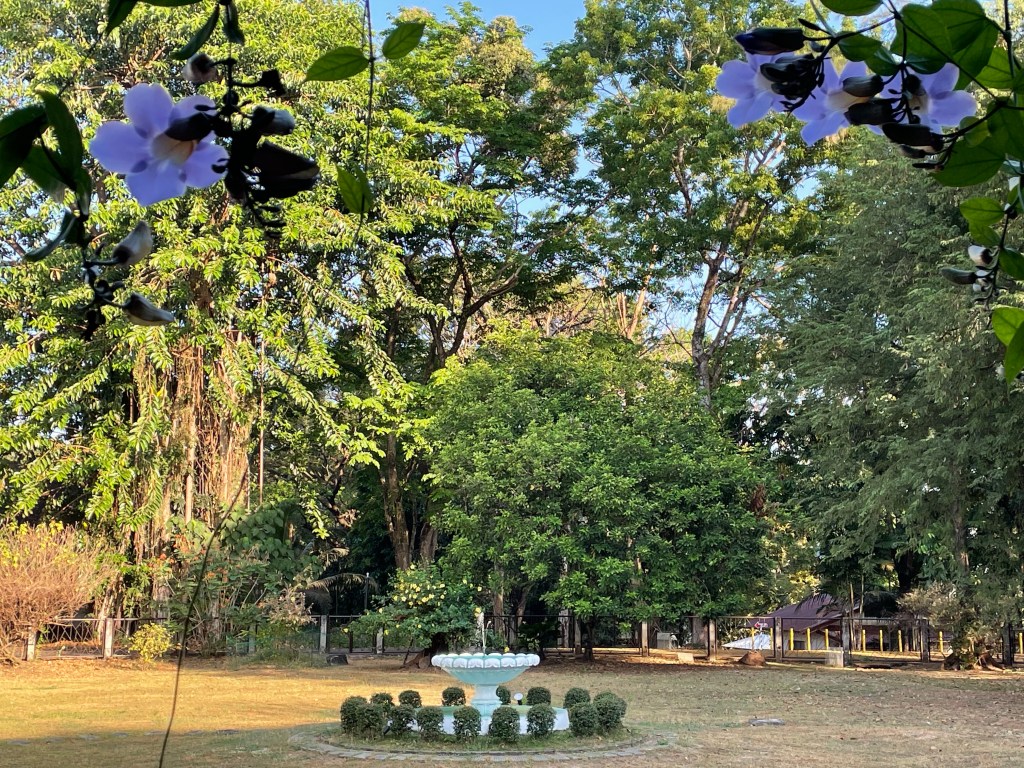
Photo by author, Sacred Heart Novitiate, Novaliches, Quezon City, 20 March 2023.
Today dear Jesus,
thrice you have asked us
"remain in my love"
in three short verses
of the gospel.

And I wonder why you used
the word to "remain"
than "stay" as we would use
these days,
"staying in love"?
Should I stay, or
should I remain?
It may sound like more of
semantics but to remain
sounds strong,
evoking firmness
and resolve.
Jesus said to his disciples: “As the Father loves me, so I also love you. Remain in my love. If you keep my commandments, you will remain in my love, just as I have kept my Father’s commandments and remain in his love.”
John 15:9-10
Remaining in your love,
Lord Jesus,
is being deeply rooted in you
like a big tree;
to be rooted in you
means being secured
about who we are
as your beloved
and what is our mission
in this world which is to love,
love, and love;
remaining in your love, Lord,
is therefore having our hearts
connected with your heart,
feeling your presence
and movements in us and among us,
when we do not become anxious
when challenged and attacked,
when turmoil happen in our
relationships because it is you
whom we always see
and tries to find like Peter
and James, Paul and Barnabas
during the Council of Jerusalem
in the first reading.
Remaining in your love,
Jesus, is remaining connected,
remaining one in you, with you
that results in joy in us
because what we see,
what we experience,
what we believe
is you working
in us and among us.
Amen.
The Lord Is My Chef Daily Recipe for the Soul by Fr. Nicanor F. Lalog II
Wednesday in the Fifth Week of Easter, 10 May 2023
Acts 15:1-6   <*((((>< + ><))))*>    John 15:1-8
From Google.com
Thank you dear Jesus
for not just coming to us
but also in becoming human
like us in everything except sin,
in being planted here on earth
to be one with us
and we be one in you,
one with you.
Thank you dear Jesus
for being our true vine,
making us your branches;
many times we do not understand
and would even refuse your Father's
ways and methods of "pruning" us,
of purifying us so that we
may bear more fruit.
But, what fruit must we bear,
Lord Jesus?
“I am the vine, you are the branches. Whoever remains in me and I in him will bear much fruit, because without me you can do nothing.”
John 15:5
Lord Jesus,
when you died on the Cross,
you bore only one fruit we
continue to savor and
enjoy today --- LOVE.

Thank you for the fruit
of love; we can only be
fruitful in love if we
remain in you,
when we are purified
and pruned.
Many times,
our pruning and
purification do not look
good at all like when there are
differences among us
that arise like with
the first Christians
when some insisted that
Gentile converts be subjected
to Mosaic laws like circumcision;
keep us intact with you, Lord,
so that we may see more
of you, our true vine than us
who are merely your branches;
keep us open to one another,
trying to find you, Jesus,
by being more kind,
more understanding,
more open to overcome
our differences
so that in the end,
without us even knowing,
we have become fruitful,
not necessarily successful
because we have become
abundant
in your love.
Amen.
Quiet Storm by Fr. Nicanor F. Lalog II, 05 May 2023
Homily on the occasion of the 25th anniversary of my friend and classmate,
Fr. Ed Rodriguez last 18 April 2023
Tatlong ulit tinanong ni Jesus si Pedro sa ating ebanghelyong napakinggan natin, “Simon, anak ni Juan, iniibig mo ba ako?” (Jn. 21:15-17). Hindi ko na po hihimayin ang kahulugan ng mga iyon bagkus ay hayaan ninyong ibahagi ko sa inyo tatlong pagkakataon ng pag-ibig na aking naranasan.
Una, katulad ninyo, ako man po ay nagmahal at nabigo.
That is one story of love that has the most impact on us. In fact, most love songs have this as theme like unrequited love, unfaithful love, of being unloved despite your love. And they are the most loved and popular love songs because we have experienced that when we truly love, there is always pain and hurting like rejection.
Pangalawa ay iyong iniibig ka rin ng iniibig mo. Yung mahal mo, mahal ka rin. Yun ang matamis! This is the love that has made the world go round and brought us into this world. This is the love why men and women get married because you are loved by the one you love. A very lovely kind of love that tells us may forever.
But there is a third occasion of love I just realized lately, shortly before we celebrated our 25th anniversary of ordination to the priesthood. It is the kind of love we all experience but many times we are not aware of. Worst, it is the love we always reject.
Ito yung minamahal ka na nga, ayaw mo pa!
I found this while counseling adoptive parents who complain of how their adopted children go wayward in life, wasting their lives and their wealth because what prevails over them is the rejection they have experienced from their biological mother who gave them away for adoption. They could not get over that fact and in the process, fail to appreciate the love lavished upon them by their adoptive parents. It does happen too to many kids these days who reject the love their parents shower them, complaining a lot without realizing how they are so loved. Many times, we are not aware of the many blessings we have in life, of being so loved by God and others without us even knowing it.
This love is most especially true to us priests too. As we neared this date, I have realized in my prayers how much God loves me with the many graces he has been giving me which I am not even aware of! And yes, there were times I have rejected his immense love in my many moments of sin.
This love of God is what we always reject, the love we could not accept because what we see more are our weaknesses and shortcomings, failing to see and realize God’s immense love that covers a multitude of our sins and defects.
This love is the most powerful and most mysterious of all when affirmed especially by us priests, enabling us to do so many things in the name of God like building communities and building up lives, not just building structures and edifices.
This love of God is the reason we are rejoicing today, celebrating 25 years in the priesthood of my classmate and friend Fr. Ed who has embraced and affirmed this love God poured upon us on April 28, 1998 at the Malolos Cathedral.
We can only truly celebrate anniversaries, whether priesthood or wedding, if we continuously affirm the love bestowed upon us by God, shared and nurtured by you our parishioners as well as by your spouse. That is why Jesus had to ask Peter thrice the question “do you love me?” because before we can ever follow Jesus, we must first of all love him. To love Jesus is to first affirm and embrace that love he has for us no matter how imperfect we may be.
Notice that a person who loves is always looking good, always radiant with love. This we see also in priests who are filled with joy in the ministry as seen first in their cleanliness and orderliness. Malinis si Father di lamang sa sarili kungdi pati sa mga damit, gamit at parokya. May amirol ultimo mga purificator, corporal at finger towel. Palaging naka-sapatos sa Misa. Maayos ang buhok. At hindi humaharap kanino man ng marumi o di nakabihis ng maayos. In him we find exemplified that elementary school lesson that “cleanliness is next to godliness”. And it is not just being clean outside but also inside.
When we love, we always go near the one we love. That is the first sign of love, a desire to get closer with the one we love. That is why if we really love God in the same manner we love others, we make every move to get close to him in prayer primarily. A priest who loves God, who loves his flock, who loves his vocation is first of all a man of prayer. Everything in the ministry and person of a priest flows from his prayer life. And you know very well when a priest does not pray.
The more a priest prays and gets nearer to Jesus, the more he is united in Christ’s sufferings. No wonder that when Jesus suffered and died on the Cross, there stood by his side were his Mother, the Blessed Virgin Mary and the “beloved disciple” because they were the ones who truly loved him.
When there is love, there is nearness. That is when sharing and oneness happen. When we love, we share in everything, especially our beloved’s pains and hurts. Before we can share in anyone’s joy and glory, we must first of all share in their pains and sorrow. That is the love of a priest. Being one with Christ, one in Christ at the Cross. That is why a priest is a friend to everyone, the rich and poor alike, the young and old alike, the sick and healthy, yung maganda at pangit, mabango at mabaho. People who love always share, are always one with others in their love and pains, victory and failures, weakness and strength.
All the more with us priests who share our lives with you as you too share your lives with us. Together we grow nearer to Christ on the Cross leading to Easter. However, it is not enough in love that we get near or close to our beloved like Jesus.
If we truly love, we must be obedient to show how far, how deep can we go with our beloved especially in their sufferings. St. Paul described this obedience of Jesus Christ to the Father even to death in a beautiful hymn in his letter to the Philippians as a process of kenosis, of self-emptying. This the Lord showed after their last supper when he washed the apostles’ feet. St. John beautifully introduced the scene by telling us, “”He (Jesus) loved his own in the world and he loved them to the end” (Jn.13:1).
Love cannot be defined. It has no boundaries. Most of all, love is always a packaged deal, all inclusive! Like any man and woman getting married who vowed to love each other “in sickness and in health, for richer, for poorer until death do us part”, we your priests also vowed before the Bishop to love Jesus without measure by being celibate, poor, and obedient. Very understandable that priests have to be celibate and poor like Jesus; but, most of all like the Lord, priests take the vow of obedience too to prove the “breadth, length, depth, and height” (Eph. 3:18-19) of our love for Christ, his Church, and to everyone even enemies because it is very difficult to obey even to those we love after all.
How lovely that in Filipino, the word for obedience is pagsunod; an obedient person is masunurin, sumusunod.
It is also the word for following, pagsunod. An obedient person is one who follows because he loves, no matter how difficult it may be.
Now we can see the whole picture of that beautiful conversation of the Lord and Peter at the shore of Lake Tiberias: Jesus asked him thrice, “do you love me?” and after getting Peter’s “yes, I love you Lord”, Jesus described the apostle’s coming suffering and death before telling him, “Follow me” (Jn. 21:18-19).
From loving to suffering and finally, following. Everything begins in love, is sustained by love when there is suffering and following. Sometimes I ask couples if they say “I love you” to each other daily. Most of them would answer me with a question, “kailangan pa po ba yun, Father? Understood na po iyon.” Really?
Many times, we feel afraid, scared to say “I love you” because we know we do not love that much. And most terrified when confronted with the question “do you love me?” because deep inside, we know we have not truly loved. Do not worry. Do not be afraid. Just keep on loving no matter how imperfect you may be because love removes fear.
Most of all, Jesus knows that very well as Peter had said, “you know everything, you know I love you”. Human love is always imperfect. Only God can love us perfectly. But like Peter, in our unworthiness and defects, let us still say in words and in deeds, “you know everything Lord, you know that I LOVE YOU.”
My dear friends, Jesus is asking us every day the same questions he asked Simon Peter. To love Jesus is to love his Church, including his representative, his priest. Love Fr. Ed in Christ with your prayers and support. Give him the time and space to get nearer to Jesus in prayer and loving service to you. Keep Fr. Ed closest to Jesus. Not to you.
The Lord Is My Chef Sunday Recipe for the Soul by Fr. Nicanor F. Lalog II
Fourth Sunday in Easter-A, Good Shepherd Sunday, 30 April 2023
Acts 2:14, 36-41 ><}}}*> 1 Peter 2:20-25 ><}}}*> John 10:1-10
Photo by author, Baguio City, January 2018.
Beginning this Sunday, all our gospel readings will be about the major teachings of Jesus before his arrest that led to his Passion, Death, and Resurrection. Like the Apostles, we are reviewing the Lord’s final teachings in the light of Easter to fully appreciates its meaning and significance.
First of these teachings is the Lord’s declaration, “I am the good shepherd” (Jn. 10:11).
This is very significant in the fourth gospel where we find Jesus using the phrase I AM. It was not just reminiscent of God identifying himself as I AM WHO AM to Moses in the Old Testament but most of all, for Jesus it is his self-identification as the Christ, the Son of God whom his enemies refused to accept nor recognize.
More interesting in our gospel this Sunday is how the Good Shepherd discourse of Jesus actually began with his claim as being the gate or door through whom the sheep enter and pass through.
Jesus said: “Amen, amen, I say to you, whoever does not enter a sheepfold through the gate but climbs over elsewhere is a thief and a robber. But whoever enters enters through the gate is the shepherd of the sheep. I am the gate. Whoever enters through me will be saved, and will come in and go our and find pasture. A thief comes only to steal and slaughter and destroy; I came that they might have life and have it more abundantly.”
Jesus spoke twice “I am the gate” in vv. 7 and 9 to emphasize and clarify that flock belongs to him, never to us. That is why Jesus is the gate, the only way through whom the sheep pass through. Hence, the true mark of a good shepherd is one who passes in Jesus as the gate, the owner of the sheep. Whoever does not pass through Jesus is a thief, a robber. A fake shepherd.
Nobody else could ever replace Jesus as Shepherd of the flock but he wants us all to be shepherds like him, passing in him our gate. This we can understand when we fast-forward to his third and final appearance to the seven disciples at Lake Tiberias after Easter. After their breakfast at the lakeshore, Jesus asked Simon Peter thrice, “Do you love me?” In every question, Peter professed his love for Jesus who asked him only for one thing, “feed my sheep” until finally adding at the end, “follow me” (cf. Jn. 21: 15-19). His call to follow him came after describing to Peter how he would suffer and die for him.
To pass in Jesus as the door to the sheep is first of all to love Jesus.
We all have experienced that loving calls for nearness which Nat King Cole described perfectly in his hit “The Nearness of You”. Whenever we love somebody, we want to be always near our beloved. The same desire we must possess if we truly love God. Furthermore, being near demands that we share feelings with the one we love – his/her joy is our joy, his/her pain is our pain. No wonder when we love somebody, we are willing to suffer. That is the first true mark of our love for Christ – we are willing to suffer for him and with him on the Cross!
That is the first meaning of Jesus is the gate of the sheep as the Good Shepherd: his Cross is our path to fulfillment, to true joy in this life and to eternal life eventually. We can only have a true relationship with him through others when we are willing to share in others’ sufferings like Jesus. Because of his Passion, Death and Resurrection, Jesus has turned suffering into a grace itself and a source of grace too because to suffer with somebody else is love. Anyone who avoids suffering does not love at all and can never be a shepherd like Jesus.
The second meaning of Jesus is the gate flows from that nearness with him – it is not enough to be close but most of all, to be obedient, submitting our total self to him in the same manner he obeyed the Father as expressed in St. Paul’s beautiful hymn found in Philippians 2:6-11.
How close can we come to Jesus is the sum of our obedience to him. Or to anyone we love. It is only in being obedient can we truly follow Christ and those we love. When we love, we are not presented right away with everything that could happen in our relationship and journey in life. Love is a wholesale, a package deal always without ifs nor buts. Nobody knows to where our lives would lead to as most couples could attest. That is why, more than being close and near to Jesus or our beloved, we need to be obedient too because that is the mark of true love when we humbly submit ourselves to the one we love.
Obedience calls us to go down to our lowest level because that is the highest mark of our love too. Recall how Jesus at their last supper “loved his own in the world and he loved them to the end” (Jn.13:1) by washing their feet. See how the Son of God went so low, lower than what slaves were not supposed to do, that is, wash feet of others. Jesus showed this in no uncertain terms the following Good Friday by dying on the Cross, of literally going under earth at his burial that led to his highest glory, his Resurrection.
That is why Jesus is the Good Shepherd by first being the gate because in him, we have shared in his pasch to share in his glory. As the gate or door, we enter in Jesus by sharing in his paschal mystery of loving, suffering, and following.
Photo by Dr. Mylene A. Santos, MD, 2020.
Today we are reminded that our being the flock of Jesus, a sheep of the Good Shepherd is not our choice but a gift of God himself.
Our coming together in the church, in our celebrations and sacraments is not a mere social function out of our own volition. It is a gift and a call from Jesus. That is why it is very important to celebrate the Sunday Mass.
It is Christ himself we refuse and turn down when we skip Sunday Masses because when we love somebody, we show it by being present, being near, ready to suffer and obey to show our love.
Jesus is not asking us too much except an hour each week to immerse ourselves in his life giving words, to find him with others we meet and live with.
Peter said something still very true especially in our time, “Save yourselves from this corrupt generation” (Acts 2:41) where God is totally disregarded as if we can live without him, without loving like him. Let us return to Jesus, pass in him our door to life and fulfillment by loving, suffering and following him our Good Shepherd. Amen. Have a blessed week and month of May ahead!
The Lord Is My Chef Sunday Recipe for the Soul by Fr. Nicanor F. Lalog II
Easter Sunday, Cycle A, 09 April 2023
Acts 10:34, 37-43 ><}}}"> Colossians 3:1-4 ><}}}"> John 20:1-9
Photo by author, sunrise at Katmon Nature Sanctuary & Beach Resort, Bgy. Binulusan, Infanta, Quezon, 04 March 2023.
Blessed happy Easter everyone! Rejoice, the Lord is Risen! I know it is very difficult to greet everyone with Happy Easter compared with Merry Christmas primarily due to our weather. Most of all, because Easter is so empty unlike Christmas so filled with many signs and symbols, even with gifts and other things.
But that is the mystery – and joy – of Easter.
Emptiness. Even nothingness.
Because when we are empty, when we have nothing, that is when God fills us with his abundance.
On the first day of the week, Mary of Magdala came to the tomb early in the morning, while it was still dark, and saw the stone removed from the tomb. So she ran and went to Simon Peter and to the other disciple whom Jesus loved, and told them, “They have taken the Lord from the tomb, and we don’t know where they put him.”
John 20:1-2
Photo from GettyImages/iStockphoto.
How amazing that we Filipinos are so fond of using the expression “wala lang” for nothing or empty. When a man texts a woman with a simple hi or hello plus the words, wala lang, do not believe him because that’s something! There is something in simply texting you out of the blue! Meron yun kasi di ka niya text kung wala talaga.
In the provinces if you come for a lunch or dinner, whether there is an occasion or none, it is common to hear the hosts especially the poorer ones apologizing for not having a lot of food when in fact there are more than two viands like the freshest fish and vegetables we urbanites miss most. They would always say, “wala po kaming nakayanan, mahina po ang ani/huli, pasensiya na po.” Such kind of superb graciousness among us Filipinos in the provinces is so ordinary.
Perhaps, it is a beautiful sign we have imbibed from our deep faith in Jesus Christ who was nowhere to be found inside the empty tomb.
His absence from the empty tomb meant he was present somewhere. That was what Magdalene implied when she said “They have taken the Lord from the tomb, and we don’t know where they put him” (Jn.1:2).
Though the tomb was empty, Jesus was not missing at all. He had risen from the dead! In fact later, they would meet him along the way and that very evening too until his ascension into heaven.
Emptiness and nothingness can be positive or negative.
Positive emptiness means nothingness for God who alone suffices. There is an inner feeling of emptiness for something or Someone bigger, greater. That is how a man feels when he texts a woman of his dream with wala lang: he feels empty and nothing without her! The same with God. St. Augustine perfectly said it, “my heart is restless until it rests in you, O Lord.”
Henry Osawa Tanner’s painting, “The Three Marys” (1910), photo from biblicalarchaeology.org.
Easter is positive emptiness: Jesus is no longer in the tomb because he is risen. It is the definitive sign we have been freed from the clutches of evil and sin, of death and decay. Death is not the final statement in life. The gospel at Easter Vigil is more picturesque when Matthew narrated how Magdalene saw an angel seated on the empty tomb of Jesus, a beautiful reminder of how suffering and death have become Christ’s crowing glory. From being a tomb to becoming a Throne!
Every time we experience pains and sufferings, of emptiness and nothingness in life that all we could do is surrender everything to God like Jesus on the Cross, that is positive emptiness. We know for sure and feel it inside us that there is something in this nothingness. That is why never say “walang-wala ako” (I got nothing) because we always have God in us.
Positive emptiness/nothingness is the virtue of hope which is not positive thinking that things would get better. In fact, to have hope in God is to believe and accept that things could get worst like Jesus during the days leading to his arrest and crucifixion because to hope is believe that even if everything is lost, there is always God loving us in the end.
Hope is positive emptiness because it is creating a space within us for God and for others in love. Positive emptiness and nothingness is seeking God right in that emptiness like Peter and John running into the tomb after learning it was empty because we love, we have a relationship that continues after one is gone and not seen.
That ultimately is what positive emptiness/nothingness is all about, love.
It is similar to that feeling at the end of a movie when we refuse to stand and leave the cinema because we believe – we hope – there is still another final scene, there is still a coming sequel to what we have seen. We are not totally saddened with the end of the movie as we strongly feel, there would be a part two, a part three, and a part four which has been the trend all these years of the great movies of our youth! How funny that after exhausting the sequels, there came also the prequels. Why? Because we have all established a relationship, a love among us the fans of a movie franchise like Star Wars or Die Hard and its creators.
Photo by Ms. April Oliveros, Mt. Pulag, 25 March 2023.
That is what Easter is all about. We do not simply give up for life’s many sufferings and pains, trials and tribulations because we feel and know deep inside we have Jesus Christ who have risen from the dead. We are emptied daily in order to be filled with Jesus himself every day too. There is no need to see much things. Enough to feel deep inside like what Peter explained to the people at the first reading. Their very lives proved amid the physical emptiness or absence of Jesus in the world that Jesus was present, was Someone with Something.
This is the great challenge for us these days. More and more people are spending the Holy Week and Easter in the beach or somewhere else to bond as family where they could see more of each other and see more sights than the ordinary we have during this time of the year at home and in the parish that are usually bland and dry. More people prefer to go somewhere here and abroad in the hope of still being able to pray and celebrate the sacraments there because they feel empty here at home. We really hope they have positive emptiness than negative emptiness.
Negative emptiness is feeling empty amid the plethora of things and pleasures in life. Many times these days due to mobility, it is so easy to go hiking to the mountains or to some exotic destinations to fill the emptiness we have inside, to search for our “lost selves” (hanapin ang sarili). But very often, after some time of relief, the same emptiness and nothingness occurs. Nothing happens because what we really have is positive emptiness, our desire for God, the most essential in life who cannot be replaced by anything at all.
Negative emptiness is seeking things, sights and sounds, things of the senses to fill up curiosities, to settle doubts, to find happiness not realizing it is totally different from joy and fulfillment.
Negative emptiness is insisting on holding on to what can be seen, to what is tangible despite the inner directions we have been feeling inside toward God. For some time, we can refuse to follow its directions but there are times, positive emptiness and nothingness impose itself on us like when there is death or serious illness in the family. At first, it can be scary, so frightening but eventually, liberating like in the experiences of the first disciples of Jesus.
May we heed St. Paul’s words this Easter from the second reading, “Brothers and sisters: If then you were raised with Christ, seek what is above, where Christ is seated at the right hand of God” (Col. 3:1).
Dearest Lord Jesus,
grant us the grace to seek and find
you in emptiness and nothingness,
even in darkness;
many times, our senses blur
our sight of you;
how sad that even in our celebrations
we are so fascinated with all the colors
and antics in the rituals and processions
we keep in our cameras and cellphones
but never in our hearts and memories
that soon enough, they fade, we forget
and see them only as pictures
bereft of meaning because it lacked relationship;
let us see you more beyond
to have sights and insights
as well as hindsight and foresight
of your loving presence
in emptiness and nothingness
because what we have and keep
is your relationship,
your love and mercy.
Amen.
Quiet Storm by Fr. Nicanor F. Lalog II
The Seven Last Words, 07 April 2023
Photo by author, Chapel of the Holy Family, Sacred Heart Novitiate, Novaliches, Quezon City, 2014.
It was now about noon and darkness came over the whole land until three in the afternoon because of an eclipse of the sun. Then the veil of the temple was torn down the middle. Jesus cried our in a loud voice, “Father, into your hands I commend my spirit”; and when he had said this he breathed his last.
Luke 23:44-46
Do you have a “bucket list”, of things to do before turning a certain age or before dying? Very often we read in social media articles of sample “bucket lists”, of things to do, things to see, food to eat before one dies as if these are the ultimate things or cities or food in the world!
I am sorry I do not believe in such “bucket list” no matter how good is that movie of the same title. It is all non-sense! Why spend so much time and energies of things to do before dying or turning 50 or 60 or whatever age when we should be making the most out of every present moment because we could die any time!
We will all die one day for sure. But, will we die well? Our death is our most wonderful and lasting gift to our loved ones if we die for them and for others, if we lived a fruitful life we can leave for them. The question we should be asking is “how do we live our lives meaningfully now in the present so that when we die, our lives would continue to bear fruit in the generations that will follow us?” Stop wondering or asking about what we can do in the future or the years we have left to live because that is highly hypothetical. It has not happened yet and might not even happen at all if we die soon enough. Get real by living fully in the present! Coming to terms with death is coming to terms with life. The moment we realize we shall die one day, that is when we start living authentically. And joyfully.
Jesus died so well on that Good Friday because he was able to surrender everything to the Father and for us all because he lived fully that is why he was able to surrender or give or commend his spirit. How about us? How sad that many times our loved ones left us with much pain and regrets because we never fully lived with them nor enjoy precious moments with them while still alive. Live fully in love and joy, forgiveness and mercy. Celebrate life daily. Life is too short to spend it in dramas and wishful thinking.
At the hour of our death like Jesus on that Good Friday, can we also give others and God our spirit of love and mercy, our spirit of joy and kindness? Or, we are still busy thinking what else we can do in this life? What if we are called back to God now, at this very moment?
Let us pray.
Lord Jesus Christ,
grant me the grace to live
my life in you,
with you,
and through you
to the fullest in every here and now
so that if ever I should die any moment,
I am able to commend to the Father
my spirit back to him
without regrets,
without pains,
without sin
but only with joy and gratitude
that my loved ones would
feel and nurture
until we all meet again
in your kingdom in heaven.
Amen.
Thank you for following our reflections on the Seven Last Words of Jesus on the Cross. May you have a meaningful Holy Week and a joyful Easter! God bless you!
Quiet Storm by Fr. Nicanor F. Lalog II
The Seven Last Words, 06 April 2023
Photo by author, Chapel of the Holy Family, Sacred Heart Novitiate, Novaliches, Quezon City, 2014.
There was a vessel filled with common wine. So they put a sponge soaked in wine on a sprig of hyssop and put it up to his mouth. When Jesus had taken the wine, he said, “It is finished.” And bowing his head, he handed over the spirit.
John 19:29-30
Every Maundy Thursday, people await that most unique part of the Mass every year when the priest washes the feet of some members of the community. As a priest, it is one of the most humbling experiences I have had when a brother priest washed my feet on that Mass I attended in 2008 and 2021.
But there is something more beautiful to the ritual washing of feet. It is the context and words that accompany that: “Before the feast of Passover, Jesus knew that his hour had come to pass from this world to the Father. He loved his own in the world and he loved them to the end” (John 13:1).
The Greek word for the “end” is telos which is not just a terminal end in itself but indicates or connotes direction. Or fulfillment and perfection, not just a ceasing or end or stoppage of life or any operation.
When Jesus said on the Cross “It is finished”, he meant he had fulfilled his mission, that is, he had perfectly loved us to the end by giving us his very life.
At his death on the Cross, Jesus showed us perfectly in no uncertain terms his love for us, the Father’s love for us that he had told to Nicodemus at the start of the fourth gospel that “God so loved the world that he gave his only Son” (Jn. 3:16).
There on the Cross this was definitively fulfilled and perfected more than ever. Jesus did not have to die on the Cross but he chose to go through it because of his love for us.
Here we find the beautiful meaning of love. It is not just obeying the commandments nor being good and kind with everyone. Love in its totality is the perfection of life. It is our only destiny in life, our call to life from the very beginning. Love, love, love. Keep on loving until it hurts. Until the end.
Beloved, if God so loved us, we also must love one another. No one has ever seen God. yet, if we love one another, God remains in us, and his love is brought to perfection in us.
1 John 4:11-12
From that same letter, John declared at the very start that God is love which according to Pope Benedict XVI in his first encyclical is the most profound statement about God found only in Christianity.
My dear friends, only God can love us perfectly. Only Jesus can love us perfectly like what he did on the Cross. Human love is always imperfect. In our imperfect love, let us find Jesus filling up, making whole, perfecting our love for each other. Let us die in our selves sometimes when we have to let go with each one’s imperfection like when they make side comments. Forget all about revenge. Forgive. Understand the shortcomings of everyone. Accept and own the pains and hurts inflicted on us by our loved ones like our mom and dad, your former wife or husband, your friends, of those who have hurt you in words and deeds. That is being like Christ, dying on the Cross because of love.
Let us pray for those we love and those who love us despite our imperfections.
Lord Jesus Christ,
how I wish I could love until the end,
how I wish I could say too like you
"It is finished";
forgive me because many times with me,
the pains and hurts I have had are not yet
finished, even festering inside me,
eating me up, rotting inside me
that I could not grow and bloom in you.
Forgive me and teach me to forgive too
for it is in forgiving we truly love
perfectly like you.
Amen.
Photo by my former student, Ms. April Oliveros on their ascent to Mt. Pulag, 25 March 2023.
The Lord Is My Chef Recipe for the Soul by Fr. Nicanor F. Lalog II
Maundy Thursday, 06 April 2023
Exodus 12:1-8, 11-14  +  1 Corinthians 11:23-26  +  John 13:1-15
Photo by author, Holy Thursday 2019, Parokya ni San Juan Apostol at Ebanghelista, Bagbaguin, Sta. Maria, Bulacan.
Tonight we begin the most solemn days of the year called the “Holy Triduum” of Maundy Thursday, Good Friday, and Easter Vigil. All roads rightly lead to the Parish Church at sundown for the celebration of the Holy Eucharist that begins with the Tabernacle empty. There will be no dismissal at the end of the Mass, it is open ended. Most of unique of all in tonight’s Mass is the ritual of the washing of feet of some members of the community.
But there is something more beautiful to the ritual washing of feet. It is the context and words from John’s gospel that set the mood of tonight’s mood and tone of celebration as well as the hint of the meaning of Good Friday too.
Before the feast of Passover, Jesus knew that his hour had come to pass from this world to the Father. He loved his own in the world and he loved them to the end.
John 13:1
Photo by author, Holy Thursday 2019, Parokya ni San Juan Apostol at Ebanghelista, Bagbaguin, Sta. Maria, Bulacan.
First thing we have to consider here is the fact that “Jesus knew his hour had come to pass from this world to the Father.” He was never caught by surprise. Jesus knew everything, was never taken over by events. Luke said it beautifully after his identification as the Christ at Caesarea Philippi, When the days for his being taken up were fulfilled, he resolutely determined to journey to Jerusalem (Lk. 9:51).
We have heard in the first reading the story of the exodus of the Israelites, their passover from Egypt to the Promised Land, their passover from slavery to freedom that was perfected by Christ’s own pasch beginning tonight with his Passion, Death and Resurrection. This is our call, to live Christ’s Paschal Mystery daily, to be one in him, one with him, one through him in passing over life’s many challenges and trials.
To passover means to grow, to mature, to overcome, to hurdle. Every day we go through many series of passovers, from sickness to health, from sinfulness to forgiveness, from failures to victory, from our little deaths to our daily rising to new life in Jesus. This we can only accomplish with love, the kind of love by Jesus Christ.
That is the second, most important thing we must consider in John’s brief introduction to our gospel tonight, Jesus “loved his own in the world and he loved them to the end”. The Greek word for the “end” is telos which is not just a terminal end in itself but indicates or connotes direction. Or fulfillment and perfection, not just a ceasing or end or stoppage of life or any operation. Jesus knew everything that is why his life here on earth had direction which is back to the Father, with us. Everything he said and did was out of love for the Father and for us.
From google.
Love is the sole reason Jesus came to the world to save us because we have failed to love from the very beginning. It is love that Jesus showed us on that Holy Thursday evening to be fully expressed on Good Friday when he died on the Cross. His whole life was love because he himself is love. This he showed when he washed the apostles feet and after that, asked them and us to do the same with each other. That is love’s highest point when we are able to get to our lowest point of service and love. In our daily passover, it is love that moves us to keep on going with life’s many ups and downs because we love our parents, our siblings, your wife or husband, your children. Our vocation and the people entrusted to us. We go through our passover we because we love.
When Jesus died on the Cross, he said, “It is finished” – meaning, he had fulfilled his mission, that is, he had perfectly loved us to the end by giving us his very life. At his death on the Cross, Jesus showed us perfectly his love for us, the Father’s love for us that he had told to Nicodemus at the start of John’s gospel that “God so loved the world that he gave his only Son” (Jn. 3:16).
This is the love Jesus spoke of during that supper that rightly prompted St. Paul to put into writing, the very first one to do so in the New Testament:
Photo by author, 2019.
Brothers and sisters: I received from the Lord what I also handed on to you, that the Lord Jesus, on the night he was handed over, took bread, and, after he had given thanks broke it and said, “This is my body that is for you…” In the same way also the cup, after supper, saying, “This cup is the new covenant in my blood. Do this in remembrance of me.”
1 Corinthians 11:23-24, 25
There on the Cross this was definitively fulfilled and perfected more than ever. Jesus did not have to die on the Cross but he chose to go through it because of his love for us.
Here we find the beautiful meaning of love expressed to us in the celebration of the Holy Eucharist. More than obedience to commandments and keeping the laws of God by being good and kind with everyone, love is the perfection of life.
Love is our true destiny – end – in life, our call to life from the very beginning.
Keep on loving until it hurts. Until the end because God is love as John wrote in his first letter where he beautifully expressed, Beloved, if God so loved us, we also must love one another. No one has ever seen God. yet, if we love one another, God remains in us, and his love is brought to perfection in us(1 Jn. 4:11-12).
Love, love, love.
Photo by Ms. April Oliveros, Mt. Pulag, 25 March 2023.
My dear friends, only God can love us perfectly. Only Jesus can love us perfectly like what he did on the Cross.
Human love is always imperfect. That is why Jesus showed us the example of washing the feet of his apostles at the Last Supper.
In the Holy Mass, we all bow down before God and with everyone at the start to confess our sins, to admit our sinfulness “in what we have done and failed to do.”
In the Eucharist, Jesus fills up, completes our imperfect love with his love found in his words, in his peace we share with others, and most especially in his Body and Blood we receive.
St. Paul rightly reminded us of this meaning of the Eucharist, For as often as you eat this bread and drink the cup, you proclaim the death of the Lord until he comes (1 Cor. 11:26). This is why we have to celebrate Mass every Sunday. Most especially on holy days like tonight and Easter. Please, complete the Holy Triduum until Easter. Go on vacation some other date. Give these days to God who gave us his Son Jesus Christ by dying on the Cross for us.
Let us pray silently, be wrapped and awed by that mystery of the Eucharist Jesus established on that Holy Thursday evening at the Upper room.
Dearest Jesus,
teach us to love you more
by imitating your love,
of humbly going down to serve
even those who betray us,
of bending our hearts
to forego all bitterness
and festering anger within,
"let our tongues sing the
mysteries telling of your Body,
price excelling of your Blood"
in a life of loving service,
of daily dying in you
with you and
through you.
Amen.
Have a blessed and meaningful Holy Triduum. Please pray and reflect on God’s love for us these days at home, in the church.
Quiet Storm by Fr. Nicanor F. Lalog II
The Seven Last Words, 05 April 2023
Photo by author, Chapel of the Holy Family, Sacred Heart Novitiate, Novaliches, Quezon City, 2014.
After this, aware that everything was now finished, in order that the scripture might be fulfilled, Jesus said, “I thirst.” There was a vessel filled with common wine. So they put a sponge soaked in win on a sprig of hyssop and put it up to his mouth.
John 19:28-29
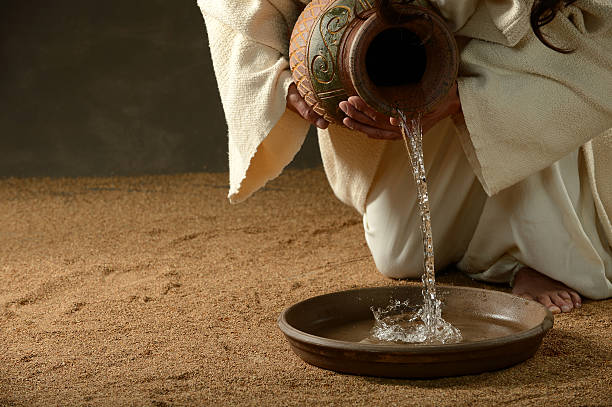
This is one of the remarkable scenes in the fourth gospel, our Lord Jesus Christ feeling thirsty, the second time as recorded by John. The first was in the town of Sychar in Samaria when Jesus sat by Jacob’s well at noon and asked a Samaritan woman who came to draw water, “Give me a drink” (Jn. 4:7). A beautiful conversation followed between Jesus who was thirsty and the Samaritan woman, thirsting for God, for love and mercy.
Unlike being hungry for food which we can always bear because its feeling is localized in the stomach that we can easily forego by catching some sleep, thirst is different. When we are thirsty, we feel our whole body sapped dry even to our fingertips that we feel so weak, even affecting our mental faculties. That is why, thirst means more than physical but something deeper that concerns our very soul and being.
Here we find Jesus truly human, thirsting not just for water like us but most of all, for love and attention.
See also that for John, water is one of the most significant signs of Jesus Christ. His first “sign” as John would call his miracles was at the wedding feast at Cana when Jesus turned water into wine. After that wedding, Nicodemus came to Jesus at night where he first mentioned the need to be born in water and spirit (Jn. 3:5). It was after that night when Jesus went to Sychar and asked water from the Samaritan woman with whome he identified himself as “the living water (Jn. 4:10)”.
Here again is Jesus thirsty, but not just asking for water.
How foolish are we in responding to him like the Roman soldiers who gave him an ordinary wine. Worst, there are times we give him tepid, or perhaps turbid water that tastes so awful like that ordinary wine offered by the Romans at Golgotha.
Here is our living water, Jesus Christ who promised that “whoever drinks the water I shall give will become in him a spring of water welling up to eternal life” (Jn. 4:14) thirsting for us, for our love and attention because he alone can quench our thirsts in life.
Jesus is the wife and mother who thirsts for the love and affection of her unfaithful husband and wayward son or daughter who think only of themselves.
Jesus is the husband and father who thirsts for simple calls and expressions of concern from his family those back home while toiling abroad or in the high seas as an OFW or thirsting for understanding and care from those around him when he forgets so many things due to Alzheimer’s or paralyzed by a stroke or handicap.
Jesus is the young man or woman who thirsts for time and presence of a sibling or parents who could not find meaning and directions in life despite the money, clothes and gadgets the world offers.
Jesus is the person nearest to you thirsting for warmth and company, or simply a smile or a friendly gaze that assures him or her that “you are welcomed”.
Let us not be like those Roman soldiers or that Samaritan woman looking for material water to give Jesus present in every person we meet. Many times, the best water is found inside our hearts, deep in our souls where Jesus dwells with his abounding love and mercy, kindness and forgiveness. Let us thirst more for Jesus for he alone can quench our thirsts!
Let us pray:
Dearest Lord Jesus,
forgive me
when I quench my thirst
with things the world offers
that often leave me
more thirsty,
more dry,
more empty;
let me have more of YOU
to share more of YOU
our living water
who quenches our
deepest thirsts
for life's meaning
and fulfillment.
Amen.
40 Shades of Lent by Fr. Nicanor F. Lalog II
Wednesday in the Fourth Week of Lent, 22 March 2023
Isaiah 49:8-15  >>> + <<<  John 5:17-30
Photo by author, sunrise at the Sacred Heart Novitiate, Novaliches, QC, 22 March 2023.
Loving God our Father,
Your words say it all today,
my birthday:
Thus says the Lord: In a time of favor I answer you, in the day of salvation I help you; and I have kept you and given you as a covenant to the people… Can a mother forget her infant, be without tenderness for the child of her womb? Even should she forget, I will never forget you.
Isaiah 49:8, 15
The Lord is gracious and merciful.
Responsorial Psalm, Ps. 145:8
Photo by author, Sacred Heart Novitiate, QC, 22 March 2023.
More than words, dear Father,
I praise and thank you
for your boundless love
and kindness to me all these
58 years!
You have always been present with me,
in me, for me, and through me in Jesus Your Son.
And so, I pray this to you:

Dearest Lord,
you have given me with so much,
I have given you so little;
teach me to give more
of my time and talents,
to give more of my self
so I can give Christ Jesus to others,
especially his love and mercy,
kindness and forgiveness;
empty me of my pride, Lord,
and fill me with your humility,
justice and love.
Amen.
Photo by author, Sacred Heart Novitiate, QC, 22 March 2023.













 lordmychef.com