Lawiswis ng Salita ni P. Nicanor F. Lalog II, Ika-18 ng Nobyembre 2020
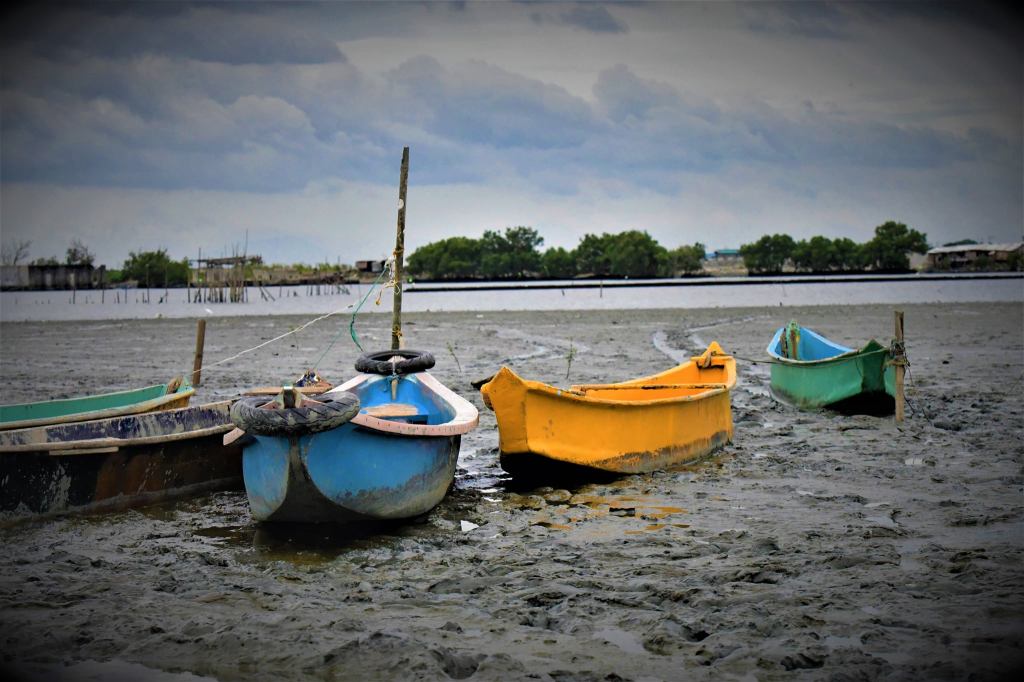
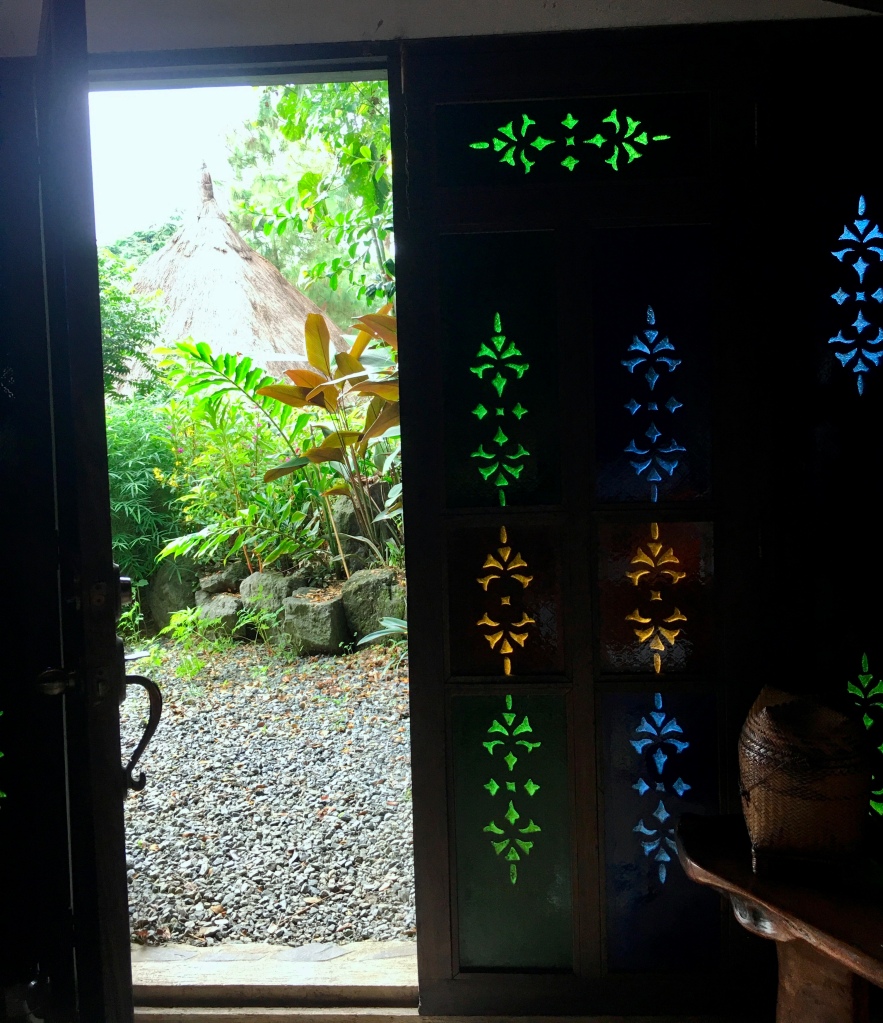
Larawan kuha ni G. Jim Marpa, 2019.
"Walang kuwenta"
madalas masambit ng matatanda
sa maraming bagay noong araw
panahon pa ni Kopong-Kopong
kung sino man iyon...
"Walang kuwenta"
ay walang suma,
walang halaga,
walang kabuluhan
kaya hindi na binibilang.
Nguni't kung ating
tutuusin
lahat sa buhay natin
ay mahalaga kaya
mayroong kuwenta ang bawat isa.
Walang
walang kuwenta
sa mundong ito
dahil sa kahuli-hulihan
ang lahat ay kukuwentahin
upang tingnan
kung tayo ay sapat o
kulang sa timbang
batay sa ipinagkatiwala
ng Diyos na biyaya sa atin.
Hindi mahalaga kung
marami o kakaunti
 binigay Niya sa atin
dahil iisa pa rin
ang pagsusuma
 na Kanyang gagawin:
naging tapat ba tayo
sa atas Niyang gampanin
palaguin, pagyamanin
kaloob Niyang bigay sa atin?
Mapalad
ang aliping tapat,
pinagyaman, pinalago
kanyang buhay at talento
sa langit kanyang makakapiling
itong Panginoon natin!
Ngunit sa aba
na sinayang ang lahat
sa paghuhukom
siya ay titimbangin
at kung kukulangin
magngangalit mga ngipin
sa walang hanggang apoy
siya susunugin.
Pagyamanin
biyaya sa atin
ng Panginoong butihin
na siyang puhunan
din natin
sa buhay pang darating!
The Lord Is My Chef Breakfast Recipe for the Soul by Fr. Nicanor F. Lalog II
Monday, Week XXXIII, Year II in Ordinary Time, 16 November 2020
Revelation 1:1-4; 2:1-5     >><)))*>  +  <*(((><<     Luke 18:35-43
From Facebook, nuns bringing relief goods during the COVID lockdown last summer.
God our Father… I cannot find the words to tell you what is in my heart as I saw the images of devastations and sufferings of your people these past days. Part of me feels thankful for my lesser worries like not having running water and other things but my heart goes out to those people still trapped in floods with little or no food and water at all.
Sufferings are all around us, dear Father. Hear our pleas, especially the cries of children, of mothers, and of elderlies.
It is true that we are partly to be blamed for these sufferings as we have refused to alter our lifestyles that destroy the environment. Worst of all, of our refusal to take an active part in choosing and electing credible leaders in government.
Like the people of Ephesus, we are good at speaking out against wickedness but have merely remained at the sides, preferring to stay in our comfort zones.
Yet I hold this against you: you have lost the love you had at first. Realize how far you have fallen. Repent, and do the works you did at first. Otherwise, I will come to you and remove your lampstand from its place, unless you repent.
Revelation 2:4-5
Fill us with your Holy Spirit, Father, to courageously follow your Son Jesus Christ on the street as he passes by like that blind man sitting by the roadside begging; but, upon hearing Jesus was passing by, he left the roadside to come to Jesus on the street.
Like him, we pray, “Lord, please let me see” (Lk.18:41). Amen.
The Lord Is My Chef Sunday Recipe for the Soul by Fr. Nicanor F. Lalog II
Week XXXIII-A in Ordinary Time, 15 November 2020
Proverbs 31:10-13, 19-20, 30-31 >><)))*> 1Thessalonians 5:1-6 >><)))*> Matthew 25:14-30
From inquirer.net
It is my fervent hope and prayer that by this time, everybody is feeling better after those harrowing experience of winds and rains by typhoon Ulysses that have induced flash floods and left a path of destruction and deaths in Central Luzon and Metro Manila this week.
Indeed, it was like tropical storm Ondoy happening again after eleven years when everybody was caught by surprise by the floods and severe aftermath of dirt and trash left behind with no electricity nor water supply available in many parts of the affected areas.
As a result, many of us have again reflected on the one topic we have always avoided in life – death and things of the end like parousia or Second Coming of Christ, end of the world, and judgement day that have preoccupied the early Christians. St. Paul’s reminder to them in today’s second reading is so timely and relevant even for us today to be vigilant for Christ’s coming.
But you, brothers and sisters, are not in darkness, for that day to overtake you like a thief. For all of you are children of the light and children of the day. We are not of the night or of darkness. Therefore, let us not sleep as the rest do, but let us stay alert and sober.
1Thessalonians 5:4-6
Vigilance is faith in Christ.
Jesus gives us another parable today to illustrate his Second Coming and judgement; but unlike last week, today is more picturesque, touching our innermost core, challenging us to be “wiser” in daring to gain eternal life by working harder in this life.
Jesus told his disciples this parable: “A man going on a journey called in his servants and entrusted his possessions to them. To one he gave five talents; to another, two; to a third, one — to each according to his ability. Then he went away. Immediately the one who received five talents went and traded with them, and made another five. Likewise, the one who received two made another two. But the man who received one went off and dug a hole in the ground and buried his master’s money.”
Matthew 25:14-18
Photo by author, Chapel of the ICMAS Theologate, 05 October 2020.
Vigilance is more than being prepared and ready for any eventuality. It is active waiting by taking risks to ensure a more safe and sound situation when emergencies strike. This is the reason why investors are always surveyed how much risks they are willing to take with their investments: the bigger the risks, the higher the returns are. But, can we take the risks?
The same is true with everything if we wish to have a better future. We have to take risks like working harder, sacrificing more in order to save money and have better homes, to keep our body physically fit and healthy, and burning the night lamp to finish our studies and achieve our goals in life. In this all we find the need to maximize what we have – no one can claim as having nothing at all or “walang-wala” as we would always claim in Tagalog.
Jesus clarifies this today in his parable, telling us that each servant was given with talents “according to his ability”. We are all blessed by God! It is not a question of how much we have received but what have we done to what we are given with.
Of course, not everyone can have all in life but each one has his/her many talents as well as weaknesses. Focus more on what we have than what we do not have. Keep in mind that nobody is perfect, that everybody is going through some struggles in life.
Being vigilant, being “children of light” means striving for the best, choosing what is the best which is part of being holy, an expression of our faith in God. Whenever we dare to take risks like casting our nets into the deep like Simon Peter, we express our deep faith in God as we hope and trust in him.
Photo by Dr. Mylene A. Santos, MD, 30 October 2020.
We are made by the choices we make.
When I was still teaching in our diocesan schools, I used to tell my students to “study hard, work harder and pray hardest”, reminding them that their being good and successful lawyers, doctors, engineers or any professional starts not in the future but today, in the here and now.
Make the right choices in life by truly working on them not just at the spur of the moment or simply based on what others say. Most of all, pray first to discern God’s will for our decisions so we may choose what is best for us according to him.
God wants only the best for us — he made us share in his Life and gave us his only Son Jesus Christ to have its fullness in him here and in eternity. Unlike wealth managers who help people invest for their future, only Jesus assures us with sure, high yields in our “investments” in life by being good and holy.
A lot often, we decide and take risks based on the people we are with like when we have friends or superiors who are good and trustworthy. In the first reading we have heard how a faithful wife uses all her talents in serving her family as she is moved by the fidelity and love of her husband. The same is true if we have good and inspiring friends and employers who move us to be our very best. And most true of all with God who moves us to be our very best to lovingly serve him in others.
Here we find Jesus in his parable as the master who went on a long journey who risked all for us and continues to believe in us, giving us all the grace we need in this life to be fruitful in him.
All we have to do is just be faithful to him to whatever task and mission he has given us. It does not matter how big or small that may be; all he wants is for us to remain faithful to him, of not wasting that talent that must be put into good use not only for us but for others too.
If we are faithful to Jesus, anytime he returns to call us back to eternity, we can be sure of “sharing in his (master’s) joy” of Eternal Life! And if we are not faithful, then….
Photo by Dr. Mylene A. Santos, MD, 07 November 2020.
Today as we praise and thank God for the gift of life with the sun shining anew, let us ask ourselves following the recent calamities happening: what have I done with the many gifts and blessing God has given me? with the tasks, big and small, he has entrusted me?
Remember, it is not how big or how little talents we have received but how we have made it grow that matters. Our lives are the gift of God to us, what we do with our lives, that is our gift to him!
Have a blessed Sunday! Please pray and help our brothers and sisters in Cagayan and Rizal provinces severely affected by typhoon Ulysses. Lastly, kindly say a prayer for me and my six other classmates as we celebrate today (15 November 1997) our 23rd anniversary of ordination as Deacons. Amen.
The Lord Is My Chef Breakfast Recipe for the Soul by Fr. Nicanor F. Lalog II
Wednesday, Memorial of St. Charles Borromeo, Bishop, 04 November 2020
Philippians 2:12-18     >><)))*>  >><)))*>  ><)))*>     Luke 14:25-33
Photo by Ms. Ria De Vera, sunrise at our Parish during COVID-19 lockdown, May 2020.
Thank you dear God our Father for the timely reminders by St. Paul to us during these last two months of 2020, the most difficult year for us in 50 years. But it is not all that bad, Lord, specially at how it had redirected many of us back to you.
For God is the one who, for his good purpose, works in you both to desire and to work. Do everything without grumbling or questioning, that you may be blameless and innocent, children of God without blemish in the midst of a crooked and perverse generation, among whom you shine like lights in the world.
Philippians 2:13-15
For so long, we have been driving our lives on our own, unmindful of your teachings and ways, O Lord.
We have come to trust and rely more Google for information than knowledge, Waze for directions and destinations than journey, Facebook and Twitter for lifestyle and trends than life itself.
We always grumble or question you and your presence and your voice if ever our social media activities are disrupted.
Oh God…! Just as when we thought we have life with all the technologies and amenities of modern life, the more we have become empty, lost and divided as a people.
Let us go back to you, God, through Jesus Christ.
Help us see anew in this COVID-19 pandemic that without you at the center of our lives and endeavors, nothing good can truly happen with us despite modern technologies.
Like the man building a tower or the king waging a war in the parable of Jesus today, may we humbly accept the truth that after everything is considered in all our plans, it will always be lacking in depth and meaning without God in every consideration because you always know what is really best for us.
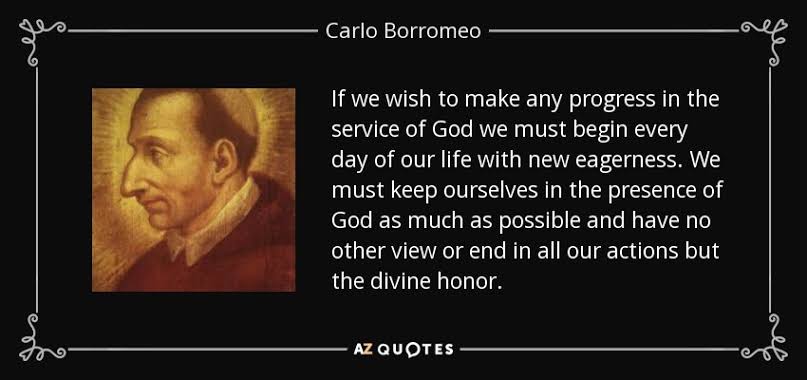
Like St. Charles Borromeo who had lived at a time when the Church had lost more than half of Europe to Protestants, he championed the calls to return to God and to go back to the basics like reforming our clergy and reinforcing catechism.
Through the prayers and inspiration by St. Charles Borromeo, may we let God working in us anew for us to have a better new year, better lives. Amen.
The Lord Is My Chef Sunday Music, 01 November 2020
Photo by Mr. Jim Marpa, Bohol, 2019.
I have lined up some songs with “heaven” in their titles or lyrics for this Sunday’s celebration of All Saints’ Day and tomorrow’s All Souls’ Day; but, during prayers and reflections, I kept on hearing Sting singing in my head King of Pain which is my most favorite among his long list of great music.
Our celebrations this November first and second are a mixture of joy and mourning, of heaven and sufferings, of life and death. As we remember today those already in heaven and tomorrow pray for those awaiting entrance into heaven, we also remember on these twin dates the death of loved ones.
No matter how much we may extoll the redemptive nature of death not as an end but a beginning of eternal life, we cannot miss the sadness and pain it brings to everyone that is always for a lifetime.
And that is what hope is all about: hope does not remove sadness or pain. When we hope of getting into heaven with our departed loved ones, no matter how blissful heaven may be, we always have to deal with the hurts of losing a parent or a spouse, a sibling or a friend.
To hope means to firmly believe that when things get worst, even unto death, there is Life itself, God remaining in the end, loving us, taking us to his presence in heaven to live life in its fullness in him.
To hope means to face new beginnings in this life amid the pains we have in our hearts from deaths and separations, believing that someday, if not in this life, everything would be whole and perfect again.
That is why I find King of Pain more apt for All Saints’ Day and All Souls’ Day.
Written by Sting in 1982 at the Goldeneye Estate in Jamaica where Ian Fleming wrote his first James Bond novels, King of Pain expresses the inner torments he was going through as an individual at that time — his recent divorce from his first wife and growing misunderstanding with his other two colleagues, Andrew Summers and Stewart Copeland. They eventually parted ways after the release of the Synchronicity album from which King of Pain came in 1983.
The beat, the music and the lyrics seem to be dark and melancholic at first but as you get the feel of the entire song sung by Sting, then you realize it is actually about a man struggling with sadness or even depression, of a man filled with hopes until you realize it is speaking about you as king of pain.
Aren’t we all the king of pain in one or the other?
And as we bear all the pains, we keep on forging on with life, we never resign but keep hoping even for a piece of heaven, of the sun to celebrate life each day until we make it to the Other Side like our departed loved ones.
The Lord Is My Chef Sunday Recipe for the Soul by Fr. Nicanor F. Lalog II
Solemnity of All Saints, 01 November 2020
Revelation 7:2-4, 9-14   |+|   1 John 3:1-3   |+|   Matthew 5:1-12
“Mary and the Saints” painting by Duccio di Buonoinsegna (1308-1311) from en.wikipedia.org.
Let me begin our reflection on this All Saints’ Day with a joke from the “Language Nerds” on how the past, the present and the future came and appeared in a bar. Everybody was tense.
Our celebrations today and tomorrow deal with “verb tenses” – the past, the present, and the future that somehow converge in the here and now of Jesus Christ our Lord. We call it the tension of the already here but not yet, like God and heaven – both already here but not yet.
All Saints’ Day and All Souls’ Day are two Catholic celebrations so unique and distinctive of our faith that bring to the fore the beautiful tensions of the “here and not yet”, of that convergence of the temporal and eternal in our present lives.
It is something like our Filipino delicacies of tuyo (dried fish) and balut (fermented duck egg): when you smell the aroma of the frying tuyo by your neighbor, you could taste it but if you want to really experience its delight, you have to go to your neighbor and join their meal. Or the balut: is it an egg or a duckling?
In a similar manner, we find in our Gospel today that proverbial question of which came first, the egg or the chicken? Are we blessed because we followed the Beatitudes first or, are we blessed first that we can practice the Beatitudes of Christ?
When Jesus saw the crowds, he went up the mountain, and after he had sat down, his disciples came to him. He began to teach them, saying: “Blessed are the poor in spirit, for theirs is the kingdom of heaven. Blessed are they who mourn, for they will be comforted. Blessed are the meek, for they will inherit the land. Blessed are they who hunger and thirst for righteousness, for they will be satisfied. Blessed are the merciful, for they will be sown mercy. Blessed are the clean of heart, for they will see God. Blessed are….
When Jesus preached his sermon on the mount to launch his ministry, he first presented himself — that he is the Christ, the Anointed or Blessed One because he is in fact the Beatitudes: he is the poor in spirit, the merciful and meek, the one with a clean heart.
Inasmuch as the Beatitudes tell us who is Jesus Christ, the Beatitudes also challenge us followers of Jesus to imitate and follow him in being poor in spirit, merciful, and clean of heart.
At first glance, we notice that blessedness seems like a reward given by Jesus after we have imitated him like being blessed after being insulted and persecuted in his name, working for peace and hungering and thirsting for righteousness.
However, the very fact we are able to bear all these sufferings to live the Beatitudes means that we are already blessed.
And that is the truth: in Christ’s Passion, Death, and Resurrection, we have all been blessed by God that we are able to live as his beloved children, now living in his “kingdom of heaven” right here on earth.
Beloved: See what love the Father has bestowed on us that we may be called the children of God. Yet so we are… we are God’s children now; what we shall be has not yet been revealed. We do know that when it is revealed we shall be like him, for we shall see him as he is. Everyone who has this hope based on him makes himself pure, as he is pure.
1 John 3:1, 2-3
Blessedness is who we are as children of God unless we choose to live otherwise.
Blessedness is God’s gift to us that enables us to live according to his will and plans, projecting us further into the future to finally be with him in all eternity in heaven. When we try to live the Beatitudes of Jesus, of going against the tide and flow of the world where power and wealth, popularity and fame are the means life is measured, then that becomes our gift to God.
And that is when we enter into heaven and become saints like what we celebrate today.
According to St. John Paul II, the good news of life is that we all share in the life of God — and that is why we are all blessed.
Our sharing in the life of God makes us blessed.
The difference that we have with the saints is just the tenses: they are now celebrating at present the fullness of their blessedness, of being present before God in all eternity in heaven because they have so well accomplished while living here on earth the works of the Beatitudes of Christ in the past. They have overcome all tests and trials in the past and now having the rewards of full blessedness.
We, on the other hand, though already sharing in the blessed life of God here on earth in the present, still have to face and endure many other trials in the future to perfect ourselves in Christ until we get a final glimpse of him in the afterlife.
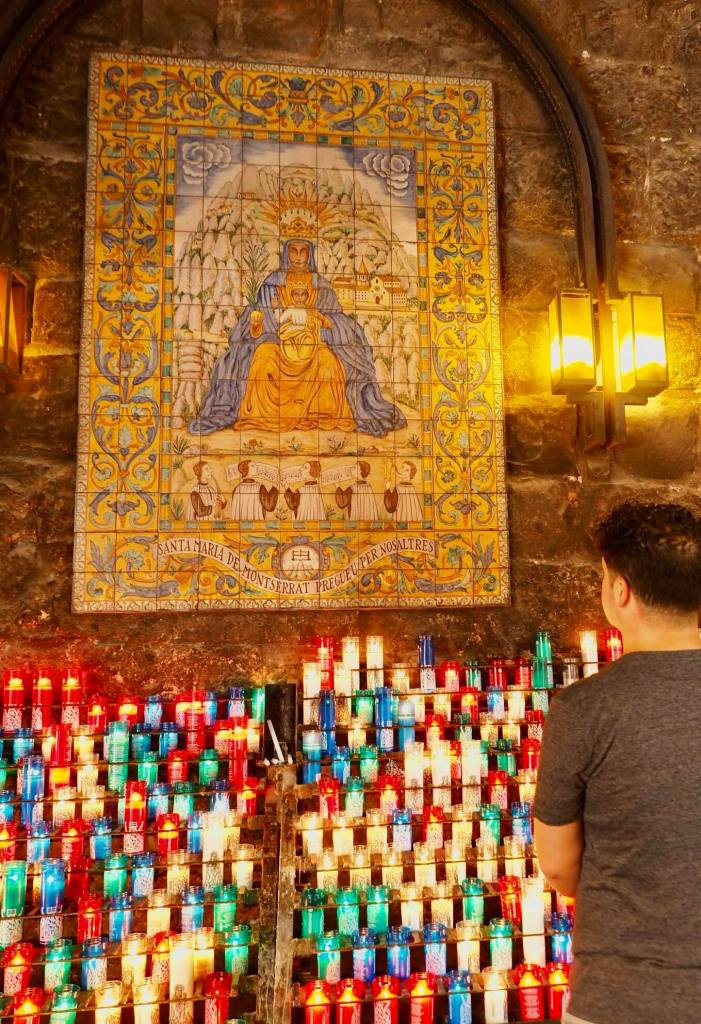
Photo by Dr. Mai B. Dela Peña, MD, at Spain, 2018.
Blessedness is a relationship with God.
It is now clear with us that saints are like us who are blessed because we share in the life of God. However, saints enjoy the fullness of this blessedness of being in the very presence of God as a “reward” or a result of their striving with God’s grace to live out the Beatitudes.
Saints now enjoy the eternal presence of God, the fullness of blessedness and fullness of their relationship in God and with God, from earth into heaven.
This is the reason we have a feast for all the saints or those who have gone ahead of us and tried to lead holy lives, living out their blessedness that they now enjoy the eternal presence of God in heaven. They need not be declared by the Church as saints whoever gets into heaven in the presence of God is a saint.
We who are still living here on earth, though blessed as we share in the life of God, cannot be considered as saints yet because we still have to go through a lot of purifications, of tasks in loving.
Again, we see that tension of the here and not yet in this aspect of being saints, of blessedness: heaven is eternal union with God (hell is eternal separation from God); blessedness and heaven are both our relationships with God.
Therefore, the challenge of our blessedness here on earth as seen in the Beatitudes of Jesus is how we maintain and keep that intimate relationship with God that every choice we make is always a choice for life, of choosing to love than hate, to forgive than revenge, to understand and let go.
In the first reading, John tells us of his vision of heaven with great multitude of “saints” or holy men and women “wearing white robes holding palm branches in their hands”. The Lord told him,
“These are the ones who have survived the time of great distress; they have washed their robes and made them white in the blood of the Lamb.”
Revelation 7:14
Although we are extolling in this solemnity all the unnamed saints now in heaven, this is still a feast celebrating the goodness of God, of his immense love for us in blessing us in Jesus Christ who enables us to do good in the power of the Holy Spirit.
As we remember all the Saints, we celebrate also this sharing of God’s life in us for us to be blessed, assuring us of being saints someday!
We are challenged today to live out this blessedness freely given to us by God by being more loving with others specially in this time of COVID-19 as well as when two super typhoons are threatening to slam into some parts of our country this week.
A short note about cemeteries
Sometimes, non-Catholics laugh at us every November first when we troop to the cemeteries to be with our departed loved ones instead of November 2. Despite the closure of cemeteries this week due to COVID-19, many have earlier visited their loved ones in cemeteries while the rest among us would surely do the same once the ban is lifted.
Is there something wrong? NONE. Except for those who just go to cemeteries to drink and have fun without praying and celebrating Mass in their parishes. But there is nothing wrong with our tradition of visiting cemeteries on November first.
In fact, it is a vibrant display of our faith in God because every time we visit the dead on All Saints’ Day, we also presume they are already saints, already in heaven.
Most of all, our coming to the cemeteries on All Saints’ Day is an expression of our hope in heaven while still here on earth.
The cemetery reminds us of hope in the future. In the past when we buried our dead, the cemetery has become the place of our mourning; but, every November first, the cemetery reminds us it is the place of hope where sadness is not really removed but where we find strength and faith that like our departed loved ones, we shall overcome all trials and sufferings here on earth to be one with them in the presence of God in heaven.
That is the good news of All Saints’ Day and All Souls’ Day: we are so blessed by God in Jesus Christ who had opened our access into heaven not only in the future when we die but even now as we mourn – and celebrate the memory of our dead, we already have a taste of eternal life.
May we live out this blessedness God has given us. Amen.
The Lord Is My Chef Breakfast Recipe for the Soul by Fr. Nicanor F. Lalog II
Friday, Week XXX, Year II in Ordinary Time, 30 October 2020
Philippians 1:1-11          >><)))*>  ||+||  <*(((><<     Luke 14:1-6
What a beautiful last Friday of October 2020 today, God our loving Father! After so many struggles in life this week, you send us our favorite people and friends, favorite memories, favorite sights and smells, and every other favorites that delight and console us, comfort and assure us.
You never allow bad things to continue hitting us! Just as we are about to give up, there you are always coming to us in so many ways like with St. Paul who have received some gifts from the Philippians — his most beloved and favorite community as he wrote them while in prison awaiting trial and sure death in Rome.
It happens so often with us too, Lord, and I am convinced you surely have a hand in them because as St. Paul wrote the Philippians:
I am confident of this, that the one who began a good work in you will continue to complete it until the day of Christ Jesus.
Philippians 1:6
We are not complaining for our many struggles in life; at least we are still alive because the moment we no longer struggle, then we must be with you in heaven!
I love the way how St. Paul told us that you, O Lord, perfects -that is, completes – every work we have done, always with us in whatever struggle we have, starting right at the moment we were born literally struggling for life.
Please bless our work and our efforts, our struggles that sometimes we feel going nowhere, feeling all is wasted.
Like that man healed on a sabbath at a home of a leading Pharisee, may we come to meet you always in faith as you have to be with us body and blood and spirit in Jesus Christ to bless and perfect our efforts and works, even sickness and sufferings.
May we pray to grow in love like St. Paul:
And this is my prayer: that your love may increase ever more and more in knowledge and every kind of perception, to discern what is of value, so that you may be pure and blameless for the day of Christ, filled with the fruit of righteousness that comes through Jesus Christ for the glory and praise of God.
Quiet Storm by Fr. Nicanor F. Lalog II, 27 October 2020
Photo by Ms. Anne Ramos, March 2020.
Whenever people ask me about the story how I became a priest, I always begin by telling them that I am more of a “delayed vocation” than a “late vocation” because after graduating from high school seminary in 1982, I was refused admission to the major seminary to pursue the priesthood.
It was the first serious blow I have had in my life as I felt so deeply hurt because I thought God wanted me to become a priest only to be rejected. It was then I realized his saying “many are called but few are chosen” could be so bad as I had to leave the seminary.
Feeling rejected, I decided to go to the University of Sto. Tomas to pursue my “first love” – journalism to totally forget the priesthood specially when I got into the staff of the Varsitarian (1984-86). It was at the Varsitarian where I learned everything about newspaper journalism that on my senior year in college, I opted to have my training at GMA-7 News to try broadcast journalism.
And I was so amazed at how TV and radio can quickly report the news as it happened, specially whenever I would hear those alarms ringing from the telex machines of United Press International (UPI) and Philippine News Agency (PNA). (By the way, the first thing I learned in broadcast news was changing the newsprints for those telex machines.)
After graduation in college, I got hired as news writer for GMA radios DZBB-AM and 97.1 DWLS-FM. Two years later, I was assigned to cover the police beat at the graveyard shift for our television newscasts.
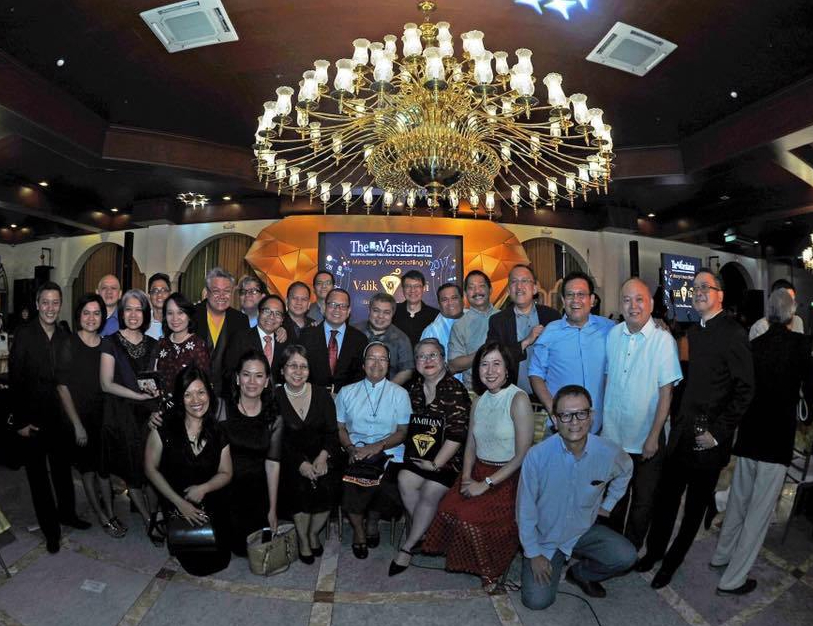
With former co-staffers and fellow alumni of UST’s The Varsitarian during our 2017 homecoming.
One morning before “going to bed”, I read a copy of the Columbia, the magazine of Knights of Columbus my father had insisted me joining while in college. At the last page was a vocation campaign written by a Carmelite priest who claimed something like “faith is a very important gift of God we must keep because if we lose it, we could also get lost in life”.
I cannot remember the priest’s explanations but those words got stuck in me that very morning when I just felt praying again after a very long time of being a nominal Catholic in college and GMA-7. The words simply flowed from my lips to become my only prayer in the next four years:
"Lord,
let me grow in faith
in you."
Everything happened so fast for me at GMA-7 with all the breaks and opportunities given me which I never asked nor even dreamed of. I have never wanted to be “on camera” and have always preferred working behind the scenes (even now as a priest).
As I look back and count my blessings, I always consider it as a grace, a gift from God when Ms. Jessica Soho recommended me to take her place covering the military/defense beat when she was promoted to hosting her own morning show and doing special reports that have established her now as the best in the field.
Despite the recognition that came along with a career in broadcast news, deep inside me I started feeling empty as early as 1988. Most strange of all, I felt God calling me back to the priesthood that I vehemently dismissed, knowing personally how sinful and evil I have been!
When the emptiness and priestly call persisted, I slowly returned to our parish thinking that maybe, I was just missing my old ways of going to Mass and singing with the choir. But, the more I thirsted and yearned for God!
It was so funny and even ridiculous for me at that time seeing myself praying more often, choosing to be alone inside the church like when we were in the minor seminary. I even did not know if I were praying at all except that I felt complete in silence until one day, I found myself begging God:
"Lord,
let me know
my vocation
in life."
I thought of leaving broadcast journalism in 1989 to teach English language to Vietnamese refugees in Morong, Bataan after reading its ads in the Manila Bulletin. It seemed to me that was what I was searching for, something I can enjoy with a deeper purpose and meaning like serving others.
For several weeks I would read the ads in the newspaper until my interest died down as I got into a lot of action doing police stories in the dead of the night. It was also the time when I got so busy covering the 1989 December coup attempt and the destructive Luzon earthquake of July 1990.
Though I felt good reporting the news from the fields, one thing I noticed every time I went home was how I still felt empty inside when alone. Life had no meaning that I tried seeking it in bottles of beer, then in shots of brandy and whiskey until I thought I have found it in glasses of Tanqueray gin tonic. Mr. Marlboro in blue seal bought along Timog Ave. became my constant companion too.
Finally I sought spiritual direction from some priests I have known in the seminary like our former rector Fr. Memeng Salonga and our Sunday Mass presider in our barrio chapel, Fr. Boie Agustin. They have greatly helped me in discerning my vocation that I decided to take the entrance exams to the seminary in February 1991.
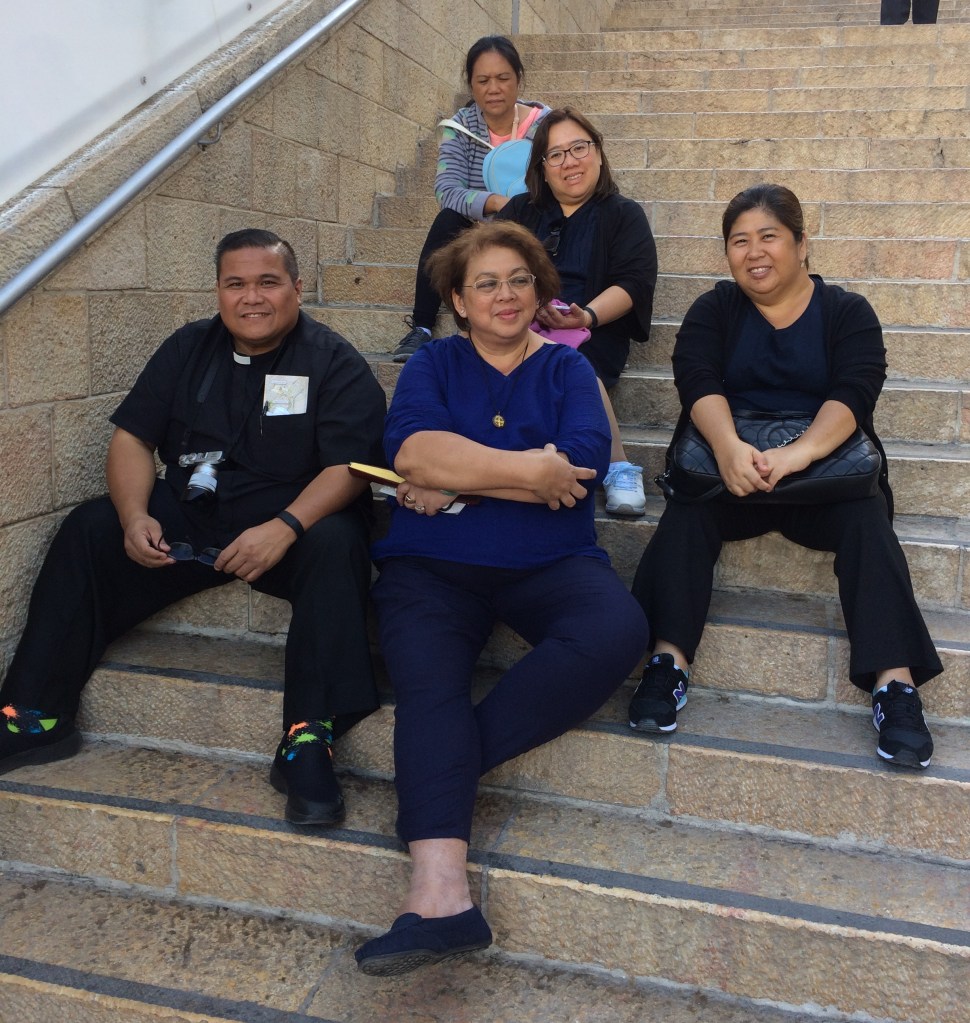
With my former colleagues at GMA-7 News as we rest on the steps near the Wailing Wall of Jerusalem during our Holy Land pilgrimage in 2017; from top is Ms. Marissa Flores, SVP of GMA-News with her nurse, Ms. Jessica Soho of “State of the Nation” and KMJS, and Ms. Kelly Vergel de Dios, the former VP for Personnel of GMA News.
It was the last exam date for the coming academic year and frankly, I was still hesitant to give my vocation a second try because I felt unworthy of the call and most of all, afraid of failing again like in high school seminary.
For a while I felt a strong basis for my doubts with my vocation: just when I was about to take the entrance exam, our boss, Ms. Tina Monzon-Palma asked me to cancel my day off that Saturday to search for the lone survivor of the 1911 Taal eruption in Talisay town when that “small but terrible” volcano showed signs of activity.
In my mind, God must be using Ms. Palma to inform me I got it all wrong, that he wasn’t calling me at all to the priesthood that is why I was given a job that Saturday, the last exam date to the seminary.
Of course I was so glad missing the entrance exam with a valid reason that I immediately went back to “happy hours” after coverages until late March when I had a severe attack of gout one weekend. It was so painful that I could not go to work the following Monday and Tuesday.
While in total bed rest for my gout, I felt my vocation coming back again, more persistent than before that I had the stupid idea of asking God for one last sign that would clearly convince me he wanted me to become a priest.
And God heard my prayer!
By Thursday I was back to work covering the newly-assigned AFP Chief Gen. Lisandro Abadia inspecting the troops in Abra and Kalinga. Everything went well until we flew to Laoag City for the final leg of Gen. Abadia’s troop inspection when one of our plane’s tires blew on landing!
Boom! Everything was so fast as I remembered the loud explosion of the tire on my side of the plane, followed by thick smoke seen from my window and tilting of plane as I ducked my head down on my lap, repeatedly praying in silence, over and over again, “Yes, Lord! Magpapari na po ako!”
It was the big news that evening: a tire of the plane with the new AFP Chief blew upon landing at Laoag City airport.
And the bigger news among newsmen was me —- everybody was teasing I was the next Jessica Soho who used to figure out in accidents while covering soldiers and military officials.
More teasings and laughters welcomed us when we got back to Manila but all throughout our trip until I got home that night, I felt deep inside like the prophet Jonas so relieved and convinced of God’s call after being spitted out from the belly of a giant whale like that PAF’s Fokker plane. From that day also, I have never dared to ask God for signs anymore.
Faith is a relationship with God;
we pray with faith not to obtain favors
but to grow deeper
in love and unity
in Him.
It was not very easy for me when I finally returned to the seminary in 1991 until our ordination to the priesthood in 1998. There were more trials and hardships, more tests that required from me more prayers, more faith…. to which I got in return from God more love, more mercy, more calls.
From that simple prayer to grow in faith, God has blessed me more abundantly not materially but spiritually and emotionally, of being fulfilled in him. Since becoming a priest in 1998, I have stopped asking God for any specific things in prayers. All I ask him is to give me with more firm faith, fervent hope and unceasing charity and love so that in every here and now, I may say yes to his calls.
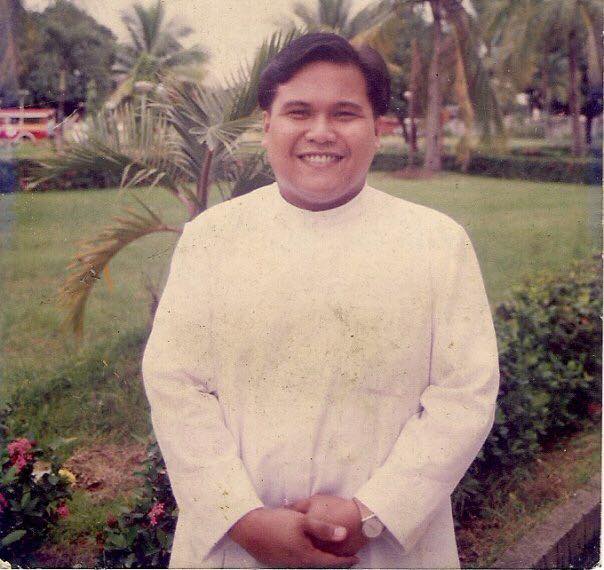
My first months in the seminary in 1991.
In his book reflecting his 50 years of being a priest published in 1999, St. John Paul II described the priesthood as both a gift and a mystery. Indeed, every vocation from God – priesthood, religious life, married life, and single-blessedness – is always a gift and a mystery, something so personal and so deep between me and God, or you and God.
This I realized more when public Masses were suspended during the lockdown in March. It was in that being alone and sad when I existentially experienced the Mass as truly a union, an intimacy of the priest with the Eternal Priest, Jesus Christ. With or without the people.
Let me close this with another prayer I have made during our annual retreat in the seminary in 1994 facilitated by a Cenacle sister. It is one of my core prayers next to that about growing in faith:
Lord Jesus Christ,
you have given me with so much
and I have given you with so little;
teach me to give more of myself,
and most of all,
more of your love,
more of your kindness,
more of your mercy and forgiveness
and most of all,
more of YOU to others.
Amen.
Enjoy and grow in your faith journey in the Lord until you find your vocation in life in him!
The Lord Is My Chef Breakfast Recipe for the Soul by Fr. Nicanor F. Lalog II
Monday, Week XXX, Year II in Ordinary Time, 26 October 2020
Ephesians 4:32-5:8     >><)))*> ||  >><)))*>  ||  >><)))*>     Luke 13:10-17
Easter Vigil in the midst of COVID-19, 2020.
How beautiful are your words for us, loving Father, on this last Monday of October 2020!
Despite the rains caused by a typhoon, our first reading from St. Paul’s Letter to the Ephesians is so heartwarming in reminding us of our new humanity in Jesus Christ your Son, encouraging us to live moral lives by “living in love” (Eph.5:2) as “children of light” (Eph.5:8).
Living in love is living as children of light by first being imitators of you, O God, which is to be holy as you are holy. Remove from our minds that holiness is being sinless; teach us to realize that being holy, being “whole” and perfect is a process of being filled with you, dear God.
Teach us to be open to let you fill us, God, full of life and zest, raring to explore and move forward despite the many pains and setbacks we have had.
Cleanse us of immorality and impurity in our minds and hearts and lips.
Keep us grateful to your many blessings we have received specially those we never asked from you yet you have generously given us.
Most of all, make us truthful and sincere in our love for you through our neighbors; take off our masks of hypocrisy like the leader of the synagogue where Jesus healed on a sabbath a woman crippled by a spirit for 18 years (Lk.13:14).
To live in love as your children of light Lord is also to free others from the many burdens burdens in life they carry so they may start living in you through Jesus Christ. Amen.
The Lord Is My Chef Breakfast Recipe for the Soul by Fr. Nicanor F. Lalog II
Saturday, Week XXIX, Year II in Ordinary Time, 24 October 2020
Ephesians 4:7-16     >><)))*>   +   <*(((><<     Luke 13:1-9
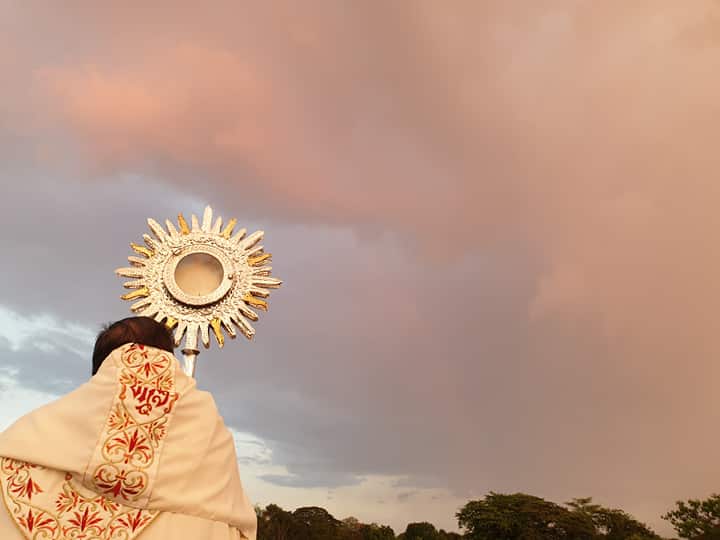
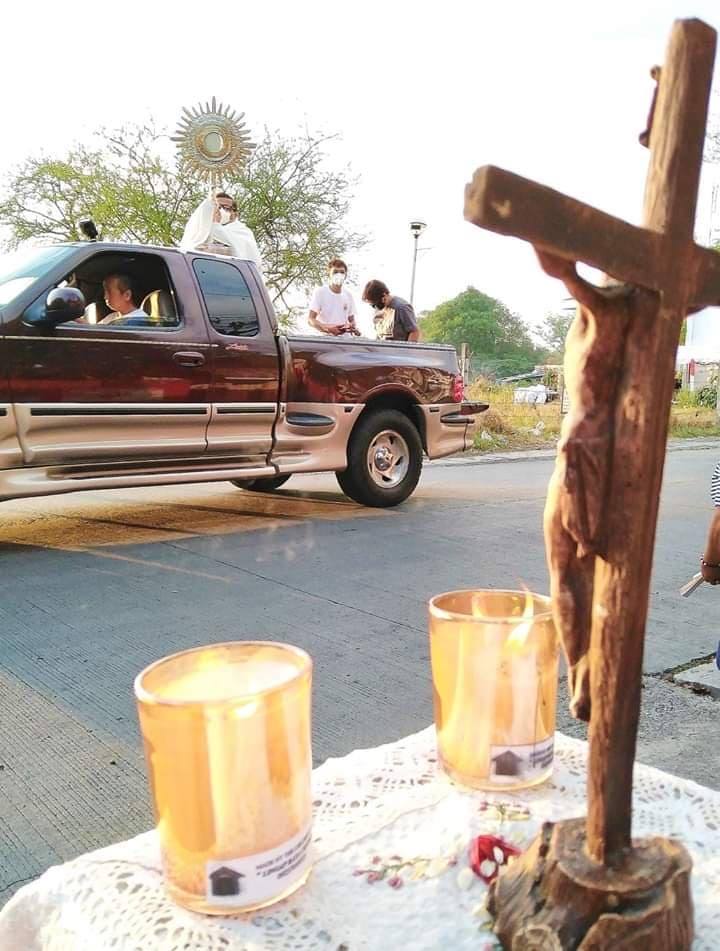
Motorized procession or “Paglilibot” of the Blessed Sacrament around our Parish last summer at the height of COVID-19.
Praise and thanksgiving to you, God our merciful Father for the grace of some bit of good news these past few days with the declining number of COVID-19 infections specially in the National Capital Region. We are still far from controlling the spread of corona virus but that is enough for us to rejoice! Thank you, dear God!
As we come to close this week and inch closer to the penultimate month of 2020, we pray like St. Paul that we may live holy and righteous lives worthy of our dignity in Jesus Christ your Son.
Rather, living the truth in love, we should grow in every way into him who is the head, Christ, from whom the whole Body, joined and held together by every supporting ligament, with the proper functioning of each part, brings about the Body’s growth and builds itself up in love.
Ephesians 4:15-16
Make us grow in you, dear Jesus: let us see and find you in things and events in our lives.
Make us see ourselves first of all in need of seeking your forgiveness and mercy for our many sins to cleanse ourselves of any claims to self-entitlement as you have warned the people in today’s gospel.
Most of all, may our lives bear fruits like in the parable of the fig tree wherein we keep in mind, always aware of our identity in you, dear Jesus so that we may live accordingly in the grace of the Father through the Holy Spirit. Amen.









 lordmychef.com