Our Sabbath faith

Lord My Chef Sunday Recipe for the Soul, 12 October 2025
Twenty-Eighth Sunday in Ordinary Time, Cycle C
2 Kings 5:14-17 ><}}}}*> 2 Timothy 2:8-13 ><}}}}*> Luke 17:11-19
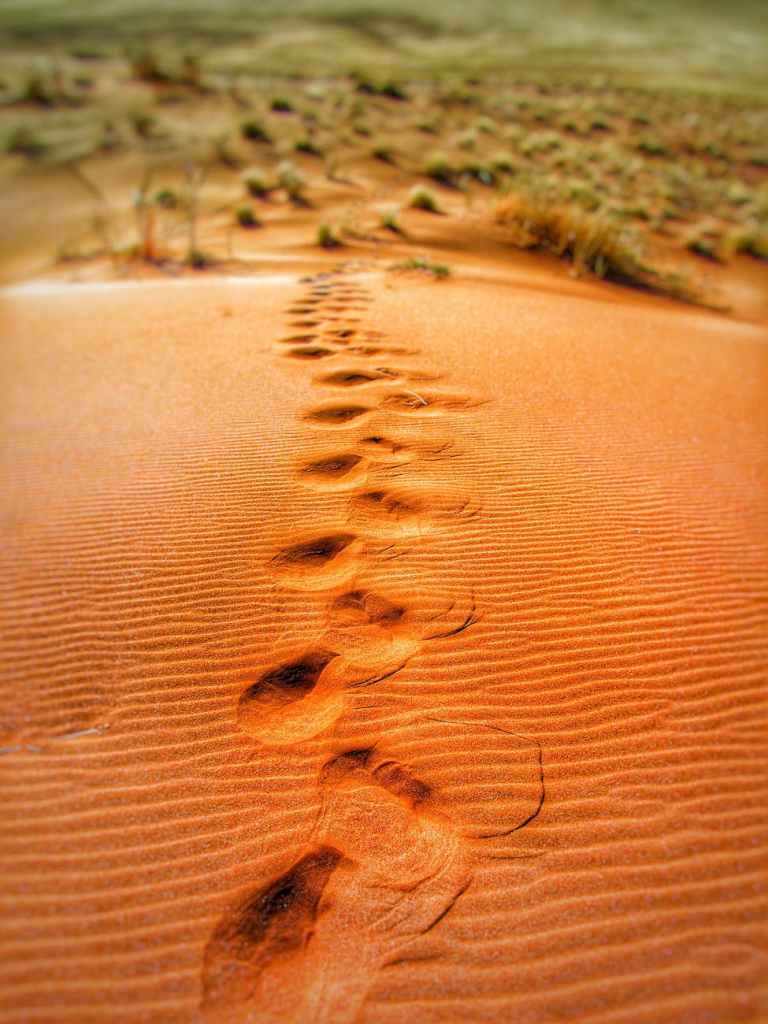
Photo by author, view of Israel from Mt. Nebo, Jordan, May 2019.

Our gospel setting this Sunday strikes a deep lasting impression on anyone who had been on a Holy Land pilgrimage: of those vast expanse of desert in Israel where dusty roads have been replaced by modern concrete or asphalted roads.

Perhaps the feelings remain the same today and during the time of Jesus when he and the Twelve were near the border between Samaria and Galilee, several figures who turned out to be ten lepers appeared at a distance, waving their hands to the Lord. It must have been a surprising sight, then and now, of being found in the desert. Imagine the desperation in their voices of those ten lepers, “Jesus, Master! Have pity on us!” (Lk.17:13).

Jesus right away told them to go show themselves to the priests, and as they went, they were healed. But only one—a Samaritan—returned to thank Jesus who wondered aloud: “Ten were cleansed, were they not? Where are the the other nine? Has none but this foreigner returned to give thanks to God?” Then he said to him, “Stand up and go; your faith has saved you” (Lk.17:17-19).

“The Healing of Ten Lepers” painting by James Tissot en.wikipedia.org

Last Sunday we reflected that faith is primarily a relationship with God; hence, its powers or efficacy will work only when aligned with God and his Holy Will. We will never know how strong we have grown in faith until we get into tests and trials. That is why, the need for us to imitate the Twelve in praying to Jesus, “Increase our faith” (Lk.17:5).

We grow best in faith when we worship God with our fellow believers in the celebration of the Holy Mass especially on Sundays which is our Sabbath. More than a day of rest, Sabbath is a day of restoration to God, with others and most of all, with one’s self. It is a return to Eden, a dress rehearsal of our entry into heaven to dwell in God’s presence eternally.

This is where lies the beauty and significance of this healing of ten lepers – they were not only restored to health but restored in God, to their families, and to their community and fellow believers.

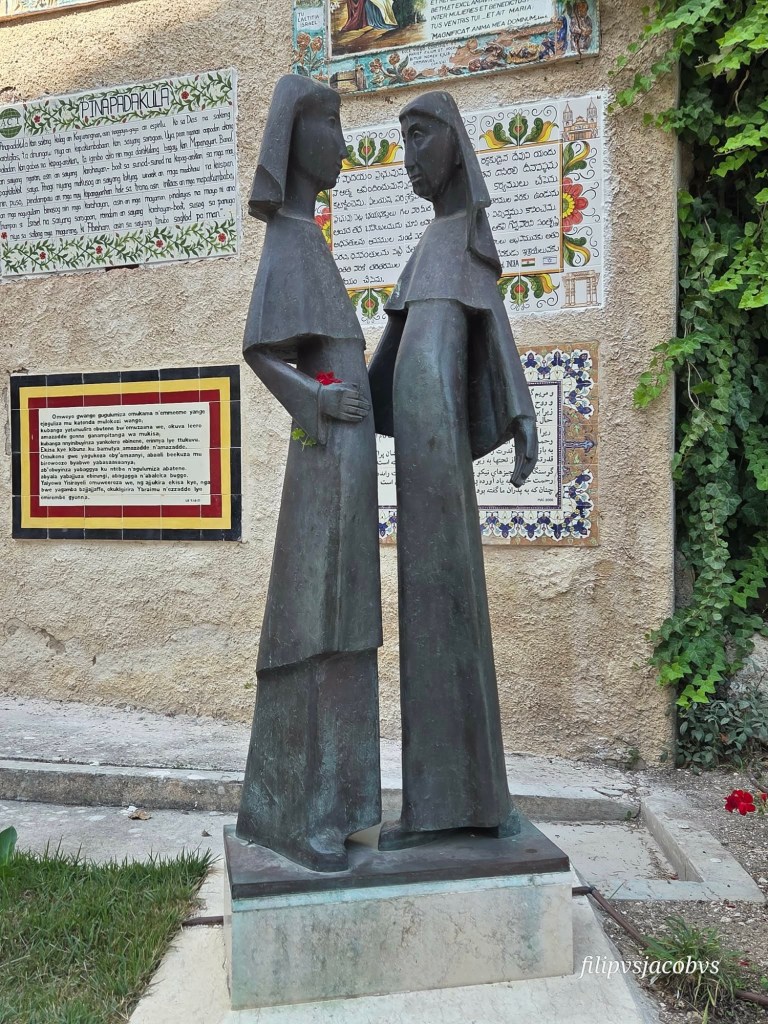
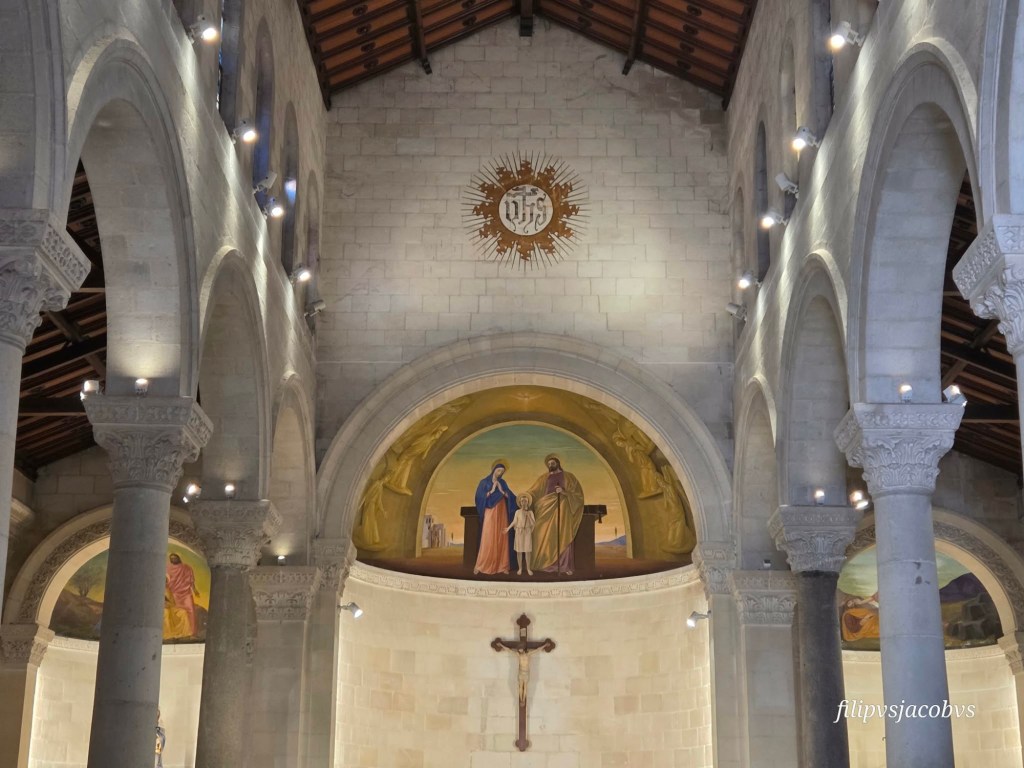
Photo by author, Jerusalem, May 2017.

Those ten lepers have never known any rest at all since getting afflicted with the disease for they were cut off from homes, worship, and community. That is why they could not get near Jesus as they have to keep their distance from everyone according to their laws in order to prevent infecting others and spreading the disease. Likewise, it was the very reason that anyone healed of leprosy or any serious sickness must first present themselves to the priests who have the sole authority to declare one has been healed and therefore may be allowed to reintegrate with their family and community or society in general. Being declared as healed of sickness like leprosy at that time meant the restoration of one’s rights to worship in the temple or synagogue especially on Sabbath.

When Jesus healed them, he restored more than just their bodies and physical health. In sending them to the priests, Jesus invited them into the wholeness of what the Sabbath really is like peace, inclusion, and dignity. 

Or, salvation in short.

Sad to say, only one realized this when he returned to thank Jesus. The healed Samaritan leper knew and felt a deeper healing had taken place within him that he responded with heartfelt gratitude to God in Jesus. There was a deepening of his faith in Jesus when he decided to return to thank the Lord that also expressed his desire to enter into a relationship with Jesus.

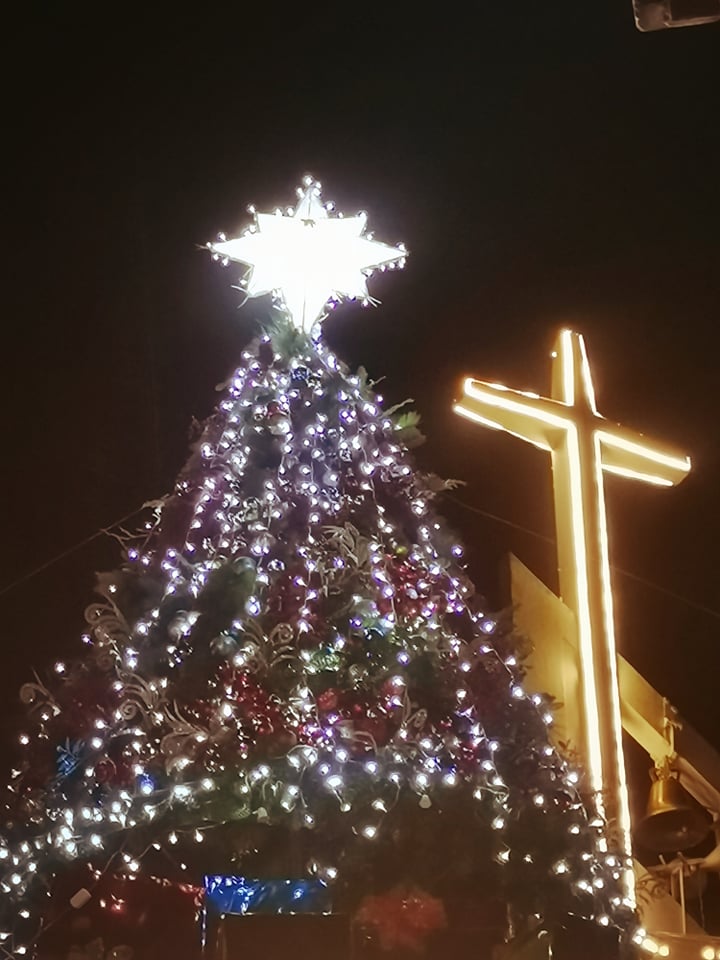
Photo by author, Sacred Heart Novitiate, Novaliches, QC, 20 March 2025.

Whenever we thank people for their kindness no matter how little that may be, it is more than acknowledging the other person but most of all, of expressing our links with them as well as our desire to be one with them, especially with God who showers us with good things daily. That is why the Mass is also called Eucharist – from the Greek eucharistia meaning “thanksgiving”. After his skin was cleansed of leprosy in the first reading, Naaman the Syrian Army General declared before the Prophet Elisha that he would worship the Lord alone as he returned to his home with two mule-loads of Israeli soil.

Sorry to say but whenever we refuse to celebrate the Mass on Sundays, it means that we are one of those nine ungrateful lepers healed by Jesus! Don’t you feel being called like the Samaritan to return and give thanks to Jesus for the many blessings you have received this Sunday?

See how in this age of faith in a mass-mediated culture that we have become so impersonal, trusting more our gadgets and all those apps like Siri and Waze as if we have already lost faith in the human person. And God.

Photo by Mr. Nicko Timbol, Chapel of the Angel of Peace, OLFU-RISE, Valenzuela City, 03 October 2025.

We spend practically our entire days in front of all kinds of screens than with the face of a human person. Again, this sadly extends to the way we worship with many still stuck in the pandemic mode of online Masses not realizing the important and irreplaceable aspect of personal encounter of Jesus in the actual Mass with other believers.

God remains God even if we do not go to Mass every Sunday. It is us who are losing greatly whenever we skip Sunday Masses, our Sabbath. God specifically made his third commandment to “Remember to keep holy the sabbath day” because Sabbath reminds us that life itself is holy in the first place, a sharing in the life of God. What a tremendous blessing still that even if we forget God or disregard God every Sunday, Paul reminds us today of the beautiful truth and reality that “If we have died with Jesus we shall also live with him; if we persevere we shall also reign with him. But if we deny him he will deny us. If we are unfaithful he remains faithful, for he cannot deny himself” (2Tim.2:11-13).

Can you imagine that? If we are unfaithful to Jesus, he remains faithful?

Every Sunday, Jesus tells us to “Stand up and go; your faith has saved you” despite, in spite of our many sins and absences from the Sunday Masses in the past because he wants us to experience the deeper wholeness that comes with faith and gratitude as experienced by that Samaritan leper he had healed. As we continue to journey with Jesus toward Jerusalem facing many trials and sufferings along the way, he calls us to come to him in the Sunday Mass to deepen our faith by resting in his presence.

Is there a space in your life at this stage that you feel like one of those lepers, longing for healing and restoration? In the silence of this Sabbath day in our Sunday Mass, speak to Jesus especially after receiving him Body and Blood in the Holy Communion. Amen. Have a blessed week ahead! Fr. Nicanor F. Lalog II, Our Lady of Fatima University, Valenzuela City (lordmychef@gmail.com).

Our Lady of Fatima University-Valenzuela, June 2025.

The Holy Rosary for Conversion & Peace

Lord My Chef Daily Recipe for the Soul, 07 October 2025
Tuesday, Memorial of Our Lady of the Holy Rosary
Jonah 3:1-10 <*{{{{>< + ><}}}}*> Luke 1:26-38
Photo from canningliturgicalarts.com.

On this day of the Memorial of Our Lady of the Holy Rosary, our bishops have rightly set this as the National Day of Prayer and Public Repentance in the light of the grotesque corruption and its investigations along with the natural calamities that have hit our country recently.

For hundreds of years, the Rosary has always been used to intercede for peace and conversion not only in Church but also world history. In fact, this feast has its origin in the victory of Christian forces against the Ottoman Turks in the Battle of Lepanto Bay in 1571 that decisively stopped the Moslems from occupying Europe. The first Dominican Pope, St. Pius V attributed that victory to the recitation of the Holy Rosary that further led to its popularity and devotion that greatly spread when subsequent other victories in various parts of the world like the La Naval in the Philippines were attributed to our Lady of the Most Holy Rosary. 

From Facebook post by Dr. Tony Leachon, “KLEPTOPIROSIS: When Corruption Becomes a Public Health Crisis”, 08 August 2025.

At this time when our country is again at the crossroads of great dangers and threats to its democratic institutions, it is very timely that we celebrate this feast with deep devotion and firm resolve to be converted.

Although we have a proper reading on this celebration, we have preferred to use the first reading of the day from the Book of Jonah when God sent the reluctant prophet to Nineveh to call on its people to be converted lest God destroys the city. Notice the immense love of God in this beautiful story of conversion: God never gave up on Jonah, calling him to go to Nineveh to proclaim his message.

Jonah began his journey through the city, and had gone but a single day’s work announcing, “Forty days ore and Nineveh shall be destroyed,” when the people of Nineveh believed God; they proclaimed a fast and all of them, great and small, put on sackcloth. When the news reached the king of Nineveh, he rose from his throne, laid aside his robe, covered himself with sackcloth, and sat in the ashes. When God saw by their actions how they turned from their evil way, he repented of the evil that he had threatened to do to them; he did not carry it out (Jonah 3:4-6, 10).

Photo by Aaron Favila, Associated Press, Barasoain Church, Malolos City, 22 July 2025.

Remember, God never gives up on us. That is why he keeps sending us the Blessed Virgin Mary Mother to appear on various occasions especially these past 120 years to keep on reminding us of his call for our conversion essential to having peace.

See how in all of these apparitions of Mama Mary, there has always been the praying of the Holy Rosary. At her final apparition on October 13, 1917 at Fatima, she revealed herself as the Lady of the Rosary, proving once more the great power and lessons of this devotional prayer that has proven over and over again that indeed, “More things are wrought by prayer than this world dreams of” (Lord Alfred Tennyson). How?

Photo by author, Sacred Heart Novitiate, Novaliches, 20 March 2025.

At the center of our Christian faith and spirituality is the invitation of God for us to “lose” ourselves to him, to trust him more than ourselves.

Jonah had to lose himself literally from the ship to be swallowed by the whale and spitted out after three days. And of course, the people of Nineveh from the king down to the poorest of the poor among them have to “lose” themselves by admitting their sinfulness and being sorry for them to be converted that resulted in God foregoing his plans to destroy their city. They actually won and did not lose in the process despite their sitting on ashes and wearing sackcloth.

In the gospel, we saw how Mary had to “lose” herself so that Jesus Christ may finally come by being born through her into the world when after the angel had explained to her the plan of God, she humbly said, “Behold, I am the handmaid of the Lord.  May it be done to me according to your word.”  Then the angel departed her (Lk.1:38). 

Mary “lost” herself to God and eventually became an instrument for our victory in the salvation through her Son Jesus Christ who also “lost” by dying on the Cross only to emerged gloriously victorious after three days when he rose from the dead to win over death and sin for us.

In life, it is when we “lose” that we actually “win”, something we often fail to realize, especially the corrupt government officials and lawmakers. The only peaceful path to resolving all this mess we are into and preventing further escalations of the anger of the people is for those in powers to finally “lose” themselves in humility, to repent and be converted. Snap elections will never restore the confidence of people with them unless those tainted with corruption take the high road of stepping down as a first sign of their decency and statesmanship.

Residents of Hagonoy Bulacan walk their way to flooded portions of premise surrondings St. Anne Parish as they protested following exposes of flood control anomalies. Bulacan has been under scrutiny for receiving multi million worth of flood control projects but still suffers severe flooding. (Photo by Michael Varcas)

Let us pray for their conversion; let us pray for the judges and justices of all courts be fair and just in evaluating the evidence against these people blinded by money and power. Let us pray for them to realize that for a moment, they may “lose” face and money but eventually win salvation and peace. Only God knows what awaits them, if they repent and be converted or remain proud and sinful.

Let us pray for the conversion of Sec. Recto and government economists of the need for the State to “lose” in order to “win” especially the people by cutting our so many taxes. It is about time for the government technocrats to reduce our taxes that have mostly gone to corruption without serving truly the people who have contributed these with their blood and sweat. We are the most taxed country in this part of the world while our neighbors have shown how reducing taxes actually leads to more spending by the people that partly keeps a more vibrant economy.

Let us pray also for ourselves, for one another to realize the need for us to lose ourselves for higher values than material things that are eventually lost. We as a nation, like the Prophet Baruch our bishops have cited must admit our own sins to be “flushed with shame” (Bar.1:15) that all these mess we are into is due to our sins, to our turning away from God as we focused more in pursuing power, wealth and fame that now come so easily via social media.

Photo by Pete Reyes, Sr. Porfiria “Pingping” Ocariza (+) and Sr. Teresita Burias praying the Rosary to protect mutineers during the EDSA People Power Revolt in February 1986.

When we “lose” in God, for God, it is always a “win” in everything. Of course, it is always a difficult path to take that calls for daily conversion in Christ with Mary.

The praying of the six Our Fathers, 53 Hail Mary’s and six Glory Be’s are invitations to the Rosary’s rhythm of daily conversion by meditating the joyful, luminous, sorrowful, and glorious mysteries of the life of Jesus Christ with his Blessed Mother. That is not what not Jesus referred to as “meaningless repetition” of prayers (Mt.6:7); the Rosary is also a prayer method that helps us enter into union in Christ with Mary as guide.

The Rosary, though clearly Marian in character, is at heart a Christocentric prayer. In the sobriety of its elements, it has all the depth of the Gospel message in its entirety, of which it can be said to be a compendium. It is an echo of the prayer of Mary, her perennial Magnificat for the work of the redemptive Incarnation which began in her virginal womb. With the Rosary, the Christian people sits at the school of Mary and is led to contemplate the beauty on the face of Christ and to experience the depths of his love. Through the Rosary the faithful receive abundant grace, as though from the very hands of the Mother of the Redeemer (St. John Paul II, Rosarium Virginis Mariae, #1)

True, a lot often we may seem to “lose” many battles when we try to stand for what is true and good but in the end, we actually “win” the war against evil, the greatest victory Christ had gifted us, our salvation. That is why in Marian prayers like the Rosary as well as in hymns in her honor we ask her prayer for us sinners to be saved from hell and be brought to her Son Jesus Christ in eternity.  That’s the final victory we all hope for in praying and living out the Holy Rosary with Mary. But first, lose ourselves to Jesus like Mary, even Jonah. Happy feast of our Lady of the Holy Rosary! Fr. Nicanor F. Lalog II, Our Lady of Fatima University, Valenzuela City (our email, lordmychef@gmail.com) 

Artwork by Mr. Darwin Lance Arcilla, Campus Ministry, OLFU-Valenzuela City.

Keeping the faith, our rich treasure

Lord My Chef Sunday Recipe for the Soul, 05 October 2025
Twenty-Seventh Sunday in Ordinary Time, Cycle C
Habakkuk 1:2-3; 2:2-4 ><}}}}*> 2 Timothy 1:6-8, 13-14 ><}}}}*> Luke 17:5-10
Photo by author, San Fernando, Pampanga, 03 October 2025.

With all the news happening in our country made worse by recent calamities, most of us Filipinos can identify these days with the Prophet Habakkuk, crying out the same things to God:

How long, O Lord? I cry for help but you do not listen! I cry out to you, “Violence!” but you do not intervene. Why do you let me see ruin; why must I look at misery? Destruction and violence are before me; there is strife, and clamorous discord (Habakkuk 1:2-3).

The book of Habakkuk does not really tell us the reasons for the prophet’s cries directed to God. But, does it really matter at all why he was crying in pain? Like Habakkuk, we know very well these days what it feels to be like him. There has always been and there will always be many situations in our personal lives and family, nation and even in the Church that provoke us to cry out to God in distress, complaining all the evil happening when he seems to be so far or not interested.

Photo by Mr. Nicko Timbol, Chapel of the Angel of Peace, Our Lady of Fatima University, Valenzuela City, 03 October 2025.

Of course, it is not really the case here for Prophet Habakkuk nor with us. We do not complain and cry to someone who could not do anything to our plight; we cry, we reach out to those we trust and know can help us like family and friends. And God!

We find many of such complete trust and faith in God expressed in cries and laments in the Book of Psalms. Despairing calls, questions and petitions to God in the Psalms do not actually endanger the faith and trust of the believer but actually affirm them. That is why it is always good to pray the Psalms. Our Lord Jesus Christ himself prayed Ps. 22:1 while on the cross, crying out “My God, my God why have you forsaken me?” to express his deep faith in the Father in his darkest moments.

Habakkuk’s cry is very much similar with those found in the Psalms.

Most of all, Habakkuk teaches us today of God’s response to our cries, calling on us to trust him more than ever, in his Word because it shall be fulfilled for “it will not disappoint; it it delays, wait for it, it will surely come, it will not be late. The rash man has no integrity; but the just one, because of his faith, shall live” (Habakkuk 2:3-4).

Photo by author, San Fernando, Pampanga, 03 October 2025.

Keep in mind God’s final words to Habakkuk for it remains true to these days especially when we are going through difficulties and trials in life – “we shall live because of faith in God”! What a beautiful catch phrase especially at this time.

Recall how we never realize how deep and strong our faith is until we have crossed over through life’s many challenges, often without others even knowing what we have gone through. As we go through life, we continue to realize too how imperfect is our faith until our next problems and tests come.

That is why we need to pray daily to Jesus like the Apostles in this Sunday’s gospel, “Increase our faith” (Lk.17:5). See how Jesus explained faith to his Apostles and to us today.

First, Jesus clarified that faith cannot be quantified because its power does not lie in its “amount” that can be increased like torque in motor engine or similar devices for it to be powerful. That is why Jesus explained to the Twelve that “If you have the faith the size of a mustard seed, you would say to this mulberry tree, ‘Be uprooted and planted in the sea,’ and it would obey you” (Lk.17:6). Just a little amount of faith for as long as it is aligned with God and his plans, we can achieve great things in life.

Photo by Mr. Nicko Timbol, Chapel of the Angel of Peace, Our Lady of Fatima University, Valenzuela City, 03 October 2025.

This, however, does not mean that the purpose of faith is to perform wonders which brings us to Christ’s second point about faith – it is a relationship.

Faith is for service, for love and charity that is why it can result into great wonders in our lives. That is why we mentioned earlier of faith being aligned with God, being one in God. It is a gift freely given to each one of us by God for our own good. Hence, even though faith cannot be quantified, its power can be impeded and rendered useless when we are separated from God. That is why Jesus narrated the parable of the “unprofitable servants”:

“Who among you would say to your servant who has just come from plowing or tending sheep in the field, ‘Come here immediately and take your place at table’? Would he not rather say to him, ‘Prepare something for me to eat…You may eat and drink when I am finished’? Is he grateful to the servant because he did what was commanded? So should it be with you. When you have done all you have been commanded, say, ‘We are unprofitable servants; we have done what we were obliged to do'” (Luke 17:7-8, 9-10).

Many will probably find it uncomfortable that faith as a relationship is between servant and master; but, aside from the gospel milieu, it is the reality of our faith in God for we are indeed his servants working for him who is our Lord and Master.

We cannot claim anything for ourselves in this life. Everything is God’s, even our very lives, our body that many today insist as “theirs” to which they can do whatever they want including abort babies. No. We own nothing in this life and we leave everything when we die. What remains are our good works and love that still came from God!

Unlike the masters of the world who think of their own good, God is a faithful Master who thinks only of the good of his servants, of us. He does not impose on us, giving us freedom so as not to force us in doing things but act out of love like him.

Photo by Mr. Nicko Timbol, Chapel of the Angel of Peace, Our Lady of Fatima University, Valenzuela City, 03 October 2025.

Separated from God, we become worthless or useless or unprofitable servants because we find meaning only in him. When we are aligned with God, faithfully obeying his will, we are able to do the seemingly impossible because it is God working in us like forgive those who have broken our trust, love someone so difficult to deal with, relieve hunger with simple acts of kindness, work on justice where the powerful exploit the weak, remain faithful to prayer even when God seems absent. These are all acts of faith that go beyond normal expectations that reveal to us the power of God, of how deep our faith can be. That faith cannot be quantified.

Truly, as God had told Habakkuk, we live because of faith. When crises and problems seem to overwhelm us, it is to God’s faithfulness we turn to with our cries with despairing overtones that are actually expressions of deep faith and trust in him.

From Paul’s letter to Timothy in the second reading this Sunday, we get our thrid point about faith: this gift of faith is our greatest treasure that we must keep and cultivate to grow deeper, to mature in us. It is this gift of faith that gives us the “spirit of power and love and self-control, not cowardice” (2Tm.1:7).

It is faith as our treasure that gives us the reason “to live on, to live for, and to die for” borrowing the thoughts of the late dissident Swiss theologian Hans Kung. It is faith that sets things right inn our lives because as it moves us closer to God, it likewise enables us to recognize others as brothers and sisters in Christ.

Recent turn of events in our country are so frustrating and yes, very tempting to resort to violent means and measures, including speaking and writing all those expletives and curses against the corrupt. It is normal to be angry but, do we have to be cruel and harsh?

Call me conservative or simply because I am a priest – but, that is what I am that is why I am very much against violence and harsh languages in the midst of all these corruption. I never tire telling people we have proven in 1986 that non-violence works. We have to try it again. However, what we missed after EDSA 86 is we separated from God. We thought we could do it our own ways. This Sunday, we are reminded of our greatest treasure as Filipinos, our gift of faith in God. Let us live in this faith in God. After all, these corruption we see and detest started in our homes, in our schools, in our hearts when we separated from God and one another. Amen. Have a blessed week ahead. Fr. Nicanor F. Lalog II, Our Lady of Fatima University, Valenzuela City (lordmychef@gmail.com)
Our Lady of Fatima University Marketing Dept., June 2025.

Be gentle to be in the banquet

Lord My Chef Sunday Recipe for the Soul, 28 September 2025
Twenty-Sixth Sunday in Ordinary Time, Cycle C
Amos 6:1, 4-7 ><}}}}*> 1 Timothy 6:11-16 ><}}}}*> Luke 16:19-31
Photo by author, Carmel of the Holy Family Monastery, Guiguinto, Bulacan, 25 September 2025.

But you, man of God, pursue righteousness, devotion, faith, love, patience, and gentleness (1Timothy 6:11).

How lovely and so apt these days are the qualities Paul required through Timothy every man and woman of God must have. Of the six qualities Paul had cited, I like most “gentleness” which Jesus also asked us to have, “learn from me, for I am meek and gentle ( or humble) of heart” (Mt. 11:29).

From the Greek word prauteis, gentleness implies consideration, meekness, humility, calmness and strength amid adversities and difficulties. True power is expressed kindly and gently, not with harshness. Parents and teachers know this so well as children learn discipline better when authority and power are expressed gently than harshly.

Photo by author, Carmel of the Holy Family Monastery, Guiguinto, Bulacan, 25 September 2025.

Lately we have been sliding towards this kind of arrogance in our anger and frustrations following the wholesale corruption in Congress. Everybody feels the weight and pains of the ghost flood control projects but cursing and wishing death upon the corrupt officials are off bounds because that make us just like Duterte and his followers whose mouths spew expletives and death to their detractors.

Our readings are so timely this Sunday again, calling us to be gentle with one another because eternal life begins in the here and now of our earthly existence. How we live today determines our entrance or not into the eternal banquet of the Lord.

Jesus said to the Pharisees: “There was a rich man who dressed in purple garments and fine linen and dined sumptuosly each day. And lying at his door was a poor man named Lazarus, covered with sores, who would gladly have eaten his fill of the scraps that fell from the rich man’s table. dogs even used to come and lick his sores. When the poor man died, he was carried away by angels to the bosom of Abraham. The rich man also died and was buried, and from the netherworld, where he was in torment, he raised his eyes and saw Abraham far off and Lazarus at his side” (Luke 16:19-23).

Photo by author, Carmel of the Holy Family Monastery, Guiguinto, Bulacan, 25 September 2025.

Our readings continue to pursue that thorny issue of money, of how we use and manage it for God’s greater glory in the service of others not for our shameful selfish interests.

That is why we find Paul’s admonition to Timothy and to us today as men and women of God to be gentle in the midst of too much materialism. In the preceding verses Paul warned Timothy of the dangers of false teachings and the love of riches which he concluded with an exhortation to rely more on God than in wealth in verse 17. It is a timely reminder from over 2000 years ago against this growing trend among us spawned by social media of people flaunting their wealth as if finding their own value as a person in possessions than in their very selves.


Gentleness like Jesus is first of all finding our being’s sacredness. It is an expression of our being loving and charitable because we are children of one loving God we relate with as a Father.

How tragic we no longer see each other’s worth as a person, as an image and likeness of God as we seek more the face of money than the face of God in every person. Pera pera na lang lahat – even in the church, sad to say. Every consideration boils down to money like leadership in church activities or hermanidad in fiestas being reserved for the rich and famous who are always the politicians to whom many priests and bishops have become beholden, consciously or unconsciously. We have too much collections and envelopes that further drive away the poor from celebrating our Sunday Eucharist which is essentially a foretaste of the Lord’s banquet in heaven.

Photo by author, Carmel of the Holy Family Monastery, Guiguinto, Bulacan, 25 September 2025.

Amos continues his tirades against the priests of the temple of his time with their hypocrisies of hiding selfish motives in religious celebrations and practices that sadly continue to this day among us in the church.

Thus says the Lord the God of hosts: “Woe to the complacent of Zion! Lying upon beds of ivory, stretched comfortably on their couches, they eat lambs taken from the flock, and calves from the stall! They drink wine from bowls and anoint themselves with the best oils; yet they are not made ill by the collapse of Joseph!” (Amos 6:1, 4, 6).

That “eating lambs from the flock” and “calves from the stall” are the animals reserved for offering in the temple their priests have taken for themselves while “drinking from bowls” and “anointing with the best oils” harp on our rituals we have taken as our own like commercialization of Masses and sacraments. It is the color of money perfectly described by the purple clothing of the rich man in the parable that pervades us in the church that people no longer see and experience God as they have become so cautious asking about the price or the fees that come with every service we give.

Photo by author, Carmel of the Holy Family Monastery, Guiguinto, Bulacan, 25 September 2025.

Gentleness like Christ is using our power and authority at the service of the poor and disadvantaged, ensuring our Eucharistic banquet is a reflection of the eternal banquet in heaven where everyone is welcomed.

How sad this parable is repeated daily in the church that is why Jesus directed it to the Pharisees, one of the ruling class in the Jewish society at that time associated with temple worship and religion. Though Jesus did not say at all if the rich man is a good person or not, it is very clear that he lacked gentleness in his flamboyance, wearing purple clothes as if screaming to be noticed by everyone as a somebody while everybody is a nobody.

Maybe we should add “nepo Fathers” to the list of nepo babies and nepo wives who flaunt their wealth, looking more like showbiz kids than priests, feeling superstars who are more like entertainers than preachers who relish the tag “influencer” than remain hidden doing the work of Christ. They refuse wearing the proper liturgical vestments due to our tropical climate but would not mind at all wearing signature clothes with their perfumes leaving traces in their favorite stomping grounds like malls and cafes during offs.

Where is our gentleness or concern and consideration for the majority of our people who are poor further pushed out of our churches literally and figuratively speaking simply because we do not smell and look like them our flock of sheep as Pope Francis reminded us early in his pontificate?

Photo by author, Carmel of the Holy Family Monastery, Guiguinto, Bulacan, 25 September 2025.

Gentleness of Jesus is solidarity with the people, especially the poor and suffering who experience being uplifted or empowered in his mere presence so filled with warmth and love.

People understand us priests for being strict even stern-looking but what they find so difficult is when pastors are detached from them, always out of the parish for so many reasons, when priests are selective in their company even having cliques. How sad when priests are unapproachable and indifferent like the rich man who was oblivious to the presence of Lazarus at his door, who never gave him any attention at all while still on earth when in fact, they knew each other as mentioned in the parable after they have both died. Kakilala naman pala niya si Lazaro pero doon na lang sa kabilang buhay siya kinausap at pinansin kung kailan huli na ang lahat.

Pope Francis used to describe the church as a hospital where the sick in body and soul come to find solace and comfort in the presence of God. But, instead of hospitality, many times it is hostility that people experience in our parish when they are held hostage by our many rules and regulations that they never feel welcomed at all. Some get scolded that instead of their burdens being eased, they are traumatized by the priests or the office staff and volunteers.

Photo by author, Carmel of the Holy Family Monastery, Guiguinto, Bulacan, 25 September 2025.

If we could be a little more gentle with every Lazarus, perhaps we could be truly rich as we find God in everyone in our doors that lead to our banquet table, whether here on earth or in the afterlife.

Let me end with this parable within me these past five years as a chaplain in the hospital.

Have you ever noticed how the rich with all their wealth and resources are often afflicted with rare diseases without any cure and medication at all while so many poor people without money at all could not avail of the many procedures and medications available for their illness?

It is a parable in this life that begs us to be gentle, even extra gentle many times to ease each other’s sufferings with the rich sharing their material wealth and the poor sharing their gift of self in the face of death. Amen. Have a gentle week ahead everyone. Fr. Nicanor F. Lalog II, Our Lady of Fatima University, Valenzuela City (lordmychef@gmail.com).

Seek the face of God

Lord My Chef Sunday Recipe for the Soul, 21 September 2025
Twenty-Fifth Week in Ordinary Time, Cycle C
Amos 8:4-7 ><}}}}*> 1 Timothy 2:1-8 ><}}}}*> Luke 16:1-13
Scene at a wedding inside the flooded Barasoain Church in Malolos City, 22 July 2025; photo by Aaron Favila of Associated Press.

Our readings today are so timely like today’s headlines of rampant corruption – actually looting – of tax payers money by DPWH officials in connivance with some lawmakers and contractors.

The scriptures are very challenging for us, especially the first reading from the Prophet Amos.

Hear this, you who trample upon the needy and destroy the poor of the land! “When will the new moon be over,” you ask, “that we may sell our grain, and the sabbath, that we may display the wheat? We will diminish the ephah, add to the shekel, and fix our scales for cheating! We will buy the lowly for silver, and the poor for a pair of sandals; even the refuse of the wheat we will sell!” The Lord has sworn by the pride of Jacob: Never will I forget a thing they have done! (Amos 8:4-7)

Photo by author, Malagos Garden Resort, Davao City, 2018.

The Prophet Amos is telling us something so true today that he had noticed in his own time almost 3000 years ago.

More than the growing economic disparity among the rich and the poor as well as the growing consumerism during his time still happening today, Amos is not promoting a political agenda nor advocating a revolt against the wealthy and powerful. Moreover, Amos is not like other demagogues encouraging the people to turn away from Money that has become the new god of so many in his time and today.

Amos is a prophet because he speaks in the name of God, denouncing what is inside the hearts of the greedy rich, of their perverse intentions that they keep hidden while observing religious rituals and celebrations – a hypocrisy so rampant even these days. But, with a new twist as it is happening inside the church, among us the clergy.

Workers of a new subcontractor of a flood control structure in Barangay Sipat in Plaridel, Bulacan, lay cement and steels on September 6, 2025 amidst the downpour of rain. Photo by Michael Varcas / The Philippine STAR

In the midst of these shameless flood control scams drowning us, let us take a closer look this Sunday where Amos is directing his strong preaching.

It is not merely to the abusive rich and powerful people but also to us inside the Church – we the priests and bishops and volunteers as Amos warns us how religious practices are easily used by everyone to cover one’s selfish motives especially those inside the church.

How sad that our own diocese is so late in denouncing the flood control scams when the DPWH office that orchestrated the shameful looting is right here in our province of Bulacan, under our pastoral care.

Residents of Hagonoy Bulacan walk their way to flooded portions of premise surrondings St. Anne Parish as they protest this was following exposes of flood control anomalies. The Bulacan has been under scrutiny for receiving multi million worth of flood control projects but still suffers severe flooding. (Photo by Michael Varcas)

Except for the National Shrine of St. Anne in Hagunoy that is worst hit by the floods, it came out way ahead with a call to action that culminated in a rally on their flooded streets this Saturday led by their Parish Priest, Fr. Rodel Ponce prophetically leading his flock in their town’s flooded streets. Another Amos in our midst the other day was Msgr. Dars V. Cabral who led an ecumenical prayer rally in Malolos City with a letter that is bolder than our statement against the corruption.

Why we find the preaching of Amos directed to us in the church are the many connections and links of the involved DPWH officials with so many priests who have asked them for donations in their parish projects, asking them to be the fiesta hermano and donors of funds for church construction which is all over social media.

Check every treasury office of any LGU in the province and city and surely one could find “receipts” or photos of local executives and politicians with priests and bishops on vacation in expensive resorts or dinner in five-star restaurants. And that’s not just once or twice with some of them acting exactly like the nepo babies in flaunting the “good life” in social media, oblivious to the many implications of their actions like the many poor people who are denied of a decent funeral Mass for their departed loved ones when we are always out with politicians and the rich.

From Facebook, 17 September 2025.

Amos reminds us too in the church of our double standards when we are so quick in condemning corruption and sins of those in government and society but we are so slow, even protective of our own brothers involved in sex and financial scams. And just like in the news, we are willing to sacrifice our lay people to take all the beatings just for the sake of our brothers in cloth lest they be put to shame.

The most pathetic double standard we have in the church is when we patronize politicians friendly to our crusades like pro-life and anti-divorce but ostracize those on the other side of the fence.

What a shame! Are they not all tainted with graft and corruption, not to mention immoralities we are so quick to point out in the church? Why can’t we stop asking politicians for favors? Why can’t we be contented with what we have and what we can?

If there is one thing we in the church must stop right away is asking politicians for any favors because that give them the reason, no matter how askew and flimsy, to commit graft and corruption. When we in the church like priests and bishops keep on pleasing the rich and powerful we teach them the wrong notion that corruption is acceptable, that being rich is the key to be close to God through priests and bishops celebrating Mass and sacraments for them.

This is where the very essence of the preaching of Amos is still so relevant today for us: like the people of his time, we too have stopped seeking the face of God in our lives. Like the people of the time of Amos, what we focus is money, money, and more money, a Mammom or false god we unconsciously worship.

Residents of Hagonoy Bulacan walk their way to flooded portions of premise surrondings St. Anne Parish as they protest this was following exposes of flood control anomalies. Bulacan has been under scrutiny for receiving multi million worth of flood control projects but still suffers severe flooding. (Photo by Michael Varcas)

This Sunday, Amos and the Lord Jesus Christ remind us all especially in the church to seek the face of God always – not the face of Mammon that has become the god of many these days.

Let us live in simplicity by being content with what we have. No need to bother the governor or any politician as well as parishioners just for us to have a grand party or a spiritual renewal and retreat out-of-town.

Seek the face of God, not the face of Mammon. That’s the point of Jesus in his parable today of the shrewd steward: the Lord praised the attitude not the person. If we could just be as eager and passionate like him in seeking the face of God in the church, corruption in our government and society would be lessened. Our country would be more humane and decent because in the process, the poor and suffering would realize too that it is God too whom we must first seek, not the face of money.

This Sunday as we all prepare for the rallies in Luneta and EDSA, let us first seek the face of God, let us go to Mass first to pray for our leaders as St. Paul tells us in the second reading. Amen. Have a blessed week ahead!

*We have no claims for holiness or being pure and clean but we have tried as much as possible since our seminary days never to ask donations from politicians that they may construe it as a permission to steal.

Cross my heart?

Lord My Chef Sunday Recipe for the Soul, 14 September 2025
Feast of the Exaltation of the Cross
Numbers 21:4-9 ><]]]]'> Philippians 2:6-11 ><]]]]'> John 3:13-17
*This is a reissue of our 2023 reflection. Salamuch.
Photo by Mr. Gelo Carpio, 27 January 2020, Bagbaguin, Sta. Maria, Bulacan.

The cross is one of the most widely used but also abused and misunderstood sign in almost every generation. In fact, we are so accustomed with the cross of Jesus Christ found everywhere like in homes and offices, churches and classrooms, hospitals, restaurants and vehicles. Almost everybody carries it in our persons as an object of veneration, as a badge, or as a jewel.

On the cross we find Jesus shown in glory, peacefully sleeping in death, sometimes with his body broken by suffering. Hence, many times we use the word “cross” like in “cross my heart” to indicate our sincerity and truthfulness. But, are we truly aware of its meaning and significance in our faith, of its centrality as the symbol of God’s love for us expressed by the self-sacrificing death of Jesus Christ his Son?

Photo by author, St. Scholastica Convent, Baguio City, 23 August 2023.

This Sunday we take a break from our cycle of readings to celebrate this Feast of the Exaltation of the Cross which falls on September 14. Due to its centrality in our faith, it is still celebrated even if the date falls on a Sunday like today.

This feast started in the fourth century with the miraculous discovery of the True Cross by Helena, mother of the Emperor Constantine, on 14 September 326, while she was on a pilgrimage to Jerusalem. She then ordered through her son the emperor the building of the Church of the Holy Sepulchre that was dedicated nine years later with a portion of the True Cross placed inside it in September 13, 335. The following day, the Cross was brought outside of the church to be venerated by the clergy and the faithful.

In the year 627, during the reign of the Emperor Heraclius I of Constantinople, the Persians conquered the city of Jerusalem and removed a major part of the Cross from its sanctuary. The emperor then launched a campaign to recover the True Cross which he regarded as the new Ark of the Covenant for the new People of God. Before embarking into war, Emperor Heraclius went to church wearing black as a sign of penance, then prostrated himself before the altar and begged God for courage. His prayer was granted as he won the war and recovered the Cross from the Persians. He brought the Cross back to Jerusalem in 641 amid great celebrations by carrying it on his shoulders. Upon reaching the gate leading to Calvary, the emperor could not go forward! Heraclius and his retinue were astonished and could not understand what had happened until the Patriarch Zachary of Jerusalem told him, “Take care, O Emperor! In truth, the imperial clothing you are wearing does not sufficiently resemble the poor and humiliated condition of Jesus carrying His cross.”

Upon hearing those words, the emperor removed his shoes and bejewelled robes, put on a poor man’s clothing and was eventually able to proceed to Calvary and replaced the Cross inside the Church of the Holy Sepulchre where a number of miracles happened during the occasion: a dead man returned to life, four paralytics were cured, ten lepers were healed, 15 blind men were given their sight, with several possessed people exorcised and many sick people totally healed!

Photo by author, Mirador Jesuit Villa & Retreat House, Baguio City, 24 August 2023.

Very notable in this story were the words of the Patriarch of Jerusalem. It was only after the emperor had taken off his royal clothings and put on those of the poor was he able to carry the Cross.

It is the same thing that is asked of us today: it is so easy to display the cross inside our homes and cars, or wear it as a jewelry or even as a tattoo on our skin. But, that amounts to nothing unless we have the cross inside our hearts, our very being. More than the many signs of the cross and imaginary drawing of its lines we draw on our chest is the need for us to empty ourselves of our pride and sins so that we can be filled with Jesus Christ.

Brothers and sisters: Christ Jesus, though he was in the form of God, did not regard equality with God something to be grasped. Rather, he emptied himself, taking the form of a slave, coming in human likeness; and found human in appearance, he humbled himself, becoming obedient to death, even death on a cross (Philippians 2:6-8).

Called kenosis in Greek, self-emptying is the way of the Cross of Christ. It is choosing love and mercy than self-centeredness and self-righteousness; sacrifice than satisfaction; fairness and justice than greed and possession; bearing all the pains and perseverance than complaining and whining about difficulties and trials in life like the Israelites in the wilderness (first reading); and, thinking more of others than of one’s self.

Photo by author, 02 September 2023.

The recent COVID-19 pandemic had taught something very amusing about the positivity of being negative, when negative was actually positive – healthy and COVID free! Remember how during those days when we would always wish we would yield negative results in our swab tests for COVID?

When we look at the sign of the cross (+), it is a positive sign, a plus sign. Though the cross calls us to let go, to be detached and dispossessed, it is actually an invitation to have more of God, of life and fulfillment! In this time of affluence when everything is easily available for as long as you have the means and the resources, the sign of the Cross reminds us that life is more of letting go and of giving than of having like God who “so loved the world that he gave his only Son, so that he who believes in him might not perish but might have eternal life” (Jn.3:16). St. Francis of Assisi said it perfectly why the Cross is an exaltation, a triumph:

For it is in giving that we receive,
it is in pardoning that we are pardoned.
and it is in dying that we are born to eternal life.

Amen. Enjoy Sunday and have a blessed week ahead!

Fr. Nicanor F. Lalog II
Our Lady of Fatima University
Valenzuela City
(lordmychef@gmail.com)

Uniqueness of the Cross

Lord My Chef Sunday Recipe for the Soul, 14 September 2025
Feast of the Exaltation of the Cross
Numbers 21:4-9 ><}}}}*> Philippians 2:6-11 ><}}}}*> John 3:13-17
*This is an updated version of our reflection last year; pray for our Marriage Encounter this weekend.
Via Crucis at Fatima University Medical Center, Valenzuela City, 2025.

This Sunday we have a unique celebration, the Feast of the Exaltation of the Cross that falls on the 14th day of September. It is so important that even if it falls on a Sunday, the more it must be celebrated as it is most central in the teachings of Jesus Christ.

It is so unique because despite its being made up of two ordinary pieces of wood, the Cross is most unique with its deeply extraordinary in meaning as sign of God’s immense love for us humans through Jesus Christ’s Passion and Death.

From being the sign of the most inhuman punishment in history, the Cross is now the very sign of how God “so loved the world that he gave his only Son, so that he who believes in him might not perish but might have eternal life” (Jn.3:16). It encapsulates the whole mystery of Jesus Christ, of how this all-powerful God beyond the ordinary became weak like us in everything except sin so that we too may be like Him, divine and more than ordinary. In His suffering and death on the Cross, Jesus made the lowly wood so ordinary to be so exalted to become His sign of love and mercy, power and majesty.

Photo by author, Jerusalem, May 2017.

Hence, in the Cross is the power of God’s love to transform us to better persons.

In the Cross is God’s power to lead us closer to Him with its vertical beam and to others with its horizontal beam.

In the Cross is the power of good if we choose to embrace it with Christ Jesus as our Lord and Master.

The Cross is most unique of all signs in the world because underneath its ordinariness, that is where we see God’s glory and majesty. It was underneath the Cross of darkness and gloom on Good Friday that humanity began to see light and hope in life’s many absurdities. Most of all, it was underneath that Cross of suffering and death of Jesus Christ that we feel and experience the assurance of the Resurrection.

How?

Through our own pains and sufferings that are most uniquely ours too!

With their patience worn out by the journey, the people complained against God and Moses, “Why have you brought us up from Egypt to die in this desert, where there is no food or water? We are disgusted with this wretched food!” In punishment the Lord sent among the people saraph serpents, which bit the people so that many of them died (Numbers 21:4-6).

Photo by author, Dominican Hills, Baguio City, January 2018.

You must have heard that old story of a man who came to Jesus to return the cross given for him to carry; he asked Jesus to have it replaced with a lighter one. Jesus then led the man to a huge room with all kinds of crosses for him to choose which he prefers as the best one for him so that he would stop complaining.

After closely examining the specs of so many crosses, the man finally decided to pick one he deemed as perfect for him after considering its weight and other dimensions, only to find out from Jesus Himself that it was the same cross he had actually returned for exchange!

Many times in life we are like those people in the first reading, never ending in their complaints to God, even challenging Him, accusing Him of forsaking us, of being unfair when life becomes difficult and unbearable. There are times we feel being on the distaff side of life always like a flat tire, never on top. We cry foul to God especially with all our hurts and pains inflicted by others, asking Him where was He when most needed?

Photo by author in Jordan near the Israeli border where Moses put up the bronze serpent as instructed by God to heal those bitten by the snakes after they have complained of their conditions in the wilderness, May 2019.

While it is true life is indeed difficult, the cross reminds us of the fact that the pains and hurts we have are uniquely ours too, something we have to accept and most of all, own.

There are pains that are so deep and won’t go away that have in fact affected us dismally in our lives already. Instead of self-blaming and self-pity, we just have to ask for God’s grace to accept and own them like Jesus Christ. We just have to “bring it home” – that imagery of the Cross planted on the Calvary – into our very selves, in our being as something so true and real. And uniquely ours.

Stop thinking of others’ pains and hurts. We are not all the same. If ever we have similar experiences, the hues and shades even gravity and circumstances are not same because each pain and hurt, like the cross, is uniquely ours. Like every person, every cross is unique because it is also a gift, a mystery, and life. We have to “befriend” our pains and hurts, our own cross instead of resist it. It is in “befriending” our pains and hurts, our cross in life that we grow and mature, becoming more free to love and to be joyful because that is when the cross triumphs over its disgrace and shame in us and with others. That is when our pains and hurts, when our crosses begin to reveal to us the many beautiful truths of Easter awaiting us.

The Cross of Christ triumphed because Jesus carried it wholeheartedly, allowing those two pieces of wood to reveal not only to Him who knew everything beforehand its meaning but most of all to everyone of us the deeper truths the Cross signifies as St. Paul eloquently expressed in our second reading.

The Cross of Christ atop the church of our Lady of Lourdes in France. Photo by my former student Ar. Philip Santiago during his pilgrimage, September 2018.

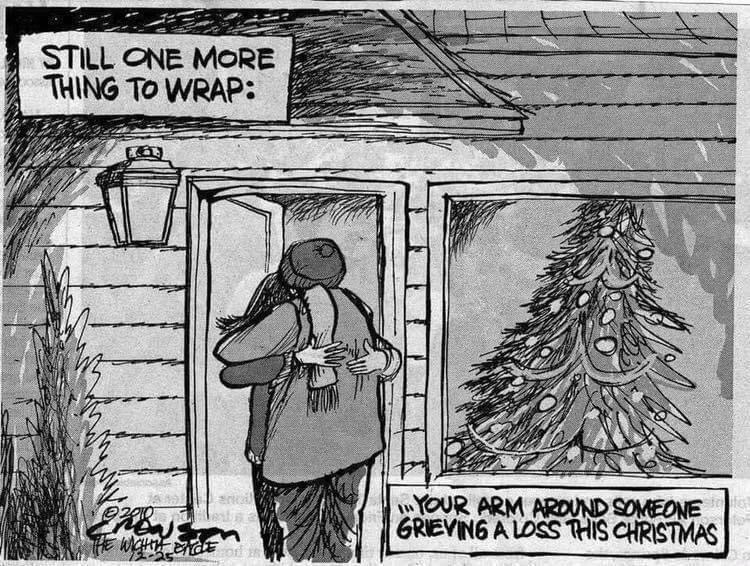
One thing I realized after my mother died May last year is the fact that while there are so many pains and sufferings in this world, my own pain and suffering in losing her are most difficult to bear; hence, something I must carry because it is uniquely mine.

But, one thing so unique I noticed is that the more I see my cross following my mother’s death, the more I saw also the cross of others. The Cross of Jesus triumphed truly in me when I embraced and owned my cross, when I befriended my pains and hurts that eventually led me to recognize and see, to feel more and experience too the crosses of others.

When we become conscious of each one’s unique cross, slowly we are able to reveal to them the meaning of their personal crosses too because we become more sympathetic, more open, more silent to listen more, love more, care more and be more present with those in their own unique cross. No wonder, I find conversing more engaging with others who also grieve because we can see each other’s unique crosses!

Jesus calls us to imitate Him that by embracing and owning our cross, we too may lead others to finding the meaning of their own cross and thus experience Easter soon. Let us pray:

Give us the grace,
dear God
to always embrace the Cross
like your Son Jesus Christ
where we can all be empty
of ourselves to be filled
with your Holy Spirit
and make your love
visible in us.
Amen.
A blessed week to everyone!

Fr. Nicanor F. Lalog II
Our Lady of Fatima University
Valenzuela City
(lordmychef@gmail.com)

We are God’s masterpiece

Lord My Chef Sunday Recipe for the Soul, 07 September 2025
Twenty-Third Sunday in Ordinary Time, Cycle C
Wisdom 9:13-18 ><}}}}*> Philemon 9-10, 12-17 ><}}}}*> Luke 14:25-33
Photo by Thiago Matos on Pexels.com

“Napasarap ang kuwentuhan” is how we would describe the scene last Sunday continuing to today’s gospel as Jesus pushed through in his journey to Jerusalem.

Recall Jesus dined at the home of a leading Pharisee last Sunday where “people observed him carefully” while “he noticed them” choosing seats of honor at the party that he told them a short parable on humility. One of the guests liked it that Jesus narrated another parable about coming to a banquet where everybody is invited. Many were impressed with his second parable that Luke now tells us great crowds followed Jesus after that dinner on a sabbath.

Great crowds were traveling with Jesus, and he turned and addressed them, “If anyone comes to me without hating his father and mother, wife and children, brothers and sisters, and even his own life, he cannot be my disciples. Whoever does not carry his own cross and come after me cannot be my disciple. Which of you wishing to construct a tower does not first sit down and calculate the cost to see if there is enough for its completion? Otherwise, after laying the foundation and finding himself unable to finish the work the onlookers should laugh at him and say, ‘This one began to build but did not have the resources to finish'” (Luke 14:25-30).

Photo by Mr. Jay Javier in Quiapo, 09 January 2020.

Keep in mind that Jesus “resolutely determined to journey to Jerusalem” (Lk.9:51) to fulfill his mission of offering himself on the cross. This is the second time since he embarked on that journey that he had told those wishing to become his disciples must forget themselves, take up their cross and follow him.

During that time, the cross was the Roman empire’s worst punishment – most humiliating and excruciatingly painful leading to a slow death. Imagine how the audience of Jesus must have felt hearing his words about taking up one’s cross, whether in its literal or figurative meaning. Jesus completely changed that on Good Friday when he totally and freely offered himself to die on the cross because of his immense love for us and the Father. From being a sign of cruelty and shame, the Cross became the sign of love and honor as Jesus the Son of God became one of us in passion and death so that we may be like him in his glorious resurrection.

And that is what Jesus wants for us, to be holy like him that is why he invites us to do the same, “take up your cross and follow me” which we may call as the “Christ project” wherein destruction leads to new creation, death to life, and self-giving to true love.

Here we find the wisdom and gentle mastery of Jesus as a teacher in using a “building project” as an example of discipleship, a world apart from the shameless, scandalous ghost projects of DPWH with some contractors through manipulations by lawmakers stole billions of pesos from the poor people without doing any flood control facilities at all.

Photo by author, Church of St. Anne in Jerusalem, May 2017.

The Christ project is the most noble “building project” of all where everyone becomes God’s masterpiece: “Which of you wishing to construct a tower does not first sit down and calculate the cost to see if there is enough for its completion? Otherwise, after laying the foundation and finding himself unable to finish the work the onlookers should laugh at him and say, ‘This one began to build but did not have the resources to finish'” (Lk.14:28-30).

What is Jesus longing to “construct” in your life?

We have all been disciples of Christ since baptism but many times in life, we have taken for granted his call to follow him and journey in him, with him, and through him. See that in his two parables today, Jesus did not say that we have to be “like them” in preparing to build a tower or go to war; instead at the ending, Jesus said, “In the same way, anyone who does not renounce all his possessions cannot be my disciple” (Lk.14:33).

We are all disciples of Christ. It is an inescapable reality in life, an honor and a responsibility because whether we like it or not, our discipleship in Christ plays a major role in our life direction. Or lack of direction. If you are feeling lost, most likely you have veered away from Christ in life’s journey. When life is in a mess, Christ is missing.

The author of the Book of Wisdom tells us how God in his infinite wisdom slowly unfolds to us his grand plans for us as his disciples, his beloved children. See that our most meaningful and fulfilling moments in life were those we were closest to God – not really when we were drowning in wealth and fame and material things. See the simplicity and sincerity of the common folks betrayed by this system of corruption – they can look straight the camera lens without hiding not like the fake, empty fronts of the the well dressed senators, contractors and DPWH officials in the hearings.

Photo by author, Our Lady of Fatima University, Valenzuela City, September 2023.

All our lives we must become a disciple of Christ that is why we must constantly reflect on his demands not only to examine how far we have gone by looking in the past but most especially to renew our commitment to him so we can move forward, nearer to the Father and to one another in loving service. This is what St. Paul was asking Philemon in accepting anew his escaped slave Onesimus.

Jesus invites us this Sunday to stop and reflect about his plans, his project for us to be God’s masterpiece. Discipleship is a call to self-emptying, to daily crucifixion of forgetting one’s self, of always choosing Jesus, choosing what is true and good and just. Of course it is easier said than done but that is the way it is. Better to make the choice freely than wait later when it would be imposed on us by the circumstances.

This is the meaning of our Care for Creation celebration this Sunday when we are called to see the unity of everyone and everything in “Christ Jesus… the image of the invisible God… in him were created all things in heaven and earth, the visible and invisible… For in him all the fullness was pleased to dwell, and through him to reconcile all things for him, making peace by the Blood of his cross through him, whether those on earth or those in heaven” (Col.1:15, 16, 19-20).

Caring for creation and environment is discipleship in action as Pope Francis called on us in his 2015 encyclical Laudato Si of the need to have an inner change, an “ecological conversion” wherein we do our individual part of sacrifice and care for God’s creation. It is always easy to join the many green movements and environmental crusades but if deep in our hearts remain our own comfort and convenience, nothing would ever change in the world around us as we continue with our insatiable consumption of so much goods. What we need is a “shift” in our perspectives in life, to see it wholly as interconnected.

We require a new and universal solidarity. As the bishops of Southern Africa have stated: “Everyone’s talents and involvement are needed to redress the damage caused by human abuse of God’s creation”. All of us can cooperate as instruments of God for the care of creation, each according to his or her own culture, experience, involvements and talents. (Laudato si’, #14)

Caring for creation is discipleship when we choose to follow Jesus in implementing his grand design and project for a better world where peace truly reigns in all creation. Amen. A blessed week ahead of everyone. Fr. Nicanor F. Lalog II, Our Lady of Fatima University, Valenzuela City (lordmychef@gmail.com)

Photo by Mr. Raffy Tima of GMA7 News in Batanes, September 2018.

People observe, Jesus notices

Lord My Chef Sunday Recipe, 31 August 2025
Twenty-Second Sunday in Ordinary Time, Cycle C
Sirach 3:17-18, 20, 28-29 ><}}}*> Hebrews 12:18-19, 22-24 ><}}}*> Luke 14:1,7-14
“Meal in the House of a Pharisee” 1886-1896 painting by James Tissot from brooklynmusueum.org.

For the next three Sundays beginning today, Luke gathered teachings of Jesus Christ all set on the dining table, a sort of some “table talks” about the great banquet in the end of time and how we could all get in to share in the eternal meal with the Father.

On a sabbath Jesus went to dine at the home of one of the leading Pharisees, and the people there were observing him carefully. He told a parable to those who had been invited, noticing how they were choosing the places of honor at the table (Luke 14:1, 7).

I love the way Luke presented this scene when he said “the people there were observing Jesus carefully” while the Lord told them a parable after “noticing how they were choosing places of honor at the table.”

How lovely! People observe, Jesus notices.

As it had happened in every instances of gatherings with Jesus, people carefully observed him, trying to find something to accuse him in of disregarding their traditions and laws like healing the sick on a sabbath day. They have “boxed” and judged Jesus as a dissident and a trouble-maker among them in his apparent disregard of laws and traditions.

Photo by author, Manila Club, BGC, June 2025.

In a funny twist, Luke tells us in this scene the immense love of Jesus then and now for everyone that despite his noticing and knowing everything in us, he neither counted those things against us nor ever judged us. How sad many of us with that habit of putting God in a box like a cop keeping tabs of our infractions when in fact God simply noticed our actions and behavior to invite us to become better without any judgment at all.

Keep in mind this scene reveals to us its context of the heavenly banquet which took place after the sabbath services at the synagogue where Jesus participated, hosted by a Pharisee, a VIP of the synagogue and of the society at that time. It was a party where every who’s who was supposed to be present, with everyone competing for the best seats closest to the host. And so, Jesus the keen observant but never judgmental used the occasion to teach us the essence of humility to make it to heaven or eternal life that is signified by a wedding banquet like that big meal he attended.

“When you are invited by someone to a wedding banquet, do not recline at table in the place of honor. A more distinguished guest than you may have been invited by him… For everyone who exalts himself will be humbled, but the one who humbles himself will be exalted” (Luke 14:8, 11)

Photo by Pixabay on Pexels.com

These past Sundays, we have seen Christ’s insistence of the Father’s desire to have everyone welcomed into heaven by giving us some instructions of what to do to gain eternal life.

This Sunday while in a big party, Jesus took the occasion to teach us the value of humility to get into heaven. From doing, Jesus now moves into being, our disposition and attitude to make it into heaven where what matters most is not where we are seated but where we stand. Recall how Jesus reminded the brothers James and John with their mother that he has nothing to do with the seating arrangements prepared by the Father in heaven after she requested her two sons to be seated beside him when he comes into his glory.

Heaven is more of where we stand with Jesus where his virtue of humility is most pronounced when he “humbled himself, becoming obedient to death, even death on a cross” (Phil.2:8). That is why St. Augustine taught that “humility is a sign of Christ”, a revelation of Jesus that allows us to recognize him our Lord and Master leading us to the Kingdom of heaven without any feelings of inferiority and despair.

On the Cross which he prefigured at his Last Supper, Jesus showed himself as the most humble of all who went to life’s lowest point of suffering and dying to meet us as he noticed everything in us to lift us up and be like him, humbly standing in our sufferings. It is on the Cross that we find humility as the basic and essential requirement to get into the heavenly banquet of the Lord.

Very often when we examine our state of humility, what comes to our mind are the many negativities we have like our sins and failures, vices and weaknesses, our being unworthy. But, that is when we bow down most to beg for Christ’s mercy like before the Holy Communion when we pray, “Lord, I am not worthy to receive you under my roof but only say the word and I shall be healed.”

That is both the humility of Jesus and of us humans so vividly expressed at the washing of the feet after the Last Supper. Normally, we look up to Jesus in heaven but at the washing of feet, like every time we receive Holy Communion, we take the higher position, looking down at him not with pride but with all humility because Jesus humbled himself first before us. Here we find humility as seeing ourselves the way Jesus sees us – weak and sinful, yet so loved and forgiven. This is what Ben Sirach taught us in the first reading: humility is the fundamental attitude of wisdom because it opens us to the splendor of God when we find our self-worth and value too!

Without humility, it is either we see only the best or the worst in us as a person, without God, without others.

This is the bigger issue with the “nepo babies” now being bashed on social media after flaunting their wealth and ostentatious lifestyles. Their posts were far from inspiring, at most are tasteless and most convulsive. All we have noticed in their posts is their pride not only in lacking humility but most precisely in not finding value in themselves. Sadly but I dare say they are the ugliest and most pitiable persons because they find value only in wealth and things, not in themselves as persons. Hence, the flaunting of their possessions that only make them so pathetic because along that came their utter disregard for others especially the poor who suffer most with their parents’ greed for money through corruption.

Humility is always uplifting in the positive sense, not looking at others as below us but to realize despite our sins and weaknesses, we are loved, we are noticed as a person so worthy, so valuable. When we are humble, then we become joyful too because we are assured of love and acceptance despite our flaws. This is the gist of the message to us this Sunday of the author of the Letter to the Hebrews: unlike the Israelites in the Old Testament who were so fearful to approach God who spoke to them with thunder and lightning, we can get close to God in Jesus who humbled himself to be one with us by dying on the Cross.

True humility keeps us rooted with our selves, with others and with God. It is this rootedness best expressed in the Sunday Eucharist that we are able to follow Jesus in his journey to Jerusalem and eventually into heaven in all eternity. Amen. Have blessed Sunday and most blessed September too!

Photo by the Marketing Office, Our Lady of Fatima University, Valenzuela City, June 2025.

Strive in discipline

Lord My Chef Sunday Recipe for the Soul, 24 August 2025
Twenty-first Sunday in Ordinary Time, Cycle C
Isaiah 66:18-21 ><}}}*> Hebrews 12:5-7, 11-13 ><}}}*> Luke 13:22-30
Phot by author of pilgrims trying to enter through the narrow door of the Church of the Nativity in Bethlehem, the Holy Land.

Anyone who had gone on a pilgrimage to the Holy Land must have heard the story of the fabled “narrow door” at the entrance of the Church of the Nativity in Bethlehem, of how it was reduced into that small door a very long time ago to prevent pilgrims from bringing their horses and camels inside the church that made a lot mess and stench.

Photo by author, narrow doors from the inside of the Church of the Nativity in Bethlehem, the Holy Land, May 2019.

That little door of the Church of the Nativity later became symbolic of the humble gesture of bowing low first to enter and see the Savior’s birthplace, eventually heaven as Jesus had been teaching us these past Sundays.

We are now in the final installment of the teachings by Jesus about the coming End, of what must we do to gain eternal life. He is now halfway through his long journey to Jerusalem since he started eight Sundays ago.

Along the way, he had met every kind of people, proclaiming to them the same message – that the kingdom of God is at hand where everyone is welcomed like what Isaiah prophesied in the first reading.

Jesus passed through towns and villages, teaching as he went and making his way to Jerusalem. Someone asked him, “Lord, will only a few people be saved?” He answered them, “Strive to enter through the narrow gate, for many, I tell you, will attempt to enter but will not be strong enough. After the master of the house had arisen and locked the door, then will you stand outside knocking and saying…” (Luke 13:22-25).

Photo by author, Angels’ Hills Retreat Center, Tagaytay City, April 2025.

In his teachings these past three Sundays, Jesus had been warning us against too much focus on things of the world that perish like material wealth, telling us to be more concerned of things of heaven that lead to eternal life. He had been clear that it would not be easy at all with the demands of being his disciples.

It was in this context that someone in the crowd asked Jesus today on his way to Jerusalem if only a few people would be saved. The question sounds very amusing not only because Jesus had always been clear that heaven does not come cheap as we must learn to renounce our self, take up his cross and follow him. That someone in the crowd who asked that question is actually us! And we know so well why until now we keep asking that same question: because we lack the discipline within to truly follow Christ. We always want what is easy and convenient, preferring shortcuts, avoiding sacrifices, as much as possible, no pains and sufferings. Hence, despite our knowing what it takes to gain eternal life, we still keep on doing the opposite.

It is the same with our physical well-being wherein we know so well what is healthy but we still keep doing, eating and drinking what is unhealthy. The sad truth of this lack of discipline in our body and soul is how we start shaping ourselves only when we are already sick and close to dying! That is when we feel sorry and start telling God like those in the parable that “we ate and drank in your company.”

Jesus had no intentions of dodging the question of that someone – and us in many occasions when we realize how difficult it is to follow his path of simplicity and humility, of love and kindness, of mercy and forgiveness. See how he neither gave a number nor a percentage of those who would be saved in the End. Jesus simply told the people including us today to do everything to make it into the Kingdom of God that is like a “narrow gate” and a “locked door”.

Following Jesus is more than being in his company but more of being like him. On this final Sunday of his teaching on the End, of entering the Kingdom of God in eternity, Jesus reminds us to shape up, body and soul so that we can squeeze ourselves into heaven’s “narrow gate” and “locked door”. Here we find again the second reading giving us more light into the meaning of the gospel this Sunday.

Brothers and sisters, you have also forgotten the exhortation addressed to you as children: “My son, do not disdain the discipline of the Lord or lose heart when reproved by him; for whom the Lord loves, he disciplines; he scourges every son he acknowledges.” Endure your trials as discipline… At the time, all discipline seems a cause not for joy but for pain, yet later it brings the peaceful fruit of righteousness to those who are trained by it. So strengthen your drooping hands and your weak knees. Make straight the paths for your feet, that what is lame may not be dislocated but healed (Hebrews 12:5-7, 11-13).

Photo by Life Of Pix on Pexels.com

Discipline is a word so misunderstood these days that too often, it is frowned upon, even feared by many. In this age of so much “freedom” without any regard to “responsibility”, discipline has become its main casualty.

From the Latin verb discere which is “to learn” and “to follow”, its noun form disciplina means teaching or learning from which came the word discipulus for disciple, a follower or a pupil. Therefore, a person of discipline is one who follows or obeys teachings. Contrary to the wrong idea of many today that discipline limits freedom which they see as the ability to do whatever one wishes, the more disciplined a person is, the more free the person actually becomes!

When we discipline ourselves in every aspect of our lives like in food and drink intake, in using our time wisely, in budgeting our money and resources among other things, the more we become free to many other things in life. Remove discipline and do whatever you like in your life, eventually you become “unfree” because definitely you will miss your responsibilities and obligations like studies in school and duties at home and the office.

The same is true in our spiritual life: without discipline like prayer life, disorder and sin happen. It is discipline that literally and figuratively shapes us into persons able to squeeze through the narrow gate and locked door of freedom and salvation!

Photo by author, St. Catherine Monastery, Mt. Sinai, Egypt, May 2019.

In following the reflection of the author of Hebrews, we find that discipline is not just a human effort but the work of God too. As St. Augustine wrote, “grace builds on nature” – the more we discipline ourselves, the more blessed we become because God’s grace and gifts in us are perfected. See how discipline is like a built-in “app” God installed in each of us to ensure that we have all the means to reach heaven in Jesus Christ.

Looking back to the past four weeks, we find Jesus as the perfect example of a disciplined person, of leading a disciplined life focused on the mission from the Father. Since he started this long journey, Luke noted in chapter nine how Jesus was “resolutely determined” to go to Jerusalem, teaching us along the way to be like him focused on things of heaven than of earth, always vigilant of the coming End. Since the resumption of Sundays in Ordinary Time last July 06, Luke showed Jesus frequenting the synagogue on sabbath to worship and to preach. Most of all, Jesus prayed a lot which prompted his disciples to ask him to teach them how to pray too. Our celebrating the Sunday Mass in the church is a discipline of highest order because every Eucharistic celebration is a dress rehearsal of our entrance into heaven. Always come until we all gather together in eternity. Amen. Have a blessed and disciplined week ahead everyone. Fr. Nicanor F. Lalog II, Our Lady of Fatima University, Valenzuela City (lordmychef@gmail.com).