Lawiswis ng Salita ni P. Nicanor F. Lalog II, Ika-30 ng Abril 2020
Isang matandang kasabihan
itong ating masasandigan
na nagsasaad ng katotohanan
na hindi nalilikha ating pag-uugali
sa panahon ng krisis, bagkus dito
ito nahahayag at nalalantad din.
Sa gitna nitong quarantine ng COVID-19,
maraming pag-uugali natin ang nabuking:
nakilala sino ang may tunay at dalisay
na pagtingin at malasakit sa kapwa
sariling kaluguran at kapakanan ipinagkait
upang madamayan, masamahan higit nangangailangan.
Gayon din naman napatunayan higit kailanman
hindi lahat ng kumikinang ay ginto
kungdi tanso din naman
dahil sa asal at pag-uugali
hindi lamang magaspang
kungdi kamuhi-muhi, nakakapangiwi!
Sa kaunting halaga
o anumang ayuda maaring makuha
ipinagpalit ang kaluluwa
dangal ay ipagpapaliban
matiyak lamang hindi siya malalamang
sapagkat sariling kaluguran tanging panuntunan.
Pagkaraan nitong lockdown
kawawa mga nanlamang
hindi na sila pagkakatiwalaan
makitid na isipan, sarili lamang ang tanaw
kaya pag-uugali ay gayon na lamang;
sa kabilang dako naman, pakatandaan
yaong mga sa gitna ng kagipitan
nanatili sa atin at hindi nang iwan
pasalamatan at ituring na tunay na kaibigan
dahil kanilang pagdamay at pag-agapay
nadalisay pang tunay nitong kahirapan.
Quiet Storm by Fr. Nicanor F. Lalog II, 29 April 2020
Photo by author, 2010.
This is again for my brother priests and fellow workers in Church communication: our extended “enhanced community quarantine” is a call for us to rediscover the contemplative spirit so essential in our communication apostolate. It is best that before we go in front of the camera, before we post anything at all, or even before we go out doing our social action, let us first have Jesus Christ in us.
After all, it is always Jesus and only Jesus we bring as priests in everything we say and do. Jesus is our life as priests and without him, our works mean nothing. Worst, it may be happening that it is not Jesus whom we are following when we fail to spend time with him in serious prayers that unknown to us, we are already replacing him by creating our own ministry apart from him.
Incidentally, we are celebrating today the Memorial of St. Catherine of Siena who is considered as one of the patron saints for those working in telecommunications and TV stations.
In one of her numerous “ecstatic” visions, it is said that when she was so sick in her room, she begged the Lord to give her a glimpse of the celebration of the Mass in their chapel. The Lord heard her prayer and thus, she became the first person in history to have celebrated Mass by “remote telecast”!
From Google.
Faith and technology
We have mentioned in our previous reflection that we now live our faith in a mass-mediated culture. Media is all around us. And there is always that intense temptation by the devil to put us on TV and the internet to be popular.
So, how do we interact with technology on a daily basis?
What are we posting on Facebook? Are we like the rest who are also hooked into TikTok with all the inanities that go with it?
How much time do we spend for social media and Netflix these days?
And how many hours do we spend before the Blessed Sacrament, excluding our Liturgy of the Hours and praying of the Holy Rosary?
From Google.
We are familiar with Marshall McLuhan’s dictum “the medium is the message”.
This we have seen in the past very evident in our ministry when some priests have transformed the South American telenovelas and later Koreanovelas into a gospel too that people felt like listening to reviews during the homily. And it had given some people the idea that every homily of the priest must say something about television shows! In fact, about three years ago, some priests have to be reminded by the CBCP during the Simbang Gabi to focus only on the Word of God and not on TV shows and jokes to get the attention of their congregation during Mass.
But let us not forget that later in his life, McLuhan added to his dictum that “the medium is the massage” to warn us that sooner or later, we can be eaten up by media that everything is reduced into a show – or a palabas in Filipino that means outward.
That is what a show is, a palabas which is empty or walang laman.
And shallow, mababaw.
That is the sorry state of our many social communication efforts in the Church when we have Masses that have become like entertainment shows, priests becoming entertainers, church buildings and decors that look like videoke bars evoking none of the sacred, and tarps and posters that are all hype without any evangelical meaning.
Observe also how our presentations and shows in our Catholic schools and parish halls have become mere repetitions of what are on television that have left many of us now stuck in Emmaus who could no longer find the way back to Jerusalem, even to Jesus because all we see are the fun and excitement, the glitz and the glamor of media.
And of our massaged ego.
Road to Emmaus from clarusonline.it
Keeping technology in its place in the Church
We are not saying modern communications is evil; the Church has always been clear that these modern means of communications are in fact a gift from God. Vatican II asserts that it is Church’s “birthright” to use and own these modern means of communication for evangelization (Inter Mirifica, 3)
Our challenge in the Church is to keep these modern technologies in its proper place.
A technological culture is not the most hospitable environment for religious belief, but neither is it necessarily hostile. If we are to find a way of expressing our faith in this technological culture and of speaking to and with the people formed by this culture we need to take time to consider how we, as individuals and as a faith community, interact with technology on a daily basis.
James Mcdonnell, Communicating the Gospel in a Technological Age: Rediscovering the Contemplative Spirit (1989)
In a story posted by the CBCP News two days ago, it reported the experience of Filipino priest Fr. Jun Villanueva who contracted the dreaded COVID-19 disease in New York City last March shortly after he had arrived to study there.
Assigned in a parish in the heart of the Big Apple, Fr. Villanueva tells how he spent his days of being “alone literally and emotionally” as “moments with God”. But, his turning point came after recovering from the corona virus when he began celebrating Mass alone:
“I really cried when I first celebrated Mass without churchgoers. There’s no one in the Church except Jesus,” he recalled. “Then I realized that the Mass is not a show but our union with Jesus, whether there are people or none,” he said. “I started to look at the situation from that perspective”.
Fr. Jun Villanueva, CBCP News, 27 April 2020
That is the first step needed to put technology in its proper place in the Church: that we bring back Jesus Christ whom we have banished in the name of our ministry and vocation. The more we think of putting so much “art” and other things to “enhance” our liturgies, then we banish Jesus Christ.
This is the other pandemic we have refused to stop in the Church: triumphalism, the overdoing of things for God that in the process we actually put more of ourselves in the ministry and liturgy than of the Holy.
Is there anyone or anything greater than the Lord?
Remember St. Theresa of Avila: Solo dios basta!
And, like our saints who guide us closer to God, the only way to have Jesus and bring him back in our lives and ministry, in the church as institution and building is through the contemplative spirit of the priests.
It is a good thing that the catch call these days is that the “return to normal” is actually a “return to basics” like washing of hands, covering of mouths when sneezing, and most of all, a return to God.
From Google.
The spirits of modernity characterized by constant changes and technological efficiency do not jibe so well with the demands of the Gospel of Jesus Christ who have always reminded us of guarding against the temptations of the material world.
Jesus tells us to practice poverty but the world tells us to be wealthy.
Jesus asks us to forget ourselves and follow him but the world tells us to be popular and follow the limelight.
Jesus tells us to go down and be humble but the world tells us to rise up and go higher!
The other day, Jesus reminded us in the gospel:
“Do not work for food that perishes but for the food that endures eternal life, which the Son of Man will give you. For on him the Father, God, has set his seal.”
John 6:27
Most of the time in the Church and in our lives as priests, we have to be “inefficient” like “waste time” doing nothing in front of the Blessed Sacrament; have less of everything like food, money and clothing; be silent to listen more than to speak and talk more.
The contemplative spirit is about poverty and going down while the world tells us to be wealthy and to rise and go upwards.
The contemplative spirit is to be silent and trusting always in the Lord rather than relying on our own powers and abilities.
Here is James McDonnell again on the need to rediscover the contemplative spirit in communicating the gospel in this modern time.
“The contemplative spirit is an attitude of mind and heart that enables us to focus on the essential, important things. It refuses to be hurried or rushed into premature rejection or acceptance of technology. If we Christians allow it to inform our use of communication technologies we shall learn to be realistic, but always hopeful, able to love and reverence our culture even as we strive, with God’s help, to transform it.”
Communicating the Gospel in a Technological Age: Rediscovering the Contemplative Spirit (1989)
Take heart, my dear brother priests: we are representatives of Jesus Christ, our Eternal Priest. We are not entertainers and pleasers of anyone but of God alone. We do not need followers and likers. And we have so many other things to do than TikTok and Facebook or Instagram.
Let us go back to Nazareth to be silent and hidden so we can return to Jerusalem to await for further instructions from the Lord. Amen.
Quiet Storm by Fr. Nicanor F. Lalog II, 26 April 2020
This is for my brother priests and fellow communicators in the church who might be failing to recognize Jesus Christ along the way and sadly, stuck at Emmaus.
That very day, the first day of the week, two of Jesus’ disciples were going to a village seven miles from Jerusalem called Emmaus, and they were conversing about all the tings that had occurred. And it happened that while they were conversing and debating, Jesus himself drew near and walked with them, but their eyes were prevented from recognizing him.
Luke 24:13-16
We live our faith today in a mass-mediated culture.
Media is all around us.
Vatican II tells us that these modern means of communications are gifts from God that are “necessary for the formation of Christians and for pastoral activity” (Inter Mirifica, 3).
Communication is a sharing in the power of God who created everything by just saying “Let there be…”. When this power to communicate is mishandled and eventually abused, sooner or later, it can blind us and prevent us from recognizing Jesus in our midst.
And sadly, it is already happening.
Even before the start of the enhanced community quarantine, many of us were already using the various platforms of social media proclaiming the good news of Jesus Christ.
But, are our hearts still burning deep inside in him and for him?
Is Jesus still the One we are proclaiming, or are we now trying to be like the so-called “influencers” of the secular world that we are more preoccupied and focused with gimmicks and antics, shows and bravaduras for the sake of followers and likes?
Are our hearts still burning with the Sacred Scriptures or the words of the world that we have made our ambos and altars like studios and stage complete with all the props to tickle the bones of people than build up their faith and experience Jesus?
On the road to Emmaus, after Cleopas had expressed their feelings and thoughts to Jesus, he and his companion fell silent and simply listened to Jesus explaining the Sacred Scriptures. No need to shout or mimic voices.
No need to keep on clapping hands like in a circus or even dance like Salome who later asked for the head of St. John the Baptist.
It is sad that on the road to Emmaus, it has become our monologue, our show that Jesus can no longer speak.
Remember that “in the beginning was the word, and the word became flesh”: God’s communication is always preceded by silence.
Even in the road to Emmaus, there was total silence when Jesus spoke that the two disciples were silent that they felt their hearts burning.
As they approached the village to which they were going, he gave the impression that he was going on farther. But they urged him, “Stay with us, for it is nearly evening and the day is almost over.” So he went to stay with them. And it happened that, while he was with them at table, he took bread, said the blessing, broke it, and gave it to them. With that their eyes were opened and they recognized him, but he vanished from their sight. Then they said to each other, “Were not our hearts burning within us while he spoke to us on the way and opened the Scriptures to us?” So they set out at once and returned to Jerusalem where they found gathered together the eleven and those with them…
Luke 24:28-33
The Mass and our Priesthood are both a mystery so unique especially for us. It is something beyond explanation without much physical descriptions but more of inner recognition.
Exactly like Easter: the moment we recognize Jesus in the Scriptures and in the Eucharist, he vanishes because he is more than enough than anybody or anything else in the Mass and in our ministry in general.
Even in our very own lives!
St. Mother Teresa asked us priests long ago to “always give (them) Jesus, only Jesus”. And that will always be valid until the end of time when Jesus comes again.
And here lies the great lesson for us from Emmaus: the more we try harder, insisting on giving “physical appearances” of Jesus in our celebrations with our showbiz kind of preaching complete with a song and dance number to the excessive use of modern means of communications like slide presentations during homilies to our “creative liturgies” that are very distracting to other trappings of overdoing everything called “triumphalism” — that is when we BANISH Jesus from the scene.
In Emmaus, Jesus vanished when the disciples’ eyes were opened.
In some Masses today, unfortunately, Jesus is banished and many eyes are not only left closed but sadly, even blinded.
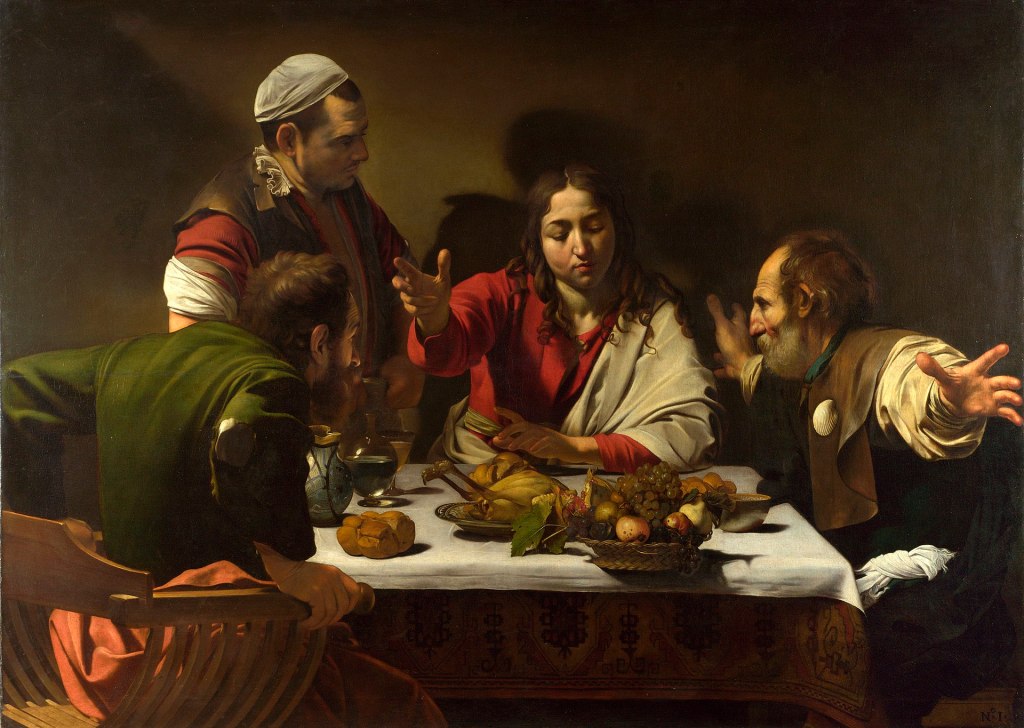
“Supper at Emmaus” by Caravaggio.
We are priests called to preside the celebration of the Eucharist in persona Christi.
We priests do not own the Mass and we cannot insist on whatever we want to do, even if it is very pleasing and delighting to the senses of the people.
Do away wit all those “styles” and gimmicks.
Jesus saved us not with activities; Jesus saved us by dying on the Cross.
If all we are concerned with is to “feel good”, to tickle our bones and senses, our eyes – and those of the people we serve and bring closer to God would never be opened to recognize Jesus Christ.
Our Masses and other celebrations need only Jesus, always Jesus.
There is no need to put our pictures in every tarpaulin or announcement. Rest assured that every disciple of Jesus is always good-looking and handsome. Believe. And stop bragging it.
Let us have him always and let others recognize him from within. If there is no inner recognition of Jesus, maybe we have never met him at all. Neither in Emmaus nor in Jerusalem nor in our selves.
A blessed week ahead of you, my brother priests and fellow communicators of Christ, in Christ.
Quiet Storm by Fr. Nicanor F. Lalog II, 23 April 2020
Detail of “The Temptation of Jesus According to St. Matthew” on the wall of St. Mark’s Cathedral in Venice, Italy. Photo from psephizo.com.
English journalist and satirist Thomas Malcolm Muggeridge (1903-1990) said in his book “Christ and the Media” (1978) that if Jesus Christ were still with us in this age, the devil would have surely tested him a fourth time in the wilderness with, “I will put you on TV“.
So true!
Muggeridge has been proven right especially in the last 40 years when television has become the new “altar” not only in homes but everywhere, including in our churches that has made the sacred so ordinary, almost profane with priests speaking and moving more like entertainers with the Mass becoming quite like a variety show, complete even with raffles and prizes!
That is why we priests have to restudy again and review Church teachings on social communication during this long quarantine period. And pray more intensely on our next moves after COVID-19.
Although the corona pandemic has given the much-needed push for our social communication ministry in the church, it is my firm belief that the post-COVID 19 scene can be misleading if not handled properly at this stage.
This early, we can see some abuses in the celebrations of the Holy Mass on TV as well as in other similar platforms like Facebook live.
But the most serious danger now becoming so clear and present are some of us priests totally “lost in media” who have become the center of attractions, pushing Jesus Christ out of the total picture.
Communication is sharing in the power of God
Communication is power. In the story of creation, God created everything by merely saying the words “Let there be…” and everything came into being. Our ability to communicate intelligibly unlike other creatures is a tremendous gift from God which is a sharing in his power to communicate.
This is explains the simple reason that when we love a person, we always talk; any lack of communication is a sign of a breakdown in the relationship like when husband and wife or lovers have “LQ”.
We have seen in recent years with the advent of smartphones how powerful can communication be that it can build or destroy anyone with a single “click”.
Or, how our ego is massaged when we are the first to break a news on Facebook or when our posts get viral or trending!
See how the most influential and highest paid people are always the ones on TV.
The seal of “Good Housekeeping” on every product had been replaced with “As Seen on TV!” as mark of good quality of anything being sold.
To succeed in any war campaign or coup d’etat, military handbooks now give top priority in first neutralizing TV and radio stations to ensure victory.
And, sadly also due to this power of TV, every political career is now launched first on television that is why we have more actors and actresses than solons and statesmen in the corridors of power.
How amazing that it is the fictional character Spider-Man, one of the top grossing film franchise in recent years, is the one who reminds us that “with great power comes great responsibility”.
In the Old Testament, people prided themselves in building the tower of Babel that reaches to heaven that God confused them with different languages causing its collapse. The reverse happened in the New Testament when during the Pentecost, God sent the Holy Spirit so people could understand each other despite their different languages and the Holy Church was built up.
When communication is seen in the right perspective, it becomes a spirituality because it is always a sharing in the power of God which is love.
“Communication is more than the expression of ideas and the indication of emotion. At its most profound level, it is the giving of self in love. Christ’s communication was, in fact, spirit and life. In the institution of the Holy Eucharist, Christ gave us the most perfect, most intimate form of communion between God and man possible in this life, and out of this, the deepest possible unity between men. further, Christ communicated to us his life-giving Spirit, who brings all men together in unity.
Pastoral Instruction on the Means of Social Communication (Communio et progressio), #11
Communication is spirituality, the sharing of Jesus Christ
Church communication, specifically the communication by every priest is communicating Jesus Christ, the eternal Word who became flesh.
Our mission as priests according to Vatican II as “man of the Word of the living God” (Presbyterorum Ordinis, 4) is to primarily share Jesus Christ.
My spiritual director and mentor, truly another father and dad to me, Rev. Fr. Franz-Josef Eilers, svd would always tell me….
“Priesthood is for the service of the Lord and a priest should reflect it. He is not to become a ‘star’ with the public but rather another Jesus figure in humble service of the Lord… The test for a good priest is the depth and power of his spiritual life and being with the Lord. Can you imagine saints like John Vianney and John XXIII as television stars? If the media would report about their life, it is ok; but they themselves should not appear as “star” but rather as servants of the Lord. And this is reflected in their spiritual life and not any ‘show’…”
Personal notes with Fr. Eilers
What a tragedy when we priests are more after the number of followers and likes, forgetting the fact that Jesus himself had only 12 followers with one betrayer among them!
What a tragedy when we priests, starting from the seminary, has always been speaking and working around “Galilee” without any moments of silence and hiddenness of Nazareth and of the desert and wilderness.
All the spiritual masters from the apostolic period down to this modern age of Nouwen and Merton, including the secular Pico Iyer have always emphasized silence and solitude or stillness in prayer before the world and the Lord to truly have impact in this world.
We are priests asked to be the mouth and arms and limbs and legs of Jesus Christ. We are not replacing but merely representing Jesus Christ for it is him who is going to change the world, not us. Our task is to be filled always with Jesus Christ, to be like Jesus Christ, to share always and only Jesus Christ.
Like St. John the Baptist, our attitude toward Jesus and our communication ministry must always be “He must increase; I must decrease” (Jn.3:30).
Then why all our pictures in every post, in every announcement?
If we firmly believe in Jesus, we do not need pomp and pageantry and all the gimiks and antics in our celebrations of the Mass or announcements of recollections or bible studies. People would always surely come for Jesus Christ who is more than anybody else.
The primacy of Christ in every Church communication
Long before Canadian philosopher and communication researcher Marshall McLuhan (1911-1980) came up with his dictum “the medium is the message”, there has always been the towering figure of St. Augustine in early Church communication process.
In the fourth book of his “Doctrina Cristiana” (Christian Doctrine), he noted that in Christian communication, the process always begins with the Message, Jesus Christ.
Hence, whereas we normally find the process as:
SENDER —> MESSAGE —-> RECEIVER ;
in Church communication, it is always:
MESSAGE (JESUS CHRIST) —> SENDER —> RECEIVER.
When there is a breakdown in this flow of communication, especially by a priest, there is already a problem. When it is the priest who is always in the limelight, always his photo hogging whatever communication platform it may be, or when the homily has become more to delight and tickle the senses, it is a sign of falling into the fourth temptation.
Sooner or later, it will not be surprising that during consecration, instead of experiencing and realizing Jesus saying “This is my Body will be given up for you”, what the priest may be revealing is that “This is my body. Be envious.”
Soon, Father will be endorsing products and services, entering into various contracts in the name of the Church, hanging out in the most expensive restaurants, rubbing elbows with the rich and famous, leaving Jesus behind among the poor and worst — alone in the Blessed Sacrament because Father is so busy with his “shootings” and media appearances.
And that is when he forgets being a priest, forgets Jesus Christ until it is too late, he had fallen into the trap of the devil as sex and financial scandals unfold, hurting the Church, hurting Jesus Christ, hurting himself and everybody else in the process.
Anybody can always be a good speaker and orator. But not everybody is called to speak for the Lord. Let us not waste it nor abuse it. Most of all, let us not disappoint the Lord who has called us not because we are good but because he is good!
May this quarantine period be another wilderness experience for us priests and communication ministers in the church so we may empty ourselves to be filled with Jesus Christ the Perfect Communicator we must share and proclaim. Amen.
Lawiswis Ng Salita ni P. Nicanor F. Lalog II, Ika-26 ng Marso 2020
Eksena hango sa pelikulang “The Ten Commandments” noong 1956.
Tinuturing ng mga Hudyo
ang pagsamba ng kanilang ninuno
sa guyang ginto
ang pinaka-nakakahiyang yugto
sa kanilang kasaysayan
nang talikuran nila sa ilang
butihing Diyos hanap katapatan lamang.
Mula noon hanggang ngayon
guyang ginto ang naging larawan
na siyang kumakatawan sa ating
mga sinasambang diyos-diyusan:
salapi at kayamanan,
kapangyarihan at katanyagan,
lahat iiwan, tatalikuran makamit lamang.
Hindi ako kumibo noong una
kahit napupuno ng nag-aalimpuyo
na galit at ngitngit sa mga balitang sumisingit
mga VIP para sa kakaunting testing kit;
ngunit nang itong si Koko Pimentel
hindi nagpigil, di napasupil
ako ma'y kumulo ang dugo sa gigil.
Di niya inalintana mahawahan
mga karamihan ng sakit na di pa maunawaan
siya pa ngayon ang nangangatuwiran
sa kanyang kapabayaan at kapalaluan
pakiwari siya ay tama at kawawa
kaya sa kanya ang madla
nagalit halos siya ay isumpa.
Ito ang malungkot na katotohanan
nalantad sa isang iglap ng kapabayaan,
kahangalan at kayabangan
silang mga halal at makapangyarihan
sa taumbayan walang pakialam
sila na mismo ang guyang ginto
na ibig sila ang sambahin at paglingkuran!
Kaya nga aking mga kababayan
huwag kalilimutan mga taksil ng bayan
huwag nang ibalik sa luklukan
dahil ngayon pa lamang ay nagkasubukan
sa oras ng kagipitan tayo ay kanilang iniwan
hindi dapat pagkatiwalaan
sapagkat sila'y mga propetang bulaan.
Lawiswis ng Salita ni P. Nicanor F. Lalog II, Ika-24 ng Pebrero 2020
Mula sa Inquirer.net
Tuwing maiisip ko pangalang EDSA
ako ay naluluha at naaalala noong una
ang tuwa ng mapayapang pagbabago
nagmula sa makasaysayang kalsada.
Naluluha pa rin ako ngayon
tuwing masasambit pangalang EDSA
ngunit mayroon na parating sumasagitsit
mula sa langit lungkot at pait sa ating sinapit.
Masakit para sa amin na noon pa ma'y
tumutol sa mga ulol at hibang na K-B-L
ngunit pagkaraan ng EDSA,
mga halimaw din pala aming nakasama!
Inuna kanilang mga hacienda
makinarya sa pulitika
reporma anila sa ekonomiya
pagkakanya-kanya lang din naman pala.
Ano nga ba talaga nangyari
noong Pebrero mil-nueve-ochenta'y-sais?
Trahedya ng EDSA o
Trahedya sa EDSA?
Kung maari sana'y pakinggan nating muli
hindi tinig ko o ng kung sinu-sinong
magkomentaryong pilosopo o lalo naman
pinagsasabi ng sino mang pulitiko at relihiyoso!
Bawat isa sana ay magtika
dahil alin mang trahedya - ng EDSA o sa EDSA -
ay iisa:  Panginoong Diyos na siyang kumilos noon,
ating tinalikuran at kinalimutan ngayon!
Lawiswis ng Salita ni P. Nicanor F. Lalog II, Ika-17 ng Enero 2020
Larawan mula sa Inquirer.net, 12 Enero 2019
Lahat ay nagimbal
nang pumutok bulkan ng Taal:
nagdarasal, nagninilay
kahulugan at mga aral
na sa atin sana'y gumabay.
Isang katiyakang ating mapananaligan
hindi kaparusahan pagsabog ng bulkan
na batay sa kaayusang tinakda
noon pa man nitong kalikasan
sa karunungan ng Poong Maykapal.
Gayon pa man,
mahalaga nating mapaglimi-limihan
kung ano baga mga aral
sa atin ay inuusal nitong
pagsabog ng bulkang Taal.
Larawan ay kuha ni G. Raffy Tima ng GMA-7 News, 12 Enero 2020.
Una kong napagtanto
laganap na pagkalat ng abo
mula nang pumutok ang Taal
upang ipaala-ala sa ating mga tao
ating pinagmulan at hahantungan.
Iyon nga lang
sa inyong pakundangan
bakit nga ba yaring mga kinauukulan
pati na rin sambayanan
tila baga mga isipan walang laman kungdi abo lamang?
Kanya-kanyang bidahan kinabukasan
mayroong ibig magpaulan upang abo ay mahugasan
habang isa pang kasamahang hunghang sa batasan
nagmungkahing imbestigahan diumano'y
kapabayaan ng mga nagbabantay sa bulkan.
Natuyot nang islang kinaroonan ng bulkang Taal. Larawan ay kuha ni G. Raffy Tima ng GMA-7 News, 15 Enero 2020.
Iyan unang aral ng bulkang Taal:
huwag nang ihalal mga upisyal na hangal
na walang ibang kayang gawin kungdi
samsamin kaban ng bayan at palitan
pangalan ng mga lansangan.
Ngayon ibig nilang pakialaman
gawain ng mga nasa agham
matapos pabayaan at bawasan
pondong kinakailangan
sakaling mayroong mga di inaasahang kalamidad.
Mas makakapal pa sila sa abo ng Taal
masangsang pa kanilang amoy sa asupre
mga salot ng lipunan, mga upisyal na walang pakialam
maliban dilaan sino mang nasa Malakanyang
na lihis din takbo ng isipan kahit may kaguluhan.
Mapayapang tanawin ng Taal bagama’t umuusok pa rin. Larawan kuha ni G. Raffy Tima ng GMA-7 News, 17 Enero 2020.
Larawan ng kagandahan at kaayusan
sa kanyang katahimikan itong bulkan
sa loob ng lawa ng Taal na ngayo'y
kay hirap na ring masilayaan
dahil sa mga gusaling nagtataasan sa daanan ng Tagaytay.
Marahil isang hinaing
at pinag-aalburoto ng Taal
ating kawalang galang sa kanya
sampu ng buong kalikasan
na ating winawasak at sinalaula.
Gayon din mga nagkabitak-bitak
na lupa waring nagsasaad
malaon nang mga pitak
sa ating mga kapatiran
maging kaisahan sa Inang Kalikasan.
Kung sakali mang
puputok at sasabog ng tuluyan
yaring bulkan ng Taal
nawa'y walang mapahamak sino man
ngunit aral niya ating matutuhan at matandaan.
Quiet Storm by Fr. Nick F. Lalog II, 15 January 2020
From The Times.
Now streaming at Netflix is this excellent original 2019 BBC production, Giri/Haji (Duty/Shame), a Japanese story of two brothers set almost entirely in London seemingly inspired by French existentialist writer Albert Camus with closing scenes set in Paris.
Midway through the series, one notices right away the complexities or, absurdities of life that one cannot simply categorize it between “duty and shame”, or good and evil, right and wrong, black and white.
It is a series that hits our innermost core when we find ourselves in those gray areas of confronting what we believe as right and just versus the value of every human person that Camus beautifully expressed in his 1947 novel “The Plague”:
“A loveless world is a dead world, and always there comes an hour when one is weary of prisons, of one’s work, and of devotion to duty; and all one craves for is a loved face, the warmth and wonder of a loving heart.”
Albert Camus, The Plague
Like most Netflix series, Giri/Haji is rated 18+ for its violence, language, substance, and nudity but everything is done beautifully and artistically.
It is a masterpiece that shows some common threads among us humans regardless of our color and culture, gender and age, belief and language. How the creators were able to perfectly blend these all with the excellent cinematography, music, and fine prints into uncluttered and pure simplicity of Japanese Zen principles are a work of art and film genius.
Simple plot but very personal and universal
The plot is simple: an elder, straight brother is a cop with a younger brother who is a Yakuza member hiding in London after being presumed dead when he got the daughter of his boss pregnant. He staged his revenge in London where he killed a Japanese executive with the knife of his former boss that had sparked a war among Yakuza families in Tokyo that was going out of control. Cop-brother comes to London to bring his gangster brother back to Japan to atone for his sins so that peace is restored among the Yakuzas.
Along the way, the two brothers’ stories converged with the stories of three other main characters that provided the many uneventful twists to be united by the element of deaths in various forms and circumstances.
From Google.
Giri/Haji honestly confronts our basic issues of love and acceptance so lacking or taken for granted in our own families that lead to a host of so many other problems and situations like drugs and other crimes, infidelity and promiscuity, as well as homosexuality and sexual orientations.
What is so unique with the series is how it was able to take these sensitive issues as subjects to be seen in relation with persons, not as objects to be studied or examined apart from anyone that it becomes more of an experience, not just an entertainment.
Giri/Haji is so personal, you can feel yourself “slashed” so you experience the subjects’ pains and hurts, longings and desires, dreams and aspirations.
Like the samurai blade that can cut through almost anything, the series hits you at almost every turn that you find yourself laughing and weeping without realizing that along with the characters, you have also laid your soul bare for serious self-confrontation and examination about your very self and the people around you in the relationships you keep as well as skipped or taken for granted.
Death and new life
There is no glorification of evil and immoralities but Giri/Haji invites us to see these as realities in our imperfect world that must be seen more with our hearts than with our minds and convictions. The series contrasts the Western frame of mind of morals as codes to be followed to the minutest details that slashes even persons into categories with the Oriental point of view of seeing morality in the totality of the person.
How it is resolved in the end is amazing!
And despite its genre being crime and violence, I would still say Giri/Haji is so lovely, even quaint and as Japanese as it can be especially with the depiction of changing of seasons that peaked at autumn.
Despite the dark and gloomy nature of the topics of death in all of its forms, there is the radiance of hope always that will lead to new life. The series teems with other symbolisms and signs including great music selections that add intensity to its drama and tragedy that make us hope the new season comes soonest.
For the meantime, listen to the beautiful music theme of the Giri/Haji by British singer Tom Odell.
Take my mind And take my pain Like an empty bottle takes the rain And heal, heal, heal, heal
And take my past And take my sense Like an empty sail takes the wind And heal, heal, heal, heal
Quiet Storm by Fr. Nicanor F. Lalog II, 23 December 2019
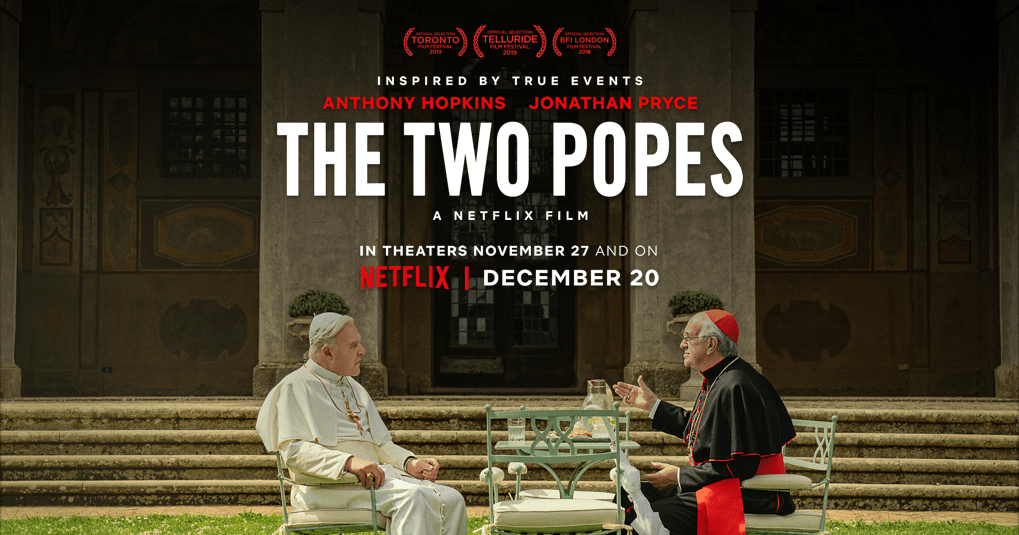
From Netflix.
As early as Friday night after my second Simbang Gabi Mass at 8:30, I have been wanting to react on social media against Netflix’s “The Two Popes”.
But I tried to control my self because I have only seen its first 30 minutes – and besides, it is a fiction story. So, in the spirit of fairness, I tried to finish the movie in three installments until Saturday afternoon before making any comments.
And I felt sad in having seen it at all.
“The Two Popes” is not entertaining. It is misleading without any strong elements to build on our faith and appreciate our religion. At its worst, despite its claim of being inspired by true events, the movie is unCatholic and unChristian.
From Google.
UnCatholic and UnChristian
Movies about religions and religious figures and personalities are always controversial by nature. But for as long as they follow the paths of honesty, sincerity, and truth, these movies eventually emerge as true expressions of art that can truly deepen one’s faith.
But “The Two Popes” at its opening scene is already disturbing and objectionable when it portrayed the Cardinals at the 2005 conclave as having animosity and rivalry among themselves in electing Pope Emeritus Benedict XVI.
Yes, we priests including bishops and Cardinals are all humans like anybody else but no one among us would ever dare to aspire for the papacy. While it is true there are some priests who are into “careerism” in the diocesan level, everything changes starting with the episcopacy or the office of the bishop.
In fact, part of the problem why we have so many vacant dioceses in the country and the whole world is that many priests refuse to accept their appointment as bishops because of many fears that are so real that come with the immense responsibilities of the position. According to the Vatican, three out of every ten priests offered to become bishops decline the offer personally made by the Pope through his Papal Nuncio in every country.
How much more with the Papacy?!
In the movie, Pope Benedict toured Cardinal Bergoglio inside the Sistine Chapel and showed him the “crying room” where the newly elected Pope may stay and cry – yes – before finally accepting his election as Pope.
That alone is true but not the movie portrayal during the conclave that claim Cardinals aspiring to become the Pope. It is something preposterous and totally untrue.
Catholic World Report
What is very disturbing in “The Two Popes” is how it presented Cardinal Ratzinger and Cardinal Bergoglio like “lowlife” lawmakers of congress gunning for the top post for prestige and power with their respective bloc members going around in hushed conversations with matching dagger looks at each other.
This is the movie’s weakest point: rather than being seen as something about deepening our faith in God and the institutional Church or any established religion for that matter, it played on “politics” in the guise of showing the flaws and frailties of two popes competing for position and fame.
You might say “it is just a movie” but, not everyone can rightly see whatever good intentions – if it really has – that the movie is trying to present.
Instead of enlightening the viewers in their faith to the Church in general, there was something sinister in the way it presented almost everyone except Cardinal Bergoglio.
Behind the movie’s beautiful cinematography and studio sets are “subliminal messages” as if inciting viewers to dismiss the Catholic Church and other religions because they are all the same – run by egoistic, power hungry people enjoying so many luxuries in life that the common masses could not even imagine to exist.
We priests are sinners and though there are some of us who have sold Jesus like Judas Iscariot for the price of wealth and fame, there are much too many who still work in silence and hiddenness and holiness bringing Christ to the people.
The Catholic Church has continued to exist since Christ’s ascension because the good shepherds like Jesus have always far outnumbered the rotten ones. Hence, those scenes repeated twice or thrice of Pope Benedict worried with his “popularity” are outrageously absurd!
The Catholiy abc Sun.
Bias against Pope Emeritus Benedict XVI
The movie is supposed to show us how two great men of God, of divergent backgrounds and worlds apart, resolved their many conflicts within themselves and with others regarding their faith and ministry and mission in leading the Catholic Church.
Both actors, especially Anthony Hopkins did superb jobs in playing their roles.
The movie tried to show the triumph of the Divine in mysterious ways we can never explain nor understand using men of limitations and weaknesses.
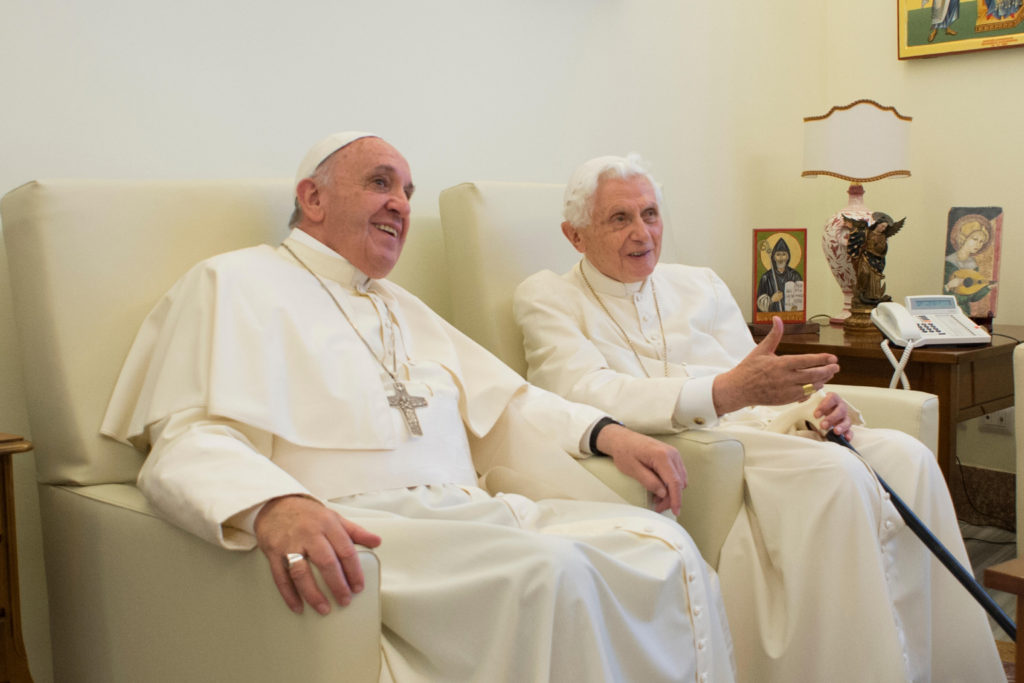
What makes “The Two Popes” so unkind and unchristian is the fact that it is more about Pope Francis as the vida and Pope Emeritus Benedict XVI as contravida. It could have been better if the producers just centered on the present Holy Father as basis of their film and called it “The Pope”. Period.
How can it be a film about faith and religion when the plot itself is unfair and grossly biased against the supposed co-star who is also a Pope?
The movie is also unfair to Pope Francis who would surely never allow himself to be praised and exalted at the expense of the Pope Emeritus or any other person, whether in real life or fiction.
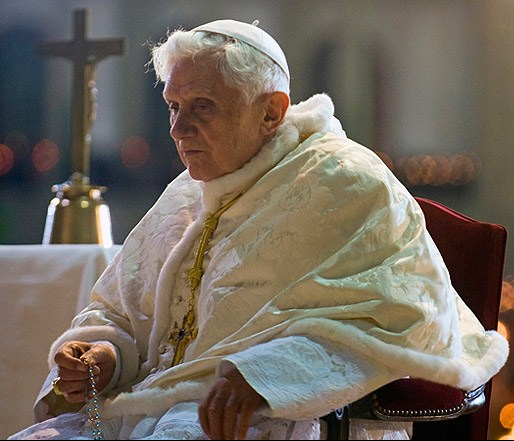
This for me is the most unkindest cut of all in this Netflix movie that fans the many wrong impressions fed on by media against Cardinal Josef Ratzinger since his being the Prefect of Sacred Congregation of Doctrine and Faith during the time of St. John Paul II.
Throughout the film, it is very evident at how the Pope Emeritus is put on the bad light as if he never cared at all about actual situations in the Church and in the world, from the sex scandals to issues on celibacy among other things because he is so absorbed in his intellectual pursuits in the world of books and the academe.
We are of Christ
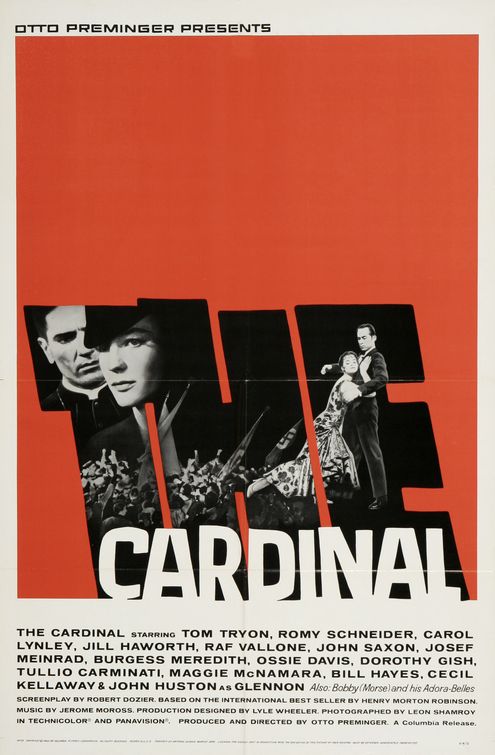
In 1963, the American film “The Cardinal” was released, earning six Academy Awards and very positive reviews for excellently portraying Catholic religion amid issues of interfaith marriage, sex outside marriage, abortion, racism, and dictatorships set during the Second World War.
It was also inspired by true events based on the life of the late Cardinal Francis Spellman of New York.
Its music theme has become a classic piece too that we have all learned by heart while still in high school seminary.
I can still remember the film that showed in a very positive light the main character with all his flaws and shortcomings as a person, as a priest. No need to put other characters down just to underscore his goodness.
The film had a Vatican liaison officer in the person of the young German priest Fr. Dr. Josef Ratzinger who, after that movie, would be attending Vatican II as a periter or consultant to join the efforts in reforming the Church and make it more responsive to modern time.
Yes, the very same Pope Emeritus Benedict XVI portrayed in the Netflix movie as “ignorant” of the Beatles and of tango and of many other things of the modern world.
Netflix
“The Two Popes” ended positively with the “unlikely friendships” of Pope Benedict and Cardinal Bergoglio but still with its askewed presentation of the two holy men, of the people in Vatican, and of the Church’s members and leaders.
So unlike the classic “The Cardinal”, “The Two Popes” missed the essence of the papacy and of the Church as an institution and a body of believers – that Christianity is not about categories or labels as conservatives, progressives, or liberals: it is about our being of Jesus Christ alone.
It is deceivingly appealing to the senses but nothing really so profound about faith and Jesus Christ and his Church. With hindsight, though, after seeing the movie, the more I have come to love and admire Pope Emeritus Benedict XVI for his love and faith in Jesus and the Church.
And Jesus told his disciples… “Blessed are you when they insult you and persecute you and utter every kind of evil against you falsely because of me” (Mt.5:11).





















 lordmychef.com