The Lord Is My Chef Daily Recipe for the Soul by Fr. Nicanor F. Lalog II
Friday, Week XXX, Year I in Ordinary Time, 29 October 2021
Romans 9:1-5   ><]]]]'> + ><]]]]'> + ><]]]]'>   Luke 14:1-6
Photo by Dr. Mylene A. Santos, MD, 2020.
Today I feel dear God our Father
the pains and sadness of St. Paul
in the first reading for his fellow Jews'
refusal to accept and believe in your
Son Jesus Christ.
But it is something more than just
about faith, in accepting Jesus as
Savior that I am speaking of;
you know it very well of some loved
ones who are "blinded" by so many
other things in life that they cannot see
or refuse to see not only Jesus passing
by daily in our lives but even us family
and friends who truly care for them.
Brothers and sisters: I speak the truth in Christ, I do not lie; my conscience joins with the Holy Spirit in bearing witness that I have great sorrow and constant anguish in my heart. For I could wish that I myself were accursed and cut off from Christ for the sake of my own people, my kindred according to the flesh.
Romans 9:1-3
How can we open the eyes,
awaken our obstinate loved ones to
the truth that they are loved
when they are fixed with their past,
their hurts and pains despite
our apologies and amends made to them?
How can we make our obstinate beloved
realize we are present for them when
they prefer their gadgets and things,
their addictions and vices, even their
toxic friends and relationships?
How can we enable our obstinate
loved ones experience the beauty of life
when all they do is complain
 what is lacking than what we have?
We pray today Lord Jesus for
those people we love who act like
those Pharisees and scholars of law
who refused to respond to your question
when you asked them, "Is it lawful to cure
on the sabbath or not?" before healing a
man suffering from dropsy; worst,
they preferred to be coldly silent
after you have healed the man (Lk.14:2-6).
Teach us to be more patient
and kind, loving and open to still accept
those who for all kinds of blindness
refuse to accept us, most especially YOU.
Amen.
The Lord Is My Chef Daily Recipe for the Soul by Fr. Nicanor F. Lalog II
Monday, Week XXX, Year I in Ordinary Time, 25 October 2021
Romans 8:12-17   ><]]]]'> + <'[[[[><   Luke 13:10-17
Photo by Mr. Jim Marpa, 2019.
Praise and glory to you,
God our loving Father
for this gift of another Monday;
help us to live in solidarity
with your Son Jesus Christ
as brothers and sisters,
heirs of your kingdom in heaven
that in our work and studies,
we may always be guided
by the Holy Spirit to seek and
follow your Holy Will.
For you did not receive a spirit of slavery to fall back into fear, but you received a spirit of adoption, through which we cry, “Abba, Father!” The Spirit itself bears witness with our spirit that we are children of God, and if children, then, heirs, heirs of God and joint heirs with Christ, if only we suffer with him so that we may also be glorified with him.
Romans 8:15-17
So many times, O Lord,
we are like that synagogue official
in the gospel today:  blinded not only
by material things but most of all
by our religion - the worst blindness
 we have which we refuse to admit;
hence, we continue to plunge deeper
into its darkness of self-righteousness
as we outwardly profess we believe
 in you, we worship you alone
when in fact we have many other gods
ruling over us like our pride and ego,
our religious positions and titles,
even our ministries that are all
self-serving, too far from the people
specially the poor and sick,
and much too far from you,
dear God.
Give us the grace, dear Father,
through your Son Jesus Christ
in the power of the Holy Spirit to
enlighten our minds and hearts
to search more his light to illumine
the darkness within us and to find
more his face among one another
so that we may be truly in solidarity
 with him and your people.
Amen.
The Lord Is My Chef Sunday Recipe for the Soul by Fr. Nicanor F. Lalog II
Sunday Week XXX-B in Ordinary Time, 24 October 2021
Jeremiah 31:7-9 ><]]]]'> Hebrews 5:1-6 ><]]]]'> Mark 10:46-52
Photo by Mr. Jay Javier, Quiapo, January 2020.
We are about to end our liturgical calendar in five Sundays from now and Jesus is fast approaching Jerusalem, his final destination in fulfilling his mission to redeem us from our sins. Along this path, we are reminded of the many blindness within us that prevent us from meeting Jesus who is passing by.
Recall how last week we reflected on the “blindness” of the brothers James and John to their ambitions, wishing to Jesus that once he becomes king, they would be seated at his right and at his left, forgetting the Lord’s teaching that he is a “suffering Messiah”, far from their expectations of a triumphant victor or liberator.
Today, we heard the story of a blind man named Bartimaeus who kept shouting, pleading to Jesus’ attention who was passing by the city of Jericho on his way to Jerusalem.
The story reminds us of the need for us to be aware of our many blindness in life, of things that keep us from seeing Jesus, others and our very selves. Here is a man very realistic, aware of his blindness, focused on his need and goal to be able to see, most specially Jesus.
As Jesus was leaving Jericho with his disciples and a sizable crowd, Bartimaeus, a blind man, the son of Timaeus, sat by the roadside begging. On hearing that it was Jesus of Nazareth, he began to cry out and say, “Jesus, Son of David, have pity on me.” And many rebuked him, telling him to be silent. But he kept calling out all the more, “Son of David, have pity on me.” Jesus stopped and said, “Call him.” So they called the blind man, saying to him, “Take courage; get up, Jesus is calling you.”
Mark 10:46-49
So often, we get blinded by even the most obvious things in life like our present condition that needs to be improved or even saved. In the Book of the Acts of the Apostles is a story of that crippled beggar at the Beautiful Gate of the temple whom Peter and John healed one afternoon after the Pentecost. According to Acts 3:1-9, when the beggar who was crippled from birth saw Peter and John approaching him, he thought they would give him alms; but much to his surprise and of everybody, Peter made him walk in the name of “Jesus Christ the Nazorean”!
Imagine how the crippled beggar so used to his condition, so comfortable to some extent that he was preoccupied to just begging for alms, forgetting or abandoning all hopes to be able to walk like most people.
There are times we really do not know what we need and want in life that we are easily distracted and defocused from having the essential things in life like seeing our true selves, those around us and even our need for God who has been loving us, showering us with his many blessings and grace we hardly notice because we are busy complaining for so much wants not important.
Here, Bartimaeus was so sure of what he wanted: to recover his sight.
And the most wonderful thing is how he completely had faith in Jesus as the only one who can restore his sight, calling him “Son of David” which is the title of the coming Messiah or Christ. He must have heard a lot about his healings and preaching, realizing Isaiah’s prophecy of how the Messiah would restore sight to the blind. Jesus himself had confirmed this at the inauguration of his ministry at Nazareth when he proclaimed that part of the Book of Isaiah in the synagogue (Lk.4:18).
That is how realistic and grounded was Bartimaeus to the realities of himself that he shouted to beg Jesus to have pity on him. His faith in Jesus was so firm that when people tried to silence him, the more he persisted and shouted aloud so Jesus would hear him!
How well do we know the many blindness we have in ourselves that we would exert such effort like Bartimaeus in asking Jesus for light, to restore our sight so we would see and know him clearly, love him dearly and follow him closely?
He threw aside his cloak, sprang up, and came to Jesus. Jesus said to him in reply, “What do you want me to do for you?” The blind man replied to him, “Master, I want to see.” Jesus told him, “Go your way; your faith has saved you.” Immediately he received his sight and followed him on the way.
Mark 10:50-52
Moreover, it is not enough to be healed of our blindness in faith;
the truest sign of having our sights back,
of being healed from blindness is to leave
the roadside to follow Jesus "on the way".
“Jesus healing the Blind Man” painted by Brian Jekel (born 1951) in 2008, oil on canvas. From http://www.Christian.Art.com.
What a wonderful story of healing and faith, of seeing and following Jesus! “Immediately he received his sight and followed him on the way.” Today the gospel reminds us to take a critical look at ourselves to root out whatever it is that keeps us from seeing who Jesus is like self-centeredness and pride, preoccupation with fame and wealth, or our toxic relationships and painful past we could not let go.
See how Bartimaeus “threw aside his cloak, sprang up, and came to Jesus” upon being called from the roadside. That is the key to any real prayer, of encountering and meeting Jesus when we are willing to let go of whatever we have, of letting ourselves be stripped naked before God without any ifs and buts, offering him our very selves.
Moreover, it is not enough to be healed of our blindness in faith; the truest sign of having our sights back, of being healed from blindness is to leave the roadside to follow Jesus “on the way”.
Again, we hear from St. Mark using that word “way”: last month Jesus asked his disciples what were they arguing along the way and no one could answer him because they were discussing who was the greatest among them. In the healing of Bartimaeus, there is that beautiful imagery of Jesus our way, truth and life; of Jesus passing by, calling everyone to come to him, to leave the roadside and walk with him on the way to Jerusalem like Bartimaeus.
In this critical period of our history when we are celebrating the 500 years of the coming of Christianity while we are in the midst of a crucial election campaign period on the second year of a crippling pandemic, we are all called by Jesus to leave the roadside like Bartimaeus to join him on the main road, to journey with him, and most of all, to carry our cross with him.
Joining Jesus on the main road with his Cross means becoming his very presence among other people too. Discipleship is more than seeing and following Jesus – it means setting aside our false securities and “springing up” from our comfort zones in order to give ourselves to others too.
Discipleship is walking with God, walking with his people, bringing them joy and hope while in the midst of sufferings like the prophecy of Jeremiah in the first reading: “Behold, I will bring them back from the land of the north; I will gather them from the ends of the world, with the blind and the lame in their midst, the mothers and those with child; they shall return as an immense throng” (Jer.31:8).
Yes, this has been fulfilled by Jesus in his coming but the journey continues to this day with his faithful disciples who guard against all kinds of blindness within, leaving the roadside of comforts to meet and share Jesus on the dusty road of life.
Many times, Jesus is passing by the road invisible to many, unnoticed by many due to various kinds of blindness. Jesus wants us all to be with him, to join in his journey to light, to freedom, to peace and to joy. Everybody is invited to leave the roadside and hit the main road with Jesus.
Let us be open to listen to his coming, to his calls.
Most of all, let us beg him for mercy to open our eyes, to heal us from the many blindness we have so we may see and meet him, love and follow him always. Amen.
The Lord Is My Chef Sunday Recipe for the Soul by Fr. Nicanor F. Lalog II
Sunday XXIX-B in Ordinary Time, 17 October 2021
Isaiah 53:10-11 ><}}}*> Hebrews 4:14-16 ><}}}*> Mark 10:35-45
Photo by author, 10 October 2021, Paco, Obando, Bulacan.
Five minutes before our Mass last Sunday afternoon at the Holy Cross Parish in Paco, Obando, two rainbows appeared in the sky, freezing me for a while to cherish the moment as I felt God smiling at me, promising me a better week ahead.
It was only after a brief pause savoring the moment when I had the chance to take a shot of the lovely sight before getting inside the church at exactly 530 PM for the Mass. The following Monday, I had the photo posted on “my day” with everybody asking what was my wish upon seeing the double rainbows
When I told them I did not make any wish at all, they said it was “sayang” (what a waste!), that if I had made a wish, it could have been granted or fulfilled.
But, looking back, I did not make any wish at all because at that very moment I felt I had Jesus in my heart, that God had me on his palms, assuring me of his loving presence.
Why make any wish at all when you already have God? Besides, I felt too old for those wishing upon a rainbow or a falling star thing!
My dear friends and relatives, this Sunday, Jesus asks his disciples, brothers James and John “What do you wish me to do for you?” (Mk.10:36); next Sunday, the Lord will ask a blind man “What do you want me to do for you?” (Mk.10:51).
It is very interesting to note that Jesus outrightly explained to James and John he could not fulfill their wishes while next Sunday, he would restore the sight of the blind man named Bartimaeus who pleaded to him as he passed Jericho. It seems that there is more than meets the eye between a wish and a prayer!
James and John, the sons of Zebedee, came to Jesus and said to him, “Teacher, we want you to do for us whatever we ask of you.” He replied, “What do you wish me to do for you?” They answered him, “Grant that in your glory we may sit one at your right and the other at your left.” Jesus said to them, “You do not know what you are asking.”
Mark 10:35-38
Photo by Ms. Anne Ramos when a rainbow appeared as we went around around my former parish assignment bringing the Blessed Sacrament to bless then people on the first Sunday of our quarantine lockdown, 22 March 2020.
Wishes are only granted in fairy tales…
Jesus is now nearing Jerusalem where he would suffer and die but on the third day rise again. He had just repeated for the third and last time to his disciples of his coming pasch but, sadly, they still could not comprehend it fully.
The other Sunday, they could not answer Jesus when he asked them what were they arguing about while along the way to Capernaum because they were discussing among themselves who among them was the greatest.
They could not understand how their Lord and Master, the Messiah of Israel will have to suffer and die; it was beyond their grasp. Nonetheless, amid their lack of understanding and fears of its true meaning, they still followed Jesus, believing he would eventually triumph as a King.
And that is what the brothers James and John were thinking, the two closest to the Lord along with Peter who was earlier rebuked by Jesus at Caesarea Philippi for going against his pasch: they thought of Jesus as a “political leader”, a “game changer” who could surely change their lot for the best, assuring them and their future generations with the good life.
When Jesus asked the brothers James and John, he knew the two were just “fancying” on something not so true. That is what a “wish” is all about: something so fancy, almost untrue like coming from fairy tales that could come true with so slim a probability like hitting a jackpot in lottery or meeting a superstar. We make wishes to fairies often represented by celebrities who try to bring some joy to children suffering from cancer. Or, politicians who for a day would give some voters with huge amounts of money without any conviction at all to fulfill their promises.
As we say in Filipino, “suntok sa buwan” that literally means “punching the moon”.
But again like last Sunday when Jesus looked with love to the man asking him how to gain eternal life, Jesus respected the brothers James and John by entertaining their “wish”, asking them questions until he flatly told them “to sit at my right or at my left is not mine to give but is for those for whom it has been prepared” (Mk.10:40).
When the ten heard this, they became indignant at James and John. Jesus summoned them and said to them, “You know that those who are recognized as rulers over the Gentiles lord it over them, and their great ones make their authority over them felt. But it shall not be so among you. Rather, whoever wishes to be great among you will be your servant: whoever wishes to be first among you will be the slave of all. For the Son of Man did not come to be served but to serve and to give his life as a ransom for many.”
Mark 10:41-45
Photo by author, Chapel of the Holy Family, Sacred Heart Spirituality Center, Novaliches, 2016.
Prayer changes the person, not the situation.
Recall how Jesus assured his disciples and us last Sunday of great rewards awaiting those who have left everything to follow him; but, along these come persecutions because following Jesus means standing for what is true and good that invite enemies and detractors.
There will always be persecutions coming in our life – even if we do not follow Jesus along the way because that is a fact of life. Jesus came not to remove but join us, accompany us, be one with us in our sufferings and trials.
Today, Jesus opens our eyes to the realities, beauty and nobility of discipleship that is unfortunately becoming rare even among us in the clergy. True discipleship in Christ is first of all sharing in his passion and death in order to have a part in his glorious resurrection.
Once again, we feel the Lord’s recurring teaching these past weeks of us entrusting everything to the Father’s hands like children filled with confidence on God’s promises. This is the meaning of Isaiah’s prophecy in the first reading that spoke of the “Suffering Servant of God” who “through his suffering shall justify (save) many” (Is.53:11).
See the gentle humility of Jesus in explaining things to his disciples. There was no hint at all of anger nor exasperation but pure love and understanding, patience and perseverance hoping someday the Twelve would realize in the most personal manner his kind of kingship, the true meaning of being the Messiah.
Photo by author, Garden of Gethsemane, the Holy Land, 2017.
Here Jesus exemplifies so well in his very self the kind of relationships his followers must have based on love and respect, serving the weakest and lowliest, so unlike the way of the world that is based on relations of power and dominance. This we continue to experience when we pray fervently especially before the Blessed Sacrament and most of all when we celebrate the Sunday Eucharist which is the summit of our Christian life.
In the Holy Mass, Jesus the Son of God leads us to the Father in signs perceptible to human senses, exactly what the author of the Letter to the Hebrews speaks of in the second reading, “So let us confidently approach the throne of grace to receive mercy and to find grace for timely help” (Heb.4:16).
So, instead of wishing upon rainbows or shooting stars, better pray!
Lord Jesus Christ,
thank you for understanding
our lack of understanding
and appreciation to your coming
to us daily in the many sufferings and
pains we go through in life;  help us
to be more realistic, to stop all
wishful thinking of living happily
ever after and instead become
more loving and kind, finding you
with everyone we meet.
Amen.
The Lord Is My Chef Breakfast Recipe for the Soul by Fr. Nicanor F. Lalog II
Friday, Week XXIII, Year I in Ordinary Time, 10 September 2021
1 Timothy 1:1-2, 12-14   ><)))*>  +  <*(((><   Luke 6:39-42
Photo by author, April 2019.
Jesus told his disciples: “How can you say to your brother, ‘Brother, let me remove that splinter in your eye,’ when you do not even notice the wooden beam in your own eye? You hypocrite! Remove the wooded beam from your eye first; then you will see clearly to remove the splinter in your brother’s eye.'”
Luke 6:42
O God our loving Father:
So many times we act so silly
as if we have never learned
from your prophets and then your
Son Jesus Christ and down to
his Apostles and saints, notably
Paul.
So true are the words of Jesus
your Son when he told us how
we would always see the splinter
in our neighbor's eyes without
ever seeing the wooden beam
in our own eyes!
But you know, dear Father,
what makes me rejoice this Friday?
Indeed, splinter and wooden beam
we all have right in our eyes that
we cannot see or even refuse to see
and remove; yet, there you are
in your infinite mercy you sent us
Jesus Christ to remove these
splinter and wooden beam in our eyes
through his wooden Cross!
I was once a blasphemer and a persecutor and an arrogant man, but I have been mercifully treated because I acted out of ignorance in my unbelief. Indeed, the grace of our Lard has been abundant, along with the faith and love that are in Christ Jesus.
1 Timothy 1:13-14
Larger and heavier
was the wooden Cross
willingly carried by Jesus Christ
for our own sake so we may
be cleansed of our sins and
cleared of our blindness
to walk your path of holiness;
loving Father,
teach us to be like St. Paul
to admit our sinfulness,
to voluntarily remove both
the splinter and wooden beam
in our eyes so we may see you
more clearly,
love you more dearly,
and follow you more closely
in Christ Jesus.
Amen.
The Lord Is My Chef Breakfast Recipe for the Soul by Fr. Nicanor F. Lalog II
Thursday, Week XXII, Year I in Ordinary Time, 02 September 2021
Colossians 1:9-14   ><}}}*> ><}}}*> ><}}}*>   Luke 5:1-11
Photo by author of the statues of Simon Peter kneeling before Jesus after the miraculous catch of fish at the lake, 2017.
As the pandemic rages with its
more devastating surge affecting
whole families, we pray dear Father
not only for healing of those afflicted
with COVID-19 but also for the opening
of our minds and hearts to find the
deeper realities of life instead of still
being preoccupied with mundane and
selfish desires we have taken as our
false securities.  Let us remove all these
blindness in us to see and embrace
the truth of your Son Jesus Christ, the
only one who can lead us out of this
darkness that is also of our own making.
Let the prayer of St. Paul for the Colossians
be our prayer today, Father:  "that we may walk
in a manner worthy of the Lord so as to be fully
pleasing in every good work, bearing fruit
and growing in the knowledge of God" so that
"we may be fit to share in the inheritance
of the holy ones in light" (Colossians 1:10,12).
Dear Father, help us realize the need for us
to seek fulfillment only you in Christ Jesus
"in whom we have redemption, the forgiveness
of sins" (Colossians 1:14).
Open our eyes to see the deeper story behind
the news happening around us today:
of what sense is our pursuit for fame,
wealth and power when we can easily die with
COVID-19 or when our country is overrun
by rebels like Afghanistan?
Fulfillment in life can only be found
in Jesus Christ your Son who had come
to enable us "catch abundant fish" when
all our toils and efforts yielded nothing;
teach us to trust in you more, to dare
cast the net into the deep and most of all,
to leave our "boat" of comfort and ease
to walk with Jesus, following him as
"fishers of men" sharing his loving service
and presence, mercy and kindness with everyone.
Amen.
The Lord Is My Chef Breakfast Recipe for the Soul by Fr. Nicanor F. Lalog II
Tuesday, Memorial of Sts. John Fisher and Thomas More, Martyrs, 22 June 2021
Genesis 13:2, 5-18   <*(((>< + ><)))*>   Matthew 7:6,12-14
Photo by author, the narrow door to the Church of the Nativity in Bethlehem, 2019.
It is now getting clearer, God our loving Father, why we have to see ourselves in the way you see us as beloved and blessed: our strong selfish inclinations make us think more of ourselves, of what would give us most benefits with the least efforts as much as possible that make us forget others.
Like Abram’s nephew Lot who “chose for himself the whole Jordan Plain” settling near the city of Sodom because the whole region was well watered and prosperous, not knowing its inhabitants were very wicked in their sins whom God would punish later (Gen.13:10-11).
Teach us to be like Abram who thought more of others than himself: So Abram said to Lot, “Let there be no strife between you and me, or between your herdsmen and mine for we are kinsmen. Is not the whole land at your disposal? Please separate from me. If you prefer the left, I will go the right; if you prefer the right, I will go to the left” (Gen.13:8-9).
Help us to follow your Son Jesus Christ’s teaching that we “Enter through the narrow gate; for the gate is wide and the road broad that leads to destruction, and those who enter through it are many. How narrow the gate and constricted the road that leads to life. And those who find it are few” (Mt.7:13-14).
May we learn from the lessons of history how powerful men like King Henry VIII of England ended miserable in life when he chose the path of the wider gate that led to his destruction when he ordered in 1535 the beheading of Cardinal John Fisher and Chancellor Thomas More for their refusal to sign his Act of Succession paving the way for his divorce from Catherine of Aragon to marry Anne Boleyn. Five more divorces later, Henry VIII never had a male successor except Edward VI who ruled England very briefly.
Grant us the courage and wisdom of St. John Fisher and St. Thomas More who chose the more difficult and painful “narrow gate” of martyrdom to serve you, God, first and above all.
Choosing the narrow gate is always the best because it is choosing Jesus Christ your Son who chose the way of the Cross for our salvation and eternal life.
We pray for those trying to make shortcuts in everything in life, avoiding the way of the Cross to gain more wealth and fame without any regard for the value of other persons. We pray for those who have been blinded by power and money who could no longer see one another as a brother and sister, failing to be just and fair in their relationships and dealings. Amen.
The Lord Is My Chef Breakfast Recipe for the Soul by Fr. Nicanor F. Lalog II
Saturday in the Eighth Week in Ordinary Time, 29 May 2021
Sirach 51:12-20     <*(((><  +  ><)))*>     Mark 11:27-33
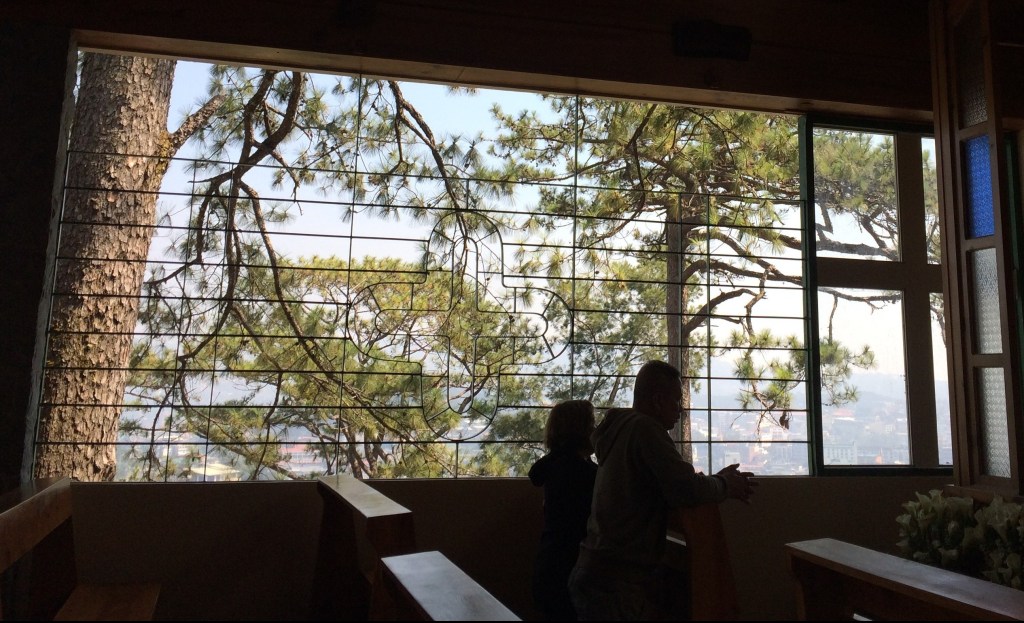
Photo by author, Our Lady of Lourdes Grotto chapel, Baguio City, 2019.
Let me join Ben Sirach in praising you today, O God our loving Father as I take his parting words in his beautiful book as my prayer to you too on this blessed and beautiful Saturday:
I thank the Lord and I praise him;
I bless the name of the Lord.
When I was young and innocent,
I sought wisdom openly in my prayer.
I prayed for her before the temple,
and I will seek her until the end...
In the short time I paid heed,
I met with great instruction.
Since in this way I have profited,
I will give my teacher grateful praise.
(Sirach 51:12-14, 16-17)
O dear God, how sad at how so many people these days seek wisdom and knowledge outside of you. They think you have nothing to do with it, without realizing you are all-knowing and truly the fount of wisdom and knowledge.
May we imitate Ben Sirach and all the saints and wise men of the world who found and learned much wisdom and knowledge from you in prayers.
How sad at how some people supposed to be learned and yet still blind to the reality that so many times in this life, not everything can be planned nor calculated nor be fool proof. There are so many other things that can happen in our lives, for better or for worst, without us really knowing and so prepared how to deal with the severe blows and beatings we receive especially from others whom we trust and expect so much.
It is only your Divine wisdom that can truly teach us how to deal and go on with life’s many questions and difficulties we might never answer nor understand.
Give us the grace of humility to come to you through Jesus Christ your Son in our prayers to cultivate a spiritual life which is a relationship centered on you, not on us or anybody else. Give us the grace of humility most especially to keep our eyes wide-opened to your coming, to your prodding, and to your words of wisdom that run contrary to what we think and believe as true.
Help us not to fall into the shameful errors of the chief priests, the scribes and the elders of Jerusalem who were so blinded with pride and intellectual arrogance that they have refused to open their eyes to your working and coming in John the Baptist and Jesus Christ.
Jesus said to them, “I shall ask you one question. Answer me, and I will tell you by what authority I do these things. Was John’s baptism of heavenly or of human origin? Answer me.” They discussed this among themselves and said, “If we say, ‘Of heavenly origin,’ he will say, ‘Then why did you not believe him?’ But shall we say, ‘Of human origin’?” — they feared the crowd, for they all thought John really was a prophet. So they said to Jesus in reply, “We do not know.” Then Jesus said to them, “Neither shall I tell you by what authority I do these things.”
Mark 11:29-33
Have mercy on us, dear God especially on those who continue to insist on their arrogance and pride because their ego have been badly hurt and bruised that no light of reason can open their eyes to see the bigger beauty of life you offer in following your “unconventional wisdom”. Amen.
40 Shades of Lent by Fr. Nicanor F. Lalog II
Fifth Sunday in Lent-B, 21 March 2021
Jeremiah 31:31-34  +  Hebrews 5:7-9  +  John 12:20-33
Photo by author, details of the Seventh Station of the Cross at the St. Ildephonse Parish Church in Tanay, Rizal, January 2021.
In the beautiful church of the town of Tanay in Rizal is found a most unique Seventh Station of the Cross where one of those depicted when Jesus fell for the second time is a man with dark glasses looking afar. Local residents say the man with sunglasses is Caiaphas, the chief priest during the time of Jesus who led the Sanhedrin at his trial leading to his crucifixion.
Nobody can explain exactly why the artist portrayed that man wore sunglasses that was popular among people of stature and position in the country when the carving was made in 1785. Also interesting aside from the man in shades are the soldiers with him shown with Malay features of brown color and wide eyes opened, all looking somewhere except for one looking at the Lord while clutching his garment as he fell looking heavenwards.
I remembered this piece of work of art inside the Tanay Parish Church declared by the National Museum as “National Cultural Treasure” because our gospel today speaks about a request by some pagans to see Jesus. Seeing has many meanings, always leading to believing. And sometimes, it is in believing we are able to see most of all!
Some Greeks who had come to worship at the Passover Feast came to Philip, who was from Bethsaida in Galilee, and asked him, “Sir, we would like to see Jesus.” Philip went and told Andrew; then andfrew and Philip went and told Jesus. Jesus answered them, “The hour has come for the Son of Man to be glorified. Amen, amen, I say to you, unless a grain of wheat falls to the ground and dies, it remains just a grain of wheat; but if it dies, it produces much fruit. Whoever loves his life loses it, and whoever hates his life in this world will preserve it for eternal life.”
John 12:20-25
Seeing to believe
Photo by Dr. Mylene A. Santos, MD, Infanta, Quezon 2020.
As we have been mentioning three Sundays ago, the fourth gospel uses poetic expressions and symbolisms to convey deeper truths and realities about Jesus and our very selves, our having or lacking faith in God. Like the act of seeing by those Greeks who requested Philip “to see Jesus”.
If they simply wanted to catch a glimpse of Jesus, they could have easily seen the Lord who was always at the temple area at that time. Jesus had always been available to everyone like last Sunday when Nicodemus went to see him at night.
But, John often used the verb to see in many senses that also mean to believe like in his appearance a week after Easter to his disciples along with doubting Thomas: Jesus said to him “Have you come to believe because you have seen me? Blessed are those who have not seen and have believed” (Jn.20:29).
Most mysterious for me in John’s use of the verb to see is in the call of the Lord’s first disciples led by Andrew: He said to them, “Come, and you will see.” So they went where he was staying and saw where he was staying… Andrew followed Jesus. He first found his brother Simon and told him, “We have found the Messiah” (Jn.1:39-41).
What did Andrew see that he later told his brother Simon that they have found the Messiah?
Of course, John’s most notable use of the verb to see is from that scene at the empty tomb on Easter Sunday when the perfect model of the believer is the “other disciple” whom Jesus loved “went in, and he saw and believed” (Jn.20:8).
Very clear in the mind of John that the request of those Greeks to see Jesus was one of faith, of meeting and speaking with Jesus to be enlightened more like Nicodemus last Sunday. Here we find our important role of being another Philip and Andrew, leading other people to see Jesus.
Those Greeks described as “God-fearing” were pagans attracted to the teachings of Judaism and came to Jerusalem to observe the Passover Feast. They already have faith in God that must have been awakened further when they heard the teachings of Jesus; hence, their request to see Jesus.
It happens so often that when by the grace of God people are illuminated with faith even in the most personal manner, they still need Philips and Andrews who would enable them “to see” Jesus to grow and be deepened in faith. There will always be a need for an apostle who could lead others to “see” Jesus because faith happens within a community, within the Church and through others’ mediation.
And here lies the bigger challenge for us disciples for us to make Jesus “seen” in our lives and in our community.
Jesus answered them, “The hour has come for the Son of Man to be glorified. Amen, amen, I say to you, unless a grain of wheat falls to the ground and dies, it remains just as a grain of wheat; but if it dies, it produces much fruit. Whoever loves his life loses it, and whoever hates his life in this world will preserve it for eternal life. Whoever serves me must follow me, and where I am, there also will my servant be. And when I am lifted up from the earth, I will draw everyone to myself.” He said this indicating the kind of death he would die.
John 12:23-26, 32-33
In a sudden twist, John tells us nothing if those “God-fearing” pagans saw Jesus at all because the Lord immediately went on a discourse after being told by Andrew and Philip of the request, briefly interrupted by God’s voice speaking from heaven that everybody heard in the temple area.
Speaking in the parable of the grain of wheat dying first in order to produce much fruit, Jesus tells us how we can lead others to truly see him in us and through us by having the same determination and perseverance to follow him, stay with him, and be like him by dying to ones self for others. For the grain of wheat to die and spring forth to new life, it has to be detached. And so are we.
Notice Jesus repeating that sign of his being lifted up on the cross he mentioned last Sunday to Nicodemus. John mentions it again in this part of his gospel adding an explanation at the end because for him, the Crucifixion is Christ’s greatest sign and revelation of his glory, opening a path for us back to God in his Cross, through his Cross.
In teaching us about the parable of the grain of wheat dying and linking it with his being “lifted up”, Jesus now tells us and every “God-fearing” person that we can only “see” him in the scandal of the Cross.
Did those God-fearing Greeks remained in Jerusalem and saw Jesus on the Cross?
We do not know but we are sure that anyone who requests to see Jesus always sees him if we believe first in his crucifixion which is when everyone is drawn to him as he had said. We must first believe Christ died so we may see him risen to life.
It was on Christ’s dying on the cross when God established a “new covenant” among us as prophesied by Jeremiah in our first reading today, giving us all an access to him in Jesus, through Jesus, with Jesus which we celebrate daily in the Holy Eucharist.
Photo by author, 2020.
Grappling with death to see life
We have never seen the crucifixion of Jesus except in its portrayals in the many movies we used to watch in Holy Week; but, its realities are etched and impressed in our hearts through the many trials and difficulties we have gone through in life that we believe Jesus truly died. And because of that, we have also seen him alive!
Such is the reality of seeing Jesus that every time we describe something so difficult, so trying, we equate it with death like when we say “we felt like dying” taking the exam. And the good news is when we overcome the tests that we use again the word or concept of death to describe something so good as it leads us to glory like when we say a pizza or a steak or a cake to die for.
Such is the paradox and scandal of the Cross of Jesus: we can never see him risen in glory if we avoid and refuse seeing his Passion and Death right in our own selves, in our painful experiences.
Going back to that unique Seventh Station of the Cross at the Tanay Parish Church, I realized how the unbelievers and others among us could not see Jesus as the Christ because they have refused to believe in him first especially when they are down with all kinds of problems and trials, looking somewhere else instead of seeing Jesus fallen in front of them.
Let us believe in Jesus so we may see him in this final week of Lent as we prepare for Palm Sunday next. Amen.
40 Shades of Lent by Fr. Nicanor F. Lalog II
Fourth Sunday in Lent-B (Laetare Sunday), 14 March 2021
2 Chronicles 36:14-16, 19-23 ><}}}*> Ephesians 2:4-10 ><}}}*> John 3:14-21
Photo by Dr. Mylene A. Santos, MD, in Candaba, Pampanga, February 2021
Today we burst in joyful shades of pink in our liturgy as we rejoice in this Fourth Sunday in Lent known as “Laetare Sunday” when our entrance antiphon calls us to “Rejoice, Jerusalem! Be glad for her, you who love her; rejoice with her…”
This early as we go halfway through in our journey to Easter, we are called to rejoice as we continue to experience God’s immense love for us in Jesus Christ seen in our readings and most especially, if we have truly taken into heart the spirit of Lent through prayer, fasting and abstinence, and alms-giving.
Jesus said to Nicodemus: “Just as Moses lifted up the serpent in the desert, so must the Son of Man be lifted up, so that everyone who believes in him may have eternal life. For God so loved the world he gave his only Son, so that everyone who believes in him might not perish but might have eternal life.”
John 3:14-16
Photo by author, 2018.
Path to God opened for us in Christ crucified, our light.
As we have mentioned last week, the fourth gospel is also called “the book of signs” because John refers to the miracles and words of Jesus as “signs” that point to him as the Messiah or Christ, the Anointed One of God.
This Sunday we hear John introducing to us another sign and symbol he uses in his gospel for Jesus: his being LIGHT himself.
This we must first see in the context of his crucifixion which John refers to so many times in his gospel as Jesus being lifted up or raised up on the cross.
It is very meaningful for John because the Crucifixion is Christ’s greatest sign and revelation of his glory when he opened a path for us back to God in his Cross. It is in opening this path to God in his Cross that Jesus had also shone so brightly as our light along the way.
After cleansing the temple last week, John tells us how at the start of the following third chapter of his gospel that “There was a Pharisee named Nicodemus, a ruler of the Jews” who “came to Jesus at night” (Jn.3:1,2) to discuss things he must have heard and seen about Jesus.
Remember chronemics, the non-verbal communication expressed by time and space? Again we find this employed by John in our gospel scene this Sunday in Nicodemus meeting Jesus at night.
According to biblical scholars, Nicodemus came to see Jesus at night in order to hide in darkness for he was afraid of being publicly associated with Jesus considering his being member of the Sanhedrin, the highest governing body in Israel at that time.
Photo by author, November 2020.
Moreover, his coming at night to Jesus is also symbolic, suggesting that despite his expertise in the Mosaic Law, Nicodemus felt within him a sense of still living in darkness and ignorance. If you read this whole scene, you find many instances of darkness and ignorance in Nicodemus that at one point, there is a tinge of sarcasm from the Lord telling him, “You are a teacher of Israel and you do not understand this?” (Jn.3:10)
Eventually on Good Friday, Nicodemus would come out into the open to join another secret disciple of Jesus named Joseph of Arimathea when they asked Pilate for his body to be buried in a new tomb not far from the site of the crucifixion (Jn.19:38-42).
The fourth gospel teems with many teachings as well as scenes depicting Jesus as the light dispelling the many darkness that envelops the world beginning at its Prologue.
Only John has this scene of Jesus discussing with Nicodemus his coming from heaven to dispel the darkness in our lives.
“For God did not send his Son into the world to condemn the world, but that the world might be saved through him. Whoever believes in him will not be condemned, but whoever does not believe has already been condemned, because he has not believed in the name of the only Son of God. And this is the verdict, that light came into the world, but people preferred darkness to light, because their works were evil. For everyone who does wicked things hates the light and does not come toward the light, so that his works might not be exposed. But whoever lives the truth comes to the light, so that his works may be clearly seen as done in God.”
John 3:17-21
Photo by author, Holy Family Chapel, Sacred Heart Center for Spirituality, Novaliches, QC, 2017.
Jesus enlightening us, uplifting us
This love of God for us through the coming of Jesus Christ is not only the joy of Lent but the very joy of our lives the Lord had expressed in two ways: in being our light in the many darkness of life as well as in uplifting us all from the quagmire of sins and evil.
But this joy in the Lord needs to be worked for; it does not come in handy as something given out freely in the sense that it calls us to do a Nicodemus too, of making efforts to come out from darkness, to follow the light of Jesus Christ that leads to the Cross.
And this is where it becomes more joyous, how Jesus enlightens us and lifts us up with him to the Father.
Let me explain it this way: when we talk of sin, we always find its logical connection with punishment. We see it everywhere and have always experienced it because rightly so, every sin is punished. Certainly, no one escapes punishment of sins in this life or life after. It is the law of karma that in every action, there is a corresponding reaction (excluded are other concepts like reincarnation we do not accept).
Photo by author, December 2020.
The problem arises in the question who punishes us for our sins?
Unfortunately, in any religion the finger always points at God which is very untrue and unfair!
God does not punish and would never do so because “God is love (1 Jn.4:16)”!
Those passages we find in the Old Testament of God “getting angry, punishing people” are literary devices used to convey to us deeper truths about God as a person relating with us like human. But notice too that the Sacred Scriptures itself declare in so many instances how God is “so gentle and slow to anger, full of mercy always foregoing his wrath” on the sinful.
Jesus clarified this in many instances, in words and in deeds, when he showed mercy and forgiveness to sinners like prostitutes and tax collectors who were then considered the most wretched and hopeless ones in the society. In the healing of the man born blind, Jesus clarified that sickness and disease are not a punishment from God (Jn.9:1-12).
Rest be assured in his words today to Nicodemus, “For God did not send his Son into the world to condemn the world, but that the world might be saved through him.”
St. Paul attests to this truth found in his beautiful reflection in the second reading:
Brothers and sisters: God, who is rich in mercy, because of the great love he had for us, even when we were dead in our transgressions, brought us to life with Christ — by grace you have been saved — raised us up with him, and sealed us wit him in the heavens in Christ Jesus…
Ephesians 2:4-6
Such is the great love of God for us. When something bad happens to us due to our sins or somebody else’s sins, it is not from God. It is our self-indictment of refusing to change our sinful ways that we suffer the consequences of our evil deeds: “And this is the verdict, that light came into the world, but people preferred darkness to light, because their works were evil. For everyone who does wicked things hates the light and does not come toward the light, so that his works might not be exposed.“
Photo by author, Lent 2019.
When we try to reflect deeper, we find that avoiding sins is the most practical thing we can always do in life but, unfortunately, something we refuse to do for so many reasons.
Why we prefer darkness than light is something we have always been struggling with when we know so well it is better to be out in the light.
If we reflect deeply, we realize that God has no need for us; he remains perfect even if we sin, if we do not obey him, if we abandon him. But God chose to love us, even begging us to remain good and holy so we can be fulfilled in this life.
Should something bad happens to us because of our sins or somebody else’s sins, the very good news is that God would always find ways to enlighten us to ensure it will turn out well for our own good, even if he has to use pagans and unbelievers or sinners to bring us back into light as experienced by his people with King Cyrus of Persia.
We all have a Nicodemus in us when we sometimes prefer darkness, of coming to Jesus at night because of fears of what others might say about us in following the path of the Lord, of being good, being just, being kind, and being holy.
Like Nicodemus, we try following and listening to Jesus from afar as we have been so used to staying and living in darkness when light sometimes hurt our eyes, making it difficult for us to really see and accept people and things because truth hurts.
This Sunday, let us examine the many darkness we still have within us. Like the author of the Book of Chronicles we heard in the first reading, let us try to see the religious significance of what is happening in our lives and nation to find where God is leading us.
Jesus had come to save us, not to judge us. Step out from your darkness within and let the light of Jesus enlighten and uplift you high like never before in rejoicing as you see the beauty of life in God its author. Amen.A blessed and joyful week to everyone!
Photo by author at Silang, Cavite, September 2020.










 lordmychef.com