The Lord Is My Chef Daily Recipe for the Soul by Fr. Nicanor F. Lalog II
Friday, Memorial of St. Francis Xavier, Priest, 03 December 2021
Isaiah 29:17-24   ><)))*> + ><)))*> + ><)))*>   Matthew 9:27-31
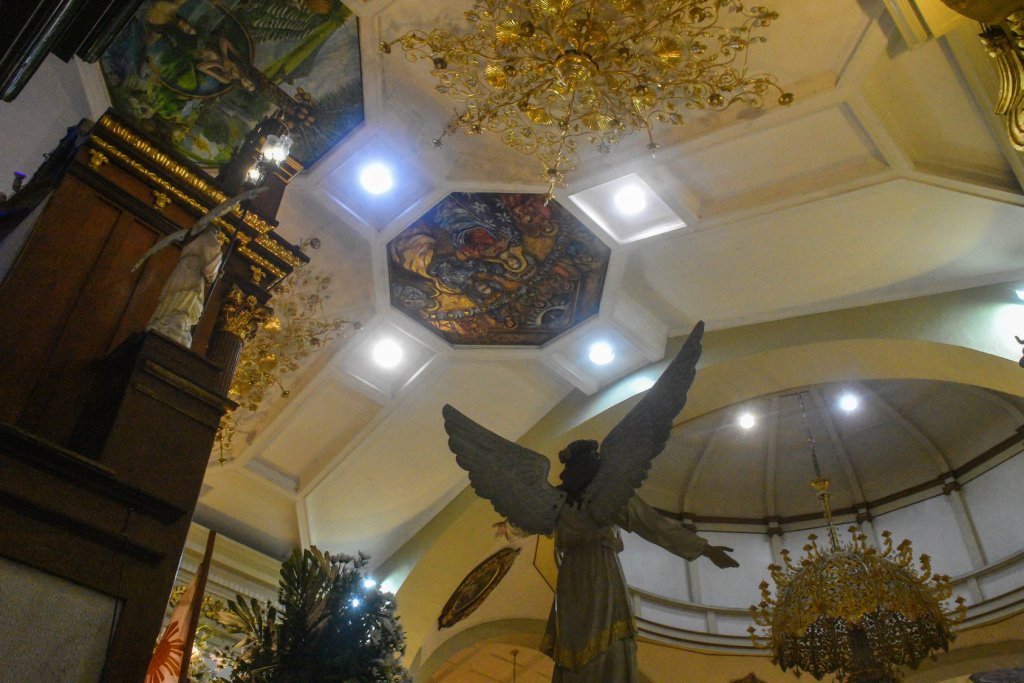
Photo by author, Mt. St. Paul, La Trinidad, Benguet, 2020.
Your words today, O God,
are so Fatherly - comforting
and reassuring of your great
promises of redemption and
liberation from sin and miseries;
your words are so "homey" too -
help us this Season of Advent to find
our way back home to you, O loving
God our Father!
Inasmuch as your words today
also speak of seeing and hearing,
make us feel at home first with
our very selves, to be at home with
who we really are, especially with our
past that no matter how dark or
painful life may have been, we are loved
most specially by you - no ifs, no buts.
Bring us home to you, Father, free from
any shame at who we really are!
Thus says the Lord God: but a very little while, and Lebanon shall be changed into an orchard, and the orchard shall be regarded as a forest! On that day the deaf shall hear the words of a book; and our of gloom and darkness, the eyes of the blind shall see. The lowly will ever find joy in the Lord, and the poor rejoice in the Holy One of Israel. Now Jacob shall have nothing to be ashamed of, nor shall his face grow pale.
Isaiah 29:17-19, 22
I wonder, Lord, how so often
I feel one of those two blind men
who have followed you into your
house - of how you first lead me into you,
into your presence, into your love
and mercy and forgiveness before
you make me see and hear again.
Thank you dear Jesus for always
coming to us even if so many times
we do not see nor notice you passing by
especially through others; grant us the
zeal of St. Francis Xavier in reaching out
to others specially this season amid the
pandemic; may we try to see you among
one another as we listen to each one's
cries of pains and joys.
Most specially, let us keep our eyes
and ears and hearts open like St. Francis
Xavier who always believed in your
presence and providence even in the most
difficult and alienating situations
in life because he has always been
at home with you.  Amen.
The Lord Is My Chef Daily Recipe for the Soul by Fr. Nicanor F. Lalog II
Thursday in the First Week of Advent, 02 December 2021
Isaiah 26:1-6   ><)))*>  +  <*(((><   Matthew 7:21, 24-27
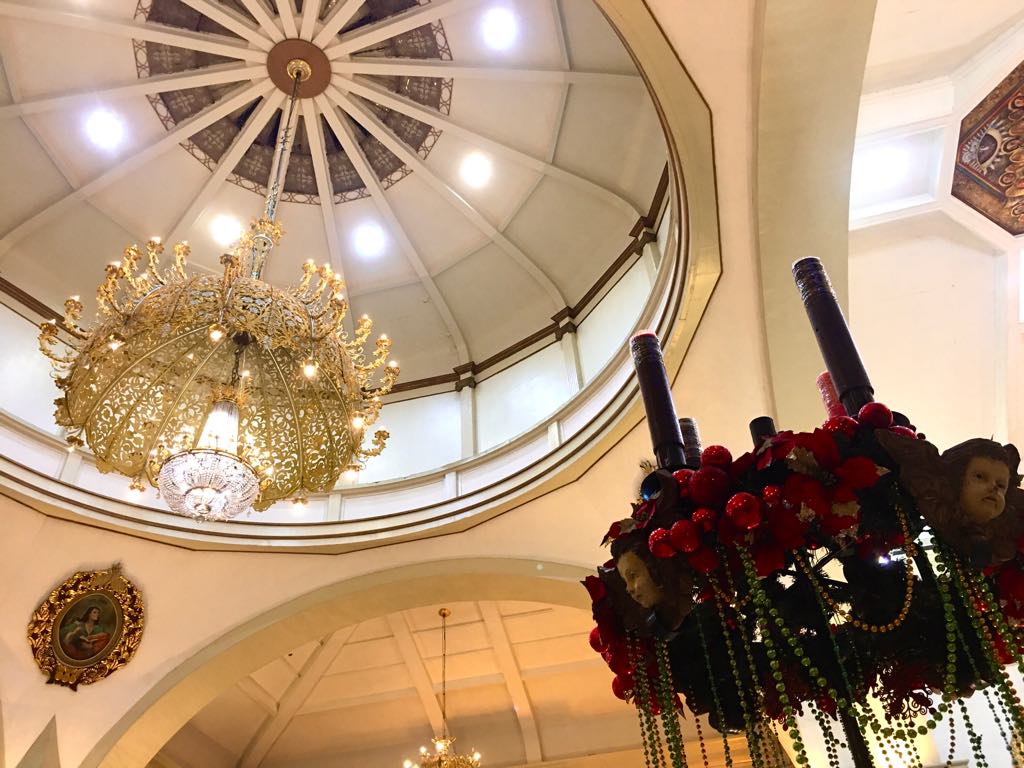
Photo by author, Malolos Cathedral, 2018.
Jesus said to his disciples: “Not everyone who says to me, ‘Lord. Lord,’ will enter the Kingdom of heave, but only the one who does the will of my Father in heaven.”
Matthew 7:21
Dearest Jesus,
how must I call out to you?
Not merely with my lips and mouth
but most specially with my heart
and soul as I stretch my arms,
reaching out to others with my hands!
Thank you for the reminder, Lord;
calling you "Lord" is not enough
if we do not surrender our very selves
to you, if we do not trust in you;
to call on you Lord is to "open up the
gates to let in a nation that is just,
one that keeps faith" (Isaiah 26:2).
Help us to build our house on rock,
one that is built upon you and identifies
with you like a "strong city with walls
and ramparts to protect us"; let us trust
only in you, Jesus, by putting into
action our prayers, witnessing to your
words and teachings for you alone is
the everlasting rock!
True discipleship in you, dear Jesus
is believing in you, trusting in you
alone... not in one's self and abilities,
nor follies.  Amen.
The Lord Is My Chef Daily Recipe for the Soul by Fr. Nicanor F. Lalog II
Wednesday in the First Week of Advent, 01 December 2021
Isaiah 25:6-10   ><]]]'> + ><]]]'> + ><]]]'>   Matthew 15:29-37
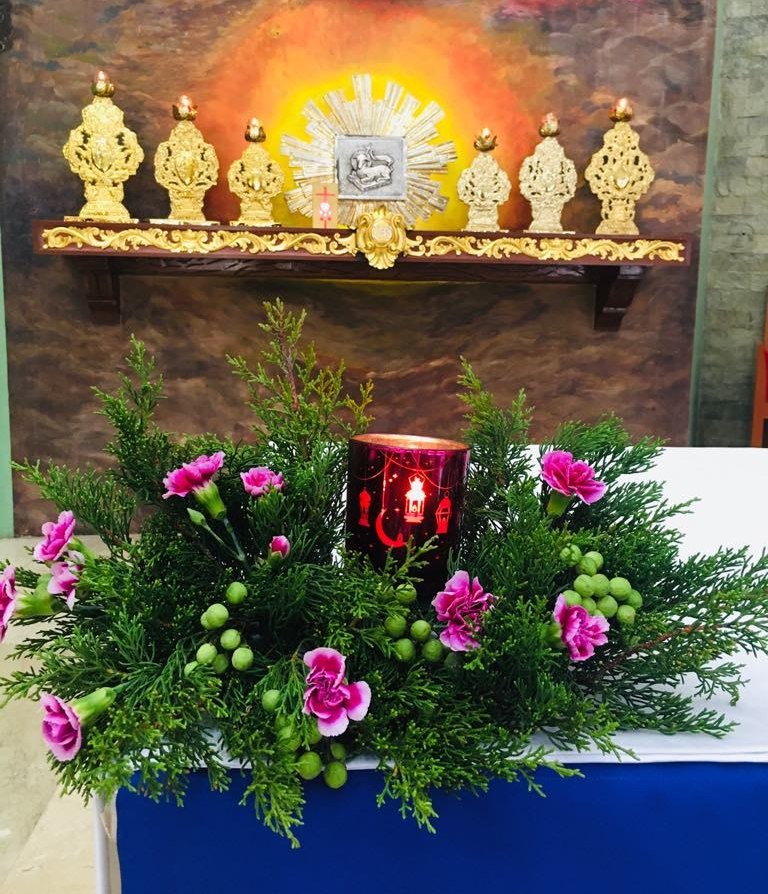
Photo by author, Dampa in Pasay City, 2018.
Praise and glory to you,
our loving God and Father,
for the abundant blessings
you have bestowed upon us
this 2021 even in the midst of
many sufferings brought by
the COVID-19 pandemic.
As we look back to the past
eleven months and see how far
we have come to this first day
of the merry month of December,
one thing remains clear:  you are
a God of abundance, you always
have so many things in store for each
one of us but unfortunately we always
fail to see or even recognize them at all;
worst, with your abundant blessings,
we are always in need with our mentality
so focused on scarcity.
The problem is with us, dear God;
your promise to Isaiah to feast us
on "juicy, rich food" and "pure,
choice wines" have long been fulfilled
in the coming of Jesus Christ your
Son who comes in every here and now
and would surely come again
at the end of time.
Destroy the "veil that veils" us and
the "web that is woven over" us
so we may find Jesus silently and
subtly working among us, right in our
midst; let us believe so we may see him
to enjoy your abundant blessings found
in him in the first place!
The disciples said to him, “where could we ever get enough bread in this deserted place to satisfy such a crowd?” Jesus said to them, “How many loaves do you have?” “Seven,” they replied, “and a few fish.”
Matthew 15:33-34
Come, Lord Jesus, fill us with
your presence and peace and grace,
most specially with your pity
and mercy for those in need
so that we may find the abundance
we have always have in you.
Amen.
The Lord Is My Chef Daily Recipe for the Soul by Fr. Nicanor F. Lalog II
Monday in the First Week of Advent, 29 November 2021
Isaiah 2:1-5   ><]]]]'> + <'[[[[><   Matthew 8:5-11
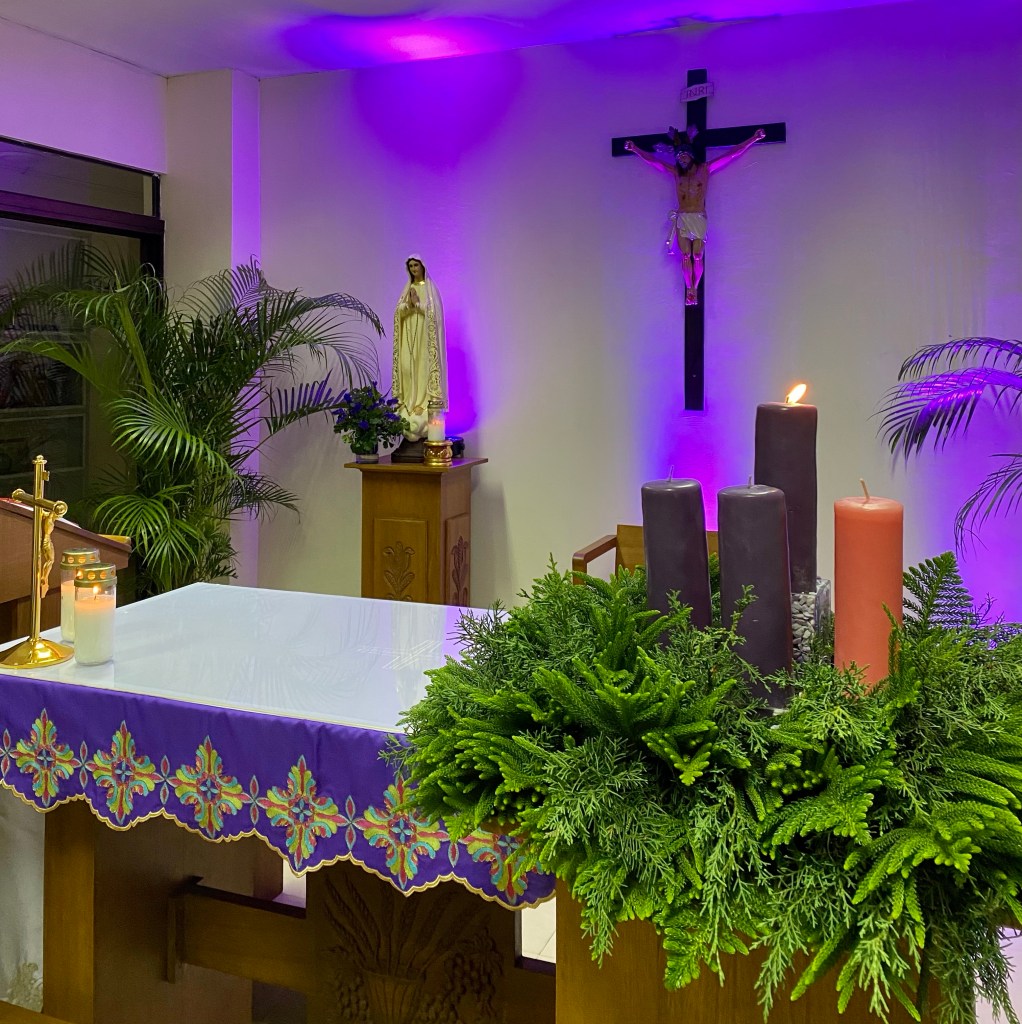
Photo by author, Basic Education Department Chapel, Our Lady of Fatima University, 28 November 2021.
Praise and glory to you,
loving God our Father in heaven
in giving us your beloved Son
Jesus Christ who had come,
now comes, and would come again
at the end of time.
In him you have fulfilled your promised
liberation and establishment of a "temple
as the highest mountain and raised above
the hills" where "all nations shall stream
toward it and many peoples shall come"
(Isaiah 2:2-3) to worship you and follow
your path.
O house of Jacob, come, let us walk in the light of the Lord!
Isaiah 2:5
As Christians, we still have a lot
of work to do to bring the spirit of
Jesus Christ and his Gospel into the
world to make this more humane,
where peace and justice reign;
remind us that Christmas is more
than mere celebrations and parties
or shopping and gift-giving.
In this Season of Advent, teach us to
reflect on the real meaning of your
coming, dear God, in Jesus who became
human like us to live and work among us;
Christ has not failed in his mission -- it is
us who have done so little to carry on,
to continue what he had began like bringing
healing and comfort to those afflicted and
suffering, joy and forgiveness to those losing
hope in the face of many sins and evil.
It is true, O Lord, that "we are not worthy to
have you enter under my roof but only say
the word and we shall be healed" (Matthew
8:8); let us listen and respond to your
invitation and calls, Jesus, filled with faith like
that centurion so that eventually, your Kingdom
may become a full reality among us.  Amen.
The Lord Is My Chef Sunday Music by Fr. Nick F. Lalog II, 28 November 2021
Photo by author, sunrise at Lake of Galilee, Israel, 2017.
A blessed happy New Year, everyone!
It is the first Sunday of Advent, the start of another year in our Church calendar as we officially prepare for the coming Christmas these next four Sundays. And that is why we have chosen this 1973 music by Sergio Mendes and his Brasil ’77 for this Sunday, “Hey, Look At the Sun”.
From their third studio album called “Love Music”,Hey Look At The Sun sounds so personal with that Hey! – which is close with the spirit of Advent when Jesus calls us to be vigilant for his Second Coming (https://lordmychef.com/2021/11/27/beginning-with-the-end-in-sight/).
Sometimes I wonder if sunrise happens only once or twice a year, maybe every nation would stop and pause on those days so that everybody could see the beauty and charm of life every morning brings with the rising of the sun.
It is my favorite time of the day, of catching the rising sun that makes me feel so alive.
And so loved.
all of my life there were things i wanted to do but they all change the moment i set my eyes on you the magnet is on that attracted me to you there’s something inside i just can’t explain but now i know what i must do
hey look at the sun it’s fin’lly shining on my life shining on my life and it’s because of you it’s finally shining on my life for me and for you
Sergio Mendes and his lovely singers were suave and sophisticated, so to speak. Their songs are very inviting and melodious as they fused bossa nova with jazz and funk. Most of all, their lyrics – even the ones they covered – always touched on the human experience of love.
In Hey Look At the Sun composed by Nelson Angelo which was covered a decade ago by local artist Sitti, the main character speaks of how everything changed in her life after discovering love in a man who suddenly came to her life. Everything changes in our lives when we love and when we are loved.
This is the reason Jesus tells us in the gospel this Sunday to “beware that your hearts do not become drowsy from carousing and drunkenness and the anxieties daily life” today along with St. Paul in the Second reading” (Lk.21:34), meaning, to love more the other person not only our very selves focused on material things.
To wait for his Second Coming at the end of time means to remain in loving service for one another; hence, the need for us to change our ways to rediscover love by rediscovering the next person to us as brothers and sisters in Jesus.
all of my life i’ve wondered round time and again but i’ve never thought that i am searching with to an end and then you came along and my world of love began so now i’m gonna change my ways you’re all i want you’re all i need
hey look at the sun it’s fin’lly shining on my life shining on my life and it’s all because of you it’s fin’lly shining on my life for me and for you
A blessed week ahead of everyone!
*We have no intentions of infringing into the copyrights of this music and its uploader except to share its beauty and listening pleasure.
The Lord Is My Chef Sunday Recipe for the Soul by Fr. Nicanor F. Lalog II
First Sunday of Advent-C, 28 November 2021
Jeremiah 33:14-16 ><}}}*> 1 Thessalonians 3:12-4:2 ><}}}*> Luke 21:25-28, 34-36
Photo by author, Malolos Cathedral, 2019.
Blessed happy New Year, everyone!
Today we are celebrating a new calendar year in the Church with this First Sunday of Advent. From the Latin word adventus meaning arrival or coming, it was adapted by the early Christians from the Roman practice of preparing for the visits or assumption to power of their emperors then considered as “gods”.
It is most fitting that we prepare not only outside but most especially inside our very selves for the coming of the true God and King of kings, Jesus Christ our Lord and Savior!
Hence, Advent not only opens but also defines our whole liturgical year that is centered on Christ who has come, who comes now and will come again in the end of time. This is the reason why our gospel this Sunday is looking towards the end of time at the beginning of our Church calendar.
The three comings of Jesus Christ
Advent has two aspects: beginning today the First Sunday of Advent until December 16, all readings and prayers are oriented towards the Second Coming of Christ; from December 17 to the evening of the 24th, our focus shifts to the first coming of Jesus at Christmas.
Between these two comings of Jesus that the Season of Advent reminds us is what St. Bernard of Clairvaux called as the Lord’s “third coming” – his coming everyday into our lives, especially in the celebration of the Sacraments, particularly the Holy Eucharist.
Photo by author, 2019.
Again we find that tension of his being here but not yet. It is in that between his first coming more than 2000 years ago and his Second Coming which no one knows exactly when where we are situated daily, making everyday Christ’s Advent.
“And then they will see the Son of Man coming in a cloud with power and great glory. But when these signs begin to happen, stand erect and raise your heads because your redemption is at hand.”
Luke 21:27-28
It may sound frightening to hear Jesus spoke of the signs of his coming but at closer look and reflections, we find it filled with joy because our redemption is at hand!
Yes, every ending forebodes destruction and passing of the old but that is in order to give way to something new, something better which Jesus had promised his disciples then and us now.
The grace of this season of Advent is the reawakening of our hope in the salvation that has already come in Jesus, who still comes now, and will surely come again in the end of time which is happening in every here and now.
That is why, there is also the sense of urgency and vigilance this Advent.
We are already living in the end-time Jesus had predicted as we have seen in the wars and conflicts going on among nations, the natural calamities happening around the globe made worst by the climate change plus this pandemic we are now having. But, it does not mean the creation will end soon as portrayed in many Hollywood films because these signs are calls for us to be ready and prepared for the final end that will prelude the new beginnings of all.
The days are coming, says the Lord, when I will fulfill the promise I made to the house of Israel and Judah… In those days Judah shall be safe and Jerusalem shall dwell secure; this is what they shall call her: “The Lord our justice.”
Jeremiah 33:14, 16
Photo by author, 2018.
Meeting Jesus in Advent
Notice how Jeremiah’s prophecy so “pregnant” with meanings: more than the coming of the promised Messiah is the radical newness of the whole creation. Judah and Jerusalem, the main province and city of Israel at that time will be transformed, referring to John’s vision in the Book of Revelation of “new heaven and new earth”.
As we have said, Advent not only opens our liturgical calendar but also defines the whole year which is the daily coming of Jesus who had come over 2000 years ago and will come again at the end of time which nobody knows.
Meanwhile, in this “third coming” of Jesus everyday, we find God working in him silently and subtly in the human history and right in our individual lives.
It is in our faithful waiting when Jesus Christ comes. It is the beauty and joy expressed by Jeremiah’s words “the days are coming” that assure us no matter how dark and bleak are our days, despite all the destructions and even death around us, the days are coming when we see everything getting better because God never stops working in our midst in Jesus, the Emmanuel.
“Beware that your hearts do not become drowsy from carousing and drunkenness and the anxieties of daily life, and that day catch you by surprise like a trap. For that day will assault everyone who lives on the face of the earth. Be vigilant at all times and pray that you have the strength to escape the tribulations that are imminent and to stand before the Son of Man.”
Luke 21:34-36
Last Sunday in our celebration of the Solemnity of Christ the King we have reflected how Jesus spoke of the “truth” of his kingdom being among us, of how he had made us into his kingdom which is the reason why he was born and came into the world to testify to this truth (Jn.18:37).
See now the clearer picture of our life, of our time: we start our Church calendar preparing for the coming of Jesus our King and we end every year with the celebration of Christ the King. And we begin each new year with the end in sight of his Second Coming.
On this season of Advent, we are reminded how in our joyful waiting through prayers especially in the celebration of the Holy Eucharist that Christ’s presence is little by little being unveiled, unfolding before us, and being revealed.
It is a call for us of deepening our prayer life to truly experience Christ’s coming in our daily life. This new year in the Church, St. Luke will be our guide in our Sunday readings during the Ordinary Time; one distinction of his gospel is his portrayal of Jesus in prayer always.
Jesus comes to us first of all when we pray, when we enter into communion with him, when we listen to his voice and follow his instructions. In prayer, we are filled with God, allowing him to work his wonders in us and through us and thus make Christ’s coming a daily reality.
That is how prayer truly leads to holiness: when we are filled with God, our prayers are translated into a life of kindness and acceptance, mercy and forgiveness and most of all, of loving service to one another especially those in need.
There will always be sins and shortcomings on our part but in prayers and vigilance, we slowly “increase and abound in love for one another… strengthening our hearts to be blameless before our God our Father at the coming of our Lord Jesus with all his holy ones. Amen. (1 Thess. 3:12,13)
A blessed happy new year again and a more blessed first week of Advent to you!
The Lord Is My Chef Simbang Gabi Recipe for the Soul-9
by Fr. Nicanor F. Lalog II
Thursday, Advent Week IV, 24 December 2020
2 Samuel 7:1-5, 8-12, 14, 16     >><)))*>  +  <*(((><<     Luke 1:67-79
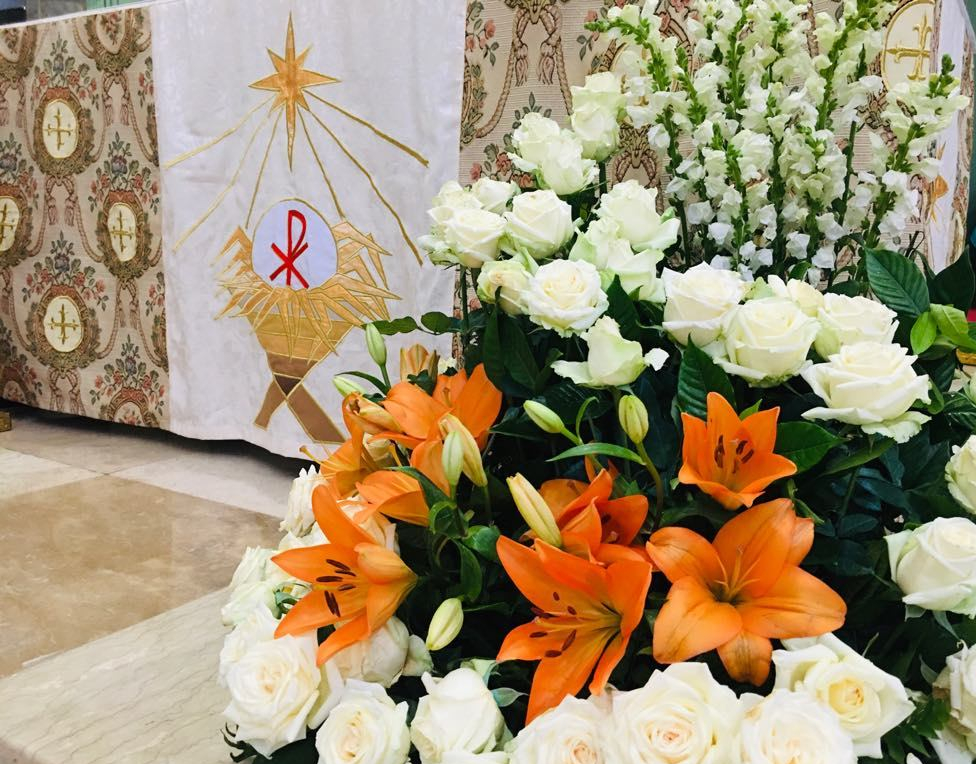
Photo by author, altar at our sacristy, 19 December 2020.
One thing that have really made this pandemic so bad and so sad is the lack of tenderness of our many officials to the people they are supposed to serve. Consider all these pains and inconveniences they have caused us the public from the fatal shooting of that Marawi veteran in Quezon City to the detention of Mang Dodong at the height of the lockdown to the closure of the largest network in the country mid-year then on to stupidities of first the motorcycle barrier, then the closure of U-turn slots at EDSA capped by the insane RFID at NLEX and now the inhuman shooting of mother and son by an off-duty policeman.
As one of my friends wrote on his FB page last April, “bakit kung kailan panahon ng pandemya na dapat magtulungan at magmahalan saka puro karahasan?” (why all the the violence happening during pandemic when we are supposed to be helping and more loving to one another?).
What a year indeed of natural calamities worsened by some public officials so detached from the sufferings of the people.
And that, my friends, is why we have to celebrate all the more – meaningfully – Christmas.
God is perfect and cannot suffer; hence, He sent us His only Son Jesus Christ to be one with us in our sufferings and miseries, to suffer with us – cum passio – express His compassion.
On this last day of our novena to Christmas, we see how Zechariah comes into full circle singing praises to God (called Benedictus in Latin) after being forced by the angel into full silence becoming speechless when he doubted God’s gift of a child to him and his wife Elizabeth.
Zechariah his father, filled with the Holy Spirit, prophesied, saying: “Blessed be the Lord, the God of Israel; for he has come to his people and set them free. He has raised for us a mighty Savior, born of the house of his servant David.”
Luke 1:67-69
Photo by author, Advent Week IV, 20 December 2020.
Jesus already present among us in the coming of John
During the Visitation of the Blessed Virgin Mary, Luke never mentioned Zechariah around the house so that Elizabeth and her baby in her womb were the only ones were filled with the Holy Spirit upon hearing Mary’s greeting.
Now, after naming his son “John”, Luke tells us how Zechariah was filled with the Holy Spirit too that he prophesied the meaning of the coming of his son as “prophet of the Most High” in 1:76.
See the three verbs he used after blessing God in his canticle called Benedictus: “Blessed be the Lord… he has come to his people and set them free. He has raised for us a mighty Savior, born of the house of his servant David.” The verbs are all in the past tense when in fact, what he was saying was supposed to be of what would happen after the birth of John, the coming of Jesus Christ.
Here we find the complete faith and trust of Zechariah to the plan of God like Mary in her Magnificat. Zechariah had seen something so big, something momentous taking place while still in the midst of darkness of his time and world just like us in this pandemic and calamities, callous officials in government and police.
Dear friends: Jesus has come, had set us free (saved us), and had risen to work all His wonders! Let us keep our faith and hope like Zechariah that God has already started working in our favor to turn the tide and soon, things will surely get better if we remain consistent to our response to His calls, standing for life and dignity of every person through whom Jesus comes, for what is true and just.
Photo by author, Church of St. John the Baptist at Ein-Karen, Israel (2019).
From the hand of God into the heart of God
Yesterday we reflected on how we have to allow ourselves to be “the hand of God”, to let Him do His work among us through our hands. Today in Zechariah’s Benedictus we find a movement from the hand of God to His very heart in Jesus Christ our Savior.
“In the tender compassion of our God the dawn from on high shall break upon us, to shine on those who dwell in darkness and the shadow of death, to guide our feet into the path of peace.”
Luke 1:78-79
After seeing the coming of the Christ in the birth of his son John, Zechariah now summarizes to us the very essence of Jesus our Savior, of God Himself: tender compassion or in the original Greek, splaghna or “tender mercy” of God.
It is not just compassion which is to suffer with us but at the same time be filled with tenderness that one is so moved to reach out, to do something by going down with the one suffering.
Like courage, mercy is a movement in the heart called misericordia in Spanish from the Latin mittere, meaning to be moved, to be stirred. It is something dynamic, not static. It is a deep feeling that moves toward someone in pain and suffering. An identification of Jesus with every person going through so much hardships and sufferings in life.
Zechariah’s heart is no longer hardened with negativity and cynicism – it was so stirred by God that he mentioned His tender mercy or compassion because he had personally felt it as he recovered his voice and speech. With the birth of John, he now believes that God’s love for his suffering people is deep and personal. As we say in Filipino, “tagos o sagad sa buto” which may be translated as “through and through”.
And that is perhaps one of the things we sorely miss so much these days from everyone, tenderness. The tender compassion, tender mercy of Jesus. Recall how during His ministry all four evangelists would narrate how Jesus was moved with pity and compassion to the people who were lost, tired and sick “like sheep without a shepherd” that no matter how tired He may be, He would always find time to teach them, heal their sick, and even feed them.
That is the mercy of God that Jesus had brought forth to us in His coming, experienced by Zechariah himself that he could foresee its coming at the birth of John.
Photo by author, Advent Week IV, 20 December 2020.
We priests and religious pray the Benedictus in our morning prayer called lauds (Latin for praises). It is so fitting because at the start of each day, that must be the one thing clear with us always – that the Lord is come to save us, to forgive us, to love us.
One saying I have always loved mentioning in my talks to people came from an anonymous writer I found on the table of a good friend long before I became a priest. It says: “If you have love in your heart, you have been blessed by god; if you have been loved, you have been touched by God.”
That is the Benedictus, the song of every faithful disciple of Jesus introducing His coming, His birth. So many people have forgotten God, do not know God, refused to believe in God because many among us He had lavishly loved have refused to share His love with others.
Have a blessed and meaningful Christmas! Thank you for following our reflections. Share it if you have been blessed.
The Lord Is My Chef Simbang Gabi Recipe-8 for the Soul
by Fr. Nicanor F. Lalog II
Wednesday, Advent Week IV, 23 December 2020
Malachi 3:1-4, 23-24     >><)))*>   +   <*(((><<     Luke 1:57-66
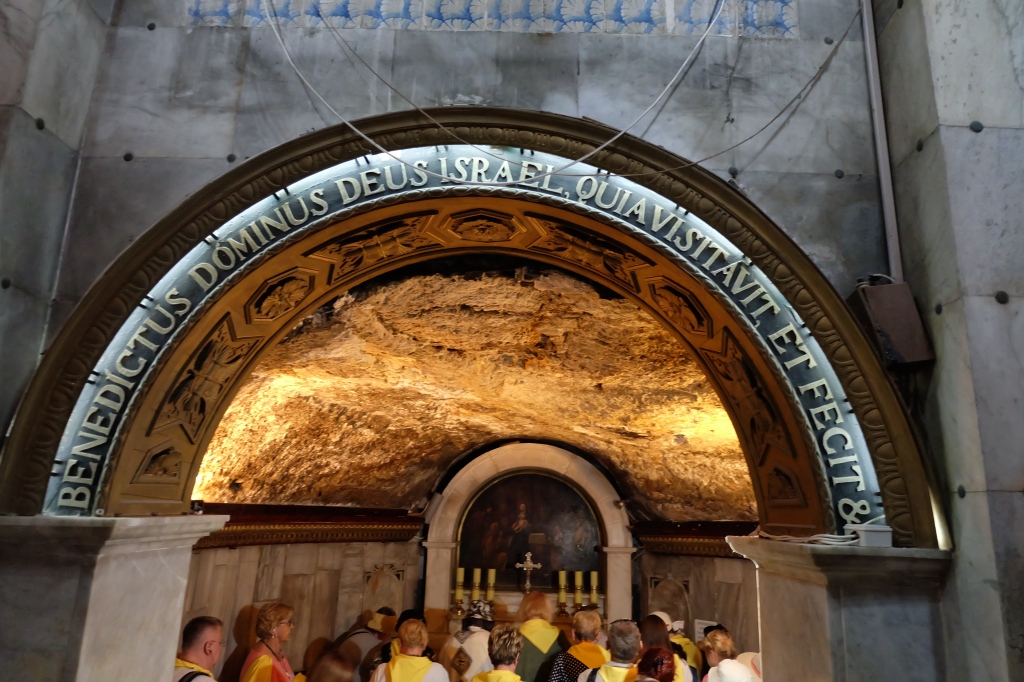
Photo by author of the entrance to the site believed to be where the Lord’s Precursor was born below the side altar of the Church of St. John the Baptist in Ein Karen, Israel (2019).
We are almost into the completion of our nine-day novena for Christmas as we heard today the story of the birth of the Lord’s Precursor, John the Baptist. It is a story narrated so simple by Luke but filled with beautiful meanings specially for us today in this time of the pandemic.
First thing we see is how Zechariah’s speech was restored upon declaring the name of his son is “John”:
He asked for a tablet and wrote, “John is his name,” and all were amazed. Immediately his mouth was opened, his tongue freed, and he spoke blessing God.
Luke 1:63-64
Luke did not tell us what kind of praise did Zechariah speak about God when his speech was restored but here we find that basic truth in our lives that for every blessing we receive from the Lord, right away – immediately! – we must praise and thank God first.
Moreover, this scene shows us the good effect of the “imposed quarantine” on Zechariah when he was made deaf and speechless after doubting God’s gift of a child to him and his wife Elizabeth during the annunciation by the angel while incensing the Holy of holies in Jerusalem.
God restored the power of Zechariah to speak again and greatly renewed him that this time, he had become obedient to the Father to his plan. In a sense, Zechariah was not merely freed to speak again but most of all, he was freed to believe and trust in God again!
As we have reflected last Saturday morning, Advent is quarantine. So many times in life, we have to step backwards, be silent to listen to God and just let Him do His work in us! Sometimes we think of so many things that are not really necessary and has nothing to do with God’s plans or work. With Zechariah able to speak now, he shows us that in the exercise of our powers we must first get in touch with God how to use His gifts to us.
This we shall see in our second point: allowing God to use us as His hand.
Photo by author, dome of the Church of St. John the Baptist at Ein-Karen, 2019.
Then fear came upon all their neighbors, and all these matters were discussed throughout the hill country of Judea. All who heard these things took them to heart, saying, “What, then, will this child be?” For surely the hand of the Lord was with him.
Luke 1:65-66
From rejoicing at the birth of Zechariah and Elizabeth’s son, their neighbors now moved to being amazed when the child is named “John” that coincided with the restoration of his father’s ability to speak.
Luke tells us how it was such a big thing, maybe so “viral” and “trending” like today that everybody was discussing it. They must have felt God so near, almost there that Luke used an Old Testament expression, “For surely the hand of the Lord was with him”.
It is a beautiful expression indicating power too, just like the ability to speak.
Our hands are so powerful that we are able to move and do so many things because of these.
To say “the hand of the Lord was with him” is to portray the image of God’s immense power, His omnipotence, of being able to do whatever He deems needed to life on earth.
In the Old Testament when Elijah was being pursued by the soldiers of Queen Jezebel after he had shamed the priests of baal for failing to light a pile of firewood for worship, the prophet escaped by running beyond human ability considering his old age because “the hand of the Lord was on Elijah” (1 Kgs. 18:46).
Sometimes, the “hand of the Lord” can be scary as it means judgment or punishment from God like when King David disobeyed God when he ordered a census of Israel to find out how many men can fight in their wars, doubting the power of the Lord. David was given with three options for his punishment by the seer Gad: a natural disaster or a victory by his enemies, or a time of God’s judgment. David chose the third option, saying “I am i dire straits. But I prefer to fall into the hand of the Lord, whose mercy is very great, than into the hands of men” (1Chronicles 13:21).
Photo by author, Chapel of the Holy Family, Sacred Heart Spirituality Center in Novaliches, QC (2014).
The late Jaime Cardinal Sin of Manila used to tell of the story about the hand of God: he said sometimes, the hand of God would “spank” or hit us with pains and trials in life to discipline us and make us strong; sometimes, the same hand of God would caress and soothe our tired bodies or give us that proverbial pat on the shoulder to affirm us. But what is most important to remember according to Cardinal Sin is the fact that whether we are being disciplined or touched by the hand of God, it is always loving and merciful, most of all grace filled.
The recent news of that trigger happy cop who brutally shot and killed Sonia and her son Antonio in Tarlac recently is a reminder to us all most especially this Christmas in the time of pandemic, of the need for us to let the hand of God take control of our lives, guide us to life through more patience, love, kindness, and understanding.
It seems that so often, whenever we let our hands do everything, they always go out of control like our mouth and lips that lead us to more disasters and even deaths.
Beginning this Christmas, may the hand of God lead us back to Him and with each other.
Let us imitate the praying hands, of two hands touching each other but always creating a space between. That space is for Jesus born in Bethlehem 2000 years ago, asking us everyday to take Him into our hands to care for Him, to protect Him through one another.
The Lord Is My Chef Simbang Gabi Recipe-7 for the Soul
by Fr. Nicanor F. Lalog II
Tuesday, Advent Week IV, 22 December 2020
1 Samuel 1:24-28     >><)))*>   +   <*(((><<     Luke 1:46-56
Photo by Marc Angelo Nicolas Carpio, 20 December 2020.
When I was about to enter the high school seminary, an aunt would always comment on our way to school how I would become a priest when I am a big fan of rock and roll music. You know, the usual stuff ever since with old folks about rock music as evil and everything…
Looking back, I just imagine what if I had told her and my other relatives the meaning of Steely Dan that is my most favorite band? Most likely they would have fainted! And I would tell tell them too that I am the only priest who had played Stairway to Heaven in Radio Veritas where I used to co-anchor a show, playing only good, old rock n’ roll to the delight of many listeners despite protests from management.
Lately I have been blogging every week linking secular music with the Sunday gospel that had enabled me to reach new and younger generations I hope had rediscovered Jesus in the music I had offered them.
The German philosopher Arthur Schopenhauer had said that “music is the food of the soul” and it is very true for it transcends cultures and languages that even if you do not understand the lyrics, music always touches the soul.
Meanwhile, the great English playwright William Shakespeare is said to tell his audience at the start of his plays that “If music be the food of love, play on.” That’s very beatiful. Like love, music is best served with another person; when we sing, it is always to pour our hearts out. We let others hear our song even if we sing alone because that is what music is all about – it is meant to be shared.
This is the reason why Mary sang her Magnificat during her Visitation of Elizabeth, not by herself in Nazareth after the angel had left after announcing to her the birth of Jesus.
Mary said: “My soul proclaims the greatness of the Lord; my spirit rejoices in God my savior. For he has looked upon his lowly servant. From this day all generations will call me blessed: the Almighty has done great things for me, and holy is his Name.”
Luke 1:46-49
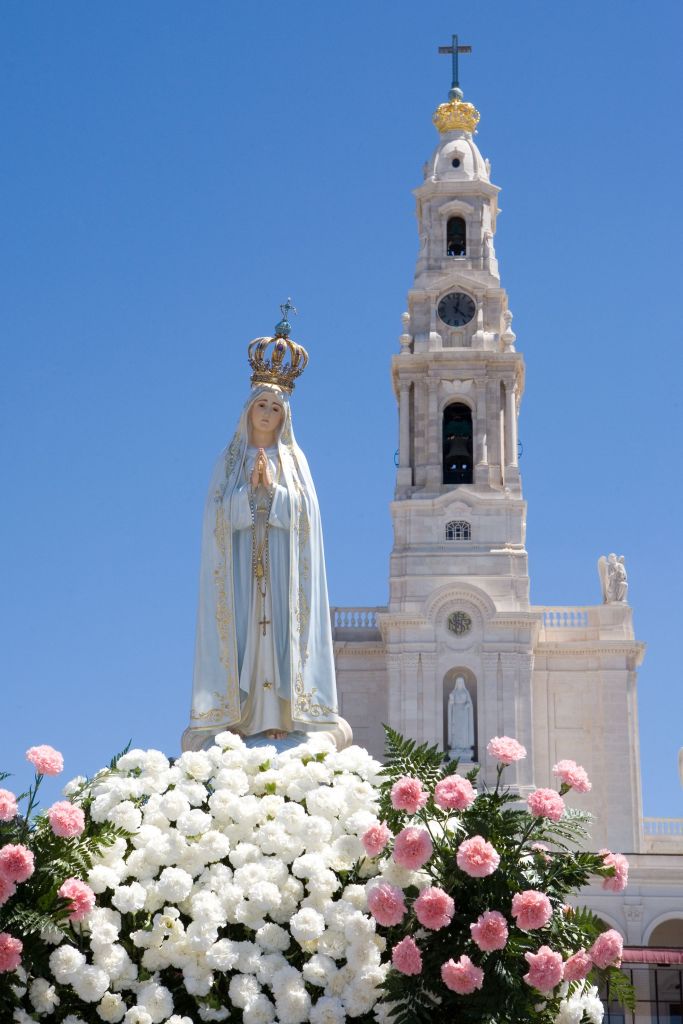
Photo from Pinterest, Our Lady of Fatima Centennial in Portugal, 17 May 2017.
Mary praised and thanked God with her “Magnificat”
Recall how Elizabeth praised Mary twice and her baby Jesus in the womb once yesterday at the Visitation. Naturally for us, when we are praised we always return it by praising too whoever spoke nicely of us.
But that was not the case with Mary. She took the occasion to praise and thank God for all His goodness and salvific work in her and in Elizabeth. Like Hanna in the first reading and responsorial psalm today who sang praises to God in giving her a son in the prophet Samuel, Mary while filled with the Holy Spirit sang this canticle, narrating how God worked in her and through her.
Our lives is a song of thanksgiving always to God who never stops doing great things for us not to make us famous but to bring His divine will into fulfillment. Mary affirmed this when she admitted her own blessedness, “From this day all generations will call me blessed: the Almighty has done great things for me, and holy is his Name.”
Yesterday we have reflected that true blessedness is to trust in God. Likewise, Mary added another dimension in what is to be blessed before God and that is being His servant, His slave or in her very words to the angel at the annunciation, “Behold, I am the handmaid of the Lord. May it be done to me according to your word.”
A handmaid is the feminine form of “slave” but more than being poetic in her identification as a female slave of God, Mary through her Magnificat showed us a glimpse of the lives of the early Christians at that time who were considered “weird” and “odd”, even “bizarre” among the Roman pagans who could not understand why they worshipped Jesus Christ they saw as “a crucified criminal”.
Worst of all for the pagans, they could not understand why the early Christians who were mostly poor would give themselves to Jesus in loving service to others like the sick, the elderly, the hungry, widows and orphans and those living in the margins.
In fact, the Roman historian Pliny recorded in his writings how during the persecution the emperor’s soldiers rounded up Christians in every town and city by looking for anybody doing good, serving the poor and needy! It is something to think about for us Christians today: Would any one of us be arrested because we are doing something good like serving the less fortunate?
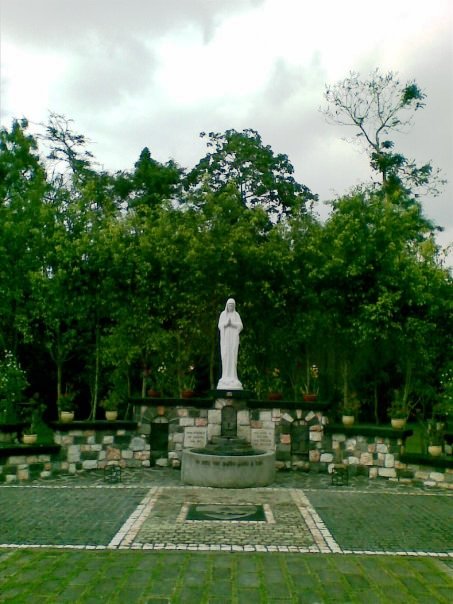
Photo by author, Our Lady of the Poor at Boys Town in Cavite (2009).
Mary, the first model disciple, the first to live out the Gospel
In singing her blessedness by God, Mary had assumed her being the spokeswoman of the early Christians, the poor ones or anawim of Israel who were truly poor materially, trusting entirely on God.
Here lies her challenge to us who love to sing her Magnificat: do we allow God to work in us His salvation?
“He has mercy on those who fear him. He has shown the strength of his arm, and has scattered the proud in their conceit. He has cast down the mighty from their thrones and has lifted up the lowly. He has filled the hungry with good things, and the rich he has sent away empty. He has come to the help of his servant Israel, for he remembered his promise of mercy…”
Luke 1:50-54
Again, we find many similarities in the Mary’s Magnificat and Hanna’s song we heard in the responsorial psalm. But, more than that is the striking similarity of Magnificat with the Beatitudes to be preached by Jesus according to Luke.
In Matthew’s gospel, there are eight Beatitudes preached by Jesus at his sermon on the mount; Luke narrated it differently by citing only four Beatitudes he paired with four woes that Jesus preached in His sermon on the plain (this is due to the different audience Luke and Matthew addressed):
Blessed are you who are poor… Blessed are you who are now hungry… Blessed are you who are now weeping… Blessed are you when people hate you…
Woe to you who are rich… Woe to you who are filled… Woe to you who laugh now… Woe to you when all speak well of you…
Luke 6:20-26
Magnificat is the Gospel in a nutshell. See the works of God cited by Mary perfectly jibing with the Beatitudes of Jesus. Here we find again how Luke has shown us the consistency of Mary as a disciple of her Son Jesus Christ by witnessing to His teachings, living them out for which she was crowned as Queen of heaven and earth.
This is the reason why I love so much the image of Fatima and of Banneux known as Lady of the Poor with Mary portrayed as so simple yet so lovely and beautiful. What a scandal for the Church in our time with all those lavish processions and coronations of the Blessed Virgin Mary where the poor are left out, becoming more of a social function among the rich and famous. What a shame most especially amid the pandemic when some parishes can spend so much fortune in these rituals that look more as a show which the Blessed Virgin would definitely disapprove. Keep in mind how Mary identified herself as “handmaid of the Lord” — do away all those pomp and pageantries please!
Every night, we priests and the religious sing the Magnificat in our Evening prayers to examine ourselves if we have lived out the Gospel message of the Lord, if we have been poor and hungry, if we have allowed ourselves to be used by God to effect His salvation among the suffering.
The same is true with every disciple of Jesus: when we sing the Magnificat or “Ang Puso ko’y nagpupuri”, we have to do some soul searching how consistent we have been as a disciple of the Lord like His Mother Mary.
From the Philippine Daily Inquirer, 24 July 2016.
How sad late yesterday when some people -whether they are trolls or not – had come out expressing support to that cop who brutally shot and killed Sonya Gregorio and her son Anton in their home in Paniqui, Tarlac Sunday afternoon.
How can some people be not affected and even defend or belittle such unspeakable crime of a man supposed to uphold the law, protect civilians?
What had gone wrong with us as the only Christian nation in this part of the world?
Can we sing “Ang puso ko’y nagpupuri sa Panginoon, nagagalak ang aking espiritu, sa aking Tagapagligtas” while we rejoice and defend all forms of brutalities and violence around us?
As we strongly condemn this unspeakable crime and demand justice for Sonya and Anton, let us work hard and pray hardest to imitate Mary to effect change in the society we live in and create by being a voice of the poor and vessel of God’s salvation. Amen.
The Lord Is My Chef Simbang Gabi Recipe-6 for the Soul
by Fr. Nicanor F. Lalog II
Monday, Advent Week IV, 21 December 2020
Zephaniah 3:14-18     >><)))*>   +   <*(((><<     Luke 1:39-45
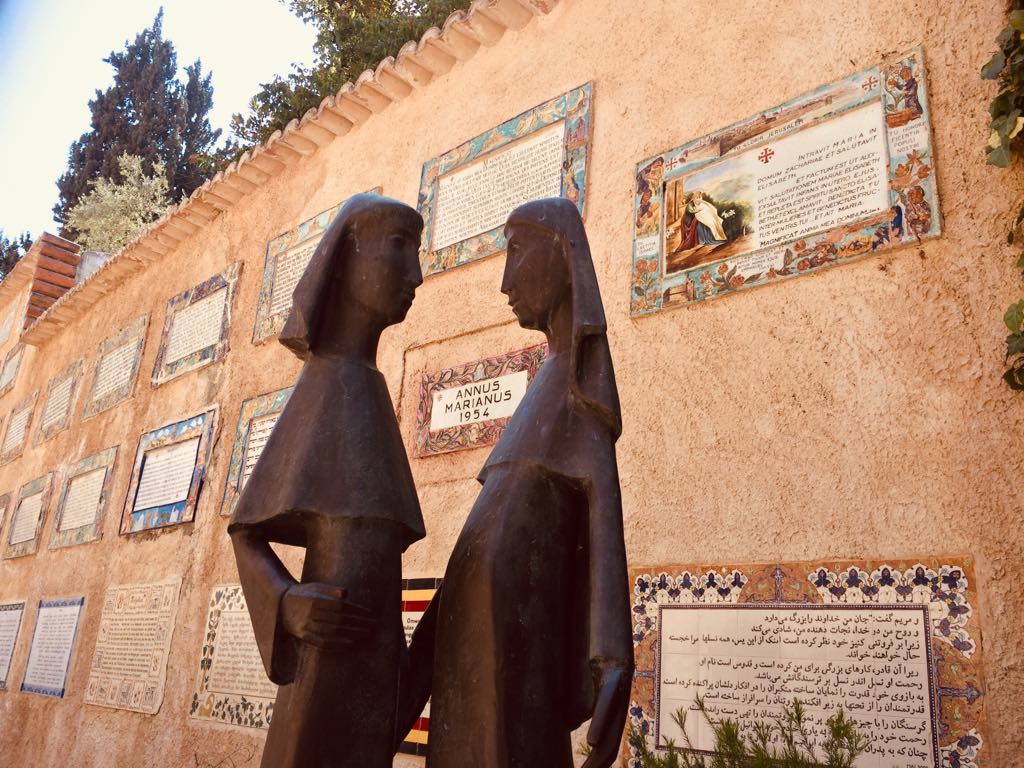
Photo by author, Church of the Visitation, the Holy Land, May 2017.
The Bible rarely tells us conversations between women, except for the Book of Ruth which records to us the story of two women, Naomi and her daughter-in-law Ruth who became the grandmother of King David, and therefore, a kin of our Lord Jesus Christ.
But more rare in the Bible are conversations between two pregnant women, mostly conversations even fights among pregnant mothers and their midwives or rival wives found in the Old Testament. It is therefore so unique is Luke’s account of the Visitation when Mary meets Elizabeth. There must be something so significant for Luke – and for us most especially – in this encounter and exchange.
Mary set out in those days and traveled to the hill country in haste to a town of Judah, where she entered the house of Zechariah and greeted Elizabeth. When Elizabeth heard Mary’s greeting, the infant leaped in her womb, and Elizabeth, filled with the Holy Spirit, cried out in a loud voice and said, “Most blessed are you among women, blessed is the fruit of your womb. And how does this happen to me, that the mother of my Lord should come to me? For at the moment the sound of your greeting reached my ears, the infant in my womb leaped for joy. Blessed are you who believed that what was spoken to you by the Lord would be fulfilled.”
Luke 1:39-45
Women as vessels of God’s blessings
Recall Matthew’s genealogy dominated by the male figures as it was the prevailing culture at that time when women were not really given much attention. But to show the immense power and freedom of God, Matthew mentioned five women who made the coming of Jesus Christ possible.
Most of the women were not really that good whom we would rather describe as a problematique: Tamar pretended to be a prostitute to entice her father-in-law Judah to get her pregnant while Rahab was a real prostitute (a mamasan in fact) at Jericho who helped the spies sent by Joshua before attacking that ancient city; Ruth was a foreigner, not purely Jewish while Bathsheba was the wife of Uriah whom David had killed after she got pregnant with Solomon. And Mary, the wife of Joseph, was found pregnant while still a virgin! (That is what I like most with God – he has a great sense of humor all the time!)
Very interesting with the gospel by Luke is that he got a lot of stories not found in the three other gospels but we find him unique in having a special place for women. He was one of the earliest champions of women in the Church by mentioning many females in his stories to show their important roles in God’s plan for mankind.
Photo by author, frescoes at the Church of the Visitation depicting the Visitation and then the infamous Holy Innocents Day of how an angel helped save the child John the Baptist from Herod’s executioners (2019).
In this story of the Visitation, we find a totally different presentation of women even in today’s world. What do I mean? Recall how during the lockdown the memes of pictures of women meeting with a caption “mga nagbabagang balita” (today’s news headlines) portraying women as rumor mongers or chismosas. Later when classes resumed, another meme circulated of women gathered together exchanging class modules of their children as if to show they are stage mothers.
Luke always presented women so dignified in stature like in the Visitation, so blessed by God.
First thing we notice in the story is how Luke never mentioned Mary and Elizabeth were pregnant. He merely indicated their situation by saying “When Elizabeth heard Mary’s greeting, the infant leaped in her womb” at 1:41 while at the following verse 1:42, Elizabeth proclaims to Mary, “Most blessed are you among women, blessed is the fruit of your womb”. Biblical scholars say that perhaps, Luke wanted to assure his readers that God’s powerful blessings marked both women, over each of whom the Holy Spirit overshadowed them with a child: Elizabeth in her barrenness and old age, Mary in her being a virgin before living with her husband Joseph.
What a display of the power of God so simple, so unassuming!
But the most beautiful part in this conversations by these two great women is the meaning of being blessed. So often when we think of being blessed, especially us Filipinos, it is something more of being “lucky” or “swerte” that means having money to spend and buy things. Sometimes being blessed for us is having achieved something that makes us and our loved ones famous.
The Visitation story tells us something entirely different: to be blessed means to believe in God, that His words would be fulfilled in us like with Mary, “Blessed are you who believed that what was spoken to you by the Lord would be fulfilled” (Lk.1:45).
True blessings
Luke’s Gospel teems with so many occasions of blessings beginning in the infancy narratives up to the Presentation to the temple and then of Jesus pronouncing His blessings especially to those who listen and act on God’s words or those who accept Him as the Christ.
It is at the Visitation where Luke shows us the true meaning of blessedness through Mary because of her faith and trust in God’s word spoken to her by the angel at the annunciation of the birth of Jesus Christ. Her faith makes her a model disciple to be imitated by all followers and believers of her Son Jesus Christ.
And here we find again the artistry of Luke because it is not only Mary who is blessed in the Visitation, but also Elizabeth as another model disciple like the Blessed Mother. Elizabeth was the first to call and recognize Jesus Christ as Lord, “And how does this happen to me, that the mother of my Lord should come to me?” (Lk.1:43).
Photo by author, Advent Week IV, 2020.
See that when Elizabeth heard the greeting by Mary, like when Mary heard the greeting by the angel at the annunciation, it signaled the coming of the messianic age. Pope emeritus Benedict XVI even claims the annunciation is the beginning of the New Testament.
Elizabeth is the first person as far as Luke is concerned to call Jesus “Lord” and the first to call Mary “blessed” whom she will confirm later in her Magnificat, “all generations will call me blessed” (Lk.1:48).
Two women so blessed by God because they both believed in His words, both believed in the Christ still in the womb. Mary and Elizabeth are in fact the first two Christian disciples who showed us the essential task of every disciple: after hearing the word of God and accepting it, we must share it with others not only by repeating it but interpreting it in our very lives that everyone would see it as the good news.
With barely a week left on this final week of Advent, let us ask ourselves how are we going to show to others what we believe happens in Christmas in this time of the pandemic, that true blessedness is not being rich with material wealth but being enriched by a deep and animated faith in Jesus Christ who is Christmas Himself.















 lordmychef.com