The great “crossover”: from our human thoughts to God’s thoughts

The Lord Is My Chef Sunday Recipe for the Soul by Fr. Nicanor F. Lalog II
Sunday in the Twenty-Second Week of Ordinary Time, Cycle A, 03 September 2023
Jeremiah 20:7-9 ><}}}}*> Romans 12:1-2 ><}}}}*> Matthew 16:21-27
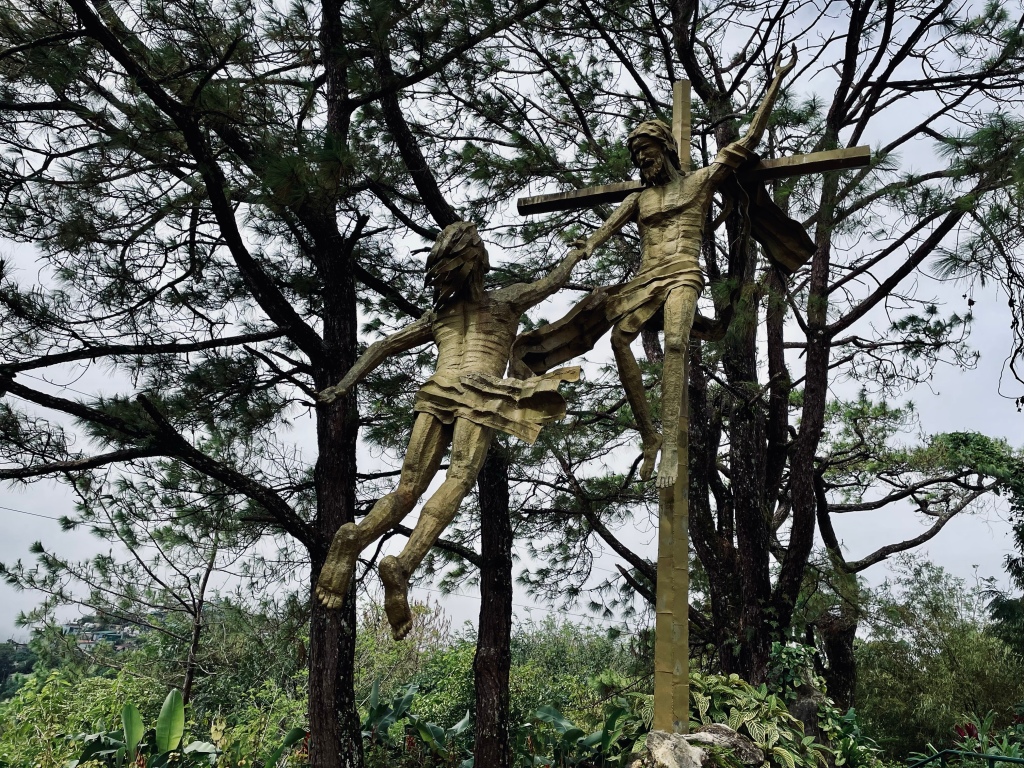
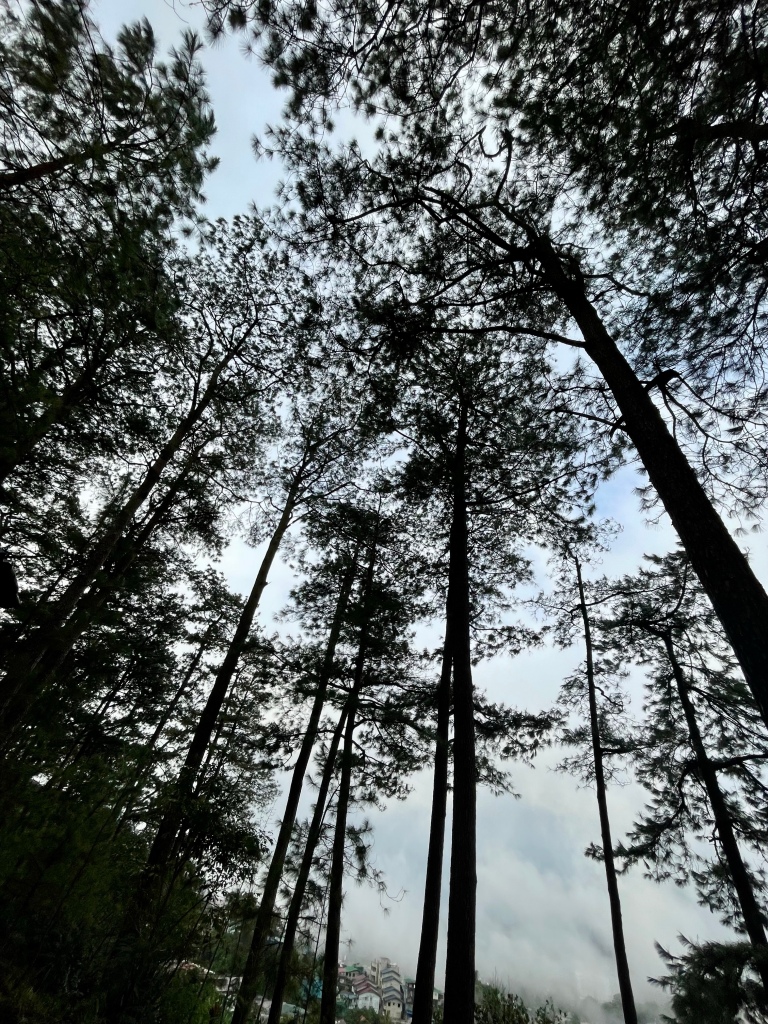
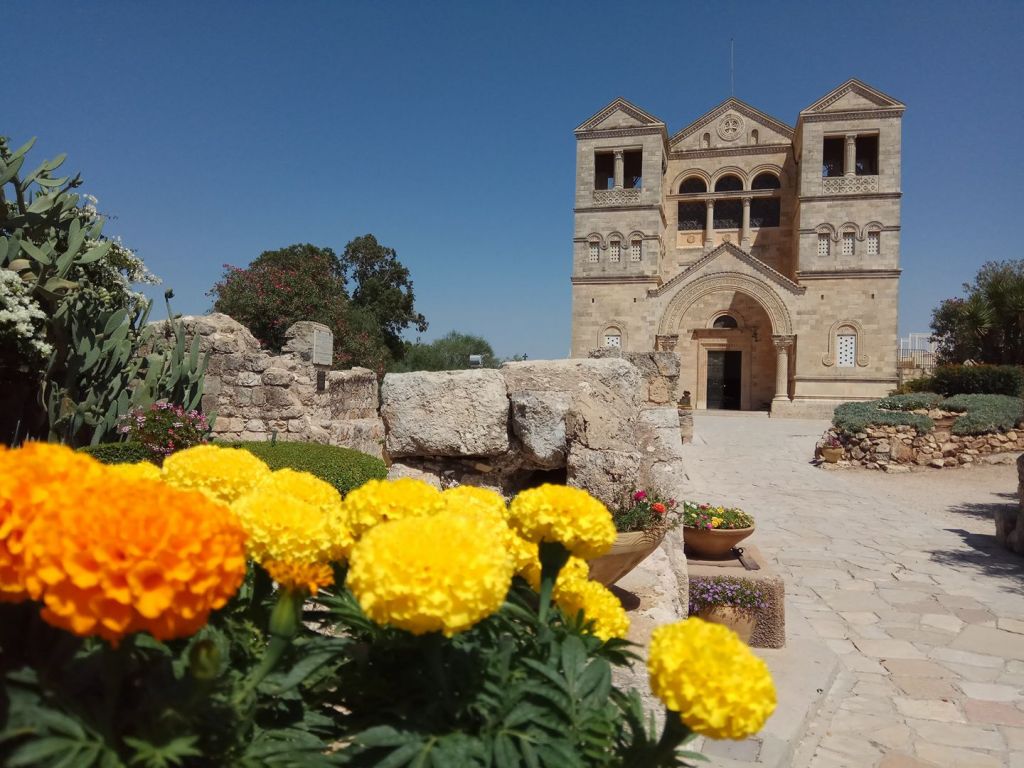
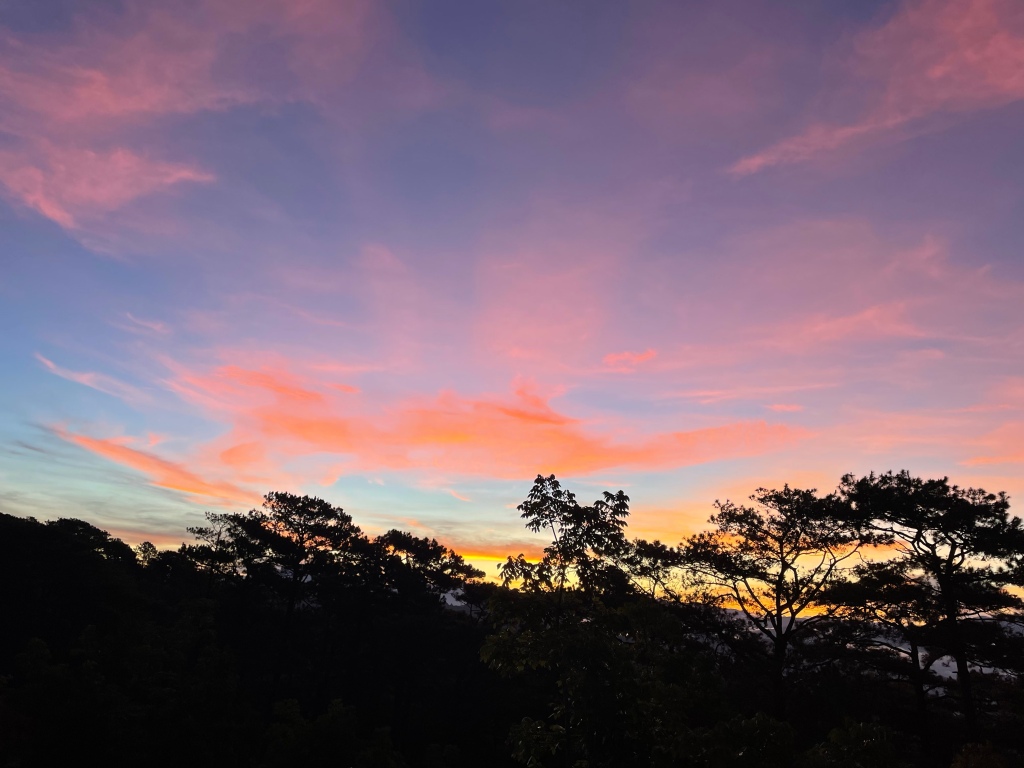
Photo by author, Mirador Jesuit Villa and Retreat House, Baguio City, 24 August 2023.

A friend serving as a nun in California recently sent me a wooden cross and a wooden rosary as her delayed gifts for my birthday and anniversary last summer. Tied to the wooden cross is a card that asks, “Why do people cross the road?” Answer: “To get to the side of life!”

So beautiful and true! To get to the side of life we must cross the road in Jesus Christ with his Cross!

That is the gist of our gospel this Sunday which is still set in Caesarea Philippi where Jesus for the first time revealed himself as the Messiah following Peter’s identification of him as “You are the Christ, the Son of the living God” (Mt.16:16) last week. It was also at that same scene this Sunday when Jesus predicted for the first time his coming Passion, Death, and Resurrection that scandalized his apostles, especially Peter.

Jesus began to show his disciples that he must go to Jerusalem and suffer greatly from the elders, the chief priests, and the scribes, and be killed and on the third day be raised. Then Peter took Jesus aside and began to rebuke him, “God forbid, Lord! No such thing shall ever happen to you.” He turned and said to Peter, “Get behind me, Satan! You are an obstacle to me. You are thinking not as God does, but as human beings do.”

Matthew 16:21-23
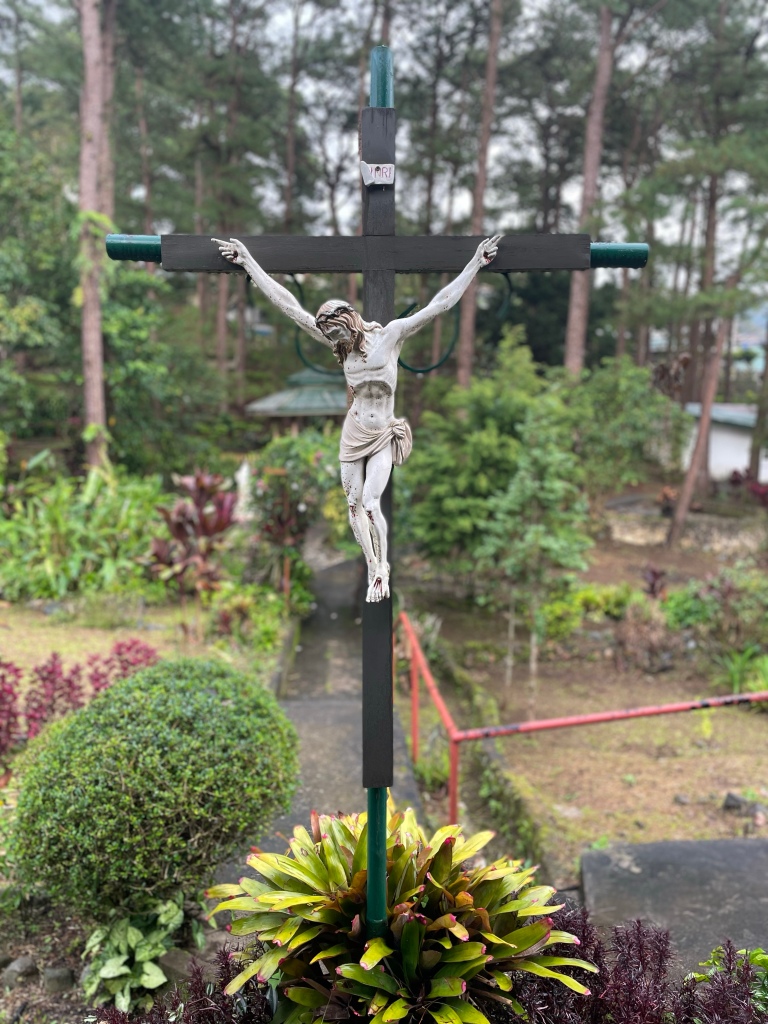
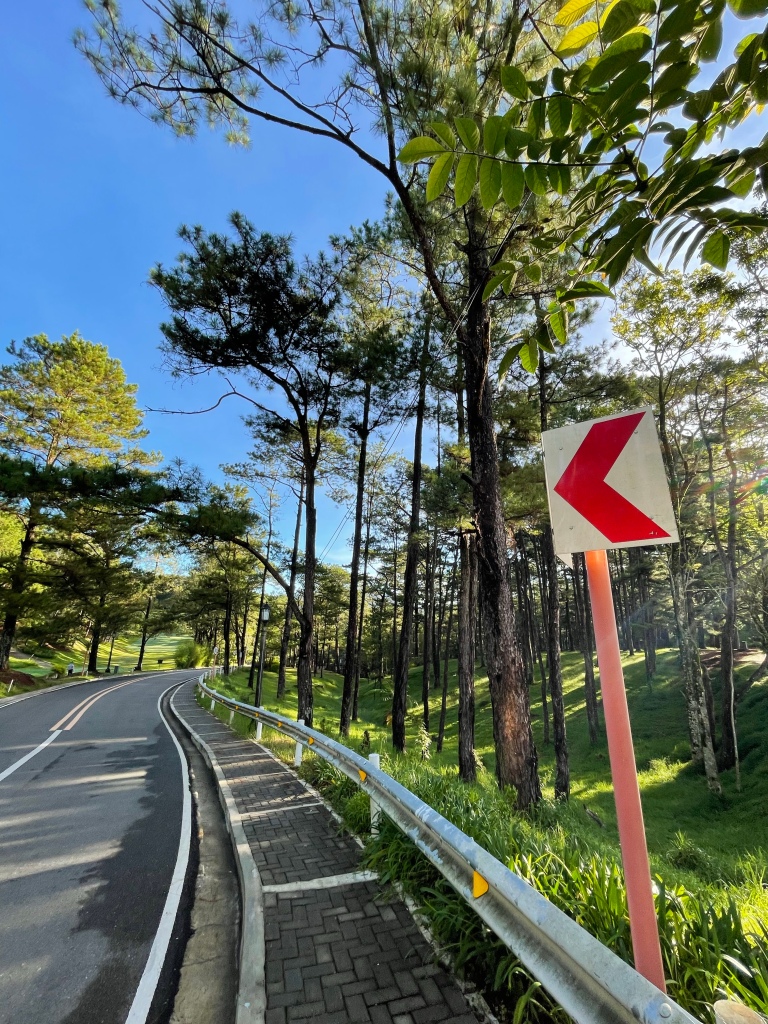
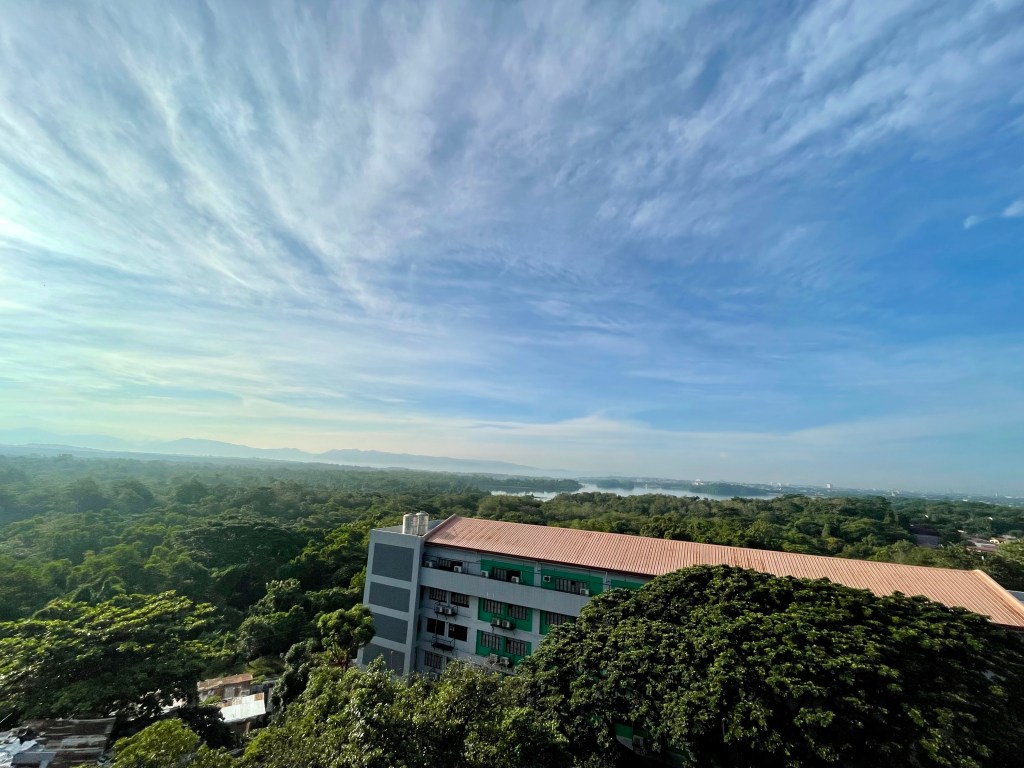
Photo by author, St. Scholastica Convent, Baguio City, 23 August 2023.

During the time of Jesus, the cross was the most inhuman punishment of all. It was the worst curse that could fall on anyone that it was a crime in Roman law to threaten anyone with crucifixion. Its horror was strongly etched on the people’s minds at that time.

That is why Peter reacted in such a way to the Lord’s first prediction of his pasch. However, it is totally opposite with us today as we see the cross displayed everywhere. Not only in churches, cemeteries and homes but even in offices, classrooms, hospitals, restaurants, and in all kinds of vehicles. We have cross in our pockets and wallets, on our shirts and jewelries with some on their skin as objects of veneration or as a badge. But, do we really understand and realize the deeper meaning of the cross?

If we admit so readily that Christ must suffer his passion, it is most likely that we have not truly dwelled on this scandalous reality unlike Peter and people of his time. And that is the danger of this too much use of the cross by so many without even reflecting on its true meaning except, perhaps, only once a year on Good Friday.

That wooden Cross gift to me.

Beginning this Sunday, Jesus invites us to look more intently to his cross when we listen to the word and celebrate the Eucharist.

There at Caesarea Philippi, Jesus and the Twelve went on a u-turn to head down south towards Jerusalem to fulfill his mission. We too must cross the road – make u-turns if needed to follow Jesus by thinking in God’s thoughts not in human thoughts for us to forget ourselves, take our cross and follow Jesus.

Jesus must have understood the humanness of Peter in reacting in such a way after making his first prediction of his Passion, Death and Resurrection. But, see how the words of Jesus to Peter at Caesarea were so identical with his very words to the devil during his temptation in the wilderness, He turned and said to Peter, “Get behind me, Satan! You are an obstacle to me. You are thinking not as God does, but as human beings do.”

Jesus reminded Peter and us today to think in God’s ways not in human thoughts. Like Peter, we are fully human, so limited, so weak. We are in the world and many times, the temptations to be of the world are so strong even in subtle ways we are not aware of, wrongly thinking like Peter that we are doing Jesus a great service when it is not.

It is the same temptations we also go through daily like Peter when one day we are so highly inspired with revelations from God in our prayers and experiences then suddenly, we feel low and lost, afraid and terrified with the realities of the Lord’s call and way of his Cross.

This is what Jesus is telling us in this final scene at Caesarea Philippi – of the need for us to confront daily the scandal of his Cross, of his suffering and death leading to his glorious resurrection. It is a process of crossing daily the street in Jesus with his Cross by thinking in God’s thoughts, not in human thoughts.

To think as human beings do is to think of one’s self more, to think of one’s own good and glory, totally forgetting others and most of all, neglecting even rejecting the higher things in life like God and virtues and other things that the material world cannot fill. To think as human beings do is to think more of success and accomplishments, happiness and pleasures; to think as God is to think of fruitfulness and fulfillment, of joy and completeness, of sacrifice and sufferings, of love and mercy.

Like Peter, there were times we have denied knowing the Lord but what matters most is we realize our sins and go back to him. Like Peter, many times we do not listen intently to the Lord’s words, always forgetting or ignoring his resurrection that when Easter happened, we are also troubled and amazed when we could not find him. Many times we are like Peter we think as humans forgetting to think like God when we are so filled with ourselves. Let us pray and be patient in our prayer life, in emptying ourselves like Peter so that like him when Pentecost came and was filled with the Holy Spirit along with the other disciples, everything became clear with the bold proclamation that “God has made him both Lord and Messiah, this Jesus whom you crucified” (Acts 2:36).
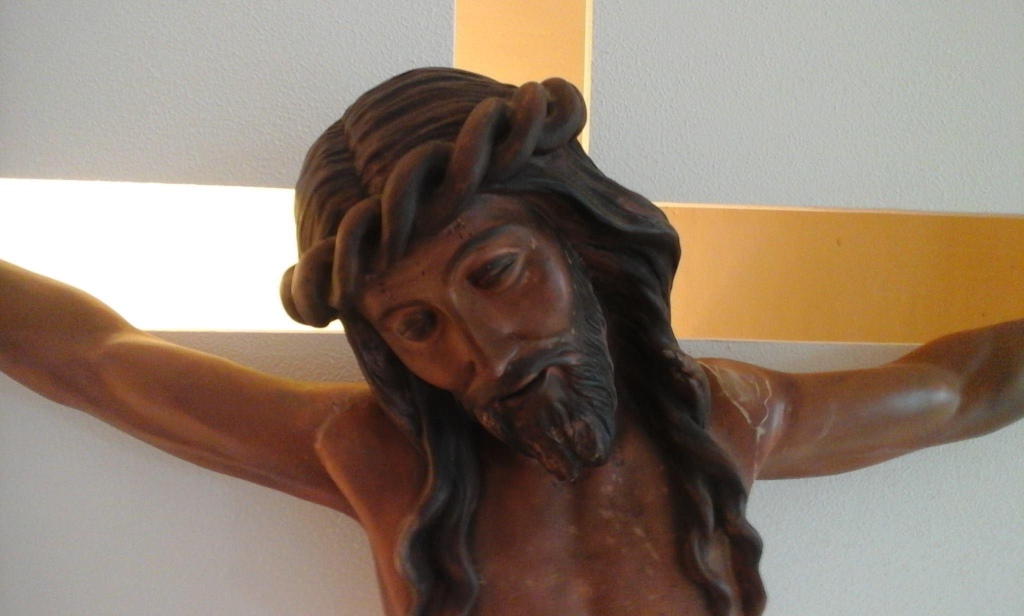
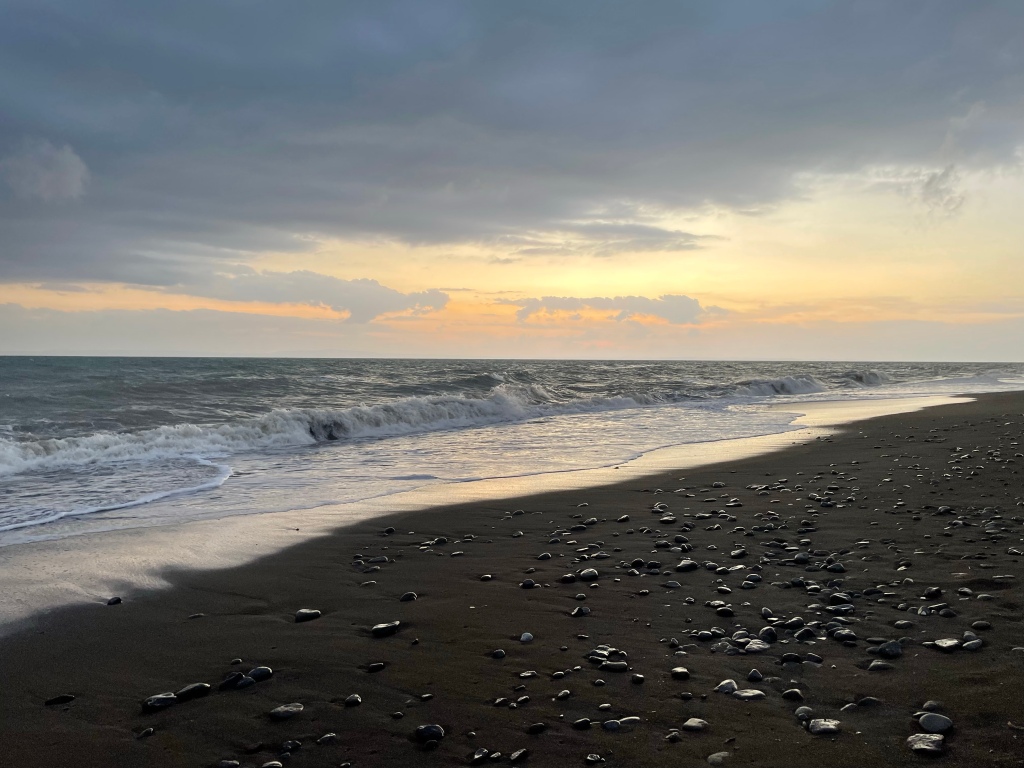
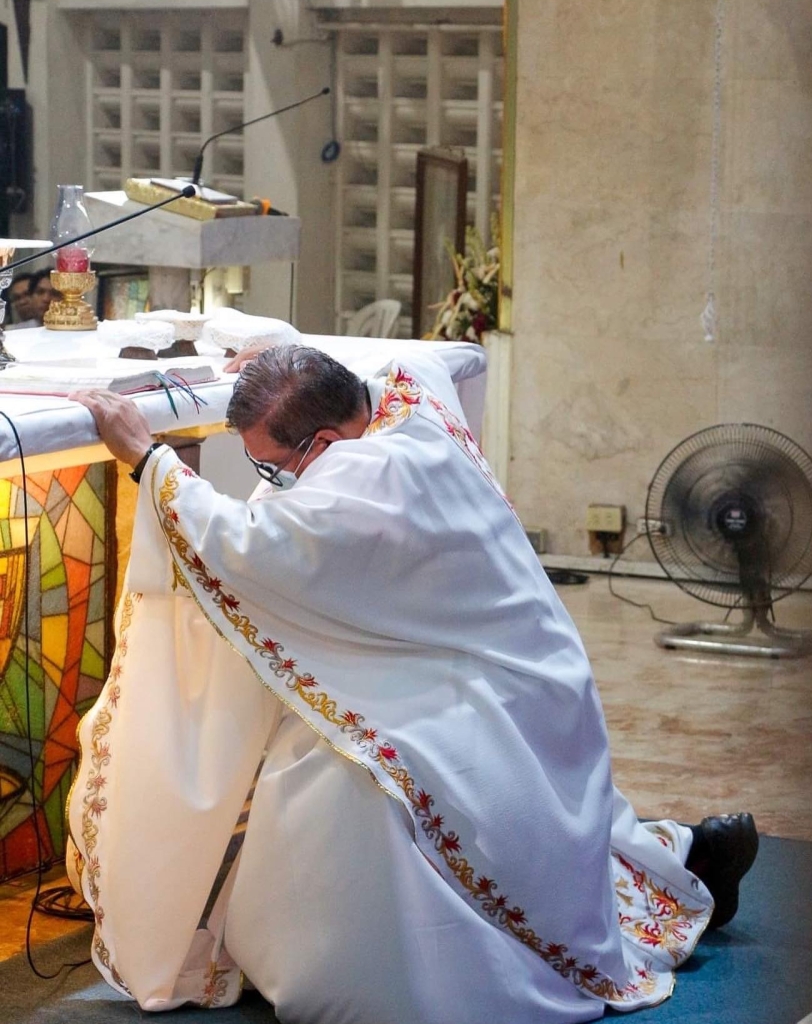
Photo by author, Sacred Heart Novitiate, Novaliches, QC, 2017.

Many times in life, it is so difficult to think in God’s ways because of this great temptation that we think something better and easier like what the devil told Jesus in the wilderness of turning stones into bread to solve his hunger. We find it very appealing to deviate from the plans of God, not to follow his thoughts because they always require patient waiting and most of all, the need to consider and respect others too, especially those in the margins.

That has always been the temptation by the devil to Jesus and to us – to just forget God and his plans, to go on with the flow of tide, with the ways of the world of wealth, power and fame, to choose what is easier and more pleasurable, what is most appealing to the senses that give instant gratifications.

And thus we have these problems and crises even in faith because we have rushed and simplified even the sacred and holy! Anything goes in the Mass, especially with priests on the pretenses of being more inclusive, more understanding to the people, of just being so plainly simplistic from architecture and designs to vestments and clothings. Homilies are more of clapping and singing and theatrics; God’s thoughts are disregarded, human thoughts are emphasized when pastors please their congregation with all kinds of healing and “hiling” – the health and wealth type of preaching. We have forgotten the fact that people go to Mass to experience God and his thoughts – not human politics and other agenda nor entertainment.

Photo by author, Sacred Heart Novitiate, Novaliches, QC, 2017.

This Sunday, the prophet Jeremiah shows us how despite our own limitations and weaknesses, we can still think in God’s thoughts by allowing ourselves to be taken over by God “like fire burning in my heart, imprisoned in my bones” (Jer. 20:9) to be “duped” by God because that is where we still find life amid death and sufferings. In short, fall in love and stay in love with God! That is what St. Paul meant in the Second Reading urging us “to offer your bodies as a living sacrifice, holy and pleasing to God” (Rom. 12:1) by living, thinking and doing the Father’s will always. It is a process that takes time. Be patient for our God is the most patient lover of all. Amen. Have a blessed week, stay safe!
In the world but not of the world

The Lord Is My Chef Sunday Recipe for the Soul by Fr. Nicanor F. Lalog II
Twenty-first Sunday in Ordinary Time, Cycle A, 27 August 2023
Isaiah 22:19-23 ><]]]]'> Romans 11:33-36 ><]]]]'> Matthew 16:13-20
Photo by author, Camp John Hay, Baguio City, 12 July 2023.

Nothing remains permanent in this world except change. And God who alone forever remains.

Though times change with new and unexpected situations that raise questions never thought of before, we are constantly challenged to make God present in Jesus Christ with our lives of witnessing as his disciples in every age.

That is why Jesus has been teaching us these past weeks of having faith in him alone, of nurturing that relationship with him especially in this time when many are deleting God not only from their lives but even in their history as a nation.

But, despite these human attempts since Adam and Eve to turn away from God, despite the many developments and advancements we have had, we humans still long for God in the end, eventually ending up searching for what is divine and holy, totally different and permanent who gives meaning to us and our existence.

Jesus shows us this Sunday the surest way of keeping our faith alive in these troubled times, in becoming his presence in the ever-changing world with its many shifting trends and paradigms.

Jesus went into the region of Caesarea Philippi and he asked his disciples, “Who do people say that the Son of Man is?” They replied, “Some say John the Baptist, others Elijah, still others Jeremiah or one of the prophets.” He said to them, “But who do you say that I am?” Simon Peter said in reply, “You are the Christ, the Son of the living God.” Jesus said to him in reply, “Blessed are you, Simon son of Jonah. For flesh and blood has not revealed this to you, but my heavenly Father.”

Matthew 16:13-17
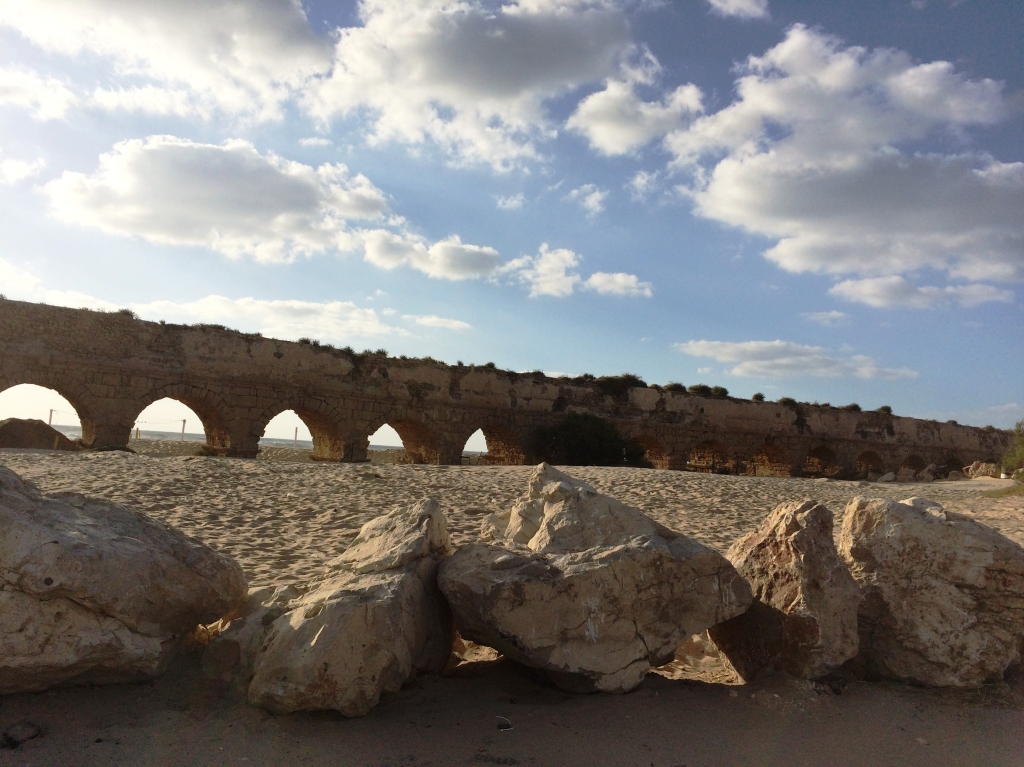
Photo by author, Caesarea in northern Israel near Tyre and Sidon in Syria, May 2019.

Jesus continues his journey into pagan territories, from Tyre and Sidon last week to Caesarea Philippi today. Of course, his journeys were not really geographical in nature but spiritual; nonetheless, Jesus this Sunday is teaching us something very important about discipleship which is to be in the world but never to be of the world.

Let us reflect on the two crucial methods used by Jesus.

First, he made a survey of the situation, of assessing and getting a clearer picture of what is happening at the ground level. I find this very “incarnational” in nature. It speaks so well of his very own kenosis, of becoming human like us in everything except sin. Jesus is so in touch with realities, so grounded with the people when he asked the Twelve, “Who do people say that the Son of Man is?”

Photo by author, St. Scholastica Convent, Baguio City, 23 August 2023.

Jesus dared to ask to know the truth, unafraid of what people might be saying about him. So unlike of us who are afraid to hear and learn the truth about us especially if that could be painful. Until now, Jesus continues to be in the world, grounded and rooted in the realities of our lives, journeying with us without us being aware of him. The tragedy of our time is how so many of us believe and take social media and the internet as the reality, failing to distinguish reality from virtual-reality!

Look at how so many people live their lives these days as a telenovela, a mere show so that when reality bites, they collapse and cave in. Many are so far from life’s realities and thus become out-of-touch with themselves, with others, and the world. And that includes us in the Church that people find us irrelevant because we are out of sync with them in many aspects of life.

And that was the result of the Lord’s survey! People got it all wrong who he is because they got mixed signals from witnesses and his disciples themselves, including us in our own time! When we lack that deep and personal relationship with Jesus, the Christ we proclaim becomes far from the truth, a big lie from who he really is. These are grace-filled moments from God for us to open anew to him and most of all, to be able for us to level up in our existence.

Here we have Simon Peter as our example and model. See how he had greatly changed in God’s grace, from the proud and doubting fisherman last Sunday to a highly inspired disciple today, “Blessed are you, Simon son of Jonah. For flesh and blood has not revealed this to you, but my heavenly Father.”

This is the high-point of our gospel this Sunday, of being in the world and not of the world. See at how Jesus categorically declared to the Twelve not only the precision and truth of Peter’s answer to the Lord’s question of who do you say that I am; more important here is the fact that such knowledge and wisdom can only come from God as a revelation which St. Paul expressed so lovely in our second reading, “Oh, the depth of the riches and wisdom and knowledge of God! How inscrutable are his judgments and how unsearchable his ways! For from him and through him and for him are all things” (Rom. 11:33, 36).

Photo by author, St. Scholastica Convent, Baguio City, 23 August 2023.

The late Casey Kasem, host of the American Top 40 radio show used to sign off saying, “Keep reaching for the stars but keep your feet on the ground.”

What a beautiful reminder that for us to level up in our existence, we have to be grounded with God and reality, of being aware of the dirt and chaos in this world yet, we continue to strive to become better persons, to rise to the top as man as man in the image and likeness of God.

Here lies one of our problems in the Church these past years in our efforts to be “closer” with the flock when we simplified everything including our Masses that have become like variety shows with all the clapping and even dancing. Homilies have become stand-up comedies or rehash of news analyses or review of movies and mini-series. Focus has shifted on the pastor, forgetting Jesus Christ especially in the use of modern means of communications.

As a result, people were confused who is Jesus Christ because as we have removed the sense of sacred and holy in our celebrations and practices, came followed our lack of credibility as witnesses of the Lord with all kinds of clerical abuses that continue to plague us especially after Vatican II. Everything had become ordinary and worldly, or, of the world. All flesh and blood without the Father.

The first reading reminds us that God is the invisible hand always working for our own good, appointing credible and good people to lead us closer to him despite some despots and evil men and women who have plunged the world into chaos and darkness. Until now we can attest how in life we have seen and experienced more good people than bad ones.

Photo by author, Mirador Jesuit Villa, Baguio City, 24 August 2023.

Tomorrow, August 28, we celebrate the feast of the great St. Augustine who wrote, “You have made us for yourself, O Lord, and our heart is restless until it rests in you” (Confessiones). There comes a time in our lives when after we have had everything, after all our searching and discoveries, after all our successes and failures in life, there is always that moment when we simply can’t get enough without God. There is always that emptiness within that only God can fill. The more we are rooted in this world, the more we realize we are not of the world too. That there are far more greater and nobler things in life we have to aspire for and become even while in this limited world marred by evil and sin.

The most truthful truths in life are learned while being on the ground, in the world where we are directed to level up in our views and existence; that is when we learn to detach ourselves from worldly things and start following Jesus, witnessing in his being the Christ, especially on the Cross. This we practice every Sunday by celebrating the Mass with our fellow disciples and cojourneyers in Christ to heaven. Amen.

Faith in God, faith in people

The Lord Is My Chef Sunday Recipe for the Soul by Fr. Nicanor F. Lalog II
Sunday in the Twentieth Week of Ordinary Time, Cycle A, 20 August 2023
Isaiah 56:1, 6-7 ><}}}*> Romans 11:13-15, 29-32 ><}}}*> Matthew 15:21-28
Photo by author, 2018.

Weddings are special occasions for me as a priest because they remind me so much of God’s presence in our time. Weddings gladden my heart as a priest because I find faith, hope and love still so vibrant in our own time when people seem to have turned away from God and spiritual values in exchange of material things. Weddings remind me that faith in God is also faith in one another.

Last Sunday we have reflected that outside forces like storms can never determine God’s presence in our lives. He is always present; problem is with us always absent, running away from him. In fact, our gospel this Sunday tells us how Jesus even dares to go to foreign territory just to find us, to heal us, and bring us back home to the Father.

At that time, Jesus withdrew to the region of Tyre and Sidon. And behold, a Canaanite woman of that district came and called out, “Have pity on me, Lord, Son of David! My daughter is tormented by a demon.” But Jesus did not say a word in answer to her. Jesus’ disciples came and asked him, “Send her away, for she keeps calling out after us.” He said in reply, “I was sent only to the lost sheep of the house of Israel.”

Matthew 15:21-24
Photo by author, Caesarea in northern Israel near Tyre and Sidon in Syria, May 2019.

What a beautiful scene presenting to us God’s love for each of us, of Jesus going into foreign and pagan territory to save us, to share us his good news of salvation. But, are we there to meet Jesus when we are in unusual circumstances in our lives?

Like what we have reflected last Sunday, we need to have that sacred space within us where we could be one with God in Jesus in prayer where we grow deeper in faith, hope and love. There is no doubt with the presence of God in our lives but are we attuned with him?

That day when Jesus withdrew to Tyre and Sidon, there were also many other people who were also sick or with sick family members but, it was only the Canaanite woman who had faith that she recognized Jesus as the Christ by calling him not just “Lord” but also “Son of David.” Though a pagan, she recognized Jesus as the promised Savior of the world, not just of the Jews! Many times in life we are that Canaanite woman, feeling so alone in a foreign territory or unusual situations with nobody to come to for any kind of help or even companionship except God alone. Hence, the need to cultivate a prayer life so we can have that sacred space within us for God, where Jesus comes and dwells.

Photo by author, Camp John Hay, Baguio City, 12 July 2023.

But, there is something else interesting in this scene not just the faith of the Canaanite woman in Christ but also with others. Our faith in God is expressed in our faith with others too. The depth and strength of our faith can be measured with our faith in one another especially those dearest to us.

See the Canaanite woman’s POV or “point of view” and contrast it with the apostles who begged Jesus to entertain her so that she would get out of their way. The apostles wanted to get rid of her because she was making a great commotion. Maybe they felt so ashamed, so jahi to the madlang people!

How sad that we act like the Twelve many times in our lives, with that great disparity between what we believe and what we live. This is the tragedy especially of those serving in the Church with us priests included. Do we believe others as the presence of God? What a tragedy when we categorize people as ones to keep and others to dismiss for whatever reason. Like the apostles, we feel suspicious of those asking Jesus or, us for help. Do they really believe her daughter was sick? Did they believe the Canaanite woman at all?

For us to get a clearer snapshot of the Canaanite woman’s faith and POV, let us return for a while why Jesus ignored her by reminding his disciples that, “I was sent only to the lost sheep of the house of Israel.” Recall that was also his instruction to his apostles after naming them and sent them to their first mission not to go to pagan territories but look for the lost sheep of Israel.

But the woman came and did Jesus homage, saying, “Lord, help me.” He said in reply, “It is not right to take the food of the children and throw it away to the dogs.” She said, “Please, Lord, for even the dogs eat the scraps that fall from the table of their masters.” Then Jesus said to her in reply, “O woman, great is your faith! Let it be done for you as you wish.” And the woman’s daughter was healed from that hour.

Matthew 15:25-28
Photo by author, Katmon Nature Reserve & Beach Resort, Infanta, Quezon, 04 March 2023.

Their conversation about the bread and the dogs reminds us of the wedding feast at Cana when Mary approached Jesus to inform him that the newly-wed couples have ran out of wine. When Jesus told her, “Woman, how does your concern affect me? My hour has not yet come” (Jn. 2:4), we find it echoing here in Tyre and Sidon when he told the Twelve, “I was sent only to the lost sheep of the house of Israel.”

Here now is the most beautiful part, the POV of the Canaanite woman who was very much like the Blessed Virgin Mary when she came and did homage to Jesus, begging “Lord, help me.”

I love that part of the Canaanite woman begging Jesus in the name of her daughter. When she finally had the attention of Jesus, she said “Lord, help me”, – not “Lord, help my daughter tormented by a demon”! It was her daughter in need of healing but the woman identified with her just like Mary when she told the servers, “Do whatever he tells you” (Jn.2:5).

What a lovely and amazing scene of faith in God and faith in others! Both Mary believing in Jesus passing on her faith to the servers and the Canaanite woman assuming into her the faith of her sick daughter. It was indeed a tough and deep faith she had professed to Jesus like the servers at the wedding in Cana: it was just a matter of time before something great happens. She felt it coming when she said even the dogs eat the scraps falling from their master’s table.

In life, like that Canaanite woman and the Blessed Virgin Mary, we have to assert even insist our faith while at the same time claiming whatever we believe is ours even if we have to wait. That is why St. Paul tells us in today’s second reading of the need to cultivate and deepen our faith even if God’s gifts and call are permanent and irrevocable (Rom.11:29) because we might fall into the same mistake of his fellow Jews who felt so secured in their beliefs and failed to recognize Jesus as the Christ.

Every Sunday, Jesus calls us to gather for the Eucharist. Everybody is welcomed, especially those feeling lost and alienated, or considered as outsiders because Isaiah prophesied in the first reading today, “my house shall be called a house of prayer for all peoples” (Is.56:7). Jesus comes to us in his words, in his Body and Blood, in one another especially those nearest to us like our family, your spouse or wife, your children, our siblings, our parents.

It is a Sunday. Let us gather as one family in the house of Lord, to share in his table of the word and of the bread – believing, hoping, and loving. Amen.

God in the “eye of the storm”

The Lord Is My Chef Sunday Recipe for the Soul by Fr. Nicanor F. Lalog II
Sunday in the Nineteenth Week of Ordinary Time, Cycle A, 13 August 2023
1 Kings 19:9, 11-13 ><}}}}*> Romans 9:1-5 ><}}}}*> Matthew 14:22-33
The well-defined eye at the center of the storm Hurricane Florence seen from the International Space Station taken by astronaut Alexander Gerst in 12 September 2018, https://www.nasa.gov/image-feature/staring-down-hurricane-florence.

Our gospel this Sunday speaks of winds and storms, something we have experienced recently that brought so much rains and caused widespread floods even in Metro Manila.

Storms and typhoons are categorized by the winds they pack that induce the heavy rains which result in floods. At the center of every storm and typhoon is called the “eye” which is its most calm part without winds at all, even with clear skies; however, all the hazards and dangers of a storm come from the wall of that eye of the storm that is why we have the expression “lull in the storm” – that moment of calmness before suddenly everything breaks loose as the storm passes or pummels an area.

Our first reading and gospel today imply something about this “eye of the storm” where God is found, where Jesus comes. Both readings tell us that it is not really in the raging storm where we find God but right in that eye of the storm, the peace and stillness of our heart within.

Photo by author, Katmon Nature Sanctuary & Beach Resort, Infanta, Quezon, 04 March 2023.

In the first reading, God told Elijah to wait for him at the entrance of the cave as he fled from soldiers of Queen Jezebel out to kill him. First came a strong wind, followed by an earthquake, then, fire, but God was nowhere.

After these shattering events, Elijah found God in a “tiny whispering sound” that followed. What a beautiful imagery of the prophet deep in prayers! It was in his serenity, in his complete trust in the Lord – in the eye of a storm – that he found God and had to cover his face with a cloak as a sign of respect. Imagine the stormy condition of Elijah at that time, of being hunted.

Here we find again the importance of prayer life, the eye of the storm, our communion with God in Jesus Christ. It is in prayer where God first comes and reveals himself to us. More than the recitation of traditional prayers, prayer is being one with God, of wrestling with him in our inner selves that is always in turmoil, always with a storm that makes us choose whether to stay or to leave, to wait for God or go ahead with what we believe and think. Prayer is wrestling with God like Jacob because deep within us is always a storm and typhoon going on, with an eye as its center where God is, where Jesus walks on water to save us when like his apostles we are in the middle of a storm at the darkest hour of the night.

Photo by author, sunrise at the Lake of Galilee, Israel, May 2017.

When the disciples saw him walking on the sea they were terrified. “It is a ghost,” they said, and they cried out in fear. At once Jesus spoke to them, “Take courage, it is I; do not be afraid.” Peter said to him in reply, “Lord, if it is you, command me to come to you on the water.” He said, “come.” Peter got out the boat and began to walk on the water toward Jesus. But when he saw how strong the wind was he became frightened; and, beginning to sink, he cried out, “Lord, save me!” Immediately Jesus stretched out his hand and caught him, and said to him, “O you of little faith, why did you doubt?” After they got into the boat, the wind died down. Those who were in the boat did him homage, saying, “Truly, you are the Son of God.”

Matthew 14:26-33

These two instances of Elijah in the cave and Jesus walking on water show us that God is always present in our lives. Whatever is happening around us does not determine God’s presence.

What matters most is that we pay attention to him alone in Jesus, our Emmanuel or God-is-with-us. Every time we cry out “where is God?”, it is us who have left him, it is us who have doubted like Peter who even in the middle of a storm was thinking more of himself than Jesus. See how doubtful was Peter that even after Jesus had identified himself by saying “It is I” which is actually “I AM” as God had called himself to Moses and the Israelites, he dared to say “Lord, if it is you, command me to come to you on water.” How funny that when Jesus gave in to his request, Peter sank because he still doubted the Lord. Just like us when we would dare God but when he plays our games, we chicken out, still unbelieving, still unconvinced.

Is it really God whom we are seeking especially in moments of storms in life?

Photo by author, San Juan, La Union, 24 July 2023.

If all we seek is fame, comfort and pleasure even amid the storms in life, paying attention only to our selves, we would surely miss the Lord who is always beside us. People, things, events can distract us and lead us astray at critical moments in life.

Hence, the need for us to remain focused in Jesus by looking right into the very “eye of our storm”, into what is disrupting us, seeking Christ like the psalmist in our responsorial psalm today who begged, “Lord let us see your kindness, and grant us your salvation.”

In this age with so many storms of distractions outside us in a world on a 24/7 mode with almost everyone in his/her own world listening/watching to their playlists and podcasts with eyes stuck on their gadgets or stuck in their ears, do we make time to find our “eye of storm”, our center of peace and calmness where God is?

See how St. Paul in the second reading was tormented or tortured in himself because of his fellow Jews’ refusal to accept the good news that Jesus is their awaited Christ. It was a perfect storm within him that saddened him but never bothered him because he was focused with God and his mission. He had no qualms in bearing many sufferings and facing death because amid all the storms in his life, he had found Jesus. This focus on God is the reason why Jesus remained behind to pray that night when he told the Twelve to go ahead to the other side of the lake. This is the first time Matthew tells us Jesus was praying. Two things I wish to share with you regarding prayer life as the eye of our storms in life.

First, the most difficult prayer is always the most meritorious. Prayer is not about feelings nor of feeling good and light but in giving one’s self to God wholly that even if nothing seems to happen, we remain in God, with God. Desire only God in prayer, asking him for courage to find and follow Jesus. Like the apostles in the boat, true prayer happens when we feel abandoned and isolated, so far from God. It is in our many trials in life when we pray that we learn how strong and faithful are we in God’s grace!

Second, there are no distractions in prayer. I have realized that most often, the distractions we consider during prayer periods may actually be from God, not from the devil as we usually believed. Recall how Jesus forced the 12 to go ahead to the other side of the lake perhaps to test them and face their inner distractions and storms. The people, things, and events that distract us in our prayers are from God as reminders of the issues we have to face and resolve in life so we may see him clearly.

12th century mosaic in the Cathedral of the Assumption in Monreale, Sicily of Jesus saving Peter. From https://orthodoxartsjournal.org/icon-carving-of-christ-pulling-st-peter-from-the-water/.

Why do you see your enemies in your prayers? Maybe it is time to forgive them.

Why all these malicious thoughts happening during prayers? Maybe it is about time you stop watching porn and start respecting women as persons.

Why do our embarrassing moments keep on appearing in prayers? Maybe God wants us to forgive ourselves and move on with life.

They are not distractions but blessings that if we open ourselves to confront our inner storms, no strong wind from outside can topple us because we have Jesus inside us. Today is a Sunday. Go celebrate Mass in your parish. Forget all the noise and distractions you experience, be focused only on God. Find your eye of the storm in yourself and there you shall find God, loving you, comforting you, blessing you! Amen. Have a blessed week ahead.

Face-to-Face with Christ’s glory

The Lord Is My Chef Sunday Recipe for the Soul by Fr. Nicanor F. Lalog II
Feast of the Transfiguration of the Lord, Cycle A, 06 August 2023
Daniel 7:9-10, 13-14 ><}}}*> 2 Peter 1:16-19 ><}}}*> Matthew 17:1-9
Photo of the mosaic inside the Basilica of the Transfiguration on Mt. Tabor, Israel (from commons.wikimedia.org).

Today we take a break from our gospel readings to celebrate the Feast of Transfiguration (August 06) that falls on a Sunday this year. The segue fits perfectly the series of parables we heard these past three Sundays that mentioned judgment day at the end of time.

Recall how Jesus interpreted his parables especially the separation of the weeds and wheat at harvest time as well as keeping the good fish caught in the net, throwing the bad ones that all evoke of judgement day in the end of time. For Matthew, the transfiguration of Jesus is exactly about the end of time when Christ’s glory is revealed at his Resurrection and ultimately in his Second Coming.

Jesus took Peter, James, and his brother, John, and led them up a high mountain by themselves. And he was transfigured before them; his face shone like the sun and his clothes became white as light.

Matthew 17:1-2
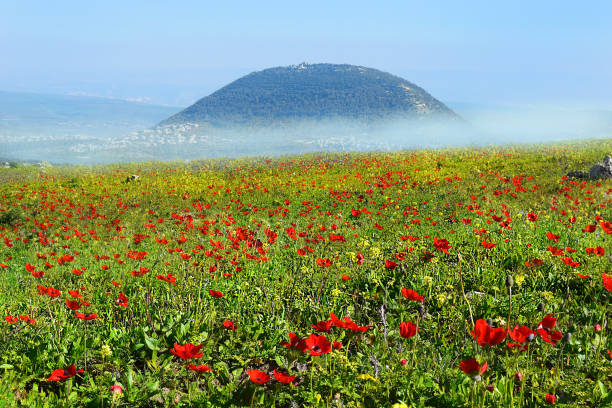
Mt. Tabor, believed to be the site of the Transfiguration of Jesus. Photo from iStockphoto.com.

In the Gospel according to Matthew, major events in the life of Jesus Christ mostly happened on a mountain: his temptation (Mt. 4:8), his inaugural teaching, the sermon on the mount (Mt. 5:1) and the sending of his apostles on their mission throughout the world until the end of time (Mt. 28:16).

Here at his transfiguration on top of the “high mountain” of Tabor we find glimpses of Christ’s explanation of the parable of the weeds among the wheat when he said that “the righteous will shine like the sun in the kingdom of their Father” (Mt. 13:43). See how this transfiguration of the elect at the end of time that was shown to Daniel in the first reading is expressed exactly in the same way as that of the face of Jesus on Mount Tabor that had “shone like the sun” as witnessed by the three apostles. Peter strongly attested to it later as we have heard in the second reading.

Last week in the daily readings from Exodus we have heard how the face of Moses also shone like the sun after he had conversed with God on Mount Sinai and every time he would see God at his tent called the dwelling in their journey in the desert. That is the context why Peter volunteered to build three tents for Jesus, Moses and Elijah during the transfiguration. The Jews have a celebration called feast of booths or tents they called sukkoth. The tent is the dwelling place of God in the wilderness that eventually became the temple of Jerusalem. It was the closest thing they have with God and with heaven. At the transfiguration of Jesus, the three apostles were enthralled at the experience and sight they did not want to go down because it was literally heaven, being with God. The transfiguration event itself for them was the fulfillment of their faith and everything in the Old Testament.

They would realize later that to dwell with God means to continue the journey in Christ, with Christ marked with many ascents and descents happening not just in space or physically but more of the interior kind. That is how we are transfigured, always inside. Right in our heart and soul. That was the deeper meaning of Moses entering God’s dwelling in the desert – of him being one in God, with God – that his face would shone after, prompting him to cover it because people were scared.

Photo from custodia.org, Basilica of the Transfiguration on Mt. Tabor, Israel.

Whatever is found on the face is always a reflection of what is in the heart and soul. No amount of cosmetics and beauty procedures can ever bring out that glow and radiance of anyone’s face beaming with joy and fulfillment, peace and contentment.

The face is the reflection of the depths – or shallowness – of one’s heart and soul. There is an English word used to describe this inner dynamics of the face – countenance. Any change in our countenance indicates something is being transformed within us as a result of our communion with God. That is why we describe some people even we do not know them as malalim or deep, or magaling magdala ng problema because of their countenance. In the same manner, we easily notice something rotting inside a person when despite one’s having good features like flawless skin or aquiline nose, beautiful eyes and the like. This is what the young people would call as “uma-aura” when they pose for FB or IG. Aura is the spirit within evoked by one’s face that cannot be manipulated.

The face of Jesus shone like the sun at his transfiguration primarily because deep inside him is his complete and perfect union in the Father. Jesus would always insist on this reality within him, his perfect communion in the Father from which also flows his total obedience which will reach its highest point at his Passion and Death on the Cross, his own Pasch or exodus.

There at Mount Tabor in his transfiguration, we are shown that Christ’s glory cannot be separated from the Cross. His majesty and triumph shall come from his pasch. And so are we his disciples. That is why the voice heard by the apostles said, “This is my beloved Son, with whom I am well-pleased; listen to him”. From now on, Christ would be speaking of his coming Passion, Death and Resurrection. All his lessons after Mount Tabor are about our participation in his paschal mysteries. Do we listen?

The apostles learned and embraced all these lessons in a process slowly with the guidance of the Holy Spirit after Pentecost. That is why Jesus told them to come down from Tabor to continue their journey to Jerusalem to fulfill his mission. Through them we have believed despite our not having seen Jesus that is how he would appear as “Lord” on the mountain that we the faithful are climbing to participate in the ultimate manifestation of his return at the end of time.

And there lies the good news of this Feast of Transfiguration happening in this dry month of August, often described as ghost month too. As we go through the last half of Ordinary Time’s remaining 17 weeks, may we continue to ascend in Christ, with Christ with his Cross in sharing his paschal mysteries in our daily lives. After the euphoria of Easter Season that had closed on Pentecost Sunday, we are reminded anew this sixth of August to never lose sigh of the Cross of Good Friday as our path to glorious transfiguration of Jesus Christ.

To journey with Christ, listening and obeying his voice is something of the inside and not just of space or place. Discipleship demands persistent practice of the Lord’s teachings and examples as we shall hear from the gospel these coming Sundays.

As COVID-19 virus wanes that we resume most of our activities minus the many protocols before while still being cautious and careful, may we face our inner issues in Christ and the Holy Spirit to be transfigured in him. Amen. Have a blessed week ahead. It is a Sunday, celebrate Mass with others in your Parish, pray for those still suffering from the effects of typhoon Egay and Falcon.

Painting of the Transfiguration by Italian artist Duccio di Buoninsegna between 1308 and 1311 from commons.wikimedia.org.

“Habang Buhay” by Zack Tabudlo (2021)

The Lord Is My Chef Sunday Music by Fr. Nicanor F. Lalog II, 30 July 2023
Photo by author in San Juan, La Union, 26 July 2023.

Finally we’re back! Sorry for being silent with our Sunday music blog relating secular songs with the Gospel of Jesus Christ.

For our return engagement since our last blog in June 11, 2023 with Stephen Bishop’s Parked Cars (https://lordmychef.com/2023/06/11/parked-cars-by-stephen-bishop/), we feature this Sunday one of our favorite local talents, Mr. Zack Tabudlo with his 2021 hit Habang Buhay from his album called Episode.

We can’t recall where and when we first heard this swinging OPM love song that sounds like from our era of VST & Co. Fact is, Tabudlo has other previous hits before Habang Buhay which struck us with two important things we find so close to our Sunday gospel.

First is its melodic upbeat tune teeming with profundity despite its being so light and refreshing to listening (and dancing). Though we find traces of influence from the late 1970 to1980’s disco era in Tabudlo’s music, Habang Buhay is so sincere with its Gen Z identity that is authentically so Pinoy especially with its shouts of Halika nga that is twice repeated.

Aking sinta, ano ba'ng mayro'n sa iyo?
'Pag nakikita ka na, bumabagal ang mundo

'Pag ngumingiti ka, para bang may iba
'Pag tumitingin sa 'kin, mapupungay mong mga mata
Wala akong takas sa nakakalunod mong ganda, ha
Halika nga (ha, ha, ha)

That shout of Halika nga is so typically Pinoy, so warm and genteel like Jesus Christ calling us to be open to his parables, to find God hidden in the most simplest things of ordinary life. Halika nga evokes those tender, loving calls of our Lola during summer vacation calling us to change clothes soaked in dirt and perspiration with a glass of Julep or Sunny Orange juice during those endless afternoons of fun and games.

Halika nga sometimes is an expression of playfulness masking as deeply serious. It is something we rarely hear these days because nobody seems to offer us with comfort and company, with love and concern anymore.

In Habang Buhay, Tabudlo is overjoyed, playfully or teasingly calling his beloved halika nga for them to bask and savor this wonderful love they have found. If we could just hear Jesus calling us too, telling us halika nga to stay with him to discover God as the only worthwhile love and treasure we could ever have in this life.

And where do we find that kind of love? In Christ’s dying for us on the Cross which Tabuldo had thought of as the true expression of his love that is faithful until the end.

Andito 'ko hanggang sa 'ting pagtanda
Mamahalin kita basta't 'pag nahulog
Nakahawak ako, 'wag ka lang bibitaw
Habang-buhay na ako'y iyo

Wala nang ibang nakagawa sa 'kin nang ganito
Kundi ikaw, nag-iisang diyosa ng buhay ko

'Wag ka nang matakot, 'wag kang mangamba
Andito ako 'pag ika'y mag-isa
Wala akong takas sa nakakalunod mong ganda, ha
Halika nga (ha, ha, ha)

This is the second thing that struck us in Habang Buhay, an amazing song that speaks of love that is pure and true, and most of all, willing to suffer and sacrifice. Like in the gospel today of the parables of the treasure buried in the field that prompted the farmer to sell all his possessions to acquire that property and of the fine pearl found by a merchant who also sold everything he had just to have it. The same is true with love, and with God: what are we willing to let go to have the love of our life?

It’s a rarity in this fast-paced world to hear from young people speaking about love in its deeper sense like the giving of self for a beloved, giving us deep sighs of relief that we’re leaving this world in good hands. Habang Buhay assures us not only of a love that is forever but invites us too to trust the next generation by witnessing to them Christ’s love found on the Cross. Amen.

From YouTube.com

On choosing well

The Lord Is My Chef Sunday Recipe for the Soul by Fr. Nicanor F. Lalog II
Sunday in the Seventeenth Week of Ordinary Time, Cycle A, 30 July 2023
1 Kings 3:5, 7-12 >><}}}}*> Romans 8:28-30 >><}}}}*> Matthew 13:44-46
Photo by author, San Juan, La Union, 24 July 2023.

We are now in the final installment of Jesus Christ’s parables this third consecutive Sunday of his teachings on the kingdom of heaven. It is hoped by this time we have learned and realized God is the only treasure we must have in this life.

And the good news is that God our treasure is found in the most ordinary things!

Many times he simply comes to us even without us looking for him while often would also appear if we truly seek him like in the two short parables we heard this Sunday.

Jesus said to his disciples: “The kingdom of heaven is like a treasure buried in a field, which a person finds and hides again, and out of joy goes and sells all that he has and buys that field. Again, the kingdom of heaven is like a merchant searching for fine pearls. When he finds a pearl of great price, he goes and sells all that he has and buys it.”

Matthew 13:44-46
Photo by author, San Juan, La Union, 25 July 2023.

Our gospel may be the shortest these past three Sundays but it challenges us to be wiser in making choices to acquire the only worthy treasure of all – God.

Both the farmer and the merchant exemplify to us this wisdom in letting go of their other possessions just to have the buried treasure and pearl they have found.

Note how the farmer merely chanced upon the treasure buried in a field not his, while the merchant finally found the fine pearl after years of searching all his life. Here we are reminded how God is not that difficult to find by those truly seeking him. The problem lies with us when we refuse to be the good soil so that the seeds sown in us may grow and bear fruit even amid the weeds! Many times, we have stopped having that sense of awe, of being surprised by God who is like a treasure buried in a field somewhere waiting to be found. Worst, a lot often we have simply given up searching for God as if it is impossible to find him like a fine pearl. God is with us in Jesus Christ, our Emmanuel.

This is the good news of our short parables today. Moreover, God even comes to ask us what we want in life like King Solomon in the first reading. Later in the gospel we find Jesus Christ also asking the blind Bartimaeus what does he want while passing by the city of Jericho. Notice how those healed by Jesus always had clear thoughts and focus, so wise in their choices of what they wanted in life like King Solomon. Can we be wise enough like Solomon in choosing well, in asking the right thing from God?

The Lord appeared to Solomon in a dream at night. God said, “Ask something of me and I will give it to you.” Solomon answered: “O Lord, my God, you have made me, your servant, king to succeed my father David; but I am a mere youth, not knowing at all how to act. Give your servant, therefore, an understanding heart to judge your people and to distinguish right from wrong. For who is able to govern this vast people of yours?” the Lord was pleased that Solomon made this request.

1 Kings 3:5-7, 9-10
Photo by author, San Juan, La Union, 25 July 2023.

What is so beautiful, even wonderful here is not just the nearness of God with us but his kindness in asking us what we want. Imagine God saying, “Ask something of me and I will give it to you.”

What shall we ask God if he were to come to us in a dream tonight like Solomon? Perhaps we would be at a loss! Remember, God is asking for just one thing we want. At least the genie usually gives three wishes, with only the third one as most crucial being the last for which we are told to always ask for three more wishes!

Here we find again Simon Sinek’s book Start with Why most useful because our whys give us the reason and meaning for whatever we wish to accomplish. Exactly what Solomon must have considered as he laid out to God his situation, his needs, most of all his weakness, “I am a mere youth, not knowing at all how to act.” See why Solomon asked for that grace instead of wealth or fame or strong army?

It is that consciousness of being small and weak before God that pleases him most in granting our prayers. Earlier before this scene Jesus praised and thanked God in giving wisdom to the little ones who accepted him than the wise and the learned who rejected him (Mt.11:25). That is the attitude of being a “good soil” who allows the seed to penetrate and absorb us!

God was so pleased with Solomon because he knew so well his whys that to govern Israel so well amid his many weaknesses, he needed God more than ever. Unlike Adam and Eve who tried to usurp God in his power in knowing right from wrong, Solomon recognized it as divine prerogative we can only share with God. Actually, what he asked for was God himself who is the treasure hidden in the field and the fine pearl found by the merchant. Solomon did not want to be like God inasmuch as he never thought of being wealthy and powerful nor famous that are of no value at all compared to having wisdom, in having a discerning heart to know right from wrong.

Photo by author, shore of the Lake of Galilee in Capernaum, Israel, May 2017.

I have realized in my 25 years as a priest that what we treasure most are not the ones that give us pleasure but the ones who complete us. We ask and pray to God for something or someone not because of need but more of fulfillment found only in Jesus Christ who promised that whatever we ask from his Father would be granted to us in his name if it is for the mission he had entrusted to us. That is why in my prayers, I no longer ask God for anything except of being with him in eternity because I am so sure that whatever I need, he would give. Most of all, if I have God, then I am complete.

The parables of Jesus are inexhaustibly rich yet so accessible to everyone with open minds and open hearts to meet God in Christ through the simple realities of life. That is why St. Paul tells us in the second reading today that “all things work for good for those who love God, who are called according to his purpose” (Rom. 8:28).

Let us pray for more zeal and enthusiasm in being the good soil, in choosing wisely the only treasure worthy in this life who is Jesus Christ, our Emmanuel or God-is-with-us. Let us welcome him in the many parables of life we take for granted that are all part of God’s plan of salvation for us leading to glory that is our destiny. Amen. Today is Sunday, go to Mass and pray for those severely affected by super typhoon Egay especially our brothers and sisters in northern Luzon.

Start with Why

The Lord Is My Chef Sunday Recipe for the Soul by Fr. Nicanor F. Lalog II
Sunday in the Sixteenth Week of Ordinary Time, Cycle A, 22 July 2023
Wisdom 12:13, 16-19 ><}}}*> Romans 8:26-27 ><}}}*> Matthew 13:24-30
Photo by author, Bgy. Alno, La Trinidad, Benguet, 11 July 2023.

Start with Why is Simon Sinek’s bestselling book written more than a decade ago about the need to focus on asking first “why” before making any choice and decision in life. I have found it very enlightening and useful even in matters of spirituality and prayers.

This is seen in our readings too this Sunday as we continue to listen to our Lord’s teachings using parables until next week. In all occasions of his teachings, his disciples asked him always Why do you speak to them in parables?” (Mt. 13:10).

As we have explained many times before, parables are simple stories we usually take for granted that reveal to us profound truths about life and our very selves, most especially of God and his kingdom which Jesus had come to proclaim.

The key to unlocking the beauty and lessons within parables is having that spirit of openness and sincerity of heart, especially in asking why which may often take different forms.

Jesus proposed another parable to the crowds, saying: “The kingdom of heaven may be likened to a man who sowed good seed in his field. While everyone was asleep his enemy came and sowed weeds all through the wheat, and then went off. When the crop grew and bore fruit, the weeds appeared as well. The slaves of the householder came to him and said, ‘Master, did you not sow good seed in your field? Where have the weeds come from?'”

Matthew 13:24-27
Photo by Onnye on Pexels.com

It is the question we ask most often, why is there evil at all if God our Creator is good? It is most difficult, even scandalizing when evil happens to us despite our efforts to be better and holy.

Today’s parable of the weeds among the wheat answers those many whys we have in life. It is a beautiful continuation of last Sunday’s parable of the sower that offers us Christians with many insights and challenges for the deepening of our faith and commitment to our mission.

First is our sense of sinfulness. It is one of the most serious problem Christianity, even the whole humanity is facing today. More and more people are losing that sense of sinfulness with so many becoming complacent in their faith and morals, always having reasons and alibis, worst, even justifications in committing sins. Or just about everything!

Today’s parable reminds us to always ask like the slaves, “Master, did you not sow good seed in your field? Where have the weeds come from?”

Photo by author, Bgy. Bahong, La Trinidad, Benguet, 12 July 2023.

Why all the evil in the world today?

How sad that many people have grown cynical with evil, simply accepting its existence in the world as a given reality, to be accepted wholly as if we can do nothing about it. Some even go to the extent of thinking the devil does not exist at all with evil simply existing like weeds?!

Here we find the importance of prayer life when we get to examine our conscience daily, asking why all the evils are happening. From there, we learn humility by examining too how we may have contributed in the commission of evil. Most of all, it makes us aware of that tricky “sins of omission”, of how we might have failed by omitting in doing what is good that have contributed to the spread of evil and sin. It is always easy to look outside blaming others, pointing at others for all the evil happening without seeing our own sins.

Second is the danger of neglect and complacency among us disciples of Christ. See the genius of Jesus as a storyteller when he mentioned that the planting of the bad seed or weeds happened while the Master was asleep, “The kingdom of heaven may be likened to a man who sowed good seed in his field. While everyone was asleep his enemy came and sowed weeds all through the wheat, and then went off. When the crop grew and bore fruit, the weeds appeared as well.”

From Pinterest.com.

In the New Testament, sleep is a metaphor for neglect. Jesus cautions us his disciples that if we are not vigilant and discerning of what we allow to influence us, bad seeds can get planted in our lives, families and relationships, even in the Church and in our ministry!

In some translations, the word used for the weeds is darnel, a kind of weed that looks like the wheat to show how evil works itself into our lives by masking itself to look something as good and harmless for a moment. “Wala namang masama” is our usual excuse until later when that evil is unmasked and revealed, its devastating impact had already wreak havoc on us because we have complacently tolerated its growth for some time.

Remember the saying, the devil is in the details. Likewise, keep in mind that the devil does not merely want us to sin but to eventually destroy our lives! “Be sober and vigilant. Your opponent the devil is prowling around like a roaring lion looking for someone to devour” (1 Pt. 5:8).

Third is Christ’s call for us to be patient but firm in dealing with evil and sin. We live in an imperfect world. There will always be evil and sin like this growing trend called liberalism and wokism that stress everyone’s rights without any regard at all with personal responsibility and accountability. These liberals and wokes who have infiltrated the media and government, maybe even the Church, want the natural order of things be changed like gender and marriage. For them, everything is relative. To each his own like praying the Our Father in a drag version.

Photo by Fr. Pop dela Cruz, San Miguel, Bulacan, 2022.

We have to be patient with them and fight them squarely with more reason and charity, to never stoop down to their level that only shows their weaknesses within.

The author of the Book of Wisdom tells us today how God in his power and might chose to be patient and moderate with us sinners precisely because he is strong; the exercise of strength like being noisy, the flexing of muscles with large gatherings actually indicate weakness.

That is why St. Paul in the second reading reminds us of our own weaknesses too in this time of hope and waiting for Christ’s Second Coming while in the midst of all these evils happening. Hence, our need to pray for the Holy Spirit to enable us to carry out our mission in this world marred by sin.

Here we find again the primacy of prayer life. Not just the recitation of prayers. What St. Paul envisions in our short reading today is the kind of prayer wherein God’s own Spirit is the one interceding for us according to God’s will. Teaching people to pray effectively is one of the most challenging of all pastoral duties because we priests and bishops must first be the ones deep into prayer. When we live in the Spirit, we would always be faithfully in prayer.

Sorry to mention here again our disappointment to our bishops in failing to reflect more on the reasons of upholding the rule that only the priest extends his hands in praying the Our Father. It is fidelity to the liturgy to prevent us from being misled by plain emotions that is already happening like in those “charismatic” Mass and gatherings with emphasis on health and wealth (gagaling, gagaling…siksik, liglig at umaapaw) interspersed with clapping of hands.

Photo by author, Bgy. Alno, La Trinidad, Benguet, 11 July 2023.

Jesus assures us in this parable there will be a time for separation, judgment, and punishment but it is not ours to carry out those actions in the present. Let us continue probing our hearts in prayer. Always start by asking why, not with what we think we know. Many times, as the parables of Jesus tell us, the kingdom of God is found in the simplest things in life like a simple word or a sentence we tend to interpret with our many assumptions. Amen. Have a blessed week ahead everyone!

When we drag words down

The Lord Is My Chef Sunday Recipe for the Soul by Fr. Nicanor F. Lalog II
Sunday in the Fifteenth Week of Ordinary Time, Cycle A, 16 
Isaiah 55:10-11 ><]]]]'> Romans 8:18-23 ><]]]]'> Matthew 13:1-23
Photo by author, Bgy. Bahong, La Trinidad, Benguet, 12 July 2023.

Surely you will hear in almost all homilies today something about that blasphemous drag version of the Lord’s Prayer trending in social media. What a coincidence that our Scripture readings this Sunday say a lot about words that teach us so much in dealing with this new kind of pandemic sweeping the world, the “LGBTQ+ woke” syndrome happening in the realm of words and languages.

In the light of recent things happening in our society, today’s readings tell us two important things we have forgotten or have deliberately disregarded: the power of God’s word and the need to listen.

Thus says the Lord: Just as from the heavens the rain and snow come down and do not return there till they have watered the earth, making it fertile and fruitful, giving seed to him who sows and bread to him who eats, so shall my word be that goes forth from my mouth; it shall not return to me void, but shall do my will, achieving the end for which I sent it.

Isaiah 55:10-11
Photo by author, Bgy. Alno, La Trinidad, Benguet, 11 July 2023.
The power of God's word

Our short reading from Isaiah perfectly introduces us to the sequence of Christ’s teachings in the next three Sundays beginning today about the power of God’s word, a preparation for us to understand the parable of the sower.

Here we find from the Prophet Isaiah God’s word as totally “other” – ibang-iba sa lahat – as it reveals and acts because it is the truth and effectiveness in one. See how Isaiah picturesquely expressed the power of God’s word, “Just as from the heavens the rain and snow come down and do not return there till they have watered the earth, making it fertile and fruitful… so shall my word be; it shall not return to me void, but shall do my will, achieving the end for which I sent it.

The Bible never fails in attesting to this conviction, of how God means what he says that has become the very basis of our hopes in him since the very beginning. Everything flows from God’s word, from the creation of the world and the universe to its fulfillment in Jesus Christ until he comes again at the end of time. God’s word creates history with power to renew and restore life, the power to save us as experienced by the thief on the Cross when he said, “Jesus, remember me when you come into your kingdom” (Lk.23:42).

Photo by author, Camp John Hay, Baguio City, 12 July 2023.

Contrast God’s word with our human experience aptly expressed by Shakespeare in Hamlet’s famous quote, “words, words, words!” – of how we use so many words in the belief more is powerful when in fact our words are vain and empty, lacking in substance. Instead of giving life, many times our words hurt and even kill others. In this age of social media, see how we use words to distort truth with lies and deceptions. Its worst aspect is not found in the words we use but in us who pronounce them when we say things without any commitment at all so that many times, our words never stood the test of time because they are easily forgotten when spoken or heard.

St. Paul said it so well in the second reading, of how “all creation is groaning in labor pains even until now” (Rom.8:22) especially when we distort the truth of our words, when we do not mean what we say, when we our words divide instead of unite, when our words destroy instead of build.

See how sin entered through the “words” of the devil that deceived Adam and Eve with the first “fake news” in history that they would not die if they ate the forbidden fruit but instead become like God. Sin took on its ugly face in the use of words again after the first crime of murder committed by Cain who dared to say to God “am I my brother’s keeper” when asked of the whereabouts of Abel.

Words continued to be the means through which sin permeated humans reaching its lowest point when people played God again by building the Tower of Babel to reach the heavens. God punished them by making them speak different languages that resulted in confusion and the collapse of the tower.

How sad that these days, human words are made louder, spread faster by technologies try so hard to undermine God’s word. There is no doubt on the power of the word of God for he himself had shown and assured it. For his words to be fully operational and experienced, we must first listen to Jesus, the word who became flesh.

Photo by author, Camp John Hay, Baguio City, 12 July 2023.
Listening to the word of God

“Whoever has ears ought to hear.”

Matthew 13:9

Jesus used these words seven times in the synoptic gospels, usually in connection with parables like in Matthew chapter 13 which we shall be using in the next three Sundays. We heard it first today and again next Sunday when Jesus explained the parable of the weeds.

His command to “hear” requires more than just taking in the words he speaks to us. To truly hear what Jesus is saying especially within the context of the parables, we must profoundly ponder what he wishes us to know. Just like in our prayers: what is essential is to be able to listen more to God than to tell him our needs which he already knew.

This can only happen in the spirit of silence and openness to God when we suspend our many preconceptions and other ideas especially about the parables we have been so familiar with.

Photo by author, Camp John Hay, Baguio City, 12 July 2023.

The seed is the word of God and Jesus is the Sower who comes to us everyday, speaking to us, telling us the most important things we need to know and do in this life for us to be fulfilled and joyful.

But, do we have our ears attuned to the word of God? Many of us practically live in media, so hooked with gadgets either or both the cellphone and headsets or pods. Nobody seems to listen anymore as we are so engrossed in our own little world centered in the endless me, me, me and I.

In the parable, it does not really matter where the seeds fell; it is always good, at least even as food for the birds! Wherever it fell, the seed always sprang into life! That is the power of the word of God! We just have to give it a chance to grow and mature to bear fruits of “a hundred or sixty or thirtyfold”.

To hear the word of God means also to have our hearts opened to receive God so we can gain insight into the kingdom of God. It is in our hearts where the word of God is sown. Stones and thorns refer to the hardness of our hearts, our refusal to welcome Jesus Christ because we have been dominated by fame and power and other cares of this modern world.

Receiving the word of God is a process, not just a one-shot deal. It is a relationship we have to cultivate in Jesus Christ, just like the ones we try to have with our plants. The Lord himself had warned us repeatedly in the gospels of how there would always be opposition and indifference, even mockery and blasphemy right in the very places where his word should manifest its effectiveness like in our country, the only Christian-nation in this part of the world. If ever the word is not fruitful, it is primarily due to our dispositions and attitudes to God and his word.

Photo by author, Camp John Hay, Baguio City, 12 July 2023.

How timely that at this particular moment in our country we heard again this classic parable of the sower by Jesus Christ.

We, especially in the Church, are being reminded anew to humbly open ourselves to God and his word, to give it a chance to grow and bear fruit, including our rules and other documents especially in the liturgy.

In spending so much time about the posture the laypeople should take in praying the Our Father in the Mass notwithstanding what the rubric says, the devil sneaked into the scene with this drag cover of the Lord’s Prayer. This is something we must reflect. Why even the drag queen had joined the discussion of the Our Father that have deeply hurt us all! With this recent decision by the bishops, the more it seems that the drag version of the Lord’s Prayer is partly our fault too. Let us go back to God and trust his word anew. And the words of the liturgy too. Amen. Have a blessed week ahead!

Possessed by Christ

The Lord Is My Chef Sunday Recipe by Fr. Nicanor F. Lalog II
Thirteenth Sunday in Ordinary Time, Cycle A, 02 July 2023
2 Kings 4:8-11, 14-16 ><}}}}*> Romans 6:3-4, 8-11 ><}}}}*> Matthew 10:37-42
Photo by author, Our Lady of Fatima University-Quezon City with the La Mesa Dam Forest Reserve at the back, 01 July 2023.

Jesus continues to instruct the Twelve with important lessons on discipleship as he sent them on their first mission the other week. Last Sunday he taught them – including us today – to face all fears not to be fearless of anything or anyone but to fear only God.

Today, Jesus cautions us not to be unduly influenced by people especially those closest to us in fulfilling our mission in him. Very often, intimidation and influence can be used to adversely affect our ministry that eventually veer us away from our Lord Jesus Christ in the process. Hence, his encouragement too for us to persevere through those influences as we follow him.

Jesus said to his apostles: “Whoever loves father or mother more than me is not worthy of me, and whoever loves son or daughter more than me is not worthy of me; and whoever does not take up his cross and follow after me is not worthy of me. Whoever finds his life will lose it, and whoever loses his life for my sake will find it.”

Matthew 10:37-39
James J. Tissot, ‘The Exhortation to the Apostles’ (1886-94) from Getty Images.

Being a Christian is being possessed by Christ. That is why he told us last week to “be not afraid of those who kill the body but not the soul” so that we fear only him our Lord Jesus Christ in the sense that we lose all meaning in life without him.

To be possessed by Jesus Christ is to have a life centered in him, detached from undue influences including from our family and friends especially us priests and religious. When priests focus more with self and family or with other people instead of Jesus Christ, everything crumbles – pati sutana nalaglag na! That is when priesthood becomes a career and a means for social mobility and livelihood with money as the priest’s new “lord and master”.

Priesthood is Jesus Christ, the Caller, not the call as I have always insisted to seminarians I teach and direct. Problems happen when the Caller is dislodged from the top spot and focus shifts on the call or priesthood when priests literally and figuratively throw their weight around when we hear the notorious lines “matutulog ang pari, pagod and pari, unawain ang pari”.

Photo by Ka Ruben, National Shrine of Our Lady of Fatima, August 2022.

Discipleship in general of which the priesthood is just a part is indeed a very difficult life. Nobody said it would be easy as the opening instructions of Jesus to the Twelve clearly stated, “Whoever loves father or mother more than me is not worthy of me, and whoever loves son or daughter more than me is not worthy of me; and whoever does not take up his cross and follow after me is not worthy of me.”

Jesus is not asking us to disregard our family and friends. What Jesus is telling us is actually a warning against too much expectations that our family and friends would love and embrace him too inasmuch as we have given ourselves to him. Not true at all, sad to say.

There are times that those closest to us are the ones who could not accept Jesus Christ’s call of discipleship. There are times that the most difficult people to be catechized and evangelized are those dearest to us.

Many of us must have felt in many instances how our family or friends are the ones who reject the ways of Jesus, the values of Christ. In this highly competitive world so exaggerated by the social media when everyone feels so entitled and deserving for everything, people have become so impersonal in dealing with each other, forgetting the basic courtesies in life, especially respect and kindness. Many are blinded by fame and wealth forgetting God and the people around them.

Photo by Mr. Mon Macatangga, 12 May 2023.

This Sunday, Jesus is teaching us to always have him as the basis and foundation of our relationships. Remember the gospel two Sundays ago when upon seeing the crowds Jesus was “moved with pity because they were troubled and abandoned like sheep without a shepherd” that he taught us to pray for more workers in the harvest (Mt.9:36-37). The problems in the world can never be solved by money and any material thing but only by another person, by someone with the heart and face of Christ filled with his warmth and his loving presence, someone not afraid to love, not afraid to get hurt, not influenced by fads and trends or by what others say.

Everything in this life, in our ministry and in our discipleship has to be seen in the light of Jesus Christ. Things become cloudy or dull and shady when Jesus is absent that can greatly affect, for better or for worse, our relationships with one another. This we see in the first reading about the hospitality offered by that Shumenite woman to Elisha the prophet whom she recognized as a man of God. Elisha clearly saw the woman’s basis of hospitality – God – that he never abused it. In fact, we find a trace of humor when Elisha had to ask his servant what their graceful hostess most needed to reward her hospitality. Sometimes like Elisha in our being so focused in serving the Lord, we become so ignorant of the most obvious with those closest to us; imagine Elisha asking his servant what to reward the Shumenite woman, his seeming oblivious to the fact she and husband were childless! Eventually, Elisha would grant the couple the gift of a son whom he would later bring back to life.

At my 25th anniversary of ordination to the priesthood with friends from UST’s the Varsitarian, 18 April 2023.

To be possessed by Christ means to be “dead to sin and living for God in Christ Jesus” as St. Paul explained in our second reading today (Rom.6:11). For some it may sound foolish but that is the reality and mystery of life we have been reflecting since the resumption of Ordinary Time last month. It is what we call as Christian paradox when in our sharing in Christ’s paschal mystery of his suffering and death, that is also when we find and experience our resurrection and life.

Last Monday, a very dear friend died, Sr. Gina of the Religious of Good Shepherd. We met in 1984 when I joined UST’s the Varsitarian where she was an outgoing staff member. She was the one who proclaimed the first reading at my celebration of my 25th anniversary of ordination to the priesthood last April 18.

Photo by author, Chapel of the RGS Mother House in Quezon City, 29 June 2023.

When I first invited her to my anniversary, she declined due to a big retreat of priests at their spirituality center in Tagaytay; within a few hours, she texted me back and told me she would fix her schedule so she could come to my anniversary celebration. She later texted me twice to insist she had to be present at my silver anniversary.

Unknown to us all, her cancer had recurred and metastasized last November which we learned only June 28 when the RGS Sisters issued a health bulletin about her condition. Sr. Gina had decided to stop all medications to wait for the inevitable at their mother house in Quezon City two weeks earlier. June 29 she texted me to inform me of her condition. I was so happy to chat a few lines with her, asking her if I could visit her this week.

She never replied.

When I learned her condition the other Wednesday night, I cried as I realized the very reason why she insisted on coming to my anniversary in April: to remind me we are possessed by Jesus, only Jesus, always Jesus. Please pray for her beautiful soul. Thank you and God bless!