Seeing ourselves as Jesus sees us

Lord My Chef Sunday Recipe, Fr. Nicanor F. Lalog II
Solemnity of Sts. Peter & Paul, Apostles, 29 June 2025
Acts 12:1-11 ><}}}}*> 2 Timothy 4:6-8, 17-18 ><}}}}*> Matthew 16:13-19
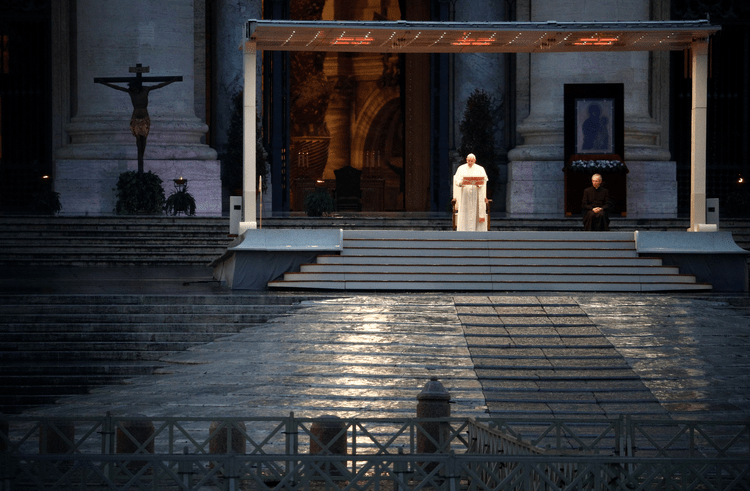
St. Peter’s Square at the Vatican in Rome.

We enter today the 13th week in Ordinary Time with a fourth celebration on a Sunday of another Solemnity, that of Saints Peter and Paul, the two pillars of the Church Jesus Christ established over 2000 years ago.

Sts. Peter and Paul were men of diverse backgrounds with Peter the fisherman, impulsive and so human while Paul the Pharisee was an intellectual converted by an encounter with Jesus on the road to Damascus. Both were flawed as persons yet so loved and called by the Lord – Peter as first leader of his church and Paul as its first missionary to the Gentiles. Their Solemnity reminds us of Christ’s call for us to build his Body, his Church here on earth.

While this celebration is about the two great apostles of Jesus, our readings direct us to God’s goodness and grace in his actions on behalf of the church founded by Christ. Its focus is on God, not ourselves.

Statues of Sts. Peter & Paul, st. Peter’s Basilica, Rome; photos from opusdei.org

Being an apostle of Jesus is not about doing great things or being so good but more of encountering and keeping faith in Christ our Lord. By recognizing ourselves as the church – the Body of Christ as we have reflected last Sunday, all of our actions are indeed God’s actions on behalf of the church because it is through us that the proclamation of the Gospel of Jesus’ death and resurrection is continued and completed in this age.

What is essential is we constantly enter into a conversation with Jesus in prayer not only to tell him things but most especially for us to realize how he sees us!

When Jesus went into the region of Caesarea Philippi he asked his disciples, “Who do people say that the Son of Man is?” They replied, “Some say John the Baptist, others Elijah, still others Jeremiah or one of the prophets.” He said to them, “But who do you say that I am?” Simon Peter said in reply, “You are the Christ, the Son of the living God.” Jesus said to him in reply, “Blessed are you, Simon son of Jonah. For flesh and blood has not revealed this to you, but my heavenly Father. And so I say to you, you are Peter, and upon this rock I will build my church, and the gates of the netherworld shall not prevail against it” (Matthew 16:13-18).
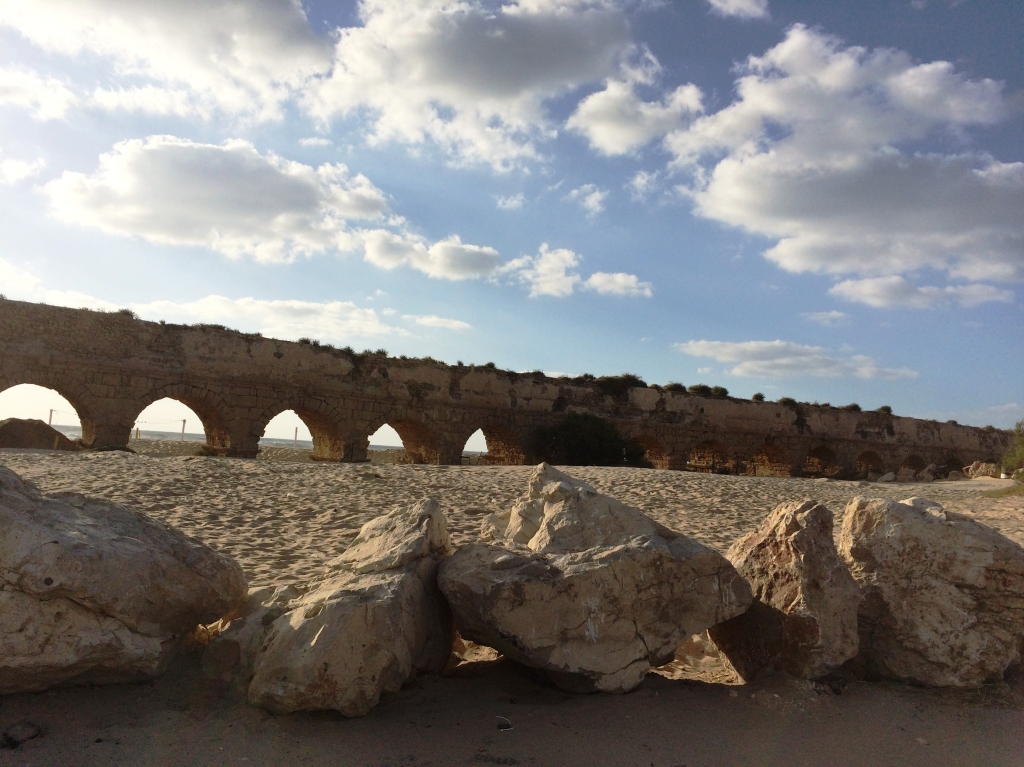
Photo by author at Caesarea, Israel, May 2017.

What really happened at Caesarea Philippi was a close encounter of the apostles with Jesus, especially Simon whom would he called as Peter on that day on.

Very often in most reflections and commentaries, we are told to answer the question of Jesus like Peter in our most personal way not based from what we have read or heard: “who do you say I am?”

Of course, what else can we say but imitate Peter’s answer that seems to be the most correct answer.

But, is it really the best answer? Not really.

Paul later in his many writings will declare similar answers but far more better like when he said “For me to live is Christ, and to die is gain” (Phil.1:21).

Jesus is telling us something else in this scene, as if asking us too, would you want to know “who do I say you are?” What the Lord is actually telling us in this scene is the fact that he knows us so well inasmuch as he knows himself perfectly because he is God. In fact, he had said there was no need for him to have human testimony as the Christ (Jn. 2:25; 5:34).

Photo by author, Sea of Galilee, Israel, May 2019.

What I see more at Caesarea Philippi is Jesus Christ’s omniscience as God who knows everything – even that early he already knew Peter would deny him thrice, that Judas Iscariot would betray him, so on and so forth.

Jesus knows everything about us but he chose to love and believe in us that despite and in spite of everything he knew that could go wrong with us later in life, of how we would fall into sin over and over, STILL – he calls us, he sends us on a mission because he believes in us, he loves us.

Many times in life, we forget the truth about the saints who are just like us, ordinary people with many weaknesses and flaws, imperfections and even idiosyncrasies. What made them stand out and did all those great feats for the Lord was because they were able to see themselves the way Jesus sees them.

That’s the very core of the story at Caesarea Philippi – Jesus made the apostles felt especially Peter how valuable they were, how they were all loved, of how Jesus saw them as his ambassadors later when he returns to the Father.

Bass relief of St. Peter at the Malolos Cathedral, 2019.

Jesus had no need of knowing what people were saying about him because he knew himself so well aside from the fact he surely knew what they were saying about him. Actually, the answers the apostles gave him were for them to know and think about why people wrongly perceived Jesus.

Most of all, Jesus had no need to know what everyone of us is saying about who he is because, again, he knows himself perfectly. Whatever answer others would have given about him would have been surely appreciated and praised by Jesus. What matters most for everyone to realize is the fact that despite Christ’s foreknowledge of Peter’s fall and weaknesses, he still dared to call him to head his church. The same holds true with everyone of us. Jesus wants us to continue building his Body, his church here on earth, to make Jesus more present in us in this world so dark and lost searching for meaning except in Christ.

The same thing is true with Paul when Jesus called him on the road to Damascus to persecute the first Christians. Jesus knew everything Paul was doing; most of all, Jesus knew that even when converted, Paul would still be stubborn and insistent, would eventually quarrel with other disciples like Peter, Barnabas and John Mark but still, Jesus called him and even set him aside for a special mission to the Gentiles.

Bass relief of St. Paul at Malolos Cathedral 2019.

Again in his experiences, Paul saw how Jesus loved and trusted him that even he were the worst of all the apostles of the Lord, he was given such great task of proclaiming the gospel to the ends of the earth at that time. That is why in our second reading we find Paul giving up his whole life in the service of Jesus after experiencing Christ’s tremendous love for him.

Like Peter and Paul, we are all gifted with the same faith in Christ Jesus who challenges us to accept the same mission to continue in this modern time of proclaiming his gospel of love and mercy, of building up his Body the church so that there would be a more humane and just society here on earth as Vatican II envisioned (Lumen Gentium).

Many times when God works in us and through us, we could not believe it as happening like Peter when set free from prison by an angel at night. There are times we are resigned with our situations, of being deserving of the many hardships and sufferings without realizing that there are more bad things we deserve to suffer in this life but Jesus spared us because he believes in us that he sends us to some more missions for him.

Lord Jesus Christ,
thank you for still calling me,
sending me to a mission
despite my many flaws
and imperfections;
thank you for trusting me,
believing me;
let me see myself the way
you see me as someone
worth loving and trusting.
Amen.

St. Peter and St. Paul,
pray for us!

Pagbabalik-loob vs. pagbabago

Lawiswis Ng Salita ni P. Nicanor F. Lalog II
Kapistahan ng Pagbabalik-loob ni San Pablo, Ika-25 ng Enero, 2024
Gawa ng mga Apostol 22:3-16 ><}}}*> + ><}}}*> + ><}}}*> Marcos 16:15-18
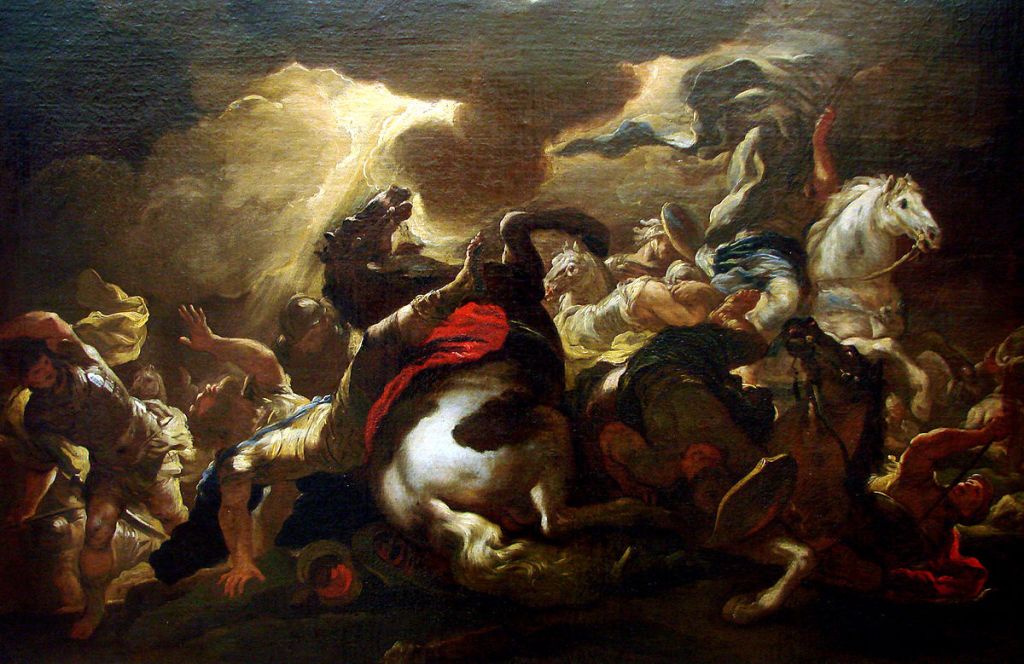
Painting ng “The Conversion of St. Paul” ni Luca Giordano noong 1690 mula sa wikipedia.org.

“Magbago ka na!” Iyan ang mga salitang madalas nating marinig at sinasabi sa mga tao na alam nating mayroong masamang pag-uugali at gawain. Madalas bitiwan mga salitang iyan tuwing Bagong Taon at mga Mahal na Araw.

Ngunit, maari nga ba talagang magbago ng pag-uugali o ng pagkatao ang sino man? Ibig bang sabihin yung dating iyakin magiging bungisngis o dating madaldal magiging tahimik? Iyon bang matapang kapag nagbago magiging duwag o dating palaban magiging walang kibo at imik?

Kung isasalin sa sariling wika natin ang salitang “conversion”, nagpapahiwatig ito ng pagbabago tulad ng na-convert sa ibang relihiyon o sa ibang anyo o gamit. Ngunit sa bawat pagbabago, mayroong higit na malalim na nababago na hindi namang ibig sabihin ay nag-iiba o naging different.

Kasi iyong sinasabing conversion ni San Pablo o ng sino pa mang tao ay hindi naman pagbabago ng pagkatao kung tutuusin; sa bawat conversion, hindi naman nababago ating pagkatao talaga kungdi ating puso na naroon sa ating kalooban. 

Kaya tinatawag itong pagbabalik-loob, di lamang pagbabagong-buhay. 

Binabalikan natin ang Diyos na nananahan sa puso natin, doon sa kalooban natin. 

Higit na malalim at makahulugang isalin ang conversion sa katagang “pagbabalik-loob” dahil ang totoo naman ay bumabalik tayo sa Diyos na naroon sa loob ng ating sarili. 

Dito ipinakikita rin na likas tayong mabuti sapagkat mula tayo sa Diyos na mismong Kabutihan. Kailangang pagsisihan mga kasalanan, talikuran at talikdan kasamaan na siyang mga balakid sa ano mang pagbabalik-loob at saka pa lamang mababago ating pamumuhay. 

Katulad ni San Pablo, sino man sa atin na makatagpo sa liwanag ng Diyos, nagiging maliwanag ang lahat kayat atin nang hahangarin ang Diyos na lamang at kanyang kalooban. Nananatili ating katauhan at pag-uugali ngunit naiiba direksiyon at pokus. 

Kapansin-pansin na bawat nagkakasala wika nga ay malayo ang loob sa Diyos na ibig sabihin ay “ayaw sa Diyos” gaya ng ating pakahulugan tuwing sinasabing “malayo ang loob”. Ang nagbabalik-loob ay lumalapit, nagbabalik-loob at pumapaloob sa Diyos.

Pangangaral ni San Pablo sa Areopagus sa Athens (larawan mula sa wikipedia.org).

Isang magandang paalala sa ating lahat itong Kapistahan ng Pagbabalik-loob ni San Pablo na hindi malayo at hindi rin mahirap maabot, bumalik sa Diyos sa pamamagitan ni Kristo Jesus. Maari itong mangyari sa gitna mismo ng ating sira at maruming sarili.

Hindi nabago pagkatao at pag-uugali ni San Pablo kung tutuusin: nanatili pa rin siyang masugid, matapang at masigasig. Nabago lamang ang direksiyon at pokus o tuon ng kanyang pag-uugali at pagkatao. At siya pa rin iyon. Inamin niya sa ating unang pagbasa ngayon na siya ay “isang Judio, ipinanganak sa Tarso ng Cilicia ngunit lumaki rin sa Jerusalem. Nag-aral kay Gamaliel at buong higpit na tinuruan sa Kautusuan ng mga ninuno at masugid na naglilingkod sa Diyos” (Gawa 22:3). 

Nanatiling masugid sa Diyos si San Pablo ngunit naiba na ang batayan na dati ay sa mga Kautusan at tradisyon ngunit sa kanyang pagbabalik-loob, si Jesu-Kristo na ang batayan ng kanyang pananampalataya. Personal niyang naranasan si Jesus kaya gayon na lamang kanyang pagiging masugid na alagad. Sinasabing kung hindi siya nadakip at nakulong hanggang sa patayin marahil ay umabot siya sa Africa sa pagpapalaganap ng Mabuting Balita.

Hindi rin nabawasan kanyang tapang; bagkus pa nga ay higit pa siyang tumapang. Lahat ng hirap tiniis niya at hinarap gaya ng pambubugbog sa kanila, ma-shipwreck sa isla, mabilanggo ng ilang ulit at ni minsan hindi umatras sa mga balitaktakan at paliwanagan sa mga Judio at maging kay San Pedro ay kanyang kayang salungatin at pagsabihan kung kinakailangan.

Gayon na lamang ang malasakit ni San Pablo sa Panginoong Jesu-Kristo at kanyang Mabuting Balita kaya naman sabay ang pagdiriwang ng kanilang Dakilang Kapistahan ni San Pedro tuwing ika-29 ng Hunyo dahil magkapantay kanilang kahalagahan sa pagpapatatag, pamumuno at pagpapalaganap ng pananampalataya at Simbahan.

Ordinasyon sa pagka-diyakano sa Katedral sa Malolos, ika-12 ng Hunyo 2019.

Alalaong-baga, katulad ni San Pablo, ano man ating pagkatao at pag-uugali siya pa ring mga dahilan kaya tayo tinatawag ng Panginoon upang maglingkod sa kanya; ililihis at ihihilig lamang niya mga ito ayon sa kanyang panukala at kalooban.

Kaming mga pari kapag inordenahan ay ganoon pa rin naman pagkatao at pag-uugali ngunit nababago direksiyon at tuon sa bagong estado ng buhay at misyon.

Gayun din ang mga mag-asawa. Lalabas at lalabas tunay na pagkatao at pag-uugali ngunit hindi iyon mga sagwil upang lumago at lumalim sila sa pagmamahalan at pagsasama bilang mag-asawa.

Wika nga sa Inggles, “God does not call the qualified; he qualifies the call.” Maraming pagkakataon tinatawag tayo ng Diyos maglingkod sa kanya di dahil sa tayo ay magagaling at mahusay; madalas nagugulat pa tayo na mismong ating kapintasan at kakulangan ang ginagamit ng Diyos para tayo maging mabisa sa pagtupad sa kanyang tawag.

Madalas at hindi naman maaalis na sumablay pa rin tayo at sumulpot paulit-ulit dating pag-uugali. Kaya naman isang proseso na nagpapatuloy, hindi natatapos ang pagbabalik-loob sa Diyos. Araw-araw tinatawagan tayong magbalik-loob.

Larawan kuha ni G. Jim Marpa sa Dabaw, 15 Enero 2024.

Gaya ni San Pablo nang siya ay ma-bad trip kay Juan Marcos na iniwan sila ni Bernabe sa una nilang pagmimisyon. Batay sa kasulatan, ibig pagbigayn pa ni San Bernabe na muling isama si Juan Marcos sa pangalawang pagmimisyon nila ngunit mariin ang pagtanggi at pagtutol ni San Pablo kaya’t sila ay naghiwalay ng landas bagamat nanatili silang mga alagad ni Kristo. Sa bandang huli naman ay nagkapatawaran sila.

Ganoon din tayo, hindi ba? Walang perfect. Ang mahalaga araw-araw nagbabalik-loob tayo sa Diyos dahil araw-araw lumiligwak din tayo sa ating maling pag-uugali at mahunang pagkatao. 

Higit sa lahat, sa ating patuloy na pagbabalik-loob, doon lamang magiging maliwanag sa ating ang kalooban ng Diyos na palagi nating inaalam sapagkat batid nating ito ang pinakamabuti para sa atin. Ang kalooban ng Diyos ang magtuturo sa atin ng tamang landas na tatahakin upang ating buhay ay maging ganap at kasiya-siya.

Subalit kadalasan tayo ay nabibigo, naguguluhan kung ano ang kalooban ng Diyos dahil akala natin para itong tanong na isang pindot ay malalaman kaagad ang sagot tulad ng sa Google. Mahirap mabatid kalooban ng Diyos kung tayo ay malayo sa kanya dahil sa mga kasalanan. Kaya tulad ni San Pablo, idalangin natin sa Ama sa pamamagitan ni Jesu-Kristong Anak niya na magpatuloy tayo sa pagbabalik-loob upang manatili tayong nakapaloob sa Diyos. Amen. San Pablo, ipanalangin mo kami!

Finding Jesus in two unlikely partners

The Lord Is My Chef Daily Recipe for the Soul by Fr. Nicanor F. Lalog II
Thursday, Solemnity of Sts. Peter & Paul, Apostles, 29 June 2023
Acts 12:1-11 ><}}}}*> 2 Timothy 4:6-8, 17-18 ><}}}}*> Matthew 16:13-19
The lithography of Sts. Peter and Paul in Missale Romanum by unknown artist with initials F.M.S (19. cent.) printed by Typis Friderici Pustet. (Renáta Sedmáková | us.fotolia.com)
Praise and glory to you,
Lord Jesus Christ
for this Solemnity of your
two great Apostles,
Sts. Peter and Paul
whom you have both 
chosen to be the solid rock
on which your Church is built,
remaining forever her 
protectors and guides;
to them Rome owes her greatness
when you, O Lord, led them to
sanctify that capital of the 
ancient Empire
with their martyrdom 
to become the center of
the Christian world
until now.
In their great efforts
of fulfilling your mission,
there emerged a most unique
even unlikely partnership
in making you known,
O Lord, teaching us
that important lesson 
that discipleship is always
being together with others
being sent on a mission,
never alone nor simply a case 
of "me and Jesus"  
as we would always
insist.

Teach us, dear Jesus,
to be like Sts. Peter and Paul
focused only in you to overcome
our many differences in the Church; 
help us to set aside 
our biases and prejudices
to always find you 
as the very essence 
of our discipleship;
may we learn to
respect each other
by finding you in
each co-worker
and with everyone
we serve and meet.

May our lives
mirror your true person,
Lord Jesus, 
so that people are not
misled to who 
you really are.
How inspiring 
that both Sts. Peter and Paul 
were imprisoned for preaching
your name and yet, 
no bars nor chains not
even death held them captives
in spreading your good news;  
in fact, some of the finest 
parts of the New Testament
were composed when both
Apostles were in prison;
what a grace for us today 
their many letters 
still sound 
so true and relevant,
providing us compass
in charting our ways
in a world so divided
and so sick with
individualism, relativism,
and materialism. 

Help us, dear Jesus,
to break free from
the many prisons
that hold us from freely 
witnessing your loving service 
for others like Sts. Peter
and Paul; set us free, Lord, 
from the chains that hold us
and make us fearful
of standing by our faith 
and of your teachings
in this time of total disrespect
for life; most of all, free us, O Lord,
like St. Peter from our prison cells
of indifference in the face of 
continued erosion of 
marriage and family 
as envisioned by God
since creation.
Dear Jesus, 
make us realize
that every present moment
is the time of our departure;
may we live fully at your service
by keeping the faith in you
like Sts. Peter and Paul.
Amen.

“Sleeping” in Christ, trusting in God

The Lord Is My Chef Daily Recipe for the Soul by Fr. Nicanor F. Lalog II
Wednesday, Solemnity of Sts. Peter & Paul, Apostles, 29 June 2022
Acts 12:1-11 ><}}}}*> 2 Timothy 4:6-8, 17-18 ><}}}}*> Matthew 16:13-19
Photo by Fr. Howard John Tarrayo, August 2021.

Our readings today are a parable of the Church, of what we should and would be as the Body of Christ celebrating the Solemnity of St. Peter and St. Paul, the pillars of the Church.

Despite their personalities being poles apart while their social, cultural and religious backgrounds were greatly different, both men were won over by Jesus Christ to proclaim his good news of salvation, eventually dying as martyrs like the Lord. Both apostles displayed deep trust in Jesus Christ whom they have come to know on a personal basis.

Let us reflect first on St. Peter, the “prince of the Apostles” and servant of all. Notice how Peter could sleep soundly inside prison, even between two soldiers as narrated to us by Luke.

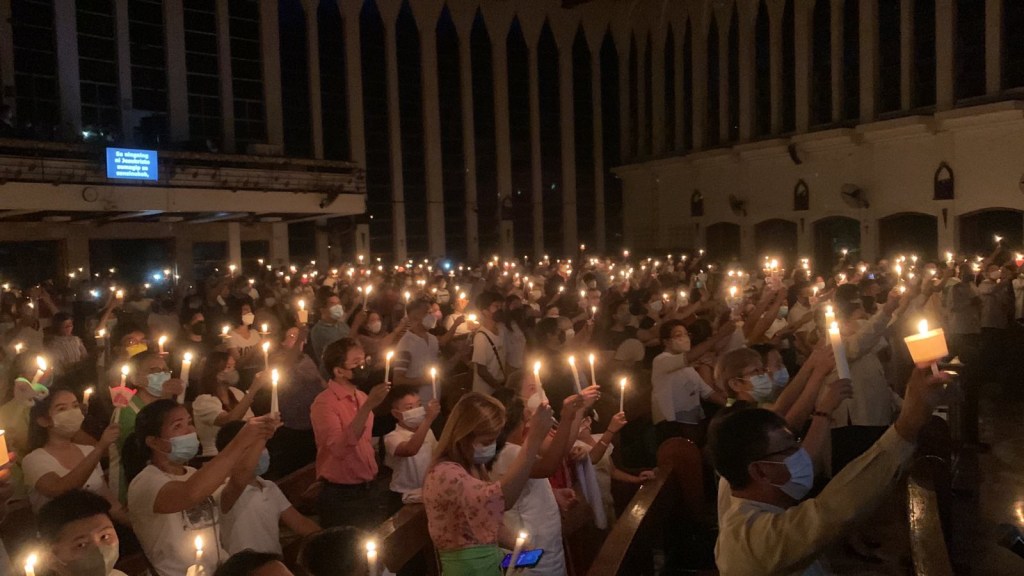
Photo by Cristian Pasion, Easter Vigil, National Shrine of Fatima, Valenzuela City, 2021.

On the very night before Herod was to bring him to trial, Peter, secured by double chains, was sleeping between two soldiers, while outside the door guards kept watch on the prison. Suddenly the angel of the Lord stood by him and a light shone in the cell. He tapped Peter on the side and awakened him, saying, “Get up quickly.” The chains fell from his wrists. The angel said to him, “Put on your belt and your sandals.” He did so. Then he said to him, “Put on your cloak and follow me.” So he followed him out, not realizing that what was happening through the angel was real; he thought he was seeing a vision.

Acts 12:6-9

It is very amusing, even funny, but facts can truly be stranger than fiction!

How could Peter sleep soundly after being arrested and thrown into prison with two soldiers sandwiching him inside his cell while a host of other guards secured the area outside?

We think again of St. Joseph sleeping soundly in a similar critical situation when he decided to silently leave Mary who was found pregnant with a child before they were married. Too often, we find it difficult to sleep when we have problems because we cannot decide decisively as we lack trust and faith in God. Both Joseph and Peter slept soundly under critical situations because of their complete trust and faith in God.

But, Peter shows us another dimension of his trust in God – his total trust also in the Church, believing that they were all praying for him.

Photo by Cristian Pasion, Easter Vigil, National Shrine of Fatima, Valenzuela City, 2022.

It is a beautiful imagery of the Church then and now, always in darkness like during night time when Peter was imprisoned. And that is the parable of this scene: it is always a time of Exodus for us in the Church, of passing over from every trials and difficulties, always trusting our leaders, trusting our faithful and most of all, entrusting everything to God!

If there is one thing most needed these days in our Church especially in the Philippines is this attitude of being in an Exodus, of exiting from our excesses from the past, of submitting ourselves more to God than to our own thoughts and plans especially in politics that we have forgotten the more crucial proclamation of the gospel by reaching out to the grassroots level, of witnessing our faith in God instead of lording it over among people, exerting our influences. The recent elections is a dark period of our imprisonment with secular thoughts and dispositions, forgetting our sphere of influence in spiritual matters.

May we, both clergy and laypeople, imitate Peter by abandoning everything to God in deep prayers, following God not our plans as symbolized by his putting on his belt and sandals as commanded by the angel.

Photo by Cristian Pasion, Easter Vigil, National Shrine of Fatima, Valenzuela City, 2021.

Meanwhile, we find the same kind of total abandonment by Paul of himself to God while in prison where he wrote some of his finest letters like this Second Letter to Timothy, the last of his captivity letters which we heard in the second reading today.

Imagine the stress of being in prison but without any hint of duress on Paul while awaiting death amid all humiliations with his incomparable eloquence:

I, Paul, am already being poured out like a libation, and the time of my departure is at hand. I have competed well; I have finished the race; I have kept the faith. The Lord stood by me and gave me strength, so that through me the proclamation might be completed and all the Gentiles might hear it. The Lord will rescue me from every evil threat and will bring me safe to his heavenly kingdom. To him be glory forever and ever. Amen.

2 Timothy 4:6-7, 17, 18

Very evident in all his letters, Paul had always expressed his total abandonment of self to Christ, of his faith in God. Here in this portion of his second letter to Timothy, we find two important lessons so apt in our celebration of this solemnity.


First is the nature of Christian life lived as a worship: am already being poured out like a libation. That is what I like most with Paul, his mastery of language, always using the most perfect words to express his experiences and ideas. For some, especially first-time readers of Paul, they may find it so “mayabang” as we say in Filipino. But no. For me, Paul is the most sincere and most humble writer in the world of letters then and now.

A libation is a drink offered to gods in ancient Greece and Rome. Here, Paul as he approached death, summarized his entire life as an offering to God that we also see in his other writings.

And that is the challenge of this solemnity to us, that we live our lives as a form of worship to God.

Photo by Fr. Pop dela Cruz, 15 June 2022.

Our very lives in itself are a prayer, always centered on God, something so foolish when we go by the standards of the world today that is all show – palabas – with nothing substantial inside because only money and fame matter. Paul was very much like Peter who lived their lives as prayers that like Christ in the end, both offered the highest offering of all, martyrdom.

Second thing we find in this short but rich excerpt from Paul’s letter to Timothy is the deeper meaning of death as a passage to heaven, “The Lord will rescue me from every evil threat and will bring me safe to his heavenly kingdom”. Like the gospel last Sunday when we heard Jesus “resolutely determined to journey to Jerusalem” wherein Jesus freely chose to face his death to fulfill his mission and express his deep love for the Father and for us. To the Philippians Paul declared that “for me life is Christ, death is gain”. Here in his letter to Timothy, Paul freely accepts his death, making it a blessing for others, something we must emulate. Instead of having those bucket lists of things to do before dying, Paul is teaching us death comes in every present moment that we must always prepare for its happening so that the next generation may continue the good things we have started. And that is exactly how until now the Church’s missionary zeal is kept aflame by Paul’s letters and works.


Photo by author, 2019.

In the gospel proclaimed today about the investiture of Peter as the head of the church of Christ, we heard Jesus entrusting to him “the keys to the kingdom of heaven that whatever he binds on earth shall be bound in heaven and whatever he loosens on earth shall be loosed in heaven” (cf. Mt.16:19).

As I end this reflection for this Solemnity of Saints Peter and Paul, I wish to use the word “key” in a different sense – the key to unlocking how Peter and Paul achieved so much for God and for the Church lies in their personal relationship with Jesus Christ. Both apostles who have become the pillars of the Church today truly experienced Jesus in their lives in the most personal and in timate manner that in the process they have mirrored the true Christ himself.

The problems we have in the Church today, notably the declining number of the faithful following an all-time low in credibility is largely due to the many wrong answers we give Jesus to his question “who do people say I am?” Many Christians are losing their faith and interest in the Church because of the mixed signals we give them on what do we say who Jesus is.

The Church grew so wide during the time of Peter and Paul because both apostles shared the true Jesus Christ not only in their words but also in their deeds. May we have the courage to open ourselves to Jesus Christ again so we may know him more clearly, love him dearly, follow him closely and preach him daily. Amen.

Photo by author, Sacred Heart Novitiate, Novaliches, QC, 2017.

Won over by Christ

The Lord Is My Chef Daily Recipe for the Soul by Fr. Nicanor F. Lalog II
Wednesday, Solemnity of Sts. Peter & Paul, Apostles, 29 June 2022
Acts 12:1-11 ><}}}*> 2 Timothy 4:6-8, 17-18 ><}}}*> Matthew 16:13-19
Photo by Mr. Lorenzo Atienza, Malolos Cathedral, 12 June 2019.
God our loving Father,
as we celebrate today the
Solemnity of the two pillars
of the Church, St. Peter and St. Paul
who are poles apart in their 
temperament and in their social,
cultural, and religious backgrounds,
help us imitate them in being open
to your grace always, in being open
to your plans so we may set aside
our own agendas in order to be won
over by your Son Jesus Christ. 
Nothing is impossible with you,
dear Father:  
Peter denied Jesus
during the passion while 
Paul persecuted Jesus in
the persons of his disciples;
Peter was impetuous and 
presumptuous but sometimes
hesitant yet solidly loyal to
Christ while Paul was proud 
of his Roman citizenship and of
his being a Pharisee, demanding
his title as Apostle but likewise,
admits his fragility as a "pot of
clay", most unworthy vessel of Christ; 
Peter was attached to his Jewish
roots and convictions but did not resist 
the Holy Spirit in leading him where 
he did not want to go while Paul was 
resolute in being led by the Spirit in
proclaiming Jesus to the gentiles
while deep inside was torn within 
by the resistance and
rejection of his fellow Jews.
Merciful Father,
let your Son Jesus Christ
win over us like what he did
to St. Peter and St. Paul
who both gave their lives as 
a living worship to you,
witnessing your love and mercy,
kindness and majesty;
give us the grace to know Jesus
and love Jesus first so we may
follow him to his Cross 
for your greater glory.
Amen.
Photo by Mr. Lorenzo Atienza, Malolos Cathedral, 12 June 2019.

Pagbabalik-loob, pagpapaloob sa kalooban ng Diyos

Lawiswis ng Salita ni P. Nicanor F. Lalog II
Kapistahan ng Pagbabalik-loob ni San Pablo, Ika-25 ng Enero 2022
Gawa ng mga Apostol 22:3-16  ><}}}*> + <*{{{><  Marcos 16:15-18
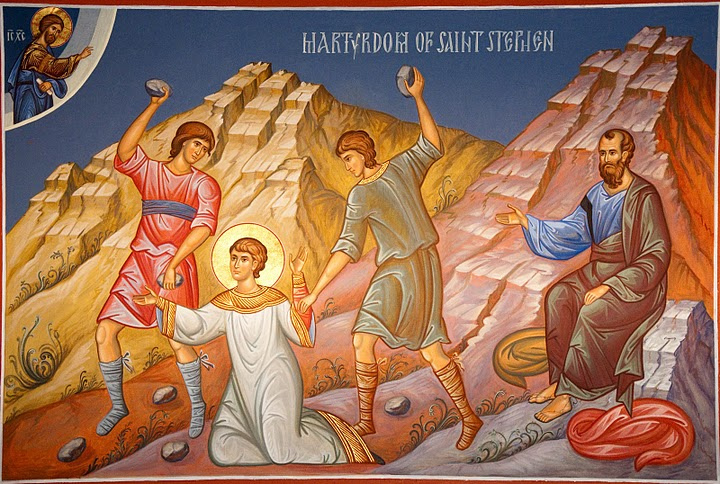
Larawan mula sa en.holyordersofststephen.org ipinapakita pagkamatay ng unang martir ng Simbahan si San Esteban habang pinapanood ni Saul na noo’y taga-usig ng mga Kristiyano habang napakita naman mula sa langit ang Panginoong Jesu-Kristo.

“Kalooban ng Diyos.”  Ito ang sa tuwina palagi nating inaalam sapagkat batid nating ito ang pinakamabuti para sa atin.  Subalit kadalasan tayo ay nabibigo, naguguluhan kung ano ang kalooban ng Diyos dahil madalas akala natin para itong tanong na isang pindot ay malalaman kaagad ang sagot tulad ng sa Google.

Kauna-unahang hinihingi sa atin upang mabatid ang kalooban ng Diyos ang tayo muna ay “pumaloob sa Diyos” na ibig sabihi’y dapat nasa loob tayo ng Diyos. Kung ikaw ay nasa labas ng Diyos, tiyak ikaw ay lumayo sa Kanya dahil sa kasalanan; kaya, pagbabalik-loob sa Kanya ang kinakailangan.

Ibig kong simulan dito ang pagninilay sa Kapistahan ng Pagbabagong-buhay ni San Pablo Apostol na ating ipinagdiriwang sa araw na ito. Ito ang upisyal na salin mula sa Inggles ng “Feast of the Conversion of St. Paul the Apostle” na tila may kulang.

Ganito kasi iyon: Tama rin namang sabihing “pagbabagong-buhay” dahil bawat conversion wika nga ay pagbabago tulad ng na-convert sa ibang relihiyon o sa ibang anyo o gamit. Ngunit sa bawat pagbabago, mayroong higit na malalim na nababago na hindi namang ibig sabihin ay nag-iiba o nagiging different.

Kasi iyong sinasabing conversion ni San Pablo o ng sino pa mang tao ay hindi naman pagbabago ng pagkatao kung tutuusin; sa bawat conversion ng isang makasalanan o masamang tao, hindi naman nababago yaong tao talaga kungdi kanyang puso na siyang naroon sa kanyang kalooban.

Ibig bang sabihin ang pagbabagong buhay ay yaong dating masayahin o palatawa magiging malungkutin o iyakin? Yaong dating mapusok at malakas ang loob magiging duwag? O yaong pagbigla-bigla at padaskol-daskol ay magiging makupad at mabagal sa pagdedesisyon?

Sa pagbabagong-buhay ng sino man tulad ni San Pablo, hindi nababago ang pagkatao: mapusok pa rin si San Pablo, palaban at matapang nang tawagin at sumunod kay Kristo. Hindi naman nabago kanyang karakter pero nabago kanyang puso na nahilig sa kalooban ng Diyos pagkaraan. Iyong kanyang dating kapusukan at katapangan sa pag-uusig ng mga Kristiyano ay nalihis naman sa pagpapahayag ng Mabuting Balita ni Hesus sa mga Hentil at kapwa niya Judio.

Kaya naman higit na malalim at makahulugang isalin ang conversion ng sino man sa katagang “pagbabalik-loob”. Bawat nagkakasala ay lumalayo ang loob mula sa Diyos na ibig sabihin ay “ayaw sa Diyos” gaya ng ating pakahulugan tuwing sinasabing “malayo ang loob”.

Kapag nagsisi at tumalikod sa kasalanan ang isang tao, hindi lamang siya nagbabagong-buhay o nag-iiba ng pamumuhay kungdi higit sa lahat, siya ay “nagbabalik-loob” sa Diyos. Tatlong bagay ang itinuturo sa ating ni San Pablo sa kanyang karanasan ng pagbabalik-loob sa Diyos.  

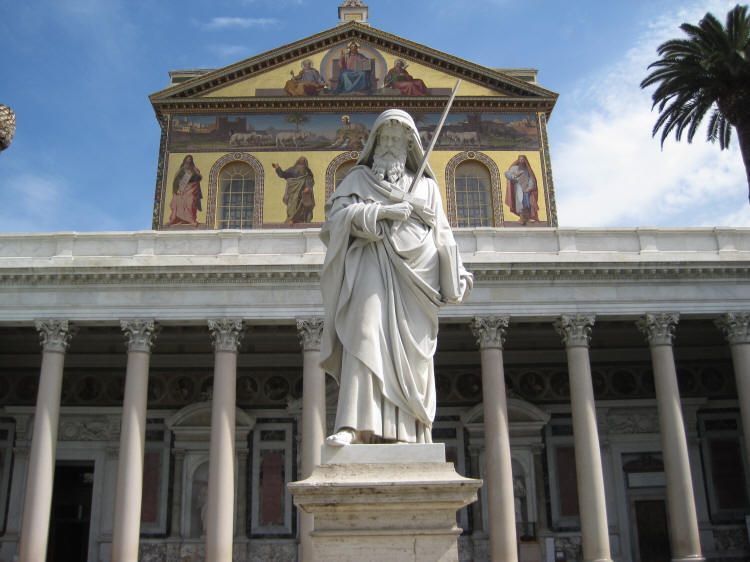
Larawan mula sa en.wikipedia.org ni San Pablo sa harapan ng Basilica ni San Pablo sa Roma, Italya.

Una, bawat pagbabalik-loob ay isang personal na pagtawag at paanyaya mula sa Panginoong Hesus.  Batay sa salaysay ni San Pablo, “Nasubasob ako sa lupa, at narinig ko ang isang tinig sa akin, ‘Saulo, Saulo!’”(Gawa 22:7).  

Araw-araw inaanyayahan tayo ni Hesus na magbalik-loob sa Kanya. 

Iyong mabatid lamang natin sa ating kalooban na mali ang ating ginagawa o kaya tayo ay kabahan at matakot sa isang masamang gawain, iyon na ang tinig ni Hesus na tumatawag sa atin katulad kay San Pablo. 

Huwag na nating hintayin pa ang isang “dramatic” o “bonggang” pagkakataon wika nga upang pakinggan ang tawag ng Panginoon katulad nang mahulog sa kanyang kabayo si San Pablo.  Hindi ibig ng Diyos na sumadsad pa ang ating buhay sa kasamaan at mawala na ang lahat ng pagkakataong makabalik pa sa Kanya.            

Ikalawa, madalas kapag tayo tinawag ng Diyos na magbalik-loob sa Kanya ay hindi kaagad maliwanag ang lahat sa atin kaya kailangan natin ng taga-akay: “Nabulag ako dahil sa kaningningan ng liwanag na iyon, kaya’t ako’y inakay na lamang ng mga kasama ko papasok sa Damaso” (Gawa 22:11). 

Larawan kuha ni G. Jim Marpa, 2019.

At hindi lamang basta taga-akay ang kailangan natin sa bawat pagbabalik-loob kungdi isang mahusay na gabay katulad ni Ananias na “isang taong may takot sa Diyos, tumutupad sa Kautusan, at iginagalang ng mga Judiong naninirahan sa Damasco” (Gawa 22:12). 

Si Ananias ang ginamit ng Diyos upang mapagaling ang pagkabulag ni San Pablo at malahad sa kanya ang kalooban ng Diyos na mapalaganap ang Mabuting Balita.

Ang mahusay na gabay ay yaong pumapawi at nagpapagaling sa ating mga pagkabulag sa katotohanan ng Diyos sa buhay na ito. Wika mismo ni Hesus, maaring bang maging taga-akay ng mga bulag ang isa pang kapwa bulag?

Magkaroon ng isang mabuting taga-akay o spiritual director na hindi namang dapat pari o madre lamang kungdi yaong isang mabuting pastol na kalakbay at kaagapay sa ating spiritual journey.

Ikatlo, bawat tawag sa pagbabalik-loob sa Diyos ay palaging paanyayang pumasok sa isang komunyon o kaisahan kay Hesus at Kanyang pamayanan o komunidad.  Ito ang magandang bahagi ng pagtawag kay San Pablo:  nagpakilala si Jesus bilang kanyang inuusig na Kristiyano, “Saulo, Saulo!  Bakit mo ako pinag-uusig?  Ako’y si Jesus na taga-Nazaret na iyong pinag-uusig” (Gawa 22:7,8)

Ang totoong pagbabalik-loob o pagbabagong-buhay ay yaong hindi lamang makita ang sarili kungdi makita ang kanyang kaisahan kay Hesus at sa kapwa-tao.  Walang kabuluhan ang ano mang pagpapakabuti ng sarili na nakahiwalay sa Diyos at sa kapwa.  Hindi kabutihan kungdi kapalaluan ang walang ibang makita kungdi sarili.  


Madaling sabihin ang mga bagay na ito at sadyang mahirap gawin.  Subalit kung ating susuriin ang naging buhay ni San Pablo, hindi lamang minsanang pangyayari ang magbalik-loob sa Diyos.

Isang mahabang proseso ang kanyang pinagdaanan sa kanyang pagbabalik-loob o pagbabagong-buhay; katulad natin marahil siya ma’y nagkakasala minsan-minsan sa Panginoon. 

Larawan kuha ng may-akda, 2019.

Ang mahalaga ay ang patuloy niyang pagninilay at pananalangin, ang pagsisikap niyang “pumaloob sa Diyos” upang mabatid at maisakatuparan ang Kanyang Banal na Kalooban na “Humayo kayo sa buong sanlibutan at ipangaral ninyo sa lahat ang Mabuting Balita” (Mc.16:15).  

Kaya, huwag manghinawa sakaling mabagal ang iyong “pagbabagong-buhay”; minsa’y akala mo lamang wala namang nababago at masama ka pa rin.

Hindi totoo iyan dahil batid ni Hesus, nakikita ni Hesus ang pagsisikap natin mula sa kaloob-looban natin hindi pa man tayo pumapaloob sa Kanya.

Ang totoo kasi, palagi namang nasa loob natin si Hesus, kahit anong pilit nating lumayo sa Kanya. Amen.

Sts. Peter and Paul, Mirrors of the Church

The Lord Is My Chef Breakfast Recipe for the Soul by Fr. Nicanor F. Lalog II
Tuesday, Solemnity of Sts. Peter and Paul, Apostles, 29 June 2021
Acts of the Apostles 12:1-11 + 2Timothy 4:6-8, 17-18 + Matthew 16:13-19
Easter Sunday 2019 at St. Peter’s Rome with Pope Francis, photo from vaticannews.va.

God our loving Father, thank you for this Solemnity of St. Peter and St. Paul who both mirror to us our primary tasks as stewards of the Church founded by your Son Jesus Christ. Despite our many differences in our personalities and backgrounds, help us find in them what the Church should be and would be by our love and faith in Christ Jesus and the mission he entrusted us.

Remind us we are stewards of the kingdom of heaven among our brothers and sisters – not their masters even if we are entrusted with the power of binding and unbinding

“And so I say to you, you are Peter, and upon this rock I will build my church, and the gates of the netherworld shall not prevail against it. I will give you the keys to the kingdom of heaven. Whatever you bind shall be bound in heaven; and whatever you loose on earth shall be loosed in heaven.”

Matthew 16:18-19

Let us be won over by Jesus Christ, by giving him entirely our faith and love despite our many weaknesses. Like Sts. Peter and Paul, may we keep in mind that our primary task in the Church is to serve, not to rule over the people nor amass wealth and fame along the way.

Let us strive to be loved than be feared so that in every decision we make people may find and realize your Holy Will.

O dear God, as we face today another serious threat of a new COVID-19 strain called Delta variant that is believed to be more dangerous as it spreads so fast, may we witness in our lives as we proclaim in words and in deeds your saving love and mercy in Jesus Christ.

May we offer our very selves like St. Peter and St. Paul, messengers of your love to everyone especially those in the margins of the society so they may continue to keep their faith amidst the many hardships during this pandemic for you, O God is always among us in Jesus Christ. Amen.

Being true collaborators of Christ

The Lord Is My Chef Breakfast Recipe for the Soul
Tuesday, Memorial of Sts. Timothy and Titus, Bishops, 26 January 2021
2 Timothy 1:1-8    >><)))*>   +++   <*(((><<     Luke 10:1-9
Photo by Mr. Raffy Tima of GMA-7 News, sunrise at Natonin, Mountain Province after a devastating landslide in October 2018.

Dearest Lord Jesus Christ:

A day after celebrating the feast of the conversion of your great Apostle Paul, we now remember his two collaborators and companions in fulfilling his mission from you, Timothy and Titus, trustworthy men who carried out so many of his works.

And so today, we pray Lord Jesus in your name to please send us collaborators in your mission, men and women who are trustworthy who share in your vision and mission, endeavors and responsibilities. Collaborators in you, Lord, who are willing and ready to serve the Gospel with generosity like Timothy and Titus who represented Paul in many circumstances far from easy.

Send us, dear Jesus, more workers in your field, collaborators in you with our bishops and priests, even with our leaders in government who shall think more of serving the people, thinking more of the welfare of others than one’s personal advantages like power and fame.

“The harvest is abundant but the laborers are few; so ask the master of harvest to send out laborers for his harvest. Go on your way; behold, I am sending you like lambs among wolves.”

Luke 10:2-3

What will happen to your people, Lord Jesus when your servants and collaborators become the wolves, unmindful of the needs of the people, forgetting their mission of proclaiming your Gospel, of celebrating your Holy Sacrifice of the Mass much needed these days?

What will happen to your people, Lord Jesus when your servants and collaborators become afraid of doing what is true and right, trying to please men and women than God, avoiding problems and difficulties?

Photo by Dr. Mai B. Dela Peña, MD, Carmelite Monastery, the Holy Land, 2017.

“For this reason, I remind you to stir into flame the gift of God that you have through the imposition of my hands. For God did not give us a spirit of cowardice but rather of power and love and self-control … bear your share of hardship for the Gospel with the strength that comes from God.”

2 Timothy 1:6-7, 8

Help us follow, dear Jesus, your Apostle Paul’s recommendation to Titus, “I desire you to insist on these things, so that those who have believed in God may be careful to apply to themselves to good deeds; these are excellent and profitable to men.”

May we be more committed to you, Jesus Christ than to anyone else, even to our selfish motives so that we may be rich in good deeds to open the doors of the world to you our Lord and Master. Amen.

A holy déja vu?

The Lord Is My Chef Breakfast Recipe for the Soul by Fr. Nicanor F. Lalog II
Monday, Solemnity of St. Peter and St. Paul, Apostles, 29 June 2020
Acts of the Apostles 12:1-11 >><)))*> 2 Timothy 4:6-8, 17-18 <*(((><< Matthew 16:13-19
Photo from americamagazine.org.

As I prepared to celebrate today’s Solemnity of the two pillars of the Church you have established, Lord Jesus Christ, that image of your Vicar and St. Peter’s successor, Pope Francis delivering his extraordinary Urbi et Orbi message last March 27, 2020 before an empty St. Peter’s Square flashed into my mind, something like a deja vu.

It is a holy deja vu, Lord, of St. Peter’s experience in prison on a Sunday night…

In those days, King Herod laid hands upon some members of the Church to harm them… he proceeded to arrest Peter also – it was the feast of the Unleavened Bread – he had him taken into custody and put in prison under the guard of four squads of four soldiers each. He intended to bring him before the people after the Passover. Peter thus was being kept in prison, but prayer by the Church was fervently being made to God on his behalf. Suddenly the angel of the Lord stood by him and light shone in the cell. He tapped Peter on the side and awakened him, saying, “Get up quickly.” The chains fell from his wrists. The angel said to him, “Put hi on your cloak and follow me.” So he followed him out, not realizing what was happening through the angel was real; he thought he was seeing a vision.

Acts of the Apostles 12:1, 3-5, 7-9

It is happening again, Lord, when we are all in great darkness due to this COVID-19 pandemic.

How blessed are we, O Lord, here with us in the midst of this pandemic is Pope Francis, St. Peter’s successor and St. Paul’s reminder to continue in proclaiming your Gospel in season, out of season.

Keep him strong and inspired always in order to lead us through this dark 2020.

We pray, O dear Jesus, for our Church especially here in the Philippines.

Our churches remain closed, some of our leaders are under attack while some of them along with our fellow workers are so afraid, so timid, abandoning their flock in this crucial moments of tests. Others are so concerned with trivial things, pursuing positions, fame, and wealth.

Have mercy on us, Jesus in veering away from your person and your Cross.

Strengthen us your Church, Lord, especially Pope Francis and all the bishops and priests, to always be aware of the angels you are sending us to deliver us from so many dangers in this time of crisis.

May we avoid “over thinking” that results into “analysis paralysis” that we forget to focus and do the more important things at this time which is to accompany, to be one with your flock now under various attacks not only by the corona virus but the diseases of indifference and convenience.

May we your body, the Church continue to pray with confidence, remembering your own pasch that brought us to salvation as we thank you too in keeping us safe and alive since March.

Give us the courage of St. Paul to take this period of pandemic and crisis as a form of pasch for each one of us, that we may willingly die in our selves and offer ourselves to you through others as an offering through worship with our loving service to one another.

May we keep our sights focused on you alone, Lord Jesus, the Christ of the living God sent to make us one.

Like St. Peter and St. Paul, though they were poles apart in their personalities and backgrounds, they were united in serving you, working for you by seeking only your face, your voice, your will and your presence.

May we keep in mind that when we fail to know you, Lord, that is when people fail to know and meet you too like the people of your time who claimed you were one of the prophets

Yes, the situations today may be like a holy deja vu from the past but you are definitely and truly present among us in this time of crisis.

St. Peter and St. Paul, pray for us!

Amen.

St. Peter by ecclesiastical artist Willy Layug at the Malolos Cathedral.
St. Paul by ecclesiastical artist Will Layug at the Malolos Cathedral.

St. Paul in time of COVID-19: need for pastoral communication

Quiet Storm by Fr. Nicanor F. Lalog II, 11 June 2020
Painting by Raphael (1515) of St. Paul preaching at Areopagus in Athens, Greece. From wikipedia.

With houses of worship still closed despite the opening of most business establishments, here is the final installment of reflection in our series on how the life and teachings of St. Paul may help us in our ministry during this time of COVID-19 amid a perceived government “persecution” of the Catholic Church.

There is no doubt that like during his time, St. Paul would be using modern means of communication to preach the Gospel of Jesus Christ especially in this most trying time of our history, using the internet as the new “Areopagus” with social media in particular.

Then Paul stood up at the Areopagus and said: “You Athenians, I see that in every respect you are very religious. For as I walked around looking carefully at your shrines, I even discovered an altar inscribed, ‘To An Unknown God.’ What therefore you unknowingly worship, I proclaim to you. The God who made the world and all that is in it…”

Acts of the Apostles 17:22-24

Social Communication

Perhaps before we go into our reflection, it is imperative especially for bishops and priests to be reminded anew of some important terms in communications; this is more than about names or nomenclature because for as long these terms of communications are not clear with us, all our evangelization efforts would be askewed as it is now showing with an explosion of online Masses and other religious celebrations.

First priority is to stop using the words “mass media” and even “social media” in our church communications because these are very limited in scope and context.

It is important to note that in the 2000-year history of the Church, it was only in Vatican II that we have issued a conciliar document on communication wherein the Fathers also introduced the term social communication as a new name for communications in the Church.

How sad that there are still bishops and priests using the terms “mass media” or “media” and lately “social media” when more than 50 years ago the Church through the inspiration of the Holy Spirit coined social communication to refer to “the communication of and in human society including all the ways and means used in this process” (Fr. Franz-Josef Eilers, svd, 2009 BISCOM-FABC, Bangkok).

Social communication is a very prophetic term because it is theological and rooted in God who is communication himself, sharing with us his power to communicate so we may also communicate with him and with others. Most of all, God continues to communicate with us and from that lies our task as a Church to communicate him to the world.

This is the reason why we have to keep on using this term “social communication” in our Church communications to keep us Christocentric, meaning, every communication in the Church and by the Church has Jesus as Message.

And that is essentially the kind of communication process followed by St. Paul the Apostle. In fact, reviewing his letters and the various accounts about him would show us that early, this great apostle has been into social communication, specifically “pastoral communication” that is an emerging field in Church communications whose realities have long been espoused by St. Paul himself.

Pastoral Communication

Pastoral communication is anchored on Jesus Christ, the “Good Shepherd” who sets himself as the norm and standard of our Church communications.

Jesus said, “I am the good shepherd. A good shepherd lays down his life for the sheep… I am the good shepherd, and I know mine and mine know me, just as the Father knows me and I know the Father; and I will lay down my life for the sheep.”

John 10:11, 14-15
Photo by Pixabay on Pexels.com

St. Paul has always been very clear with this in all his communications that towards the end of his life, he had beautifully written his disciple this wonderful piece:

Beloved: I charge you in the presence of God and of Christ Jesus, who will judge the living and the dead, and by his appearing and his kingly power: proclaim the word; per persistent whether it is convenient or inconvenient… For I am already being poured out like a libation, and the time of my departure is at hand. I have competed well; I have finished the race; I have kept the faith.”

2 Timothy 4:1-2, 6-7

Communicating Jesus Christ is always about self-sacrifice, about giving of one’s self like our Lord and Master. In whatever form of communication we use, it is always a call to “enflesh” the Word. In short, communication is spirituality that indicates the kind of relationship we have with God. How we reflect that relationship with God in words and in deeds, in our clothings and everything is communication.

Like St. Paul, he was able to offer himself wholly to God as reflected in his writings and preaching because he was more concerned with the needs of the flock and not with his own needs.

And this is where I sadly feel our bishops sorely absent and silent except for just two, Lingayen-Dagupan’s Archbishop Soc Villegas and Manila’s Apostolic Administrator Bishop Broderick Pabillo.

Where are the other bishops?

Business establishments are almost all opening, even dine-in restaurants and yet, until now for no valid reason, the government continues to ban religious mass gatherings except for maximum of ten persons in areas under GCQ.

When are the bishops and priests going to speak out against this and open the churches so people may be spiritually nourished?

What an auspicious time for the clergy and hierarchy to speak against this continued closure of churches as we are on the eve of our 500th year of Christianization when under serious persecution. Has the Church grown timid in the face of an unfriendly government?

Worst are some priests who seem to follow more the secular world in their digital presence but empty of Jesus Christ, concerned only with popularity measured in number of likes and shares as well as followers.

Many of us have become more of personalities than as priests and ministers, unconsciously trying to be more popular than the Lord himself that we no longer have sacrifice of the Mass but a variety show, complete with sound effects and digital characters, some wit dance numbers and raffles!

When God is displaced, then our love is misplaced, then, we lose all communications too.

Communication is more than the expression of ideas and the indication of emotion. At its most profound level it is the giving of self in love. Christ’s communication was, in fact, spirit and life.  In the institution of the Holy Eucharist, Christ gave us the most perfect and most intimate form of communion between God and man possible in this life, and, out of this, the deepest possible unity between men. Further, Christ communicated to us His life-giving Spirit, who brings all men together in unity. The Church is Christ’s Mystical Body, the hidden completion of Christ Glorified who “fills the whole creation”.  As a result we move, within the Church and with the help of the word and the sacraments, towards the hope of that last unity where “God will be all in all”. 

Communio et Progressio # 11
From Google.

Problem with online Masses and religion

Every communication presupposes presence. That is essentially the meaning of God’s “I AM” in the burning bush to Moses and the “I AM” declarations by Jesus in the New Testament, especially in the fourth gospel where we find him saying “I am the good shepherd”.

Even St. Paul in his letters always began with his standard salutations like “I, Paul…” to indicate his very presence among his “parishioners”.

However, in the digital media, presence is not so essential and can even be faked both ways, either by being “taped” or “replayed” by viewers.

And there lies the great danger of online Masses and other celebrations: whether we like or not, online religious celebrations give the impressions on people that God is a “consummable”, a product or a show that can be had when most convenient to us like video on demand or the streamed shows of Netflix.

That is why we have to open churches soon to stop these online Masses except for those in the Cathedrals and in existence long before COVID-19 that cater to the needs of the sick and elderly in their homes.

Pope Francis has always been clear with this, stressing that these online Masses and religious celebrations are very temporary due to the extraordinary situation brought about by the pandemic.

From Pinterest/Aleteia.

Imagine the problem at Corinth that reached St. Paul’s attention, prompting him to write them another letter to reprimand them but at the same time to encourage them to mend their ways. It was a problem of abusing the Eucharist when St. Paul was no longer with them.

It is the same thing happening in many of our online Masses that have become variety shows to impress viewers. Long before we got into this lockdown, many priests have crossed the boundaries without knowing they have made fools of themselves as they rely more on “likes”, on being viral or trending, dishing out shallow reflections covered with cute song numbers, litany of greetings on air, and so many other inanities that Jesus is lost in the process.

Unfortunately, many laypeople are now also having their own digital preaching or evangelization with their own “productions” taking their cue from their showbiz pastors.

If St. Paul were with us today, he would surely write again to express his dismay at the people seeking more of entertainment than having Jesus Christ.

“But I am afraid that, as the serpent deceived Eve by his cunning, your thoughts may be corrupted from a sincere and pure commitment to Christ. For I think that I am not in any way inferior to these “superapostles”. Even if I am untrained in speaking, I am not so in knowledge; in every way we have made this plain to you in all things.

2 Corinthians 11:3, 5-6

Church communication is Jesus Christ and his Cross as St. Paul reminds us in his writings (1Cor.15:1-3); it is never about techniques or gadgets.

Though we need to be present online, the cutting edge of real communication remains in pastoral communication that means being present with others who need us most including those without internet access, witnessing to the values of Jesus in relating with people, bringing people together into a communion and helping them find answers in their search for meaning and directions in life, in making the right choices and in living their convictions and faith.

What we are speaking of are real people, persons and lives that matter so much, more precious than goods and commodities.

Let us not fall into the trappings of this “media revolution” that made one futurologist describe our contemporary society as

Technologically Intoxicated Zone defined by the complicated and often paradoxical relationship between technology and our search for meaning.

John Naisbitt

According to Naisbitt and other experts, while people prefer quick fixes online of everything, from religion to nutrition, while at the same time fearing and worshipping technology that had blurred the distinction of what is real and fake, the more they live their lives distanced and distracted — something we are already seeing even before the coming of social distancing!

To communicate in the Church at this time is to imitate St. Paul: be present for and with the people wherein we help them find their way to God by being their companions and “co-journeyers” in life, witnessing to them the Cross of Jesus Christ with our very lives as an offering and sacrifice, not as a commodity or a show to be “liked” on Facebook and Instagram.

And, lest we forget, it is God whom people must follow and worship, not us.

So be imitators of God, as beloved children, and live in love, as Christ loved us and handed himself over for us as a sacrificial offering to God for a fragrant aroma.

Ephesians 5:1-2
Pope Francis praying before an empty St. Peter’s Square last March 27, 2020 at the height of COVID-19 in Italy.