Blessed are the women

The Lord Is My Chef Daily Recipe for the Soul by Fr. Nicanor F. Lalog II
Thursday, Misa de Gallo VI, 21 December 2023
Zephaniah 3:14-18 <*{{{{>< + ><}}}}*> Luke 1:39-35
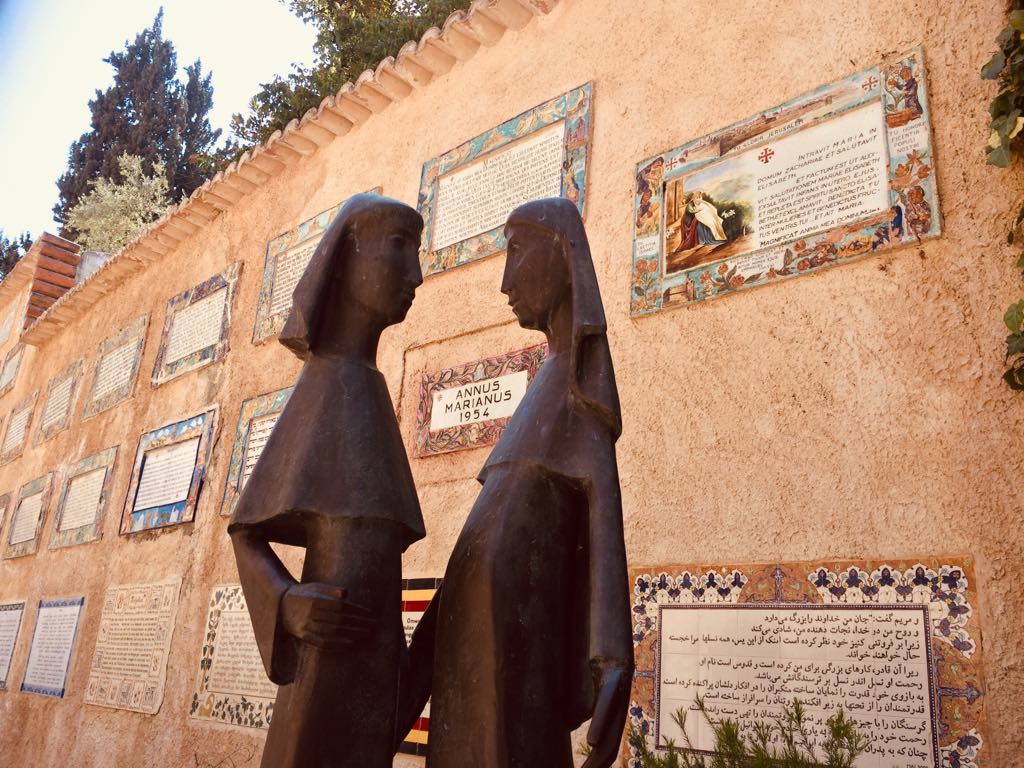
Photo by author, bronze statues of the Blessed Virgin Mary and St. Elizabeth, Church of the Visitation at Ein-Karem, Israel, April 2017.

For the third straight day since Tuesday until Saturday morning at the end of our Christmas novena, all our gospel readings will be from St. Luke, the only evangelist with the most “comprehensive coverage” of the first Christmas following his extensive research on Jesus Christ’s life and teachings (cf. Lk.1:1-4).

Hence, his gospel has the most stories and parables than the gospel accounts of Mark and Matthew. Most of all, St. Luke’s gospel account has two distinctive characteristics that showed Jesus always at prayer while at the same time gave special emphasis on women like the Blessed Virgin Mary. You must have noticed this by this time since Tuesday when we began listening to his infancy narrative.

Mary set out in those days and travelled to the hill country in haste to a town in Judah, where she entered the house of Zechariah and greeted Elizabeth.  When Elizabeth heard Mary’s greeting, the infant leaped in her womb, and Elizabeth, filled with the Holy Spirit, cried out in a loud voice and said, “Most blessed are you among women, and blessed is the fruit of your womb.”

Luke 1:39-42
Photo by author, mural on the apse of the Church of the Visitation at Ein-Karem illustrating the Visitation (left panel) and how the angel helped St. Elizabeth hid the infant St. John the Baptist after King Herod ordered the murder of all children aged two and below.

It is rare in the Bible to find two women presented positively together in a single scene. Very often especially in the Old Testament, there is always a sort of animosity among them due to the prevailing patriarchal points of view of the time. 

The only instance two women were presented together in good terms in the Old Testament is in the Book of Ruth that still hinted some sense of superiority of Naomi over her daughter-in-law Ruth who was like her a widow but childless.

Therefore, this scene of the Visitation only St. Luke has is a gem in itself as it speaks eloquently of the important place of women in God’s plan of salvation. It beautifully portrays to us the joy of two great women filled with God and humble before him, affirming and acknowledging the two great men in their wombs about to change the course of human history: Elizabeth with John the Baptist who would prepare the way of the Savior, Jesus Christ in the womb of Mary. 

Photo by Mr. Boy Cabrido, Our Lady of Mt. Carmel, QC, Misa de Gallo, 18 December 2023.

The story of the Visitation reminds us how God works mysteriously in everyone without exceptions by linking or interconnecting us with each other in Jesus Christ our great Mediator and Savior. How lovely to see in this instance how John and Jesus already performing their mission even while in the womb of their mothers, of bringing together people. What a wonderful illustration of women as God’s vessels and carriers!

In both Mary and Elizabeth, we now “shout for joy” as Zephaniah prophesied in the first reading at how God saved us when he “removed the judgment against you, he has turned away your enemies; the Lord, your God, is in your midst, a mighty savior, who will rejoice over you with gladness, and renew you in his love… so that no one may recount your disgrace” (Zep. 3:14,15,17, 18).

Do we truly share in this shout for joy for the women of the world, for the women among us? How sad that until now women continue to suffer from all kinds of abuses not only from men but even from their fellow women. 

Some spiritual writers say God is more like a woman because whatever was lacking in man, God put it in her. Perhaps that is why it is the woman who completes every man – including with us priests! But sadly, as we speak a lot about synodality in the Church these days, it is often among us priests with whom women are often taken for granted, and worst, abused.

One problem directly related today with how we regard women is the great number of people especially the youth trapped in the insidious effects of pornography due to prevalence of social media. At its core, the problem and evil with pornography is the failure of so many to recognize the lack of respect for women who are created equal with men in the image and likeness of God. 

St. Joseph showed us the other day that true holiness is expressed in the way we respect women. According to an article by Papal Preacher Cardinal Cantallamessa I have read two decades ago where he cited a Dominican biblical scholar who’s name I could not recall, “the way we treat and regard women is a reflection of our relationship with God”.

That is very true.

When I review my life, I have found God making so many ways to lead me into the priesthood through the many women I have met and known, and many of them have remained my “bestest” friends like the three former executives of GMA-7 News Department who asked me to guide them in their Holy Land pilgrimage in Easter 2017.
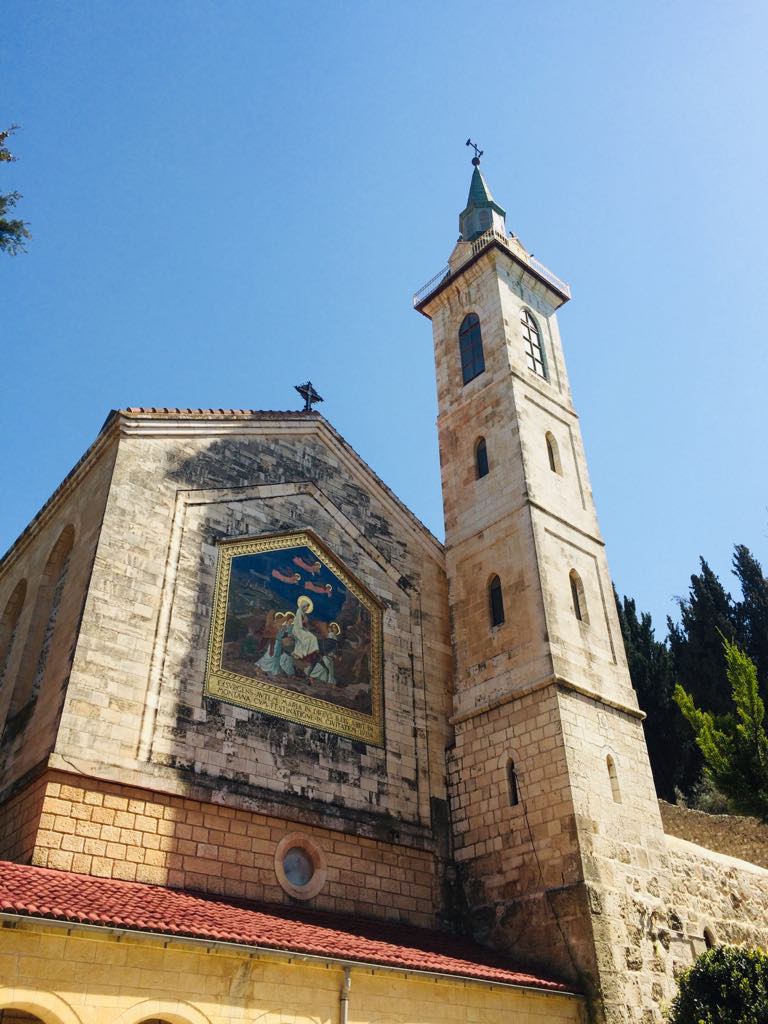
Photo by author, Church of the Visitation, Ein Karem, Israel, April 2017.

It was my second Holy Land pilgrimage but my first time to visit the beautiful Church of the Visitation in Ein Karem. 

Outside that lovely church are two bronze statues of Elizabeth and Mary conversing on how God had blessed them with sons under unique circumstances:  Elizabeth was too old and barren while Mary was too young, a virgin, not yet married with Joseph. 

What a beautiful reminder of God coming to us through women!

While there at Ein Karem, I prayed for all the women I have loved and have loved me before, all the women who have blessed me and have taken care so well of my vocation to the priesthood.  I thanked God for the women like Elizabeth who have blessed me in believing that what was spoken to me by the Lord would be fulfilled in the priesthood.  Blessed are the women who like Mary have helped me see the women’s perspectives that made my priesthood more complete especially in dealing with feminine issues.  The women who taught me how to respect differences, to feel the society’s bias against them, and most especially feel their deep pains when they shared with me their ordeals of abuse and rape.

Let me end this reflection with an unforgettable anecdote at the funeral Mass for the mother of our late Bishop Jose F. Oliveros in Quezon province about ten years ago when he recalled how his mother held his right hand while still a child, and taught to make the sign of the Cross.  On her deathbed, it became his turn, as a priest and a bishop, to hold his dying mother’s hands to make the sign of the Cross. 

Hail to all women and mothers in the world who bring life into this dying world with their joy and perseverance, artistry and simplicity, warmth and presence of God almighty. May this story of the Blessed Virgin Mary’s Visitation of St. Elizabeth teach us to always respect women for they are the carriers of God to us. Amen.

At the wailing wall of Jerusalem, April 2017.

What’s inside you?

The Lord Is My Chef Daily Recipe for the Soul by Fr. Nicanor F. Lalog II
Tuesday, Misa De Gallo IV, 19 December 2023
Judges 13:2-7, 24-25 <'[[[[>< + ><]]]]'> Luke 1:5-25
Photo by Taryn Elliott on Pexels.com

Here’s another beautiful story I got from a blogger I recently followed from Spain at wordpress.com. It is actually an analogy which may sound simple but very true.

You are holding a cup of coffee when someone comes along and bumps into you or shakes your arm, making you spill your coffee everywhere. 
Why did you spill the coffee?

"Because someone bumped into me!!!"

Wrong answer. You spilled the coffee because there was coffee in your cup. Had there been tea in the cup, you would have spilled tea. Whatever is inside the cup is what will spill out.

Therefore, when life comes along and shakes you - which surely happens all the time - whatever is inside you will come out. It's easy to fake it, until you get rattled. So, we have to ask ourselves, "what's in my cup?" When life gets tough, what spills over from me? 

(see, https://pkmundo.com/2023/12/17/i-love-this-analogy/comment-page-1/#respond)
Photo by Mr. Boy Cabrido, Quiapo Church, Misa de Gallo, 17 December 2023.

My dear friends, we are now on the fourth day of our Misa de Gallo and I find that story/analogy so appropriate with our readings today. 

How interesting that Zechariah with his wife Elizabeth – according to St. Luke – prayed so hard all their lives to have a child but when God was about to fulfill it, Zechariah doubted it despite being told by an angel from God. Like in that story/analogy we presented above, Zechariah was “rattled” by the angel’s good news. “What was inside Zechariah that he doubted the good news”? 

Then Zechariah said to the angel, “How shall I know this? For I am an old man, and my wife is advanced in years.” And the angel said to him in reply, “I am Gabriel, who stand before God. I was sent to speak to you and to announce to you this good news. But now you will be speechless and unable to talk until the days these things take place, because you did not believe my words, which will be fulfilled at their proper time.”

Luke 1:18-20
Photo by author, Wailing Wall of Jerusalem, May 2017, the section of the remaining parts of the temple closest to the Holy of Holies where priests used to incense once a year.

Advent is the presence of God but sometimes when we are overburdened with so many things like anxieties and problems in life, frustrations and disappointments, sickness and death in the family, we become unaware of his divine presence even if we continue to pray and do our religious duties and devotions.  Too often we lack the conscious awareness of God in our lives that we take him for granted, considering him more as a given than a presence and a reality.

This is exactly what we told you yesterday about some of us pretending to be real disciples of Christ when in reality we are merely dreaming in a sleepwalking existence. It is a kind of spiritual immaturity due to our lack of honesty and sincerity with one’s self and with God that we remain a spiritual dwarf. Like Zechariah who happened to be a priest who must be more attuned and rooted in God, we too hardly notice God’s coming or even doubt him and his powers because we want to hold on to our comfort zone or insist our own agenda. 

God is never put off by our queries in life but what “irritates” him is when we question him, when we doubt him, when we ask about his character like Zechariah.  That is a lack of faith in God, a lack of trust, and lack of personal relationship with him unlike St. Joseph in our reflection yesterday, truly a righteous man. 

Contrast Zechariah with his wife Elizabeth who is presented by St. Luke in a better position despite her being barren. In the Bible, barrenness is a sign of lifelessness and absence of God’s blessings. Worst, it was seen as a punishment from God for one’s sins.

Yet in this opening scene of St. Luke’s infancy story beginning with the annunciation of John’s birth, we find God’s power at its fullest when we are most emptied which is exactly the imagery of Elizabeth being barren and old. She had nothing at all to be proud of unlike Zechariah who still had duties to perform as a priest. 

As we have reflected yesterday too, we burst in great rejoicing actually in those moments filled with negativities, with a lot of “no” answers of rejections and failure. That was how Elizabeth felt after being pregnant with John.

After this time, his wife Elizabeth conceived, and she went into seclusion for five months, saying, “So has the Lord done for me at a time when he has seen fit to take away my disgrace before others.”

Luke 1:24-25

Earlier, we asked what was inside Zechariah that he doubted the good news of the angel; now, we imagine what was inside the barren Elizabeth who welcomed the good news rejoicing by voluntarily going into a seclusion?

The story of the elderly couple Zechariah and Elizabeth finally being blessed by God with a child shows us God’s consistency not only in keeping his promises but most of all in working best even in our worst conditions, in the most unusual circumstances. In these two stories, one from the Old Testament and in the New Testament, we find the importance of being filled with God always.

Recall our story/analogy above. What is inside us that comes out when we are shaken? What spills over from our cup, is it joy, gratitude, and peace? Or, anger, bitterness, harsh words and reactions long festering within?

In starting his Christmas story with the annunciation of the birth of John the Baptist, St. Luke is telling us an important aspect in celebrating this blessed season – the need to fill ourselves with God. 

See how Zechariah was forced to be silent and made mute so that he could spend more time listening and rediscovering God anew in his heart, of filling himself with God. On the other hand, Elizabeth opted to go into seclusion also to contemplate God already dwelling in her though she may have never known before that is why she wanted to listen more intently to his other plans with the gift of John. Similarly like her in the first reading was the wife of Manoah who remained silent and open when a man of God told her she would bear a son to be called Samson, saying that “I did not ask him where he came from” (Jgs.3: 6). Advent invites us to simply be still to be filled by God, with God.

The other day I joined my nieces and nephew for lunch. After dropping me off at the parish, they asked for a nearby Starbuck’s because my nephew had to buy a coffee mug for his exchange gift in their class. When I asked him why he had to give a Starbuck’s mug as gift, it turned out that is now the way it is in class Christmas party – your exchange gift partner can make a wish for the gift to receive for as long as it is within the agreed budget by the class.

Anyway, our life gives us the cup or the mug. We make the decision, the choice to fill it with coffee or chocolate or tea, in the same manner we fill ourselves with joy or bitterness, anger or serenity, gratitude or complaints. Or God.

Like Zechariah in the gospel today, we could be so tired already of doing so much, of banging our heads on the wall to solve everything, to answer everything.  In this final stretch before Christmas, let us empty our cups or mugs of our selves and fill it with God who alone can truly fill us with life despite our dryness and barrenness. Amen.Have a blessed Tuesday!

Advent is waking up to God’s realities

The Lord Is My Chef Daily Recipe for the Soul by Fr. Nicanor F. Lalog II
Misa De Gallo III, Monday, 18 December 2023
Jeremiah 23:5-8 ><))))*> + <*((((>< Matthew 1:18-25
Photo by author, sunrise at the Pacific Ocean from Katmon Nature Sanctuary & Beach Resort, Infanta, Quezon, 04 March 2023.

“This is how the birth of Jesus Christ came about” (Mt. 1:18). I love this opening line of our gospel this Monday. So simple and warm, even magical that we know the whole story it is about to tell not only by heart but because it is now fulfilled. 

It evokes in us that scent of Christmas or amoy Pasko whatever that means to you. 

Basta, you know that feeling of being so safe and secured that everything in life will be fine, just like with St. Joseph after being told by an angel in his dream of the coming of Jesus Christ.

Photo by author, San Fernando, Pampanga, November 2021.

“Joseph, son of David, do not be afraid to take mary your wife into your home. For it is through the Holy Spirit that this child has been conceived in her. She will bear a son and you are to name him Jesus, because he will save his people from their sins.”

Matthew 1:20-21

Feel the solemn note of Matthew’s infancy account from the perspective of St. Joseph, the fulfillment of God’s promise that burned slowly through long years of waiting that burst into light with the birth of Jesus Christ in Bethlehem more than two thousand years ago.

Every prophecy and dream and longings were finally fulfilled because “When Joseph awoke, he did as the angel of the Lord had commanded him and took his wife into his home” (Mt. 1:24).

As we enter the final stretch of the week leading into Christmas Day when Christmas rush tries to hijack our souls from its true essence, we are invited to go deeper, to be more intense in our prayers and reflections on the meaning of Christ’s coming to us.

Are we willing to be like St. Joseph?

Very often, St. Joseph is taken so lightly because of his silence. And amusingly, his being portrayed always asleep that God communicated to him at least four times in his dreams about the birth and safety of Jesus Christ.

For anyone fast approaching the senior year of 60 like me, you would exactly know the feeling and frustration of difficulty in having a good night sleep. If my alarm clock were a human, he would have long been fired from the job because I always wake up ahead before it alarms!

Photo by author, Sacred Heart Novitiate, Novaliches, Quezon City, 20 March 2023.

First thing we find with St. Joseph sleeping soundly in the midst of a major problem – in fact, a fiasco – which invites us to examine our faith in God. 

Many times we find it hard to fall asleep not really because of our problems but with our indecisions. 

Our failure to confront and solve our problems make us sleepless. If we can be firm in our decisions due to our deep faith and love for God like St. Joseph which is the meaning of his being a righteous man, we too can sleep soundly like him. Go back to the story and you will find how quickly St. Joseph had decided to divorce Mary quietly so as not to expose her to shame. In making that decision, we find St. Joseph’s selflessness and complete trust in God: primary in his consideration was Mary, his beloved. His love for her was the expression of his love for God too.

As we age, can we start our memoir with the similar lines of Matthew, This is how the birth of Jesus Christ came about? Can we unabashedly telling everyone in all sincerity “this is how what I am today came about”? Can we wholeheartedly tell straight what really happened amid all the pains and disappointments we went through when God suddenly changed the course of our lives with his own plans? Would we have regrets or none at all like St. Joseph because he obeyed everything upon waking up?

Now, that is the more important part in Matthew’s short infancy narrative: nothing much was told after the St. Joseph awoke except that he did as the angel of the Lord had commanded him and took his wife into his home. The final sentence cemented everything with his total union with God that “He had no relations with her until she bore a son, and he named him Jesus.”

Here we are given a glimpse of the spiritual maturity and holiness of St. Joseph, his being open to God expressed in his taking of Mary as his wife that in doing so, Jesus Christ the Son of God came into the world. What a wonderful flow of events we too must have experienced in our lives when everything falls into its right places simply because we cooperated with God

According to St. John Paul II’s friend, the Orthodox Christian theologian Olivier-Maurice Clement, a lot often we pretend to be real disciples of Christ when in reality we are merely dreaming. He called it “sleepwalking existence”; my Jesuit spiritual director Fr. Danny Gozar calls it “spiritual dwarfism”. Both refer to our spiritual immaturity due to our lack of honesty with our self and with God.

Being righteous like St. Joseph is simply being holy, a spiritually matured person generous enough to confront and consider everything in one’s life with open mind and open heart to set them aside and give way to God’s greater plans. Sleepwalking existence and spiritual dwarfism happen when there are certain things we want to hold on to and pursue or keep even if we could feel it is not God’s will for us. Tendency is to fool ourselves that we delay any decisions as we claim we are not yet certain with God’s will when in fact we are simply hoping against hope God would change his mind.

Photo by author, San Fernando, Pampanga, November 2021.

The angelic annunciations to St. Joseph and to Virgin Mary may not be literal but we can be certain of one truth with God: he is most consistent in communicating his will to us even if he does not speak clearly and directly as humans or angels. Very often, the faintest voice within us that persists, the most ordinary things and events happening daily we take for granted, the simplest truths we realize and deem so little are God’s consistent communication of his will for us.

This Advent Season, let us try to wake up to life’s realities like St. Joseph in order to hear God’s voice in silence. To be silent is to be awake to life’s realities, to be able to listen and discern God from all other voices and noises. It is important that we are awake to life’s realities like St. Joseph because God’s voice may be the very words, silence, tears or smiles of those who love us most but we often take for granted. Amen.

Saying “no” leads us to rejoicing

The Lord Is My Chef Sunday Recipe for the Soul by Fr. Nicanor F. Lalog II
Third Sunday in Advent Week III-B, Gaudete Sunday, 17 December 2023
Isaiah 61:1-2, 10-11 ><}}}*> 1 Thessalonian 5:16-24 ><}}}*> John 1:6-8, 19-28
Photo by author, Gaudete Sunday 2018.

Our church is bursting with pink shades this Third Sunday of Advent known as Gaudete (Latin for rejoice) Sunday following calls from our antiphons and readings for us to rejoice in Jesus who had come more than 2000 years ago in Bethlehem.

We also rejoice on this date, the 17th of December, as we shift our focus to enter Advent’s second phase when we remember and reflect the events surrounding Christ’s birth on that first Christmas. Today is also the second day of our Simbang Gabi and without sounding a Scrooge, I wish to propose in my reflection this Sunday for us to examine those moments in the scriptures and in our lives when saying “NO” leads us too into great rejoicing.

It is normal most of the time that rejoicing comes after every big “YES” in life like when a woman finally says “YES” to her suitor or when a boss says “YES” to promote an employee. The reason mankind rejoices at Christmas is because of the Blessed Virgin Mary’s “YES” to be the Mother of Jesus Christ our Savior.

Photo by author, Gaudete Sunday 2019.

However, history and our own experiences have taught us also that the key to rejoicing is when we say “NO” or receive or do something in the negative like during the pandemic when we prayed for “negative results” whenever we would get COVID tests. A lot often in life, a negative can be positive like what we see in our gospel today:

A man named John was sent from God. He came for testimony, to testify to the light, so that all might believe through him. He was not the light, but came to testify to the light. And this is the testimony of John. When the Jews from jerusalem sent priests and Levites to him to ask him, “Who are you?” he admitted and did not deny it, but admitted, “I am not the Christ.”

John 1:6-8, 19-20

See the progression of the negatives in the fourth gospel’s Prologue: after establishing “In the beginning was the Word” who is Jesus Christ the “life” and “light” in verses 1-5, John the Baptist is introduced with the immediate declaration “He was not the light, but came to testify to the light” in verses 6 and 8. In the following questioning by the priests and Levites sent from Jerusalem, John twice told them “I am not the Christ… not Elijah”, insisting with a strong “No” if he were the Prophet in verses 21-22 before wrapping up the scene with a solemn statement that “there is one among you whom you do not recognize, the one who is coming after me, whose sandal strap I am not worthy to untie” in verses 26-27.

Photo by author, Gaudete Sunday 2019.

What a lovely scene of negatives, of nots and nos!

Recall those moments in our past filled with painful rejections and humiliating failures that we now look back with rejoicing because of the valuable lessons we have learned and made us stronger today. We realize too that the past negative moments darkened by sin and evil were not totally bad at all as these have led us into the light of Jesus Christ that we now rejoice in being forgiven and loved. When we remember those trials and difficulties we have hurdled in life, we do not feel ashamed but actually feel so proud, being sources of rejoicing for all our victories and successes today.

As we have been saying, Jesus was born during the darkest night of the year, a big negative so we can see the great positive, Christ our Savior, our Light. He is the fulfillment of that great prophecy by Isaiah in the first reading which Jesus himself proclaimed at the start of his ministry in their synagogue in Nazareth on a sabbath. 

The spirit of the Lord God is upon me, because the Lord has anointed me; he has sent me to bring glad tidings to the poor, to heal the brokenhearted, to proclaim liberty to the captives and release to the prisoners, to announce a year of favor from the Lord and a day of vindication by our God.

Isaiah 61:1-2
Photo by author, Gaudete Sunday 2019.

Luke tells us in his account how “the eyes of all in the synagogue looked intently” at Jesus who then said, “Today this scripture passage is fulfilled in your hearing” (Lk.4:20-21).

When there is fulfillment, rejoicing follows because that is when we say no to the many negatives holding and preventing us from welcoming Jesus in our lives.

When we feel poor and inadequate and try to find Christ beyond what we do not have, that is when we rejoice to find everything in him who fulfills, enriches and enables us in this life and beyond.

Rejoicing happens when we finally say no to our toxic relationships with people who break our hearts with their infidelities and say yes to Jesus who remain faithful and true to us in our family and old friends who truly loved us ever since.

True joy and rejoicing happen when we finally say no to unforgiveness of self and others, when we say no to the past sins and mistakes, baseless guilt-feelings that have held us captives for so long to find mercy and forgiveness in Jesus.

Every day is a part of the year of favor from the Lord, calling us to say no to hopelessness and despair, to say no to cynicism and indifference because Jesus always vindicates though slowly all our efforts and sacrifices, strivings and perseverance in being good and honest in a world that honors thieves and criminals.

Many times in life, rejoicing bursts when we say no to sin, when we say no to disrespect, when we say no to injustice and inequality. More rejoicings will surely come our way the moment we start saying no to violence and war, no to discrimination, no to deaths and violence, no to selfishness and vanities.

Photo by author, Gaudete Sunday 2019.

The list of the no’s we can say and affirm in Jesus Christ is endless for us to truly rejoice. But of all the great rejoicing in Christ that we need is to everyday have a firm and big NO to all our fears in loving. 

One main reason our lives are miserable because we choose not to love for fears of being hurt, of losing, of separation, of death. St. Paul asks us in the second reading to rejoice always simply by choosing to love always too.

Brothers and sisters: Rejoice always. Pray without ceasing. In all circumstances give thanks, for this is the will of God for you in Christ Jesus. Do not quench the Spirit. Test everything; retain what is good. Refrain from every kind of evil.

1 Thessalonians 5:16-19, 21-22

Recall how the great apostle Paul described to us in 1 Corinthians 13 what is love and what is to love; what he told us today in his letter to the Thessalonians are basically the same: love, love, and love. And the first expression of love of God is praying. Just like in human love, we always talk with the one we love. If we truly love, then we must keep on praying which is beng one with God who is love.

To love is simply to be good, to avoid sin and evil. True rejoicing can happen only when we love, when we shun and say NO to sin which is a refusal to love. 

Photo by author, Gaudete Sunday 2021, Basic Education Department chapel, Our Lady of Fatima University, Valenzuela City.

That is why throughout his ministry, Jesus chose to dine and be with sinners, never afraid of what others would say about him because he truly loved. His enemies could not rejoice for they chose to reject Christ’s calls for them to say no to judging others, say no to legalisms, say no to their self-righteousness and conceit. In their refusal to say no to their pride that have closed their minds and their hearts to God and others, they have chosen not to love and thereby failed to meet Jesus the Christ.

Until now, life continues to be miserable to many people because they could not accept Jesus Christ and his Cross, the very sign of his immense love for us. An essential part of the joy of this Christmas is the Cross of Good Friday looming behind that manger in Bethlehem. Before Christ, the cross used to be a big negative but with Jesus, it literally became a plus sign – a positive when he chose to suffer and die in order to rise again on Easter because he loves us so much. Like him, let us say no to sin and evil so we can rejoice in him and in love. Amen. Have a blessed final week towards Christmas Day! 

Advent is illumination

The Lord Is My Chef Daily Recipe for the Soul by Fr. Nicanor F. Lalog II
Saturday, Misa de Galo 1, 16 December 2023
Isaiah 56:1-3, 6-8 ><]]]]'> + <'[[[[>< John 5:33-36
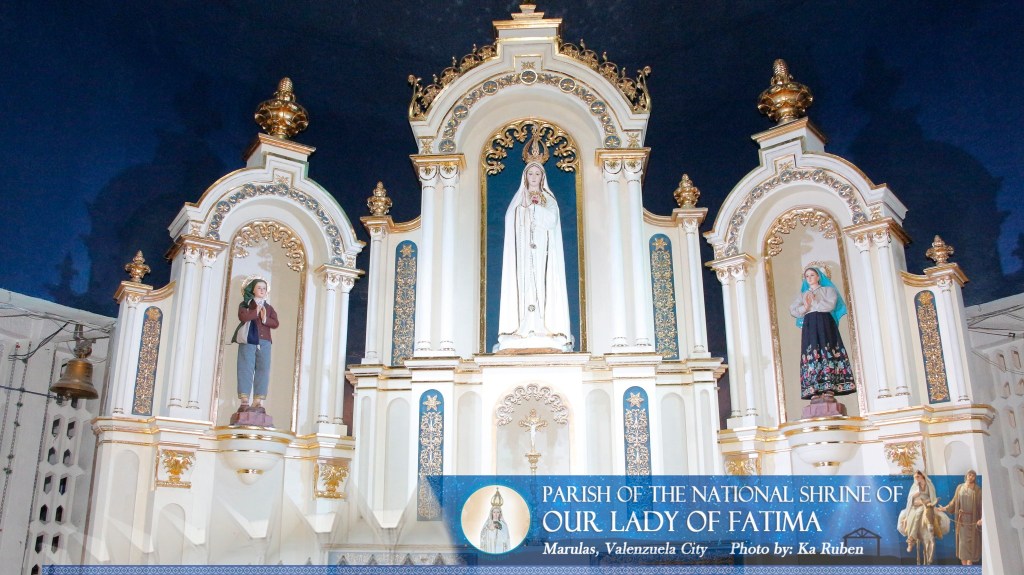
Photo by author, Parish of the National Shrine of Our Lady of Fatima, Valenzuela City, 12 December 2023.

All roads lead today to churches for the start of Christmas novena more known with its many names that actually refer to the time of the Mass celebration. 

Its generic name is Simbang Gabi that specifically refers to the night Masses that begin December 15 while Misa de Gallo and Aguinaldo Mass are the ones celebrated at dawn starting December 16. It is a tradition we got from the Spaniards via Mexico where it is a novena in honor of the the Blessed Virgin Mary, the Expectant Mother or Nuestra Señora dela Virgen Expectacion. It is also the reason why we use the Spanish terms Misa de Gallo for rooster or “gallo” that crows at dawn and Misa de Aguinaldo for present or gift as our “aguinaldo” or offering to Jesus by waking up very early for nine days until his birthday.

In our university and medical center where I serve as chaplain, we have Simbang Tanghali at 12 noon to enable our students and faculty members, doctors and nurses, and employees to make the traditional novena because most of them are too sleepy for Simbang Gabi and too tired to rise very early for Misa de Gallo.

Keep in mind, though, that the time when you go to celebrate the Mass is not important. What really matters is how sincere we pray and prepare ourselves spiritually during these nine days of Masses to meet and receive Jesus Christ into our hearts and lives. It is highly recommended we go to confessions this Advent Season so we may be cleansed of our sins, the true darkness within that needs illumination in Christ.

It is in this setting of darkness in celebrating the Christmas novena that we got the name Simbang Gabi. Both night and dawn evoke darkness not only in the world but most especially inside us due to sin when Jesus Christ our Savior comes. In fact, the darkest nights of the year occur between December 23-25, a beautiful reminder that Jesus comes to us in our darkest moments too for he is the only and true Light of the world.

Hence, Advent Season is illumination, a time when we are led to Jesus our light by other lights too who share his very light. Whatever light we must share is only Jesus, always Jesus. If it is not Jesus, then it is a dangerous kind of light that does not illuminate but actually darkens us and our lives, even the world. Any other light, no matter how bright it may be, if not from Jesus Christ is false and misleading from what is true and good. 

How sad in our age that Christmas may be the most loved season but not for the right reason and person, Jesus Christ. Cities here and abroad are lit up at night during this time of the year with spectacular display of lights that delight our sights and other senses but, only on a superficial level. We just feel amazed but the sight never permeates our person because it is always mediated by the camera phone everyone is so busy using to take video and pictures without us experiencing the meaning of the wonderful interplay of light and darkness.

I am not against these light shows. I am just worried at how we could be missing the whole point of Christmas because these lights do not show Christ at all, misleading us like the Jews during the time of Jesus from the realities of God’s presence in our midst.

Photo by author, Parish of the National Shrine of Our Lady of Fatima, Valenzuela City, 12 December 2023.

In our gospel today, Jesus was questioned by the Jews for healing a man sick for 38 years on a sabbath day at Bethesda. They wanted to kill Jesus in equating himself with God whom he called as Father as he elaborated to them his mission of healing and salvation.

In this scene, Jesus insisted his being the Son of God, doing all the works of the Father as testified by his very acts and by John the Baptist whom they revered. 

He (John the Baptist) was burning and shining lamp, and for a while you were content to rejoice in his light. But I have testimony greater than John’s. The works that the Father gave me to accomplish, these works that I perform testify on my behalf that the Father has sent me.

John 5:35-36

As the Precursor of the Lord, John the Baptist was very clear from the very beginning of his ministry that he was not the Messiah. All four gospel accounts are clear that John the Baptist shone brightly to illuminate others in order to see the true light, Jesus Christ. 

The first disciple of Jesus as far as the fourth gospel is concerned was Andrew the brother of Peter who was a disciple of John the Baptist. After the baptism of Jesus by John at Jordan, Andrew and another companion left John to “come and see” Jesus. They eventually invited others to join Jesus whom they have identified as the Christ or the Messiah. 

See how John as a “burning and shining lamp” showed the light of Christ to his disciples Andrew and companion who then led others to follow Jesus. In the same manner like John the Baptist, we are called especially tonight on this first Simbang Gabi to share the light of Christ, not to outshine Jesus.

Photo by author, Fatima Ave., Valenzuela City, 12 December 2023.

Light is meant to illuminate others and the streets so we would not fall or get lost; it is never meant to make us washed in lights to be seen. Unfortunately, it is the trend happening these days in social media and on our streets where everyone take pride in having the brightest lights on their vehicles that blind other motorists. 

What a clear sign of everything gone wrong these days when we bathe ourselves in so much lights as everyone wants to shine and sparkle on one’s own, feeling so entitled that many have literally thrown their weight around in those road rage videos we see daily.

The worst of these blinding lights we find so glaring these days are the so-called “social influencers” who feel like superstars with some priests among them unfortunately who relish the title. And glamor – if there is really any – because, the fact remains that these so-called “social influencers” have not given any light at all to the world that may be considered as significant contributions for the betterment of lives except entertaining people. Or, titillate the many benighted souls among us. 

When we obey God’s commandments and live according to his holy will as mentioned in the first reading from Isaiah today, we become lights leading to Jesus the true light. When we strive to lead holy lives, we illuminate others not for our own selves but towards Jesus. 

Let me end this reflection with this beautiful story I got from a blog I follow of a grandchild having a conversation with his grandfather:

"Lolo, how did you live in the past without technology...
without computers
without Internet connection
without mobile phones
without cars
without air conditioners
without blue tooth
without ATM's?"

And the grandfather replied:
"Just as your generation lives today...
no prayers,
no compassion,
no respect,
no good manners and right conduct,
no real education,
poor personality,
no kindness,
no shame,
no modesty,
no honesty."

(See https://pkmundo.com/2023/12/09/a-young-%f0%9f%91%b6man-asked-his-grandfather%f0%9f%a7%93/)

Sorry for the sarcasm but I love it. Besides, the sarcasm invites us to ponder the kind of lights we share with others. Very often, we complain of the young generation’s lack of depth or questionable value systems and attitudes but these are all due to the lights we have shown them. 

On this first Simbang Gabi of the post pandemic period, let us pray to have the light of Christ anew to conquer the darkness of sin and evil in the world. Let us illuminate others and the world towards life and fulfillment by sharing the true light of the world, Jesus Christ. Amen.

By Kay Bratt, Facebook, 13 December 2023.

Christmas is seeing, following the light of Christ

The Lord Is My Chef Simbang Gabi Recipe for the Soul by Fr. Nicanor F. Lalog II
Saturday in the Fourth Week of Advent, Ninth Day of the Christmas Novena, 24 December 2022
2 Samuel 7:1-5, 8-12, 14, 16     ><]]]]'> + ><]]]]'> + ><]]]]'>     Luke 1:67-79
Thank you Lord Jesus Christ
for this Season of Advent,
for your words and presence
these past nine days of
Simbang Gabi.
Like King David in the first reading
and Zechariah in the gospel,
now I have seen clearly your light -
"In the tender compassion of our God
the dawn from on high shall break upon us,
to shine on those who dwell in darkness
and shadow of death,
and to guide our feet into the way of peace"
(Luke 1:78-79).
Help me see your light, Jesus;
let me distinguish the true light
that shines on the face of every person
I meet and serve, especially the weak
and lowly and forgotten;
let me be wary of lights I see only on my face
like King David that no matter how noble are
my plans, it is your light, O Lord, that I must follow
for your light leads to love and kindness,
mercy and compassion, acceptance and forgiveness;
let me search and follow only your light
that makes me accept and embrace and own my past,
especially if it is painful and hurtful
so I may see also the brighter future 
you are leading me to.
Most of all, dear Jesus,
like John, fill me with your light
to lead people to you
not to me;
I do not ask your light to make me see
the distance scene but just enough to make
me step closer to you each day
especially when darkness of sin and evil abound.
Amen.

Christmas is being grateful

The Lord Is My Chef Simbang Gabi Recipe for the Soul by Fr. Nicanor F. Lalog II
Thursday in the Fourth Week of Advent, Seventh Day of Christmas Novena, 22 December 2022
1 Samuel 1:24-28     ><000'> + ><000'> + ><000'>     Luke 1:46-56

Christmas is a call for us to be grateful. Only a grateful heart can truly be emptied and be filled with Jesus Christ. A heart that truly praises God is first of all a grateful heart. Mary’s song, the Magnificat is a both a song of thanksgiving and gratitude to God for all his wondrous blessings to her and to mankind in general.

Yesterday we heard how Mary hastily went to visit her cousin Elizabeth in Judea to share with her the Good News she had received, our Lord Jesus Christ Himself. After being praised by Elizabeth, Mary responded today not by praising her cousin as we would always do; she instead praised and thanked God.

Again, we hear today wonderful stories of women – not just two like yesterday but three! – who were so blessed by God, thanking and praising God for blessing them with sons: Hannah in the first reading for her son Samuel who became one of Israel’s greatest prophet, Mary pregnant with Jesus Christ while visiting her cousin Elizabeth who was sixth month pregnant with John.

See how Hannah as a sign of her gratitude to God through the priest Eli who promised to pray for her to conceive a son gave Samuel at a very young age to serve in the Lord’s altar. The same is true with Mary in singing the Magnificat when she reaffirmed her fiat to God, of being his ever-faithful handmaid doing his will always.

“My soul proclaims the greatness of the Lord; my spirit rejoices in God my savior. For he has looked upon his lowly servant. From this day all generations will call me blessed: the Almighty has done great things for me, and holy is his Name.”

Luke 1:46-49
Photo by Mr. John Ryan Jacob, 20 December 2022, Paco, Obando, Bulacan.

Gratitude is a virtue that works great wonders for everyone because it makes us live in the present moment. A grateful person is one who lives in the here and now, not in the past nor in the future. Look at the structure of Mary’s Magnificat that is in the present tense.

When our heart is filled with gratitude, we have no time to complain and nurse old wounds and pains in the past but simply learn from them and move on with life. Living in the present moment means making things happen, working hard on our dreams and aspirations to become a reality, exactly what the Magnificat is telling us! How are we going to continue God’s wondrous works like Mary? By remaining faithful to Jesus Christ all the way to his Cross on Good Friday.

People who refuse to be grateful in life are busy wishful thinking of how things should be or would be, always looking at the future as a fantasy that would just pop out of nowhere instead of working for it in the present moment.

Unknown to many, gratitude is the fount of all good vibes in life, enabling us to be more positive than negative. It helps us accept the reality we are into – whether it is good or bad.

And that is when we start growing and maturing as persons when we learn to accept our present realities.

Most of all, gratitude disposes us to more blessings and grace from God because a thankful heart is always the one that seeks relationships, with God and with others. See that Mary did not sing her Magnificat while with the angel Gabriel after announcing the birth of Christ nor after he had left, right in the comforts of her home. Mary went in haste to Judea to celebrate and thank God’s gifts with her cousin Elizabeth.


People who go out of their way to say thank you, 
to express gratitude are person-oriented. 
They see more the persons 
not just the kind deeds done to them 
and beautiful gifts given them. 

Very often, people thank us priests especially for praying for them, enlightening and guiding them. That is why people lavish us with all kinds of gifts. Every time people thank me, I tell them, “kami po ang dapat magpasalamat sa inyo kasi lumalago kami kay Kristo!” In my 24 years as a priest, I have realized that the more faithful we are in serving God through his people, the more we are blessed and hence, the more we must be grateful!

People who go out of their way to say thank you, to express gratitude are person-oriented. They see more the persons not just the kind deeds done to them and beautiful gifts given them. When we say thank you, when we let others know of how grateful we are, we recognize their personhood that is why we reach out to them, trying to connect with them and befriend them. Or, to keep our ties alive and strong. As the old song says, “People who need people are the luckiest people in the world.”

Remember the ten lepers healed by Jesus Christ on his way to Jerusalem?

Only one returned – a Samaritan – to thank Jesus. He was the only one who was “saved” when Jesus told him, “Stand up and go; your faith has saved you” (Lk.17:19).

Photo by Mr. John Ryan Jacob, 20 December 2022 in Paco, Obando, Bulacan.

Gratitude is a very practical virtue, “the parent of all virtues” according to the Roman scholar and statesman Cicero. It is the one virtue we need to recapture and reacquire in this time to make through the many challenges and trials this pandemic has brought us. Instead of complaining and being so sorry with the plight we are into due to COVID-19, let us start counting our many blessings in life to see the vast opportunities and lessons this crisis has given us. In fact, the more this pandemic has persisted, the more blessings we can find that we must be thankful too.

Because of the pandemic, we have learned to cherish more one another as we come to value persons and life again more than things. There are so many things we have to be grateful in life during this time of the pandemic, perhaps even more than the sufferings and trials we have gone through as it opened to us new views and perceptions about life itself.

Most of all, it had brought us back to the grounding of our being, to God who is life himself, the source of all good things we have long forgotten and now remember. And rightly praise and thank. That is why I keep on telling everyone, God willed Christmas 2022 falls on a Sunday so we may personally, face-to-face celebrate together. And thank him through the people he has given us! Let us pray:

My soul also proclaims 
your greatness, O Lord Jesus Christ
like Mary your Mother!
Thank you for the gift of life
with all of its pains and hurts
that have strengthened me,
for all the joys that have enriched me.
Most of all, for the call to serve you.
Who am I, O Lord, to be called
and visited by you?
Many times I have failed you
yet you keep on coming, still calling me,
still believing in me, still trusting me.
What else can I say except 
thank you from the bottom of my heart.
As your birthday approaches,
as my gift to you dearest Jesus,
enable me to remain faithful to you
like Mary your Mother and our Mother too
even up to your Cross.  
Here am I, Lord, send me.
Amen.
Photo by Mr. John Ryan Jacob, 19 December 2022 in Paco, Obando, Bulacan.

More than a visit, Christmas is a visitation!

The Lord Is My Chef Simbang Gabi Recipe by Fr. Nicanor F. Lalog II
Wednesday in the Fourth Week of Advent, Sixth Day of Christmas Novena, 21 December 2022
Song of Song 2:8-14     ><))))*> + ><))))*> + ><))))*>     Luke 1:39-45
Photo by Mr. John Ryan Jacob, 20 December 2022.

Did you know that there is a funny story behind that lovely entrance hymn in all our Masses we have been singing since the start of the Advent Season rightly called Halina Jesus, Halina?

According to the story, when Jesus turned seven years old – that’s the seventh Christmas of the world! – the Blessed Mother decided to bake him a beautiful birthday cake. The child Jesus was busy playing with his cousins when his Mother asked him to buy some flour, eggs, butter, and sugar. Of course, the young Messiah obeyed her and went to the store to buy the ingredients for his birthday cake. But, as the Catholic Catechism of the Church attests that Jesus is truly human like us, he suddenly forgot the most important ingredient needed in his cake, the flour. He rushed back home and asked Mama Mary again what was he supposed to buy. This happened thrice that for the third time, Mary was exasperated, wrote it on a piece of paper, telling the child Jesus, “Harina, Jesus, harina!”

For our non-Filipino followers, harina is flour, very close to halina which is come as the song tells us.

Christmas is a story of people, real persons like you and me meeting, encountering God. So far since Sunday we have heard stories of encounters by Joseph, Zechariah and Mary with an angel.  Today, we hear the beautiful encounter between two women so blessed by God, two mothers whose sons would usher in a new beginning of life on earth. 

Mary set out in those days and travelled to the hill country in haste to a town of Judah, where she entered the house of Zechariah and greeted Elizabeth.  When Elizabeth heard Mary’s greeting, the infant leaped in her womb, and Elizabeth, filled with the Holy Spirit, cried out in a loud voice and said, “Most blessed are you among women, and blessed is the fruit of your womb.  And how does this happen to me that the mother of my Lord should come to me?”

Luke 1:39-43

The Visitation of the Blessed Virgin Mary to her cousin Elizabeth is in itself a proclamation of the Good News of Jesus Christ that presents us with the beautiful personages of two women who are “beloved ones of God” as well as “lovers of God.” 

Both of them “believed” in the promised salvation from God through their mysterious maternity, Mary being a virgin while Elizabeth in her being old and barren. 

They both love God so much that they were gifted with exceptional vocations, Elizabeth bore the Precursor of the Lord Himself born by Mary. 

Most of all, both women waited patiently for the coming of the promised salvation in Christ Jesus.

Visit and visitation may seem to be one and the same in the sense that both have a common Latin root word, the verb to see or vidi, videre from which came the word video.  But, a visit is more casual and informal without intimacy because it is just “a passing by” or merely to see.  It is more concerned with the place or the location and site and not the person to be visited.   We say it clearly in Filipino as in “napadaan lang” when it just so happened you were passing by a place and even without any intentions, you tried seeing someone there. 

On the other hand, visitation is more commonly used in church language like when a bishop or priests come to see the parishioners in remote places.  This is the reason a chapel is more known as a visita in our country because that is where priests visit and check on the well-being of people living in areas very far from the parish usually at the town proper.  Aside from being the venue for the celebration of Masses, the visita serves as classroom for catechism classes and other religious even social gatherings in a particular place. 

Thus, visitation connotes a deeper sense in meaning because there is an expression of care and concern among people, a kind of love shared by the visitator/visitor and the one visited like Mary and Elizabeth. 

Visitation is more of entering into someone’s life or personhood as reported by Luke on Mary’s visitation to Elizabeth where Mary “entered the house of Zechariah and greeted Elizabeth” (Lk.1:40), implying communion or the sharing of a common experience.  In this case, the two women shared the great experience of being blessed with the presence of God in their wombs! 

Visitation, therefore, is a sharing or oneness in the joys and pains of those dear to us.  The word becomes more meaningful when we try to examine its Filipino equivalent which is “pagdalaw” from the root word “dala” that can be something you bring or a verb to bring.  When we come for a visitation, we dala or bring something like food or any gift.  But most of all we bring our very selves like a gift of presence wherein we share our total selves with our time and talents, joys and sadness, and everything to those being visited.  And that is what Mary did exactly in her visitation of Elizabeth where she brought with her the Lord Jesus Christ in her womb, becoming the first monstrance of the Lord as well as His first tabernacle. 

Today we are invited to become like Mary in the visitation of others to bring Christmas and Jesus Himself to others by allowing our very selves, our body, to be the “bringer” or taga-dala of Christ.  The Lord Himself is the highest good we can bring as pasalubong in every visitation we make.  And if we can only be like Mary in our visitations and dealings with one another sharing Jesus Christ, then we also bring with us God’s tenderness and sweetness to others. 

That is why we have to rush, we have to go in haste like Mary for we have the best good of all – Jesus Christ – to share for everyone!

Come, Lord Jesus Christ!
Come in haste like your Mother Mary
so we may also have a visitation of
persons we have forgotten,
we have taken for granted
all these years!
Come into my heart, Jesus,
and let me see my connections
and links with everyone in you!
We do not need so many presents to give,
just our presence is more than enough
for others to experience your coming
especially on this Christmas.
Amen.

When nothingness is fullness: creating a space for God

The Lord Is My Chef Simbang Gabi Recipe by Fr. Nicanor F. Lalog II
Monday in the Fourth Week of Advent, Day 4 of Christmas Novena, 19 December 2022
Judges 13:2-7, 24-25     ><}}}}*> + ><}}}}*> + ><}}}}*>    Luke 1:5-25

As we get closer to Christmas Day, there is this post going around social media that I think is worth sharing this blessed season of getting together like parties and reunions especially after two years of lockdown and isolation in this pandemic.

I totally agree with this list and in fact, still thinking of adding some more to finally end our penchant for insulting others.

A very classic case of being “mema”memasabi lang without thinking and caring for the well-being of other people as well as without realizing how stupid they are whenever they say these “eight things we should stop saying at family reunions for good.”

Notice how most of these are addressed to women.

First to single ladies in the family or circle of friends with the very common query “Kailan ka mag-aasawa/magpapakasal?” to the downright insensitive, “Ang tanda mo na. Bakit single ka pa rin hanggang ngayon?”.

Here we find the wrong notion of everyone that getting married is the most important thing in this life, no matter what!

It is a very rude and senseless comment to any woman, especially a family member or relative. Most guilty of this are moms and aunts.

Can a woman just get married with any man?

Of course, she has to be choosy, she has to think very, very hard about it because marriage is a lifelong commitment.

Married life is a call from God, not a cajole from relatives and crowd. Please, shut up and stop making these comments.

Next on the list are still women which shows how some of our family members and relatives -ironically also women – would not really stop in their insulting spree.

They wrongly believe that relatives and friends have no privacy at all!

Next to single ladies, the married women are the favorite target of these insensitive relatives and colleagues with their question, “Kailan mo balak magka-anak?”

Whoa! For me this is a mortal sin. Something we should not let pass our lips because we will never know how difficult and trying it must be to some couples in working and praying for a child.

Life is a gift from God and only him can truly bless every couple with a baby. It is not magic or power given to humans.

Every couple wants to have a child, a baby, but, of course, like marriage, they have to prepare for it. They need to plan. And save and work to ensure their kids would get good education and comfortable life.

It is a struggle among many couples. Again, shut up and just pray for them to have their own “little bundle of joy”.

Now, we come to the third thing we must stop saying at all.

It is a comment directed to us who comprise more than half of the world population. Imagine if all of us fat people would unite, people would never dare speak these words….

Many times I just keep silent at people who say this.

If ever you tell them you have lost 20 or 30 kilos, the more they will insult you with “pumayat ka pa niyan?”.

See what I mean. They are the worst kind of insensitive people on earth without any knowledge at all about biology and medicine, imbeciles with little brains, asking “malakas ka bang kumain?” Of course! Would you get fat by just deep breathing?

It is the fourth day of our Christmas novena and why do I tell you these, or entertain you with these?

Our readings today show us how two great prophets were conceived and born in miraculous manner. In the first reading we have the story of the conception of Samson in the Old Testament. His mother was barren. Perhaps, she was also a subject of many insults and jokes, of nasty talks and insensitive comments like what most women experience today.

Then we have the story of the annunciation of the birth of John the Baptist to his father Zechariah, himself already old unable to make a baby while his wife Elizabeth was barren. Despite their stature in the society with a pedigree equal to many of the gentry, they never have a child who would continue their lineage.

But here we find God finally answering their prayers in the midst of their nothingness.

Here are couples who have been praying all their lives for a child when God finally answered them.

Sadly, Zechariah doubted it that he was silenced by the angel, indicating the need for us to be silent always, to be empty to let God fill us with his work and grace.

Many times in life, nothingness is actually fullness.

See when a guy texts a lady, saying “hi” just because or “wala lang” or “nothing”.

But, that is something! When we tell people “wala lang”, it is “meron.”

The same in life. In fact, we have to be empty in order to be filled up by God. Zechariah was silenced while Elizabeth on her own decided to “quarantine” herself by going into “seclusion for five months, saying, ‘So has the Lord done for me at a time when has seen fit to take away my disgrace before others'” (Lk.1:24-25).

Many times in life we get impatient. We doubt and sometimes easily give up.

Like St. Joseph yesterday, we just have to accept that we have to set aside our own plans to follow God’s better plans for us. We have to accept everyone because Christ comes in everyone. We have to accept in order to understand life better.

I know it is easier said than done, especially for all single ladies, childless couples and fat people like me praying to God, asking what is most dearest to us like the vocation in life or the right man, a baby, and a good health; God hears and answers all prayers.

Just be patient. In our emptiness and nothingness, God comes. Just be sure to have that space for God always, unlike Zechariah who doubted the power of God.

Sometimes, we hurry God to answer our prayers especially when the insults and comments from others become unbearable. That is fine. God listens and understands it so well. That is why today, we pray for those with urgent prayers before God:

God our loving Father,
we praise and thank you in sending
us Jesus Christ your Son,
our Lord and Savior,
the one whom you raised from 
the root of Jesse;
come now, do not delay any longer!
Come and deliver us, O Lord,
remember your promise to us,
and keep us open always like
Elizabeth to find you still in our
barrenness and nothingness;
help us create and preserve
that sacred space for you within
us always so that even in life's
emptiness, we are fulfilled in you.
Amen.

Christmas, our being & mission

The Lord Is My Chef Simbang Gabi Recipe by Fr. Nicanor F. Lalog II
Saturday in the Third Week of Advent, Day 2 of Christmas Novena, 17 December 2022
Genesis 49:2, 8-10     ><}}}}*> + ><}}}}*> + ><}}}}*>     Matthew 1:1-17
Photo by author, 2021.

Beginning today, we shift our focus in our Christmas preparations into the second phase of Advent, of looking back to the first coming of Jesus Christ when he was born in Bethlehem more than 2000 years ago.

The birth and origin of Jesus has always been an issue to many people then and now. It was the main reason he was put to death for the case of “blasphemy” because his enemies at that time refused to accept he is the Son of God, the fulfillment of the promises in the Old Testament, of him coming from the lineage of King David.

Until now, people continue to question his origin with so many others insisting Jesus is not God, that he is only human.

That is why all four evangelists began their gospel accounts by first establishing his identity and roots with Matthew doing a very superb job by starting right away with the genealogy of Jesus Christ.

The book of the genealogy of Jesus Christ, the son of David, the son of Abraham. Abraham became the father of Isaac, Isaac the father of Jacob, Jacob the father of Judah and his brothers. Judah became the father of Perez and Zerah, whose mother was Tamar. Perez became the father of Hezron, Hezron the father of Ram….

Matthew 1:1-3
Photo by author, November 2022.

For the early Christians, it was very important to first establish the origin of our Lord because his roots reveal his very being and mission – that indeed, he is the Christ, the promised one of God since the beginning sent to save us from sin and bring us back into one with the Father.

The same is very true with us. Unless we know our roots, our origins, we will always have those confusions in life like identity crisis and meaning of existence. All these problems about gender identity, drug addictions, teenage pregnancies, depressions and so many others are basically due to lack of our knowing of ourselves, of our being. How can we go on with our life journey and mission if we are not even sure of ourselves, of who we are, of our grounding, of where we came from?

When I was a newly ordained priest assigned to a school in Malolos, at first I felt so mad at seeing how our young people behaved, their lack of discipline and sense of responsibilities. But after three months in school, I realized that the question we should be asking even until now is not why are the young acting that way today but, “where are their parents”?

Now that I am assigned as a university chaplain, the more I see this reality so true, even at its worst and ugly faces of the many burdens and sufferings our young people have to bear and contend with right in their homes – incest and physical abuses, absentee parents and separated parents or single parents made more difficult by poverty that many of them even go without breakfast or decent meal on many occasions every week.

Now more than ever, the school has become truly the home of every student because they have no home, no parents and no love to come home to! They prefer hanging out anywhere including school and get into drugs and other vices at a young age because nobody cares for them except their equally lost peers. Many practically live in the internet and social media because nobody is around to interact with them at home.

Many young people are lost simply because their parents are lost too. They have all kinds of issues because they do not know who they are and where they are going to. They have low self-confidence and low self-esteem, depressive and yes, almost everyone contemplates committing suicide even once because they could not find meaning in their lives anymore.


... human love is imperfect,
only God can love us perfectly.

So sad, so disheartening.

This past week, I have been hearing confessions of our students who poured out everything to the point of crying. What is so moving for me was how they still professed their love for their parents and siblings despite their pains and sufferings.

After listening to them – sometimes crying with them – I tell them that human love is imperfect, only God can love us perfectly. For sure, I tell them that their parents must have also come from so many pains and hurts in their lives, even broken homes too like theirs. Widen your perspectives, I tell them. And keep your hearts wide open to God, to welcome Jesus who comes daily in our lives especially in the most trying time.

This is the meaning of all those names in Jesus Christ’s genealogy – he is so like us with many imperfect relatives and family like quarrelsome siblings, single-parents, prostitutes, unfaithful kings and husbands, illegitimate children, and probably all those things we describe or label as “dysfunctional family”.

Deep within every name is a real person, broken and sinful, hurting and lost just like us yet, loved and saved by God in Jesus Christ. All of them remind us we all came from God like Jesus and with him, in him and through him, we shall all come home to God our true Father.

Every time I administer Baptism, I remind parents to shower their children with love especially in their formative years from infancy to early teens while singing to them a few lines from James Taylor’s “Shower the People with Love” to make my point.

Recently I found in my Facebook feeds from one of the sites I follow a beautiful story and shared it on my wall, saying, “Ito ang tunay na pag-ibig” (this is true love):

From Facebook, The Language Nerds, 13 December 2022.

Our being is from God who is love. Therefore, our mission too is love. Just like Jesus Christ. That is the meaning of all those names in the genealogy of Jesus Christ. The very same meaning we shall find when we trace our own roots, when we do our family tree to find our being and mission.

This is the grace of Christmas 2022 – after two years in the pandemic with so many restrictions, we are celebrating face-to-face to personally experience one another again. Most of all, to personally experience of being loved and loving again.

Christmas is essentially a story of our first love – God – who comes to us face-to-face. Even its preparation as we have seen in the Lord’s genealogy, of God coming to us in our imperfections and weaknesses happened face-to-face in the context and spirit of love, a love that covers a multitude of sins, welcomes everyone, ready to forgive and celebrate life.

Let us see and welcome God in our hearts by rekindling that love we have always have. And upon finding him there, may we also find him in the face of everyone we meet, especially those closest to us, our family and relatives. Let us pray:

Lord Jesus Christ,
thank you for coming to us;
thank you for showing us that
like us, you came from very 
dysfunctional family too!
Thank you for assuring us
that despite our many imperfections,
sins and weaknesses,
you still come and even more present
in our hurts and wounds.
Let us find you where we are,
right here in our brokenness 
and darkness so that in the process,
we may also show you to others
lost in their many sufferings and pains.
You have given us yourself, Jesus,
let me give you to others 
in love and kindness,
in my mere presence.
Amen.
Photo by author, November 2022.