Not bowed down anymore

Lord My Chef Daily Recipe for the Soul, 27 October 2025
Monday in the Thirtieth Week of Ordinary Time, Year I
Romans 8:12-17 <*{{{{>< + ><}}}}*> Luke 13:10-17
Photo by Pixabay on Pexels.com

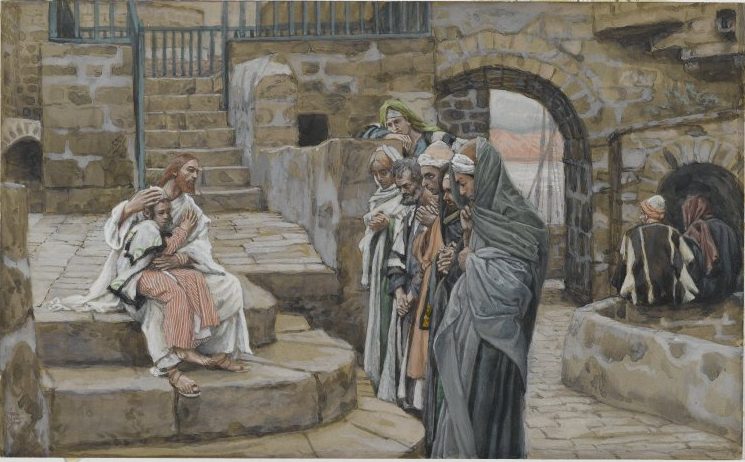
Jesus was teaching in a synagogue on the sabbath. And a woman was there who for eighteen years had been crippled by a spirit; she was bent over, completely incapable of standing erect. When Jesus saw her, he called to her and said, “Woman, you are set free of your infirmity.” He laid his hands on her, and she at once stood up straight and glorified God (Luke 13:10-13).

What a lovely story
for this Monday, Jesus,
when many of us
got the blues so to speak:
many of us are like
that woman at the synagogue
"bent over",
"bowed down"
and for the longest time
have seen only the dirty,
hard ground below;
the reasons are varied, Lord:
many of us are bowed down
due to sins and evil,
pains and hurts and trauma
some from people we trusted
and loved, mistakes and missed
opportunities, and so many others
that have enslaved and crippled
us for so long like
that woman you
have healed;
you know so well
how much we have wanted
to break free from these long years
of bowed down posture so that
we may rise and straighten up our lives
to look up to you in the sky,
to feel the warmth of the sun,
savor the beauty of creation.
On this Monday,
let us take to heart
the words of St. Paul
that we are not debtors
to the flesh... that we received
a spirit of adoption to cry
"Abba, Father!"
(Romans 8:12,15).
For those living
"bowed down" in pain
and shame, arouse them,
Jesus with the warmth of the
Holy Spirit, to rejoice
in our new life in you.
Amen.

Pride of Place

Lord My Chef Sunday Recipe for the Soul, 26 October 2025
Thirtieth Sunday in Ordinary Time, Cycle C
Sirach 35:12-14, 16-18 ><}}}}*> 2 Timothy 4:6-8, 16-18 ><}}}}*> Luke 18:9-14
Photo by author, Alberione Center, Araneta Ave., QC, 11 September 2025.

We got our inspiration anew for this Sunday’s reflection from the blog of Sr. Renee Yann, RSM whom we follow at WordPress (https://lavishmercy.com/2025/10/18/pride-of-place-2/). Her blogs are so wonderfully written with reflections so deep, inspiring and uplifting.

In her recent blog, Sr. Renee tells of their parishioner they fondly called “Mamie” who sat on the same seat in their church they called “Pride of Place” for forty years until her death. And for a good reason. Despite her many trials and sufferings in life, Mamie never failed in helping those in need in their community.

Photo by author, Carmel of the Holy Family Monastery, Guiguinto, Bulacan, 25 September 2025.

As told by Sr. Renee’s dad, Mamie had always sat in the same pew through the Depression as she struggled to keep her grocery opened; after the death of her husband in an accident, Mamie never missed their Sunday Masses seated at the same spot – in fact, she was at the same pew on a Sunday Mass when her son was killed at Pearl Harbor. It was actually their community who “proudly awarded” the seat as a “pride of place” to Mamie following her life of Christian witnessing.

“Pride of Place” isn’t always something physical like a pew in church. More often it’s a moral or spiritual position that’s granted to us by others after we pay moral dues. These dues include trustworthiness, sacrifice, contribution, and wisdom…“Pride of Place” doesn’t come automatically with power or position.  It comes with respect. Unfortunately, not every parent, boss, teacher, pastor, elder, president, or champion deserves it.  It must be earned and kept as a trust. (https://lavishmercy.com/2025/10/18/pride-of-place-2/).

The story reminded me of our own “pride of place” in the church, of people always occupying the same pew or spot during the Mass that they are amazed how we priests get to know them simply with their “seating arrangement” like their coming late or being absent!

Photo by author, Carmel of the Holy Family Monastery, Guiguinto, Bulacan, 25 September 2025.

But, what struck me most with Sr. Renee’s piece is the spiritual meaning of “pride of place” which refers actually not to where we sit but where we stand. That standing is more than physical but spiritual and moral in nature. Where we stand is about our stance or conviction not only on issues but about our faith and relationship with God expressed in our dealings with others exactly what our gospel tells us this Sunday.

“Two people went to the temple area to pray; one was a Pharisee and the other was a tax collector. The Pharisee took up his position and spoke this prayer to himself, ‘O God, I thank you that I am not like the rest of humanity — greedy, dishonest, adulterous —- or even like this tax collector. I fast twice a week, and I pay tithes on my whole income.’ But the tax collector stood off at a distance and would not even raise his eyes to heaven but beat his breast and prayed, ‘O God, be merciful to me a sinner.’ I tell you, the latter went home justified, not the former; for whomever exalts himself will be humbled, and the one who humbles himself will be exalted” (Luke 18:10-14).

Painting by French artist James Tissot, “The Pharisee and the Tax Collector” (1886-1894) from commons.wikimedia.org.

For the second straight Sunday, we hear another teaching of Jesus about faith expressed in prayers in another parable only Luke has.

Last Sunday we reflected that to persist in prayer is not about wearing God down but of allowing our hearts to clarify our desires until we silently surrender to what God knows is best for us which is salvation or “justification”. See how we find that word again – justified – as the key to this parable at its end when Jesus declared that it was the prayer of the publican that was heard for “he went home justified”.

The object of every prayer is God because prayer is a relationship, not just a ritual. To be filled with God is what holiness is, not being sinless. In fact, holiness is finding our sinfulness before God. And that is the essence of our parable this Sunday.

That is why Jesus directs our attention in the “where” when we pray – not just the location when we pray but our “place” in that relationship with God who is our very foundation. When all we see is our self in prayer like in any relationship, it means it is a monologue, a one-way street. Worst, it is an indication of the absence of God, even of others because the pray-er is so preoccupied with his or her very self!

Photo by the author at the Wall of Jerusalem, May 2017.

The Pharisee was clearly not in God even if he were in front of the temple. His very self was very far from God and all he had was his bloated ego. He may be a very pious person but not really good at all for he has no space for God and for others. He is a very closed man without any room for others. Remember, Luke said that “Jesus addressed this parable to those who were convinced of their own righteousness and despised everyone else” (Lk.18:9).

The tax collector, on the other hand, may be physically far outside the temple but was the one actually nearest to God with his self-acceptance and admission of sins, of his need for God. He was closest to God because he was more open with God and with others by admitting his true self.

Prayer is more than entering a church or a prayer room, or finding our most suitable spot or space to pray. Prayer is being one with God, one in God. Prayer is losing our very self in God. The question now is, “where are we when we pray?

I have always loved this photo by friend from GMANews, Ms. JJ Jimeno who took this while she was praying inside the UP-Diliman Adoration Chapel in May 2019; she aptly captioned it as “losing one’s head in prayer.” True!

First, we become one with God in prayer when we admit our sinfulness, when we confess our sins to him, and own them without any “ifs” and “buts”. God always comes to those who truly open themselves to him by emptying themselves of their sins and inadequacies.

The tax collector was justified in his prayer more than the Pharisee because in confessing his sins, he admitted his need for God. He knew very well his place, so unlike the Pharisee who felt God owes him so much!

Second, we are in God in prayer when we are humble and have the conviction to leave everything behind and go down with God into the lowest point because one is so confident of the efficacy of prayer like what Ben Sirach tells us in the first reading.

The one who serves God willingly is heard; his petition reaches the heaven. The prayer of the lowly pierces the clouds; it does not rest till it reaches its goal (Sirach 35:16-17).

Most often in life, friendships and relationships are kept when we are willing to take the lower stance, not necessarily admitting fault or guilt in any misunderstanding because being lowly indicates the person’s need for the other person and of one’s love to work on that relationship despite its fragility. I tell couples that when they quarrel, the first who must first make the move to greet the other person is not the guilty one but the one with most love and self to give.

Third, we are in God in prayer when there is an offering daily of one’s self to God. It is not enough to be lowly and sorry for our sins in prayer. It has to be sustained because prayer is a discipline like any sport as St. Paul tells us in the second reading, calling us to persevere and endure until the end for Jesus Christ “who shall award us with the crown of righteousness in heaven.”

We are all sinners forgiven and beloved by God. When we find our right place in God in prayer, then we also find him. And meet him. Amen. Have a blessed week ahead into November! Fr. Nicanor F. Lalog II, Our Lady of Fatima University, Valenzuela City (lordmychef@gmail.com)

Photo by author, Carmel of the Holy Family Monastery, Guiguinto, Bulacan, 25 September 2025.

Befriending my inner self

Lord My Chef Daily Recipe for the Soul, 24 October 2025
Friday in Twenty-Ninth Week of Ordinary Time, Year I
Romans 7:18-25 <*((((>< + ><))))*> Luke 12:54-59
Photo by hiwa talaei on Pexels.com
Lord Jesus Christ,
today I join St. Paul
in his cry,
“Miserable one
that I am!"
for deep in my heart
I am your slave
O Lord,
of righteousness,
of what is good
but what I do
and follow is sin
like your warning
in the gospel,
"the spirit is willing
but the flesh is weak".

So, then, I discover the principle that when I want to do right, evil is at hand. For I take delight in the law of God, in my inner self, but I see in my members another principle at war with the law of my mind, taking me captive to the law of sin that dwells in my members (Romans 7:21-23).

Not only every day
but so many times each day
I experience this inner clash
within me, sometimes good prevails
and there are times sin prevails.

How I wish I could sit 
with St. Paul to discuss this
as I imagine his own agony
in fighting sin and evil desires
within; how reassuring
and inspiring to learn
how everyone goes through
this internal warfare.

Like St. Paul,
may I have the courage
to recognize and embrace,
accept and own this internal
strife between good and evil;
reconcile me, dear Jesus
in you who dwells within me;
let me recognize and 
read your signs of presence,
of salvation,
of integration
within me and through
my community so that
in the end, 
like St. Paul I may 
declare, "It is no longer
I who live, but Christ
who lives in me" 
(Galatians 2:20).
Amen.

When Jesus is “stressed”

Lord My Chef Daily Recipe for the Soul, 23 October 2025
Thursday in Twenty-Ninth Week of Ordinary Time, Year I
Romans 16:19-23 <'[[[[>< + ><]]]]'> Luke 12:49-53
Photo by Dra. Mai B. Dela Peña, Japan, 2016.
I may be struggling with
stress daily like most
people these days,
Lord Jesus,
but today's gospel made me
realize how you too experienced
"stress" like us because,
after all , you are
truly human
like us.

Jesus said to his disciples: “I have come to set the earth on fire, and how I wish it were already blazing! There is a baptism with which I must be baptized, and how great is my anguish until it is accomplished! Do you think that I have come to establish peace on the earth? No, I tell you, but rather division (Luke 12:49-51).

How good it is to realize
that you, Lord Jesus,
was also stressed -
"I have come to set the earth
on fire...
There is a baptism with which
I must be baptized...";
like you, we could feel
the weight of things to be done,
of mission to be accomplished;
like you, we too could feel
the great responsibilities
on our shoulders.

Thank you,
Jesus,
thank you
for being one with us
in our stress.
Teach us Lord your
way of handling stress
so we can put these
challenges into good use,
into more evangelical in nature
by first accepting and embracing
like you our mission and
responsibilities when you said,
"how I wish it were already blazing"
and "how great is my anguish
until it is accomplished";
many times what we do
is as much as possible avoid
our mission and responsibilities
or, if not, delay acting on them
that eventually stress us further;
give us also the courage like you,
Jesus,
to face and deal with our
many divisions in life
that stress us,
of learning to bridge the many
gaps between the ideal
and the sad realities
we are into
as well as the many
limitations and handicaps
we have.
Photo by Dra. Mai B. Dela Peña, Mt. Carmel, Israel, 2015.
Make us whole,
Lord Jesus
in your love and 
kindness and peace
by claiming our 
blessedness in your
gift of salvation
and sanctification
as we pursue
holiness
according to
St. Paul's advice
in the first reading.
Amen.

Fr. Nicanor F. Lalog II
Our Lady of Fatima University
Valenzuela City
(lordmychef@gmail.com)

Makabagong Santo Papa, kapangalan ng Minamahal na Alagad ng Panginoon

Lawiswis ng Salita ni P. Nicanor F. Lalog II, Ika-22 ng Oktubre 2025
Larawan nina San Juan Pablo II at San Juan XXIII kasama isa sa mga matandang imahen ng aming Patron San Juan Apostol at Ebanghelista sa likuran ng simbahan ng dati kong parokya sa Bagbaguin, Santa Maria, Bulacan.

PANALANGIN KAY SAN JUAN APOSTOL AT EBANGHELISTA KAUGNAY NG MGA BAGONG SANTO NG SIMBAHAN: PAPA JUAN PABLO II at PAPA JUAN XXIII 

Mula Hunyo 2011 hanggang Pebrero 2021 ay naglingkod ako bilang kura paroko ng Parokya ni San Juan Apostol at Ebanghelista sa Bagbaguin, Santa Maria, Bulacan bago nalipat bilang chaplain ng Our Lady of Fatima University (OLFU) at Fatima University Medical Center (FUMC) dito sa Valenzuela City.

Iyon ang una at marahil huli ko nang assignment na parokya sa loob ng dalawamput-pitong taon ko sa pagkapari. Masaya ako at fulfilled sa lahat ng aking mga assignment ngunit mayroong kakaibang karanasan sa parokya di tulad sa mga paaralan na dalawang ulit ko nang napupuntahan.

Ibig ko noong mahalin at pahalagahan ng mga taga-Bagbaguin ang kanilang Patron na sabi ko nga ang siyang minamahal na alagad din ng Panginoon. Noon namin sinimulan araw ng debosyon kay San Juan Apostol tuwing araw ng Martes.

Noong 27 Abril 2014 na isang Divine Mercy Sunday, ginanap sa Roma ang canonization ng dalawang makabagong Santo Papa na kapwa kapangalan ng aming Patron, sina San Juan XXIII at San Juan Pablo II. Kaya minabuti ko na sumulat noon ng panalangin aming dinarasal tuwing araw ng Sabado upang maranasan ng mga mananampalataya ang bisa ng pananalangin ng tatlong San Juan para sa kanila: San Juan Apostol na kapistahan ay tuwing Disyembre 27, San Juan XXIII tuwing Oktubre 11 at San Juan Pablo II tuwing Oktubre 22.

Para sa mga ibig magkaroon ng debosyon sa tatlong San Juan ng Simbahan, narito aking panalangin:

Minamahal naming Patron na Banal, 
Juan Apostol at Ebanghelista po ang inyong ngalan!
Ngayo'y aming ipinagdiriwang sa buong Simbahan
dalawang bagong Banal: Kapwa sila pastol ng kawan,
nang manungkula'y pangalan mo ang hiniram.

San Juan Beinte-tres nang sa kanyang katandaan tulad mo,
Sinikap maging makabuluhan at buhay na palatandaan ng Diyos
sa gitna ng makabagong panahon itong Inang Simbahan
nang kanyang simulan ang Ikalawang Konsilyo sa Vatican.

Kasabay niyang tinanghal bilang Banal
ang tinaguriang Dakilang San Juan-Pablo Ikalawa;
Labis na pagtitiis ang kinamit sa kanyang sakit,
Krus ay sinapit, katulad mo’y naging malapit
sa Ina ni Hesus kaya’t “Totus Tuus” ang kanyang awit.

Itulot mo aming Mahal na San Juan Apostol at Ebanghelista,
kaming iyong mga anak sana’y matularan,
pinagsikapan ng dalawang bagong San Juan:
pamilya’t sambayanan mabuklod sa nagkakaisang pag-ibig
katulad ng dalangin ni Hesus doon sa Huling Hapunan. AMEN.

San Juan Ebanghelista, ipanalangin mo kami.
San Juan Beinte-tres, ipanalangin mo kami.
San Juan-Pablo Ikalawa, ipanalangin mo kami.
Larawan ng dati kong parokya kuha noong Enero 2020 ng dati naming choir na si G. Gelo Carpio.

Slaves of righteousness

Lord My Chef Daily Recipe for the Soul, 22 October 2025
Wednesday, Memorial of St. John Paul II, Pope
Romans 6:12-18 <*{{{{>< + ><}}}}*> Luke 12:39-48
God our loving Father,
thank you for the unique grace
of having lived during the
pontificate of St. John Paul II:
what a tremendous blessing
from you to grace us with St. John Paul II
as our Pope who had overcome
so many difficulties and struggles
in life personally by being orphaned
at a very young age from his mother
then from his father and later
from his only beloved brother,
not to mention his coming from Poland,
a country exploited by foreign powers
and subjected to communism
for the longest time.
In his entire life, Lord, 
you have always shown
your loving presence in him
and destined him to be your sign
in this most difficult period in history
when men and women gravely challenged you
with so many evil and sins,
including by some priests you have called to serve.
St. John Paul II
showed us in his life
consistent with his teachings
and writings the need for us to be
your slave of righteousness,
a slave of love and goodness,
a slave of Christ:

Do you not know that if you present yourselves to someone as obedient slaves, you are slaves of one you obey, either of sin, which leads to death, or of obedience which leads to righteousness? But thanks be to God that, although you were once slaves of sin, you have become obedient from the heart to the pattern of teaching to which you were entrusted. Freed from sin, you have becomes slaves of righteousness (Romans 6:16-18).

Let us grow in obedience
to you, Jesus like your great Pope,
St. John Paul II who lived and
served us with great examples of
his life waging war against
the many evils of our time,
standing for what is true and good,
your voice in this wilderness,
telling us to "be not afraid" to love
and serve the weakest among us
while awaiting your return like
in your parable today.
Amen.

Awaiting in overflowing grace

Lord My Chef Daily Recipe for the Soul, 21 October 2025
Tuesday, Feast of St. Pedro Calungsod, Martyr
Romans 5:12, 15, 17-19, 20-21 <*((((>< + ><))))*> Luke 12:35-38
Photo by Alan Cabello on Pexels.com

Where sin increased, grace overflowed all the more, so that, as sin reigned in death, grace also might reign through justification for eternal life through Jesus Christ our Lord (Romans 5:20-21).

Your words today,
O Lord Jesus Christ
are so inspiring
so reassuring
and edifying in these
most troubled times of our lives;
everywhere we look
or turn, there is an
anomaly, a corruption
happening or unearthed
that sadly hurt most the
poor and marginalized.
Yet, despite our
many trials and
hardships in life these days,
we never run out of good
people going out of their ways
to help, to care, to guide
those in need; most wonderful
to hear most of these great
stories of love and care
are by simple folks,
so unlike those supposed to be
more educated,
more upward
and mobile!
It was the same situation
of persecution when
St. Pedro Calungsod
kept his lamp lighted
with good works
among the locals in Guam
where he met his martyrdom.
Keep us faithful, Jesus
overflow us with your grace
while awaiting your daily coming
especially during the most
trying times.
Amen.

Stunned

Lord My Chef Daily Recipe for the Soul, 20 October 2025
Monday in the Twenty-Ninth Week of Ordinary Time, Year I
Romans 4:20-25 <*((((>< + ><))))*> Luke 12:13-21
Photo by author, Jerusalem, May 2017.

Someone in the crowd said to Jesus, “Teacher, tell my brother to share the inheritance with me.” He replied to him, “Friend, who appointed me as your judge and arbitrator?” (Luke 12:13-14)

Lord Jesus,
I felt I am
that "someone in the crowd"
asking you to tell my brother
to share the inheritance with me
and honestly,
I felt so stunned
with your answer.

I was shocked
and surprised,
could not speak a word
to explain to you my side
of the story
but wholly,
I felt so liberated.
I felt so free,
finally.
Because your reply
was so reassuring,
with you even calling me
a "friend".
How foolish for us
to be so engaged with
material pursuits in life
that never truly give us
fulfillment
except success
which is so relative;
so true are your words,
Jesus:
"one's life does not
consist of possessions."
Lord Jesus,
teach me to let go
of my many possessions
that actually possess me
and make me unfree;
instead of possessions,
let me have relationships -
with you in others;
like Abraham,
give me the grace
to know you
so that in knowing you,
I may value the truest
treasure
that remains
forever
and ever.
Amen.

Prayer is what “the Lord said”

Lord My Chef Sunday Recipe for the Soul, 19 October 2025
Twenty-Ninth Sunday in Ordinary Time, Cycle C
Exodus 17:8-13 ><))))*> 2 Timothy 3:14-4:2 ><))))*> Luke 18:1-8
Photo by author, sunrise at Camp John Hay, Baguio City, November 2018.

There are just five more weeks remaining in our current liturgical calendar and soon after the Solemnity of Christ the King on November 23, we shall usher in the new year with the season of Advent on November 30 – the four Sundays before Christmas.

That is why today and next Sunday, as Jesus nears Jerusalem Luke tells us more teachings of the Lord about prayer not found in other gospel accounts, namely, the parables of the unjust judge and persistent widow, and the Pharisee and the tax collector.

Remember that prayer is so central in the message of Luke in his gospel account as well as in the Acts of the Apostles wherein we see Jesus and the early Church always at prayer. For Luke, prayer is more of a relationship with God than a ritual, an expression of our faith in God. Hence, the need to persist in prayer like that widow in today’s parable by Jesus.

Jesus told his disciples a parable about the necessity for them to pray always without becoming weary. He said, “There was a judge in a certain town who neither feared God nor respected any human being. And a widow in that town used to come to him and say, ‘Render a just decision for me against my adversary.’ For a long time the judge was unwilling, but eventually he thought…’because this widow keeps bothering me I shall deliver a just decision for her lest she finally come and strike me.'” (Luke 18:1-5).

Photo by author, Our Lady of Lourdes Chapel, Baguio City, 2019.

While we are all very familiar with this parable, one thing needs to be clarified: many times we are indeed “persistent” in our prayers like that widow in the Lord’s parable but after a long time of praying, we wonder, even doubt God as nothing seems to happen to our prayers that remain unanswered.

So, what is to persist in prayer like that widow in the Lord’s parable?

The answer lies not entirely in the parable but in the conclusion by Jesus as presented by Luke:

The Lord said, “Pay attention to what the dishonest judge says. Will not God then secure the rights of his chosen ones who call out to him day and night? Will he be slow to answer them? I tell you, he will see to it that justice is done for them speedily. But when the Son of Man comes, will he find faith on earth?” (Luke 18:6-8)

We reflected last Sunday in the healing of the ten lepers that faith is a relationship expressed when we are grateful to God who blesses us as shown by the Samaritan leper healed. This Sunday, Luke deepens that truth that prayer is an expression of faith when he called Jesus as “Lord” at the conclusion of the parable.

Photo from https://freebibleimages.org/photos/persistent-widow/
The Lord said...

First, we notice him telling us how “The Lord said”. Luke did not simply use his usual style of narration of “Jesus said” because in using the title “Lord”, he gives a solemn tone to the declaration by Jesus at the end of the parable where its lesson actually lies.

Moreover, it is the title “Lord” is what the disciples attributed to the Resurrected Christ; to call Jesus as “Lord” is to have complete faith in him.

Painting of “Parable of the Unjust Judge” by Pieter de Greber (1628) from Web Gallery of Art, http://www.wga.hu.

Second, when Luke wrote “The Lord said” in the conclusion of the parable, he was introducing a revelation to which we must all “pay attention” as the Lord demanded his listeners then. God is more than that unjust judge in the parable because as the Lord said, “he will see to it that justice is done for them speedily.”

Actually, the parable is not about praying unceasingly or persistently to obtain one’s favor because “the Lord said” God does not wait for his “chosen ones who call out to him day and night”; recall how Jesus had said in many instances that even before we ask God in prayers, he already knew what we needed. God is always speaking to us and we merely respond to him when we pray. That is why every time we pray, our prayer is already answered because we have responded to God. But, have we really listened to God in our prayers? This leads us to the important teaching of the Gospel this Sunday.

Third, the most important teaching in that conclusion of the parable of the persistent widow and unjust judge, Jesus our Lord teaches us that God does not only give justice but actually “does justice speedily” or swiftly.

“To do justice” in the Bible means more than rendering a fair judgment like in our courts; in fact, it means differently because “to do justice” biblically means “to justify”, “to renew”, and “to save” as Paul used extensively in his letters.

Therefore, to pray persistently is primarily to pray to be saved or justified. The main lesson of today’s parable is still faith – faith in God who saves us; faith in Jesus Christ our Lord who will come again to lead us to eternal life; and faith that must be reawakened in us always because without it, we cannot find salvation in God nor meaning in this life.

Photo from https://freebibleimages.org/photos/persistent-widow/

We pray not just to have things which God always knows so well even before we ask him. But, why still pray if God knows what we need? Because we do not know what God needs from us which is to pray always for him, to have him because he is our life, our salvation.

That is why we must persist in prayer and never lose heart because the moment we stop praying, the more we get discouraged in life, then we start doubting God and his love for us, his powers and beautiful plans for us. When this happens, everything falls and we alone suffer and lost.

Hence, the Lord’s challenge to each one of us today with his question at the end of the lesson of his parable, “But when the Son of Man comes, will he find faith on earth?”

To persist in prayer is not about wearing God down but of allowing our hearts to clarify our desires until we silently surrender to what God knows is best for us which is salvation, to be with him in eternity.

Since Jesus journeyed to Jerusalem, that has always been the most frequently asked question to him. And where can we find its answers? Right in the Sacred Scriptures as Paul reminded Timothy in the second reading: “All Scripture is inspired by God and is useful for teaching, for refutation, for correction, and for training in righteousness, so that one who belongs to God may be competent, equipped for every good work” (2Tim.3:16-17).

Photo by Mr. Nicko Timbol, Chapel of the Angel of Peace, OLFU-RISE, Valenzuela City, 03 October 2025.

When we fill ourselves with the Word of God, we are filled with God which is basically what holiness is. That is when we live in deep faith in God when our faith becomes so powerful and transformative because it is aligned with God and his Will as we reflected the other Sunday.

Therefore, to persist in prayers is also to align ourselves with God and his plans and agenda when we can declare like St. Paul that “It is no longer I who lives but Christ in me” (Ga. 2:20). As we have always said, prayer does not change things and situations; prayer changes the person primarily to be like Christ, to be faithful to God always.

Life is difficult, often like a battle with many enemies always attacking us. God is always with us, knows our needs so well but it is still us who shall fight the many battles in this life like the Israelites in the first reading. Without faith and prayer, we cannot fight our many battles in life like the Israelites who prevailed over the stronger forces of Amalek. We can only have the advantage in our many struggles and trials in life when we completely place ourselves under the banner of God in Jesus Christ. Amen. have a prayerful and faithful week ahead, everyone. Fr. Nicanor F. Lalog II, Our Lady of Fatima University, Valenzuela City (lordmychef@gmail.com)

Have no fear, Jesus is here!

Lord My Chef Daily Recipe for the Soul, 17 October 2025
Friday, Memorial of St. Ignatius of Antioch, Bishop & Martyr
Romans 4:1-8 <*{{{{>< + ><}}}}*> Luke 12:1-7
Photo by Johannes Plenio on Pexels.com
Your words,
O Lord Jesus
this Friday
are so lovely,
so comforting
especially in this time
when many fear ageing,
suffering, and death.

I tell you, my friends, do not be afraid of those who kill the body but after that can do no more. I shall show you whom to fear. Be afraid of the one who after killing has the power to cast into Gehenna; yes, I tell you, be afraid of that one (Luke 12:4-5).

How I wish 
I could hug you, Jesus,
lean on you
while relishing your
calling us "my friends"
not to be afraid of those
who kill the body;
more than trusting you,
let me live in you, Jesus
like Abraham as explained
by St. Paul in the first reading
who deeply trusted God in
everything; deepen my consciousness
as a senior citizen that life
does not end in the grave
because the soul persists
even after death;
thank you also
for the gift of hair
though it had thinned
and turned gray,
now sparse and perhaps
easier for the Father to count
and remember but most of
all as signs of his love
and care for me;
let me not be afraid,
Jesus, for I am worth
more than the sparrows.
St. Ignatius of Antioch
whose feast we celebrate
today, pray for us modern
people so afraid of pain
and suffering and death:
pray for us to be like you -
to accept death, even
pursue death which is
our rebirth to new life.
Amen.

Fr. Nicanor F. Lalog II
Our Lady of Fatima University
Valenzuela City
(lordmychef@gmail.com)
Photo by Pixabay on Pexels.com