Be gentle to be in the banquet

Lord My Chef Sunday Recipe for the Soul, 28 September 2025
Twenty-Sixth Sunday in Ordinary Time, Cycle C
Amos 6:1, 4-7 ><}}}}*> 1 Timothy 6:11-16 ><}}}}*> Luke 16:19-31
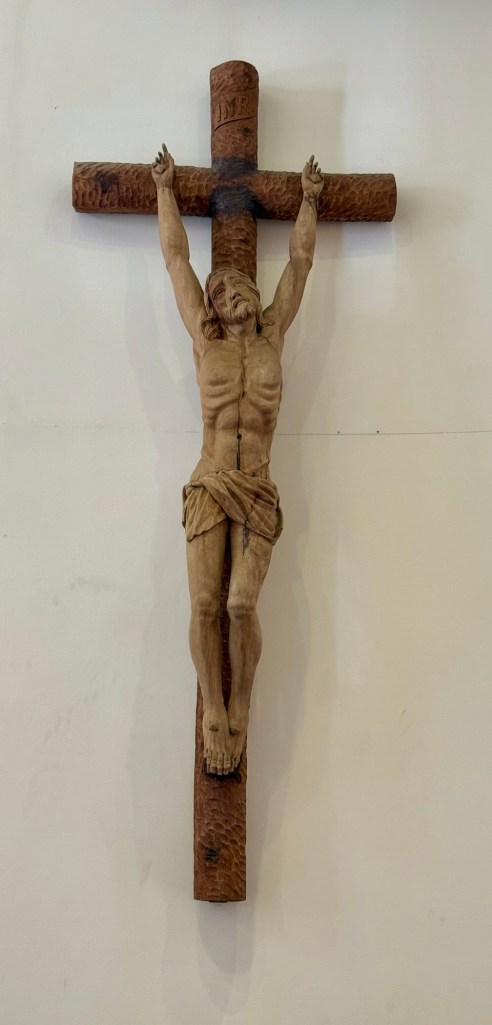
Photo by author, Carmel of the Holy Family Monastery, Guiguinto, Bulacan, 25 September 2025.

But you, man of God, pursue righteousness, devotion, faith, love, patience, and gentleness (1Timothy 6:11).

How lovely and so apt these days are the qualities Paul required through Timothy every man and woman of God must have. Of the six qualities Paul had cited, I like most “gentleness” which Jesus also asked us to have, “learn from me, for I am meek and gentle ( or humble) of heart” (Mt. 11:29).

From the Greek word prauteis, gentleness implies consideration, meekness, humility, calmness and strength amid adversities and difficulties. True power is expressed kindly and gently, not with harshness. Parents and teachers know this so well as children learn discipline better when authority and power are expressed gently than harshly.

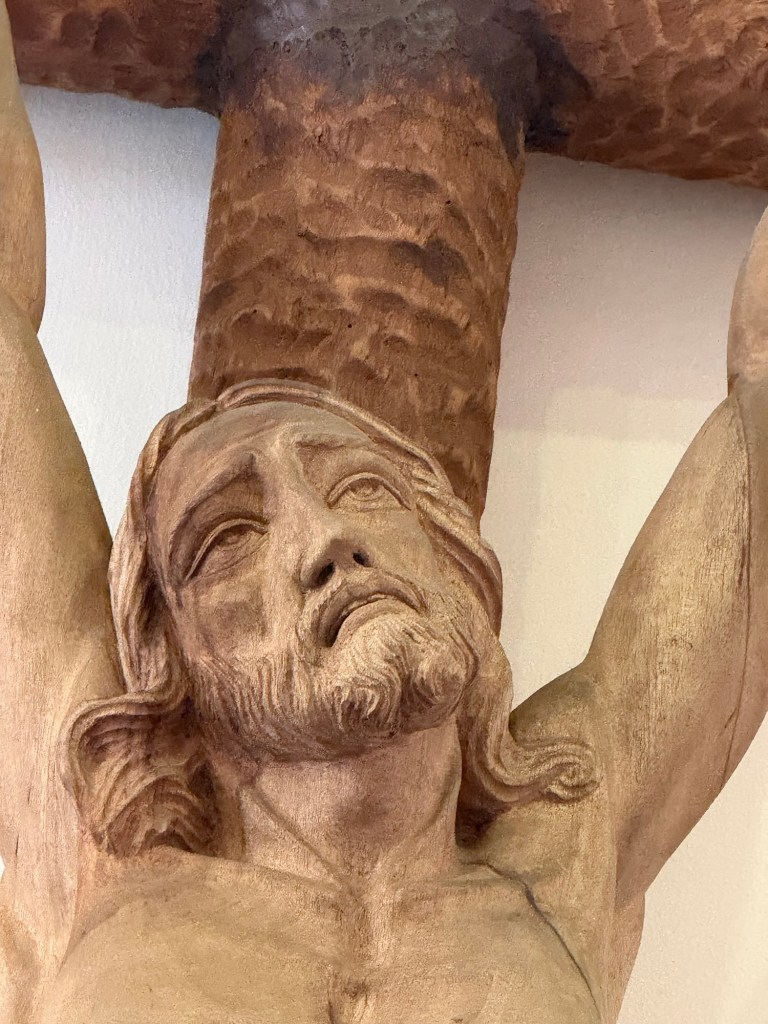
Photo by author, Carmel of the Holy Family Monastery, Guiguinto, Bulacan, 25 September 2025.

Lately we have been sliding towards this kind of arrogance in our anger and frustrations following the wholesale corruption in Congress. Everybody feels the weight and pains of the ghost flood control projects but cursing and wishing death upon the corrupt officials are off bounds because that make us just like Duterte and his followers whose mouths spew expletives and death to their detractors.

Our readings are so timely this Sunday again, calling us to be gentle with one another because eternal life begins in the here and now of our earthly existence. How we live today determines our entrance or not into the eternal banquet of the Lord.

Jesus said to the Pharisees: “There was a rich man who dressed in purple garments and fine linen and dined sumptuosly each day. And lying at his door was a poor man named Lazarus, covered with sores, who would gladly have eaten his fill of the scraps that fell from the rich man’s table. dogs even used to come and lick his sores. When the poor man died, he was carried away by angels to the bosom of Abraham. The rich man also died and was buried, and from the netherworld, where he was in torment, he raised his eyes and saw Abraham far off and Lazarus at his side” (Luke 16:19-23).

Photo by author, Carmel of the Holy Family Monastery, Guiguinto, Bulacan, 25 September 2025.

Our readings continue to pursue that thorny issue of money, of how we use and manage it for God’s greater glory in the service of others not for our shameful selfish interests.

That is why we find Paul’s admonition to Timothy and to us today as men and women of God to be gentle in the midst of too much materialism. In the preceding verses Paul warned Timothy of the dangers of false teachings and the love of riches which he concluded with an exhortation to rely more on God than in wealth in verse 17. It is a timely reminder from over 2000 years ago against this growing trend among us spawned by social media of people flaunting their wealth as if finding their own value as a person in possessions than in their very selves.


Gentleness like Jesus is first of all finding our being’s sacredness. It is an expression of our being loving and charitable because we are children of one loving God we relate with as a Father.

How tragic we no longer see each other’s worth as a person, as an image and likeness of God as we seek more the face of money than the face of God in every person. Pera pera na lang lahat – even in the church, sad to say. Every consideration boils down to money like leadership in church activities or hermanidad in fiestas being reserved for the rich and famous who are always the politicians to whom many priests and bishops have become beholden, consciously or unconsciously. We have too much collections and envelopes that further drive away the poor from celebrating our Sunday Eucharist which is essentially a foretaste of the Lord’s banquet in heaven.

Photo by author, Carmel of the Holy Family Monastery, Guiguinto, Bulacan, 25 September 2025.

Amos continues his tirades against the priests of the temple of his time with their hypocrisies of hiding selfish motives in religious celebrations and practices that sadly continue to this day among us in the church.

Thus says the Lord the God of hosts: “Woe to the complacent of Zion! Lying upon beds of ivory, stretched comfortably on their couches, they eat lambs taken from the flock, and calves from the stall! They drink wine from bowls and anoint themselves with the best oils; yet they are not made ill by the collapse of Joseph!” (Amos 6:1, 4, 6).

That “eating lambs from the flock” and “calves from the stall” are the animals reserved for offering in the temple their priests have taken for themselves while “drinking from bowls” and “anointing with the best oils” harp on our rituals we have taken as our own like commercialization of Masses and sacraments. It is the color of money perfectly described by the purple clothing of the rich man in the parable that pervades us in the church that people no longer see and experience God as they have become so cautious asking about the price or the fees that come with every service we give.

Photo by author, Carmel of the Holy Family Monastery, Guiguinto, Bulacan, 25 September 2025.

Gentleness like Christ is using our power and authority at the service of the poor and disadvantaged, ensuring our Eucharistic banquet is a reflection of the eternal banquet in heaven where everyone is welcomed.

How sad this parable is repeated daily in the church that is why Jesus directed it to the Pharisees, one of the ruling class in the Jewish society at that time associated with temple worship and religion. Though Jesus did not say at all if the rich man is a good person or not, it is very clear that he lacked gentleness in his flamboyance, wearing purple clothes as if screaming to be noticed by everyone as a somebody while everybody is a nobody.

Maybe we should add “nepo Fathers” to the list of nepo babies and nepo wives who flaunt their wealth, looking more like showbiz kids than priests, feeling superstars who are more like entertainers than preachers who relish the tag “influencer” than remain hidden doing the work of Christ. They refuse wearing the proper liturgical vestments due to our tropical climate but would not mind at all wearing signature clothes with their perfumes leaving traces in their favorite stomping grounds like malls and cafes during offs.

Where is our gentleness or concern and consideration for the majority of our people who are poor further pushed out of our churches literally and figuratively speaking simply because we do not smell and look like them our flock of sheep as Pope Francis reminded us early in his pontificate?

Photo by author, Carmel of the Holy Family Monastery, Guiguinto, Bulacan, 25 September 2025.

Gentleness of Jesus is solidarity with the people, especially the poor and suffering who experience being uplifted or empowered in his mere presence so filled with warmth and love.

People understand us priests for being strict even stern-looking but what they find so difficult is when pastors are detached from them, always out of the parish for so many reasons, when priests are selective in their company even having cliques. How sad when priests are unapproachable and indifferent like the rich man who was oblivious to the presence of Lazarus at his door, who never gave him any attention at all while still on earth when in fact, they knew each other as mentioned in the parable after they have both died. Kakilala naman pala niya si Lazaro pero doon na lang sa kabilang buhay siya kinausap at pinansin kung kailan huli na ang lahat.

Pope Francis used to describe the church as a hospital where the sick in body and soul come to find solace and comfort in the presence of God. But, instead of hospitality, many times it is hostility that people experience in our parish when they are held hostage by our many rules and regulations that they never feel welcomed at all. Some get scolded that instead of their burdens being eased, they are traumatized by the priests or the office staff and volunteers.

Photo by author, Carmel of the Holy Family Monastery, Guiguinto, Bulacan, 25 September 2025.

If we could be a little more gentle with every Lazarus, perhaps we could be truly rich as we find God in everyone in our doors that lead to our banquet table, whether here on earth or in the afterlife.

Let me end with this parable within me these past five years as a chaplain in the hospital.

Have you ever noticed how the rich with all their wealth and resources are often afflicted with rare diseases without any cure and medication at all while so many poor people without money at all could not avail of the many procedures and medications available for their illness?

It is a parable in this life that begs us to be gentle, even extra gentle many times to ease each other’s sufferings with the rich sharing their material wealth and the poor sharing their gift of self in the face of death. Amen. Have a gentle week ahead everyone. Fr. Nicanor F. Lalog II, Our Lady of Fatima University, Valenzuela City (lordmychef@gmail.com).

Paninindigan, hindi upuan

Lawiswis ng Salita ni P. Nicanor F. Lalog II, Ika-02 ng Setyembre 2025
Larawan kha ng may-akda, 2024.

Tayong mga Pinoy ay mayroong nakakatawang kaugalian ng pagkahumaling masyado sa ating upuan. O silya. O kung ibig ninyo ay salumpuwit sa malalim na salin sa ating wika.

Mula sa ating mga tahanan hanggang sa simbahan at silid-aralan, sa mga sasakyan, mayroon tayong mga paboritong upuan na atin nang inangkin na sariling puwesto, hindi puwedeng upuan ng iba. Sa jeep at bus, lahat gusto sa may estribo. Ganun din sa LRT/MRT. At maski sa eroplano kaya nakakahiya sa mga paliparan sa abroad ang mga kababayan natin na nag-uunahan kapag boarding time na gayong mayroon namang ticket ang bawat isa! Sa sinehan man ay ganoon din. Hindi mo malaman kung likas na tanga o maarte lang na ayaw sundin kinuhang number ng upuan kasi gusto pala ibang puwesto.

Larawan mula sa Pexels.com

Likas marahil ito sa lahat ng tao bunsod ng sinasaad na kapangyarihanng bawat upuan na tinagurian ding luklukan o trono. Hindi man natin aminin, kapangyarihan ang dahilan bakit lahat sa atin ay ibig maupo malapit sa pintuan ng silid at ng sasakyan: hindi lamang para mabilis na makaalis kungdi upang wala ring makapigil na maliwanag na simpleng pagsasaad ng ating ambisyong maging boss na palaging nasusunod maski saan.

At siyempre, ang malalim at mabigat na dahilan ng ating pagkahumaling sa puwesto ng upuan ay ang kapangyarihan at katanyagang dala nito. Kung hindi ka man nasa kabisera na tinuturing siyang puno ng pagdiriwang, hangga’t maari ibig natin ay makadikit sa nakaluklok sa puwesto ng kapangyarihan. Kaya chairman ang pinuno ng ano mang samahan o komite, taglay ay pawang kapangyarihan. Pagmasdan gaano tiisin kanilang almoranas ng mga pulitiko at sabik sa puwesto basta manatiling naka-upo sa puwesto hindi sa paglilingkod kungdi para sa kapangyarihan at kayamanang kaakibat ng bawat posisyon. Suma total, sa upuan nararamdaman natin pagiging hari at reyna, pagiging panginoon at makapangyarihan. Wika nga sa Inggles ay “driver’s seat” – kung sino may hawak ng manibela siya masusunod kung saan pupunta.

Naalala ko lang… noong mga bata pa kami kapag sumasakay ng taxi, palaging sinasabi ng aming ama sa pagbibigay ng direksiyon sa drayber ay silya at mano. Silya kung liliko sa kaliwa dahil ang silya o upuan ng kutsero ay nasa kaliwang bahagi ng kalesa; liliko naman sa kanan kapag sinabing mano na Kastila sa “kamay” dahil hawak ng kanang kamay ng kutsero ang latigo o pamalo sa kabayo para lumakad o tumakbo at huminto. Kaya noon pa man maski sa kalesa, ang silya ay nagpapahiwatig na ng kapangyarihan!

Larawan kuha ni Sarah-Claude Lu00e9vesque St-Louis sa Pexels.com

Hindi masama ang kapangyarihan kung ito ay ginagamit sa kabutihan. Alalahanin tayo bilang tao ay binahaginan ng Diyos ng kanyang kapangyarihan upang malinang ang daigdig at matulungan ating kapwa.

Kaya nang pumarito si Jesus, palagi niyang nililiwanag ang aspektong ito ng ating buhay, ang wastong pag-gamit sa ating kapangyarihan na pakikibahagi lamang sa otoridad ng Diyos.

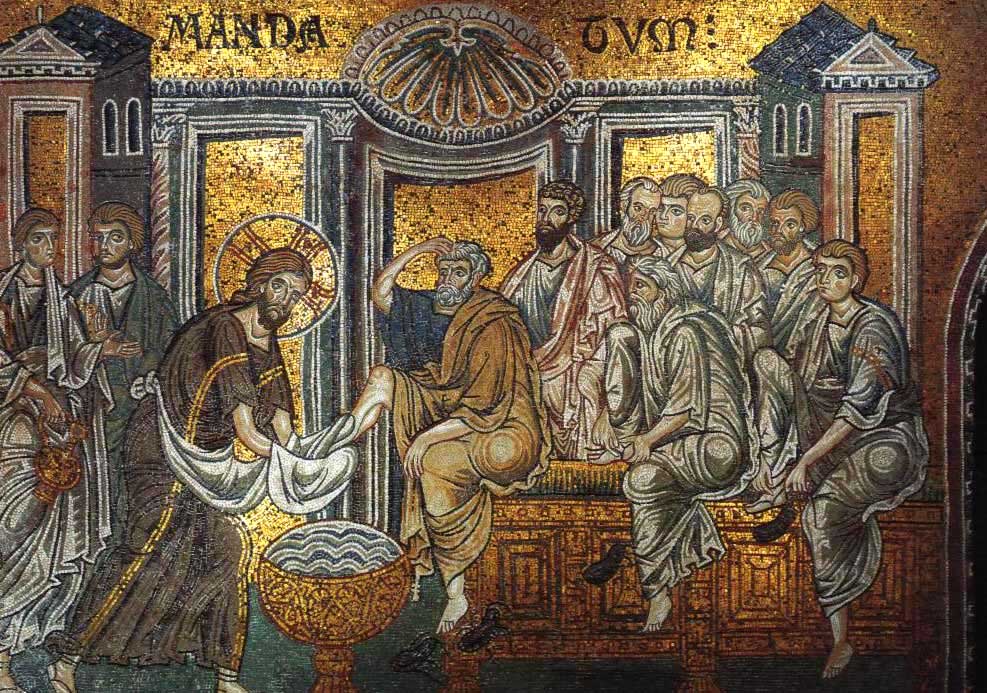
Doon sa kanyang Huling Hapunan ipinakita ni Jesus ang tunay na kahulugan ng ating “seating position” nang siya ay tumindig at hinubad ang kanyang panlabas na damit upang hugasan mga paa ng kanyang mga alagad. Ang gawaing iyon ay para lamang sa mga alipin ngunit ginampanan ni Jesus upang makintal sa ating mga isipan at kamalayan na ang buhay ay wala sa ating upuan kungdi nasa paninindigan.

Larawan mula sa commons.wikipedia.org, painting ng paghuhugas ng mga paa ng alagad ni Jesus doon sa Monreale Cathed, Isla ng Sicily.

Para kay Jesus, hindi mahalaga kung saan ka nakaupo, kung ano ang iyong posisyon at kapangyarihan. Ang pinakamahalaga sa Panginoon ay kung saan tayo nakatindig o nakatayo, kung tayo ba ay maninindigan katulad niya para sa kabutihan, katotohanan at katarungan.

Bisperas ng Paskuwa. Alam ni Jesus na dumating na ang panahon ng kanyang paglisan sa sanlibutang ito upang bumalik sa Ama. Kaya’t nang sila’y naghahapunan, tumindig si Jesus, naghubad ng kanyang panlabas na kasuutan, at nagbigkis ng tuwalya. Pagkatapos, nagbuhos siya ng tubig sa palanggana, at sinimulang hugasan ang paa ng mga alagad at punasan ng tuwalyang nakabigkis sa kanya.

Nang mahugasan na ni Jesus ang kanilang mga paa, siya’y nagsuot ng damit at nagbalik sa hapag. “Nauunawaan ba ninyo ang ginawa ko sa inyo?” tanong niya sa kanila. “Tinatawag nin yo akong Guro at Panginoon, at tama kayo, sapagkat ako nga. Kung akong Panginoon ninyo at Guro ay naghugas ng inyong mga paa, dapat din kayong maghugasan ng paa. Binigyan ko kayo ng halimbawa at ito’y dapat ninyong tularan” (Juan 13:1, 4-5, 12-15).

Para kay Jesus, ano mang posisyon o katungkalan ay para sa mapagmahal na paglilingkod sa kapwa (loving service to others). Kaya naman tinagurian ding “Maundy Thrusday” ang Huwebes Santo – mula sa salitang Latin na kautusan o mandatum – dahil noong gabing iyon nang ibigay ni Jesus ang kanyang utos ng pagmamahalan sa kanyang mga alagad. Ang sino mang tunay na nagmamahal tulad ni Jesus ay palaging nakatindig at naninindigan para sa minamahal. Walang tunay na nagmamahal nang naka-upo lamang, pa sitting pretty wika nga.

Larawan ng mga upuan sa loob ng Senado, marahil malambot at komportable habang karamihan ng mga kababayan natin nagtitiis sa matigas at marahil lumang upuan nila sa bahay. Kuha ni Avito Dalan ng Philippine News Agency, Mayo 2025.

Ito ang trahedya natin sa Pilipinas. Napakaraming nakaluklok sa iba’t-ibang upuan ng kapangyarihan ngunit hanggang ngayon ay kulelat pa rin tayo bilang bansa dahil wala namang tunay na naninindigan at nagmamahal sa bayan.

Pagmamahal sa sarili ang namamayani sa halos lahat. Kaya naman ang puwesto ay hindi sa paglilingkod kungdi sa pangsariling kapakanan ng mga nakaupo na palaging panig sa mga mayayaman at makapangyarihan. Pawang pakitang-tao lamang mga pagtulong sa maliliit at mahihirap ng maraming nakaupo saan mang puwesto maging mga dating nasa media na nang matikman tamis ng pulitika, lumabas kanilang tunay na kulay.

Palaging katabi ng upuan ay pera kaya naman sa halos lahat ng mga sala ng mga hukom mula Korte Suprema hanggang sa mga munisipyo, maraming kaso inuupuan na tanging katarungang mithi ng mga inapi hindi pa makamtan. Gayon din sa mga ahensiya ng pamahalaan. Puro pasarap sa puwesto mga bossing, naghihintay lamang ng lagay at pabuya kaya kulang at kulang pa rin mga buwis na pinapataw sa mga ordinaryong mamamayan.

At siyempre, hindi magpapahuli ang mga nasa rurok ng luklukan ng kapangyarihan – ang Malacanang at ang Kongreso na alam naman ng lahat ang matagal nang siste ng talamak na korapsiyon.

Ano pa ang ating aasahan kung nakapasok na sa sistema ng pamamahala ang mga mandarambong at sinungaling na pulitiko sa palasyo, kongreso at senado, kapitolyo at munisipyo pati na rin mga munting barangay hall? Sa gara at lambot marahil ng kanilang mga upuan, wala nang upisyal ang ibig tumindig at maninindigan liban sa iilan para sa katotohanan, kaayusan, katarungan at higit sa lahat, para sa bawat mamamayan.

Kailan kaya darating ang panahon na matupad ang sinabi ng Panginoong Jesus na ang “nagpapakataas ay ibaba, at ang nagpapakababa ay itataas” (Lk. 14:11)?

Marahil kapag tumugon na rin tayong lahat sa kanyang panawagang manindigan sa pagtayo mula sa ating komportableng upuan ng kawalan ng pakialam sa lipunan, hindi nasusuhulan lalo na kung halalan. Marahil kapag tumugon na rin ang sambayanan sa panawagan ni Jesus na gumising at tumindig sa paanan ng kanyang Krus upang kasama niya tayong masaktan, masugatan, at mawalan ng lahat para sa tunay na pagpapanibago.

Hangga’t pinipili natin ang masarap na upuan ng kawalang-pakialam sa mga kasamaang umiiral, darating ang panahon hindi na rin tayo makatatayo upang manindigan dahil sa pagkabaon at hindi na tayo makaahon pa sa gulo at pagkawasak sa ating lipunan. Huwag natin iyang payagang mangyari kaya’t makiisa sa mga talakayan at higit sa lahat manalangin para sa paninindigan at kabutihan. Amen.

Larawan mula sa Pexels.com.

Our hands & the hands of God

40 Shades of Lent by Fr. Nicanor F. Lalog II
Solemnity of the Palm Sunday of the Lord's Passion-B, 24 March 2024
Isaiah 50:4-7 ]]+[[ Philippians 2:6-11 ]]+[[ Mark 15:1-39
From influencemagazine.com

As you all know by now, I turned 59 years old last Friday, March 22. For the second consecutive year, I have moved my personal annual retreat to my birthday so I can pray more, thank God more for his gift of life to me. This is one of my realizations in turning 59 years old:

"The more we enter the heart of Jesus
where we find peace and fulfillment,
joy and security,
the more we also discover
the dark and ugly sides of life. 
Darkness, pains, sickness, failures,
and other forms of sufferings
come to the fore when we are
in God’s loving presence,
and vice versa."

The more we see and experience God’s beauty, we also see and experience Christ’s agony and passion within our very selves and among our brothers and sisters. These two faces of life ever present in our earthly journey are perfectly shown to us by today’s celebration called “the Solemnity of the Palm Sunday of the Lord’s Passion.”

What we have this Sunday is actually a twin-celebration.

Palm Sunday came from the liturgy of the early Christians living in Jerusalem in the fourth century who started the Holy Week tradition with a procession of palm branches that later spread to France and Germany where the blessing of palms was introduced. Later in Rome in the 12th century, the Pope began the tradition of commemorating the Lord’s Passion on this Sunday with a proclamation of that long gospel narrating Christ’s entry into Jerusalem leading to His Last Supper until His Crucifixion and Death. It was only in 1965 during Vatican II when these two celebrations were combined into what we now have as the Solemnity of the Palm Sunday of the Lord’s Passion. 

The merging of these two celebrations sums up the mystery we celebrate during Holy Week as well as the mystery of our everyday life wherein we have the glory of Palm Sunday in one hand and at the other hand, the darkness of our own passion as a sharing in the Pasch of the Lord. 

Photo by author, Chapel of St. Francis Xavier, Sacred Heart Novitiate, Novaliches, 20 March 2024.

I have intended a play in the word “hand” there as I prayed over our gospel this Sunday during my recent retreat. As directed by my Jesuit guide, I reflected on the four gospel accounts of the Lord’s Passion where I found the word “hand over” used so many times.

“To hand over” is the more literal translation of the Greek word paradidomi used by the evangelists in the “betrayal”of Jesus by Judas Iscariot. In Filipino, it is ipasa and ibigay that are more picturesque than ipagkanulo which is our equivalent of “to betray”.

Now, look at how our Filipino word ipasa takes on a deeper meaning when we reflect on how Jesus was “handed over” first by Judas Iscariot to the chief priests who then “handed him over” to Pilate who eventually “handed him over” into death by crucifixion. Pinagpasa-pasahan nila si Jesus! And that is how evil we are humans with God and with one another, using our very own hands, handing them over by manipulating them for our own selfish ends.

Then Judas Iscariot, one of the Twelve, went off to the chief priests to hand him over to them. When they heard him they were pleased and promised to pay him money. Then he looked for an opportunity to hand him over… He (Judas Iscariot) came and immediately went over to him and said, “Rabbi.” And he kissed him. At this they laid hands on him and arrested him.

Mark 14:10-11, 45-46

As soon as morning came, the chief priests with the elders and the scribes, that is, the whole Sanhedrin, held a council. They bound Jesus, led him away, and handed him over to Pilate… So Pilate, wishing to satisfy the crowd, released Barabbas to them, and after he had Jesus scourged, handed him over to be crucified.

Mark 15:1, 15
Photo by author, Chapel of St. Francis Xavier, Sacred Heart Novitiate, Novaliches, 20 March 2024.

This handing over of Jesus – pinagpasa-pasahan si Jesus in Filipino took its lowest point in Matthew’s account when Pilate “took water and washed his hands in the sight of the crowd” (Mt. 27:24) to claim innocence in the Lord’s death. That’s how dirty our hands as humans have become! How ironic and tragic that the more we wash our hands in repeatedly handing over our family and friends, colleagues and even country, the more our hands have become dirty.

This Sunday, Jesus is inviting us to examine our hands, to clean our hands so that they become His hands of loving service, mercy and forgiveness, kindness and understanding and care for each other and nature. Let us remember the lessons of COVID-19 four years ago today when we constantly washed and disinfected our hands to be more responsible with each other, with nature and with life. Our problems are often the results of things getting off hand, out of control or too much control as we manipulate everything even God, persons and nations through elections as well as habits and patterns for economic and social reasons

“Ecce Homo” painting by Vicente Juan Masip (1507-1579) from masterapollon.com

It is so different with the hands of God expressed so beautifully in our first reading from the Prophet Isaiah’s Song of the Suffering Servant who was fulfilled in Jesus Christ our Lord and Savior.

The Lord God has given me a well trained-tongue, that I might know how to speak to the weary a word that will rouse them… and I have not rebelled, have not turned back.

Isaiah 50:4, 5

Here is a beautiful picture of God in Jesus Christ whose hands we have tied so many times as we insisted on our own ways, in seeking instant gratifications, in manifesting power through sheer strength. Here lies the beauty of God’s hands in Jesus Christ so opposite with our manipulating and controlling hands because His is of submission. Or passion.

The word “passion” is from the Latin patior that means to suffer or to undergo. It is related with the words passivity and patience – exactly like patients who just lie and wait on their beds, waiting for the doctors and nurses, for them to be healed and get better.

Passion here connotes passivity in the positive sense when we strip ourselves naked before God in order to be open to new possibilities like Jesus Christ eloquently expressed by St. Paul in the second reading when He “emptied and humbled himself, becoming obedient to the point of death, even death on a cross” (Phil.2:7, 8). 

Photo by author, Chapel of the Holy Family, Sacred Heart Novitiate, Novaliches, June 2016.

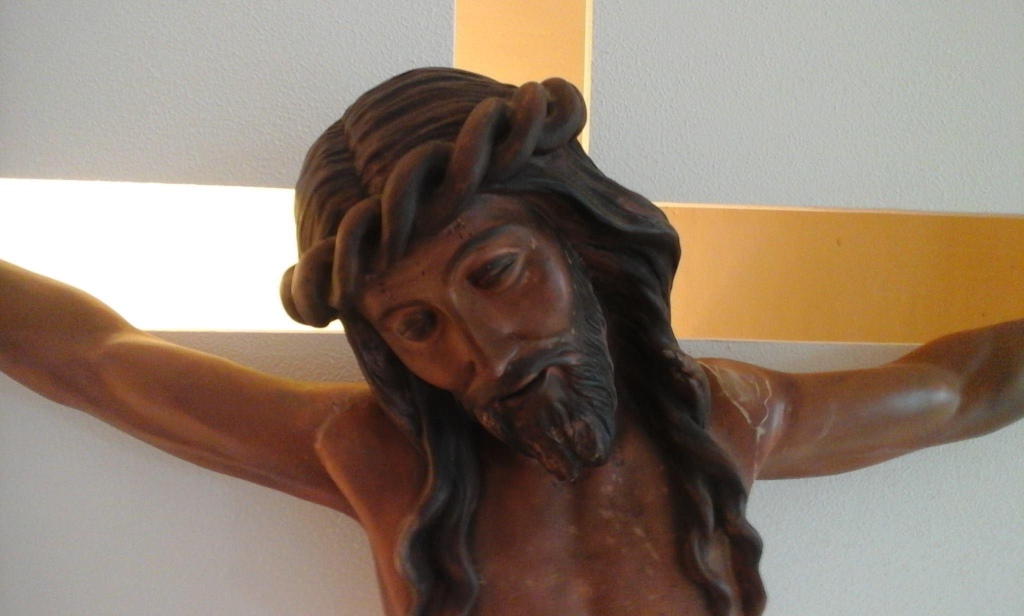
In his Passion, Jesus taught us that true power is in weakness like him dying on the Cross. Now here we find something so interesting with the synoptics account of Christ’s death when “he breathed his last” (Mk. 15:37) leading to the faith of a Roman soldier, a pagan.

When the centurion who stood facing him saw how he breathed his last he said, “Truly this man was the Son of God!”

Mark 15:39

What was in Christ’s final breath that convinced the Roman centurion that Jesus was indeed the Son of God? The fourth gospel gives us the answer: When Jesus has taken the wine, he said, “It is finished.” And bowing his head, he handed over the spirit (Jn. 19:30).

Here again we find the words “handing over” but this time in the positive sense. Jesus never betrayed the Father nor anyone; he instead handed over Himself to God and to us. That is passion when we suffer passively in the positive sense because we love, we care, we understand.

For us to enter into the heart of Jesus this Holy Week, we have to enter into His passion too. That is to submit, to surrender all our powers to God through our parents and superiors by emptying ourselves of our pride to be filled with Christ’s humility, justice and love. Amen. A blessed Holy Week to everyone!

Photo by author, Chapel of the Holy Family, Sacred Heart Novitiate, Novaliches, June 2016.

Life is where we stand not where we sit

40 Shades of Lent by Fr. Nicanor F. Lalog II
Thursday, Feast of St. Peter's Chair, 22 February 2024
1 Peter 5:1-4 <*{{{{>< + + + ><}}}}*> Matthew 16:13-19
Photo by author, Chapel of the Holy Family, Sacred Heart Novitiate, Novaliches, 2018.
My Lord Jesus,
on this Feast of St. Peter's Chair
when the Church's authority
especially of the Pope and bishops
is put into question,
even challenged,
you remind us also your priests
that “the primacy of Peter
symbolized by his chair atop
the magnificent altar at the Vatican
is the primacy of faith
and the primacy of love”

(Pope Benedict XVI,
"Images of Hope",
Ignatius Press, 2006).
These beautiful words by your
servant Pope Benedict XVI
remind us too that discipleship
and life itself are about where we stand
not about where we are seated;
make us realize, dear Jesus,
that like St. Peter and all the saints
who served you faithfully in love,
we need to make a stand as witnesses
of your gospel values of love and justice,
mercy and kindness;
no one can truly be your disciple nor
be fruitful in life by remaining
seated comfortably by the roadside;
let us do our mission not profession,
be concerned with persons not programs,
focused on ministry and services
not in perks and positions.
May we remain standing by your Cross,
Jesus, even when the world prefers
to avoid pains and sufferings,
sacrifices and sharing,
inefficiencies and waiting.
Amen.
Photo by author, Chapel of the Holy Family, Sacred Heart Novitiate, Novaliches, 2018.

Real power empowers

The Lord Is My Chef Sunday Recipe for the Soul by Fr. Nicanor F. Lalog II
Fifth Sunday in Ordinary Time, Cycle B, 04 February 2024
Job 7:1-4, 6-7 ><}}}}*> 1 Corinthians 9:16-19, 22-23 ><}}}}*> Mark 1:29-39
Photo by The Good Brigade/Digital Vision/Getty Images via cnn.com.

There’s another “war” happening that had actually started a long time ago but only now recognized by the powerful US Senate in Washington DC when they summoned last week the owners of big tech companies to a hearing on the harmful effects of social media.

It is a war that at first seemed to have been neglected or even unrecognized when parents and experts have long been complaining about the ill effects of social media. Finally, authorities are doing something about it. 

“Great power comes with great responsibilities.”- Spiderman. Photo from peakpx.com.

Though the issues at hand are very contentious because of the many benefits too of social media, the US Senate hearings are a big step in demanding more social responsibilities from tech owners who have become so powerful with their products’ wide reach and influence.

Of course, much responsibilities are also in the hands of parents and users of social media but one thing has always been clear these past 20 years when experts and ordinary folks have been raising the red flag on social media being so impersonal in nature where persons are often considered as objects than subjects to be loved and respected.

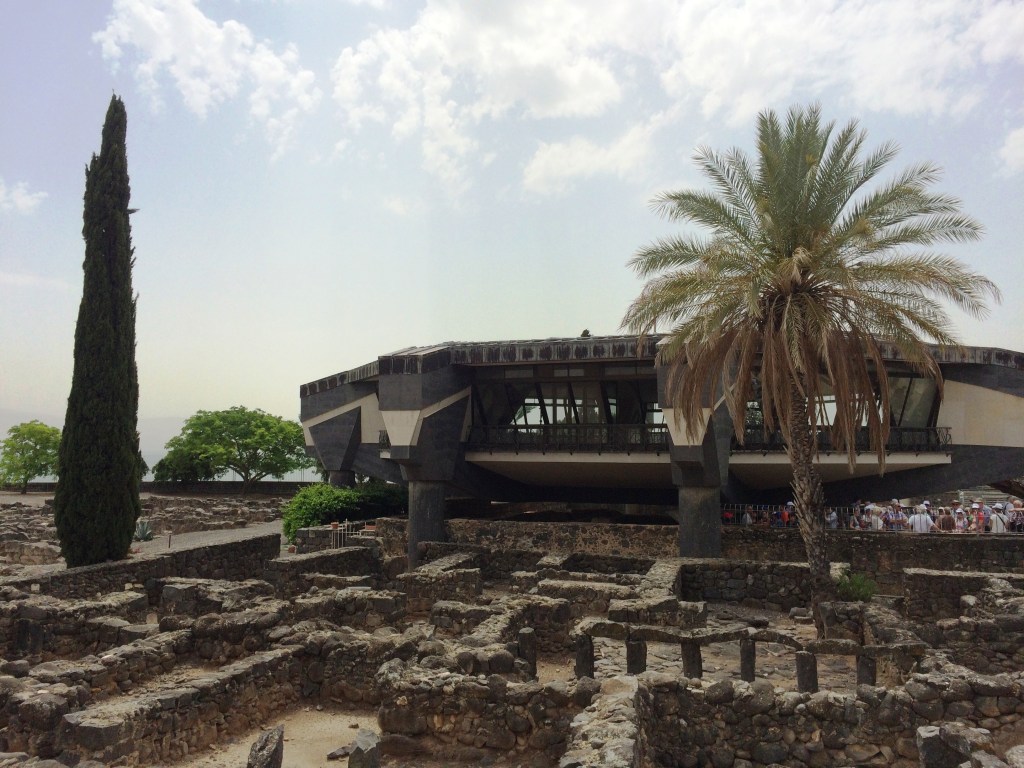
Our ability to communicate is a sharing in the power of God, a sharing in his authority meant to foster union among peoples as persons. Despite the efficiency of social media, it cannot and must not replace the human person in every communication. This we have seen last Sunday when people were “astonished” and “amazed” one sabbath as Jesus spoke with authority in their synagogue in Capernaum. From there, Jesus moved into the home of Simon Peter, staying for a while in Capernaum before moving on to other locations to continue his ministry of teaching and healing.

On leaving the synagogue Jesus entered the house of Simon and Andrew with James and John. Simon’s mother-in-law lay sick with a fever. They immediately told him about her. He approached, grasped her hand, and helped her up. Then the fever left her and she waited on them.

Mark 1:29-31
Photo by author, ruins of the neighborhood around the synagogue of Capernaum where Jesus used to preach; underneath the Church are believed to be the ruins of the home of Simon Peter where Jesus healed his mother-in-law.

It was still the day of sabbath and we could feel the great joy and pride of the four disciples with Jesus that they “immediately told him” about Simon’s mother-in-law who “lay sick with a fever.”

Notice Mark’s detailed report on the healing of Simon’s mother-in-law by Jesus: He approached, grasped her hand, and helped her up. Then the fever left her and she waited on them. In this continuation of a slice in the life of Jesus last Sunday, Mark is presenting us again another important aspect of Christ’s authority and power that is personal which empowers others. 

To empower means to raise up a person from one’s lowliness in order to restore his/her well-being. To empower means to make a person whole again as he/she discovers and experiences anew his/her giftedness in God and as a person. 

Photo from kimaldrich.com

Now, imagine this in the light of the powers of social media made possible by the internet through various devices: Jesus could have healed anybody who was sick within a 100 or 200 meter radius from the synagogue of Capernaum with his great powers being the Son of God. He could have just sent off signals like a router to heal more sick people instead of making them flock to the home of Simon Peter. Even today, perhaps, we could just come to the church, stay in a specific spot like the confessional to get connected to Jesus and voila – get healed!

But, Jesus never did that kind of healing and would never do it. Recall how Jesus would always approach and touch, speak and meet the sick before healing them. When a woman was healed of her hemorrhages after touching his clothes while they were in a crowd, Jesus stopped and searched for her to have a personal relationship. Unlike the internet, Jesus came in order to personally connect with us and connect us with the Father in the most personal manner.

In every healing by Jesus, there is always something deeper than restoration of one’s health which is salvation, a personal encounter with the Christ who leads us to fulfillment as persons. In every healing of body, there is the forgiveness of sins in one’s soul and being. Healing is more wholistic in nature than being being relieved of headache or any discomfort. Many times, our sickness can leave us deformed, disabled and even invalid without any cure at all yet deep inside us we still experience freedom and joy. That is healing because we are assured of being loved and cared for by another person and most of all by Jesus, personally.

So unlike the powers of any human or professional nor even by the social media so much around us that may be indeed so strong and efficient with its great speed but could never uplift us or restore our well-being. For sometime, they can offer us with relief but the deep longings and emptiness within us lingers on. Why? St. Augustine expressed it perfectly when he wrote in his Confessions, “You have made us for yourself, O Lord, and our hearts are restless until they rest in you.”

From Pinterest.com

This Sunday, Mark is telling us that Jesus comes to us daily right in our hearts where our home is, always “approaching us, grasping our hands, helping us up” from all our burdens and pains, sufferings and miseries. Are we present to meet Jesus? Do we “immediately” tell him our problems like Simon Peter when his mother-in-law had fever?

The only essential and vital connection we must keep and maintain in this life is our personal connection with God in Jesus Christ who exemplified this well at the end of this Sunday’s gospel when “Rising very early before dawn, he left and went off to a deserted place, where he prayed” (Mk. 1:35).

Last Friday we celebrated the Feast of the Presentation where Simeon and Anna showed us too how they remained personally connected with God in their daily prayers and fasting at the temple so that when Joseph and Mary came with the Child Jesus, both were led by the Holy Spirit to meet them. Imagine the crowd at the temple at that time plus Simeon and Anna being both old with the usual woes but were both never distracted in their focus on God and his promise of salvation in Christ before dying.

Photo by Vigie Ongleo in Virginia, USA, 02 February 2024.

There will always be suffering in life as the first reading reminds us. Like Job, we go through many setbacks in life, making us wonder all the more at the mystery – and scandal – of human sufferings, of how it could befall us if we have a powerful and loving God. St. Paul meanwhile tells us in the second reading how imperfect our world is when we sometimes have to make sacrifices to keep the unity of our family and community.

Both Job and St. Paul in their sufferings and sacrifices remained connected with God, bore everything in silence to become “all things to all men” (omnia omnibus) by sharing God’s power and authority in their weaknesses even in death that have empowered countless men and women through the ages including us in our own time.

Let us pray:

Lord Jesus Christ,
our true healer of all sickness
in body, heart, mind and soul:
keep us connected in you
especially in moments of trials
and difficulties so that we may
be filled with your personal powers
as we too empower others
when they are weakest.
Amen.

A blessed weekend to everyone!

Authority is when we claim God whom we proclaim

The Lord Is My Chef Sunday Recipe for the Soul by Fr. Nicanor F. Lalog II
Fourth Sunday in Ordinary Time, Cycle B, 28 January 2024
Deuteronomy 18:15-20 ><}}}}*> 1 Corinthians 7:32-35 ><}}}}*> Mark 1:21-28
Photo by Dra. Mylene A. Santos, MD, an orange-bellied flowerpecker (Dicaeum trigonostigma) somewhere in the Visayas, December 2023.

The gospel makes us wonder anew this Sunday on the mystery of Jesus, on what was with his person and speech. Remember how we wondered the other Sunday on what he had told Andrew and his companion who “went and see” Jesus at his dwelling at “four in the afternoon” (Jn. 1:39) that they realized he was indeed the Messiah, the Christ. 

Reading further in that portion of the fourth gospel, we find how Andrew and companion brought two others to Jesus, Simon Peter and Nathanael to become disciples too. This Sunday as we return to Mark’s gospel, the evangelist tells us the start of Jesus Christ’s public ministry on a sabbath in the synagogue of Capernaum with his first four “fishers of men”:

Then they came to Capernaum, and on the sabbath Jesus entered the synagogue and taught. The people were astonished at his teaching, for he taught them as one having authority and not as the scribes.

Mark 1:21-22
Photo by author of ruins of parts of the synagogue at Capernaum where Jesus taught, May 2017.

Every time we hear the word “authority” especially among us Filipinos, it often evokes the sense of power, of superiority over persons and things. In Tagalog, we translate it as “power” or kapangyarihan, kakayanan mapangyari ano mang bagay.

But, Jesus is now telling us something deeper about true authority. People compared his kind of authority with their scribes, men of power and authority in their time along with the priests and Pharisees who were considered experts in scriptures being learned men, highly regarded and feared. Their authority flowed only from their position and name, from the outside and not from within.

Jesus shows us today that real authority flows from within, from a person’s inner self, from one’s heart, not from designations nor positions. True authority is felt even without the titles nor any forms of externalities. True authority comes from people who “walk their talk” so to speak.

Photo by author, tourists and pilgrims at the ruins of the synagogue at Capernaum where Jesus taught, May 2017.

People of true authority “actualize” their words and their thoughts, making them a “reality” that everyone not just notices but even feels their authority. True authority creates a certain sense of aura, of positive vibes (arrive or “dating”) and a lot of mysteries that even in just reading Mark’s account of Jesus in the synagogue, we too could feel it and be astonished with the people there 2000 years ago!

What is most amazing here is that Mark did not tell us what Jesus spoke of nor what he taught nor even described how he spoke. What was so unheard of from Jesus that people and even us today are astonished with his words?

Keep in mind how Mark narrated this scene in the context of the synagogue on a sabbath – a beautiful reminder to us of Jesus continuing the Jewish tradition that had come into fulfillment in him. Recall also that at the start of Mark’s gospel After John had been arrested, Jesus came to Galilee proclaiming the gospel of God: ”This is the time of fulfillment. The kingdom of God is at hand. Repent, and believe in the gospel” (Mk.1:14-15).

Photo by author in May 2019 of a signage at the entrance of the ruins of the synagogue in Capernaum where Jesus taught more than 2000 years ago.

In the synagogue, Jesus continued this preaching. He claimed what he proclaimed for he is in fact – his very person – is the kingdom of God who had come as we reflected last Sunday. 

People felt God in him as he spoke, very similar with the experience of the chosen people in the wilderness with Moses in the first reading. There in the synagogue on that sabbath day, Mark presents to us how Jesus is indeed the “Word who became flesh” that people felt God in him because he claimed what he proclaimed. As the first reading from Deuteronomy reminds today, the surest criterion for recognizing a prophet is being a spokesperson of God like Moses now fulfilled in Jesus Christ.

We all share in this prophetic ministry of Christ when we were baptized but, are we rooted in God’s words that we speak only God’s words like Jesus? 

Can we claim what we proclaim that after celebrating the Sunday Mass, people experience Christ’s authority within us when we go home and go back to work and school because we actualize, we make God real in ourselves in our words and deeds?

How sad that we – especially us your priests – speak more of our selves and of the world, making the Mass a videoke and a variety show rolled into one that God is hardly felt by the people except be entertained.

Photo from https://santoninodecebubasilica.org/chronicles/viva-pit-senor-viva-senor-santo-nino/

The second time Mark mentioned the people being amazed with Jesus in his speaking with authority in the synagogue on that sabbath day was when he exorcised a man with an unclean spirit.

In their synagogue was a man with an unclean spirit… Jesus rebuked him and… And the unclean spirit convulsed him and with a loud voice came out of him. All were amazed and asked one another, “What is this? A new teaching with authority. He commands even the unclean spirits and they obey him.” His fame spread everywhere throughout the whole region of Galilee.

Mark 1:23, 25, 26-28

The surest sign of God speaking through us or anyone is when healing and repentance happen just like in the synagogue on that sabbath day. Notice how Mark recorded the words of the people about Jesus, “A new teaching with authority.”

In John’s gospel during the Last Supper we heard Jesus telling his disciples about his new command or teaching too which is to “love one another as I have loved you” (13:34).

True authority is about love and healing, kindness and compassion, mercy and forgiveness. Definitely not about subjugation nor manipulation nor use of force as we always experience from those with authority who display their powers and literally throw their weight around even amid heavy traffic with their security escorts blaring with sirens.

People were amazed at Jesus in healing the man with unclean spirit and called it a new teaching with authority because they felt God present among them because there was healing and exorcism which only God can do.

Most of all, the people in the synagogue felt God with them because Jesus was one of them unlike the scribes and other people of authority who were above them, detached from them. 

The same thing is most true with us these days. Whatever authority we have is to help and comfort people, not to scare them nor burden them. We are most moved by people in authority – whether at home or in school, at work or in the community and in the church – when they are kind and approachable, caring and understanding. 

Photo by author at the shore of the Lake of Galilee in Capernaum, Israel, May 2017.

Jesus teaches us today that true authority is making God present in us by offering comfort and consolation to those suffering like the poor and the weak who merely survive as they try to make ends meet daily. 

True authority is being prophetic, making God and his words our very own, becoming ourselves his presence and his healing hands with our loving service to everyone, offering hope and inspiration to those down in sins and miseries. 

True authority leads to salvation and liberation from sins. This begins with our communion in God through Jesus Christ in our personal and communal prayers, especially the Sunday Mass. 

We are all blessed with the same kind of authority of Jesus Christ. Let us claim it by being free from all anxieties in this life (second reading) by joining Jesus in his journeys like the four disciples with him in the synagogue in Capernaum. Amen. Have a blessed week ahead.

True authority

The Lord Is My Chef Daily Recipe for the Soul by Fr. Nicanor F. Lalog II
Tuesday in the First Week of Ordinary Time, Year II, 09 January 2024
1 Samuel 1:9-20  <*((((>< + ><))))*>  Mark 1:21-28
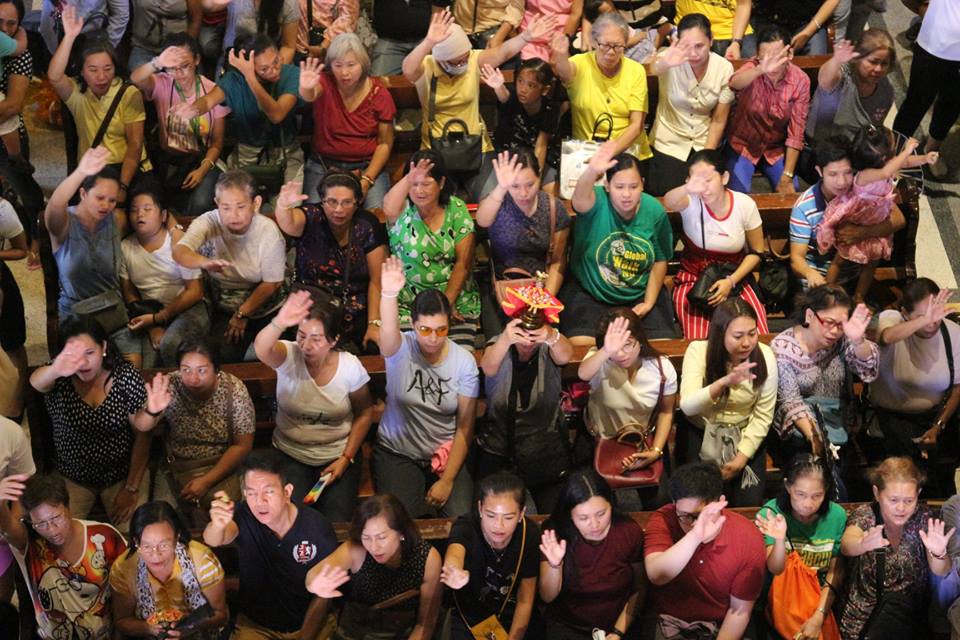
Photo by Mr. Jay Javier, Quiapo, 09 January 2020.
Praise and glory to you,
Lord Jesus Christ,
that today we shift into Ordinary Time
in our liturgy that coincides with
the annual Traslacion of the image
of the Black Nazarene in Quiapo,
Nuestro Padre Jesus Nazareno
as you remind us too in our readings
true meaning of authority
we often relate with power.

Jesus came to Capernaum with his followers, and on the sabbath he entered the synagogue and taught. The people were astonished at his teaching, for he taught them as one having authority not as the scribes.

Mark 1:21-22
People were astonished with your
authority, Lord Jesus, not only because
it is all-powerful but most of all,
it is most kind,
most compassionate,
most humane
because in your life,
in your very self as Jesus Nazareno,
you have shown us that
authority is not just having
power to make thing happen nor
lording over others;
like in Quiapo today as in Capernaum,
we are astonished with your
authority not because of its
powers of being efficacious
but because of your being so close
with us who are weak and suffering;
true authority for you, dear Jesus,
is to be one with the people -
in our miseries and anxieties,
in our pains and hurts,
as well as in our aspirations and dreams;
authority is most real,
most powerful
and most appreciated
when that authority
is felt as power for the people
to be healed and comforted,
raised up and inspired
like you have shown in your
coming to us,
in your carrying the cross,
of your bearing our infirmities.
Like Hannah in the first reading,
we beg those authorities above us
to "think kindly" of us people;
many times,
people in authority lord it over us
like Eli initially, suspecting
Hannah being drunk,
scolding us,
reprimanding us,
worst, judging us
without even knowing
our plight, so unlike you
who became poor like us,
most of all,
died for us.
Amen.
From google.com

Blessedness & beauty of poverty

The Lord Is My Chef Daily Recipe for Soul by Fr. Nicanor F. Lalog II
Monday in the Thirty-fourth Week of Ordinary Time, Year I, 27 November 2023
Daniel 1:1-6, 8-20   ><}}}}*> + ><}}}}*> + ><}}}}*>   Luke 21:1-4
Photo by Dra. Mylene A. Santos, MD in Tagalag, Valenzuela City, 17 November 2023.
Praise and glory to you, 
our loving Father! 
Thank you 
in bringing us closer to you 
in Jesus everyday 
especially in this final stretch 
of our church calendar 
as we come to prepare for Christmas soon.
But, rather than focusing 
on the outside appearances 
and material inclinations 
of our Christmas feelings,
teach us to empty ourselves
to be filled by you in Jesus Christ!
Let us be poor, O God!
Let us embrace poverty
 and simplicity
 to experience you,
your coming,
 your presence
in Jesus,
our Emmanuel!
Let us treasure poverty
for it is our true wealth
in this life
like that “poor old widow”
who gave everything she had
into the temple collection box;
let us realize that it is in poverty
that we find true wisdom
and strength
like what Daniel and his companions
have taught the chief chamberlain
of King Nebuchadnezzar
(Daniel 1:11-20).
Let us be poor, O God,
like Jesus Christ to find
power and strength in weakness,
glory and honor in humility,
and life in death.
 Amen.

True authority leads to humility

The Lord Is My Chef Daily Recipe for the Soul by Fr. Nicanor F. Lalog II
Wednesday, Memorial of St. Albert the Great, Doctor of the Church, 15 November 2023
Wisdom 6:1-11   ><))))*> + ><))))*> + ><))))*>   Luke 17:11-19
Photo by author, Jesuit Cemetery, Sacred Heart Novitiate, Novaliches, QC, 21 March 2023.
Thank you dear God
for the gift of authority,
a share in your authority 
to govern other people regardless
if they are a few or a handful of
loosely organized people like
family and friends
or a large number of subjects
in our work or organization,
community and the Church,
and the whole nation.
But most especially,
we pray for our civil and 
Church people of authority
to heed your counsel:

To you therefore O princes are my words addressed that you may learn wisdom and that you may not sin. For those who keep the holy precepts hallowed shall be found holy, and those learned in them will have ready a response. Desire therefore my words; long for them and you shall be instructed.

Wisdom 6:9-11
You have sent us your Son,
our Lord Jesus Christ as the
perfect example of authority figure,
who spoke with authority during his time
because his authority is a sharing
in your authority, Father,
an expression of his perfect 
obedience to you; 
let us realize that every authority 
must be lived in total obedience
to you, O God, like Jesus.
When authority is lived in obedience,
those in authority become humble,
getting closer to their subjects
especially those in the margins
like the weak and the sick;
the Samaritan leper was the only one
who returned to Jesus to thank him
because not only because 
he was the least of the ten
lepers being an outsider;
but, most of all, he humbly
and gratefully returned to thank Jesus
because he lived his obedience with
authority, Jesus whom he called Master.

Like St. Albert the Great
whose feast we celebrate today,
patron of scientists and a man
of learning and wisdom who held 
great authority in his Order
and in the Church in Germany 
during his time, may we always
live our authority in obedience
and live obedience with authority
to lead us all into humility
like Jesus Christ.
Amen. 

Powerless before God, powerful in God

The Lord Is My Chef Sunday Recipe for the Soul by Fr. Nicanor F. Lalog II
Twenty-Ninth Sunday in Ordinary Time, Cycle C, 16 October 2022
Exodus 17:8-13 ><000'> 2 Timothy 3:14-4:2 ><000'> Luke 18:1-8
Photo by author, Baguio City, February 2020.

Time flies so fast that there are only five Sundays left in our liturgical calendar before Advent comes in preparation for Christmas. For the next three Sundays beginning today, we shall again hear three gospel stories found only in Luke that underscore the importance of faith and prayer, revealing to us the beautiful image of God who “does justice” to defenseless people like the widow today, “justifies” those who humble themselves like the publican next Sunday, and “saves” sinners like Zacchaeus two Sundays from now.

As we reflect on God’s goodness, we discover along the way our own giftedness that we must share with people around us, especially those suffering and in need.

Jesus told his disciples a parable about the necessity for them to pray always without becoming weary. He said, “There was a judge in a certain town who neither feared God nor respected any human being. And a widow in that town used to come to him and say, ‘Render a just decision for me against my adversary.’ For a long time the judge was unwilling, but eventually he thought, ‘While it is true that I neither fear God nor respect any human being, because this widow keeps bothering me I shall deliver a just decision for her lest she finally come and strike me.'”

Luke 18:1-5
Painting “Le Juge Inique” (Unjust Judge) by Swiss artist Eugene Burnand (1850-1921) from http://www.eugene-burnand.com/Parables/unjust%20judge.htm.

Both the widow and the unjust judge exhibited admirable traits we are all invited to emulate: the widow being persistent and the unjust judge eventually becoming a just one in handing a good decision.

Jesus intentionally used the image of the widow in this parable because widows in his time were particularly powerless and vulnerable. Recall how Jesus was moved with pity on a widow upon witnessing the funeral of her young son in Nain (Lk.7:11-16).

Imagine the very sad plight of widows in ancient time when women were not even considered as persons at all that they were not counted like the children; women were totally dependent to their husband and sons in their lives that if they die, the widows left behind were reduced to nothing at all because they could not inherit their husband’s estate that was passed on to the deceased man’s sons or brothers.

Painting of “Parable of the Unjust Judge” by Pieter de Greber (1628) from Web Gallery of Art,https://www.wga.hu/frames-e.html?/html/g/grebber/pieter/parable.html.

The widow in this parable tells us of the need for us to be powerless like her, to totally entrust ourselves to God who is our only hope in life. The widow had no other recourse but to persistently beg the unjust judge for a favorable ruling for her. That is the spirit and attitude we must have when praying which is a call for our total surrender of self to God.

And here lies the difficulty for us especially these days when we spend so much efforts to be powerful than powerless. This we have been practicing extensively in social media where we always want to be the one in control of everything, of being the first to post the latest and hottest news and gossips, of flaunting our newly acquired expensive gadgets or received gifts, of making known to everyone our sumptuous meals or how we have gone to some expensive far-away vacation spot. Come on, one can easily determine when we are posting simply to share or to brag.

As much as possible, we try to resolve our problems using our own powers. We pray and come to God only when all options have been exhausted, when we feel hopeless because it is already beyond our powers. Prayer is more of a last resort than our first recourse because God is only a “footnote” or a safety-catch in our lives in case we go through severe tests like tragedy, illness, death of a loved one, or failure in whatever form.

The widow in this parable reminds us of that beautiful lesson we have reflected these past Sundays that faith is a relationship nourished and nurtured by our prayer.

People who love always talk. They always relate and communicate for no reason at all simply because they love and care for each other. Like the widow, wala nang iba talaga!

If prayer is conversing with God, then, we would always relate with him whether our problem is big or small, serious or not, or even if we have no problem at all because we love him! Without God, we find no meaning and strength to hurdle life’s challenges.

This is the meaning of that story of Moses praying to God on top of a hill while Joshua battled the forces of Amalek in the wilderness; it was the power of God that prevailed over Israel’s enemies because they all relied in him alone. It is the similar story of the Feast of our Lady of the Rosary when the outnumbered Spanish fleet defeated the Ottoman Turks at Lepanto Bay (07 October 1571) while Christians prayed the Holy Rosary as instructed by St. Pope Pius V.

When was the last time have you felt like the widow before God, of having that attitude there is nobody else who can fulfill us except God?

Photo from https://freebibleimages.org/photos/persistent-widow/

On the other hand, we are also the unjust judge in this parable for we are not only sinful and unjust like him but also blessed with great powers to help those in need!

Many times, we act like the unjust judge when we refuse to recognize and admit the great powers – with its great responsibilities – God had given us in our various capacities and positions in life. We may not be issuing verdicts in courts but everyday, our decisions matter so much to those around us right in our own families, in our schools, in our offices and in our neighborhood and community.

Confronted by the persistent widow without any means to pay and bribe the unjust judge, we are reminded most especially to have a heart in favor of those who have less in life. One of the most important lessons I have learned in priesthood happened during our final year of formation in the seminary when our former bishop, the Most Rev. Rolando J. Tria-Tirona of Naga City told us in a conference that “those who have less in life must have more of God”.

Beautifully true but sadly, far from happening in our Church because we rarely use the powers God has shared with us to love and save, to heal and raise to new life people saddled with so many sufferings and sins in life. Like the unjust judge, may we open our eyes and hearts to the plight of the powerless around us.

Have faith that even the most evil persons are capable of doing the right thing. Imagine if every disciple of Christ is a man of faith despite of his/her sinfulness and weaknesses? That would be so nice as life could be a bit better and fair for everyone! This is the reason why at the end of the parable, Jesus asked the crucial question:

“But when the Son of Man comes, will he find faith on earth?”

Luke 18:8
Photo from Photo from https://freebibleimages.org/photos/persistent-widow/.

Has anyone ever told you that you are “the answer to his/her prayers?” In life, God answers our prayers through one another, through faithful disciples who are both powerless before God and powerful in God.

We all have this great power of God in our hands, in effecting change, in bringing peace and justice to this world through the power of his word as St. Paul reminds us today in the second reading.

I charge you in the presence of God and of Christ Jesus, who will judge the living and the dead, and by his appearing and his kingly power; proclaim the word; be persistent whether it is convenient or inconvenient; convince, reprimand, encourage through all patience and teaching.

2 Timothy 4:1-2

We live in a world characterized not only with great desire and display of power but also of instant gratification. We have lost the virtues and values of patience, persistence, and perseverance. Everything must be had instantly. Now na!

This Sunday’s parable invites us to recover our great power in God by being powerless before him again so we may be the answered prayers of many people suffering and thirsting for justice and mercy, forgiveness and salvation.

Be that person of faith and power of God. The widow and needy person who comes to you could be Jesus Christ himself. Amen. Have a blessed week ahead!