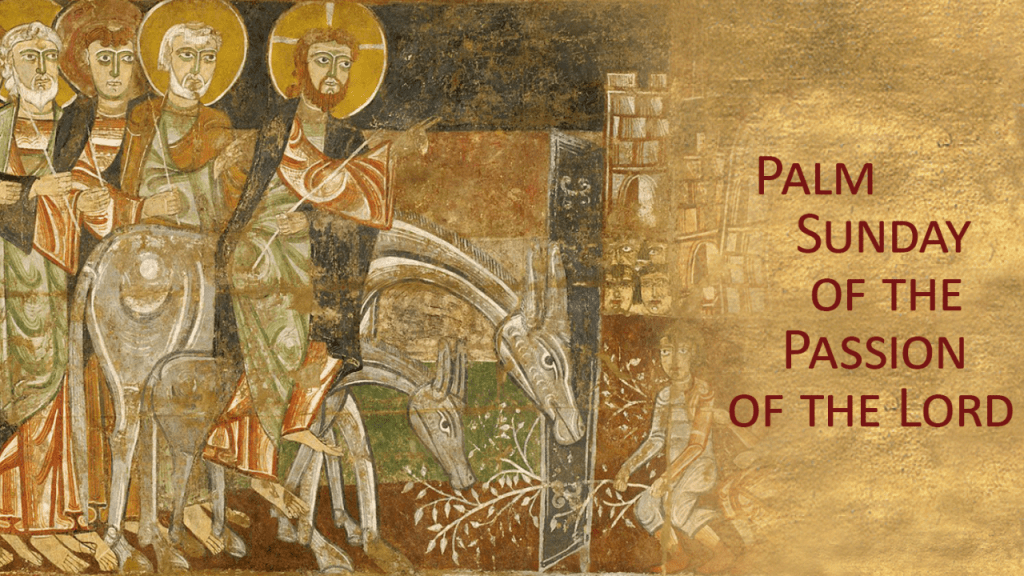
“My Ever ChangingMoods” (1984) by the Style Council

Lord My Chef Sunday Music by Fr. Nicanor F. Lalog II, 13 April 2025
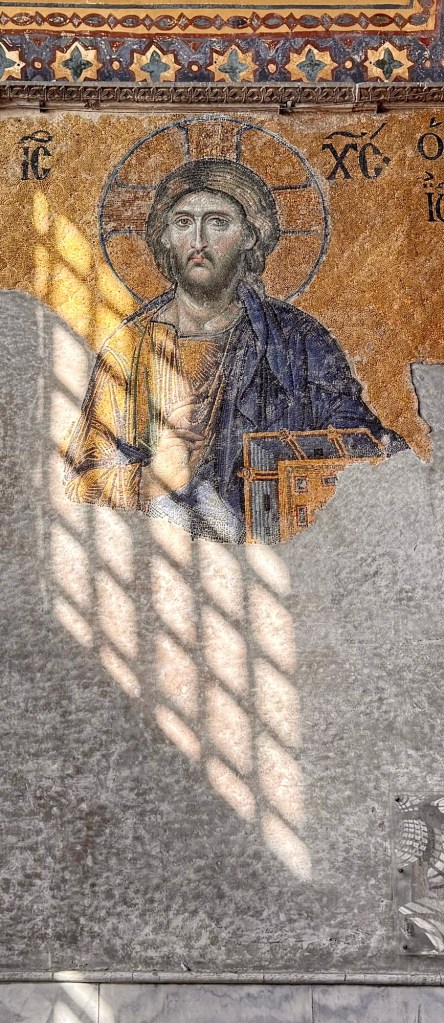
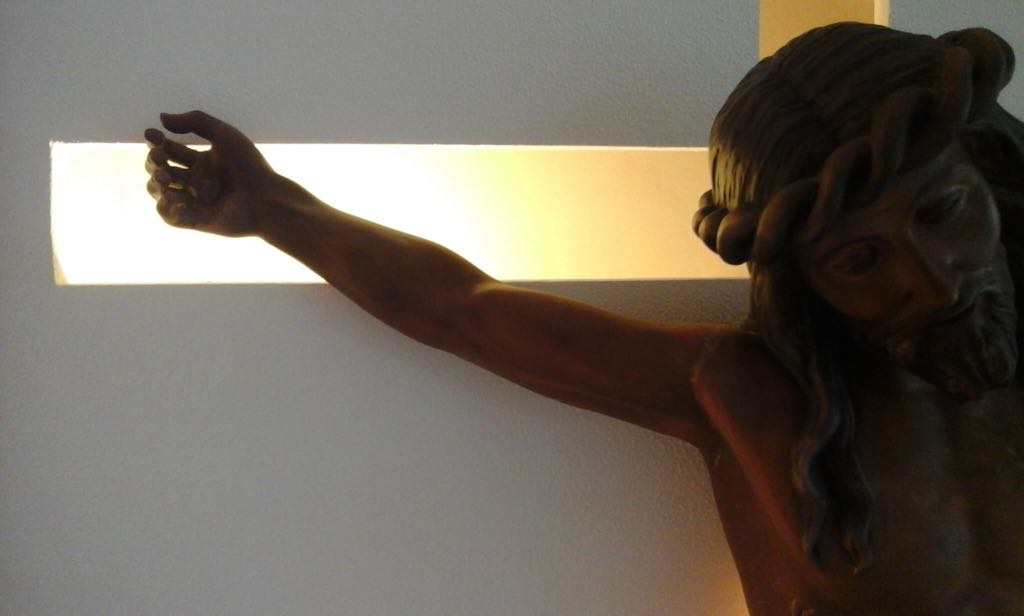
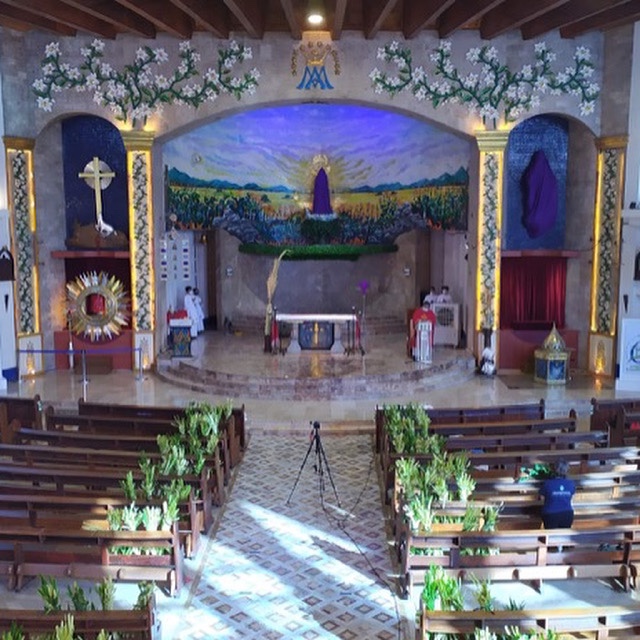
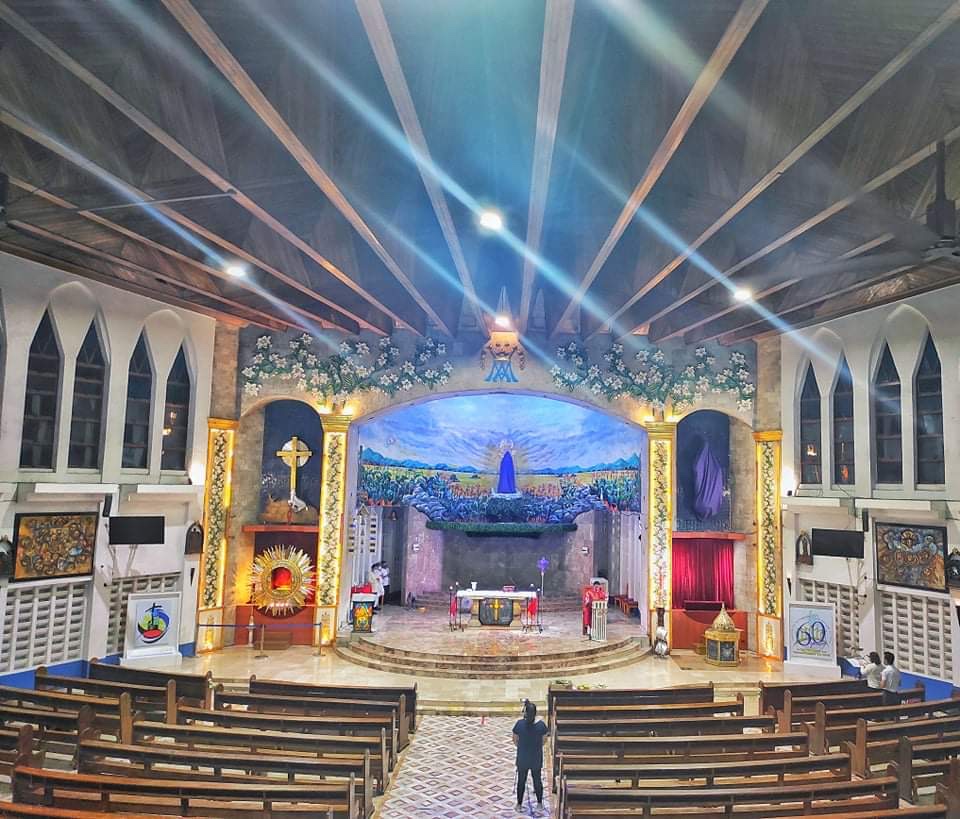
Photo by author, Sacred Heart Novitiate, Novaliches, QC, 17 March 2025.

Today we begin the Holy Week with the celebration of Palm Sunday in the Lord’s Passion.

See how since the entry of Jesus to Jerusalem more than 2000 years ago, nothing much have really changed among us – we are still the same fickle-minded people who would sing “Hosanna in the highest” and later shout “crucify him! crucify him!”.

Everybody wants to become better, each one wishing for so many things without really realizing the good things we are hoping for are all right in front us if we could just open our eyes or listen more or perhaps have a change of heart to realize everyday is a Palm Sunday too for us when God comes right into us to fulfill us.

However, many times whether in our wishful thinking or future-looking and planning, it is highly probable that what we long for is already present to us.

As we begin the Holy Week with the celebration of Palm Sunday in the Lord’s Passion, we are reminded by the liturgy with its long readings how so often in life, we just need to see with different eyes, hear with different ears, expect with different hearts to find fulfillment, peace and joy.

The sad truth is that many times, we really do not know what we want and most of all, we also do not know what we are doing because we are so far from Jesus Christ. https://lordmychef.com/2025/04/12/when-we-do-not-know-what-we-are-doing/

The night before I wrote my homily yesterday, I was posting some reels in my Instagram account when one of the music I used was the Style Council’s 1984 hit “My Ever Changing Moods”. Composed by the group founder Paul Weller who shot to fame in the 1970’s as lead singer and guitarist of the British rock band The Jam, “My Ever Changing Moods” is the Style Council’s fifth single.

Aside from Weller’s superb vocals, “My Ever Changing Moods” is so remarkable in what shall we describe as “subtle intensity” – ang tindi ng dating as we say. Despite the message conveyed by its title, the song is heavy in meanings that can stir one’s soul with its light and easy poetry yet so penetrating. That is why we right away felt its direct link with Palm Sunday.

Daylight turns to moonlight and I'm at my best
Praising the way it all works, and gazing upon the rest, yeah
The cool before the warm, the calm after the storm

I wish to stay forever, letting this be my food
Oh, but I'm caught up in a whirlwind
And my ever changing moods, yeah

Many times in life, we forget that reality of how everything is like the weather that shifts and changes in a rhythmic pattern, “Daylight turns to moonlight…the cool before the warm, the calm after the storm.” The key is openness to these changes happening in us and around us.

Though Weller and critics claim of the song’s political undertones, we see something deeper, something spiritual that we find it so appropriate in this time as we enter the holiest days of the year. Notice these final four stanzas how they convey love and order, something so similar to Jesus Christ’s first words when crucified more than 2000 years ago, “Father, forgive them for they know not what they do” (Lk.23:24).

Teardrops turn to children who've never had the time
To commit the sins they pay for through another's evil mind
The love after the hate, the love we leave too late

I wish we'd wake up one day, an' everyone feel moved
Oh, but we're caught up in the dailies
And an ever changing mood, yeah

Evil turns to statues and masses form a line
But I know which way I'd run to, if the choice was mine
The past is knowledge, the present our mistake
And the future we always leave too late

I wish we'd come to our senses and see there is no truth
In those who promote the confusion
For this ever changing mood, yeah
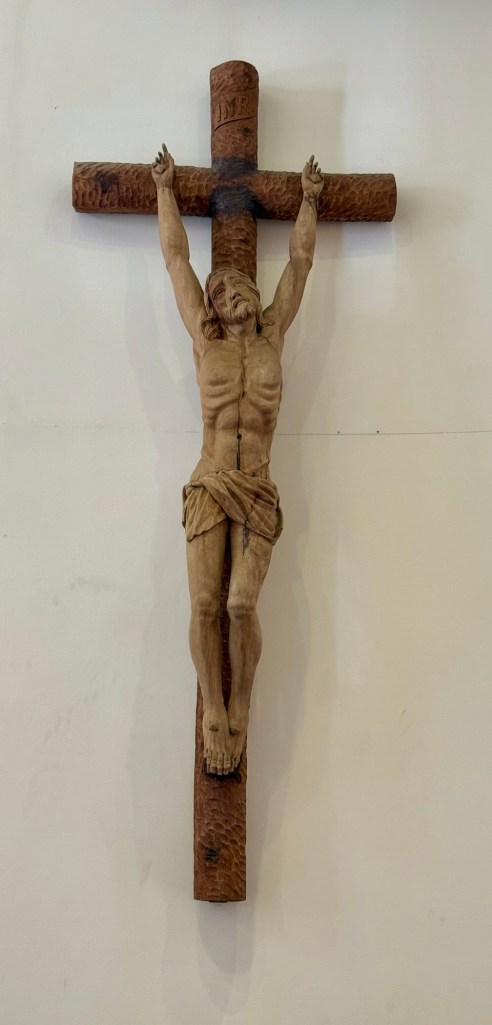
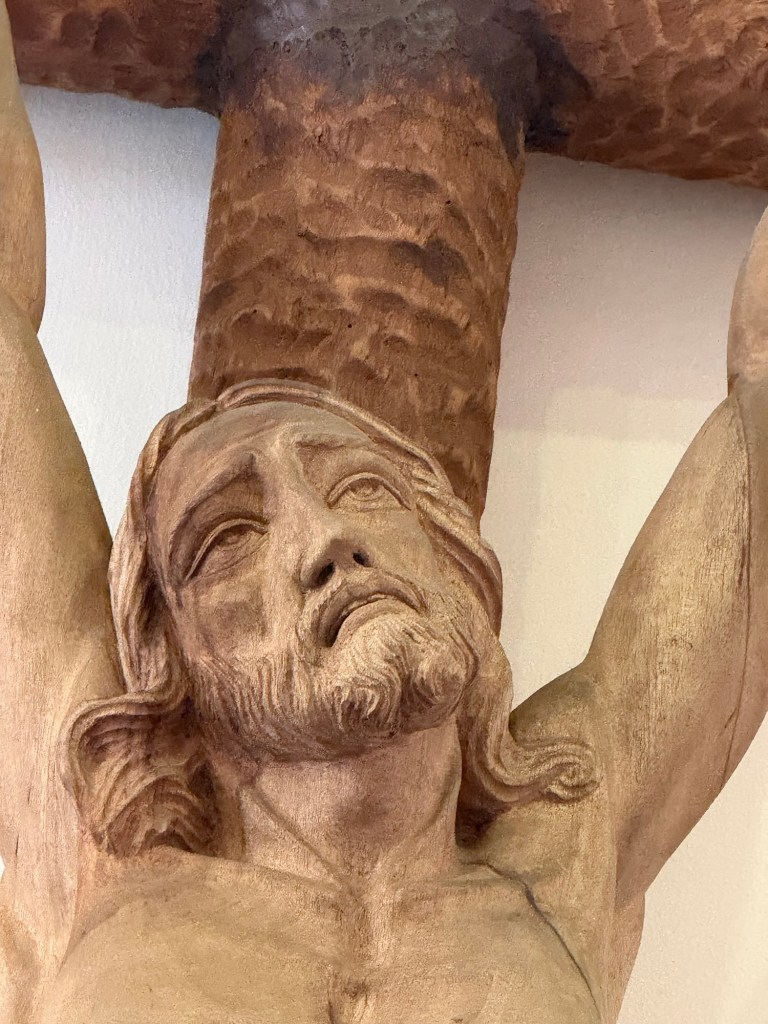
Photo by author, Sacred Heart Novitiate, Novaliches, QC, 17 March 2025.

What do we really know at all that we continue to crucify Jesus today, nailing him on the cross with our many sins as we pretend and assume to know so many things in life?

To know in the Jewish mind is to have a relationship, an activity more of the heart than of the mind. To know is to love, to care. Therefore, when Jesus prayed to the Father to forgive them for they know not what they do is to forgive them because they refuse to love which is what sin is all about. And that is what we still do not know until now – to love, to care for one another that we keep on crucifying Jesus Christ.

Until now, we pretend to know a lot that some nations resort to wars while some blind followers insist on what they know as right while evading the truth with their fake news being spread to cover crimes and atrocities. Until now we pretend to know what we are doing that everyday everywhere is a road rage happening often costing lives senselessly because many insist on their rights. And the confusions and quarrels and deaths continue because we do not know what we are doing. Like Paul Weller, we pray to Jesus that we’d come to our senses and see there is no truth// In those who promote the confusion// For this ever changing mood, yeah.

For this piece, we chose the slow version on piano of Style Council’s “My Ever Changing Moods” to be more attuned with Palm Sunday; you may check their original music video which is equally excellent.

From YouTube.com

When we do not know what we are doing

40 Shades of Lent by Fr. Nicanor F. Lalog II
Palm Sunday of the Lord's Passion, Cycle C, 13 April 2025
Isaiah 50:4-7 ++ Philippians 2:6-11 ++ Luke 22:14-23:56

Photo by author, Palm Sunday in our previous parish, 2019.

If we were given one wish with a guarantee that it would be fulfilled, what would that wish be?

Of course, each of us would have different wishes depending on what really matters for us like healing or good health for someone who is sick, wealth for one who is poor, even youth for someone already old. No matter what our wish, it is always a desire for a better future, a chance to change any dissatisfaction we have in our present condition.

However, many times whether in our wishful thinking or future-looking and planning, it is highly probable that what we long for is already present to us.

As we begin the Holy Week with the celebration of Palm Sunday in the Lord’s Passion, we are reminded by the liturgy with its long readings how so often in life, we just need to see with different eyes, hear with different ears, expect with different hearts to find fulfillment, peace and joy.

The sad truth is that many times, we really do not know what we want and most of all, we also do not know what we are doing because we are so far from Jesus Christ.

Then Jesus said, “Father, forgive them, they know not what they do.” (Luke 23:34)

Photo by author, Chapel of the Holy Family, Sacred Heart Novitiate, Novaliches, QC, 2016.

Consistent with his theme of the mercy and forgiveness of God to us as shown the other Sunday in the parable of the prodigal son, Luke presents to us again this most wondrous and touching trait of God in Christ even while crucified.

Again, only Luke has this detail of Jesus praying for forgiveness for his enemies while being reviled and mocked by them on the cross. It is one of the many examples of Luke’s artistry in presenting to us God’s mercy and forgiveness in Christ in a sort of play of words, “Father, forgive them, they know not what they do” as we confront our selves with the question, “what do we really know?”

What do we really know at all that we continue to crucify Jesus today, nailing him on the cross with our many sins as we pretend and assume to know so many things in life?

To know in the Jewish mind is to have a relationship, an activity more of the heart than of the mind. To know is to love, to care. Therefore, when Jesus prayed to the Father to forgive them for they know not what they do is to forgive them because they refuse to love which is what sin is all about. And that is what we still do not know until now – to love, to care for one another that we keep on crucifying Jesus Christ.

Photo by author, Chapel of the Holy Family, Sacred Heart Novitiate, Novaliches, QC, 2016.

Until now we pretend to know the truth by waging wars in various parts of the world with more than half of them ironically due to our different religious beliefs! Debates continue on who must live and who must die as lawmakers pretend to know the truth with their proposals for abortions and artificial contraceptives as well as capital punishment.

Until now we pretend to know the truth as some sectors push for divorce and same sex marriage that destroy the family. Out in the streets are the daily road rage happening with everyone pretending to know the truth on who has the right of way even at the cost of life and dignity of a person.

Until now we pretend to know the truth in all those fake news and speeches defending immoralities and crimes committed against many poor people never given a fair chance to defend themselves from accusations as drug users and pushers. What a shame when some people claim to know the truth asserting freedom of expression by making fun of women and sex as well as those terminally sick or taking advantage of those with disabilities just to win votes in the coming elections.

See how almost everyone would claim to know the truth but what we actually show is our ignorance and lack of any knowledge at all of the realities around us as our problems become more complex that lead to more deaths, more disillusions, more anxieties and more emptiness in life.

Until now as we pretend to know the truth when in fact we know nothing at all that we continue to crucify Jesus Christ who – thankfully continues to pray to the Father to forgive us for we do not know what we are doing.

Photo by author, Chapel of the Holy Family, Sacred Heart Novitiate, Novaliches, QC, 2016.

See how in his passion narrative Luke invites us to enter every scene, to find our roles, of whether we are on the side of Jesus or not because neither the Jewish leaders nor the Roman officials even the Apostles understood anything at all. Jesus was crucified because they did not know what they were doing.

Notice how Luke shuffled different scenes, contrasting the ignorance of characters with the certain knowledge of Jesus: Peter denied him thrice while he blanked all lying efforts of the Sanhedrin; Pilate sent Jesus to Herod to find the truth but both were too coward to acquit him that though enemies for a long time, they eventually became friends because of Jesus(!); and while crucified there on the cross, the people who reviled Jesus are contrasted with the centurion who realized him as the Christ at his death.

See? Who knows anything at all? And the most wonderful part of the passion narrative of Luke, he tells us about that beautiful conversations of the three men crucified on that day. One insulted Jesus while the other, the good thief, had a conversion by calling out, “Jesus remember me in paradise” and thereby stole heaven for himself!

Here we find what we were saying at the start: we keep on projecting ourselves to a better future but right here with us is Jesus Christ not knowing he is our fulfillment.

We do not know like the Jewish leaders, the Roman officials and soldiers as well as the Apostles who kept on pinning their hopes in the worldly kingdom, totally unmindful of the kingdom of God that had come in Jesus Christ’s coming.

This Palm Sunday of the Lord’s Passion invites us to slow down in our lives.

Photo by author, Palm Sunday in our previous parish, 2019.

In this Holy Week, let us empty ourselves of our pride, of everything we know about life, of ourselves and of others for us to listen really to God’s voice within us. The kingdom of God is Jesus Christ. It is not a territorial domain protected by armies and navies or tariffs and laws; we become a part of God’s kingdom in Jesus Christ when we learn to commend our spirit like him to the Father amid our crosses in life.

Please, the Holy Week is meant for God, for us to meditate and pray his great love for us in Jesus Christ who suffered and died for us on the Cross. Let us return to him so we may know him, love him and follow him. Amen.

God saves

40 Shades of Lent by Fr. Nicanor F. Lalog II
Palm Sunday of the Lord's Passion, 02 April 2023
Isaiah 50:4-7 > + < Philippians 2:6-11 > + < Matthew 27:11-54
Photo by author, Palm Sunday of the Lord’s Passion 2019, Parokya ni San Juan Apostol at Ebanghelista, Bagbaguin, Sta. Maria, Bulacan.

We now enter the holiest week of the year, the height of our Lenten preparations for Easter. What we have today are two ancient celebrations merged by Vatican II in 1963: the blessing of palms practiced in Jerusalem as early as the fourth century and the papal tradition of proclaiming the very long gospel of the Lord’s Passion in Rome about year 500. Hence, the title “Palm Sunday of the Lord’s Passion”.

And it is a beautiful innovation in our liturgy showing us so many truths in our lives like we begin Holy Week with the triumphal entry of Jesus to Jerusalem, leading to the Holy Triduum of Passion and Death on Maundy Thursday and Good Friday into the bursting joy and glory on Easter.

That for me is life itself.

We come into this world in triumph like Jesus with everybody rejoicing with our birth until we grow up, going through a lot of pains and sufferings with little deaths right in the hands of those supposed to love us but always, there is the joy of maturity, of fulfillment in Christ with many Easter moments of triumphs and consolations. Today’s celebrations remind us that while there will always be the disappointing manifestations of sin and evil in life, overall, there is always the immense and immeasurable love of God expressed in Jesus Christ dying on the Cross.

“Ecce Homo” painting by Vicente Juan Masip (1507-1579) from masterapollon.com

Our gospel is very long even in its shorter version. Let us focus on the Lord’s silence from his arrest to His crucifixion.

The Lord God has given me a well-trained tongue, that I might know how to speak to the weary a word that will rouse them. I gave my back to those who beat me, my cheeks to those who plucked my beard; my face I did not shield from buffets and spitting. The Lord God is my help, therefore, I am not disgraced; I have set my face like flint, knowing that I shall not be put to shame.

Isaiah 50:4, 6-7

Jesus is the fulfillment of the so-called Suffering Servant of God in the Book of Isaiah. What is striking is how he claims to have been given with a well-trained tongue but He rarely spoke when tried and crucified, choosing to be silent in the midst of great sufferings. What a great display of love for us!

In a world drowning in a cacophony of sounds and noise with everyone and everything speaking like elevators and cellphones, the more God is silent, waiting for us to stop and listen to Him in Jesus Christ who speaks within us. From Pilate to the soldiers to the Pharisees and priests with their rabid packs of demagogues who ceaselessly mocked Jesus even while slowly dying on the Cross, Jesus remained silent.

Because He loves us.

Because He waits for us to stop and listen.

Because life is more true and fulfilling in silence, not in sounds and noise.

Last Monday we celebrated the Feast of St. Joseph where we heard in the gospel how an angel told him to take Mary as wife with the specific task of naming her child “JESUS” which means “God saves”. See how God gave that specific mission to the most silent man in the Bible, St. Joseph who must have taught Jesus the value of silence!

That is how God saved us in Jesus by remaining silent even on the Cross. If ever He spoke, it was mostly to pray the psalms. In Jesus, God saves us in silence while we are in the din of noises of sin. Oh how we speak a lot these days against God, still putting Him on trial, blaming Him for all the problems and woes we have in our lives and in the world.

Photo by author, August 2020.

Like Pilate and the crowd with their religious leaders, we say a lot about God that are often not true but He never argued nor debated with us just like then because Jesus loves us, because His name means “God saves” and that was exactly the meaning of His silence.

How could be God so demanding as many would claim with His many words of instructions and commandments of things to do and not to do plus warnings against sin just to obey Him when He has always been silent?

Today we are reminded how we talk too much and accomplish so little, even nothing, while Jesus is silent because His name means “God saves”, witnessing it in fact in silent sufferings that was a scandal for many at that time.

Moreover, Jesus showed us today in His sufferings how silence is ultimately the expression of trust in God. When we are able to slow down and be silent in the face of many trials, that is a clear indication of our deep faith and trust in God. People who trust are the most silent because simply wait for their deliverance or salvation. Like Jesus Christ.

Christ Jesus, though he was in the form of God, did not regard equality with God something to be grasped. Rather, he emptied himself, taking the form of a slave, coming in human likeness; and found human in appearance, he humbled himself, becoming obedient to death, even death on a cross.

Philippians 2:6-8
Photo by author, Betania-Tagaytay City, 2018.

More scandalous than the silence of Jesus Christ during His trial was His crucifixion, the supreme expression of His name’s meaning, “God saves”. See how since the fall of Adam and Eve, sin has always been an attempt by humans in becoming like God. There has always been that conscious or unconscious feeling of competition with God whom many see as controlling, manipulative and even power-hungry.

But right there on the Cross, Jesus showed us that indeed, in His very Person how God saves by utterly being weak and powerless.

God saves us in Jesus through the path of powerlessness and weakness, docility and humility, of simplicity before men and before His Father.

That is why even at His triumphal entrance to Jerusalem, He rode a lowly donkey never been used by anyone, a fulfillment of many Old Testament allusions and prophecies that “your king comes to you, meek and riding on an ass, and on a colt, the foal of a beast of burden (donkey)” (Mt. 21:5; Zech. 9:9). His triumphal entry into Jerusalem was the fulfillment of the words of God to his prophets, showing us that indeed, everything Jesus did and said were in accordance with the Father’s will, never on His own.

Photo by author, 2018.

Because His name Jesus means, “God saves”.

What is most beautiful in the reading earlier at the blessing of palms was how Matthew described the Lord’s triumphal entry into Jerusalem – exactly just like the coming of the wise men from the East!

And when he entered Jerusalem the whole city was shaken…

Matthew 21:10

Imagine how a very large crowd welcomed Jesus, spreading their cloaks on the road where He passed, chanting “Hosanna to the Son of David” (Mt.21:9).

Like when Jesus was born and Magis from the East came to Jerusalem inquiring about the newborn king of Israel, they were also shaken! And the irony then at His birth and at His triumphal entry, the learned have refused to recognize Him despite their having all the knowledge and writings available to them.

Is it not the same thing continues to happen to us in our lives, when despite all the kindness and mercy of God, we refuse to recognize His Son’s coming Jesu Christ including the salvation He had gained for us? Where have all the people gone on Sundays? Does God still matter to us? Do we not care at all whenever Jesus comes to us most especially in the Eucharist during the Sunday Mass?

Both the rites of the blessing of palms with the procession and the Mass on this Palm Sunday of the Lord’s Passion are not merely a recalling of a past event, but a making present, a re-membering of Jesus our King triumphantly coming daily – still in silence – to us in the simplicity of bread and wine to become His Body and Blood for us to offer and share in order to experience Him, our Resurrection and Life because His name means “God saves”.

In the Eucharist, Jesus comes to us as “God saves us”, fulfilling us, blessing us.

This Holy Week, especially at the Holy Triduum of Holy Thursday, Good Friday and Easter Vigil, we are reminded of our task to witness to everyone the meaning of the name of Jesus, “God saves” by being present to Him in the Eucharist. Inside the church. With our family. Not in the beach nor a resort unmindful of history’s greatest moment when God saved us from sins by dying on the Cross. Amen. Please, have a meaningful Holy Week to experience the joy of Easter!

“When It Was Done” by Hugo Montenegro (1970)

The Lord Is My Chef Sunday Music by Fr. Nick F. Lalog II, 10 April 2022
Photo by Arch. Philip Santiago, Lourdes, France, 2015.

All roads lead to churches today as we begin the holiest week of the year with the celebration of the Palm Sunday in the Lord’s Passion today reaching its highest point on Saturday evening with the Easter Vigil that leads to Easter Sunday, the mother of all feasts in the Catholic world.

Our celebration today is actually a combination of two practices in the earliest times of the Church that were only merged in 1963 during the reform of the liturgy at Vatican II: the procession and blessing of palms was the practice in Jerusalem as early as the 4th century while a hundred years later, the Pope in Rome ushered in the Holy Week with the proclamation of the passion narrative of Jesus Christ.

Hence, the long title of our celebration, Palm Sunday in the Lord’s Passion; however, it is not something we look back in the past but one that we make present in the here and now as we look forward in that future when we shall all be together celebrating eternal life in God’s presence in heaven.

That is the challenge of this Holy Week: how we can follow Jesus in his Passion and Death in order to be one with him in all eternity. Like the people in Jerusalem when he entered the city more than 2000 years ago, would we side with those who followed and believed him or be with those who mocked and jeered him? (https://lordmychef.com/2022/04/09/the-cross-our-door-to-heaven/)

That is the problem of the main character in the song When It Was Done which is a list of wishful thinkings of a man to a woman already in a relationship with another man. It seems the man was too slow or came late to do everything in order to win over the woman he loves and all he could do at the moment now is to wish of having her perhaps in the afterlife in the future.

If I could bind your mind to mine
In time I'd keep you from that world of his
If I could change the strangeness in your kind
Then I'd know where your soul is

Then I'd know what song I'd have to sing
To touch that chord within you
And I would weave such wonders
That when I was done I'd win you

If I could stand with the stars on either hand
And say, "This ain't the answer"
If I had been where you're goin'
But then I'll never be no dancer

And if I was I'd know what step to take
And laugh at what had freed me
And smash the great wall down, girl
When it was done you'd need me

If I could face the fait that waits to cast me
In the scramble
And sit across the velvet boards from God
Then I'd gamble

Then I'd know what chance I'd have to take
And before somebody sold you
I'd bet my soul against the stars
When it was done I'd hold you

Composed in 1969 by Jimmy Webb and originally recorded that same year by Walter Wanderly Set, it became popular in 1970 after Hugo Montenegro released his version. Montenegro was a former US Navy musician who pioneered research and recordings in electronic music. His biggest break came in 1966 when he covered Ennio Moricone’s theme for the Clint Eastwood starrer The Good, the Bad and the Ugly that paved his way into a long career in creating music for movies and television series.

When It Was Done is one of the 200 songs covered by Montenegro he had waxed with his cool arrangements using modern electronic instruments and technologies of his time that gave his music a different feel, like in this piece that is very soothing with a sense of sublimity.

It is a very lovely and feel good music that reminds us too to do every effort in the present moment to express our love for others like Jesus Christ who until the end never ceased from doing good for everyone. It is in being like Jesus that we can truly sing Monetenegro’s When It Was Done more convincingly and truly. Amen.

*We have no intentions of infringing into the copyrights of this music and its uploader except to share its beauty and listening pleasure.

From Youtube.

Palm Sunday in the Lord’s palms

40 Shades of Lent by Fr. Nicanor F. Lalog II
Palm Sunday of the Lord’s Passion, 28 March 2021
Photo by Ms. Kysia Cruz, 28 March 2021.
Dearest Lord Jesus Christ:
Today we started the most holy week
of the year celebrating Palm Sunday 
listening to your Passion story proclaimed;
but, today was so different 
when people were gone
and all we have were palms
and more other fronds.
Photo by Ms. Kysia Cruz, 28 March 2021.
It pained my heart, dear Jesus
when all the people and familiar faces
I see every Sunday morning
were all praying and standing
outside, hoping they could come in
while we are under strict quarantine
as between our glancing, my heart was shrinking
so I raised my hands, and began praying on them.
Photo by Ms. Kysia Cruz, 28 March 2021.
Lord, I cannot understand nor see clearly
things happening except hear people silently crying;
all I know is that you are passing
still on a donkey riding
a king not domineering but serving;
open our eyes of faith to see your indwelling
so we may learn self-emptying
thus, becoming like you, an offering.
Photo by Ms. Kysia Cruz, 28 March 2021.
As we begin this Holy Week journey
in the most unholy time of our history
let us not miss this opportunity
to be filled by you in our being empty 
joining you to the calvary
with the cross that we carry
to rest and trust in your palms fully
serving you in others lovingly and faithfully.
Photo by Ms. Ariane Distor, 27 March 2021.

Hosanna in the time of corona

The Lord Is My Chef Recipe for the Solemnity of Palm Sunday of the Lord’s Passion, 05 April 2020

Isaiah 50:4-7 >>+<< Philippians 2:6-11 >>+<< Matthew 26:14-27:66

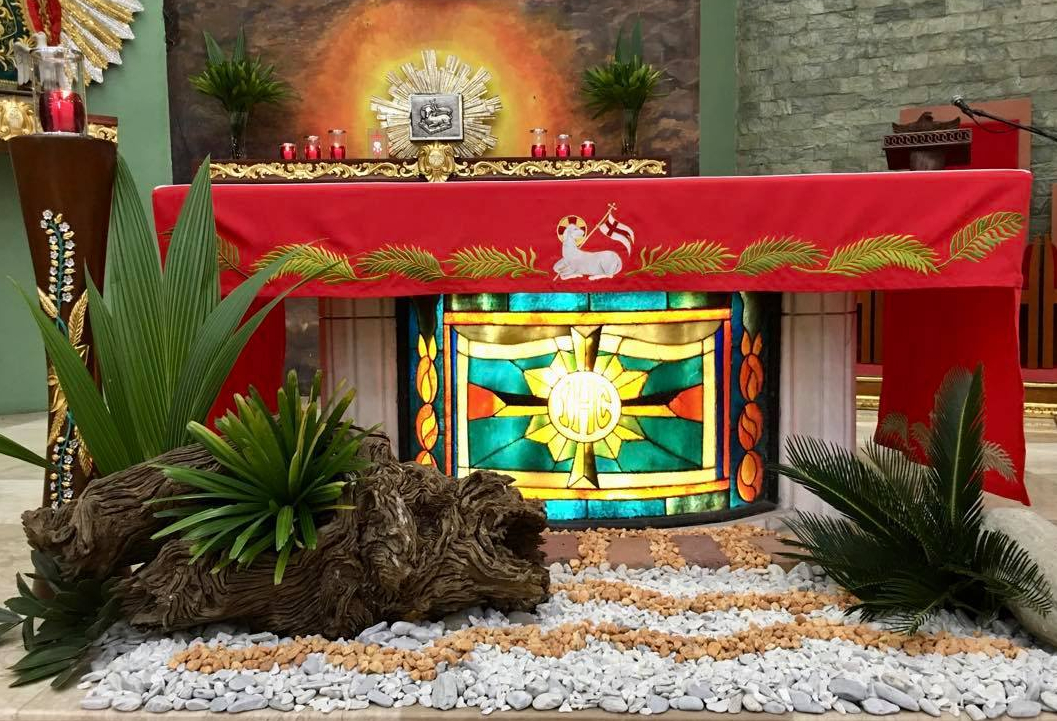
Photo by author, altar of Parokya ni San Juan Apostol at Ebanghelista, Bagbaguin, Sta. Maria, Bulacan, Palm Sunday 2020.

“Hosanna!” is the song of the day and despite the ongoing lockdown now entering its penultimate week, we have every reason to praise God this Solemnity of Palm Sunday in the Lord’s Passion.

Let us continue to sing “hosanna” even if our churches are closed due to threats of COVID-19 because even with all the difficulties arising from this enhanced community quarantine, it also gives us much needed time and space to reflect on the meaning of our Holy Week celebrations.

Let us make this Holy Week holy indeed so we may discover God anew in our sacred celebrations and right in our very hearts in this time of the corona pandemic.

The “ascent” to Jerusalem

Photo by author, ancient city of Jerusalem from the Church of Dominus Flevit (The Lord Wept) where Jesus came from towards the holy city via the eastern gate as prophesied in the Old Testament, May 2019.

Geographically speaking, to go to Jerusalem is to go up, to ascend to higher level as it rises to 754 meters above sea level (2,474 feet) compared with Galilee from where Jesus spent his three years of ministry which is just 209 meters (686 feet) above sea level.

Jesus Christ’s “trip to Jerusalem” was both literally and figuratively speaking an “ascent” in all aspects: he went up to Jerusalem to offer himself on the Cross to replace temple worship so people can finally worship in “truth and spirit” as he had told the Samaritan woman at Jacob’s well three Sundays ago.

More than the outward sign of ascending Jerusalem is the inner sign of Christ’s ascent in his outpouring of love for the Father and us.

That is the beautiful imagery of his triumphant entrance to Jerusalem which will reach its climax on Good Friday capped by the glorious Easter.

Every day, Jesus invites us to welcome him and most of all to join him in his ascent to Jerusalem, to the Father by forgetting one’s self, taking our crosses, and following the Lord in giving of self in love.

Now is the perfect time to sing “hosanna” – to welcome and follow Jesus in our inner ascent when everything and everyone is “down” due to COVID-19. The only way to rise again from this misery of the corona pandemic is to ascent in Jesus, with Jesus, and through Jesus.

For so long, we have been following the upward path of “social mobility” measured in income and material things without considering the emotional and spiritual imbalances that result in these worldly pursuits. In our rat race for higher productivity, more money and less costs, we have become distant from persons especially family. Now, we have to practice social distance not only to stop spread of virus but most of all, to realize anew that above all is always the human person.

And the best route to encounter each person is in Jesus Christ who leads us from Jerusalem to the Cross and into Easter; hence, the liturgies this Holy Week are the oldest and simplest we have in the Church so that we can truly sing “hosanna” and focus only to Jesus ever present to us.

Death and Love

Photo by author, parish altar, Lent 2019.

Now playing at Netflix is the fourth part of its hit series “Money Heist”. I had the chance to watch its first episode that opened with a scene of the professor escaping police in the forest with a narration by “Tokyo” trying to control the situation in the bank they have taken over. She said, “His (the professor) heart held two words that should not be together: love and death.”

Perfect sound bite for Palm Sunday of the Lord’s Passion – “two words that should not be together: love and death” when in fact, its opposite is the exact reality! For love to be very true, it must be willing to suffer and die as the Lord Jesus Christ had shown us more than 2000 years ago.

Love and death are always together! That is why we have a Holy Week leading to Easter!

It is a basic reality we have always tried to negate and escape that have only left us more empty and lost within. The undeniable sign of love is when we are able to love somebody more than our very self – and that includes willing to die for the beloved!

We can never ascend, never arise for as long as we have too much of self, like the characters opposite our Lord Jesus Christ this Holy Week.

One of the Twelve, who was called Judas Iscariot, went to the chief priests, and said, “What are you willing to give me if I hand him over to you?” They paid him thirty pieces of silver, and from that time on he looked for an opportunity to hand him over.

Matthew 26:14-16

Selflessness and silence of Jesus, Selfishness of man

Palm Sunday in our parish 2020.

One distinct characteristic of Jesus throughout his life that is most especially clear from Palm Sunday to Good Friday is his selflessness and silence in the face of too much pressure and suffering.

Rather than being a sign of weakness, it is Jesus Christ’s shining moment of mastery and control as we have noted last Sunday when he cried in meeting Martha and Mary at the tomb of Lazarus who had been dead for four days.

This becomes more evident starting this Sunday reaching its highest point on Good Friday to be capped by his glorious Resurrection on Easter.

See how during his entrance and ascent into Jerusalem, Jesus was silent. Because he knew what was going to happen! He was even looking forward into it.

His entrance into Jerusalem to assert his being the Christ by offering himself on the Cross is the culmination of what St. Luke had noted in his account early on at Caesarea Philippi that “when the days of his going up to heaven was nearing completion, Jesus resolutely journeyed to Jerusalem.”

Despite the dangers and the certainty of death, Jesus did not balk nor even thought of backing out. He resolutely went into his death because of his immense love for us and the Father. He never cracked under pressure!

Even during his trials first before the Sanhedrin and before Pontius Pilate, there was the mastery and surety of Jesus very evident in his silence. He was totally composed, wholly entrusting himself in total obedience to the Father in heaven.

How about us these days of lockdown in the face of the growing threats of COVID-19?

What a shame that our officials and their families finally revealed their true colors as the modern Judas Iscariots seeking VIP treatment for COVID-19 testing! So afraid of dying because love they have none whatsoever for the country and the people but for themselves alone.

From a Facebook post of my friend .

Like Judas, they think only of themselves, keeping their loot of more than 30 pieces of silver, looking for the opportune time to betray us again, totally quiet in the comfort of their homes when thousands are facing hunger and uncertainties.

They are the modern Pontius Pilates who mumble in public, who could not make a definitive stand on anything at all, more at home in accusing and blaming others for the confusions and lack of order, always washing their hands, without guts to humbly accept lack of foresight despite the grave dangers that did not happen overnight.

Most of all, look inside ourselves too for those moments we think more of “what we can have” than “what we can give or do” in these trying times? Do we hoard and panic buy? Do we cower in fear by hiding it with our anger and demands for assistance and relief goods?

Above is a nice guide I found on my friend’s Facebook, indicating three zones to show where are in the midst of COVID-19 pandemic. It can be very useful too in indicating where we can meet Jesus in ascending and entering Jerusalem to fulfill his mission and our mission too.

Entering Jerusalem, entering Jesus

My daily Mass attendees since the lockdown.

When the Luzon lockdown started last March 18, I cried on my first Mass: it was simply unbelievable – until now – for me celebrating Mass without people because a Mass always presupposes people and community to celebrate Christ’s presence!

But now, everybody is gone.

Except me. And the birds who keep constant company for me.

Every morning after pealing our bell as I celebrate Mass alone, I bow before the giant crucifix looming above our altar and look on the metal engraving of the Lamb of God on the cover of our Tabernacle where the Blessed Sacrament of Jesus is kept.

This week as I looked more often onto the lamb during prayer periods, I felt it to be looking at me too. That’s when I realized how the lamb perfectly signifies Jesus Christ entering Jerusalem, the “Suffering Servant” of God prophesied by Isaiah in the first reading today. But what struck me most is the song’s latter part not included in our first reading, referring to Jesus Christ:

Though he was harshly treated, he submitted and opened not his mouth; Like a lamb led to the slaughter or a sheep before the shearers, he was silent and opened not his mouth.

Isaiah 53:7

That lamb is indeed Jesus Christ, coming to us day in, day out in the Holy Eucharist we priests continue to celebrate even if our churches are closed. Every day especially in the Mass, Jesus invites us to ascend with him to the Father, little by little with our selfless acts of charity and kindness to others.

Looking into that lamb of our Tabernacle, I see the eyes of Jesu telling me how much he loves me, how much he has forgiven me from my sins despite his knowing me through and through.

And that is Jesus Christ: always silent, gazing with his eyes full of love, full of knowledge about us and what’s going to happen next, inviting us to join him, to come with him to ascend to our higher selves especially in this time of crisis. All despite his knowing our sins because he sees us too with eyes full of mercy!

These my dear readers are more enough reasons to sing “hosanna” today despite the many difficulties and uncertainties around us because Jesus is with us and will never leave us especially when we reach the cross. Amen.

A blessed holy week to you!

Our tabernacle, Palm Sunday 2020.

“Land of the Loving” by David Benoit feat. Diane Reeves (1986)

The Lord Is My Chef Sunday Music, 14 April 2019
Photo by Jim Marpa. Used with permission.

Today we begin the Holy Week.
And here is my piece of good news for you: you do not have to necessarily listen to religious music to reflect on the immense love and mercy of God for us expressed in the Passion, Death, and Resurrection of Jesus Christ.

Exactly twenty years ago today, St. John Paul II asserted in his “Letter to the Artists” that every artistic inspiration is always from the Great Artist himself, God. This is very true in music which always speaks about love.

For our LordMyChef Music on this Palm Sunday of the Lord’s Passion, I offer to you one of my favorite from David Benoit’s 1986 album “This Side Up” called “Land of the Loving” featuring the vocals of the great Diane Reeves. Of course, the song is about romantic love, of how a woman had found a love so true and sublime with a another person, with a man who must be so rare. Raise it to the highest level, it is no one else but Jesus Christ.

Photo from Google.
Deep in your eyes is a promise
Love can be ours if we want it
Starting tonight
Every dream I ever knew
Here in your arms
I’m believin’
Finally my life has
A meaning of its own
Here in the land of the loving
I am home

In today’s gospel, one can find the remarkable – even striking – character of Jesus who, after being crucified, prayed for his enemies, “Father, forgive them for they know not what they do.” No hatred nor revenge. But pure love and friendship. Sometimes, our sins become our religious experience for it is through its darkness that God makes us experience him or find him.

Photo from bing.com.
I was alone in the city
Searchin’ for someone to find me
Cold empty nights and a million strangers’ eyes
Here in your arms I’m beginning
To leave behind all the loneliness I knew
Here in the land of loving there is you.
In this simple room magic is made
Though the world seems unchanged
Leave the lights on I’m a bit afraid
This might be just a sweet dream.
Deep in the night love is growing
Though I had no way of knowing
That when I found you I found ev’rything I need
Here in your love I’ll be staying
Fin’lly my life won’t be living all alone
Here in the land of the loving I am home.

May Jesus find you, fill your heart with more peace and joy this Holy Week so you may rejoice in his Resurrection in Easter. Amen.

Sunset at San Juan, La Union. Photo by the author, January 2018.


Knowing is Intimacy

The Lord Is My Chef Sunday Recipe, Palm Sunday of the Lord’s Passion, Year C, 14 April 2019
Isaiah 50:4-7///Philippians 2:6-11///Luke 22:1-49
Photo from Bing.com.

Today we begin the Holy Week with two celebrations merged into one, Palm Sunday of the Lord’s Passion. The Palm Sunday is a tradition started by the early Christians in Jerusalem in the fourth century while in Rome during the 12th century, the Pope proclaimed the long gospel account of the Lord’s Passion on this Sunday to signal the start of Holy Week. Almost 2000 years later in reforming the liturgy, Vatican II merged these two traditions into one to usher in our holiest days of the year.

Like in the four Sundays of Lent except last week, St. Luke guides us today in reflecting the Lord’s Passion with emphasis on the Cross with its call to conversion. For St. Luke, the cross is the object of discipleship in Christ. Join me in reflecting on the last three words our evangelist had recorded when Jesus was crucified.

First word:

When they came to the place called the Skull, they crucified him and the criminals there, one on his right, the other to his left. Then Jesus said, “Father, forgive them, they know not what they do.”

Luke 23:33-34
Mosaic of the Crucifixion at the crypt of the Manila Cathedral. Photo by Arch. Philip Santiago, October of the Jubilee of Mercy 2016.

This is very striking. Immediately upon his crucifixion, Jesus prayed for the forgiveness of his enemies! It is a total adherence to his preaching during his sermon on the plain, “love your enemies, do good to those who hate you, bless those who curse you, pray for those who mistreat you” (Lk. 6:27-28, Seventh Week Ordinary Time, 24 February 2019). Here we find the immense love and mercy of Jesus — no hatred, no calls for revenge or threats like “karma” against those who crucified him. He simply begged for their forgiveness because “they know not what they do.”

In Jewish thought, to know means more than an intellectual knowledge for it implies relationship. Knowing somebody for them is more than knowing one’s name but having ties with the person. And to know something is always to see things in this perspective, always in relation with a person. Had they known Jesus is the Christ, they would have not crucified him! Exactly the preaching of St. Peter at the healing of a lame man after Pentecost at the temple when he told them they have “acted in ignorance” in “killing the Author of life whom God raised from the dead” (Acts 3:15). St. Luke also notes in his Acts of the Apostles how the crowd upon hearing St. Peter’s preaching were moved or “cut to the heart” (2:37) that many were baptized on that day. Recall also how at the arrival of the wise men from the East searching for the child Jesus: the scholars of Jerusalem “knew” from the books how the Christ would be born in Behtlehem yet he was found by the pagan magis! Even the most learned man in the New Testament, St. Paul admits how ignorant he had been in persecuting and blaspheming Jesus before (1Tim.1:13) experiencing God’s loving mercy.

In the bible we always see this combination of knowing and ignorance at the same time to indicate that more than factual and cerebral knowledge, there is that deeper knowing of relating and of loving. If we really know somebody, the more we love, the lesser we sin. St. Thomas Aquinas used to say that the more we know and become intelligent, the more we realize the truth, the more we must become good and holy. That is why saints are the most intelligent people that they were able to do what is good and what is right.

In this age of Google and Wikipedia , Jesus is challenging us that if we truly know so much that we have become smart and more intelligent, then, how much do we really love and care for others?

Photo from Google.

Second word:

Then he said, “Jesus, remember me when you come into your kingdom.” He replied to him, “Amen, I say to you, today you shall be with me in Paradise.”

Luke 23:42-43

The Venerable Archbishop Fulton Sheen used to claim that Dimas was indeed a great thief who was able to steal or snatch Paradise from Jesus just before dying on the Cross. It may be funny but very true. But more than “stealing” his salvation from the Lord, Dimas had displayed on the cross what we have discussed earlier about the combination of knowing and ignorance. I would say Dimas is perhaps the “most learned thief” of all time who truly knew what is most essential in life which is to know Jesus. The moment he called out to him “Jesus”, Dimas expressed his knowing Jesus, of belonging to Jesus. As we have reflected earlier, to know is to relate. Anyone who truly relates must first believe in order to love dearly. Dimas believed in Jesus that he called out to him while hanging on the Cross.

Today, Jesus is reminding us that the door to Paradise is him alone. And we begin to enter Paradise the moment we entrust our total self to Jesus like Dimas who came to know Christ at the Cross, and then believed him and loved him. If we really know, do we believe?

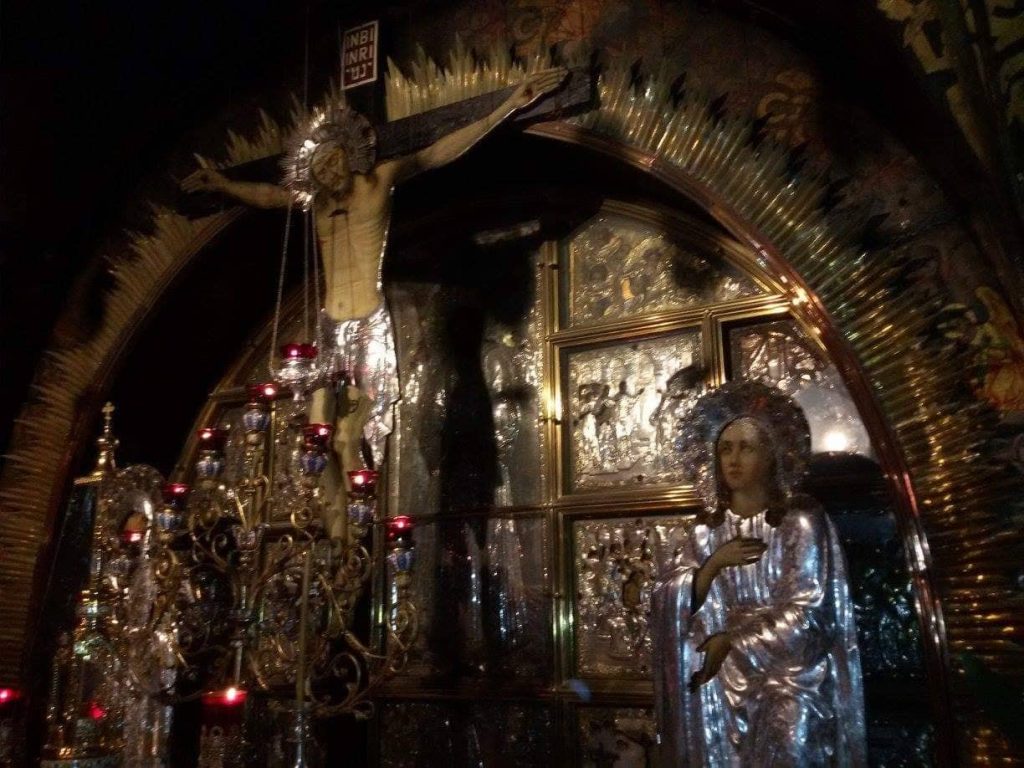
Altar of the Church of the Holy Sepulchre over the exact site where Jesus was crucified outside Jerusalem. Photo by Arch. Philip Santiago, October 2017.

Third word:

Jesus cried out in a loud voice, “Father, into your hands I commend my spirit,” and when he had said this he breathed his last.

Luke 23:46

One of St. Luke’s unique feature is always presenting to us Jesus at prayer. Especially here at his crucifixion. See how his first words were prayer of forgiveness for his persecutors. Now at his death, St. Luke presents Jesus again at prayer, reciting Psalm 31:5, “Father, into your hands I commend my spirit.”

Here we find the whole picture of Jesus Christ’s life which is a prayer and his prayer is his very life. From the very start, Jesus has always been one with the Father which is the essence of every prayer called communion. And that is the important aspect of his being our Savior: everything he said and did was everything the Father had told and asked him. There is that perfect communion of the Father and the Son in the Holy Spirit so that in his death, Jesus offered his total self with us to God. Everyone and everything is thus sanctified anew in Christ. This became possible only with his kenosis, his self-emptying eloquently expressed to the Philippians by St. Paul in our second reading.

On the Cross, everything in the life of Jesus Christ came to a full circle, God’s whole picture emerged. Now more than ever, we have become closest to God in love. In his dying on the Cross, Jesus made known to us God, brought him closest to us so we can relate and be intimate with him more than ever. In his becoming human like us by bearing all the pains and sufferings expressed in the first reading from Isaiah, God proved to us his love in Jesus. Most of all, he enabled us too to be capable of knowing and loving like Jesus Christ by being intimate with him always. This is why these days are called Holy Week when we are filled with God so we experience him anew and have him more than ever in our hearts, in our very selves. Amen.