Advent is being consistent

The Lord Is My Chef Sunday Recipe for the Soul by Fr. Nicanor F. Lalog II
Fourth Sunday of Advent, Year B, 20 December 2020
2 Samuel 7:1-5, 8-12, 14, 16  >><)))*>  Romans 16:25-27  >><)))*>  Luke 1:26-38
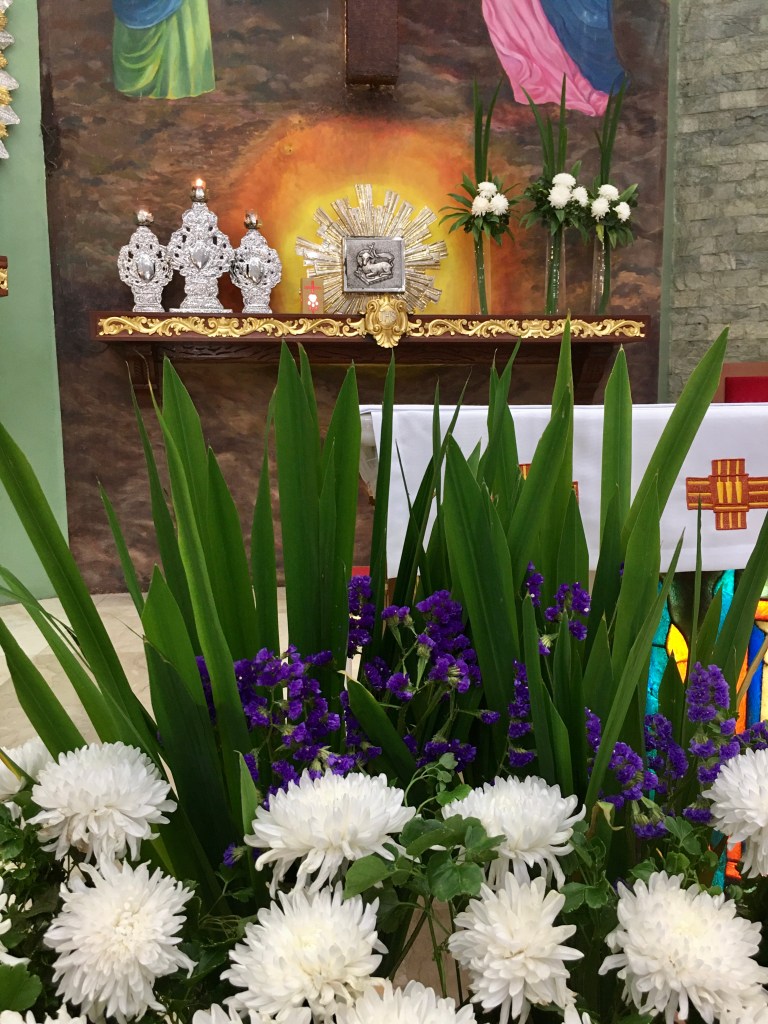
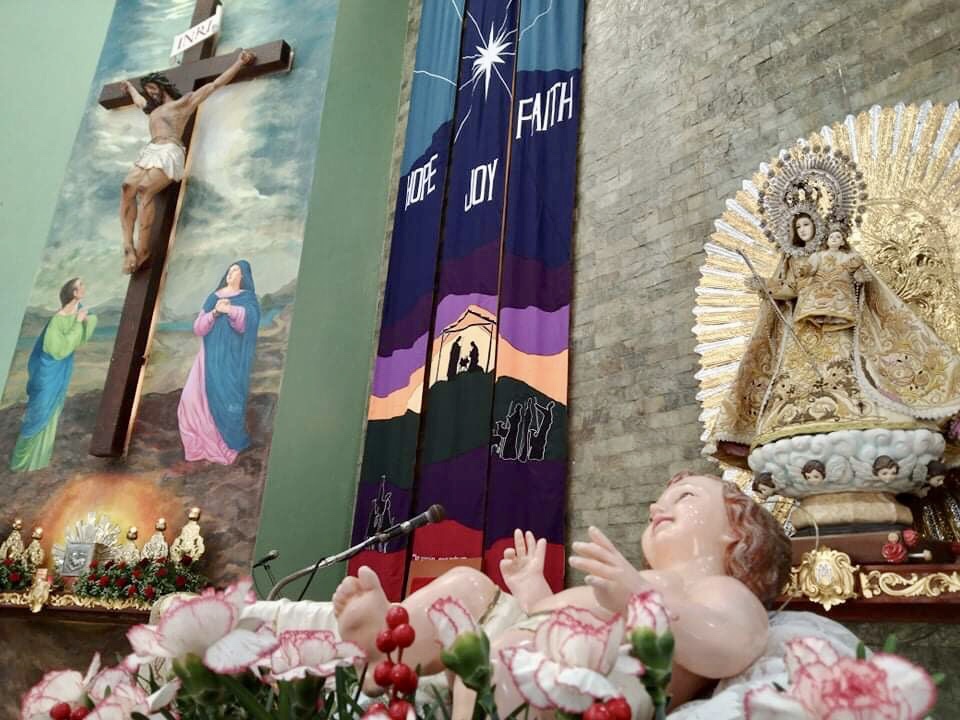
Photo by author, Christmas 2019.

We are now on the final week of our four Sundays of preparations for Christmas. We have been saying Christmas 2020 is surely the most different and difficult in our lives due to the pandemic. However, it may also be the most meaningful when we have more of spiritual values, less of material things; more of the other persons, less of ourselves; and, more of Jesus, less of the Christmas trimmings.

Today we heard the beautiful story of the annunciation of the birth of Jesus Christ found only in the gospel of Luke, the source of many inspirations in arts for many centuries even today. The scene reveals to us the artistry and spirituality of Luke believed to be a medical doctor who was a disciple of St. Paul. He is the only evangelist who admitted he had “investigated everything accurately anew, to write it down in an orderly sequence (the events about Jesus Christ) so that you may realize the certainty of the teachings you have received” (Lk.1:3-4).

And what is that certainty Luke looked into? That Jesus Christ is the Son of God, the fulfillment of the Old Testament promises to the patriarchs and prophets, who is the very presence of God among us. That is why Luke wrote a second volume to his gospel, the Acts of the Apostles to show us Jesus still present in the Church in the power of the Holy Spirit. In this beautiful canvass painted to us by Luke on Jesus the Christ in his Gospel and Acts we also find in a supporting role the Blessed Virgin Mary, His own Mother and model disciple.

The angel Gabriel was sent from God to a town of Galilee called Nazareth, to a virgin betrothed to a man named Joseph, of the house of David, and the virgin’s name was Mary. And coming to her, he said, “Hail, full of grace! The Lord is with you.” But she was greatly troubled at what was said and pondered what sort of greeting this might be. then the angel said to her, “do not be afraid, Mary, for you have found favor with God. Behold you will conceive in your womb and bear a son, and you shall name him Jesus. He will be great and will be called Son of the Most High, and Lord God will give him the throne of David his father, and he will rule over the house of jacob forever, and of his kingdom there will be no end”

Luke 1:26-33

The discipleship of Mary

As a former journalist, I have always considered the four evangelists as the premiere reporters of Jesus Christ. Mark is the old school type of straight news reporting, writing the basic who, what, where, when and why, making his gospel the first to be written and shortest as he was in a hurry, a true journalist. Matthew is more of a feature writer or interpretative reporter while John was a news analyst, an op-ed columnist.

Luke is the modern journalist using the “digital platform” who goes on “live as it happens” with all the colors and actions without losing depth and focus like the BBC and Al Jazeera. He brings us where the news is happening as you must have noticed yesterday in the story of the annunciation of the birth of John the Baptist to Zechariah which also served as introduction to his lead story of Christmas, the annunciation of the birth of Jesus Christ.

Here we see the unique position of Mary as a disciple of Jesus Christ. Unlike Mark and Matthew, Luke tells us how Mary is the only one to have believed in a “situation of contemporaneity” as Fr. Cantalamessa would love to say, meaning, she believed while the event was taking place and prior to any confirmation by the event or history.

See how Matthew presented some facts already known to him in narrating the annunciation to Joseph where the angel clarified Mary’s pregnancy was due to the Holy Spirit. Luke, on the other hand, is like reporting live in real time, so realistic with Mary and the angel conversing to each other!

Photo by Arch. Philip Santiago, mosaic of the Annunciation at the San Padre Pio Church in San Giovanni Rotondo, Italy, 2016.

Writing in Greek like the rest of the authors in the New Testament, Luke did not use the usual Hebrew greeting of “Shalom” when Gabriel appeared to Mary, addressing her instead with chaire or “Rejoice favored one” that means especially graced from which came our translation from the Latin “Hail, full of grace!” in 1:28.

The favor or grace of Mary has found with God in 1:30 is explained in 1:31 in the future tense, “you will conceive in your womb and bear a son“. What is amazing here is that there is the sense of certitude on the part of the angel that the future will definitely take place because Mary has already been highly favored one by God before this event. How?

Though Mary will finally become a disciple at the end by saying “Behold, I am the handmaid of the Lord. May it be done to me according to your word” in 1:38, we find in 1:29 how she had always been disposed to the will and grace of God when Luke described how “she was greatly troubled at what was said and pondered what sort of greeting this might be“.

Mary “pondered – meaning, she prayed, she meditated right away the greetings to her, indicating her openness and disposition to listen and follow the will of God. That shows how even before the annunciation happened, Mary had always been obedient to God that is why she could say yes to Him when asked to be the Mother of the Savior.

Here we find Mary’s consistency as a disciple of the Lord, her Son Jesus still to be born but already existing in eternity!

When we were growing up, our mother would always tell us that once our names are called either by her or by our father, we only say one thing, “Opo… ano po iyon?” (Yes, what is it?). That is old school discipline where we literally obeyed first even without any instruction yet because we have always been assured parents would never tell kids to do something bad or wrong. And we believed that. Unlike today’s generations where the usual reply to parents’ call is “wait” that no wonder, we now ask God wait before he can speak to us. Thank God I did not get married….

Going back to Mary, we now find the contrast with yesterday’s annunciation to Zechariah: Mary pondered and felt everything in her heart and soul while Zechariah reasoned out, used more his head than his heart – something we must ponder this Christmas. Mary right away had her heart, her very self onto the Christmas Nativity while Zechariah was stuck in his negativity.

Mary believed while the event, the annunciation, was taking place, prior to any confir­mation by the event itself or by history. Later we shall see that expression “pondering in her heart” repeated often by Luke and also by John in presenting Mary: after listening to the words of the shepherds who came to see baby Jesus at His birth in Bethlehem, at finding Jesus at the temple aged 12, and during the wedding feast at Cana where He did His first miracle.

Photo by author of the site where the annunciation to Mary took place found below the Basilica of the Annunciation in Nazareth (2019).

The faith of Mary

From the annunciation of the birth of Jesus to His crucifixion, Easter and Pentecost, Mary always believed. During the Visitation, Elizabeth praised her, becoming the first to call Mary as “blessed” because “you believed what was spoken to you by the Lord would be fulfilled” (Lk.1:45).

Eight days after Easter, Jesus said to Thomas, “Have you believed because you have seen me? Blessed are those who have not seen and yet believe! ” (Jn 20:29). Early at the annunciation, Mary was the first to have believed without having seen Jesus Christ!

Mary teaches us the importance of subjective faith or the act of simply believing and trusting God, a person-to-person relationship with Him.

But it is not enough because it could lead to isolationism when we become individualistic and begin to have our own concept of God like what is happening these days especially with many Catholics with their own interpretations of God, heaven, evil and sin among other things.

Like Mary, we need to cultivate also objective faith, believe in the content of faith of the community. Mary believed God relating with the ancient prophets and patriarchs of Israel which the angel mentioned to her during the annunciation. See that after the annunciation, Mary hastily went to visit Elizabeth to share her good news and her faith. In her we learn that faith leads to a mission that is seen in the context of a community, the Church where Mary was portrayed to us praying with the disciples of Jesus during the Pentecost at the Upper Room in Jerusalem.

So here we find the consistency of Mary even before the annunciation that continued on in the life of the Church we still experience today in her many apparitions and messages always centered on Jesus not herself.

That is the call of Advent to us all: to be consistently clear with our faith with the one to be born at Christmas, Jesus Christ who is the Son of the Father, our Savior promised in Old Testament, now the very presence of God among us.

People kneeling on the streets during our Christ the King celebrations, 22 November 2020.

It is not enough that we just pray and believe; like Mary, we need to get out of ourselves and give ourselves to God and the Church. This is especially true with us priests who seem to believe more to himself and to media than with God! We must constantly examine ourselves if we truly believe in what we preach, in the kind of lives we lead. Is Jesus still center of our lives or us that we are so concerned always with our “image”, always seeking “likes” and “followers” than anything else?

If there is anyone who should be the first to be consistent in faith in God in any community, that must be the priest or pastor.

A few weeks ago while striving through the many challenges of my personal life and my ministry since this pandemic began, a parishioner told me how they draw strength and inspiration from me. I asked her why and how? What does my personal life has anything to do with them?

She explained that whenever they see me still going through with my ministry, holding on in my prayers and daily Masses, still smiling and can still laugh and crack jokes — they just feel they too can overcome their trials and difficulties.

I have realized in that short conversation more than preaching and explaining faith and its content, people look more at how faithful are we truly are as men of faith. That aside from dispensing the sacraments and doing all the ministries in my parish, there is also the task so unknown to me before of enkindling the faith of my flock, of guiding and leading them to God based on how do I live that faith in God with joy and patience.

People believe in God and the Church when they experience their pastor believing first in God and the Church. Like the COVID-19 virus, faith is contagious that spreads by coming into contact with. We priests must be the first to be “infected” with faith in the parish so that everyone would be “positive” with it, creating a “pandemic” in faith!

That is the consistency of Mary as a disciple — she is a “carrier” of a deep, joyful and active faith in Jesus, “infecting” everyone so positively that despite the difficult and trying situations we are into, we celebrate Christ’s coming amid the pandemic.

A blessed Sunday as we prepare for Christmas!

Advent is a quarantine

The Lord is My Chef Simbang Gabi Recipe-4 for the Soul
by Fr. Nicanor F. Lalog II
Saturday, Advent Week III, 19 December 2020
Judges 13:2-7, 24-25     <*(((><<   +   >><)))*>     Luke 1:5-25
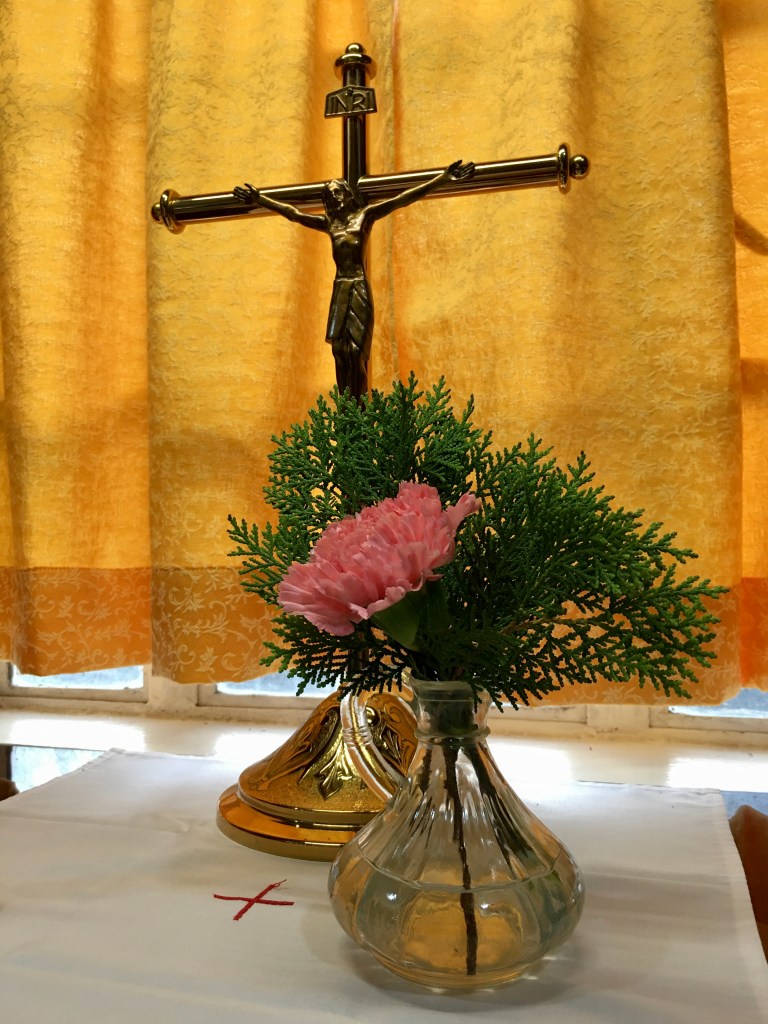
Photo by author of our altar after a “private Mass” at the height of the lockdown last summer when public Masses were suspended.

I just realized the other day how fast really time flies after seeing photos of some of the couples I have married early this year now happily cuddling their babies… It did hit me hard that we have been in quarantine for nine months already, enough time to conceive and deliver a baby!

It sounds funny but it is the reality showing us how the birth of every child is a milestone not only to the parents but even to everyone and to history in general. We shall wait until next year to find out if there was a big increase in babies born this 2020 due to the long imposition of lockdowns and the quarantine we are into.

It is interesting to know that “quarantine” was actually borrowed from our Catholic practice of Lent, the 40 days of preparation for Easter called Quadragesima or Quaresma, from the Spanish word for forty.

When plagues became so common in Europe with devastating effects even before the middle ages, officials in the port of Venice in Italy ordered all incoming ships to spend “quaranta giorni” or 40 days of being moored first before entry to ensure they carry no plagues. Quarantine had always meant a period of time until lately it had also referred to a place or holding area as in “quaratnine area” to cleanse and disinfect people, animals, plants and things.

Advent 2019.

Its concept of spending days for purification had always been in our Judaeo-Christian traditions dating back to the Old Testament when the prophets of God would go to mountains and desert to meet Him who were later emulated by holy people including John the Baptist, Jesus, monks and hermits.

The Church imitated that practice that led to our Seasons of Lent and Advent. In fact, Advent used to be as long as Lent in duration, starting a day after the Martin Mass, the feast of St. Martin of Tours on November 11 but was later reduced to four Sundays to distinguish it from Lent that is meant to be more serious in preparation for Holy Week and Easter.

Now you see, my dear Reader, how interesting it is this year 2020 when we actually went back to our old practices of Lent, and now Advent in truly preparing for the Lord’s coming going through the quarantine.

Going back now to our gospel which is from Luke, we have heard how Zechariah doubted the good news he and Elizabeth would finally have a son after so many years of praying to God. For that, the angel Gabriel chastised Zechariah and made him speechless that people waiting outside the temple were amazed when he emerged from the Holy of holies unable to speak.

Then, when his (Zechariah) days of ministry were completed, he went home. After this time his wife Elizabeth conceived, and she went into seclusion for five months, saying, “So has the Lord done for me at a time when he has seen fit to take away my disgrace before others.”

Luke 1:23-25
Photo by author, Church of the Visitation at Ein Karem (2017) where Elizabeth and Zechariah had a summer residence where they stayed when Elizabeth went into seclusion after getting pregnant with John.

Opening our selves to God and others

I find our gospel today so timely: Zechariah went home while his wife Elizabeth went into seclusion. They went into an Advent preparation for their son John the Baptist. They both went into a quarantine but not for the same reason: it was imposed on Zechariah while Elizabeth went into it voluntarily.

To lose one’s voice is to lose power and ability to lead. Zechariah was forced into silence in order to meditate and reflect more on the good news he had received from the angel. He was forced to go into silence to listen more to his true self, to others and to God to find new perspectives in life. As a priest, he must have been much sought after in their town for his wisdom and intelligence. Now that he is speechless, Zechariah was confined inside his home, to his very self to listen and most of all, to renew himself in God.

On the other hand, Luke shows us how Elizabeth seem to know better than her husband in dealing with their unusual situation by going into seclusion for five months. Observe how Elizabeth right away prayed to thank God as she meditated His mystery in “taking away her disgrace before others”. Remember that during that time, the only reason why a woman marries was to bear a child; failure to have a baby was seen as an embarrassment, almost like a curse or punishment from God.

In the first reading, we have seen this reality too but unlike Zechariah, the wife of Manoah believed the angel from God who told her she would bear a child despite her old age and being a barren. She was also instructed to go through a quarantine during her pregnancy when she was instructed to “be careful to take no wine or strong drink and to eat nothing unclean” (Judges 13:4). Furthermore, she was told not to cut the hair of her son to be born and named Samson “for this boy is to be consecrated to God… who will begin the deliverance of Israel from the power of the Philistines” (Judges 13:5).

Here we find the concept of quarantine, of separation from the usual things and people because of a special mission from God. If we can just truly appreciate the rich lessons we can learn from this pandemic, how wonderful to see that we are being quarantined like Elizabeth and wife of Manoah because God is preparing us for something greater.

From these stories of two old, barren women bearing a child we find Advent as the season that reminds us God comes to us hidden in our very time and space when we need to go to quarantine to create a space within us where we can be silent and be transformed as we listen more to ourselves, to others, and to God.

How sad that in our 24/7 world where we have made nighttime like daytime earning money to have everything, we have become more empty, more alienated, more sad and incomplete. Quarantine is essentially a sabbath when we are supposed to rest and be breathed on by the Lord with His Spirit, exactly what we like Zechariah needed so much

Photo by Ms. Jonna S. De Guzman, 06 December 2020.

Christmas negativity or Nativity?

One of the blogs I have been following for the past one and a half years is by a young Catholic lady in New York who is so full of enthusiasm in sharing Jesus in her writings as well as in the tasty recipes she dishes out weekly. Last week I found her blog so interesting, titled: “Christmas — negativity or Nativity?” (https://beautybeyondbones.com/2020/12/10/christmas-negativity-or-nativity/).

How sad that we are missing a very rare opportunity today during this pandemic not only to spiritually prepare for Christmas but to truly understand the things going on around us and in our very lives amid this pandemic. I have always believed COVID-19 has a spiritual dimension that we must face and address lest it happens all over again despite the discovery of a vaccine.

And what is that spiritual ailment? Too much negativities like Zechariah!

Imagine the very rare opportunity to incense the Holy of holies of the Jerusalem temple once a year with many other priests present and Zechariah was “chosen by lot to enter the sanctuary of the Lord to burn incense” (Lk.1:9)? That in itself could have been a great sign for him that something good may be happening.

Then, while inside the sanctuary of the Lord, an angel appeared to him with the good news, his news of a lifetime, something he and Elizabeth must have been praying all their lives: “Do not be afraid, Zechariah, because your prayer has been heard. Your wife Elizabeth shall bear you a son, and you shall name him John (Lk.1:13).”

And we really wonder why did he doubt the angel’s good news? Did he not see it coming or at least, was it not the only thing he was always wishing for?

It is really so unthinkable. “Wow, ang labo naman” as teenagers would say.

What happened to Zechariah could also be going on to many among us these days that even if we have been praying and celebrating the Mass weekly or even daily with all of our professed faith, hope and love in God, we have also grown accustomed to the darkness of this pandemic with all its fears that unconsciously, we sully ourselves with many negativities, even cynicism and pessimism as if we would never make into better days.

Photo by Ms. Jonna S. De Guzman, 06 December 2020.

Sometimes it happens in our lives that our prayers have become mechanical and worst, our hearts have grown apart from God that we have become so resigned to our plight or predicament that we just pray and believe in God because we have to.

Here we need the creative courage of St. Joseph we reflected yesterday by keeping our love alive.

In telling us the story of the coming of John first before Jesus Christ, Luke is telling us to be ready for greater things about to happen with us if we become silent, take a few steps backwards and rest in the Lord to experience his presence in us and among us.

Whenever I feel low with my life, I just think of my other brother priests striving in the Lord’s vineyard or think of the cops and soldiers and simple folks who work so hard because they believe there is meaning in this life.

Let us drive away all negativities and focus more on the Nativity! Believe always in God and most of all, remain in love with Him, that He has plans for us and mission to make Him known into the world that has forgotten Him.

The fact that after almost a year of pandemic there are still so many women anywhere in the world delivering a baby every second, every minute means this planet is filled with life, is suffused in life that comes only from Life Himself, Jesus Christ.

Each one of us is a “John” – a grace of God, a reminder that Jesus Christ had come, will come again, most of all, is come! Cheer up, energize the sagging spirits of our many brothers and sisters who have become so negative this Christmas. Let them see the Nativity in our enthusiasm to live and to celebrate Christmas meaningfully despite the pandemic.

A blessed Saturday to everyone! Amen.

Loving “with a Father’s heart” like St. Joseph

The Lord Is My Chef Simbang Gabi Recipe-3 for the Soul
by Fr. Nicanor F. Lalog II 
Friday, Advent Week III, 18 December 2020
Genesis 49:2, 8-10     >><)))*> + >><)))*> + >><)))*>     Matthew 1:1-17
Photo from Vatican News, St. Joseph and the Child Jesus, 14 December 2020.

Today we continue the second part of Matthew’s genealogy that ended yesterday with a marked shift in its structure of begetting: “Eleazar became the father of Matthan, Matthan the father of Jacob, Jacob the father of Joseph, the husband of Mary. Of her was born Jesus who is called the Christ” (Mt.1:15-16).

Matthew now fortifies this fact and conviction that Jesus Christ is the fulfillment of the promise to the Patriarchs, the Son of God who became human like us. See his solemn pronouncement about the coming of Jesus Christ:

This is how the birth of Jesus Christ cam about. When his mother Mary was betrothed to Jospeh, but before they lived together, she was found with child through the Holy Spirit. Joseph her husband, since he was a righteous man, yet unwilling to expose her to shame, decided to divorce her quietly.

Matthew 1:18-19

It is so timely that on this rare occasion when we reflect on Joseph’s role in the coming of Jesus Christ that Pope Francis recently declared December 8, 2020 to December 8, 2021 as the “Year of Saint Joseph” in celebration of the 150th anniversary of the declaration of the beloved saint as Patron of the Universal Church with his Apostolic Letter “Patris Corde” (With a Father’s Heart).

A known devotee of Saint Joseph who popularized in 2015 during his visit to the country the image of the “Sleeping Saint Joseph”, Pope Francis said in writing Patris Corde how the COVID-19 pandemic has helped us see more clearly the importance of “ordinary” people who, though far from the limelight, exercise patience and offer hope every day.

The Holy Father explained that the “ordinary” people like those who kept our lives going especially during the lockdowns resemble Saint Joseph, “the man who goes unnoticed, a daily, discreet and hidden presence,” who nonetheless played “an incomparable role in the history of salvation” (Vatican News, 12 December 2020).

Let us reflect on two beautiful traits of St. Joseph that made him love Jesus and Mary with a father’s heart according to Pope Francis: creatively courageous and being in the shadows.

Photo from Vatican News, 12 December 2020.

Saint Joseph as a creatively courageous father

In describing Joseph as a “creatively courageous father”, Pope Francis showed us his deep devotion to this great saint described by Matthew as a “righteous man” or holy man who obeys the Laws of God.

Having courage is more than being able to do death-defying acts that is more on physical strength; courage is a spiritual virtue, a spiritual strength when we do extraordinary things because of higher ideals and values like love and gaining eternal life in Jesus Christ.

According to Pope Francis, “creative courage emerges especially in the way we deal with difficulties. In the face of difficulty, we can either give up and walk away, or somehow engage with it. At times, difficulties bring out resources we did not even think we had” (Patris Corde, 5).

The word courage is from the Latin “cor” for heart which is the seat of our being. To have courage according to the late Fr. Henri Nouwen means “to speak from the heart, to listen to our heart, and to act from our heart” when we dare to lose ourselves because of love.

A creative person is always someone who is deeply in love with another person or with one’s craft, art, career or whatever passion. See how people so in love become so creative that they can write songs and poems, do wonderful works, and accomplish so many wonderful things.

A “creatively courageous” person like Saint Joseph is someone so deeply in love with Mary and with God: after learning the circumstances surrounding Mary’s pregnancy, Matthew tells us “When Joseph awoke, he did as the angel of the Lord had commanded him and took his wife into his home” (Mt.1:24).

Photo by author, Gaudete Sunday 2020.

Matthew tells us how Saint Joseph from the very start has always been creatively courageous when he decided to quietly divorce Mary after learning of her pregnancy: here we find Saint Joseph not only very courageous to face the bitter truth about Mary having a baby not his but also very creative in the sense that because of his great love for her, he did not want her exposed to extreme shame and public humiliation in breaking the seal of their betrothal.

His love for Mary found ways to spare her all the pains and hurts that may result if found with a baby not his; but after learning the truth, the more we find him creatively courageous when Joseph found so many ways to save Mother and Child from all harm and even death.

See that when Joseph accepted Mary, Jesus came forth to us while at the same time, when Joseph accepted God through the angel as expression of his deep faith and love, he took Mary as wife.

And this is what Pope Francis further explains in Patris Corde that at the end of every account in which Saint Joseph plays a role, the Gospel tells us that he gets up and takes Jesus and Mary who are the most precious treasure of our faith.

Taking Jesus and Mary like Saint Joseph as creatively courageous calls us Christians to always love the Church and the sacraments and charity, and most of all in loving the Church, we also love the poor for whom Jesus came and Mary identified herself with in her Magnificat.

In this time of the pandemic, we are called to creatively courageous in finding Jesus among those people too familiar with us and those so different from us because too often, they are the people we always take for granted, those too close to us and the strangers.

Being creatively courageous in this time of the pandemic means also being more sensitive with others especially in our words and actions that many times lack any sympathy or empathy with those living at the margins like the poor and the sick, those living alone, and those forgotten by families and by society.

Saint Joseph, a father in the shadows

I love the way Pope Francis started his Apostolic Letter about Saint Joseph because it is something very much alike with Matthew’s unique style in beginning his gospel with the genealogy of Jesus: the Holy Father began by citing how Joseph loved Jesus according to the gospels “WITH A FATHER’S HEART” written in all caps!

Pope Francis must be stressing to us these days of the need to have a father’s heart which is also rarely heard because most often, the heart is more associated with the mother. But that is what the world precisely needs now, a father’s heart like that of God our Father.

In every exercise of our fatherhood, we should always keep in mind that it has nothing to do with possession, but is rather a “sign” pointing to a greater fatherhood. In a way, we are all like Joseph: a shadow of the heavenly Father, who “makes his sun rise on the evil and on the good, and sends rain on the just and on the unjust” (Mt 5:45). And a shadow that follows his Son.

Pope Francis, Patris Corde, 7
Photo is painting on acrylic (48×96) by Bulakenyo artist Aris Bagtas called “Luklukan ng Karunungan” (Seat of Wisdom) displayed at the second floor of the Library of the Immaculate Conception Major Seminary at Guiguinto, Bulacan.  A lively and beautiful rendition by Aris of Mary teaching her Son Jesus Christ while at the background is Joseph looking at them.  Used with permission.

To be with a heart of the father like God’s is to be “most chaste” like Saint Joseph which the Holy Father said is more than a sign of affection but the summation of an attitude that is the opposite of possessiveness.

Chastity is freedom from possessiveness in every sphere of one’s life. Only when love is chaste, is it truly love. A possessive love ultimately becomes dangerous: it imprisons, constricts and makes for misery. God himself loved humanity with a chaste love; he left us free even to go astray and set ourselves against him. The logic of love is always the logic of freedom, and Joseph knew how to love with extraordinary freedom. He never made himself the centre of things. He did not think of himself, but focused instead on the lives of Mary and Jesus.

Pope Francis, Patris Corde

I am so glad that Pope Francis mentioned the need to be “most chaste” as opposite of possessiveness because there is an ongoing crisis in fatherhood among us these days. Not just to biological fathers but also to fathers in the other institutions especially the Church.

Are we not priests in deep trouble with chastity these days not only with the scourge of sexual scandals and misconduct this century but also in how we have been lording it over in our parishes that we have remained an institution seen more in terms of power and control that we have never evolved to Avery Dulles’ other models of the Church like a community of disciples?

Are we not also guilty in the Church like fathers in the family and other institutions who “possessed” those below them, totally forgetting it is the Lord’s vineyard, that we are His stewards tasked to lead our flock to growth and maturity when all we think of is our own prestige and popularity that Jesus Christ is forgotten and put to the sidelights because we feel so good, so great?

In this time of pandemic amid the many temptations of social media, we priests must pause before doing all those online projects to keep in mind that we are shadows of the fatherhood of God, that like Saint Joseph, it is best for us to work in silence and as much as possible be at the background because we remain the shadows of the Son.

Fatherhood in the real and Christian sense is being a shadow not only of God the Father but also of his Son, Jesus Christ. Like John the Baptist, fathers must learn to decrease so that Jesus may increase.

Photo by author of the Chapel of St. Joseph in Nazareth (2017); below is the ancient site of his carpentry shop where Jesus grew up as a child.

Lately I have been dreaming of my late father due to so many problems coming my way. When people ask me about my vocation story, asking how it all started, I have always considered it all began with my dad. He never asked me to become a priest nor even taught me how to pray but I grew up seeing him pray daily before our altar before leaving for work and upon coming home. How I love waking up to the scent burning candles wafting through our home as he always lit candles at the altar and our grotto outside. It was from him that I learned that lesson I taught my students to have a rosary in the pocket so we may pray anywhere, any time.

The only other thing my dad taught me by personally telling me was to study hard so that we could be of service to the people and never a burden to the society.

I think that is the best thing any father can do — to form their children into another shadow of the Lord, not necessarily be like them.

A blessed day specially to all Fathers and dads!

Our Origin and Mission in Jesus Christ

Sharing with you our reflection last year on the genealogy of Jesus by Matthew. May it deepen your Advent preparations so you may also find your mission in life.

lordmychef's avatar

48184542_1236165199867720_9017446140471148544_n
The Lord Is My Chef Simbang Gabi Recipe-2
17 December 2018
Genesis 49:2, 8-10///Matthew 1:1-17

            Surely today after our Simbang Gabi, all attention would be on the Miss Universe Beauty Pageant with everybody rooting for our bet, memorizing the names and answers of almost every candidate from all over the world.  I have never seen any episode of Miss Universe or any beauty pageant in my entire life but from what I have read and heard, our intense interests with beauty contests is our way of coping with the harsh realities in our nation of crooks and corrupt officials that we try to identify with the beautiful and glamorous.  As you examine every candidate later on TV, try remembering our reflection on this second Simbang Gabi which is also about names and origins and mission.

            Today we begin…

View original post 1,472 more words

The problem with beginning

The Lord Is My Chef Simbang Gabi Recipe-2 for the Soul 
by Fr. Nicanor F. Lalog II
Thursday, Advent Week III, 17 December 2020
Genesis 49:2, 8-10     >><)))*> + >><)))*> + >><)))*>     Matthew 1:1-17
Photo by author of sun beginning to shine over the mountain ranges Sinai Desert in Egypt, May 2019.

Yesterday we started our reflection with an old Christmas song, Do You Hear What I Hear? by Bing Crosby; today, it is Andy Williams turn to serenade us with the opening lines to the theme of the 1970 film Love Story:

Where do I begin 
To tell the story of how great a love can be 
The sweet love story that is older than the sea 
The simple truth about the love she brings to me 
Where do I start

No. I did not see that movie now a classic but I was old enough to remember its theme that became popular even for some more years during the 70’s that made Andy Williams so well-known when we were in elementary school. His song came to my mind as I grappled – which usually happened – on how to begin this reflection.

Where do I begin or how shall I begin? is one of our most common question in almost anything we start doing or telling because beginning any undertaking is always difficult. Experts have tackled it like Stephen Covey telling us to “begin with the end in sight” while Simon Sinek insists we always “start with why”.

Every beginning – like a homily or a speech, a business venture, or even an exercise program – means so much as it gives us a gist of where it is leading to, of what is going to happen.

The evangelists also wrestled with the same issue and they all have their own style in starting their gospel account but nothing beats Matthew in his most unique manner by beginning with a series of names in the genealogy of Jesus Christ. According to the late American biblical scholar Fr. Raymond Brown, he was willing to bet that if anyone is asked to tell the story of Jesus to a non-believer, no one will ever imitate Matthew by starting with Abraham begetting Isaac, Isaac is the father of…

The book of the genealogy of Jesus Christ, the son of David, the son of Abraham. Abraham became the father of Isaac, Isaac the father of Jacob, Jacob the father of Judah and his brothers. Judah became the father of Perez and Zerah, whose mother was Tamar…

Matthew 1:1-3
Photo by author of an oasis in the Dead Sea region of Israel, May 2017.

God the Prime Mover, the Beginning of everything

Today we shift our focus in our Advent preparations to the first coming of Jesus Christ when he was born in Bethlehem more than 2000 years ago. Strictly speaking, the Church’s official countdown to Christmas begins only today when all our weekday readings from December 17-24 are focused on how the birth of Jesus happened.

And what a way to start this series with the gospel by Matthew that begins with “The book of the genealogy of Jesus Christ, the son of David, the son of Abraham”! The Greek is more literal in stating it as “The book of the genesis of Jesus Christ, the son of David, the son of Abraham.”

That makes Matthew’s gospel so unique by starting it with names that all sound so weird to us today.
So, what’s with the names? Of course, a name is everything!

Companies and organizations pay huge amounts of money for their trademarks and logos like Coca-Cola, IBM, and Apple. Some corporate or product names have in fact entered our vocabulary like Xerox for copiers, Colgate for toothpaste and Frigidaire for refrigerators.

Every name carries a story, a meaning, a mission, even a destiny. How sad that we Filipinos rarely take this seriously especially in giving names to children that often becomes a joke or a disaster, or both. But to foreigners especially the Jewish people, a name is more than an identification but also one’s mission.

When we examine each name in Matthew’s genealogy of Jesus, we discover it is just like our own family trees with some men and women not really that exceptional, even a shame and an embarrassment to the family. Behind each name we have heard is an imperfect person -except for Joseph and Mary – with so many sins and mistakes.

And that is the good news of today: God does not call the qualified but qualifies His call.

Everything begins with God – our lives and coming into being. In all eternity, God perfectly knows everything that will happen to us and yet He chose to believe in us, despite our imperfections and being prone to sin that He sent us to this world with a mission to make His Son our Lord Jesus come into the world through us, just like his ancestors.

Photo by author, Mt. St. Paul Spirituality Center, La Trinidad, Benguet, January 2020.

From the imperfect “house of King David” to Jesus Christ’s eternal kingdom

Let us take the first name mentioned by Matthew in starting his gospel, David who makes this genealogy so interesting. In fact, it was on him the whole genealogy is structured by Matthew. And we all know how imperfect was David, of how he had sinned when he took Bathsheba the wife of army officer Uriah whom he ordered placed in a position that got him killed in a battle.

But that is how God works – so unlike us! God is a God of surprises who works so unpredictably unlike us humans. Imagine after all the sex scandals with Bathsheba, God still promised an eternal kingdom coming from the house of David, that of Jesus Christ: “Your house and your kingdom shall endure forever before me; your throne shall stand firm forever” (2 Sam.7:16, first reading on Sunday and morning of Thursday).

At the end of his genealogy of Jesus, Matthew added this interesting note:

Thus the total number of of generations from Abraham to David is fourteen generations; from David to the Babylonian exile, fourteen generations; from the Babylonian exile to the Christ, fourteen generations.

Matthew 1:17

Matthew is up to something here! Why build around the history of Israel and genealogy of Jesus Christ around a person who had gravely sinned against God and others?

Most likely. Remember how Matthew experienced God’s mercy and forgiveness when Jesus came to call him while at his tax collection booth and he immediately stood and left everything behind to follow the Lord. Matthew knew well that God is not like humans who box people and label them like things.

Caravaggio’s famous painting of the call of Matthew by Jesus from wikicommons.org.

In assembling to us three sets of fourteen generations that traced the coming of Jesus Christ from Abraham structured around David, Matthew shows us how God worked through this sinful man a series of new “beginnings” in life, both in grace and in sin. See the genealogy rising from Abraham to David, then its decline and descent from Solomon to the Babylonian Exile, and then rising again to the advent of Jesus.

Now try to imagine how great and loving is our God and Father who chose to believe in David, a person just like us with many imperfections and prone to sins! See His power and holiness in setting any sinful situation for new beginnings of grace and blessings.


Sometimes,
God uses our occasions of sins
as new beginnings 
of His grace and blessings.

One thing I have realized in life is that our most unforgettable moments happen either when we are nearest, or farthest away from God.

This is very amazing. Consider when are we closest to God? Most often that is when we were high and good, feeling blessed and loved, when healthy and successful that were ironically the times we rarely thought of God. We only remember those moments as our closest with God after being away in fact from Him!

And when are we farthest from God? Quickly we say when we were deep in sin, when lost, or when unloved and misunderstood.

Between these two moments, it is most often when we are farthest from God that is always most unforgettable, the ones we remember always, the ones that have left the deepest cut in us because those times in turn have become occasions for us to begin anew in God!

Like David. Or Matthew known before as Levi the tax collector.

Photo by author of the Lake of Galilee shortly after sunrise, May 2019.

That is how God sometimes would make it for us to begin anew in Him! See how at the first set of fourteen generations from Abraham to David, we find the whole history of Israel so close with God punctuated by Egypt and Exodus when their sins “turned” into their favor. In the second set of fourteen generations from Solomon to the Babylonian exile, the Israelites sank into their lowest point in history when led by their kings they turned away from God, worshipping idols. But, God did not abandon them as we see in the third set of fourteen generations when things got better as the Israelites returned to God and to their Promised Land reaching its high point in Jesus Christ’s birth.

God is the beginning of everything and even if we try to “end” with our many sins what He had began, He always finds ways to begin anew even when we are so far away from Him.

This is also the meaning of the Jacob’s choice for Judah over his other sons in being the tribe to continue his family line leading to the fulfillment of the Davidic lineage in Jesus Christ. It was from Judah came the name of their religion “Judaism” even if Judah was not the best and holiest of Jacob’s sons. Joseph the Dreamer must have been the wisest choice as more suitable to have been blessed by their father or by God himself but, that is not the way of God.

By starting his gospel with the line “The book of the genealogy of Jesus Christ, the son of David, the son of Abraham”, Matthew shows us God’s total power and goodness as source and beginning of all good things who also has the last and final say in everything.

In the genealogy of Jesus, we are reminded that every day is a new beginning in God, right in our darkness and sin, in our sickness and pandemic. David like Judah may have sinned so great before God but His mercy and love proved greater than their sins that they were able to rise again to become better and holier in His grace.

That’s one great beginning we can start right here, right now in our Simbang Gabi! A blessed Thursday to you! Amen.

Photo by Marc Angelo Nicolas Carpio, our Parish at night, 29 November 2020.

Do you hear what I hear? Do you see what I see?

The Lord Is My Chef Simbang Gabi Recipe-1 for the Soul 
by Fr. Nicanor F. Lalog II
Wednesday, Advent Week-III, 16 December 2020
Isaiah 56:1, 3a, 6-8     >><)))*>  +  >><)))*>  +  >><)))*>     John 5:33-36
Photo by Ms. Jonna S. De Guzman, Parokya ni San Juan Apostol at Ebanghelista, Bagbaguin, Santa Maria, Bulacan (06 December 2020).

At the start of our “Simbang Gabi” also known as Misa de Gallo and Misa de Aguinaldo, let me confess to you first how I have been a “Scrooge” for sometime, but, not exactly like that character in Charles Dickens’ novel “A Christmas Carol”.

Yes, I have always “hated” and avoided playing those popular Christmas songs that have commercialized and trivialized this blessed celebration. They really get to my nerves when I hear those songs portraying Christmas as the time to have a girlfriend or boyfriend or worst, that Christmas will never be complete without a ham or “quezo de bola”. That is why here in our parish, I have totally banned the playing and singing of many commercial Christmas songs both English and Filipino except those sung in our Masses.

Thanks to COVID-19! In my efforts to brighten my life this pandemic, I have been listening again to some, real Christmas songs we grew up with like those by Bing Crosby, Jerry Vale and our all-time favorite, the Ray Conniff band that my parents used to play on the phonograph not so long ago. One song that stands out these past days with me is Crosby’s “Do You Hear What I Hear” that speaks so well of our gospel scene today when John sent two of his disciples to ask Jesus if he was the one “who is to come or should they look for another?” (Lk.7:18).

And Jesus said to them in reply, “Go and tell John what you have seen and heard: the blind regain their sight, the lame walk, lepers are cleansed, the deaf hear, the dead are raised, the poor have the good news proclaimed to them. And blessed is the one who takes no offense at me.”

Luke 7:22-23
From Facebook.

Christmas is accepting the unexpected

“And blessed is the one who takes no offense at me.”

That final sentence by Jesus speaks so much also for us during this time of pandemic when we have to “expect the unexpected” or simply accept things we do not expect.

Most likely you must have seen and even shared this very popular quotation above that has gone viral at Facebook. It is so true! Just be thankful with what you have, especially the people dearest to you, the gift of life, and of course Jesus Christ whom we do not recognize coming in our lives.

We have decided in our parish to have simple and less Christmas decors inside our church this year to show the people that we need to learn having only the essentials in life by removing the many trimmings of Christmas so we may rediscover Jesus Christ in our simplicity and emptiness.

I have been saying Christmas 2020 will definitely be the most difficult Christmas we shall ever have – maybe the darkest, the bleakest but at the same time, the most meaningful! There may be less of material things this Christmas but more of God and spiritual things like love and kindness, mercy and forgiveness, joy and peace. See https://lordmychef.com/2020/11/23/surely-there-will-be-christmas-2020/

Surely there will always be Christmas every year 
but after 2020, may our Christmas be for real: 
less hugging and kissing but more loving and caring; 
less laughing and merrymaking  
but more of rejoicing and comforting; 
less having and buying 
more giving and sharing; 
more sacrificing more striving for justice and peace; 
less clapping, 
less "liking", 
less "trending" 
more praying, 
more kneeling 
to Jesus our Savior and everything! 
People kneeling along our streets during our Christ the King celebration at the parish, 22 November 2020.

Quality vs. quantity

The key is vigilance — of being alert not only of the coming of Jesus but of his very presence among us even amid this pandemic and many difficulties of this year. Jesus is telling us on this first day of our Simbang Gabi like what he told the disciples of John to be alert, observe how in the midst of this pandemic so many good things still happen among us that cannot be measured in quantity but felt deep in quality.

Every time somebody feels better, rediscovers his/her sense of meaning in life and mission while going through a difficult illness, that’s Jesus present among us!

When neighbors start to forgive and be kind to one another, that is Jesus among us!

If people start to come together and break all artificial barriers among them like race, color, creed, status, or whatever – that is Jesus among us!

Most of all, when we in the parish, in this church gather as one in faith, hope and love making this truly the house of the Lord as Isaiah prophesied, offering the Jesus we have in our hearts with each other, then the Lord has truly come!

Let us examine our selves, our lives how God has blessed us this difficult year. Stop whining, stop complaining of so many things that are so superficial. Go deeper for that is truly Christmas. Then, we shall know the meaning of Christ telling us, “And blessed is the one who takes no offense at me” which, I think, is also not far from what Bing Crosby was singing in 1963:

Do you hear what I hear?
Said the night wind to the little lamb
Do you see what I see?
(Do you see what I see?)
Way up in the sky, little lamb
Do you see what I see?
(Do you see what I see?)
A star, a star, dancing in the night
With a tail as big as a kite
Photo by author, Advent 2019.

*Piece of trivia from wikipedia about this song: “Do You Hear What I Hear?” is a song written in October 1962, with lyrics by Noël Regney and music by Gloria Shayne.[1] The pair, married at the time, wrote it as a plea for peace during the Cuban Missile Crisis.[2] Regney had been invited by a record producer to write a Christmas song, but he was hesitant due to the commercialism of Christmas.[3] It has sold tens of millions of copies and has been covered by hundreds of artists.[2]

Advent is simply being good

The Lord Is My Chef Breakfast Recipe for the Soul by Fr. Nicanor F. Lalog II
Tuesday, Advent Week-III, 15 December 2020
Zephaniah 3:1-2, 9-13     >><)))*>   +   <*(((><<     Matthew 21:28-32
Photo by Mr. Red Santiago of his youngest son, 21 November 2019.

Dearest God our Father: Lately our social media giants were having problems, one by one, had gone down for several hours with glitches that could not be accessed. And everybody is complaining that in less than a week, Messenger, GMail, and YouTube have landed on headlines in the world.

What is happening?

A new religion? A new god everybody is following?

Almost everyone is crazy risking one’s life for the sake of remaining in the web because even children declare, “wifi is life”!

It may be funny but thought-provoking at how we would always want our internet, apps and gadgets perfectly working, doing good all the time.

If we could just be like our internet, apps, and gadgets, Lord, to be simply good as persons, everything would flow smoothly especially our relationships with everybody happy and nobody complaining.

But we are more than internet, apps and gadgets, Lord!

This Season of Advent, teach us to be simply good, to stop all debates and complicated discussions on so many things in life like those people in Jerusalem both during the time of Zephaniah and Jesus Christ.

“Purify our lips” (Zeph.3:9), Lord, that we may “walk our talk” like the first son in the parable: though he said no to his father’s request, he changed his mind and obeyed him (Mt. 21:28-29).

Let us be good brothers and sisters, good neighbors, good classmates, good colleagues, good Christians who reflect more of your presence than what we know or whatever is in our minds that we always insist.

Let us be kind and caring, never judging others, always respecting one another, and trying to find what is good than what is wrong. Amen.

Of Blessings And Curses

A blog I have published two years ago about the pagan diviner Balaam who was supposed to curse the Israelites but ended up blessing them as they entered the Promised Land. May this piece enlighten you more on today’s first reading (Monday, Third Week of Advent) about his prophecy of the coming Christ. A blessed Monday to everyone!

lordmychef's avatar

balaamcatacomb
Quiet Storm by Fr. Nicanor F. Lalog II, 08 November 2018

            Events and news reports during the recent long weekend reminded me of the story in the Old Testament of a pagan prophet named Balaam who was commissioned to curse the Israelites while encamped at the plains of Moab, ready to enter the Promised Land 40 years after their Exodus from Egypt.  It is a story filled with humorous twists and turns that instead of cursing the Israelites, Balaam blessed them and even prophesied the coming to them of the Savior Jesus Christ.  It is a funny story like the movie “Shrek” with a talking donkey.

             When Balaam was riding his ass (pun intended) on his way to Moab to curse the Israelites, an angel of the Lord with a sword drawn stationed himself on the road to…

View original post 1,089 more words

Advent is seeing our bright future

The Lord Is My Chef Breakfast Recipe for the Soul by Fr. Nicanor F. Lalog II
Monday, Memorial of St. John of the Cross, Doctor of the Church, 14 December 2020
Numbers 24:2-7, 15-17 >><)))*> +++ <*(((><< Matthew 21:23-27
Photo by author, Gaudete Sunday. 13 December 2020.

Time flies so fast, O God our Father. We are now at the penultimate week before Your Son’s birth and sadly, we seem to have been catapulted here without us realizing even earlier because we have been insensitive to your presence.

We have been impatient in awaiting Your daily revelations in little things and not so good experiences happening to us.

How sad that we your people have kept our eyes closed from seeing you coming, doing wondrous things for us like what the pagan diviner Balaam had seen for Israel. He was supposed to curse them but was compelled to bless them upon seeing You and Your great plans for them in the future that included the coming of the Christ.

I see him, though not now; I behold him, though not near: A star shall advance from Jacob, and a staff shall rise from Israel.

Numbers 24:17

In the gospel, the learned people of your time also refused to see and accept Jesus Christ’s coming, preoccupied with what they knew and only wanted to see just like us today.

Bless us, O Lord, to imitate St. John of the Cross in finding you and your bright future in the midst of the Cross. May these last two weeks of Advent be moments of reflections and prayers for us to find You, to experience You, and see Your bright future in store for us as we follow you to the Cross.

The soul that longs for divine wisdom chooses first, and in truth, to enter the thicket of the cross.

St. John of the Cross, Office of Readings, 14 December 2020

Amen.

“I’ll Be Around” cover by Hall and Oates (2004)

The Lord Is My Chef Sunday Music by Fr. Nick F. Lalog II, 13 December 2020
Photo by author, Tabernacle, Gaudete Sunday, 2020.

Today is Gaudete Sunday, the third week of Advent known as “Rejoice Sunday” when our readings and pink motifs invite us all to rejoice because Jesus is coming.

And so, here we rejoice with some hard hitting old-school music with Daryl Hall and John Oates’ cover of the Spinners’ 1972 hit I’ll Be Around.

Yes, we have always preferred the original and the Spinners really did a good one that made I’ll Be Around now a classic but Hall and Oates really “kicked ass” on this one along with other hit classics from their 2004 album Our Kind of Soul.

I was watching Live from Daryl’s House the other day when their featured guest sang this and right away felt its energy but I still preferred this 2004 cover that featured the the dynamic duo’s kind of old-school music especially the signature guitar riff wrapped up in Daryl’s superb voice and performance.

I’ll Be Around was written by Phil Hurtt who clarified he was not “hurting” (pun intended) or into any emotional transition in composing the lyrics of this song that speak of the undying devotion of a brokenhearted man to his ex-girlfriend, that despite their parting of ways, he assured her that

Whenever you call me, I'll be there
Whenever you want me, I'll be there
Whenever you need me, I'll be there
I'll be around

In our gospel reflection, we have said that life is a perpetual Advent of Jesus – he had come, he will come again at the end of time, and he continues to come to us in our lives, among peoples and events.

And in this perpetual coming of Jesus, he needs us as new John the Baptist who shall guide others because “there is one among you whom you do not recognize” who could be Christ after all!

We find this song joyful, upbeat, and very much like the role of John the Baptist, the Lord’s Precursor and Awakener preparing the way of Jesus Christ even in our own time when this Season of Advent has become a parable of our life (https://lordmychef.com/2020/12/12/advent-a-parable-of-our-life/).

So, let us rejoice amid the pandemic, Jesus continues to come to bless us, to save us!

Uploaded to YouTube by LOGONDOR (83,138 views as of 18 June 2015); [Merlin] Absolute Label Services (on behalf of U-Watch Records); CMRRA, BMI – Broadcast Music Inc., Warner Chappell, PEDL, UNIAO BRASILEIRA DE EDITORAS DE MUSICA – UBEM, LatinAutor – Warner Chappell, Sony ATV Publishing, LatinAutorPerf, and 3 Music Rights Societies