The Lord Is My Chef Breakfast Recipe for the Soul
Wednesday, Second Week in Ordinary Time, 20 January 2021
Hebrews 7:1-3, 15-17     >><)))*>   +++   <*(((><<     Mark 3:1-6
O God our Father, we praise and thank you in making us share in the priesthood of your Son Jesus Christ, our Lord and eternal Priest. So many times we forget – priests and lay people alike – the meaning of our priesthood which is to communicate your love to others, to become a bridge of men and women with God.
So many times we have become legalistic, paying more attention to the letters of the laws, to forms and to rituals forgetting the very essence of loving service for others. We always enter the church but never the community of believers.
Jesus entered the synagogue. There was a man there who had a withered hand. They watched Jesus closely to see if he would cure him on then sabbath that they might accuse him. He said to the man with the withered hand, “Come up here before us.” Then he said to the Pharisees, “Is it lawful to do good on the sabbath rather than to do evil, to save life rather than to destroy it?” But they remained silent.
Mark 3:1-4
What a shame, dear God when such moments happen when we refuse to look at the persons with their sufferings and pains, choosing to look at things around us like rules and conventions. That more sad part is as we have turned blind to others around us, we have also chosen to be deaf to their cries as well.
Forgive us, Father, when we fail to enter into oneness with others made possible to us in the coming of Jesus Christ who has become our “priest forever according to the order of Melchizedek” (Heb.7:17).
Help us discard those old understanding of priesthood with emphasis on the mystery of being a priest, of the distinction and honor, forgetting the more important aspects of working for justice and righteousness, and most of all, for peace. Both can only be earned if we strive to be men and women of love and commitment to what is good. Amen.
The Lord Is My Chef Breakfast Recipe for the Soul
Tuesday, Second Week in Ordinary Time, 19 January 2021
Hebrews 6:10-20     <*(((><<   +++   >><)))*>     Mark 2:23-28
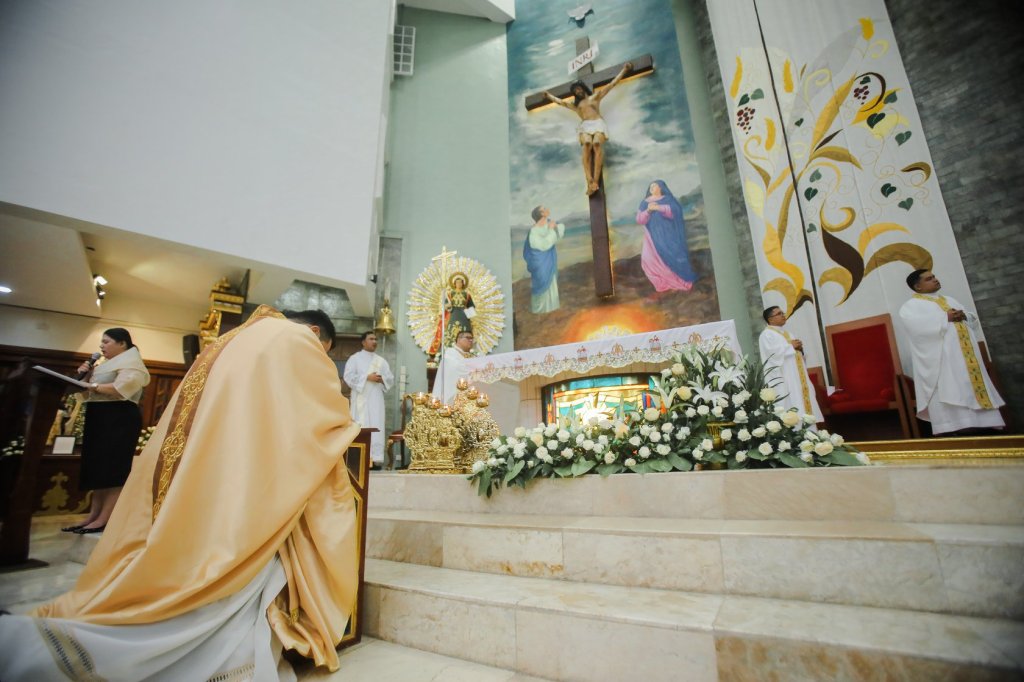
Photo by Mr. Chester Ocampo, October 2019.
Dear God our Father:
Today I pray for those feeling low, for those having the blues lately when everything seems to be going wrong in their lives, feeling they have been forgotten, not cared for and not loved.
Please touch their hearts, enkindle the flames within them in continuing to serve you because You do love them.
Teach me Lord how I can let them know or feel and experience your encouraging words in today’s first reading:
Brothers and sisters: God is not unjust so as to overlook your work and the love you have demonstrated for his name by having served and continuing to serve the holy ones. We earnestly desire each of you to demonstrate the same eagerness for the fulfillment of hope until the end, so that you may not become sluggish, but imitators of those who, through faith and patience, are inheriting the promises.
Hebrews 6:10-12
Increase, O God, the inspiration and zeal of those serving you by continuing to be open to Your Son Jesus Christ our eternal High Priest who had gone to your presence to bring us closer to You more than ever, especially when our skies are dark and gloomy.
I pray, dear Father, in the most special way for all of our medical frontliners in the fight against COVID-19 to never lose hope despite the dismal way how things are going on in our country in this time of the pandemic; touch the hearts of those losing hope in fighting for what is true and just, for those striving to contribute to make this world a better place to live in with their contributions in the sciences and to the society.
Assure them, O Lord, that all your promises of salvation and healing will be fulfilled soon by experiencing your loving presence in the celebrations of the Holy Eucharist.
Like the apostles in the gospel today, may those working for improving human life in various sectors of the society experience Jesus Christ’s love and defense for them against those trying to discredit them. May their love for others, for the country, for the Church, and for You, Lord, mature according to Your will. Amen.
The Lord Is My Chef Breakfast Recipe for the Soul
Monday, Week II, Year I in Ordinary Time, 18 January 2021
Hebrews 5:1-9     >><)))*> + >><)))*> + >><)))*>     Mark 2:18-22
Photo by author, Carmelite Monastery in Guiguinto, Bulacan, November 2019.
So many things are running through my mind after a very long, and heavy Sunday, Lord Jesus. First I went to celebrate the Mass at the 40th day of the passing of a young mother – so young that she had gone ahead of her mother and father at the age of 56. And when I got back in my parish, I heard the news of a much younger mother of two, the wife of my former student in her early 30’s finally going to your rest after a long battle with cancer too. What pains me, Lord, is how I have been praying for her and suddenly, she’s gone. Now, I have to pray for her husband recently diagnosed with a brain tumor and yes, I am afraid of what could inevitably happen next.
Please, Lord, give him a chance to live long and see their two children mature. Please….
Sometimes I really wonder, Lord, if ever a day can ever pass without anyone dying, without anyone crying, without anyone suffering, without anyone sad.
How I wish, sometimes.
But as a priest so exposed to these many sufferings and pains of others, I am so thankful to you, too, dear Jesus in allowing me to experience these all as your priest, as someone you have called to share in other’s pains and sufferings like you.
Amid the many deaths and many crying I witness and experience, I thank you Lord in teaching me how to find God in pain; that, instead of asking God to take them away, may I imitate you, Jesus to embrace every trial and little deaths that come my way.
Continue to enlighten me, dear Jesus, to appreciate this paradox in life that it is incomplete without pain and sufferings; that it is in their midst do we find life’s deeper meaning as we grow deeper in love and compassion, strength and maturity as well just like you!
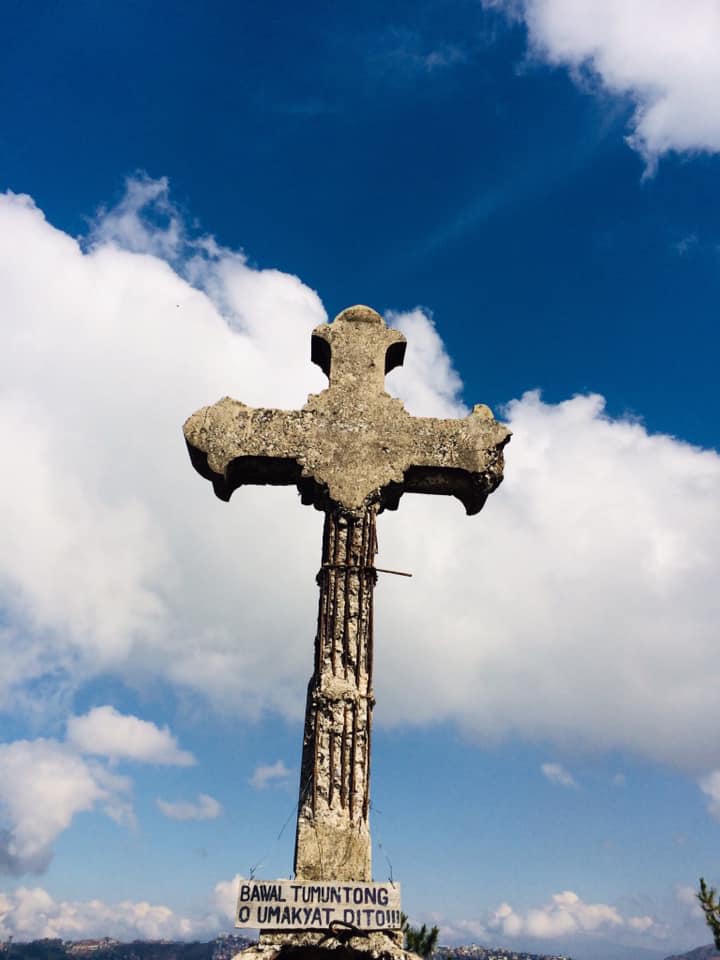
Photo by author, Dominican Hills, Baguio City, January 2019.
Brothers and sisters: Every high priest is taken from among men and made their representative before God, to offer gifts and sacrifices for sins. No one takes this honor upon himself but only when called by God, just as Aaron was. In the same way, it was not Christ who glorified himself in becoming high priest, but rather the one who said to him: You are my son; this day I have begotten you; just as he says in another place: You are a priest forever according to the order of Melchizedek. In the days when he was in the flesh, he offered prayers and supplications with loud cries and tears to one who was able to save him from death, and he was heard because of his reverence. Son though he was, he learned obedience from what he suffered; and when he was made perfect, he became the source of eternal salvation for all who obey him.
Hebrews 5:1, 4-9
Teach me dear Jesus to see everything in the light and perspectives of your Cross, that I may shift in my approaches in dealing and looking at things to see more of your beauty than waste my energies whining and complaining. Amen.
The Lord Is My Chef Sunday Recipe for the Soul
Feast of the Sto. Niño, 17 January 2021
Isaiah 9:1-6  >><)))*>  Ephesians 1:3-6.15-18  >><)))*>  Mark 10:13-16
Photo by author, 16 January 2021.
Today we spend an extra Sunday for the Christmas Season’s Feast of Sto. Niño granted by Rome to the local Church in recognition of the important role played by that image of the Holy Child gifted by Magellan to Queen Juana of Cebu in 1521.
Its role in the Christianization of the country cannot be denied, considering the historical fact that when Miguel Lopez de Legazpi arrived in Cebu 44 years later after Magellan to claim the country for Spain, they were surprised to discover how the natives venerated the Sto. Niño inside a special hut for worship along with their other anitos.
Legazpi’s chaplain Fray Luis Andres de Urdaneta attested to how that devotion to the Sto. Niño in Cebu enabled them to Christianize other natives without difficulties as the Holy Child image at that time has become the favorite among the people in asking favors like children and bountiful harvests as well as protection from calamities and wars.
The late National Artist Nick Joaquin was absolutely right to claim in his many writings and talks that it was really the Sto. Niño who truly conquered the Philippines that continues to be the most popular Christ-devotion in the country along with the Nuestro Padre Jesus de Nazareno of Quiapo.
More powerful than the swords and cannons or any force in the world indeed is the Child Jesus who has continued to be a paradox in world history: the Son of God born in a lowly stable in a small town called Bethlehem because there was no room for them in the inn during the time of the powerful Caesar claiming to be the king of the whole world by ordering a census of all his subjects in the vast Roman Empire now totally forgotten, his kingdom long gone.
What an irony the God who came so weak like all of us, without any title to His name nor an army at His command still influencing the world in His weakness and silence, in His childlikeness. A reality in life until now we have refused to accept even in the Church.
People were bringing children to Jesus that he might touch them, but the disciples rebuked them. When Jesus saw this, he became indignant and said to them, “Let the children come to me; do not prevent them, for the kingdom of God belongs to such as these. Amen, I say to you, whoever does not accept the kingdom of God like a child will not enter it.” Then Jesus embraced them and blessed them, placing his hands on them.
Mark 10:13-16
A child praying in our Parish, 07 November 2019; photo by Mr. Red Santiago.
Christ’s path of weakness vs. the world’s path of power
It is so timely that during this Ordinary Time we have this Feast of the Sto. Niño to remind us of the central teaching of Jesus Christ to be childlike that gets lost in the novelty and sentimentality of our Christmas celebrations.
See how this call for us to be childlike becomes more difficult even almost impossible to achieve in our world that has become so technical and “sophisticated” as we seek to shape and manipulate everything according to our own design.
The world of men, of macho men we love to relish with delight in the secular and religious world in all of its trappings of fads and fashion and “hard talks”, of external showmanships that we try so hard to project cannot hide the hypocrisies within, of keeping grips and control on everyone and everything like the disciples of Jesus. The tragedy of that scene continuing to happen in our time is how some few people who live in darkness pretend to be seeing the light that in the process are actually misleading people towards darkness and destruction.
Every time we refuse to allow others to come forward with their new thoughts and new ideas, fresh perspectives in governance and management, in the ministry, in theology, when we close our minds to hear others ideas and opinions in doing things, then we are into serious power plays that can be pernicious at the same time.
When this happens, we are all the more challenged to be child-like before God in taking all the risks in exposing what is true, what is real like those kids shouting “the emperor has no clothes”!
To be a child means to owe one’s existence to another which we never outgrow even in our adult life. It is an attitude of being open, that Jesus can be talking to us through people not necessarily like us, even different from us. It is an attitude of trusting others, unlike those hungry for power who only believe in themselves, so afraid they might be proven wrong because their minds are either narrow or closed.
Are we not surprised at all that these control freaks around us who try so hard to project images of power and strength are often the perverts and deviants hiding their childishness and immaturities and other skeletons in the closet?
Photo by author, “Sleeping Sto. Niño”, January 2020.
Becoming and living as God’s children
Jesus shows us today in this feast of the Sto. Niño that it is in the path of being weak like children when we are truly free like Him – free to be a child of God indeed! This He accomplished by dying on the Cross not only to forgive us for our sins but made us a “new man/woman” in God as His children.
Brothers and sisters: Blessed be the God and Father of our Lord Jesus Christ, who has blessed us us in Christ with every spiritual blessing in then heavens, as he chose us in him, before the foundations of the world, to be holy and without blemish before him. In love he destined us for adoption to himself through Jesus Christ, in accord with the favor of his will, for the praise of the glory of his grace that he granted us in the beloved.
Ephesians 1:3-6
How sad that in our efforts to be in the man’s world of power and dominance, we try so hard becoming somebody else whom we are not only to end up alone, lost and unfulfilled.
Our being children of God is something innate in us, already within us that was accomplished by Christ for us at the Cross.
The key is to always go back to Jesus at the Cross.
We have said earlier that to be a child is to owe one’s existence to another that is, ultimately speaking, to God alone.
Hence, one sure sign of being like a child is having the sense of gratitude, of thanksgiving.
Incidentally, the Greek word for thanksgiving is eucharistia or eucharist! In the gospel accounts, we find so many instances of Jesus thanking the Father for everything that beautifully reminds us of His childlikeness.
The moment we feel strong enough without need for others, then we stop being grateful, then we lose that childlikeness in us as we start tinkering with power and influence, assuming to ourselves that everybody owes us, the world needs us.
That is when we stop growing and sooner or later, we collapse and eventually fall so hard on our faces.
How amazing that the Sto. Niño image given by Magellan to Queen Juana holds an orb or a globe. It is very interesting where did the maker of that image got that idea that the world is round when in fact it was the theory that Magellan had in mind in setting out to his ambitious expedition by sailing westward and returning from the east?
Records show that the first images of the Child Jesus or Sto. Niño as we know came from Flanders, a region in the Netherlands. The Flemish people have been making those images as early as the late 1400’s. That is why there is also that popular image of the the Child Jesus in Prague in the Czech Republic.
The mystery remains where did they get that idea of the Child Jesus holding an orb?
Could it be that the Flemish people who were devoutly Catholics at that time must have found the “light” from Jesus Christ in their devotions and prayers as prophesied by Isaiah in the first reading?
Nobody knows for sure but the next time you look at a Sto. Niño, be reminded always that it is the Child Jesus who holds the world in His hands. If you want to have the world in your hand too, be child-like! Be always grateful for who you are and what you have. Jesus promised it anyway.
The Lord Is My Chef Breakfast Recipe for the Soul
Friday, Week-I, Year -I in Ordinary Time, 15 January 2021
Hebrews 4:1-5, 11  >><)))*> >><)))*> + <*(((><< <*(((><<  Mark 2:1-12
Photo by author, sunrise at the Lake of Galilee in Israel, 2017.
Let us be on guard while the promise of entering into his rest remains, that none of you seem to have failed… Therefore, let us strive to enter into that rest, so that no one may fall after the same example of disobedience.
Hebrews 4:1, 11
Thank you, dear God this Friday with Your words reminding us of “entering Your rest”, Your Sabbath!
But what is Your “rest”, God our Father?
More than a particular day of the week, it is first of all Your very presence like in paradise that our first parents have lost due to their pride and disobedience to You.
May we heed and learn from the reflections of the author of the Letter to the Hebrews of how Your chosen people, the Israelites, disobeyed you, dear God, while in the wilderness that prevented them from entering Your rest in the Promised Land of Israel, spending 40 years wandering in the desert.
Sadly, all these continue to happen in our own time when we are supposed to be disciples of Your Son Jesus Christ.
Help us O God to resist the temptations and strive hard to see you, feel you, and experience you.
Help us to be like those men carrying the paralytic who sought ways and means to see Jesus Christ, our only true hope and inspiration and consolation in times like these. It is in Jesus Christ’s coming that we are able to enter Your rest freely and truly, dear God, to experience Your love and mercy, kindness and compassion we have all taken for granted.
But, more than a place and a day, Your rest, O Lord, is heaven, Your very presence, that very moment when Jesus healed and forgave the sins of the paralytic, astounding everyone, glorifying You, saying, “We have never seen anything like this” (Mk.2:12).
Let us “rest” in You, dear God by returning to You, of being renewed in You with Your whole creation in Jesus. Amen.
Photo by author, sunset somewhere in Pampanga, 13 January 2021.
The Lord Is My Chef Breakfast Recipe for the Soul
Thursday,Week-I, Year-I in Ordinary Time, 14 January 2021
Hebrews 3:7-14   >><)))*> + >><)))*> + >><)))*>   Mark 1:40-45
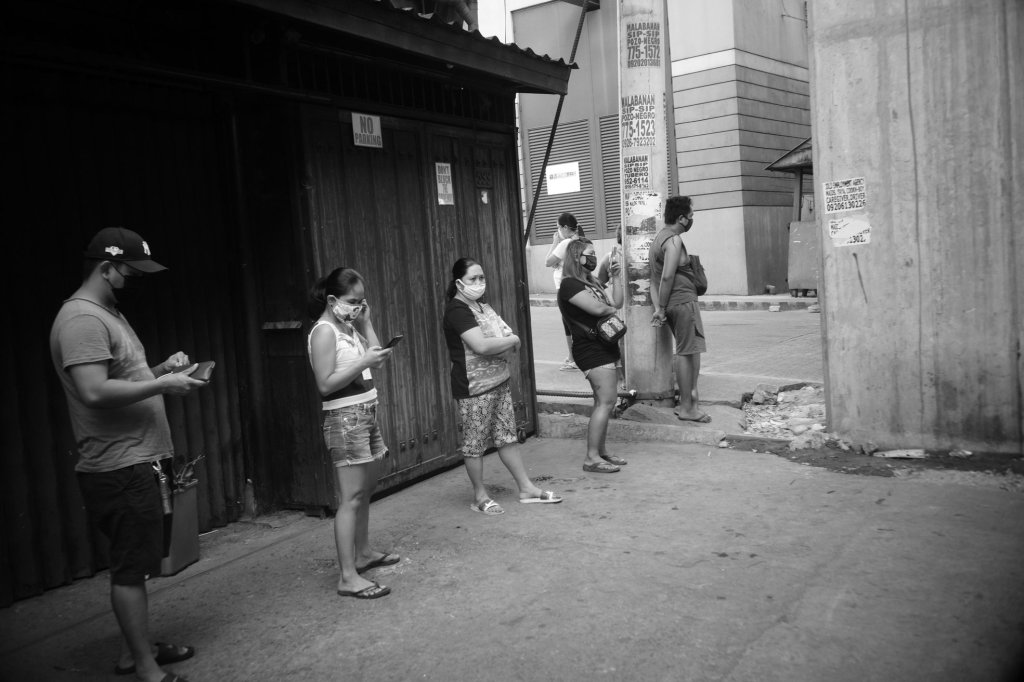
Photo by Mr. Jay Javier in Cubao, QC last May 2020.
How timely and relevant are your words today, Lord Jesus Christ, especially when this the second time in less than a week we have heard your story of the healing of a leper who came to you, asking that if you will it, he could be cured of his disease (Mk.1:40-45).
Last week we heard St. Luke’s version of the same event St. Mark is almost exactly telling us today. Are you trying to tell us something very significant about this beautiful healing that assures us of your will and desire to heal us, to grant us what is best for us?
Definitely, you have a lot of things to tell us, to remind us in this part of our history as a nation and as a church when we live like being afflicted with a contagious disease we have to isolate ourselves from one another.
Aren’t we all like lepers today, with all the masks we wear and most especially the social distancing we have to keep from one another due to the COVID-19 pandemic?
And that is why, dear Jesus, we pray for one another especially those ostracized due to the stigma of contagious diseases like COVID-19 and AIDS as well as situations like homosexuality and substance abuse.
Help us realize, dear Jesus, how this corona virus pandemic is a symptom of a deeper malady afflicting us today, including us priests your servants tasked in taking care of the sick. Even before the pandemic began, we have been separated from one another and from you due to the “evil and unfaithful heart we have, forsaking the living God” (Heb.3:12).
May we experience your presence among us in every “today” so that we may all heed the call of the psalmist: “If today you hear his voice, harden not your hearts.”
Help us remain in you in faith, trusting you more while the corona virus continues to wreak havoc to our economy, to our well-being as persons.
Send us Your Holy Spirit to enlighten our minds and our hearts to examine and change our attitudes towards “modern lepers” among us while at the same time, may we spend more time “communing” with You in prayer as a way of life, filled with enthusiasm like the leper You have healed who could not stop himself proclaiming Your powers and Your mercy and love to him. Amen.
Photo by author at Silang, Cavite last September 2020.
The Lord Is My Chef Breakfast Recipe for the Soul
Wednesday, Week-I, Year-I in Ordinary Time, 13 January 2021
Hebrews 2:14-18     <*(((><<   + + +   >><)))*>     Mark 1:29-39
Photo by author, December 2020.
Today O Lord I pray for the grace of empathy, for the gift of being one with others in pain and suffering, of being one with those who are lost and confused, of sharing in the plight and burdens of others.
Thank you, dear Jesus, in teaching us something very valuable that we often overlook about empathy which is more that just a feeling, of writing or sharing a post on social media about the miseries of some people.
Remind us that empathy is first of all being one with You, dear Jesus, who first empathized with us when You chose to suffer and die on the Cross, overcoming so many temptations of turning away from the Father, looking more into Your own good and benefit, forgetting the suffering humanity.
Therefore, he had to become like his brothers and sisters in every way, that he might be merciful and faithful high priest before God to expiate the sins of the people. Because he himself was tested through what he suffered, he is able to help those who are being tested.
Hebrews 2:17-18
Far from being a contradiction as we have used to believe, Your suffering and dying as the Messiah revealed to us has the Father’s immense love for us, proving that You, dear Jesus is truly the Son of God who went through His pasch to become our perfect intercessor.
May we imitate the brothers Simon and Andrew, James and John who “immediately told” You of Peter’s sick mother-in-law, a perfect example of empathizing in and through You, Lord.
Most of all, may we always follow you, seek you, and be one with you so we may truly empathize with the poor and suffering by remaining united and one in You to the Father.
He cured many who were sick with various diseases, and he drove out many demons, not permitting them to speak because they knew him. Rising very early before dawn, he left and went off to a deserted place, where he prayed.
Mark 1:35
That is the essence of empathy: being one with the Father in Jesus to be one with everyone. Empathy is not doing everything by ourselves but doing only as much as we can in You. May we keep that in our minds for failure to be one with You will never be an empathy but simply be playing hero and “wannabe”. Amen.
Photo by author, Sacred Heart Spirituality Center, 2016.
The Lord Is My Chef Breakfast Recipe for the Soul
Tuesday, Week-I, Year-I in Ordinary Time, 12 January 2021
Hebrews 2:5-12   +   >><)))*>  +  <*(((><<   +   Mark 1:21-28
Praise and glory to you, O God our Father in giving us your Son Jesus Christ. Not just as Savior but as a brother by suffering and dying for us.
What a great mystery You have revealed to us when Jesus could have just come and simply be our brother through a declaration from You when He was baptized at Jordan; but, He chose to obediently go through Passion and Death.
So often, we take this so ordinarily without realizing its deeper meaning that Your glory and our salvation should be brought about by Jesus becoming one of us but that He should go through so much pain and suffering on the cross, not to mention the indescribable humiliation He went through.
You know so well, O God, how we see sufferings as punishment but in Jesus Christ you have shown and taught us that in fact it is a source of Your abounding grace.
In “subjecting” all things to him, he left nothing not “subject to him.” Yet at present we do not see “all things subject to him,” but we do see Jesus “crowned with glory and honor” because he suffered death, he who “for a little while” was made “lower than the angels,” that by the grace of God he might taste death for everyone. For it was fitting that he, for whom and through whom all things exist, in bringing many children to glory, should make the leader to their salvation perfect through suffering.
Hebrews 2:8-10
How sad that like in Capernaum during His time, we are amazed, wondering, asking: “What is this? A new teaching with authority. He commands even the unclean spirits and they obey him” (Mk.1:27).
Help us, O God, to embrace this beautiful mystery and reality of Jesus Christ’s coming that through His obedience to You even in suffering and death, He is able to help us, consecrating us to You because we are His brothers and sisters in suffering and death. Amen.
The Lord Is My Chef Breakfast Recipe for the Soul
Monday, Week-I, Year-I in Ordinary Time, 11 January 2021
Hebrews 1:1-6     >><)))*> + >><)))*> + >><)))*>     Mark 1:24-20
Photo by author, Pulilan by-pass road, 25 February 2020.
Please clear our minds, O God our Father, to stop taking for granted anything called or labeled as “ordinary” like our Ordinary Time in the liturgy that begins today. So often, when we hear the word “ordinary”, we dismiss it as something not so important, of lesser value.
May we realize that the word “ordinary” implies orderliness, regularity as its Latin root means “rule”. The ordinary days, the ordinary people, the ordinary fares – whatever ordinary always makes up the bulk of our lives.
And who is the supreme ordinary of our lives but You, O God?!
So let us stop taking granted whatever or whoever we deem as ordinary because they are the rule of the day. The author of the Letter to the Hebrews said it so well for us today:
Photo by author, November 2019.
Brothers and sisters: In times past, God spoke in partial and various ways to our ancestors through the prophets; in these last days, he spoke to us through the Son, whom he made heir to all things and through whom he created the universe.
Hebrews 1:1-2
Today begins the rule of my life, the rule of each day – Jesus Christ who had come to make You known to us, dear God our Father. He is the rule, the order of each day because everything was created in Him and through Him.
Today begins the rule and order of grace and peace, of kindness and charity, of love and mercy because “this is the time of fulfillment, the coming of Your Kingdom” (Mk.1:15).
Teach me, dear Jesus, to have this regularity of life, of having order in my life that begins and ends in You because you have come to make me and everyone truly special by being closer to the Father through one another. Amen.
The Lord Is My Chef Sunday Recipe for the Soul
Baptism of the Lord, 10 January 2021
Isaiah 55:1-11   +   1 John 5:1-9   +   Mark 1:7-11
On this second week of January we celebrate the final epiphany of Jesus Christ as an adult in His baptism by John the Baptist at Jordan River which is also called a “theophany” when God the Father made known to everyone Jesus is His beloved Son with whom He is well-pleased.
The other two epiphanies were last Sunday when Jesus manifested to the nations of the world symbolized by the Magi while the other was during His Nativity when He appeared to the poor and lowly symbolized by the shepherds for whom He first came for.
His baptism at Jordan closes the Christmas season that coincides with our secular calendar’s entry to the second week of January which is named after the Roman god Janus who has two faces with one looking forward to the future and the other looking backwards to the past.
It is exactly what our liturgical and secular calendars in this month of January are both telling us – that we are at the threshold of new beginnings, new start as we slowly leave the past behind. And what a blessed start we have on this Solemnity of the Lord’s Baptism when Jesus reminds us of His presence this 2021 which experts predict would just be an extension of 2020. We are looking to the future in Jesus and with Jesus while we look back to the past seeing the great things the Lord had done for us!
This is what John the Baptist proclaimed: “One mightier than I is coming after me. I am not worthy to stoop and loosen the thongs of his sandals. I have baptized you with water; he will baptize you with the Holy Spirit.” It happened in those days that Jesus came from Nazareth of Galilee and was baptized in the Jordan by John. On coming up out of the water he saw the heavens being torn open and the Spirit, like a dove, descending upon him. And a voice came from the heavens, “You are my beloved Son; with you I am well pleased.”
Mark 1:7-11
Jesus Christ our Good News
For this year 2021 properly referred to in liturgy as “Cycle B”, we shall have Mark as our guide and companion in our Sunday Mass journey in the Lord (Cycle A is with Matthew, Cycle C is Luke; we hear John on special occasions like Christmas and Easter).
As I have told you during Advent, Mark wrote the first gospel account, it is the shortest because he was in a hurry in making known the good news right away. But, as Shakespeare had said, brevity is the soul of wit; Mark’s brief and direct reporting of the events and teachings of Jesus open for us so many reflections that make us experience the Lord.
Right away at the start of his gospel account, Mark tells us the baptism of Jesus as the inaugural event of the Gospel in fulfillment of the Old Testament prophecies announcing the coming of John the Baptist as Precursor to the coming of the Christ.
See his manner of narrating, stating matter-of-factly without any further ado that Jesus came from Nazareth of Galilee and was baptized in the Jordan by John; he seems to be in a hurry to tell us something great, something important and so beautiful: On coming up out of the water he saw the heavens being torn open and the Spirit, like a dove, descending upon him.
I like that part when he said “the heavens being torn open” or in some translations which I prefer, “the sky rent in two”. What a beautiful imagery, so evocative of God intervening into our lives, descending into our world to bring order, to bring peace!
In the Book of Isaiah which is read during Lent, we find that beautiful expression, “Oh, that you would rend the heavens and come down” (Is.63:19-64:3).
I love that so much! Imagine God rending, tearing apart the heavens like an action hero coming from behind to save us, to protect us, to get us.
Also in Mark’s gospel, he tells us how Jesus at his last breath “rending” while the curtain at the sanctuary of the temple was torn in two from top to bottom (Mk.15:38).
For the heavens to be rent apart shows us God finally intervening into our lives and affairs to set things right, to have some order.
And that is the beginning of the Good News of Jesus Christ that happens daily in our lives. God has rent the heavens and descended upon us in His Son Jesus Christ who clothed Himself in our humanity so we can be like Him, divine and holy.
It is an invitation He extends to us every day, beautifully expressed by Prophet Isaiah in the first reading:
Thus says the Lord: All you who are thirsty, come to the water! You who have no money, come, receive grain and eat; come, without paying and without cost, drink wine and milk! Heed me, and you shall eat well, you shall delight in rich fare. Come to me heedfully, listen, that you may have life. I will renew with you the everlasting covenant, the benefits assured to David. For my thoughts are not your thoughts, nor are your ways my ways, says the Lord… so shall my word be that goes forth from my mouth; my word shall not return to me void, but shall do my will, achieving the end for which I sent it.
Isaiah 55:1-3, 8, 11
What a beautiful assurance to us this day with the threats of new strains of COVID-19 and problems in having the vaccine, here is God assuring us all the good things we need in this life. Of course, it is not merely the material things we need but surely all good things like milk and honey we need not only to survive but to live fully.
This Feast of the Baptism of the Lord assures us all the blessings and fulfillment we need and long for this 2021 if we accept His invitation to be one with Him.
How sad that too often, we reject Christ’s invitation, thinking how difficult it is to keep the commandments of God without realizing that they are indeed “not burdensome” (1 Jn.5:3) because the more we sin, the more life gets harder and heavier for us.
Today God assures us of His love, of how his favor rests upon us in Jesus Christ.
May we heed His calls so we may see Him rending the heavens apart, coming to our rescue, coming to our aid and presence. Amen.