Living, loving amid contradictions

The Lord Is My Chef Sunday Recipe for the Soul by Fr. Nicanor F. Lalog II
Sunday IV-C in Ordinary Time, 30 January 2022
Jeremiah 1:4-5, 17-19 ><}}}}*> 1 Corinthians 13:4-13 ><}}}}*> Luke 4:21-30
Photo by Dr. Mai B. Dela Peña, Santorini, Greece, 2017.

Life and love are full of contradictions that make both so wonderful, so appealing, and so engaging. The more contradictions we encounter in life and love, the more we become better persons, more like Jesus Christ who is himself “the sign of contradiction”.

We are still inside the synagogue at Nazareth where Jesus had come one sabbath, proclaiming – and claiming himself as the fulfillment of that part from the Book of Isaiah he had read. And here we find him already a sign of contradiction at the inauguration of his ministry!

People were amazed with him at the beginning but, soon enough, their true colors appeared: first, they doubted him for being the “son of Joseph”; then, they became hostile to him after hearing him say how God sent Elijah and Elisha to help pagans after being rejected too by their ancestors.

He said to them, “Surely you will quote me this proverb, ‘Physician, cure yourself,’ and say, ‘Do here in your native place the things that we heard were done in Capernaum.'” And he said, “Amen, I say to you, no prophet is accepted in his own native place. Indeed, I tell you, there were many widows in Israel in the days of Elijah when the sky was closed for three and a half years and a severe famine spread over the entire land. It was none to these that Elijah was sent, but only to a widow in Zarephath in the land of Sidon. Again, there were many lepers in Israel during the time of Elisha the prophet; yet not one of them was cleansed, but only Naaman the Syrian.” When the people in the synagogue heard this, they were filled with fury. They rose up, drove him out of the town, and led him to the brow of the hill on which their town had been built, to hurl him down headlong. But Jesus passed through the midst of them and went away.

Luke 4:23-30

Photo by Dr. Mylene A. Santos, MD, a Black Winged Stilt (Himantropus himantopus), Quezon Province, 27 January 2022.

Making a choice, taking a stand with Jesus

It is true that there are always two or even many sides to a story; that is why, it is imperative that we make a choice for what is true which we must accept and believe and hold on. That was the challenge posed by Jesus Christ to the people at the synagogue and to us today: which part of the scriptures do we fulfill today, his coming or his rejection?

While the gospel is good news, it is not always comfortable because it dares us to be like Jesus Christ, freely living in love and in truth. His gospel challenges us always to change our ways and be witnesses of his justice and mercy.

Last Sunday, we are told that every time we listen and take to heart the words of God found in the scriptures, Jesus becomes present among us, “fulfilled in our hearing”; today, we are challenged to affirm and live the word of God daily in words and in deeds.

And that is where the ironies, the contradictions begin when we make a stand for Jesus and his gospel: his words and teachings are all about love and mercy, kindness and care for one another but, the more we preach and practice them, the more life becomes difficult for us. The more we love, the more we are hurt.
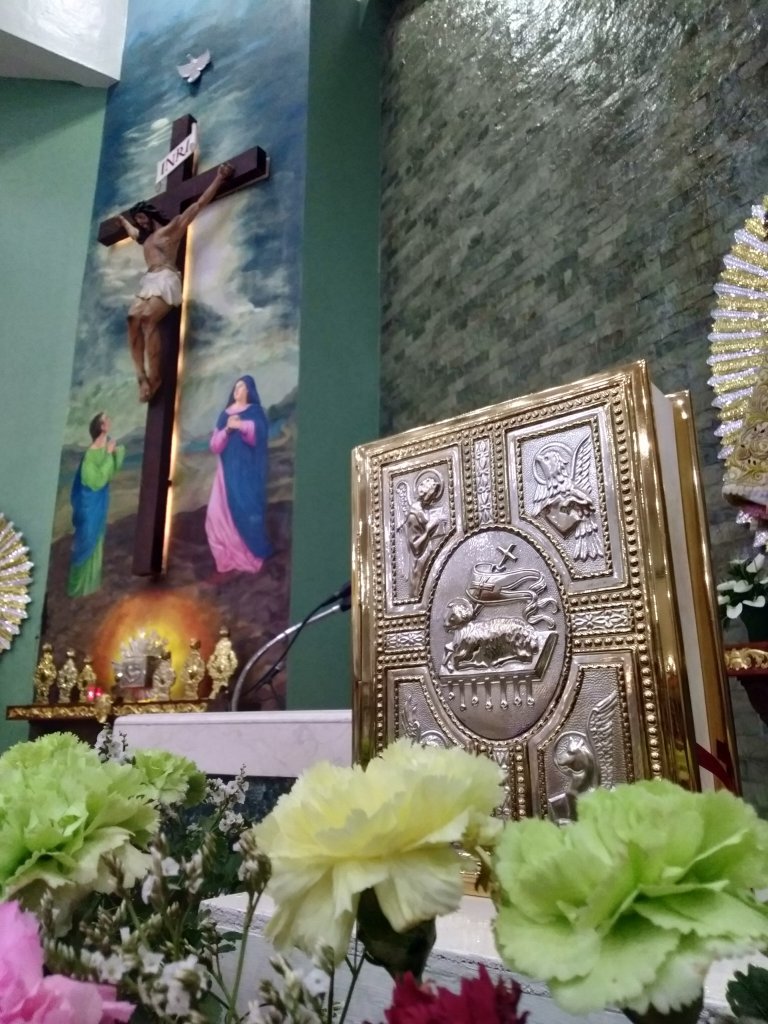
Photo by author, 2019.

Like Jesus, every time we come out in the open to make a stand on what is true and just, good and proper, there will always be rejections. When we speak the truth, there will always be some or many who would be hurt and disturbed from the illusions (even delusions) they have been holding on.

It is the most unkindest cut of all, so to speak: the ones who reject us, the ones who feel “hurt” with our stance are the ones closest to us, the ones we are serving, the ones whose lives we are trying to uplift by liberating them from darkness and ignorance, sins and evil.

We have a Filipino saying that goes, “mahirap gisingin ang nagtutulug-tulugan” (it is difficult to wake up one pretending to be asleep).

That was the problem with the people of Nazareth at that time and even with some of us today: we can be easily astonished with one’s proclamations and words but it can happen that such rave can also mean doubts and skepticism. Some people are not really surprised and even if they ask for more proofs and arguments, no amount of explanations can ever enlighten them because they trust more in themselves and in their illusions of having the truth. They have already made up their minds and would keep on holding on their beliefs.

Worst of all, any appealing discourse is rendered useless and immaterial when people take on the person proclaiming or speaking like Jesus Christ: “Is this not Joseph’s son?”

Now we see the contradictions becoming more pronounced than ever when it involves the person. It always happens everywhere wherein it is the messenger, not the message, who becomes the focus and issue at hand. And here we have the perfect communicator of all, Jesus Christ who is both the medium and the message rejected by his own folks and by us today when we insist on the truths we believe in!

It has always been like that since the beginning of the Church until our present day when those who should have been the first to accept the good news and its preachers have reacted exactly like the folks of Jesus at Nazareth! More than 50 years after Vatican II, until now there are still those who continue to reject the reforms and changes we have in the Church, insisting on maintaining the past that was also borne out of developments in the course of history.

Sometimes I find it amusing whenever we put distinctions between “practicing” and “non-practicing” Catholics. Why be called a Catholic or a Christian at all if you do not practice or believe the teachings of our faith and of the Church?
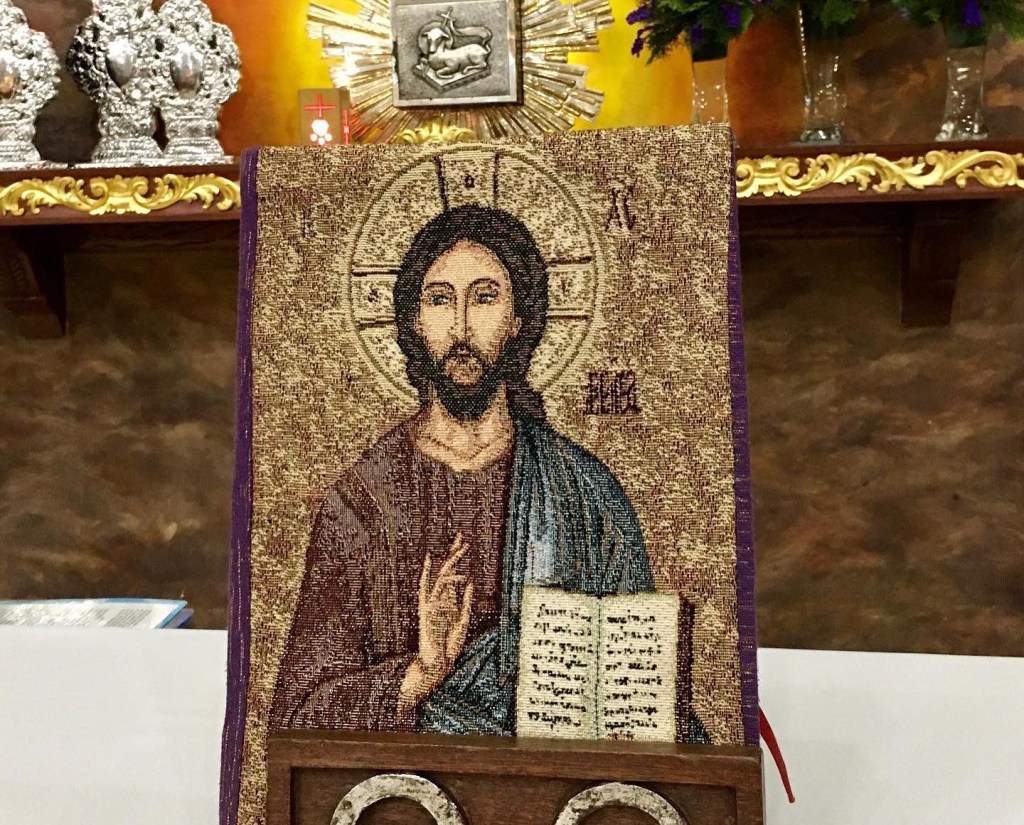
Photo by author, April 2020.

The power of love that surpasses all others

Luke noted at the end of our story today how Jesus “passed through the people and went away” when they tried to hurl him down headlong at the brow of the hill on which their town was built. See their murderous intents against Jesus, their kin?!

But Jesus simply walked away from them, unharmed.

Like the prophet Jeremiah in the first reading, God assures his prophets and each one of us today how he would protect us every time we make a stand for the Gospel, when we live by the values of the Gospel.

We may not concretely experience God’s protection and deliverance in the given moment but we know from the life of Jesus that God is always present with us, especially at the nick of time, leading us to life eternal.

But, there is still something more to that image of Jesus “passing through” the people; it is very evocative of his own passover that would happen on Good Friday at the cross. For now, there would be so many oppositions and contradictions to him but nothing and no one can deter him from proclaiming his good news of salvation to all.
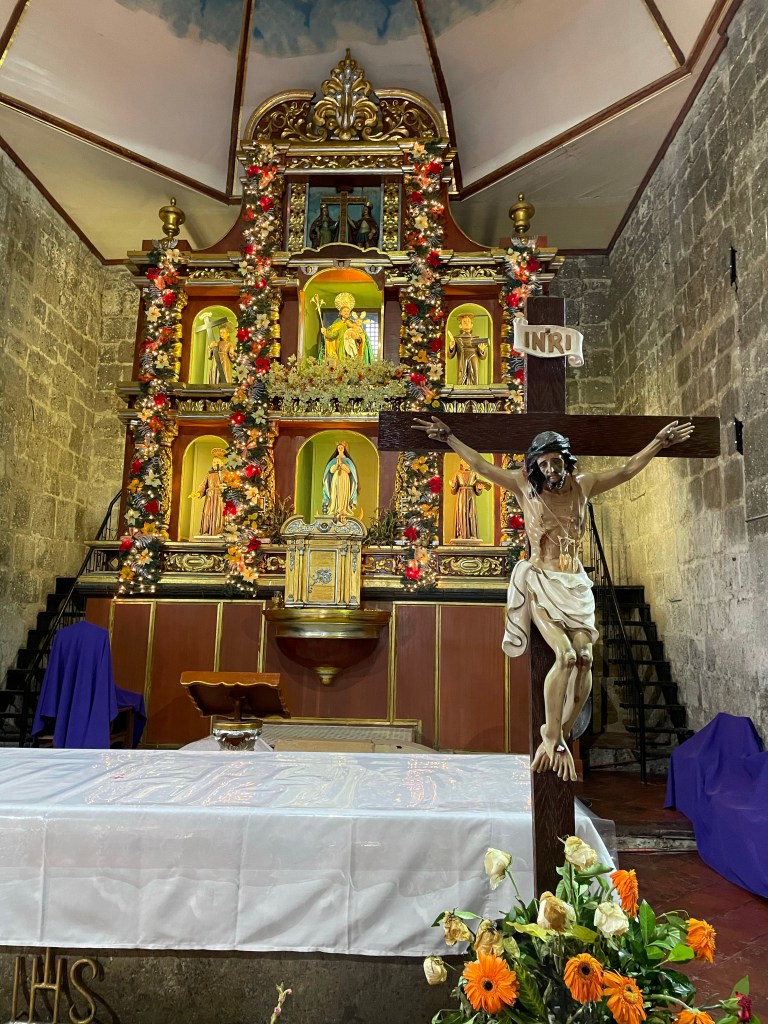
Like Jesus in this scene, we are invited to follow him in his path, to continue listening and internalizing his words, put it into practice in our daily lives which is a daily passing over, of passing through many contradictions and doubts sometimes from people supposed to love and understand us, accept us.

And that is why Paul encourages us in the second reading to choose a “more excellent way” that surpasses all other gifts, the way of love.

As I have told you earlier, life becomes more appealing and wonderful, so enriching when there are many contradictions coming our way because that is when we truly experience the power and meaning of love in Jesus Christ.

Brothers and sisters: “Love is patient, love is kind… It bears all things, believes all things, hopes all things, endures all things. Love never fails.”

1 Corinthians 12: 4, 7, 8

When doubts are cast upon us by others, especially those closest to us whenever we persevere in proclaiming the Gospel of Jesus Christ in words and in deeds, that is also when our love for him and for others is purified and made perfect.

It is very difficult and would always be painful but it is during these contradictions when our lives become more meaningful because of the love that we have and share. Remember the beautiful reminder about loving from St. John of the Cross, “The soul that walks in love never gets tired nor tires others.” Just love, love, love.

Jesus gives us the grace today of meaningful life lived in love if we listen and internalize his words, choosing to make a stand for him by fulfilling his words in deeds despite the many doubts and contradictions around us, especially from people we love and trust.

Have a blessed week ahead!

Photo by Dr. Mylene A. Santos, MD, a Black Winged Stilt (Himantropus himantopus), Quezon Province, 27 January 2022.

Listening leads to presence

The Lord Is My Chef Sunday Recipe for the Soul by Fr. Nicanor F. Lalog II
Sunday III-C in Ordinary Time, 23 January 2022
Nehemiah 8:2-4, 5-6, 8-10 ><}}}*> 1 Corinthians 12:12-14, 27 ><}}}*> Luke 1:1-4, 4:14-21
Photo by author, Baguio Cathedral, January 2019.

I am still in quarantine after testing positive for COVID last Monday. One good thing I have realized these past days is how precious every moment of life as I counted each day, checking on my vital signs three times daily until I will have completed soon the required seven days.

Sometimes, we only realize the existential meaning and gravity of every “today” when we go through a difficult phase in life like getting COVID or like the Israelites finally getting home from exile, suddenly hearing the word of God proclaimed after many years of silence:

Then Ezra the priest-scribe said to all the people “Today is holy to the Lord your God. Do not be sad, and do not weep,” for all the people were weeping as they heard the words of the law. He said further, “Go, eat rich foods and drink sweet drinks, and allot portions to those who had nothing prepared; for today is holy to our Lord. Do not be saddened this day, for rejoicing in the Lord must be your strength!”

Nehemiah 8:9-10

There are also times in our lives when suddenly we become so open to God’s words, so focused on Jesus to experience his presence like that sabbath day in a synagogue in Nazareth:

Photo by author, January 2019.

Rolling up the scroll, he handed it back to the attendant and sat down, and the yes of all in the synagogue looked intently at him. He said to them, “Today this scripture passage is fulfilled in your hearing.”

Luke 4:20-21

Thanks to COVID that now I have felt how difficult it is to be separated from everyone, considering the mild symptoms I had as a fully vaxxed with booster too. It must have been so traumatizing for those who caught the virus during the early surges of 2020 and 2021 without the benefits of the vaccines and other modern medicines. Many of them who survived COVID or have lost loved ones until now feel the pains and hurts of those experiences. Indeed, it is after a difficult situation when we truly realize the value of every present moment we have with our loved ones, when everyone becomes so real and precious, when every present is truly a gift.

Today our readings invite us to slow down, to saunter – so to speak – as we journey in Jesus with Luke as our guide who at his prologue to his gospel tells us how he had “investigated everything accurately anew” regarding the “certainty of teachings of Jesus handed down” to us since the beginning (cf. Lk.1:3-4). Like with our loved ones we miss so much these days of quarantine and surge, Jesus reminds us to always listen to make everyone and him present in us.

Our conscious coming into the Father’s house

Last Sunday at the Feast of the Sto. Niño we reflected how we exercise our child-like traits before God whenever we go into “the Father’s house” like the 12-year old Jesus who was found at the Temple. Our going into the Father’s house to pray and receive the Sacraments expresses our rootedness and oneness with God through Jesus Christ.

This Sunday in our gospel, we find Jesus going again into his Father’s house to “proclaim and claim” the word of God as his very presence among us.

Imagine his movements in “slo-mo” when “He came to Nazareth, where he had grown up and went according to his custom into the synagogue on the sabbath day. He stood up to read and was handed a scroll of the prophet Isaiah. He unrolled the scroll and found the passage where it was written: “The Spirit of the Lord is upon me…” (Lk.4:16-18).

It must have been a moving moment for everyone. So mesmerizing for here was a man so present, so strongly felt with something in him freely walking up to proclaim the word of God. And what an experience for everyone that after “Rolling up the scroll, he handed it back to the attendant and sat down, and the eyes of all in the synagogue looked intently at him. He said to them, “Today this scripture passage is fulfilled in your hearing” (Lk.4:21).

That “today” would be repeated by Jesus with the same intensity on Good Friday shortly before he died when he promised to Dimas “today you will be with me in Paradise” (Lk.23:43).

But, do we make that conscious approach in coming into the Father’s house to celebrate the Sacraments particularly the Sunday Eucharist where the first part itself is devoted to the liturgy of the Word?

Photo by author, April 2020.

In non-verbal communications, we have that communication of spaces called “proxemics”, of how places are designed and positioned to convey something special and profound. Houses of worship of every faith are built on this important aspect of proxemics as every space conveys something about God and his people.

One example of proxemics is the patio of the church with its tall cross at the middle to remind the faithful they are about to enter the Father’s house, of their need to dispose themselves both inside and outside by being silent and being dressed properly.

Sadly, many churches in the country has no patio at all or its patio had become a parking area and worst, a basketball court. What is most tragic is how all these dispositions of coming into the Sunday Mass are disregarded by many people, led by church volunteers who talk endlessly with one another while some priests dress and look sloppily. This is one of the positive aspects of the Tridentine or Latin Mass where the atmosphere of solemnity fills the church and the people as well – and that is why many of the faithful are asking for it! A good example of what St. Paul tells us about the unity in diversity within the Church in the Holy Spirit.

How can we experience the “today” of Jesus being present in us and among us when we do not have such kind of attitude and disposition to listen to him which begins outside the church? If we cannot do it in the proxemics or spatial level, how can we even do it right inside our hearts, whether we are laypeople or the clergy?

Listening to Christ today

One of my favorite writings by the great St. John Paul II is Ecclesia de Eucharistia published in 2003. He tells us something so beautiful about the “universal and cosmic character” of the Eucharist which for me captures the essence of the “today” mentioned by Jesus in the gospel:

Yes, cosmic! Because even when it is celebrated on the humble altar of a country church, the Eucharist is always in some way celebrated on the altar of the world. It unites heaven and earth. It embraces and permeates all creation” (Ecclesia de Eucharistia, #8).

Ecclesia de Eucharistia, #8

This is very true but we rarely experience it happening because we have refused to immerse ourselves in the very words of God. So few among our people read and pray the scriptures while many of us priests rarely speak the Lord’s words as we prefer to tell what we have seen or heard in media or from some famous theologians or thinkers.

Whatever our vocation and place in the Church and the assembly, each of us must immerse one’s self in the word of God first because it is his very presence too. In the story of creation, we learned how everything came into being simply with the words spoken by God.

Photo by author, ruins of the synagogue at Capernaum in Galilee frequented by Jesus, May 2017.

This Sunday we have heard how Jesus “read” on a sabbath at a synagogue in Nazareth, of how in his proclamation of that part of the Book of Isaiah the very words were fulfilled in their hearing.

It happens daily in the celebration of the Mass everywhere in the world whenever we – lay and clergy alike – imitate Jesus, asking us first of all to come with strong desire to be one with the Father, whether in his house of worship or in our room when we pray the scriptures.

Let us enter God with Jesus and in Jesus in the Sacred Books to find him there so we can listen to him how and what he reads, not what we want to hear and say.

We can only touch the hearts of the people and make them hear God speaking again in his words offered us daily in the Mass if we first learn and listen to what Jesus reads and tells us. It is only then when we hear the Word who became flesh that we are able to respond, “Your words, Lord, are Spirit and life.” Amen.

Have a blessed week ahead.

Praying when to speak

The Lord Is My Chef Daily Recipe for the Soul by Fr. Nicanor F. Lalog II
Wednesday in the Week I of Ordinary Time, 12 January 2022
1 Samuel 3:1-10, 19-20   ><]]]]*> + <*[[[[><   Mark 1:29-39
Photo by author at St. George’s Greek Orthodox Church in Madaba, Jordan, May 2019.
Teach me, O Lord, when to speak -
not only how and what to speak;
Teach me, O Lord, to speak only 
when you want me to speak,
only after you have spoken and 
I have listened.

When Samuel went to sleep in his place, the Lord came and revealed his presence, calling out as before, “Samuel, Samuel!” Samuel answered, “Speak, for your servant is listening.” Samuel grew up, and the Lord was with him, not permitting any word of his to be without effect.

1 Samuel 3:10, 19
So many times my words are
without effect because they are
empty of you, Jesus, the Word who
became flesh; many times my words
are without effect because they are
empty of truth and sincerity, no love 
nor mercy, without any kindness and
care or concern.
Sad to say, many times, my words
are filled with evil and malice and lies; 
like the demons you have driven out
in the gospel, never allow me to speak
when my words are not coming from you.
O Lord open my lips,
cleanse my heart of every evil 
and worthless thoughts
so that my mouth shall 
declare your praise.  Amen.

Advent is for listening to God

The Lord Is My Chef Daily Recipe for the Soul by Fr. Nicanor F. Lalog II
Friday in the Second Week of Advent, 10 December 2021
Isaiah 48:17-19   ><]]]]*>  +  <*[[[[><   Matthew 11:16-19
Photo by author, chapel at the Shepherd’s Field, Israel, 2019.
Yesterday, dear God our Father,
you reminded us not to be stuck
with the past and instead move
on and look forward to a better
future you have for us; thank you
for telling us today how we can
fulfill your promised prosperity and
blessings to come:

Thus says the Lord, your redeemer, the Holy One of Israel: I, the Lord, your God, teach you what is for your good, and lead you on the way you should go. If you would hearken to my commandments, your prosperity would be like a river, and your vindication like the waves of the sea.

Isaiah 48:17-18
Forgive us, loving Father,
for being stubborn, for refusing
to listen with our hearts to 
obey your words; so often, we
are like your people Israel who
who were thrown into exile 
long time ago because of the
hardness of their hearts - they
listened to your words with their
ears but never took them to their
hearts which they followed into
sin; we have abused our freedom
and free will insisting what we want,
believing more to our selves than
obeying you, trusting you.
It is so true that we are like
the children "who sit in the 
marketplace and call to one 
another, 'We played the flute 
for you, but you did not dance, 
we sang a dirge but you did not
mourn'" (Mt.11:16-17):  your Son
Jesus Christ had come, always 
comes daily in our lives, and will
still come in the end of time which 
could be now and yet, we have been
deaf and blind to his presence, to his
mercy, and to his love. 
Teach us, O Lord, this Advent
to listen with our hearts to your
words, accepting them truly and
wholly to incorporate them into
our daily lives and be surprised 
with your plans for us specially 
this Christmas!  Amen.

Sharing the “vision of God”

The Lord Is My Chef Daily Recipe for the Soul by Fr. Nicanor F. Lalog II
Thursday, Week XXVIII, Year I in Ordinary Time, 14 October 2021
Romans 3:21-30   ><)))*> + ><)))*> + ><)))*>   Luke 11:47-54
Just a few minutes before the start of our Mass at a remote parish I helped last Sunday, these double rainbows greeted me as if God were smiling at me.
Your words today, O Lord
are difficult to comprehend;
words like "righteousness" and 
"justification" are words we rarely use,
terms our generation have forgotten;
but, we are still deeply grateful
to you in sending us these gems
through the insightful writings 
of your great apostle Paul.

Brothers and sisters: Now the righteousness of God has been manifested apart from the law, though testified to by the law and the prophets, the righteousness of God through faih in Jesus Christ for all who believe. For there is no distinction; all have sinned and are deprived of the glory of God. They are justified freely by his grace through the redemption in Christ Jesus.

Romans 3:21-24
Though the language may be strange,
its underlying realities of your grace
which is your righteousness and 
love for us, O God our Father,
remain so true as expressed by your
Son Jesus Christ's self-sacrifice
on the Cross for our salvation (justification).
Let the teachings of St. Paul sink into
our hearts and minds that we are
utterly dependent on you, O God, 
for our salvation; that nothing can we
accomplish apart from your grace.
In a society where the self-made
person is so idolized and economic
status is the benchmark for success, 
help us to echo anew the teachings
of St. Paul on grace and salvation
in Jesus Christ; do not let us become
like the Pharisees and scribes and scholars
of the law who kept people away
from your "vision" of grace and salvation 
for everyone.

“Woe to you, scholars of the law! You have taken away the key of knowledge. You yourselves did not enter and you stopped those trying to enter.”

Luke 11:52
Lord Jesus, bless us your
priests and ministers to truly
serve the people in leading them
closer to you in our celebrations
and prayers and most especially
in our witnessing to your Gospel;
may we cast away mediocrity and
sloth, always seeking ways like St. Paul
in making known your wonderful plans
and vision for everyone, especially the
weak and the poor among us.
Amen.

Who is my neighbor vs. am I a neighbor?

The Lord Is My Chef Daily Recipe for the Soul by Fr. Nicanor F. Lalog II
Monday, Memorial of St. Francis of Assisi, 04 October 2021
Jonah 1:1-2:1-2, 11   ><]]]]'> + <'[[[[><   Luke 10:25-37
Painting by Giotto of St. Francis preaching to birds from integratedcatholiclife.org.
Glory and praise to you,
O God our loving Father
on this wonderful Monday
as we celebrate the Memorial
of your well-loved St. Francis of Assisi;
thank you in giving us a great
saint in him for us to emulate
especially in this time when we
are so alienated from Mother Nature
and most especially from each other;
Give us the grace, dear God,
of true devotion than of just mere
novelty and fad in appreciating
St. Francis of Assisi.
Let your words today guide us
in following the footsteps of 
St. Francis in the same manner
your very words inspired him to
leave everything behind and
totally dedicate himself to your service.
Let us be open and obedient
to your words, O Lord,
 unlike Jonah in the first reading
 who tried to escape you when
told to preach in Nineveh;
you know, Lord, how so many times we
label each other to "box" them
into stereotypes especially when
they are so unlike us in many ways.
And that is one of the beautiful lessons
 you have taught us through St. Francis:
  that we are all one,
brothers and sisters
in Jesus Christ who had come to
suffer and die for our sins.
Help us realize that it is not a question
of who is my neighbor but more of
a question if I act as a neighbor to everyone.

“Which of these three, in your opinion, was neighbor to the robbers’ victim?” He answered, “The one who treated him with mercy.” Jesus said to him, “Go and do likewise.”

Luke 10:36-37
Dearest Jesus,
you so loved St. Francis that 
you shared with him your wounds
at the crucifixion, enable us like him
to be more kind and loving to everyone
and most of all be simple and humble 
in our lives so we can always have room
for you among the sick and the poor.  Amen.
Photo from zazzle.com.

Rejoicing in the Word of God

The Lord Is My Chef Daily Recipe for the Soul by Fr. Nicanor F. Lalog II
Thursday, Memorial of St. Jerome, Priest & Doctor of the Church, 30 September 2021
Nehemiah 8:1-4, 5-6, 7-12  ><]]]]*> + ><]]]]*> + ><]]]]*>   Luke 10:1-12
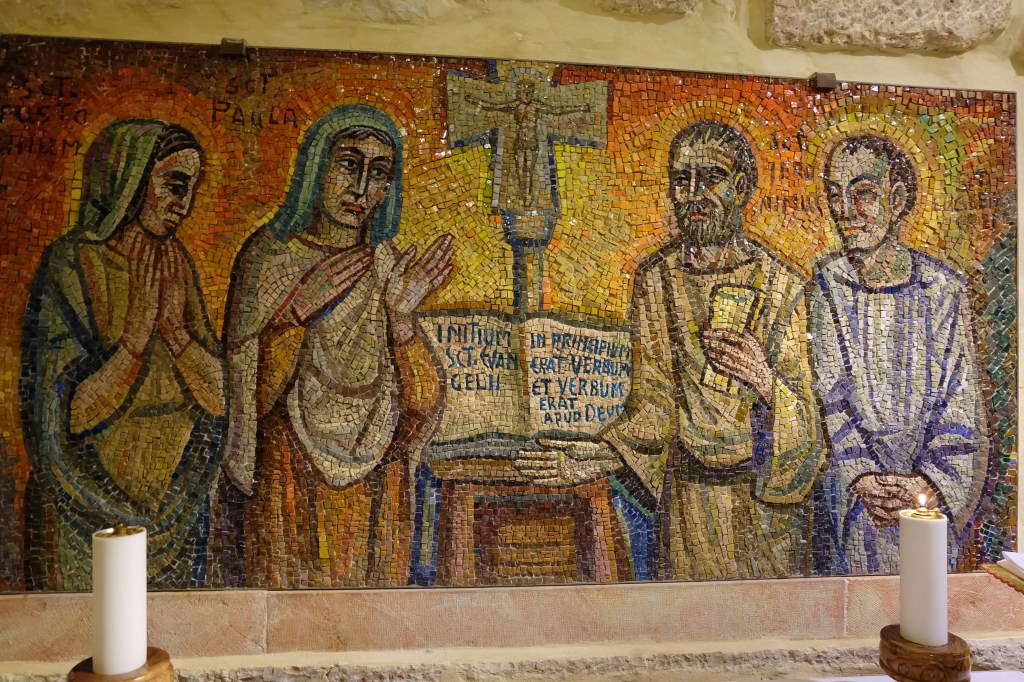
Photo by author (2017), mosaic at the Chapel of St. Jerome beneath the Church of Nativity in Bethlehem where the saint had lived and died in 420; many years later, his bones were transferred to the Basilica of St. Mary Major in Rome.
What a blessed Thursday 
you have given us today, 
our dear loving God the Father
as we celebrate the Memorial 
of St. Jerome who taught us that
"ignorance of the scriptures is
ignorance of Jesus Christ".
In him we find hope and consolation
to tame our cantankerous attitudes
in this age of too much means of 
communication that lead to more  
quarrels and division than peace and unity;
give us the grace, O Lord
that like St. Jerome we may assiduously
pray, study, and most of all, live 
the Sacred Scriptures so we may be emptied 
of our many impurities to be filled with
your humility and kindness.
How wonderful that on this day
the first reading describes to us the 
great joy your words have brought to
your exiles upon their return to Jerusalem;
let us give the proper respect due to your
words, dear God, for they are life!

Then Nehemiah, that is, His Excellency, and Ezra the priest-scribe and the Levites who were instructing the people said to all the people: “Today is holy to the Lord your God. Do not be sad, and do not weep,” for all the people were weeping as they heard the words of the law. He said further: “Go, eat rich foods and drink sweet drinks and allot portions to those who had nothing prepared; for today is holy to our Lord. Do not be saddened this day, for rejoicing in the Lord must be your strength!”

Nehemiah 8:9-10
Bless us your priests, Father,
who are supposed to be men of the Word
according to Vatican II that we may
"enflesh" your holy words like Jesus
the eternal Word who became flesh
so that indeed, as your Son had said 
in today's gospel, people would pray
for more laborers in the field than
anything else to feed their hunger
and thirst for meaning in this life.
Amen.

Two hands and a heart in-between

The Lord Is My Chef Sunday Recipe for the Soul by Fr. Nicanor F. Lalog II
Sunday XXII-B in Ordinary Time, 29 August 2021
Deuteronomy 4:1-2, 6-8 >+< James 1:17-18, 21-22, 27 >+< Mark 7:1-8, 14-15, 21-23
Photo by the author, the Holy Land, 2017.

After an interruption of five weeks, we go back to Mark’s Gospel this Sunday that shall guide us until the end of our liturgical calendar with the Solemnity of Christ the King in November. See the beauty of the Sacred Scriptures that those five weeks from John chapter six did not break the flow of narration that is so seamless!

Returning to Mark’s account today after the feeding of five thousand and the bread of life discourse at Capernaum from John, Jesus crossed the lake and proceeded with the Twelve to Gennesaret where he preached and healed until some of his enemies arrived and found an issue to raise against him.

When the Pharisees with some scribes who had come from Jerusalem gathered around Jesus, they observed that some of his disciples ate their meals with unclean, that is, unwashed hands. For the Pharisees and, in fact, all Jews, do not eat without carefully washing their hands, keeping the tradition of the elders. So the Pharisees and scribes questioned him, “Why do your disciples not follow the tradition of the elders but instead eat a meal with unclean hands?” He responded, “Well did Isaiah prophesy about you hypocrites… You disregard God’s commandment but cling to human tradition.”

Mark 7:1-3, 5-8

The Israelites have taken pride in their laws given by Moses from God at Mt. Sinai. Simply referred to as the Law or Torah, it had united them as God’s “chosen people”, making it the very center of their lives that they enlarged its meaning and scope that soon consisted of more than 600 other precepts and practices to observe and keep.

Obeying the laws and traditions became their standard for holiness so that instead of becoming a means to bring them closer to God and others, these became an end in itself that they have forgotten God and others in the process.

Photo by author, Sacred Heart Spirituality Center, Novaliches, QC, 2016.

Into our hearts and the heart of Jesus

Once again, our gospel is so timely and relevant to our situation right now we are in the midst of a pandemic when we are told to always wash our hands. And if Jesus were with us in person today, he would surely speak the same things about the hypocrisy we have in our washing of hands!

First of all, let us clarify that Jesus is not against the washing of hands before eating nor of any of their other traditions and laws; what he criticized was the greater importance given by his enemies with the outward signs of their laws and traditions, forgetting its inner dynamics and meaning. Thus, he never failed to clarify with the people that he had “not come to abolish the Law or the Prophets but to fulfill them” (Mt.5:17).

Here we find the same problem with the people at Capernaum and in our own time when people fail and refuse to look beyond material things to find the meaning of what is going on around us, of what we believe in and what we practice.

Then and now – right in the midst of this pandemic – Jesus is inviting us to deeper perspectives about our concepts and ways of doing and seeing things, of what is clean and not clean, of what is tradition and modern, of what is good and evil.

Jesus wants us to constantly examine our lives for our need of conversion of our hearts to him. He is inviting us to probe our hearts and see who or what dwells inside us because from the heart, everything flows outside not only to our mouth (cf. Lk.6:45, “out of the abundance of the heart the mouth speaks”) but also to our hands.

That is why I love that imagery of the heart between two arms and hands: the heart at the center of our being and consciousness that whatever comes out of the heart naturally flows to our arms and hands, even to our entire body. If there is something wrong in the heart, so with the messages it sends out.

Photo by Designecologist on Pexels.com

He summoned the crowd again and said to them, “Hear me, all of you, and understand. Nothing that enters one from outside can defile that person; but the things that come out from within are what defile.” “From within people, from their hearts, come evil thoughts, unchastity, theft, murder, adultery, greed, malice, deceit, licentiousness, envy, blasphemy, arrogance, folly. All these evils from within and they defile.”

Mark 7:14-15, 21-23

Here we find the essential question we must ask ourselves always: Do I find Jesus Christ in my heart as the sole basis and foundation of what I believe which I also say and do?

If we cannot find Jesus at the center of the things we do and believe, most likely we do not find others in the picture too! In that case, most likely, it is all about me, mine, my, and I! Like the Pharisees and scribes of his time, washing of hands and other traditions were more of a show than something more essential which is to serve God through one another.


Jesus is now leading us to a sincere examination of our hearts, 
of our interior and spiritual motivations, 
of why we are doing the things we are doing, 
of what we really believe in; 
because, too often, many of the things we do and believe 
are not really rooted in our hearts nor with God.  
There are so many times in our lives 
that we simply do things out of habit 
and conventions without really understanding why.  

Jesus is now leading us to a sincere examination of our hearts, of our interior and spiritual motivations, of why we are doing the things we are doing, of what we really believe in; because, too often, many of the things we do and believe are not really rooted in our hearts nor with God. There are so many times in our lives that we simply do things out of habit and conventions without really understanding why.

Simon Sinek said it so well in his bestselling book “Start with Why” – people buy products, patronize services, or are moved when they see the why you do things; they are willing to pay more not because of fad or prestige but more of the conviction in a belief espoused by a brand or company or by an individual.

Photo by Ezra Acayan/Getty Images in Paranaque City, 09 February 2020.

Washing of hands and eating, our hidden hypocrisies

One of the most frequently asked question by people to me as a priest these days is why despite all our prayers, God has seemed become deaf to our pleas for him to end this pandemic? The answer is simple: unless we see and accept the spiritual realities of this COVID-19 pandemic, it would linger with us longer than projected, even not be solved at all as it gets worst with new variants that have thrown back even some of the most vaccinated nations lately.

We can have all the soaps and alcohol to wash our hands during this pandemic but COVID-19 will persist for as long as we have no regard for the dignity of every person. See all the abuses and corruption going on that is more sickening than the virus itself!

That washing of hands is an imagery full of meanings we have lost since the time of Jesus. Inwardly, the washing of hands means washing of one’s heart, of cleansing ourselves of our sins and self-centeredness and other impurities.

So many times we have become like Pontius Pilate who washed his hands to free himself from any guilt in sentencing Christ to death without realizing the more he had implicated himself to the injustice by refusing to make a stand for what is true and just. Like us today, we keep on washing our hands in the hope that our conscience would be at peace or be not bothered with our indifference for what is true and good.

Photo by Mr. Red Santiago of his son, 2019.

Washing of hands has always been closely related with eating which is an act of “appropriating something we cannot fully have” like when Adam and Eve ate the forbidden fruit. They took something they cannot wholly take or “swallow” that is why all they could do was just take a “bite” that opened their eyes to something they could not fully realize and appreciate. There are so many realities in this life we just cannot fully grasp right away, requiring us to have more faith, more patience in trusting God and those above us.

But, like Adam and Eve, we keep on taking a bite, of eating whatever our limited minds and reason find as “good” to have. And we wash our hands in clear hypocrisies like the Pharisees and scribes in worship and prayer when we lead double lives, when we laugh and cheer at all kinds of lies and filth, when we silently approve attacks against human life like tokhang and abortion.

Every day we wash our hands and keep them clean to avoid contaminating our food and body in hypocrisy as we agree and support in the name of “modernism” these trends of same sex relationships, promiscuity, and divorce. Or of graft and corruption we have resigned to accept as a fact of daily life.

To wash our hands is to wash our hearts clean of all kinds of evil, of mediocrity and indifference, of taking a stand to “pass over” from sin into grace by witnessing God’s goodness in our lives as Moses reminded Israel in the first reading.

The hands and the heart always go together as expressed in the Jewish thought of “mercy of the heart” and “mercy of the hand” when God’s mercy is more than a feeling but an act of righteousness, of justice and love.

Let us heed the reminder of the Apostle in the second reading to be truly clean in our hands and in our hearts: “Be doers of the word and not hearers only, deluding yourselves. Religion that is pure and undefiled before God and the Father is this: to care for orphans and widows in their affliction and to keep oneself unstained by the world” (James 1:22, 27).

Stay safe everyone. Have a blessed week ahead! Amen.

Lead us, remind us, Lord

The Lord Is My Chef Breakfast Recipe for the Soul by Fr. Nicanor F. Lalog II
Wednesday, Week XXI, Year I in Ordinary Time, 25 August 2021
1 Thessalonians 2:9-13   ><]]]]*> + ><]]]]*> + ><]]]]*>  Matthew 23:27-32
Photo by the author, Capernaum along the shore of Lake of Galilee (Tiberias), 2017.
Times are getting more tough,
more difficult, and most painful
for us these days, God our loving Father.
We ask you only for one thing -
lead us to your Son Jesus Christ our Lord
as we pray:
Lead us, O Lord closer to you
to be like you - loving and caring
merciful and forgiving;
Lead us, O Lord to your words
and actualize them in our lives;
Lead us, O Lord in your Holy Spirit 
to work in us and through us
to bring life and joy, hope and inspiration
to those overshadowed with gloom
due to the pandemic.

And for this reason we too give thanks to God unceasingly, that, in receiving the word of God from hearing for us, you received it not as the word of men, but as it truly is, the word of God, which is now at work in you who believe.

1 Thessalonians 2:13
Remind us today, dearest Jesus
that the greatest impact we can have
in this life are not just the words we speak
but by the deeds of love and care,
compassion and dedication we show;
Remind us, Lord, that the real test
of our discipleship in you is not found
in what people say how good or holy we are
but that they themselves are led to the Father;
Remind us today, dearest Jesus
not to be hypocrites like the Pharisees
and scribes who only wanted to appear
beautiful outside but rotting inside (Mt.23:27).
Amen.
 

Words, words, words!

The Lord Is My Chef Breakfast Recipe for the Soul by Fr. Nicanor F. Lalog II
Thursday, Week XX, Year I in Ordinary Time, 19 August 2021
Judges 11:29-39   ><)))*> + ><)))*> + ><)))*>   Matthew 22:1-14
Photo by author, Jerusalem at dawn, May 2017.
God our loving Father,
please make me conscious
beginning today of every word
that I say, of its meaning and
implications; better, teach me
to be silent and still, to speak only
when necessary, avoiding especially
making any oath even before you.

Jephthah made a vow to the Lord. “If you deliver the Ammonites into my power,” he said, “whoever comes ot of the doors of my house to meet me when I return in triumph from the Ammonites shall belong to the Lord. I shall offer him up as a burnt offering. When Jephthah returned to his house in Mizpah (after defeating the Ammonites), it was his daughter who came forth, playing the tambourines and dancing. She was an only child: he had neither son nor daughter besides her. When he saw her, he rent his garments and said, “Alas, daughter, you have struck me down and brought calamity upon me. For I have made a vow to the Lord and I cannot retract.”

Judges 11:30-31, 34-35
"Words, words, words!" 
Like Hamlet, we read and say 
many words without meaning, 
falsely believing words become true
when multiplied and said over and over
not realizing the most powerful words
ever spoken where those borne out of
silence when you created everything.
Give us the grace, dear God,
to be like Jesus your Son, 
"the Word who became flesh"
to be a person of credibility
and integrity whose "yes" means "yes"
and "no" means "no" - always dressed
in "wedding garment" for your
banquet in heaven (cf.Mt.22:12-14).
Amen.